#help-0
1 messages · Page 957 of 1
 lapis gyro
 sterile vale
Understandable ^^
 jovial breach
And in denominator, you must've used identity $(a+b)(a-b)$ which is $a^2-b^2$ so I will be $6^2-(√8)^2$
sterile vale
Good luck with the rest of your work
lapis gyro
lol, i am a math tutor
 ocean sealBOT
hoi
 lapis gyro
.close
 lone heartBOT
Channel closed
Closed by @lapis gyro
Use .reopen if this was a mistake.
lone heartBOT
 Available help channel!
Send your question here to claim the channel.
Remember:
• Ask your math question in a clear, concise manner.
• Show your work, and if possible, explain where you are stuck.
• After 15 minutes, feel free to ping <@&286206848099549185>.
• Type the command .close to free the channel when you're done.
• Be polite and have a nice day!
Read #❓how-to-get-help for further information on how to ask a good question, and about conduct in the question channels.
 rigid crane
Hey, just a quick question
lone heartBOT
rigid crane
Hey, just a quick question
rigid crane
If there's a sample of 100
and the covariance for X1 and Y1 is a certain number, say 0.15
then is the covariance for X and Y (the whole sample) 100 * 0.15?
X1 would be that the first person is, say, tall, and Y1, that they'd be, say, smart
lone heartBOT
@rigid crane Has your question been resolved?
lone heartBOT
@rigid crane Has your question been resolved?
lone heartBOT
@rigid crane Has your question been resolved?
 noble sinew
rigid crane
then is the covariance for X and Y (the whole sample) 100 * 0.15?
noble sinew
rigid crane
then is the covariance for X and Y (the whole sample) 100 * 0.15?
No, depends on the rest of data points (besides you can’t even take covariance of single points - suggest you check up on formula/definition)
lone heartBOT
Channel closed
Closed due to timeout
Use .reopen if this was a mistake.
Available help channel!
Send your question here to claim the channel.
Remember:
• Ask your math question in a clear, concise manner.
• Show your work, and if possible, explain where you are stuck.
• After 15 minutes, feel free to ping <@&286206848099549185>.
• Type the command .close to free the channel when you're done.
• Be polite and have a nice day!
Read #❓how-to-get-help for further information on how to ask a good question, and about conduct in the question channels.
 torn turret
Can i get some help on following question? How do i take the Laplace transform of sin(ωt)1(t)
lone heartBOT
torn turret
Can i get some help on following question? How do i take the Laplace transform o...
@torn turret Has your question been resolved?
torn turret
<@&286206848099549185>
 sand pawn
torn turret
Can i get some help on following question? How do i take the Laplace transform o...
sand pawn
torn turret
Can i get some help on following question? How do i take the Laplace transform o...
bro, just put it in the formula?
sand pawn
torn turret
Can i get some help on following question? How do i take the Laplace transform o...
Can you write your question properly please?
 torn turret
.close
lone heartBOT
Channel closed
Closed by @torn turret
Use .reopen if this was a mistake.
Available help channel!
Send your question here to claim the channel.
Remember:
• Ask your math question in a clear, concise manner.
• Show your work, and if possible, explain where you are stuck.
• After 15 minutes, feel free to ping <@&286206848099549185>.
• Type the command .close to free the channel when you're done.
• Be polite and have a nice day!
Read #❓how-to-get-help for further information on how to ask a good question, and about conduct in the question channels.
 scenic badge
<@&286206848099549185>
 lone heartBOT
Channel closed
Closed due to the original message being deleted
scenic badge
<@&286206848099549185>
 lone heartBOT
Available help channel!
lone heartBOT
Available help channel!
Send your question here to claim the channel.
Remember:
• Ask your math question in a clear, concise manner.
• Show your work, and if possible, explain where you are stuck.
• After 15 minutes, feel free to ping <@&286206848099549185>.
• Type the command .close to free the channel when you're done.
• Be polite and have a nice day!
Read #❓how-to-get-help for further information on how to ask a good question, and about conduct in the question channels.
 alpine sable
 lone heartBOT
alpine sable
lone heartBOT
alpine sable
 sudden hinge
seems correct @alpine sable
lone heartBOT
Channel closed
Closed by @full cliff
Use .reopen if this was a mistake.
Available help channel!
Send your question here to claim the channel.
Remember:
• Ask your math question in a clear, concise manner.
• Show your work, and if possible, explain where you are stuck.
• After 15 minutes, feel free to ping <@&286206848099549185>.
• Type the command .close to free the channel when you're done.
• Be polite and have a nice day!
Read #❓how-to-get-help for further information on how to ask a good question, and about conduct in the question channels.
 marsh rapids
that's vertical
You don't want to affect the y values, but the x values that give the y values. You want each x to count more
 severe sluice
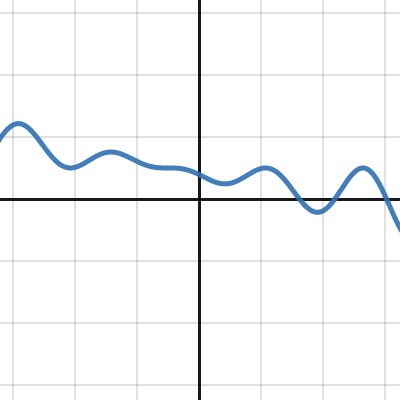
Desmos
marsh rapids
horizontal squish means that y = f(2) would be somewhere between x = 0 and x = 2 instead of x = 2. A simple way of doing this linearly would be to just squish it by a factor 1/2, so each x counts double
lone heartBOT
@alpine sable Has your question been resolved?
Channel closed
Closed by @brisk olive
Use .reopen if this was a mistake.
lone heartBOT
Available help channel!
Send your question here to claim the channel.
Remember:
• Ask your math question in a clear, concise manner.
• Show your work, and if possible, explain where you are stuck.
• After 15 minutes, feel free to ping <@&286206848099549185>.
• Type the command .close to free the channel when you're done.
• Be polite and have a nice day!
Read #❓how-to-get-help for further information on how to ask a good question, and about conduct in the question channels.
 amber iron
Well there’s a rule
But not necessarily basic
Requires number theory but you can do it for all numbers
 proud basin
yeah
eg
lets say you have some number abcd
9 > a,b,c,d > 0
abcd = 1000a + 100b + 10c + d
suppose it is divisible by 3
proud basin
999a + 99b + 9c divides 3 (obviously)
amber iron
Continue
proud basin
hence a+b+c+d divides 3 if abcd divides 3
lone heartBOT
Channel closed
Closed by @thick lynx
Use .reopen if this was a mistake.
Available help channel!
Send your question here to claim the channel.
Remember:
• Ask your math question in a clear, concise manner.
• Show your work, and if possible, explain where you are stuck.
• After 15 minutes, feel free to ping <@&286206848099549185>.
• Type the command .close to free the channel when you're done.
• Be polite and have a nice day!
Read #❓how-to-get-help for further information on how to ask a good question, and about conduct in the question channels.
sterile vale
Hi, we can approximate tan(x) ~ x for limits when x tends to 0
sterile vale
does this also imply that both tan^2(x) ~ x^2 and tan(x^2) ~ x^2
same for sin
just wanted to confirm
 little drum
$\tan x = x + \frac{x^3}{3} + \frac{2x^5}{15} + \frac{17x^7}{315} + \ldots$
ocean sealBOT
 little drum
for sufficiently small 'x' you can ignore the higher exponents :O
so yeah, tan²(x) ~ x² and tan(x²) ~ x²
sterile vale
thanks a bunch

same with sin?
and same with 1-cos^2(x) and 1-cos(x^2) ?
the place of the exponent doesnt matter ?
or if it's something like sin(2x) vs 2sin(x)
@little drum o:
little drum
:o
sterile vale
o:
little drum
$\cos x = 1 - \frac{x^2}{2!} + \frac{x^4}{4!} - \ldots$
ocean sealBOT
 little drum
what do you think 🥺
alpine sable
little drum
$\cos x = 1 - \frac{x^2}{2!} + \frac{x^4}{4!} - \ldots$
Taylor series?
Approximation?
little drum
oh btw.. (1 - cos² x) shouldn't be same as 1 - cos(x²)
sterile vale
right 1-cos^2(x) is (x^2/2)^2
little drum
because, you see.. for sufficiently small enough x, 1 + cos x ~ 2
but 1 - cos x ~ x²/2
sterile vale
and 1-cos(x^2) is (x^2)^2/2
sterile vale
why not :(
little drum
because for small enough x, (1 - cos² x) = (1 + cos x)(1 - cos x)
but cos x ~ 1
so, (1 + cos x) ~ 2
(1 - cos x) ~ x² / 2
so, (1 - cos² x) ~ x²
this can visibly be seen if you use the taylor expansion
$\cos x = 1 - \frac{x^2}{2!} + \frac{x^4}{4!} - \ldots$
ocean sealBOT
 sterile vale
okay
little drum
So, $(1 - \cos x)(1 + \cos x) = (\frac{x^2}{2!} - \ldots)(2 - \frac{x^2}{2!}+ \ldots)$
sterile vale
okay thanks a bunch
ocean sealBOT
 little drum
sterile vale
okay thanks a bunch
little drum
sterile vale
okay thanks a bunch
You really got it?  or you're pitying me for being bad at explaining
sterile vale
little drum
You really got it? <:sad:532803514892812288> or you're pitying me for being bad ...
I get where you're coming from more or less actually, it helps
im trying to confirm that my teacher did it the same way
alpine sable
Yea
alpine sable
 where is apples coming here lol
little drum
cos 🍌 is roughly 1 - 0.5🍌 ² [for almost eaten banana]
alpine sable
Oh small numbers
alpine sable
little drum
cos 🍌 is roughly 1 - 0.5🍌 ² [for almost eaten banana]
Ya
It's second order Taylor series
Approximation
 pale kestrel
yh u can substitute stuff
alpine sable
If that sounds familiar
pale kestrel
as long as the stuff you substitute is also small
for example 1/x for massive x is an ok sub
 bleak ridge
Does wolfram support emojis?
pale kestrel
sin(1/x) is roughly 1/x for large x
little drum
tan (@ shuri) ~ shuri [for small shuri? 👀]
pale kestrel
no
sterile vale
oh my god i was already sad about greek alphabet but now youre giving me fruits wtf
what is derivative of fruit
 little drum
derivative of a fruit is obviously an apple cake
bleak ridge
,w simplify cos(2🍊)
ocean sealBOT

Wolfram Alpha doesn't understand your query!
Perhaps try rephrasing your question?
Click here to refine your query online
 Requested by PapaBread#3820
little drum
Requested by PapaBread#3820
little drum
or a banana milk shake
bleak ridge

alpine sable
Lol small fruit=neglebily small number
little drum
.close
 little drum
lol
 little drum
Yes. the same thing I said 
alpine sable
Ya
sterile vale
yea exactly
pale kestrel
sin(1/x) is roughly 1/x for large x
sterile vale
i believe u !!! i do i do
pale kestrel
You understand this yes?
pale kestrel
Yes. Why?
you cant just no brain substitute anything
sin(ln x) is roughly ln x for x close to 1
sin 🍎 is roughy 🍎
for small apples
This wasnt a complete joke
 pale kestrel
whatever you substitute and use that approximation on has to be small
sin f(x) is roughly f(x) only when f(x) is small
sterile vale
yes i understand this
alpine sable
pale kestrel
> sin 🍎 is roughy 🍎
> for small apples
Wait wdym small apples  u said for large numbers that's true
pale kestrel
sin(1/x) is roughly 1/x for large x
little drum
For large apples, the reciprocal of the apple would be small
little drum

sterile vale
always broken into the identity
little drum
(1 + cos x) approximates to 2
sterile vale
(1-cos(x)(1+cos(x)
little drum
(1 - cos x) approximates to x²/2
sterile vale
i will use this on test and my teacher will be like wtf how u know and i will go mm Ansh from discord
for real though thank you a lot
it does help with visualizing to see the taylor series
.close
lone heartBOT
Channel closed
Closed by @sterile vale
Use .reopen if this was a mistake.
alpine sable
these are approxmations ig
 alpine sable
ik taylor series
lone heartBOT
Available help channel!
Send your question here to claim the channel.
Remember:
• Ask your math question in a clear, concise manner.
• Show your work, and if possible, explain where you are stuck.
• After 15 minutes, feel free to ping <@&286206848099549185>.
• Type the command .close to free the channel when you're done.
• Be polite and have a nice day!
Read #❓how-to-get-help for further information on how to ask a good question, and about conduct in the question channels.
 potent vessel
y = ln(2x - 1)
lone heartBOT
potent vessel
y = ln(2x - 1)
 gray isle
how are you getting
$$\frac2x \cdot (2x-1)$$
ocean sealBOT
ℝamonov
 potent vessel
derivative of ln(x) = 1/x and the derivative inside the bracket is 2
then we multiply them together
1/x * 2 = 2/x
then we just multiply the y function by that ^
hence we get 2/x * (2x -1)
@gray isle^
gray isle
i doubt it
maybe you applied it properly in all your other attempts and then did something else completely different here
potent vessel
ye that might be the case
gray isle
if you are struggling to do this within a single step then consider first doing a substitution
$$u = 2x - 1$$
and then apply the chain rule
$$\dv{y}{x} = \dv{y}{u}\dv{u}{x}$$
ocean sealBOT
ℝamonov
 potent vessel
hmm
potent vessel
gray isle
if you are struggling to do this within a single step then consider first doing ...
got 3/3x-1
im still confused on what I did wrong in my first answer.
i dont want to be doing the long method everytime because its time consuming
gray isle
how are you getting 3/3x-1
potent vessel
oh my bad i mean 2/2x-1
gray isle
don't take shortcuts if you can't reliably do them
potent vessel
well it seems to be pretty reliable apart from this question
gray isle
because you're actually doing something like
$$\br{\dv{x} \ln(x)} \cdot \br{\dv{x}(2x-1)} \cdot y$$
ocean sealBOT
ℝamonov
 potent vessel
ye i thought that was what you are supposed to do
gray isle
no its not
hence why i made you go through the long way
also missing parentheses
2/(2x-1)
potent vessel
does that really matter?
potent vessel
ocean seal
**ℝamonov**
can you show what the correct formula looks like for this then?
gray isle
you can use the leibniz chain rule above
alternatively
$$h(x) = f(g(x))$$
$$h'(x) = f'(g(x))g'(x)$$
ocean sealBOT
ℝamonov
 potent vessel
is that like a better method or something?
little drum
potent vessel
worked for me everytime up until now
Gib example. (any example works(with chain rule required))
gray isle
its different notation for the same thing
instead of applying the rule properly you did
$$h'(x) \wthonk f'(x)g'(x)f(x)$$
ocean sealBOT
ℝamonov
 little drum
omg \wthonk works (big sad) :c
gray isle
custom command
potent vessel
little drum
Gib example. (any example works(with chain rule required))
y = (x^4 - 1)^8
therefore 32x^3 (x^4-1)^7
potent vessel
gray isle
custom command
i will read now
little drum
potent vessel
y = (x^4 - 1)^8
therefore 32x^3 (x^4-1)^7
Let's work simultaneously on both questions.
So that we can compare the method
potent vessel
sure
little drum
$$\dv{[(x^4 - 1)^8]}{x}$$ and $$\dv{[\ln(2x-1)]}{x}$$
ocean sealBOT
 little drum
what's the first step for the first derivative?
expanding using binomial expansion hell no (lol)
potent vessel
first i would get the derivative of the outer function which would be 8(x^4 - 1)^7
little drum
get the derivative of the outer function with respect to what?
x? x + 1? y - 1? z + 2? r + 3?
what?
potent vessel
y in this case right? y = (x^4 - 1)^8
gray isle
no
potent vessel
oh sorry i dont know the way to communicate it
i just know the outer function
this one ( cool stuff in here )^8
little drum
Do you realize $$\dv{[(x^4 - 1)^8]}{[(x^4 - 1)^8]} = 1$$?
ocean sealBOT
 gray isle
in case it isn't clear what's being asked
$$\dv{\text{(what)}} (x^4-1)^8 = 8(x^4 - 1)^7$$
little drum
potent vessel
this one ( cool stuff in here )^8
the cool stuff is what you wanna convey?? 👀
[if yes, then yeah you're correct]
ocean sealBOT
ℝamonov
 potent vessel
not necessary just yet tho so we dont care about it
little drum
...
potent vessel
well we can make it equal to z or something idk
little drum
it is necessary, or you won't be doing chain rule right now
potent vessel
? not sure what you mean
little drum

when doing the derivative for the first one, what's your first step?
first i would get the derivative of the outer function which would be 8(x^4 - 1)^7
the derivative of the outer function with respect to what?
potent vessel
i dont know what you would call it ... (x)^8 ?
little drum
$$\dv{\text{(what?)}} (x^4-1)^8 = 8(x^4 - 1)^7$$
ocean sealBOT
 little drum
the inner function 
potent vessel
outer
little drum
nope
potent vessel
🙂
little drum
which you differentiate in the second step
potent vessel
inner
pale kestrel
$$\dv{(e^{x^2})}{(x^2)} = e^{x^2}$$
ocean sealBOT
Shuri2060
 pale kestrel
Do you understand this or not
if you havent done exponential functions ill pick another example
but this is key to understanding the chain rule
potent vessel
idk bro i just get mixed up with the notation
gray isle
there are multiple ways to go about it
potent vessel
say we have y = (5x + 1)^5
how do i show that I want to differentiate the outer one
isnt it basically y = (x)^5
how do i show this?
pale kestrel
$$\dv{(x^2)}{(x)} = 2x$$
potent vessel
idk
gray isle
you could consider that you have a power function
ocean sealBOT
Shuri2060
 pale kestrel
You understand this yes?
gray isle
and the first component would be the derivative of that evaluated at your inner function
potent vessel
pale kestrel
You understand this yes?
yes you differentiated it
can we have 1 at a time pls
pale kestrel
I will tell you now, you can substitute any function for x, as long as you substitute it everywhere
$$\dv{((\sin x)^2)}{(\sin x)} = 2\sin x$$
ocean sealBOT
Shuri2060
 pale kestrel
the bottom, d sin x
tells you want you are differentiating with respect to
Usually, you would Let u = sin x
Or similar to write this out nicer
$$\dv{(u^2)}{u} = 2u$$
but exactly the same thing is being conveyed
ocean sealBOT
Shuri2060
 potent vessel
wait chill
gray isle
i.e. you could consider that \
$f(x) = x^8$ \
$f'(x) = 8x^7$ \
$f'(x^4-1) = 8(x^4-1)^7$ \
(which isn't the same as $(f(x^4-1))'$)
potent vessel
🤔
ocean sealBOT
ℝamonov
 gray isle
that would be the first component
and the second component would be the derivative of the inner function,
i.e derivative of the x^4 - 1
potent vessel
ok would this make sense
y = (x^3 + 1)^5
d(x)^5/d(x) = 5(x)^4
pale kestrel
What you have written isnt wrong
potent vessel
letss GOO
pale kestrel
but i wouldnt advise using x multiple times to mean different things
potent vessel
LETTSS GOO
it makes sense
letss goo
thats what I mean when I say outer function
btw
pale kestrel
we dont understand this though
gray isle
its alright in lagrange form, but not great in leibniz form
pale kestrel
its unclear in words
potent vessel
for example if we have sin(cos(x))
the outer function is sin(x)
how does that not make sense tho?
potent vessel
gray isle
i've typed that up above
ye but ive had like 3 people throw messages at me i can only communicate with one at a time
pale kestrel
$$\dv{((\sin x)^2)}{(\sin x)} = 2\sin x$$
$$\dv{(\sin x)}{x}\dv{((\sin x)^2)}{(\sin x)} = \dv{(\sin x)}{x}2\sin x$$
$$\dv{((\sin x)^2)}{x} = \dv{(\sin x)}{x}2\sin x$$
ocean sealBOT
Shuri2060
 pale kestrel
To get from the 2nd to 3rd line, the chain rule is applied
pale kestrel
ocean seal
So above, you needed to use the same idea
pale kestrel
y = ln(2x - 1)
gray isle
no
potent vessel
im gonna break my face of my screen
gray isle
you're not differentiating wrt something valid
little drum
potent vessel
d(ln(2x-1)) / d(ln) is this notation valid so far?
so, normally you wanna FIGURE an appropriate function, with respect to which, the outer function is a standard derivative
potent vessel
sick of this respect stuff ...
little drum
so for example, the standard derivative involving the function $\ln x$ is: $$\dv{(\ln x)}{x} = \frac{1}{x}$$
potent vessel
ye that makes sense
ocean sealBOT
 little drum
YES
little drum
potent vessel
d(ln(2x-1)) / d(ln) is this notation valid so far?
I NEED THAT SENSE TO BE APPLIED here as well
potent vessel
look tho
 little drum
yes
little drum
$$\dv{(x^2)}{x} = 2x$$ so yeah, that makes sense too!!
potent vessel
true
ocean sealBOT
 little drum
now, the question is
little drum
$\dv{(\ln(2x - 1))}{(\text{for what f(x)?})} =$ a standard derivative
ocean sealBOT
 little drum
SCREAMS
gray isle
did you understand the process when using substitution and leibniz notation that i initially suggested?
little drum
 potent vessel
ok
potent vessel
gray isle
did you understand the process when using substitution and leibniz notation that...
i would love to but im having another convo atm dude sorry
😦
little drum
little drum
the standard derivative. involving ln x, is only this one
gray isle
its a simple yes/no question that requires minimal effort
potent vessel
gray isle
its a simple yes/no question that requires minimal effort
no not yet
gray isle
but you supposedly reached the correct answer applying that.
little drum
maybe I'll write it out and it'll ring a bell
gray isle
the same ideas are being applied here
little drum
doggie sense can sometimes fail ig
Here :
consider the inner function (2x - 1)
now, the derivative of ln (2x - 1)
with respect to (2x - 1)
is a standard derivative
potent vessel
cool
little drum
$\dv{(ln(2x - 1))}{(2x - 1)} =$ a standard derivative
ocean sealBOT
 little drum
can you tell what it is?
3, 2, 1...
Just substitute y = 2x - 1
and you have: $$\dv{(\ln y)}{y} = \frac{1}{y} = \frac{1}{2x-1}$$
ocean sealBOT
 little drum
now, back to the initial question
little drum
how da heck did and with respect to what did you differentiate $(x^4 - 1)^8$ to get $32x^3(x^4 - 1)^7$
ocean sealBOT
 potent vessel
ok chillll ansh
little drum
clearly, you considered the inner function to be $y = x^4 - 1$
ocean sealBOT
 potent vessel
true
ocean sealBOT
 little drum
ocean seal
little drum
ocean seal
Are we clear here?
potent vessel
ye because I understand the process I'm just unfamiliar with way you set this stuff out it flies out of my head
pale kestrel
Does your teacher use the fractional form for derivative. or f'(x)
potent vessel
depends on the day
little drum
perfect
pale kestrel
really?
 potent vessel
lol
little drum
so
pale kestrel
Fractional form is probably better for understanding. The f'(x) is shorthand
little drum
$\dv{[(x^4 - 1)^8]}{x} = \dv{[(x^4 - 1)^8]}{[x^4 - 1]} \cdot \dv{[x^4 - 1]}{x}$
ocean sealBOT
 little drum
Do we agree that this is indeed what you did to get the answer for the first one?
potent vessel
of course we agree
pale kestrel
^ it is easier to see how the chain rule makes these things behave like fractions
The d(x^4-1) 'cancel'
little drum
AS for the second one
$\dv{[\ln(2x - 1)]}{x} = \dv{[\ln(2x-1)]}{(2x-1)} \cdot \dv{(2x-1)}{x}$
ocean sealBOT
 little drum
Do you not understand this?
potent vessel
yup
potent vessel
you get d(ln(2x-1)) / dx
little drum
if you do the RHS? yes
potent vessel
ye and then they are both equal
little drum
Let y = (2x - 1)
then your derivative is simply
$\dv{[\ln(2x - 1)]}{x} = \dv{[\ln y]}{y} \cdot \dv{(2x-1)}{x}$
ocean sealBOT
 potent vessel
yes as I said its just getting used to the layout
potent vessel
i hate that
pale kestrel
$$\dv{A}{B}$$
ocean sealBOT
Shuri2060
 potent vessel
d's cancel out
pale kestrel
that is all.
potent vessel
jk jk
little drum
or one day you'll be integrating $$\int \sqrt{x^3 + x^2 - \tan^{-1} x + \sqrt{x + x^2}} \cdot \dd y$$
pale kestrel
(you wouldnt btw)
potent vessel
funnily enough integrating looks and is much better
pale kestrel
(i wouldnt)
ocean sealBOT
 little drum
and be totally lost about what da actually heck is goin on
gray isle
in terms of what you're supposedly more familiar with
ocean sealBOT
ℝamonov
 potent vessel
gray isle
in terms of what you're supposedly more familiar with
potent vessel
gray isle
in terms of what you're supposedly more familiar with
ramonov what was the lebinez thing you was trying to tell me?
potent vessel
great
gray isle
as opposed to lagrange notation that uses
'
lone heartBOT
Channel closed
Closed by @potent vessel
Use .reopen if this was a mistake.
potent vessel
thanks
lone heartBOT
Available help channel!
Send your question here to claim the channel.
Remember:
• Ask your math question in a clear, concise manner.
• Show your work, and if possible, explain where you are stuck.
• After 15 minutes, feel free to ping <@&286206848099549185>.
• Type the command .close to free the channel when you're done.
• Be polite and have a nice day!
Read #❓how-to-get-help for further information on how to ask a good question, and about conduct in the question channels.
 wet spindle
jika = if, maka =then
 lone heartBOT
wet spindle
jika = if, maka =then
wet spindle
lone heartBOT
wet spindle
jika = if, maka =then
wet spindle
for the $$3log c^{x-y}$$ why do you multiply it to the x-y instead of $(c^{x-y})$?
ocean sealBOT
hyperlix26

 tacit arch
log(e^x) = x
wet spindle
tacit arch
log(e^x) = x
I don't get it
pale kestrel
Definition of ln function
what is there not to get
$e^{\ln x} = \ln (e^x) = x$
by definition
ocean sealBOT
Shuri2060

 tacit arch
a log(c^x) = log(c^(ax))
There are many properties of logarithms. You should learn them all
Not just "the" log law
pale kestrel
ln is log base e
tacit arch
wet spindle
The second line is wrong. They are equal
pale kestrel
$a^{\log_a x} = \log_a (a^x) = x$
wet spindle
ahhh wait
ocean sealBOT
Shuri2060
 wet spindle
ocean seal
**Shuri2060**
wet spindle
ocean seal
**Shuri2060**
wow I've never seen this middle part before
wet spindle
pale kestrel
$a^{\log_a x} = \log_a (a^x) = x$
how did it go to the middle part?
 glass lichen
logs and exps are inverses
pale kestrel
by definition?
 wet spindle
oh that's not possible?
pale kestrel
what kind of maths have you seen that has equals signs in the exponent
what does it even mean for starters???
wet spindle
pale kestrel
what kind of maths have you seen that has equals signs in the exponent
no I haven't, and didn't think it wasn't possible
little drum
$3^{x = 2} = 9$
ocean sealBOT
 wet spindle
alright so $3^{3^x}=25$?
ocean sealBOT
hyperlix26
 little drum

pale kestrel
ocean seal
horrificating
pale kestrel
ocean seal
**hyperlix26**
I have no idea what you are trying to achieve or what the original Q was
 pale kestrel
assignment in programming
wet spindle
ocean seal
**Shuri2060**
this, how it goes from left to the middle
pale kestrel
What do you mean how
This is literally how log is defined
i swear we went through this a month ago or was it someone else...
The log function reverses exponentiation
It is the inverse
$a^{\log_a x} = \log_a (a^x) = x$
ocean sealBOT
Shuri2060
 wet spindle
I've been learning this less than a week ago
pale kestrel
If you like, define
$$\exp_a(x) := a^x$$
ocean sealBOT
Shuri2060
 pale kestrel
We can define this notation instead and write
$\exp_a(\log_a x)= \log_a (\exp_a x) = x$
ocean sealBOT
Shuri2060
 pale kestrel
Then we have that these 2 functions invert one another
But this should be the first rule of logs you learn, because it is the definition
The rest of the laws you see follow from this definition
And can be proven
wet spindle
alright
little drum
pale kestrel
assignment in programming
shuri, guess what was the answer when I typed 3^(a == 2)
little drum
T_T yes
little drum
3^(a = 2) = 9; a = 2
3^(a == 2) = 3^1 = 3 
little drum
$x^2 - 3x = -2$ assigns -2 to the equation
ocean sealBOT
 little drum
little drum
D:
 ocean sealBOT
hyperlix26

 wet spindle
jika = if, maka =then
wet spindle
wet spindle
jika = if, maka =then
@pale kestrel this is the original question
ocean sealBOT
Shuri2060
 pale kestrel
$$\frac{\sin x}{\sin y} \neq \sin\left(\frac xy\right)$$
ocean sealBOT
Shuri2060
 pale kestrel
This is true clearly yes?
This is also true in general for anything
unless there is a law that tells you can do it
wet spindle
assuming it's the same with logs, yes
wet spindle
so I shouldn't have gotten rid of the logs?
wouldn't it be harder for me to solve it?
lone heartBOT
@wet spindle Has your question been resolved?
lone heartBOT
@wet spindle Has your question been resolved?
lone heartBOT
Channel closed
Closed due to timeout
Use .reopen if this was a mistake.
Available help channel!
Send your question here to claim the channel.
Remember:
• Ask your math question in a clear, concise manner.
• Show your work, and if possible, explain where you are stuck.
• After 15 minutes, feel free to ping <@&286206848099549185>.
• Type the command .close to free the channel when you're done.
• Be polite and have a nice day!
Read #❓how-to-get-help for further information on how to ask a good question, and about conduct in the question channels.
 barren glade
 lone heartBOT
barren glade
barren glade
lone heartBOT
barren glade
barren glade
i need help with no 5
i got sth that looks like a trapezium but idk if that's right or not
part c specifically
tacit arch
take a closer screenshot
barren glade
ohk
 bleak ridge
Do you have your pic
barren glade
you mean my working
yeah i do
hold on
oh btw this is not a test if the marks seem suspicious this is from a book of past question papers as you can see by the page number on the top left corner

@bleak ridge
 bleak ridge
You could try uhh
Finding each triangle individually
Then of course the rectangle
Just using trig stuff
barren glade
alr i was just afraid i was wrong because it's like not a triangle
lone heartBOT
@barren glade Has your question been resolved?
 young citrus
yo i need help
barren glade
young citrus
yo i need help
occupied channel bro
lone heartBOT
@barren glade Has your question been resolved?
Channel closed
Closed by @barren glade
Use .reopen if this was a mistake.
Available help channel!
Send your question here to claim the channel.
Remember:
• Ask your math question in a clear, concise manner.
• Show your work, and if possible, explain where you are stuck.
• After 15 minutes, feel free to ping <@&286206848099549185>.
• Type the command .close to free the channel when you're done.
• Be polite and have a nice day!
Read #❓how-to-get-help for further information on how to ask a good question, and about conduct in the question channels.
 raven rivet
for (a;b) in IR+
how can i show that
((a+b)/2)^n <= (a^n + b^n)/2
?
lone heartBOT
raven rivet
for (a;b) in IR+
how can i show that
((a+b)/2)^n <= (a^n + b^n)/2
?
@raven rivet Has your question been resolved?
 oak perch
You might calculate the partial derivative of (x^n/2+y^n/2-((x+y)/2)^n) and find for which (x,y) they are both 0
Then matrix of second partial derivative at them ( at (a,a))also
oak perch
I thought it was from analysis or something…nvm…
There must be some elementary proofs, don’t know it,…waiting for answer too…
lone heartBOT
Channel closed
Closed due to timeout
Use .reopen if this was a mistake.
Available help channel!
Send your question here to claim the channel.
Remember:
• Ask your math question in a clear, concise manner.
• Show your work, and if possible, explain where you are stuck.
• After 15 minutes, feel free to ping <@&286206848099549185>.
• Type the command .close to free the channel when you're done.
• Be polite and have a nice day!
Read #❓how-to-get-help for further information on how to ask a good question, and about conduct in the question channels.
 rapid zinc
Someone please help me get the answers to these 2 as fast as possible please my grade depends on it
lone heartBOT
rapid zinc
Someone please help me get the answers to these 2 as fast as possible please my ...
Please don't occupy multiple help channels.

 bleak ridge
Is it for a test
bleak ridge
Do you know how to rewrite some of the stuff in the first one?
rapid zinc
I don't know how that's why I'm stuck on that one
And for the 2nd one
I'm just plain confused
bleak ridge
Do you know what a negative power represents
rapid zinc
I tried it in a calculator app just to see what the work for it would look like
bleak ridge
$x^{-2}=\frac{1}{x^2}$
ocean sealBOT
PapaBread
 rapid zinc
ended up that it needed a subscription so I said screw it
bleak ridge
LOL
rapid zinc
I didn't get it
bleak ridge
Yeah most of those websites are mild scams
 bleak ridge
Wolfram is good at getting the answer but isn't good at showing steps without a subscription
It also prob doesn't show the right form as you would get working it out by hand
 knotty spire
I'd recommend trying https://www.derivative-calculator.net/
Solve derivatives using this free online calculator. Step-by-step solution and graphs included!
Not too bad of a website
rapid zinc
I did try that
It sort of did the same thing
I don't know which answer on my multiple choice it would be tho that's the thing
I have around another 30 minutes until I loose another 20 points 💀
bleak ridge
Once you get more practice generally how to solve them it'll probably be a lot easier to interpret it
rapid zinc
@bleak ridge Do you know which answer it would be based on the wolfram answer?
knotty spire
What do you think
bleak ridge
I mean I'd be more inclined to help you doing the work
Because then you can help yourself whenever you want
knotty spire
for reference
 knotty spire
And we get this derivative
 rapid zinc
Cause of the -32
knotty spire
Assuming the test wants you to find the derivative of the whole expression
and for some reason hates parentheses
rapid zinc
Yes yes he does
knotty spire
now, you should also know what $x^{-a}$ means, right
bleak ridge
ocean seal
**PapaBread**
Recall this
ocean sealBOT
Remavas
 ocean sealBOT
Remavas
 knotty spire
And we get this derivative
knotty spire
knotty spire
And we get this derivative
Just rewrite this expression
rapid zinc
Oh so it's 2 or 4
knotty spire
and you'll notice something
knotty spire
yes
rapid zinc
Oh okay thanks so would that same thing work for the second one tho?
bleak ridge
It won't work on the test 
 bleak ridge
Well yes but the homework is practice for the test
rapid zinc
But homeworkd and tests are both 20% of grade
so both are important nonetheless lol
I hate this
rapid zinc
uh no
only saw his slides in class
and I didn't have my notebook
Completely my fault yes
ocean sealBOT
PapaBread
 bleak ridge
Or anything like that
bleak ridge
Hmm
I would think that hed give at least a list
I guess not though
It's weird that he's teaching up to like product rule in one class
Unless I'm mistaken
knotty spire
This would require the product and chain rule, I don't see any way around it
lone heartBOT
@rapid zinc Has your question been resolved?
Channel closed
Closed by @rapid zinc
Use .reopen if this was a mistake.
lone heartBOT
Available help channel!
Send your question here to claim the channel.
Remember:
• Ask your math question in a clear, concise manner.
• Show your work, and if possible, explain where you are stuck.
• After 15 minutes, feel free to ping <@&286206848099549185>.
• Type the command .close to free the channel when you're done.
• Be polite and have a nice day!
Read #❓how-to-get-help for further information on how to ask a good question, and about conduct in the question channels.
 late parcel
 lone heartBOT
late parcel
late parcel
lone heartBOT
late parcel
late parcel
I’m stuck in 4 and 5b
lone heartBOT
@late parcel Has your question been resolved?
late parcel
<@&286206848099549185>
lone heartBOT
@late parcel Has your question been resolved?
tacit arch
late parcel
<@&286206848099549185>
Example 3 here is very similar to your 4
https://tutorial.math.lamar.edu/classes/calcI/volumewithcylinder.aspx
In this section, the second of two sections devoted to finding the volume of a solid of revolution, we will look at the method of cylinders/shells to find the volume of the object we get by rotating a region bounded by two curves (one of which may be the x or y-axis) around a vertical or horizontal axis of rotation.
lone heartBOT
Channel closed
Closed due to timeout
Use .reopen if this was a mistake.
lone heartBOT
Available help channel!
Send your question here to claim the channel.
Remember:
• Ask your math question in a clear, concise manner.
• Show your work, and if possible, explain where you are stuck.
• After 15 minutes, feel free to ping <@&286206848099549185>.
• Type the command .close to free the channel when you're done.
• Be polite and have a nice day!
Read #❓how-to-get-help for further information on how to ask a good question, and about conduct in the question channels.
 earnest zephyr
 lone heartBOT
earnest zephyr
earnest zephyr
lone heartBOT
earnest zephyr
earnest zephyr
i tried substituting cos^2 x w sin^2 x -1 but that led me no where
 hardy moth
It didnt get you anywhere because your substitution is not true
knotty spire
First, you should have a goal in mind. What is the form you're trying to get to (which you can then solve).
earnest zephyr
oh i just realized
i was trying to get it down to the form of b sin^2 x = c
then solve for x and get the possible values for x
earnest zephyr
hardy moth
It didnt get you anywhere because your substitution is not true
yeah i realized thanks
i managed to find the mistake
thanks
.close
lone heartBOT
Channel closed
Closed by @earnest zephyr
Use .reopen if this was a mistake.
Available help channel!
Send your question here to claim the channel.
Remember:
• Ask your math question in a clear, concise manner.
• Show your work, and if possible, explain where you are stuck.
• After 15 minutes, feel free to ping <@&286206848099549185>.
• Type the command .close to free the channel when you're done.
• Be polite and have a nice day!
Read #❓how-to-get-help for further information on how to ask a good question, and about conduct in the question channels.
 formal notch
 lone heartBOT
formal notch
formal notch
lone heartBOT
formal notch
formal notch
dont know what im doing wrong
knotty spire
well what have you tried
knotty spire
and after the sum rule?
formal notch
yes
lone heartBOT
@formal notch Has your question been resolved?
lone heartBOT
Channel closed
Closed due to timeout
Use .reopen if this was a mistake.
Available help channel!
Send your question here to claim the channel.
Remember:
• Ask your math question in a clear, concise manner.
• Show your work, and if possible, explain where you are stuck.
• After 15 minutes, feel free to ping <@&286206848099549185>.
• Type the command .close to free the channel when you're done.
• Be polite and have a nice day!
Read #❓how-to-get-help for further information on how to ask a good question, and about conduct in the question channels.
 junior condor
So for the frame, what do I do after I take the derivative of c?
 junior condor
in my notes, I have it as follows: $f_1=\frac{c'}{|c'|}$
ocean sealBOT
DeathlyKnights
 junior condor
but isn't c just a function?
how am I supposed to take the length of a function?
E^2 is just euclidean space (inner product equipped)
When I'm differentiating c(t), the p has to disappear right? (not sure about this, but I have the derivative)
not sure how to get the |c'(t)| though
@crisp iron
<@&286206848099549185>
please send help
anyone 
.close
lone heartBOT
Channel closed
Closed by @junior condor
Use .reopen if this was a mistake.
Available help channel!
Send your question here to claim the channel.
Remember:
• Ask your math question in a clear, concise manner.
• Show your work, and if possible, explain where you are stuck.
• After 15 minutes, feel free to ping <@&286206848099549185>.
• Type the command .close to free the channel when you're done.
• Be polite and have a nice day!
Read #❓how-to-get-help for further information on how to ask a good question, and about conduct in the question channels.
 warm mortar
Can someone help me work through this? I dont even know where to start with this equation?
-31=3(y-5)-7y
All I know is that you have to do the same thing to one side to the other side to get rid of Y
lone heartBOT
warm mortar
Can someone help me work through this? I dont even know where to start with this...
warm mortar
so we multiply it to make it 3y-15?
oh okay
and then you divide 3y from 7y to get rid of the variable?
warm mortar
like idk when to stop simplying the euqation
like when do we know its at its simplest form>
formal notch
so what I would do is the following : 1st... -3y -31=-15-7y
formal notch
2nd: -3y + 7y = -15+31
warm mortar
okay so we write it out and then move the numbers with variables over to one side to isolate them
formal notch
therefore... 4y = 16
warm mortar
and then divide them both by -3y?
formal notch
divide four on both sides
formal notch
y=4
 frosty eagle
4y^3
formal notch
dude katsu hold up
frosty eagle
oopsies
formal notch
-3y+7y = 4y
formal notch
dude wait a second
frosty eagle
sure
warm mortar
oh i see so -3 and 7 make 4 so its 4y= -15+31 then it makes 16 so the simplest form is 4y=16?
warm mortar
what?
warm mortar
where did fz come from
frosty eagle
you treat fy and fx as a constant
warm mortar
your confusing me
frosty eagle
f(x,y,z)
frosty eagle
frosty eagle
f(x,y,z) = 4x^2 -y^4 + x^4 + z^5
here
I said am I correct?
f_z=5z^4
fy=-4y^3
fx= 8x-0 +4x^3 +0
which equals 8x+4x^3
formal notch
1st : -31=3(y-5)-7y | 2nd : -31 = 3y-15-7y | 3rd: -3y+7y =-15+31 | 4th: 4y=16 | Finally: y=4
@warm mortar
make sense?
frosty eagle
I'm not talking about Frizzzles question @warm mortar
I'm talking about if I'm correct
warm mortar
so 4y=16 is 4 because 4 goes into 16 4 times?
frosty eagle
formal notch
yes. basically divide both side by 4.
Isolate y
warm mortar
okay awesome, thanks for explaining it to me.
@frosty eagle I don't know what you're talking about, sorry 😦
formal notch
alright katsu i can try and help you now.
frosty eagle
Frizzzle am I correct
f(x,y,z) = 4x^2 -y^4 + x^4 + z^5
fx= 8x-0 +4x^3 +0
fy=-4y^3
fz=5z^4
formal notch
idk tbh
formal notch
<@&286206848099549185> f(x,y,z) = 4x^2 -y^4 + x^4 + z^5
fx= 8x-0 +4x^3 +0
fy=-4y^3
fz=5z^4
for Katsu
formal notch
Im behind in my math. So I'll learn it next semster.
frosty eagle
ok
formal notch
I started precal. now im in calc
frosty eagle
nice
warm mortar
@formal notch so for this question, 9=7(v+3)-4v
you make it 9=7(3v)-4v then you divide both sides by 3v? so its 9=7-1.3v?
formal notch
@frosty eagle and btw ur supposed to open a new question in the (available section)
frosty eagle
k
formal notch
i think someone who can help you will see it faster
warm mortar
then you make it 9=6.3v?
formal notch
No @warm mortar . So your goal is to isolate y. Your first step should be to get all y stuff to one side.
therefore.... 1st step would be.... 9=7v+21-4v
i mean v my bad
warm mortar
so you multiple 7(v+3) to make it 9=7v+21-4v?
warm mortar
so then it's divided both sides by 21?
so its 7v divided by 21 and 4v divided by 21?
idk why im locked on dividing
formal notch
No. So I think you are confused on when to divide
formal notch
Let me explain. You do the opposite when moving a number to other side right. For example when you have 9=7v+21-4v. How do you move the 21 to the other side?
you do the opposite of its sign... (-21)
formal notch
you subtract 21 from both sides
warm mortar
subtract 21 from both sides
formal notch
which gives you -12
warm mortar
so u subtract 21 from itself and the 9?
formal notch
exactly
warm mortar
so then its -12=3v?
formal notch
yes. and now you see that 7v and -4v both have the same variable (v).
and since its on the same side you can go ahead and subtract it like a normal subtraction problem
warm mortar
so then it becomes -12=3v
formal notch
yes.
now notice that 3v is two things being multiplied.
3 times v = 3v
therefore if you want to move the 3 to the other side you want to DIVIDE.
warm mortar
finally the only thing i know that is in this equation lol
so you divide 3 by both sides to isolate the v which is -12 divided by 3 and since its a negative and a positive the outcome is negative so v=-4?
warm mortar
okay
warm mortar
you would divide 3 and 2 and then divide the outcome on both sides?
warm mortar
divide both sides by 3/2?
formal notch
so. what is the opposite of 'dividing by 2'
warm mortar
multiply by 2
warm mortar
so then it would be negative 24=v?
warm mortar
so we have to do it twice for both of them?
formal notch
well. it wouldn't be the same for the 3.
after multiplying both side by two you get -24=3v
right?
make sense
?
formal notch
exactly since 3 is multiplied by v... you divide the 3 on both sides
warm mortar
but what if instead of multipling by 2 you multiply by 3 and then have -36=ev?
how do you know its the 2 and not 3
formal notch
because a when you right 3/2 or x/y or and other number.
It is literally says 3 divided by 2.
or x divided by y
warm mortar
oh yeah, i suppose your right lol
warm mortar
yeah the 1 is just a placeholder right?
formal notch
it is 'invisible'
yes
what is basically occuring is when you multiply both side by two you are doing this.(2/1)* -12/1 = 3/2 *(2/1)
warm mortar
here, i did another problem by myself on paper, can i send a photo and you check it by any chance?