#help-0
1 messages · Page 913 of 1
 remote heron
 late parcel
Can you elaborate as to how that works
remote heron
the fundamental theorem of calculus?
in this case you have a function that describes the total accumulation of f'(x)
late parcel
Hmm I’ll look that up, thanks
remote heron
namely f(x)
late parcel
Oh ok
remote heron
you could just take f(6), the upper bound
but you have a problem that you may have started with some accumulation
so you subtract what was there already when you started counting
f(6)-f(0)
in this case, you started at -22, and ended at 2
so we must have accumulated 24
late parcel
Interesting
remote heron
the proof takes some real analysis
you can find decent explanations that dont require all of that though
late parcel
Gotcha, thanks
remote heron
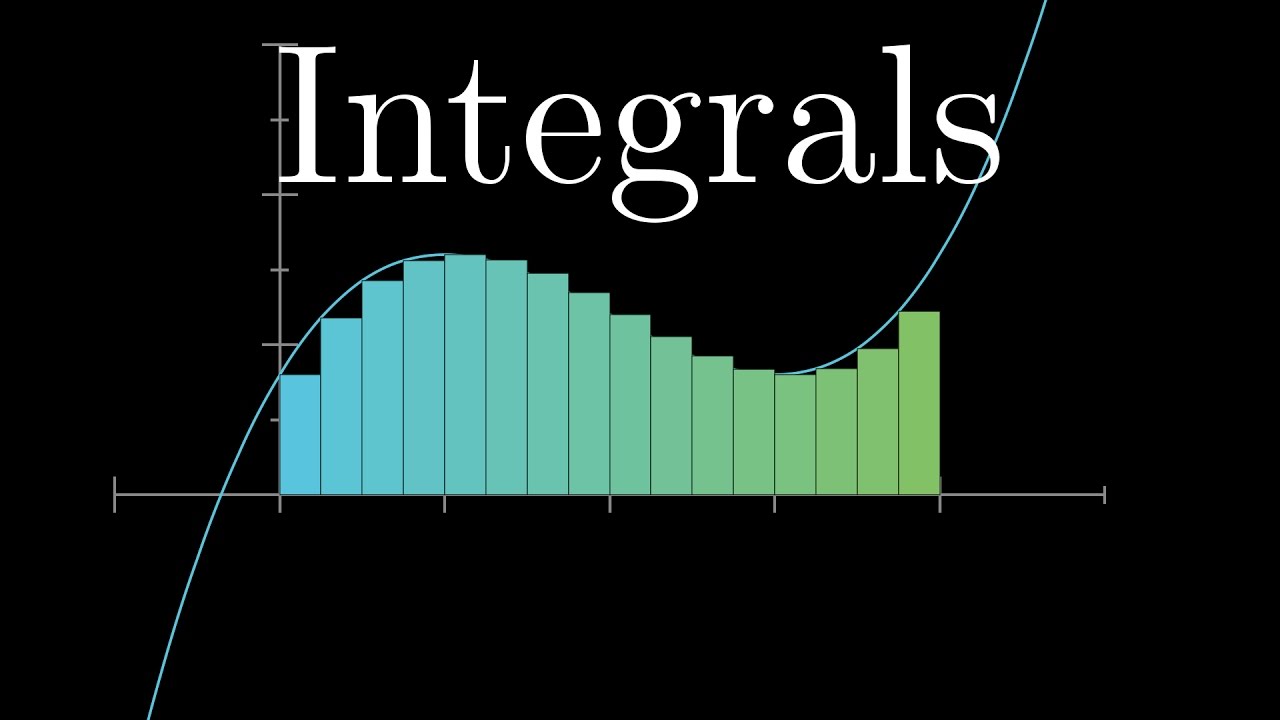
What is an integral? How do you think about it?
Help fund future projects: https://www.patreon.com/3blue1brown
An equally valuable form of support is to simply share some of the videos.
Special thanks to these supporters: http://3b1b.co/lessons/integration#thanks
Check out the Art of Problem Solving: https://aops.com/3blue1brown
--------------...

 lone heartBOT
@late parcel Has your question been resolved?
lone heartBOT
Channel closed
Closed due to timeout
Use .reopen if this was a mistake.
 Available help channel!
Send your question here to claim the channel.
Remember:
• Ask your math question in a clear, concise manner.
• Show your work, and if possible, explain where you are stuck.
• After 15 minutes, feel free to ping <@&286206848099549185>.
• Type the command .close to free the channel when you're done.
• Be polite and have a nice day!
Read #❓how-to-get-help for further information on how to ask a good question, and about conduct in the question channels.
 alpine sable

 lone heartBOT
alpine sable
lone heartBOT
alpine sable
 alpine sable
after breaking the bracket you would get x^3 +1
 glass lichen
You would not
as I just said
x/sqrt(x) = sqrt(x)
not 1
review your exponent laws
alpine sable
x^3 is right tho for the first part?
so what would you put down for the second bit?
wait.
nvm, i coped the q wrong, i’ll retry that again, sorry
ah i see
right okay thanks again
.close
lone heartBOT
Channel closed
Closed by @hoary plume
Use .reopen if this was a mistake.
Available help channel!
Send your question here to claim the channel.
Remember:
• Ask your math question in a clear, concise manner.
• Show your work, and if possible, explain where you are stuck.
• After 15 minutes, feel free to ping <@&286206848099549185>.
• Type the command .close to free the channel when you're done.
• Be polite and have a nice day!
Read #❓how-to-get-help for further information on how to ask a good question, and about conduct in the question channels.
 rich basin
 lone heartBOT
rich basin
rich basin
lone heartBOT
rich basin
rich basin
q5
glass lichen
what about it?
rich basin
I am confused on it
I am stucvk on one part of it

@glass lichen what do you think i shjould do?
rich basin
rich basin
here
glass lichen
Not a question.
rich basin
rich basin
It says at thevery top of the page "Prove by mathematical induction"
rich basin
From the image i sent you, I'm stuck at trying to simplify it
glass lichen
$\frac{a(1-r^n)}{1-r}+ar^{n}$
 ocean sealBOT
Mosh
 glass lichen
by the IH
 glass lichen
what?
also: It's easier to assume k-1 and prove k
just from a writing stand point
rich basin
why is that?
glass lichen
cause the LHS of the RTP statement ends at n-1
assume that $\sum_{i=1}^{k-1}ar^i=\frac{a(1-r^k)}{1-r}$
ocean sealBOT
Mosh
 glass lichen
Your assumption is also written wrong
rich basin
what did i do wrong?
glass lichen
the general term in the summation is clearly not what you have written
glass lichen
wrong
 rich basin
isn't it right?
glass lichen
It isn't
rich basin
I have a j above the r
glass lichen
yes, same difference though
rich basin
Thanks manged t oget the anwer
and also fort (6)
what is a good way to do it?
when you have numbers that can already be factored by 2304 can I just get rid of them?
lone heartBOT
@rich basin Has your question been resolved?
lone heartBOT
@rich basin Has your question been resolved?
rich basin


I am raelly confused on what to do next
<@&286206848099549185>
@crisp iron
.
.
lone heartBOT
Channel closed
Closed due to timeout
Use .reopen if this was a mistake.
rich basin
.reopen
lone heartBOT
✅
lone heartBOT
@rich basin Has your question been resolved?
alpine sable
rich basin
<@!823462958079803432>
Where's the question
rich basin
rich basin
@alpine sable this is the queston
it is at the very top of the page
it is to prove this by induction
 urban pine
the first picture you sent is cut off, it starts at question 2
that's why no one knows what you want (there is no question in that picture...)
rich basin
@urban pine the previous part is not part of the latest image i've sent
the latest image is at the top but it is prove by mathematical induction
urban pine
rich basin
oh sorry i see now
but is this not finished? what do you mean to do next?
rich basin
@urban pine the image above is my working out
and I'm confused how can i get it to the RHS
urban pine
well first off: you're coming from the rhs and trying to show that equals the lhs (otherwise you have assumed what you're trying to prove)
second: the bracketed expression you have substituted with your inductive hypothesis isn't valid (notice the terms aren't exactly the same; e.g. the first term is x^{k-1} c but there is no c in your IH), and even still you'd have to distribute that (x - c) term in the next step.
is there any reason you don't want to use the proof from below? does it not make sense or are you trying to do it independently?
lone heartBOT
@rich basin Has your question been resolved?
rich basin
@urban pine I don't get the proof from below
urban pine
rich basin
<@!281105694013259776> I don't get the proof from below
which step is confusing?
urban pine
i gotta go now, but i do think the lower proof is quite clear
i'd recommend writing it out by hand and following what they do
try to justify each line
i'm sure others here can help you too 🙂
 rich basin
@vale wigeon Im' really confused what to do next?
it doesn't give you what sn+1 equals to ?
 vale wigeon
k, not n. let's not mangle the book's notation unnecessarily.
also you should know that $s_{k+1} = s_k + u_{k+1}$ literally by the definition of ``sum of the first $k$ terms of the series''
ocean sealBOT
Ann
 rich basin
okay that makes sense
@vale wigeon so do i substitute that identity
and then reason it as "given"
vale wigeon
reason it as "given"
are you forced to make a two-column proof for this or something??
rich basin
Shouldn't we give a reason why we can subtitute that?
and for (c) can isay from (b)
substitute n
and we get that n/2n+1 which is equal to the expression they have given us?
vale wigeon
the sum of the first k+1 terms is the sum of the first k terms plus the (k+1)'th term
i don't know how else to say it to you
if you refuse to use this then by all means feel free to struggle along
rich basin
It should be fine, pretty sure the reason system should be lenient
what about for (c)
vale wigeon
induction lmao
rich basin
@vale wigeon how can i use inductino?
vale wigeon
in part (b) you literally proved the inductive step of part c
 vale wigeon
do i understand correctly that you have decided to abandon the previous question?
vale wigeon
so you've decided to continue on your own but chose not to tell me
not even "i think i got it from here, thanks"
kinda rude
rich basin
Sorry, I thought I got it
rich basin
<@&286206848099549185>
 shell widget
@rich basin Try using sin(A+B) = sin(A)cos(B) + cos(A)sin(B)
rich basin
@shell widget Where?
shell widget
q6
 rich basin
yeah

 shell widget
what is it
 shell widget
so take the result for the sum from the previous part which im guessing is (1/5)(n)(n+1)(n+2)(n+3)(n+4)
divide this by n^5 and then take the limt as n goes to infinity
rich basin
yeah
rich basin
yeah
rich basin
I'm confused by your n+1/n part
shell widget
?
shell widget
i divided the sum of the series given which is (1/5)(n)(n+1)(n+2)(n+3)(n+4) by n^5
shell widget
so you divide
 rich basin
so it's just 1/5?
shell widget
yes

 rich basin
<@&286206848099549185>
rich basin
@crisp iron
rich basin
<@&286206848099549185>
lone heartBOT
@rich basin Has your question been resolved?
 small flint

 robust geode
Where did your + come from ?
 wispy wing
idk, is it times?
wispy wing
it was more or less a guess because i knew it wouldnt be timsed
robust geode
Yeah create your own
 noble sinew
rich basin
noble sinew
rich basin
You want to show 6(1^2+…+(k+1)^2)=(k+1)(k+2)(2(k+1)+1)
Not what you wrote down
robust geode
rich basin
You didn't write the proper thing you had to prove
lone heartBOT
Channel closed
Closed due to timeout
Use .reopen if this was a mistake.
lone heartBOT
Available help channel!
Send your question here to claim the channel.
Remember:
• Ask your math question in a clear, concise manner.
• Show your work, and if possible, explain where you are stuck.
• After 15 minutes, feel free to ping <@&286206848099549185>.
• Type the command .close to free the channel when you're done.
• Be polite and have a nice day!
Read #❓how-to-get-help for further information on how to ask a good question, and about conduct in the question channels.
 stuck geyser
I'm trying to graph a sphere on a 3D point cloud but I'm a bit confused on x^2 + y^2 + z^2, if I looped through each point and ran it through that equation, the result would be... ?
lone heartBOT
stuck geyser
I'm trying to graph a sphere on a 3D point cloud but I'm a bit confused on x^2 +...
 lethal tendon
how do you plan on looping through each point?
 bleak ridge
Well that itself isnt even an equation
lethal tendon
looping through each and every point would theoretically give you that sphere but you'll be working in discrete intervals, so maybe you'll have to introduce a tolerance to the r value
stuck geyser
Ohh yeah I see
So for context I'm doing Stand up Math's Christmas tree thing, and I want to change the rbg values of a given LED (point) if it lies on the edge of the sphere, I suppose I would have to write something to turn on the LED if it's near the given point since it's discrete @lethal tendon
lethal tendon
yup that's the right idea
when deciding on the size of that tolerance value, you can maybe consider the average distance between LED pixels, just an idea
stuck geyser
Yeah I figured, I already have some code that finds nearest neighbor but its O(N*M) so it's pretty slow, I think just messing around with a straight distance value would be a lot faster with a decent result.
So to be clear, r^2 = z^2 + y^2 + z^2 gives the distance from the center of the sphere. I should generate a template sphere, and then run all my coords through the same equation and if r is similar enough then change the color
lethal tendon
that only gives the distance from the centre of the sphere if the sphere is centred at the origin
also, the computation speed shouldn't matter too too much right? I heard stand up math's doing pre-rendered displays this year
stuck geyser
Okay I think I got a good start, yeah correct but my code is getting pretty slow and I would rather have it optimized a bit for testing the csv a bunch
thanks for the help 👍
lethal tendon
np, I look forward to seeing your display
stuck geyser
I'll ping you when I get it working
lethal tendon
noice
stuck geyser
!close
 echo socket
It's .close
stuck geyser
.close
lone heartBOT
Channel closed
Closed by @stuck geyser
Use .reopen if this was a mistake.
lone heartBOT
Available help channel!
Send your question here to claim the channel.
Remember:
• Ask your math question in a clear, concise manner.
• Show your work, and if possible, explain where you are stuck.
• After 15 minutes, feel free to ping <@&286206848099549185>.
• Type the command .close to free the channel when you're done.
• Be polite and have a nice day!
Read #❓how-to-get-help for further information on how to ask a good question, and about conduct in the question channels.
 dull onyx
 dull onyx
yes i know that the limit is the derivative definition
but idk how to go on abt writing it
dull onyx
oh really?
urban pine
it's similar looking
dull onyx
i got confused
 tawdry saffron
do you have f(x)?
dull onyx
no
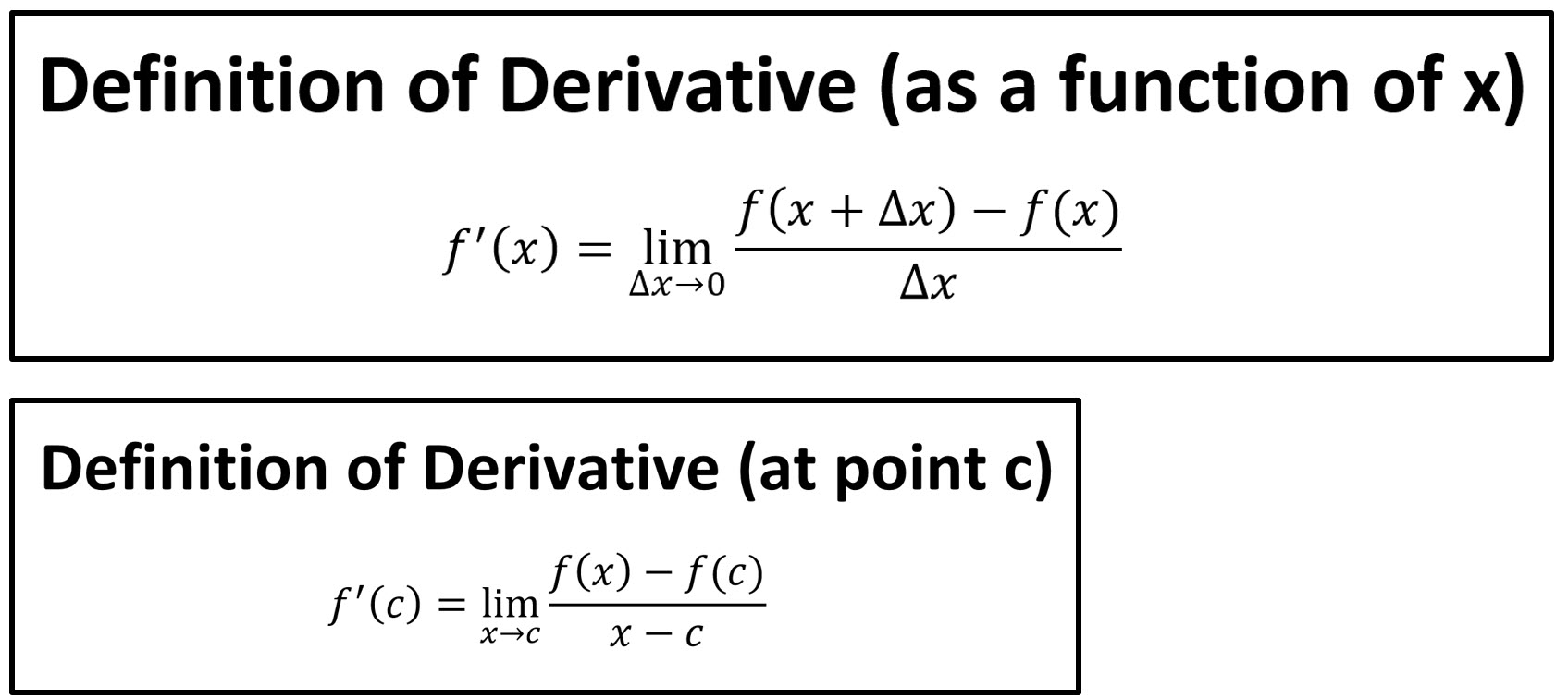 urban pine
the definitions?
dull onyx
no wjat im supposed to do
urban pine
i think if we find f'(2) using that definition and that hint above we have shown the limit exists and so it's differentiable there, and also have found the value

 prisma copper
im pretty sure you have to use the rules of lospital
urban pine
we haven't shown f is differentiable yet
echo socket
For that you need to prove that f(x) is differentiable
prisma copper
oh right, sorry
urban pine
i'd start with the lower definition i posted earlier (deriv at c) and see if you can evaluate it
urban pine
just write f(x); that's your function
echo socket
Wait I think I got it
The limit at 0 of f(2 + h)/h would exist iff f(2 + h) approaches 0, no?
Otherwisely it'd approach ±infinity
dull onyx
yes
echo socket
So we can say that limit at 2 of f(x) is 0
But f(x) is continuous so we can plug in x=2 there
dull onyx
and bc its continuous
echo socket
So f(2) = 0
dull onyx
yep
echo socket
This f(2 + h) - 0 = f(2 + h) - f(2)
dull onyx
that’s what i was thinking but idk how to write it correctly
echo socket
Thus*
dull onyx
yep so it is the derivative limit
echo socket
I think the rest is trivial
echo socket
Yes
Because if it approaches some nonzero value
Then f(2 + h)/h would go to infinity
dull onyx
ohh yes
echo socket
So by contradiction, it approaches 0 instead
dull onyx
so f(2) = 0
echo socket
Yup
dull onyx
then the limit definition of derivative is right there
so its differentiable and the derivative is 3 at x=2
urban pine
echo socket
So we can say that limit at 2 of f(x) is 0
isn't that circular reasoning?
we don't know that the limit exists, that's what we need to show it's differentiable
wait i see that now
echo socket
f is continutous at 2, so the limit of f at 2 exists and is equal to f(2)
lone heartBOT
@dull onyx Has your question been resolved?
urban pine
\begin{align*}
f'(2)
&= \lim_{x \to 2} \frac{f(x) - f(2)}{x - 2} \\
&= \lim_{h \to 0} \frac{f(h + 2) - f(2)}{h} \\
&= \lim_{h \to 0} \frac{f(h + 2)}{h} - \lim_{h \to 0} \frac{f(2)}{h} \\
&= 3 - 0
\end{align*}
citrusmunch
 prisma copper
urban pine
```tex
\begin{align*}
f'(2)
&= \lim_{x \to 2} \frac{f(x) - f(2)}{x - 2} \\
&= \l...
prisma copper
urban pine
```tex
\begin{align*}
f'(2)
&= \lim_{x \to 2} \frac{f(x) - f(2)}{x - 2} \\
&= \l...
I know its not my question, but why is
$$\lim_{h \to 0}\frac{f(2)}{h} = 0$$
??
I really liked the questions and answers you have all given, so it just picked my interest 🐵
ocean sealBOT
Arne
 lone heartBOT
Channel closed
Closed due to timeout
Use .reopen if this was a mistake.
Available help channel!
Send your question here to claim the channel.
Remember:
• Ask your math question in a clear, concise manner.
• Show your work, and if possible, explain where you are stuck.
• After 15 minutes, feel free to ping <@&286206848099549185>.
• Type the command .close to free the channel when you're done.
• Be polite and have a nice day!
Read #❓how-to-get-help for further information on how to ask a good question, and about conduct in the question channels.
 silk steeple
help
lone heartBOT
silk steeple
help
 lone heartBOT
@silk steeple Has your question been resolved?
lone heartBOT
Channel closed
Closed due to timeout
Use .reopen if this was a mistake.
silk steeple
.reopen
lone heartBOT
✅
silk steeple
sorry I went to eat
my bad
so I used the discriminat
then I got it to
4-4k^2+2k=0
the hard thing is
In the book for some reason there’s no answer for this question
strangely
.close
lone heartBOT
Channel closed
Closed by @silk steeple
Use .reopen if this was a mistake.
Available help channel!
Send your question here to claim the channel.
Remember:
• Ask your math question in a clear, concise manner.
• Show your work, and if possible, explain where you are stuck.
• After 15 minutes, feel free to ping <@&286206848099549185>.
• Type the command .close to free the channel when you're done.
• Be polite and have a nice day!
Read #❓how-to-get-help for further information on how to ask a good question, and about conduct in the question channels.
 ruby summit
Hello, I have a problem
lone heartBOT
ruby summit
Hello, I have a problem
ocean sealBOT
Bman
 ruby summit
And is it possible to extend the solution to $\frac{x^b}{b^x} = a$
ocean sealBOT
Bman
 ruby summit
Where I know 'a' and 'b'
 gilded olive
ruby summit
If I know 'a'
gilded olive
ruby summit
If I know 'a'
What is the value of a
 marsh rapids
I.e. a in R+
ruby summit
Or we could try an example of 1
ruby summit
marsh rapids
I.e. a in R+
Yes
marsh rapids
Do you know of the Lambert W function ?
ruby summit
No
 raw shard
oh no not the lambert w function
ruby summit
I can google it but that may take a while, do you have a summary?
raw shard
those are impossible to set up
marsh rapids
It's quite simple here: 2 = e^ln 2, put the denominator as a negative exponent and take the square root of the whole thing. The rest is easy
gilded olive
You will simply multiply by the "cross" method, you will level the foundations and work with the exponents
marsh rapids
The W function is defined as the inverse of x e^x, so u e^u = k <=> u=W(k)
ruby summit
So $x^2 = a2^x$ Then, $x^2 = ae^{Ln(2)}x$
ocean sealBOT
Bman
 marsh rapids
So it's all about putting the equation in the right form, taking W of it, then solving for x
x^2 e^(-x ln(2)) = a, then you can take the sqrt to get rid of the square on the outer x
ruby summit
Ohhh
marsh rapids
Then multiply by -ln2 /2, apply W to isolate -x ln2 /2 and you get x from that
ruby summit
But what happens to $e^{-xLn(2)}$ when I take the square root
raw shard
sorry i’m not understanding this and i really wanna see the solution
ocean sealBOT
Bman
 raw shard
could you type it out
marsh rapids
(a^b)^1/2 = a^(b/2)
ruby summit
Sorry, about me not making that connection
marsh rapids
Haven't written it out but I think it's -2/ln(2) * W(-ln(2)/2 * sqrt(a))
ruby summit
And thank you,
Is there a more, I guess elegant, solution to W(x)?
Rather than saying W(x)
marsh rapids
There are some dirty formulas, either series or integrals
marsh rapids
You can find them on Wikipedia
prisma copper
this sounds like the rule about cheating in assignments on this server...
prisma copper
raw shard
thanks now i know not to help you
not to help johan?
Think about the people who actually solve this by themselves. Also if it isn't "on points" you shouldnt bother and wait for an answer.
It's an "olympiade" that should say something about fair play.. no?
But there is a timelimit on your math skills? Also your math skills force you to beg in EVERY other help channel? Ngl. this is just getting even more bad mannered at this point
glass lichen
Just stick to 1 channel and wait.
No one's entitled to help you as well
Cause you're asking a contest question.
Good idea.
@prisma copper drop it.
prisma copper
didnt see the answer, my bad
marsh rapids
Also for a question like this, you'd probably have a better chance in the math olympiads server
lone heartBOT
@ruby summit Has your question been resolved?
lone heartBOT
Channel closed
Closed due to timeout
Use .reopen if this was a mistake.
Available help channel!
Send your question here to claim the channel.
Remember:
• Ask your math question in a clear, concise manner.
• Show your work, and if possible, explain where you are stuck.
• After 15 minutes, feel free to ping <@&286206848099549185>.
• Type the command .close to free the channel when you're done.
• Be polite and have a nice day!
Read #❓how-to-get-help for further information on how to ask a good question, and about conduct in the question channels.
 pine bronze
Anyone here to help?
lone heartBOT
pine bronze
Anyone here to help?
pine bronze
Oh hello
Can you help me with this geometry question

<@&286206848099549185>
<@&286206848099549185> can you please help me with this question
<@&286206848099549185>
@crisp iron
Please help
 swift jolt
@pine bronze use the process of elimintation
do you know what supplementary angles are?
a is incorrect because L1 and L3 are parallel not supplementary
and you can use this process to eliminate the rest
lone heartBOT
@pine bronze Has your question been resolved?
lone heartBOT
Channel closed
Closed due to timeout
Use .reopen if this was a mistake.
Available help channel!
Send your question here to claim the channel.
Remember:
• Ask your math question in a clear, concise manner.
• Show your work, and if possible, explain where you are stuck.
• After 15 minutes, feel free to ping <@&286206848099549185>.
• Type the command .close to free the channel when you're done.
• Be polite and have a nice day!
Read #❓how-to-get-help for further information on how to ask a good question, and about conduct in the question channels.
 hollow pelican
hi guys for this question when i do u sub, why i do not need to change the limits of u?
 lone heartBOT
hollow pelican
hi guys for this question when i do u sub, why i do not need to change the limit...
lone heartBOT
hollow pelican
hi guys for this question when i do u sub, why i do not need to change the limit...
 gray isle
you should be changing your bounds when doing sub
hollow pelican
gray isle
you should be changing your bounds when doing sub
but if i change my bounds the ans is wrong tho
hollow pelican
the online calculator didnt change the bound too
 gray isle
the online calc is doing indefinite integrals (where there are no bounds)
as opposed to a definite integral which you have which does have bounds
hollow pelican
opps i forgot to screenshot the final working
 gray isle
technically you don't "need" to explicitly change you bounds
but if you use that approach you would need to explicitly write
**x=**1 for your lower bound
and **x=**3 for the upper bound
hollow pelican
gray isle
technically you don't "need" to explicitly change you bounds
but if you use that...
but when i change the bounds i keep getting wrong answer
 gray isle
you're conflating the two approaches
when updating the bounds, the bounds are now related to u
and you don't sub back x anymore
hollow pelican
gray isle
when updating the bounds, the bounds are now related to u
and you don't sub back...
but what do i sub back with?
gray isle
technically once you reach
your upper bound is u=4.0986
and your lower bound is u=3

so sub those values in directly
hollow pelican
gray isle
so sub those values in directly
i subbed in 4.0986 and 3 tho
but its wrong
gray isle
you unnecessarily subbed x=3 + ln|x| back in
where if you updated your bounds earlier such that you have
your upper bound is u=4.0986
and your lower bound is u=3
that is no longer required
hollow pelican
gray isle
where if you updated your bounds earlier such that you have
> your upper bound i...
ohh so i just sub 1 and 3 as the value again?
gray isle
wdym
hollow pelican
gray isle
wdym
in this part
 gray isle
if you choose the route where you sub back u=3+ln|x| then you'd use
x=3 and x=1 for your bounds
if you use that route, you'd need to explicitly write x=3 and x=1 for your bounds while your integral and expressions are in u
hollow pelican
okay
gray isle
 lone heartBOT
@hollow pelican Has your question been resolved?
lone heartBOT
Channel closed
Closed due to timeout
Use .reopen if this was a mistake.
Available help channel!
Send your question here to claim the channel.
Remember:
• Ask your math question in a clear, concise manner.
• Show your work, and if possible, explain where you are stuck.
• After 15 minutes, feel free to ping <@&286206848099549185>.
• Type the command .close to free the channel when you're done.
• Be polite and have a nice day!
Read #❓how-to-get-help for further information on how to ask a good question, and about conduct in the question channels.
 wind hawk
What's the difference between:
$\sum^{\infty}{i=1} ...$
and
$\lim{n \rightarrow \infty} \sum^{n}_{i=1} ...$
lone heartBOT
wind hawk
What's the difference between:
$\sum^{\infty}_{i=1} ...$
and
$\lim_{n \rightarro...
ocean sealBOT
THEBIGTHREE
 glass lichen
nothing
 severe sluice
when people say $\sum^{\infty}{i=1} ...$ they usually mean $\lim{n \rightarrow \infty} \sum^{n}_{i=1} ...$
ocean sealBOT
just bob
 glass lichen
prior is defined as latter
wind hawk
ah alright so its basically just a shorthand
glass lichen
yes
severe sluice
wind hawk
ah alright so its basically just a shorthand
yeah
lone heartBOT
Channel closed
Closed by @wind hawk
Use .reopen if this was a mistake.
severe sluice
(wow, sync)
lone heartBOT
Available help channel!
Send your question here to claim the channel.
Remember:
• Ask your math question in a clear, concise manner.
• Show your work, and if possible, explain where you are stuck.
• After 15 minutes, feel free to ping <@&286206848099549185>.
• Type the command .close to free the channel when you're done.
• Be polite and have a nice day!
Read #❓how-to-get-help for further information on how to ask a good question, and about conduct in the question channels.
 royal patrol
 lone heartBOT
royal patrol
royal patrol
lone heartBOT
royal patrol
royal patrol

I know how to work out everything but i just dont understand how to work out the shape of the curve?
lone heartBOT
@royal patrol Has your question been resolved?
royal patrol
<@&286206848099549185>
lone heartBOT
@royal patrol Has your question been resolved?
 thorny patio
So for a question like this you can follow a general strategy
Factor completely
Find zeros
Find multiplicity of the zeros (odd or even)
Find y intercept
You know the end behavior from the degree
It either vaguely resembles a parabola or a cubic (even degree vs odd degree)
Check for lead coefficient if it's negative you have to flip upside down (reflect over x axis)
In this case
Degree is 4
It's like a parabola sort of
Draw from the top left. It reaches the zero on that side:
(-5,0)
At this point you check multiplicity.
Factored form tells you multiplicity is 1 (exponent on that factor)
Odd multiplicity means you cross through the x axis at that zero
You know that it must touch y intercept down there so you go all the way down to that point
Then you know it must come back up to the next zero:
(4,0)
Multiplicity is 1 again
Odd multiplicity means you pass through x-axis
Pass through and finish from there @royal patrol
lone heartBOT
Channel closed
Closed due to timeout
Use .reopen if this was a mistake.
lone heartBOT
Available help channel!
Send your question here to claim the channel.
Remember:
• Ask your math question in a clear, concise manner.
• Show your work, and if possible, explain where you are stuck.
• After 15 minutes, feel free to ping <@&286206848099549185>.
• Type the command .close to free the channel when you're done.
• Be polite and have a nice day!
Read #❓how-to-get-help for further information on how to ask a good question, and about conduct in the question channels.
Channel closed
Closed due to the original message being deleted
lone heartBOT
Available help channel!
Send your question here to claim the channel.
Remember:
• Ask your math question in a clear, concise manner.
• Show your work, and if possible, explain where you are stuck.
• After 15 minutes, feel free to ping <@&286206848099549185>.
• Type the command .close to free the channel when you're done.
• Be polite and have a nice day!
Read #❓how-to-get-help for further information on how to ask a good question, and about conduct in the question channels.
 pseudo mesa
Show that for any real numbers a, b, c, the following inequality is true:
a^2 + b^2 + c^2 >= ab + ac + bc
lone heartBOT
pseudo mesa
> Show that for any real numbers a, b, c, the following inequality is true:
> a^...
pseudo mesa
Moving them on one side:
a^2 - ab - ac + b^2 - bc + c^2
a(a-b) -c(a-b) + b^2 + c^2
(a-c)(a-b) + b^2 + c^2
No idea what to do now
(a-c)(a-b) + (b+c)^2- 2bc, mby
vale wigeon
there is a geometric solution to this that involves reducing your inequality to Cauchy-Schwarz for three-dimensional vectors
vale wigeon
consider: $(a+b+c)^2 = a^2 + b^2 + c^2 + 2(ab+bc+ca)$
ocean sealBOT
Ann
 vale wigeon
consider also that instead of $a^2 + b^2 + c^2 \overset?\geq ab+bc+ca$ you can prove $2(a^2+b^2+c^2) \overset?\geq 2(ab+bc+ca)$
ocean sealBOT
Ann
 vale wigeon
er wait no nevermind
that won't work as i intended it to
i thought i had it but no
pseudo mesa
vale wigeon
consider also that instead of $a^2 + b^2 + c^2 \overset?\geq ab+bc+ca$ you can p...
and it's precisely this
so that's probably what they wnat me to do
gray isle
consider
LHS = 1/2(a^2 + b^2 + a^2 + c^2 + b^2 + c^2)
vale wigeon
you can't do shit with a^2 + b^2 + c^2 - 2ab - 2bc - 2ca though can you?
it's not the square of a three-term sum
that's what i was (erroneously) trying to hint at
 vague coral
vale wigeon
you can't do shit with a^2 + b^2 + c^2 - 2ab - 2bc - 2ca though can you?
vague coral
vale wigeon
you can't do shit with a^2 + b^2 + c^2 - 2ab - 2bc - 2ca though can you?
you can't
gray isle
the same problem has come up multiple times here
pseudo mesa
(a-b)^2 + (b-c)^2 + (a-c)^2
a^2 - 2ab + b^2
- b^2 -2bc + c^2
- a^2 - 2ac + c^2
=
2a^2 + 2b^2 + 2c^2 - 2ab - 2bc - 2ac | /2
a^2 + b^2 + c^2 - ab - bc - ac
so
1/2((a-b)^2 + (b-c)^2 + (a-c)^2) >= 0, cause every term is >= 0
this?
@gray isle @vale wigeon
well, thanks
.close
lone heartBOT
Channel closed
Closed by @pseudo mesa
Use .reopen if this was a mistake.
Available help channel!
Send your question here to claim the channel.
Remember:
• Ask your math question in a clear, concise manner.
• Show your work, and if possible, explain where you are stuck.
• After 15 minutes, feel free to ping <@&286206848099549185>.
• Type the command .close to free the channel when you're done.
• Be polite and have a nice day!
Read #❓how-to-get-help for further information on how to ask a good question, and about conduct in the question channels.
 noble jacinth
I have a question related slightly to college applications. The school I’m applying for wants to see that I’m learning matrices, linear systems of equations and determinants. This is the current curriculum I’m learning/presenting to them. Is this satisfactory to the requirements? What else should I know and brush up on? For context, I’m applying to a data science course.


 lone heartBOT
noble jacinth
I have a question related slightly to college applications. The school I’m apply...
lone heartBOT
noble jacinth
I have a question related slightly to college applications. The school I’m apply...
@noble jacinth Has your question been resolved?
 supple tundra
You watch the linear algebra course from MIT by gilbert strange
and you should find a good thicc textbook
lone heartBOT
Channel closed
Closed due to timeout
Use .reopen if this was a mistake.
Available help channel!
Send your question here to claim the channel.
Remember:
• Ask your math question in a clear, concise manner.
• Show your work, and if possible, explain where you are stuck.
• After 15 minutes, feel free to ping <@&286206848099549185>.
• Type the command .close to free the channel when you're done.
• Be polite and have a nice day!
Read #❓how-to-get-help for further information on how to ask a good question, and about conduct in the question channels.
dull onyx
prove f(0) = -2a 😐
 lone heartBOT
dull onyx
prove f(0) = -2a 😐
dull onyx
lone heartBOT
dull onyx
prove f(0) = -2a 😐
dull onyx
i feel so stuoid thank u😭
when i differentiate something like this do i treat x as a constant
echo socket
Depends on with respect to what variable are you differentiating
dull onyx
i gotta prove f’(x) = 2x + f’(0)
yep i differentiated with respect to y
and plugged 0 in and got it
lone heartBOT
@dull onyx Has your question been resolved?
lone heartBOT
Channel closed
Closed due to timeout
Use .reopen if this was a mistake.
lone heartBOT
Available help channel!
Send your question here to claim the channel.
Remember:
• Ask your math question in a clear, concise manner.
• Show your work, and if possible, explain where you are stuck.
• After 15 minutes, feel free to ping <@&286206848099549185>.
• Type the command .close to free the channel when you're done.
• Be polite and have a nice day!
Read #❓how-to-get-help for further information on how to ask a good question, and about conduct in the question channels.
 small portal
how would you choose bin sizes / the amount of bins for a time series? There seem to be several ways and some academic papers even say that they just chose bins based on visualisation. My time series looks like this:
timestamp value
0 2016-01-01 00:00:00+00:00 168.409707
1 2016-01-01 01:00:00+00:00 178.316160
2 2016-01-01 02:00:00+00:00 231.811009
3 2016-01-01 03:00:00+00:00 218.932619
4 2016-01-01 04:00:00+00:00 159.493899
... ...
8758 2016-12-30 22:00:00+00:00 291.019066
8759 2016-12-30 23:00:00+00:00 275.181294
[8760 rows x 2 columns]
standard deviation: 86.979259
min value : 34.635974
max value: 582.499458
mean: 228.99427
lone heartBOT
small portal
how would you choose bin sizes / the amount of bins for a time series? There see...
@small portal Has your question been resolved?
lone heartBOT
Channel closed
Closed due to timeout
Use .reopen if this was a mistake.
Available help channel!
Send your question here to claim the channel.
Remember:
• Ask your math question in a clear, concise manner.
• Show your work, and if possible, explain where you are stuck.
• After 15 minutes, feel free to ping <@&286206848099549185>.
• Type the command .close to free the channel when you're done.
• Be polite and have a nice day!
Read #❓how-to-get-help for further information on how to ask a good question, and about conduct in the question channels.
silk steeple
help
lone heartBOT
silk steeple
help
silk steeple

question 19
I multiplied the top by the bottom to get rid of the denominator
And I’ve gotten
P=6x^3 -3x^2+6x-3
gray isle
can you show all work leading up to that
 gray isle
that's no longer p
gray isle
thats p*(2x-1)^2
the simplest approach would be to sub in your p to the lhs and see what happens
 glass lichen
now do what Ramonov suggested
 silk steeple
I don’t know how to substitute
silk steeple
The discriminant?
gray isle
don't overthink it
the basic principle of sub is to replace something with something of equivalent value
so your first step could be to first replace/substitute the ps in the lhs with whatever you're told p is
 gray isle
wdym?
silk steeple
I actually don’t know what to do
I see nothing to substitute except for the question
gray isle
in case it wasn't clear,
replace the ps in
p^2 - 3(p+3)
with whatever you're told p is.
i.e with 3(x^2+1)/(2x-1)
gray isle
why?
silk steeple
(P+3)
gray isle
what?
silk steeple
 gray isle
you're overthinking and/or not reading what I'm saying
silk steeple
I’m trying to understand
gray isle
like how would show
if x=3, then x-1>0
gray isle
yeh...
silk steeple
hm
lone heartBOT
@silk steeple Has your question been resolved?
lone heartBOT
Channel closed
Closed due to timeout
Use .reopen if this was a mistake.
Available help channel!
Send your question here to claim the channel.
Remember:
• Ask your math question in a clear, concise manner.
• Show your work, and if possible, explain where you are stuck.
• After 15 minutes, feel free to ping <@&286206848099549185>.
• Type the command .close to free the channel when you're done.
• Be polite and have a nice day!
Read #❓how-to-get-help for further information on how to ask a good question, and about conduct in the question channels.
 tame light
 lone heartBOT
tame light
tame light
lone heartBOT
tame light
tame light
i should be able to do this by myself but somehow stuck lol
vague coral
did you try squaring a/b + b/a = 5 ?
tame light
and then..?
lethal tendon
maybe try rewrite both given equations in terms of (a + b) and ab
lone heartBOT
@tame light Has your question been resolved?
Channel closed
Closed by @tame light
Use .reopen if this was a mistake.
Available help channel!
Send your question here to claim the channel.
Remember:
• Ask your math question in a clear, concise manner.
• Show your work, and if possible, explain where you are stuck.
• After 15 minutes, feel free to ping <@&286206848099549185>.
• Type the command .close to free the channel when you're done.
• Be polite and have a nice day!
Read #❓how-to-get-help for further information on how to ask a good question, and about conduct in the question channels.
 warped spruce
why does it true? can someone please give me an example with numbers?

 tight locust
warped spruce
why does it true? can someone please give me an example with numbers?
tight locust
warped spruce
why does it true? can someone please give me an example with numbers?
3/2 = 3/2
So 3=3
echo socket
Didn't see that both denominators are AB
warped spruce
yes but it could be 6/3, 9/3 and this is not the same number, or is it?
vale wigeon
6/3 ≠ 9/3. the top equality doesn't hold.
tight locust
This is what we call a biconditional statement
It goes both ways
The top is true only if the bottom is true and the bottom is true only if the top is true
Haha
vale wigeon
well without context we can't tell you either
it might be that you ripped this out of a geometry problem
but then you would have to show us a diagram with the points A, B, E, F, G, H labeled
warped spruce
 tight locust
warped spruce
but I didn't understand why the top is true
tight locust
warped spruce
but I didn't understand why the top is true
If x = y then x/z = y/z. We take this as an axiom of the reals
vale wigeon
this is not an axiom
do not spread misinfo
but also is there anything else given about this diagram
tame light
can we have the whole question lol?
warped spruce
vale wigeon
but also is there anything else given about this diagram
yes but I was able to prove this
warped spruce
warped spruce
why does it true? can someone please give me an example with numbers?
.
so I just need to understand why if the button is equal so the top is equal
vale wigeon
???
tame light
lmao what
warped spruce
warped spruce
why does it true? can someone please give me an example with numbers?
idk why this is true
vale wigeon
so first you say you couldn't understand why EG/AB = HF/AB, but now you say you were able to prove it?
warped spruce
vale wigeon
so first you say you couldn't understand why EG/AB = HF/AB, but now you say you ...
nonon hahahah I didn't prove it, you can say it.. it is a rule. but I dont undersatnd why this rule is true
tight locust
It's true by reflexion haha. If x=y then x/3 = y/3 because x/3 = x/3. You can't get much simpler than that
warped spruce
I am a little bit dumb to be honest hahahah
vale wigeon
tight locust
It's true by reflexion haha. If x=y then x/3 = y/3 because x/3 = x/3. You can't ...
what's "reflexion"
are you trying to spread misinfo / terminology misuse again
warped spruce
hahahahaha
warped spruce
yes
warped spruce
yes
tight locust
vale wigeon
what's "reflexion"
The reflexive property
warped spruce
6/3 != 9/3
vale wigeon
EF/AB = HG/AB
multiply both sides by AB
(EF/AB) * AB = (HG/AB) * AB
simplify
EF = HG
warped spruce
so you can't say that if the button is equal so the top for my opinion
tight locust
"Because x/3 = x/3"
vale wigeon
@warped spruce i think you might want to remind yourself of what "IF ___ THEN ___" means
warped spruce
vale wigeon
EF/AB = HG/AB
multiply both sides by AB
(EF/AB) * AB = (HG/AB) * AB
simplify
EF ...
now I understand because of the math you did
but idk if you put numbers like EF =6 and HG = 3, you will get a wrong answer no?
6 / 3 != 3/3
warped spruce
this means that the 2 above numbers aren't for sure equal
vale wigeon
it's like when someone says "if it rains then my daughter stays inside" and you respond with "but it's sunny and she's playing outside, so you're lying!"
we're taking EF/AB = HG/AB as a premise
we assume it is true and everything we do afterwards follows from it
warped spruce
vale wigeon
we're taking EF/AB = HG/AB as a _premise_
so without numbers?
vale wigeon
we do not give values to any of the three lengths involved in the equation, no.
warped spruce
yes you can prove it by multiplaying both sides with AB sure
but if you put numbers it wont worj
work
vale wigeon
if you feed bullshit in you'll get bullshit out
i fail to see how this is in any way surprising
severe sluice
generally we can perform any valid action on both sides of an equation to get another equivalent equation
severe sluice
warped spruce
<@!684674576998858770> <@!684674576998858770> 🙂
that's both me??
warped spruce
ohhhh XD
@vale wigeon TYYY
I am so out today
hahahah
anyway Ty guys!
.close
lone heartBOT
Channel closed
Closed by @warped spruce
Use .reopen if this was a mistake.
warped spruce
wait @vale wigeon what happens when you multiplay AB/HG * AB
lone heartBOT
Available help channel!
Send your question here to claim the channel.
Remember:
• Ask your math question in a clear, concise manner.
• Show your work, and if possible, explain where you are stuck.
• After 15 minutes, feel free to ping <@&286206848099549185>.
• Type the command .close to free the channel when you're done.
• Be polite and have a nice day!
Read #❓how-to-get-help for further information on how to ask a good question, and about conduct in the question channels.
warped spruce
how does the equestion will see before you simplify
vale wigeon
we never had any AB/HG? we had HG/AB...
warped spruce
my problem is that idk how to simplify stuff
so ye
it doesn't matter
just for the example
vale wigeon
you do not know how to simplify (HG/AB)*AB into just HG?
warped spruce
I forgot hahahah
Ik you can do it because I mermorized it
and I want to understand the math behind it
gray isle
wdym
warped spruce
I don't understand why you can reduce the a

like the math behind it
you divide by a each side?
warped spruce
sheshhhhhhh
tyyyy bro!
🙂
so like a/ sinB * a = 2a/ a right @gray isle ?
and then you just reduce the a
gray isle
it feels like you're missing parentheses
warped spruce
wdum?
gray isle
because it looks like you're multiplying the left side by a
but dividing the right side by a
warped spruce
so is it a/ sinB/a?
gray isle
no
(a/(sin(B))/a
or (a/ (a * sin(B))
parentheses are required when typing stuff
\verb|a/ sinB * a| is interpreted as $\frac{a}{\sin(B)} \cdot a$
ocean sealBOT
ℝamonov
 gray isle
even though you may have intended
$$\frac{a}{\sin(B)\cdot a}$$
typing stuff in a line of text does not have the benefit from horizontal fraction lines
ocean sealBOT
ℝamonov
 gray isle
so parentheses are required to communicate clearly
warped spruce
if you want to divide AB/CD by a, you do AB/(CD * a)
gray isle
when communicating in plain text, yeh
when writing it out on paper, (or using math type)
$$\frac{AB}{CD \cdot a}$$
isn't an issue
ocean sealBOT
ℝamonov
 warped spruce
alright and multiplaying AB/CD * a in a paper: AB * a / CD right?
 tired pagoda
warped spruce
if you want to divide AB/CD by a, you do AB/(CD * a)
tired pagoda
warped spruce
if you want to divide AB/CD by a, you do AB/(CD * a)
Bro this is wrong
warped spruce
why bro?
tired pagoda
AB/CD*1/a
gray isle
they're equivalent singh
gray isle
$\frac{AB}{CD} \cdot a$ and $\frac{a\cdot AB}{CD}$ are both fine
ocean sealBOT
ℝamonov
 gray isle
choose whichever: \
$\frac{\br{\frac{AB}{CD}}}{a}$ \ \
$\frac{AB}{a\cdot CD}$ \ \
$\frac{AB}{CD}\cdot \frac1a$
tired pagoda
How this bot works
ocean sealBOT
ℝamonov
 gray isle
basic guide can be found in #resources
tired pagoda
gray isle
basic guide can be found in <#488106178094694400>
Thanks
warped spruce
Thanks bro
gray isle
basic understanding of functions, mathematical notation, parentheses usage helps a lot
warped spruce
@gray isle thanks a lot bro 🙂
lone heartBOT
@warped spruce Has your question been resolved?
Channel closed
Closed by @warped spruce
Use .reopen if this was a mistake.
lone heartBOT
Available help channel!
Send your question here to claim the channel.
Remember:
• Ask your math question in a clear, concise manner.
• Show your work, and if possible, explain where you are stuck.
• After 15 minutes, feel free to ping <@&286206848099549185>.
• Type the command .close to free the channel when you're done.
• Be polite and have a nice day!
Read #❓how-to-get-help for further information on how to ask a good question, and about conduct in the question channels.
 dusky osprey
 lone heartBOT
dusky osprey
dusky osprey
lone heartBOT
dusky osprey
dusky osprey
idk wgat to do
echo socket
Is this a test?
 echo socket
Here depth of the bowl would be the minimum value of y
dusky osprey
is that bc itd yhe lowest point
echo socket
Yes
echo socket
A parabola y = ax^2 + bx + c reaches its maximum or minimum (in this case minimum) at x = -b/2a
dusky osprey
-b/2a?
echo socket
Yes
dusky osprey
Why is it that
echo socket
echo socket
A parabola y = ax^2 + bx + c reaches its maximum or minimum (in this case minimu...
Where a,b,c are coefficients as shown here
echo socket
dusky osprey
Why is it that
Oh, you can prove that using calculus
Have you been introduced to derivatives yet?
dusky osprey
Im not even sure
it came up as mock gcse revison so i should know it
oh
r using the quadratic formula
echo socket
You can either substitute x = -b/2a into the equation to get the lowest value of y
Or define value M such that $\frac{x^2}{10} - 3x \ge M$ for all x
ocean sealBOT
Touch Our Beans
 echo socket
(Clearly the first way is simpler)
 echo socket
Well if you view x = -b/2a as midpoint between the quadratic roots, then yeah
 coral moss
I think differentiation is either in GCSE further maths or A-level (can't remember) so at gcse you have to complete the square to find the minimum/maximum point
dusky osprey
this is the mark scheme but they done complete sqaee
 dusky osprey
coral moss
I think differentiation is either in GCSE further maths or A-level (can't rememb...
dusky osprey
coral moss
I think differentiation is either in GCSE further maths or A-level (can't rememb...
yeah i think so cuz idk what that other stuff is
coral moss
the method using x = -b/2a is simpler to do but uses "more advanced concepts"
tbh if it's GCSE id say just complete the square cuz they might not give you the marks for differentiating even though it's technically better
coral moss
yeah you need to get rid of the 15^2
like here -> x^2 + 14x = (x+7)^2 - 196
because if you do (x-15)^2 you get left over with + 225
dusky osprey
Oksy
alpine sable
Completing the square seems silly
dusky osprey
I havennt been taught anything else
coral moss
yeah it is but it's the way we had to do it at GCSE
lone heartBOT
Channel closed
Closed by @dusky osprey
Use .reopen if this was a mistake.
Available help channel!
Send your question here to claim the channel.
Remember:
• Ask your math question in a clear, concise manner.
• Show your work, and if possible, explain where you are stuck.
• After 15 minutes, feel free to ping <@&286206848099549185>.
• Type the command .close to free the channel when you're done.
• Be polite and have a nice day!
Read #❓how-to-get-help for further information on how to ask a good question, and about conduct in the question channels.
 quaint pine
is 1/A+1/B=AB/A+B? NO it isn't but what if we flip the value of the left side of the equation? meaning if we plug in values for A and B in the left side of the equation and then we flip the fraction is the above identity equal or no?
lone heartBOT
quaint pine
is 1/A+1/B=AB/A+B? NO it isn't but what if we flip the value of the left side of...
quaint pine
I tried it for a few values and it worked but idk if it works with ALL NUMBERS
can someone confirm?
ocean sealBOT
Muhammad Hussaini

 median dirge
Well.
quaint pine
it wouldn't be equal ik
median dirge
$\frac{1}{A}+\frac{1}{B}\ne\frac{AB}{A+B}$
ocean sealBOT
Muhammad Hussaini
 quaint pine
Yes
but my question is
if we plug in values for A and B in the left side of equation and we got 3/5 for example
and then we flip it so we get 5/3
would that ALWAYS be equal to the right side of the equation if we plug in the same values
median dirge
Lool
Look
When you flip a valu
Value
It is like this
Say.
I flip 2
What will i get
quaint pine
1/2
median dirge
ocean seal
**Muhammad Hussaini**
The equation will be true only for this
median dirge
ocean seal
**Muhammad Hussaini**
The way youre saying that i flip this value...
Means
You arrive at what i showed first
lone heartBOT
Channel closed
Closed by @quaint pine
Use .reopen if this was a mistake.
Available help channel!
Send your question here to claim the channel.
Remember:
• Ask your math question in a clear, concise manner.
• Show your work, and if possible, explain where you are stuck.
• After 15 minutes, feel free to ping <@&286206848099549185>.
• Type the command .close to free the channel when you're done.
• Be polite and have a nice day!
Read #❓how-to-get-help for further information on how to ask a good question, and about conduct in the question channels.
 cedar bridge
can anyone help me with descriptive geometry?
lone heartBOT
cedar bridge
can anyone help me with descriptive geometry?
echo socket
No need to ask that question in several channels at once
cedar bridge
I can't find anyone that knows about it
lone heartBOT
@cedar bridge Has your question been resolved?
glass lichen
cedar bridge
I can't find anyone that knows about it
Don't ask to ask........
cedar bridge
im looking for help to answer question on the subject dumbass
why would i just want to know that information
glass lichen
How do you expect to get help on a question you haven't asked?
cedar bridge
you cant answer it if you dont know descriptive geometry
glass lichen
How do you know I am not be able to help?
Like... do you see the absurdity of what you're saying?
Drop the attitude and ask a question like the typical user.
cedar bridge
3.Represent, by its projections, a regular triangular prism, with the base [ABC] contained in a ramp plane .⎯hefdistant from the axis x 4 and 5 cm, respectively;⎯the edge [AB]of the base is contained in a straight line oblique whose frontal projection is 75º with the x(opened to the left) axis; the apex is 4.5 in height; the edges of the base of the prism measure 5 cm; the height measures 6 cm.

thats what i thought
you cant answer it
 late bridge
cedar bridge
you cant answer it
late bridge
cedar bridge
you cant answer it
whether they can answer or not is not the point, asking to ask is a waste of time, you could've posted the question right away to begin with
lone heartBOT
@cedar bridge Has your question been resolved?
lone heartBOT
Channel closed
Closed due to timeout
Use .reopen if this was a mistake.
lone heartBOT
Available help channel!
Send your question here to claim the channel.
Remember:
• Ask your math question in a clear, concise manner.
• Show your work, and if possible, explain where you are stuck.
• After 15 minutes, feel free to ping <@&286206848099549185>.
• Type the command .close to free the channel when you're done.
• Be polite and have a nice day!
Read #❓how-to-get-help for further information on how to ask a good question, and about conduct in the question channels.
 high raven
i have a question about dice probability. I've tried to phrase it in a general mathematical way, but let me know if you want me to explain what I'm trying to do in terms of the game.
If i have x number of y-sided dice
how would I calculate the probability that any two dice from the dice rolled would add up to the number rolled by a 2y-sided die
lone heartBOT
high raven
i have a question about dice probability. I've tried to phrase it in a general m...
high raven
(for example, if I rolled 5 4-sided dice, what is the probability that two of them add to 6 (the result of an 8-sided die)
 arctic gust
you also threw the 8 sided die?
arctic gust
k
arctic gust
high raven
i have a question about dice probability. I've tried to phrase it in a general m...
i don't think i can answer this with the given information.
because you didn't mention exactly what number appears on the 2y sided die
it could even be a 1
high raven
Sorry, I should be more clear
I'm not looking for a solution, I'm looking for an equation, or a place to start building an equation that would let me see the answer for a number of variables
I'm mostly confused on how to put dice rolls into an equation at all.
arctic gust
i think there's no chance cos you cant get a 1 from the sum of 2 dice
high raven
I think I'm explaining it badly. I'll close this and come back when I have more time to show what I mean
arctic gust
ok
lone heartBOT
Channel closed
Closed by @high raven
Use .reopen if this was a mistake.
Available help channel!
Send your question here to claim the channel.
Remember:
• Ask your math question in a clear, concise manner.
• Show your work, and if possible, explain where you are stuck.
• After 15 minutes, feel free to ping <@&286206848099549185>.
• Type the command .close to free the channel when you're done.
• Be polite and have a nice day!
Read #❓how-to-get-help for further information on how to ask a good question, and about conduct in the question channels.
swift jolt
 lone heartBOT
swift jolt
urban pine
lone heartBOT
swift jolt
urban pine
i like to solve them individually and then plot them on a numberline
since it's OR you have to include the solutions from both
swift jolt
Ummm that's kinda confusing
 icy trail
solve them individually first
lone heartBOT
Channel closed
Closed by @swift jolt
Use .reopen if this was a mistake.
Available help channel!
Send your question here to claim the channel.
Remember:
• Ask your math question in a clear, concise manner.
• Show your work, and if possible, explain where you are stuck.
• After 15 minutes, feel free to ping <@&286206848099549185>.
• Type the command .close to free the channel when you're done.
• Be polite and have a nice day!
Read #❓how-to-get-help for further information on how to ask a good question, and about conduct in the question channels.
alpine sable
when 3 planes have a single intersection
lone heartBOT
alpine sable
when 3 planes have a single intersection
alpine sable
is that a sheaf?
when there is a single point where they intersect
either thats a sheaf, or its a sheaf when they all intersect along a single line
 knotty sleet
A sheaf is when they intersect in a line
knotty sleet
Yeah that
 elfin snow
 knotty sleet
Basically yh
alpine sable
can it be a prismatic intersection if the 3 planes form a matrix which is singular?
knotty sleet
So the planes bound a triangular prism
alpine sable
alpine sable
can it be a prismatic intersection if the 3 planes form a matrix which is singul...
i thought it couldn't
but im looking at this question rn
which is singular but apparently its prismatic intersection
knotty sleet
Yeah if it's prismatic then there's no solution
Because there's nowhere that lies on all three planes
alpine sable
hmm im slightly confused wont lie
knotty sleet
So the matrix is singular
knotty sleet
No
knotty sleet
The other way around
knotty sleet
If there's no solution then it's singular
alpine sable
which means it can either be no solutions or infinitely many solutions?
knotty sleet
THey also can't be the same plane
alpine sable
otherwise if determinant is not zero, then it is a single intersection
knotty sleet
And can't be two parallel with the third cutting them
alpine sable
oh yes theres that shape too
2 parallel planes with 1 cutting them both
thats 2 lines of solution
so thats 5 different things they can be right:
knotty sleet
That's no solution