#help-0
1 messages · Page 856 of 1
 alpine sable
 violet panther
No…
alpine sable
okay
it says tangent at 3, 6 passes through origin
this means you can draw a line from 0, 0 to 3, 6
violet panther
Ohh okay
alpine sable
the slope of this line is 2 right?
violet panther
Yes
alpine sable
and make the f'(2) equal to 2
and find k
-2 I guess
yeah -2=k
can you complete the rest?
oh we already finished it
aight
alpine sable
we already found the value of f'(2)
by another method
what I do is just to put 2 there
violet panther
The textbook answer said k is equal to -4
alpine sable
I am going to check
violet panther
I got it until here
 alpine sable
sorry
f'(3) is what we found
because the x value is 3 there
I drew it give me a second

 violet panther
If f’(3)= 2(3) plus k, then the k will be -6?
alpine sable
the function passes through (3, 6)
that means, when you put 3 you get 6
to the original function which is f(x)
not f'(x)
alpine sable
violet panther
I’m sorry for asking you a lot of question
np im here till you understand
 alpine sable
tf is $\frac{dy}{dx}=2$
 ocean sealBOT
junait
 alpine sable
you cannot say that
violet panther
I thought the slope is 2?
alpine sable
yes the slope is 2 but it is 2 only at the point 3, 6
violet panther
Oh okay
violet panther
Ah ya
alpine sable
I suggest you learn the basic idea of derivative and where it comes from
violet panther
 alpine sable
if you know it very well, you will solve them much faster
violet panther
alpine sable
if you know it very well, you will solve them much faster
Ya I agree, my class started to learn this today
alpine sable
violet panther
f(3)=x^2+kx+c this statement is incorrect
that looks like the function is depending on y or something other than x
but the rest is okay
violet panther
violet panther
Could you show me the working how to get k=-4?
alpine sable
ok
violet panther
Thank you so much
alpine sable
violet panther
firstly, this function you drew here is not f(x)
the graph I mean
erase it
violet panther
Ok
 manic forge
can anyone help with algebra work?
alpine sable
manic forge
can anyone help with algebra work?
this channel is occupied, you better go another channel
now we know f(3)=6
violet panther
Yes
violet panther
Ya
alpine sable
f'(x) function always gives you the slope at the point you write in x
instead of x I mean
okay
alpine sable
alpine sable
we know f'(3) is 2
do it
are you a hundered percent confident about functions?
 alpine sable
integrate the f'(x) and rest is easy
 devout kite
 alpine sable
it's okay
violet panther
alpine sable
it's okay
I really appreciate
alpine sable
np, good luck
 ionic pilot
hi
devout kite
hey
ionic pilot
can somebody solve this
find K somehow that alpha * beta= 3
(k-1)x^2 + 5x -8= 0
ik the formula p= c/a
but 8 cant be divided to anything to be 3
 glass lichen
$\frac{-8}{k-1}=3$
ocean sealBOT
Mosh
 glass lichen
since the roots 2 at a time is c/a
ionic pilot
my problem is 8/n cant be 3 :\ its like almost 2.6 and k will be 3.6
 tight locust
yes it can
i think you will see it better if i tell you this
$x = y \implies 1/x = 1/y$
ocean sealBOT
EndTimes
 glass lichen
ionic pilot
my problem is 8/n cant be 3 :\ its like almost 2.6 and k will be 3.6
glass lichen
ionic pilot
my problem is 8/n cant be 3 :\ its like almost 2.6 and k will be 3.6
have you done anything to do with fractions by chance?
 static saffron
i am currently trying to explain why $\phi(\vec r) = \frac{\sigma R}{\epsilon r} (r+R - |r-R|)$ is constant for $r<R$ and for $r>R$ is proportional to 1/r. I dont really have a good explanation though. Anyone else?
ocean sealBOT
derdotte

 zealous basalt
why isnt this working?
 static saffron
this channel is in use...
 bleak cobalt
 static saffron
people really dont read
static saffron
ocean seal
**derdotte**
is still an open question..
ionic pilot
glass lichen
have you done anything to do with fractions by chance?
Guesing all the way
Thanks for your help and time i moved on to next questions
static saffron
you probably have learned what the laws for square roots are. Try them
 buoyant kayak
no
 placid zinc
√[3]√√[3] doesn't simplify very well
 uncut depot
oh
buoyant kayak
you can still get an exact answer fairly easily
uncut depot
how do i do that
buoyant kayak
change the roots to exponents and see what you can do from there
placid zinc
Oh hehe it does simplify pretty well
uncut depot
what's the answer?
buoyant kayak
that's for you to figure out
buoyant kayak
buoyant kayak
change the roots to exponents and see what you can do from there
did you try this?
uncut depot
yea ig
buoyant kayak
and what did you get?
uncut depot
uh
buoyant kayak
ya didnt try it did ya
buoyant kayak
what is your answer?
buoyant kayak
very close
placid zinc
static saffron
i am currently trying to explain why $\phi(\vec r) = \frac{\sigma R}{\epsilon r}...
Let's say r < R. Then |r - R| = R - r
All of the r will cancel in this case.
Let's say r > R. Then |r - R| = r - R
buoyant kayak
what did you change $\sqrt{\sqrt{3}}$ into?
ocean sealBOT
a disappointing son
 uncut depot
⁴√3
buoyant kayak
right
uncut depot
is that wrong?
buoyant kayak
and you changed $\sqrt{3}$ into...?
ocean sealBOT
a disappointing son
 buoyant kayak
that should be changed into something
using exponents
you're multiplying $\sqrt{\sqrt{3}}$ by $\sqrt{3}$
ocean sealBOT
a disappointing son
 uncut depot
is it 3^1/2
buoyant kayak
yes
static saffron
placid zinc
Let's say r < R. Then |r - R| = R - r
All of the r will cancel in this case.
Le...
yeah did it a second ago myself. Thank you though 🙂
buoyant kayak
now, use exponent rules
uncut depot
so its 3^1/2 4root3?
buoyant kayak
yes, but you can simplify that
uncut depot
okay
buoyant kayak
what is $\sqrt[4]{3}$ using exponents?
ocean sealBOT
a disappointing son
 ocean sealBOT
a disappointing son
 buoyant kayak
can you simplify that?
buoyant kayak
it is
uncut depot
how
buoyant kayak
$a^b \cdot a^c = a^{b+c}$
ocean sealBOT
a disappointing son
 uncut depot
so its 3^3/4?
buoyant kayak
right :)
 severe star

 vestal aspen
what
 wild shard
interest maybe
zealous basalt
why is this wrong?

 storm lava
i think it counts it as wrong cuz you didn't write y=
zealous basalt
storm lava
i think it counts it as wrong cuz you didn't write y=
oh god
you're right
I spent 45 minutes looking for what I did wrong
storm lava
😉
 sour dove
zealous basalt
I spent 45 minutes looking for what I did wrong
sour dove
zealous basalt
I spent 45 minutes looking for what I did wrong
Dang dude I"m sorry. You are correct though, so nice job!
 zealous basalt
sour dove
Dang dude I"m sorry. You are correct though, so nice job!
zealous basalt
sour dove
Dang dude I"m sorry. You are correct though, so nice job!
thx!
 modern dagger
Hi. How can I represent this expression as a sum of three squares: $$\lambda_1^2 + \lambda_2^2 + \lambda_3^2 + 6 \lambda_1\lambda_2 + 2 \lambda_1\lambda_3 + 2 \lambda_2 \lambda_3$$?
ocean sealBOT
OleG
 modern dagger
Hi. How can I represent this expression as a sum of three squares: $$\lambda_1^2...
modern dagger
modern dagger
Hi. How can I represent this expression as a sum of three squares: $$\lambda_1^2...
I can represent it only as $$\lambda_1^2 + (\lambda_2 + \lambda_3)^2 + 6 \lambda_1\lambda_2 + 2 \lambda_1\lambda_3 $$, but this is only 2 squares.
ocean sealBOT
OleG

 wide raven
ive not yet completely solved the question
but i can tell that $\lambda_1$ and $\lambda_2$ are of same sign
ocean sealBOT
Sabertoothed Rat
 modern dagger
wide raven
do you have any moe info?
modern dagger
wide raven
do you have any moe info?
No
wide raven
ok then
 glossy garden
hey so if you flip 100 coins and take the sum of the number of heads, is it statistically the same thing as randomly generating a number from 0-100?
 unkempt dew
Nope
 odd helm
 topaz atlas
Umm guys how do u calculate a probability?
glass lichen
depends on what you're given
glass lichen
no
 crude moth
Guys im so lost what is my teacher trying to tell me

 calm anchor
She must have typed something wrong
crude moth
Okok I’ll email her
calm anchor
Im having trouble with b)
The function y = x^2 - 8x + a is given.
How do we choose a so that:
a) the graph passes through the point (2, 6)
b) the minimum value of the function becomes -6
c) the minimum point of the curve is on the x-axis
d) the curve does not intersect the x-axis?
Yea got that
But what about b?
Im guessing you should calculate the line of symmetry
Which is 4
And then plug that into x
y = 4^2 - 8•4 + a
y = a - 16
And then plug in -6 into y
- 6 = a - 16
a = 10
crude moth
Like arent both of these options correct?

 fast mantle
ABCD is a square. P, Q and O are the mid-points of AB, BC and AC respectively. AQ intersects PO at R. If AD = 9 cm, then the length of AR is??
 robust epoch
This is probably really simple, but how would one scale a normalized set of [0, 1] to [-2.5, 1] ?
fast mantle
calm anchor
<@793368818147524618> gonna try yours
got anything yet??
 fresh parcel
robust epoch
This is probably really simple, but how would one scale a normalized set of [0, ...
fresh parcel
robust epoch
This is probably really simple, but how would one scale a normalized set of [0, ...
use the opposite of the normalization formula
scale 0, 1 back to -2.5, 1
im not too sure though
robust epoch
I'll give that a shot, IDK why i'm brainfarting here. 😒 ty
robust epoch
@fresh parcel glsl float scale(float v, float mn, float mx, float a, float b){ return a + ((v - mn) * (b-a) / (mx - mn)); } gosh it was so simple. I was doing (v - a) on my first assumption. thanks, idk why I didn't think to look at the norm func again
 robust flax
doesnt the assumption make the conclusion follow immediately or am i missing something

 tardy plank
can someone explain to me how this 1st partial derivative was derived?

 raw shard
it’s just normal derivative rules, but y is a constant
can’t really explain it more than that
well, y is treated as a constant
 verbal marsh
What is the sum of all odd natural numbers between 100 and 1000?
fresh parcel
verbal marsh
What is the sum of all odd natural numbers between 100 and 1000?
so you want to find the sum of the odd numbers from 101 to 999
correct?
 alpine nacelle
sum of all = sum of odd + sum of even
verbal marsh
Including those two yes
fresh parcel
so basically you can add 1 to each number and then divide it by 2
fresh parcel
just google: arithmetic progression sum formula
it shouldnt be too hard to find
this problem is just understanding a formula and applying it
verbal marsh
Will try, thx
I am kind of ashamed I wasnt able to figure this one out immediatelly
 simple orbit

my question is where did f(y) come from
and why is the answer log(x) if f(y) is correct
I would understand if it's f(x)
is this a typo or am I understanding this wrong?
raw shard
@verbal marsh you could use the fact that the first n odd numbers added together equal n^2
alpine sable
Is anyone familiar with the formula n(n+1)/2 being the sum of the first n positive integers
raw shard
channel is occupied, go to a different channel please
calm anchor
fast mantle
got anything yet??
Nopp :(
 spare hill

this question is already solved
i'm wondering if someone can help guide me on how the equation for the phase was formed?
 burnt blade
Hi just familiarising myself with terminology
If set A is not an improper subset of set B, then set A cannot be equal to set B, right?
simple orbit
<@&286206848099549185>
raw shard
post your question again so it’s at the bottom @simple orbit
simple orbit

my question is where did f(y) come from
and why is the answer log(x) if f(y) is correct
I would understand if it's f(x)
is this a typo or am I understanding this wrong?
alpine sable
Don’t think this would make any sense if f(y)dy was replaced by f(x)dx
simple orbit
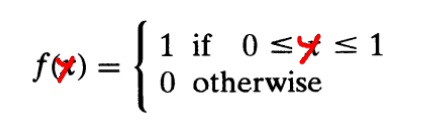
the reason why I say I would understand if it was f(x) is because f(x) is 1 if it's between 0 and 1, which would explain the log(x) result
but...what is f(y)?
or is it the same function?
alpine sable
if I define a function rule like f(x) = 2x^2 + 1 I could write it as f(y) = 2y^2 + 1 instead
$\int_0^{\log(x)} f(y)dy$ is a function of $x$. What would $\int_0^{\log(x)} f(x)dx$ mean?
ocean sealBOT
Botnuke
 alpine sable
what if I name it $h(x)=\int_0^{\log(x)} f(x)dx$. What is $h(2)$?
ocean sealBOT
Botnuke
 simple orbit
0, right?
 vague coral
wrong notation
alpine sable
well yea it's intentionally wrong
simple orbit
Im sorry I don't get what's wrong
 celest anvil
 alpine sable
simple orbit
Im sorry I don't get what's wrong
alpine sable
simple orbit
Im sorry I don't get what's wrong
$f(2)$ is a constant
ocean sealBOT
Botnuke
 alpine sable
is that what you want to integrate over?
 sweet orchid
Hi someone help me
 simple orbit
don't we integrate over a constant regardless?
since the answer is log(x)
isn't the only way that happens is if we integrate over 1?
@sweet orchid if I remember correctly a vertex is where two or more lines meet, so it would be T
alpine sable
ok let's try this maybe. If $g(x)=\int_0^{\log(x)} f(y)dy$, what's $g(2)$?
ocean sealBOT
Botnuke
 alpine sable
https://i.imgur.com/5FUDEhy.png this is f(y)
 simple orbit
so it's not a different density function of Y?
alpine sable
it's the same old f
sweet orchid
 simple orbit
that would be XW and XY
the sides are the lines that form to make that vertex X
(I think, correct me if I'm wrong)
but I'm 99% sure it's XW and XY
raw shard
same
 sweet orchid
W?
simple orbit
yes
now, sides are classified as a connection between two points
we have two points that are connected to the vertex, W
which are V and X
therefore, the lines are WV and WX
I usually write them as vertex first, dunno if that's standard convention
sweet orchid
 simple orbit
aight
can u find the sides by yourself now?
find the vertex
find the other point that connects with the vertex
that's a side
sweet orchid
Can gimme answer pls bc I don’t understand this math
buoyant kayak
this server is not about giving answers
glass lichen
sweet orchid
Can gimme answer pls bc I don’t understand this math
do you know what a side is?
 normal turtle


 magic geyser
stop multi posting
 fervent dust
sorry
 brittle estuary
magic geyser
stop multi posting
brittle estuary
magic geyser
stop multi posting
Sorry
magic geyser
?
simple orbit
lol
 serene lake
yo can I ask a question from sat here?
brittle estuary
magic geyser
?
I think it is for me.
brittle estuary
brittle estuary
Help with double integration
<@&286206848099549185>
 sleek elbow
if its from an old sat its fine, no?
raw shard
yeah
sleek elbow
I would imagine it is
sleek elbow
yup 👍
 candid atlas
yo

is this correct
its correct right
4 and 6 are included in the interval of [0,8]
raw shard
i mean you can just plug the values in
 misty roost
candid atlas
misty roost
candid atlas
Im confused about why its asking graphically in the interval of [0,8]
serene lake
raw shard
<@305787203513090048> you can’t even ask for help on a test
I mean the question on sept 2021 sat
the grades and qas is already out
 serene lake
ok
`A function f has the property that if point with coordinates (a,b) is on the graph of the equation y equals f(x) in the xy-plane, then the point with coordinates (a+1, 1/3 b) is also on the graph. Which of the following could define f?
a.1/3(1/12)^x
b.12(1/3)^x
c.12(3)^x
d.1/3(12)^x
answer is B
Idk how to start on this problem to get the answer`
 raven chasm


 jagged imp
who says you need to? you can find w(2e^2).
 nimble mulch
how tho, I couldn't get w(x) in terms of x either
this is what I got for the inverse function, couldn't isolate w(x)
 jagged imp
you don't need an explicit formula for w(x) to find w(2e^2). you should be able to guess a y such that ye^y=2e^2
y being a sub for w(2e^2) to make it easier to see
nimble mulch
I can but is that something I can write down in a paper
I mean can it be considered the "proper" way to solve this problem
I guess I will just go with that, thank you. The final answer will be 1/(3e^2) right?
nimble mulch
ah, appreciate it
jagged imp
guessing is perfectly find
you can think about why w must only take that one value at 2e^2 if you want
alpine sable
whats a good maths typer for linux?
 charred pier
ok I dont see any fundamental flaw in my reasoning but it outputs 105%, what is going wrong
 alpine sable
this
 fickle latch
What even is the question
alpine sable
fickle latch
Also we don’t have enough information
give us the ex details

 humble ruin
@silver tangle have you learned measure theory
 honest solstice
alpine sable
Topic: Reflect Figure over a Line (Level 1)
honest solstice
alpine sable
Topic: Reflect Figure over a Line (Level 1)
just think of it like a mirror. For example point (-4,7) reflected across the -3 line would now be point (-2,7)
@alpine sable
 stoic cloud
anyone familiar with "Desmos"?
charred pier
@fickle latch @alpine sable supposed to find the concentration in percent of O, C and H in X after it gets burnt
then get the empirical formula
 bleak basalt
hello I really need help with #discrete-math
Im struggling hard with this homework
can anyone help me please?
its for discrete math. This is going to be hashtag #discrete-math
here I stand begging for help! Is anyone there, and can anyone give me some tips? im on both of my hands and knees, im trying so hard i hope someone helps me!
 clever tapir
Where do I even begin
 bleak basalt
wait, but im using questions-0 right now. im working on finding a match! is there anyone there?
the question is this:

 lime tangle
clever tapir
Where do I even begin
lime tangle
clever tapir
Where do I even begin
channel occupied by @bleak basalt find another channel plz
sour dove
clever tapir
Where do I even begin
So it's the product of 4 consecutive integers, right?
So that means that numbers could be like 1, 2, 3, 4 or 10, 11, 12, 13, etc.
We don't know that that value is
but
bleak basalt
HEY that aint fair. i was using this one
sour dove
we know that the numbers are +1, +2, and + 3 respectively away from the source number
sour dove
bleak basalt
the question is this:
What's the question asking for?
it's not stated in the form of a question
bleak basalt
oh yeah sorry about that. it is "prove or disprove the following statement"
sour dove
@clever tapir so take what I said and make a product out of your 4 "unknowns" and set it equal to 840
sour dove
bleak basalt
oh yeah sorry about that. it is "prove or disprove the following statement"
okay so it says that x and y are rational number, x < y, but no other rational number exists between them, right?
bleak basalt
thats right. I am pretty sure its false, because rational numbers are infinite between them
sour dove
yeah exactly
bleak basalt
my problem comes in where, i just have no clue how to prove it or how to structure my proof
sour dove
so if x < a < y, but there is no a that is between them, then x has to equal y
you can prove by contradiction
 silver dew
what is the average of x and y
bleak basalt
the average of x and y?
sour dove
silver dew
what is the average of x and y
oooh I didn't think of that. That's good
sour dove
bleak basalt
the average of x and y?
so between x and y, where would the average between the two lie?
if x = 3/4 and y = 7/4, what's the average between the two, and where does it lie in terms of being greater than, less than, equal, etc
sour dove
bleak basalt
so do i want to assume a specific value for x and y
no, but the concrete example was supposed to show what @silver dew is saying
bleak basalt
okay so i start with "assume x and y are arbitrary and particularly chosen positive rational numbers such that x is less than y"
silver dew
write me the expression for the average of x and y
bleak basalt
x+y/2
silver dew
what observation can you make about x, y, and its average in terms of an inequality
 worthy hawk
hello quick question, can i consider these as the same thing or are they different?
 bleak basalt
huh? what does
Q
E
D
mean??
ocean sealBOT
gramschmidtty
 bleak basalt
oh okay so just by showing that there is an average that is between them, that is the proof. BUT, dont i then have to prove that the average is indeeeeeed betweeeeen them?
 tired drum
Help please
 jagged imp
worthy hawk
hello quick question, can i consider these as the same thing or are they differe...
jagged imp
worthy hawk
hello quick question, can i consider these as the same thing or are they differe...
yes. Just making absolutely sure, the exponent on the numerator is applied to 1, not -1 right?
worthy hawk
jagged imp
yes. Just making absolutely sure, the exponent on the numerator is applied to 1,...
in both the numerator is -1 and the denom is 5
bleak basalt
hey watch it you guys, this room is occupied!
jagged imp
worthy hawk
in both the numerator is -1 and the denom is 5
That's not what i asked. :( I'm just making sure its meant to be $-1^x$ and not $(-1)^x$
 queen mural
i need help
ocean sealBOT
Sneaky
 jagged imp
if it is, you're correct, they're the same
bleak basalt
dont i have to prove that x+y/2 is between x and y? i am not sure how to do that
silver dew
@bleak basalt the average of two numbers is the midpoint
worthy hawk
jagged imp
if it is, you're correct, they're the same
it is (-1)^x
bleak basalt
okay and so for my justification would i just write "by definition of average" or "by definition of midpoint" or something like that?
 tired olive
bleak basalt
okay and so for my justification would i just write "by definition of average" o...
tired olive
bleak basalt
okay and so for my justification would i just write "by definition of average" o...
Howzit. What knowledge do you have for the problem/what may you assume? The average will do the job, but what you want is a direct consequence of the Density Theorem.
bleak basalt
we just have to justify or prove everything that isnt given in the question
we can use theorems but must write "by definition of x" and stuff like that
silver dew
divide both sides by 2
silver dew
do the same thing, but add y to both sides
you'll show that the average is between x and y
then
Q
E
D
bleak basalt
wait but how do i prove that x + y/2 is also a rational number?
silver dew
it is the very definition of a rational number
bleak basalt
are they closed under aditipon im guessing?
alpine sable
 silver dew
@alpine sable do you know how to complete the square
@alpine sable https://www.youtube.com/watch?v=WrH1Z-SuhhQ
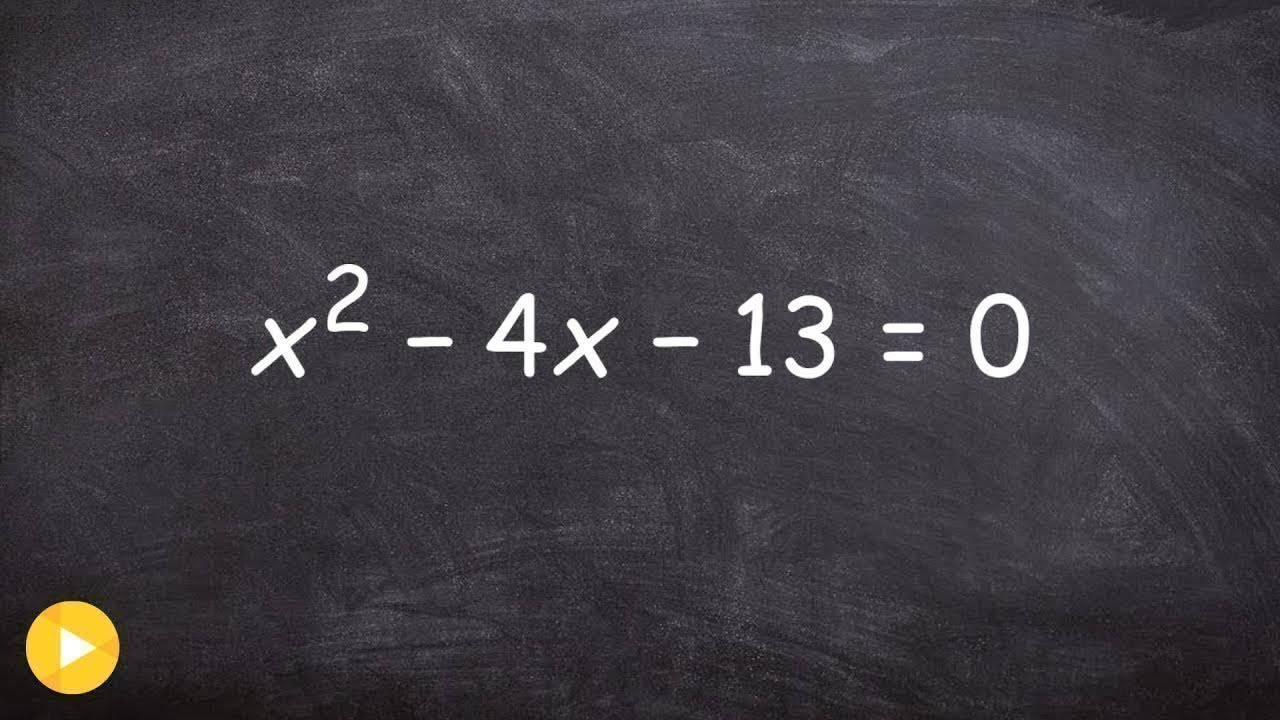
👉 Learn how to solve quadratic equations by completing the square. When solving a quadratic equation by completing the square, we first take the constant term to the other side of the equation and create a perfect square trinomial with the quadratic term and the linear term.
This is done by adding to both sides of the equation, the square of ha...
first thing you need to do is make sure the leading coefficient is 1. so first divide both sides by 5, then follow the video.
tired olive
bleak basalt
are they closed under aditipon im guessing?
Under standard addition and multiplication, the rationals are a field (an Archimedean field). Adding two rationals is a rational and multiplying two rationals (dividing by two, if you really want to do it that way), is a rational.
If you know the result that the rationals are dense in the reals, then this is a trivial question. I suspect that, perhaps, you are unaware of this. Is this the case? If so, then you will certainly need to follow the method given to you by @silver dew
lime tangle
alpine sable
https://cdn.discordapp.com/attachments/719800714544807989/898416947631366144/sat...
why dont u make i = root(-1)
then you would have
alpine sable
see this is not my work, this is my friends but i barely know this type of stuff
bleak basalt
yes ive never heard this term "dense in the reals"
ocean sealBOT
IAMTHEFARMER
 tired olive
bleak basalt
yes ive never heard this term "dense in the reals"
tired olive
bleak basalt
yes ive never heard this term "dense in the reals"
OK, then take the average. It will do the job.
silver dew
3rd line left side is a perfect square
it will always be that way when completing the square
ocean sealBOT
IAMTHEFARMER
 lime tangle
@alpine sable
alpine sable
ty
ocean sealBOT
IAMTHEFARMER
 lime tangle
what will make u cancel out the denom roots
alpine sable
oh
 gray crypt
Hey! Sorry to disturb anyone. But would someone be willing to assist me with my Math homework?
lime tangle
gray crypt
Hey! Sorry to disturb anyone. But would someone be willing to assist me with my ...
sure
gray crypt
I'll wait till soft is finish
ocean sealBOT
IAMTHEFARMER
 lime tangle
cuz its a perfect square trinomial
silver dew
@alpine sable do you know how to factor?
lime tangle
how do you find perfect sq trinomials?
you divide the middle turn by 2 and squre it
if that equals to ur last term
its a perfect square trinomial
ok
silver dew
you have to learn how to factor
lime tangle
what dont u understand
because in completing the square you need to balance the equation
you cant be taking out a number randomly
and not balance it
on the other side
gray crypt
Whatever you do to one side, you do to the other.
silver dew
there doesnt even need to be an equal sign. without it you can +13-13. but i'm saying that this method is only going to be confusing to you if you dont know how to factor.
lime tangle
gray crypt
I'll wait till soft is finish
go to another channel and ill meet u there
gray crypt
okay
lime tangle
ill finish helping soft soon
@alpine sable do u understand factoring
cuz if u dont understand factoring then u need to go back to it
occupied
yes
because ur teacher is trying to check if the equation is a perf square trinomial
you will always be able to divide by 2
7.5/2 is not a perfect number
but itll still give u an answer
buoyant kayak
the (b/2)^2 thing is not to check if its a perfect square trinomial
it's to complete the square
silver dew
adding and subtracting the (b/2)^2 makes the first three terms a perfect square
lime tangle
which is the last term
silver dew
thats the idea of completing the square
buoyant kayak
it's the last term because (-4/2)^2 MADE it the last term
lime tangle
which means its a perfect square
buoyant kayak
that's how you complete the square
lime tangle
thats not how i do it but ok
buoyant kayak
because you're not completing the square
lime tangle
there are many different ways
lime tangle
well
silver dew
when i say "adding and subtracting" i mean in the absence of an equals sign
lime tangle
variations of one way yes
silver dew
it doesnt need to be an equation
lime tangle
i know how to complete the square
silver dew
this technique is how to derive the quadratic formula
buoyant kayak
obviously not if you think (b/2)^2 is checking to see whether or not it's a perfect square trinomial
buoyant kayak
the equation is a perfect square trinomial because (b/2)^2 was used
lime tangle
ok
lime tangle
buoyant kayak
the equation is a perfect square trinomial because (b/2)^2 was used
usually what i do is
x^2-4x = 13
x^2-4x + ______ = 13
silver dew
@alpine sable that video explains what to do. i initially said you need to divide the 5 out before you follow his example.
lime tangle
i divide 4 by 2 and i square it
thats my last term
therefore
x^2-4x+4-4 = 13
bring the -4 over
i have x^2+4x+4 =17
then
i factor
(x-2)^2 = 17
bring the 17 over
silver dew
@alpine sable factor out a 5 like this 5(x^2 + 4x + 1) = 0
lime tangle
(x-2)^2-17= 0 is the equation
@buoyant kayak u say i dont know how to complete square?
i know how
buoyant kayak
you didn't solve the equation lmao
lime tangle
doesent matter
silver dew
he was simply saying that the addition of (b/2)^2 doesn't mean you're "checking" to see if something is a perfect square
lime tangle
i am just trying to show u that i know how to complete the square
buoyant kayak
i don't care?
lime tangle
silver dew
he was simply saying that the addition of (b/2)^2 doesn't mean you're "checking"...
well u can use that way to check if its a perfect square actually
but i guess both work
buoyant kayak
you're making it a perfect square by completing the square
how is that hard to understand
silver dew
adding (b/2)^2 automatically makes it a perfect square
buoyant kayak
it's always going to be a perfect square
lime tangle
obviously
buoyant kayak
that's the entire point of completing the square
silver dew
it's almost as if you're saying "adding 2 to 2 makes it 4, but you can use the 2 to check that it makes it 4"
@alpine sable idk why you're subtracting
lime tangle
silver dew
it's almost as if you're saying "adding 2 to 2 makes it 4, but you can use the 2...
yes
like for example
this equation
silver dew
yeah that's pretty much a useless comment
gray crypt
Cmon guys take it easy with him
lime tangle
x^2-6x+9
6/2
squared= last term which means that the equation is a perf square trinomial
buoyant kayak
who cares?
lime tangle
i care
raw shard
aka the last term should be a perfect square
lime tangle
yes
raw shard
most of the time
lime tangle
$a^2 - ab +b^2$ or $a^2 + ab +b^2$
ocean sealBOT
IAMTHEFARMER
 buoyant kayak
factor x^2-4x+4
buoyant kayak
bro what
lime tangle
in order to find what it is factored u divide middle term by 2
middle
by 2
that u dont touch
silver dew
@alpine sable review your methods for factoring quadratics please
lime tangle
or you can do product sum method
P roduct= 4 sum = -4
-2,-2
-2 x -2 = 4
-2+-2 =-4
lime tangle
silver dew
<@456226577798135808> review your methods for factoring quadratics please
pls do @alpine sable u seem lost
silver dew
@alpine sable gotta learn to be able to help yourself
otherwise whatever people tell you from here on out is just going to confuse you more and make you hate it
lime tangle
@alpine sable do u know product sum method
do u know any method
on how to factor quadratics
factor
$x^2-8x+16$
gray crypt
@alpine sable we know youre overwhelmed, but maybe watch a video on factoring. It's easy if you're dedicated.
ocean sealBOT
IAMTHEFARMER
 lime tangle
factor that
lime tangle
u got the first bracket but not second bracket
find it
i will not tell you
no
can u show me how ur doing it?
?
show in bracket plz
yes
yes
after a million tries u got it
i want to see how u did it
how did u do it
gray crypt
you can also do (x-4)^2
lime tangle
what was the factoring technique u used
lime tangle
gray crypt
you can also do (x-4)^2
yes
?
thats a factoring technique?
what did u do then
divide what by what
gray crypt
hey farmer and soft, would it be cool if you guys can join and farmer can explain?
I think it'll benefit you more soft
lime tangle
gray crypt
hey farmer and soft, would it be cool if you guys can join and farmer can explai...
cant join VCs at the moment
lime tangle
yes
good work
the trick is to know right away that it is a perfect square trinomial
the first term is perfect square and last is perfect square
$x^2-8x+16$ can be re-written as $x^2-8x+(4)^2$
ocean sealBOT
IAMTHEFARMER
 lime tangle
thats how you know
if the first and last are perfect squares, its a perfect square trinomial
so basically the question is telling you do
change $5x^2+20x+5$ into the form $(x-h)^2+k$
ocean sealBOT
IAMTHEFARMER
 buoyant kayak
you do not complete the square yet
raw shard
yeah that
buoyant kayak
you can't complete the square if your a term has a coefficient other than 1
lime tangle
yes
lime tangle
make sure its in brackets with 5 at front
buoyant kayak
also forgot an x
lime tangle
now u are at this stage
silver dew
i'm popping in and we're still on the part about factoring out the 5?
lime tangle
$5(x^2+4x+1)=0$
ocean sealBOT
IAMTHEFARMER
 ocean sealBOT
IAMTHEFARMER
 buoyant kayak
gets you the same exact thing
buoyant kayak
no
lime tangle
but u need to bring something over to the other side
@alpine sable
what do u bring to the other side?
wrong
$5(x^2+4x+1)=0$
buoyant kayak
this would be right if you used the correct equation
lime tangle
here u can visualize it better
@alpine sable what do u bring to the other side
oops
ocean sealBOT
IAMTHEFARMER
 lime tangle
ok
@alpine sable what do u bring to the other side
wrong
well
actually right
u got it right n
nvm
but what happens to the 5
good
so now u have
$5(x^2+4x)=-5$


 ocean sealBOT
IAMTHEFARMER
 lime tangle
robust flax
how can i calculate the mean? when these are continuous
lime tangle
robust flax
how can i calculate the mean? when these are continuous
occupied
so @alpine sable what do u do next
because
you cant just take it out randomly
gray crypt
its fine
lime tangle
here is what happened
you multipled the 1 by 5
and brought it to the other side
distributive law
raw shard
no
lime tangle
$a(c+b+d) \implies ac+a(b+d)$
ocean sealBOT
IAMTHEFARMER
 ocean sealBOT
IAMTHEFARMER
 lime tangle
what is the normal way
raw shard
i know how to do it and it confuses me lol
ok what was the original equation
i can explain it in a less confusing way
lime tangle
change $5x^2+20x+5$ into the form $(x-h)^2+k$
ocean sealBOT
IAMTHEFARMER
 lime tangle
raw shard
i can explain it in a less confusing way
lime tangle
raw shard
i can explain it in a less confusing way
yeah i dont like the way either i do it another but anyway show your way i think soft will understand your way better
ill watch
raw shard
divide the middle term by 2 to see what the last term should be
well, the square root of the last term
4/2 = 2, so the last term should be 2^2 = 4
lime tangle
raw shard
well, the square root of the last term
do u want me to do it in latex so that soft can visualize better?
ocean sealBOT
IAMTHEFARMER
 raw shard
divide the middle term by 2, that will give us the square root of what the last term should be
we get 2, so the last term should be 2^2 = 4
so we’ll add 5(3)
raw shard
and leave a -5(3) in there
lime tangle
wait i will write it
 sour dome
what we do ?
lime tangle
$5(x^2+4x+4)-5(3) = 0$
ocean sealBOT
IAMTHEFARMER
 raw shard
@alpine sable if you can’t tell, this is a perfect square polynomial
lime tangle
how dont u know what a polynomial is
raw shard
what we’re working with right now
whatever
anyways
this is in the form where we can express it in the form (a+b)^2
lime tangle
its in form of $Ax^2+Bx + C$
ocean sealBOT
IAMTHEFARMER
 tight locust
yes
raw shard
(a+b)^2 = a^2+2ab+b^2, and we have x^2+4x+4
tight locust
nomial actually means name
raw shard
can you see what b should be?
that wasn’t sped up at all
that was literally my next step
buoyant kayak
raw shard
so we’ll add 5(3)
you didn't explain this at all you just kinda threw it in there
raw shard
substitute x for a
lime tangle
tight locust
nomial actually means name
i see i always thought itmeant number but nomial as name makes more sense cuz variables are basically names
tight locust
if you've taken biology before that should be clear. look at the "binomial nomenclature"
raw shard
oops
buoyant kayak
this is a cluster of nonsense lmao
lime tangle
tight locust
if you've taken biology before that should be clear. look at the "binomial nomen...
never taken it unfortunately
raw shard
at this point i don’t know when i should or shouldn’t explain what i’m doing lol
buoyant kayak
can i explain this?
lime tangle
raw shard
at this point i don’t know when i should or shouldn’t explain what i’m doing lol
explain as much as you can
buoyant kayak
alright lmao
raw shard
yeah
lime tangle
let @buoyant kayak explain hes good
buoyant kayak
$5(x^2+4x+1)=0$
ocean sealBOT
a disappointing son
 buoyant kayak
so this is what we're at right now
now, i'm gonna put some more brackets to make things clearer
$5[(x^2+4x)+1]=0$
ocean sealBOT
a disappointing son
 buoyant kayak
so the stuff inside the parenthesis, x^2+4x, that's what we want to take a special look at. we'll be completing the square
lime tangle
perfect
buoyant kayak
so, using $(\frac{b}{2})^2$, we get $(\frac{4}{2})^2$ which is 4
ocean sealBOT
a disappointing son
 buoyant kayak
now just to make things more clear
we are adding this to both sides, you understand that, right?
we add this 4 we just got to both sides
in completing the square
lime tangle
@buoyant kayak why dont u have helper role
buoyant kayak
don't want it
 glad moon
Can I get some help with this
 lime tangle
silver dew
you have 5 outside still
lime tangle
silver dew
you have 5 outside still
nah its right
lime tangle
seems good to me
silver dew
you have 5 on the outside, divide it out first
lime tangle
its the longer approach which is good
$5[(x^2+4x+4-4)+1]=0$ @alpine sable bascially son is doing this
ocean sealBOT
IAMTHEFARMER
 lime tangle
then multiply -4 by 5
and bring to other side
because we cant just put in a 4 randomly
we had $x^2+4x+0$ before
ocean sealBOT
IAMTHEFARMER
 lime tangle
therefore we need to do 4-4
to ake sure it stays at 0
then
multiply 5 by -4
and bring to other side
so now you have
$5[(x^2+4x+4)+1]=0+20$
ocean sealBOT
IAMTHEFARMER
 lime tangle
then
silver dew
buoyant kayak
$5[(x^2+4x+4)+1]=0+4$
i promise you're incorrect if you leave it here
buoyant kayak
no you're right, i messed up
lime tangle
$[(x^2+4x+4)+1]= \frac{20}{5}$
ocean sealBOT
IAMTHEFARMER
 lime tangle
$[(x^2+4x+4)+1]= 4$
ocean sealBOT
IAMTHEFARMER
 ocean sealBOT
IAMTHEFARMER
 ocean sealBOT
IAMTHEFARMER
 lime tangle
$(x^2+4x+4)= 3$
ocean sealBOT
IAMTHEFARMER
 ocean sealBOT
IAMTHEFARMER
 lime tangle
then bring 3 over
silver dew
when you get to that step, the left side will always be $(x \pm \frac{b}{2})^2$
ocean sealBOT
gramschmidtty
 silver dew
the $\pm$ depends on the sign in front of b
ocean sealBOT
gramschmidtty
 lime tangle
yes
buoyant kayak
final answer is off by a factor of 5 because we can't just get rid of the 5
silver dew
yes you can, the right side was zero
buoyant kayak
no you can't
buoyant kayak
we're rearranging a quadratic equation in a different form
we're not solving
that is not the answer
it's not the right choice lol
lime tangle
how do we do it then
lime tangle
i did it grams way
buoyant kayak
buoyant kayak
we're rearranging a quadratic equation in a different form
.
$5[(x^2+4x+4)+1-4]=0$
ocean sealBOT
a disappointing son
 buoyant kayak
$5[(x+2)^2-3]=0$
ocean sealBOT
a disappointing son
 silver dew
if the original problem was an equation set equal to zero, then the 5 goes away
buoyant kayak
$5(x+2)^2-15=0$
ocean sealBOT
a disappointing son
 silver dew
exactly
buoyant kayak
oh it's equals k
lime tangle
buoyant kayak
$5[(x^2+4x+4)+1-4]=0$
why did u bring -4 outside the bracket i dont think u can do that
buoyant kayak
?
silver dew
he's adding "zero"
buoyant kayak
it's inside the bracket
silver dew
+4 - 4 on one side is the same as adding 4 to both sides
lime tangle
we arent gonna help u for ur entire assignment
silver dew
@alpine sable this channel spent like an hour on that one problem
please review your notes
lime tangle
we need to make space for others