#help-0
1 messages · Page 586 of 1
 rich bough
 thorn kindle
Yes
rich bough
but if the denominator increases faster i think its 0 right?
thorn kindle
Yes
rich bough
okay thank you so much for the clairfication
also nice name hehe
^^
ty for the help again


 gray isle
its not
 ripe turret
isnt this right
gray isle
they should've had a 3 instead of a 5 at the front
ripe turret
wait i dont understand
u cant do anything to those numbers
like u cant get the gcf
so isnt what i did right
gray isle

what you did was legal but isn't fully factorised
since both 6 and 15 have a common factor of 3
 alpine sable
I did my work wrong i did not need to use distributive property after all since i was just looking for a simplified expression for the area 😆
thorn kindle
I mean area is length * width
How were you wrong? You just algebraically expanded the expression
Unless you're saying they wanted you to leave it in factored form
 thorn kindle
Take the partial derivative with respect to x twice
Then take the partial derivative with respect to y thrice
 alpine sable
thorn kindle
Unless you're saying they wanted you to leave it in factored form
alpine sable
thorn kindle
Unless you're saying they wanted you to leave it in factored form
I actually dont know if they want me to leave it that way it just says this from a-c

 final crest
Is anybody good with calculus here
 potent knoll
ripe turret
potent knoll
ripe turret
Here you go

 dapper owl
Anyone mind helping me with a hint to solve the inequality for 3a? I keep trying to mess around with the values but I just don't know how the 1/4 comes about

At least where to start?
alpine sable
Could anyone help me find out the one with the algebraic tiles because when i tried doing the division statement that i got it did not really match with the left side( factor 1)

black rectangles represent x, black squares represent x^2 white rectangles represent -x
dapper owl
<@&286206848099549185>
alpine sable
alpine sable
Could anyone help me find out the one with the algebraic tiles because when i tr...
I figured it out
Good night.
Is this channel taken?
 jade coral
ok, so I have what I consider to be a very hard question and am not sure where to post it. But I would reeally like some help figuring it out
alpine sable
Feel free, my man.
jade coral
the question is as follows
You are given a set of points which must be fully linked.
Each point is given a random set of possible directions from which they may link expressed as a set x = {up, down, left, right} in which 1 means a connection is able to be made, and 0 means no connections can be made.
For example, if given the set of points A = {1,0,0,0}, B = {0,0,1,1}, C = {0,1,1,0}
Point A would not be able to form a link to Point B, but it would be able to form a link to Point C.
Likewise Point B would be able to form a link with Point C, but only from Point B’s right side to Point C’s left side.
Every set of points will contain a starting point and at least 1 point E = {0,1,0,0} which cannot be linked to the starting point.
The starting point of any given set of points will always have a 0 in the down space. {x,0,x,x}
No points may consist of {0,0,0,0}
The list of points may contain duplicates, and can consist of any number of points and no two points may share the same connection.
Connections between points may not intersect, and all consist of the same length
With these rules in mind, what constraints would any given set of points require to ensure that the list can be fully linked, and are there any set of constraints which would ensure that the list can be fully linked even if the two points being linked are chosen arbitrarily from the initial set of points?
Pic for clarification

I also dont know if constraints is the right word, just sounded closest to what I was thinking
alpine sable
Graph theory?
jade coral
I honestly dont know
This is just a problem ive run across in actual life and am trying to solve XD
alpine sable
Ooh, damn.
Ok, lemme give it a look.
Can two points be linked to a same point?
Say A={1,0,0,0} and B={1,0,0,0}?
Ok, that's not exactly what I meant.
jade coral
ah definitely need to add that to the question, but no
alpine sable
It's meant to be perfectly perpendicular, right?
jade coral
yes
alpine sable
Ooh, ok.
jade coral
I mean technically, they could be rotated so long as connecting lines do not overlap
if nothing else this is helping me figure out what rules i missed lol
 final crag
could someone help me with part C?
jade coral
I know nothing about probabilities, but i came out to 0.0000000001%
am interested to see what the real answer is
 stone shard
She have to lose 10 games to lose all her money because 30/3 = 10
alpine sable
Well, since there's 0.1 chance she loses 3$, getting 27, there's 0.1^2=0.01 chance of losing again ... With what I believe is the final answer being 0,1^10, but I'm probably wrong.
stone shard
alpine sable
Well, since there's 0.1 chance she loses 3$, getting 27, there's 0.1^2=0.01 chan...
I think your right
jade coral
thats what i went with as welll
alpine sable
jade coral
You are given a set of points which must be fully linked.
Each point is given a...
So for a point A={1,0,0,0}, a point B={0,1,0,0} must exist.
As well as for all points A={0,0,1,0}, there must be B={0,0,0,1}, right?
I guess that you could use that.
jade coral
Both of those options would stop the list from being fully completed
alpine sable
Let us call those points nodes.
jade coral
Id say first constraint is that no 2 connecting nodes may fully terminate
alpine sable
If we say there's a node connected upwards, that implies that there is a node up there connected downwards.
alpine sable
jade coral
Id say first constraint is that no 2 connecting nodes may fully terminate
Oooh.
jade coral
yes, connections require the directions to be available on both Points/Nodes
alpine sable
You've forgotten one thing.
You've established which is the direction, but not to which node is a given node connected.
Very impolite of yours, aye?
was i supposed to post in a channel that's not busy?
That's in the rules, but I'mma help ye.
oh my bad
Wait, but the cat traveled for 4 minutes?
jade coral
why does t give you a range, and then expect an exact response?
alpine sable
Exactly.
jade coral
well, if you substitute T for the maximum of the cats speed (4) you do get one of those options as an answer
but I cant imagine why they gave you a range to work with, so I might just not be understanding this correctly
 dark umbra
jade coral
dark umbra
jade coral
honestly peeps just keep interrupting mine lol, but one of the other channels should be free
 true hamlet
Please someone help
 dapper owl
Anyone mind helping me with a hint to solve the inequality for 3a? I keep trying...
dapper owl
dapper owl
Anyone mind helping me with a hint to solve the inequality for 3a? I keep trying...
Can anyone help me with this?
alpine sable
jade coral
You are given a set of points which must be fully linked.
Each point is given a...
let x be an ordered set with four elements such that we'll call its first member up, second down, third left, fourth left, such that all its elements are either 0 or 1
no x can equal {0,0,0,0}
there is an x called E such that E={0,1,0,0}
let T be the set of all possible finite sequences of members of x, duplicates included
let R be a symmetric relation such that:
{1,0,0,0}R{0,1,0,0},
{0,0,1,0}R{0,0,0,1}
there is an element A, called the initial element
E is not related to A
What are the restraints that make a subset of T valid under R?
Probably poorly worded.
But I'm drunk as a donkey.
final crag
alpine sable
Well, since there's 0.1 chance she loses 3$, getting 27, there's 0.1^2=0.01 chan...
Wait .1^2 is .01
i think its .1 chance she wins right
alpine sable
final crag
Wait .1^2 is .01
A cent times a cent equals a cent?
Neutral element of multiplication is 1.
final crag
i meant .1 my bad
alpine sable
Np
alpine sable
final crag
Wait .1^2 is .01
You're right.
final crag
so .90 chance of losing
alpine sable
DANG BRO
final crag
lmao
final crag
i think ur on the right track though
alpine sable
Prob .9^10
final crag
cuz u lose 90% of the time
thats 27
9/10 timess
-$27
cuz u lose 9 out of 10 times
i guess when u lose 10 times u lose $30
alpine sable
0.9^10, right?
alpine sable
Circa 0.3486784401000001
final crag
that makes sense i think
stone shard
"Your" probability of winning is 0.1
"Your" sister's probability of winning is 0.9
So her probability of losing is 0.1
alpine sable
Bruv I'mma let actually smart people answer for me, lel.
 worthy verge
@final crag Go sleep, wake up, refreshed, grind.
final crag
damn i really wanted to figure this one out before i go to sleep tho
worthy verge
Heck you may even think of the answer while sleeping
Or dreaming
I know have 😆
The dreaming one, not while sleeping
Oddly
alpine sable
She haves to lose 10 times.
stone shard
The question is asking for "your" sister's probability of losing all her money, not "yours"
worthy verge
Go sleep man, when fatigued your thoughts are slowed
stone shard
So it is still 0.1^10
alpine sable
For the first time, she has 0.9 chance of losing.
true hamlet
true hamlet
Please someone help
help
stone shard
Idk could be wrong, lol
final crag
stone shard
Idk could be wrong, lol
but thats winning no?
or could it actually be 1- .1^10
true hamlet
even the wrong answer will work
final crag
but that would just be .9^10
true hamlet
just answer
alpine sable
true hamlet
Please someone help
What'd be that correlation coefficient?
true hamlet
yes
final crag
<@&286206848099549185> anyone want to help us sleep
true hamlet
what is coffecient
stone shard
Is the probability for her to win 0.1?
alpine sable
final crag
<@&286206848099549185> anyone want to help us sleep
Yes, please.
final crag
stone shard
Is the probability for her to win 0.1?
yeah
stone shard
Oh, then it is 0.9^10
Sorry for the confusion, I guess I did not read the question carefully
final crag
hmm what about this
every 10 game she wins one
actually nvm idk where im going with this
stone shard
final crag
every 10 game she wins one
Meaning she loses 9 games
final crag
all i can think of is .9^10
alpine sable
YEah
final crag
i feel like i gotta do something with geometric distribution tho rip
listen to tthis
p = .10
x = 30
1 - .00424
Bam?
or would x = 27 since she wins 3 in 30 games
that gives u .00581
which might be valid
okay im going with .9^10
 jovial edge
How do I do this question

I found the ratio of a: b: c but can’t seem to find the required fraction
 wanton turtle
what did you find the ratio as?
jovial edge
Oh wait I’m overthinking this question
I can just find everything in terms of a and substitue it
wanton turtle
yes

 ocean sealBOT


 vale wigeon
a : b : c = 12 : 14 : 9, if you rewrite the ratio to have all integer components
so no @jovial edge it's not irrelevant
 fervent grail
When (2x³ + 2x² + px ) is divided by (x - 3), the remainder is 2. find the value of p
Pls help
vale wigeon
have you done questions like this before?
are you familiar with the remainder theorem?
also @fervent grail you should not post the same question across multiple channels
fervent grail
vale wigeon
also <@767702505660088320> you should not post the same question across multiple...
Okay sorry
fervent grail
vale wigeon
are you familiar with the *remainder theorem?*
Is the ans -68/3 ??
vale wigeon
let me check.
fervent grail
Hmm pls check
vale wigeon
also why didnt you say right away that you had an answer?
theres a big difference between "please help me with this problem" and "here's this problem, i got this as the answer, can someone check?"
fervent grail
vale wigeon
theres a big difference between "please help me with this problem" and "here's t...
Actually I have did this now
And I am new ..... Sorry
Can u pls say that is this ans correct ??
vale wigeon
no, p = -68/3 is not correct
if you show your work, i might be able to see where you went wrong.
fervent grail
F( x ) = 2x³ + 2x² + px - 2 which is divisible by x - 3
F ( 3 ) = 54 + 18 - 2 + 3x = 2
P = -68/3
 fervent grail
Ooh that's a mistake 😕
F( x ) = 2x³ + 2x² + px
F ( 3 ) = 54 + 18 + 3x = 2
P = -70/3
Now is it correct ???
vale wigeon
F ( 3 ) = 54 + 18 - 2 + 3x = 2
why the -2 on the left-hand side, and why did the p become an x?
assuming these are both typos, now you have the correct answer.
fervent grail
vale wigeon
why the -2 on the left-hand side, and why did the p become an x?
That was a typo
So the ans is -70/3 ??
vale wigeon
yes i just told you
fervent grail
Ok thank👍
 shell comet
Can someone please explain to me the process or the techniques? answer is b
 vale wigeon
satisfaced..... 
wanton turtle
(since I^n = I always)
then multiply A on both sides
you'll get option B
@shell comet
 real loom
answer is b for this one?

i get cos2(t-(pi/2))U(t-(pi/2)) as answer
but its not there 
 vale wigeon
@alpine sable we don't give out answers here.
alpine sable
i MEAN like
vale wigeon
also this channel is occupied so you'll have to move to another.
real loom
@vale wigeon can you help with that one
vale wigeon
,w inverse laplace transform se^(-πs/2)/(s^2 + 4)
ocean sealBOT
 vale wigeon
θ is the unit step function i guess
real loom
but theres nothing like that in the given answers
 real loom
sin x
real loom
owh cos (x - pi/2) = sin x
 jagged imp
cos(x-pi)=-cosx
real loom
owhh thanks
wanton turtle
No idea how to even begin to solve the question (15th)

myself and a couple of my friends are trying our best
vale wigeon
the wording of this question leaves something to be desired
wanton turtle
is the question itself wrong? i dont think it is because i havent had an incorrect question in this book so far
vale wigeon
so... $R = P^T Q^K P = P^T PA^KP^T P = A^K$
ocean sealBOT
Ann
 wanton turtle
one friend made Q as equal to A, but he changed the order, which is not correct right?
vale wigeon
Q is not equal to A
wanton turtle
ye
vale wigeon
matrix multiplication is not commutative
wanton turtle
yes
vale wigeon
however P^T = P^-1
 rough knoll
can some one help with this?
 wanton turtle
ocean seal
**Ann**
wanton turtle
ocean seal
**Ann**
i dont understand how you did this
vale wigeon
@rough knoll channel busy please move
wanton turtle
you substituted P that i understand
vale wigeon
$Q = PAP^{-1}$ so $Q^K = PA^KP^{-1}$
ocean sealBOT
Ann
 wanton turtle
shouldnt it be P^K . A^K . P^-K ?
ocean sealBOT
Ann
 wanton turtle
oh
vale wigeon
$(PAP^{-1})^2 = PAP^{-1}PAP^{-1} = PAAP^{-1}$
ocean sealBOT
Ann
 rough knoll
vale wigeon
<@411470993329225728> channel busy please move
rough knoll
vale wigeon
<@411470993329225728> channel busy please move
ok
wanton turtle
ohhh
only the first P and last PT remains
in the repeated multiplication
rest cancel each other out
right?
vale wigeon
yes.
wanton turtle
THANK YOU
vale wigeon
don't call me dude. but you're welcome
 crude tendon
can anyone help me with this:
Find all function f: R->R such that f(xy-1)+f(x)f(y)=2xy-1 for all reals x, y.
 fresh quail
in the equality, 6y=12x+30 since all 6,12, and 30 are divisible by 6, we directly divide 6y/6=12x/6 +30/6 to get y=2x +5 right? another example is 14y=420, both are divisible by 14 then we divide both sides by 14 so 14y/14=420/14 to get y=30 right?
crude tendon
absolutely
rough knoll
ok thanks
fresh quail
crude tendon
absolutely
alrighty thank youu
ocean sealBOT
PAYR!M9
Compile Error! Click the  reaction for more information.
(You may edit your message to recompile.)

 analog terrace
How many line segments can be formed from 6 given points with no three of which are collinear.
whats the value of n and r here?
6 and 3?
 tame falcon
How many points do you need to uniquely describe a line?
analog terrace
tame falcon
How many points do you need to uniquely describe a line?
two?
so its 6 and 2?
tame falcon
Yes.
tame falcon
If three of the points were to be collinear, the number of unique line segments would reduce
Suppose points A, B, C were to be all collinear
Then you'd get only one unique line through them
But if they were non-collinear, you'd get 3(AB, BC, CA would all be unique)
tame falcon
No worries!
analog terrace
so if it said "no four of which are collinear" the r would be 2 and 3?
tame falcon
No, 4 wouldn't make much sense. 2 points are always collinear, so when you say no three of which are collinear, it means that fixing two points, none of the remaining points lies on the line formed by them.
 tame falcon

 sly mantle
@pastel pelican what did you try?
alpine sable
don't really understand how to do this, help !?

 vagrant rover
Is there are correct answer here? I feel like there is no correct answer.

 radiant pasture
vagrant rover
Is there are correct answer here? I feel like there is no correct answer.
radiant pasture
vagrant rover
Is there are correct answer here? I feel like there is no correct answer.
what is a relative max/min?
the definition of it
vagrant rover
radiant pasture
the definition of it
A relative maximum point is a point where the function changes direction from increasing to decreasing (making that point a "peak" in the graph). Similarly, a relative minimum point is a point where the function changes direction from decreasing to increasing (making that point a "bottom" in the graph).
^Khan academy
It's not A)
It's not B)
Is it C)? I don't understand exactly how you check for relative min/max
radiant pasture
eyeball it
literally
a relative min is a min relative to its near area
not for the entire function
a function like x^2 has one min, which is the absolute min
vagrant rover
Um
Okay but do you check from right to left
or left to right
Or does it not even matter
radiant pasture
doesn't matter
radiant pasture
 vagrant rover
Wait so it could be either C) or D)?
Ohoh
Okay it's not D cause the given graph is an odd degree, not an even degree
So C)?
Cause it looks like it does have one relative minimum. The 2nd and third points on the graph.
radiant pasture
If so, show me the relative min
vagrant rover
vagrant rover
Cause it looks like it does have one relative minimum. The 2nd and third points ...
^
radiant pasture
2nd and 3rd points
1 min
vagrant rover
np
radiant pasture
Dude
radiant pasture
Are you sure you've understood what a relative min is
vagrant rover
Yeah, decreasing slope?
radiant pasture
No
vagrant rover
K then I don't know
vagrant rover
Oh
radiant pasture
It's why I asked you for the definition
radiant pasture
i'll give you a small tip
radiant pasture
for relative mins/maxs
think of a very tiny enclosure around the point of interest
is the point, within that tiny enclosure, the smallest value?
then it's a relative min
relative to the values around it
not absolute

i prefer this definition
some open interval
actually, i'm not a fan of that either
vagrant rover
um, so then there is no relative min since the third point isn't less than the first point?
radiant pasture
don't think in points
vagrant rover
I'm sorry if I'm not udnerstanding
radiant pasture
you're thinking in domains
vagrant rover
Okay 🤔
radiant pasture

see
think of it like this
you have that tiny area
is f(c) the largest/smallest value in that tiny area
vagrant rover
Okay sec
When you tiny area
Do you mean the two areas where you drew lines around
vagrant rover
Okay so two tiny areas
vagrant rover
Okay okay
radiant pasture
a point relative to its immediate surroundings
not the entire function
have you done derivatives?
at every relative/absolute min/max, $f'(x) = 0$
vagrant rover
No, I'm just going back to review math that I never learnded
ocean sealBOT
Subdivisions X-1
 vagrant rover
Yeah this is why I'm not understanding much
radiant pasture
any positives or negative peaks you see
are relative mins/maxes respectively

when you have x^2
vagrant rover
So the green peak is a min and the red is a max?
vagrant rover
And the green is less compared to the red
radiant pasture
how many mins/maxes does this have
radiant pasture
vagrant rover
And the green is less compared to the red
you don't compare those points with each other, they're separate
yes, one min
where
vagrant rover
(0,0)
vagrant rover
Thank god, I thought I said something wrong
vagrant rover
radiant pasture
is it a relative min, or an absolute min?
Idk what the difference is
absolute means that there is nothing around it that is less and relative means it is less relative to itwhat is around it?
THe peaks around it?
vagrant rover
right
radiant pasture
f(x) = y for every x in the function's domain
in your graph, the points are just marked for easy reference
alpine sable
Is anybody here good at probability?
radiant pasture
doesn't mean the function does not return for every other value
radiant pasture
alpine sable
Is anybody here good at probability?
- don't ask to ask, just ask
- go to an unoccupied channel
vagrant rover
🤔 right 
alpine sable
radiant pasture
1) don't ask to ask, just ask
2) go to an unoccupied channel
You good at probability?
radiant pasture
what did i literally just tell you
radiant pasture
yes
vagrant rover
Lmao
 alpine sable
I love you
radiant pasture
anyways

 alpine sable
helppp
 vagrant rover
alpine sable
<a:zzMURAKAMItwerks:827613200786128957>
vagrant rover
alpine sable
<a:zzMURAKAMItwerks:827613200786128957>


radiant pasture

This precalculus video tutorial provides a basic introduction into the relative maximum and minimum values of a function. It explains how to identify where the relative maxima and relative minima are located as well as determining the relative maximum and minimum values.
Precalculus New Video Playlist:
https://www.youtube.com/watch?v=DrEXTC6mI...
vagrant rover
Alright, let me watch
radiant pasture
alpine sable
helppp
that's physics, not maths
i'm afraid i can't help
can't vouch for anyone else, but this is a maths server not a physics server
vagrant rover
Alright one sec
So you're tellin' me that x=-8 isn't a relative minimum?
The only relative minimum?
@radiant pasture
radiant pasture
-8 or +8?
vagrant rover
+8 my bad
Wait
Isn't relative minimum value written using the Y value?
So y = 0 is the relative minimum
right?
radiant pasture
we say a function f shows a relative min at x
referring to the position along the x axis
 stable glen
Hi is anyone still using the channel ?
wanton turtle
you can ask your question @stable glen
stable glen
Thanks
If $A \subset [0,1]$ and A is a closed set, and that the convolution of f with g is continuous on R (f is the indicator function of A and g is the indicator function of -A), how can I deduce that the set A-A contain a neighborhood of 0?
ocean sealBOT
Perrier citron
 stable glen
I can see how that true since A-A is basically right shifting -A by the values of A
But i don't understand how i can deduce the result from the fact that the convolution is continuous
<@&286206848099549185>
alpine sable
Hi everyone
Let's find you it's true or false (if false why?)
 wanton turtle
alpine sable
Hi everyone
Let's find you it's true or false (if false why?)
wanton turtle
alpine sable
Hi everyone
Let's find you it's true or false (if false why?)
,rotate
ocean sealBOT
 alpine sable
AP in English is?
wanton turtle
Arithmetic Progression
wanton turtle
anytime 
 peak lantern
so i have this question
and im stuck on this part of the question
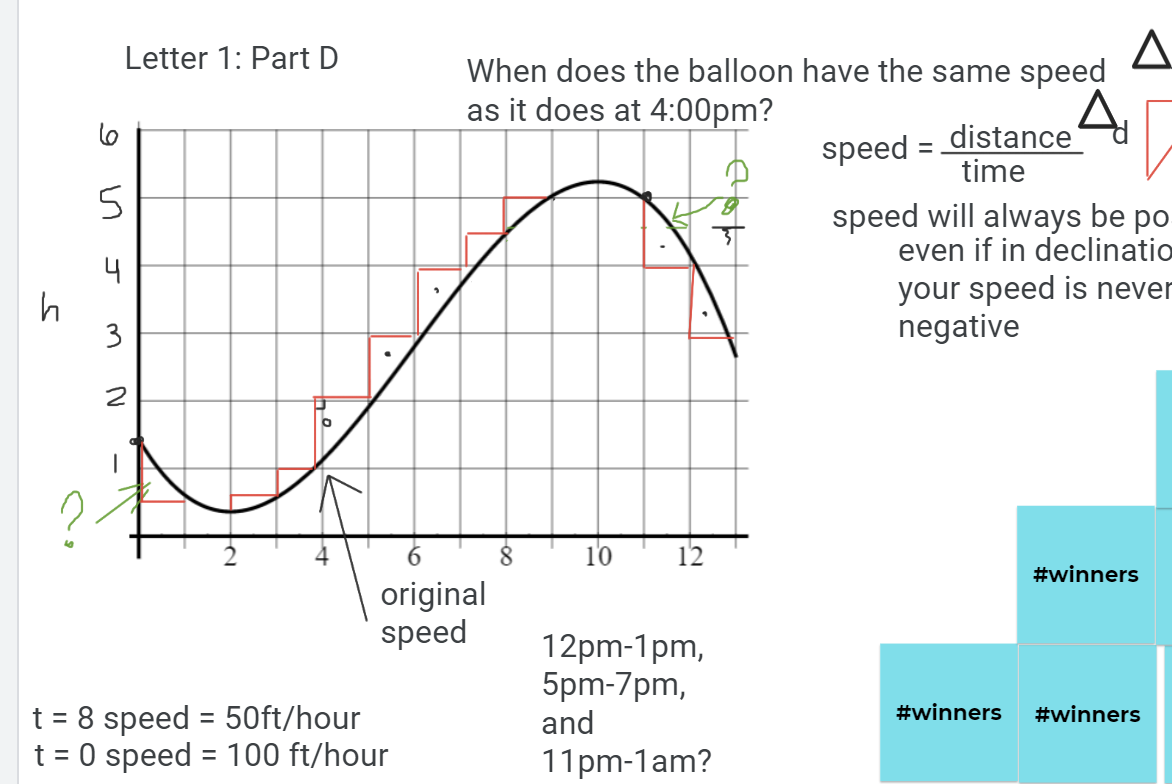
"when does the balloon have the same speed as it does at 4:00pm"
wanton turtle
since this is a distance-time graph the speed is found through the slope
so we try to find where the slope matches
here, we need to compare only the MAGNITUDE of the slope since it's speed and not velocity
12 30 seems to have the same slope
 alpine sable
Which function is not represented
A) f (x) = 1/x
B) f (x) = exp(x)
C) f (x) = log(x)
D) f (x) = x^3
 wanton turtle
peak lantern
https://prnt.sc/12b1f4b
wanton turtle
peak lantern
https://prnt.sc/12b1f4b
im not really sure how i can answer in a proper way, i'll let other help you
wanton turtle
yes, the magnitude looks similar
 dense violet
 alpine sable
@alpine sable so that's the answer A
 honest echo
In Chi Squared GOF tests, do both the observed and expected values need to be over 5?
Or does that rule only apply to expected values?
alpine sable
the sum of three consecutive numbers is 90. what is the smallest of the three numbers
 alpine sable
 swift igloo
not sure where to start with this
swift igloo
not sure where to start with this
try difference of squares factorization on the LHS
swift igloo
alpine sable
try difference of squares factorization on the LHS
uhh... doing that, i've just proved that it's possible apparently? p = 3, q = 2
 swift igloo
lol
vale wigeon

 remote hound
 swift igloo
remote hound
swift igloo
remote hound
a linear function would be applying y = mx+c. so multiplying the values in the x row by something, and adding something, gives the value in the bottom row
you can then setup either a simultaneous equation or just eyeball it
remote hound
ok

 noble sinew
Its binomial coefficient
 loud barn

 limpid spade
Permutation
alpine sable
,w 5 choose 3
ocean sealBOT


 Requested by xi64#6204
noble sinew
Requested by xi64#6204
noble sinew
 normal jasper
Would the answer be 10?
normal jasper
Would the answer be 10?
yep exactly
ocean sealBOT

 Requested by dDaniel#2121
normal jasper
Requested by dDaniel#2121
normal jasper
nice nice
Could someone double check I got this right

I used the binomial expansion theorem
noble sinew
yep sounds right, what did you get?
ocean sealBOT
xi64
 normal jasper
17010
noble sinew
yep
normal jasper
Alright
 muted whale
does anyone know how to do this problem

 glass lichen
muted whale
does anyone know how to do this problem
glass lichen
muted whale
does anyone know how to do this problem
domain of a composite function is the intersection of their domains, excluding when the denominator function is 0
 drowsy hinge

 stable dune
can someone help me out with this?
 crude tendon
A) 13.4
 stone shard
stable dune
can someone help me out with this?
stone shard
stable dune
can someone help me out with this?
Use pythagorean theorem
sqrt(14^2 - 4^2) = 13.416407....
stone shard
alpine sable
I told you how to do it in #help-1
alpine sable
stone shard
I told you how to do it in <#269573202018041856>
Nobody is responding
stable dune
stone shard
Use pythagorean theorem
sqrt(14^2 - 4^2) = 13.416407....
i got 14.6
stone shard
stable dune
i got 14.6
how? what did you do?
 stable dune
stone shard
how? what did you do?
stable dune
stone shard
how? what did you do?
a^2+b^2=c^2
4^2+b^2=14^2
16+b^2=196
add 196 and 16 then find the square root which is 14.6 rounded to the tenths
stone shard
alpine sable
Anyone k
People in this community teach you how to do math, they dont just give you the answer
stable dune
stone shard
People in this community teach you how to do math, they dont just give you the a...
^
alpine sable
stone shard
People in this community teach you how to do math, they dont just give you the a...
im not saying give me the answer
and they do give you the answer
they explain
see look what you're doing
alpine sable
stable dune
a^2+b^2=c^2
4^2+b^2=14^2
16+b^2=196
add 196 and 16 then find the square root w...
No.
you're trying to expose rather than help
COULD YOU HELP ME PLEASE
stable dune
alpine sable
No.
im confused
stable dune
ah okay thank you
ocean sealBOT

 Requested by Shaky#0505
alpine sable
Requested by Shaky#0505
alpine sable
answer ^
stable dune
ah thank you
alpine sable
np
 sick kettle
 ocean sealBOT
 Requested by Shaky#0505
 tawdry urchin
Can yall please assist me
stone shard
alpine sable
9^2 + 15^2 = c^2
81 + 225 = c^2
310 = c^2
c = sqrt(310)
Bruh 310 = c^2 what?
tawdry urchin
 alpine sable
What?
tawdry urchin
oh shit did i interfere
stone shard
306 = c^2
stone shard
tawdry urchin
oh shit did i interfere
Its fine
alpine sable
Oh yeah I did the calculation in my head quick
stone shard
Lol, always check
stone shard
You dont want to do that in a test
alpine sable
,w calc sqrt(306)
ocean sealBOT
 Requested by Shaky#0505
alpine sable
Requested by Shaky#0505
alpine sable
Should be 17
 fresh wigeon
how do i do this

 hoary zinc
 alpine sable
fresh wigeon
how do i do this
alpine sable
fresh wigeon
how do i do this
you know how to solve $\left(\frac{a}{b}\right) - c$ ?
ocean sealBOT
xi64
 alpine sable
you can multiply the denominator of the first fraction with the c term and then get a global denominator
doing that , you should quickly see the RHS
and btw the root will be removed since 1/2 power + another 1/2 power equals a full 1 power which means no square root
fresh wigeon
whats the c term
 tender portal
root 3x+5
 gray isle
yes
tender portal
Uh a little confused to how
gray isle
chain rule
tender portal

I think i got a and d right but b and c confuse me
Did I do them wrong because I was supposed to use the chain rule?
gray isle
yeh, you need to use the chain rule
tender portal
so I can't just plug the numbers in
I don't understand the notation on c either
what does g^2(x) mean?
gray isle
that notation is ambiguous and they should really state what it means when they write it
 gloomy lintel
I assume it’s g(g(x))
gray isle
its usually interpreted as g(g(x)), but may also be viewed as (g(x))^2
but seeing as you have g(g(x)) in part d)
gloomy lintel
Yea they shouldn’t really write it like that tbf
gray isle
evaluated at the same value,
you should interpret it as (g(x))^2
tender portal
Alright
gray isle
part d) would be better if you added some parentheses
and you did apply chain rule for that question
tender portal
Oh yeah sorry
gray isle
so do the same for b and c
 still hemlock
hello can somebody help me with this
 tender portal
gray isle
so do the same for b and c
tender portal
gray isle
so do the same for b and c
Is this right now?
 gray isle
at a glance yeh
tender portal
alright
if you have time to take a closer look it would be much appreciated
just tryna make sure I get all the details right before the test
 chilly garden
hello
i am trying to create a study on the different rating systems for zero-sum games
i've found a few research papers already
but before my school approves it, they want to know how im going to approach it
but im not sure what to put in for these details

here's some BG info
 tender portal
 dense violet
Help with part b

 sacred laurel
 stone shard
sacred laurel
stone shard
sacred laurel
Perimeter = 2 ( length + width )
sacred laurel
no cap?
stone shard
no cap
tender portal
tender portal
<@&286206848099549185>
 stone shard
alpine sable
stone shard
alpine sable
There is a solution region
alpine sable
Is this how do u calculate the fourier coeficients of a function?
$c_n = \frac {1}{2\pi} \int_{0}^{2\pi} e^{(-in\theta)} f(\theta) d\theta$
ocean sealBOT
nosequepasa
 stone shard
dense violet
Help with part b
stone shard
dense violet
Help with part b
Area under the line is distance
Express the area in terms of v and let it equal to 2500
And you can just solve for v
 wanton crow
 stone shard
Well, its a square so you can find the perimeter if you know the length of one of the sides
Consider using the pythagorean theorem

 regal whale
can someone solve this for me?
find a Linear equation that pass (1,5,1) and it's equal with this vector V=-1i+5j-1k
 pastel mauve
can someone help me w mine first lol i asked first
alpine sable
pastel mauve
in the first round there are 64 teams and 32 matches, so G(1)=32
after the first round the 32 losers get eliminated and the 32 winners move on
2nd round we have 32 teams and 16 matches, G(2)=16
so every round the number of matches gets halved
see if you can figure out an exponential function that would model this
pastel mauve
what i did was divide by two each time
to get the first answer
so uh
0.5(64)^x?
alpine sable
how did you get that
pastel mauve
wait no
pastel mauve
yeah
alpine sable
so what should the base of the exponential be?
dense violet
Help with part (b) and (c) pleasee!!
 alpine sable
dense violet
Help with part (b) and (c) pleasee!!
alpine sable
dense violet
Help with part (b) and (c) pleasee!!
repost your question in an unoccupied channel
this one's busy
pastel mauve
i have no idea im trying to think
alpine sable
well we're multiplying by 1/2 every time so the base is 1/2
alpine sable
no
alpine sable
then you just need to make sure the starting points match
so our function will look like a(1/2)^x for some number a
pastel mauve
thank you so much
alpine sable
64*(1/2)^x works
 pastel mauve
im not
alpine sable
try to think about what happens every day
alpine sable
every day there is a 14% decrease
 upper mesa
You don't have to hold hands for me haha
alpine sable
upper mesa
help?
channel is occupied
alpine sable
pastel mauve
22(0.14)^h
this isn't it
alpine sable
every hour 14% of the magnesium currently in the body is removed
so that means 86% of the magnesium in the body remains
so every hour we multiply the amount of magnesium in the body by 86%=0.86
does that make sense?
alpine sable
no
tender portal
any ideas anyone

 proper wyvern
Ik #1 is wrong and I fixed it help with #2 and #3?
 glass lichen
proper wyvern
Ik #1 is wrong and I fixed it help with #2 and #3?
glass lichen
proper wyvern
Ik #1 is wrong and I fixed it help with #2 and #3?
is it a test?
proper wyvern
no its hw
 glass lichen
Ok well what's the probability the first letter is A?
 rocky tinsel
Oh is this channel being used
Well my question was, how am I supposed to work anything out without OA or AB
 pseudo summit
3 + 5²² = 8²²?
glass lichen
pseudo summit
3 + 5²² = 8²²?
clearly not
alpine sable
Is it better to ask question in this channel or #prealg-and-algebra
 hardy sparrow
can soemone help mee
glass lichen
alpine sable
Is it better to ask question in this channel or <#326138737606262786>
whatever you wish, just follow the rules
alpine sable
0.7^-x = (0.7^-1)^x is this because -x is -1x?
and (0.7^-1)^x = 0.7^(-1*x)
pseudo summit
glass lichen
clearly not
I cant remember this properties
glass lichen
alpine sable
0.7^-x = (0.7^-1)^x is this because -x is -1x?
and (0.7^-1)^x = 0.7^(-1*x)
$a^{bc}=(a^b)^c=(a^c)^b$
ocean sealBOT
moshill1
 alpine sable
Thanks :)
rocky tinsel
rocky tinsel
bump
glass lichen
so your first line is right $h(x)=H(\sin{x})-H(0)$
ocean sealBOT
moshill1
 glass lichen
however finding h' was wrong
cause you didnt use chain rule and didnt differentiate a constant correctly
$h'(x)=\cos{x}H'(\sin{x})$
ocean sealBOT
moshill1

 gloomy lintel
For all
So for eg you can say for all x in the set of real numbers
P convenient over having to write out ‘for all’ in words
 cyan saddle
gloomy lintel
P convenient over having to write out ‘for all’ in words
cyan saddle
gloomy lintel
P convenient over having to write out ‘for all’ in words
Great thanks a bunch
glass lichen
you have to differentiate a composite function with chain rule always
 oblique stirrup
how do I put tan(30) into my calculator and get √3/3? If i put it in normally, I just get 0.57.
wanton turtle
If you simplify sqrt3/3, you'll get the same value
I'm pretty sure most calculators don't show 1/sqrt3 as the value for tan 30
gloomy lintel
I think it depends which calculator you have
Mine always gives it to me as a surd
But with a rationalised denominator
oblique stirrup
ok but using decimal normals would scew my numbers a bit because its rounded
wanton turtle
Be sure to memorize the values for the sin cos and tan functions for the angles 0,30,45,60,90
alpine sable
$\cos(0.5x+45) = \frac{\sqrt{3}}{2}$
ocean sealBOT
Em

 keen mason
resolve left forces
so
a^2=b^2-c^2-2bccosA
idk bro
im also special
==32
32.688
so thats resolve left
imma guess that t=29
coz like its halfway through
no
Im not
trust trust
IDK
FAM
Wait wait
Do u have the answers with u or no
OK
dont tell me
lemme figure it out
and tell me if its right
gloomy lintel
Think vertical and horizontal components
It’s a lot easier to see then
Resolve vertically to get psin x= something
gloomy lintel
Resolve horizontally to get pcos x= something else
Then manipulate one for the other
You’ll get a value for tan x
Find x and sub it to either one to find p
Yea
Oh crap lol didn’t even realise they used t
 runic vine

 abstract hedge
@runic vine #old-network
 next void
Can someone explain how to do this?
 alpine sable
,av
 next void
<@&286206848099549185>
 alpine sable
@spark ibex b part is wrong i think
 spark ibex
wait really?
alpine sable
the position function has local extrema at the points where velocity is = zero
because that's the point at which it starts moving in the other direction
unless tha graph would "bounce off" the x axis
spark ibex
wait im confused lol
alpine sable
you can think of it like this: as long as velocity is positive, the object is moving in the positive direction, so at the moment when velocity becomes negative, position is the most extreme
 alpine sable
think about it: if velocity is positive, what is happening with position
spark ibex
increases
spark ibex
is my part a right tho?
alpine sable
yes
 tawdry bough
@spark ibex when you throw a ball in the air, the highest point is when velocity is zero
same with the lowest point
aka extrema
spark ibex
is it 0,b,d?
spark ibex
f?
alpine sable
yes
spark ibex
the graph isnt at 0 on f tho
 harsh swallow
they stopped measuring while it was still moving
harsh swallow
at f the object is still moving in the negative direction
alpine sable
but i think it's just as much of an extreme as 0
harsh swallow
slowing down but still moving
harsh swallow
i would leave out f
alpine sable
idk let katharine decide
 harsh swallow
the function doesn't have a global maximum
alpine sable
it seems to me that there are two absolute minimums
spark ibex
oh wait i didnt update it hold on
alpine sable
@harsh swallow where does the function go infinitely up?
spark ibex
here it is
harsh swallow
x<0 and x > 3
spark ibex
 alpine sable
the question says "on interval [0,2]"
harsh swallow
sorry didn't read
spark ibex
how does that look now
alpine sable
it seems fine now
harsh swallow
if the interval is [0, 2] then x = 3 doesn't exist
spark ibex
so just at x=0 for min and x=1 for max
harsh swallow
yeah
spark ibex
not both x=0 and 3
harsh swallow
yeah because x = 3 is not in the interval [0, 2]
alpine sable
so turns out you were right at the beginning 🙂
 alpine sable
seems fine to me
 alpine sable
your solution is correct
they made a mistake
thats the function at a larger scale
 harsh swallow
from -infty to -8 the slope of the function is positive
then -8 to 0 it's negative
then 0 to +infty is positive
spark ibex
man mathway is slacking
i was so confused i was like im pretty sure this is correct

hey @harsh swallow @alpine sable
for that end of the graph would you say that it is infinity?
or it stops
harsh swallow
the graph just stops
alpine sable
what infinity?
harsh swallow
as if they stopped measuring
spark ibex
ok i wasnt sure if the graph keeps going or not
harsh swallow
or stopped notating it on the graph
 north hemlock
can somebody help me with b?

I was thinking something like this:
$$V(x)=A_s(x)\cdot h(x) =\int_0^{2\pi} [4-f(x)]dx\cdot \int_0^{2\pi} d(x) dx$$
$$V=\int_0^{2\pi} [4-(\cos{x}+2)]dx\cdot \int_0^{2\pi} [2\cdot \sin{(0.5x)}]dx$$
since Volume is just the area of the section times the depth
and since they're both functions of x, we integrate both and then multiply them?
ocean sealBOT
Jukelyn
 harsh swallow
i cannot see any problem with this
north hemlock
Me either
I think it's correct
but I'm not 100% sure and so that's why I'm here 😅
actually
I need to be more confident
this is correct.
I like my answer
it's 32pi
 silent geyser
Anyone know how to do this?


 oak chasm
Then, you have a one variable expression.
north hemlock
plus 80?
ocean sealBOT
Chai T. Rex
 silent geyser
oak chasm
Then you can take the derivative and find the minimum points.
silent geyser
oak chasm
Then you can take the derivative and find the minimum points.
Thanks bro
oak chasm
No problem.
ocean sealBOT
Chai T. Rex
 oak chasm
You're welcome.
silent geyser
Wait isn’t the only x value 1
 oak chasm
What did you get for the derivative?
silent geyser
I got this as the derivative set to 0 and got 1 on Symbolab
