#help-0
1 messages · Page 561 of 1
 ionic jewel
 wild nest
?
wild nest
No
ionic jewel
negative times negative is positive tho
wild nest
This isn’t times
ionic jewel
thats true
 glass lichen
they're talking to soso/ directing it at them
ionic jewel
^
wild nest
What’s the actual answer
 magic heron
ok idk sorry
 jade birch
,w calc -3/12 - 8/12
 ocean sealBOT


 Requested by .itsjustnai#9187
 cinder lily
you still need help on this?
jade birch
@cinder lily #prealg-and-algebra
cinder lily
oh ok
 calm perch
 sage jacinth
ok the planet addition problem isn't too bad i think you just need to use logic and the given information to figure stuff out
 fiery adder
cinder lily
you still need help on this?
fiery adder
cinder lily
you still need help on this?
sure, im doing other stuff rn tho, was gonna come back to it later
 alpine sable
Hey anyone able to help me?
fiery adder
dont ask to ask

 noble sinew
alpine sable
how do I use L'Hospital's Rule to solve lim x-> infinity (x^(9/5)*e^(-5x)
noble sinew
alpine sable
how do I use L'Hospital's Rule to solve lim x-> infinity (x^(9/5)*e^(-5x)
Can use e^(ax) grows faster than x^b (for a>0) so the limit is 0. (can be proven using L’Hopitals a bunch of times)
noble sinew
noble sinew
Can use e^(ax) grows faster than x^b (for a>0) so the limit is 0. (can be proven...
(Since e^(-5x)=1/e^(5x))
 wild nest
Hello
 lofty ridge
hi
 lofty ridge
lofty ridge
lofty ridge

wild nest
How do i distributive property for (x + 3)
alpine sable
distribute the negative
wild nest
How
alpine sable
-(x+3)=-x-3
alpine sable
yes
wild nest
Thanks
So should the negative still be there?

Or since I used it, it should be gone now right?
alpine sable
you distributed the negative, you don't put another negative around the parenthesis after it's been distributed
wild nest
So it is good right?
alpine sable
so you should get (6x-15)+(-x-3)=(2x+2)+4
wild nest
Why would we substitute with a +?
alpine sable
this implies the two things are being multiplied, they should be added

if you write (a)(b) it means a times b
that's not what we want
alpine sable
what's just a law in math
alpine sable
alpine sable
if you write (a)(b) it means a times b
this is just notation
wild nest
Yeah but how can we just add a + in the middle
wild nest
I’ll just trust you
alpine sable
adding a negative is the same as subtracting
wild nest
Alright
alpine sable
you don't need to write it as +(-x-3) only do that if you find it helpful
you can get rid of the parenthesis after you distribute
6x-15 -x-3 = 2x+2 +4
now just collect like terms and solve
 cosmic stream


 covert nacelle
1. 1 23 24
2. 1 23 24
3. 1 23 24 14
4. 1 23 10
5. 1 23 10
6. 1 23 10
7. 1 23 24 10
8. 1 23 10
9. 1 23 10
10. 22 26 28 18 14
11. 16 26
12. 16 12 24
13. 16 12
14. 16 12 24
15. 1 23 24
16. 1 23 24
17. 1 23 24
18. 1 23 24
19. 28 12
20. 14
21. 6 24
22. 6 24
23. 6 24 18 12 21
24. 6 24
25. 6 24
26. 6 24
27. 6 24
28. 21
29. 25
What do you see? Do you see any pattern?
 analog meteor


 oak chasm
@worthy crest Please don't send the same question to multiple channels.
sage jacinth
i just tried doing this, but the something seems off. https://docs.google.com/document/d/1QSpO1tAHDxnmPDpqqXfeC_GNQWs15jTLbknm3V6L5eU/edit?usp=sharing

Google Docs
T = cannot be 4 H = 5 E = 5 A = R = cannot be 4 V = N = 1 U = 3 S = 2 P = S and U have a sum with the integer E at the end. Assuming S = 9 and U = 8, their sum will have a sum of 17, and since there is a number carried over, then we know that N = 1 because the largest possible values will n...
i may have made a silly mistake though
sage jacinth
its not complete btw i stopped once i got E = H = 5, which doesnt make sense
read about the secant-secant theorem and #❓how-to-get-help @worthy crest
 worthy crest
what does that even mean
sage jacinth
i take that back nitezba, i think it should be done from left to right since numbers are being carried
 lusty hound
I just don't know where to start. Can someone explain the steps please?

 thorn kindle
What is normal form?

 arctic umbra
a line has 180 degrees
you could do this multiple ways, its really simple and straight foward do you have any notes or anything
 echo pike
We just started this today
echo pike
Not that i remember
arctic umbra
when a line cuts through two parallel lines (idk the word like bisect or something? idk) angles have a bunch of congruencies
echo pike
he has a really strong accent so its sometimes hard to understand him
arctic umbra
the y=100 is the same angle as u, v, and s because of exterior angles theorem, and like 2 others
i dont know the formal names of hte theorems i just know them
arctic umbra
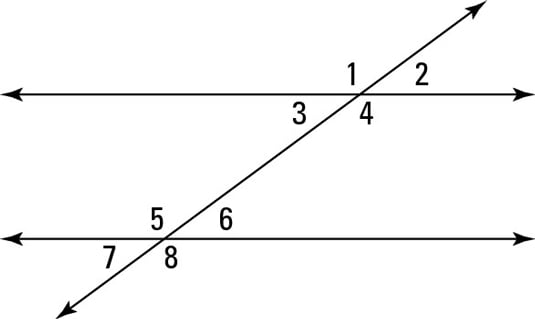
Parallel lines are important when you study quadrilaterals because six of the seven types of quadrilaterals (all of them except the kite) contain parallel lines. The eight angles formed by parallel lines and a transversal are either congruent or supplementary. Check out the above figure which shows three lines that kind of resemble a giant […]
here
 charred heron

so like

this is better ig
if i have this information
and i pick a random 3 digit code
how do i figure out all of the different combinations of letters?
e.g. 789 - combinations would be ptw, ptx etc
oak chasm
@charred heron Take the cartesian product.
charred heron
i do not know what that is
oak chasm
Well, let's say I have two sets: {a, b} and {c, d}. The cartesian product is all the 2-tuples where the first element is from the first set and the second element is from the second set: {(a, c), (a, d), (b, c), (b, d)}.
You can do a cartesian product with three sets as well, which is what you'd do.
Is this just to list them by hand or to make a program?
charred heron
make program
oak chasm
Then you have something like:```
let set1 = "abc"
let set2 = "ghi"
let set3 = "tuv"
let results = {}
for (character m in set1) {
for (character n in set2) {
for (character o in set3) {
results.add(m + n + o)
}
}
}
It'll fill up results with all the "words".
 waxen tartan
if we let n=3 for a sec
1/1 + 1/2 + 1/3 + 1/(1+2) + 1/(1+3) + 1/(2+3) + 1/(1+2+3)
whats the sum notation for something like that
doe stha texist
so i want to calculate for n something like this
oak chasm
@waxen tartan Maybe this: $$\sum_{S \in \frak{P}( {x: x \in \mathbb{N}, 1 \le x \le n } ) } \left( \frac{1}{\sum\limits_{s \in S} s} \right)$$
ocean sealBOT
Chai T. Rex
 waxen tartan
thanks!
oak chasm
No problem.
waxen tartan
just wondering what's the \frak {P}
oak chasm
It's the powerset function.
waxen tartan
ahh
 ashen wave
Today my teacher went over this problem and I really didn't understand her- x^2=16 she said that the 4 could be positive or negative? How does that work
x^2=16
sorry
ocean sealBOT
Chai T. Rex
 oak chasm
No problem.


 gray isle
don't ping helpers immediately
pythag
 night blade
oh i didnt see the lack of a 15 minute wait
 runic vine

night blade
levi, please read the #rules and #❓how-to-get-help
runic vine
I already read
night blade
then follow the rules
runic vine
Ok
night blade
thats why they exist...
runic vine
can I get help now
glass lichen
you already got help
gray isle
pythag
glass lichen
pythagorean if you need a further hint
runic vine
Idk how to use it
glass lichen
ok well what does pythagorean say?
runic vine
A2 + b2 = c2
runic vine
Right triangle
runic vine
The angles
glass lichen
no
runic vine
Uh the sides of the triangle
runic vine
waxen tartan
pain aleks
Ikr
glass lichen
yes, which side is c?
the hypotenuse or a leg? (legs are the sides which form the right angle)
runic vine
Legs because 36 is already hypotenuse because it’s longest side
glass lichen
c is the hypotenuse
glass lichen
well you have the hypotenuse and a leg, and want the other leg
so plug in the values and solve for the other leg
runic vine
33 squared plus 36 squared = c2?
runic vine

 obsidian tapir
so c is given
glass lichen
so given you have the c value, your application of pythag shouldnt be to find c
runic vine
What is C then
obsidian tapir
glass lichen
"c is the hypotenuse"
here
glass lichen
the hypotenuse
glass lichen
it's 36, the longest side as you said
runic vine
So I don’t have a B ?
glass lichen
yes
you dont have one of the legs
so pick your favourite letter to solve for out of a and b 

 oak chasm
@runic vine Well, there are three right triangles in that image. Which has two known sides?
oak chasm
Well, the three right triangles are FGH, FEH, and EGH.
Do you see how those are all right triangles?
runic vine
Yes
oak chasm
OK, which of those three triangles has two known sides?
runic vine
EGH?
oak chasm
Right, now if you have two sides of a right triangle, how can you get the third side?
runic vine
Aight
oak chasm
So, find the third side and write it in.
runic vine
We have a and B right ; so it’s just C we need to find
runic vine
41?

 runic vine
40?
oak chasm
Yes, that's right.
Now, fill that in for GH on your drawing and then what triangle now has two known sides?
runic vine
FGh
runic vine
2 leg
oak chasm
OK, is 40 across from the right angle or next to it?
runic vine
Next to it
oak chasm
OK, is 85 across from the right angle or next to it?
runic vine
It’s above it
oak chasm
Right, it's across the triangle from it.
So, that's the hypotenuse.
So, we put the leg on the addition side and the hypotenuse on the length by itself side.
What equation do we have for the Pythagorean theorem?
oak chasm
OK, did you understand how I found out which side was a leg and which a hypotenuse?
runic vine
yes
ocean sealBOT
Chai T. Rex
 runic vine
yes
oak chasm
The two legs are on the side with the plus.
The hypotenuse is on the side without a plus.
Does that make sense?
runic vine
Yes
 solar sierra
jacob went to his girlfriends house at 3:10pm. he got home at 12:40am when he got home he got on his pc and stayed on to play with brad angad and nathan until 7am. how long did he spend at his girlfriends house and how long did he play on the pc for. what grade is this?
oak chasm
@runic vine OK, so fill in 40 and 85 to the formula and show me what you have right after you fill them in.
@solar sierra Sorry, busy. #help-9 is open if you hurry.
runic vine
Okay so 40^2 + 85^2 = c^2 ?
oak chasm
No, remember 85 is the hypotenuse, right?
oak chasm
Yes, that's right.
You put the hypotenuse on the side without the plus.
OK, now find b.
runic vine
75
runic vine
It was FH and 75 was the answer
oak chasm
Right, and that's the answer to your problem.
runic vine
Thank you!
oak chasm
You're welcome.
 shy prairie
im stumped for this one
 oak chasm
@shy prairie OK, division is the outermost operation there. What's division convert to in a logarithm?
shy prairie
subtraction?
ocean sealBOT
Chai T. Rex
 oak chasm
Let's do the first log. What happens when you take the logarithm of a number to a power?
shy prairie
err doing -8^5 wouldnt b correct right
oak chasm
No, not exactly.
ocean sealBOT
Chai T. Rex
 oak chasm
The power comes out to multiply it by the log of the the base number.
ocean sealBOT
Chai T. Rex
 shy prairie
5logc?

 shy prairie
1/2logx
ocean sealBOT
Chai T. Rex
 shy prairie
1/3logab?
oak chasm
No, don't do the part under the square root yet. Leave that inside the logarithm. What do you take out of the logarithm when you have a logarithm of a square root?
shy prairie
err wat exactly do u mean by taht
oak chasm
Well, you took out 1/2, right?
oak chasm
shy prairie
1/2logx
here
ocean sealBOT
Chai T. Rex
 ocean sealBOT
Chai T. Rex
 oak chasm
Does that make sense?
ocean sealBOT
Chai T. Rex
 oak chasm
Yeah, it sort of works like that.
The whole thing is inside the square root, so it's treated as one together thing.
Now, inside the second log, we have a multiplication.
What does log change multiplication to?
shy prairie
addition?

 shy prairie
3logb
ocean sealBOT
Chai T. Rex
 shy prairie
oh so u just plug it in now?
ocean sealBOT
Chai T. Rex
 oak chasm
So, what do you get as the answer?
shy prairie
-31
shy prairie
oh oof lemme see wat i did wrong
oak chasm
Bah.
ocean sealBOT

 Requested by Chai T. Rex#7323
oak chasm
Requested by Chai T. Rex#7323
oak chasm
You're welcome.
ocean sealBOT
abe
 runic vine
oak chasm
You're welcome.
runic vine
oak chasm
You're welcome.
Are you helping someone at the moment
 carmine lion
what am i supposed to find when i plug in n=1
this is for an induction question btw
 shrewd oracle
Just sub in where there is n and see if the trivial case holds
carmine lion
yes but what is the LHS when n=1
shrewd oracle
E.g, show 2n is always even, we take the trivial case n=1, then we have 2n=2(1) = 2 which holds true
carmine lion
i've only given u LHS
i know how induction works
i don't understand how this series works
glass lichen
if it's for an induction question, you'd need what you're trying to prove the sum equals
glass lichen
sum the squares of natural numbers from 1 to 2n
shrewd oracle
Its jst a sum of the natural numbers squared
glass lichen
$\sum_{i=1}^{2n}i^2$
ocean sealBOT
moshill1
 carmine lion
yeah so i get LHS=1?
glass lichen
yes
glass lichen
you also havent given a RHS, so im taking your word for it
carmine lion
$\frac{n(2n+1)(4n+1)}{3}$
ocean sealBOT
abe
 carmine lion
if you sub 1 here
glass lichen
wait no sorry
carmine lion
and u get 5
glass lichen
if you sub n=1 to the LHS it's 1+2^2
glass lichen
so 5=5
carmine lion
why is it 1^2+2^2
glass lichen
so n=1 is true
glass lichen
$\sum_{i=1}^{2(1)}i^2$
ocean sealBOT
moshill1
 carmine lion
$\sum_{i=1}^{n}i^2 + \sum_{i=1}^{n}i^2$
ocean sealBOT
abe
 carmine lion
that?
glass lichen
no
sum from i=1 to i=2n, but n=1 so 2n = 2
so sum i^2 from i=1 to 2
(1)^2+(2)^2
carmine lion
im still confused a little
is it something to do with how there are 2n terms instead of n terms
carmine lion
so S_1 would be 1^2+2^2
shrewd oracle
So you need to start at 1
Till yo get to 2^2
So thats just 1^2 + 2^2. =5
As for the RHS, its easy you see that when you place in n=1, you get 5
Just basic arithmetic
carmine lion
ye thats why i was only asking for LHS
shrewd oracle
So now you have 5=5
carmine lion
any way to explain without using sigma concept
or not really
cuz i kinda get it
with sigma
how would you explain this to someone who has never done sigma sum stuff
shrewd oracle
I meqn sigma is just a way of shortening how much you write
Like instead of saying $ 1+2+3+....+n-1+n$, we say $\sum_{i=1}^{n} i$, which is just much shorter to write
ocean sealBOT
Conor Sheridan
 glass lichen
sum until the nth even natural number
shrewd oracle
Yeah, so your last term is 2n
So the top of the sigma, we put 2n
And then each value is squared
So we put i^2
carmine lion
ok
shrewd oracle
Giving us $\sum_{i=1}^{2n}i^2$
ocean sealBOT
Conor Sheridan
 shrewd oracle
Reading it takes a lil bit of time but it becomes easy
The bottom is where we start
The top is where we finish
carmine lion
rip this is a misunderstanding
shrewd oracle
The stuff to the right of the sigma is whar we are doing to each term
carmine lion
i already know how sigma work
shrewd oracle
Oh lol
carmine lion
ye
shrewd oracle
@thorn kindle The i here is an index, not the imaginary number
shrewd oracle
I can let it be q if that helps lol
carmine lion
mathematics (mathematicians) have weird norms
shrewd oracle
Amd pulling moves on me
thorn kindle
carmine lion
don't try and act cool
I dont have to try 😎
carmine lion
😭
shrewd oracle
thorn kindle
I dont have to try 😎
 shrewd oracle
You need the dollar sign to begin and another at the end to end the latex @signal wolf
 signal wolf
$\int [0,2] ln x^x^2 dx$
ocean sealBOT
MrThink15000
$\int [0,2] ln x^x^2 dx$
```Compilation error:```! Double superscript.
l.55 $\int [0,2] ln x^x^
2 dx$
I treat `x^1^2' essentially like `x^1{}^2'.
Preview: Tightpage -1310720 -1310720 1310720 1310720
[1{/usr/local/texlive/2020/texmf-var/fonts/map/pdftex/updmap/pdftex.map}]
(./757639076475174922.aux) )
Here is how much of TeX's memory you used:
18264 strings out of 479485
359566 string characters out of 5871962``` shrewd oracle
I assume you mean this
$\int_0^2 ln(x^{x^2}) , dx = \int_0^2(x^2)ln(x) , dx$, then try let u be something
signal wolf
shrewd oracle
$\int_0^2 ln(x^{x^2}) \, dx = \int_0^2(x^2)ln(x) \, dx$, then try let u be somet...
Thx bro : D
ocean sealBOT
Conor Sheridan
 shrewd oracle
No bother, in integral, the bounds are done using the _ and ^
glass lichen
Log laws then probably u sub
shrewd oracle
Yeah
$\int_0^2 ln(x^{x^2}) , dx = \int_0^2(x^2)ln(x) , dx$, then try let u be something
ocean sealBOT
Conor Sheridan


 fleet steeple
why does $20^20 = 5^20*2^40$
ocean sealBOT
Kathullhu
 signal wolf
$\int_0^2 ln(x^{x^2}) , dx = 8/9(ln(8)-1)$
ocean sealBOT
MrThink15000
 shrewd oracle
fleet steeple
why does $20^20 = 5^20*2^40$
shrewd oracle
fleet steeple
why does $20^20 = 5^20*2^40$
why does $20^{20}= (5^{20})(2^{40})$ ? Is this what you wanted?
ocean sealBOT
Conor Sheridan
 fleet steeple
yuh
 glass solstice
uhh can someone help me
signal wolf
$8/9(ln(8)-1)$
ocean sealBOT
MrThink15000
 carmine lion
shrewd oracle
why does $20^{20}= (5^{20})(2^{40})$ ? Is this what you wanted?
carmine lion
shrewd oracle
why does $20^{20}= (5^{20})(2^{40})$ ? Is this what you wanted?
don't you use the distributive property
shrewd oracle
@fleet steeple why does $20^{20}= ((4)(5))^{20} = (5^{20})(4^{20}) = (5^{20})(2^{2(20)}) = (5^{20})(2^{40})$
carmine lion
index laws
ocean sealBOT
Conor Sheridan
 alpine sable
hi
shrewd oracle
glass solstice
What is each value increasing by as we increase x?
shrewd oracle
carmine lion
or are u trying to help someone
I was helping someone else
carmine lion
its increasing by cubes?
shrewd oracle
I was hoping he/she would have answered it lol
carmine lion
ah
btw conor
do u know how to factor a non monic
cubic
$8k^3+30k^2+37k+15$
how to factor
ocean sealBOT
abe

 upbeat gorge
first off k=-1 zeroes out, so you have (k+1) as a factor
factoring is mostly guesswork
carmine lion
educated guesswork
carmine lion
it should involve factors of 15 i think
upbeat gorge
etc
carmine lion
so you'
upbeat gorge
to be more precise, factors of 15/8 can be roots
carmine lion
what how
upbeat gorge
including negatives
that's the rational root theorem
divide the coefficient of the constant by the coefficient of the highest degree term
actually wait i stand corrected
factors of the coefficient of the constant
carmine lion
divide them?
ocean sealBOT
CST
 carmine lion
yes
upbeat gorge
and 8 has factors $\pm 1, \pm 2, \pm 4, \pm 8$
ocean sealBOT
CST
 carmine lion
yes
upbeat gorge
actually i should insert descartes' rule of signs here
to show that there can be no positive roots
essentially you observe the sign changes in the equation
anyway, trying out smaller values to factor easily helps
again, -1 zeroes out and is thus a root
and then you can factor out (k+1)
leaving $8k^2+22k+15$
ocean sealBOT
CST

 upbeat gorge
are these all direct proportions?
huh, i think your teacher's crazy lol
especially for #12
 charred flint
lol these problems are extremely scary
charred flint
hints:
7 is close to 8
14 and 26 are even
159 is 10 more than 149
 charred flint
everything besides #13 isn't proportions
charred flint
they're like riddles
alpine sable
well in that case any answer for any problem is justified
upbeat gorge
secret operation or smth
for example #11 could be 8 since you divide the first term by 13 and add 3
charred flint
you have to add the rule of "find the relation of adding/multiplying/dividing that is the simplest"
alpine sable
I'd still say that's not well defined
upbeat gorge
find the best alternative is very vague lol
charred flint
ehhh they're pretty unique given the multiple choice part
upbeat gorge
I hate teachers who write "find the best answer" and sabotage their multiple choice so all the choices are wrong
alpine sable
I did the explanation
what if someone comes up with a slick relationship that fits but the person who wrote the problem wasn't thinking of that
charred flint

alpine sable
14 is 15
15 is 268
They all have the logical formulas lol
They are like riddled
Riddles
oak chasm
Ten is obviously four.
 blazing rose
$\int_1^2 {x f'(g(x))dx}$
 ocean sealBOT
Josh.
 blazing rose
can someone help me solve this integral with the given info
 ebon relic
upbeat gorge
analogy problem ig
ebon relic
upbeat gorge
analogy problem ig
Yup I could not find a mental ability server so...
charred flint
blazing rose
can someone help me solve this integral with the given info
reverse chain rule
alpine sable
I think the answer to 11 is 9 because in my opinion the rule is take the first digit and add 3 to it
blazing rose
no idea how to do that
charred flint
the integral of g' * f'(g(x)) is f
and here you have g' outside because x is close to the derivative of 5-x^2
ebon relic
alpine sable
I think the answer to 11 is 9 because in my opinion the rule is take the first d...
Ok
alpine sable
uhh
I was making fun of the nature of the problem actually
don't take that as serious advice
charred flint
eh just trust me on that rule then
it's fine to use if you've learned the chain rule
blazing rose
wait figured it out
i just set g(x) = u
so u = 5 - x^2
du = =-2xdx
-1/2du = xdx
replaced xdx with du
charred flint
looks good
blazing rose
yeee
charred flint
I forgot it's more known as u-substitution haha


 tawny lion
thank you very much
let me see
my teacher just posted these problems in the middle of doing matrices
alpine sable
oh
alpine sable
welcome
tawny lion
@alpine sable do you have any other practice problems of such nature
that you'd be willing to share
also, if anyone could help with this it would be really appreciated

 spice tendon
I missed the lesson because I was at the hospital today, can somebody help me with this?
 tawny lion
quadratic equations have the form ax^2+bx+c
in this one you have b = 4, a = 1
so therefore -b/2a = -(4)/2(1)
then input that value into the function to find y vertex
other part seems self explanatory


 alpine sable
alpine sable
alpine sable
This one??
alpine sable
I’m not sure tho, but that’s how i do it
Did your teacher mention about what she is asking for?
ionic jewel
 barren jacinth
$\ln(\ln(x)) = 2 \to e^{e^2} = x$
ocean sealBOT
bunny
 ionic jewel
the first side is just a constant use a calculator
tawny lion
alpine sable
Did your teacher mention about what she is asking for?
he, and nah
ionic jewel
yeah prettys approach looks right
combine the logs and cancel then simplify however you like after that
alpine sable
Can someone explain me this?
 vale wigeon
@alpine sable still here?
alpine sable
Yes
vale wigeon
i'm a little confused at the wording of the problem as it seems a little redundant.
you say f'(x) ≤ 8, but then you say f'(x) ≤ 3 for all x?
either the latter implies the former, or there's a typo somewhere.
alpine sable
It’s both
vale wigeon
but why would you state both
if f'(x) ≤ 3 then it's guaranteed that f'(x) ≤ 8 too
are you absolutely sure you copied everything 100% correctly with no typos?
alpine sable
No I made a error
vale wigeon
see, that's what i'm trying to get at
alpine sable
Sorry let me write it again
vale wigeon
yes, please do that.
vale wigeon
,rccw
ocean sealBOT
 alpine sable
Yes
vale wigeon
ok
so you're asked to sort those statements into "guaranteed", "possible" and "impossible"
alpine sable
Yes
vale wigeon
ok, progress so far?
vale wigeon
are you familiar with the concept of increasing and decreasing functions?
you might do well to try and visualize what the graph of y = f(x) looks like under the conditions that they state
alpine sable
Yes
vale wigeon
so given that f'(x) ≤ -3 everywhere, what can you say about f?
alpine sable
It’s the derivative of f(x)?
vale wigeon
???
read my question again please
so given that f'(x) ≤ -3 everywhere, what can you say about f?
what can you say about f itself?
what property does it have that will significantly simplify matters here?
alpine sable
I don’t understand, like is it less than -3?
vale wigeon
look i even prompted you with "increasing and decreasing functions"
the derivative of your function is bounded above by -3.
in particular this implies that the derivative of your function is negative.
now what do we know about functions whose derivatives are negative?
alpine sable
It’s decreasing?
alpine sable
Never mind
alpine sable
vale wigeon
_the derivative_ of your function is bounded above by -3.
This function is decreasing right??
vale wigeon
yes i literally told you
your function's derivative is negative
therefore the function itself is decreasing
alpine sable
Yes, I understood that part
vale wigeon
if you did you wouldn't have asked me about it again
alpine sable
Sorry I’m a bit confused on this topic
vale wigeon
this function is decreasing
alpine sable
Yes I get that
vale wigeon
if we have a decreasing function on some interval, at what point does it achieve its maximum on the interval?
alpine sable
At -infinity?
vale wigeon
on some interval
i didn't say "the whole number line"
i meant a closed interval to be more specific
[a,b]
alpine sable
Ahhh ok
vale wigeon
we have a decreasing function defined on [a,b]. where does it achieve its maximum?
alpine sable
0?
alpine sable
Then how do we achieve its maximum??
 small stag
It helps if you visualize it in your head
vale wigeon
yeah, imagine a graph of a decreasing function, over an interval
small stag
Can be as simple as y=-x if you want
vale wigeon
ayewaddup do you want to take this over
alpine sable
It’s like this right??
 vale wigeon
this graph could use some more labels but yes
small stag
Uh lemme see the question Rq
small stag
Gracias
ionic jewel
no
small stag
And these statements are all noted down correct?
alpine sable
Yes
small stag
Sorry this Channel is busy
It’s just that it says f’(8) is less than 8 and also less than 3 in the next line
alpine sable
No don’t mind that part
ionic jewel
she updated the statement in the second ss
ionic jewel
okay ann pretty much gave you part a
small stag
It would have to be guaranteed
Yes
Okay so
Hold on I’m tryna
Okay so f’(x) <= -3 right?
alpine sable
Yea
small stag
And the derivative tells us by what degree the function changes at every point
Or in other words the slope of the tangent line at every point
Now if the slope of the tangent line is always lower than -3
Can we agree that the slope is always negative?
Channel taken
small stag
Good
Now it’s forget about that for a second
Say I have another decreasing function
Like y = -x^3
Sorry channel is taken you’re going to have to wait for one to be free
ionic jewel
hes also taking an exam so thats very against the rules
alpine sable
Yes
alpine sable
3
small stag
And why do you say this?
alpine sable
Because i think it’s the highest point on the graph
small stag
Let’s take another example
Say y = -x
Same interval
Is it increasing or decreasing
alpine sable
-3 ?
small stag
And why do you say this
alpine sable
Because the function is decreasing and the maximum should be negative?
small stag
Think about it this way
If a function is decreasing right
That means as you go to the right, it will go downward
alpine sable
Yes
alpine sable
It goes up
alpine sable
The function is going right and it’s negative and it’s going downwards
 humble wyvern
yo i have a question
small stag
Ask in a free channel
humble wyvern
kk
small stag
Better but I think you’ve gotten the conceptualization aspect so I won’t push it
Now for y = -x^3
On [-3, 3]
At what x does it reach its maximum
alpine sable
-3
alpine sable
Yes
small stag
And that means no matter what -3, our lower bound, is our maximum
That’s gonna be the conclusion we use for a
alpine sable
Yes I got it now
small stag
With that knowledge explain to me why a is guaranteed
alpine sable
The function is increasing since its positive
small stag
why is it increasing?
alpine sable
5 is the maximum value
alpine sable
small stag
why is it increasing?
Because it’s positive?
small stag
What is positive
alpine sable
Oh wait, so they alr gave the absolute max
small stag
The min and max don’t matter yet
You need to classify whether the function is increasing or decreasing
alpine sable
How do we draw a graph for this tho?
small stag
Do we need a graph?
alpine sable
We need it to determine whether it’s going upwards or downwards?
small stag
What’s the first derivative of y = -x
alpine sable
-1?
small stag
Good
 winter bay
just ask dont ask to ask
small stag
And -x^3?
alpine sable
-3x^2?
alpine sable
Negative
small stag
So do you see how when our first derivative is always negative
Our function is decreasing?
alpine sable
Yes
alpine sable
Yeah
small stag
Which means it will always be a negative number
alpine sable
Yeah
small stag
So yeah decreasing
And what did we say about decreasing functions on certain intervals?
alpine sable
It would be Guaranteed?
alpine sable
Yes
alpine sable
1
small stag
And what’s f(1)
alpine sable
8
small stag
So is 8 the absolute max?
alpine sable
Yes
small stag
Now b
If f(x) = 0 at two different x’s
It requires the graph to pass through the x axis and then come back up again
Implying that at some point we have a relative maxima or minima
Or the derivative = 0
Is this possible?
If so is it guaranteed?
Sorry I have to sleep
alpine sable
No it’s not possible right?
alpine sable
Yes I got it now!
small stag
I’ll leave you with this
If f’(x) at its highest can be -3
That means atmost f(x) is linear
Just see if those points fall on or below the line
If above it’s not possible
If below it is
Gn!!
 vale wigeon
you can take their difference, whichever way you want, and check if it's positive or negative in your interval
and if it's negative, multiply it by -1 before proceeding
 foggy onyx
In 40° right triangle, apply TOA to find the value of opposite having 12m adjacent
a. 10.06
b. 10.05
c. 10.04
d. 10.07
can someone help me rn
btw this is not an exam
its a homework but multiple choiceses
im having some trouble
i tried to answer it but i got 90.09m
vale wigeon
one moment
@foggy onyx so how exactly did you get 90.09 m?
it doesn't look like it comes from a degree vs radian mode mishap
foggy onyx
i used toa elevation formula
vale wigeon
"toa elevation formula"?
foggy onyx
Angle of Elevation TOA
Angle of Depression TOA
but since its finding the opposite i used the elevation one
vale wigeon
no we don't give out answers
ionic jewel
is TOA the trig memorization thing?
vale wigeon
i don't know what elevation or depression you're talking about when all you have is A SINGLE RIGHT TRIANGLE

x/12 = tan(40°)
i see no need for this overcomplication with "angle of elevation" vs "angle of depression" which really only make sense when you're considering like... lines of sight in a "physical" setting
foggy onyx
okay okay
vale wigeon
and even then the only difference is in how the relevant triangle is positioned
foggy onyx
so whats the answer
vale wigeon
no i'm not telling you the answer
foggy onyx
;-;
 foggy onyx
...
vale wigeon
and tan(40°) isn't even 1.32 so your calculator IS in radian mode when it should be degrees
vale wigeon
tan = opp/adj.
your adjacent is 12
your opposite is x
tan(40°) = x/12
this does NOT give tan(40°)*x = 12.
foggy onyx
OOPS OMG YES
vale wigeon
just like z/4 = 5 does not give 4 = z*5
foggy onyx
I DIDNT NOTICE LOL SORRY
vale wigeon
THIS IS WHAT IVE BEEN TRYING TO POINT OUT
vale wigeon
??
can you use your calculator right now and tell me what you get when you calculate 12 * tan(40)
in DEGREE mode mind you
alpine sable
e
 vale wigeon
bruh
foggy onyx
im really confused
foggy onyx
;-;
vale wigeon
tan(40)*12 = x
and then IMMEDIATELY AFTERWARDS
turn that multiplication magically into a division
foggy onyx
im shorcutting it..
vale wigeon
no you're not
you literally took a multiplication symbol and replaced it with a division
 vale wigeon
do you even algebra
foggy onyx
dont notice the writting
vale wigeon
do you even algebra
alpine sable
foggy onyx
They are doing a different problem
vale wigeon
it's no use giving you formulas when you're shaky with your algebra
you seem to like. not understand what you're doing algebraically
and i'm not in the right headspace to clear that up rn
foggy onyx
I KNOW HOW TO SOLVE I JUST HAVING A HARD TIME ON THE FORMULA
vale wigeon
YOU LITERALLY TURNED X = 12TAN(40) INTO X = TAN(40)/12 AND CALLED IT "SHORTCUTTING"
vale wigeon
vale wigeon
can you use your calculator right now and tell me what you get when you calculat...
i even told you this
but no
alpine sable
foggy onyx
He’s blindly following the example
alpine sable
Just multiply tan40*12
gray isle
the location of you values changes depending on the question
start with soh-cah-toa
the rest is algebraic manipulation
vale wigeon
prettygirl i already told him to do that but he chose to ignore me
or just not read the message
or maybe it wasnt a conscious choice
foggy onyx
okay
vale wigeon
but still
foggy onyx
IM SO SORRY FOR DISTURBING YALL OMG LMAO
foggy onyx
but though thanks
vale wigeon
,calc 12 * tan(40*pi/180)
ocean sealBOT
Result:
10.069195574127
Yes by rounding it would be that
vale wigeon
10.069 rounds to 10.07
foggy onyx
so 10.07?
alpine sable
Yes
I think you can do the Pythagorean theorem from here
To get the hypotenuse
Since you have two sides
vale wigeon
you dont need that
all that was asked for is the oppoosite
so the correct course of action from here is to acknowledge that we are DONE with this problem and to move on
alpine sable
Oh yeah!
foggy onyx
Okay i sent my homework, im really sorry for stressing you out from that stupidity of mine lol @vale wigeon
foggy onyx
and though im not kinda into math but im slightly reading algebra book i only know the polynomial methods LOLa
 vale wigeon
are you allowed to use the fact that $t + t^{-1} \geq 2$ for positive $t$?
ocean sealBOT
Ann
 vale wigeon
because i have a feeling it'd be much much easier to do (d) using that than using part c