#help-0
1 messages · Page 515 of 1
 granite crest
 granite crest
log
granite crest
yes
 static star
is that what u got
granite crest
it slighlty differs
static star
which part
granite crest
yes its right
if is xsinx
i sloved it further
and i got the answer in terms of y
 granite crest
yes
static star
granite crest
the denominator will be xsinx
other than this thats what u got?
granite crest
yeah exactly
static star
e^x(x-1)/xsinx + C/xsinx, x ≠ nπ, n ≠ 0
you dont have to do all the stuff here
with positive and negative x
.
granite crest
static star
e^x(x-1)/xsinx + C/xsinx, x ≠ nπ, n ≠ 0
yes right
static star
granite crest
yes right
why some places they have the positive and the negative cases
granite crest
static star
just double checkin
no no if its mod then just open it
static star
mod is abs value?
granite crest
static star
why some places they have the positive and the negative cases
yes then you put the limit on it
the possible limit
granite crest
no not here
static star
okay
granite crest
they specify it in the question
static star
i see
granite crest
yes
static star
okay thank you
granite crest
np
static star
.close
 lone heartBOT
Channel closed
Closed by @static star
Use .reopen if this was a mistake.
 Available help channel!
Send your question here to claim the channel.
Remember:
• Ask your math question in a clear, concise manner.
• Show your work, and if possible, explain where you are stuck.
• After 15 minutes, feel free to ping <@&286206848099549185>.
• Type the command .close to free the channel when you're done.
• Be polite and have a nice day!
Read #❓how-to-get-help for further information on how to ask a good question, and about conduct in the question channels.
 real glen
 real glen
i understand all of this up until it goes = e^0 = 1
is it because we took the log of both sides?
 indigo talon
Yes, since you took ln of both sides and found the limit of lny to reverse it you take e of that
lone heartBOT
@real glen Has your question been resolved?
real glen
.close
lone heartBOT
Channel closed
Closed by @real glen
Use .reopen if this was a mistake.
Available help channel!
Send your question here to claim the channel.
Remember:
• Ask your math question in a clear, concise manner.
• Show your work, and if possible, explain where you are stuck.
• After 15 minutes, feel free to ping <@&286206848099549185>.
• Type the command .close to free the channel when you're done.
• Be polite and have a nice day!
Read #❓how-to-get-help for further information on how to ask a good question, and about conduct in the question channels.
 tough scroll
is 1+55+55^2+55^3+...+55^90 prime or composite ???
 vale wigeon
what do you think
tough scroll
So far i have already checked that 2,3,5,7,11,13,17 dont divide it
 ocean sealBOT
Light Yagami
 tough scroll
also equal to $\frac{55^{91}-1}{54}$
ocean sealBOT
Light Yagami
 tough scroll
13×7
tough scroll
,,\sum_{r=0}^{6}55^{13r}(\frac{55^{13}-1}{54})
ocean sealBOT
Light Yagami
 tough scroll
this is 7 groups of 13 👆🏻
 slim kite
ocean seal
**Light Yagami**
slim kite
ocean seal
**Light Yagami**
I didn't understand what this step is. Can anyone explain?
tough scroll
thanks
vale wigeon
slim kite
I didn't understand what this step is. Can anyone explain?
OP grouped the terms into 7 groups of 13
tough scroll
slim kite
I didn't understand what this step is. Can anyone explain?
we make 7 groups of 13, (1+55+...+55^12)+55^13(1+55+...+55^12)+...
vale wigeon
^
tough scroll
.close
lone heartBOT
Channel closed
Closed by @tough scroll
Use .reopen if this was a mistake.
lone heartBOT
Available help channel!
Send your question here to claim the channel.
Remember:
• Ask your math question in a clear, concise manner.
• Show your work, and if possible, explain where you are stuck.
• After 15 minutes, feel free to ping <@&286206848099549185>.
• Type the command .close to free the channel when you're done.
• Be polite and have a nice day!
Read #❓how-to-get-help for further information on how to ask a good question, and about conduct in the question channels.
 alpine sable
i know the asymptote is y=-3, but when i plug in values for x they are all resulting in points below the asymptote?
 lone heartBOT
alpine sable
i know the asymptote is y=-3, but when i plug in values for x they are all resul...
lone heartBOT
alpine sable
i know the asymptote is y=-3, but when i plug in values for x they are all resul...
 mortal trellis
and?
alpine sable
is that ok?
mortal trellis
why should it not be?
alpine sable
because if i try to put those points there is no graph line
mortal trellis
not sure what you mean
if thats a software issue then I cant help with that
the graph is below the asymptote. that is correct
alpine sable
.close
lone heartBOT
Channel closed
Closed by @fiery phoenix
Use .reopen if this was a mistake.
lone heartBOT
Available help channel!
Send your question here to claim the channel.
Remember:
• Ask your math question in a clear, concise manner.
• Show your work, and if possible, explain where you are stuck.
• After 15 minutes, feel free to ping <@&286206848099549185>.
• Type the command .close to free the channel when you're done.
• Be polite and have a nice day!
Read #❓how-to-get-help for further information on how to ask a good question, and about conduct in the question channels.
 languid lily
hey there is the problem occured while integerating directly there comes the term z^2*dy how to integerate this we have no ingormation regarding the
lone heartBOT
languid lily
hey there is the problem occured while integerating directly there comes the ter...
 bleak heath
can you provide the question?
lone heartBOT
@languid lily Has your question been resolved?
languid lily
wait ill send pic

 lone heartBOT
Channel closed
Closed due to timeout
Use .reopen if this was a mistake.
Available help channel!
Send your question here to claim the channel.
Remember:
• Ask your math question in a clear, concise manner.
• Show your work, and if possible, explain where you are stuck.
• After 15 minutes, feel free to ping <@&286206848099549185>.
• Type the command .close to free the channel when you're done.
• Be polite and have a nice day!
Read #❓how-to-get-help for further information on how to ask a good question, and about conduct in the question channels.
 strange fractal
im not understanding something here
lone heartBOT
strange fractal
im not understanding something here
strange fractal
why is my answer double theirs


cuz i thought i was only finding hypotenuse
which is 1 tension
and they will be the same
slim kite
Nope. Since there r 2 cables, it would be 2t
strange fractal
slim kite
Nope. Since there r 2 cables, it would be 2t
i dont understand why
slim kite
Wait, I'll have to see ur solution properly once
 slim kite
See, both the cables work together to balance out the force
The weight force is 245N
And each cable handles half of that
122.5N
Hence $\cos{52.5^{\circ}}=\frac{122.5}{T_{cable}}$
strange fractal
strange fractal
i
so what force did i really find here?
ocean sealBOT
Suika
 strange fractal
how would u draw dat?
slim kite
strange fractal
how would u draw dat?
I didn't get what u mean by this
strange fractal
slim kite
I didn't get what u mean by this
liek how would i draw all the forces on
slim kite
Like, as in visualise it?

 velvet veldt
strange fractal
liek how would i draw all the forces on
velvet veldt
strange fractal
liek how would i draw all the forces on
draw a free body diagram?
strange fractal
velvet veldt
draw a free body diagram?
ya
slim kite
Would this be easier to visualise?
 strange fractal
wait since forces are balanced here and its in equilibrium
force down must = force up
so Tdown + Tdown = Tup
slim kite
Yes
strange fractal
oh
slim kite
W = 2T_y
 slim kite
Yes
 slim kite
strange fractal
.CLOSE
slim kite
strange fractal
.CLOSE
In lower case
lone heartBOT
Channel closed
Closed by @strange fractal
Use .reopen if this was a mistake.
Available help channel!
Send your question here to claim the channel.
Remember:
• Ask your math question in a clear, concise manner.
• Show your work, and if possible, explain where you are stuck.
• After 15 minutes, feel free to ping <@&286206848099549185>.
• Type the command .close to free the channel when you're done.
• Be polite and have a nice day!
Read #❓how-to-get-help for further information on how to ask a good question, and about conduct in the question channels.
 upper stratus
detirmine the volume. im trying to find the bounds here. what is the thought process behind this i thought the bounds would be (0 -> 2pi, 0->sqrt(3), 0->sqrt(4-x^2-y^2) )
 lone heartBOT
upper stratus
detirmine the volume. im trying to find the bounds here. what is the thought pro...
upper stratus
lone heartBOT
upper stratus
detirmine the volume. im trying to find the bounds here. what is the thought pro...
upper stratus
but its acctually (0 -> 2pi, 0->sqrt(3), -sqrt(4-x^2-y^2)->sqrt(4-x^2-y^2) )
so 0->2pi is the area around the sphere we are searching for, 0->sqrt(3) is the distance but what is the last one? the outer shell?
lone heartBOT
@upper stratus Has your question been resolved?
upper stratus
.close
lone heartBOT
Channel closed
Closed by @upper stratus
Use .reopen if this was a mistake.
Available help channel!
Send your question here to claim the channel.
Remember:
• Ask your math question in a clear, concise manner.
• Show your work, and if possible, explain where you are stuck.
• After 15 minutes, feel free to ping <@&286206848099549185>.
• Type the command .close to free the channel when you're done.
• Be polite and have a nice day!
Read #❓how-to-get-help for further information on how to ask a good question, and about conduct in the question channels.
 young light
When I enter in tcdf(-1E99, -4.5607, 8) in my calculator, i keep getting 9.24105 even though the answer is .00184
 lone heartBOT
young light
When I enter in tcdf(-1E99, -4.5607, 8) in my calculator, i keep getting 9.24105...
lone heartBOT
young light
When I enter in tcdf(-1E99, -4.5607, 8) in my calculator, i keep getting 9.24105...
 forest marsh
and the e-4 is considered in the answer ?
Here its putting the ans in scientific notation
young light
Oh thanks
forest marsh
,w tcdf(-1*10^99, -4.5607, 8)
ocean sealBOT


 young light
.close
lone heartBOT
Channel closed
Closed by @young light
Use .reopen if this was a mistake.
lone heartBOT
Available help channel!
Send your question here to claim the channel.
Remember:
• Ask your math question in a clear, concise manner.
• Show your work, and if possible, explain where you are stuck.
• After 15 minutes, feel free to ping <@&286206848099549185>.
• Type the command .close to free the channel when you're done.
• Be polite and have a nice day!
Read #❓how-to-get-help for further information on how to ask a good question, and about conduct in the question channels.
 somber quest
are histograms/distribution graphs illustrating F(x) or f(x)?

 wind cloak
uh whats a distribution graph
if you sample data and put it into a histogram it will begin approaching the pdf
somber quest
if the graph is called pdf then whats the graph of F(x)?
wind cloak
its just a graph
somber quest
wind cloak
uh whats a distribution graph
the smooth thing you call pdf
wind cloak
the cdf graph isn't that useful in general
you're just gonna plug and find values from it
wind cloak
somber quest
if the graph is called pdf then whats the graph of F(x)?
also idk what this means exactly
somber quest
should F(x) be even called a distribution function?
wind cloak
the graph isnt called pdf, the funcion is
wind cloak
somber quest
should F(x) be even called a distribution function?
its called the cumulative distribution function
somber quest
ohh
if we int pdf in an interval thats between 0 and +inf, what would the result look like on the cdf?
wind cloak
idk
its not a useful thing in general
oh wait
youre integratig the pdf
you'll get some offset version of the cdf
somber quest
is it a portion of the cdf or is it a transformed cdf?
wind cloak
its the CDF + some constant
from the properties of integrals
You're asking $\displaystyle \int_a^b f(t) \dd{t}$ right?
ocean sealBOT
neon
 somber quest
is it a portion of the cdf or is it a transformed cdf?
somber quest
somber quest
is it a portion of the cdf or is it a transformed cdf?
actually before that, definite int gives a number, then how can it be represented on a cdf which shows a collection of numbers? unless its just 1 x value of the cdf giving 1 single y
somber quest
ocean seal
**neon**
yes
ocean sealBOT
neon
 lone heartBOT
@somber quest Has your question been resolved?
lone heartBOT
Channel closed
Closed by @somber quest
Use .reopen if this was a mistake.
lone heartBOT
Available help channel!
Send your question here to claim the channel.
Remember:
• Ask your math question in a clear, concise manner.
• Show your work, and if possible, explain where you are stuck.
• After 15 minutes, feel free to ping <@&286206848099549185>.
• Type the command .close to free the channel when you're done.
• Be polite and have a nice day!
Read #❓how-to-get-help for further information on how to ask a good question, and about conduct in the question channels.
 brittle lake
Can someone explain to me how 8 comes into play
 brittle lake
oh wait
wrong one

its in the mid
i dont understand how that symmetry thingy works
which introduces the 8
nvm i get it
.close
lone heartBOT
Channel closed
Closed by @brittle lake
Use .reopen if this was a mistake.
Available help channel!
Send your question here to claim the channel.
Remember:
• Ask your math question in a clear, concise manner.
• Show your work, and if possible, explain where you are stuck.
• After 15 minutes, feel free to ping <@&286206848099549185>.
• Type the command .close to free the channel when you're done.
• Be polite and have a nice day!
Read #❓how-to-get-help for further information on how to ask a good question, and about conduct in the question channels.
 left wedge
how should factorize this? I cant find a yt tutorial on it
 vale wigeon
put x = k^2 and then the equation will look like a "normal" quadratic
lone heartBOT
Channel closed
Closed by @left wedge
Use .reopen if this was a mistake.
lone heartBOT
Available help channel!
Send your question here to claim the channel.
Remember:
• Ask your math question in a clear, concise manner.
• Show your work, and if possible, explain where you are stuck.
• After 15 minutes, feel free to ping <@&286206848099549185>.
• Type the command .close to free the channel when you're done.
• Be polite and have a nice day!
Read #❓how-to-get-help for further information on how to ask a good question, and about conduct in the question channels.
 shrewd frost
 lone heartBOT
shrewd frost
lone heartBOT
shrewd frost


 shell agate
Also x^2y^2=b^2+c^2
What if we do x^2=(b^2+c^2)/y^2
nah that doesn't help
It's almost never none of these
shrewd frost
shell agate
It's almost never none of these
I mean
shell agate
I have a feeling it's 1
shrewd frost
What else can you get here
shell agate
We have all equations now it's how to solve it
lone heartBOT
Channel closed
Closed by @shrewd frost
Use .reopen if this was a mistake.
lone heartBOT
Available help channel!
Send your question here to claim the channel.
Remember:
• Ask your math question in a clear, concise manner.
• Show your work, and if possible, explain where you are stuck.
• After 15 minutes, feel free to ping <@&286206848099549185>.
• Type the command .close to free the channel when you're done.
• Be polite and have a nice day!
Read #❓how-to-get-help for further information on how to ask a good question, and about conduct in the question channels.
alpine sable
im confused on a and b
 lone heartBOT
alpine sable
im confused on a and b
alpine sable
lone heartBOT
alpine sable
im confused on a and b
alpine sable
i don’t hmeven know how to start
 earnest slate
idek how to read
bleak heath
wtf is that
slim kite
$a)\sum_{n=1}^\infty\frac{(-2)^n\sqrt{n}}{5^{n+1}}$
alpine sable
where did u get 2n
alpine sable
please help im struggling with it
 sleek grove
I'm so sorry wrong server
bleak heath
alpine sable
where did u get 2n
which 2n?
alpine sable
sleek grove
I'm so sorry wrong server
im curious what server ur sending it on
slim kite
$b)\sum_{n=1}^\infty\frac{\sin(\frac{1}{n})}{n}$
alpine sable
dawg that’s e
 lusty minnow
wanted to ask if i did these integrals right
 slim kite
lusty minnow
wanted to ask if i did these integrals right
slim kite
lusty minnow
wanted to ask if i did these integrals right
!occupied
lone heartBOT
lusty minnow
wanted to ask if i did these integrals right
Someone else is already using this help channel. If you need help with a question, please open your own help channel/thread (see #❓how-to-get-help for instructions).
bleak heath
alpine sable
dawg that’s e
do you not have a better pic than this?
slim kite
Hint: try comparing to $\sum\frac{1}{n^2}$


 slim kite
!status
lone heartBOT
What step are you on?
1. I don't know where to begin.
2. I have begun but got stuck midway.
3. I got an answer but I was told that it's wrong.
4. I got an answer and would like my work checked.
5. I have a question about someone else's work/solution.
6. I have completed the problem and don't need help anymore. Thank you.
7. None of the above
i already said it
slim kite
Dunno where to begin?
alpine sable
yes
alpine sable
@bleak heath can u help me
slim kite
Are there any particular methods that they expect you to use?
alpine sable
direct comparison, limit comparison, and ratio
slim kite
So, for the first one, you write it in this way:
$\sum\frac{\sqrt{n}}{5(-\frac{5}{2})^n}$
alpine sable
uh what
ocean sealBOT
Suika
 slim kite
As n approaches infinity,
The denominator grows much faster than the numerator
Hence, the last term approaches 0
Hence the summation exists
Is that a valid proof that you can use?
alpine sable
.close
lone heartBOT
Channel closed
Closed by @upper moth
Use .reopen if this was a mistake.
 tidal vigil
slim kite
I'm sorry, am I being annoying?
tidal vigil
slim kite
I'm sorry, am I being annoying?
Nah you chill they just an opp for ignoring.
slim kite
Ok
 lusty sail
slim kite
Ok
lusty sail
slim kite
Ok
bro just reopened the same question in a different help channel 😭
lusty sail
slim kite
That's why I thought I may be annoying
nah think he just wanted someone to dumb it down for him
lone heartBOT
Available help channel!
Send your question here to claim the channel.
Remember:
• Ask your math question in a clear, concise manner.
• Show your work, and if possible, explain where you are stuck.
• After 15 minutes, feel free to ping <@&286206848099549185>.
• Type the command .close to free the channel when you're done.
• Be polite and have a nice day!
Read #❓how-to-get-help for further information on how to ask a good question, and about conduct in the question channels.
 ionic hearth
I don't actually understand what a b and d are considered here
 ionic hearth
a seems like a local maximum but thats wrong, d doesn't appear to be a local maximum or minimum and b seems like a local minimum
 coral steeple
Honestly I don't know what local means, but it seems that b is local minimum
alpine sable
coral steeple
Honestly I don't know what local means, but it seems that b is local minimum
local means nearby
coral steeple
ionic hearth
a seems like a local maximum but thats wrong, d doesn't appear to be a local max...
Between increasing and decreasing [a;c], c is the bigger value
 north rover
coral steeple
Honestly I don't know what local means, but it seems that b is local minimum
north rover
coral steeple
Honestly I don't know what local means, but it seems that b is local minimum
I.e., the functions behavior around x=a.
coral steeple
I think between an increasing and decreasing
north rover
ionic hearth
a seems like a local maximum but thats wrong, d doesn't appear to be a local max...
For a, there isn’t a second side to it.
ionic hearth
coral steeple
Between increasing and decreasing [a;c], c is the bigger value
wouldn't that make a a minimum then?
north rover
It has to have both a left and right side.
ionic hearth
north rover
It has to have both a left and right side.
s doesn't have a right side tho
coral steeple
ionic hearth
wouldn't that make a a minimum then?
Look at graph
north rover
Technically speaking, the limit from the left doesn’t exist, so we can’t necessarily classify a as a maximum.
north rover
Yes.
ionic hearth
north rover
Yes.
and d isn't minumum and max either then
north rover
Yep.
ionic hearth
north rover
Yep.
thats literally wrong though
north rover
There might be multiple points that correspond to each cateogry. Keep that in mind.
ionic hearth
it autofilled into a local minimum existing so one of them has to be a minimum, I already tried entering all of them as non mins or maxs
 north rover
Why would a be a local minimum...?
coral steeple
d at the middle of the whole thing, it must be neither
ionic hearth
its not it just auto filled to an answer I can't leave it blank
a local minimum must exist because I cant leave that section blank
north rover
coral steeple
d at the middle of the whole thing, it must be neither
We determined this already.
ionic hearth
the thing is
north rover
ionic hearth
its not it just auto filled to an answer I can't leave it blank
Then just put in b instead.
ionic hearth
correct me if im wrong but because b isn't differentiable its not a minimum or maximum correct?
coral steeple
ionic hearth
a local minimum must exist because I cant leave that section blank
Which is b, right?
coral steeple
Inverted cusp?
north rover
ionic hearth
correct me if im wrong but because b isn't differentiable its not a minimum or m...
No, differentiability doesn’t have to imply there isn’t a minimum or maximum.
If you see it have a dip, it is a local minimum.
 coral steeple
GG
ionic hearth
I already tried that earlier
north rover
ionic hearth
Where did a go?
ionic hearth
with this answer
ionic hearth
north rover
Where did a go?
old answer
coral steeple
ionic hearth
Maybe b and r?
ionic hearth
bro ngl I don't understand this 💀
coral steeple
Try to find out what is local
north rover
ionic hearth
bro ngl I don't understand this 💀
I think this is just an error on the computer’s end, personally.
ionic hearth
coral steeple
Maybe b and r?
r is the absolute minimum its the smallest point on the graph
coral steeple
ionic hearth
r is the absolute minimum its the smallest point on the graph
I see, maybe u need to put it as well such as local min

 forest timber
b should be a local minimum since there's a smaller overall minimum here (r) and (a, d) should be neither max nor min
ionic hearth
the problem is having b as the local minimum
is apparently wrong
and either theres more than 1 local minimum
north rover
forest timber
b should be a local minimum since there's a smaller overall minimum here (r) and...
This has been disproven.
north rover
north rover
I think this is just an error on the computer’s end, personally.
^ Talk to your professor about it.
ionic hearth
as a local minimum?
coral steeple
Yes
ionic hearth
and then for neither I put a and b?
forest timber
oh my I just realised that b will not be differentiable
coral steeple
Try it, we don't know
coral steeple
forest timber
oh my I just realised that b will not be differentiable
i has opposite half-tangents
ionic hearth
forest timber
oh my I just realised that b will not be differentiable
yeah but i've already been told that doesn't matter the minimum can still exist at that point no?
forest timber
ionic hearth
yeah but i've already been told that doesn't matter the minimum can still exist ...
minimum can't exist since a condition for a local minima is f'(x) = 0
that specific point being a kink in the graph cannot be differentiated
I don't remember the exact reason why, could be what lucifer mentioned
coral steeple
Try to put, "no local minimum points"

 north rover
^ Talk to your professor about it.
north rover
north rover
^ Talk to your professor about it.
^
coral steeple
coral steeple
Try to put, "no local minimum points"
"
ionic hearth
okay well I got locked out of the question
i'll ask my prof about it in class today
i don't understand
coral steeple
Even @north rover didn't understand
Let him know the answer when you have it.
Sometimes he makes kindful terrible mistakes, but he's a good person.

ionic hearth
coral steeple
Sometimes he makes kindful terrible mistakes, but he's a good person.
on a side note whats all the ways to impact what a graph looks like again?
 ionic hearth
.close
lone heartBOT
Channel closed
Closed by @ionic hearth
Use .reopen if this was a mistake.
Available help channel!
Send your question here to claim the channel.
Remember:
• Ask your math question in a clear, concise manner.
• Show your work, and if possible, explain where you are stuck.
• After 15 minutes, feel free to ping <@&286206848099549185>.
• Type the command .close to free the channel when you're done.
• Be polite and have a nice day!
Read #❓how-to-get-help for further information on how to ask a good question, and about conduct in the question channels.
 acoustic flume
hello, i alrdy asked this before but i still need help. I need to model/find the f(x) of the shape of the guitar above the x axis. PPL alrdy told me to do largange polynomial. It does not fit the curve accurately as seen in the photo. ive tried other polynomials and diff degrees, none of them fit. SO my next approach is to do piecewise, so i cut up the guitar in the third photo can someone pls tell me what functions would be suitable for each. or give me a new approach or helping hand.


 lone heartBOT
acoustic flume
hello, i alrdy asked this before but i still need help. I need to model/find the...
acoustic flume
lone heartBOT
acoustic flume
hello, i alrdy asked this before but i still need help. I need to model/find the...
acoustic flume
ive been working on this for ages and im starting to lose my shi
 fickle venture
are there any constraints on f
you can fit it exactly with a polynomial of degree n - 1 if you have n points
acoustic flume
fickle venture
are there any constraints on f
idts?
fickle venture
ok. you have 16 points so you can use a degree 15 polynomial
acoustic flume
These are my points (the second table is just more detailed and a bit more accurate)

 fickle venture
but the function may be very wonky and do weird things between the points
acoustic flume
hold on second pic is wrong
this

so how do i approach this😣
cuz like im thinking of piecewise but im gen tired of this
like to have 4-5 piecewise fuctions
fickle venture
how did you find that degree 4 polynomial in the image
if you are doing some optimization thing you can add a regularization term to try to prevent the polynomial from doing crazy things
acoustic flume
i js used a wbsite like this to insert said points
 fickle venture
oh
acoustic flume
ive tried doing it manually as well and it aint working
ive tried geoalgebra and its awful
ignore my shakey hands but one thing i established w my teavher is that it has to look like this
 fickle venture
you can try to find a tool for ridge regression
acoustic flume
cant rllt find one for free
but thx ig
<@&286206848099549185> or if someone could pls be kind enough to js find me a funcrion that actually fits cuz im exhausted as f
mortal trellis
Performs and visualizes a cubic spline interpolation for a given set of points.
lone heartBOT
@acoustic flume Has your question been resolved?
 gloomy lotus
acoustic flume
ignore my shakey hands but one thing i established w my teavher is that it has t...
gloomy lotus
acoustic flume
ignore my shakey hands but one thing i established w my teavher is that it has t...
I think with a lagrange interpolation
acoustic flume
if u see my message above, i did say i did lagrange
and that it is not fitting correctly
or precisely
mortal trellis
whatever you did is not lagrange. lagrange fits precisely through your points
it will look awful and is not what you want, but it will fit your points perfectly

 wintry wadi
this seems promising
https://github.com/maltaisn/svg-equations
can you make an svg file of that curve that you want?
it'll be parametric though, not just y=f(x)
gloomy lotus
acoustic flume
and that it is not fitting correctly
Hoe many degrees you used?
acoustic flume
wintry wadi
this seems promising
<https://github.com/maltaisn/svg-equations>
can you make an...
im afraid i dont know how to do that..
gloomy lotus
mortal trellis
whatever you did is not lagrange. lagrange fits precisely through your points
I think also this
acoustic flume
i mean i can do some searching
acoustic flume
gloomy lotus
Hoe many degrees you used?
ive tried until 5.. and above 6 is started doing like this

ig im doing smth wrong then
gloomy lotus
acoustic flume
ive tried until 5.. and above 6 is started doing like this
But how did You do this lagrange interpolation?
acoustic flume
cuz this is how i understood lagrange. just finding the precise x values and cooresponding with y
and these were the x values..

and i inputted these values into the smth like this

i mean this omne didnt accept more points so i used another wbesite and yeah
gloomy lotus
Look this video https://youtu.be/bzp_q7NDdd4?si=hHVtNwbJTHXCkrTv

A basic introduction to Lagrange Interpolation.
Chapters
0:00 Introduction
01:07 Lagrange Polynomials
03:58 The Lagrange Interpolation formula
05:10 The Resulting Polynomials
The product links below are Amazon affiliate links. If you buy certain products on Amazon soon after clicking them, I may receive a commission. The price is the same for...
wintry wadi
acoustic flume
im afraid i dont know how to do that..
use this
https://svgedit.netlify.app/editor/index.html
most art programs can also do it probably
gloomy lotus
acoustic flume
ive tried until 5.. and above 6 is started doing like this
Forme thats not lagrange interpolation
acoustic flume
wintry wadi
use this
<https://svgedit.netlify.app/editor/index.html>
most art programs can a...
is there any way i can insert the photo?
acoustic flume
gloomy lotus
Forme thats not lagrange interpolation
ah..
but i thought whta i had were the nodes..
wintry wadi
acoustic flume
is there any way i can insert the photo?
yeah, there's a picture button on the sidebar
you still need to draw it though
gloomy lotus
@acoustic flume put your points in Wolframalpha
interpolation {(20,3), (40,11), (60,23)}
Like this
acoustic flume
wintry wadi
yeah, there's a picture button on the sidebar
you still need to draw it though
how do i procceed..
 acoustic flume
gloomy lotus
interpolation {(20,3), (40,11), (60,23)}
acoustic flume
gloomy lotus
interpolation {(20,3), (40,11), (60,23)}
give me a sec
uhm idk how to insert the values..

not letting me change anything
gloomy lotus
Inside the curly brackets
acoustic flume
yupyup give a momentpls
fickle venture
just fyi lagrange interpolation may not give what you want. it will give you a polynomial that goes through all the points exactly. but what happens outside the points is up to the polynomial
you presumably want something that's nearly linear between adjacent points and there's no reason the minimal interpolating polynomial will do that
but ofc it's worth trying it first to see if it works
wintry wadi
acoustic flume
how do i procceed..
your photo is from the internet right?
put the image link there
acoustic flume
ah.. ill shorter the x values
 acoustic flume
fickle venture
but ofc it's worth trying it first to see if it works
acoustic flume
fickle venture
but ofc it's worth trying it first to see if it works
yes ofc
acoustic flume
wintry wadi
your photo is from the internet right?
put the image link there
nah my own pic
wintry wadi
acoustic flume
nah my own pic
ah, you'd need to download inkscape or krita, or some other art program then
try the langrance thing first and ping me if that doesn't work
 acoustic flume
gloomy lotus
Inside the curly brackets
acoustic flume
gloomy lotus
Inside the curly brackets
dyk whats the problem..
gloomy lotus
acoustic flume
dyk whats the problem..
Or look this code
import numpy as np
import matplotlib.pyplot as plt
from scipy.interpolate import CubicSpline
Puntos de ejemplo (debes agregar tus puntos reales)
x = [0, 1, 2, 3, 4, 5]
y = [0, 1, 0, -1, 0, 1]
Crear la spline cúbica
cs = CubicSpline(x, y)
Crear una curva suave
x_new = np.linspace(min(x), max(x), 100)
y_new = cs(x_new)
Graficar la curva
plt.plot(x, y, 'o', label='Puntos de control')
plt.plot(x_new, y_new, label='Spline cúbica')
plt.legend()
plt.show()
gloomy lotus
acoustic flume
dyk whats the problem..
Mb lots of points idk
acoustic flume
let me pull out my laptop
sorry but based off the pics i sent do u think theres any effective way i can lesson the points
gloomy lotus
Well with this code that i send to you it's a hardcore solution to your problem xD
acoustic flume
let me see
dumb ass ques


does it matter which table i use
table 2 is hardcore estimate and table 1 ig the x values are kinda conrete idk
mvm imma js do tab 1
the code stops the process after some w no output
imma try the other rable myabe..
this makes no sense man
it says error in line 50??
wtf
acoustic flume
gloomy lotus
import numpy as np
import matplotlib.pyplot as plt
from scipy.interpolate import...
but why does it say from scipy.intermpolate import cubicspline, isnt that extracting smth from a file
but even if it does work how do i get the f(x) from that
acoustic flume
wintry wadi
ah, you'd need to download inkscape or krita, or some other art program then
try...
langrance doesnt seem to be working…
wintry wadi
mortal trellis
https://tools.timodenk.com/cubic-spline-interpolation
have you also tried this thing?
acoustic flume


it kinda works, and the thing is i showed this my teacher during school and he said that theres too many piecewise functions
bc the reason im trynna find this f(x) is to use it for volume of revolution andfurther calculus
and yeah its just not working properly as u can see
like he said if i wanna do piecewise functions he’d recommend 5 max.
wintry wadi
acoustic flume
bc the reason im trynna find this f(x) is to use it for volume of revolution and...
oh, I don't think my method would work then
acoustic flume
ah
wintry wadi
acoustic flume
can you share that desmos sketch?
I'll try to manually do it and share the method
mortal trellis
you have to decide between good fit and easy function
acoustic flume
hm i also lessened the points but its acting strange
 acoustic flume
wintry wadi
can you share that desmos sketch?
acoustic flume
wintry wadi
can you share that desmos sketch?
like this? https://www.desmos.com/calculator/ypt3wbhwpq

Desmos
ah wait i removed some point
wintry wadi
yeah
acoustic flume
wintry wadi
yeah

Desmos
acoustic flume
gloomy lotus
Well with this code that i send to you it's a hardcore solution to your problem ...
mb the code is working now look

how do i get f(x) tho..
acoustic flume
wintry wadi
I'll try to manually do it and share the method
and thank u i gen appreciate any help at this stage
wintry wadi
acoustic flume
and thank u i gen appreciate any help at this stage
for the first few points, until the top there, looks like aln(x+b)+cln(x+d)+f works
you should think of a function that have a shape that looks like a part of it, then use desmos's regression
acoustic flume
i js realized one of the points was wrong, dont think itll change much btu yeah https://www.desmos.com/calculator/kkeydzjpbk
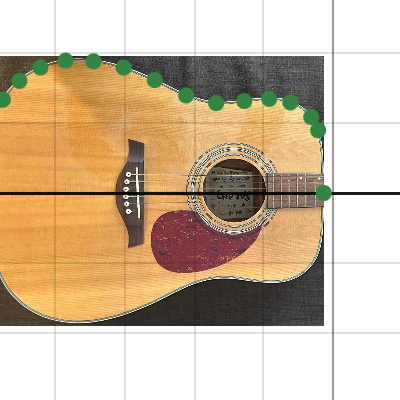
Desmos
wintry wadi
wintry wadi
you should think of a function that have a shape that looks like a part of it, t...
oh i'm missing a step, make a table only from the points in that part, then use regression
lone heartBOT
@acoustic flume Has your question been resolved?
lone heartBOT
Channel closed
Closed due to timeout
Use .reopen if this was a mistake.
lone heartBOT
Available help channel!
Send your question here to claim the channel.
Remember:
• Ask your math question in a clear, concise manner.
• Show your work, and if possible, explain where you are stuck.
• After 15 minutes, feel free to ping <@&286206848099549185>.
• Type the command .close to free the channel when you're done.
• Be polite and have a nice day!
Read #❓how-to-get-help for further information on how to ask a good question, and about conduct in the question channels.
 whole otter
What is the limit as n->infinity of n^(1/n)
lone heartBOT
whole otter
What is the limit as n->infinity of n^(1/n)
lone heartBOT
Show your work, and if possible, explain where you are stuck.
forest marsh
AM GM inequality maybe
 nocturne veldt
ocean sealBOT
nocturne veldt
ocean sealBOT
00100000

 vestal sand
whole otter
What is the limit as n->infinity of n^(1/n)
vestal sand
whole otter
What is the limit as n->infinity of n^(1/n)
the result of this limit is : 1
 ocean sealBOT
 forest marsh
AM GM inequality maybe
forest marsh
forest marsh
AM GM inequality maybe
.
forest marsh
 vestal sand
whole otter
Why is it tho
vestal sand
whole otter
Why is it tho
because the lim x->infinity ln(x)/x = 0
whole otter
forest marsh
woah
whole otter
vestal sand
because the lim x->infinity ln(x)/x = 0
How does it relate
whole otter
vestal sand
or you can use l hospital rule
l hospital gets me stuck
vestal sand
e^(ln(x)/x) = x^(1/x)
vestal sand
vestal sand
cuz x>>>ln(x)
.
whole otter
vestal sand
e^(ln(x)/x) = x^(1/x)
Oh that thing exists too
Still got me stuck

,rotate
ocean sealBOT
 vestal sand
then let : ln(x) = y
and use taylor series
for ln(x)/x ( dont forget to change ln(x) to y)
whole otter
forest marsh
You can do (1+1+ ... + 1 + sqrt(n) + sqrt(n))/n >= n^(1/n)
Infinite sums of 1?
Wait how would that help tho
I’m not picking up what yall are putting down
Can we go back to the AM-GM thing
It kind of intrigues me
lone heartBOT
@whole otter Has your question been resolved?
Channel closed
Closed by @whole otter
Use .reopen if this was a mistake.
lone heartBOT
Available help channel!
Send your question here to claim the channel.
Remember:
• Ask your math question in a clear, concise manner.
• Show your work, and if possible, explain where you are stuck.
• After 15 minutes, feel free to ping <@&286206848099549185>.
• Type the command .close to free the channel when you're done.
• Be polite and have a nice day!
Read #❓how-to-get-help for further information on how to ask a good question, and about conduct in the question channels.
 normal frigate
Hello
lone heartBOT
normal frigate
Hello


 crimson dawn
normal frigate
crimson dawn
normal frigate
I'll help with 9 I guess
 unreal pelican
crimson dawn
I'll help with 9 I guess
unreal pelican
crimson dawn
I'll help with 9 I guess
😭
crimson dawn
Let's look at y=x^2-24 and y=x-12
crimson dawn
unreal pelican
😭
Who's this
unreal pelican
You got this
unreal pelican
Yeah u got this
crimson dawn
crimson dawn
Let's look at y=x^2-24 and y=x-12
Solving this system of questions means finding all the pairs of x and y that fulfill the equation
Since both x^2-24 and x-12 are equal to y then x^2-24=x-12
We can then solve for values of x
Of which you will probably get 2
Because quadratic
normal frigate
have a blessed one though
 quick wind
normal frigate
Can I get help with these?
quick wind
normal frigate
Can I get help with these?
sure bud
which one u stuck on
so u got 2 simultaneous equations on question 9
but they both equal to y
so it makes sense that x-12 should equal to x^2-24
then rearrange into a solvable quadratic x^2-x-12=0
either use the quadratic formula or factorise into (x-4)(x+3)
so x= 4 or -3. then, substitute x in and u get the y results
do that for 10 as well
normal frigate
quick wind
sure bud
1
Number 1
I have a quiz on this
Or big test
Since I was sick for it I never got to even learn it
quick wind
ok
normal frigate
(Like hospital sick)
quick wind
so number 1 is a parabola
or a quadratic whichever term u prefer
its either like a U or a upside down U correct?
normal frigate
Yea
quick wind
do u know when U is upright or upside down
normal frigate
I know when the parenthesis are negative it's upwards facing no?
Or is it the other way around?
quick wind
if its something like x^2, its a U
if its -(x^2), its a reverse u
as u can see, there is a -2 in front of the (x+6)^2
normal frigate
So if it's positive U then if it's negative it's a n
quick wind
yes
ok now we now know that its an n
how do we draw it
lets start simple by substituting x=0
because we love x=0
normal frigate
Yes
quick wind
-2(0+6)^2 -4
that gives us -76
since (0,-76) lies on the y axis, we can say that is the y intercept of f(x)
normal frigate
wait im going to draw it real quick
normal frigate
oh okay
quick wind
let y=0
so -2(x+6)^2 -4=0
does that make sense
i assume it does
if we divide both sides by -2 to get rid of that ugly negative
the -4 is affected but the 0 is not
so we get (x+6)^2 +2=0
quick wind
which part do u not understand
normal frigate
its mostly how Im supposed to write it
quick wind
the roots aka the x intercept, is where the graph touches the y axis
the horizontal line where y=0
quick wind
normal frigate
its mostly how Im supposed to write it
write it in the general form of a quadratic
quick wind
ok lemme draw smth for u hold on
normal frigate
okay thank you
quick wind

ur usual quadratic
u can see the graph pass the horizontal line, known as the y axis twice
normal frigate
oh like on a graph
 quick wind
an example of a quadratic having no roots
 normal frigate
Yes
normal frigate
arent we solving for the 2 x intercepts
normal frigate
 normal frigate
quick wind
its just a different term im using mb
normal frigate
quick wind
its just a different term im using mb
oh sorry
quick wind
ty for uploading again i dont have to scroll
normal frigate
Youre welcome
quick wind
so does it make sense that we treat f(x) as 0
quick wind
because in order for f(x) to have a root it needs to intersect the y axis, hence called the x intercept
normal frigate
yes
quick wind
heres a lil trick we can do to make solving this easier
divide both sides by negative 2
So -2(x+6)^2 becomes (x+6)^2
and 0 becomes 0 because well yknow
but keep in mind, the (-4) also gets divided by -2
so -4/-2 =2
we now get (x+6)^2 +2=0
 normal frigate
yessir
quick wind
show me the new equation u have
 quick wind
correct!
normal frigate
YESSIR
quick wind
yay
now
minus both sides by 2
so we get (x+6)^2=-2
do u notice something odd here?
quick wind
would u agree that anything squared becomes either 0 or a positive number
normal frigate
yes
quick wind
cuz negative * negative = positive
so we shouldnt get -2 at all
no value of x should give us a negative number
right?
quick wind
so there are no roots to the equation
normal frigate
so now what?
quick wind
so given that the graph is an n shape as we discussed, had a y intercept of -76
just draw the thing freehand
hold on mb
sorry
sorry
normal frigate
oh okay]
quick wind
we still need to find the turning point
every quadratic has one
have u learnt complete the square yet?
normal frigate
not surew
were on triginometry
so probably
this was from awhile ago
just got released from the hospital around a week ago
Trig is easy though (for now)
quick wind
good thing the equation completed the square for us
we know that y=-2(x+6)^2 -4
and since its n shaped
it gets to a point where its y value cannot increase any more
then it goes down again
making sense?
normal frigate
not really
quick wind

for example this graph
can u see that the y value gets to a certain point
then goes back down again
quick wind
normal frigate
Im not sure if I even need to graph for this equation
it says sketch the graph so
 normal frigate
no clue
quick wind
refer to question 7
normal frigate
I thought graphs could be infinite
quick wind
the graph looks like its going up
but it gets less steep
then it goes back down again like a roller coaster ride
so that point is called the maximum
normal frigate
huh
quick wind
because u cant get a y value higher than that
aka thats the highest the roller coaster can go before they run out of budget
normal frigate
Lwk if we can just do the formula and help me learn how to make the graph
quick wind
whats lwk
normal frigate
ill send some of the notes
but I dont know if youll understand them
cuz i dont really
and the teacher I had didnt either
for my hospital
quick wind
i’ll have a lookasee
normal frigate
oh nah...
im cooked


dawg these are all the notes
wait
are these even the right ones
quick wind
nah i can see u have a good layout


 quick wind
sure
lets expand -2(x+6)^2 -4
into a form of ax^2 +bx +c=0
firstly expand the brackets
u should get -2(x^2 +12x +36) -4
 normal frigate
we distributed the two i see
normal frigate
all good dude
quick wind
but now we have a quadratic in the form we want
quick wind
lets do -b/2a
quick wind
normal frigate
are you trying to be a math teacher?
its an option
quick wind
normal frigate
cuz you would make a good one
only on discord 
normal frigate
If youre in the US don't
possibly somewhere else not sure how they get payed
in other places
quick wind
that divides to -6.
quick wind
no we're just using -b/2a to find the maximum
quick wind
like how u wrote it down in ur notes
normal frigate
 quick wind
theyre clear enough for the examiner
quick wind
oh no im sorry
u have to do -b/2a separately
like we have the equation in the form we want
now dont touch it
just take the coefficients a, and b from the equation
to calculate -b/2a
and we have the x coordinate for our maxmimum/vertex which is -6.
u ok so far?
normal frigate
 quick wind
ik this is a lot of info to handle
normal frigate
wait is this better?
quick wind
normal frigate
wait is this better?
im sorry i should rephrase again
normal frigate
thats how the notes are no?
normal frigate
o no dont worry abt the =0 yet
just trying to find H first
and K
H comes first tho
we can set it equal to 0 later in the equation no?
normal frigate
yea?
normal frigate
wait what
quick wind
we can derive it from somewhere but icbb to do it at this time of hour sorry
lets move on for now
 quick wind
because
if x is any other value
the -2 would affect the square
making it a negative
and the -4 at the end makes it even smaller
normal frigate
wait can u write down where we are now?
quick wind
making the inside bracket 0
normal frigate
because how can one make H= -6/-4
they go into common factors
but cant be distrubuted
like
they dont go into eachother
quick wind
 quick wind
normal frigate
because how can one make H= -6/-4
quick wind
normal frigate
because how can one make H= -6/-4
no no no h is -6
the x we're finding equals h
now we're gonna find k by subbing in x=-6
then the bracket becomes 0
-2 times 0 is 0, 0-4 is -4
so k = -4
normal frigate
I think we're too worried on explaining it that I'm just getting lost
The Y has no maximum value doesn't matter no?
quick wind
normal frigate
I think we're too worried on explaining it that I'm just getting lost
if u dont get it u cant do questions like these on ur own thats the thing
quick wind
normal frigate
Or do I gotta incorporate it
the maximum value of y is -4, because the maximum value of y is k
and the x coordinate where the maximum value of y is at, is called h
lemme draw the sketch to Q1
normal frigate
Oh okay
quick wind

something like this
the tip of the roller coaster ride is at (-6,-4) and when it touches the finish line (the x axis) we’re at -76 already
thats the best analogy i can do for graphs
roller coaster rides
😭
i apologize if u still dont get it
normal frigate
-76 is a crazy number
😂
I sorta get it
Sorta don't
But -76 is where the y int hits b
quick wind
normal frigate
But -76 is where the y int hits b
yes
quick wind
yes
quick wind
now we need to state the domain and range
domain means the range of x values which are valid
u get me?
which is infinity
because x could be a million a billion trillion or -0.0000001 and u would still get a y value
does that make sense
normal frigate
Yes
quick wind
now the range is the range of y values which are valid
normal frigate
(-inf,+inf)
quick wind
yes
we have shown the shape of the graph
the highest y can go is -4, as it is the tippy top of the mountain
but y can go down to infinity as well
so we write the inequality y<-4
or (-inf, -4]
quick wind
ok i think ur ready to answer domain and range now
those terms are not easy to understand
good job
normal frigate
theyre sorta not easy
just grasping the concept
is a little hard
how do I like draw the range?
@quick wind
quick wind
normal frigate
how do I like draw the range?
u dont
u just state it using an inequality
normal frigate
wait the range is (-inf,+inf)?
normal frigate
