#help-0
1 messages · Page 487 of 1
 azure needle
 junior kernel
like sum of the positions of each letter
azure needle
azure needle
It's vowel and consonants
@junior kernel
junior kernel
like a = 1, b = 2, c = 3 etc
junior kernel
azure needle
It's vowel and consonants
oh
azure needle
Count vowel and consonants
azure needle

azure needle
Yay!!!
junior kernel
thank you
azure needle
junior kernel
i hate this exam

Exam?
Are you asking for help on an exam?
@junior kernel
Answer or you get modded
junior kernel
no, it was for an exam i gave before
i skipped this one
i can send u a pic of the answer sheet
azure needle
Oh ok 😂
junior kernel
and the time right now
azure needle
Nah nvm
 lone heartBOT
If you are done with this channel, please mark your problem as solved by typing .close
lone heartBOT
Channel closed
Closed by @junior kernel
Use .reopen if this was a mistake.
 shadow saffron
junior kernel
anyway cya
shadow saffron
junior kernel
anyway cya
wait what was the answer, how to solve it?
 proven depot
count the vowel and consonants
junior kernel
shadow saffron
wait what was the answer, how to solve it?
the nubmer of vowels is the first digit
number of consonents is 2nd
shadow saffron
junior kernel
the nubmer of vowels is the first digit
oh goddd
junior kernel
yeah
lone heartBOT
 Available help channel!
Send your question here to claim the channel.
Remember:
• Ask your math question in a clear, concise manner.
• Show your work, and if possible, explain where you are stuck.
• After 15 minutes, feel free to ping <@&286206848099549185>.
• Type the command .close to free the channel when you're done.
• Be polite and have a nice day!
Read #❓how-to-get-help for further information on how to ask a good question, and about conduct in the question channels.
 fervent ferry
confused about notation. do we use NABLA only when it's a vector of partials? why r' is not expressed as nabla as well?
 lone heartBOT
fervent ferry
confused about notation. do we use NABLA only when it's a vector of partials? wh...
lone heartBOT
fervent ferry
confused about notation. do we use NABLA only when it's a vector of partials? wh...
 edgy vine
can anybody teach me integration
 cedar juniper
edgy vine
can anybody teach me integration
fervent ferry
cedar juniper
edgy vine
can anybody teach me integration
fervent ferry
nabla, not delta sorry. i've corrected above
 left wharf
fervent ferry
confused about notation. do we use NABLA only when it's a vector of partials? wh...
left wharf
fervent ferry
confused about notation. do we use NABLA only when it's a vector of partials? wh...
nabla is used to denote operations that concern functions that take in several inputs
For a univariate function the derivative at a point, if it exists, is defined as the limit (f(x+h)-f(x))/h
note that that definition makes sense even if the function takes on vectors as values
but as soon as the function takes in several inputs it's no longer obvious how you'd extend that definition
And nabla is basically an attempt to define certain "derivative-like" operations for functions that take in several variables
You write r' instead of nabla r because r takes in a single variable (namely time)
Although technically the gradient of a single variable function is more or less just the derivative
(it's a 1x1 matrix whose sole entry is the derivative function)
(or, more precisely, it's a function mapping each input to a 1x1 matrix corresponding to the value of the derivative at that point)
lone heartBOT
@fervent ferry Has your question been resolved?
fervent ferry
left wharf
note that that definition makes sense even if the function takes on vectors as v...
sorry this part is unclear.
can you make an example? how would i do vector+h ?
is h a vector?
left wharf
If f(t) = (g(t), h(t)) for high school functions g and h then f'(t) (by the high school definition) is (g'(t), h'(t))
So f is vector-valued even though its derivative could be computed by a high schooler
However if f(s, t) = s + t then "the derivative of f" no longer makes any sense
However the gradient of f (denoted nabla f) is the function that maps (x, y) to (1, 1)
fervent ferry
yea so the derivative of f is the gradient
left wharf
kind of yeah
fervent ferry
i'ts a vector whose components are its partials
left wharf
yeah exactly
fervent ferry
left wharf
note that that definition makes sense even if the function takes on vectors as v...
what you mean vectors as values then?
as inputs?
f(t) and t is a vector?
or f(t) outputs a vector?
i think i understood but i want to be sure i get what you were saying here
left wharf
fervent ferry
as inputs?
as outputs
fervent ferry
ok fine
left wharf
the value of a function is its output
fervent ferry
the "takes" confused me
left wharf
takes on
fervent ferry
english is not my language, i tend to associate with takes IN
ok
thanks, all clear
left wharf
no worries ^^
fervent ferry
.close
lone heartBOT
Channel closed
Closed by @fervent ferry
Use .reopen if this was a mistake.
 austere meteor
hi! is anyone able to help?
 hot dawn
austere meteor
hi! is anyone able to help?
hot dawn
austere meteor
hi! is anyone able to help?
yeah wassup
lone heartBOT
Available help channel!
Send your question here to claim the channel.
Remember:
• Ask your math question in a clear, concise manner.
• Show your work, and if possible, explain where you are stuck.
• After 15 minutes, feel free to ping <@&286206848099549185>.
• Type the command .close to free the channel when you're done.
• Be polite and have a nice day!
Read #❓how-to-get-help for further information on how to ask a good question, and about conduct in the question channels.
 grizzled falcon
 lone heartBOT
grizzled falcon
grizzled falcon
lone heartBOT
grizzled falcon
grizzled falcon
Hello! I was wondering how i could solve this question..
So I want to find the limit, is that what they are asking for ?
 daring parcel
how
grizzled falcon
?
 lavish cave
grizzled falcon
So I want to find the limit, is that what they are asking for ?
lavish cave
grizzled falcon
So I want to find the limit, is that what they are asking for ?
no
do you know what the condition is for a geometric series to converge?
grizzled falcon
That the partial sum tends to a limit?
lavish cave
grizzled falcon
That the partial sum tends to a limit?
no, that's true for any series to converge
what condition must there be on the common ratio?
lavish cave
grizzled falcon
Absolute value of r is less than one?
yeah that one
lavish cave
grizzled falcon
But how do i find the R in this geometric sum ?
it's the 2nd term divided by the 1st term for instance
$\frac{-10e^{-x}}{5} = -2e^{-x}$
 ocean sealBOT
south's secret twin brother
 grizzled falcon
Okay and how di know if the absolute value of this is less than one ?
but this will never happen?
there is no such x that will make it converge
lavish cave
grizzled falcon
Okay and how di know if the absolute value of this is less than one ?
well $|-2e^{-x}| < 1$ implies $e^{-x} < 1/2$
ocean sealBOT
south's secret twin brother
 lavish cave
it's definitely possible
grizzled falcon
ohhhhh
ocean sealBOT
south's secret twin brother
 lavish cave
grizzled falcon
so 2< e^x ?
lavish cave
grizzled falcon
so 2< e^x ?
the sign flips when you take the reciprocal
wait so e^x > 2 yes that's correct
and x > ln(2)
cause e^x is a 1-to-1 increasing function
yeah the beauty of this approach is from 2 < 3, you actually have e^(-2) > e^(-3)
the sign flips cause e^(-x) is decreasing
or just solve for x and note the shape of the graph of e^(-x), also works
lone heartBOT
@grizzled falcon Has your question been resolved?
lone heartBOT
Channel closed
Closed by @grizzled falcon
Use .reopen if this was a mistake.
Available help channel!
Send your question here to claim the channel.
Remember:
• Ask your math question in a clear, concise manner.
• Show your work, and if possible, explain where you are stuck.
• After 15 minutes, feel free to ping <@&286206848099549185>.
• Type the command .close to free the channel when you're done.
• Be polite and have a nice day!
Read #❓how-to-get-help for further information on how to ask a good question, and about conduct in the question channels.
 hot crescent
Hello, the question is to descide wether the statements are true or not. The first one is:
∀x ∈ R ∃y ∈ R : x2 + y2 ≥ 4
lone heartBOT
hot crescent
Hello, the question is to descide wether the statements are true or not. The fir...
hot crescent
I understand this is
For all X in the Real numbers there exists a y in the real number so that X^2+y^2>=4
 summer dirge
you don’t have to pick the best y, just one y
hot crescent
So is it correct?
summer dirge
I’ll let you think about it some more 
summer dirge
for any given x, what y would suffice so that the inequality x^2 + y^2 >= 4 is true?
there are multiple different values of y that’ll work, but you only need to find one
hot crescent
y=2?
summer dirge
yeah!
y = 2 works perfectly
so does y = 10, or y = 472648203748 
but y = 2 is sufficient
 modern sedge
note that this y actually proves a stronger statement:
∃y ∈ R : ∀x ∈ R (x^2 + y^2 ≥ 4)
 hidden monolith
bro did everything but use latex 😭
hot crescent
I just copied
modern sedge
me too
lone heartBOT
@hot crescent Has your question been resolved?
Channel closed
Closed by @hot crescent
Use .reopen if this was a mistake.
hot crescent
.reopen
lone heartBOT
✅
hot crescent
,, \sum_{k=0}^{100}\begin{pmatrix}
100 \k
\end{pmatrix} = 2^{100}
ocean sealBOT
vrsth
 hot crescent
So i know that
,, \begin{pmatrix}
100 \k
\end{pmatrix} = \frac{100!}{(100-k)!\times k!}
ocean sealBOT
vrsth
 hot crescent
but after that I am not sure what I shall do
,, \sum_{k=0}^{100}\frac{100!}{(100-k)!\times k!}
ocean sealBOT
vrsth
 hot crescent
Should i rewrite it like this?
 jade moat
hey guys. im confused as to why in the second picture (uppgift 15), we are not needed to do a divide by n.
(screenshot from gemini is actually a translation of the answer from the professor)


 hot crescent
jade moat
hey guys. im confused as to why in the second picture (uppgift 15), we are not n...
hot crescent
jade moat
hey guys. im confused as to why in the second picture (uppgift 15), we are not n...
this channel was quite occupied already
Nvm can have this channel i solved the question
.close
lone heartBOT
Channel closed
Closed by @hot crescent
Use .reopen if this was a mistake.
Available help channel!
Send your question here to claim the channel.
Remember:
• Ask your math question in a clear, concise manner.
• Show your work, and if possible, explain where you are stuck.
• After 15 minutes, feel free to ping <@&286206848099549185>.
• Type the command .close to free the channel when you're done.
• Be polite and have a nice day!
Read #❓how-to-get-help for further information on how to ask a good question, and about conduct in the question channels.
 ocean hound
Please I have to show that with the recurrence
 lone heartBOT
ocean hound
Please I have to show that with the recurrence
lone heartBOT
ocean hound
Please I have to show that with the recurrence
 mystic swallow
,rccw
ocean sealBOT

 alpine sable
start by substituting U_n-1 and U
lone heartBOT
@ocean hound Has your question been resolved?
lone heartBOT
Channel closed
Closed due to timeout
Use .reopen if this was a mistake.
lone heartBOT
Available help channel!
Send your question here to claim the channel.
Remember:
• Ask your math question in a clear, concise manner.
• Show your work, and if possible, explain where you are stuck.
• After 15 minutes, feel free to ping <@&286206848099549185>.
• Type the command .close to free the channel when you're done.
• Be polite and have a nice day!
Read #❓how-to-get-help for further information on how to ask a good question, and about conduct in the question channels.
 austere nexus
 lone heartBOT
austere nexus
austere nexus
lone heartBOT
austere nexus
austere nexus
How would I do BII?
 tight pier
austere nexus
How would I do BII?
tight pier
austere nexus
How would I do BII?
you can resolve the absolute value
f(x-2) for x ≥ 0
f(-(x+2)) for x < 0
austere nexus
tight pier
f(x-2) for x ≥ 0
f(-(x+2)) for x < 0
can u explain why its f(-(x+2)) for x<0
ocean sealBOT
bacc (unhelpful)
 austere nexus
ok
austere nexus
tight pier
f(-x-2) = f(-(x+2))
im kinda confused how i would draw that
tight pier
austere nexus
im kinda confused how i would draw that
- means reflection at the y-axis and x+2 means shift by 2 units to the left
 tight pier

the blue is the first transformation
you flip it at the y-axis
then from blue to green you translate it by 2 units to the left
austere nexus
ok
lone heartBOT
@austere nexus Has your question been resolved?
Channel closed
Closed by @austere nexus
Use .reopen if this was a mistake.
lone heartBOT
Available help channel!
Send your question here to claim the channel.
Remember:
• Ask your math question in a clear, concise manner.
• Show your work, and if possible, explain where you are stuck.
• After 15 minutes, feel free to ping <@&286206848099549185>.
• Type the command .close to free the channel when you're done.
• Be polite and have a nice day!
Read #❓how-to-get-help for further information on how to ask a good question, and about conduct in the question channels.
 paper trellis
How much should pablo invest at 5.75% rate compounded semi-annually for 5 years if he wants to accumulate 45,000 dollars
lone heartBOT
paper trellis
How much should pablo invest at 5.75% rate compounded semi-annually for 5 years ...
 vast rapids
A=P(1+r/n)^(n×t)
r is your rate as a decimal
t is time
n is number of times compounded
A is the amount you have after t years
paper trellis
r = 0.0575 is the annual interest rate of 5.75%
n = 2
t = 5
PV = 45,000/1.32769549
I did that
 tacit arch
,calc 45000/1.32769549 * (1+0.0575/2)^(2*5)
ocean sealBOT
Result:
45000.000226313
@paper trellis Has your question been resolved?
lone heartBOT
@paper trellis Has your question been resolved?
 tender heart
 lone heartBOT
@paper trellis Has your question been resolved?
 frosty venture
 lone heartBOT
Channel closed
Closed due to timeout
Use .reopen if this was a mistake.
lone heartBOT
Available help channel!
Send your question here to claim the channel.
Remember:
• Ask your math question in a clear, concise manner.
• Show your work, and if possible, explain where you are stuck.
• After 15 minutes, feel free to ping <@&286206848099549185>.
• Type the command .close to free the channel when you're done.
• Be polite and have a nice day!
Read #❓how-to-get-help for further information on how to ask a good question, and about conduct in the question channels.
 umbral arrow
Any explanation?
 lone heartBOT
umbral arrow
Any explanation?
lone heartBOT
umbral arrow
Any explanation?
 normal bone
A is a linear operator, you can think of it as taking linear combinations of x to get y
differentiating Ax gives you a constant
namely, A itself
umbral arrow
normal bone
A is a linear operator, you can think of it as taking linear combinations of x t...
Doesn't A multiplied by x give a column vector
Then by differentiating that it gives a column vector, not A
But the column vector with sums
normal bone
yes, but you are taking the partial with respect to every single entry in x
so the derivative will really be an m by n matrix
umbral arrow
normal bone
so the derivative will really be an m by n matrix
So kinda like this? How would we know when we do it this way?
 normal bone
umbral arrow
So kinda like this? How would we know when we do it this way?
normal bone
umbral arrow
So kinda like this? How would we know when we do it this way?
yes this is what i mean
what do you mean, when to do it this way?
this is the definition of the jacobian
umbral arrow
Oh I see
umbral arrow
normal bone
what do you mean, when to do it this way?
What if x depends on z?
y=Ax
dy/dz = ?
normal bone
umbral arrow
dy/dz = ?
then you should apply the chain rule
umbral arrow
normal bone
then you should apply the chain rule
Is it the same as the normal chain rule in calculus or is there a difference when it is linear algebra?
normal bone
umbral arrow
Is it the same as the normal chain rule in calculus or is there a difference whe...
it is essentially the same, $J_{f\circ g} = (J_f \circ g)\cdot J_g$
ocean sealBOT
Bair
 normal bone
the proof is somewhat more technical
lone heartBOT
@umbral arrow Has your question been resolved?
 golden elk
Help I’m unsure how to even do these problems
 normal bone
golden elk
Help I’m unsure how to even do these problems
normal bone
golden elk
Help I’m unsure how to even do these problems
!occupied
lone heartBOT
golden elk
Help I’m unsure how to even do these problems
Someone else is already using this help channel. If you need help with a question, please open your own help channel/thread (see #❓how-to-get-help for instructions).
Channel closed
Closed due to timeout
Use .reopen if this was a mistake.
lone heartBOT
Available help channel!
Send your question here to claim the channel.
Remember:
• Ask your math question in a clear, concise manner.
• Show your work, and if possible, explain where you are stuck.
• After 15 minutes, feel free to ping <@&286206848099549185>.
• Type the command .close to free the channel when you're done.
• Be polite and have a nice day!
Read #❓how-to-get-help for further information on how to ask a good question, and about conduct in the question channels.
 marble crown
A question like this is very common
 lone heartBOT
marble crown
A question like this is very common
marble crown
lone heartBOT
marble crown
A question like this is very common
marble crown
Like a chain rule with a product rule
 tall topaz
Seems like you’re in need of dire help… are you trying to differentiate the expression?
marble crown
Yes
 lethal belfry
||Logrithmatic differentiation ||
marble crown
Sorry didn’t specify
marble crown
lethal belfry
||Logrithmatic differentiation ||
Calc 1

Simplify but that’s chain rule
tall topaz
marble crown
Yeah, seems good - that’s the derivative of (3x-1)^5
marble crown
Yes
tall topaz
Well, you can just continue using the product rule
marble crown
Derivative of the first one multiply second function plus the second function of the first one
OK let me try actually yeah
tall topaz

marble crown
 tall topaz
Seems right to me
marble crown

And I can’t simplify the expression on right because the exponent ^5 has to opened up first right?
tall topaz
Yes, but you can pull out a common factor of (3x-1)^4 from both terms
marble crown
tall topaz
Yes, but you can pull out a common factor of (3x-1)^4 from both terms
I see

Not necessary atm for scope
Thank you
 marble crown
.close
lone heartBOT
Channel closed
Closed by @marble crown
Use .reopen if this was a mistake.
marble crown
.reopen
lone heartBOT
✅
marble crown
Just did this as well

More in depth
Quotient rule + Chain rule + product rule


Using logarithmic differentiation (I didn’t do it that way) is the one closest to my answer my best is that they factored out (3x-1)^4 ?

lone heartBOT
@marble crown Has your question been resolved?
lone heartBOT
Channel closed
Closed due to timeout
Use .reopen if this was a mistake.
Available help channel!
Send your question here to claim the channel.
Remember:
• Ask your math question in a clear, concise manner.
• Show your work, and if possible, explain where you are stuck.
• After 15 minutes, feel free to ping <@&286206848099549185>.
• Type the command .close to free the channel when you're done.
• Be polite and have a nice day!
Read #❓how-to-get-help for further information on how to ask a good question, and about conduct in the question channels.
 timber briar
Can anyone help me with the c part of this question

 royal vine
how do you solve this Q without using higher than quadratic degree formulas
 lone heartBOT
@timber briar Has your question been resolved?
lone heartBOT
@timber briar Has your question been resolved?
lone heartBOT
Channel closed
Closed due to timeout
Use .reopen if this was a mistake.
Available help channel!
Send your question here to claim the channel.
Remember:
• Ask your math question in a clear, concise manner.
• Show your work, and if possible, explain where you are stuck.
• After 15 minutes, feel free to ping <@&286206848099549185>.
• Type the command .close to free the channel when you're done.
• Be polite and have a nice day!
Read #❓how-to-get-help for further information on how to ask a good question, and about conduct in the question channels.
 unreal terrace
 lone heartBOT
unreal terrace
unreal terrace
unreal terrace
lone heartBOT
unreal terrace
unreal terrace
unreal terrace
,rotate
ocean sealBOT
 unreal terrace
So I think that the answer to b should be 0
Btw in the white space it's supposed to say:
1,2,2²,2³,...,2⁸
unreal terrace
unreal terrace
So I think that the answer to b should be 0
Because 2⁸ = 2⁷ + 2⁶ + 2⁵ ... + 1
And you can't fit 2⁸ in all sums so there's no way all of them can come out equal
And by a I've found out s = 8097 but I haven't found s = 8104
Can someone help me find it or help me prove that there isn't one
lone heartBOT
@unreal terrace Has your question been resolved?
lone heartBOT
Channel closed
Closed due to timeout
Use .reopen if this was a mistake.
Available help channel!
Send your question here to claim the channel.
Remember:
• Ask your math question in a clear, concise manner.
• Show your work, and if possible, explain where you are stuck.
• After 15 minutes, feel free to ping <@&286206848099549185>.
• Type the command .close to free the channel when you're done.
• Be polite and have a nice day!
Read #❓how-to-get-help for further information on how to ask a good question, and about conduct in the question channels.
 covert sonnet
 tacit arch
covert sonnet
tacit arch
covert sonnet
what's the question
covert sonnet
tacit arch
what's the question
i dont get how to answer it
tacit arch
what is the quesiton
 covert sonnet
tacit arch
what is the quesiton
covert sonnet
tacit arch
what is the quesiton
which exponent do i simpify first
tacit arch
order doesn't matter
covert sonnet
oh
covert sonnet
covert sonnet
but is this right?
covert sonnet
covert sonnet
@tacit arch
covert sonnet
covert sonnet
what do i do next after this?
tacit arch
,w simplify (-2x^(-11/3))^6 * (4x^2)^(9/2) / (8x^36)^(1/3)
pain
write 4 = 2^2 and 8 = 2^3 then combine the numbers together as a single power of 2.
then do the same thing for all the powers of x
,tex .exp rules
ocean sealBOT
riemann
 lone heartBOT
Channel closed
Closed due to timeout
Use .reopen if this was a mistake.
covert sonnet
tacit arch
write 4 = 2^2 and 8 = 2^3 then combine the numbers together as a single power of...
huh
.reopen
lone heartBOT
✅
tacit arch
covert sonnet
huh
what part of that was confusing?
covert sonnet
then what will happen to their exponents?
covert sonnet
tacit arch
what part of that was confusing?
the 4^9/70 and 8^1/105
tacit arch
ocean seal
**riemann**
use power of power
tacit arch
tacit arch
write 4 = 2^2 and 8 = 2^3 then combine the numbers together as a single power of...
after this
covert sonnet
 covert sonnet
covert sonnet
covert sonnet
,rotate
ocean sealBOT
 covert sonnet
this? @tacit arch
tacit arch
you still have multiple terms of power of 2.
do you know how to combine them into a single power?
covert sonnet
huh?
covert sonnet
tacit arch
do you know how to combine them into a single power?
no
tacit arch
$a \cdot b \cdot a = a^2 b$
ocean sealBOT
riemann
 tacit arch
just put some powers on a and they combine the same way
covert sonnet
i rly dont get what u mean
tacit arch
covert sonnet
i rly dont get what u mean
which part
tacit arch
ocean seal
**riemann**
of this?
lone heartBOT
@covert sonnet Has your question been resolved?
lone heartBOT
Channel closed
Closed due to timeout
Use .reopen if this was a mistake.
lone heartBOT
Available help channel!
Send your question here to claim the channel.
Remember:
• Ask your math question in a clear, concise manner.
• Show your work, and if possible, explain where you are stuck.
• After 15 minutes, feel free to ping <@&286206848099549185>.
• Type the command .close to free the channel when you're done.
• Be polite and have a nice day!
Read #❓how-to-get-help for further information on how to ask a good question, and about conduct in the question channels.
 mossy crypt
I need to find MLE estimates for the exponential and pareto distributions for right-censored data
I think I've found the likelihood functions:
For exp:
klog(lambda) - lambda x sum(obs) - lambda (n - k) M
For pareto:
klog(alpha) + k x alpha x log(lambda) - (alpha + 1) sum(log(obs + lambda)) + alpha (n - k) log(lambda / (M + lambda))
where k is the number of observed data points, n is the total number of data points, M is the censoring point, obs is the vector of all the observed data points
Pareto is defined as the two parameter version, alpha x lambda^alpha/(lambda + x)^(alpha +1)
I hope you can check if these likelihood functions are correct because when I optimise and plot it, it doesn't seem to account for the censored points
lone heartBOT
mossy crypt
I need to find MLE estimates for the exponential and pareto distributions for ri...
lone heartBOT
@mossy crypt Has your question been resolved?
mossy crypt
<@&286206848099549185>
mossy crypt
<@&286206848099549185>
lone heartBOT
@mossy crypt Has your question been resolved?
lone heartBOT
Channel closed
Closed due to timeout
Use .reopen if this was a mistake.
Available help channel!
Send your question here to claim the channel.
Remember:
• Ask your math question in a clear, concise manner.
• Show your work, and if possible, explain where you are stuck.
• After 15 minutes, feel free to ping <@&286206848099549185>.
• Type the command .close to free the channel when you're done.
• Be polite and have a nice day!
Read #❓how-to-get-help for further information on how to ask a good question, and about conduct in the question channels.
 brazen swan
This question says these forces are in the horizontal plane; doesn't that mean the particle's weight should be into the page in the vertical plane? The worked example seems to ignore that.

 lone heartBOT
brazen swan
This question says these forces are in the horizontal plane; doesn't that mean t...
lone heartBOT
brazen swan
This question says these forces are in the horizontal plane; doesn't that mean t...
 fair parcel
brazen swan
This question says these forces are in the horizontal plane; doesn't that mean t...
fair parcel
brazen swan
This question says these forces are in the horizontal plane; doesn't that mean t...
No that would not be considered
brazen swan
But there would be a weight into the page? I just wanna know if I interpreted it correctly.
lone heartBOT
@brazen swan Has your question been resolved?
Channel closed
Closed by @brazen swan
Use .reopen if this was a mistake.
lone heartBOT
Available help channel!
Send your question here to claim the channel.
Remember:
• Ask your math question in a clear, concise manner.
• Show your work, and if possible, explain where you are stuck.
• After 15 minutes, feel free to ping <@&286206848099549185>.
• Type the command .close to free the channel when you're done.
• Be polite and have a nice day!
Read #❓how-to-get-help for further information on how to ask a good question, and about conduct in the question channels.
 sterile trench
 lone heartBOT
sterile trench
tacit arch
lone heartBOT
sterile trench
tacit arch
try multiplying the inequality by f(x) and squeeze theorem
sterile trench
tacit arch
try multiplying the inequality by f(x) and squeeze theorem
aha squeeze theorem?
tacit arch
also called sandwich theorem in some places
sterile trench
actually my sir doesnt tell methods/names, directly teaches what to do
tacit arch
 sterile trench
yup
tacit arch
unfortunately squeeze theorem wouldn't rule out (A) if the left and right limits are different
might help if you bounded f(x) in terms of x first
x in [1/(n+1), 1/n) implies 1/(n+1) <= x < 1/n implies 1/x > n
there's another bound with the first inequality
sterile trench
ahaa
yeah nvm, its hard for me to understand over messages
will ask someone tmrw
as i am sleepy rn
thanks tho
cya gn
.close
lone heartBOT
Channel closed
Closed by @sterile trench
Use .reopen if this was a mistake.
sterile trench
it is ques from one of toughest exam in world
lone heartBOT
Available help channel!
Send your question here to claim the channel.
Remember:
• Ask your math question in a clear, concise manner.
• Show your work, and if possible, explain where you are stuck.
• After 15 minutes, feel free to ping <@&286206848099549185>.
• Type the command .close to free the channel when you're done.
• Be polite and have a nice day!
Read #❓how-to-get-help for further information on how to ask a good question, and about conduct in the question channels.
 elfin rapids
Math book won't give an answer so
lone heartBOT
elfin rapids
Math book won't give an answer so


 lone heartBOT
@elfin rapids Has your question been resolved?
elfin rapids
tacit arch
is this the question?
The question was.
Find m value
tacit arch
i see. binomial coefficients satisfy symmetry
$\binom{m}{m-k} = \binom{m}{k}$
apply that with $k=3$ and solve for m
ocean sealBOT
riemann
 elfin rapids
Ah, my bad. I noticed that picture look awful.
Here, a screenshot.

@tacit arch
So, for the first one...
(m n) = ( m m-n)
tacit arch
Yea your n is my k
elfin rapids
therefore
tacit arch
tacit arch
i see. binomial coefficients satisfy symmetry
$\binom{m}{m-k} = \binom{m}{k}$
ap...
Just apply
elfin rapids
tacit arch
Just apply
Is my approach correct in question D and E?
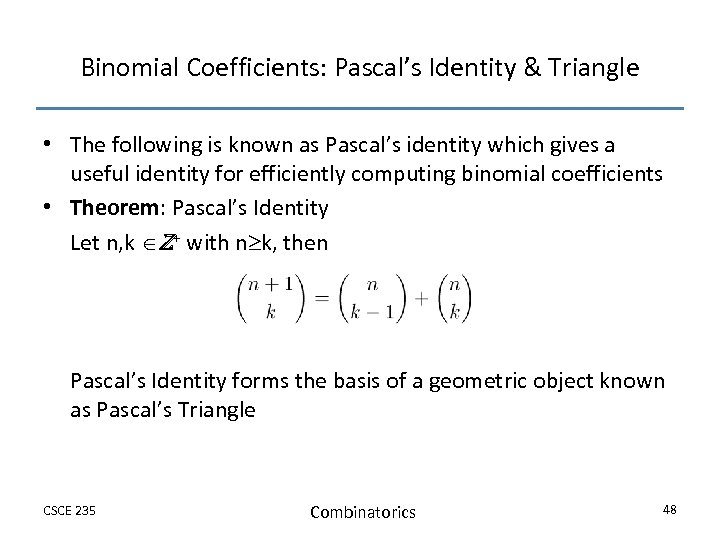
I tried Pascal.
(m n) + (m n-1) = m+1 n
tacit arch
,w 11 choose 2
ocean sealBOT


 tacit arch
,w 5 choose 3
ocean sealBOT
 elfin rapids
FUCK YEAH
lone heartBOT
Channel closed
Closed due to timeout
Use .reopen if this was a mistake.
elfin rapids
.reopen
lone heartBOT
✅
tacit arch
There's an adjacent sum identity you can use.
elfin rapids
Pascal, right?
 tacit arch
I think it works for both d and e
elfin rapids
Yes, that's what I did.
So, 16 9 it seems
So, I did it flawless. = )
I'm gonna pass my test.
and be a math king.
. close
.close
lone heartBOT
Channel closed
Closed by @elfin rapids
Use .reopen if this was a mistake.
lone heartBOT
Available help channel!
Send your question here to claim the channel.
Remember:
• Ask your math question in a clear, concise manner.
• Show your work, and if possible, explain where you are stuck.
• After 15 minutes, feel free to ping <@&286206848099549185>.
• Type the command .close to free the channel when you're done.
• Be polite and have a nice day!
Read #❓how-to-get-help for further information on how to ask a good question, and about conduct in the question channels.
 robust crypt
I am asked to prove that a bijection F : R2 -> R2, whose images on lines are lines and F(0) = 0 is a linear function.
I've only managed to prove that F preserves parallelity, I don't know where to go from here.
lone heartBOT
robust crypt
I am asked to prove that a bijection F : R2 -> R2, whose images on lines are lin...
robust crypt
robust crypt
I am asked to prove that a bijection F : R2 -> R2, whose images on lines are lin...
Of course, we are talking about R2 as a vector space, not just a set of real pairs without any other structure
lone heartBOT
@robust crypt Has your question been resolved?
lone heartBOT
Channel closed
Closed by @robust crypt
Use .reopen if this was a mistake.
lone heartBOT
Available help channel!
Send your question here to claim the channel.
Remember:
• Ask your math question in a clear, concise manner.
• Show your work, and if possible, explain where you are stuck.
• After 15 minutes, feel free to ping <@&286206848099549185>.
• Type the command .close to free the channel when you're done.
• Be polite and have a nice day!
Read #❓how-to-get-help for further information on how to ask a good question, and about conduct in the question channels.
 untold lake
Given the regular expression $\newline P \to PBP \newline B \to BB \newline$ How do I get the [n, m] interval of the Nth line?
3rd line would be PBPBBPBP, so [3,6] would be PBBP
lone heartBOT
untold lake
Given the regular expression $\newline P \to PBP \newline B \to BB \newline$ How...
ocean sealBOT
Megu
 untold lake
The starting seed is P
lone heartBOT
@untold lake Has your question been resolved?
 bitter tundra
untold lake
Given the regular expression $\newline P \to PBP \newline B \to BB \newline$ How...
bitter tundra
untold lake
Given the regular expression $\newline P \to PBP \newline B \to BB \newline$ How...
In the Nth line you have 2^(N-1) 'P's and clusters of 'B's in between them. So there are 2^(N-1)-1 of these B-clusters. The number of B-s in k-th cluster equals the binary number formed by 1 and trailing zeroes in binary expansion of k. For example in 5th line you have 4 B in 12th cluster as 12=1100 and 4=100. I think this is enough to make fast algorithm to get [n,m] segment.
lone heartBOT
@untold lake Has your question been resolved?
untold lake
bitter tundra
In the Nth line you have 2^(N-1) 'P's and clusters of 'B's in between them. So t...
Could you run me through using this way to find number of P's in [27,41] of 5th line? I'm having some trouble visualizing it
bitter tundra
untold lake
Could you run me through using this way to find number of P's in [27,41] of 5th ...
I'm not yet ready to give a complete algorithm. Here is the rule for forming this sequence.
 untold lake
How do I know what cluster 27 and 41 fall in though
bitter tundra
untold lake
How do I know what cluster 27 and 41 fall in though
yeah, I agree, it needs further thinking 🙂
untold lake
You can get the starting index of the n-th cluster by summing n+1 (number of P's) + sum of number of B's up till that point, I guess
but that doesn't help much
and when you're working on the 1000th line, the numbers add up quick
bitter tundra
You see, if we take some number n, then we know how many ones, how many 2s and so on are there before that n. I think this should work fast
so lets take that 27
oops, I forgot there are P in between.
I think the number of pees can be predicted too.
untold lake
cluster n has n P's behind it
bitter tundra
Do you need an algorithm/program or just the formula? What are the limits for N?
untold lake
just the formula
lines go up to 1000, positions up to 10^16
so in [n,m] if n lies in the i-th cluster and m in j-th cluster, you'd have j - i P's?
bitter tundra
Any time limit?
untold lake
 bitter tundra
what is the maximum length of [m,n] or maybe you give a link to this?
lone heartBOT
Channel closed
Closed due to timeout
Use .reopen if this was a mistake.
untold lake
.reopen
lone heartBOT
✅
bitter tundra
well, if m is 1 and n=10^16 do you still need to output all the string?
untold lake
I just need to output the number of P's
bitter tundra
oh, thats easier
untold lake
I didn't ask correctly, yeah
bitter tundra
Ok, I'll take a break. Possibly figure it out tomorrow, if it's still relevant
lone heartBOT
@untold lake Has your question been resolved?
lone heartBOT
Channel closed
Closed due to timeout
Use .reopen if this was a mistake.
Available help channel!
Send your question here to claim the channel.
Remember:
• Ask your math question in a clear, concise manner.
• Show your work, and if possible, explain where you are stuck.
• After 15 minutes, feel free to ping <@&286206848099549185>.
• Type the command .close to free the channel when you're done.
• Be polite and have a nice day!
Read #❓how-to-get-help for further information on how to ask a good question, and about conduct in the question channels.
 crystal valley
 lone heartBOT
crystal valley
tacit arch
lone heartBOT
crystal valley
tacit arch
inverse function theorem
 tacit arch
right
tacit arch
use 0 + 0 = 0
crystal valley
thank you
lone heartBOT
@crystal valley Has your question been resolved?
lone heartBOT
Channel closed
Closed due to timeout
Use .reopen if this was a mistake.
Available help channel!
Send your question here to claim the channel.
Remember:
• Ask your math question in a clear, concise manner.
• Show your work, and if possible, explain where you are stuck.
• After 15 minutes, feel free to ping <@&286206848099549185>.
• Type the command .close to free the channel when you're done.
• Be polite and have a nice day!
Read #❓how-to-get-help for further information on how to ask a good question, and about conduct in the question channels.
 craggy remnant
where did i go wrong?

 lone heartBOT
craggy remnant
where did i go wrong?
tacit arch
lone heartBOT
craggy remnant
where did i go wrong?
tacit arch
this is not correct
 craggy remnant
so what would v equal?
lone heartBOT
@craggy remnant Has your question been resolved?
Channel closed
Closed by @craggy remnant
Use .reopen if this was a mistake.
Available help channel!
Send your question here to claim the channel.
Remember:
• Ask your math question in a clear, concise manner.
• Show your work, and if possible, explain where you are stuck.
• After 15 minutes, feel free to ping <@&286206848099549185>.
• Type the command .close to free the channel when you're done.
• Be polite and have a nice day!
Read #❓how-to-get-help for further information on how to ask a good question, and about conduct in the question channels.
 dense garden
 lone heartBOT
dense garden
dense garden
lone heartBOT
dense garden
dense garden
how do i do part b?
 loud warren
Idk what theorems you know to show that a function like this dont have an existing limit but what you could and also should do is try to "go to the limit" from different directions if you know what i mean
@dense garden
lone heartBOT
@dense garden Has your question been resolved?
dense garden
loud warren
Idk what theorems you know to show that a function like this dont have an existi...
how do i show the epsilon delta proof
lone heartBOT
Channel closed
Closed due to timeout
Use .reopen if this was a mistake.
lone heartBOT
Available help channel!
Send your question here to claim the channel.
Remember:
• Ask your math question in a clear, concise manner.
• Show your work, and if possible, explain where you are stuck.
• After 15 minutes, feel free to ping <@&286206848099549185>.
• Type the command .close to free the channel when you're done.
• Be polite and have a nice day!
Read #❓how-to-get-help for further information on how to ask a good question, and about conduct in the question channels.
 sacred haven
 lone heartBOT
sacred haven
lone heartBOT
lone heartBOT
sacred haven
lone heartBOT
@sacred haven Has your question been resolved?
sacred haven
 lone heartBOT
@sacred haven Has your question been resolved?
 acoustic glen
@sacred haven here you go:
 acoustic glen
sure, you're welcome
lone heartBOT
@sacred haven Has your question been resolved?
lone heartBOT
Channel closed
Closed by @sacred haven
Use .reopen if this was a mistake.
Available help channel!
Send your question here to claim the channel.
Remember:
• Ask your math question in a clear, concise manner.
• Show your work, and if possible, explain where you are stuck.
• After 15 minutes, feel free to ping <@&286206848099549185>.
• Type the command .close to free the channel when you're done.
• Be polite and have a nice day!
Read #❓how-to-get-help for further information on how to ask a good question, and about conduct in the question channels.
 twilit solstice
im stuck which is wrong or right in this equation for rational function mines is the solution 1 and the solution 2 is my friends im quite weary on the graph as well
 lone heartBOT
twilit solstice
im stuck which is wrong or right in this equation for rational function mines is...
lone heartBOT
twilit solstice
im stuck which is wrong or right in this equation for rational function mines is...
 buoyant saddle
solution to what
twilit solstice
for this equation
 buoyant saddle
what are you trying to find
brother
stating an equation is not a question
there is nothing to solve
do you mean the roots
do you mean the asymptotes
twilit solstice
the asymptotes
twilit solstice
A vertical line that guides the graph?
 spring mica
solution two finds the domain of the function, but as @buoyant saddle said, “solution” means nothing here
you both need to specify what these steps are for
but yes, solution 2 solves for the domain and therefore vertical asymptote. looks like they solved for the vertical intercept as well. the graph looks okay
solution 1, i’m sorry, is very misguided
there is no reason you should equate the numerator and denominator of a rational function, like, ever
@twilit solstice
lone heartBOT
@twilit solstice Has your question been resolved?
Channel closed
Closed by @twilit solstice
Use .reopen if this was a mistake.
Available help channel!
Send your question here to claim the channel.
Remember:
• Ask your math question in a clear, concise manner.
• Show your work, and if possible, explain where you are stuck.
• After 15 minutes, feel free to ping <@&286206848099549185>.
• Type the command .close to free the channel when you're done.
• Be polite and have a nice day!
Read #❓how-to-get-help for further information on how to ask a good question, and about conduct in the question channels.
 coral night
Log(X²-7x-30)-Log(x+3). Log base 6 but that doesn't really matter.
In this question, you factor the quadratic (x+3)(x-10) and simplify to log(x-10). I get that. Now when it comes to stating restriction I get confused. I know that it has to be positive because 6 to whatever power will never be negative or 0. So what my teacher does I'd (x+3)(x-10)>0. x>10, x<-3. I agree with this, but the method he uses for the 10 is x-10>0 -> add 10 to the other side x>10. Now for the 3 I have no idea why he flips the sign. I know that if you graph the quadratic it's positive before x=-3, so I agree with the restriction I just don't know how he got the restriction without Graphing it. Am I just missing something? Any help would be appreciated
lone heartBOT
coral night
Log(X²-7x-30)-Log(x+3). Log base 6 but that doesn't really matter.
In this ques...
coral night

Also my final statement in this case would be log(x-10) x>10, x<-3 right?
The way I've been imagining it is just whether the graph opens up or down and where the intercepts are, but idk how to show my work for that
buoyant saddle
coral night
Log(X²-7x-30)-Log(x+3). Log base 6 but that doesn't really matter.
In this ques...
he flips the sign becuase becuase if x>-3 then sure x+3>0 but x-10 isnt, hence their product is negative
but thats not really how you solve it
it isnt just about flipping a sign whenever
i recommend you search up sign chart for inequalities on youtube
@coral night hop on clash bro
coral night
Yea so he's been doing sign charts, but he hasn't been plugging in values to test he's just been filling then out, and a sub said testing values takes too much time. I'm about to go to bed so I just skimmed through a video, but it seems they just plug in values to test
buoyant saddle
i mean you can just do it in your head eventually
coral night
And it's x<-3 isn't it?
buoyant saddle
you know its positive if and only if the two factors have the same sign
so you just look for where they are both negative or both posiitve
coral night
Wait hold on, so my final statement for this would just be x>10? But isn't 10 negative when x<-3 or do I put them in like -3>x>10?

Because like if I do a sign chart for the factors, it's positive in the red areas but our answer is only on the right
Oh wait I think I get it, so if we just have the function log(x²-7x-30), we do get an answer before x<-3, but because we have the restriction from the second part of the question where the restriction is x>-3, it leaves only x>10 as the restriction where all are positive
But that leave the question, why does the factor (x+3) and the second part of the question (x+3) have different restrictions?
buoyant saddle
coral night
But that leave the question, why does the factor (x+3) and the second part of th...
because we cant use the simplified function at values for which the original function isnt defined
yo saladman98
coral night
Well yea but if we just look at the 2 (x+3)s, they have different restrictions on them. I get that the restriction comes from the very start of the question I'm just confused in why one gets the sign flipped
buoyant saddle
your pfp is so heat bro
coral night
Thanks king
buoyant saddle
coral night
Well yea but if we just look at the 2 (x+3)s, they have different restrictions o...
i thought i explained this already
buoyant saddle
buoyant saddle
you know its positive if and only if the two factors have the same sign
^
we need (x+3)(x-10) > 0 and (x+3) > 0
now, since x + 3 > 0 we can omit values of x such that x <= -3
and if x+3 > 0 then the only way (x+3)(x-10) > 0 is if (x-10) is also > 0
coral night
Yea I get that but we have to state every restriction, and I'm not sure how to show my work for the x<-3
buoyant saddle
hence x > 10
buoyant saddle
coral night
Yea I get that but we have to state every restriction, and I'm not sure how to s...
you dont need to
its useless
because you already know x > -3
buoyant saddle
coral night
Yea I get that but we have to state every restriction, and I'm not sure how to s...
so who cares about
but again i can show you how he got that if youd like
despite being utterly useless
coral night
Yes please, I understand that it's useless but he wants us to state all restrictions and then do the unit chart to find the one that works
But then I have to show how I get to x<-3
buoyant saddle
ok, so ill reiterate, a product with two factors is positive if and only if both factors have the same sign (i.e both positive or both negative)
coral night
Like he said he's gonna take marks off if I go straight to x>-3 from the equation I gotta write x+3>0 lmao
buoyant saddle
since we need to solve (x+3)(x-10) > 0 we need either (x + 3 > 0 and x - 10 > 0) or (x + 3 < 0 and x - 10 < 0)
so that they have the same sign
hence for the first part where both factors are positive, we take the intersection of the two intervals, namely x > -3 and x > 10 ; thus the intersection is x > 10
then for the second part where both factors are negative (meaning their product is positive) we take the intersection of the two intervals (x + 3 < 0 and x - 10 < 0) hence x < -3 and x < 10. the intersection of these intervals is just x < -3
yo thesaladman98, i just wanted to say that youre my fucking guy bro
buoyant saddle
i love you too bro
coral night
Aight I gotta head to bed I'm so cooked today
buoyant saddle
🐐
coral night
How do I mark this as answered
coral night
.close
lone heartBOT
Channel closed
Closed by @coral night
Use .reopen if this was a mistake.
 warped sail
can someone pls explain me this part
 buoyant saddle
warped sail
can someone pls explain me this part
buoyant saddle
warped sail
can someone pls explain me this part
!help
lone heartBOT
warped sail
can someone pls explain me this part
To ask for mathematics help on this server, please open your own help channel or help thread. See #❓how-to-get-help for instructions.
warped sail
buoyant saddle
!help
didnt get it
lone heartBOT
Available help channel!
Send your question here to claim the channel.
Remember:
• Ask your math question in a clear, concise manner.
• Show your work, and if possible, explain where you are stuck.
• After 15 minutes, feel free to ping <@&286206848099549185>.
• Type the command .close to free the channel when you're done.
• Be polite and have a nice day!
Read #❓how-to-get-help for further information on how to ask a good question, and about conduct in the question channels.
 molten arch
<@&286206848099549185>
 lone heartBOT
molten arch
<@&286206848099549185>
molten arch
lone heartBOT
molten arch
<@&286206848099549185>
molten arch
Shouldn't it be 34.6
 keen mason
yea
 reef wren
molten arch
Shouldn't it be 34.6
reef wren
molten arch
Shouldn't it be 34.6
Yea
molten arch
So the answer in book is wrong
molten arch
reef wren
Yea
Thanks
lone heartBOT
@molten arch Has your question been resolved?
Channel closed
Closed by @molten arch
Use .reopen if this was a mistake.
Available help channel!
Send your question here to claim the channel.
Remember:
• Ask your math question in a clear, concise manner.
• Show your work, and if possible, explain where you are stuck.
• After 15 minutes, feel free to ping <@&286206848099549185>.
• Type the command .close to free the channel when you're done.
• Be polite and have a nice day!
Read #❓how-to-get-help for further information on how to ask a good question, and about conduct in the question channels.
 pallid ferry
I’m tryna do this invertible matrix question, where A,B, and X are invertible square matrices of the same size. Solve for X in terms of A and B and simply result as much as possible. What I did here is it correct?
 lone heartBOT
pallid ferry
I’m tryna do this invertible matrix question, where A,B, and X are invertible sq...
lone heartBOT
pallid ferry
I’m tryna do this invertible matrix question, where A,B, and X are invertible sq...
@pallid ferry Has your question been resolved?
pallid ferry
<@&286206848099549185>
alpine sable
yes
pallid ferry
🙏
 tardy stag
yep
pallid ferry
pallid ferry
pallid ferry
I’m tryna do this invertible matrix question, where A,B, and X are invertible sq...
.
lone heartBOT
@pallid ferry Has your question been resolved?
pallid ferry
<@&286206848099549185>
Ohhh
You guys were saying yes to the answer
Lmao
.close
lone heartBOT
Channel closed
Closed by @pallid ferry
Use .reopen if this was a mistake.
lone heartBOT
Available help channel!
Send your question here to claim the channel.
Remember:
• Ask your math question in a clear, concise manner.
• Show your work, and if possible, explain where you are stuck.
• After 15 minutes, feel free to ping <@&286206848099549185>.
• Type the command .close to free the channel when you're done.
• Be polite and have a nice day!
Read #❓how-to-get-help for further information on how to ask a good question, and about conduct in the question channels.
 copper willow
My approach would be to use a piecewise function of asymptotes or tan
I assume you might not be able to use the latter though lol
 pliant terrace
copper willow
My approach would be to use a piecewise function of asymptotes or tan
pliant terrace
copper willow
My approach would be to use a piecewise function of asymptotes or tan
like arctan ? 😅
copper willow
pliant terrace
like arctan ? 😅
Not quite. Think of how you can create a map which covers all of R^2 using tan
pliant terrace
copper willow
Not quite. Think of how you can create a map which covers all of R^2 using tan
if im being entirely honest i haven’t revisited geometry in a long time so give me a second
nah i think im a little lost 
lone heartBOT
@pliant terrace Has your question been resolved?
lone heartBOT
Channel closed
Closed due to timeout
Use .reopen if this was a mistake.
Available help channel!
Send your question here to claim the channel.
Remember:
• Ask your math question in a clear, concise manner.
• Show your work, and if possible, explain where you are stuck.
• After 15 minutes, feel free to ping <@&286206848099549185>.
• Type the command .close to free the channel when you're done.
• Be polite and have a nice day!
Read #❓how-to-get-help for further information on how to ask a good question, and about conduct in the question channels.
 keen saffron
Computer organization help
lone heartBOT
keen saffron
Computer organization help
 lone heartBOT
@keen saffron Has your question been resolved?
lone heartBOT
@keen saffron Has your question been resolved?
Channel closed
Closed by @keen saffron
Use .reopen if this was a mistake.
Available help channel!
Send your question here to claim the channel.
Remember:
• Ask your math question in a clear, concise manner.
• Show your work, and if possible, explain where you are stuck.
• After 15 minutes, feel free to ping <@&286206848099549185>.
• Type the command .close to free the channel when you're done.
• Be polite and have a nice day!
Read #❓how-to-get-help for further information on how to ask a good question, and about conduct in the question channels.
 arctic tulip
 lone heartBOT
arctic tulip
arctic tulip
lone heartBOT
arctic tulip
arctic tulip
Why is the answer infinity
If I rationalize the expression and then evaluate the limit, I get -3
alpine sable
rationalize the expression?
arctic tulip
 alpine sable
not completely sure
but i think your second line is correct
your third line is not because square roots are always positive so you're not allowed to simply factor out the x from under the root
alpine sable
alpine sable
but i think your second line is correct
from here, top becomes +infinity and denominator approaches 0
alpine sable
alpine sable
your third line is not because square roots are always positive so you're not al...
this makes sense as well if the limit was x->+infinity it would approach -3 (i graphed in desmos)
uhm, i hope that makes some sense
lone heartBOT
@arctic tulip Has your question been resolved?
arctic tulip
alpine sable
your third line is not because square roots are always positive so you're not al...
Can u explain this part again??
alpine sable
arctic tulip
Can u explain this part again??
it's kind of a weird convention
the square root symbol as used above essentially refers to the principal (positive) square root of the radicand
although mathematically speaking, there are two square roots but conventionally the specific symbol only outputs the positive version
thus, to perform the operation in this way, you would need to do x in the numerator and |x| in the denominator
edit: careful of how you factor the constant 1 though since it will be become negative 1
arctic tulip
Ahhh I seee it now
It does make sense
Also I just noticed that
If I plug infinity into the limit directly
It becomes infinity+infinity
Which is also just infinity
Thanks mate 👍
.close
lone heartBOT
Channel closed
Closed by @arctic tulip
Use .reopen if this was a mistake.
alpine sable
arctic tulip
It becomes infinity+infinity
yes but
lone heartBOT
Available help channel!
Send your question here to claim the channel.
Remember:
• Ask your math question in a clear, concise manner.
• Show your work, and if possible, explain where you are stuck.
• After 15 minutes, feel free to ping <@&286206848099549185>.
• Type the command .close to free the channel when you're done.
• Be polite and have a nice day!
Read #❓how-to-get-help for further information on how to ask a good question, and about conduct in the question channels.
alpine sable
technically it's an "indeterminate form" though so we can't say exactly say that
lone heartBOT
alpine sable
technically it's an "indeterminate form" though so we can't say exactly say that
alpine sable
but that only matters more when we have expressions like infinity/infinity when each infinity is a different "size"
lone heartBOT
If you are done with this channel, please mark your problem as solved by typing .close
alpine sable
.close
lone heartBOT
Channel closed
Closed by @weak hound
Use .reopen if this was a mistake.
lone heartBOT
Available help channel!
Send your question here to claim the channel.
Remember:
• Ask your math question in a clear, concise manner.
• Show your work, and if possible, explain where you are stuck.
• After 15 minutes, feel free to ping <@&286206848099549185>.
• Type the command .close to free the channel when you're done.
• Be polite and have a nice day!
Read #❓how-to-get-help for further information on how to ask a good question, and about conduct in the question channels.
 outer lark
hey, im going through my notes from the beginning on fourier series, and having now gone through a textbook chapter, course notes, and a couple videos, each of them introduce the idea of representing f(x) as an infinite sum of sines and cosines as something along the lines of 'suppose we can do this, then later we'll prove we can do this' , is there a good argument for choosing to represent functions this way, does it just come later?
lone heartBOT
outer lark
hey, im going through my notes from the beginning on fourier series, and having ...
@outer lark Has your question been resolved?
lone heartBOT
Channel closed
Closed due to timeout
Use .reopen if this was a mistake.
lone heartBOT
Available help channel!
Send your question here to claim the channel.
Remember:
• Ask your math question in a clear, concise manner.
• Show your work, and if possible, explain where you are stuck.
• After 15 minutes, feel free to ping <@&286206848099549185>.
• Type the command .close to free the channel when you're done.
• Be polite and have a nice day!
Read #❓how-to-get-help for further information on how to ask a good question, and about conduct in the question channels.
 ocean ravine
how do i simplfy this to match the inductive hypothesis
 ocean ravine
I tried expanding it out, but nothing was simplfying
 hidden knoll
ocean ravine
I tried expanding it out, but nothing was simplfying
hidden knoll
ocean ravine
I tried expanding it out, but nothing was simplfying
what does 1^2+2^2+3^2...+k^2 equal to
not 1^2+2^2+3^2...+k^2+(k+1)^2
in our assumption
hidden knoll
ocean ravine
you mean it should have k+1 appended to it?
i am asking you what information can we assume
ocean ravine
hidden knoll
what does 1^2+2^2+3^2...+k^2 equal to
well this is equal to
 hidden knoll
ocean ravine
well this is equal to
hidden knoll
ocean ravine
well this is equal to
so would you agree that $1^2+2^2...+(k+1)^2=\frac{k(k+1)(2k+1)}{6}+(k+1)^2$?
ocean sealBOT
the breadwave
 hidden knoll
because $1^2+2^2...+k^2=\frac{k(k+1)(2k+1)}{6}$
ocean sealBOT
the breadwave
 ocean ravine
hidden knoll
so would you agree that $1^2+2^2...+(k+1)^2=\frac{k(k+1)(2k+1)}{6}+(k+1)^2$?
ocean ravine
hidden knoll
so would you agree that $1^2+2^2...+(k+1)^2=\frac{k(k+1)(2k+1)}{6}+(k+1)^2$?
hmmm yes, that would be another way to write that, because you take the total of the previous term, and add the (k+1)^2 to it
did i just set it up wrong?
hidden knoll
yes
hidden knoll
ocean ravine
did i just set it up wrong?
no
you just didn't use the assumption that's given in the inductive hypothesis
ocean ravine
hidden knoll
you just didn't use the assumption that's given in the inductive hypothesis
i thought this was the assumption
 hidden knoll
ocean ravine
i thought this was the assumption
hidden knoll
ocean ravine
i thought this was the assumption
yes, you were supposed to use this information
ocean ravine
then I replaced k, with k+1
hidden knoll
ocean seal
**the breadwave**
so we did here
hidden knoll
ocean ravine
then I replaced k, with k+1
you're trying to prove the equality for k+1 using the equality we assume to be true for k
ocean ravine
hidden knoll
you're trying to *prove* the equality for k+1 using the equality we assume to be...
and I cant do that?
hidden knoll
ocean ravine
and I cant do that?
you can
hidden knoll
ocean seal
**the breadwave**
we did here
ocean ravine
ocean seal
**the breadwave**
im not completely following, but I can try to simplify this?
hidden knoll
ocean ravine
im not completely following, but I can try to simplify this?
correct
we are using the assumption that $1^2+2^2...+k^2=\frac{k(k+1)(2k+1)}{6}$ is true for $k$ to show that $1^2+2^2...+(k+1)^2=\frac{(k+1)(k+2)(2k+3)}{6}$ is true (which proves for $k+1$)
ocean sealBOT
the breadwave
 ocean ravine
hidden knoll
we are using the assumption that $1^2+2^2...+k^2=\frac{k(k+1)(2k+1)}{6}$ is true...
ocean ravine
hidden knoll
we are using the assumption that $1^2+2^2...+k^2=\frac{k(k+1)(2k+1)}{6}$ is true...
shouldnt we be showing that it's equal to this instead?
 hidden knoll
ocean ravine
shouldnt we be showing that it's equal to this instead?
hidden knoll
ocean ravine
shouldnt we be showing that it's equal to this instead?
maybe try showing me $\frac{(k+1)(k+2)(2k+3)}{6}=\frac{k(k+1)(2k+1)}{6}+(k+1)^2$
ocean sealBOT
the breadwave
 ocean ravine
hidden knoll
maybe try showing me $\frac{(k+1)(k+2)(2k+3)}{6}=\frac{k(k+1)(2k+1)}{6}+(k+1)^2$
ocean ravine
hidden knoll
maybe try showing me $\frac{(k+1)(k+2)(2k+3)}{6}=\frac{k(k+1)(2k+1)}{6}+(k+1)^2$
im ngl this is making it more confusing
 hidden knoll
ocean ravine
im ngl this is making it more confusing
hidden knoll
ocean ravine
im ngl this is making it more confusing
try expanding $k(k+1)(2k+1)+6(k+1)^2$ out
ocean sealBOT
the breadwave
 hidden knoll
and $(k+1)(k+2)(2k+3)$
ocean sealBOT
the breadwave
 ocean ravine
hidden knoll
and $(k+1)(k+2)(2k+3)$
ocean ravine
hidden knoll
and $(k+1)(k+2)(2k+3)$
 ocean ravine
hidden knoll
try expanding $k(k+1)(2k+1)+6(k+1)^2$ out
ocean ravine
hidden knoll
try expanding $k(k+1)(2k+1)+6(k+1)^2$ out
the whole thing?
hidden knoll
ocean ravine
the whole thing?
the same way you did with (k+1)(k+2)(2k+3)
ocean ravine
like distribute the k, distirbute the 6((k+1) * (k+1)),
hidden knoll
ocean ravine
like distribute the k, distirbute the 6((k+1) * (k+1)),
ya so you just end up with a polynomial
ocean ravine
ok this is going to take a while
is there a point to this?
i feel like its over complicating it
 placid trellis
not a gf
hidden knoll
placid trellis
not a gf
ocean ravine
yay
hidden knoll
so we know that $1^2+2^2...+(k+1)^2=\frac{k(k+1)(2k+1)}{6}+(k+1)^2$ and that $\frac{k(k+1)(2k+1)}{6}+(k+1)^2=\frac{(k+1)(k+2)(2k+3)}{6}$
ocean ravine
hidden knoll
so we know that $1^2+2^2...+(k+1)^2=\frac{k(k+1)(2k+1)}{6}+(k+1)^2$ and that $\f...
and that concludes the proof?
ocean sealBOT
the breadwave
 ocean ravine
well I see you can solve this in two ways
one by substituing k+1 directly in the equation
and the other way by appending it to the end
ocean ravine
OH WAIT
hidden knoll
do you get what we're doing now
hidden knoll
ocean ravine
so is the +(k+1)^2 part of the hypotheis?
yeah we were using the fact that we know $1^2+2^2...+k^2=\frac{k(k+1)(2k+1)}{6}$ is true
ocean ravine
so we just proved that because its equal, it means that the ladder holds true
ocean sealBOT
the breadwave
 hidden knoll
so therefore $1^2+2^2...+(k+1)^2=\frac{(k+1)(k+2)(2k+3)}{6}$ is true (as we demonstrated $\frac{k(k+1)(2k+1)}{6}+(k+1)^2=\frac{(k+1)(k+2)(2k+3)}{6}$
ocean sealBOT
the breadwave
 ocean ravine
hidden knoll
so therefore $1^2+2^2...+(k+1)^2=\frac{(k+1)(k+2)(2k+3)}{6}$ is true (as we demo...
ocean ravine
hidden knoll
so therefore $1^2+2^2...+(k+1)^2=\frac{(k+1)(k+2)(2k+3)}{6}$ is true (as we demo...
hmmmm ok
but why does this take 100 steps to prove
i feel like there has to be a simpler way to prove they are equal
hidden knoll
ocean ravine
but why does this take 100 steps to prove
once you have the idea it's just basic algebra
hidden knoll
ocean ravine
its making the question's answer take up 3 pages lol
i usually dont show my steps because it's just basic algebra but if your teacher wants that

ocean ravine
hidden knoll
i usually dont show my steps because it's just basic algebra but if your teacher...
right but there probably some laws that can show they are equal faster than distribtuing everything to find a one-liner polynomial
right?
hidden knoll
ocean ravine
right but there probably some laws that can show they are equal faster than dist...
yeah you can use whatever method you can to show those 2 are equal
but that's not the point of the exercise
the point of the exercise is to see whether you can set up induction correctly
ocean ravine
hidden knoll
the point of the exercise is to see whether you can set up induction correctly
well in that case, did I? because I see two inductive hypothesis
or wait
hidden knoll
you are not seeing two inductive hypotheses
ocean ravine
I guess the hypothesis is appending (k+1)^2
and then the inductive steps are substituing k+1 in
and arriving at the same conclusion
hidden knoll
our hypothesis is that $1^2+2^2...+(k+1)^2=\frac{(k+1)(k+2)(2k+3)}{6}$
ocean sealBOT
the breadwave
 hidden knoll
our proof was using the fact that $1^2+2^2...+(k+1)^2=\frac{k(k+1)(2k+1)}{6}+(k+1)^2$ to demonstrate $1^2+2^2...+(k+1)^2=\frac{(k+1)(k+2)(2k+3)}{6}$
ocean sealBOT
the breadwave
 ocean ravine
woah
ok
i sort of get it
my teacher might take off points for doubling its complexity
but
ig it still holds true
i just cant figure out the algebraic shortcuts
lone heartBOT
@ocean ravine Has your question been resolved?
Channel closed
Closed by @ocean ravine
Use .reopen if this was a mistake.
lone heartBOT
Available help channel!
Send your question here to claim the channel.
Remember:
• Ask your math question in a clear, concise manner.
• Show your work, and if possible, explain where you are stuck.
• After 15 minutes, feel free to ping <@&286206848099549185>.
• Type the command .close to free the channel when you're done.
• Be polite and have a nice day!
Read #❓how-to-get-help for further information on how to ask a good question, and about conduct in the question channels.
 brittle lake
Find second derivative with respect to y
 lone heartBOT
brittle lake
Find second derivative with respect to y
brittle lake
lone heartBOT
brittle lake
Find second derivative with respect to y
brittle lake
Problem: $x^2+4y^2=7$
ocean sealBOT
Light
 brittle lake
Did I do this correct?
 warped marlin
you mean with respect to x, but answer in terms of y, right
brittle lake
warped marlin
you mean with respect to x, but answer in terms of y, right
Yes
Implicit differentiation
warped marlin
brittle lake
Did I do this correct?
nope sadly, i got a different result
why do you make things into fractions before differentiating, it makes it complicated :d
why dont you differentiate like straight forward instead!
try again, you should get $\qquad \ddot{y}=-\frac{7}{16, y^3}$
ocean sealBOT
Milena
 lone heartBOT
@brittle lake Has your question been resolved?
tight pier
warped marlin
try again, you should get $\qquad \ddot{y}=-\frac{7}{16\, y^3}$
physicist
lone heartBOT
Channel closed
Closed due to timeout
Use .reopen if this was a mistake.
Available help channel!
Send your question here to claim the channel.
Remember:
• Ask your math question in a clear, concise manner.
• Show your work, and if possible, explain where you are stuck.
• After 15 minutes, feel free to ping <@&286206848099549185>.
• Type the command .close to free the channel when you're done.
• Be polite and have a nice day!
Read #❓how-to-get-help for further information on how to ask a good question, and about conduct in the question channels.
alpine sable
hello
lone heartBOT
alpine sable
hello
 alpine sable
Yeah i realise it's SAS congruency
 tardy shuttle
which triangles
alpine sable
The Congurency of the figure is SAS
fair parcel
alpine sable
The Congurency of the figure is SAS
yes
alpine sable
Both of them are equal
tardy shuttle
state the name of the triangles
alpine sable
Triangle ABD is congurent to Trange BAC
tardy shuttle
oh wait
tardy shuttle
alpine sable
Triangle ABD is congurent to Trange BAC
correct
so what two angles are equal
tardy shuttle
alpine sable
Angle a and b
once we prove congruence
tardy shuttle
alpine sable
i didn't understand it
we can use CPCTC(corresponding parts of congruent triangles are congruent)
so angle BAC and ABD are equal
Now, we just need to find another congruence to show that triangles BCD and ADC are equal
tardy shuttle
alpine sable
i didn't understand it
can you do that?
alpine sable
tardy shuttle
Now, we just need to find another congruence to show that triangles BCD and ADC ...
Oh no it's proved
i understood
thanks
.close
lone heartBOT
Channel closed
Closed by @hard cloud
Use .reopen if this was a mistake.
lone heartBOT
Available help channel!
Send your question here to claim the channel.
Remember:
• Ask your math question in a clear, concise manner.
• Show your work, and if possible, explain where you are stuck.
• After 15 minutes, feel free to ping <@&286206848099549185>.
• Type the command .close to free the channel when you're done.
• Be polite and have a nice day!
Read #❓how-to-get-help for further information on how to ask a good question, and about conduct in the question channels.
 mellow frigate
am i doing something wrong here?
 lone heartBOT
mellow frigate
am i doing something wrong here?
mellow frigate
lone heartBOT
mellow frigate
am i doing something wrong here?
mellow frigate
.close
lone heartBOT
Channel closed
Closed by @mellow frigate
Use .reopen if this was a mistake.
lone heartBOT
Available help channel!
Send your question here to claim the channel.
Remember:
• Ask your math question in a clear, concise manner.
• Show your work, and if possible, explain where you are stuck.
• After 15 minutes, feel free to ping <@&286206848099549185>.
• Type the command .close to free the channel when you're done.
• Be polite and have a nice day!
Read #❓how-to-get-help for further information on how to ask a good question, and about conduct in the question channels.
 keen wasp
hello
lone heartBOT
keen wasp
hello
keen wasp
i need to compute the integral above, given a>3/2

these are the steps i’ve taken so far but i feel like i’ve reached a dead end so i was wondering if anyone could guide me
thanks
 wary crest
1+1
wary crest
keen wasp
hello
.
keen wasp
hi
wary crest
keen wasp
thanks
? Wdym
keen wasp
<@&286206848099549185> :)
wary crest
keen wasp
<@&286206848099549185> :)
You watch football?
wary crest
keen wasp
no
👍
keen wasp
flexo would you like to take a look
<@&286206848099549185> i need help with the problem 😭
 fair parcel
keen wasp
flexo would you like to take a look
fair parcel
keen wasp
flexo would you like to take a look
I am sorry but I am not really good with these types of questions. Others will help.
 molten plover
keen wasp
i need to compute the integral above, given a>3/2
molten plover
keen wasp
i need to compute the integral above, given a>3/2
What is the name if the aplication to use plz??
lone heartBOT
@keen wasp Has your question been resolved?
 sweet orbit
<@270266746060013578> trig sub
sweet orbit
sweet orbit
<@270266746060013578> trig sub
tangent one specifically, try setting x = tan(theta) and use the 1 + tan(theta)^2 = sec(theta)^2 identity
idk wat the a is for?
lone heartBOT
Channel closed
Closed due to timeout
Use .reopen if this was a mistake.
Available help channel!
Send your question here to claim the channel.
Remember:
• Ask your math question in a clear, concise manner.
• Show your work, and if possible, explain where you are stuck.
• After 15 minutes, feel free to ping <@&286206848099549185>.
• Type the command .close to free the channel when you're done.
• Be polite and have a nice day!
Read #❓how-to-get-help for further information on how to ask a good question, and about conduct in the question channels.
alpine sable
what does “/{x}”mean
lone heartBOT
alpine sable
what does “/{x}”mean
 hushed locust
could you show the context?
alpine sable
yeah one sec
 haughty wigeon
f(x)?
alpine sable
i’m reading my lecture notes and it says

i jus don’t know what the curly brackets is there for
 high cargo
sweet orbit
high cargo
sweet orbit
set difference
hushed locust
so {x_0} is the set containing only the number x_0, and (a,b) \ {x_0} is the set difference, which means the set that has all the elements of (a,b) except x_0
lone heartBOT
Channel closed
Closed by @oblique wharf
Use .reopen if this was a mistake.
lone heartBOT
Available help channel!
Send your question here to claim the channel.
Remember:
• Ask your math question in a clear, concise manner.
• Show your work, and if possible, explain where you are stuck.
• After 15 minutes, feel free to ping <@&286206848099549185>.
• Type the command .close to free the channel when you're done.
• Be polite and have a nice day!
Read #❓how-to-get-help for further information on how to ask a good question, and about conduct in the question channels.
umbral arrow
Tips?
 lone heartBOT
Channel closed
Closed due to timeout
Use .reopen if this was a mistake.
lone heartBOT
Available help channel!
Send your question here to claim the channel.
Remember:
• Ask your math question in a clear, concise manner.
• Show your work, and if possible, explain where you are stuck.
• After 15 minutes, feel free to ping <@&286206848099549185>.
• Type the command .close to free the channel when you're done.
• Be polite and have a nice day!
Read #❓how-to-get-help for further information on how to ask a good question, and about conduct in the question channels.
 broken violet
how do i solve this?
 lone heartBOT
broken violet
how do i solve this?
lone heartBOT
lone heartBOT
broken violet
how do i solve this?
lone heartBOT
Channel closed
Closed by @broken violet
Use .reopen if this was a mistake.
lone heartBOT
Available help channel!
Send your question here to claim the channel.
Remember:
• Ask your math question in a clear, concise manner.
• Show your work, and if possible, explain where you are stuck.
• After 15 minutes, feel free to ping <@&286206848099549185>.
• Type the command .close to free the channel when you're done.
• Be polite and have a nice day!
Read #❓how-to-get-help for further information on how to ask a good question, and about conduct in the question channels.
 lone heartBOT
alpine sable
ocean sealBOT
lone heartBOT
alpine sable
ocean sealBOT
 ocean sealBOT
 alpine sable
Is this how we are supposed to do it?
The book didn't mention chain for 2 or more independent variables so...
 crystal berry
alpine sable
The book didn't mention chain for 2 or more independent variables so...
crystal berry
alpine sable
The book didn't mention chain for 2 or more independent variables so...
when you do partial differentiation, all other variables become constants so it follows the same rule
crystal berry
ocean seal
can you walk me through your thinking here

 sly magnet
looks correct to me
lone heartBOT
Channel closed
Closed by @strong sandal
Use .reopen if this was a mistake.
lone heartBOT
Available help channel!
Send your question here to claim the channel.
Remember:
• Ask your math question in a clear, concise manner.
• Show your work, and if possible, explain where you are stuck.
• After 15 minutes, feel free to ping <@&286206848099549185>.
• Type the command .close to free the channel when you're done.
• Be polite and have a nice day!
Read #❓how-to-get-help for further information on how to ask a good question, and about conduct in the question channels.
alpine sable
What do they mean by reflect the figure over the line and the y=-1?

 neat folio
alpine sable
What do they mean by reflect the figure over the line and the y=-1?
neat folio
alpine sable
What do they mean by reflect the figure over the line and the y=-1?
reflect over the line y=-1
 limpid heart
y = -1 is the line
neat folio
that you reflect over
alpine sable
neat folio
reflect over *the line y=-1*
I did that I just gave the opposite sign
neat folio
alpine sable
I did that I just gave the opposite sign
wdym by just giving the opposite sign
as your answer?

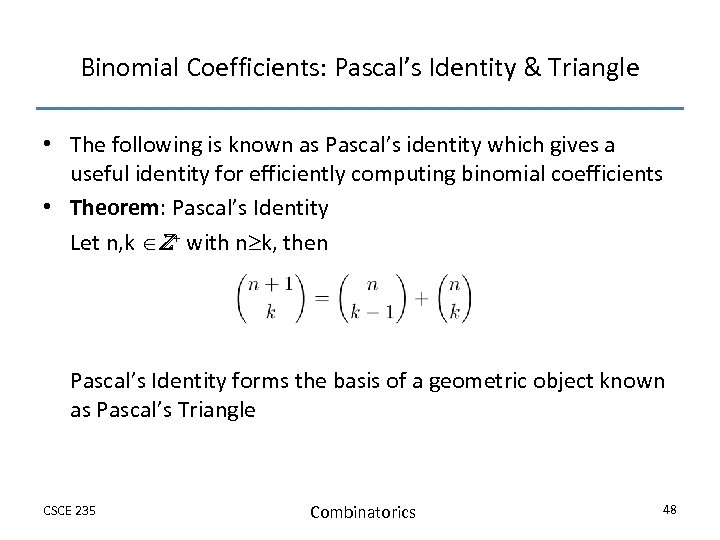
 patent vale
alpine sable
Like this
patent vale
alpine sable
Like this
its the same as reflecting over the x axis just bring all the points down 1