
#help-0
1 messages · Page 481 of 1
 ocean sealBOT
 alpine sable
amazing
 lone heartBOT
@wicked idol Has your question been resolved?
 vale crag
@wicked idol t'as moyen de poster le corrigé (+la question originale tant qu'on y est) ?
je trouve ça zarb aussi (mais bon je suis peut être juste aveugle aussi)
lone heartBOT
@wicked idol Has your question been resolved?
 wicked idol
vale crag
<@758267951052095518> t'as moyen de poster le corrigé (+la question originale ta...
wicked idol
vale crag
<@758267951052095518> t'as moyen de poster le corrigé (+la question originale ta...
bien sur mais c'est en francais dcp
c'est de l'electronque pas vraiment des maths donc bon ...


$R=1000 , C=100*10^-6 et E_0=10$
ocean sealBOT
Silicium
 wicked idol
a mais c'est tout simple c'est que j'ai pas pris le bon coef dominant dans mon polynôme
non ?
vale crag
oui donc je suis bien aveugle
c'est vrai que si tu veux écrire un polynôme de degré 2 sous la forme (p-p1)(p-p2) faut bien que ton polynôme soit unitaire à la base
@wicked idol
vale crag
wicked idol
c'est de l'electronque pas vraiment des maths donc bon ...
en même temps avec des RC partout ça peut être que de l'elec lol
lone heartBOT
Channel closed
Closed due to timeout
Use .reopen if this was a mistake.
 Available help channel!
Send your question here to claim the channel.
Remember:
• Ask your math question in a clear, concise manner.
• Show your work, and if possible, explain where you are stuck.
• After 15 minutes, feel free to ping <@&286206848099549185>.
• Type the command .close to free the channel when you're done.
• Be polite and have a nice day!
Read #❓how-to-get-help for further information on how to ask a good question, and about conduct in the question channels.
 weary pebble
The translation of the text is: We consider n a whole natural number different from zero
- prove that
- deduct from it
I already did the first question because it's easy I have some troubles with the second one though
 lone heartBOT
weary pebble
The translation of the text is: We consider n a whole natural number different f...
wicked idol
lone heartBOT
weary pebble
The translation of the text is: We consider n a whole natural number different f...
wicked idol
.reopen
wicked idol
vale crag
en même temps avec des RC partout ça peut être que de l'elec lol
le probleme c'est que du coup A n'est plus valide... dans ma correction A=E et la ca serais A=E/(RC)^2
wicked idol
weary pebble
The translation of the text is: We consider n a whole natural number different f...
En utilisant l'identite démontree dans la première partie tu remarque que la plupart des termes vont s'annuler
il va te rester que les premiers et derniers termes
vale crag
wicked idol
le probleme c'est que du coup A n'est plus valide... dans ma correction A=E et l...
si tu fais le trick de multiplier par p pour obtenir A, t'obtiens A = (E0/(RC)^2) / (1/(RC)^2)
donc A change pas c'est toujours bien E0
weary pebble
wicked idol
En utilisant l'identite démontree dans la première partie tu remarque que la plu...
Tu peux me donner un exemple stp
wicked idol
vale crag
si tu fais le trick de multiplier par p pour obtenir A, t'obtiens A = (E0/(RC)^2...
a moi oui bien sur j'ai zapper le (E0/(RC)^2) je suis fatigue...
merci
wicked idol
weary pebble
Tu peux me donner un exemple stp
ba tu l'as dans ton ex1, la forme generale
applique la tu vas voir
si tu veux une application numerique par ex
weary pebble
Je n'arrive pas à voir comment l'appliquer
wicked idol
Prenons la somme
$\sum_{n=1}^{5} \frac{1}{n(n+1)(n+2)}$
avec ton identite on a
$S = \left(\frac{1}{1 \times 2} - \frac{1}{2 \times 3}\right) + \left(\frac{1}{2 \times 3} - \frac{1}{3 \times 4}\right) + \left(\frac{1}{3 \times 4} - \frac{1}{4 \times 5}\right) + \left(\frac{1}{4 \times 5} - \frac{1}{5 \times 6}\right)$
On constate que tous les termes intermédiaires s'annulent
$S = \frac{1}{1 \times 2} - \frac{1}{5 \times 6}$
apres tu simplifie
ocean sealBOT
Silicium
 wicked idol
tu comprends mieux ?
weary pebble
Oui merci bcp
lone heartBOT
@weary pebble Has your question been resolved?
lone heartBOT
Channel closed
Closed due to timeout
Use .reopen if this was a mistake.
Available help channel!
Send your question here to claim the channel.
Remember:
• Ask your math question in a clear, concise manner.
• Show your work, and if possible, explain where you are stuck.
• After 15 minutes, feel free to ping <@&286206848099549185>.
• Type the command .close to free the channel when you're done.
• Be polite and have a nice day!
Read #❓how-to-get-help for further information on how to ask a good question, and about conduct in the question channels.
@alpine sable Has your question been resolved?
lone heartBOT
@alpine sable Has your question been resolved?
lone heartBOT
@alpine sable Has your question been resolved?
lone heartBOT
Channel closed
Closed due to timeout
Use .reopen if this was a mistake.
Available help channel!
Send your question here to claim the channel.
Remember:
• Ask your math question in a clear, concise manner.
• Show your work, and if possible, explain where you are stuck.
• After 15 minutes, feel free to ping <@&286206848099549185>.
• Type the command .close to free the channel when you're done.
• Be polite and have a nice day!
Read #❓how-to-get-help for further information on how to ask a good question, and about conduct in the question channels.
 golden obsidian
hey can I get help for precalculus
lone heartBOT
golden obsidian
hey can I get help for precalculus

 pseudo ice
golden obsidian
pseudo ice
golden obsidian
What comes before this picture?
golden obsidian
pseudo ice
What comes before this picture?

 golden obsidian
like I get the factoring bit
and the fact that x + 1 cancel out each other
but are they asking me to plug in every single value and check the options?
cause I can't do that on an actual test. I have to know the actual answer
pseudo ice
Well, you don’t really need to plug in all the values-
golden obsidian
right
pseudo ice
How do you feel about the excluded values part? Do you know why you want to find them, and why they should be excluded?
golden obsidian
pseudo ice
How do you feel about the excluded values part? Do you know why you want to find...
if they were ask me for domain and range for example, yeah
typically finding the range is the easiest part when there's no POD
yet I still don't know what that means
so yeah i don't really know too much im sorry
im good at the factoring, but everything else has the potential to throw me off
pseudo ice
golden obsidian
typically finding the range is the easiest part when there's no POD
POD?
golden obsidian
pseudo ice
POD?
point of discontinuity
pseudo ice
golden obsidian
if they were ask me for domain and range for example, yeah
Well, tl;dr “excluded values” are the values that aren’t in your domain
pseudo ice
golden obsidian
point of discontinuity
Ah, gotcha 
golden obsidian
pseudo ice
Well, tl;dr “excluded values” are the values that aren’t in your domain
yeah, aren't
but like.. how am I know to know for sure?
like if im dealing with x2 - 9
square root both values to give x - 3
then easily, that's how it would be your vertical or horizontal asymptote
so then it would be +3 instead
by x2 i meant x squared
pseudo ice
golden obsidian
but like.. how am I know to know for sure?
How you’d know which values are excluded from your domain, you mean?
golden obsidian
pseudo ice
How you’d know which values are excluded from your domain, you mean?
whichever your vertical and horizontal asymptote are
but you have to find out what those values are first
pseudo ice
Hmmmm, not sure whether I know how to explain well  sorry
sorry
golden obsidian
okay
lone heartBOT
@golden obsidian Has your question been resolved?
lone heartBOT
Channel closed
Closed due to timeout
Use .reopen if this was a mistake.
Available help channel!
Send your question here to claim the channel.
Remember:
• Ask your math question in a clear, concise manner.
• Show your work, and if possible, explain where you are stuck.
• After 15 minutes, feel free to ping <@&286206848099549185>.
• Type the command .close to free the channel when you're done.
• Be polite and have a nice day!
Read #❓how-to-get-help for further information on how to ask a good question, and about conduct in the question channels.
 lusty token
What even is a premise?
lone heartBOT
lusty token
What even is a premise?
lusty token
like if we have an argument A and B and C -> D it would be logical to say A, B, and C are premises for this argument right?
but if we do something like induction, P(k) -> P(k+1) but I don't believe you can call P(k) a premise
so what's up with that?
 placid zinc
You can, calling P(k) a premise makes sense to me
lusty token
say we want to prove A implies A, but this statement is always true
so wouldn't it be wrong to say that it has premises?
lusty token
but you don't need to assume anything to show it's a tautology
A implies A
not A or A
True
so A does not need to be assumed?
then is it even a premise
eh whatever i give up
.close
lone heartBOT
Channel closed
Closed by @lusty token
Use .reopen if this was a mistake.
Available help channel!
Send your question here to claim the channel.
Remember:
• Ask your math question in a clear, concise manner.
• Show your work, and if possible, explain where you are stuck.
• After 15 minutes, feel free to ping <@&286206848099549185>.
• Type the command .close to free the channel when you're done.
• Be polite and have a nice day!
Read #❓how-to-get-help for further information on how to ask a good question, and about conduct in the question channels.
 fast hazel
 lone heartBOT
fast hazel
golden obsidian
lone heartBOT
fast hazel
golden obsidian
oh so sorry
lusty token
!status
lone heartBOT
What step are you on?
1. I don't know where to begin.
2. I have begun but got stuck midway.
3. I got an answer but I was told that it's wrong.
4. I got an answer and would like my work checked.
5. I have a question about someone else's work/solution.
6. I have completed the problem and don't need help anymore. Thank you.
7. None of the above
@fast hazel Has your question been resolved?
fast hazel
<@&286206848099549185>
lone heartBOT
@fast hazel Has your question been resolved?
lone heartBOT
Channel closed
Closed due to timeout
Use .reopen if this was a mistake.
Available help channel!
Send your question here to claim the channel.
Remember:
• Ask your math question in a clear, concise manner.
• Show your work, and if possible, explain where you are stuck.
• After 15 minutes, feel free to ping <@&286206848099549185>.
• Type the command .close to free the channel when you're done.
• Be polite and have a nice day!
Read #❓how-to-get-help for further information on how to ask a good question, and about conduct in the question channels.
 wary jacinth
help
lone heartBOT
wary jacinth
help

 digital magnet
You're looking for points of intersection
where the functions meet each other on the graph
wary jacinth
digital magnet
You're looking for points of intersection
so for the first one it would be (0,-3),(4,5)?
and the 2nd one (-2,2)?
wary jacinth
ok ty
wary jacinth
oh
wary jacinth
digital magnet
as the solutiuon
so the correct answer is (0,4)?
wary jacinth
lusty token
i would list the points
so its fine putting both x and y?
lusty token
i think it's fine
lone heartBOT
Channel closed
Closed by @wary jacinth
Use .reopen if this was a mistake.
lusty token
wary jacinth
so the correct answer is (0,4)?
if you're gonna list them use a set
{0, 4}
using () notation is inaccurate
digital magnet
lusty token
why just the x?
typically in algebra courses the solutions would be the x-values (the zeroes) so you have the linear equation equalling the quadratic
Im pretty sure
lone heartBOT
Available help channel!
Send your question here to claim the channel.
Remember:
• Ask your math question in a clear, concise manner.
• Show your work, and if possible, explain where you are stuck.
• After 15 minutes, feel free to ping <@&286206848099549185>.
• Type the command .close to free the channel when you're done.
• Be polite and have a nice day!
Read #❓how-to-get-help for further information on how to ask a good question, and about conduct in the question channels.
 keen glade
 lone heartBOT
keen glade
keen glade
lone heartBOT
keen glade
keen glade
Wait why is image sideways
ocean sealBOT
 keen glade
Okay thanks
So I gotta find the domain
And range
So basically it's like -inf < x < 1 right
But then apparently the filled in circle means I should just do -inf < x < inf and I don't understand that
 sharp gate
And yes
keen glade
Yes to what
sharp gate
Well domain is all real numbers
keen glade
Yes
Wym
So basically should I do -inf< x< 1, 1< x < Inf or just -inf < x < inf
And if the ladder do you mind explaining why the first one is wrong
sharp gate
Because the filled in dot means the less than and equal should be inclusive
keen glade
Uh what does that mean
keen glade
☹️ we haven't learned any <=x
sharp gate
Less than or equal to?
sharp gate
You never make it less than or equal if it’s infinity
Because you can never equal infinity
sharp gate
So it’s always just a > or < at the infinite ends
keen glade
So for like a general rule of thumb, can I just ignore the circles and just focus on the infinites if that's on the quiz
Like if I get one like that, can I just ignore the circles and 1 and just do -inf < x < inf?
sharp gate
Yes, but only if one of the circles is filled and one isn’t
If both circles aren’t filled
Then you must not include it in the domain
 sharp gate
Yes because at x=1 one of the circles is filled, and at x=2 one of the circles is also filled
keen glade
What if they were all filled
sharp gate
They can’t be, then it wouldn’t be a function at all
But if both are not filled you must not include it in the domain
keen glade
Well if all are unfilled I could just do -inf < x < inf still right?
sharp gate
No
Then you would need to do like -inf < x < 1 and 1 < x < inf if 1 had both open circles
Notice how 1 is excluded from both of them
keen glade
How is it excluded
sharp gate
If it’s not >= or <= then x is never allowed to be exactly equal to 1
keen glade
Say what now 😔
What does the non filled in dots even mean
It means like it's like 2.001 not 2 right
sharp gate
Yeah
keen glade
I think I might understand it
Thank you
So on the test just lowk ignore the silly circles
Oh wait
One second
Okay made a graph, if it's something like this were the filled in circles are not on same X then would I just do like
-inf < x < 2, 4 < x < inf?

Like if there's zero non filled in circle
lone heartBOT
@keen glade Has your question been resolved?
lone heartBOT
@keen glade Has your question been resolved?
sharp gate
Yes, but If they are filled in the < symbols next to the 2 and 4 must be greater than or equal symbols because a filled in circle means x can also be equal to 2 / 4, not just less than / greater than equal to it
lone heartBOT
@keen glade Has your question been resolved?
lone heartBOT
Channel closed
Closed due to timeout
Use .reopen if this was a mistake.
Available help channel!
Send your question here to claim the channel.
Remember:
• Ask your math question in a clear, concise manner.
• Show your work, and if possible, explain where you are stuck.
• After 15 minutes, feel free to ping <@&286206848099549185>.
• Type the command .close to free the channel when you're done.
• Be polite and have a nice day!
Read #❓how-to-get-help for further information on how to ask a good question, and about conduct in the question channels.
 marsh ridge
claim
lone heartBOT
marsh ridge
claim
marsh ridge
can someone help explain what's going on

 forest marsh
They factor out (k+1)!
And after use the definition of ! To get (k+2)!
(k+2)! = (k+2)(k+1)!
marsh ridge
hold on give me like 2 business days to process that
is it too much if I ask for someone to help visualise it better
forest marsh
Let X = (k+1)!
Idk
Like it makes you smth as X + (k+1)X - 1
Factor by X
X(1 + (k+1)) -1
X(k+2) -1
marsh ridge
forest marsh
(k+2)! = (k+2)(k+1)!
can I get some elaboration on this
forest marsh
marsh ridge
can I get some elaboration on this
Sure
(k+2)(k+1)(k)(k-1)...(2)(1) = (k+2)!
But in the lhs you see that k+2(k)(k-1)...(2)(1)
So we have two parts
The one between []
And the other one between ()
The first one is just k+2
And the other is (k+1)(k)(k-1)...(2)(1) which is (k+1)!
But i honestly suggest you to know the proprety that (n+1)! = (n+1)(n)!
marsh ridge
forest marsh
But i honestly suggest you to know the proprety that (n+1)! = (n+1)(n)!
yeah that's what I'm trying to figure out right now
is that something I can just memorise or
 fresh wedge
marsh ridge
is that something I can just memorise or
fresh wedge
marsh ridge
is that something I can just memorise or
If it's a property it was definitely proved but most people don't care about the proof, because honestly how can you remember so many proofs
But as YakuBros showed above
forest marsh
marsh ridge
is that something I can just memorise or
Thats one of the def of the factorial
The "induction" definition
marsh ridge
imma give it a try
marsh ridge
forest marsh
But i honestly suggest you to know the proprety that (n+1)! = (n+1)(n)!
so is there any easier way for me to remember this prove? I get the concept of it now but I don't have a good way to memorize it
forest marsh
I think if you have the concept of factorial you can get the result easily
marsh ridge
factorial being like 3! = 3 *2 *1?
forest marsh
n! is the product of all consecutives integers from 1 to n
You can avoid the 1 btw
Like it change nothing in a product so
marsh ridge
okay got that
but ngl I don't see how factorial links to it
it isn't exactly 1:1
how would (k+2)! be written out
forest marsh
(K+2)! = (k+2)(k+1)(k)(k-1) ... (2)(1)
marsh ridge
forest marsh
(K+2)! = (k+2)(k+1)(k)(k-1) ... (2)(1)
yes this is exactly what I don't understand
how did (k+2)! turn into that
lone heartBOT
Channel closed
Closed by @marsh ridge
Use .reopen if this was a mistake.
lone heartBOT
Available help channel!
Send your question here to claim the channel.
Remember:
• Ask your math question in a clear, concise manner.
• Show your work, and if possible, explain where you are stuck.
• After 15 minutes, feel free to ping <@&286206848099549185>.
• Type the command .close to free the channel when you're done.
• Be polite and have a nice day!
Read #❓how-to-get-help for further information on how to ask a good question, and about conduct in the question channels.
alpine sable
does anyone have tips for learning about calculating points on the surface of a sphere? i never did calculus in school and i dont know if that's required or where to start
lone heartBOT
alpine sable
does anyone have tips for learning about calculating points on the surface of a ...
forest marsh
You want to know if a point is on a sphere or not ?
alpine sable
forest marsh
You want to know if a point is on a sphere or not ?
yeah kind of, basically the context is im working on a minecraft plugin and i want to spawn a sphere of particles around a player (just the surface of the sphere)
forest marsh
Coolest context ever
alpine sable
forest marsh
Coolest context ever
🤣
 lavish cave
alpine sable
does anyone have tips for learning about calculating points on the surface of a ...
lavish cave
alpine sable
does anyone have tips for learning about calculating points on the surface of a ...
the equation of a sphere is $(x - a)^2 + (y - b)^2 + (z - c)^2 = r^2$ if the centre is $(a, b, c)$ and the radius is $r$
ocean sealBOT
higher's secret twin brother
 lavish cave
compare the equation of a circle $(x - h)^2 + (y - k)^2 = r^2$
ocean sealBOT
higher's secret twin brother
 lavish cave
it's the same but in 3D
lavish cave
also it's related to 3D Pythagoras
so the length of the space diagonal is sqrt(12^2 + 9^2 + 8^2)
 forest marsh
alpine sable
what is the $symbol?
forest marsh
alpine sable
what is the $symbol?
To make the latex appear
alpine sable
oh right
ill do some research on that
dude everytime i come here everyone is so helpful
lavish cave
there's also a super long formatting guide on Maths Stack Exchange meta
One of the greatest motivating forces for Donald Knuth when he began developing the original TeX system was to create something that allowed simple construction of mathematical formulae, while it looking professional when printed. The fact that he succeeded was most probably why TeX (and later on, LaTeX) became so popular within the scientific c...
or here
alpine sable
lavish cave
https://brilliant.org/math-formatting-guide/
wait so where on here does it talk about that symbol?
lavish cave
alpine sable
wait so where on here does it talk about that symbol?
scroll down
alpine sable
i think im clinically dumb i cant find it 🤣
oh the wikipedia page has it
i couldnt find it on brilliant though haha
alrighty well thanks so much for your help epic peoples
i will try my best and see how it goes!
😄
.close
lone heartBOT
Channel closed
Closed by @candid heart
Use .reopen if this was a mistake.
Available help channel!
Send your question here to claim the channel.
Remember:
• Ask your math question in a clear, concise manner.
• Show your work, and if possible, explain where you are stuck.
• After 15 minutes, feel free to ping <@&286206848099549185>.
• Type the command .close to free the channel when you're done.
• Be polite and have a nice day!
Read #❓how-to-get-help for further information on how to ask a good question, and about conduct in the question channels.
 empty sparrow
i have a question
lone heartBOT
empty sparrow
i have a question
 warped marlin

empty sparrow

How can I find the decimal of 100/9
I need the explanation
of the answer and the process
the answer at the back of my book is 11.11
<@&286206848099549185>
lavish cave
empty sparrow
How can I find the decimal of 100/9
1/9 = 0.11111....
then do 100/9 = 11.111....
empty sparrow
But the answer at the back is different then I'm getting
empty sparrow
lavish cave
1/9 = 0.11111....
then do 100/9 = 11.111....
bro that would lead to infinite 1s
lavish cave
empty sparrow
bro that would lead to infinite 1s
yeah that's the point
the 1s never stop
empty sparrow
lavish cave
3% of 27?
no
the question is

i have to take out the percentage of 3 of 27
warped marlin
100/9 = 11.1111111111...
the ones do not end
they chose to only keep 2 decimal places
empty sparrow
yeah that's the fact
warped marlin
thats all
empty sparrow
oh
oh no
i got it
because there's 2 zeros in 100
that's why they keep two places only
lavish cave
empty sparrow
oh I see, then yeah you want to express 3/27 as a percentage
warped marlin
some significant figures thing?
lavish cave
yeah then they rounded
empty sparrow
lavish cave
oh I see, then yeah you want to express 3/27 as a percentage
yeah in decimals
i got it
thx
.close
lone heartBOT
Channel closed
Closed by @empty sparrow
Use .reopen if this was a mistake.
lone heartBOT
Available help channel!
Send your question here to claim the channel.
Remember:
• Ask your math question in a clear, concise manner.
• Show your work, and if possible, explain where you are stuck.
• After 15 minutes, feel free to ping <@&286206848099549185>.
• Type the command .close to free the channel when you're done.
• Be polite and have a nice day!
Read #❓how-to-get-help for further information on how to ask a good question, and about conduct in the question channels.
 grizzled zephyr
 lone heartBOT
grizzled zephyr
lone heartBOT
lone heartBOT
grizzled zephyr
lone heartBOT
@grizzled zephyr Has your question been resolved?
lone heartBOT
@grizzled zephyr Has your question been resolved?
lone heartBOT
Channel closed
Closed due to timeout
Use .reopen if this was a mistake.
Available help channel!
Send your question here to claim the channel.
Remember:
• Ask your math question in a clear, concise manner.
• Show your work, and if possible, explain where you are stuck.
• After 15 minutes, feel free to ping <@&286206848099549185>.
• Type the command .close to free the channel when you're done.
• Be polite and have a nice day!
Read #❓how-to-get-help for further information on how to ask a good question, and about conduct in the question channels.
empty sparrow
i have a question
lone heartBOT
empty sparrow
i have a question
lone heartBOT
empty sparrow
i have a question
No need to ask “Can I ask…?” or “Does anyone know about…?”—it’s faster for everyone if you just ask your question! See https://dontasktoask.com/

 robust bobcat
(25/100)(x) = 75
empty sparrow
oh
empty sparrow
robust bobcat
(25/100)(x) = 75
wait what does x mean here?
robust bobcat
empty sparrow
wait what does x mean here?
X is the number you're trying to find
robust bobcat
It's just basic algebra then
robust bobcat
empty sparrow
I think I have to do it with algebra
Yes
empty sparrow
okay okay
empty sparrow
robust bobcat
Yes
should I turn 25/100 into simplest form then do it?
robust bobcat
Your choice tbh
empty sparrow
okay then
robust bobcat
Doesn't really matter
empty sparrow
I think so
this one is going to take long
whatever

am I going right?
because I have a doubt
<@&286206848099549185>
 wooden bolt
multiply both sides by 4. then simplify
 empty sparrow
wooden bolt
multiply both sides by 4. then simplify
empty sparrow
wooden bolt
multiply both sides by 4. then simplify
pls explain why i have to multiply by 4
wooden bolt
to remove denominator 4
empty sparrow
oh
wooden bolt
so that we'll only have 'a' on the left side
lone heartBOT
Channel closed
Closed by @empty sparrow
Use .reopen if this was a mistake.
 tired herald
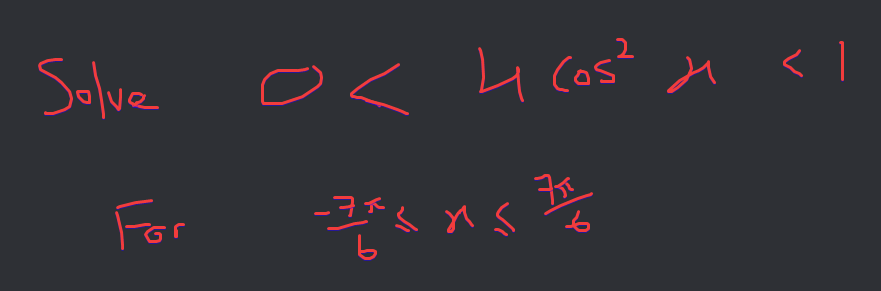
help @here :https://i.imgur.com/H2XMTl5.png
 lone heartBOT
Available help channel!
lone heartBOT
Available help channel!
Send your question here to claim the channel.
Remember:
• Ask your math question in a clear, concise manner.
• Show your work, and if possible, explain where you are stuck.
• After 15 minutes, feel free to ping <@&286206848099549185>.
• Type the command .close to free the channel when you're done.
• Be polite and have a nice day!
Read #❓how-to-get-help for further information on how to ask a good question, and about conduct in the question channels.
 gusty raptor
can I access my phone via computer?
lone heartBOT
gusty raptor
can I access my phone via computer?
 rose sigil
what
lone heartBOT
@gusty raptor Has your question been resolved?
lone heartBOT
Channel closed
Closed due to timeout
Use .reopen if this was a mistake.
gusty raptor
.reopen
lone heartBOT
✅
gusty raptor
aka, I want to access my phone apps and stuff from the computer- with what apps can I do that
fresh wedge
pseudo ice
(More a question for e.g. #discussion or #serious-discussion, maybe potentially #computing-software)
 twin nimbus
This seems like a tech support question not a math question
I'm going to close this channel, please look at the resources above that chartbit posted.
.close
lone heartBOT
Channel closed
Closed by @twin nimbus
Use .reopen if this was a mistake.
Available help channel!
Send your question here to claim the channel.
Remember:
• Ask your math question in a clear, concise manner.
• Show your work, and if possible, explain where you are stuck.
• After 15 minutes, feel free to ping <@&286206848099549185>.
• Type the command .close to free the channel when you're done.
• Be polite and have a nice day!
Read #❓how-to-get-help for further information on how to ask a good question, and about conduct in the question channels.
 ruby blaze
Combinatoric
If n is a natural number, f(n) is the number of consecutive 1 digits on the right side of the binary representation (base 2) of the number n We consider For example, f(8)=0 and f(19)=2
What is the existing sum of f(n)
for n's between 1 to 255?
(the question is translated with google)
more clearly : f(n) = number of consecutive 1's in binary representation of n
n = 6, 110 (base 2) ---->
f(6) = 2
Im really struggling to understand the answer that was given in the paper,
I came up with a pattern, but i dont know how to formulate it (if i can) to avoid doing it 255 times
I will be really thankful if someone can tell me what technique i need to use, how to use it or what part of combinatoric this is so i can go study it 🌺
lone heartBOT
ruby blaze
Combinatoric
If n is a natural number, f(n) is the number of consecutive 1 digi...
ruby blaze
 gusty raptor
twin nimbus
This seems like a tech support question not a math question
gusty raptor
twin nimbus
This seems like a tech support question not a math question
idk better servers, sorry.
 fickle heath
ruby blaze
fickle heath
ruby blaze
This makes no sense
14 = 1110_2, that has indeed three consecutive 1's on the left
19 = 10011_2, that has two 1's on the right...
If you're counting from the left, f would never give you 0 (except f(0))
If you're counting from the right, then your example with 6 is wrong too, since that would be 0 instead of 2
gusty raptor
ruby blaze
Combinatoric
If n is a natural number, f(n) is the number of consecutive 1 digi...
any odd number has a first 1 on it's right providing floor((N+1)/2) to the sum. then, 1cout of any 2 odds will have a next consecutive 1 adding floor((N+1)/4). proceeding that way we get the sum of floor((N+1)/2^k) (the point being to count how many smaller than or equal to n numbers are equal to -1 modulo 2^k) with k going till floor(log_2(N+1)) (N being 255 here). you can find that sum via desmos' don't thik ther's a closed form solution. (pretty sure)
lone heartBOT
@ruby blaze Has your question been resolved?
lone heartBOT
Channel closed
Closed due to timeout
Use .reopen if this was a mistake.
Available help channel!
Send your question here to claim the channel.
Remember:
• Ask your math question in a clear, concise manner.
• Show your work, and if possible, explain where you are stuck.
• After 15 minutes, feel free to ping <@&286206848099549185>.
• Type the command .close to free the channel when you're done.
• Be polite and have a nice day!
Read #❓how-to-get-help for further information on how to ask a good question, and about conduct in the question channels.
 silent iron
help on these 2 pls 😭

 lone heartBOT
silent iron
help on these 2 pls 😭
silent iron
lone heartBOT
silent iron
help on these 2 pls 😭
silent iron
<@&286206848099549185> por favor
 ivory pivot
interesting
ivory pivot
silent iron
<@&286206848099549185> por favor
 ivory pivot
silent iron
<@&286206848099549185> por favor
ivory pivot
silent iron
<@&286206848099549185> por favor
 silent iron
ooh thanks
lone heartBOT
@silent iron Has your question been resolved?
Channel closed
Closed by @silent iron
Use .reopen if this was a mistake.
gusty raptor
silent iron
help on these 2 pls 😭
for the first one have you done partial fraction decomposition?
silent iron
i got both of them lol
lone heartBOT
Available help channel!
Send your question here to claim the channel.
Remember:
• Ask your math question in a clear, concise manner.
• Show your work, and if possible, explain where you are stuck.
• After 15 minutes, feel free to ping <@&286206848099549185>.
• Type the command .close to free the channel when you're done.
• Be polite and have a nice day!
Read #❓how-to-get-help for further information on how to ask a good question, and about conduct in the question channels.
 median flint
 lone heartBOT
median flint
median flint
lone heartBOT
median flint
median flint
i get that i take the n^2 out of the root , bud idk what to do after
digital magnet
pretty sure you can apply LH here
median flint
chatgpt says that this is supposed to happen but idk
 digital magnet
by rewriting as ln(sqrt(n^2 + bn + c) + an)/(1/n)
sorry idk how to use latex
oh nvm
Im slow
nah my way would give you inf/0 nvm
median flint
yea
ivory pivot
digital magnet
by rewriting as ln(sqrt(n^2 + bn + c) + an)/(1/n)
wont you get infty/0 that is not an indeterminate form ?
median flint
yeah he realised after
digital magnet
ivory pivot
wont you get infty/0 that is not an indeterminate form ?
wym
ivory pivot
digital magnet
wym
something you have already realized xD
median flint
lemme see whaat this first taylor expansion is
median flint
i have to find a,b,c
 ivory pivot
I cannot help you rn
lone heartBOT
Channel closed
Closed by @median flint
Use .reopen if this was a mistake.
lone heartBOT
Available help channel!
Send your question here to claim the channel.
Remember:
• Ask your math question in a clear, concise manner.
• Show your work, and if possible, explain where you are stuck.
• After 15 minutes, feel free to ping <@&286206848099549185>.
• Type the command .close to free the channel when you're done.
• Be polite and have a nice day!
Read #❓how-to-get-help for further information on how to ask a good question, and about conduct in the question channels.
 solemn geyser
Hi !
lone heartBOT
solemn geyser
Hi !
digital magnet
hi
 slow fiber
hi
solemn geyser
i'd like some help in a proof i made on why all multiplicative groups made out of the inversible elements of a corps ( the inversible ring thing ,sorry if i messed up the name) are cyclic
slow fiber
are you french?
solemn geyser
the teacher took a look at it and told me it wasn't correct but i don't get why
solemn geyser
slow fiber
are you french?
yeah
slow fiber
Yeah, if you want to know corps are "fields" in english
solemn geyser
thank you !
oh i should have added finite there it's finite fields
so what i did was say that if K is a finite field then it is an integral ring so we've got division and association defined in there
slow fiber
So finite field K and you want to prove that U(K) is cyclic/monogenous?
solemn geyser
yes
and since the only ideals(hope that's the correct term) of a field are itself and 0
if we take any element x of K other than 0 then we will find that the ideal it makes is none other than K itself and this hold true for all elements y of K other than 0 .in particular we can choose a y and have that the ideal made out of y is equal to the one made out of x and is still K
so that means that all elements of K other than 0 are associated or in other words that if we take an x non nul will find that it will divide all the other elements of K other than 0
and since the coefficient k such as y=kx is itself in K other than 0 (so U(K)) then it can also be divided by x
and we've got that K is finite so all this series of division will end when we come back to our x again
so y is a power of x
and this holds true for all elements of U(K) thus it is cyclic ( since x is then a generator)
my idea here is that since K is a field , relationships such as division are trivial since all elements can be divided by all the other elements (excluding 0) so like if we vulgarise it the relationships of divisibility is itself cyclic in a field (which is why it is trivial)
slow fiber
solemn geyser
and since the only ideals(hope that's the correct term) of a field are itself an...
Wait
Ideal pertain to the additive structure of the field, not the multiplicative structure. When talking about the cyclic nature we talk about the multiplicative one.
solemn geyser
and this is why the property is true in a field but not for a group
solemn geyser
slow fiber
Wait
Ideal pertain to the additive structure of the field, not the multiplicati...
yes but regardless of the structures the elements of K are the same like if we name them x1 x2......xn we will get that xi + xk=xj but the same xj is still an element of U(K) which is just K without 0 (like the nature of the relationship changes but not the elements themself)
basically what i am trying to say is that if we take any element x of K other than 0 we can write all the other elements as a power of this said elemnt like all elements of K other than 0 are generators
because of the cyclic nature of the division in a field
which is absolutely not true in a group
slow fiber
solemn geyser
if we take any element x of K other than 0 then we will find that the ideal it m...
if we take any element x of K other than 0 then we will find that the ideal it makes is none other than K itself and this hold true for all elements y of K other than 0 .in particular we can choose a y and have that the ideal made out of y is equal to the one made out of x and is still K
so that means that all elements of K other than 0 are associated or in other words that if we take an x non nul will find that it will divide all the other elements of K other than 0
Wait here you say that you take x€K\0 and it "divides" all other elements, and thus all nonzero elements are "associated" with each other, that's busting an open door because every element divides every other element (since every nonzero element has a multiplicative inverse), this comes from the fact that K is a field and therefore every element divide everyone else
for a group to be cyclic, you need a specific element (a generator) such that all other elements can be written as powers of this one element. The fact that any nonzero element can divide others only tells us that we have invertibility, not that one particular element can generate the entire group.
Also the idea that the ideal generated by x is equal to K and that this somehow implies that x is a generator of the multiplicative group
you're mixing up additive and multiplicative properties of the field. The fact that x generates the ideal K (in the sense of an additive ring) has no bearing on whether x can generate the entire multiplicative structure
solemn geyser
slow fiber
> if we take any element x of K other than 0 then we will find that the ideal it...
but doesn't the fact that x generates the ideal K tell us that for every y in K* there exist k in K* such as y=kx and the same thing can be done over and over again on every k and this process will come to an end sinc K is finite
slow fiber
(please don't say K* for K\{0} because it refers to the dual in this case
solemn geyser
oh alright!
slow fiber
solemn geyser
but doesn't the fact that x generates the ideal K tell us that for every y in K*...
I think i get why you are wrong but it's subtle
lemme write smth
solemn geyser
this is possible because K is a field so it also have an additive structure and we can write the elements of K ( even if we are using the additive structure) in a certain way then they can always be written that way and since we have done nothing but change the way they are written and these same elements are the elements of U(k) then we can conclude what i said
slow fiber
solemn geyser
but doesn't the fact that x generates the ideal K tell us that for every y in K*...
When you say that x "generates the ideal K," you are referring to the additive structure of the field, not the multiplicative one. The ideal generated by an element x€K is the set of all multiples of x by elements of the field (in the additive sense), i.e., all elements of the form ax, where a€K
Now
To show that a group is cyclic, we need to demonstrate that there exists **an **element, a single element, g of K\0 such that every element of K\0 can be written as as g^k so every member of the group is the power of g
The fact that x generates an additive ideal (i.e., the set of multiples of x in the additive sense) doesn't imply that x generates the entire multiplicative group. You need to show that every element y of K\0 can be written as x^k not just that it is a multiple of x in the additive sense
To prove cyclicity, you need a specific element whose powers cover the entire multiplicative group, not just the fact that one element divides others.
:p
Does that make sense?
solemn geyser
slow fiber
To prove cyclicity, you need a specific element whose powers cover the entire mu...
but there could be more than one generator to a same group but yes we usually just try to find one to conclude cyclicity
slow fiber
Basically you are mixing up the concept of additive multiples with multiplicative powers.
slow fiber
solemn geyser
but there could be more than one generator to a same group but yes we usually ju...
Yeah you can have multiple primitive element
solemn geyser
does that mean that xxx(in the additive sense ) is not x at the power 3
aren't they equivalent
?
slow fiber
xxx additively doesn't make sense it would be x+x+x so 3x
and no 3x=!=x^3
Wait do you know what Euler's totient function is?
I just want to check smth
solemn geyser
slow fiber
xxx additively doesn't make sense it would be x+x+x so 3x
no i meant x repeated xx times
solemn geyser
slow fiber
Wait do you know what Euler's totient function is?
yes i know it
like adding x ( adding x , xtimes)
does this make sense?
no wait lemme change it ; is adding x x times not equal to x to the power of 2 ( i hope this is more comprehensible)
vale crag
how do you even guarantee that process ends anyway if y isn't a power of x to begin with ? that's the most shocking statement of the bunch
 slow fiber
solemn geyser
like adding x ( adding x , xtimes)
slow fiber
solemn geyser
like adding x ( adding x , xtimes)
"x" isn't a scalar
The law for scalar multiplication isn't the same one of the multiplicative group
x.x isn't 3*x
solemn geyser
it's because K is finite and the only ideal of K are K and 0 so the preocess should end with coming back to x since k=xk
slow fiber
As I said you are confusing multiplicative and additive structure repeated addition which turns into scalar multiplication and the IN field multiplicative law which is smth else
solemn geyser
slow fiber
"x" isn't a scalar
so we can't go back and forth between the multiplicative law and the addition law
slow fiber
solemn geyser
so we can't go back and forth between the multiplicative law and the addition la...
No
solemn geyser
i kind of see where you're going but i am still not sure i completely understand
slow fiber
Well there are some interactions between them but whatever you are proposing is not allowed
solemn geyser
let me try again and i'll do it step by step so can you pause me when i make the wrong passage
slow fiber
Ok
solemn geyser
so if x is an element of k other than 0
then since K is a finite field xK=k
now let's consider y another non nul element of K
since K is a field then x and y are associated ( or x divise y and y divise x)
that means that there exist an element h of K who's non nul such as y=kx
the same thing said about y can be said about h so there must exist a p of K non nul such as y=pxx
continuing this process , since K is finite and the only ideals of K are itself and 0 with 0 being only generated by 0 we can conclude that y=xxxxxxxxxx where x is repeated a finite number of times
i guess this is the passage i can't make: why should xxxxxx equal x to the power of something?
i am not sure about this though it feels so counter intuitive
slow fiber
Ok wait I need to write why you are wrong in simple term so amma need time
solemn geyser
alright thank you for your time
slow fiber
solemn geyser
alright thank you for your time
Ok so
You start by taking x,y€K\0 and since K is a field it's true that since both x and y are invertible because K is a field you can always find some h in K\0 such that y=hx
That's correct
And then, somehow, y=hx and there is h=px so we "repeat" until y=lxxxxxxxxx not xxxxxxx... and since K is finite then it's fine cause you'll run out at some point right?
While you can express one element as a multiple of another, this fact does not mean the group is cyclic or that elements are related through powers of a single generator.
The reason why "xxxx" doesn’t necessarily equal "x to the power of something" is that you're not actually multiplying x by itself a number of times. Instead, you're expressing y as a product of different elements of K with x, like y=hx, h=px, etc. Each element h,p,… is a different scalar, so you're not building powers of x, but rather expressing a chain of factorizations involving different elements of K.
This is a chain of scalar multiplications that doesn't produce powers of x; it just shows that one element divides another, but division does not imply powers.
do you get me? :v
solemn geyser
And then, somehow, y=hx and there is h=px so we "repeat" until y=lxxxxxxxxx not xxxxxxx... and since K is finite then it's fine cause you'll run out at some point right? here i don't think there should be an l since eventually the last l will be equal to 1
slow fiber
Ok I'm shifting gear I'm just going to find a counterexample at this point
solemn geyser
but i kind of get what you mean here The reason why "xxxx" doesn’t necessarily equal "x to the power of something" is that you're not actually multiplying x by itself a number of times. Instead, you're expressing y as a product of different elements of K with x, like y=hx, h=px, etc. Each element h,p,… is a different scalar, so you're not building powers of x, but rather expressing a chain of factorizations involving different elements of K.
slow fiber
I"m pretty sure Z²xZ² actually works
as a counterexample
Lol lemme write that down, seeing a simple counterexample should help you understand imo
solemn geyser
like this would work for normal + and . but not for any additive law and multiplicatve one
solemn geyser
slow fiber
Lol lemme write that down, seeing a simple counterexample should help you unders...
alright thanks
ocean sealBOT
Alix
Compile Error! Click the  reaction for more information.
(You may edit your message to recompile.)

Alix
 slow fiber
I got overleaf out for that one
I'm fucking endign my own life, it fails at compiling
@solemn geyser ok get me?
ocean sealBOT
Alix
 solemn geyser
yes i think i get it now , in the division the same element can just keep appearing (alpha +1 is this case ) even if the field is finite
wow never thought that this situation was possible
slow fiber
So is your problem resolved? 
solemn geyser
and the cyclicity is what gives us the fact that a p can be written as a power of x so i basically used cyclicity to prove cyclicity lol
solemn geyser
slow fiber
So is your problem resolved? <:CatHappy:839786560572358676>
I think so , i understand where i went wrong
thank you for your help
slow fiber
no problem 
solemn geyser
and btw just being able to use latex like that is already great so yeah that's cool
slow fiber
It took some time for me to start knowing what I'm doing
But even today sometime I don't know what I'm doing
Anyway don't forget to close the ticket when you think you are done asking and if you want some direction for the actual proof of the cyclicity you need to use the Lagrange theorem and euler's totient function :p
solemn geyser
don't we need cauchy as well ( to prove that there is an element of the order d where d is a prime divisor of the cardinal of K )
but we don't have access to this theorem so we can't use it
though thank you for the indication i'll try that out right now
and btw a quick question what makes us able to say that if K is a finite field then U(K) is cyclic and not say that a finite group is cyclic , heck even an abelian finite group is not necessarily cyclic , why is U(K) so special when K can be any finite field
slow fiber
Isn't this why you are trying to prove lmao
solemn geyser
oh then wait i'll try to do it first and then check with you if my understanding is correct
can i ping you when i am done so that i close this channel?
cause it may take some time
slow fiber
Okie dokie
lone heartBOT
Channel closed
Closed by @solemn geyser
Use .reopen if this was a mistake.
lone heartBOT
Available help channel!
Send your question here to claim the channel.
Remember:
• Ask your math question in a clear, concise manner.
• Show your work, and if possible, explain where you are stuck.
• After 15 minutes, feel free to ping <@&286206848099549185>.
• Type the command .close to free the channel when you're done.
• Be polite and have a nice day!
Read #❓how-to-get-help for further information on how to ask a good question, and about conduct in the question channels.
 tawny heron
can someone help rq
 lone heartBOT
tawny heron
can someone help rq
lone heartBOT
tawny heron
can someone help rq
 verbal blaze
not enough information
tawny heron
how so
verbal blaze
no, ignore that. I'm being a silly
tawny heron
ik
lavish cave
tawny heron
can someone help rq
do you know what trig ratio to use?
lavish cave
you don't use sin
tawny heron
why
solemn geyser
tawny heron
sin33=x/50 is what i used
i think it's 50/k
if you want to use the sin
or use the cosine
tawny heron
solemn geyser
i think it's 50/k
i tried this aswell and got 50
lavish cave
lavish cave
cause 50m is the opposite side to 33 degrees
@tawny heron do you know what trig ratio to use now?
opposite and adjacent, does that ring a bell
tawny heron
its def not cos i got -0.6
tawny heron
lavish cave
<@774388658098798632> do you know what trig ratio to use now?
yes
how is it tan
solemn geyser
or cotan
lavish cave
lavish cave
cause 50m is the opposite side to 33 degrees
.
if it really bothers you tilt your head 90 degrees to the right
tawny heron
lavish cave
if it really bothers you tilt your head 90 degrees to the right
im aware
 fair parcel

lavish cave
tawny heron
how is it tan
then SOHCAHTOA
we have opposite and adjacent
hence it's tan
lavish cave
then it's just your calculator being in radians
lavish cave
,w 50/(tan 33 degrees)
tawny heron
fml
ocean sealBOT


 solemn geyser
lavish cave
then it's just your calculator being in radians
solemn geyser
lavish cave
then it's just your calculator being in radians
I suffered alot in high school due to this lol
solemn geyser
you don't have the hypothenus
fair parcel
tawny heron
why is it tan and not cos
Tan is perpendicular/ base
 tiny sky
solemn geyser
I suffered alot in high school due to this lol
tiny sky
solemn geyser
I suffered alot in high school due to this lol
if u really wanted to troll someone, put their calculator in gradians
fair parcel
in this case k/50
tawny heron
so whenever i dont have hypotenuse i use tan?
solemn geyser
and both cos and sin need it but tan doesn't so that's your only option
lavish cave
yeah so the hypotenuse is the most obvious side
then it's the opposite side to that particular angle
the 3rd side has to be the adjacent then
tiny sky
tiny sky
if u really wanted to troll someone, put their calculator in gradians
it's just very slightly different to degrees so it's harder to notice than if u put it into radians lol
lavish cave
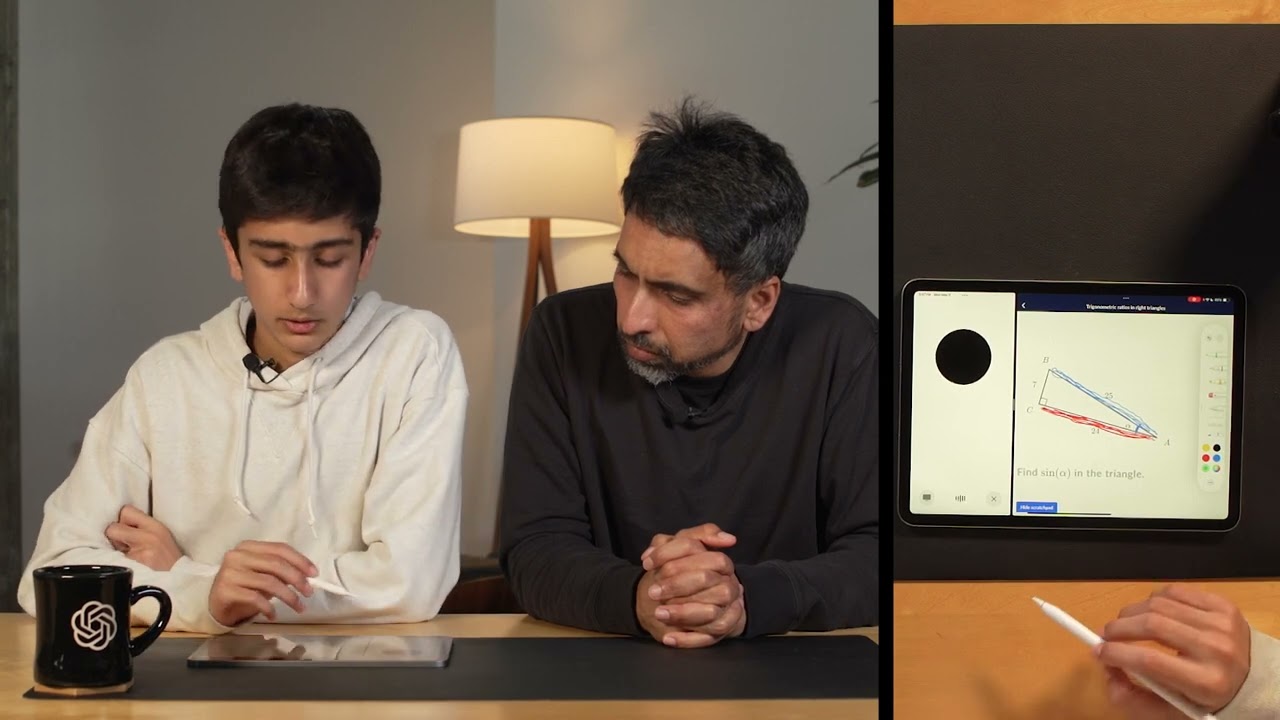
New GPT-4o (Omni) tutoring demo: My new book BRAVE NEW WORDS: HOW AI WILL REVOLUTIONIZE EDUCATION comes out tomorrow. What is described in this book is happening fast...
My son and I filmed this last week at OpenAI that gives a glimpse of this happening on Khan Academy's iPad app (we haven't released this level of tutoring yet but it will come...
this video is directly relevant
tawny heron
alr i got it ty
lone heartBOT
@tawny heron Has your question been resolved?
Channel closed
Closed by @tawny heron
Use .reopen if this was a mistake.
Available help channel!
Send your question here to claim the channel.
Remember:
• Ask your math question in a clear, concise manner.
• Show your work, and if possible, explain where you are stuck.
• After 15 minutes, feel free to ping <@&286206848099549185>.
• Type the command .close to free the channel when you're done.
• Be polite and have a nice day!
Read #❓how-to-get-help for further information on how to ask a good question, and about conduct in the question channels.
@naive grove Has your question been resolved?
lone heartBOT
Channel closed
Closed due to timeout
Use .reopen if this was a mistake.
Available help channel!
Send your question here to claim the channel.
Remember:
• Ask your math question in a clear, concise manner.
• Show your work, and if possible, explain where you are stuck.
• After 15 minutes, feel free to ping <@&286206848099549185>.
• Type the command .close to free the channel when you're done.
• Be polite and have a nice day!
Read #❓how-to-get-help for further information on how to ask a good question, and about conduct in the question channels.
 fossil magnet
asked my prof for help and all she said is that you use geometry for this


multivariable calculus btw
lone heartBOT
fossil magnet
asked my prof for help and all she said is that you use geometry for this
fossil magnet
at first i thought you break down the vectors into their unit ones but theres no plane established
 jagged cobalt
a simple way is to just start from the base of vector a, and work around through the other vectors round to the end of a
like in the first one, i go along b, then backwards along c
so its b+(-c)=b-c
in the ones with two as, go from the start of the first, to the end of the second, then that will be 2a=...
fossil magnet
so this kind of leads into another question
when im looking at illustrations of vectors
how do ik if they are being subtracted
adding makes sense
to me
is it like where the initial and terminal point are in relation to others?>
jagged cobalt
im always adding
-c is the vector c, but its pointing in the opposite direction
if i go along c in the arrow direction its just c
if i go backwards along it then its -c
fossil magnet
ohhhhhhhhh
so is b-c the only correct answer?
what if i say c-b
just by the order of the vectors
fossil magnet
so i am always starting from the initial point?
and following a vector that isnt a?
lone heartBOT
@fossil magnet Has your question been resolved?
lone heartBOT
@fossil magnet Has your question been resolved?
Channel closed
Closed by @fossil magnet
Use .reopen if this was a mistake.
Available help channel!
Send your question here to claim the channel.
Remember:
• Ask your math question in a clear, concise manner.
• Show your work, and if possible, explain where you are stuck.
• After 15 minutes, feel free to ping <@&286206848099549185>.
• Type the command .close to free the channel when you're done.
• Be polite and have a nice day!
Read #❓how-to-get-help for further information on how to ask a good question, and about conduct in the question channels.
 ashen drum
 lone heartBOT
ashen drum
ashen drum
lone heartBOT
ashen drum
ashen drum
can someone explain to me how this works
 frank basin
ashen drum
frank basin
ashen drum
This is basically creating a function in which you have a "normal" behavior, until it arrives at c. Then, g(c) = a. which might be continuous or not
ashen drum
so i’m creating my own function?
frank basin
Was f(x) given to you?
ashen drum
nope
frank basin
Was there anything before this exercise?
ashen drum
 ashen drum
frank basin
Do you fully understand the concept of continuity?
ashen drum
frank basin
Do you fully understand the concept of continuity?
yeah
frank basin
No, since you need f(x)
frank basin
ashen drum
now i feel dumb 😭
Don't worry, bro 🫂
You ain't dumb
You're a freaking math major
frank basin
Then you're a fucking pre med
ashen drum
pre med is beating my ass
ashen drum
 ashen drum
frank basin
I hate biology, so trust me when I say that you're a badass
ashen drum
frank basin
I hate biology, so trust me when I say that you're a badass
i love bio lmao
thank u tho
 ashen drum
ok yeah makes sense now
frank basin
You should check the points (a,c) for each option
frank basin
ashen drum
And, for (c), you must see the point for which the function doesn't converge
 frank basin
ashen drum
exucse my handwriting
frank basin
ashen drum
exucse my handwriting
I can't really understand it 😢
ashen drum
yeah it makes sense now its just plug and pull
ty
i was strugglinggggg
u think u could help me with related rates?
frank basin
Can you understand letter (c) as well?
frank basin
ashen drum
u think u could help me with related rates?
I think so!
ashen drum
 frank basin
Hold on
ashen drum
alr
ashen drum
from the top of the swimming pool to the bottom is 9 ft, but the pool is filled 5 feet
dh/dt = 1.1ft^3
frank basin
Yea!
frank basin
Ok
ashen drum
the issue is since the shape is a trapezoid flipped upside down the rate changes
frank basin
Well, I did it in a rather simple way, tbh
ashen drum
anythings better than nothing lol
frank basin
I mean, I took the increasing rate, then I calculated that in relation to the surface
 frank basin
First of all, I did the proportion between the measures if that trapezoide was full
ashen drum
the height becomes 5
frank basin
Yes, I did the proportion between 6ft and 5ft
Considering both sides
The 12 isn't changing there
 frank basin
Hmmm, we agreed until v = 1/2(12 + (5 + 12 + 40/3))h(20)
I went to find out the surface of the pool when it wasn't full
ashen drum
the top portion?
frank basin
Something like this
 ashen drum
alr
frank basin
What is the right answer according to the key?
ashen drum
this is hw
frank basin
Ok, fair
I mean, I didn't use any calculus tools to do that problem, but I would have sincerely solved it that way
Even considering dimensional analysis
ashen drum
no im calculus lol
frank basin
I mean, I'd rather say it's that value, still
ashen drum
alr lmao
frank basin
ashen drum
here’s what my friend did
That doesn't really work out, as the function is false
It's supposed to vary inside the parenthesis as well, so to say
Hmmm
Ok, hold on, I found a seemingly good explanation

A swimming pool is 20 ft wide, 40 ft long, 3 ft deep at the shallow end, and 9 ft deep at its deepest point. A cross-section is shown in the figure. If the pool is being filled at a rate of 0.8 ft^3/min, how fast is the water level rising when the depth at the deepest point is 5 ft?
frank basin
ashen drum
here’s what my friend did
But you shouldn't assume fixed values when you do the function
Let me try to explain the process of doing the function at the very least
frank basin
Like this

As you can see, you shouldn't consider the length as a fix thing, as it changes according to the height
That's the whole concept of a trapezoide
But your friend almost got it right lol
Looks stupid, but anyways
 frank basin
Like this
frank basin
frank basin
Like this
OH hold on
It's multiplied by ten
I sent my first draw
Let me
Obviously you multiply lmfao

Instead of just considering it a fixed value
You get it?
lone heartBOT
@ashen drum Has your question been resolved?
lone heartBOT
Channel closed
Closed due to timeout
Use .reopen if this was a mistake.
Available help channel!
Send your question here to claim the channel.
Remember:
• Ask your math question in a clear, concise manner.
• Show your work, and if possible, explain where you are stuck.
• After 15 minutes, feel free to ping <@&286206848099549185>.
• Type the command .close to free the channel when you're done.
• Be polite and have a nice day!
Read #❓how-to-get-help for further information on how to ask a good question, and about conduct in the question channels.
 dire nebula
 lone heartBOT
dire nebula
dire nebula
lone heartBOT
dire nebula
dire nebula
Wrong why
 azure needle
You don't sub h(x) straight , firstly evaluate h(x)
 carmine reef
Because there are some numbers which if you plug them into h(x) will not be defined
azure needle
azure needle
You don't sub h(x) straight , firstly evaluate h(x)
Then do g(of that value)
carmine reef
For example, g(h(-10)) is not defined
dire nebula
azure needle
Then do g(of that value)
Yo I'm not that smart I don't know what that means, I lowkey skipped a grade so I'm kinda confused
azure needle
dire nebula
Yo I'm not that smart I don't know what that means, I lowkey skipped a grade so ...
Okay what's g•h
carmine reef
The problem is
azure needle
dire nebula
Bc x² cancels square root and I got those
You don't sub in straight
carmine reef
If you plug x=-10 into x+7 directly there's no problem
But if you try plugging it into h and then into g
there's a problem
So g•h is x+7 but with a restricted domain since it can't accept all inputs
azure needle
You firstly have to get the value h(x)
Then put that into g(x)
carmine reef
azure needle
You firstly have to get the value h(x)
Then put that into g(x)
Into g(x) you mean
azure needle
carmine reef
Into g(x) you mean
Yes oops
dire nebula
So I have to do all the steps and not skip h(x)?
dire nebula
Na?
azure needle
dire nebula
Na?
Okay so
You agree that h(x) cannot have its values of x less than -4
@dire nebula
lone heartBOT
@dire nebula Has your question been resolved?
lone heartBOT
Channel closed
Closed due to timeout
Use .reopen if this was a mistake.
Available help channel!
Send your question here to claim the channel.
Remember:
• Ask your math question in a clear, concise manner.
• Show your work, and if possible, explain where you are stuck.
• After 15 minutes, feel free to ping <@&286206848099549185>.
• Type the command .close to free the channel when you're done.
• Be polite and have a nice day!
Read #❓how-to-get-help for further information on how to ask a good question, and about conduct in the question channels.
 torpid axle
 lone heartBOT
torpid axle
lone heartBOT
torpid axle

 tacit arch
yea. then use 3 = 1 + 2
torpid axle
wdym
tacit arch
 torpid axle
so like
tacit arch
tacit arch
would help to use pythagorean theorem first
under the square root
torpid axle
tacit arch
wait how do i deal with the three
tacit arch
tacit arch
yea. then use 3 = 1 + 2
.
torpid axle
sorry if this a stupid question
Oh
so like sin^2 + (1+2)(cos^2)
Oh
and then i can multiply
so like sin^2 + cos^2 + 2cos^2
so then 1 + 2cos^2
Wasnt there another thingy for 1+2cos^2 then
tacit arch
no
now multiplying the top and bottom by sin + sqrt(1+2cos^2) should be slightly cleaner
carmine reef
torpid axle
Wasnt there another thingy for 1+2cos^2 then
Its cos(2t)
idk if that's helpful though
tacit arch
it's not
carmine reef
ah
tacit arch
,tex .double angle
carmine reef
nvm
ocean sealBOT
riemann
 torpid axle
tacit arch
now multiplying the top and bottom by `sin + sqrt(1+2cos^2)` should be slightly ...
torpid axle
tacit arch
now multiplying the top and bottom by `sin + sqrt(1+2cos^2)` should be slightly ...
wait why do you change the sign of the sqrt and not the sin t as well
ik this is the conjugate thing just trying to understand tho
cuz prof doesnt explain
tacit arch
torpid axle
wait why do you change the sign of the sqrt and not the sin t as well
try it and see if it's helpful
torpid axle
Ok
tacit arch
ultimately it's because $a^2 - b^2 = (a+b)(a-b)$
ocean sealBOT
riemann

 tacit arch
,rotate
ocean sealBOT
 tacit arch
yes expand
torpid axle
ok
tacit arch
ocean seal
**riemann**
this is what you're doing in the numerator
tacit arch
probably can skip the denom
torpid axle
oh ok
 tight pier
probably
tacit arch
torpid axle
for the numerator i got left with cos^2 t
just cancel
torpid axle
OHH
I starting to see it
I got 1/4
cuz what i did was
$\frac{\left(\cos ^2t\right)}{2\left(\cos ^2t\right)\left(\sin t+\sqrt{1+2\cos ^2t}\right)}$
ocean sealBOT
j
 torpid axle
Then i canceled cos ^2 t
and got
$$\frac{1}{2\left(\sin t+\sqrt{1+2\cos ^2t}\right)}$$
ocean sealBOT
j
 torpid axle
and plugging in pi /2 gives me 1/4
tacit arch
,w lim t to pi/2 (sin(t) - sqrt(sin^2(t) + 3cos^2(t)))/(2cos^2(t))
ocean sealBOT

 torpid axle
oh shi
wait
isnt it kinda like the period tho or wtv
so wouldnt -3/4 and 1/4 work
or did i do something wrong
tacit arch
torpid axle
for the numerator i got left with cos^2 t
probably messed up here
,w expand (sin(t) - sqrt(1+2cos^2(t))) * (sin(t) + sqrt(1+2cos^2(t)))
ocean sealBOT

 tacit arch
yes
tacit arch

lone heartBOT
@torpid axle Has your question been resolved?
Channel closed
Closed by @torpid axle
Use .reopen if this was a mistake.
Available help channel!
Send your question here to claim the channel.
Remember:
• Ask your math question in a clear, concise manner.
• Show your work, and if possible, explain where you are stuck.
• After 15 minutes, feel free to ping <@&286206848099549185>.
• Type the command .close to free the channel when you're done.
• Be polite and have a nice day!
Read #❓how-to-get-help for further information on how to ask a good question, and about conduct in the question channels.
 golden tendon
if I could ask a physics question here, if I am given A=0.24 C, w=337 rad/s, and p=pi/3, how can I find the maximum current for a circuit consisting of one power supply and one resistor of 15 ohms, given I=-Aw sin(wt + p)?
lone heartBOT
golden tendon
if I could ask a physics question here, if I am given A=0.24 C, w=337 rad/s, and...
@golden tendon Has your question been resolved?
golden tendon
.close
lone heartBOT
Channel closed
Closed by @golden tendon
Use .reopen if this was a mistake.
lone heartBOT
Available help channel!
Send your question here to claim the channel.
Remember:
• Ask your math question in a clear, concise manner.
• Show your work, and if possible, explain where you are stuck.
• After 15 minutes, feel free to ping <@&286206848099549185>.
• Type the command .close to free the channel when you're done.
• Be polite and have a nice day!
Read #❓how-to-get-help for further information on how to ask a good question, and about conduct in the question channels.
 shadow venture
 lone heartBOT
shadow venture
shadow venture
lone heartBOT
shadow venture
shadow venture
how do i solve d
i tried simplifying, converting to radians but its too complicated tobe the answer
 tardy stag
,tex .unit circle
ocean sealBOT
hayley is not layla
 tardy stag
it should be just a handful of steps of algebra
shadow venture
what am i doing
tardy stag
well, the steps should be very similar
tardy stag
hint: $\f{\s3}3 = \f1{\s3}$
ocean sealBOT
hayley is not layla
 shadow venture
so if i convert to radians its pi/(180*/sqrt3)?
tardy stag
errm
no, this isn't an angle measurement
this is a number
i think you're trying to find an angle whose tangent is equal to 1/√3
ocean sealBOT
hayley is not layla
 tardy stag
oh, negative
yea
ok
do you know an angle T such that tan(T) = 1/√3?
in degrees or radians
tardy stag
,w tan(60 degrees)
ocean sealBOT


 Requested by kitten.in.a.teacup
shadow venture
Requested by kitten.in.a.teacup
shadow venture
30
tardy stag
yes 30º
ok
30º = π/6
this is something that you should memorize
tangent repeats every π radians
so we can say that 3x = π/6 + πk
where k is some integer
shadow venture
hsould i convert 3x to radians
all the previous answers i got were in radians
and the domain is in radians
shadow venture
tardy stag
tangent repeats every π radians
but doesnt this depend on the coefficient of x
pi/3 is the period?
ocean sealBOT
 Requested by kitten.in.a.teacup