#help-0
1 messages · Page 316 of 1
 olive solar
 hot trail
.close
 lone heartBOT
Channel closed
Closed by @hot trail
Use .reopen if this was a mistake.
lone heartBOT
 Available help channel!
Send your question here to claim the channel.
Remember:
• Ask your math question in a clear, concise manner.
• Show your work, and if possible, explain where you are stuck.
• After 15 minutes, feel free to ping <@&286206848099549185>.
• Type the command .close to free the channel when you're done.
• Be polite and have a nice day!
Read #❓how-to-get-help for further information on how to ask a good question, and about conduct in the question channels.
 mystic wedge
i dont understand radicals and surds pls help im in class
 vale wigeon
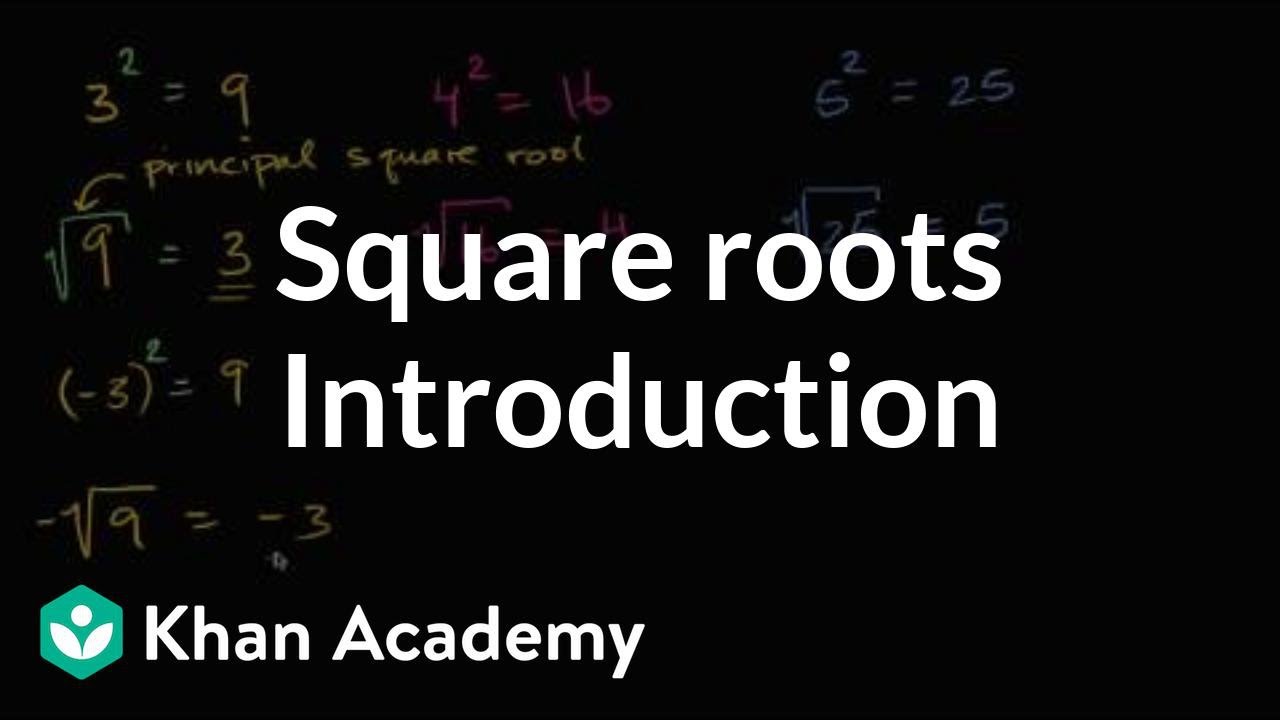
Courses on Khan Academy are always 100% free. Start practicing—and saving your progress—now: https://www.khanacademy.org/math/algebra/x2f8bb11595b61c86:rational-exponents-radicals/x2f8bb11595b61c86:radicals/v/introduction-to-square-roots
Learn about the square root symbol (the principal root) and what it means to find a square root. Also learn...
give this a watch
mystic wedge
but how do i add and subtract them
as well as multiply and divide
its complex
for example :
vale wigeon
$\sqrt{a} + \sqrt{b}$ may not be expressible cleanly as a single square root, in general.
 ocean sealBOT
Ann
 mystic wedge
 vale wigeon
oh that's quite the jump in complexity
mystic wedge
yes
vale wigeon
you gave off the impression that you didn't know what a square root even was at all.
let alone any conjugate stuff.
vale wigeon
8th grade?
mystic wedge
no 9th actually
vale wigeon
fair.
that sounds like about the grade by which you should have at least passing familiarity w/ this stuff.
 flint belfry
💀
vale wigeon
<@&268886789983436800> spam
mystic wedge
vale wigeon
that sounds like about the grade by which you should have at least passing famil...
ya
hussein get out
vale wigeon
ok so give me a few minutes to write out a few basic properties
mystic wedge
no hes my friend
vale wigeon
friend or not, that person is spamming.
vale wigeon
anyway, give me a few minutes to write out a few basic properties on paper. i'll want you to look at them and tell me if you are familiar with them and/or which ones need explanation.
this is gonna take a bit of time as i obviously want to make sure you walk away from this with a solid understanding of this stuff.
lone heartBOT
Channel closed
Closed by @mystic wedge
Use .reopen if this was a mistake.
lone heartBOT
Available help channel!
Send your question here to claim the channel.
Remember:
• Ask your math question in a clear, concise manner.
• Show your work, and if possible, explain where you are stuck.
• After 15 minutes, feel free to ping <@&286206848099549185>.
• Type the command .close to free the channel when you're done.
• Be polite and have a nice day!
Read #❓how-to-get-help for further information on how to ask a good question, and about conduct in the question channels.
 valid tendon
for the bottom question should you do two seperate answers for each letter or one answer for both?
 lone heartBOT
valid tendon
for the bottom question should you do two seperate answers for each letter or on...
valid tendon
lone heartBOT
valid tendon
for the bottom question should you do two seperate answers for each letter or on...
valid tendon
and also how do you work with pie in a rearranging formule quesiton
(bottom question)
lone heartBOT
Channel closed
Closed by @valid tendon
Use .reopen if this was a mistake.
lone heartBOT
Available help channel!
Send your question here to claim the channel.
Remember:
• Ask your math question in a clear, concise manner.
• Show your work, and if possible, explain where you are stuck.
• After 15 minutes, feel free to ping <@&286206848099549185>.
• Type the command .close to free the channel when you're done.
• Be polite and have a nice day!
Read #❓how-to-get-help for further information on how to ask a good question, and about conduct in the question channels.
 quasi vector
Factorise $$xy(x^2-y^2)+yz(y^2-z^2)+zx(z^2-x^2)$$
quasi vector
I figured out that (x-y), (y-z) and (z-x) must be factors of the expression (using the factor theorem)
ocean sealBOT
kheerii
 quasi vector
but how can I figure out the remaining factor? (as expression is of degree 4, we must have 4 factors)
I think it will be x+y+z but not sure how to justify it
 quick halo
quasi vector
but how can I figure out the remaining factor? (as expression is of degree 4, we...
quick halo
quasi vector
but how can I figure out the remaining factor? (as expression is of degree 4, we...
What do you mean by the remaining factor?
There are 3 terms here
 subtle birch
well, that is a fourth degree polynomial
quick halo
subtle birch
well, that is a fourth degree polynomial
it hasn’t been factored yet
subtle birch
they are basically asking about the fourth factor.
They are sure it can be factored as (x-y)(y-z)(z-x)Q(x,y,z)
the goal is to find Q(x,y,z)
which is maybe x+y+z
quasi vector
Yes
quick halo
subtle birch
they are basically asking about the fourth factor.
They are sure it can be facto...
oh, I somehow missed that
sorry
can you compare coefficients?
quick halo
quasi vector
I think it will be x+y+z but not sure how to justify it
you could multiply it all out
quasi vector
quick halo
you could multiply it all out
Doesn’t seem like the right approach
Well
I could put z = -(x+y) to test if x+y+z is a factor
quick halo
Then you still have to expand
quasi vector
Yep
There’s probably an easier way to justify it
Well the factor has to be symmetric in x y and z
And it has to be linear
That only leaves one possible factor no?
quick halo
,w expand (x-y)(y-z)(z-x)(x+y+z)
ocean sealBOT


 Requested by rectifiedtruncatedicosahedron
quick halo
Requested by rectifiedtruncatedicosahedron
quick halo
,w expand xy(x^2 - y^2) + yz(y^2 - z^2) + zx(z^2 - x^2)
ocean sealBOT
 Requested by rectifiedtruncatedicosahedron
quick halo
quasi vector
And it has to be linear
Requested by rectifiedtruncatedicosahedron
quick halo
quasi vector
And it has to be linear
And then you would have to check the coefficient of x^3
to prove that it isn’t a multiple of x + y + z
just now it computed that they were negatives of each other
quasi vector
I think there will be a negative sign
quick halo
kheerii was close
quick halo
quasi vector
I think there will be a negative sign
yes
lone heartBOT
Channel closed
Closed by @quasi vector
Use .reopen if this was a mistake.
Available help channel!
Send your question here to claim the channel.
Remember:
• Ask your math question in a clear, concise manner.
• Show your work, and if possible, explain where you are stuck.
• After 15 minutes, feel free to ping <@&286206848099549185>.
• Type the command .close to free the channel when you're done.
• Be polite and have a nice day!
Read #❓how-to-get-help for further information on how to ask a good question, and about conduct in the question channels.
 waxen delta
?
 lone heartBOT
waxen delta
?
lone heartBOT
waxen delta
?
 lone heartBOT
@waxen delta Has your question been resolved?
lone heartBOT
@waxen delta Has your question been resolved?
Channel closed
Closed by @waxen delta
Use .reopen if this was a mistake.
Available help channel!
Send your question here to claim the channel.
Remember:
• Ask your math question in a clear, concise manner.
• Show your work, and if possible, explain where you are stuck.
• After 15 minutes, feel free to ping <@&286206848099549185>.
• Type the command .close to free the channel when you're done.
• Be polite and have a nice day!
Read #❓how-to-get-help for further information on how to ask a good question, and about conduct in the question channels.
 alpine sable
 lone heartBOT
alpine sable
alpine sable
lone heartBOT
alpine sable
alpine sable

I have to find the vector equation of a line. One that goes through the origin and has those direction cosines
I sent my attempt, but I'm not sure how to continue
The answer key says
$\vec{X} = t(-3 \bf{i} + 4\bf{k})$
ocean sealBOT
seymourdavison2201
 quick halo
alpine sable
quick halo
alpine sable
What are you doing in this working
Do you know what the direction of a line looks like?
alpine sable
quick halo
What are you doing in this working
I'm not sure
alpine sable
quick halo
Do you know what the direction of a line looks like?
wdym?
quick halo
“direction cosine” is nonstandard terminology
quick halo
alpine sable
wdym?
Do you know what the equation of a line looks like
alpine sable
quick halo
Do you know what the equation of a line looks like
yeah.
[x, y, z] = [x_0 , y_0 , z_0] + t[ a , b, c]
parametric form:
x = x_0 + at
y = y_0 + bt
z = z_0 + ct
if that's what you mean?
quick halo
alpine sable
yeah.
[x, y, z] = [x_0 , y_0 , z_0] + t[ a , b, c]
parametric form:
x = x_0 + ...
Yes
Now, you know one point on the line, so you can substitute that in
quick halo
and since (a,b,c) is the direction vector of the line, which you already have, you can find the general equation already
alpine sable
quick halo
and since (a,b,c) is the direction vector of the line, which you already have, y...
[x, y, z] = [0, 0 ,0] + t[-3/5 , 0, 4/3]
quick halo
check the z term
 quick halo
alpine sable
[x, y, z] = [0, 0 ,0] + t[-3/5 , 0, 4/3]
quick halo
alpine sable
[x, y, z] = [0, 0 ,0] + t[-3/5 , 0, 4/3]
the z term is different
since the line goes through the origin
and then use the i,j,k notation
and then you’re done
alpine sable
so $\vec{X} = t(-\frac{3}{5} \bf{i} + \frac{4}{5}\bf{k})$
?
That would also be correct
really?
quick halo
alpine sable
so $\vec{X} = t(-\frac{3}{5} \bf{i} + \frac{4}{5}\bf{k})$
Check the k term
quick halo
alpine sable
That would also be correct
No, it isn’t, because of the k term
 ocean sealBOT
seymourdavison2201
 quick halo
alpine sable
i accidently read 3
quick halo
alpine sable
i accidently read 3
and now this is correct
because both lines describe the same points
alpine sable
Think of it as just walking slower across the same line
yeah, just factorize the 1/5 and add it to the t scalar
alpine sable
alpine sable
Think of it as just walking slower across the same line
gotcha
alright. thanks for the help, I'll try a similar exercise now
.close
lone heartBOT
Channel closed
Closed by @stiff moss
Use .reopen if this was a mistake.
Available help channel!
Send your question here to claim the channel.
Remember:
• Ask your math question in a clear, concise manner.
• Show your work, and if possible, explain where you are stuck.
• After 15 minutes, feel free to ping <@&286206848099549185>.
• Type the command .close to free the channel when you're done.
• Be polite and have a nice day!
Read #❓how-to-get-help for further information on how to ask a good question, and about conduct in the question channels.
 boreal creek
 lone heartBOT
boreal creek
boreal creek
lone heartBOT
boreal creek
boreal creek

How would I go about solving part b and c?
Part a was quite straightfoward but part b just doesn't make sense to me
lone heartBOT
@boreal creek Has your question been resolved?
lone heartBOT
@boreal creek Has your question been resolved?
quick halo
boreal creek
How did you do part a?
lone heartBOT
Channel closed
Closed due to timeout
Use .reopen if this was a mistake.
Available help channel!
Send your question here to claim the channel.
Remember:
• Ask your math question in a clear, concise manner.
• Show your work, and if possible, explain where you are stuck.
• After 15 minutes, feel free to ping <@&286206848099549185>.
• Type the command .close to free the channel when you're done.
• Be polite and have a nice day!
Read #❓how-to-get-help for further information on how to ask a good question, and about conduct in the question channels.
 distant canyon
what interest formula should i be using if the description of the loan is: "Interest Rate for 36 Months: 0.49% per month"
lone heartBOT
distant canyon
what interest formula should i be using if the description of the loan is: "Inte...
quick halo
distant canyon
what interest formula should i be using if the description of the loan is: "Inte...
every month, it multiplies by 1.0049
so multiply by 1.0049 for a total of 36 times, since it’s 36 months
lone heartBOT
@distant canyon Has your question been resolved?
lone heartBOT
Channel closed
Closed due to timeout
Use .reopen if this was a mistake.
Available help channel!
Send your question here to claim the channel.
Remember:
• Ask your math question in a clear, concise manner.
• Show your work, and if possible, explain where you are stuck.
• After 15 minutes, feel free to ping <@&286206848099549185>.
• Type the command .close to free the channel when you're done.
• Be polite and have a nice day!
Read #❓how-to-get-help for further information on how to ask a good question, and about conduct in the question channels.
 ancient cargo
 lone heartBOT
ancient cargo
ancient cargo
lone heartBOT
ancient cargo
ancient cargo
i know i need to move by given units but dont know what to move
while doing it by hand
lone heartBOT
@ancient cargo Has your question been resolved?
ancient cargo
<@&286206848099549185>
lone heartBOT
Channel closed
Closed by @ancient cargo
Use .reopen if this was a mistake.
Available help channel!
Send your question here to claim the channel.
Remember:
• Ask your math question in a clear, concise manner.
• Show your work, and if possible, explain where you are stuck.
• After 15 minutes, feel free to ping <@&286206848099549185>.
• Type the command .close to free the channel when you're done.
• Be polite and have a nice day!
Read #❓how-to-get-help for further information on how to ask a good question, and about conduct in the question channels.
 livid marsh
why is the eigen value +-i sqrt 2
i thought it is just 0

 pallid scarab
Have you computed the characteristic polynomial?
You should have found that it is X(X²+2)
livid marsh
pallid scarab
Have you computed the characteristic polynomial?
sorry but what is that
 pallid scarab
livid marsh
pallid scarab
livid marsh
It's that
livid marsh
isnt that lambda ^3 = 0
pallid scarab
It should be lambda(lambda² + 2) = 0
livid marsh
o. read through my lecture notes again and now im am unsure why is this (a lecture example) lambda^2-1
 pallid scarab
The determinant is not just the product of the diagonal terms
That's only true for a triangular matrix
 pallid scarab
There you go
lone heartBOT
Channel closed
Closed by @livid marsh
Use .reopen if this was a mistake.
Available help channel!
Send your question here to claim the channel.
Remember:
• Ask your math question in a clear, concise manner.
• Show your work, and if possible, explain where you are stuck.
• After 15 minutes, feel free to ping <@&286206848099549185>.
• Type the command .close to free the channel when you're done.
• Be polite and have a nice day!
Read #❓how-to-get-help for further information on how to ask a good question, and about conduct in the question channels.
 waxen ice
How do I find p value from z score
lone heartBOT
waxen ice
How do I find p value from z score
waxen ice
 lone heartBOT
@waxen ice Has your question been resolved?
lone heartBOT
Channel closed
Closed due to timeout
Use .reopen if this was a mistake.
Available help channel!
Send your question here to claim the channel.
Remember:
• Ask your math question in a clear, concise manner.
• Show your work, and if possible, explain where you are stuck.
• After 15 minutes, feel free to ping <@&286206848099549185>.
• Type the command .close to free the channel when you're done.
• Be polite and have a nice day!
Read #❓how-to-get-help for further information on how to ask a good question, and about conduct in the question channels.
 wheat isle
 lone heartBOT
wheat isle
lone heartBOT
lone heartBOT
wheat isle
lone heartBOT
@wheat isle Has your question been resolved?
lone heartBOT
Channel closed
Closed due to timeout
Use .reopen if this was a mistake.
Available help channel!
Send your question here to claim the channel.
Remember:
• Ask your math question in a clear, concise manner.
• Show your work, and if possible, explain where you are stuck.
• After 15 minutes, feel free to ping <@&286206848099549185>.
• Type the command .close to free the channel when you're done.
• Be polite and have a nice day!
Read #❓how-to-get-help for further information on how to ask a good question, and about conduct in the question channels.
 keen igloo
the question is: Determine all and only the values of alpha belonging to R for which the numerical series converges
 lone heartBOT
keen igloo
the question is: Determine all and only the values of alpha belonging to R for...
lone heartBOT
keen igloo
the question is: Determine all and only the values of alpha belonging to R for...

 tacit arch
,rotate
ocean sealBOT
 tacit arch
ocean seal
tacit arch
ocean seal
You lost parentheses in the denominator
Then you should be using a convergence test. Try one you learned in class
lone heartBOT
@keen igloo Has your question been resolved?
keen igloo
i tried ratio criterion, comparison criterion, root criterion
and it doesn't come out
tacit arch
keen igloo
i tried ratio criterion, comparison criterion, root criterion
Show your work
tacit arch
tacit arch
You lost parentheses in the denominator
Did you fix this mistake first
 tacit arch
keen igloo
i write very badly xD
tacit arch
keen igloo
i write very badly xD
You didn't fix your parentheses mistake
keen igloo
wym i did
tacit arch
keen igloo
wym i did

 tacit arch
keen igloo
<@261933205387477002>
tacit arch
keen igloo
<@261933205387477002>
What are you stuck on
keen igloo
how do i simplifies (n+1) in the denominator
tacit arch
,tex .exp rules
ocean sealBOT
riemann
 keen igloo
for the e this
tacit arch
Distribute
 tacit arch
keen igloo
<@261933205387477002>
tacit arch
keen igloo
<@261933205387477002>
What are you stuck on
lone heartBOT
Channel closed
Closed by @keen igloo
Use .reopen if this was a mistake.
Available help channel!
Send your question here to claim the channel.
Remember:
• Ask your math question in a clear, concise manner.
• Show your work, and if possible, explain where you are stuck.
• After 15 minutes, feel free to ping <@&286206848099549185>.
• Type the command .close to free the channel when you're done.
• Be polite and have a nice day!
Read #❓how-to-get-help for further information on how to ask a good question, and about conduct in the question channels.
 full tapir
hi guys
lone heartBOT
full tapir
hi guys
 lone heartBOT
@full tapir Has your question been resolved?
full tapir
<@&286206848099549185>
 ancient saddle
full tapir
https://cdn.discordapp.com/attachments/1149351347032965132/1149351347171373076/7...
ancient saddle
full tapir
https://cdn.discordapp.com/attachments/1149351347032965132/1149351347171373076/7...
Hello, do you have the FBD? 🤔
full tapir
ancient saddle
Hello, do you have the FBD? 🤔
whats the FBD?
ancient saddle
Free body diagram
full tapir
what i sent was basically all that was provided for the question
ancient saddle
I mean, have you drawn it?
In that way you recognize the forces acting on the chain
full tapir
ancient saddle
In that way you recognize the forces acting on the chain
tbh im confused by that
ancient saddle
They give you the direction of the tension at each end of the chain
full tapir
20 N
ancient saddle
That's the magnitude
full tapir
oh yeah 💀
ancient saddle
So there are 2 tensions acting on the chain, right?
full tapir
yeah i get that
ancient saddle
What other force acts on the chain?
full tapir
none right? its just being suspended on the two ends and thats where the forces are acting
full tapir
gravity?
ancient saddle
Yeah, that missing force is caused by gravity
ancient saddle
Draw the chain with the 2 tensions acting on it, and that force too
ancient saddle
ancient saddle
Yeah, that missing force is caused by gravity
This is the weight
full tapir
ancient saddle
This is the weight
ohh
ancient saddle
Then you can decompose each tension in vertical and horizontal components 'cause you have the direction
Finally just use equilibrium equation (sum of forces = 0)
lone heartBOT
@full tapir Has your question been resolved?
ancient saddle
full tapir
but the problem is i dont know how to set up the 3
You have the forces' magnitude and direction, can you decompose these forces? 🤔
full tapir
ancient saddle
You have the forces' magnitude and direction, can you decompose these forces? 🤔
not sure how to lol
ancient saddle
full tapir
not sure how to lol
Mmm those are basic concepts for this kind of topics, I think you should review your notes so you yo really learn it. It has to do with trigonometry
lone heartBOT
Channel closed
Closed due to timeout
Use .reopen if this was a mistake.
Available help channel!
Send your question here to claim the channel.
Remember:
• Ask your math question in a clear, concise manner.
• Show your work, and if possible, explain where you are stuck.
• After 15 minutes, feel free to ping <@&286206848099549185>.
• Type the command .close to free the channel when you're done.
• Be polite and have a nice day!
Read #❓how-to-get-help for further information on how to ask a good question, and about conduct in the question channels.
 left scarab
$\int_3^{19}\sqrt{1 + \frac{441(6+x)}{4}}dx$
lone heartBOT
left scarab
$\int_3^{19}\sqrt{1 + \frac{441(6+x)}{4}}dx$
ocean sealBOT
Price
 left scarab
How would I solve this definite integral?
I don't know how to integrate the square root
left scarab
so u would equal 6 + x, unsure of the next step
tacit arch
left scarab
so u would equal 6 + x, unsure of the next step
No
u = everything under the square root
left scarab
oh wow
tacit arch
Would help if you simplified first
left scarab
is this the only thing I can simplify? \
$\int_3^{19}\sqrt{1 + \frac{2646+441x}{4}}dx$
ocean sealBOT
Price
 left scarab
like this? \
$\int_3^{19}\sqrt{1 + \frac{1323}{2}} + \frac{441x}{4} dx$
ocean sealBOT
Price
 left scarab
i guess I could throw that $+1$ into a fraction too\
$\int_3^{19}\sqrt{\frac{1325}{2} + \frac{441x}{4}} dx$
ocean sealBOT
Price
 left scarab
$\int_3^{19}\sqrt{u} du$
ocean sealBOT
Price
 left scarab
what do i do with u
oh i guess one of the steps is to take out 441/4 for whatever reason
$\frac{441}{4}\int_3^{19}\sqrt{u} du$
ocean sealBOT
Price
 tacit arch
left scarab
oh i guess one of the steps is to take out 441/4 for whatever reason
tacit arch
left scarab
oh i guess one of the steps is to take out 441/4 for whatever reason
that's part of u-substitution
do you know why
left scarab
nope
tacit arch
how to convert from dx to du
tacit arch
tacit arch
Put it in the form a+bx
u = a + bx, then du = ?
left scarab
so do I need to integrate 1325/2 + 441x/4
left scarab
tacit arch
u = a + bx, then du = ?
for this step
du = d/dx [1325/2 + 441x/4]?
mm i will be back in an hour I gotta goto class, the question will probably be closed by then so I will make a new one if that happens
lone heartBOT
@left scarab Has your question been resolved?
lone heartBOT
Channel closed
Closed due to timeout
Use .reopen if this was a mistake.
Available help channel!
Send your question here to claim the channel.
Remember:
• Ask your math question in a clear, concise manner.
• Show your work, and if possible, explain where you are stuck.
• After 15 minutes, feel free to ping <@&286206848099549185>.
• Type the command .close to free the channel when you're done.
• Be polite and have a nice day!
Read #❓how-to-get-help for further information on how to ask a good question, and about conduct in the question channels.
alpine sable


 lone heartBOT
alpine sable
alpine sable
lone heartBOT
alpine sable
alpine sable
Can someone check my work
lone heartBOT
@alpine sable Has your question been resolved?
lone heartBOT
Channel closed
Closed due to timeout
Use .reopen if this was a mistake.
Available help channel!
Send your question here to claim the channel.
Remember:
• Ask your math question in a clear, concise manner.
• Show your work, and if possible, explain where you are stuck.
• After 15 minutes, feel free to ping <@&286206848099549185>.
• Type the command .close to free the channel when you're done.
• Be polite and have a nice day!
Read #❓how-to-get-help for further information on how to ask a good question, and about conduct in the question channels.
 tender mirage
This is insanely dumb, but I thought projecting a vector onto a unit vector in the opposite direction would yield the same vector with negative values. Turns out that was a completely wrong intuition, since projecting <0, 1, 0> onto <0, -1, 0> = <0, 1, 0>, not <0, -1, 0>
Is there a way to project a vector onto another and get the result wrt the vector projected on? From the point of view of <0, -1, 0>, <0, 1, 0> looks like <0, -1, 0>
lone heartBOT
tender mirage
This is insanely dumb, but I thought projecting a vector onto a unit vector in t...
 mortal trellis
you dont really project onto a vector. you project onto the line defined by that vector
so the result cant actually depend on the vector, only on the line
tender mirage
Yeah, that makes sense
I guess there's no way to get around it then
 blissful whale
tender mirage
Yeah, that makes sense
I guess there's no way to get around it then
blissful whale
tender mirage
Yeah, that makes sense
I guess there's no way to get around it then
It depends what problem you want to solve.
For example though, there cannot be a linear projection
because projecting -x needs to yield negative result of x.
tender mirage
I'm trying to get axial torque in a local coordinate frame
I'm projecting a moment vector onto an axial vector and then multiplying by a rotation matrix. The axial is a unit vector that belongs to a geometric shape (i just call it an 'alignment' and solve for the rotation matrix where T * <1, 0, 0> = alignment)
I think the problem is that I'm projecting the moment onto this alignment vector and then rotating it into the local frame
In the case of having alignments <0, 1, 0> & <0, -1, 0> and a moment of <0, 25, 0>:
The moment projection is the same for both (<0, 25, 0>), but rotating <0, 25, 0> into the local coordinate frame gives different results since their rotation matrices are basically 180 degrees apart.
I somehow need to take that into account so I can get the same answer in both cases
could probably multiply by the sign of the scalar projection
blissful whale
tender mirage
I'm trying to get axial torque in a local coordinate frame
I'm projecting a mome...
I think the issue is that you think that a direction vector can store an rotation or orientation?
It's different things though. You could negate the projection map. I kinda doubt though, whether this will really do what you want.
lone heartBOT
@tender mirage Has your question been resolved?
tender mirage
I also doubt it
I will try to come up with something else, but thanks
lone heartBOT
Channel closed
Closed by @tender mirage
Use .reopen if this was a mistake.
Available help channel!
Send your question here to claim the channel.
Remember:
• Ask your math question in a clear, concise manner.
• Show your work, and if possible, explain where you are stuck.
• After 15 minutes, feel free to ping <@&286206848099549185>.
• Type the command .close to free the channel when you're done.
• Be polite and have a nice day!
Read #❓how-to-get-help for further information on how to ask a good question, and about conduct in the question channels.
 warm cosmos
I don’t understand how I can convert this into a “mindful manipulation” equation with just this information??? I’m super stuck here
 lone heartBOT
warm cosmos
I don’t understand how I can convert this into a “mindful manipulation” equation...
lone heartBOT
warm cosmos
I don’t understand how I can convert this into a “mindful manipulation” equation...
 fathom oar
question 15 lol xd it's easy but is the raisins 1 and the suger 1.5 or the opposite 

 limpid turret
fathom oar
question 15 lol xd it's easy but is the raisins 1 and the suger 1.5 or the oppos...
limpid turret
fathom oar
question 15 lol xd it's easy but is the raisins 1 and the suger 1.5 or the oppos...
!help
lone heartBOT
fathom oar
question 15 lol xd it's easy but is the raisins 1 and the suger 1.5 or the oppos...
Please read #❓how-to-get-help
 vapid shuttle
@limpid turret
warm cosmos
warm cosmos
I don’t understand how I can convert this into a “mindful manipulation” equation...
I think o sort of understand mindful manipulation questions here, but don’t I need like a parenthesis equation to even do it?? Ex;3x+14 is equal to 6 for some value of X?
Also ignore the table, I mixed up the names
Just pretend they’re swapped and the no’s say yes lol
 wild valve
Is this right ?
3(a2+2ab+b2) = 3(a+b)^2
warm cosmos
warm cosmos
I don’t understand how I can convert this into a “mindful manipulation” equation...
I just did 2(8t + 10) + 4 I’m not sure if I got it right but
 manic flame
wild valve
Is this right ?
3(a2+2ab+b2) = 3(a+b)^2
manic flame
wild valve
Is this right ?
3(a2+2ab+b2) = 3(a+b)^2
yea
manic flame
warm cosmos
I just did 2(8t + 10) + 4 I’m not sure if I got it right but
which question
warm cosmos
manic flame
which question
Question 6b, look at word problem above to understand some more
Also the table names are flipped ignore that
I put them in the wrong ones 💔
manic flame
you have 8t+10
what happens if you subtract it with erikas on both sides
8t+10-(4t+3)=4t+7 if you solve this you will show that she is always 4feet ahead
lone heartBOT
@warm cosmos Has your question been resolved?
lone heartBOT
Channel closed
Closed due to timeout
Use .reopen if this was a mistake.
Available help channel!
Send your question here to claim the channel.
Remember:
• Ask your math question in a clear, concise manner.
• Show your work, and if possible, explain where you are stuck.
• After 15 minutes, feel free to ping <@&286206848099549185>.
• Type the command .close to free the channel when you're done.
• Be polite and have a nice day!
Read #❓how-to-get-help for further information on how to ask a good question, and about conduct in the question channels.
 sweet wagon
 lone heartBOT
sweet wagon
lone heartBOT
sweet wagon
 atomic harbor
,rotate
ocean sealBOT
 sweet wagon
I am finding a line that goes through the point and is parallel to the xz and yz planes. I have a question about finding a parallel vector. I know x and y components are locked at zero, but can I use any value for z component?
Ex : <0,0,1> vs <0,0,4>. Both are parallel to the line, but they result in different parametric equations. Z = 4 + t and Z = 4 + 4t
lone heartBOT
@sweet wagon Has your question been resolved?
ancient saddle
sweet wagon
Ex : <0,0,1> vs <0,0,4>. Both are parallel to the line, but they result in diffe...
Hello. Yes, the parametric equations are different, but they describe the same collection of points, so the same line
lone heartBOT
Channel closed
Closed by @sweet wagon
Use .reopen if this was a mistake.
lone heartBOT
Available help channel!
Send your question here to claim the channel.
Remember:
• Ask your math question in a clear, concise manner.
• Show your work, and if possible, explain where you are stuck.
• After 15 minutes, feel free to ping <@&286206848099549185>.
• Type the command .close to free the channel when you're done.
• Be polite and have a nice day!
Read #❓how-to-get-help for further information on how to ask a good question, and about conduct in the question channels.
 ornate tundra
If SD(X)=0.8, what’s SD(6X)?
lone heartBOT
ornate tundra
If SD(X)=0.8, what’s SD(6X)?
ornate tundra
This is to do with normal distributions
 tardy stag
look at your formulas for SD and variance
the distribution doesn't really matter here
 torpid linden
someone please
 lone heartBOT
torpid linden
someone please
lone heartBOT
torpid linden
someone please
Please read #❓how-to-get-help
@ornate tundra Has your question been resolved?
lone heartBOT
Channel closed
Closed due to timeout
Use .reopen if this was a mistake.
Available help channel!
Send your question here to claim the channel.
Remember:
• Ask your math question in a clear, concise manner.
• Show your work, and if possible, explain where you are stuck.
• After 15 minutes, feel free to ping <@&286206848099549185>.
• Type the command .close to free the channel when you're done.
• Be polite and have a nice day!
Read #❓how-to-get-help for further information on how to ask a good question, and about conduct in the question channels.
 muted relic
not sure how this step came about
 lone heartBOT
muted relic
not sure how this step came about
muted relic
lone heartBOT
muted relic
not sure how this step came about
muted relic
or maybe it meant general quadratic goes through that and rewrote in this new way
lone heartBOT
@muted relic Has your question been resolved?
lone heartBOT
@muted relic Has your question been resolved?
lone heartBOT
Channel closed
Closed due to timeout
Use .reopen if this was a mistake.
lone heartBOT
✅
pallid scarab
muted relic
not sure how this step came about
I think the (x-b) should rather be (x-d) where d is unknown and not related to the prior b
lone heartBOT
@muted relic Has your question been resolved?
lone heartBOT
@muted relic Has your question been resolved?
muted relic
.close
lone heartBOT
Channel closed
Closed by @muted relic
Use .reopen if this was a mistake.
Available help channel!
Send your question here to claim the channel.
Remember:
• Ask your math question in a clear, concise manner.
• Show your work, and if possible, explain where you are stuck.
• After 15 minutes, feel free to ping <@&286206848099549185>.
• Type the command .close to free the channel when you're done.
• Be polite and have a nice day!
Read #❓how-to-get-help for further information on how to ask a good question, and about conduct in the question channels.
 regal zodiac
Hi! I have a trig question. I just started Calc III and am having a brain fart about how trig works.
We are learning briefly about alternate coordinate systems, and Cylindrical and Spherical coordinate systems were mentioned. These equations for x/y/z for each system confused me. For example, for cylindrical's x coordinate, it's
rho * cos (phi)
Above, I am refreshing my understanding with SOHCAHTOA, but I am confused on the relationship of that, verses this calculation. Can you tell me how they got there from the graph?
 lone heartBOT
regal zodiac
Hi! I have a trig question. I just started Calc III and am having a brain fart a...
lone heartBOT
regal zodiac
Hi! I have a trig question. I just started Calc III and am having a brain fart a...
 regal zodiac
That's for spherical, but that one works too!
Basically I don't understand how any of them are calculated, and I feel like I'm having a trig brain mismatch right now, lol
 regal zodiac
Oh my god, yes, ok! So how do I know where the right angle is?
It's so confusing for my brain with 3D
tacit arch
They usually tell you
regal zodiac
Ahhhh ok awesome. So that's step 1
tacit arch
And then you just memorize
Derivation here
https://math.libretexts.org/Bookshelves/Calculus/Calculus_(OpenStax)/12%3A_Vectors_in_Space/12.07%3A_Cylindrical_and_Spherical_Coordinates

Mathematics LibreTexts
In this section, we look at two different ways of describing the location of points in space, both of them based on extensions of polar coordinates. As the name suggests, cylindrical coordinates are …
Except their angle notation is switched from yours
regal zodiac
Ah ok - so I should just swap them to understand this?
This resource is SO helpful, thank you
tacit arch
Do whatever you're comfortable with
regal zodiac
Ok, I'm going to give this a read, and then I'll hop back on if I need more help
Thank you for your help!
.close
lone heartBOT
Channel closed
Closed by @regal zodiac
Use .reopen if this was a mistake.
Available help channel!
Send your question here to claim the channel.
Remember:
• Ask your math question in a clear, concise manner.
• Show your work, and if possible, explain where you are stuck.
• After 15 minutes, feel free to ping <@&286206848099549185>.
• Type the command .close to free the channel when you're done.
• Be polite and have a nice day!
Read #❓how-to-get-help for further information on how to ask a good question, and about conduct in the question channels.
ocean sealBOT
Enemagneto

 graceful zealot
 near apex
It's $a_{n-1}$, not $a_{n-1} -1$
near apex
It's $a_{n-1}$, not $a_{n-1} -1$
For which problem?
graceful zealot
Could you please explain how to do 9 and 10?
 lone heartBOT
Channel closed
Closed due to the original message being deleted
lone heartBOT
Available help channel!
Send your question here to claim the channel.
Remember:
• Ask your math question in a clear, concise manner.
• Show your work, and if possible, explain where you are stuck.
• After 15 minutes, feel free to ping <@&286206848099549185>.
• Type the command .close to free the channel when you're done.
• Be polite and have a nice day!
Read #❓how-to-get-help for further information on how to ask a good question, and about conduct in the question channels.
 ripe wharf
How do I solve for x from here?
 lone heartBOT
ripe wharf
How do I solve for x from here?
lone heartBOT
ripe wharf
How do I solve for x from here?

 tepid drum
,w differentiate x^(a-x) where a>=0
ocean sealBOT

 Requested by calculus is fun#0096
ripe wharf
Requested by calculus is fun#0096
ripe wharf
I have the differentiated equation though
Im trying to solve for zeroes
so I can find the max
tepid drum
Yea just set it =0
tepid drum
ripe wharf
After this try taking natural log in both sides
Maybe this will be simpler.
ripe wharf
tepid drum
After this try taking natural log in both sides
you cant take the natural log of 0 though?
how would you natural log both sides?
tepid drum
Where are you taking natural log of 0
tepid drum
ripe wharf
I don't see 0 on any side of the last equation here
ripe wharf
tepid drum
I don't see 0 on any side of the last equation here
you said to set the derivative from wolfram alpha to 0 and then work from there?

How would I get rid of the ln(x^x) though?
ripe wharf

I dont know if this deriv is the same
I used quotient rule to differentiate
after making f(x) = x^a/x^x
tepid drum
Your derivative is the same
You just multiplied by 1/x with the paranthesese that's why you don't have -1 in the power of x^(a-x-1)
tepid drum
Hmm let me see
Ohhh as I expected
This cant be solved in terms of elementary functions
lone heartBOT
@ripe wharf Has your question been resolved?
ripe wharf
oh
ripe wharf
tepid drum
This cant be solved in terms of elementary functions
what type of function would you need to solve it?
tepid drum
Look up Lambert W function
ripe wharf
how would I use this function though...?
is this function a version of the lambert w function?
Ok seems I have to plug it in
.close
lone heartBOT
Channel closed
Closed by @ripe wharf
Use .reopen if this was a mistake.
Available help channel!
Send your question here to claim the channel.
Remember:
• Ask your math question in a clear, concise manner.
• Show your work, and if possible, explain where you are stuck.
• After 15 minutes, feel free to ping <@&286206848099549185>.
• Type the command .close to free the channel when you're done.
• Be polite and have a nice day!
Read #❓how-to-get-help for further information on how to ask a good question, and about conduct in the question channels.
 meager lotus
 lone heartBOT
meager lotus
lone heartBOT
meager lotus
 native cloud
!status
lone heartBOT
What step are you on?
1. I don't know where to begin
2. I have begun but got stuck midway
3. I got an answer but I'm told it's wrong
4. I got an answer and would like my work checked
5. I have a question about someone else's worked solution
6. None of the above
!show
lone heartBOT
Show your work, and if possible, explain where you are stuck.
meager lotus
.close
lone heartBOT
Channel closed
Closed by @meager lotus
Use .reopen if this was a mistake.
Available help channel!
Send your question here to claim the channel.
Remember:
• Ask your math question in a clear, concise manner.
• Show your work, and if possible, explain where you are stuck.
• After 15 minutes, feel free to ping <@&286206848099549185>.
• Type the command .close to free the channel when you're done.
• Be polite and have a nice day!
Read #❓how-to-get-help for further information on how to ask a good question, and about conduct in the question channels.
 molten trout
Is angle m and angle n are supplementary and angle m is 54 more than angle f then what is the degrees of all angles?
lone heartBOT
molten trout
Is angle m and angle n are supplementary and angle m is 54 more than angle f the...
tardy stag
is there a diagram? this isn't enough information
molten trout
tardy stag
is there a diagram? this isn't enough information
I wrote the problem verbatim to how it was written on the test
Oh wait the problem said that it wanted the measure of just m and n
@tardy stag ?
tardy stag
yeah i mean that's still not enough
molten trout
tardy stag
yeah i mean that's still not enough
Do you think there was maybe a typo or something?
Like instead of f they meant n
 broken oak
m=n+54 and m+n=180 then
lone heartBOT
Channel closed
Closed by @molten trout
Use .reopen if this was a mistake.
Available help channel!
Send your question here to claim the channel.
Remember:
• Ask your math question in a clear, concise manner.
• Show your work, and if possible, explain where you are stuck.
• After 15 minutes, feel free to ping <@&286206848099549185>.
• Type the command .close to free the channel when you're done.
• Be polite and have a nice day!
Read #❓how-to-get-help for further information on how to ask a good question, and about conduct in the question channels.
 green steeple
Is the following logically valid?
If p, then NOT q.
q.
therefore, not p.
this seems to be just modus tollens, except the replacement of q with NOT q
lone heartBOT
green steeple
Is the following logically valid?
If p, then NOT q.
q.
therefore, not p.
this s...
 echo socket
Yeah, you can use the contrapositive to see why it's true
If p, then not q
is the same as
If q, then not p
green steeple
why is it that you can flip it around once you apply "not" to both the antecedent and consequent
echo socket
Contrapositive of r -> s is not r <- not s, contrapositive is logically equivalent to the original implication
I'll show why as well, hold on
not s -> not r
(not not s) or (not r)
s or (not r)
(not r) or s
r -> s
green steeple
why did you switch the -> to "or"
echo socket
r -> s is always equivalent to (not r) or s
Can explain why as well
If you were to disprove r -> s, what would you need to show?
green steeple
you would need to show r->(not s)
green steeple
but if r->(not s), r cannot ->s, as it would violate the law of non-contradiction right?
green steeple
echo socket
r and (not s) rather
i get why this is the case
echo socket
r -> (not s) and r -> s contradict each other, sure, but that doesn't make them negations of one another
Okay let's say I stated "If x is a real number, then x^2 > 0"
To disprove this you would need to show a real number x such that x^2 <= 0, right?
green steeple
yea
echo socket
So negating $x \in \bR \implies x^2 > 0$
Yields $x \in \bR \wedge x^2 \le 0$
ocean sealBOT
A Lonely Bean
 echo socket
Hence the principle of getting r and (not s) by negating r -> s
green steeple
so hwo do you prove "r -> s is always equivalent to (not r) or s"
echo socket
Are you familiar with de morgan's laws?
green steeple
nope.. i'm just starting to learn this..
echo socket
(not p) or (not q) = not (p and q)
(not p) and (not q) = not (p or q)
These are useful to keep in mind
Anyway, using de morgan's laws, we can rewrite (nor r) or s as not (r and (not s))
So what we got here is that not (r -> s) is equivalent to not (r and (not s))
Meaning that the statements inside those parenthesis must be equivalent
I.e., "r -> s" and "r and (not s)" are the same
green steeple
okay and "r and (not s)" is equal to "r or (not s)" because of de morgan's laws
echo socket
Ah wait no I messed up
So not (r -> s) is r and (not s) right?
According to de morgan's laws r and (not s) is the same as not ((not r) or s)
So not (r -> s) is the same as not ((not r) or s)
Making "r -> s" and "(not r) or s" the same
green steeple
what about "not s -> not r "= "(not not s) or (not r) "
echo socket
That's correct
not not s is just s
So that becomes s or (not r)
Which is also (not r) or s
Hence r -> s
lone heartBOT
Channel closed
Closed by @green steeple
Use .reopen if this was a mistake.
Available help channel!
Send your question here to claim the channel.
Remember:
• Ask your math question in a clear, concise manner.
• Show your work, and if possible, explain where you are stuck.
• After 15 minutes, feel free to ping <@&286206848099549185>.
• Type the command .close to free the channel when you're done.
• Be polite and have a nice day!
Read #❓how-to-get-help for further information on how to ask a good question, and about conduct in the question channels.
 neat copper
I’m trying to differentiate with the product rule but my answer is different to the textbook. Can someone find the mistake in my working?
 lone heartBOT
neat copper
I’m trying to differentiate with the product rule but my answer is different to ...
neat copper
lone heartBOT
neat copper
I’m trying to differentiate with the product rule but my answer is different to ...
neat copper
8(9x-1)(3x-2)^4
vale wigeon
oh but that's the same thing
neat copper
Oh
vale wigeon
18x - 2 factors as 2(9x-1)
neat copper
Yeah 🤦♂️
Do you think it would only be fully simplified if 2 was factored out?
The textbook answer just seems weird because you could actually expand it out with the 4
lone heartBOT
@neat copper Has your question been resolved?
tardy stag
neat copper
Do you think it would only be fully simplified if 2 was factored out?
i'd say it's only fully factored if the 8 was factored out
lone heartBOT
Channel closed
Closed due to timeout
Use .reopen if this was a mistake.
Available help channel!
Send your question here to claim the channel.
Remember:
• Ask your math question in a clear, concise manner.
• Show your work, and if possible, explain where you are stuck.
• After 15 minutes, feel free to ping <@&286206848099549185>.
• Type the command .close to free the channel when you're done.
• Be polite and have a nice day!
Read #❓how-to-get-help for further information on how to ask a good question, and about conduct in the question channels.
 cinder sundial
given f(x)=q(x)*g(x)+r(x), why does q(x), g(x) and r(x) have to be polynomials?
lone heartBOT
cinder sundial
given f(x)=q(x)*g(x)+r(x), why does q(x), g(x) and r(x) have to be polynomials?
cinder sundial
it is Remainder Theorem for sure
 mellow grail
cinder sundial
given f(x)=q(x)*g(x)+r(x), why does q(x), g(x) and r(x) have to be polynomials?
mellow grail
cinder sundial
given f(x)=q(x)*g(x)+r(x), why does q(x), g(x) and r(x) have to be polynomials?
If they are polynomials only then f(x) is a polynomial
vale wigeon
cinder sundial
given f(x)=q(x)*g(x)+r(x), why does q(x), g(x) and r(x) have to be polynomials?
what else do you want them to be?
tardy stag
i can say $x = \sqrt x \cdot \sqrt x + 0$
ocean sealBOT
hayley!
 vale wigeon
@cinder sundial if you're studying division-with-remainder for polynomials, why would you want q, g and r to be anything except polynomials?
mellow grail
ocean seal
**hayley!**
True
lone heartBOT
@cinder sundial Has your question been resolved?
lone heartBOT
Channel closed
Closed due to timeout
Use .reopen if this was a mistake.
Available help channel!
Send your question here to claim the channel.
Remember:
• Ask your math question in a clear, concise manner.
• Show your work, and if possible, explain where you are stuck.
• After 15 minutes, feel free to ping <@&286206848099549185>.
• Type the command .close to free the channel when you're done.
• Be polite and have a nice day!
Read #❓how-to-get-help for further information on how to ask a good question, and about conduct in the question channels.
wheat isle
Find integers a and b such that $\left(3-\sqrt{2}\right)^{2}=a-b\sqrt{2}$
lone heartBOT
wheat isle
Find integers a and b such that $\left(3-\sqrt{2}\right)^{2}=a-b\sqrt{2}$
ocean sealBOT
water beam
 wheat isle
should I first expand it out
wheat isle
I got $6\sqrt{2}-11$
ocean sealBOT
water beam
 vale wigeon
,w (3 - sqrt(2))^2


 vale wigeon
yeah why 6 sqrt(2) - 11 and not 11 - 6sqrt(2)? show your work @wheat isle
mellow grail
wheat isle
its the same thing?
no
vale wigeon
no it isn't the same thing.
wheat isle
how
wheat isle
hmph
vale wigeon
what's there to "hmph" about
wheat isle
nothing
vale wigeon
is your ego too big to admit this one (1) fuckup
if you wanted to put the root first you would've done -6sqrt(2) + 11
wheat isle
hmph = hmm
vale wigeon
"hmph" has way different vibes in my eyes but ok whatever let's drop this.
wheat isle
???
mellow grail
vale wigeon
if you wanted to put the root first you would've done -6sqrt(2) + 11
That just makes it tougher to compare no
flint belfry
vale wigeon
"hmph" has way different vibes in my eyes but ok whatever let's drop this.
no, argue more
vale wigeon
fuck off.
mellow grail
flint belfry
no, argue more
Stfu
flint belfry
😔
vale wigeon
mellow grail
That just makes it tougher to compare no
somewhat.
wheat isle
okay so 11 - 6sqrt(2)
vale wigeon
i'd not call it comparison
wheat isle
im not sure wym by comparison
mellow grail
vale wigeon
i'd not call it comparison
Okay 👍
wheat isle
so I'm not sure what to do here
is a = 11 and b = 6
i just subbed in the numbers i dont know
vale wigeon
yes that's correct.
lone heartBOT
Channel closed
Closed by @wheat isle
Use .reopen if this was a mistake.
Available help channel!
Send your question here to claim the channel.
Remember:
• Ask your math question in a clear, concise manner.
• Show your work, and if possible, explain where you are stuck.
• After 15 minutes, feel free to ping <@&286206848099549185>.
• Type the command .close to free the channel when you're done.
• Be polite and have a nice day!
Read #❓how-to-get-help for further information on how to ask a good question, and about conduct in the question channels.
 surreal meteor
 lone heartBOT
surreal meteor
surreal meteor
lone heartBOT
surreal meteor
surreal meteor
This is from my first ever lecture on this course
And this is literally like a whole different language to me
Could someone help me understand what it means, or link me a video with this so I can understand it?
I don't even know what to search for, so a video would also be kindly appreciated
quick halo
surreal meteor
I don't even know what to search for, so a video would also be kindly appreciate...
you might try “intuitively understand epsilon delta” as a search term
surreal meteor
Alright, I will try this after the lecture!
Thanks to both of you!
Hopefully I find something that covers it, it just feels insane to show that in like the first lecture
Never had calculus lmao
vapid shuttle
hopefully you come to understand it soon
it isn't as bad as it seems after a few videos and some drawings
surreal meteor
Yes, otherwise I'll definitely get behind
surreal meteor
vapid shuttle
it isn't as bad as it seems after a few videos and some drawings
Yep, 100%
vapid shuttle
you come to me and say
I want my function outputs at two points to be within a distance epsilon of eachother
tell me the distance delta, that the x-values of my function must be within of eachother for this to work
vapid shuttle
yes, it is equivalently the |x-a|<delta
surreal meteor
And L + epsilon and L - epsilon means
vapid shuttle
yes
quick halo
surreal meteor
a+delta and a - delta
those mean that the point is within delta distance of a
vapid shuttle
|f(x)-L|<epsilon => -epsilon<f(x)-L<epsilon => L-epsilon<f(x)<L+epsilon
surreal meteor
quick halo
those mean that the point is within delta distance of a
Yes okay, but infinitely small too, or?
surreal meteor
vapid shuttle
|f(x)-L|<epsilon => -epsilon<f(x)-L<epsilon => L-epsilon<f(x)<L+epsilon
🙉🙉🙉
quick halo
surreal meteor
Yes okay, but infinitely small too, or?
They are not infinitely small
They are arbitrarily small, which means that you can make it as small as you like
surreal meteor
quick halo
They are not infinitely small
Doesn’t delta get infinitely small to the point
surreal meteor
quick halo
They are arbitrarily small, which means that you can make it as small as you lik...
Oh
quick halo
it’s always a real number
surreal meteor
Hmm okay
vapid shuttle
$$|f(x)-L|<\varepsilon$$ This is equivalent to $$-\delta< f(x)-L <\varepsilon$$ Just because that is how absolute values work. now add L to all parts of the inequality and you get $$L-\varepsilon < f(x) < L+\varepsilon$$ and this is saying that $f(x)$ is within an interval of distance $\varepsilon$ from $L$. Can you understand that simon?
idk why I used delta that entire time lol
pretend I used epsilon
fixed
ocean sealBOT
Austin
 surreal meteor
|f(x)-L| I am just not 100% sure what that means
vapid shuttle
the absolute value of f(x)-L
surreal meteor
Like the function value minus L
quick halo
surreal meteor
|f(x)-L| I am just not 100% sure what that means
or you can interpret it as the distance of the number f(x) from L
vapid shuttle
you may think of it as the distance between f(x) and L
quick halo
jinx
vapid shuttle
because it is in abs value
surreal meteor
vapid shuttle
you may think of it as the distance between f(x) and L
Okay so the distance between f(x) and L is less then epsilon
vapid shuttle
yes
surreal meteor
And epsilon iiiiis something to do with limit?
vapid shuttle
no
surreal meteor
Whoops
vapid shuttle
for any epsilon that we choose
"for all epsilon>0...."
we must be able to find a delta, such that, 0<|x-a|<delta => |f(x)-L|<epsilon
now
you understand now that this end part
is saying
f(x) within distance epsilon of L
so we can reword this in a more understandable way
"for all epsilon>0...."
we must be able to find a delta, such that, 0<|x-a|<delta => f(x) is within distance epsilon of L
now this probably isn't completely digestable yet either
because you are probably wondering
what is 0<|x-a|<delta
right?
do the same thing we did with the |f(x)-L|<epsilon
0<|x-a|<delta means that the distance between x and a is less than delta
so lets rewrite the whole statement
quick halo
surreal meteor
And epsilon iiiiis something to do with limit?
or you can think of it as saying “we can make f(x) as close as we want to L”
same for delta
they mean small distances
vapid shuttle
"for all epsilon>0...."
"there exists a delta>0...."
"such that when x is within distance delta of a..."
"f(x) is within distance epsilon of L"
which is saying when x is in that shaded interval on your graph, f(x) is in the other shaded interval on your graph
neat copper
tardy stag
i'd say it's only fully factored if the 8 was factored out
Bit late but okay thanks 👍
vapid shuttle
when you get close to a, f(x) better get close to L. Or else L is not the limit. I mean that is what this is all saying
@surreal meteor Ik that was a lot of words, tag me once you have a response to say, I'll give u some time to digest
surreal meteor
vapid shuttle
<@213349376435814401> Ik that was a lot of words, tag me once you have a respons...
Yes, quite a lot
But I think it makes a bit more sense now
vapid shuttle
,w plot y=x^2
ocean sealBOT

 vapid shuttle
an easy counter example is something like this
since the definition is supposed to hold for all epsilon >0
lets say I say
the limit as x->1 of x^2 is 5
like duh this is wrong
but why is it wrong with our definition?
well
take epsilon = 1
then you have to create an interval of size delta around x=1, s.t for all x in this interval, |f(x)-5| is less than 1
but any interval around x=1 contains x=1, and at x=1 f(x)=1 so that would be saying |1-5| less than 1 would be saying 4<1
and this is not true
so the limit cannot be 5
surreal meteor
Hmm
So one thing is

If x-a is the distance between x and a
Then doesn't that mean the smaller delta is, the closer the x will be to a? Since |x-a| < delta
vapid shuttle
yes
surreal meteor
Is that correct
vapid shuttle
that is correct
surreal meteor
Hmm okay interesting
vapid shuttle
the smaller delta is, the smaller the interval around a is
surreal meteor
ocean seal
Why is limit for x->1 5 here?
surreal meteor
vapid shuttle
the smaller delta is, the smaller the interval around *a* is
Yes, because the interval a-delta, a+delta
surreal meteor
vapid shuttle
it isn't lol
Ohh..
surreal meteor
Yes it does a bit more
then you have to create an interval of size delta around x=1, s.t for all x in this interval, |f(x)-5| is less than 1
but any interval around x=1 contains x=1, and at x=1 f(x)=1 so that would be saying |1-5| less than 1 would be saying 4<1
a=5 and x=1
In this example?
surreal meteor
Aah yes, of course
vapid shuttle
we are supposing that L=5 (incorrectly of course)
surreal meteor
|f(x)-5| < 1
vapid shuttle
so if it doesn't hold for epsilon=1 well then the limit isn't true
surreal meteor
|f(x)-5| < 1
So, we have this
vapid shuttle
yup and you want to show that there is an interval of size delta around x=1 (which is a) such that that ^ is true for all x-values in this interval
of course though this interval does not exist, so don't get caught up looking for it
surreal meteor
Okay, so if we input x=1 we have
|f(1)-5| < 1 = |1-5| < 1
|f(1)-5| < 1 = |1-5| < 1 = |-4| < 1 = 4 < 1
And 4 is not less than 1
vapid shuttle
yes
and a key point here is x=1 is contained in all intervals of any size delta around x=1. So there is no interval where this is true for all x-values in the interval
surreal meteor
,w plot x^2 from -10 to 10
ocean sealBOT

 surreal meteor
So
If we pick a=8
lim x -> 8
and pick delta to be 1
then the interval would be [7; 9]
Because [a-delta; a+delta]
Is that correct?
And then we say L = 64
vapid shuttle
don't pick delta without having an epsilon in mind though
surreal meteor
And if x = 8
we get |f(8)-64| < 1
(aaaah bro i think i realised something... This is reality just the difference in function values, so of course the smaller it gets the closer it is, since it's the function values, no?)
vapid shuttle
because what if epsilon is like really small like 1 or lower
then for all x in the interval [7,9] you don't have |f(x)-64|<1
surreal meteor
|f(8)-64| < 1 = |64-64| < 1 = |0| < 1
And this is true?
vapid shuttle
because 7 is in this interval, and |49-64|=15 > 1
vapid shuttle
vapid shuttle
don't pick delta without having an epsilon in mind though
read what I said from here
the idea is based on "given any epsilon" we can pick this delta.... so like we don't just start by picking a delta without having an epsilon in mind
surreal meteor
vapid shuttle
the idea is based on "given any epsilon" we can pick this delta.... so like we d...
Why is it given any epsilon?
As I see it, epsilon is like the limit on the y-axis and delta is limit on x-axis
vapid shuttle
because the definition is
for all epsilon>0............ there exists a delta>0....
that is how it starts
so you have to start with your epsilon
surreal meteor
Okay, so if I pick epsilon = 1
Then there just have to exist one delta > 0 that furfills

epsilon=1
We have the interval L + 1 and L - 1
vapid shuttle
yes
surreal meteor
And then I need to check whether I can find a delta in which it's within a-delta, a+delta?
vapid shuttle
a delta, such that for all x in the interval (a-delta, a+delta) their f(x) lands within your (L-1, L+1) interval
surreal meteor
vapid shuttle
a delta, such that for all x in the interval (a-delta, a+delta) their f(x) lands...
Yes
And if it does
That means
that the limit exists?
Or? What does it exactly mean?
vapid shuttle
it means that you've shown it atleast is not garunteed to not exist 
because remember you need this to be true for all epsilon
you've shown it is true for eps=1
but what about any other eps?
that you would also have to show
So a lot of times, you end up choosing delta dependent on epsilon
surreal meteor
vapid shuttle
it means that you've shown it atleast is not garunteed to not exist <:opencry:58...

Okay okay
surreal meteor
vapid shuttle
but what about any other eps?
But for all epsilon > 0
?
So, you'd have to do a proof i guess
lone heartBOT
@surreal meteor Has your question been resolved?
lone heartBOT
Channel closed
Closed due to timeout
Use .reopen if this was a mistake.
Available help channel!
Send your question here to claim the channel.
Remember:
• Ask your math question in a clear, concise manner.
• Show your work, and if possible, explain where you are stuck.
• After 15 minutes, feel free to ping <@&286206848099549185>.
• Type the command .close to free the channel when you're done.
• Be polite and have a nice day!
Read #❓how-to-get-help for further information on how to ask a good question, and about conduct in the question channels.
surreal meteor
vapid shuttle
yes exactly
Okay, I appreciate the help a lot!
lone heartBOT
surreal meteor
Okay, I appreciate the help a lot!
lone heartBOT
Channel closed
Closed by @surreal meteor
Use .reopen if this was a mistake.
lone heartBOT
Available help channel!
Send your question here to claim the channel.
Remember:
• Ask your math question in a clear, concise manner.
• Show your work, and if possible, explain where you are stuck.
• After 15 minutes, feel free to ping <@&286206848099549185>.
• Type the command .close to free the channel when you're done.
• Be polite and have a nice day!
Read #❓how-to-get-help for further information on how to ask a good question, and about conduct in the question channels.
 gritty cave
 lone heartBOT
gritty cave
lone heartBOT
gritty cave
 quick halo
gritty cave
how do you find n?
quick halo
gritty cave
how do you find n?
they find the number of children in the sample to satisfy the condition
 neat berry
quick halo
neat berry
quick halo
so you’d look at Bi(50,0.2), Bi(51,0.2), and so on
gritty cave
oh so there's no other method?
quick halo
and then you find that Bi(55,0.2) works
quick halo
gritty cave
oh so there's no other method?
maybe you could look at Bi(60,0.2) and see that you could still make the sample smaller, so you’d try 55
lone heartBOT
Channel closed
Closed by @gritty cave
Use .reopen if this was a mistake.
Available help channel!
Send your question here to claim the channel.
Remember:
• Ask your math question in a clear, concise manner.
• Show your work, and if possible, explain where you are stuck.
• After 15 minutes, feel free to ping <@&286206848099549185>.
• Type the command .close to free the channel when you're done.
• Be polite and have a nice day!
Read #❓how-to-get-help for further information on how to ask a good question, and about conduct in the question channels.
 tall crag
in the exponential formula f(x)=a(b)^x+k, does a have to be >0 for the graph to demonstrate exponential growth, or is it b that must be >0? if neither, what would it be?
lone heartBOT
tall crag
in the exponential formula f(x)=a(b)^x+k, does a have to be >0 for the graph to ...
tall crag
like would it still show growth if both of them are <0
tall crag
and it doesnt matter for a? if its positive or negative?
vale wigeon
well if a < 0 then it's still growth just downward and not upward
tall crag
wait what do you mean sorry
wait
the graph cannot exist if b is less than 1, right?
thank you 🙂
.close
lone heartBOT
Channel closed
Closed by @tall crag
Use .reopen if this was a mistake.
lone heartBOT
Available help channel!
Send your question here to claim the channel.
Remember:
• Ask your math question in a clear, concise manner.
• Show your work, and if possible, explain where you are stuck.
• After 15 minutes, feel free to ping <@&286206848099549185>.
• Type the command .close to free the channel when you're done.
• Be polite and have a nice day!
Read #❓how-to-get-help for further information on how to ask a good question, and about conduct in the question channels.
Channel closed
The owner is missing!
vale wigeon
bot's shitting itself
lone heartBOT
Available help channel!
Send your question here to claim the channel.
Remember:
• Ask your math question in a clear, concise manner.
• Show your work, and if possible, explain where you are stuck.
• After 15 minutes, feel free to ping <@&286206848099549185>.
• Type the command .close to free the channel when you're done.
• Be polite and have a nice day!
Read #❓how-to-get-help for further information on how to ask a good question, and about conduct in the question channels.
 grave basin
Help! Is this the correct work?
lone heartBOT
grave basin
Help! Is this the correct work?
 tardy tapir
why did you close your previous channel?
grave basin
Because I felt like that channel is broken and the bot kept shutting in me lol
tardy tapir
that happened with everyone, didnt need to close again after that 
grave basin
Oh okay 👍
Is this the correct work?

I need help :')
Does this work?
I asked this question last night and waited 40 minutes and no one helped 
quick halo
grave basin
Is the question the one at the very top?
grave basin
Yes
quick halo
grave basin
for the second line, you have already found that it is 0, no need to write 0/0
quick halo
,w sin(0.00001)/(cos(0.00001)-1)
ocean sealBOT
 Requested by rectifiedtruncatedicosahedron
quick halo
Requested by rectifiedtruncatedicosahedron
quick halo
,w sin(-0.00001)/(cos(-0.00001)-1)
grave basin
Basically 0?
ocean sealBOT
 Requested by rectifiedtruncatedicosahedron
quick halo
grave basin
Basically 0?
Requested by rectifiedtruncatedicosahedron
quick halo
grave basin
Basically 0?
notice the positive exponent
grave basin
Oh wait then infinity
quick halo
grave basin
yes, it’s enough
grave basin
But isn't cosine going to 1 not 0?
quick halo
grave basin
Oh wait then infinity
You can use this method to check if a limit diverges too
grave basin
Okay
quick halo
grave basin
But isn't cosine going to 1 not 0?
I evaluated your limit near 0, on both sides
grave basin
Okaya
quick halo
grave basin
This is right
grave basin
Also is it valid to use
L'Hôpital's rule
Because my teacher said I couldn't use it when dealing with 2d+ limits
But I converted the limit to 1d, so that works right?
quick halo
grave basin
But I converted the limit to 1d, so that works right?
Yes, only because it’s 1d
quick halo
You’re welcome
 lone heartBOT
Channel closed
Closed by @grave basin
Use .reopen if this was a mistake.
Available help channel!
Send your question here to claim the channel.
Remember:
• Ask your math question in a clear, concise manner.
• Show your work, and if possible, explain where you are stuck.
• After 15 minutes, feel free to ping <@&286206848099549185>.
• Type the command .close to free the channel when you're done.
• Be polite and have a nice day!
Read #❓how-to-get-help for further information on how to ask a good question, and about conduct in the question channels.
 distant pawn
i need help
lone heartBOT
distant pawn
i need help
quick halo
distant pawn
i need help

 dawn topaz
Yo, trolls leads to ban
subtle birch
1+1= <@&268886789983436800>
 night geyser
.close
lone heartBOT
Channel closed
Closed by @night geyser
Use .reopen if this was a mistake.
night geyser
pls dont shitpost in help channels
subtle birch
ya'll have #discussion and #chill for that
lone heartBOT
Available help channel!
Send your question here to claim the channel.
Remember:
• Ask your math question in a clear, concise manner.
• Show your work, and if possible, explain where you are stuck.
• After 15 minutes, feel free to ping <@&286206848099549185>.
• Type the command .close to free the channel when you're done.
• Be polite and have a nice day!
Read #❓how-to-get-help for further information on how to ask a good question, and about conduct in the question channels.
 formal spoke
Did I do this right?
 lone heartBOT
formal spoke
Did I do this right?
formal spoke
lone heartBOT
formal spoke
Did I do this right?
formal spoke
It told me to solve it by completing the square
 gray isle
,w 3x^2+6x-5 when x= -1 + sqrt(8/3)
ocean sealBOT

 gray isle
looks good
lone heartBOT
@formal spoke Has your question been resolved?
formal spoke
.close
lone heartBOT
Channel closed
Closed by @formal spoke
Use .reopen if this was a mistake.
Available help channel!
Send your question here to claim the channel.
Remember:
• Ask your math question in a clear, concise manner.
• Show your work, and if possible, explain where you are stuck.
• After 15 minutes, feel free to ping <@&286206848099549185>.
• Type the command .close to free the channel when you're done.
• Be polite and have a nice day!
Read #❓how-to-get-help for further information on how to ask a good question, and about conduct in the question channels.
alpine sable
The drawing shows two similar quadrilaterals. Based on the data presented in the drawing, calculate the value of x + y.
 lone heartBOT
alpine sable
The drawing shows two similar quadrilaterals. Based on the data presented in the...
alpine sable
lone heartBOT
alpine sable
The drawing shows two similar quadrilaterals. Based on the data presented in the...
alpine sable
.close
lone heartBOT
Channel closed
Closed by @steady harness
Use .reopen if this was a mistake.
Available help channel!
Send your question here to claim the channel.
Remember:
• Ask your math question in a clear, concise manner.
• Show your work, and if possible, explain where you are stuck.
• After 15 minutes, feel free to ping <@&286206848099549185>.
• Type the command .close to free the channel when you're done.
• Be polite and have a nice day!
Read #❓how-to-get-help for further information on how to ask a good question, and about conduct in the question channels.
 gloomy lily
can u help me with understanding this
lone heartBOT
gloomy lily
can u help me with understanding this
 vague coral
can you send a pic instead ? i dont want to download smthing


 vague coral
where do we start
gloomy lily
here

 inner totem
um before i start do u speak arabic ?
gloomy lily
gloomy lily
here
so they took the 16 and put it next to the 20 but they didn't turn it to a negative and there is 3 x's 2 together and 1 next to the 8 in the next step there is only 2 x's and why it is (x-4) and not (x+4)
gloomy lily
inner totem
um before i start do u speak arabic ?
yes
vague coral
gloomy lily
so they took the 16 and put it next to the 20 but they didn't turn it to a negat...
no they add 16 on both sides
a = b
a+c = b+c
gloomy lily
vague coral
a = b
a+c = b+c
a=b ??? so x^2 =8x ?
vague coral
gloomy lily
so they took the 16 and put it next to the 20 but they didn't turn it to a negat...
for the last,
(x-4)² = x² -8x + 16, it is a typo
should be +
gloomy lily
vague coral
for the last,
(x-4)² = x² -8x + 16, it is a typo
oh ok i understand
inner totem
اوك الشرح كذا اسهل ف هذه معادلة راح نحلها ضفنا 16 من الطرفين و الجزء الاول فككناه لمعادلة (a-b) تربيع
vague coral
gloomy lily
a=b ??? so x^2 =8x ?
no you dont understand
inner totem
vague coral
for the last,
(x-4)² = x² -8x + 16, it is a typo
oh u r here
vague coral
if I have two things equal, if I add the same value on both sides there is no negative sign
vague coral
inner totem
oh u r here
hmm ?
gloomy lily
inner totem
اوك الشرح كذا اسهل ف هذه معادلة راح نحلها ضفنا 16 من الطرفين و الجزء الاول فككنا...
بس ما اشوف ال 16 عند (x-4)
gloomy lily
تمام
inner totem
كيف كانت
gloomy lily


 inner totem
طيب
اول شي كان الطرف الثاني 0
فا ودينا العشرين للطرف الثاني
عشان نخلي الاكسات بمكان واحد
gloomy lily
اوكي
gloomy lily
تمام
gloomy lily
يعني اسوي ثمانيه تقسيم ثنين يصير اربعه بعدين 4^2 =16