
#help-0
1 messages · Page 298 of 1
 ocean sealBOT
 near apex
You know that $(5+nx)^2 = (5)^{2} + (nx)^{2} + 2\cdot (5)\cdot (nx)$.
ocean sealBOT
Enemagneto

 dense dove
And they've written $\left(1 + \frac{3x}{5}\right)^{n}$ in sigma notation?
ocean sealBOT
windowsncheese
 dense dove
Well sigma + binomial
near apex
ocean seal
**windowsncheese**
Yeah. In the answer that is given? yes
dense dove
Ah okay that is what was confusing me a bit I didn't realize it was just an expression of $\left(1 + \frac{3x}{5}\right)^{n}$
ocean sealBOT
windowsncheese
 near apex
No. It's the same thing written in compact summation form.

 near apex
Alright.
near apex
dense dove
How do they get from this
Firstly, you must know this:
(a+b+c) (m+n+ ... z)
When we open the brackets, a will be multiplied with each term inside the second bracket + b will be multiplied with each term inside the second bracket + c will be multiplied with each term inside the second bracket.
Brackets open like that. Do you know that?
@dense dove
dense dove
Yes I know that
near apex
I have to leave soon. Please, be present.
near apex
dense dove
Yes I know that
Cool
Now, let's consider 25 from first bracket.
When we multiply it with the terms in second bracket, we'll only get one term of x.
dense dove
From the 3x/5?
near apex
Term of x means that the term has x only with a coefficient.
near apex
dense dove
From the 3x/5?
Yes, but will the term be that?
dense dove
near apex
Yes, but will the term be that?
No because you have to multiply it I think
near apex
Wait. Do you understand what that summation notation represent ?
$\sum_{k=0}^{n} (n\choose k) \left(\frac{3x}{5}\right)^{k}$
dense dove
I think so, it means for every value, starting at k= 0, until n it will iterate through the next two sets of brackets with each increasing value of n until n is reached
i wrote that really weirdly
but it's basically just a sum of all the terms
near apex
Can you write the expanded expression on your notebook and show?
dense dove
How can I do that without knowing what n is?
ocean sealBOT
Enemagneto
 near apex
That when expanded looks like this:
$${n\choose 0} \left(\frac{3x}{5}\right)^{0}} + {n\choose 1} \left(\frac{3x}{5}\right)^{1}} + \cdots + {n\choose n} \left(\frac{3x}{5}\right)^{n}}$$
ocean sealBOT
Enemagneto
Compile Error! Click the  reaction for more information.
(You may edit your message to recompile.)
 near apex
Get it?
dense dove
Ah I see, yeah I'm normally fine with binomial and know that. This is just the first time i've had to use n and seen summation notation in a question like this
near apex
ocean seal
**Enemagneto**
Compile Error! Click the <:errors:504266556054962196> reaction fo...
Okay. Now, tell me the constant term in this
dense dove
The constant term would be the first one because you're putting 3x/5^0 making it just 1
near apex
Yes
dense dove
Then multiplying it by whatever (n,0) equates to on pascals triangle
near apex
Now, tell me the term of x.
dense dove
The one just after it
near apex
Good.
dense dove
Well (n,0) would always be 1 right?
So the constant terms of the expansion of $\left(1 + \frac{3x}{5}\right)^{n}$ is 1
ocean sealBOT
windowsncheese
 dense dove
term*
near apex
Now, when we multiply this expanded form with 25 from the first bracket: when we multiply with the first term, we'll only get a constant since 25 * 1 is just 25.
when we multiply with the second term, we'll only get a term of x, since 25 is constant so product will only have x from the second term of expanded form of second bracket.
When we multiply with all the other terms after this, we'll get a higher power of x like x^2, x^3, and so on until x^n. We can ignore these higher order terms since we are only looking for terms of x.
dense dove
Ok that makes sense
near apex
So, we get the term of x when multiplying with 25 as -
$$ 25 {n\choose 1} \left(\frac{3x}{5}\right)$$
ocean sealBOT
Enemagneto
 near apex
Get it?
near apex
dense dove
And we know that = 100x
It's not.
near apex
We have more terms remaining in the first bracket. you have to multiply with them too. You might get terms of x there as well.
near apex
Now, we see with 10nx.
Which term from right bracket expanded form will give term of x when multiplied with 10nx ?
ocean sealBOT
Enemagneto
Compile Error! Click the reaction for more information.
(You may edit your message to recompile.)
 near apex
Which is just:
$$ (10nx)\cdot {n \choose 0}$$
ocean sealBOT
Enemagneto
 dense dove
Which is just 10nx no?
near apex
Which is:
$$ (10nx)\cdot 1$$
ocean sealBOT
Enemagneto
 near apex
Which is just 10nx.
near apex
ocean seal
**Enemagneto**
So far now, you have had two terms of x.
near apex
ocean seal
**Enemagneto**
This
ocean sealBOT
Enemagneto
 near apex
Which term from right bracket expanded form will give term of x when multiplied with $n^2x^2$ ?
ocean sealBOT
Enemagneto
 near apex
yes
dense dove
so can we ignore them?
near apex
So, we don't get any terms of x from that.
near apex
dense dove
so can we ignore them?
What do you think? Do they contribute to coefficient of x?
dense dove
They don't, and we are looking for the coefficent of x, so we can ignore them.
ocean sealBOT
Enemagneto
 ocean sealBOT
Enemagneto
 dense dove
yeah i was about to say so
near apex
Now, you can solve. Right?
dense dove
15nx + 10nx = 100x
near apex
Yes
dense dove
Thanks so much, you were really helpful and patient with me 🙏🙏🙏
 lone heartBOT
@dense dove Has your question been resolved?
Channel closed
Closed by @dense dove
Use .reopen if this was a mistake.
 Available help channel!
Send your question here to claim the channel.
Remember:
• Ask your math question in a clear, concise manner.
• Show your work, and if possible, explain where you are stuck.
• After 15 minutes, feel free to ping <@&286206848099549185>.
• Type the command .close to free the channel when you're done.
• Be polite and have a nice day!
Read #❓how-to-get-help for further information on how to ask a good question, and about conduct in the question channels.
 warped topaz
 lone heartBOT
warped topaz
https://i.imgur.com/NiZvRsg.png
warped topaz
lone heartBOT
warped topaz
https://i.imgur.com/NiZvRsg.png
warped topaz
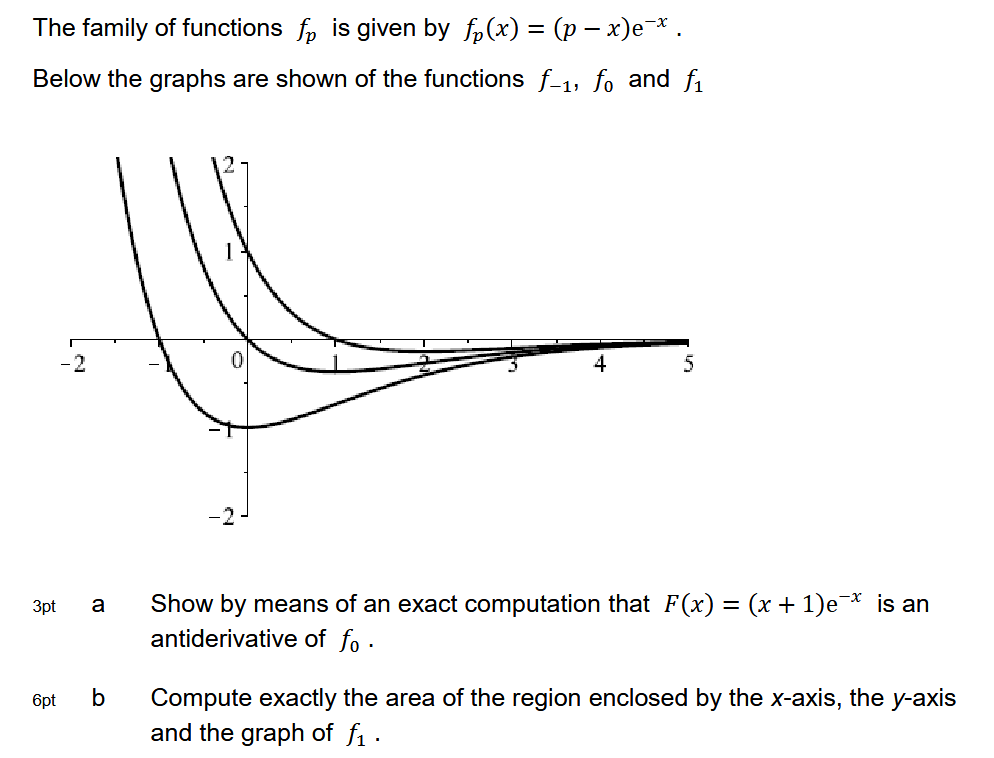
Question b
For this its just the same method as a solid of revolution but I dont square it, right?
And dont multiply by pi at the end
lone heartBOT
@warped topaz Has your question been resolved?
warped topaz
<@&286206848099549185>
 crimson hearth
what?
warped topaz
Like to get the solid of revolution you do this right
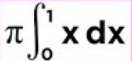
Except you square the x first
So for this question you do the same, but you dont square the x
crimson hearth
my brain is too small for that
warped topaz
warped topaz
https://i.imgur.com/ptqQJlR.png
You just do this, right?
crimson hearth
but i can try
crimson hearth
oh
warped topaz
I also think its right but im not 100% haha, thats why I created this thread to ask
can maybe another helper confirm?
crimson hearth
<@&286206848099549185>
 frigid mirage
warped topaz
https://i.imgur.com/NiZvRsg.png
frigid mirage
warped topaz
https://i.imgur.com/NiZvRsg.png
isnt it just asking for this
 warped topaz
yeye
warped topaz
warped topaz
https://i.imgur.com/ptqQJlR.png
Is this the method?
Same as a solid of revolution except you dont square it
frigid mirage
I don't think the pi should be there, this doesn't feel any different from a normal definite integral from 0 to 1
warped topaz
warped topaz
And dont multiply by pi at the end
Ah yeye sry I mentioned that before just forgot to reapeat it lol
But other than that its correct right?
frigid mirage
$ \int_{0}^{1} (1-x)e^{-x} dx $
I mean
why isnt it the integral of f(x) dx from 0 to 1
warped topaz
It is right?
 warped topaz
Just a random image i pulled from google
I just want to know if my method is correct
frigid mirage
$\int_{0}^{1} (1-x)e^{-x} dx$
ocean sealBOT
nebula40
 warped topaz
Yes
frigid mirage
yeah I think this makes sense
lone heartBOT
Channel closed
Closed by @warped topaz
Use .reopen if this was a mistake.
Available help channel!
Send your question here to claim the channel.
Remember:
• Ask your math question in a clear, concise manner.
• Show your work, and if possible, explain where you are stuck.
• After 15 minutes, feel free to ping <@&286206848099549185>.
• Type the command .close to free the channel when you're done.
• Be polite and have a nice day!
Read #❓how-to-get-help for further information on how to ask a good question, and about conduct in the question channels.
 wheat isle
how can I make a table for part c?
 lone heartBOT
wheat isle
how can I make a table for part c?
lone heartBOT
wheat isle
how can I make a table for part c?
 solemn juniper
Why do you need a table?
wheat isle
to solve it?
solemn juniper
How exactly have you been taught to solve expected value problems?
Don't say "with a table"
wheat isle
well i know how to find expected values when im provided the data distribution in a way thats easy for me to understand like an expression or a piecewise looking thing but word problems makes it confusing for me
solemn juniper
Well, you're given that there are three children, and we tend to assume that males and females are equally likely to be born (so 50% chance)
Does that sound like a distribution you've heard of?
wheat isle
yeah the heads and tails thing is similar right
solemn juniper
Pretty much
wheat isle
so the outcome x would be either
0,1,2,3 girls
?
because those are the possibilities of getting however many number of girls in a 3 child family right
solemn juniper
Yes
wheat isle
so 0 and 1 girls would have the same probability of 1/2
what about 2 and 3? is that 1/2 times 1/2 and 1/2 times 1/2 times 1/2
solemn juniper
Careful
0 and 1 don't both have probability 1/2
Have you heard of the binomial distribution?
wheat isle
if you bring up what it looks like it might ring a bell
solemn juniper
Well you have n independent trials, each with probability p of landing on a certain outcome (girl)
So for there to be 0 girls, we would need all three children to be boys. Given that the probability of getting a single boy is 1/2, the probability of getting 3 must be...
wheat isle
1/8?
solemn juniper
Quite so
wheat isle
okay
and for 1 girl that would mean
getting 2 boys so the probability of getting one girl is 1/4
wheat isle
so what would that probability look like
solemn juniper
Well, that situation describes getting either BBG, BGB, or GBB
Each such case carries what probability? (Two boys and one girl)
wheat isle
so isnt the probability of getting two boys 1/2 * 1/2
wheat isle
So if the probability of getting 0 girls is 1/8 how do we account for that
solemn juniper
Well in that case, the only arrangement of the three children is BBB
So indeed it's as simple as just 1/2*1/2*1/2
wheat isle
Yeah
solemn juniper
solemn juniper
Well, that situation describes getting either BBG, BGB, or GBB
This is similar, though it requires one more step
wheat isle
Hm
not sure
(Also I gotta eat dinner BRB if you’re still on later that would be great)
solemn juniper
,ti
ocean sealBOT
The current time for steakanator is 02:07 AM (PDT) on Wed, 23/08/2023.
solemn juniper
Probably not
 stone sphinx
,ti
ocean sealBOT
You haven't set your timezone! Set it using the interactive timezone picker with ,ti --set.
solemn juniper
I suggest looking up the binomial distribution to help you understand this scenario
lone heartBOT
@wheat isle Has your question been resolved?
wheat isle
solemn juniper
I suggest looking up the binomial distribution to help you understand this scena...
Alright
lone heartBOT
Channel closed
Closed due to timeout
Use .reopen if this was a mistake.
Available help channel!
Send your question here to claim the channel.
Remember:
• Ask your math question in a clear, concise manner.
• Show your work, and if possible, explain where you are stuck.
• After 15 minutes, feel free to ping <@&286206848099549185>.
• Type the command .close to free the channel when you're done.
• Be polite and have a nice day!
Read #❓how-to-get-help for further information on how to ask a good question, and about conduct in the question channels.
 bleak citrus
 lone heartBOT
bleak citrus
bleak citrus
lone heartBOT
bleak citrus
bleak citrus
I got x = - 7/4 but im not sure if its correct
I made 2 the same denominator as 4x/7
then I subtracted 14 from both sides
then divided both sides by 4
 alpine sable
thats correct
lone heartBOT
Channel closed
Closed by @bleak citrus
Use .reopen if this was a mistake.
Available help channel!
Send your question here to claim the channel.
Remember:
• Ask your math question in a clear, concise manner.
• Show your work, and if possible, explain where you are stuck.
• After 15 minutes, feel free to ping <@&286206848099549185>.
• Type the command .close to free the channel when you're done.
• Be polite and have a nice day!
Read #❓how-to-get-help for further information on how to ask a good question, and about conduct in the question channels.
 modest wraith
 lone heartBOT
modest wraith
modest wraith
lone heartBOT
modest wraith
modest wraith
I dont know how to do that
 paper mango
The table?
 weary wyvern
(f o g)(x) = f(g(x))
 pallid scarab
Ok donc tu vois comment appliquer la composition ?
Quand t'as une composition de plusieurs fonctions à la suite, tu commences par la fonction la plus à droite, puis tu fais de droite à gauche
Je te fais l'exemple de la première, h○g○f(x)
weary wyvern
\circ
weary wyvern
$f \circ g$
ocean sealBOT
giannis_money
 pallid scarab
Yes I know
I was talking about my symbol
I'm lazy 😂
Anyways
Donc quand t'as une suite de compositions, t'écris h○g○f(x) = h[g(f(x))]
Pour la question 1 donc, on commence par f qui est le plus à droite
Donc on remplace f(x) par son expression, cos x
h○g○f(x) = h[g(cos x)]
On continue donc avec g, mais il faut faire gaffe un peu
Comme on cherche g(cos x) et qu'on connait g(x) = x² +1
Chaque fois que "x" apparaît il faut le remplacer par cos x comme c'est notre entrée
Donc g(cos x) = (cos x)² + 1
Tu vois comment ça marche ?
lone heartBOT
@modest wraith Has your question been resolved?
pallid scarab
Oui c'est ça pardon @modest wraith
modest wraith
mhh kk lets me try the other oneeeeee
pallid scarab
$h\circ g\circ f(x) = \sqrt{(cos(x))² + 1}$
ocean sealBOT
rafilou2003
 modest wraith
ca donne (racine carre cos x)^2 +1 ?
@pallid scarab
et le dernier cos racine de x^2 + 1
et tu peux faire le 2 du tbl stp
cooach tes passé ou?
pallid scarab
Pardon je suis à l'ouest
J'ai mis ce serveur en mute, essaye plutôt de me ping en MP
pallid scarab
modest wraith
ca donne (racine carre cos x)^2 +1 ?
Le deuxième c'est bon
Tu peux même simplifier en cos(x) + 1 mais on s'en fiche
pallid scarab
modest wraith
et le dernier cos racine de x^2 + 1
J'arrive pas à comprendre celui là
C'est peut-être bon mais la façon dont tu l'as écrit me perturbe
Mets des parenthèses
 modest wraith
cos racine de x?
ocean sealBOT
rafilou2003
 pallid scarab
Et donc quand t'appliques g à ça, qu'est-ce que tu obtiens ?
modest wraith
japplique ca au x de h?
ou alors ca donne (cos (racine de x))^2 +1
@pallid scarab
pallid scarab
modest wraith
ou alors ca donne (cos (racine de x))^2 +1
C'est mieux !
Alors le 2)
modest wraith
fais le toi
att jai une question
genre
si on commence par h
ensuite et que ya encore 2etapes
on fait ca ? g(h) puis f(g ((h))
genre f sapplique pour g et h ?
pallid scarab
modest wraith
on fait ca ? g(h) puis f(g ((h))
f s'applique pour g(h(x))
Je te fais un exemple de comment ça aurait pu se passer autrement
pour $g\circ f \circ h(x)$
ocean sealBOT
rafilou2003
 pallid scarab
j'aurais pu écrire que c'est g(f(h(x)))
et ensuite j'applique g à f(h(x))
ça me donne $f(h(x))^2 + 1$
ocean sealBOT
rafilou2003
 ocean sealBOT
rafilou2003
 ocean sealBOT
rafilou2003
 pallid scarab
@modest wraith ça dépend de la méthode que tu préfères
modest wraith
daccord
ocean sealBOT
rafilou2003
 ocean sealBOT
rafilou2003
 pallid scarab
et maintenant faut appliquer f à ce machin entre parenthèses
donc $f(f(x)) = \frac{1}{1-\Big(\frac{1}{1-x}\Big)}$
ocean sealBOT
rafilou2003
 pallid scarab
Là il va falloir simplifier si on veut continuer
pallid scarab
ocean seal
**rafilou2003**
@modest wraith tu penses pouvoir simplifier ça ? C'est assez facile mais il ne faut pas se tromper avec les signes -
modest wraith
@pallid scarab non j'ai aucune idée
pallid scarab
modest wraith
<@246787399991033858> non j'ai aucune idée
multiplie le numérateur et le dénominateur par (1-x)
pallid scarab
$\frac{1}{1-\frac{1}{1-x}} = \frac{1-x}{(1-x)\Big(1-\frac{1}{1-x}\Big)}$
ocean sealBOT
rafilou2003
 modest wraith
Et du coup ça ns donné 1- 1/1-x ?
 solemn axle
ocean seal
**rafilou2003**
solemn axle
ocean seal
**rafilou2003**
Infintely many solutions
pallid scarab
solemn axle
Infintely many solutions
bruv doin sarcasm and I replied with sarcasm that would not be considered as sarcasm
$\frac{1-x}{(1-x)\Big(1-\frac{1}{1-x}\Big)} = \frac{1-x}{(1-x)-\frac{1-x}{1-x}} = \frac{1-x}{1-x-1}$
ocean sealBOT
rafilou2003
 pallid scarab
tu vois comment finir la simplification @modest wraith ?
modest wraith
Nn
pallid scarab
1-x-1 =?
modest wraith
2
modest wraith
0
pallid scarab
oui
ocean sealBOT
rafilou2003
 pallid scarab
et là c'est bon
modest wraith
D'accord je vois
pallid scarab
en fait c'est même mieux si on l'écrit comme $1-\frac{1}{x}$
ocean sealBOT
rafilou2003
 modest wraith
Ah d'accord
ocean sealBOT
rafilou2003
 modest wraith
Vsy att
pallid scarab
alors indice : on a pas calculé $f\circ f(x)$ avant pour rien
ocean sealBOT
rafilou2003
 modest wraith
 pallid scarab
aie bonne chance
ce que tu as écrit est correct
mais pour le simplifier bonne chance mec
modest wraith
Ah
pallid scarab
ocean seal
**rafilou2003**
je remets ça
 modest wraith
 modest wraith
Le -1
Il est pas au numérateur?
Ou alors je dois le mettre au même dénominateur
Du coup ça donne -1x
pallid scarab
attention tu fais -(-1x)
modest wraith
J'ai déjà changé les signes
pallid scarab
$\frac{1}{1-(1-\frac{1}{x})} = \frac{1}{1-1+\frac{1}{x}} = \frac{1}{\frac{1}{x}}$
ocean sealBOT
rafilou2003
 pallid scarab
ok
modest wraith
Ah bon
pallid scarab
C'est quoi 1/(1/x) ?
modest wraith
Bah je multiplie nn?
pallid scarab
ouais et ça te donne quoi?
pallid scarab
oui x
pallid scarab
dac
modest wraith
Merci bcp lamie
lone heartBOT
@modest wraith Has your question been resolved?
lone heartBOT
Channel closed
Closed by @modest wraith
Use .reopen if this was a mistake.
lone heartBOT
Available help channel!
Send your question here to claim the channel.
Remember:
• Ask your math question in a clear, concise manner.
• Show your work, and if possible, explain where you are stuck.
• After 15 minutes, feel free to ping <@&286206848099549185>.
• Type the command .close to free the channel when you're done.
• Be polite and have a nice day!
Read #❓how-to-get-help for further information on how to ask a good question, and about conduct in the question channels.
 weary quartz
hi
lone heartBOT
weary quartz
hi

 lone heartBOT
@weary quartz Has your question been resolved?
lone heartBOT
Channel closed
Closed due to timeout
Use .reopen if this was a mistake.
Available help channel!
Send your question here to claim the channel.
Remember:
• Ask your math question in a clear, concise manner.
• Show your work, and if possible, explain where you are stuck.
• After 15 minutes, feel free to ping <@&286206848099549185>.
• Type the command .close to free the channel when you're done.
• Be polite and have a nice day!
Read #❓how-to-get-help for further information on how to ask a good question, and about conduct in the question channels.
 wide gyro
hi i was doing a question in contradiction, and i got to a point where b^2 = 2(something)
lone heartBOT
wide gyro
hi i was doing a question in contradiction, and i got to a point where b^2 = 2(s...
wide gyro
my teacher said if b^2 is even, even b must be even
i remember her proving it but i forgot how
can someone explain why b must be even if b^2 is even
pallid scarab
the contraposition of A => B is (not(B) => not(A))
and those are equivalent statements
wide gyro
ive only learnt 3 proofs till now
pallid scarab
So the contrapositive of a statement is true, the original statement is true as well
wide gyro
lhs=rhs, induction and contradiction
pallid scarab
well then contradiction is the closest
suppose b^2 is even and b is not even, ie b is odd
pallid scarab
yes
lone heartBOT
Channel closed
Closed by @wide gyro
Use .reopen if this was a mistake.
Available help channel!
Send your question here to claim the channel.
Remember:
• Ask your math question in a clear, concise manner.
• Show your work, and if possible, explain where you are stuck.
• After 15 minutes, feel free to ping <@&286206848099549185>.
• Type the command .close to free the channel when you're done.
• Be polite and have a nice day!
Read #❓how-to-get-help for further information on how to ask a good question, and about conduct in the question channels.
 fickle musk
i need some help understanding combination and binomial relation
fickle musk
are there two formulas for combinations?
Isn't
nCr= n!/r!
what is up with this:
nCr = n!/(r!(n-r)!)
 median oar
fickle musk
Isn't
```
nCr= n!/r!
```
median oar
fickle musk
Isn't
```
nCr= n!/r!
```
This is nPr
fickle musk
fickle musk
Isn't
```
nCr= n!/r!
```
umm 5c3 i wrote out 5 * 4 * 3/3*2=10
how is this valid?
if that is npr
 vale wigeon
$\frac{5 \cdot 4 \cdot 3}{3 \cdot 2} \neq \frac{5!}{3!}$
ocean sealBOT
Ann
 vale wigeon
also parentheses around denom
fickle musk
umm so how is this equal to the second formula
median oar
They aren’t
fickle musk
then why is the answer same
median oar
nPr and nCr are different
fickle musk
not my question
vale wigeon
do you see the ≠ sign in my tex thing
fickle musk
fickle musk
```
nCr = n!/(r!(n-r)!)
```
this
fickle musk
vale wigeon
do you see the ≠ sign in my tex thing
yeah
but if that is the accurate ncr formula
then how is that answer valid since it is not following the formula
vale wigeon
$\frac{5!}{3! \cdot 2!} = \frac{5 \cdot 4 \cdot 3 \cdot \cancel{2 \cdot 1}}{(3 \cdot 2 \cdot 1) \cdot \cancel{(2 \cdot 1)}}$
ocean sealBOT
Ann
 vale wigeon
does this answer your question?
fickle musk
oh so if i do till r factor in nr writing (n-r)! is not necessary
got it
as it cancels out
thanks
.close
lone heartBOT
Channel closed
Closed by @fickle musk
Use .reopen if this was a mistake.
Available help channel!
Send your question here to claim the channel.
Remember:
• Ask your math question in a clear, concise manner.
• Show your work, and if possible, explain where you are stuck.
• After 15 minutes, feel free to ping <@&286206848099549185>.
• Type the command .close to free the channel when you're done.
• Be polite and have a nice day!
Read #❓how-to-get-help for further information on how to ask a good question, and about conduct in the question channels.
 steep perch
 lone heartBOT
steep perch
lone heartBOT
steep perch
 limpid spade
?
steep perch
.close
lone heartBOT
Channel closed
Closed by @steep perch
Use .reopen if this was a mistake.
steep perch
 lone heartBOT
Available help channel!
lone heartBOT
Available help channel!
Send your question here to claim the channel.
Remember:
• Ask your math question in a clear, concise manner.
• Show your work, and if possible, explain where you are stuck.
• After 15 minutes, feel free to ping <@&286206848099549185>.
• Type the command .close to free the channel when you're done.
• Be polite and have a nice day!
Read #❓how-to-get-help for further information on how to ask a good question, and about conduct in the question channels.
 agile kernel
Let $f:\mathbb{R}\to\mathbb{R}$ be a function satisfying $f(x)=f(x+1)$ and $f(x)=f(x+\sqrt2)$ for any real number $x$. Is it necessary that the function $f$ is a constant function?
lone heartBOT
agile kernel
Let $f:\mathbb{R}\to\mathbb{R}$ be a function satisfying $f(x)=f(x+1)$ and $f(x)...
ocean sealBOT
Puntre

 ivory fern
No, but if you add the hypothesis that f is continuous then yes
agile kernel
Could you give an example of the function please.
 mortal trellis
how many x are there which need to satisfy f(x)=f(0)?
ivory fern
agile kernel
Could you give an example of the function please.
f(x) = 1 if there exist integers a and b such that x = a + b sqrt(2); f(x) = 0 otherwise
I think that works
 oak perch
No, if you add some other conditions like f being continuous then yes
lone heartBOT
Channel closed
Closed by @agile kernel
Use .reopen if this was a mistake.
Available help channel!
Send your question here to claim the channel.
Remember:
• Ask your math question in a clear, concise manner.
• Show your work, and if possible, explain where you are stuck.
• After 15 minutes, feel free to ping <@&286206848099549185>.
• Type the command .close to free the channel when you're done.
• Be polite and have a nice day!
Read #❓how-to-get-help for further information on how to ask a good question, and about conduct in the question channels.
 golden glade
can someone help me find the local maximum and minimum for this function?
lone heartBOT
golden glade
can someone help me find the local maximum and minimum for this function?
 alpine sable
Cos(0x^2)?
golden glade
umm the function as a whole
alpine sable
No I'm making note on how that is probably written wrong
golden glade
this is roughly the function with its asymptote (x is roughly estimated)
 alpine sable
Because in that case it's is just simply cos(0) which is 1. So redundant completely to write it as cos(0x)
golden glade
ohh okay
alpine sable
Your question is still unclear! Why are you considering asymptotes when looking for extrema?
Open up your own help channel. This channel is already occupied
And please delete your message after you do
Thanks
 burnt rivet
oh i thought i did do that wrffff
golden glade
alpine sable
Your question is still unclear! Why are you considering asymptotes when looking ...
im not sure i just put them there for reference
here, one second
oh wait
wrong one

i'll change it to cos(0)
alpine sable
Okay
Sooooo
Let's be clear
We are trying to find the local extrema of [
\map f x = \f3{x-6.2}+1
]
?
ocean sealBOT
 alpine sable
It's -(1-2)
alpine sable
Oki doki so do you know first derivative test
golden glade
no i don’t think so
alpine sable
What do you know about finding extrema?
golden glade
nothing really we barely covered it which is why im struggling so much 💀
actually now that i look at it i dont even think this graph has a max and min
alpine sable
You're correct but you have no way to assert that this is the case
lone heartBOT
@golden glade Has your question been resolved?
Channel closed
Closed by @golden glade
Use .reopen if this was a mistake.
Available help channel!
Send your question here to claim the channel.
Remember:
• Ask your math question in a clear, concise manner.
• Show your work, and if possible, explain where you are stuck.
• After 15 minutes, feel free to ping <@&286206848099549185>.
• Type the command .close to free the channel when you're done.
• Be polite and have a nice day!
Read #❓how-to-get-help for further information on how to ask a good question, and about conduct in the question channels.
 vague dust
Been a long time since ive done math and this question is simple is but bothers me i forget how to do it can someone help me out real quick
 lone heartBOT
vague dust
Been a long time since ive done math and this question is simple is but bothers ...
vale wigeon
lone heartBOT
vague dust
Been a long time since ive done math and this question is simple is but bothers ...
vale wigeon
given you have these answer options, the least headachey way of doing this would be to expand each one until you get a match.
 native cloud
!status
lone heartBOT
What step are you on?
1. I don't know where to begin
2. I have begun but got stuck midway
3. I got an answer but I'm told it's wrong
4. I got an answer and would like my work checked
5. I have a question about someone else's worked solution
6. None of the above
!show
lone heartBOT
Show your work, and if possible, explain where you are stuck.
frigid mirage
the usual way to do this when you dont have options is to split the middle term and factorize
native cloud
!try
native cloud
It's .close
vague dust
.close
lone heartBOT
Channel closed
Closed by @vague dust
Use .reopen if this was a mistake.
lone heartBOT
Available help channel!
Send your question here to claim the channel.
Remember:
• Ask your math question in a clear, concise manner.
• Show your work, and if possible, explain where you are stuck.
• After 15 minutes, feel free to ping <@&286206848099549185>.
• Type the command .close to free the channel when you're done.
• Be polite and have a nice day!
Read #❓how-to-get-help for further information on how to ask a good question, and about conduct in the question channels.
 dull prawn
"A" walks 10 hours daily and covers 480 km in 12 days. In how many days will he walk 20 hours daily to cover 360 km?
Can anyone solve it and explain the solve?
lone heartBOT
dull prawn
"A" walks 10 hours daily and covers 480 km in 12 days. In how many days will he ...
vale wigeon
we won't solve this problem for you @dull prawn
native cloud
!status
lone heartBOT
What step are you on?
1. I don't know where to begin
2. I have begun but got stuck midway
3. I got an answer but I'm told it's wrong
4. I got an answer and would like my work checked
5. I have a question about someone else's worked solution
6. None of the above
2
 wary stream
dull prawn
"A" walks 10 hours daily and covers 480 km in 12 days. In how many days will he ...
wary stream
dull prawn
"A" walks 10 hours daily and covers 480 km in 12 days. In how many days will he ...
Who walks for 20 hours tbh?
lone heartBOT
Show your work, and if possible, explain where you are stuck.
dull prawn
lone heart
Show your work, and if possible, explain where you are stuck.
I was stuck in the 20 hour to day transformation
vale wigeon
"A" walks 10 hours daily and covers [REDACTED] in 12 days.
how many hours does A spend walking this way?
lone heartBOT
@dull prawn Has your question been resolved?
 brave grove
(x-2)(3x-3)
lone heartBOT
Channel closed
Closed due to timeout
Use .reopen if this was a mistake.
Available help channel!
Send your question here to claim the channel.
Remember:
• Ask your math question in a clear, concise manner.
• Show your work, and if possible, explain where you are stuck.
• After 15 minutes, feel free to ping <@&286206848099549185>.
• Type the command .close to free the channel when you're done.
• Be polite and have a nice day!
Read #❓how-to-get-help for further information on how to ask a good question, and about conduct in the question channels.
 simple saddle
 lone heartBOT
simple saddle
simple saddle
lone heartBOT
simple saddle
simple saddle
how to solve this?
lone heartBOT
Show your work, and if possible, explain where you are stuck.
simple saddle
lone heart
Show your work, and if possible, explain where you are stuck.
i tried finding individual sum say sum a= 24*7.8 like that and 700 =rel total and ~618= promtness total
vale wigeon
that looks correct to me
the ranking stuff seems irrelevant to the problem (unless it comes up in later problems with the same data...)
,calc (6.5 + 6.9 + 4.1) * 100
ocean sealBOT
Result:
1750
,calc (7.8 + 7.5 + 4.9) * 100
ocean sealBOT
Result:
2020
ohh
vale wigeon
700 =rel total and ~618= promtness total
these totals look strange though
lone heartBOT
Channel closed
Closed by @simple saddle
Use .reopen if this was a mistake.
Available help channel!
Send your question here to claim the channel.
Remember:
• Ask your math question in a clear, concise manner.
• Show your work, and if possible, explain where you are stuck.
• After 15 minutes, feel free to ping <@&286206848099549185>.
• Type the command .close to free the channel when you're done.
• Be polite and have a nice day!
Read #❓how-to-get-help for further information on how to ask a good question, and about conduct in the question channels.
 lusty thunder
hi
lone heartBOT
lusty thunder
hi
lusty thunder
We have defined cosine and sine using the unit circle. Recall how. Now consider an arbitrary right triangle. Show how, using that definition, we can show:
The cosine of an acute angle in the triangle is the adjacent leg divided by the hypotenuse.
The sine of an acute angle in the triangle is the opposite leg divided by the hypotenuse.
Im not very sharp at geometry or trigonometry so for this i might need some help
 cursive badger
you know how the right triangle in the unit circle works yes?
lusty thunder
no, im not sure
cursive badger
oh good place to start then lol
so you have a circle of radius 1, your unit circle, yes?
lusty thunder
yes
cursive badger
and you draw a line from the center point to the circle, length 1, yes?
lusty thunder
yes
cursive badger
you rotate it versus the +x axis, so angle of 0 is pointing +x, angle of π/2 is pointing +y, etc...
angle of 3π/4 is pointing diagonally top left, etc...
still with me?
 cursive badger
yes
so, you see the radius line
and you can draw lines down to make a right triangle
the hypotenuse is ALWAYS 1 in the unit circle yes?
and the sides range 0 to 1, can't even be bigger, right?
lusty thunder
hypotenuse is cos right?
cursive badger
don't go there yet and no
lusty thunder
im trying to translate english in my head so yea its a bit slow for me
cursive badger
hypotenuse is the long side of the right triangle
lusty thunder
yeah sorry, cos is the katete
cursive badger
which is the radius from the center to the edge
lusty thunder
or whatever the english word is
cursive badger
anyways
we have a right triangle, the longest edge (hypotenuse) is stuck at length 1
the sides range from 0-1, ok
so, the literaly definition of sin and cos is
at any given angle ø, sinø is the length of the vertical side of the triangle formed by the radius at angle ø
and at any given angle ø, cosø is the length of the horizontal side of the triangle formed by the radius at angle ø
still with me?
sin and cos are just the lengths of sides in a right triangle in a unit circle
 lusty thunder
At any given angle ø, sinø is the length of the marked in red
cursive badger
yes!
lusty thunder
okay:)
cursive badger
if the sinø is negative this means the triangle is going downwards instead of upwards
you understand that yes? just reflected down
lusty thunder
yes, its reflected in the x-axis
cursive badger
yup
so, we know what sin and cos are, and what ø is, and what the unit circle is
for any given ø there is only one pair of sin and cos, and vice versa
because of this, we can use a known angle to find the size of sides of a right triangle with hypotenuse 1
however, right triangles are rarely hypotenuse 1 right?
lusty thunder
right
cursive badger
in fact, sin and cos are the side length of a scaled right triangle, scaled to be hypotenuse length 1
let's say we have a triangle with sides 3, 4 and 5
we want to find the angles
we know the 90º is opposite of the 5 side, but how do we find the others?
we shrink the triangle by a factor of 5: the angles do not change
lusty thunder
can you elaborate on what you mean with 90 degrees is the opposite of the 5 side
cursive badger
lusty thunder
can you elaborate on what you mean with 90 degrees is the opposite of the 5 side
the right triangle with sides 3 4 and 5 has short side 3, medium size 4 and long side 5
the longest side in a right triangle is opposite the right angle that gives the right triangle its name
cursive badger
cursive badger
we shrink the triangle by a factor of 5: the angles **do not change**
so we shrink it all down and while the sides change, who cares? we know the sides. we want the angles, which do NOT change when shrinking.
we have a new triangle with sides 3/5, 4/5 and 1 with the SAME angles
here lemme desmos this
lusty thunder
Yeah, okay
cursive badger
(just a moment I'm bad at desmos)
lusty thunder
Thank you:)
cursive badger

we start with the big red triangle
bottom edge 4, vertical edge 3, long hypotenuse length 5
we scale it down by a factor of 5 to make its hypotenuse 1 (and therefore fit inside the circle)
lusty thunder
right ,yea
cursive badger
so we get a new, smaller, black triangle with side length 3/5, 4/5 and 1
but notice how the angles have not changed.
effectively, sin and cos are not just the measurements of the sides of a triangle in the unit circle
they are the ratios of the a side in a right triangle over the length of the hypotenuse (scaling it down by dividing by the length of the hypotenuse)
lusty thunder
so cos is 4/5
cursive badger
yes
lusty thunder
sin 3/5
cursive badger
(I can't read sorry) yes
lusty thunder
right okay, i get it now
So what they mean is that a triangle is formed for every ø
cursive badger
yes
lusty thunder
And since this triangle can be upsized, its properties are applicable to all other triangles of that sort
cursive badger
yup
all right triangles can be scaled like this
smaller ones too, like 5/100, 12/100, 13/100
lusty thunder
and so the purpose of the unit circle and why they mentioned is, is because we can scale the hypotenuse down to 1, making it fit inside the circle
That makes a lot of sense, thanks. Do you wanna do the follow up with me as well?
cursive badger
sure, I can help!
lusty thunder
oh, okay
cursive badger
0^2+1^2=1^2
lusty thunder
A right triangle has sides a=1, b=√3 and c=2. What is the exact value of the angles expressed in radians?
so here i should do the same i guess
cursive badger
draw it out first, what is the hypotenuse?
lusty thunder
hypotenuse is 2
lusty thunder
so to get hypotenuse of 1, we have a = 1/2, b = sqrt(3)/2
cursive badger
mhm
cursive badger
you drew this out yes? which of a and b is sin and which is cos (vertical and horizontal)?
lusty thunder
pi/3
cursive badger
π/3 is which angle though?
lusty thunder
60
cursive badger
I mean, opposite of a? b? c?
lusty thunder
opposite of b
lusty thunder
pi / 3 = 60
one is 90
last one must be 30
lusty thunder
nice, thanks
cursive badger
anything else you need help with?
lusty thunder
I have to explain why cos(v)^2+sin(v)^2 = 1 is known as the "simple rule"
but I guess it relates to what you explained earlier with the hypotenuse always being 1
cursive badger
yup exactly
they're sides of a right triangle with hypotenuse 1 by definition
that is literally what they are derived from P: that and the pythagorean theorem
 cursive badger
huh ok
lusty thunder
I don't actually know the difference between arccos and cos
cursive badger
let's start with the simple one
cosø is the horizontal length at the angle ø
arccosx is the angle at horizontal length x
lusty thunder
expressed in radians?
cursive badger
whatever unit you want
usually radians though yeah
degrees are hateful and want us to fail
lusty thunder
pi/2
cursive badger
yes
lusty thunder
right okay
cursive badger
so what is arcsin(1)? what is the angle where sin is 1?
lusty thunder
90 degrees
cursive badger
lusty thunder
okay, so arccos(1/2) would be pi/3 ?
also note that the answer here is ±π/3 sin cos(π/3)=cos(-π/3)=1/2
but arccos and arcsin have limited ranges by common consensus
lusty thunder
right, because it can be under and upper?
this is in relations to workign with complex numbers and usually they can tell you what quadrant you are in
cursive badger
yup yup
lusty thunder
arcsin(-sqrt(3)/2) = -pi/3 and pi/3 ?
cursive badger
no
sin(π/3) is sqrt(3)/2
uh wait -π/3 is right
sorry, used to seeing only positive angles P:
 cursive badger
what are you confused about?
lusty thunder
how to get cos(x) = 1/2 when it comes to the interval [-pi, pi]
normal interval makes sense
lusty thunder
if the interval is -pi to pi
i dont know how to calculate it
i mean i dont even know how to find -pi on a unit circle
cursive badger
the angle -π?
think of it as -180º
[0, 2π] covers the whole circle, as does [-π, π]
cursive badger
hmmm
radians and degrees describe the same thing
it's just while degrees go from 0 to 360 radians go from 0 to 2π
they just have different scales
I called degrees awful earlier but really they're the same thing
lusty thunder
i wouldnt know where to place -pi on a unit circle though
cursive badger
same place as -180º
at first converting between the two helps a lot
since most people find degrees more intuitive
lusty thunder
so sin becomes cos and cos becomes sin
cursive badger
hmm how do I put this
you know how a full revolution changes nothing?
you go +360º and your line hasn't moved?
so the place shown by 27º is the same as (27+360)º
the angle 90º is the same as 450º (360+90)
so with -180º
we add 360º, full revolution it doesn't move
we find that -180º shows the same place as 180º
lusty thunder
Right
makes sense now
What I dont understsand is how to find the value for R @cursive badger
cursive badger
R is the set of all real numbers
you are not trying to find R xD
by saying x ∈ R you're being told the angle in sinx is a real number
like 2π/e or 3 or 378912*10^17
lone heartBOT
@lusty thunder Has your question been resolved?
lone heartBOT
Channel closed
Closed due to timeout
Use .reopen if this was a mistake.
Available help channel!
Send your question here to claim the channel.
Remember:
• Ask your math question in a clear, concise manner.
• Show your work, and if possible, explain where you are stuck.
• After 15 minutes, feel free to ping <@&286206848099549185>.
• Type the command .close to free the channel when you're done.
• Be polite and have a nice day!
Read #❓how-to-get-help for further information on how to ask a good question, and about conduct in the question channels.
 vapid shuttle
 lone heartBOT
vapid shuttle
vapid shuttle
lone heartBOT
vapid shuttle
vapid shuttle
Working on part (a)
I have done the r_(k+1) part
but I am stuck on the r_(k+2) part now
I tried rewriting it using the r_(k+1) part but that didn't go anywhere
 echo socket
You can just apply the first identity twice btw
echo socket
vapid shuttle
I tried rewriting it using the r_(k+1) part but that didn't go anywhere
Wait wdym
Show your work 
vapid shuttle
echo socket
You can just apply the first identity twice btw
wdym by this
echo socket
First replace k with k+1 and you have [ r_{k+2} = \frac{r_{k+1}+1}{r_{k+1}} ]
ocean sealBOT
A Lonely Bean
 vapid shuttle
oh I tried doing the opposite
echo socket
ocean seal
**A Lonely Bean**
And just replace r_{k+1} with (r_k + 1)/r_k
ocean sealBOT
Austin
 echo socket
Multiply top and bottom by r_k and you're good
lone heartBOT
@vapid shuttle Has your question been resolved?
lone heartBOT
Channel closed
Closed due to timeout
Use .reopen if this was a mistake.
Available help channel!
Send your question here to claim the channel.
Remember:
• Ask your math question in a clear, concise manner.
• Show your work, and if possible, explain where you are stuck.
• After 15 minutes, feel free to ping <@&286206848099549185>.
• Type the command .close to free the channel when you're done.
• Be polite and have a nice day!
Read #❓how-to-get-help for further information on how to ask a good question, and about conduct in the question channels.
 spiral pumice
doing limits in calc. this question kinda stumped me as i’ve never seen “int” before outside out python lol. “lim int(x) as x approaches 0 from the right”
lone heartBOT
spiral pumice
doing limits in calc. this question kinda stumped me as i’ve never seen “int” be...
 maiden glen
spiral pumice
maiden glen
spiral pumice
so the graph would look like steps
with the closed circle on left, open on right
.close
lone heartBOT
Channel closed
Closed by @spiral pumice
Use .reopen if this was a mistake.
lone heartBOT
Available help channel!
Send your question here to claim the channel.
Remember:
• Ask your math question in a clear, concise manner.
• Show your work, and if possible, explain where you are stuck.
• After 15 minutes, feel free to ping <@&286206848099549185>.
• Type the command .close to free the channel when you're done.
• Be polite and have a nice day!
Read #❓how-to-get-help for further information on how to ask a good question, and about conduct in the question channels.
alpine sable
Hi I had this question
lone heartBOT
alpine sable
Hi I had this question
alpine sable

I got c
But apparently the answer is a
Here’s my reasoning:
for the u vs x graph, we know, acceleration = v du/dx
this only works when acceleration is time independent
So acceleration is constant wrt time
So the acceleration is constant wrt x
But I can’t seem to understand what went wrong
 crisp pine
I would have said you were correct with c
Does it give any explanation as to why it's a
alpine sable
Yes
But I don’t understand what’s wrong with this
The instructor explained casually
That since slope of u-x graph is negative and constant and velocity is positive but increasing
crisp pine
Ah wait sorry, my mistake
It's a velocity displacement graph, not a velocity time graph
So you can't just use the derivative
crisp pine
Sure, so the acceleration at a point is the velocity multiplied by the gradient of the graph
crisp pine
crisp pine
Sure, so the acceleration at a point is the velocity multiplied by the gradient ...
This is why it's a not c
crisp pine
What do you mean by the conditions sorry?
alpine sable
Ohhhj The velocity is changing
alpine sable
crisp pine
What do you mean by the conditions sorry?
Like when does that fail?
crisp pine
I'd be inclined to say never
crisp pine
alpine sable
Ohhhj The velocity is changing
Yah exactly
alpine sable
I’d been stuck on that for so damn long
Thank you so so so much
I really appreciate your time
Have an awesome day man
.close
lone heartBOT
Channel closed
Closed by @vivid walrus
Use .reopen if this was a mistake.
crisp pine
alpine sable
I really appreciate your time
No worries :)
lone heartBOT
Available help channel!
Send your question here to claim the channel.
Remember:
• Ask your math question in a clear, concise manner.
• Show your work, and if possible, explain where you are stuck.
• After 15 minutes, feel free to ping <@&286206848099549185>.
• Type the command .close to free the channel when you're done.
• Be polite and have a nice day!
Read #❓how-to-get-help for further information on how to ask a good question, and about conduct in the question channels.
 sly spindle
How do you find the slant asymptote of the equation f(x) = x/lnx? I can see there's what appears to be a slant asymptote, but idk how to calculate it
 lone heartBOT
sly spindle
How do you find the slant asymptote of the equation `f(x) = x/lnx`? I can see th...
sly spindle
lone heartBOT
sly spindle
How do you find the slant asymptote of the equation `f(x) = x/lnx`? I can see th...
sly spindle
in precalc the method i learned for finding slant asymptotes is if the degree of the numerator is 1 more than the degree of the denominator, then you divide the two to get the equation for the asymptote but that doesnt seem possible here
also what even is the degree of ln(x)?
sly spindle
sly spindle
in precalc the method i learned for finding slant asymptotes is if the degree of...
i dont really understand why that method works either so it would be great if somebody could explain that to me 🥲
 naive valley
do you know about derivatives?
sly spindle
yes
naive valley
what's the derivative of x/ln(x)?
sly spindle
(lnx - 1)/(lnx)^2
 remote heron



Mathematics Stack Exchange
How do I find the oblique asymptote of non rational functions?
I've used a software to check this function, and I know there is a oblique asymptote. How do I do it?
$f(x) = x /\ln(x)$
sly spindle
naive valley
what does that do as x->infinity?
uhhhhhhh
naive valley
well when x is large, the -1 in the num is negligible, so your function just looks like
ln(x) / ln^2(x)
which is
1/ln(x)
what does that do as x->infinity?
sly spindle
is that like 1/infinity???
naive valley
yes, in the limit
sly spindle
is it 0??
naive valley
yes
sly spindle
ok
naive valley
so if there is an asymptote, its slope is gonna be zero
now you need to check if there actually is an asymptote
sly spindle
how do you do that
naive valley
well an asymptote with slope zero is horizontal, yes?
sly spindle
naive valley
so if there is an asymptote, its slope is gonna be zero
oh wait so not a slant
naive valley
and if a function is going to have a horizontal asymptote, then it needs to have a limit as x->infinity
so check if your function does
naive valley
so those two facts combined:
- function goes to infinity as x->infinity
- function's slope goes to zero as x->infinity
means that there can't be an asymptote
btw, f(x) = ln(x) is another function with the same two properties
sly spindle
ohhhhh
so like
it goes to infinity instead of approaching another line
as x goes to infinity
so no asymptote
and cus slope is 0
right
ok
that makes sense
naive valley
arguing in words, if there's an asymptote it has to be horizontal, but this function grows past any candidate horizontal line
lone heartBOT
Channel closed
Closed by @sly spindle
Use .reopen if this was a mistake.
Available help channel!
Send your question here to claim the channel.
Remember:
• Ask your math question in a clear, concise manner.
• Show your work, and if possible, explain where you are stuck.
• After 15 minutes, feel free to ping <@&286206848099549185>.
• Type the command .close to free the channel when you're done.
• Be polite and have a nice day!
Read #❓how-to-get-help for further information on how to ask a good question, and about conduct in the question channels.
 hot bluff
 vapid shuttle
What have you tried
hot bluff
my first try with nothing to go on

its wrong af
book answer is h != 2, but i have no idea how to derive that.
hot bluff
this is literally first section of first chapter in the book, what does it mean when a column is a scalar of another?
vapid shuttle
Scalar multiple
It means column 2 is column 1, but just multiplied by a constant
In this case, if h=2 then column 2 is column 1 times 2
hot bluff
okay, which would mean we only have one line/equation?
when h = 2, both rows become scalar multiples as well, right?
oh no, third column doesnt
alright, so we would have a scalar multiple of another column if h=2, but how does that help us determine possible values?
this would create an inconsistent system because the columns would be scalar multiples but the rows would not be scalar multiples?
so the approach here is to find what would invalidate the system. since 2 would create a scalar multiple of column 1 but not column 3 then it would be inconsistent. how can we prove that 2 is the only value that would produce an inconsistent system?
was able to find it by algebra

.close
lone heartBOT
Channel closed
Closed by @hot bluff
Use .reopen if this was a mistake.
Available help channel!
Send your question here to claim the channel.
Remember:
• Ask your math question in a clear, concise manner.
• Show your work, and if possible, explain where you are stuck.
• After 15 minutes, feel free to ping <@&286206848099549185>.
• Type the command .close to free the channel when you're done.
• Be polite and have a nice day!
Read #❓how-to-get-help for further information on how to ask a good question, and about conduct in the question channels.
 fresh nebula
 lone heartBOT
fresh nebula
fresh nebula
lone heartBOT
fresh nebula
fresh nebula


Here is my work for all 3 of them
I think I got 1 and 2 right but im not sure about the third one
can anyone oversee if my work is correct? or where i made a mistake
nevermind the first power set, I understand that it is R=1 (-1,1) now.
<@&286206848099549185>
only need help on the second and third power series (which are labeled 9 and 10 on the screenshots)
lone heartBOT
@fresh nebula Has your question been resolved?
lone heartBOT
@fresh nebula Has your question been resolved?
fresh nebula
pls
 nimble fern
firstly, i found this site is helping me to check.
https://byjus.com/maths/radius-of-convergence/

BYJUS
Radius of convergence of a power series can be easily calculated using the ratio test. Click here to learn more about the radius of convergence of series, along with the solved examples.
secondly, you just have to consider R=radius of convergence,
so for 9), you can just state R=1
oh wait, haha i misread, you also need the interval
so, you're right for (9)
checking (10) now