#help-0
1 messages · Page 155 of 1
 whole shell
because mathmatically you can pick any 2 points to find the slope
but if your website only takes it from a specific position, well its not like we can know what that is
what you had here is 100% correct
 lone heartBOT
@narrow gale Has your question been resolved?
lone heartBOT
Channel closed
Closed due to timeout
Use .reopen if this was a mistake.
 Available help channel!
Send your question here to claim the channel.
Remember:
• Ask your math question in a clear, concise manner.
• Show your work, and if possible, explain where you are stuck.
• After 15 minutes, feel free to ping <@&286206848099549185>.
• Type the command .close to free the channel when you're done.
• Be polite and have a nice day!
Read #❓how-to-get-help for further information on how to ask a good question, and about conduct in the question channels.
 fringe yacht
Hey! How to solve the system:
lone heartBOT
fringe yacht
Hey! How to solve the system:
fringe yacht
$v_0 = v_1 + 2v_2$
 ocean sealBOT
sentinel
 fringe yacht
$v_0^2 = v_1^2 + 2v_2^2$
ocean sealBOT
sentinel
 fringe yacht
Tried many things, no clue
fringe yacht
Those are two equations of a system of equations
I want v1 and v2
In terms of the others
And I can't get past a very hairy messy equation, while the answers, include extremely simple ones
whole shell
fringe yacht
I want v1 and v2
so v0 is a constant?
fringe yacht
yeah
whole shell
well rearrange for v1 in the firstt equatinn
then sub that into the second one
and solve the quadratic
lone heartBOT
@fringe yacht Has your question been resolved?
lone heartBOT
Channel closed
Closed due to timeout
Use .reopen if this was a mistake.
Available help channel!
Send your question here to claim the channel.
Remember:
• Ask your math question in a clear, concise manner.
• Show your work, and if possible, explain where you are stuck.
• After 15 minutes, feel free to ping <@&286206848099549185>.
• Type the command .close to free the channel when you're done.
• Be polite and have a nice day!
Read #❓how-to-get-help for further information on how to ask a good question, and about conduct in the question channels.
 vivid basin
how do you derive that
the relationship isn't linear
it's called unit circle for a reason haha
so sin(a) is the y coordinate right?
so imagine going from sin(0 deg) to sin(1 deg)
what happens to the y coordinate?
yes
now imaging going from sin(90) to sin(91)
what happens to the y coordinate
yes
but is the increase equal to the decrease?
exactly
so you can't say sin(90° + alpha) = 1 - sin(alpha)
yeah and the increase is faster from sin(0) to sin(1) because it's going up almost vertically
yeah
when you claim sin(90° + alpha) = 1 - sin(alpha)
you are saying the increase/decrease is the same no matter what
but it depends on where you are
yeah you could say that I guess
basically just be careful in visualizing it
lone heartBOT
Channel closed
Closed due to the original message being deleted
Available help channel!
Send your question here to claim the channel.
Remember:
• Ask your math question in a clear, concise manner.
• Show your work, and if possible, explain where you are stuck.
• After 15 minutes, feel free to ping <@&286206848099549185>.
• Type the command .close to free the channel when you're done.
• Be polite and have a nice day!
Read #❓how-to-get-help for further information on how to ask a good question, and about conduct in the question channels.
 drowsy sedge
Hey everyone, have this practice problem and my first instinct was that it diverged, so I got it right but then apart of me was like "hmm, what if I just take the limit as n went to infinity the only thing affected is -1^n which goes to -1.. is it -8?"
 lone heartBOT
drowsy sedge
Hey everyone, have this practice problem and my first instinct was that it diver...
drowsy sedge
lone heartBOT
drowsy sedge
Hey everyone, have this practice problem and my first instinct was that it diver...
drowsy sedge
yeah I see its gonna flip flop
so its why I put diverged
but im more concerned on why I cant just take the limit
oh OOPS
I misread it
hahha I thought it was -1^n
not (-1)^n
 alpine sable
ah yeah lol
drowsy sedge
ty
alpine sable
np
drowsy sedge
.close
lone heartBOT
Channel closed
Closed by @drowsy sedge
Use .reopen if this was a mistake.
drowsy sedge
.reopen
lone heartBOT
✅
drowsy sedge
ima now work on proving it diverges
well
is just simply saying its not monotonic sufficent
how do you typically prove convergence/divergence for sequences
the only way I know is either just throwing in the limit
but I guess thats not really a proof
or if it converges it has to be monotonic and bounded
alpine sable
drowsy sedge
is just simply saying its not monotonic sufficent
no it's not, eg take $a_n= \frac{(-1)^n}{n}\to0$
ocean sealBOT
Toby
 alpine sable
drowsy sedge
but I guess thats not really a proof
alpine sable
drowsy sedge
but I guess thats not really a proof
do you know about subsequences?
alpine sable
do you know the result "if two subsequences converge to different values, then the original sequence doesn't converge"
drowsy sedge
it sounds familiar yeah
okay well
that makes sense
because the first subsequence goes to -8 then the next one to - 7
alpine sable
-8 and -6
drowsy sedge
ye misstype
alpine sable
but yeah, different values
alpine sable
yeah, I would say quoting the result is enough
drowsy sedge
one other thing
there is a method
by taking the absoloute value of the sequence right
and if its not 0 then it diverges?
alpine sable
are you thinking of a result for series instead of sequences? (something with a sum)
drowsy sedge
hmm, no I have in my notes
it is
(-1)^n(n)/(n+1)
and the prof took the abs value of it
got n/(n+1) and through l'hoptials
got 1 and then said it diverged and flips between things close to 1 and close to -1
and I dont really get it
alpine sable
$\frac{(-1)^n n}{n+1}$
ocean sealBOT
Toby
 drowsy sedge
yes
alpine sable
drowsy sedge
got 1 and then said it diverged and flips between things close to 1 and close to...
I guess he split the limit up into two parts: (-1)^n diverges, and n/(n+1) goes to 1
drowsy sedge
hmmm
lemme see here
I did not know you could do that
But I suppose that makes sense
alpine sable
you have to be careful when you do that
drowsy sedge
how so?
alpine sable
(its probably easier to work with subsequences)
alpine sable
drowsy sedge
how so?
(-1)^n diverges, 1/n goes to 0, but the product converges to 0
alpine sable
if the second thing doesnt go to 0, then you are fine
alpine sable
alpine sable
(its probably easier to work with subsequences)
usually, when I see (-1)^n, I would split it into two subsequences: when n is even and when n is odd
alpine sable
yeah
drowsy sedge
makes sense
alpine sable
and if the two numbers are different, then it doesnt converge
drowsy sedge
but then why do you take the absolute value whats the point
alpine sable
idk lol
drowsy sedge
do u have to?
u have to do it and if it goes to 0 then it convergess
ah okay I think im starting to understand
the absoloute value meta for convergence of a function
we can call it a function even tho its not
ah okay ye I get it now ty
ima leave this open for a wee bit working on a tricky one now
alpine sable
drowsy sedge
the absoloute value meta for convergence of a function
yeah, thats right
because even if it flips between negative and positive, everything still goes to 0
 drowsy sedge
im confused why we take the absolute value
it shall remain a mystery

this one is hard
I wanted to use hoptials rule but I looked up the derivative of n!
and idk what the hell it is
alpine sable
drowsy sedge
I wanted to use hoptials rule but I looked up the derivative of n!
lol yeah, dont
try showing that a_n is unbounded
drowsy sedge
has no upper or lower limit?
alpine sable
yeah, if you show that its unbounded above, it doesnt converge
drowsy sedge
Is there an example of one bounded by above
drowsy sedge
i see
well I meant like
a more complicated example
of one bounded above and below
alpine sable
$a_n=\frac{1+3n}{n}$
ocean sealBOT
Toby
 alpine sable
is bounded above by 4 and below by 3
drowsy sedge
thats a good example
alpine sable
thx :D
drowsy sedge
yep
ok but that confuses me
well actually nvm it does not 1 second
ok yee so it converges to 3
is bounded above by 1 and below by 3
i see I see
I have a few more in here
ima grind out
alpine sable
yup! :)
drowsy sedge
What is a partial sum
alpine sable
any context?
drowsy sedge
wait nvm
alpine sable
(its where you have a finite sum, and you keep adding more terms)
$S_n=\sum_{i=1}^n a_i$
ocean sealBOT
Toby
 alpine sable
a_i is a sequence, S_n is the partial sums of the sequence
 drowsy sedge
Im not very good at telescoping sums
thats just the only sum we went over a bit in class for series that converge
alpine sable
let a_n be the thing inside the sum (arccos - arccos....)
drowsy sedge
thats the only thing I know for converging series that and geometric
alpine sable
try and write out a_1 + a_2 + a_3 and look for cancellations
drowsy sedge
im not sure what arccos(1/3) is
I never memorized the unit circle
is that even on it
alpine sable
dont worry about what it actually is
just see that a_1 has -arccos(1/3) and a_2 has +arrcos(1/3)
so they cancel
you should see that the middle terms all cancel
and you are left with a start and end
alpine sable
a_1+a_2+a_3 = arccos(1/2) - arccos(1/5)
drowsy sedge
wut
alpine sable
are you talking about the final answer?
drowsy sedge
ye
alpine sable
,calc cos^-1(0)
ocean sealBOT
The following error occured while calculating:
Error: Unexpected type of argument in function pow (expected: number or Complex or BigNumber or Fraction or Unit or Array or Matrix or string or boolean, actual: function, index: 0)
ocean sealBOT


 Requested by Toby#2275
alpine sable
drowsy sedge
its just arccos(1/2)?
Requested by Toby#2275
alpine sable
drowsy sedge
its just arccos(1/2)?
not quite
drowsy sedge
how did u get that
alpine sable
do you have a formula for partial sums?
drowsy sedge
neigh
alpine sable
try and find out what $\sum_{i=1}^n a_i$ is
ocean sealBOT
Toby
 alpine sable
a_1+a_2+a_3 = arccos(1/2) - arccos(1/5)
alpine sable
alpine sable
a_1+a_2+a_3 = arccos(1/2) - arccos(1/5)
for n=3, its this
drowsy sedge
1 + 2 +3
alpine sable
but what is it for an arbitrary n?
a_i is the arccos(1/(i+1))-arccos(1/(i+2)) thing
drowsy sedge
for any arbitrary n its just
drowsy sedge
ocean seal
**Toby**
that lul
alpine sable
yeah
but try and get rid of the sum symbol
since its telescoping, the inside terms disappear
drowsy sedge
mmmmmmmmmmmmmm
right
but mine goes to infinity
so I need to find
arccos(infinity?)
alpine sable
no
drowsy sedge
o
so its not the first term minus the last term?
ooooooooooooooh WAIT I GET IT
its
arccos(1/2) - arccos(1/n+2) as n approaches inf
drowsy sedge
:D
aight lemme calculate this john
im writtign all this info down
sorry might take a sec
alpine sable
np
alpine sable
,w arccos(1/2)-arccos(0)
ocean sealBOT
 Requested by Toby#2275
 alpine sable
maybe try $\frac{-1}6\pi$
ocean sealBOT
Toby
 alpine sable
oh wait
 alpine sable
drowsy sedge
alpine sable
drowsy sedge
its asking for s_n
alpine sable
drowsy sedge
arccos(1/2) - arccos(1/n+2) as n approaches inf
which is the formula for partial sums here
 alpine sable
we went one step too far lol

 granite needle
it says to ask my question here but its being used
alpine sable
granite needle
it says to ask my question here but its being used
choose one of the ones under available
 drowsy sedge
alpine sable
which is the formula for partial sums here
drowsy sedge
alpine sable
which is the formula for partial sums here
wait why is there no limit in there?
shoulden't it be lim as n approaches inf for that?
alpine sable
yeah
drowsy sedge
mmmmmmmmmmmmmmmmmmmmmmmmmmmmmmmmmmmmmmmmmmmmmmmmmmmmmmmmmm
alpine sable
but the first question it asks for s_n
and the second question it asks for the limit of s_n to infinity
drowsy sedge
ah okay
wait
well
nv,
wait its not -pi/6 again?

what it should be -pi/6 is it buggin
ah nvm there was a mistyped . there
alpine sable
looks good
drowsy sedge
alrighty last question
its a geometric one
so it should be a chiller
this does not seem to be a chiller
 alpine sable
use the geometric series formula
drowsy sedge
the formula?
alpine sable
 drowsy sedge
ohhh hmmm right
but we also have a^n
but its -1^n so i guess it does not really matter
what happens if it was like -2^n
alpine sable
put the (-1)^n into (x-3)^n
alpine sable
alpine sable
and a=1 in this formula
drowsy sedge
how do we know what the series converges for
alpine sable
for |r|<1
drowsy sedge
diverges for |r| > 1 right
alpine sable
first find out what r is here
alpine sable
drowsy sedge
diverges for |r| > 1 right
|r| ≥ 1
drowsy sedge
ohh okay
how do I fugure out what R is
its like -(x-3) right
i mean that kidna gets us nowhere
unless it does
alpine sable
yw :D
drowsy sedge
is it okay if I DM u if I have more questions later?
alpine sable
probably best to open a channel just in case im not here, and for latex
but you can dm me to tell me to look at your channel if im online
drowsy sedge
awesome!
lone heartBOT
@drowsy sedge Has your question been resolved?
Channel closed
Closed by @drowsy sedge
Use .reopen if this was a mistake.
Available help channel!
Send your question here to claim the channel.
Remember:
• Ask your math question in a clear, concise manner.
• Show your work, and if possible, explain where you are stuck.
• After 15 minutes, feel free to ping <@&286206848099549185>.
• Type the command .close to free the channel when you're done.
• Be polite and have a nice day!
Read #❓how-to-get-help for further information on how to ask a good question, and about conduct in the question channels.
 vestal venture
Help please
 lone heartBOT
vestal venture
Help please
lone heartBOT
vestal venture
Help please
 fallen verge
whats your question
vestal venture
I don't know what the intervals for the numerator and denominators of this equation are
Don't know how to find them
vestal venture
Substitute x for 4
Numerator would be 12 + sqrt4^2
Denominator would be sqrt12 + 16
Man I'm lost af
 gusty gorge
probably should try to answer garlicbreadfries's question
vestal venture
At zero
 gusty hazel
Correct me if I'm wrong but the issue is that this limit has multiple values due to the square root functions
gusty gorge
you're wrong
fallen verge
square root function is positive
vestal venture
R+=[0,∞)
fallen verge
the difference between x^2=4 and x=sqrt4 is one has one value, the other has two
vestal venture
The square root acting on the real numbers is continuous everywhere on the interval (0,∞)
gusty gorge
so would you say that the entire thing within the limit is continuous around x = 4?
vestal venture
Yes
gusty gorge
what do you know about continuous functions and limits?
in particular, what do you know about the limit of a continuous function?
vestal venture
Second week into Calc after a 4 year break 🙂
gusty gorge
in other words, if I say something like: f(x) = x+1 if x is not equal to 4, otherwise f(x) = 10 if x = 4
is that function continuous at x=4?
vestal venture
Yes, because it falls within the interval
vestal venture
Ok
I understand now
lim x->2 of f(x) = 4 is continuous at 2 because f(2) = 4, instead of something weird like f(x) = x + 3 = 5
For example
ocean sealBOT
Saccharine
 gusty gorge
see if you can parse out what that means
lone heartBOT
@vestal venture Has your question been resolved?
lone heartBOT
Channel closed
Closed due to timeout
Use .reopen if this was a mistake.
Available help channel!
Send your question here to claim the channel.
Remember:
• Ask your math question in a clear, concise manner.
• Show your work, and if possible, explain where you are stuck.
• After 15 minutes, feel free to ping <@&286206848099549185>.
• Type the command .close to free the channel when you're done.
• Be polite and have a nice day!
Read #❓how-to-get-help for further information on how to ask a good question, and about conduct in the question channels.
 full nimbus
please tell me how you do this, I'm pretty sure this question isn't possible so please do it yourself first before you tell me how to do it
 lone heartBOT
full nimbus
please tell me how you do this, I'm pretty sure this question isn't possible so ...
lone heartBOT
full nimbus
please tell me how you do this, I'm pretty sure this question isn't possible so ...
 pine kettle
full nimbus
pine kettle
full nimbus
have you done it yourself first to see if its possible
fallen verge
use d=rt
full nimbus
bro what?
fallen verge
distance=rate times time
full nimbus
can you like walk me through it step by step
full nimbus
yeah
 clear blade
(x+11)(y-4)= 856
fallen verge
bro
full nimbus
clear blade
(x+11)(y-4)= 856
but u have 2 variables
full nimbus
fallen verge
bro
what do you think we do
clear blade
full nimbus
but u have 2 variables
We can replace x with 856/y
fallen verge
theyre correct
you said step by step though so i was going to explain how to set it up
ill let silver take over, theyre doing fine
full nimbus
clear blade
We can replace x with 856/y
yeah
clear blade
Xy-4x+11y-44= 856
We already have xy = 856
And then replace x with 856/y
It would be easier then replacing x immediately
 graceful perch
can anyone help, i am doing a quiz with 5 questions left pls!!
lone heartBOT
graceful perch
can anyone help, i am doing a quiz with 5 questions left pls!!
Please stick to your channel.
graceful perch
sorry
full nimbus
clear blade
And then replace x with 856/y
yeah
lone heartBOT
@full nimbus Has your question been resolved?
full nimbus
.close
lone heartBOT
Channel closed
Closed by @full nimbus
Use .reopen if this was a mistake.
Available help channel!
Send your question here to claim the channel.
Remember:
• Ask your math question in a clear, concise manner.
• Show your work, and if possible, explain where you are stuck.
• After 15 minutes, feel free to ping <@&286206848099549185>.
• Type the command .close to free the channel when you're done.
• Be polite and have a nice day!
Read #❓how-to-get-help for further information on how to ask a good question, and about conduct in the question channels.
 rustic stratus
 lone heartBOT
rustic stratus
lone heartBOT
rustic stratus
 eternal fjord
how do you calculate the area of a parallelogram?
eternal fjord
ahh fair enough, the area of a parallelogram is just the base times the height
eternal fjord
no worries - in the future, consider that you can kind of "rearrange" the parallelogram into a rectangle, so you can calculate its area the same way
rustic stratus
alright\
 eternal fjord
np
rustic stratus
so it would be 672
eternal fjord
sounds right
rustic stratus
so how do I mark this as resolved
eternal fjord
type .close
rustic stratus
.close
lone heartBOT
Channel closed
Closed by @rustic stratus
Use .reopen if this was a mistake.
Available help channel!
Send your question here to claim the channel.
Remember:
• Ask your math question in a clear, concise manner.
• Show your work, and if possible, explain where you are stuck.
• After 15 minutes, feel free to ping <@&286206848099549185>.
• Type the command .close to free the channel when you're done.
• Be polite and have a nice day!
Read #❓how-to-get-help for further information on how to ask a good question, and about conduct in the question channels.
 vestal imp
Hi! Just wanted to get some guidance upon these 2 questions

 vestal imp
I've tried question 6 multiple times but the signs for the numerator is always different
So I chose the second answer which is correct but not fully correct. For example I got a = (2b+7c-5)/8
 hollow sparrow
vestal imp
I've tried question 6 multiple times but the signs for the numerator is always d...
hollow sparrow
vestal imp
I've tried question 6 multiple times but the signs for the numerator is always d...
since they want to express a in terms of others variable
you should move anything multiplied by **a ** to the left side and the rest to the right side
and then simplify
 slate jolt
vestal imp
So I chose the second answer which is correct but not fully correct. For example...
slate jolt
vestal imp
So I chose the second answer which is correct but not fully correct. For example...
because theres a mistake in the answer
its yours
the right one
for Q7 the correct answer is actually correct though
vestal imp
slate jolt
for Q7 the correct answer is actually correct though
oh ye (x-3)(x-1) = 0 right
hollow sparrow
yep , 3 is the right answer
vestal imp
im still confused at 6 lol
hollow sparrow
i guess there is a typo in the question
vestal imp
oh man Q_Q
hollow sparrow
:- <
 hollow sparrow

lone heartBOT
Channel closed
Closed by @vestal imp
Use .reopen if this was a mistake.
Available help channel!
Send your question here to claim the channel.
Remember:
• Ask your math question in a clear, concise manner.
• Show your work, and if possible, explain where you are stuck.
• After 15 minutes, feel free to ping <@&286206848099549185>.
• Type the command .close to free the channel when you're done.
• Be polite and have a nice day!
Read #❓how-to-get-help for further information on how to ask a good question, and about conduct in the question channels.
 fossil pilot
Hello, was looking for some assistance regarding this problem.
fossil pilot

Am a tad confused since the rotated region is sin(x)
There are no other curves to approximate my answer off of, only the x and y axis
(forgot to add this image)

I keep getting stuck with finding the distance between the vertical line and the region that requires rotation
lone heartBOT
@fossil pilot Has your question been resolved?
 tidal crystal
fossil pilot
I keep getting stuck with finding the distance between the vertical line and the...
tidal crystal
fossil pilot
I keep getting stuck with finding the distance between the vertical line and the...
what are some of your thoughts so far?
and bear with me it's been a long day for me, so i might be a bit slow 😆
fossil pilot
Had quite a long day as well, so we're both on the same page 😄
Basically my issue lies trying to plug it into an equation
tidal crystal
one thing I do know is that our bounds of integration are going to be from 0 to pi right?
fossil pilot
Yep
And the curve is sin(x)
The area between 0 and pi already satisfies that it is in quadrant 1
tidal crystal
yeah, here's my picture, we're rotating around the blue line; the white and purple lines are our bounds of integration
 fossil pilot
My issue lies trying to figure out how to plug it into an equation that shows the volume of it rotating around the blue line above
The distance from the line to the curve is 1, but im trying to figure out how to write that down
From what i've seen, theres an inner radius and an outer radius that are taken into account to represent two equations, however, im getting confused since theres only one curve, sin(x)
fossil pilot
Basically, i need to write an expression that represents the volume when that region is rotated around x = -1
tidal crystal
okay my thought is that the x=0 line is going to be our inner radius
but i don't think that's true maybe?
wait
fossil pilot
I'm getting confused because theres nothing to grab onto
both sides are sin(x)
instead of it being something like y = 2x+5 and y=x^2
tidal crystal

that was my thought on the inner and outer radius
but i think that's wrong isn't it?
my other thought is that one side of the sine function is the inner radius, and the other side the outer
fossil pilot
Been looking at an example on Khan Academy

They have it so that the y=sqrt(x) line is the outer radius, and the y=x^2 line is the inner radius
And what they're doing is subtracting the equation from the line's value, or distance from the axis
tidal crystal
yeah the subtracting based on where the axis is is the (relatively) easy part
okay so he's taking dy's
which like, i guess you could do?
fossil pilot
Yep
tidal crystal
maybe this if you're doing that
 fossil pilot
I'm just stuck here because i only have sin(x) to work with
tidal crystal
you split sine into half
fossil pilot
Indeed, but how do I go about doing that?
I'm on the same page as you here, just stuck in trying to execute my thoughts
tidal crystal
we have to rephrase y=sin(x) into x=something with y's right?
 narrow kelp
Does revolve around x=-1 mean the same as reflect across it?
tidal crystal
not quite
fossil pilot
It goes in a circle around x = -1
tidal crystal
yeah, so it'll end up looking like a very sad half doughnut
fossil pilot
^
tidal crystal
it feels like we're missing something obvious if we're resorting to dy's
fossil pilot
I'm thinking it will turn into x = sin^-1y
tidal crystal
especially when everything is so nicely presented in terms of x
fossil pilot
Inverse trig
fossil pilot
yep!
Now that we have that, how do we go about separating the two sides?
Because the curve is the same no matter what
It's x = arcsin y
tidal crystal
imma be real i don't think this is making it easier 😆
because then we need to translate our bounds of integration
fossil pilot
which leaves us with (pi(-1 - arcsiny)^2 - pi(-1 - arcsiny)^2)
tidal crystal
and our axis of rotation
tidal crystal
lol
fossil pilot
Because its the same function
tidal crystal
check out example 2 in here https://math24.net/volume-solid-of-revolution-disks-washers.html
so that's kinda what we knew we needed to do anyway
WAIT
that's about the X axis
not the y...
i'm big smart
fossil pilot
Close enough though
I do see whats going on
Just long and confusing
Anyways, i need to head to bed
I do thank you for all of your help!
tidal crystal
not sure how much I helped lol
fossil pilot
I'll move on this tomorrow, I think I know what i'm doing now
Believe me, you've helped
tidal crystal
look up volume of revolutions with trig/sine and that should put you on the right track
tidal crystal
take care!
fossil pilot
.close
lone heartBOT
Channel closed
Closed by @fossil pilot
Use .reopen if this was a mistake.
Available help channel!
Send your question here to claim the channel.
Remember:
• Ask your math question in a clear, concise manner.
• Show your work, and if possible, explain where you are stuck.
• After 15 minutes, feel free to ping <@&286206848099549185>.
• Type the command .close to free the channel when you're done.
• Be polite and have a nice day!
Read #❓how-to-get-help for further information on how to ask a good question, and about conduct in the question channels.
 cold marsh
I need help
lone heartBOT
cold marsh
I need help
cold marsh
“A right triangle haze side lengths 7, 24, and 25 as shown below. Use these lengths to find cosM sinM and tanM”
 fallen verge
do you know what sohcahtoa is
cold marsh
no
cold marsh
Ok
narrow kelp
label the hypotenuse, the side opposite, and the side adjacent
hyp = 25
opp = 24
adj = 7
cold marsh
ok got it
narrow kelp
$sin(\theta) = opp/hyp$
ocean sealBOT
CrEpasPmkinPie
Compile Error! Click the  reaction for more information.
(You may edit your message to recompile.)
 narrow kelp
forgot to close parenthesis but hope you understand
cold marsh
Oh ok I understand
narrow kelp
theta in this case = M
cold marsh
I’ll need help with a couple others for my homework is this ok?
narrow kelp
sure
cold marsh
ok thank you
narrow kelp
$cos(\theta) = adj/hyp$
ocean sealBOT
CrEpasPmkinPie
Compile Error! Click the reaction for more information.
(You may edit your message to recompile.)
 narrow kelp
$tan(\theta) = opp/adj$
ocean sealBOT
CrEpasPmkinPie
$tan(\theta\) = opp/adj$
```Compilation error:```! Missing $ inserted.
<inserted text>
$
l.58 \end{document}
I've inserted something that you may have forgotten.
(See the <inserted text> above.)
With luck, this will get me unwedged. But if you
really didn't forget anything, try typing `2' now; then
my insertion and my current dilemma will both disappear.``` cold marsh
I figured out the question
narrow kelp
woo
cold marsh
I have another one
narrow kelp
show
 cold marsh
Alright done
narrow kelp
so now you know your hypotenuse and your adjacent
cold marsh
Yes
cold marsh
6/11?
ocean sealBOT
CrEpasPmkinPie
 narrow kelp
$cos(\theta) = 6/11$
ocean sealBOT
CrEpasPmkinPie

 summer aspen
They’re 64 cards in total the chance that we dont pick a 7 is 11 out of 12
narrow kelp
$cos(x) = 6/11$
ocean sealBOT
CrEpasPmkinPie
 cold marsh
So X=6/11?
cold marsh
Ohh
narrow kelp
have you done inverse functions?
cold marsh
not in a long time
narrow kelp
tbh
(I haven't done trig)
so
to get the x out of the cos
you need to
$cos^-1(cos(x))$
ocean sealBOT
CrEpasPmkinPie
$cos\^-1(cos(x))$
```Compilation error:```! Please use \mathaccent for accents in math mode.
\MT@orig@add@accent ...gnorespaces \relax \accent
#1 #2\egroup \spacefactor ...
l.57 $cos\^-
1(cos(x))$
I'm changing \accent to \mathaccent here; wish me luck.
(Accents are not the same in formulas as they are in text.)``` narrow kelp
oh something weird happened
cold marsh
cos^-1
ocean sealBOT
CrEpasPmkinPie
 narrow kelp
so to get the x out of the cos function
you need to take the arccos of it
$arccos(cos(x)) = x$
ocean sealBOT
CrEpasPmkinPie
 narrow kelp
in general you can just put arc in front of the function for its inverse
so do the same to both sides
$arccos(cos(x)) = arccos(6/11)$
ocean sealBOT
CrEpasPmkinPie
 cold marsh
alright
narrow kelp
$x = arccos(6/11)$
ocean sealBOT
CrEpasPmkinPie
 narrow kelp
now evaluate arccos(6/11)
I haven't taken trig so don't ask me how to do that
but calculator or Google or smth
cold marsh
Is it 56.9
cold marsh
alrighty onto the next?
narrow kelp
ok
cold marsh
 narrow kelp
show
cold marsh
 narrow kelp
hmm
so you want x
you have angle
and you have adj
I would say
take a trig function of 47
that equals opp/adj
tan
narrow kelp
$tan(47) = x/14$
ocean sealBOT
CrEpasPmkinPie
 narrow kelp
and tan(47) is actually a number
so use algebra to find x
you would not want to use arctan here
 narrow kelp
so replace the ? with x bc that's just better
cold marsh
Alright
cold marsh
Yea
cold marsh
Cos74=(x/7)?
ocean sealBOT
CrEpasPmkinPie
 narrow kelp
show
cold marsh
 narrow kelp
oof a big one
cold marsh
Yea
narrow kelp
so lets solve for a first
we know theta
wait
something is weird here
I don't think this is a right triangle
:o
it isnt
cold marsh
It’s acute I think
narrow kelp
so A is easy
summer aspen
They’re 64 cards in total the chance that we dont pick a 7 is 11 out of 12
narrow kelp
$180 - (B + C)$
ocean sealBOT
CrEpasPmkinPie
 cold marsh
82
narrow kelp
A = 82
cold marsh
Alright
narrow kelp
parallel?
 narrow kelp
This looks like a harder version of the last question
I have an idea for the previous one now too
cold marsh
what’s the idea
narrow kelp
so draw a foot from angle A
thats a line perpendicular to a going through A
now you have a right triangle
so now
call that foot h
lemme draw a picture quickly
cold marsh
Ok
 ocean sealBOT
CrEpasPmkinPie
 narrow kelp
h and a are perpendicular
Dang B and C are flipped
But now you have theta and hyp
solve for adj
$cos(52) = \frac{a_1}{17}$
ocean sealBOT
CrEpasPmkinPie
 narrow kelp
$a_1 = 17cos(52)$
ocean sealBOT
CrEpasPmkinPie
 narrow kelp
oh this is a fun problem
narrow kelp
a or a1
cold marsh
a1
cold marsh
That’s hard
narrow kelp
soh cah toa
cold marsh
what does that mean
narrow kelp
its a mnemonic
soh
sin = opp / hyp
so now you want opp
opp / hyp or opp / adj
$sin(52) = \frac{h}{17}$
ocean sealBOT
CrEpasPmkinPie
 narrow kelp
$tan(52) = \frac{h}{17cos(52)}$
ocean sealBOT
CrEpasPmkinPie
 narrow kelp
$h = 17sin(52)$
ocean sealBOT
CrEpasPmkinPie
 narrow kelp
$cot(46) = \frac{a_2}{17sin(52)}$
ocean sealBOT
CrEpasPmkinPie
 narrow kelp
$a_2 = 17cot(46)sin(52)$
ocean sealBOT
CrEpasPmkinPie
 narrow kelp
$a = 17cos(52) + 17cot(46)sin(52)$
ocean sealBOT
CrEpasPmkinPie
 narrow kelp
$sec(46) = \frac{c}{17cot(46)sin(52)}$
ocean sealBOT
CrEpasPmkinPie
 cold marsh
are you on c?
narrow kelp
$c = 17cot(46)sin(52)sec(46)$
ocean sealBOT
CrEpasPmkinPie
 narrow kelp
monstrous
${c = 17cot(46)sin(52)sec(46)} , {a = 17cos(52) + 17cot(46)sin(52)} , {A = 82}$
ocean sealBOT
CrEpasPmkinPie
 narrow kelp
ok bye now I'm gonna go somewhere else
cold marsh
That’s nuts
narrow kelp
It probably is
lone heartBOT
@cold marsh Has your question been resolved?
lone heartBOT
Channel closed
Closed due to timeout
Use .reopen if this was a mistake.
Available help channel!
Send your question here to claim the channel.
Remember:
• Ask your math question in a clear, concise manner.
• Show your work, and if possible, explain where you are stuck.
• After 15 minutes, feel free to ping <@&286206848099549185>.
• Type the command .close to free the channel when you're done.
• Be polite and have a nice day!
Read #❓how-to-get-help for further information on how to ask a good question, and about conduct in the question channels.
 wet lagoon
Hi
lone heartBOT
wet lagoon
Hi
 narrow kelp
So write the polynomials next to each other
with the add/subtract
mhm
now you combine the like terms
that means they have the same variables and exponents
ocean sealBOT
CrEpasPmkinPie
 wet lagoon
Wait
Since its positive - negative?
Or positive and positive
How do u know if its a positive oe negative
How do u know if its posi or negative
lone heartBOT
@wet lagoon Has your question been resolved?
lone heartBOT
@wet lagoon Has your question been resolved?
 worthy meadow
 lone heartBOT
Channel closed
Closed due to timeout
Use .reopen if this was a mistake.
lone heartBOT
Available help channel!
Send your question here to claim the channel.
Remember:
• Ask your math question in a clear, concise manner.
• Show your work, and if possible, explain where you are stuck.
• After 15 minutes, feel free to ping <@&286206848099549185>.
• Type the command .close to free the channel when you're done.
• Be polite and have a nice day!
Read #❓how-to-get-help for further information on how to ask a good question, and about conduct in the question channels.
 spare fern
How do I know when to use each triangle?
 lone heartBOT
spare fern
How do I know when to use each triangle?
spare fern
lone heartBOT
spare fern
How do I know when to use each triangle?
spare fern
I just want to know when to use these triangles for finding exact values of trigonometric functions
 grave cedar
They are different
spare fern
Yes but which cos(theta) angles determine which triangle to use?
 vapid shuttle
these are the 45-45-90 and 30-60-90 triangles
when you have a triangle with the angles 30-60-90 you use that triangle...
and when you have the other, use the other
 flint pecan
When the reference angle of the given angle is 30° or 60°, you use the first one, and if it's 45° use the second one
spare fern
Oh ok
spare fern
flint pecan
When the reference angle of the given angle is 30° or 60°, you use the first one...
By reference angle do you mean related acute angle?
flint pecan
Yeah
lone heartBOT
Channel closed
Closed by @spare fern
Use .reopen if this was a mistake.
Available help channel!
Send your question here to claim the channel.
Remember:
• Ask your math question in a clear, concise manner.
• Show your work, and if possible, explain where you are stuck.
• After 15 minutes, feel free to ping <@&286206848099549185>.
• Type the command .close to free the channel when you're done.
• Be polite and have a nice day!
Read #❓how-to-get-help for further information on how to ask a good question, and about conduct in the question channels.
 vernal anchor
can anyone help me w this thanks
 lone heartBOT
vernal anchor
can anyone help me w this thanks
vapid shuttle
lone heartBOT
vernal anchor
can anyone help me w this thanks
vapid shuttle
, rotate
ocean sealBOT
 vapid shuttle
Do you know how to find the discriminant?
vernal anchor
yeah
just getting confused as there are 2 variables
k and x
the discriminant is b^2-4ac but what would the value for 'b' be
vapid shuttle
the value for b would be -6k
k I assume would be representing a constant value in this scenario
vernal anchor
so a would just be 5?
vapid shuttle
oh
are you sure you wrote it down correctly? perhaps this is a polynomial of "k"
and then it that case b would be -6x
vernal anchor
yeah it should be right
vapid shuttle
appears so
vernal anchor
ok thanks and quick question how would i go about solving the inequality
vapid shuttle
it looks like you would solve for a range of x-values that make it true
vernal anchor
actually i think it’s an error i think the first value is supposed to have an x in it

if so would this be correct?
vapid shuttle
, rotate
ocean sealBOT
 vapid shuttle
your first step looks right
so assuming you didn't mess up algebra
should be good
vernal anchor
thanks a lot
vapid shuttle
np
vernal anchor
sorry to ask again but you think you can show me how to solve the ineqaulity
vapid shuttle
I bet there's a method of using the discriminant to tell if a quadratic is > 0, but I don't know of it. Personally I was able to graph the equation with a slider for k, and I determined for which k values the equation is > 0
so you could try that, but it probably isn't how you are supposed to do it
perhaps try plugging in a few different values , like 0, 1, 10 for k and determining if the equation will be > 0
vernal anchor
i sent the image above it was the first one and it does say the equation is >0
vapid shuttle
it says that, but for different values of k that isn't true
your question probably wants you to find the range of k values that make the inequality true
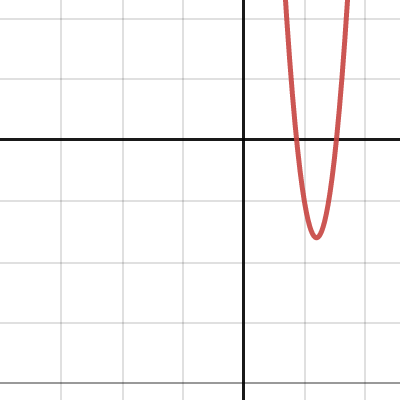
Desmos
play around with the slider on this and see what you can deduce
vernal anchor
thanks a lot
vapid shuttle
np
lone heartBOT
@vernal anchor Has your question been resolved?
lone heartBOT
Channel closed
Closed due to timeout
Use .reopen if this was a mistake.
Available help channel!
Send your question here to claim the channel.
Remember:
• Ask your math question in a clear, concise manner.
• Show your work, and if possible, explain where you are stuck.
• After 15 minutes, feel free to ping <@&286206848099549185>.
• Type the command .close to free the channel when you're done.
• Be polite and have a nice day!
Read #❓how-to-get-help for further information on how to ask a good question, and about conduct in the question channels.
 ashen river
can someone help me how to get the volume
 lone heartBOT
ashen river
can someone help me how to get the volume
lone heartBOT
ashen river
can someone help me how to get the volume

 pliant cedar
vernal anchor
pliant cedar
vernal anchor
Please read #❓how-to-get-help
pliant cedar
ashen river
can someone help me how to get the volume
You can multiply the area of the cross section by the width of the solid
alpine sable
Use formula:
$V = Bh$
where
B is the area of the trapezoid base
and
h is the distance between each trapezoid base
ocean sealBOT
pulse
 alpine sable
@ashen river
lone heartBOT
@ashen river Has your question been resolved?
lone heartBOT
Channel closed
Closed due to timeout
Use .reopen if this was a mistake.
Available help channel!
Send your question here to claim the channel.
Remember:
• Ask your math question in a clear, concise manner.
• Show your work, and if possible, explain where you are stuck.
• After 15 minutes, feel free to ping <@&286206848099549185>.
• Type the command .close to free the channel when you're done.
• Be polite and have a nice day!
Read #❓how-to-get-help for further information on how to ask a good question, and about conduct in the question channels.
 scenic falcon

 lone heartBOT
scenic falcon
lone heartBOT
scenic falcon
 modern sedge
-0+4=4-0=4
modern sedge
4+(-3)=4-3=1
scenic falcon
whole shell
how does 4 - 0 = 0
wait true
sorry mb
i think i did it too fast
i wil, fix now
done
is it
x = 2
?
scenic falcon
whole shell
but thats only for the thing itself
wdym
whole shell
scenic falcon
x = 2
yh
scenic falcon
yaaaaaay
 wild trail
 pale kestrel
scenic falcon
isnt + - = -
pale kestrel
scenic falcon
isnt + - = -
dont write it like that
use words; looks like nonsense to me
(and youre being confused since ur misusing it)
whole shell
yes, so how did you get -4
scenic falcon
is it just 4 then
whole shell
yh
lone heartBOT
@scenic falcon Has your question been resolved?
Channel closed
Closed by @scenic falcon
Use .reopen if this was a mistake.
Available help channel!
Send your question here to claim the channel.
Remember:
• Ask your math question in a clear, concise manner.
• Show your work, and if possible, explain where you are stuck.
• After 15 minutes, feel free to ping <@&286206848099549185>.
• Type the command .close to free the channel when you're done.
• Be polite and have a nice day!
Read #❓how-to-get-help for further information on how to ask a good question, and about conduct in the question channels.
 abstract skiff
 lone heartBOT
abstract skiff
abstract skiff
lone heartBOT
abstract skiff
abstract skiff
ok
 marsh rapids
anyone with a decent undergrad level can figure that ok quickly
marsh rapids
 desert rune
damn youre fast man
desert rune
damn youre fast man
it's just experience
abstract skiff
can someone explain pls
desert rune
abstract skiff
can u explain a bit further
the pattern is x * (x - 1), so for 10 its 10 * (10 - 1) = 10 * 9 = 90
11 * 10 = 110
abstract skiff
ohh
desert rune
19 * 18 = 342
desert rune
ask doctor
whole shell
abstract skiff
hey
90 = 10*9, 110 = 11*10
well the straw that broke the camels back
was
abstract skiff
yea ik but how did u work out the pattern
pale kestrel
!nosols
lone heartBOT
As a helper, please do not give out answers that could be copied as a homework solution. Have the student work through the problem themselves and guide them along the way.
pale kestrel

lone heartBOT
Channel closed
Closed by @abstract skiff
Use .reopen if this was a mistake.
Available help channel!
Send your question here to claim the channel.
Remember:
• Ask your math question in a clear, concise manner.
• Show your work, and if possible, explain where you are stuck.
• After 15 minutes, feel free to ping <@&286206848099549185>.
• Type the command .close to free the channel when you're done.
• Be polite and have a nice day!
Read #❓how-to-get-help for further information on how to ask a good question, and about conduct in the question channels.
 old widget
 lone heartBOT
old widget
lone heartBOT
old widget
Show your work, and if possible, explain where you are stuck.
@old widget Has your question been resolved?
marsh rapids
let f = LHS - RHS
Then show f reaches its minimum and that it's positive
old widget
<@&286206848099549185>
pale kestrel
lone heart
Show your work, and if possible, explain where you are stuck.
.
No one will help you otherwise.
marsh rapids
marsh rapids
let f = LHS - RHS
Then show f reaches its minimum and that it's positive
I feel ignored
lone heartBOT
@old widget Has your question been resolved?
old widget
I cant find solutions but I think it's actually not false
marsh rapids
just plot it
 astral briar
marsh rapids
just plot it
astral briar
marsh rapids
just plot it
i think you have to solve this question without doing that
marsh rapids
I know
it was for him to understand what's going on
of course you don't need to plot it
marsh rapids
marsh rapids
let f = LHS - RHS
Then show f reaches its minimum and that it's positive
that's why it isn't the solution I offered
lone heartBOT
@old widget Has your question been resolved?
 fading cave
what is the answer please help me I am confused
 old widget
What
lone heartBOT
@old widget Has your question been resolved?
 median dirge
lone heartBOT
median dirge
lone heartBOT
Channel closed
Closed due to timeout
Use .reopen if this was a mistake.
Available help channel!
Send your question here to claim the channel.
Remember:
• Ask your math question in a clear, concise manner.
• Show your work, and if possible, explain where you are stuck.
• After 15 minutes, feel free to ping <@&286206848099549185>.
• Type the command .close to free the channel when you're done.
• Be polite and have a nice day!
Read #❓how-to-get-help for further information on how to ask a good question, and about conduct in the question channels.
 chilly dove
