#help-0
1 messages · Page 8 of 1
 lone heartBOT
lone heartBOT
lone heartBOT
@peak island Has your question been resolved?
 peak island
Okey rephrasing
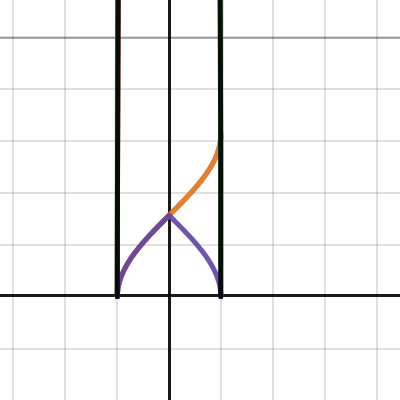
https://www.desmos.com/calculator/xrclevgdfs
here is where I am at.
How can I avoid the curve to go down for E ?
<@&286206848099549185>
Desmos
F here supposed to be equal to C with the logic i'm trying to get with the E function
lone heartBOT
Channel closed
Closed due to timeout
Use .reopen if this was a mistake.
Please take a minute to participate in [our survey](#changelog message) if you haven't already!
 Available help channel!
Send your question here to claim the channel.
Remember:
• Ask your math question in a clear, concise manner.
• Show your work, and if possible, explain where you are stuck.
• After 15 minutes, feel free to ping <@&286206848099549185>.
• Type the command .close to free the channel when you're done.
• Be polite and have a nice day!
Read #❓how-to-get-help for further information on how to ask a good question, and about conduct in the question channels.
 polar barn
I have been stuck on this one for an hour or two now. I need some ideas.

 copper stone
polar barn
I have been stuck on this one for an hour or two now. I need some ideas.
copper stone
polar barn
I have been stuck on this one for an hour or two now. I need some ideas.
put the RHS on same denominator
polar barn
copper stone
put the RHS on same denominator
RHS?
 ocean sealBOT
nisrine

 mellow tusk
have u tried using am gm
polar barn
mellow tusk
have u tried using am gm
tried
copper stone
$\begin{aligned}
\frac{1}{\sqrt{n-1}} - \frac{1}{\sqrt{n}} &= \frac{\sqrt{n} - \sqrt{n-1}}{\sqrt{n(n-1)}} \ &=\frac{(\sqrt{n} - \sqrt{n-1})(\sqrt{n} + \sqrt{n-1})}{(\sqrt{n} + \sqrt{n-1})\sqrt{n(n-1)}} \ &= \frac{1}{(\sqrt{n} + \sqrt{n-1})\sqrt{n(n-1)}}
\end{aligned}$
ocean sealBOT
nisrine
 copper stone
and you know $\sqrt{n(n-1)} ≤ \sqrt{n^2} = n$ and $\sqrt{n} + \sqrt{n-1} ≤ 2 \sqrt{n}$
ocean sealBOT
nisrine
 copper stone
that's it @polar barn
taking the inverse, the inequality symbol changes and you're done
lone heartBOT
@polar barn Has your question been resolved?
Channel closed
Closed by @polar barn
Use .reopen if this was a mistake.
Please take a minute to participate in [our survey](#changelog message) if you haven't already!
Available help channel!
Send your question here to claim the channel.
Remember:
• Ask your math question in a clear, concise manner.
• Show your work, and if possible, explain where you are stuck.
• After 15 minutes, feel free to ping <@&286206848099549185>.
• Type the command .close to free the channel when you're done.
• Be polite and have a nice day!
Read #❓how-to-get-help for further information on how to ask a good question, and about conduct in the question channels.
 alpine sable
Can anyone please explain me supremum and infimum in this example, I've tried Wikipedia but not cleared
 lone heartBOT
alpine sable
Can anyone please explain me supremum and infimum in this example, I've tried Wi...
lone heartBOT
alpine sable
Can anyone please explain me supremum and infimum in this example, I've tried Wi...
 swift shore
Do you know what supremum and infimum are @alpine sable
alpine sable
no pls explain
ive tried wikipedia but not cleared
can u pls explain tht with this example
im having difficulties with infimum
ok ok i understood alright sorry to disturb
swift shore
Wait what
alpine sable
supremum means upper limit
alpine sable
infimum means lower limit
alpine sable
but in 3rd part
alpine sable
swift shore
Do you know what an upper bound is
upper limit? or something different
swift shore
No
To talk about upper bounds we need to have a universal set and a special subset of that universal set
(Specifically the subset must be partially ordered)
alpine sable
partially ordered means??
alpine sable
sorry im noob in maths
swift shore
It’s fine
eg {x, 3, sqrt(x)} is not ordered
But the interval (5, 10) is ordered
Anyway
alpine sable
swift shore
eg {x, 3, sqrt(x)} is not ordered
but x is variable so how can we compare it with 3??
swift shore
That’s what I’m saying
You can’t really compare it
It’s not ordered; the elements are just kind of floating around in the set
To talk about upper bounds and supremums and whatnot, we need a concept of “this element is less than this element”
Let’s say our universal set is R, all real numbers, and our partially ordered subset is the interval (5, 7).
alpine sable
?
swift shore
An upper bound of (5,7) is an element of R that is greater than or equal to everything in (5,7)
For example, 7, 15, 10000 are upper bounds of this set
The supremum is the smallest such upper bound. So in this case the supremum is 7
If you think about it, anything less than seven (eg 6.9) is going to have an element in the set bigger than it (6.99)
So 7 is the supremum
Lower bound and infimum are the same idea, just “less than” instead of “greater than”
alpine sable
yea 2 is upper bound
swift shore
Is there a supremum/infimum?
alpine sable
yea thanks now cleared
swift shore
Ok cool
swift shore
alpine sable
Can anyone please explain me supremum and infimum in this example, I've tried Wi...
So now for this
alpine sable
1st - sup=5, inf=0
swift shore
Yep
alpine sable
2nd sup=root2, inf=0
3rd sup=4, inf=3 in sup we take n=1 and in inf we take n=infinty ig
?
so sup and inf exists only for partial ordered sets?
swift shore
Yep nice
swift shore
alpine sable
so sup and inf exists only for partial ordered sets?
Well that’s how they’re defined yeah
swift shore
Yeah if ur good just do .close
alpine sable
.close
lone heartBOT
Channel closed
Closed by @odd orchid
Use .reopen if this was a mistake.
Please take a minute to participate in [our survey](#changelog message) if you haven't already!
swift shore
Lurker lance
 fluid eagle
 lone heartBOT
Available help channel!
lone heartBOT
Available help channel!
Send your question here to claim the channel.
Remember:
• Ask your math question in a clear, concise manner.
• Show your work, and if possible, explain where you are stuck.
• After 15 minutes, feel free to ping <@&286206848099549185>.
• Type the command .close to free the channel when you're done.
• Be polite and have a nice day!
Read #❓how-to-get-help for further information on how to ask a good question, and about conduct in the question channels.
mellow tusk
 lone heartBOT
mellow tusk
lone heartBOT
mellow tusk
 mental jungle
the question is about figuring out if g is differentiable at x=c
how do you know if a function is differentiable at a point?
mellow tusk
mental jungle
how do you know if a function is differentiable at a point?
its derivative is defined
or lhd and rhd are same
mental jungle
yes
so what would you need to evaluate to see if that is the case?
what does is mean for the derivative to be defined?
mellow tusk
mental jungle
what does is mean for the derivative to be defined?
its differentiable?
mental jungle
here you're given a definition for g
so it would be nice to be able to express something using g
so you can use the information you're given
mellow tusk
mental jungle
so what would you need to evaluate to see if that is the case?
ik that |f(x)| is non differentiable at a point c where f(c)=0
how can i proceed further using this
mental jungle
what do you mean?
mental jungle
mellow tusk
ik that |f(x)| is non differentiable at a point c where f(c)=0
where do you get this?
mellow tusk
like |x-2| is non differentiable at x=2
mellow tusk
mental jungle
where do you get this?
my teacher taught this as far as i remember but he didnt exactly write fx
mental jungle
but if f(x) = 0 then it is differentiable everywhere
mellow tusk
mental jungle
for f(x) = x then yes, that's correct
like this is non diff at x=2
 mellow tusk
no ig it even works for quadratic
mental jungle
for any non zero function there will be points where it is not differentiable I believe, yeah
mellow tusk
 mental jungle
but f could just be the constant 0 function
 rose wave
How do I solve a compound inequality if there is a negative number
mental jungle
mellow tusk
ik that |f(x)| is non differentiable at a point c where f(c)=0
this is wrong if the function is ever constant equal to 0 on any interval
mental jungle
rose wave
How do I solve a compound inequality if there is a negative number
go to one of the available channels, this one is occupied
rose wave
mental jungle
go to one of the available channels, this one is occupied
How do I know which is available
mellow tusk
mental jungle
this is wrong if the function is ever constant equal to 0 on any interval
can u give an example
rose wave
Thanks
mental jungle
mellow tusk
can u give an example
if f(x) = 0 for all x, then |f(x)| = 0, and since constant functions are differentiable, |f(x)| is differentiable even though f(x) = 0 for all x, your statement doesn't hold
mellow tusk
mellow tusk
so its a constant function in the orignal question?
mental jungle
no, not necessarily
but it could be
so you can't say for certain that g is not differentiable
the question wants to know what you can say for certain
mellow tusk
mental jungle
if f(x) = 0 for all x, then |f(x)| = 0, and since constant functions are differe...
yes u can add except constant functions, in my statement
mental jungle
you could exclude all functions that are constant and equal to 0 on any interval that contain more than 1 point, sure
but that doesn't really get us very far, since for all we know, f could be one of these functions
lets bring it back to wanting to figure out if g is differentiable at c
mellow tusk
mental jungle
you could exclude all functions that are constant and equal to 0 on any interval...
oh no im just excluding all functions that are constant,
my statement was |fx| is non differentiable at points were fx=0 [ except when fx is a constant function ]
mellow tusk
mental jungle
lets bring it back to wanting to figure out if g is differentiable at c
yup
mental jungle
mellow tusk
oh no im just excluding all functions that are constant,
my statement was |fx| i...
this still isn't correct, but its not very important, you can find functions that are constant on intervals but not on the whole
its really not important
ok so, how do I know if something is differentiable at a point
given the definition of the function?
mellow tusk
mental jungle
this still isn't correct, but its not very important, you can find functions tha...
um so they would be non differentiable where f`(x) is not defined ?
mellow tusk
mental jungle
ok so, how do I know if something is differentiable at a point
either we calculate its lhd and rhd or find its derivative at that point , then check weather it exists or not
mental jungle
mellow tusk
um so they would be non differentiable where f`(x) is not defined ?
(no, but say f(x) = 0 if x < 0 and x^2 otherwise)
ok, what are the lhd and rhd?
mellow tusk
mental jungle
(no, but say f(x) = 0 if x < 0 and x^2 otherwise)
its differentiable at 0
mellow tusk
mental jungle
ok, what are the lhd and rhd?
0 both
mental jungle
why?
mellow tusk
2x when x>=0 ( putting x=0 we get 0)
0 when x<0
mental jungle
didn't mean that one
we can continue talking about that one later if you still want
mental jungle
mellow tusk
0 both
I meant this
mellow tusk
mental jungle
I meant this
oh
mental jungle
oh I see the confusion
I meant for the exercise you're trying to solve
what are the lhd and rhd
how would you find them?
 mental jungle
what is the definition of the derivative of a function at a point?
mellow tusk
um
mental jungle
one step at a time
what is the definition of the derivative of a function at a point?
mellow tusk
mental jungle
what is the definition of the derivative of a function at a point?
lhd and rhd should be same?
mental jungle
what does lhd mean?
mellow tusk
left hand derivative
mental jungle
write it out
mellow tusk
lim h tending to 0 , |f(c-h)|-|f(c)| whole upon -h
mental jungle
-h?
ah, with h positive then I assume
yeah, that's right
basically, you just want to know if $\lim_{h\to 0} \frac{ |f(c-h)|-|f(c)|}{h} = 0$
ocean sealBOT
Espio
 mental jungle
where h is positive or negative
mellow tusk
yes
mental jungle
if the limit exists, that means the left hand and right hand limits exist
ok, great
can we simplify this?
mellow tusk
yes fc=0
ocean sealBOT
Espio
 mental jungle
now let's look at the options one by one
mental jungle
mellow tusk
now we use Lhopital?
well the thing is, we sort of used up all the info we were given
we know f(c) = 0 and g(x) = |f(x)|
so we can't expect to simplify it further much
mellow tusk
question
 mellow tusk
mental jungle
we know f(c) = 0 and g(x) = |f(x)|
mellow tusk
mental jungle
we know f(c) = 0 and g(x) = |f(x)|
yes
mental jungle
sure
but before you try things that are too complicated
for this type of question, you either have to prove it, or find a counter example
in this case you don't really need counter examples because you know only 1 is correct, but it can be useful to rule out some of the answers
if (D) is correct, that means that no matter what, g cannot be differentiable at c
 mental jungle
that's not one of the possible answers though
mellow tusk
mental jungle
if f(x) = 0 for all x, then |f(x)| = 0, and since constant functions are differe...
yes, u were right about the |0| thing
mental jungle
mellow tusk
question
but for the question you have here, you have f'' in (B) and (C), not f'
mellow tusk
mental jungle
but for the question you have here, you have f'' in (B) and (C), not f'
yes idk whhy
but they both are the same question
mental jungle
yeah, must have been a typo
mental jungle
I'm not going to lie, I was back here frantically trying to figure out how f''(c) = 0 was enough to know that g is differentiable at c
because yeah, its clear why f'(c) = 0 would imply that
but its not true for f''(c) = 0 and I was trying to see where I was going wrong
mellow tusk
mental jungle
I'm not going to lie, I was back here frantically trying to figure out how f''(c...
lol
thank you @mental jungle
mental jungle
no problem
mental jungle
you too
lone heartBOT
Channel closed
Closed by @mellow tusk
Use .reopen if this was a mistake.
Please take a minute to participate in [our survey](#changelog message) if you haven't already!
Available help channel!
Send your question here to claim the channel.
Remember:
• Ask your math question in a clear, concise manner.
• Show your work, and if possible, explain where you are stuck.
• After 15 minutes, feel free to ping <@&286206848099549185>.
• Type the command .close to free the channel when you're done.
• Be polite and have a nice day!
Read #❓how-to-get-help for further information on how to ask a good question, and about conduct in the question channels.
 craggy summit
I've read that cyclic groups of prime order are the "building blocks" from which all groups can be constructed. If this is correct, and can you give an example of it? In particular, what does the word "constructed" entail?
lone heartBOT
craggy summit
I've read that cyclic groups of prime order are the "building blocks" from which...
mental jungle
I've only done a bit of group theory, but I believe they are only the building blocks for commutative groups
if you're looking at commutative groups that are generated by a finite set of elements, then you have a theorem that states that that group is isomorphic to a product of cyclic groups of prime order and a subgroup of the integers (so of the form Z/p1Z x Z/p2Z x Z/p3Z x ... x Z/pnZ x kZ if that makes sense)
I guess in that sense they are a building block?
craggy summit
ok, that works I guess. I can probably use that to find an example.
mental jungle
just made sure I wasn't making stuff up and yeah seems I didn't say anything wrong
if the group is finite (so finitely generated) then its just a product of cyclic groups of prime order without the subgroup of integers at the end (or k = 0 if you will)
which makes the cyclic groups of prime order even more building blocks
craggy summit
ok cool, thanks
lone heartBOT
@craggy summit Has your question been resolved?
lone heartBOT
Channel closed
Closed due to timeout
Use .reopen if this was a mistake.
Please take a minute to participate in [our survey](#changelog message) if you haven't already!
Available help channel!
Send your question here to claim the channel.
Remember:
• Ask your math question in a clear, concise manner.
• Show your work, and if possible, explain where you are stuck.
• After 15 minutes, feel free to ping <@&286206848099549185>.
• Type the command .close to free the channel when you're done.
• Be polite and have a nice day!
Read #❓how-to-get-help for further information on how to ask a good question, and about conduct in the question channels.
 nimble bane
How would I Do this
 lone heartBOT
nimble bane
How would I Do this
lone heartBOT
nimble bane
How would I Do this
 vocal quiver
nimble bane
How would I Do this
vocal quiver
nimble bane
How would I Do this
Hmm you could try using the third angle (which can be expressed in terms of a)
vocal quiver
Well you do know what the unlabeled angle is in terms of a
Since the sum of the angles is 180
nimble bane
Yeah but I dont have the other angle
vocal quiver
Hm? Once you solve for that third, unlabeled angle using the sine rule, you can then figure out a
vocal quiver
Not sure what you mean by that. If you label the top angle b then you know how to solve for b, yes? Using the sine rule
Then once you know b it's straightforward to figure out a
 raven dagger
Can't you use cosine rule ?
nimble bane
So i would find two values of the the other angle, and then subtract to find a?
@vocal quiver no because I would use cast rule to find out if the angle can be
ovtuse
as well
nimble bane
thanks i got it now
I made sure to find out wheter b is can be obtuse and acute
it can only be acute
so only one angle for a
thanks
.close
lone heartBOT
Channel closed
Closed by @nimble bane
Use .reopen if this was a mistake.
Please take a minute to participate in [our survey](#changelog message) if you haven't already!
Available help channel!
Send your question here to claim the channel.
Remember:
• Ask your math question in a clear, concise manner.
• Show your work, and if possible, explain where you are stuck.
• After 15 minutes, feel free to ping <@&286206848099549185>.
• Type the command .close to free the channel when you're done.
• Be polite and have a nice day!
Read #❓how-to-get-help for further information on how to ask a good question, and about conduct in the question channels.
 sharp moth
I have made an error I think in formulating my equation
sharp moth


I typed it into my calculator and I did not get answer that was solid

Maybe I wasn't suppose to be using the product rule?
 gilded rover
3.5/7 percentage quickly please
alpine sable
50
alpine sable
40
 kindred dagger
sharp moth
kindred dagger
sharp moth
You forgot the 4 in exponant of y on the right
sharp moth
kindred dagger
You forgot the 4 in exponant of y on the right
Yup that's correct but it still doesn't calculate to a clean answer
thank you btw
kindred dagger
"with respect to x", does that mean that all y must be simplified and this is the problem ?
,, \frac{dy}{dx} = \frac{15x^2 -2xy^5 - y^2}{2xy + 5x^2y^4}
ocean sealBOT
Anoma
 kindred dagger
I got this
lone heartBOT
@sharp moth Has your question been resolved?
lone heartBOT
@sharp moth Has your question been resolved?
lone heartBOT
Channel closed
Closed due to timeout
Use .reopen if this was a mistake.
Please take a minute to participate in [our survey](#changelog message) if you haven't already!
Available help channel!
Send your question here to claim the channel.
Remember:
• Ask your math question in a clear, concise manner.
• Show your work, and if possible, explain where you are stuck.
• After 15 minutes, feel free to ping <@&286206848099549185>.
• Type the command .close to free the channel when you're done.
• Be polite and have a nice day!
Read #❓how-to-get-help for further information on how to ask a good question, and about conduct in the question channels.
alpine sable
can anyone help
 lone heartBOT
alpine sable
can anyone help
alpine sable
lone heartBOT
alpine sable
can anyone help
alpine sable
 fervent timber
pls thx
fervent timber
pls thx
Yes but what is 3?
fervent timber
3 = 3?
fervent timber
alpine sable
Yes but what is 3?
not sure what you’re asking
lone heartBOT
@alpine sable Has your question been resolved?
 oak chasm
alpine sable
can anyone help
oak chasm
alpine sable
can anyone help
That's not a function, and there's not really enough information to tell what values 3 would have.
lone heartBOT
Channel closed
Closed due to timeout
Use .reopen if this was a mistake.
Please take a minute to participate in [our survey](#changelog message) if you haven't already!
Available help channel!
Send your question here to claim the channel.
Remember:
• Ask your math question in a clear, concise manner.
• Show your work, and if possible, explain where you are stuck.
• After 15 minutes, feel free to ping <@&286206848099549185>.
• Type the command .close to free the channel when you're done.
• Be polite and have a nice day!
Read #❓how-to-get-help for further information on how to ask a good question, and about conduct in the question channels.
 dusty pulsar
A second-degree function has the form f(x) = ax² + bx + c, where a, b, and c are called coefficients.
André is solving a math problem and has performed the following steps:
- Raised the coefficient b squared;
- multiplied the coefficient a by the coefficient c;
- multiplied the result found in step 2 by 4;
- subtracted the value found in step 3 from the value found in step 1;
- multiplied the value found in step 4 by -1;
- multiplied the coefficient a by 4;
- divided the value found in step 5 by the value found in step 6;
- multiplied the value found in step 7 by -1;
if f(x) = -3x² + 6x - 8, what value did it find after the 8 steps?
i was working on it and found 5 but i'm not sure
lone heartBOT
dusty pulsar
A second-degree function has the form f(x) = ax² + bx + c, where a, b, and c are...
@dusty pulsar Has your question been resolved?
oak chasm
dusty pulsar
A second-degree function has the form f(x) = ax² + bx + c, where a, b, and c are...
What are a, b, and c?
Ahh, you're a bit off, I think.
oak chasm
Ahh, checked it, and you're right, it's 5.
Step 1: b²
Step 2: ac
Step 3: 4 s₂ = 4ac
Step 4: s₁ - s₃ = b² - 4ac
Step 5: -s₄ = 4ac - b²
Step 6: 4a
Step 7: s₅/s₆ = (4ac - b²)/(4a)
Step 8: -s₇ = (b² - 4ac)/(4a)
(6² - 4(-3)(-8))/(4(-3))
(36 - 96)/(-12)
-60/-12
5
You can get an algebra expression if you have multiple as, bs, and cs to figure it out for. You just get the final expression and fill in each set of a, b, and c.
lone heartBOT
Channel closed
Closed by @dusty pulsar
Use .reopen if this was a mistake.
Please take a minute to participate in [our survey](#changelog message) if you haven't already!
Available help channel!
Send your question here to claim the channel.
Remember:
• Ask your math question in a clear, concise manner.
• Show your work, and if possible, explain where you are stuck.
• After 15 minutes, feel free to ping <@&286206848099549185>.
• Type the command .close to free the channel when you're done.
• Be polite and have a nice day!
Read #❓how-to-get-help for further information on how to ask a good question, and about conduct in the question channels.
 sterile stone
 lone heartBOT
sterile stone
sterile stone
lone heartBOT
sterile stone
sterile stone
just want to know if im doing this correctly so far
lone heartBOT
@sterile stone Has your question been resolved?
 tacit arch
You really don't need to spam your own channel. Just makes finding the problem harder
oak chasm
@sterile stone Sorry, I don't know the answer, but if you can't get help, try calling @Helpers only once 15 minutes or more after you ask the question.
If we can't help even after that, check the #old-network channel for some physics and engineering servers.
tacit arch
You did part b wrong
There are two different complex numbers to find
Follow the cosine in the example
sterile stone
ok
 tacit arch
,calc 28*cos(30 deg)
ocean sealBOT
Result:
24.248711305964
,calc 28*sin(30 deg)
ocean sealBOT
Result:
14
Result:
24.248711305964
one more thing

im not sure what this is asking me
this is right after the second question

tacit arch
No idea. Just look up the definition
sterile stone
🦕
lone heartBOT
@sterile stone Has your question been resolved?
lone heartBOT
Channel closed
Closed due to timeout
Use .reopen if this was a mistake.
Please take a minute to participate in [our survey](#changelog message) if you haven't already!
Available help channel!
Send your question here to claim the channel.
Remember:
• Ask your math question in a clear, concise manner.
• Show your work, and if possible, explain where you are stuck.
• After 15 minutes, feel free to ping <@&286206848099549185>.
• Type the command .close to free the channel when you're done.
• Be polite and have a nice day!
Read #❓how-to-get-help for further information on how to ask a good question, and about conduct in the question channels.
 rapid crest
 lone heartBOT
rapid crest
rapid crest
lone heartBOT
rapid crest
rapid crest
Why is 5 rejected
 tame willow
@rapid crest
rapid crest
Yes
tame willow
Ask yourself
rapid crest
Ik just realized lol
rapid crest
Yeah
tame willow
Or some type of squared/square root
tame willow
np
rapid crest
.close
lone heartBOT
Channel closed
Closed by @rapid crest
Use .reopen if this was a mistake.
Please take a minute to participate in [our survey](#changelog message) if you haven't already!
Available help channel!
Send your question here to claim the channel.
Remember:
• Ask your math question in a clear, concise manner.
• Show your work, and if possible, explain where you are stuck.
• After 15 minutes, feel free to ping <@&286206848099549185>.
• Type the command .close to free the channel when you're done.
• Be polite and have a nice day!
Read #❓how-to-get-help for further information on how to ask a good question, and about conduct in the question channels.
 lost coral
whats my error?
 lone heartBOT
lost coral
whats my error?
lone heartBOT
lone heartBOT
lost coral
whats my error?
lone heartBOT
Channel closed
Closed by @lost coral
Use .reopen if this was a mistake.
Please take a minute to participate in [our survey](#changelog message) if you haven't already!
lone heartBOT
Available help channel!
Send your question here to claim the channel.
Remember:
• Ask your math question in a clear, concise manner.
• Show your work, and if possible, explain where you are stuck.
• After 15 minutes, feel free to ping <@&286206848099549185>.
• Type the command .close to free the channel when you're done.
• Be polite and have a nice day!
Read #❓how-to-get-help for further information on how to ask a good question, and about conduct in the question channels.
 wanton hare
yo could someone help me with this?
lone heartBOT
wanton hare
yo could someone help me with this?
wanton hare
Given that sin(x) = s, find cos(x) in terms of s
 tight locust
Sure! Seems simple enough!
wanton hare
thanks
tight locust
You can easily solve up to sign
If you don't have information about the quadrant of s it gets tricky though
wanton hare
yeah
no info about which quadrant its in
do i use sin(90-x) = cos(x)?
or is there another way
tight locust
Yeah that's the thing
There's no unique solution
Without further information
At most we can solve up to the sign
But anyways
oak chasm
wanton hare
**Given that sin(x) = s, find cos(x) in terms of s**
Use the Pythagorean identity.
 vale wigeon
^
but also can you show the entire problem exactly as stated? there might be some important info that you're leaving out.
wanton hare
vale wigeon
but also can you show the _entire_ problem _exactly_ as stated? there might be s...
nope
thats what im given
word for word
oak chasm
Do you know the Pythagorean identity?
oak chasm
OK, write that out, and then solve for cos(x).
oak chasm
Yes, that's right.
oak chasm
No problem.
ocean sealBOT
kyoshi
 oak chasm
So, |cos(x)| = sqrt(1 - s²).
And the right side is not negative, so it's a good absolute value result.
So, that checks out.
wanton hare
ah
oak chasm
Then, the right side can be either positive or negative to give you the cosine.
Like if it's cos(x) = -sqrt(1 - s²), that's fine, because then |cos(x)| = sqrt(1 - s²).
Same thing with cos(x) = sqrt(1 - s²).
oak chasm
So, it's cos(x) = ±sqrt(1 - s²).
oak chasm
You're welcome.
wanton hare
.close
lone heartBOT
Channel closed
Closed by @wanton hare
Use .reopen if this was a mistake.
Please take a minute to participate in [our survey](#changelog message) if you haven't already!
Available help channel!
Send your question here to claim the channel.
Remember:
• Ask your math question in a clear, concise manner.
• Show your work, and if possible, explain where you are stuck.
• After 15 minutes, feel free to ping <@&286206848099549185>.
• Type the command .close to free the channel when you're done.
• Be polite and have a nice day!
Read #❓how-to-get-help for further information on how to ask a good question, and about conduct in the question channels.
alpine sable
 lone heartBOT
alpine sable
alpine sable
lone heartBOT
alpine sable
alpine sable
im not sure how to approach the question or what it means, can anyone help? ;-;
wanton hare
ok
so
we know that angle AOC is 60
therefore
the reflex is 300
buts thats in degrees
so
convert it into radians
 fallen verge
magnitude is essentially the angle measure
alpine sable
how is the reflex 300? im confused
fallen verge
damn are you trying to get the highest message count in the server?
wanton hare
so all interior angles are 60
wanton hare
fallen verge
damn are you trying to get the highest message count in the server?
nah just the way i type
anyways
fallen verge
anyway excuse my interruption
fallen verge
but we need it in terms of radians so we do the conversion by multiplying by pi/180
alpine sable
so basically 300 is the angle at 0 there?
wanton hare
and pi
wanton hare
alpine sable
so basically 300 is the angle at 0 there?
yes
so
use the formula
x * pi/180 = radian
alpine sable
ahhh i see so if they want the answer to be in terms of pi?
fallen verge
youre getting this angle in red
 wanton hare
yessir
fallen verge
sorry for the bad quality lol
alpine sable
if its just in terms of pi then is it 300 (symbol of pi)?
fallen verge
no you do 300 times pi/180 as i said earlier
wanton hare
since thats what the question wants
fallen verge
so did kyoshi
alpine sable
wait lemme try again
okies ive got it, thanks for everything guys
i appreciate it so much
.close
lone heartBOT
Channel closed
Closed by @random idol
Use .reopen if this was a mistake.
Please take a minute to participate in [our survey](#changelog message) if you haven't already!
Available help channel!
Send your question here to claim the channel.
Remember:
• Ask your math question in a clear, concise manner.
• Show your work, and if possible, explain where you are stuck.
• After 15 minutes, feel free to ping <@&286206848099549185>.
• Type the command .close to free the channel when you're done.
• Be polite and have a nice day!
Read #❓how-to-get-help for further information on how to ask a good question, and about conduct in the question channels.
 worldly eagle
guys i need help
lone heartBOT
worldly eagle
guys i need help
worldly eagle
which channel should i go to?
There are 5 containers of 17 cylinders each. The Oxygen cylinders weigh 1 kg each, and fire extinguishers weigh 2 kg each. Each container has either oxygen cylinders (has only oxygen cylinders ) or fire extinguishers (has only fire extinguishers). As the fire was spreading fast, they had little time to segregate the containers. Given a weighing machine, devise a method to differentiate and determine all the fire extinguishers with just one weighing. Assume that any number of cylinders from any number of containers can be placed on the weighing machine.
Find the minimum value of the total number of cylinders taht can be placed on the weighing machine
Here us the problem
Please tell me the answer
I NEED HELP!!!
.reopen
reopen
.close
lone heartBOT
Channel closed
Closed by @worldly eagle
Use .reopen if this was a mistake.
Please take a minute to participate in [our survey](#changelog message) if you haven't already!
worldly eagle
.reopen
lone heartBOT
✅
worldly eagle
reopen
Here is teh question
There are 5 containers of 17 cylinders each. The Oxygen cylinders weigh 1 kg each, and fire extinguishers weigh 2 kg each. Each container has either oxygen cylinders (has only oxygen cylinders ) or fire extinguishers (has only fire extinguishers). As the fire was spreading fast, they had little time to segregate the containers. Given a weighing machine, devise a method to differentiate and determine all the fire extinguishers with just one weighing. Assume that any number of cylinders from any number of containers can be placed on the weighing machine.
Find the minimum value of the total number of cylinders taht can be placed on the weighing machine
.clos
.close
lone heartBOT
Channel closed
Closed by @worldly eagle
Use .reopen if this was a mistake.
Please take a minute to participate in [our survey](#changelog message) if you haven't already!
wanton hare
.close
lone heartBOT
Available help channel!
Send your question here to claim the channel.
Remember:
• Ask your math question in a clear, concise manner.
• Show your work, and if possible, explain where you are stuck.
• After 15 minutes, feel free to ping <@&286206848099549185>.
• Type the command .close to free the channel when you're done.
• Be polite and have a nice day!
Read #❓how-to-get-help for further information on how to ask a good question, and about conduct in the question channels.
 sleek marsh
Practicing factoring polynomials completely, got a problem that I know the answer to, but am confused as to why my answer would not also be correct.
Factor 25x^2 +15x -54, says (5x+9)(5x-6) would be the answer. Why wouldn't (5x+18)(5x-3) also be the answer?
lone heartBOT
sleek marsh
Practicing factoring polynomials completely, got a problem that I know the answe...
 gray isle
how are you getting
(5x+18)(5x-3)
tacit arch
,calc -35+185
ocean sealBOT
Result:
75
it seems like you're conflating
$$(x+p)(x+q) = x^2 + (p+q)x + pq$$
$$(ax+ b)(cx+d) \red{\neq} a^2x^2 + (b+d)x + bd$$
ocean sealBOT
ℝamonov
 sleek marsh
Ah, i have made the critical mistake of not checking my work. I always seem to forgot that I have to multiply the inside and the outside for the middle 15x
and 18*5x -15x does not equal 15x lmfao
I got +18 and -3 because 18-3=15 and 18*3 = 54
lone heartBOT
@sleek marsh Has your question been resolved?
Channel closed
Closed by @sleek marsh
Use .reopen if this was a mistake.
Please take a minute to participate in [our survey](#changelog message) if you haven't already!
Available help channel!
Send your question here to claim the channel.
Remember:
• Ask your math question in a clear, concise manner.
• Show your work, and if possible, explain where you are stuck.
• After 15 minutes, feel free to ping <@&286206848099549185>.
• Type the command .close to free the channel when you're done.
• Be polite and have a nice day!
Read #❓how-to-get-help for further information on how to ask a good question, and about conduct in the question channels.
 vivid wigeon
What would be the probability of churning here? I don't really get it
 vivid wigeon
where would the intercepts and beta coefficients go
tacit arch
Beta is in the exponential
tacit arch
vivid wigeon
where would the intercepts and beta coefficients go
Have you seen the exponential function before
vivid wigeon
yeah
tacit arch
It's very clear the beta variables are in the exponential
vivid wigeon
so would it be
p = 1/1 + 3.52 [to the power of] -(-0.15 + 0.092 * 1 + 0.005 * 2 + 0.375 * 3)
lone heartBOT
@vivid wigeon Has your question been resolved?
lone heartBOT
Channel closed
Closed due to timeout
Use .reopen if this was a mistake.
Please take a minute to participate in [our survey](#changelog message) if you haven't already!
Available help channel!
Send your question here to claim the channel.
Remember:
• Ask your math question in a clear, concise manner.
• Show your work, and if possible, explain where you are stuck.
• After 15 minutes, feel free to ping <@&286206848099549185>.
• Type the command .close to free the channel when you're done.
• Be polite and have a nice day!
Read #❓how-to-get-help for further information on how to ask a good question, and about conduct in the question channels.
 small cypress
 small cypress
Is squaring both sides a good idea?
im trying to solve just like a normal modulus eq
my other idea
was making 2^x as u
tacit arch
Close your other channel
 mellow tusk
oh
mellow tusk
mellow tusk
take cases when x is >0 and when x is <0
tacit arch
First time I've seen $2, \ ^x$
ocean sealBOT
riemann
 lone heartBOT
@small cypress Has your question been resolved?
Channel closed
Closed by @small cypress
Use .reopen if this was a mistake.
Please take a minute to participate in [our survey](#changelog message) if you haven't already!
Available help channel!
Send your question here to claim the channel.
Remember:
• Ask your math question in a clear, concise manner.
• Show your work, and if possible, explain where you are stuck.
• After 15 minutes, feel free to ping <@&286206848099549185>.
• Type the command .close to free the channel when you're done.
• Be polite and have a nice day!
Read #❓how-to-get-help for further information on how to ask a good question, and about conduct in the question channels.
 earnest lodge
 lone heartBOT
earnest lodge
mellow tusk
lone heartBOT
earnest lodge
mellow tusk
amount of energy per second is power, formula for power is F.v ( F is force, v is velocity
. here is dot product
earnest lodge
oh
wait isnt powwer work done over time
oh wait it's the same
tyy i got it
.close
lone heartBOT
Channel closed
Closed by @earnest lodge
Use .reopen if this was a mistake.
Please take a minute to participate in [our survey](#changelog message) if you haven't already!
Available help channel!
Send your question here to claim the channel.
Remember:
• Ask your math question in a clear, concise manner.
• Show your work, and if possible, explain where you are stuck.
• After 15 minutes, feel free to ping <@&286206848099549185>.
• Type the command .close to free the channel when you're done.
• Be polite and have a nice day!
Read #❓how-to-get-help for further information on how to ask a good question, and about conduct in the question channels.
 fathom epoch
guys how do i count square root
lone heartBOT
fathom epoch
guys how do i count square root
fathom epoch
of 2
gray isle
wdym by
count
fathom epoch
by hand
wanton hare
$\sqrt2$
ocean sealBOT
kyoshi
 fathom epoch
i need to know it without calculator
gray isle
wdym by
count
wanton hare
fathom epoch
i need to know it without calculator
why tho
 tall hearth
fathom epoch
i need to know it without calculator
tall hearth
fathom epoch
i need to know it without calculator
look up "long division method to find square root"
in this case, use a calculator once and just memorise upto 3-4 decimal places
gray isle
one square root of 2, two square roots of 2, three square roots of 2
gray isle
did you want to know how to get the decimal approxmation?
fathom epoch
yes
gray isle
"count" is such a vague/inappropriate word here
look up square root by hand / algorithms etc
fathom epoch

Anil Kumar Classes: https://www.globalmathinstitute.com/class-enrollment/
CORRECTION Required at the end as an error was done. 2824 will come in the next level as the numbers should be double the quotient. Hope you can correct that.
Differential and Square root: https://www.youtube.com/watch?v=6LBA5toYZ_0&list=PLJ-ma5dJyAqqAJAQxIuYyhzgwQyonHKmq
...
i found this but i dont underestand half of what he is saing
lone heartBOT
@fathom epoch Has your question been resolved?
lone heartBOT
Channel closed
Closed due to timeout
Use .reopen if this was a mistake.
Please take a minute to participate in [our survey](#changelog message) if you haven't already!
Available help channel!
Send your question here to claim the channel.
Remember:
• Ask your math question in a clear, concise manner.
• Show your work, and if possible, explain where you are stuck.
• After 15 minutes, feel free to ping <@&286206848099549185>.
• Type the command .close to free the channel when you're done.
• Be polite and have a nice day!
Read #❓how-to-get-help for further information on how to ask a good question, and about conduct in the question channels.
 normal bridge
 lone heartBOT
normal bridge
normal bridge
lone heartBOT
normal bridge
normal bridge
 high rapids
15% of something is 340
high rapids
15% of something is 340
I got confused and did that first too lol
lone heartBOT
Channel closed
Closed by @normal bridge
Use .reopen if this was a mistake.
Please take a minute to participate in [our survey](#changelog message) if you haven't already!
Available help channel!
Send your question here to claim the channel.
Remember:
• Ask your math question in a clear, concise manner.
• Show your work, and if possible, explain where you are stuck.
• After 15 minutes, feel free to ping <@&286206848099549185>.
• Type the command .close to free the channel when you're done.
• Be polite and have a nice day!
Read #❓how-to-get-help for further information on how to ask a good question, and about conduct in the question channels.
alpine sable
 lone heartBOT
alpine sable
alpine sable
lone heartBOT
alpine sable
alpine sable
sequence i have got is 1, 2, 5, 16, 65... not sure what to do
start by finding a closed formula of $u_n$ involving only n
ocean sealBOT
AimaneSN
 alpine sable
thanks
hmm how would i do that


thank youu
i'll give it a go and ill come back if i haven't been able to crack it, thanks
.close
lone heartBOT
Channel closed
Closed by @round hull
Use .reopen if this was a mistake.
Please take a minute to participate in [our survey](#changelog message) if you haven't already!
Available help channel!
Send your question here to claim the channel.
Remember:
• Ask your math question in a clear, concise manner.
• Show your work, and if possible, explain where you are stuck.
• After 15 minutes, feel free to ping <@&286206848099549185>.
• Type the command .close to free the channel when you're done.
• Be polite and have a nice day!
Read #❓how-to-get-help for further information on how to ask a good question, and about conduct in the question channels.
 real wolf
 lone heartBOT
real wolf
https://cdn.discordapp.com/attachments/423382092223610891/1003246704482582598/IM...
real wolf
lone heartBOT
real wolf
https://cdn.discordapp.com/attachments/423382092223610891/1003246704482582598/IM...
real wolf
kinda struggling to break this down - can someone help please
 keen pasture
Look at each formula and think about what the student is calculating
 neat pewter
i found the first term being 15 and the common difference -8, but I cant find the value of N given that the n-th term of the sequence is –89 please help
 keen pasture
neat pewter
i found the **first term being 15 and the common difference -8**, but I cant fin...
keen pasture
neat pewter
i found the **first term being 15 and the common difference -8**, but I cant fin...
Don't ask your question in others Help Channel
neat pewter
Where should i ask?
real wolf
it can be a or d only?
keen pasture
neat pewter
Where should i ask?
Open your own
keen pasture
real wolf
it can be a or d only?
What area is calculated in a?
keen pasture
Ah, sorry. I didn't see what you meant with a-e
 keen pasture
That's what 1 is calculating
keen pasture
The rectangle - the area under the graph. So that is the area we're looking for
lone heartBOT
Channel closed
Closed by @real wolf
Use .reopen if this was a mistake.
Please take a minute to participate in [our survey](#changelog message) if you haven't already!
keen pasture
There could be more than 1 correct answer
real wolf
.reopen
lone heartBOT
✅
keen pasture
Yes 👍
keen pasture
Bye
real wolf
.close
lone heartBOT
Channel closed
Closed by @real wolf
Use .reopen if this was a mistake.
Please take a minute to participate in [our survey](#changelog message) if you haven't already!
Available help channel!
Send your question here to claim the channel.
Remember:
• Ask your math question in a clear, concise manner.
• Show your work, and if possible, explain where you are stuck.
• After 15 minutes, feel free to ping <@&286206848099549185>.
• Type the command .close to free the channel when you're done.
• Be polite and have a nice day!
Read #❓how-to-get-help for further information on how to ask a good question, and about conduct in the question channels.
 upper vessel
Hey im doing an investigarion about Dijkstra's algorithm. The idea is to find the best route for an amazon delivery man using the algorithm. Hipotetically the route has to go through 5 different vertex: Cartagena, Caravaca, Totana, Lorca and Cieza (which are towns/cities from my region).
 lone heartBOT
upper vessel
Hey im doing an investigarion about Dijkstra's algorithm. The idea is to find th...
upper vessel
lone heartBOT
upper vessel
Hey im doing an investigarion about Dijkstra's algorithm. The idea is to find th...
upper vessel
the initial point is the M in the map
the problem is I dont know how to use the algorithm without having a final vertex in mind.
also im finding trouble in forcing it to go thorugh the vertices
 mortal trellis
that sounds more like a travelling salesman problem
which is a lot harder
(although with 5 vertices you could bruteforce it)
lone heartBOT
@upper vessel Has your question been resolved?
upper vessel
<@&286206848099549185>
lone heartBOT
Channel closed
Closed due to timeout
Use .reopen if this was a mistake.
Please take a minute to participate in [our survey](#changelog message) if you haven't already!
upper vessel
.reopen
lone heartBOT
✅
lone heartBOT
@upper vessel Has your question been resolved?
lone heartBOT
Channel closed
Closed due to timeout
Use .reopen if this was a mistake.
Please take a minute to participate in [our survey](#changelog message) if you haven't already!
Available help channel!
Send your question here to claim the channel.
Remember:
• Ask your math question in a clear, concise manner.
• Show your work, and if possible, explain where you are stuck.
• After 15 minutes, feel free to ping <@&286206848099549185>.
• Type the command .close to free the channel when you're done.
• Be polite and have a nice day!
Read #❓how-to-get-help for further information on how to ask a good question, and about conduct in the question channels.
 open igloo

 crisp pine
Do you know about difference of two squares?
 icy latch
Muffin button to the rescue
 nova nexus
icy latch
Muffin button to the rescue
nova nexus
icy latch
Muffin button to the rescue
feel free to writ too, haha!
crisp pine
crisp pine
Do you know about difference of two squares?
Because you can use the difference of two squares to simplify the fraction
icy latch
a²-b² = (a+b)(a-b)
crisp pine
Yes
icy latch
let them figure out on their own lmfao
crisp pine
Oh sorry yeah
icy latch
open igloo
is there any way you could simplify this furthermore?
nova nexus
open igloo
first thing to note:
both domain and range are "distance" [a, b] (closed) or (a,b) (open) or a mix of these
domain means what values of x you can plug in
(eg: x=1 will give you division by zero. then 1 is not on the domain)
range means which values of y you can see on the plot.
(eg: since it is a real square root, you can't expect negative values as a result)
open igloo
Plz find it's domain and range
icy latch
open igloo
Plz find it's domain and range
give it a try first, before you ask us for the answer
crisp pine
Can we see ur working?
icy latch
working pls
 mellow tusk
open igloo
mellow tusk
open igloo
case 2 when both numerator and denominator are negative cause -ve/-ve gives +ve
open igloo
@mellow tusk so what condition should I apply for that to solve?
nova nexus
open igloo
Plz find it's domain and range
now: try to answe these questions @open igloo:
what values x can be? (can it be -∞? can it be zero? can it be +∞?)
this answer will give you the domain
then you make a second question:
what values f(x) can be for the allowed x?
eg: is there a value of x that gives you a negative square root ||spoilers: there is not!||
what happens to f(x) for very big x? (do f(x) gets bigger or small?)
and if x is really close to 1? what happens to f(x)? (again: f(1.0001) is big or small?)
mellow tusk
open igloo
<@714349425018929235> so what condition should I apply for that to solve?
similar to what u did in case1
open igloo
@nova nexus hmm
mellow tusk
<0 lgana h instead of >0
 open igloo
@mellow tusk but it is under root n?? And we can't put any -ve no. Inside it
mellow tusk
open igloo
<@714349425018929235> but it is under root n?? And we can't put any -ve no. Ins...
-ve/-ve=+ve
since u solved that way, im correcting ur method
nova nexus
open igloo
<@714349425018929235> but it is under root n?? And we can't put any -ve no. Ins...
you got the correct domain. (wrong answer!)
now try to apply what happens for x (almost) equal to 1 and then for x very large (x=∞)
this will give you the range for f(x)
open igloo
@mellow tusk then domain will be whole R 😨
mellow tusk
open igloo
<@714349425018929235> then domain will be whole R 😨
no
figure the ans yourself, but its not R
nova nexus
mellow tusk
no
you mean to examine x between zero and 1 right?
open igloo
@mellow tusk but my sir had told to take condition for denominator of under root such that >0
mellow tusk
open igloo
<@714349425018929235> but my sir had told to take condition for denominator of ...
when there's a single root in either numerator or denominator
@open igloo or do uk wavy curve method?
use it under this, make it >=0
 open igloo
@mellow tusk ok what to do if double root is there??
mellow tusk
open igloo
<@714349425018929235> ok what to do if double root is there??
u mean power 1/4?
same conditions as that of 1/2
nova nexus
open igloo
<@714349425018929235> ok what to do if double root is there??
double root?
 nova nexus
@open igloo try to throw x= 0.5 and see what happens.
I mean... for x = 0.5 will $\frac{(0.5)-1}{(0.5)^2-1}$ be positive or negative?
ocean sealBOT
muffin button
 open igloo
@nova nexus sir if you will provide me full solution with image my all doubts and query will be clear and will also know to apply correct condition, can you plz send me😭🙏🥺
nova nexus
open igloo
<@246677641199878146> sir if you will provide me full solution with image my all...
I'll give one last attempt (and remember that the purpose of help is not to cheat at exams or to do your homework for free, but it is a good will to help you figure math on your own)
if you set $x = 0$ then, inside the $\sqrt{}$ symbol, you will have
$\frac{(0)-1}{(0)^2-1}=\frac{-1}{-1}$
you can answer on your own if -1/-1 is positive or negative.
you already know that part of your domain is $(1, \infty)$ (and congrats on your work)
but the whole domain can be a union of intervals $[a,b] \cup (1,\infty)$
after discovering the values of a and b, you will find your domain (and get full marks on that item).
then you need to examine what happens with your square root for a few values of x.
usually you will pick the end points of each interval that makes up your domain, plug on the equation and see what number (or "infinity") the equation spits out
ocean sealBOT
muffin button
 nova nexus
btw, answering if -1/-1 is positive or negative means:
if it is positive, then it is a valid value for square root.
if negative then it is a invalid value for square root.
lone heartBOT
@open igloo Has your question been resolved?
Channel closed
Closed by @open igloo
Use .reopen if this was a mistake.
Please take a minute to participate in [our survey](#changelog message) if you haven't already!
lone heartBOT
Available help channel!
Send your question here to claim the channel.
Remember:
• Ask your math question in a clear, concise manner.
• Show your work, and if possible, explain where you are stuck.
• After 15 minutes, feel free to ping <@&286206848099549185>.
• Type the command .close to free the channel when you're done.
• Be polite and have a nice day!
Read #❓how-to-get-help for further information on how to ask a good question, and about conduct in the question channels.
alpine sable
anyway someone can help with my whole math lesson? Im so lost
alpine sable

 abstract fractal
What have you tried
abstract fractal
What is ASA?
alpine sable
Tutors.com
Learn the triangle congruence postulates which are the SAS, ASA, SSS, AAS, and HL. Each triangle postulate has a clear example with pictures, want to see?
abstract fractal
I want to hear what you think ASA is, not what a website thinks it is
alpine sable
An angle with a side that is congruent between another angle of the other triangle
abstract fractal
What do we know about the two triangles we are given?
abstract fractal
Yes
What else?
BTW, when referring to sides, you wouldn't say "A + C," you'd say AC
alpine sable
ED?
abstract fractal
ED is a side
ASA stands for "angle-side-angle"
Aka, we need an angle, a side, and another angle
We already have an angle (the two Cs) and a side (AC and CE)
What's the last thing we need?
alpine sable
another angle
abstract fractal
Which angle in particular? Taking note that the side should be between the two angles
abstract fractal
Yep
alpine sable
Thank you :D
I think I understand more now
Thank you again @abstract fractal I got the next 10 questions right :D
abstract fractal

lone heartBOT
@alpine sable Has your question been resolved?
 abstract fractal
Well, the key thing to realize is that SSA isn't a valid congruence statement
My math teacher called it the "donkey theorem," because SSA is equivalent to ASS lol. If two triangles follow SSA (or ASS), that does not mean they're congruent
alpine sable
okay

Im sorry for asking so much @abstract fractal But This is all new to me
I think this is AAS Because we know CB and ED is equal and we have 2 angles before that?
abstract fractal
Yep
alpine sable
Okay
thank you

So I know angle A,B and I know the side on BC but im not too sure what how I would do this
Im thinking AAS but I dont know AC Side
abstract fractal
Note that BE and BC are both sides of the triangles
They're the shorter sides
Looking specifically at triangle ABC, we have angle A, angle B, and side BC congruent to angle D, angle B, and side BE on triangle BDE
What do you think that might be?
alpine sable
Thats AAS? We have Angle A Angle B And Side BC?
abstract fractal
Yes
 abstract fractal
What have you tried?
alpine sable
I was thinking 5 lots of x Plus 13 that we already have
so if x was 3.8 x 5 + 13 thats 32
but i think im wrong
abstract fractal
The equation is 5x - 13, not + 13
 abstract fractal
In congruence statements, the letters line up corresponding to what's congruent to what. Since it says ΔABC = ΔDEC, that means angle A = D, B = E, and C = C
alpine sable
Okay
so I know no values?
not sure where to get them from
X would be 16.5? since B,E Are the same
alpine sable
13?
 crisp grail
yes
alpine sable
Okay thank you

 untold moon
yeah that's 5
alpine sable

ASA?
We know two angles so we know the side inbetween?
?
oh he deleted his message
 true pulsar
I mean ASA still applies
true pulsar
The question is eh because it doesn't specify which triangles
 lone heartBOT
@alpine sable Has your question been resolved?
Channel closed
Closed by @heavy lark
Use .reopen if this was a mistake.
Please take a minute to participate in [our survey](#changelog message) if you haven't already!
Available help channel!
Send your question here to claim the channel.
Remember:
• Ask your math question in a clear, concise manner.
• Show your work, and if possible, explain where you are stuck.
• After 15 minutes, feel free to ping <@&286206848099549185>.
• Type the command .close to free the channel when you're done.
• Be polite and have a nice day!
Read #❓how-to-get-help for further information on how to ask a good question, and about conduct in the question channels.
 royal quest
 lone heartBOT
royal quest
lone heartBOT
royal quest
 high wolf
lone heartBOT
high wolf
lone heartBOT
@royal quest Has your question been resolved?
royal quest
<@&286206848099549185>
lone heartBOT
@royal quest Has your question been resolved?
 ancient moss
the divisibility is equivalent to 17|1+4a+5b+20ab. try factoring this
lone heartBOT
Channel closed
Closed by @royal quest
Use .reopen if this was a mistake.
Please take a minute to participate in [our survey](#changelog message) if you haven't already!
Available help channel!
Send your question here to claim the channel.
Remember:
• Ask your math question in a clear, concise manner.
• Show your work, and if possible, explain where you are stuck.
• After 15 minutes, feel free to ping <@&286206848099549185>.
• Type the command .close to free the channel when you're done.
• Be polite and have a nice day!
Read #❓how-to-get-help for further information on how to ask a good question, and about conduct in the question channels.
tame willow
Not really a question per say, but would someone help me prove the intersection of the two parts of the graph x^y=y^x ?
lone heartBOT
tame willow
Not really a question per say, but would someone help me prove the intersection ...
tame willow
It forms a ray and a rational function-like looking curve that intersect at, you guessed it, (e,e)
But how would one prove that without knowing the intersection is at e,e?
(Barring any graphing tools that could do it for you.)
crisp pine
Well I might as well start with the obvious line for y=x
mellow tusk
crisp pine
Well I might as well start with the obvious line for y=x
but why is (e,e) the only intersection point as shown by desmos
keen pasture
tame willow
It forms a ray and a rational function-like looking curve that intersect at, you...
Can you show a picture?
crisp pine
mellow tusk
but why is (e,e) the only intersection point as shown by desmos
yeah thats what im trying to figure out
I cant find an equation for the wierd curve thing
tame willow
Desmos is the only picture I could provide @keen pasture
mellow tusk
keen pasture
Can you show a picture?
 tame willow
 keen pasture
That's interesting
tame willow
It really is
mellow tusk
i know why the solutions would lie on x=y, because one is the inverse of other
but why is (e,e) the only solution shown by desmos

keen pasture
keen pasture
That's interesting
Which means I have no idea why this is the case
crisp pine
mellow tusk
i know why the solutions would lie on x=y, because one is the inverse of other
...
Wdym by only solution shown on desmos?
tame willow
Only point where both lines meet
crisp pine
Arent all points on the line and curve solutions to the equation x^y = y^x
tame willow
yes
mellow tusk
acc to desmos only intersection point is e,e
 urban pine
i think asking for the set of points that satisfy x^y - y^x = 0 and then seeing that as two curves might be misleading. (but still an interesting question?)
tame willow
Desmos is providing the This equation contains fine detail that has not been fully resolved. error.
crisp pine
Maybe it doesnt have a nice one
urban pine
really should be 3d here
crisp pine
why?
tame willow
 mellow tusk
hm
mellow tusk
urban pine
really should be 3d here
why 3d?
urban pine
you want the solution to the system z = y^x and z = x^y
keen pasture
Can you type in ln x/x and ln y/y?
tame willow
Well honestly im open for a good discussion on anything about this graph besides the obvious y=x thing
Because I think this is super interesting
 urban pine
i think there is some weird limit behaviour being projected here for the curve. the line y = x might be the only finite solution
keen pasture
Is desmos an App?
tame willow
Yes it’s a graphing calculator
mellow tusk
keen pasture
Is desmos an App?
both an app and a site
urban pine
plotting both x^y and y^x with geogebra gives me two surfaces that have a limit as z -> infinity that looks like the curve, but only really intersect at y = x
tame willow
This makes me wish people like Pythagoras and Euclid had Desmos
They’d probably prove quite useful here
Although I’m sure Euler would be incredibly happy that his number appeared here
Also it’s worth noting that this only works with positive numbers
Nothing on this graph is negative
keen pasture
mellow tusk
same thing
2^4 = 4^2 as always 😯
mellow tusk
and 1^1=1^1
keen pasture
Well, this is on the line of trivial solutions
mellow tusk
oooh
urban pine
urban pine
plotting both `x^y` and `y^x` with geogebra gives me two surfaces that have a li...
so looking closer they do intersect with two lines, and you're seeing the projection with desmos.
trying to get that algebraically
mellow tusk
keen pasture
2^4 = 4^2 as always 😯
btw do uk why (2,4) the only pair where x is not equal to y?
and x^y=y^x holds?
keen pasture
Aren't all those points, which are not on x=y line non-trivial solutions?
lone heartBOT
@tame willow Has your question been resolved?
keen pasture
tame willow
Math bot unfortunately this might be a while
I've thought about this for a while. Maybe I've an idea now, why there are two strucktures in the desmos graph

As you can see f(x) = ln(x)/x increases until x = e and decreases for x bigger than e. That means if we have a second function g(y) = ln y/y we can have two y values for every x, which is not e.
This is the case because f(x) = a (e > a > 0) got two solutions. So for example for an x1 < e, we can have an y1 < e and an y2 > e. The y1 would have the same value as x1 giving us the trivial solution x = y. And the y2 would have a different value giving us the non-trivial solution. I know this explanation sounds confusing, but think about it as two times the same graph in the same coordinate system.
urban pine
yall please just 3d graph this
made a quick one
https://www.geogebra.org/calculator/ht4ffqzk
the interesting part is the other intersection of the surfaces
keen pasture
keen pasture
As you can see f(x) = ln(x)/x increases until x = e and decreases for x bigger t...
For x = e there is only one solution because the graph only reaches it once (extreme point)
urban pine
urban pine
made a quick one
https://www.geogebra.org/calculator/ht4ffqzk
the interesting pa...
i plotted the trivial solution in black (eta the projection). desmos is showing that projected onto the xy plane (as well as the other solution which i'd be interested to see if there's a nice way of representing that)
keen pasture
keen pasture
As you can see f(x) = ln(x)/x increases until x = e and decreases for x bigger t...
This would also explain why there is no non-trivial solution x,y > e
lone heartBOT
@tame willow Has your question been resolved?
alpine sable
Here looking
tame willow
The two objectives I have now are:
Determining an equation for the curve, NOT the ray y=x.
Proving the intersection at (e,e)
what solutions is the curve providing?
(e,e) makes sense because they’re reflexive powers (what I’m calling 1^1=1^1, 5^5=5^5, etc.) and that’s what the y=x looking thing shows
but why does the other curve, have only one shared answer with the ray?
urban pine
i think they non-trivial curve lies on a plane.
plotting it against the plane calculated from (e, e, e^e), (2, 4, 16), and (4, 2, 16); things look ok (not sure if rounding error but might not be perfect)
not sure how to prove that, but i can give you my plane eq if you don't want to crunch it
just added to the geogebra plot
tame willow
unfortunately I’m away from a pc and away from any writing tools but
I’m trying to think it up
 molten pivot
I guess we need to solve for y first
If thats possible
x^y = y^x
ln(y)/y = ln(x)/x
Let 1/x = X, 1/y = Y:
-Yln(Y) = -Xln(X)
Yln(Y) = Xln(X)
Let Y = e^a
a e^a = Xln(X)
a = W(XlnX)
ln(Y) = W(XlnX)
Y = exp(W(XlnX)
y = 1/exp(W(-ln(x)/x))
We might have to account for branches of the product log but thats ok
Now this should be a simple case of minimizing distance from the origin
@tame willow
molten pivot
Yeah you need the lambert W function
Product log
If y = x e^x then W(y) = x
And there's a few substitutions needed to get it into that usable form
,w plot y = 1/exp(W(-ln(x)/x))
ocean sealBOT


 Requested by Mr. Gamer#6658
molten pivot
Requested by Mr. Gamer#6658
molten pivot
Wolfram isn't being nice today
ocean sealBOT

 Requested by citrusmunch#0375

