#help-4
1 messages · Page 57 of 1
 runic scroll
runic scroll
runic scroll
you could have drawn on paper.
but either way, so long as you know what's happening here, all good.
 west rapids
yeah but ion have a phone near me rn so i cant send a pic
west rapids
runic scroll
but either way, so long as you know what's happening here, all good.
yup thanks alot for the help
and sorry for wasting your time
.close
 vale dockBOT
Channel closed
Closed by @west rapids
Use .reopen if this was a mistake.
vale dockBOT
 Available help channel!
Send your question here to claim the channel.
Remember:
• Ask your math question in a clear, concise manner.
• Show your work, and if possible, explain where you are stuck.
• After 15 minutes, feel free to ping <@&286206848099549185>.
• Type the command .close to free the channel when you're done.
• Be polite and have a nice day!
Read #❓how-to-get-help for further information on how to ask a good question, and about conduct in the question channels.
 twin crow
I am substituting x = u and y = uv. The Jacobian here should be u. Since the absolute value of the Jacobian should be taken, I am confused as to why they multiply by x (which is equal to u) in the first integral when they should multiply by -x.
 vale dockBOT
twin crow
I am substituting x = u and y = uv. The Jacobian here should be u. Since the abs...
twin crow
vale dockBOT
twin crow
I am substituting x = u and y = uv. The Jacobian here should be u. Since the abs...
twin crow
What I don't get is that x seems to be going to from negative infinity to 0 in the first double integral, so given the absolute value of the jacobian must be taken, they should multiply by (-x) instead of x.
 midnight pier
twin crow
I am substituting x = u and y = uv. The Jacobian here should be u. Since the abs...
midnight pier
twin crow
I am substituting x = u and y = uv. The Jacobian here should be u. Since the abs...
very random but i wanna say kudos to you i dont even understand this shit 😭
 pine prairie
It’s the determinant of the jacobian
twin crow
pine prairie
It’s the determinant of the jacobian
as you can see here, they always use the absolute value of the determinant (Jacobian).

 jade ivy
I'm not sure I see what the issue is, they have the absolute value on the last line
They are just doing it via a single variable change of variables instead of using the jacobian
twin crow
yes, but multiplying by -x immediately after substitution results in a different expression
jade ivy
Honestly, I never really look at the limits of integration when I do this step so I haven't tried what you are proposing before. I know the single variable substitution is a special case that doesn't need the absolute value, but I would need to work it out with a pencil and paper to see how the two perspectives would end up agreeing with each other
vale dockBOT
@twin crow Has your question been resolved?
jade ivy
You'll have to write it all out, or at least I'm not going to. But you need to be a little bit more careful here since between your first image and in the theorem for the second, the order of integration changes. It's not so easy to just glance at it and see what is going on.
twin crow
I did write it out and in the end I got a different expression.
the bounds remain the same but in the first term, I have negative |x| instead of |x| if I subtitute x = u and y = uv.
nvm I think it was because I forgot to put the bounds in increasing order after taking the absolute value.

Mathematics Stack Exchange
If $g:[a,b]\to\mathbf R$ is a change of 1D coordinates, then the formula is:
$$ \int_{g(a)}^{g(b)},f(x),dx = \int_a^b,f(g(t))\frac{dx}{dt},dt.
\qquad\text{(1)}$$
If $T={x=f(u,v); y=g(u,v)}...
.close
vale dockBOT
Channel closed
Closed by @twin crow
Use .reopen if this was a mistake.
vale dockBOT
Available help channel!
Send your question here to claim the channel.
Remember:
• Ask your math question in a clear, concise manner.
• Show your work, and if possible, explain where you are stuck.
• After 15 minutes, feel free to ping <@&286206848099549185>.
• Type the command .close to free the channel when you're done.
• Be polite and have a nice day!
Read #❓how-to-get-help for further information on how to ask a good question, and about conduct in the question channels.
 red cobalt
 vale dockBOT
red cobalt
vale dockBOT
red cobalt
 hardy coral
Just expand it?
red cobalt
how so
hardy coral
Expand (x-1)(x+3) into something in parentheses, and then expand that with (x-5)
vale dockBOT
@red cobalt Has your question been resolved?
vale dockBOT
Channel closed
Closed due to timeout
Use .reopen if this was a mistake.
Available help channel!
Send your question here to claim the channel.
Remember:
• Ask your math question in a clear, concise manner.
• Show your work, and if possible, explain where you are stuck.
• After 15 minutes, feel free to ping <@&286206848099549185>.
• Type the command .close to free the channel when you're done.
• Be polite and have a nice day!
Read #❓how-to-get-help for further information on how to ask a good question, and about conduct in the question channels.
 golden ember
For each $x \in A$ we have that there exists an open neighborhood $U$ such that the union of these $x$ is open and gives us the interior of A.
For each $x \in \overline{A}$we have that $X - $Clo$(A)$ = int$(X-A)$
Since the interior (X-A) is open, then its compliment clo(A) is closed
 vale dockBOT
golden ember
For each $x \in A$ we have that there exists an open neighborhood $U$ such that ...
vale dockBOT
golden ember
For each $x \in A$ we have that there exists an open neighborhood $U$ such that ...
 rocky lotusBOT
Ann
 golden ember
okay is see, I have to figure out where those are, my native latex interperator uses /
rocky lotusBOT
RealTek
 golden ember
Anyways this is my attempt at this. If I am down the right path please let me know 🙂
vale dockBOT
@golden ember Has your question been resolved?
 woeful trench
"...the union of these x is open" not quite sure what you mean by that 
golden ember
The union of hte nhbds sorry
woeful trench
You've only mentioned one neighbourhood so far (namely U), and haven't said much that defines it 
(did you want x in A, or?)
golden ember
I was just thinking that for the interior of A we could have multiple elements that each has their own open nhbd, and the union of those is open, which would be the interior.
and I could define each U to be a b(x,e)
ah where b(x,e) subset A
then int(A) = union_ x in int(a) b(x,e)
Okay thanks ill re-do this tommorow.
.close
vale dockBOT
Channel closed
Closed by @golden ember
Use .reopen if this was a mistake.
vale dockBOT
Available help channel!
Send your question here to claim the channel.
Remember:
• Ask your math question in a clear, concise manner.
• Show your work, and if possible, explain where you are stuck.
• After 15 minutes, feel free to ping <@&286206848099549185>.
• Type the command .close to free the channel when you're done.
• Be polite and have a nice day!
Read #❓how-to-get-help for further information on how to ask a good question, and about conduct in the question channels.
 tardy widget
i'm having trouble figuring out where to start here, so far i've assumed not p and q
 vale dockBOT
tardy widget
i'm having trouble figuring out where to start here, so far i've assumed not p a...
tardy widget
vale dockBOT
tardy widget
i'm having trouble figuring out where to start here, so far i've assumed not p a...
tardy widget
i'm thinking i can prove p and q separately and then use ->i
just not sure how to go about it
hardy coral
You need to prove that's a tautology?
hardy coral
Do you have a list of rules?
tardy widget
 hardy coral
Ok I'm not quite familiar with this, do you have a previous question to show so I can see how you've done it?
 hardy coral
The notation mainly
tardy widget
okay, let me know if that example isn't enough then
hardy coral
tardy widget
Ok I can follow this
Let's see.. you don't have a premise, so you can just start with the assumption ~p or q
tardy widget
yes, i was going to assume that, then prove p->q and then use ->i to prove the whole thing
hardy coral
Yes exactly
tardy widget
but proving p->q is where i'm stuck lol
hardy coral
You can split like you said, prove with p and then with q
Or rather with ~p
Take ~p as your assumption (that would be the second step)
hardy coral
tardy widget
I don't see it in there so I assume not, but good call
tardy widget
i think he's brought it up but doesn't want it being used
that would be the nicest way
tardy widget
 gleaming kindle
https://i.gyazo.com/7609b88c044d9603114f7a0fc7fd1cc2.png
gleaming kindle
https://i.gyazo.com/7609b88c044d9603114f7a0fc7fd1cc2.png
wait, could I use LEM if it's two different variables? cause this is up there but only with -phi or phi
mm no i think he specifies when he wants LEM being used
gleaming kindle
tardy widget
wait, could I use LEM if it's two different variables? cause this is up there bu...
no
gleaming kindle
gleaming kindle
https://i.gyazo.com/7609b88c044d9603114f7a0fc7fd1cc2.png
this is called disjunctive syllogism. are you sure he explicitly forbade using it?
hardy coral
That's odd, I would've expected another rule like [(~P, ...) => P->Q]
tardy widget
gleaming kindle
this is called disjunctive syllogism. are you sure he explicitly forbade using i...
he has stated he only wants us using the rules in the above diagram
that's what we'll be given on tests
hardy coral
For the other part, with the assumption q, you have a rule that gives you the conclusion
You see it, right?
hardy coral
 I might be stupid
What exactly is this notation? Having all of these as true like a conjunction?
 gleaming kindle
are you referring to the alt def of implies?
tardy widget
so assuming phi, prove psi with alternate rules
hardy coral
Oh that makes more sense
tardy widget
then you can conclude phi -> psi
idk i've been thinking about this one for like 3 days to no avail
hardy coral
It does feel like none of the rules are helpful at all
tardy widget
wait
gleaming kindle
i have smth but its very ugly
tardy widget
anything will help lol
gleaming kindle
assume p to setup ->i then assume !q to setup PBC
gleaming kindle
theres lots of ways to do it including disjunctive syllo which wouldve made this infinitely faster
but if the prof insists on a limited rule set then this is as direct as i can be
tardy widget
wait what would the PBC do
gleaming kindle
heres the whole setup
tardy widget
yeah that was kind of what i was thinking
this is his solution, one of the rules i actually don't know how to use which is probbly why
gleaming kindle
at some point we must prove q so i assume !q to setup PBC

 gleaming kindle
aka principle of explosion 💥
hardy coral
But the phi in the first part is p, and the phi in the second part is q
hardy coral
Well... kinda, but you need to combine afterward
gleaming kindle
for \/e
btw you can prove this using explosion https://i.gyazo.com/7609b88c044d9603114f7a0fc7fd1cc2.png
 hardy coral
So step 7 is this, where [phi or psy] is the premise, phi is ~p, psy is q (and chi (?) is also q)

Step 6 is just assuming q to set it up for that rule
tardy widget
yes i see
one issue, thi question is slightly different because -p or q is the premise
whereas in mine, it's an assumption
hardy coral
Yes you need an additional layer
hardy coral
tardy widget
The premise is nothing, the conclusion is [step 1] -> [step 8] from ->i
tardy widget

did i box this right 😭
nvm, i think i got it
thank you both for your help, it's really appreciated
.close
vale dockBOT
Channel closed
Closed by @tardy widget
Use .reopen if this was a mistake.
hardy coral
tardy widget
did i box this right 😭
I think you always need a first line of "premise", even if it's empty
vale dockBOT
Available help channel!
Send your question here to claim the channel.
Remember:
• Ask your math question in a clear, concise manner.
• Show your work, and if possible, explain where you are stuck.
• After 15 minutes, feel free to ping <@&286206848099549185>.
• Type the command .close to free the channel when you're done.
• Be polite and have a nice day!
Read #❓how-to-get-help for further information on how to ask a good question, and about conduct in the question channels.
 glad pagoda
I am studying college algebra right now and have been curious about ordinal numbers. What exactly are ordinal numbers? Are ordinal numbers part of the real numbers? Will I ever see it in college algebra?
vale dockBOT
glad pagoda
I am studying college algebra right now and have been curious about ordinal numb...
 frank salmon
glad pagoda
I am studying college algebra right now and have been curious about ordinal numb...
frank salmon
glad pagoda
I am studying college algebra right now and have been curious about ordinal numb...
U meant complex numbers?
 drifting hornet
probably not in algebra, ordinal numbers are related more to set theory
glad pagoda
I mean ordinal numbers
drifting hornet
if you have a set theory subject, you might see it in there
glad pagoda
From my understanding they are like 1st 2nd 3rd…
drifting hornet
maybe in some proofs class as well
drifting hornet
glad pagoda
From my understanding they are like 1st 2nd 3rd…
yes, thats how it starts
then there are infinite ordinals and thats when it gets more complex
glad pagoda
Are they apart of the real numbers?
drifting hornet
no, not really
glad pagoda
So unless it is explicitly stated, is it assumed the numbers are part of the reals?
drifting hornet
and they are not really that significant from an algebraic perspective afaik. You can do some basic algebra on them, but they are mainly significant from the perspective of set theory
drifting hornet
glad pagoda
So unless it is explicitly stated, is it assumed the numbers are part of the rea...
ordinal numbers are not part of the reals
nor are reals part of the ordinal numbers
ordinal numbers and reals are just something completely different
more different than e.g. natural numbers and complex numbers
glad pagoda
I mean, if I see “9” I can assume it is a real number unless its explicitly states
drifting hornet
glad pagoda
I mean, if I see “9” I can assume it is a real number unless its explicitly stat...
Yeah, sure
this isnt usually an issue though. It's usually clear from the context whether you talk about reals or ordinals
glad pagoda
How I started to think about this was when I thought about how days work.
When someone says “in 2 days” it often doesnt mean 48 hours. They usually mean the day after tomorrow
Would you consider this an ordinal number?
drifting hornet
its best not to think about ordinals as things we use in everyday life
they are abstract mathematical objects
and it will make it easier for you to take them as such, because once you introduce infinite ordinal numbers, it will no longer make any sense to mention them in everyday use
drifting hornet
3 + 5 = 8
naturals
i dont see any reason why one should use ordinals here
irl, we only ever talk about finite orders, so naturals are sufficient
glad pagoda
When are ordinals uses?
drifting hornet
what makes ordinals special is that they can order infinite sets as well
infinite ordinals is what makes ordinals interesting
only finite ordinals are really uninteresting. In fact, they are same as naturals
they are not used to tackle any word problems from real life. They are used only in pure and abstract math
it might be possible that they are used in some super fancy physics or other science, but i know nothing about that
glad pagoda
So even in problems with position you can just use natural numbers
drifting hornet
glad pagoda
So even in problems with position you can just use natural numbers
yes
drifting hornet
yeah, sure, why not
only when you get to infinite stuff youll need cardinals for amoutn and ordinals for order
but for finite stuff, naturals work just fine
glad pagoda
Alright, its just something I have been thinking about
I guess I felt like the real numbers only represented quantity
drifting hornet
well its really up to you what they represent. They give you some structure with the addition and multiplication that you can work with. And for example 3rd place + 5 places = 8th place, so the structure seems to be the same as the one on naturals and reals, so why not just use them? Why invent something which would behave the same way
we dont need naturals for quantity, naturals for order, reals for length, reals for area, reals for quantity, ... because one naturals and one reals just work for all those applications and it wouldnt make any sense to just copy and paste them
drifting hornet
You can wait for uni to learn about ordinals and cardinals or if you wish to, pick up a set theory book and u can learn about them rn. Once you do, you'll understand how they differ from reals and naturals and what makes them interesting enough to be a "number system" on their own
drifting hornet
Np
glad pagoda
.close
vale dockBOT
Channel closed
Closed by @glad pagoda
Use .reopen if this was a mistake.
Available help channel!
Send your question here to claim the channel.
Remember:
• Ask your math question in a clear, concise manner.
• Show your work, and if possible, explain where you are stuck.
• After 15 minutes, feel free to ping <@&286206848099549185>.
• Type the command .close to free the channel when you're done.
• Be polite and have a nice day!
Read #❓how-to-get-help for further information on how to ask a good question, and about conduct in the question channels.
 haughty roost
i was writing some game and i want to know where i should find something similiar to the concept of what im making
vale dockBOT
haughty roost
i was writing some game and i want to know where i should find something similia...
 zealous pendant
Sure, what is the concept
haughty roost


those are weight distributions of the grid if the blue square randomly moved in any direction after 71 steps
i want to know where i can learn more about this concept and if there is any way i can improve it into a continous rather than "9 possibilities after 1 iteration"
 ebon glade
well this is called a random walk
haughty roost
i see, very self discriptive
ebon glade
there are continuous versions of that
there is also brownian motion/wiener processes which I think are also continuous versions
but I dont really know a lot about them
vale dockBOT
@haughty roost Has your question been resolved?
Channel closed
Closed by @haughty roost
Use .reopen if this was a mistake.
Available help channel!
Send your question here to claim the channel.
Remember:
• Ask your math question in a clear, concise manner.
• Show your work, and if possible, explain where you are stuck.
• After 15 minutes, feel free to ping <@&286206848099549185>.
• Type the command .close to free the channel when you're done.
• Be polite and have a nice day!
Read #❓how-to-get-help for further information on how to ask a good question, and about conduct in the question channels.
 heavy sigil
Can anyone explain to me how similar triangles work
 wraith heart
heavy sigil
Can anyone explain to me how similar triangles work
wraith heart
heavy sigil
Can anyone explain to me how similar triangles work
Similar triangles are the triangles that have corresponding sides in proportion to each other and corresponding angles equal to each other. Understand the different theorems to prove similar triangles using formulas and derivations.
vale dockBOT
@heavy sigil Has your question been resolved?
 honest stone
wraith heart
https://www.cuemath.com/geometry/similar-triangles/
honest stone
wraith heart
https://www.cuemath.com/geometry/similar-triangles/
still waiting on the answer to your hypothesis bro
vale dockBOT
Channel closed
Closed due to timeout
Use .reopen if this was a mistake.
vale dockBOT
Available help channel!
Send your question here to claim the channel.
Remember:
• Ask your math question in a clear, concise manner.
• Show your work, and if possible, explain where you are stuck.
• After 15 minutes, feel free to ping <@&286206848099549185>.
• Type the command .close to free the channel when you're done.
• Be polite and have a nice day!
Read #❓how-to-get-help for further information on how to ask a good question, and about conduct in the question channels.
 sweet sinew
 vale dockBOT
sweet sinew
sweet sinew
vale dockBOT
sweet sinew
sweet sinew
could someone explain how the answer is -oo
 steady charm
it looks like $\frac{-n^2}{n^{3/2}}$ for large $n$
rocky lotusBOT
κλαοδ ☁ (cloud)

 steady charm
no because $\sqrt{x^2} = \abs {x}$
rocky lotusBOT
κλαοδ ☁ (cloud)
 sweet sinew
steady charm
no because $\sqrt{x^2} = \abs {x}$
sweet sinew
steady charm
no because $\sqrt{x^2} = \abs {x}$
so in this case, my teacher said to add a negative infront of the sqrt sign
steady charm
that `fixes it' because $-\abs x = x$ for $x < 0$
rocky lotusBOT
κλαοδ ☁ (cloud)
 sweet sinew
but how do we know when to add the - infront
steady charm
if the expression inside is negative
vale dockBOT
@sweet sinew Has your question been resolved?
 grim hemlock
sweet sinew
grim hemlock
sweet sinew
whenever limit is infinite i’d advise u to divide by higher power of x
and then js put infinity instead of x
vale dockBOT
Channel closed
Closed due to timeout
Use .reopen if this was a mistake.
Available help channel!
Send your question here to claim the channel.
Remember:
• Ask your math question in a clear, concise manner.
• Show your work, and if possible, explain where you are stuck.
• After 15 minutes, feel free to ping <@&286206848099549185>.
• Type the command .close to free the channel when you're done.
• Be polite and have a nice day!
Read #❓how-to-get-help for further information on how to ask a good question, and about conduct in the question channels.
 wintry creek
Can anyone help me with this geometrical problem-
Prove that the line joining the mid-points of the diagonals of a trapezium is parallel to the parallel sides of the trapezium. (Use midpoint theorem)
vale dockBOT
wintry creek
Can anyone help me with this geometrical problem-
Prove that the line joining t...
wintry creek
Please ping me if anyone answers
vale dockBOT
@wintry creek Has your question been resolved?
vale dockBOT
@wintry creek Has your question been resolved?
 hazy pivot
Well draw a diagram to start with
 cloud coral
wintry creek
Can anyone help me with this geometrical problem-
Prove that the line joining t...
cloud coral
wintry creek
Can anyone help me with this geometrical problem-
Prove that the line joining t...
after drawing the diagram, you may want to connect some midpoints
vale dockBOT
@wintry creek Has your question been resolved?
wintry creek
cloud coral
after drawing the diagram, you may want to connect some midpoints
Ok then
vale dockBOT
@wintry creek Has your question been resolved?
wintry creek
<@&286206848099549185>
 cunning sky
hi
wintry creek
Help me
cunning sky
wintry creek
Can anyone help me with this geometrical problem-
Prove that the line joining t...
draw a diagram and connect some midpopints
haev you drawn it or
 jovial edge
wintry creek
Ok then
jovial edge
wintry creek
Ok then
send it here bro
cunning sky
have*
wintry creek
jovial edge
send it here bro<:HildaBruh:825536943583920208>
I can't draw
I am not able to understand the question
jovial edge
then why you said ok
wintry creek
jovial edge
then why you said ok <:HildaBruh:825536943583920208>
I thought I could do it
 flint phoenix
.......
cunning sky
fr
cunning sky
wintry creek
I thought I could do it

when u ask a euclidean geometry question post ur drawing here next time
was in the middle of a pf match
anways you want to use midpoint theorem like stated
wintry creek
yup
cunning sky
use thales
The intercept theorem, also known as Thales's theorem, basic proportionality theorem or side splitter theorem, is an important theorem in elementary geometry about the ratios of various line segments that are created if two rays with a common starting point are intercepted by a pair of parallels. It is equivalent to the theorem about ratios in s...
cunning sky
how do you understand the midpoint theorem
cunning sky
wintry creek
my teacher only wants midpoint
aa1 and bb1 intersect at c
prove cde and cab is similar
wintry creek
I have not yet read similarity
wintry creek
cunning sky
how do you understand the midpoint theorem
It is a theorem
cunning sky
wintry creek
I have not yet read similarity
only solution i can think of tbh
imma leave this image for any helpers to come back k?
 wintry creek
Can u use congruency
wintry creek
cunning sky
only solution i can think of tbh
fr
jovial edge
what's midpoint theorem lol, I'm not familiar with that name...
Gimme a min
sorry my native language is not english
wintry creek

The midpoint theorem, midsegment theorem, or midline theorem states that if the midpoints of two sides of a triangle are connected, then the resulting line segment will be parallel to the third side and have half of its length. The midpoint theorem generalizes to the intercept theorem, where rather than using midpoints, both sides are partitione...
Check it
The paragrph written is enough
after the link
 wide fossil
wintry creek
https://en.wikipedia.org/wiki/Midpoint_theorem_(triangle)
wide fossil
wintry creek
https://en.wikipedia.org/wiki/Midpoint_theorem_(triangle)
wt we have to do prove it?
wide fossil
wintry creek
Can anyone help me with this geometrical problem-
Prove that the line joining t...
i can
 wide fossil
wide fossil
wide fossil
see lets say a trapezium ABCD and draw its diagonal lets say diagonal AC has midpoint N and BD has M now join MN and we know midpoint theorem says that midpoint of two sides of triangle are always parallel to the third side i.e is base taht means MN parallel to DC and since dc was parallel to AB that implies AB parallel MN parallel DC @wintry creek
woeful trench
,rccw
rocky lotusBOT
 vale dockBOT
Channel closed
Closed by @wintry creek
Use .reopen if this was a mistake.
Available help channel!
Send your question here to claim the channel.
Remember:
• Ask your math question in a clear, concise manner.
• Show your work, and if possible, explain where you are stuck.
• After 15 minutes, feel free to ping <@&286206848099549185>.
• Type the command .close to free the channel when you're done.
• Be polite and have a nice day!
Read #❓how-to-get-help for further information on how to ask a good question, and about conduct in the question channels.
 humble flicker
does someone mind confirming my answers and working out

 normal hollow
humble flicker
does someone mind confirming my answers and working out
normal hollow
humble flicker
does someone mind confirming my answers and working out
Solution 1 seems alright
normal hollow
Correct as well
humble flicker
so why is that we can replace dx with d(…)
normal hollow
Since u subbed u=1+4x³
du=12x² dx
U can write dx=du/12x²
humble flicker
sorry i meant for solution 2
normal hollow
And u=1+4x³
So dx=d(1+4x³)/12x²
normal hollow
humble flicker
sorry i meant for solution 2
I think the sub was used for both
humble flicker
i’m doing the working following this

and for solution 2 they’ve done the same
which is the second last line
i just don’t understand how they can replace the dx with d(ax + b)
normal hollow
They didnt repplace dx with d(ax+b) ,they replaced dx with d(ax+b)/a
normal hollow
humble flicker
i’m doing the working following this
Js like they have written y=f(x)
So ir was possible to replace y in dy with f(x)
humble flicker
normal hollow
They didnt repplace dx with d(ax+b) ,they replaced dx with d(ax+b)/a
but how do u know what x is
normal hollow
Lemme write it down and show u
humble flicker
okay thanks
normal hollow
 normal hollow
humble flicker
but how do u know what x is
normal hollow
humble flicker
but how do u know what x is
Also they determined what dx is not what x is
humble flicker
normal hollow
isn’t it meant to be dy/f’(x)
normal hollow
 normal hollow
humble flicker
cus i wanna put that into my notes
normal hollow
humble flicker
cus i wanna put that into my notes
What u have been given is ur note already
But u r prolly js missing this that
The y in dy is the function of x i.e. (ax+b)^n
humble flicker
and there’s a rule that allows u to move the a to the outside right
cus it’s a constant
normal hollow
Yes
normal hollow
Did u use f(x) for (ax+b) or (ax+b)^n
humble flicker
i’m pretty sure ax + b
normal hollow
It seems alright
There is not supposed to be any adx if u take this approach
The a dx would be required if u shifted it to dy
humble flicker
personally it’s confusing me
but i understand ur method
so i’ll just remove it
but ig i sorta understand the blue as well
cus the logic is you’ve ‘introduced’ an adx so u place the fraction outside to ‘cancel’ it but in reality there’s actually not an adx present
normal hollow
The cancelling out would work when u converted d(ax+b) to adx
normal hollow
humble flicker
cus the logic is you’ve ‘introduced’ an adx so u place the fraction outside to ‘...
Yes there is no adx in this approach
There is a possibility that whoever mentioned this mixed it up with another approach
humble flicker
normal hollow
The cancelling out would work when u converted d(ax+b) to adx
yes
humble flicker
normal hollow
There is a possibility that whoever mentioned this mixed it up with another appr...
perhaps
im simply just following along
it’s easier now that i understand it
normal hollow

Whatever blue is referring to is taking u back to the original question
Also the tick marked portion =>
U can't write it in this way
The presentation is wrong
Cuz with respect to y everything within should be a function of y(but to make u understand, i went along)
humble flicker
normal hollow
The presentation is wrong
Cuz with respect to y everything within should be a fu...
so how should it be then
just straight from d(ax + b) to adx?
normal hollow
humble flicker
just straight from d(ax + b) to adx?
Either that(that's the best thing to do)
Or u could express the (ax+b)^n=y^n
And then shift it back to (ax+b)^n in next step
Hassle
humble flicker
normal hollow
Either that(that's the best thing to do)
Or u could express the (ax+b)^n=y^n
A...
ight
vale dockBOT
@humble flicker Has your question been resolved?
Channel closed
Closed by @humble flicker
Use .reopen if this was a mistake.
vale dockBOT
Available help channel!
Send your question here to claim the channel.
Remember:
• Ask your math question in a clear, concise manner.
• Show your work, and if possible, explain where you are stuck.
• After 15 minutes, feel free to ping <@&286206848099549185>.
• Type the command .close to free the channel when you're done.
• Be polite and have a nice day!
Read #❓how-to-get-help for further information on how to ask a good question, and about conduct in the question channels.
 long parrot
Are addition rules with sig figs based off the place values or decimal points
like 7 000 000 + 10 or 1200 + 40
do you round them too cus they dont have any decimals
vale dockBOT
long parrot
Are addition rules with sig figs based off the place values or decimal points
li...
steady charm
you would take the least significant digit of each number and round it to whichever position is larger
long parrot
steady charm
you would take the least significant digit of each number and round it to whiche...
so 1200 + 40 the least sig digit of 1200 is the hundreds place and 40 is the tens place so it would be 1240 -> 1200?
steady charm
yes
vale dockBOT
Channel closed
Closed by @long parrot
Use .reopen if this was a mistake.
vale dockBOT
Available help channel!
Send your question here to claim the channel.
Remember:
• Ask your math question in a clear, concise manner.
• Show your work, and if possible, explain where you are stuck.
• After 15 minutes, feel free to ping <@&286206848099549185>.
• Type the command .close to free the channel when you're done.
• Be polite and have a nice day!
Read #❓how-to-get-help for further information on how to ask a good question, and about conduct in the question channels.
 runic sedge
Help please, I have no idea where to go from here
 runic sedge
This is for competition math, so it’s not like a typical geometry problem
 wild linden
If you exchange the triangle and the square on the left you preserve the area and it might be easier to decompose, into a trapezoid and a triangle
But I've not tried yet just glanced at it
 wintry raptor
- Put square DEIJ with side 18 so
D = 0,0 E = 18,0 I = 18,18 J = 0,18 - Let C be the point on DJ with Coords C = 0,t for some 0<=t<=18
Since ABCJ is a square and JC is one side of it, the side length of that square is 18-t then
B = (-(18-t) t) = (t - 18, t) - Let H be the point on EI with coords H=(18,s) for some 0<=s<=18
Since EFGH is a square with side s, we get
G = 18 + s, s
Now compute the area of the quadrilateral BDGI with vertices in hpthat order
B = (t-18, t) D = 0,0 G = 18 + s,s) I = 18,18
Use the shoelace formula
Area = 1/2 | (t-18) * 0+0s+(18+s)18+18t -(t0+0 (18+s)+s18+18*(t-18)) | = 1/2 | 0+0+18(18+s)+18t-(0+0+18s+18t-324) | =1/2 | 324 + 18s+18t-18s-18t+324 = 1/2 (648) =324
runic sedge
Thank you so much @wintry raptor
 open niche
runic sedge
Help please, I have no idea where to go from here
open niche
runic sedge
Help please, I have no idea where to go from here
another way is to just complete the rectangle around this and substract the tringales
everything cancels out except 324
@runic sedge
 vale dockBOT
Channel closed
Closed by @runic sedge
Use .reopen if this was a mistake.
vale dockBOT
Available help channel!
Send your question here to claim the channel.
Remember:
• Ask your math question in a clear, concise manner.
• Show your work, and if possible, explain where you are stuck.
• After 15 minutes, feel free to ping <@&286206848099549185>.
• Type the command .close to free the channel when you're done.
• Be polite and have a nice day!
Read #❓how-to-get-help for further information on how to ask a good question, and about conduct in the question channels.
 silk magnet
 vale dockBOT
silk magnet
vale dockBOT
vale dockBOT
silk magnet
vale dockBOT
@silk magnet Has your question been resolved?
 haughty jackal
silk magnet
i wanna figure out theta
haughty jackal
silk magnet
i wanna figure out theta
You wanna use the fact that the tangent drawn to a circle at any point is perpendicular to the radius at that point.
silk magnet
i did that

i drew a line between the centres of the two circles as well

now what do i do
haughty jackal
 haughty jackal
silk magnet
now what do i do
haughty jackal
silk magnet
now what do i do
Use some trig
silk magnet
i got the angle as 68.9* how would i go about finding the whole length of the belt?
haughty jackal
 haughty jackal
silk magnet
i got the angle as 68.9* how would i go about finding the whole length of the be...
haughty jackal
silk magnet
i got the angle as 68.9* how would i go about finding the whole length of the be...
Divide it into components
haughty jackal
haughty jackal
Like this
silk magnet
the length* of the arc would be theta (rad) * R
for each of them
and then the sides of the triangles i can figure them all out with pythagoras
add them up
haughty jackal
silk magnet
the length* of the arc would be theta (rad) * R
Not here
Theta doesn't subtend a sector on the circle
Try using the fact that all the angles of a quadrilateral add up to 2π rad
silk magnet
would theta/2 be the angle for each edge of the triangle beside the middle
 haughty jackal
Np
vale dockBOT
@silk magnet Has your question been resolved?
silk magnet
how would i solve for the arc length here?
vale dockBOT
@silk magnet Has your question been resolved?
 distant galleon
silk magnet
how would i solve for the arc length here?
distant galleon
silk magnet
how would i solve for the arc length here?
They told you tbf
distant galleon
haughty jackal
Theta doesn't subtend a sector on the circle
^

They central angle of each sector is this orange angle
Which is 2pi-this blue angle
 distant galleon
haughty jackal
Try using the fact that all the angles of a quadrilateral add up to 2π rad
distant galleon
haughty jackal
Try using the fact that all the angles of a quadrilateral add up to 2π rad
Which you can find using this ^
 marble arch
Also we can use similarity among triangles to find the ratio between a1 and a2 to find a1
Using the fact that a1 + a2 = L
vale dockBOT
@silk magnet Has your question been resolved?
Channel closed
Closed by @silk magnet
Use .reopen if this was a mistake.
Available help channel!
Send your question here to claim the channel.
Remember:
• Ask your math question in a clear, concise manner.
• Show your work, and if possible, explain where you are stuck.
• After 15 minutes, feel free to ping <@&286206848099549185>.
• Type the command .close to free the channel when you're done.
• Be polite and have a nice day!
Read #❓how-to-get-help for further information on how to ask a good question, and about conduct in the question channels.
 novel zealot
\textbf{Find all values of real number $h$ for which each equation has a solution or show no such $h$ exists.}
\\
\textbf{(a) $\begin{cases}
x_1 + 3x_2 -x_3 = h + 2 \
2x_1 + x_2 - x_3 = h \
-3x_1 + x_2 + x_3 = h + 1
\end{cases}$}
\\\
$\begin{pmatrix}
1 & 3 & -1 & h+2 \
2 & 1 & -1 & h \
-3 & 1 & 1 & h+1
\end{pmatrix}$
is this just a row reduction exercise lmao
vale dockBOT
novel zealot
\textbf{Find all values of real number $h$ for which each equation has a solutio...
rocky lotusBOT
toast
 vale dockBOT
@novel zealot Has your question been resolved?
vale dockBOT
Channel closed
Closed due to timeout
Use .reopen if this was a mistake.
Available help channel!
Send your question here to claim the channel.
Remember:
• Ask your math question in a clear, concise manner.
• Show your work, and if possible, explain where you are stuck.
• After 15 minutes, feel free to ping <@&286206848099549185>.
• Type the command .close to free the channel when you're done.
• Be polite and have a nice day!
Read #❓how-to-get-help for further information on how to ask a good question, and about conduct in the question channels.
 daring harness
Is this .NET answer correct or way off base: [System.Math]::Cos([System.Math]::Tau/360*90.0); 6.12323399573677E-17
vale dockBOT
daring harness
Is this .NET answer correct or way off base: `[System.Math]::Cos([System.Math]::...
 gritty sinew
daring harness
Is this .NET answer correct or way off base: `[System.Math]::Cos([System.Math]::...
gritty sinew
daring harness
Is this .NET answer correct or way off base: `[System.Math]::Cos([System.Math]::...
it's essentially 0, ...E-17
so floating point error really
daring harness
.close
vale dockBOT
Channel closed
Closed by @daring harness
Use .reopen if this was a mistake.
vale dockBOT
Available help channel!
Send your question here to claim the channel.
Remember:
• Ask your math question in a clear, concise manner.
• Show your work, and if possible, explain where you are stuck.
• After 15 minutes, feel free to ping <@&286206848099549185>.
• Type the command .close to free the channel when you're done.
• Be polite and have a nice day!
Read #❓how-to-get-help for further information on how to ask a good question, and about conduct in the question channels.
 lucid nimbus
 vale dockBOT
lucid nimbus
vale dockBOT
lucid nimbus
 vale dockBOT
@lucid nimbus Has your question been resolved?
cloud coral
lucid nimbus
As F1 cancels out
Wait isnt that how you solve linear systems
basically you need to make sure force in x direction and force in y direction are 0
Another way is to take advantage of the fact F1 F2 are perpendicular
Then you resolve in F1 and F2 directions
lucid nimbus
so from where I am
do I rearrange for f2
basically would I solve the equation
I made for f2
lucid nimbus
cloud coral
Wait isnt that how you solve linear systems

so we are using the elimination method?
 wintry oxide
lucid nimbus
wintry oxide
lucid nimbus
Have you studied linear algebra ?
vale dockBOT
Channel closed
Closed by @lucid nimbus
Use .reopen if this was a mistake.
 ashen prawn
by the component breaking components i got this and thus this

 vale dockBOT
Available help channel!
vale dockBOT
Available help channel!
Send your question here to claim the channel.
Remember:
• Ask your math question in a clear, concise manner.
• Show your work, and if possible, explain where you are stuck.
• After 15 minutes, feel free to ping <@&286206848099549185>.
• Type the command .close to free the channel when you're done.
• Be polite and have a nice day!
Read #❓how-to-get-help for further information on how to ask a good question, and about conduct in the question channels.
novel zealot
am i just stupid or is part b legit a carbon copy of part a?
 novel zealot
if the rows of A are linearly independent, then the columns of A span F^n?
then we're asking if the rows of AB are linearly independent, arent we just asking if columns of AB span f^n as well?
 keen tundra
No this is not the same thing
The rows of A being independent means that
x-->xA is injective
novel zealot
wait just in general, if A has all linearly independent rows, then its column space has to span f^n?
might be dumb af
keen tundra
Ok this is true
novel zealot
yeah
keen tundra
But this is a theorem
If the rows of A are independent then rkA >= n so dim(col(A)) >= n
novel zealot
i mean could we say something like
A has linearely independent rows <=> col A spans f^n <=> AB spans f^n (by part a) <=> AB has linearly independent rows)
cheese but whatever
keen tundra
Its cheese
keen tundra
Especially if you haven't learned the theorem where
rkA = dim(colA)=dim(R(A))
novel zealot
keen tundra
Especially if you haven't learned the theorem where
rkA = dim(colA)=dim(R(A))
uhhh
yeah we havent learned this yet
ok but ty
keen tundra
keen tundra
The rows of A being independent means that
x-->xA is injective
This can help
vale dockBOT
@novel zealot Has your question been resolved?
vale dockBOT
Channel closed
Closed due to timeout
Use .reopen if this was a mistake.
Available help channel!
Send your question here to claim the channel.
Remember:
• Ask your math question in a clear, concise manner.
• Show your work, and if possible, explain where you are stuck.
• After 15 minutes, feel free to ping <@&286206848099549185>.
• Type the command .close to free the channel when you're done.
• Be polite and have a nice day!
Read #❓how-to-get-help for further information on how to ask a good question, and about conduct in the question channels.
 zenith lantern
How do I determine if the following sequence converges or diverges? Can I get a hint
 vale dockBOT
zenith lantern
How do I determine if the following sequence converges or diverges? Can I get a ...
vale dockBOT
zenith lantern
How do I determine if the following sequence converges or diverges? Can I get a ...
 leaden kraken
zenith lantern
How do I determine if the following sequence converges or diverges? Can I get a ...
leaden kraken
zenith lantern
How do I determine if the following sequence converges or diverges? Can I get a ...
are you allowed to use a calculator to find e^pi/pi^e?
zenith lantern
leaden kraken
are you allowed to use a calculator to find e^pi/pi^e?
I'm not sure. But what if I could or couldn't?
leaden kraken
zenith lantern
I'm not sure. But what if I could or couldn't?
if you could, then you would be able to resolve the question: for any real number a, if a is nonnegative and less than 1, then as n goes to infinity, a^n goes to 0
zenith lantern
Right
leaden kraken
and if it’s equal to 1 or larger than 1, then you can find the limit relatively easily in those cases as well
zenith lantern
If it's larger than 1 the limit is infinity right?
leaden kraken
Yes
zenith lantern
What if I couldn't use a calculator
leaden kraken
Then you can still use this method, but now you have to find out whether pi^e/e^pi is less than 1, equal to 1, or greater than 1 by hand
zenith lantern
How would I do that
Or rather, is there a way that's not time consuming to do it
Because I doubt we'd have to do some time consuming calculation on an exam
leaden kraken
There’s a clever way, but I only know it because I’ve seen it before
keen tundra
you compare e^pi and pi^e by taking their ln
e ln(pi) ? pi ln(e)
ln(pi)/pi ? ln(e) / e
and ln(x)/x is decreasing for x >= e
leaden kraken
note that $e^\pi = e^{\frac {\pi e}{e}}$ and $\pi^e = \pi^{\frac {\pi e}{e}}$. Consider the function that sends $x$ to $x^{\frac 1x}$
rocky lotusBOT
soup_norm
 leaden kraken
keen tundra
and ln(x)/x is decreasing for x >= e
leaden kraken
keen tundra
and ln(x)/x is decreasing for x >= e
this is proven by differentiation, right?
keen tundra
yes
leaden kraken
ohh
similar to the one I know about then, but this one is a little bit more natural
zenith lantern
keen tundra
e ln(pi) ? pi ln(e)
ln(pi)/pi ? ln(e) / e
What do the question marks mean here
keen tundra
You want to comapre e^pi and pi^e
you take ln on both of them and since ln is increasing the result of the comparison won't change
then ln(e^pi) = pi ln(e)
ln(pi^e) = e ln(pi)
zenith lantern
yeah
keen tundra
now we also divide by e * pi so we need to compare ln(pi)/pi and ln(e)/e
and ln(x)/x is a decreasing function
when x>=e
zenith lantern
keen tundra
then ln(e^pi) = pi ln(e)
ln(pi^e) = e ln(pi)
Divide each of these by e*pi?
keen tundra
yeah
zenith lantern
So since ln(x)/x is decreasing when x >= e, and since pi > e, we would have ln(e)/e > ln(pi)/pi ?
vale dockBOT
@zenith lantern Has your question been resolved?
vale dockBOT
Channel closed
Closed due to timeout
Use .reopen if this was a mistake.
vale dockBOT
Available help channel!
Send your question here to claim the channel.
Remember:
• Ask your math question in a clear, concise manner.
• Show your work, and if possible, explain where you are stuck.
• After 15 minutes, feel free to ping <@&286206848099549185>.
• Type the command .close to free the channel when you're done.
• Be polite and have a nice day!
Read #❓how-to-get-help for further information on how to ask a good question, and about conduct in the question channels.
 rapid violet
I'm working on this one. I have proven that 0 is a lower bound for the sequence [moreover, that the entire sequence is bounded by (0,1)], and that the sequence is monotone and strictly decreasing, so it should converge downwards. I am having trouble showing that it converges to 0 specifically though. I also haven't been able to find an explicit form, and it would be great to avoid that if I can while still showing convergence to 0.
 vale dockBOT
rapid violet
I'm working on this one. I have proven that 0 is a lower bound for the sequence ...
rapid violet
vale dockBOT
rapid violet
I'm working on this one. I have proven that 0 is a lower bound for the sequence ...
rapid violet
Also, the sequence should eventually become irrational no matter the starting value, but I'm not sure how to prove that or use it
 worldly zinc
Shouldn't it be enough to show that the sequence is strictly decreasing and the lower limit is 0?
rapid violet
No. 0 can be a lower bound but not the lower limit
like -1 is a lower bound of the function x^2
 ruby sleet
rapid violet
I'm working on this one. I have proven that 0 is a lower bound for the sequence ...
ruby sleet
rapid violet
I'm working on this one. I have proven that 0 is a lower bound for the sequence ...
if you show the sequence is decreasing, then monotone convergence theorem ->... Now use the fact that the limit of x_n (call it l) is also the limit of x_(n+1)....
rapid violet
hmm
rapid violet
ruby sleet
if you show the sequence is decreasing, then monotone convergence theorem ->... ...
ok, I'm going to try setting up a contradiction by supposing the limit a>0 and seeing what that does to the epsilon definitions for convergence of x_n and x_n+1
ruby sleet
rapid violet
ok, I'm going to try setting up a contradiction by supposing the limit a>0 and s...
well you can do that, but it's not necessary
just take this equality

and make n-> infinity...
rapid violet
I'm not sure I can use limits for this
ruby sleet
rapid violet
I'm not sure I can use limits for this
why not?
if x_n converges to l
what does the LHS converge to
what does the RHS converge to
rapid violet
well it's a sequence so I wasn't aware there was really a LHS and RHS for this convergence
ruby sleet
ruby sleet
just take this equality
this is an equality between sequences
call (L_n) the sequence of left hand sides (L_n = x_(n+1))
(R_n) the sequence of right hand sides
they're both convergent sequences (why?)
and they're equal
so their limits are...
rapid violet
I suppose they would both be subsequences of the monotone and decreasing (x_n) which I don't have the explicit form for, so they should both converge to the same limit
ruby sleet
rapid violet
I suppose they would both be subsequences of the monotone and decreasing (x_n) w...
the left hand side is a subsequence of x_n yes
rapid violet
ok, I did the proof by contradiction, and I found that if both converge to an a>0, then 1-sqrt(1-x_n) < a < x_n, so that should be enough to show it converges to 0, since both need to converge downwards?
ruby sleet
rapid violet
ok, I did the proof by contradiction, and I found that if both converge to an a>...
how is 1-sqrt(1-x_n) < a
and for which n
rapid violet
wait it should be epsilon + that is less than a
ruby sleet
rapid violet
wait it should be epsilon + that is less than a
Makes less sense
rapid violet
well, I've got to go to class now. you are probably a little frustrated with me but thank you so much for helping. There are many new pathways for me to think about that I wasn't before
vale dockBOT
@rapid violet Has your question been resolved?
Channel closed
Closed by @rapid violet
Use .reopen if this was a mistake.
Available help channel!
Send your question here to claim the channel.
Remember:
• Ask your math question in a clear, concise manner.
• Show your work, and if possible, explain where you are stuck.
• After 15 minutes, feel free to ping <@&286206848099549185>.
• Type the command .close to free the channel when you're done.
• Be polite and have a nice day!
Read #❓how-to-get-help for further information on how to ask a good question, and about conduct in the question channels.
 low flame
 low flame
hello everyone
ok so we are finding alpha
heres what i tried
i found the equation of the two lines which is
y=1/2 x +3
y= 3x-7
woeful trench
If I asked you to find the angle that the line y = 3x - 7 makes with the x axis, would you be able to do that?
low flame
sorry i only use gradient yes i realise
and then im thinking
i move the x axis up and y axis on B to FORM RIGHT ANGLE TRIANGLE
one second allow me to draw
i thought this was one way of doing it
 woeful trench
That is one way you could do it, sure, there is a slightly better way though 
If you give me one second as well 
 woeful trench
Almost that, that's really close to what I wanted(!)
low flame
oh
woeful trench

But basically the orange and purple angles are "Really Easy™" to find here, those ones come with a tiny bit of work from the gradient 
Then from that, alpha is easy to find too, from [purple] - [orange] 
woeful trench
The yellow line is, yep (sorry, poor choice of colour there  )
)
low flame
OK YES thank you charbit i see how this works
i make triangles on the paper
should i be doing this
tanx = 3
woeful trench
Yep that's it, same with the other one
woeful trench
You too, have a wonderful one
low flame
.close
vale dockBOT
Channel closed
Closed by @low flame
Use .reopen if this was a mistake.
vale dockBOT
Available help channel!
Send your question here to claim the channel.
Remember:
• Ask your math question in a clear, concise manner.
• Show your work, and if possible, explain where you are stuck.
• After 15 minutes, feel free to ping <@&286206848099549185>.
• Type the command .close to free the channel when you're done.
• Be polite and have a nice day!
Read #❓how-to-get-help for further information on how to ask a good question, and about conduct in the question channels.
 devout skiff
Hello, i had a pretty simple question on math syntax for a physics problem
vale dockBOT
devout skiff
Hello, i had a pretty simple question on math syntax for a physics problem
devout skiff
so we haven't learned about limits yet, i have a physics test tomorrow on optics. I'll have to talk about how when an object is far away the image gets closer to the focal point and prove a certain identity from that
I wanted to know if it was coherent to write "\lim_{x_A \to \infty} \frac{1}{x_A} = 0"
\lim_{x_A \to \infty} \frac{1}{x_A} = 0
 distant latch
In optics, particularly with lenses or mirrors, you’re likely dealing with the lens formula (for lenses) or the mirror formula (for mirrors), which relates object distance ($ u $), image distance ($ v $), and focal length ($ f $):
$$\frac{1}{f} = \frac{1}{u} + \frac{1}{v}$$
Your statement about an object being "far away" and the image getting "closer to the focal point" suggests you’re working with a situation where the object distance ($ u $) becomes very large. Let’s explore this physically and then tie it to the expression you provided.
Physical Intuition (Without Limits)
When an object is placed very far from a lens or mirror (think of a star or a distant tree), the rays from that object are nearly parallel when they reach the lens or mirror. For a converging lens or a concave mirror, these parallel rays focus at the focal point. This means the image distance ($ v $) approaches the focal length ($ f $) as the object distance ($ u $) gets very large.
Let’s use the lens formula to show this without formally using limits:
$$\frac{1}{f} = \frac{1}{u} + \frac{1}{v}$$
Rearrange to solve for the image distance $ v $:
$$\frac{1}{v} = \frac{1}{f} - \frac{1}{u}$$
$$\frac{1}{v} = \frac{u - f}{u f}$$
$$v = \frac{u f}{u - f}$$
Now, if the object is very far away, the object distance $ u $ becomes extremely large. When $ u $ is very large compared to $ f $, the denominator $ u - f \approx u $ (since $ f $ is typically small, like the focal length of a lens, e.g., 10 cm, while $ u $ might be meters or more). So:
$$v \approx \frac{u f}{u} = f$$
This shows that as the object distance $ u $ gets very large, the image distance $ v $ approaches the focal length $ f $. This is exactly what you described: the image gets closer to the focal point.
rocky lotusBOT
LilyGranger2048
 distant latch
In the lens formula, let’s identify $ x_A $ with the object distance $ u $. So, $ x_A = u $, and the term $ \frac{1}{x_A} = \frac{1}{u} $. Your expression suggests that as the object distance $ u $ becomes very large (approaching infinity), the term $ \frac{1}{u} $ becomes very small, effectively zero. Let’s see how this fits into the lens formula:
$$\frac{1}{v} = \frac{1}{f} - \frac{1}{u}$$
If $ \frac{1}{u} $ is very small (because $ u $ is very large), then:
$$\frac{1}{v} \approx \frac{1}{f}$$
$$v \approx f$$
This matches our earlier conclusion: when the object is far away ($ u $ is large), $ \frac{1}{u} $ is negligible, so the image distance $ v $ is approximately equal to the focal length $ f $. Thus, the idea behind $ \lim_{x_A \to \infty} \frac{1}{x_A} = 0 $ (with $ x_A = u $) is directly applicable—it explains why the image forms at the focal point.
However, since you haven’t learned limits, using the limit notation might not be expected or necessary for your test. Instead, you can express this idea in words or with simple algebra:
In words: “When the object is very far from the lens, the object distance becomes so large that the term $ \frac{1}{u} $ is extremely small, almost zero. This makes the lens formula simplify to $ \frac{1}{v} \approx \frac{1}{f} $, so the image distance $ v $ is approximately equal to the focal length $ f $, meaning the image forms at the focal point.”
In algebra: Show the lens formula and explain that as $ u $ gets very large, $ \frac{1}{u} $ becomes negligible, leading to $ v \approx f $.
rocky lotusBOT
LilyGranger2048
 distant latch
sorry for long explanation hope it helps
devout skiff
Yes absolutely, it helps
devout skiff
devout skiff
\lim_{x_A \to \infty} \frac{1}{x_A} = 0
however i just need to know if this is syntaxically correct
like if i can write this and not lose points or something
cuz 1 + 1 = 2 is understandable, you're not gonna write 1 + + 1 = 2
thansk for the explanation btw, i read it
i'm assuming it is a proper way to write it then
distant latch
Yes, the expression $ \lim_{x_A \to \infty} \frac{1}{x_A} = 0 $ is syntactically correct in mathematical terms. It follows standard limit notation:
$ \lim $ indicates a limit.
$ x_A \to \infty $ means the variable $ x_A $ approaches infinity.
$ \frac{1}{x_A} $ is the function being evaluated.
$ = 0 $ states the result.
yep
it is
distant latch
same to u best of luck for yr test
 fleet burrow
distant latch
In optics, particularly with lenses or mirrors, you’re likely dealing with the l...
fleet burrow
distant latch
In optics, particularly with lenses or mirrors, you’re likely dealing with the l...
this was a 🔥 read
vale dockBOT
@devout skiff Has your question been resolved?
Channel closed
Closed by @devout skiff
Use .reopen if this was a mistake.
devout skiff
fleet burrow
this was a 🔥 read
w read indeed, genuinely
vale dockBOT
Available help channel!
Send your question here to claim the channel.
Remember:
• Ask your math question in a clear, concise manner.
• Show your work, and if possible, explain where you are stuck.
• After 15 minutes, feel free to ping <@&286206848099549185>.
• Type the command .close to free the channel when you're done.
• Be polite and have a nice day!
Read #❓how-to-get-help for further information on how to ask a good question, and about conduct in the question channels.
 unkempt bane
Hello! ^.^ I am stuck here... and do not know how to continue... 🤔
 unkempt bane
Are you able to help? 🙈
 ivory dragon
im stuck on this question could i please get help solving this

 sage glacier
@ivory dragon go to a channel that hasn't been claimed yet
 vale dockBOT
@unkempt bane Has your question been resolved?
woeful trench
unkempt bane
Hello! ^.^ I am stuck here... and do not know how to continue... 🤔
Just to try and take a bit from what you've done, you got up to the point where you had the two equations 2x - 5y = 1 and 3x - 2y = 4? (and then did some extra work, but imma ignore that for a second )
unkempt bane
woeful trench
Just to try and take a bit from what you've done, you got up to the point where ...
👍
woeful trench
Cool, are you happy in general with solving linear simultaneous equations?
unkempt bane
woeful trench
Cool, are you happy in general with solving linear simultaneous equations?
eh, depends. I dont usually have issues but this one is first for me. (first issue)
woeful trench
Well, you know there's substitution (where you rearrange one of the equations to make one variable the subject, and put that into the other equation),
and there's elimination (where e.g. you multiply the equations such that you have one of the variables having the same coefficient, at which point you can happily subtract/add the equations to eliminate that variable) right? (if those don't sound familiar, let me know  )
)
unkempt bane
woeful trench
Well, you know there's substitution (where you rearrange one of the equations to...
the first one sounds familiar, not the second 👀
elimination where you multiply equations does not sound familiar.
woeful trench
Alright, do you wanna do the first method then? If anything I can run by how the second one works after we're done, it might be familiar, or it might be something you haven't done, in which case, it's something to  at haha
unkempt bane
woeful trench
Alright, do you wanna do the first method then? If anything I can run by how the...
Will try! ^.^ thank you, I d love to hear the second one too please (:
I ll come back as soon as I try the first one!
 cedar moss
just solve it?
woeful trench
unkempt bane
Will try! ^.^ thank you, I d love to hear the second one too please (:
Of course, ping me when you're done, or if you get stuck
woeful trench
cedar moss
just solve it?
And how is that helpful when OP's already discussing how to do it 
vale dockBOT
@unkempt bane Has your question been resolved?
unkempt bane
I am legally suffering
xD
I am trying the first method.... but I feel like I am overthinking so much I make more mistakes and make things worse xD
possibly the second method is easier?
unkempt bane
woeful trench
Of course, ping me when you're done, or if you get stuck <:catlove:9206987629329...
I dont think its even worth seeing the pic xD 🙈
 woeful trench
unkempt bane
I dont think its even worth seeing the pic xD 🙈
woeful trench
unkempt bane
I dont think its even worth seeing the pic xD 🙈
No no, you've done quite decently so far, for someone who tried to do it alone 
A suggestion that makes things a bit easier is that from here, you could have multiplied everything by 5, and it would be really similar to what you've done in places, then it's just a matter of a bit more rearranging

Doing so should get you 15x - 4x + 2 = 20, then you can of course move that to one side and all
unkempt bane
woeful trench
Doing so should get you 15x - 4x + 2 = 20, then you can of course move that to o...
thats so true.....
amma try it away
woeful trench
Perfect, ping me when you've made some progress, or if you need me again
unkempt bane
woeful trench
Perfect, ping me when you've made some progress, or if you need me again <:catLo...
aye aye!
unkempt bane
woeful trench
Perfect, ping me when you've made some progress, or if you need me again <:catLo...
I got some scary looking numbers there... 🙈
 woeful trench
unkempt bane
I got some scary looking numbers there... 🙈
woeful trench
unkempt bane
I got some scary looking numbers there... 🙈
They do be scary looking, but that doesn't automatically mean they're wrong  just give me a moment
woeful trench
unkempt bane
I got some scary looking numbers there... 🙈
Oh wait a moment, I didn't notice something earlier 
I think the equations we should have should be 3x - 2y = 4, and instead 2x - 5y = -1 rather  (the exponent got us to 1 + 2x = 5y, and of course we also could have rearranged that to have made y the subject from there too, which would have given us y = (1 + 2x)/5, which we could work with too
  )
)
 unkempt bane
woeful trench
Oh wait a moment, I didn't notice something earlier <a:SCneedy:77652210375852033...
unkempt bane
woeful trench
Oh wait a moment, I didn't notice something earlier <a:SCneedy:77652210375852033...
OH
woeful trench
Yea that will give us some more "normal" numbers 
 woeful trench
If only I had spotted that sooner, soorrrryyyyy
 heady imp
Yh
unkempt bane
I am ashamed x'D 3h on this.. my second day today xD
heady imp
unkempt bane
I am ashamed x'D 3h on this.. my second day today xD
Trust me it's worth ut
It*
unkempt bane
I shall put this to use x'D
woeful trench
unkempt bane
I am ashamed x'D 3h on this.. my second day today xD
Awwwww  sometimes it's the small things, it took me so long for me to get simultaneous equations when I was doing them, then when I understood them, I was like "really, I struggled with that!? "
That's growth for you 
 heady imp
Hahaha
woeful trench
Anyways, we can do it  once we take y = (1 + 2x)/5 and put that into 3x - 2y = 4, we just do a lot of the same work, and we are happy
A much more natural number, if you'll excuse the pun
unkempt bane
x=2 ... is this real? x'D
unkempt bane
hello again! ^.^
 rocky kettle
is the question pinned or is it another one
woeful trench
unkempt bane
x=2 ... is this real? x'D
Yep  that's it
Of course you can then find y
 woeful trench
Let's see if we were right 
rocky kettle
oh i get here and its solved everything is good xD
rocky kettle
woeful trench
Let's see if we were right <a:SCGdrums:853888264770289685>
you were
 shush Wolfie
  unkempt bane
😳
woeful trench
rocky kettle
you were
I thought so
Did you still want to hear the other method btw?
unkempt bane
woeful trench
Did you still want to hear the other method btw? <:catLove:1081177781452419082>
yes if possible ^.^
woeful trench
Ya sure
So if I take the equations
\begin{gather}
2x - 5y = -1 \
3x - 2y = 4
\end{gather}
we can, for example, multiply the first equation by 3, and the second equation by 2, and that would give us
\begin{gather}
6x - 15y = -3 \
6x - 4y = 8
\end{gather}
at which point, we could e.g. subtract the third equation from the fourth, that would give us
[
11y = 11
]
and from there we get $y = 1$, as we found, then we can of course find $x$ by putting that into one of the original equations \catthink
rocky lotusBOT
@woeful trench
 woeful trench
You could instead have multiplied the first equation (1) by 2, and the second (2) by 5, then y would have the same coefficient and you could cancel that out instead too, but that's another way you could go about it
It's only really useful for linear equations, but it might be a bit less work, but of course if you disagree, you can ignore it and just pretend you're just chilling to see it
unkempt bane
I ll defo use it!!!
looks far more simple in my eyes. defo worth knowing
How do you decide on which numbers you d multiply those by?
is it because 2x and 3x have those numbers?
woeful trench
Yea the idea is that you want to have one of the variables, in the case I did the x, to have the same coefficient, so I got them to both have the common coefficient 6 (the signs can differ of course, but instead of subtracting you'd add to eliminate)
In some cases you may only need to multiply one equation, or might not need to multiply any equations, but whatever means you can add or subtract and one of the variables cancel out like that
unkempt bane
I really feel like answers would differ if I did multiply only 1 D':
unkempt bane
woeful trench
In some cases you may only need to multiply one equation, or might not need to m...
oooooooooooooooooooooooooooh this is awesome
thank you very much, just tried it :3
to keep practice I ll keep trying in next tasks! ^.^
woeful trench
unkempt bane
I really feel like answers would differ if I did multiply only 1 D':
In this case they would, it's equation dependent, I would try and make up an example, but I'm terrible with doing those 
woeful trench
unkempt bane
thank you very much, just tried it :3
Awwww, I'm happy
woeful trench
unkempt bane
to keep practice I ll keep trying in next tasks! ^.^
Yep of course! Bear in mind that I've kind of tl;dr'ed how you'd do it, that's like a short example, there are some people who can explain it better than I can, but of course if you ever want more help, you're welcome to come here and have someone explain it more for you, or link you to a video that does a better job 
unkempt bane
woeful trench
Yep of course! Bear in mind that I've kind of tl;dr'ed how you'd do it, that's l...
It was very simple to understand! ^.^ If I struggle I ll check some vids. but for now I defo got the gist of it! ❤️
If I hella struggle u ll be seeing me again haha xD (Roy knows)
thanky you 🙏 I shall close this now then! ^.^
.close
vale dockBOT
Channel closed
Closed by @unkempt bane
Use .reopen if this was a mistake.
Available help channel!
Send your question here to claim the channel.
Remember:
• Ask your math question in a clear, concise manner.
• Show your work, and if possible, explain where you are stuck.
• After 15 minutes, feel free to ping <@&286206848099549185>.
• Type the command .close to free the channel when you're done.
• Be polite and have a nice day!
Read #❓how-to-get-help for further information on how to ask a good question, and about conduct in the question channels.
rapid violet
the closest I have been able to get to it is (x_n + y_n)^2/4 > 3x_n*y_n/4
 vale dockBOT
rapid violet
the closest I have been able to get to it is (x_n + y_n)^2/4 > 3x_n*y_n/4
rapid violet
vale dockBOT
rapid violet
the closest I have been able to get to it is (x_n + y_n)^2/4 > 3x_n*y_n/4
rapid violet
AM-GM?
 stark wedge
arithmetic mean ≥ geometric mean inequality
rapid violet
yes
hardy coral
Maybe the trick is that x and y must be different, but that's pretty easy to see
rapid violet
stark wedge
is that... not kosher somehow?
well... yeah, the point is to prove the inequality for two different numbers
stark wedge
i will say this, intentionally informal but formalizable:
if an equality ever occurs, then it propagates backwards along both sequences
but it's false for n=1 so it couldn't have happened ever
rapid violet
so, this would be like a reverse-induction proof? assume the geometric and arithmetic means are equal, then use that to show it would imply the starting values are equal?
hardy coral
Sure
 light saddle
you can do it by "regular induction" though
hardy coral
Both ways are pretty easy
rapid violet
awesome! got it done! Thank you!
rocky kettle
!done
vale dockBOT
If you are done with this channel, please mark your problem as solved by typing .close
@rapid violet Has your question been resolved?
vale dockBOT
Channel closed
Closed due to timeout
Use .reopen if this was a mistake.
Available help channel!
Send your question here to claim the channel.
Remember:
• Ask your math question in a clear, concise manner.
• Show your work, and if possible, explain where you are stuck.
• After 15 minutes, feel free to ping <@&286206848099549185>.
• Type the command .close to free the channel when you're done.
• Be polite and have a nice day!
Read #❓how-to-get-help for further information on how to ask a good question, and about conduct in the question channels.
 wintry cape
Looking at number 14
So my teacher explained like a lot of different factoring methods and I struggling to stay on track
Can someone walk me through these problems?
 vale dockBOT
wintry cape
Looking at number 14
So my teacher explained like a lot of different factoring m...
wintry cape
vale dockBOT
wintry cape
Looking at number 14
So my teacher explained like a lot of different factoring m...
wintry cape
So I’m looking over my notes that’s a 4 term polynomial right so I would spilt it into 2 groups?
 red tulip
are you supposed to find the roots
marble arch
wintry cape
Looking at number 14
So my teacher explained like a lot of different factoring m...
What are you supposed to do here?
Factor it right?
red tulip
you can notice that the x^3 coefficient is 4 times the x^5 coefficient
wintry cape
marble arch
Factor it right?
Yeah
red tulip
and same with the -32 and 8x^2
wintry cape
Factor completely
marble arch
red tulip
you can notice that the x^3 coefficient is 4 times the x^5 coefficient
Well look for similarities, like he said
See how taking something of 2 pairs of them common would give a similar pair on both of them
Like x² - 3x + 2, here if you break it into x² - 2x - x + 2
And take x common from first two and -1 common from second two, you get x(x-2)-1(x-2)
See how x-2 is common in both of them, you have to look for something similar there too
Like see how x⁵ and x³ are exactly two powers different, and so are x² and -32

 wintry cape
Am I done
I get confused with the difference of two squares and sum/diff of squares etc etc
But can I continue factoring or
wintry cape
I think that’s the final answer because I could continue factoring the (x^2-4)
 marble arch
wintry cape
I think that’s the final answer because I could continue factoring the (x^2-4)
marble arch
wintry cape
I think that’s the final answer because I could continue factoring the (x^2-4)
Yeah that's fine
Also, (x³ + 8) could be broken into (a³ + b³)
wintry cape
Ok well that was easier then I thought but now this one 😭
 marble arch
IDK how much strict they are other there
marble arch
wintry cape
Ok well that was easier then I thought but now this one 😭
Well, take the only x ones one side and the ones with the y on the other
wintry cape
marble arch
IDK how much strict they are other there
Idk they want it fully factored
marble arch
wintry cape
Idk they want it fully factored
Ahhhh, so you might have to do that, especially if they've taught the formula of a³ + b³
wintry cape
So I would assume i would keep on going till there’s nothing else I can do
wintry cape
marble arch
Also, (x³ + 8) could be broken into (a³ + b³)
I was probably shown this but I’m a bit confused
Bc it seems unfamiliar
marble arch
Well you can keep it like this and ask your teacher if you're supposed to that
wintry cape
Alright
wintry cape
wintry cape
Ok well that was easier then I thought but now this one 😭
Number 16 looks a lot more difficult
 marble arch
wintry cape
I mean 15*
marble arch
wintry cape
I mean 15*
Yeah well take the ones with only x on one pair, and the ones which have y on the other
wintry cape
Is it another 4 term polynomial?
marble arch
Well, you have to factor them out
So combine the ones with only x and the ones with y in them
So x⁸ + 27x² - x⁶y² - 27y²
wintry cape
Ah ok
marble arch
Now see how there's a difference of x⁶ in both (x⁸ + 27x²) and -(x⁶y² + 27y²)
wintry cape

 marble arch
wintry cape
marble arch
wintry cape
Yes that's correct, now you could break (x² - y²) into (x + y)(x - y), and (x⁶ + 27) into (a³ + b³), but confirm with your teacher first
wintry cape
marble arch
Yes that's correct, now you could break (x² - y²) into (x + y)(x - y), and (x⁶ +...

is that what you mean?
marble arch
wintry cape
Ahhh well if you have them then you probably should, also in the previous question
marble arch
wintry cape
is that what you mean?
Yes
wintry cape
marble arch
Ahhh well if you have them then you probably should, also in the previous questi...
Alright I will
Looking back at number 14 for a second
Does x^3 +8 turn into x^3 + 2^3
marble arch
Yes, it's x³ + 2³
marble arch
Yes
wintry cape
 wintry cape
Oh okay
marble arch
And -ab would be -2x
wintry cape
 marble arch
Also correct the -8x
 marble arch
Yes now it's fine, you could also combine the (x + 2)s to a whole square
 wintry cape
Alright thank you for being so helpful so far

Going back here
X^6 +27 is also a sum of cubes
marble arch
Yeah here take x² = a and 3 = b
 marble arch
Yes that's correct
wintry cape
Amazing okay
17- my first thought is to deal with the ^ but i don’t think so

Especially since I’m factoring
marble arch
Well they've basically laid it out for you
wintry cape
Oh wait
marble arch
All you have to do is take common from both of them
 marble arch
Well include them, (2x + 1)² is common in both of them, and so is x⁵
So take both of them common
 marble arch
Well, you could take x⁵ out
Or wait
It should be (2x + 1)², because that's what common in both of them
And now take x⁵ out
 marble arch
Well if I gave you, let's say (x⁷ + x⁵) and ask you to simplify it, what would you do?
wintry cape
x^4(x^3 + x) ??
wintry cape
Yeah
wintry cape
 marble arch
Yes that's correct
wintry cape
Can’t do anything else?
marble arch
Whoops, forgot the whole square at (2x + 1)
marble arch
wintry cape
Can’t do anything else?
Yes, as far as I can see
marble arch
Alright mate
wintry cape
 marble arch
Yes, just look to take common whatever you can
wintry cape
 marble arch
Ahhh, you missed (x - 5), you've taken (x - 5)³ common and there was one (x - 5)⁴, so it'd still have one (x - 5) left behind
wintry cape
So ^4 not ^3
marble arch
No no, see if you take x³ common from (x⁴ - x³), you'd be left with (x - 1), so there'd be one x still inside
Similarly, there'd be one (x - 5) still inside
wintry cape
So (x^2 - 5)^3
marble arch
No, okay see, try to expand it back
You get 2x(x - 5)³ - 4x²(x - 5)³
But it was 2x(x - 5)⁴
Alright I'll tell you this time
It's supposed to be (x - 5)³(2x(x - 5) - 4x²)
Now if you expand it, it becomes the question
wintry cape
I’m lost give me a second to try to understand
marble arch
wintry cape
I’m lost give me a second to try to understand
Alright, let me know if you need help in understanding it
wintry cape
marble arch
You get 2x(x - 5)³ - 4x²(x - 5)³
The question started at ^4
marble arch
Yes
wintry cape
Not ^3
marble arch
wintry cape
Yes, but we'd get 3 if we expand your answer
wintry cape
How did we just lose the ^4 and go to a ^3 not changing anything else in that part
marble arch
Okay do you know how to expand
Like if I give you x²(x³ + 1) and ask you to expand it, what would you give
wintry cape
X^5 +x^2
marble arch
Yes
marble arch
wintry cape
Okay so, expand your answer, what do you get?
wintry cape
 marble arch
wintry cape
marble arch
wintry cape
Omg no
marble arch
Okay see
marble arch
wintry cape
Like I wanted you to expand x²(x³ + 1), now I want you to expand this
Basically send 2x back in (1 - 2x), and multiply both terms inside with (x - 5)³
Tell me what you get
wintry cape
So start at this?
 marble arch
wintry cape
So start at this?
marble arch
wintry cape
So start at this?
Okay that's nice, you got the first step
Now open the bracket, multiply the terms inside with (x - 5)³, don't break them down or anything, just show that they multiply, like they've done in the question

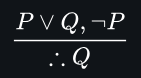 marble arch
No no, keep (x - 5)³ as it, just multiply it to (2x - 4x²)
Like 2x(x - 5)³ - 4x²(x - 5)³ looks right to you?
wintry cape
marble arch
No no, keep (x - 5)³ as it, just multiply it to (2x - 4x²)
Ah ok
wintry cape
marble arch
Like 2x(x - 5)³ - 4x²(x - 5)³ looks right to you?
I don’t think so
wintry cape
marble arch
No no, keep (x - 5)³ as it, just multiply it to (2x - 4x²)
So foil right
marble arch
wintry cape
So foil right
I didn't understand, what?
wintry cape
 marble arch
Ahhhh unfortunately no
wintry cape
Had a feeling so what did you mean
marble arch
marble arch
Like 2x(x - 5)³ - 4x²(x - 5)³ looks right to you?
Okay, take (x - 5)³ common here
wintry cape
marble arch
Like 2x(x - 5)³ - 4x²(x - 5)³ looks right to you?
Well this is what the question is right
Oh wait you made both ^3
marble arch
Nope, it's (x - 5)⁴ in the first one
marble arch
wintry cape
Oh wait you made both ^3
Yeah, that's what your answer gives if you expand it back
wintry cape
Ok I see
How does that help factor
I understand how like ^3 ^3 will get you back to the original answer
wintry cape
X^3 (x-1)
marble arch
Okay
Now if I had (x - 5)⁴ - (x - 5)³, then would there be any difference in the format?
wintry cape
Unsure
wintry cape
Y^3(y-1)
marble arch
Alright, now substitute (x - 5) back to y
wintry cape
X-5^3(x-5 -1)
marble arch
Bravo
marble arch
wintry cape
X-5^3(x-5 -1)
Also it's (x - 5)³, just confirming
So see, there's an (x - 5) still inside
Then only would it be (x - 5)⁴ - (x - 5)³
wintry cape
X-5 is left still
marble arch
Yes, inside the bracket, (x - 5) would once be left inside