#help-4
1 messages · Page 32 of 1
 stark wedge
 frozen laurel
stark wedge
when you write 3¼ do you mean three plus a quarter? or do you mean 3 raised to t...
frozen laurel
stark wedge
when you write 3¼ do you mean three plus a quarter? or do you mean 3 raised to t...
3 raised to 1/4
 fossil torrent
What do you mean by Newton's formula?
stark wedge
$x^2 - 3^{1/4} x + 3^{1/2}=0$
 rocky lotusBOT
Ann
 stark wedge
like this?
was unclear from your original msg
you can find the roots as complex numbers and then convert them into polar form.
 fossil torrent
In your original question as you posed it, the sign of the 3^(1/4) was negative
 vale dockBOT
@frozen laurel Has your question been resolved?
vale dockBOT
Channel closed
Closed due to timeout
Use .reopen if this was a mistake.
vale dockBOT
 Available help channel!
Send your question here to claim the channel.
Remember:
• Ask your math question in a clear, concise manner.
• Show your work, and if possible, explain where you are stuck.
• After 15 minutes, feel free to ping <@&286206848099549185>.
• Type the command .close to free the channel when you're done.
• Be polite and have a nice day!
Read #❓how-to-get-help for further information on how to ask a good question, and about conduct in the question channels.
 sharp cloud
Hi I need help
vale dockBOT
sharp cloud
Hi I need help


 hearty belfry
😭
rocky lotusBOT

 wraith heart
use pythagorean theorem
hearty belfry
sharp cloud
I need help from 1. to 3., I have zero knowledge about it but yeah
do you know pythagoras theorem
sharp cloud
hearty belfry
do you know pythagoras theorem
a^2 = b^2 + c^2?
stark wedge
before we get to pythagoras we need to also find out how to identify the right angle in each triangle
 hearty belfry
sharp cloud
a^2 = b^2 + c^2?
hearty belfry
sharp cloud
a^2 = b^2 + c^2?
it's generally written as a^2 + b^2 = c^2, but yeah
rocky lotusBOT
 sharp cloud
so far thats what Ive done but
I dont get how I'll get EG and BE if there aren't any values for them
stark wedge
well the idea for EG is that you focus to just the rightmost face (in which EG lives) and look at triangle EFG or EGH (your pick. if you can't pick, then EFG.)
noting that EG will be the hypotenuse of that triangle, while its legs are the known depth and height of the cuboid
sharp cloud
so EG = 4^2 + 3^2
stark wedge
EG**^2** = 4^2 + 3^2.
in pythagoras' theorem, all sides are squared.
you shouldn't omit the square on any of them. it's a pretty common stumbling spot.
sharp cloud
How about for BE?
stark wedge
look at triangle BGE, which is again a right triangle with the right angle sitting at G
sharp cloud
oh actually
stark wedge
and now its two known sides are EG (which we just found) and BG (which is the length, 12)
sharp cloud
its a right angle?
stark wedge
yes
imagine tipping the cuboid over so that face EFGH rests on the ground
then edge BG will be upright and thus perpendicular to anything that's level with the ground
incl. edge EG
stark wedge
sure, do you know the SOH-CAH-TOA mnemonic?
stark wedge
yes.
it's just this mnemonic and figuring out what goes where.
carefully mark all known side lengths and right angles in every triangle involved.
sharp cloud
could I ask for help on no. 2, b.?
uh length of BF to be exact
bcs I got 12.64
could I ask help double checking? Cs I think it's wrong

 turbid valve
[your pen's kinda blocking the diagram]
turbid valve
rocky lotus
I'm guessin it's this one tho
But I got root(160) too, which is 12 point something yh
vale dockBOT
@sharp cloud Has your question been resolved?
Channel closed
Closed by @sharp cloud
Use .reopen if this was a mistake.
Available help channel!
Send your question here to claim the channel.
Remember:
• Ask your math question in a clear, concise manner.
• Show your work, and if possible, explain where you are stuck.
• After 15 minutes, feel free to ping <@&286206848099549185>.
• Type the command .close to free the channel when you're done.
• Be polite and have a nice day!
Read #❓how-to-get-help for further information on how to ask a good question, and about conduct in the question channels.
 cosmic crest
need to find error bound on an approximation from simpson's rule.
rocky lotusBOT
Result:
2.1701388888889e-5
,calc 2.1701388888889e-5 * 3
rocky lotusBOT
Result:
6.5104166666667e-5
K * 6.5104166666667e-5
need to solve for K
iirc I need to find the max value of K within the given interval which is [1,4]
and choose K to be that
but I don't like graphing. could prob use calc 1 stuff to find max but I forgot, how does finding max point in an interval work again?
rocky lotusBOT
Result:
0.0015625
,calc 6.5104166666667e-5 * 24
rocky lotusBOT
Result:
0.0015625
!original
vale dockBOT
Please show the original problem, exactly as it was stated to you, with the entire original context. A picture or screenshot is best. If the original problem is not in English, then post it anyway! The additional context might still be helpful. Do your best to provide a translation.
cosmic crest
wraith heart
!original
integral from 1 to 4 x^4 dx. a. find sympsons rule approximation. b. find error bound on your approximation
I suppose I shouldn't have even included this context
my question is how can I find the max point on the given interval for x^4
wraith heart
either plot x^4 or evaluate it for a few values of x in your domain and find a pattern then use calculus to verify your pattern
cosmic crest
wraith heart
either plot x^4 or evaluate it for a few values of x in your domain and find a p...
what were the calculus steps to find a max within an interval?
(I know we need fourth derivative here and the max is 24=K but I wanna know how to solve harder problems without graphing)
wraith heart

In this section we discuss how to find the absolute (or global) minimum and maximum values of a function. In other words, we will be finding the largest and smallest values that a function will have.
vale dockBOT
Channel closed
Closed by @cosmic crest
Use .reopen if this was a mistake.
Available help channel!
Send your question here to claim the channel.
Remember:
• Ask your math question in a clear, concise manner.
• Show your work, and if possible, explain where you are stuck.
• After 15 minutes, feel free to ping <@&286206848099549185>.
• Type the command .close to free the channel when you're done.
• Be polite and have a nice day!
Read #❓how-to-get-help for further information on how to ask a good question, and about conduct in the question channels.
rocky lotusBOT
brandon
 vale dockBOT
@tawdry lintel Has your question been resolved?
vale dockBOT
@tawdry lintel Has your question been resolved?
vale dockBOT
@tawdry lintel Has your question been resolved?
vale dockBOT
@tawdry lintel Has your question been resolved?
 charred burrow
<@&286206848099549185>
vale dockBOT
@tawdry lintel Has your question been resolved?
 leaden kraken
what is the way you use?
vale dockBOT
Channel closed
Closed due to timeout
Use .reopen if this was a mistake.
Available help channel!
Send your question here to claim the channel.
Remember:
• Ask your math question in a clear, concise manner.
• Show your work, and if possible, explain where you are stuck.
• After 15 minutes, feel free to ping <@&286206848099549185>.
• Type the command .close to free the channel when you're done.
• Be polite and have a nice day!
Read #❓how-to-get-help for further information on how to ask a good question, and about conduct in the question channels.
 tight violet
I need a reminder on how to do these questions cause I forgot
 tight violet
I forgot how they work I need an explanation on them to jog my memory
hearty belfry
tight violet
I forgot how they work I need an explanation on them to jog my memory
do you know what nCr is?
which just means n choose r
tight violet
hearty belfry
which just means n choose r
I’m Pretty sure n is the max number of options and r is the amount of options that you can choose between
Like if theres 12 teachers you can choose between 7
So 12c7
Is that right?
hearty belfry
yep 
tight violet
hearty belfry
yep <:joia:1376070667174281226>
When does it become a fraction though?
Cause in some questions it becomes like
12!/7!
hearty belfry
tight violet
When does it become a fraction though?
that's because they use this formula

although 12!/7! is the wrong option
tight violet
hearty belfry
that's because they use this formula
that’s not what I mean in like some questions the answer becomes 12!-7!/9! it’s weird I forgot how that worked
The formula isn’t what I’m concerned about
tight violet
hearty belfry
although 12!/7! is the wrong option
Yeah that was just an example
hearty belfry
tight violet
that’s not what I mean in like some questions the answer becomes 12!-7!/9! it’s ...
which question?
tight violet
Let me find one rq
hearty belfry
alright
tight violet
hearty belfry
alright
 hearty belfry
tight violet
hearty belfry
tight violet
the wording is a bit confusing but I think it's just another nCr question but you have duplicates for R?
also Darren not knowing how to spell his name is funny to me 
tight violet
hearty belfry
the wording is a bit confusing but I think it's just another nCr question but yo...
The answer key says the answer is 5! Over 2! Which is 60 cause of the duplicate r but I need to what else can cause fractions like these to occur
tight violet
hearty belfry
also Darren not knowing how to spell his name is funny to me <:opencry:586078614...
There’s a visual of it
 hearty belfry
tight violet
The answer key says the answer is 5! Over 2! Which is 60 cause of the duplicate ...
hearty belfry
tight violet
The answer key says the answer is 5! Over 2! Which is 60 cause of the duplicate ...
It's dependent on what the question asks if you try to figure out what causes the fraction to occur
like the question says they already had the letter D being in front
so D is excluded
tight violet
hearty belfry
like the question says they already had the letter D being in front
It would be 1 x 5 x 4 x 3 x 2 x1 I think but the two on the bottom I’m not sure why it’s there could you explain why?
I get it’s cause of the duplicate r but why do we divide and not subtract or smth
 tawny moon
one hint for some weird counting that may show up: the two Rs are identical, so swapping those two Rs don't change anything and they count as duplicates
we divide instead of subtract to account for the duplicates because for each arrangement of ARREN, you can get an identical arrangement by swapping the two Rs
since they count as duplicates, each arrangement of ARREN actually counts as two arrangements - not what we want here
tight violet
tawny moon
we divide instead of subtract to account for the duplicates because for each arr...
Oh
Alright
What about the binomial theorem

How would I solve these questions?
tawny moon
have you learnt about the theorem?
tawny moon
then this one is just direct application of binomial theorem, then a bit of tedious expansion
use pascal's triangle to help
tight violet
I’m not sure how to write something in descending order though
tawny moon
descending order of x is just x^5, x^4, x^3, etc.
tight violet
tight violet
What about the binomial theorem
The middle term for 211 is 4 right?
hearty belfry
tight violet
The middle term for 211 is 4 right?
you mean 3rd posistion of the terms?
it's to the power of 6 so the middle term would be the 3rd term
tight violet
hearty belfry
you mean 3rd posistion of the terms?
I’m blanking on something cause I remember that one term in the binomial Theorem was the number of terms -1
I thought it was the exponent but I guess not
Like this
 hearty belfry
that's the defenition of a factorial when you do n(n-1)(n-2).....3x2x1
tight violet
Oh it was R that was -1
What’s the trick with these

My bad for the bad lightning I’ll use the flash on my phone
 vale dockBOT
@tight violet Has your question been resolved?
tight violet
tight violet
The question was determine the number of paths from point a to b
vale dockBOT
@tight violet Has your question been resolved?
vale dockBOT
Channel closed
Closed due to timeout
Use .reopen if this was a mistake.
vale dockBOT
Available help channel!
Send your question here to claim the channel.
Remember:
• Ask your math question in a clear, concise manner.
• Show your work, and if possible, explain where you are stuck.
• After 15 minutes, feel free to ping <@&286206848099549185>.
• Type the command .close to free the channel when you're done.
• Be polite and have a nice day!
Read #❓how-to-get-help for further information on how to ask a good question, and about conduct in the question channels.
 midnight pier
I was able to reduce the equation to (b-6)(a-3) = 18. and then i basically made cases using the idea of factors of 18.
I was able to get the correct answer (6)
But I keep wondering if there is a neater way to do this that does not involve making so many cases, and i also had a raging fear throughout that i'll miss some cases.
Also I spent a couple of minutes making sure that I didnt have a case wherein both the factors are negative. Is there a cleverer way to know that there arent?
 vale dockBOT
midnight pier
I was able to reduce the equation to (b-6)(a-3) = 18. and then i basically made ...
vale dockBOT
midnight pier
I was able to reduce the equation to (b-6)(a-3) = 18. and then i basically made ...
 lament copper
All the positive factors of 18 are solutions
The negative solutions you do have to check to see if they are positive or not
midnight pier
so basically as soon as i know the factors of 18, i can tell the number of positive solutions
midnight pier
lament copper
All the positive factors of 18 are solutions
is this because the coefficient of a and b is 1?
lament copper
let (a-3)(b-6)=cd
one solution would be a-3=c and b-6=d
so a=c+3 and b=d+6
if c and d are positive integers then a and b are clearly positive
vale dockBOT
@midnight pier Has your question been resolved?
vale dockBOT
Channel closed
Closed due to timeout
Use .reopen if this was a mistake.
vale dockBOT
Available help channel!
Send your question here to claim the channel.
Remember:
• Ask your math question in a clear, concise manner.
• Show your work, and if possible, explain where you are stuck.
• After 15 minutes, feel free to ping <@&286206848099549185>.
• Type the command .close to free the channel when you're done.
• Be polite and have a nice day!
Read #❓how-to-get-help for further information on how to ask a good question, and about conduct in the question channels.
stark wedge
well any multiple of 4 is non-square-free
 ebon glade
well certainly at most 8 cause two of them are divisible by 4
stark wedge
so's any multiple of 9
ebon glade
I would probably brute force with a computer and check whether there is a small example with 8
the one divisible by 9 could be one of those divisible by 4
 ruby sleet
33-42?
ebon glade
well that was easy
ruby sleet
We just said there can't be more than 8
And here's an example with 8
So...
0
Bc you said you can have 10 non-square free consecutive integers
ebon glade
I suppose by crt you can solve a= 0 mod 2^2, a+1=0 mod 3^2, a+2 = 0 mod 5^2, a+3=0 mod 7^2, ...
or is there a nicer solution to that
ruby sleet
ebon glade
I suppose by crt you can solve a= 0 mod 2^2, a+1=0 mod 3^2, a+2 = 0 mod 5^2, a+3...
Yeah that's how I would have done
vale dockBOT
Channel closed
Closed by @tawdry lintel
Use .reopen if this was a mistake.
vale dockBOT
Available help channel!
Send your question here to claim the channel.
Remember:
• Ask your math question in a clear, concise manner.
• Show your work, and if possible, explain where you are stuck.
• After 15 minutes, feel free to ping <@&286206848099549185>.
• Type the command .close to free the channel when you're done.
• Be polite and have a nice day!
Read #❓how-to-get-help for further information on how to ask a good question, and about conduct in the question channels.
 prime shore
can anybody kindly solve this problem?
 vale dockBOT
prime shore
can anybody kindly solve this problem?
vale dockBOT
prime shore
can anybody kindly solve this problem?
 magic lynx
uh
okay
so $f(x,y)=\frac{(x^2-y^{-2})^x(x-y^{-1})^{y-x}}{(y^2-x^{-2})^y(y+x^{-1})^{x-y}}$
rocky lotusBOT
Arnavutköy
 magic lynx
we can rewrite $x^2-y^{-2}$ using the difference of squares formula
rocky lotusBOT
Arnavutköy
 magic lynx
$x^2-y^{-2}=(x+y^{-1})(x-y^{-1})$
rocky lotusBOT
Arnavutköy
 magic lynx
we can do a similar method for $y^2-x^{-2}$
rocky lotusBOT
Arnavutköy
 magic lynx
Thus, $f(x,y)=\frac{(x^2-y^{-2})^x(x-y^{-1})^{y-x}}{(y^2-x^{-2})^y(y+x^{-1})^{x-y}}=\frac{(x+y^{-1})^x(x-y^{-1})^x(x-y^{-1})^{y-x}}{(y-x^{-1})^y(y+x^{-1})^y(y+x^{-1})^{x-y}}$
rocky lotusBOT
Arnavutköy
 magic lynx
combining exponents with the same bases, we get $f(x,y)=\frac{(x+y^{-1})^x(x-y^{-1})^y}{(y-x^{-1})^y(y+x^{-1})^x}$
rocky lotusBOT
Arnavutköy
 magic lynx
let us rewrite this as $\left(\frac{x+y^{-1}}{y+x^{-1}}\right)^x\left(\frac{x-y^{-1}}{y-x^{-1}}\right)^y$
rocky lotusBOT
Arnavutköy
 magic lynx
note that $\frac{x+y^{-1}}{y+x^{-1}}=\frac{\frac{xy+1}{y}}{\frac{xy+1}{x}}=\frac{x}{y}$
rocky lotusBOT
Arnavutköy
 magic lynx
similarly, note that $\frac{x-y^{-1}}{y-x^{-1}}=\frac{x}{y}$
rocky lotusBOT
Arnavutköy
 magic lynx
Therefore, $f(x,y)=\left(\frac{x}{y}\right)^x\left(\frac{x}{y}\right)^y=\left(\frac{x}{y}\right)^{x+y}$
rocky lotusBOT
Arnavutköy
 magic lynx
np
 fossil pelican
Why don't people just use Google?
vale dockBOT
@prime shore Has your question been resolved?
Channel closed
Closed by @prime shore
Use .reopen if this was a mistake.
vale dockBOT
Available help channel!
Send your question here to claim the channel.
Remember:
• Ask your math question in a clear, concise manner.
• Show your work, and if possible, explain where you are stuck.
• After 15 minutes, feel free to ping <@&286206848099549185>.
• Type the command .close to free the channel when you're done.
• Be polite and have a nice day!
Read #❓how-to-get-help for further information on how to ask a good question, and about conduct in the question channels.
 ivory valley
 vale dockBOT
ivory valley
vale dockBOT
ivory valley
 vale dockBOT
@ivory valley Has your question been resolved?
 light saddle
line 2 after "furthermore", what you added in the numerator should cancel out no?
ivory valley
I thought I can still write it because it approaches 0
Before that I tried adding and subtracting terms like x(t0)y(t) but it didn't work out
light saddle
it should be "that thing" / t-t0 that approaches 0 i think
ivory valley
Since continuity is necessary and x,y are comtinuous that would then make xy continuous as well, So I used that
I basically added -y(t)x'(t0) + y(t0)x'(t0) which exists by assumption and goes to 0
lol
realized
light saddle
but its $\frac{-y(t)x'(t0) + y(t0)x'(t0)}{t-t_0}$ that you added
rocky lotusBOT
bloubbloub
 light saddle
I mean you realized
ivory valley
No
ivory valley
rocky lotus
**bloubbloub**
That doesnt make sense, I already considered t-t_0
light saddle
oh I didn't see the '
ivory valley
So basically I added -x'(t0)(y(t)-y(t0)) so an error term that goes to 0
I think
The way I did it, I was looking what I needed to add and subtract precisely
light saddle
ok yeah I see
ivory valley
I be home in a bit
light saddle
I don't see any problems then, since it's very similar to the proof for n=1 anyways
rocky lotusBOT
 ivory valley
I should have added this I guess
ivory valley
light saddle
ok yeah I see
Thank you very much for your time, patience and help! 
.solved
vale dockBOT
Channel closed
Closed by @ivory valley
Use .reopen if this was a mistake.
vale dockBOT
Available help channel!
Send your question here to claim the channel.
Remember:
• Ask your math question in a clear, concise manner.
• Show your work, and if possible, explain where you are stuck.
• After 15 minutes, feel free to ping <@&286206848099549185>.
• Type the command .close to free the channel when you're done.
• Be polite and have a nice day!
Read #❓how-to-get-help for further information on how to ask a good question, and about conduct in the question channels.
 grizzled furnace
 vale dockBOT
grizzled furnace
grizzled furnace
vale dockBOT
grizzled furnace
grizzled furnace
someone pls explain
 fickle rose
the calculator computes arcsin(1/2)
which is actaully 30deg
but arcsin domain is limited to it "cuts" off the other solution at 150deg
grizzled furnace
but where'd they get the 150?
fickle rose
at 150deg is you draw out the triangle on the unit circle
indeed it has a height of 1/2
as shown on the diagram
 hexed basin
hey can someone help me w my algebra
hexed basin
idk how to do it been trying for like an hour and a half
hexed basin
fickle rose
<#488120190538743810>
ty
grizzled furnace
hexed basin
hey can someone help me w my algebra
bet
grizzled furnace
send me the thing
hexed basin
js one of the problems?
grizzled furnace
ye for now
hexed basin
3 (2x + 2) - 3x = 6 + 3x
grizzled furnace
alr
hexed basin
i think im js slow
grizzled furnace
do you have to solve for x
 pliant sonnet
hexed basin
btw heads up im a little dumb so when u explain it js pls make it simple 🙏
pliant sonnet
hexed basin
btw heads up im a little dumb so when u explain it js pls make it simple 🙏
Its okay once you get it it will be very easy
grizzled furnace
or do you isolate x
hexed basin
i solve for x
hexed basin
pliant sonnet
Its okay once you get it it will be very easy
ik that because anytime i understand a unit in math i get an a for that unit
hexed basin
no XD
hexed basin
school
its a school work packet my teacher gave us all and it ment for class but im using it to study
pliant sonnet
You didn’t learn distrubitve law yet?
 lyric sundial
Yeah it seems weird
grizzled furnace
wait do you know how to expand
it's basically the same thing
I have the working out
grizzled furnace
ok.
pliant sonnet
Uh
grizzled furnace
um ok
well
this is the woking out:
3(2x+2)-3x=6+3x
=6x+6-3x=6+3x
=3x+6=6+3x
=6=6
vale dockBOT
@grizzled furnace Has your question been resolved?
Channel closed
Closed by @grizzled furnace
Use .reopen if this was a mistake.
grizzled furnace
.close
vale dockBOT
Available help channel!
Send your question here to claim the channel.
Remember:
• Ask your math question in a clear, concise manner.
• Show your work, and if possible, explain where you are stuck.
• After 15 minutes, feel free to ping <@&286206848099549185>.
• Type the command .close to free the channel when you're done.
• Be polite and have a nice day!
Read #❓how-to-get-help for further information on how to ask a good question, and about conduct in the question channels.
midnight pier
so i have a cubic polyomial, x^3 + 10x^2 - 11x - 180, i am trying to learn the factor theorem,incase i get to do gcse FM, but im wondering how to factorise/solve a cubic, as the equation is very long, and ive heard about trial and erroring roots of the constant but im not sure if that is the most efficient way
vale dockBOT
midnight pier
so i have a cubic polyomial, x^3 + 10x^2 - 11x - 180, i am trying to learn the f...
midnight pier
so synthetic div is dividing by the root that makes f(x) = 0?
 oak crane
yep
midnight pier
ah kk, ill try that and come back
oak crane
$$\polylongdiv{x^4 - 3x^2 - 5x + 2}{x + 2}$$
rocky lotusBOT
アキラ (>⩊<)
 oak crane
u can do something like this in latex btw
just a sample
oh shit i got very active lol
oak crane
oak crane
$$\polylongdiv{x^4 - 3x^2 - 5x + 2}{x + 2}$$
another sample
$$\polyhornerscheme[x=-2]{x^4 - 3x^2 - 5x + 2}$$
rocky lotusBOT
アキラ (>⩊<)
 midnight pier
oak crane
u can do something like this in latex btw
midnight pier
oak crane
u can do something like this in latex btw
o
midnight pier
oak crane
oh shit i got very active lol
w
midnight pier
oak crane
i personally like long div bc its easier and faster
so uh ive forgotten synthetic div..
oak crane
ok so did u do something?
oak crane
nice
so u can make it as x=-5 if ur gonna use synthetic div
but are u sure x+5 works?
light saddle
I just wanted to add that HOLY that is so cool that you can use the bot to do that, thanks for showing
rocky lotusBOT


 Requested by kensukeken
oak crane
Requested by kensukeken
oak crane
see
oak crane
yep
midnight pier
ahhhhh
oak crane
if it was x+5 that would make it -5 and if x-5 then its 5 🙂
midnight pier
so i put x - 5 outside my division?
oak crane
for long div?
oak crane
thats for long div yes
midnight pier
so whats the difference betweeen that and synthetic?
oak crane
sorry if my english sucks but in long div u could write the x and makes it easier to solve
as for synthetic u could remove the x
midnight pier
oh so synthetic is just -5 divide x^3 + 10x^2 - 11x - 180
also ur english is fine bro
oak crane
oak crane
as for synthetic u could remove the x
e.g u have x^3 + 10x^2-11x-180 that would make it 1+10-11+180
midnight pier
ohhhh
oak crane
we are removing x variables here
midnight pier
ohhh so synthetic gets rid of x i seeeee
oak crane
yep
 quiet tide
"sorry if my english sucks" as bro is speaking perfect english
midnight pier
so which is more efficient in an exam scenario?
midnight pier
quiet tide
"sorry if my english sucks" as bro is speaking perfect english
lol fr
better english than me gng
(and better maths too)
oak crane
quiet tide
"sorry if my english sucks" as bro is speaking perfect english
sometimes ppl say it sucks and some of them say its good so i cant disagree with this lol
midnight pier
so i use synthetic?
oak crane
u can use both
quiet tide
oak crane
sometimes ppl say it sucks and some of them say its good so i cant disagree with...
if u always speak like this they might just not be smart enough to understand ur english ig 😭
oak crane
whatever u think is the best
midnight pier
uhh
oak crane
quiet tide
if u always speak like this they might just not be smart enough to understand ur...
its just i speak english bc its the only language they know
midnight pier
o its 00:00 lol perfect a brand new day
oak crane
lol
oak crane
i prefer long div
midnight pier
kk can you teach me it then pls..
midnight pier
thankss
oak crane
let me write it down for u
midnight pier
kk
quiet tide
watchu know about trenbolone vyass
oak crane
start doing like this
 midnight pier
acetate better icl
midnight pier
oak crane
start doing like this
yea
quiet tide
midnight pier
acetate better icl
frfr (i have never touched it im scared)
midnight pier
quiet tide
watchu know about trenbolone vyass
basically binds to androgen receptors in the muscle cells and acts as synthetic hormone(testosterone) to promost MPS(muscle protien synthesis) which enhances rate at which muscle is gronw
midnight pier
quiet tide
frfr (i have never touched it im scared)
same lol
midnight pier
oak crane
u need to divide it just like u are dividing 25/2000
so uh
wheres the 25 and 2000 come from...
OH ITS AN EXAMPLE
im tapped nvm 😭
so how do i divide x^3 by x for this
oak crane
think of a small variable that u could subtract it by x^3
midnight pier
so its x^3 - x?
oak crane
and for 10x^2 as well
oak crane
midnight pier
so its x^3 - x?
not quite
oak crane
u need to find a variable that makes it x^3 when u multiple so they can go away
midnight pier
oh x^2 and x
oak crane
x^2 is correct but x isn't 🙂
oak crane
so u have x^2 and u need to find something that multiples by 10x^2
midnight pier
ohhhhh
oak crane
its gonna be a number and variable
oak crane
leave x^2 as its for now bc thats for x^3
quiet tide
i dont even remember the last time i did long division such an ancient skill
midnight pier
lol
oak crane
we are trying to find 10x^2
midnight pier
10x and x?
oak crane
wait i think im starting making things complicated for u
midnight pier
😭
 final adder
oak crane
oh shit i got very active lol
final adder
oak crane
oh shit i got very active lol
eyy congrats on VA!
oak crane
since we have x+5 as divider i want u to find a number that multiples 5 to get lower number
oak crane
final adder
eyy congrats on VA!
thanks i got it again after a while
midnight pier
oak crane
since we have x+5 as divider i want u to find a number that multiples 5 to get l...
so like 5 and a negative?
oak crane
midnight pier
so like 5 and a negative?
5 x [something] = 10
oak crane
nonono
midnight pier
shit im tripping lol
midnight pier
nanaa all good my brains fried lol but i aint gonna sleep till i understand this lmao
oak crane
ok here's a thing: what are the two number that gives 5x?
midnight pier
5 and x?
oak crane
5x and 1 lol
quiet tide
u should watch organic chem tutor video on this
midnight pier
yeaaa
quiet tide
u will leave with 80% confidence with these problems easily
oak crane
u can use khan academy as well
midnight pier
kk
quiet tide
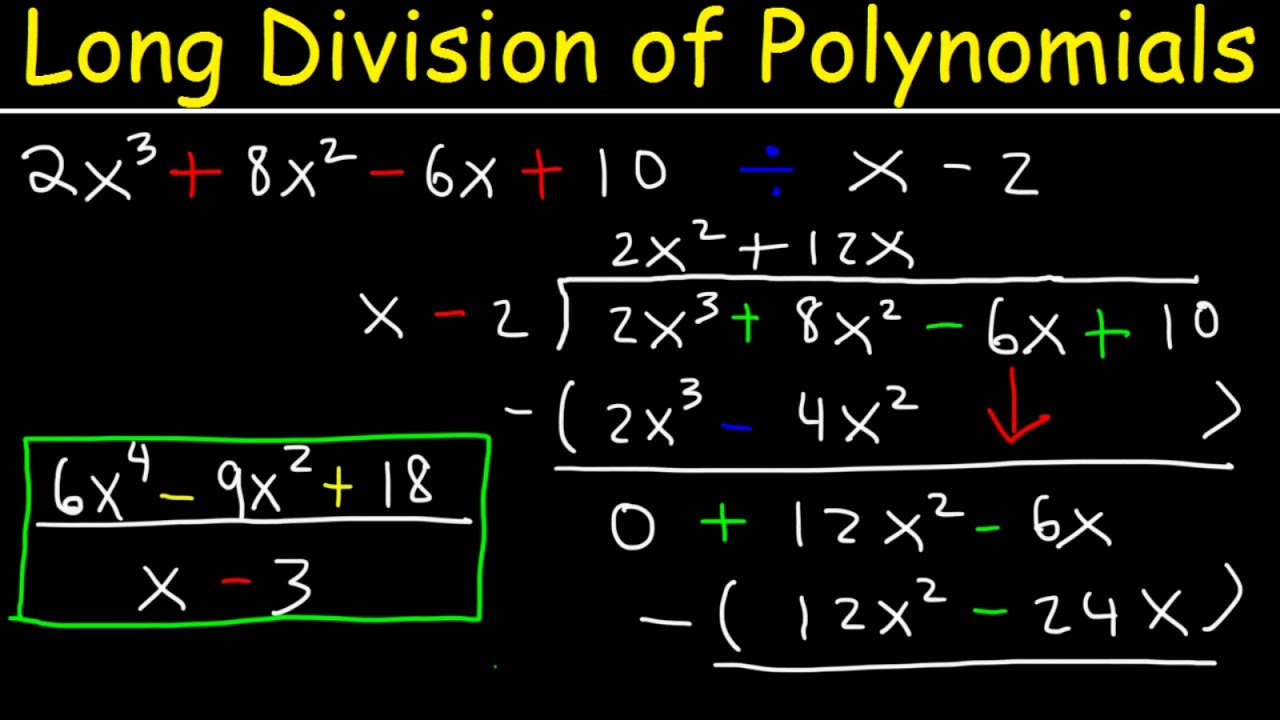
This video tutorial explains how to perform long division of polynomials with remainder and with missing terms.
Algebra Review: https://www.youtube.com/watch?v=i6sbjtJjJ-A
Join My Newsletter:
https://bit.ly/4jUXp6M
Algebra - Free Formula Sheets:
https://www.video-tutor.net/formula-sheets.html...
oak crane
midnight pier
SHIT
do u get it or still stuck?
midnight pier
oak crane
do u get it or still stuck?
uh i mean i understand where the numbers come from now
oak crane
oh fair
midnight pier
and why long division sucks and calculators should take over lol
not the clankers tho..
oak crane
now we have x^2+5x
midnight pier
kk
oak crane
can u continue from this?
midnight pier
where do i write x^2 and 5x
oak crane
i forgor what do u call this in english
midnight pier
long division?
oak crane
yes
midnight pier
yeaaa
quiet tide
thats the dividend
oak crane
just solve it like u are dividing
quiet tide
if u mean the final answer
midnight pier
kk
 midnight pier
oh my days im so tapped i wrote the cubic above the line.
quiet tide
thats part of the dividend
 midnight pier
Why?
final adder
oak crane
i forgor what do u call this lol
the quotient, i think?
dividend's on the inside
dividend/divisor=quotient
oak crane
perfect thanks
oak crane
midnight pier
Why?
bc u'd get 25x
midnight pier
huh...
oak crane
also i'd suggest making negative so u can get rid of it easily after
midnight pier
im kinda lost rn...
oak crane
midnight pier
im kinda lost rn...
i told u i suck at explaining things
midnight pier
but why do we do 5 * 5x and not 5 * 11x or something, and isnt it 5x^2
midnight pier
oak crane
i told u i suck at explaining things
fair enough
oak crane
midnight pier
but why do we do 5 * 5x and not 5 * 11x or something, and isnt it 5x^2
bc -11x is negative
midnight pier
why does the sign matter?
oak crane
it matters bc u need to cancel them at the end
when the next number comes
for 180
does that makes sense?
oak crane
bc u found a number to get rid of 10x^2 first
turbid valve
midnight pier
but then why do you multiply the 5 with 5x and not 5x^2
So, that 5x you get, you're multiplying it by the whole divisor, which here is x+5
midnight pier
but its 5x^2?
midnight pier
midnight pier
Ok i have this
are we talking abt the very bottom line?
oak crane
turbid valve
So, that 5x you get, you're multiplying it by the _whole divisor_, which here is...
u can continue from here 🙂
turbid valve
turbid valve
So, that 5x you get, you're multiplying it by the _whole divisor_, which here is...
Do that, write that product below the 5x^2 -11x and subtract
midnight pier
oak crane
u can continue from here 🙂
o shi ty for the bhelp
midnight pier
turbid valve
Do that, write that product below the `5x^2 -11x` and subtract
so i do x^3 + 5x^2 - 0 + 5x^2 - 11x?
turbid valve
So, I would have asked a question before jumping straight into (what this is called is) algebraic long division:
Do you know how to do long division (i.e. with numbers)?
midnight pier
its been a while but yeahh i think so
turbid valve
Make sure you can still do those
midnight pier
drop the remainder down, subtract, bring it to the top, drop down and rinse and repeat
turbid valve
ye
That's what we're doing here as well (but with shitty letters in the mix )
So here
 midnight pier
yeaa
turbid valve
The first bit's a zero, that can piss off 
turbid valve
The rest, 5x^2 - 11x, is the remainder we were doing more rinsing with
midnight pier
do i move the 5x^2 to where the 0 was?
turbid valve
midnight pier
do i move the 5x^2 to where the 0 was?
You wouldn't move digits like that in the number variant would you
So we're not doing that here either
turbid valve
turbid valve
So, that 5x you get, you're multiplying it by the _whole divisor_, which here is...
So firstly, what product did you get here?
midnight pier
turbid valve
You wouldn't move digits like that in the number variant would you
true
midnight pier
turbid valve
So firstly, what product did you get here?
so its 5x^2 - 11 *5?
or just the 5x^2
turbid valve
you're getting ahead of yourself
midnight pier
o
midnight pier
turbid valve
you're getting ahead of yourself
thats what all my teachers say...
turbid valve
So remember how you got that yellow term there?
 midnight pier
yea i divided x^3 by x
turbid valve
And then that, once you got that, you'd multiply yellow with pink to get orange?
(and then did the subtraction)
this is the rinsing and repeating we've got to
midnight pier
wait wym yello * pink
turbid valve
midnight pier
wait wym yello * pink
The yellow and pink things I've highlighted
turbid valve
Same thing again at this stage - except here, it's blue times pink, to get purple
midnight pier
you do x ^ 2 * x to get the x^3 and the x * x^2 to get 5x^2
turbid valve
midnight pier
you do x ^ 2 * x to get the x^3 and the x * x^2 to get 5x^2
yeeeee
turbid valve
(essentially we're looking at the big terms to find what to put on the top, and then multiplying this with the whole divisor just to fine-tune and get a new division to check)
midnight pier
kk
turbid valve
midnight pier
5x^2 + 25x
yeee
turbid valve
careful
midnight pier
yea -11 - (+25) = 14
turbid valve
Not quite
turbid valve
Think number-line tactics - minus means left, plus means right
You go left 11, then left 25
Which makes?
midnight pier
36...
turbid valve
In which direction?
midnight pier
negative sir...
turbid valve
midnight pier
lmao its habit i call teachers sir lmao
nah igu lol
midnight pier
especially when i forgot my negatives
midnight pier
ahh kk so(lemme get a pic)
turbid valve
If you had a
9
4
5
midnight pier
 turbid valve
(one way I avoid this hassle, btw, is thinking "Okay, so I've written down this +25x; what would I need to add to this to get -11x?")
midnight pier
uh
turbid valve
[this works for me, it may work for you, give it a try and see what works]
turbid valve
midnight pier
Back to this tho - now bring down that -180
turbid valve
-36x - 180, but yh
midnight pier
yeaa
turbid valve
midnight pier
wait dafuq how did I not catch that
 turbid valve
midnight pier
-36...
turbid valve
midnight pier
-36...
we just said this is a minus lmao
midnight pier
my signs are
not my strong suit...
yeahh memory of a goldfish im tellling you.. 😭
turbid valve
Practise number line stuff as well then
midnight pier
if maths had no signs itd be sound
turbid valve
dw, it might be basic shit, but that shit's important 🫡
midnight pier
turbid valve
dw, it might be basic shit, but that shit's important 🫡
yeahhhh thats true af lmao
turbid valve
It's never a bad idea to strengthen your arithmetic skills
turbid valve
turbid valve
-36x - 180, but yh
Onwards then - the "big" term there is that -36x
midnight pier
do i revise trig or do the arithmatic on sparx? i always do the trig 😭
midnight pier
turbid valve
Onwards then - the "big" term there is that -36x
yea
turbid valve
("big", as in it's the one with the higher x-power)
midnight pier
so im guessing / by x?
turbid valve
x divides -36x how many times?
midnight pier
once
turbid valve
uhhh not quite?
midnight pier
shit. im embarrasing myself here lmao
turbid valve
Alternatively phrased, how many multiples of x make -36x?
turbid valve
This might just be a phrasing thing dw
midnight pier
😭
turbid valve
Not **+**36
midnight pier
-36
turbid valve
yeee
midnight pier
i keep forgetting those damn signs lmao
 midnight pier
yea did that
turbid valve
Multiply this blue by pink to get the green bit
turbid valve
yee
turbid valve
midnight pier
ITS JUST X^2 + 5X
WOAH WHAT
turbid valve
turbid valve
You've written the -36 in there
So the whole quotient (result) is x^2 + 5x -36
that bit's part of the answer too
turbid valve
midnight pier
so that cancels
(even if it cancels, if it's the last step, write down the 0 you get under the yellow line - so it's clear there's no remainder)
midnight pier
so i write x^2 + 5x - 36 up top
turbid valve
ye
midnight pier
and then 36x +180 at bottom
turbid valve
where the green bit is, yh
midnight pier
so that cancels to 0
turbid valve
ye
turbid valve
midnight pier
(X+2.5)(X+2.5)
btw, this didn't work anyways lol - A^2 + 2B doesn't equal (A + B)(A + B); I think you got confused with difference-of-two-squares
midnight pier
turbid valve
btw, this didn't work anyways lol - A^2 + 2B doesn't equal (A + B)(A + B); I thi...
Yeaaa
Hmmm
So its x -9 x + 4
X = -9*
X = 4*
turbid valve
ye
turbid valve
midnight pier
so i have a cubic polyomial, x^3 + 10x^2 - 11x - 180, i am trying to learn the f...
So check this again then
We'd begun with a cubic
midnight pier
So would it have worked if i do cubic formula
turbid valve
Well the third factor was the thing we were dividing by, wasn't it
midnight pier
ahhhhhh
turbid valve
midnight pier
So 5,-9,4 are the roots
Not +5
midnight pier
-5
turbid valve
midnight pier
So would it have worked if i do cubic formula
This?
turbid valve
What formula do you have?
turbid valve
fyi there are a few
turbid valve
(related: read about Nicolo Tartaglia https://en.wikipedia.org/wiki/Nicolo_Tartaglia#Solution_to_cubic_equations - not because of the maths but because it's comical lol)

Nicolo, known as Tartaglia (Italian: [tarˈtaʎʎa]; 1499/1500 – 13 December 1557), was an Italian mathematician, engineer (designing fortifications), a surveyor (of topography, seeking the best means of defense or offense) and a bookkeeper from the then Republic of Venice. He published many books, including the first Italian translations of A...
My guess is you mean this one?
 midnight pier
Lmao bro saw his work “ by accident”
midnight pier
turbid valve
My guess is you mean this one?
Yhhhh
turbid valve
turbid valve
My guess is you mean this one?
Right, so what you gotta do here is steal the equation's antidepressants manipulate the cubic in such a way that it resembles the first equation here
turbid valve
Now, the actual method to do that is not really that obvious
Let's see if I can't find a good explanation somewhere...
midnight pier
I mean your making it t^3 +pt +q.
midnight pier
turbid valve
Let's see if I can't find a good explanation somewhere...
oki
midnight pier
midnight pier
I mean your making it t^3 +pt +q.
Hiw hard is that
turbid valve
midnight pier
I mean your making it t^3 +pt +q.
(yee - so if there's no squared term, that's easy - but if there is one, it's not as clear-cut)
midnight pier
multiply by x…
turbid valve
(this is where I look through my uni notes to see if I might find something  )
)
I've stumbled across these notes https://people.math.osu.edu/derdzinski.1/courses/4552/4552-cubic-quartic.pdf btw - not mine
midnight pier
turbid valve
(this is where I look through my uni notes to see if I might find something <:gi...
lol
turbid valve
This being the search term
 midnight pier
turbid valve
This being the search term
midnight pier
turbid valve
This being the search term
lmao yk its tuff when it starts with “math 4552”
turbid valve
yh, dw too much about it, it's rather a lot for someone not used to seeing tons of algebra lol
turbid valve
midnight pier
lmao yk its tuff when it starts with “math 4552”
4552 is just a module code lol
midnight pier
turbid valve
yh, dw too much about it, it's rather a lot for someone not used to seeing tons ...
Yeaa i mean i prefer algebra lmao
turbid valve
Like what AQA and Edexcel do with their exams tho
It's semi-random
There's no "this is 0001, this is 0002, etc"
midnight pier
Ohhhhh
turbid valve
this is a weird way to present Cardano's formula, but it's pretty useful for computation

If it's not clear - find Q and R first; then S and T
 turbid valve
If it's not clear - find Q and R first; then S and T
turbid valve
turbid valve
If it's not clear - find Q and R first; then S and T
Then x_1, x_2 and x_3 are your solutions
midnight pier
turbid valve
this is a weird way to present Cardano's formula, but it's pretty useful for com...
So why have they put different equations for s
turbid valve
for s?
midnight pier
Yhh
 turbid valve
midnight pier
Where has w come fromv
turbid valve
midnight pier
Where has w come fromv
This is the not-at-all-obvious trick to get rid of this substitution
midnight pier
turbid valve
This is the not-at-all-obvious trick to get rid of this substitution
So the replacing thing confused me
turbid valve
So we can get them with 3 equations
turbid valve
(not unlike taking the plus or minus from the quadratic)
turbid valve
turbid valve
this is a weird way to present Cardano's formula, but it's pretty useful for com...
Well I'm reading off of https://proofwiki.org/wiki/Cardano's_Formula for this
turbid valve
midnight pier
Where has w come fromv
But this is doing a similar proof
midnight pier
turbid valve
Well I'm reading off of https://proofwiki.org/wiki/Cardano's_Formula for this
K
turbid valve
To briefly explain, because I agree this is so not clear lol
It's ridiculously good
Suppose there z were a solution
Further, I'm gonna call a new variable w, so defined up there in that image
midnight pier
How do they get the equation for the roots? Do they js make it up or sum
midnight pier
turbid valve
Further, I'm gonna call a new variable w, so defined up there in that image
Kk
turbid valve
If I then rearrange that w-definition to make z the subject, and then plug this into the cubic and simplify, I end up with no w^2 term
turbid valve
I've stolen the cubic's antidepressants turned this into a depressed cubic
turbid valve
Now it turns out we've known solutions to these for centuries
midnight pier
O
turbid valve
[but, as that Tartaglia story explains, because mathy bois were so busy boasting about who had the bigger formula. they didn't want to share it]
 turbid valve
https://tenor.com/view/skirk-childe-genshin-impact-yeet-throw-gif-15362850204959...
turbid valve
turbid valve
https://tenor.com/view/skirk-childe-genshin-impact-yeet-throw-gif-15362850204959...
Given the character being yeeted here is also called Tartaglia, this is an accurate depiction of what these were like
midnight pier
turbid valve
[but, as that Tartaglia story explains, because mathy bois were so busy boasting...
Lmaoo
midnight pier
turbid valve
Given the character being yeeted here is also called Tartaglia, this is an accur...
😭😭🤣🤣
So its js rearranging in a nutshell
turbid valve
ye
midnight pier
Ahhhh i see
turbid valve
The rest of that PDF involves making some more snarky substitutions to get some nifty formulas
midnight pier
turbid valve
The rest of that PDF involves making some more snarky substitutions to get some ...
yea ill have a proper look in the morning lol
Maths on energy drinks surely breaks laws somewhere
turbid valve
turbid valve
Well I'm reading off of https://proofwiki.org/wiki/Cardano's_Formula for this
This one might be a little easier to digest
The reason these are uni-level explanations at all btw is to do with the context they're in
midnight pier
turbid valve
This one might be a little easier to digest
kk
midnight pier
turbid valve
The reason these are uni-level explanations at all btw is to do with the context...
wym?
turbid valve
Namely - there is a quadratic formula (you learn this in school)
turbid valve
There also happens to be a cubic formula (which is messy to get to, but it exists)
There is a quartic one yh
That PDF covers it right after that cubic one
midnight pier
turbid valve
There also happens to be a cubic formula (which is messy to get to, but it exist...
Havent we been talkin bout the cubic one?
Ahhhh
I see
turbid valve
after this sorry excuse for a line lol
 midnight pier
turbid valve
That PDF covers it right after that cubic one
midnight pier
turbid valve
That PDF covers it right after that cubic one
k
midnight pier
turbid valve
after this sorry excuse for a line lol
Yea i cant even understand those letters
Ik the set one
I think
turbid valve
yh they explain these along the way, but it's pretty weird to immediately apply this
midnight pier
truuu
turbid valve
ProofWiki's is easier to use as a tool
Now, the question is - does this generalise?
midnight pier
turbid valve
Now, the question is - does this generalise?
Wym by that
Like generalize
turbid valve
Is there a formula for any polynomial?
midnight pier
Uh
turbid valve
turbid valve
Is there a formula for _any_ polynomial?
This
midnight pier
O thats a question
A good one
If there was
That would be useful
So like if highest power = z: use this and etc
turbid valve
Well, it turns out that, in the 1800s, a whole field called Galois Theory was built upon the proof that "lol no there's no quintic one fok you hahahah"
turbid valve
ye
I'll briefly explain, suffice to say that except for maybe Further Maths AL FP2 students this is certainly beyond the scope lol
We can talk about the collection of polynomials (under certain conditions, e.g. "its coefficients are real") as some object called a ring
midnight pier
turbid valve
ye
Ahh
midnight pier
turbid valve
I'll briefly explain, suffice to say that except for maybe Further Maths AL FP2 ...
Lol
midnight pier
turbid valve
We can talk about the collection of polynomials (under certain conditions, e.g. ...
k
turbid valve
Galois Theory explores whether these rings can be compared to some associated "group" (groups are another maths-y object, and this is the FP2 thing)
midnight pier
So a group is a lot of rings?
turbid valve
No, rings and groups are different objects
Silly tho it is
You can probably Wiki them if you want for more
The important thing about groups for this discussion is that they may or may not have a property called "soluable"/"solvable"
turbid valve
[the spelling difference is because the old pricks can't write v properly. but the shit stuck to the fan so here we are with two words]
midnight pier
Lmaoo
turbid valve
It turns out, from the Theory, that the question "Does a polynomial ring with certain conditions have solutions we can just compute? (i.e. is there a formula?)" is mathematically equivalent to "Is the associated group solvable?"
midnight pier
K
turbid valve
(we call the associated group the Galois group of that ring)
So: "The ring of quintic polynomials has a formula for their solutions" is equivalent to "The Galois group of this ring is solvable"
midnight pier
Kk
turbid valve
That last statement - we've proved some-the- -how - is false
So actually there's no quintic formula
turbid valve
(thus by extension there's no sextic or septic equations etc. (yes those are actual words wtf is this language even))
midnight pier
turbid valve
ye
So because the ring past quartic doesn’t have the solvable propery?
turbid valve
That of the quadratics is, for instance, which is why there's a quadratic formula
midnight pier
kk
turbid valve
midnight pier
So because the ring past quartic doesn’t have the solvable propery?
The Galois group of the ring of quintic polynomials isn't solvable (eugh that's a lot to type)
midnight pier
so its quartic then quintic
midnight pier
Ahhhh
turbid valve
Anyways there you go, a shitty crash course on a third-year UG maths module
midnight pier
Lmao much appreciated
W crash course
Awesome and tnaks for the help with the cubics aswll
.close
vale dockBOT
Channel closed
Closed by @ancient whale
Use .reopen if this was a mistake.
Available help channel!
Send your question here to claim the channel.
Remember:
• Ask your math question in a clear, concise manner.
• Show your work, and if possible, explain where you are stuck.
• After 15 minutes, feel free to ping <@&286206848099549185>.
• Type the command .close to free the channel when you're done.
• Be polite and have a nice day!
Read #❓how-to-get-help for further information on how to ask a good question, and about conduct in the question channels.
 lavish mortar
Hi, I just have a question about a step taken in a worked solution for an initial value problem
vale dockBOT
lavish mortar
Hi, I just have a question about a step taken in a worked solution for an initia...
lavish mortar

 scenic condor
lavish mortar
scenic condor
lavish mortar
In the last line he does the partial fraction decomposition, but I am lost with what steps he took
From what I can tell, the constant A on the LHS is pi^2/4, and on the RHS B is 1 and C is s
 normal hollow
s²+pi²/4 -s² in numerator
lavish mortar
lavish mortar
Here is the problem btw
 lavish mortar
normal hollow
s²+pi²/4 -s² in numerator
lavish mortar
normal hollow
s²+pi²/4 -s² in numerator
huh? xD
normal hollow
 lavish mortar
oh right
why is pi^2/4 used in the numerator pls?
I assume this is to make the decomposition work out nicely but idk how this was decided
In a similar problem, the partial fraction decomposition is for the same denominator, what I am confused on is why the numerator of the fraction that is to be separated is not considered in the partial fraction decomposition

this is dumb question im sry lol
normal hollow
lavish mortar
this is dumb question im sry lol
It is not a dumb question
And i m not sure how they got thaat either
lavish mortar
My approach would be to decompose this

but instead he replaces numerator with the pi^2 term and this is somehow equal to the term being decomposed 😅
 woeful trench
(Do you happen to have what comes after the representing part? My guess is that for that second third term, they plan to multiply and divide by pi/4 4 to make things nicer to work with, maybe?)
woeful trench
lavish mortar
(re this, and...
woeful trench
lavish mortar
why is pi^2/4 used in the numerator pls?
...this  )
)
lavish mortar
I will send them now 1 sec
lavish mortar
lavish mortar

I am doing the partial fraction decomp long hand to see if his result is indeed equal when 2pi^2*exp(5s) is used instead of pi^2/4
woeful trench
Ah accidentally read the wrong one, but basically I think they just multiplied/divided the third term by 4 (which is how you get the factor of 8 here, 2 = 8/4)
 lavish mortar
just done, will send my values for the decomp here


I am mainly hung up on why he did not decompose directly like this

sry if this is very basic stuff, I am pretty lost in this topic
woeful trench
normal hollow
s²+pi²/4 -s² in numerator
Probably to save having to show you the work, also with some of these, you can, with enough experience, see how to decompose them without actually doing all the hard work [of writing out the form and finding the coefficients] (as suggested here  )
)
woeful trench
lavish mortar
I am mainly hung up on why he did not decompose directly like this
(also, as a side note, that second numerator should be in the form Bs + C, the degree of the numerator being one less than that of the denominator  )
)
lavish mortar
what does that mean 😭
woeful trench
Hence 

 lavish mortar
woeful trench
(also, as a side note, that second numerator should be in the form Bs + C, the d...
lavish mortar
woeful trench
(also, as a side note, that second numerator should be in the form Bs + C, the d...
do you by chance know where I can read up on this? it is not mentioned in lecture notes
woeful trench
Yea, try out the work again, but take the decomposition to be $\frac{A}s + \frac{Bs + C}{s^2 + \frac{\pi^2}4}$
rocky lotusBOT
@woeful trench
 woeful trench
And lemme see if I can find something for you 
woeful trench
e.g. like this one here (which is more clearly explained by their example than by the screenshot  )
)


Mathematics LibreTexts
In this section we investigate the antiderivatives of rational functions. It can be shown that any polynomial can be factored into a product of linear and irreducible quadratic terms. The key …
Or this one, which is slightly better 
 lavish mortar
omg
thank you man
😭
so what I did was rubbish
this makes sense
Imma do it again
woeful trench
Yep you should see it works out if you do it that way 
vale dockBOT
@lavish mortar Has your question been resolved?
lavish mortar
vale dock
<@725446495830147172> Has your question been resolved?
made mistake with first attempt will close in like 10 min
I did it but didnt factor exp(-5s) back in

A and B aren't nonsense now at least
sry to bug you again on this, I just really want to understand what the correct approach is for this specific step of laplace IVP
vale dockBOT
Channel closed
Closed due to timeout
Use .reopen if this was a mistake.
Available help channel!
Send your question here to claim the channel.
Remember:
• Ask your math question in a clear, concise manner.
• Show your work, and if possible, explain where you are stuck.
• After 15 minutes, feel free to ping <@&286206848099549185>.
• Type the command .close to free the channel when you're done.
• Be polite and have a nice day!
Read #❓how-to-get-help for further information on how to ask a good question, and about conduct in the question channels.
lavish mortar
got it, I made a stupid
vale dockBOT
lavish mortar
got it, I made a stupid
vale dockBOT
Channel closed
Closed by @lavish mortar
Use .reopen if this was a mistake.
vale dockBOT
Available help channel!
Send your question here to claim the channel.
Remember:
• Ask your math question in a clear, concise manner.
• Show your work, and if possible, explain where you are stuck.
• After 15 minutes, feel free to ping <@&286206848099549185>.
• Type the command .close to free the channel when you're done.
• Be polite and have a nice day!
Read #❓how-to-get-help for further information on how to ask a good question, and about conduct in the question channels.
 orchid thistle
Hello, Rational Inequalities.
(2x/(x-4))≥1
orchid thistle
Hello i have returned from a quiz @toxic ridge
i checked out the wavy curve thing and I still dont understand it
ivory valley
orchid thistle
Hello, Rational Inequalities.
(2x/(x-4))≥1
What'd your question on that?
orchid thistle
ivory valley
What'd your question on that?
how to do the number graph
ivory valley
What's a number graph?
 ivory valley
Oh
orchid thistle
lik ds
ivory valley
So you are basically asking for the solution?
ivory valley
Okay
orchid thistle
how to know the intervals ig
ivory valley
orchid thistle
Hello, Rational Inequalities.
(2x/(x-4))≥1
Well, in order to attain them you would need to solve this inequality, which would require two cases
orchid thistle
(x+4)/(x-4)≥0 i got ts
ivory valley
Another approach is the following:
[\f{2x}{x-4}-1 = \f{2x-(x-4)}{x-4} \ge 0 ]
Now you need to see when \textbf{both} the numerator and denominator are positive.
rocky lotusBOT
 orchid thistle
yez i got (x+4)/(x-4)≥0
ivory valley
Ok nice