#precalculus
1 messages · Page 285 of 1
 uncut mulch
uncut mulch
uncut mulch
hence 1 isn't part of the domain
uncut mulch
no its not
 silver musk
 uncut mulch
desmos doesn't explicitly show holes at a glance
silver musk
sheesh
uncut mulch
(x-1)/(x^2-4x+3) behaves pretty much exactly like 1/(x-3) except at x=1 where it is undefined
uncut mulch
consider what the expression would simplify to (if you were to disregard domain issues)
uncut mulch
for this case:
(x-1)/(x^2-4x+3) = 1/(x-3) for x \neq 1.
there would be a hole at x=1
and you should see that x=3 would be a vertical asymptote from 1/(x-3)
silver musk
i see but what would be the key discriminant
between a hole and asymptote
wether its 0/0 or a/0
?
uncut mulch
wdym by 0/0 or a/0
silver musk
like when i put x=1 i get 0 for both numerator and denominator but when i put x=3 i just get 0 for bottom
 uncut mulch
like i said earlier that's too vague
and won't be applicable to something like
x/x^2
uncut mulch
which is why you should simplify and state the restrictions being applied
silver musk
thanks man
much appreciated
idk i feel like these ideas are neglected in my highschool math system
 dapper chasm
How do i find the point in time where there only where 25000

Should i put 25000 in x?
 pulsar raven
Maybe you plot the function f2(x)=25000
Are you using the Ti Nspire CAS?
@dapper chasm
 dapper chasm
Yes
Is it did it differently and got 6.37531 but i guess they just rounded up the number
if you plot it
dapper chasm
Yes
pulsar raven
👍
pulsar raven
What do you mean by the choice of growth rate?
dapper chasm
I worded it wrong
If i wanna use choose the growth rate to the time 15
If it makes sense
pulsar raven
there is section called analyse the graph
And in this section there is

And then you can enter number where you want to have the growth rate
 pulsar raven
click on menu in graph menu
dapper chasm
yea
pulsar raven
on the calculator
dapper chasm
I dont understand
pulsar raven
are you on the handheld or on computer?
dapper chasm
Computer
pulsar raven

 dapper chasm
YEah
pulsar raven
nice
 nimble storm
is the endpoint of a given interval considered an exrema?
pulsar raven
not everytime only when it is the greatest or smallest point
nimble storm
ok ty
 fallow storm
Can anyone walk me through this proof? I changed both the csc and cot to their reciprocals I just don't know the next step
 fallow storm
<@&286206848099549185>
silver musk
can someone help me solve this i can utilise logs laws but i get an equation set to zero with irrational exponents

whats the method to solve functions like this with such expoenents
uncut mulch
did you type the question correctly?
that's ugly af
you can use calculus and/or graphing to get an approximate solution
 proper pilot
how do I approach these type of problems?

 paper zenith
ya need to do the thingy with arclengths n stuff
Note down the information you know:
length = something
Diameter = 22 (radius = 11)
want to find angle
$$\theta \times r = arclength $$
 obsidian monolithBOT
Doodaide
 paper zenith
but theta must be in radiams
 placid ledge
obsidian monolith
**Doodaide**
placid ledge
obsidian monolith
**Doodaide**
good old $s = \theta r$
obsidian monolithBOT
keto11

 upper frost
silver musk
can someone help me solve this i can utilise logs laws but i get an equation set...
upper frost
silver musk
can someone help me solve this i can utilise logs laws but i get an equation set...
Change of base rule?
silver musk
yeh i tried that and got a polynomial with an irrational exponent (a log)
idk how to solve
 spark lance
I'm trying to find the inverse, and not sure how to determine what x should equal once I square both sides

also the correct answer is different, here it is

 hushed heart
those two statements are equivalent
negate the numerator and the denominator of either expression and you get the other one
spark lance
oh I see it now, thank you!
how do I get the -1 < x <= 1 though? @hushed heart
hushed heart
the domain of an inverse is the range of the original, and vice versa
 sterile wedge
Can someone please help me with question 23? I got A= 1.221 * 9 in but the answer key says its wrong
 uncut mulch
you have rounding issues probably.
 sick steppe
what's the dot of 2 orthogonal vectors?
no
$\vec{a}\cdot \vec{b} = \sum_{i}a_ib_i$
obsidian monolithBOT
moshill1

 vale urchin
 sick steppe
$\vec{F}\cdot\vec{d} = Fd\cos{\theta}$
obsidian monolithBOT
moshill1
 vale urchin
sorry I dont know F or d
sick steppe
F is the force, d is the displacement/distance, theta is the angle between those vectors
sick steppe
d is what you're trying to find
sick steppe
$W=Fd\cos{\theta}$ you have W, F, and theta
obsidian monolithBOT
moshill1
 vale urchin
ohhh wait so isolate d
sick steppe
yes
vale urchin
so would it make sense to have W on top of Fcos(theta)
obsidian monolithBOT
moshill1
 vale urchin
so 1430.4/54*cos(28)
sick steppe
 but yes
vale urchin
in degree form
sick steppe
yep
vale urchin
I get 30.00052223
sick steppe
yeah, so 30 (units)
vale urchin
that would be in m?
sick steppe
yep, cause d is a distance
vale urchin
Nm is not a thing?
vale urchin
oh
 sick steppe
same formula, yes
vale urchin
why did they do 52 pounds?
sick steppe
Read the stuff before the question again
vale urchin
units for work is foot-pounds
sick steppe
yes
vale urchin
so its just 60 * 52 /cos(47)
sick steppe
What are you looking for in the question?
vale urchin
work
sick steppe
Yeah, what's the formula for work?
vale urchin
work = f*d
sick steppe
$W=Fd\cos{\theta}$
obsidian monolithBOT
moshill1
 vale urchin
why did I get confused like that?
sick steppe

vale urchin
the foot-pounds should be 2127.834883
sick steppe
yep
 crystal osprey
I'm kinda confused on how there's 2 types of inverses
1 type of inverse function is the actual inverse of a function.
f(x) = x^2-5
f^-1(x) = +-sqrt(x+5)
And the other type of inverse is just... isolating the other variable
hushed heart
crystal osprey
And the other type of inverse is just... isolating the other variable
i'm not sure i follow
crystal osprey
in this case they both are the same
But the normal way to get an inverse is to swap the independent variable with the dependent variable, then isolating the dependent variable.
hushed heart
that's what happens in the example you gave
crystal osprey
yes
But the other type of inverse that I'm seeing getting thrown around is just... flat out isolating the independent variable to turn it into the dependent variable
Wait a second both of them should yield the same equation regardless, just with different variables representing them, now I'm really confused
Because I'm getting different results with other equations
crystal osprey
I'm really not sure how to explain it
hushed heart
can you show me an example of where you are getting different results?
crystal osprey
I can't find the question now but it was a exponential equation
maybe I just... did it wrong
hushed heart
regardless of what method you choose, it should give you the same answer
obsidian monolithBOT
Dr
 hushed heart
yes
crystal osprey
Ig I just did that question before wrong then, damn
Thanks for helping with the trouble
hushed heart

 remote storm
how do we know that we have to check for left and right limits for this function? / in general?
 remote storm
alright! thanks
silver musk
is that one a DNE?
crystal osprey
silver musk
is that one a DNE?
Yes
The 6 is irrelevant because 1/x^3 will always give a different side of infinity depending on the direction it approaches 0

 dark sky
how to find t intersept without graphing

 magic mantle
 tough hemlock
Dark blue right?
tough hemlock
Dark blue right?
Yes
magic mantle
dark sky
how to find t intersept without graphing
Ok so t^3 -4t^2 + 2t + 4 = 0
You can try some numbers for t that seem to work.
I found t = 2.
For example
So you know that (t - 2) is a solution.
Then you can factorize. So,
(t - 2)(t²-2t-2) = 0
And I think you are able to solve it now.
 glass dagger
if a sine graph looks like an oscillation like an orbit or something what does an absolute value graph look like what does the V graph shape an example of?
 worn anvil

I got this wrong, and I am unsure of the correct answer. The only thing I know for sure is that the Amplitude is 2 and the sinusoidal axis is prolly 2 as well
So could anyone help me out? Thanks!

 elder charm
What are the derivatives you got?
elder charm
your right side is right, yes, but the derivative of distance is velocity, not distance again 🙂
 lilac storm
so v=32t?
elder charm
yup
lilac storm
so how do i calculate the velocity after getting the derivative?
is it setting 32t equal to 1296, meaning 1296=32t?
which gives me 40.5
is this correct what i just said, or no?
elder charm
to calculate the impact velocity, you need to substitute the impact time into the velocity equation
and the time you can get from the distance equation, setting it to the right distance
is it setting 32t equal to 1296, meaning 1296=32t?
No. This is why I don't like formulas without units - if there were actual dimensions here, you'd immediately see it is wrong, because you're trying to make a velocity equal to a distance.
lilac storm
so your saying finding the time, so do i solve for time by doing 1296=16t^2 and just rearranging it and finding the answer?
which gives me 9
elder charm
yup
and that time you can plug into the velocity formula
(and the acceleration formula, but the acceleration here happens to be constant all the time)
lilac storm
so the acceleration would be 32, right?
elder charm
yup
lilac storm
ok, thank you so much for your help, i really appreciate it.
 knotty echo
does anyone know the formula to calculate vector projection for 3d vectors
sick steppe
$proj_u(v) = \frac{v\cdot u}{u\cdot u}u$
obsidian monolithBOT
moshill1
 sick steppe
@knotty echo
vale urchin

 solemn oxide
 vale urchin
vale urchin
vale urchin
<@&286206848099549185>
 quartz lance
Given y = 25 - x^2 how would I find the points at which it crosses the X axis and the turning point of the line
Nvm got it
 cedar eagle
 worn anvil
Need help finding this
 lilac storm

so i have started off this question by first taking the derivative of the eq
then i set the derivative eq equal to 0 and solved for the x's
i want to ask that have i done this question correct so far and what do i do next, i'm a little confused?
i think i got it but i just want to make sure, so the x-ints that i get of the derivative are 9 and -5/3
so i ignore -5/3 and take 9 and substitute it into the original eq which gives me 582
and here i have double checked by using desmos

and you can see the point (9,582) is the max
so i want to ask that have i done everything correct?
 hallow thunder
@lilac storm if this involves working out you need to find the second derivative and use that to prove that x=9 is a maximum point (2nd derivative < 0)
elder charm
alternatively, you specifically need to know that the point you found is where the derivative goes from positive to negative. You know that automatically, though, because the derivative is a parabola with negative main coefficient, so first root of the derivative is a local minimum and the second is a local maximum.
elder charm
find the time when they are in the same position, substitute into the formula for velocity
 elder charm
Write down the formulas for the total surface area and volume of a cylinder based on its radius and heigth. Minimize the area while keeping volume constant.
lilac storm
yeah so how do i do that?
so like how do i minimize the area?
so i have the formulas for the surface area and volume so how do i use them?
are you there?
 fallow slate
volume for a cylinder is (pi)(r^2)(h) and you know that the volume is 36 cubic inches
therefore you can set them equal to each other
the second thing you should do is rewrite the equation for surface area in terms of height
you should get "h = " and so on, then you plug that into the volume equation
you should graph that to find the local minimum
lilac storm
yes so the first thing that you just told me so i get 36=(pi)(r^2)(h)
so my question is do i take the derivative or anything like that or do i just keep it like that?
and i'm still confused about the second thing.
how do i..?
lilac storm
yes absolutely.
fallow slate
wait do you have an answer key?
lilac storm
yes
fallow slate
so for the radius I got 1.789
if thats the right answer i can show you how i got it
lilac storm
yes, that is correct.
fallow slate
alright, my first step was to find an expression for h, or height
i used "36=(pi)(r^2)(h)" and converted it into "h = 36/(pi)(r^2)"
the equation for surface area (which is what we're trying to find) is "y = 2(pi)(r)(h) + 2(pi)(r^2)"
you can now substitute "h" into the surface area equation so that you only have one variable on the left side, which is "r" or radius
eventually you'll get "y = 72/r + 2(pi)(r^2)"
i think the only way to find the minimum is to graph it

using the value for r you can then find the height
lilac storm
so sorry, what is the value for r?
fallow slate
it is 1.789
lilac storm
oh
fallow slate
or the x-value for the coordinate point shown above
lilac storm
and then i sub it into which eq?
lilac storm
do you mean h = 36/(pi)(r^2)?
fallow slate
yes of course, my bad
lilac storm
ok, thank you so much for your help.
fallow slate
yup, no problem
 tall basin

anyone know how i can solve for this
i tried to take derivative of the are but it did not meet the >100 requirement
sterile wedge
can someone please help me with a section of my math homework. I've been trying to figure it all out and watch youtube videos but I still don't understand it. I have a quiz on it tomorrow and I am stressing because I haven't been able to figure out after 3 hours of trying. I am willing to voice chat and screen share or we can do it over text. Examples of what I have to do are - find the lengths of the missing sides if side a is opposite angle A, side b is opposite angle B, and side c is the hypotenuse, to evaluate each trigonometric function of angle A, exercises, solve for the unknown sides of the given triangle, exercises, use a calculator to find the length of each side to four decimal places, Finding x of a triangle, and then real world applications of it. We can do a problem for each one so I can figure it out and do the rest myself so it doesn't take long for us to do.
uncut mulch
can you post a specific question you're struggling with here
sterile wedge

 odd rivet
@sterile wedge use the sin rule
uncut mulch
start with drawing a generic right triangle right angled at C
 viscid thistle

 zinc plank
yo
so
why is logarithm and root different? i dont see a difference, but they are different for sum reason
zinc plank
yea
 pliant locust
We need to explain to him what a function is
Obv, for some inputs x they aren’t mapped to the same output
That is what makes them different
pliant locust
zinc plank
why is logarithm and root different? i dont see a difference, but they are diffe...
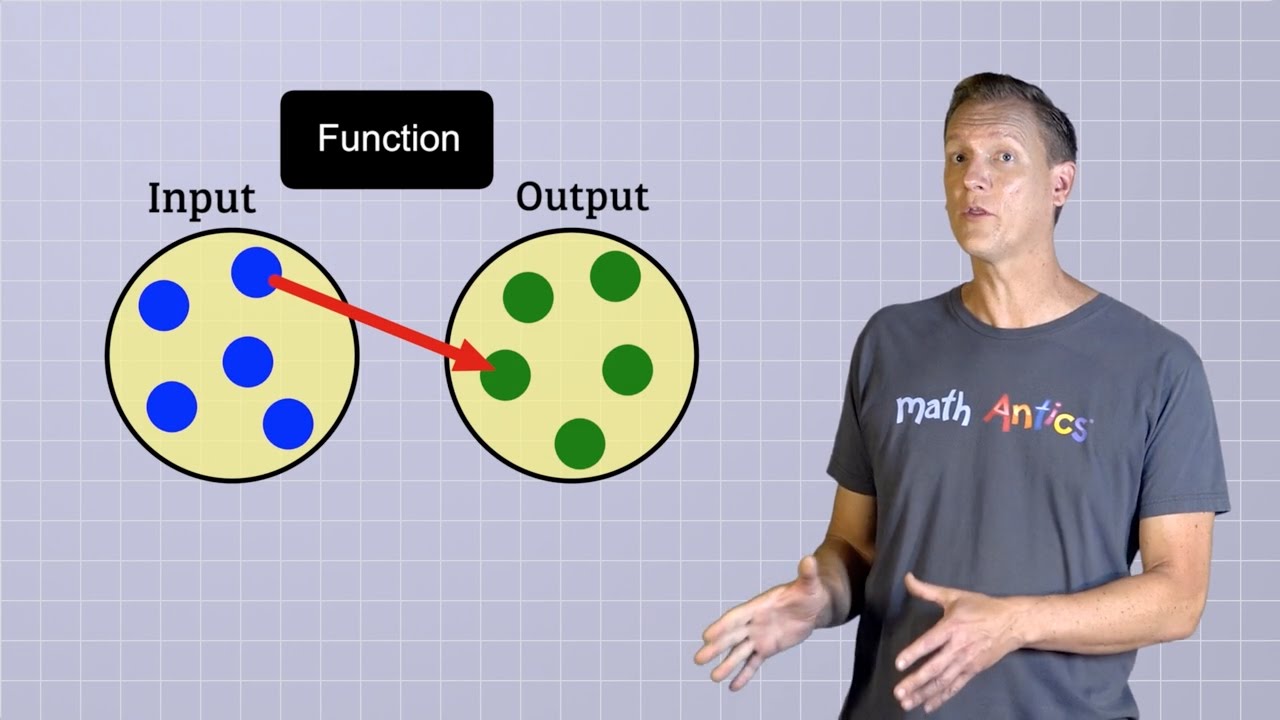
Learn More at mathantics.com
Visit http://www.mathantics.com for more Free math videos and additional subscription based content!
obsidian monolithBOT


 Requested by Al𝟛dium#4084
zinc plank
Requested by Al𝟛dium#4084
zinc plank
oh what
viscid thistle
(you are only interested in the first graph on your case)
pliant locust
,w plot log_2(x) & sqrt(x)
viscid thistle
,w
obsidian monolithBOT

 zinc plank
what does "," mean?
zinc plank
oh
viscid thistle
did you read what was being said?
zinc plank
yea
alr so u said like they have different outputs? but those functions are even different
oh wait
pliant locust
For some x they the y values are pretty close but they aren’t the same at all
zinc plank
interesting
so
in which scenarios should i use each
oh wait i think i know
so root is like x^b
or not
viscid thistle
zinc plank
in which scenarios should i use each
that's an incredibly vague question and you aren't probably going to be answered what you want to be answered, may you rephrase the question?
pliant locust
log_2(y) is like asking the function for what x should I raise 2 with to get y?
2^x = y
Is the same as
log_2(y) -> x
If I have 2^3
Log_2(2^3) outputs 3
Log_2 will output the exponent of 2 that is the solution to
2^x = some number
zinc plank
so root is like getting the original num and log is getting the power to raise to?
oh wia
tn
viscid thistle
that's a big missconception about functions in general
pliant locust
Root is asking the function “what two number to multiply with each other to get y”
zinc plank
hmm
zinc plank
pliant locust
Root is asking the function “what two number to multiply with each other to get ...
isnt that sqrt?
zinc plank
ah
viscid thistle
there are more numbers other than 4 or 9 which the sqrt maps a nice value as in 2 and 3.
pliant locust
Yeah!
zinc plank
yooooo
zinc plank
viscid thistle
there are more numbers other than 4 or 9 which the sqrt maps a nice value as in ...
wait wot
pliant locust
That is true aswell what aledium is saying
viscid thistle
zinc plank
wait so like root is getting the x in x^b right?
what?
zinc plank
idk
viscid thistle
that's a big no if i'm understanding your question correctly
pliant locust
If b is two then squareroot will give you the x
viscid thistle
by any means, at all, it is said that for x^b, the sqrt(x^b) will give you just x everytime, that's a huge missconception again.
pliant locust
Aledium is highlighting something important
For example, squareroot of 4 when sqrt is an operator
zinc plank
i still need to process that
viscid thistle
what?
zinc plank
viscid thistle
what?
me?
viscid thistle
pliant locust
-2 is a solution aswell
sqrt(4)=2 and not -2 nor any negative number.
pliant locust
Only if we are talking about it as function
If we have sqrt as operator
Sqrt(4) is -2 and 2
zinc plank
wait but why is that invalid for a func?
viscid thistle
this is only going to confuse lyc even more, and that's pretty irrelevant to what they are learning.
zinc plank
cant u pass in -2 as well?
pliant locust
I will raise my hands, I assume I misunderstood you aledium
viscid thistle
don't know about the us curriculum since i'm not us, so..
zinc plank
ah
pliant locust
zinc plank
i think i kinda get the difference nao
Either way to sum up,
For positive x:
$$\sqrt{x^2} = x$$
$$\log_{2}{2^x} = x$$
obsidian monolithBOT
rts
 obsidian monolithBOT
lyc

 sick steppe
lilac storm
sick steppe
lilac storm
what do you need help with?
lilac storm
yeah so basically i don't understand this question at all, like how do i start this question and how do i solve this question?
sick steppe
do you know how to do optimization questions?
lilac storm
yes
sick steppe
ok, so what's the constraint? (ie what has to remain constant?)
lilac storm
it says that the capacity is 36 and it has to be constructed with the least amount of material.
are you there?
 jolly raven
lilac storm
jolly raven
lilac storm
can you help me with this question?
anyone there that can please help me with this question that i have posted above a little while ago?
 copper musk
lilac storm
anyone there that can please help me with this question that i have posted above...
copper musk
lilac storm
anyone there that can please help me with this question that i have posted above...
what has to be minimized?
 lilac storm
i'm not sure?
lilac storm
right.
copper musk
so what should be minimized?
lilac storm
the metal?
lilac storm
uh, i'm not sure?
copper musk
what do you think?
lilac storm
can you please explain to me like how do i start off the question, maybe that can help me because i'm not understanding based on the words, if we can start off the question so then maybe i get it then?
like how do i start mathematically*?
copper musk
you need to know what needs to be minimized and what remains fixed
lilac storm
oh
copper musk
copper musk
you need to know what needs to be minimized and what remains fixed
this is given in the problem
but you need to read the question carefully to figure that out
lilac storm
so fixed is the capacity which is 36
and i think the amount of metal is the thing that needs to be minimized.
am i right?
copper musk
lilac storm
so fixed is the capacity which is 36
yes this is correct
copper musk
lilac storm
and i think the amount of metal is the thing that needs to be minimized.
yes but what do you mean by 'amount of metal'?
lilac storm
the radius and height?
lilac storm
radius times the height?
copper musk
lilac storm
radius times the height?
but why did you say this?
lilac storm
because the formula of a cylinder whether the volume or surface area, the radius and height are being multiplied.
lilac storm
yes
copper musk
so are we minimizing volume or surface area?
lilac storm
hmm
copper musk
lilac storm
so fixed is the capacity which is 36
what is 'capacity' here?
lilac storm
the amount that can be taken
copper musk
and how is it measured?
lilac storm
surface area?
lilac storm
oh, ok
copper musk
so what are we minimizing?
lilac storm
the volume
copper musk
think again
lilac storm
the surface area?
lilac storm
yeah but if you can help me start off?
copper musk
ok so what is fixed here?
lilac storm
36, which is the capacity
copper musk
and capacity is the...?
lilac storm
volume
lilac storm
so to start off, do i write 36=(pi)(r^2)(h)
copper musk
yes you can do that
lilac storm
so then i take the surface area formula and plug in what h equals which is above.
lilac storm
yeah so i have y=72/r + 2(pi)(r^2)
copper musk
where did the + come from
copper musk
lilac storm
yeah so i have y=72/r + 2(pi)(r^2)
okay so what do you do next?
copper musk
differentiate y
lilac storm
so is it just y' = -72/r^2 + 4(pi)(r)?
lilac storm
the minimum?
lilac storm
0?
copper musk
yes
lilac storm
so now do i set the derivative eq equal to 0?
copper musk
yes
lilac storm
so how will i be isolating this eq, if you can help me out a little bit?
do i isolate r?
are you there?
are you there?
lilac storm
yeah so i started off by doing 72/r^2 = 4(pi)(r)
copper musk
find r from this equation
lilac storm
so i basically brought the -72/r^2 to the left side which makes it positive
copper musk
?
lilac storm
sorry, find r from which eq?
copper musk
lilac storm
yeah so i started off by doing 72/r^2 = 4(pi)(r)
this one
lilac storm
yeah so i am now left with 72/4(pi) all of it under a cube root = r
is this correct?
copper musk
ya
copper musk
copper musk
this gives r where the SA is minimum
.
copper musk
idk the exact values
lilac storm
ok anyways so now do i plug in the value of r into 36 = (pi)(r^2)(h)?
are you there?
lilac storm
copper musk
idk the exact values
are you there?
ok, PROnoob, thank you so much for your time and help.
I really appreciate it
 round quest
how do i prove sin^2t/tan^2t=cos^2t
pliant locust
Recall that
$$ \tan(x) = \frac{\sin(x)}{\cos(x)}$$
$$ \tan^2(x) = \left( \frac{\sin(x)}{\cos(x)} \right)^2 $$
basically rewrite tan as a fraction of sin and cos and start from there
obsidian monolithBOT
rts


 proud raven
theres a great formula for this
it involves the mins and maxes of the exponents
and is super worth memorizing
but i dont have it memorized so gimme 1s

does that make sense
 pure creek
@proud raven gotcha I'll try to use that
 warm lintel
Am I right in assuming that the Latus Rectum of a parabola is the points at which the parabola intersects the line symmetrical to the vertex relative to (0,0)?
pure creek
proud raven
I'm not exactly sure how to use this
proud raven
pure creek
I'm not exactly sure how to use this
you have two numbers in prime factored form
say like uhh
look at easier numbers
say $20=2^2 \cdot 3^0 \cdot 5^1$ and $90=2^1 \cdot 3^2 \cdot 5^1$
obsidian monolithBOT
jan Niku
 proud raven
see if you can figure out gcd by thinkin
but check out the 2's
we have one to a power of 1, and one to a power of 2
so our gcd will have 2^1
we can do the same for each prime factor, and get $2^1 \cdot 3^0 \cdot 5^1 = 10$
obsidian monolithBOT
jan Niku
 proud raven
see, we just took each prime factor, compared to see which is lower, and used that
make sense?
proud raven
pure creek
I'm not exactly sure how to use this
.
 faint nest


 bold lintel
Is there an easier way of digesting this besides creating a table like my "help me" tab gave me? Plugging in these variables gives me decimals
 viscid thistle
@bold lintel do you still need help?
bold lintel
sure @viscid thistle
 jolly gust
Yo can someone help me with this


 stable yacht
You know can solve for the hypotenuse (using Pythagorean Theorem) and write the functions from there.
I think that is what the question is asking.
vale urchin
 viscid thistle
@vale urchin don't multipost. please read #❓how-to-get-help
 lilac storm
is anyone there that can please help me with this question that i posted a little while ago?
anyone there to help...?
viscid thistle
i would try to but my brain aint big enough
lilac storm
no it's all good, if you could help me with the the question posted above?
lilac storm
viscid thistle
i would try to but my brain aint big enough
Amaxx, is it possible if you could help me with the question that is posted above?
viscid thistle
lilac storm
this one?
lilac storm
yes, exactly
viscid thistle
wouldnt u just multiply 10,000 by 5?
lilac storm
uhm, how did you get that?
viscid thistle
since every bottle is $5 and u sold 10,000 bottles
 astral mantle
you produced at least 10,000
you need to create a function for profit with what you are given
and maximize said function
lilac storm
astral mantle
you produced *at least* 10,000
Star, if you can please help me on how to create a function then maybe i get it and it becomes more clear?
lilac storm
astral mantle
you produced *at least* 10,000
like if you can help me on how to start off the question, what do i do to start off the question?
astral mantle
Make a function P(x) to express profit in terms of wine bottles sold
you have P(x) = (amount of bottles)(price at x bottles)
lilac storm
would this be correct, P(x) = (10000)(5x)
astral mantle
no
you need to consider reducing cost
every bottle past 10,000 decreases price per bottle by 0.0002
lilac storm
uh, is this ok now, P(x) = (10000+5x)(10000-0.0002x)?
astral mantle
closer but still wrong
whats the total number of bottles?
starts at 10,000 and increases by x bottles
lilac storm
i'm a little confused?
astral mantle
you are starting with 10,000 bottles and adding x bottles
lilac storm
so is it, P(x) = (10000+x)(10000-0.0002x)?
astral mantle
closer
now you need to work on price per bottle at x bottles
the starting price is 5 per bottle
and decreases at 0.0002 per additional bottle
lilac storm
can you give any other hints or information because i'm still confused and stuck?
astral mantle
P(x) = (10000+x)(function to express price per bottle after 10,000 bottles)
lilac storm
so, P(x) = (10000+x)(5-0.0002x)?
lilac storm
so i don't have to take any derivative or do anything like that?
astral mantle
maximize by taking the derivative lol
lilac storm
oops, sorry
astral mantle
take the derivative set it equal to zero find the maximum with second derivative test
substitute back into the original
lilac storm
yeah yeah, sorry about that
lilac storm
astral mantle
take the derivative set it equal to zero find the maximum with second derivative...
thank you so much for your time and help.
 pastel carbon
Can I get help with this?
(x-6)/(x^2-4) ≥ 0
I have to solve it algebraically
But I’m kinda confused because my answer is in interval notation
 quick mirage
@pastel carbon Try making an interval chart then
And determine intervals where the resultant rational function would be >= 0, respecting any restrictions given.
pastel carbon
I ended up being able to solve it on my own (: I appreciate it
 valid estuary

could someone help me out with this problem? I keep getting 0 but apparently it's 1/2
uncut mulch
how are you getting 0
 uncut mulch
how are you leaping from the 2nd last line to 0
valid estuary
identity that 1 - cos(theta) / (theta) = 0
uncut mulch
limit and parentheses.
but what about the thing on the right?
valid estuary
It's neglible because it's multiplied by 0
uncut mulch
what does that approach when theta→0
no its not negligible
It's neglible because it's multiplied by 0
by saying that you're implying that it doesn't matter what the denominator is when evaluating limits (which is clearly false)
valid estuary
but if I'm trying to simplify this down, and I have successfully arrived to a place where I have 0 * something, is it not just 0?
uncut mulch
no
take $$\lim_{x\to 0} \frac xx$$
as a counter example. the limit of that should clearly be 1.
you could manipulate that to:
$$\lim_{x\to 0} \br{x \cdot \frac 1x}$$
which by your logic would be 0 since $\lim_{x\to0} x$ is 0 \ (since you're disregarding everything else present)
obsidian monolithBOT
ℝamonov
 valid estuary
but in the beginning with the (theta) / (sin(theta)) s am I not disregarding everything else in simplifying those to 1? What I see is that I'm doing the same thing
uncut mulch
you can apply the limit product properties if the limits exist.
however here, the limit as t → 0 of sin(t)/(t * cos(t)) does not
and you would have an indeterminate form
,w lim as x to 0 tan(x)/x^2
obsidian monolithBOT

 Requested by ramonov#0921
valid estuary
Requested by ramonov#0921
valid estuary
hm
uncut mulch
you should instead consider factorisation / conjugates /pythagorean trig identities
valid estuary
so when do you actually use (1 - cos(theta)) / (theta) = 0 then
uncut mulch
that doesn't work that well here
you could apply it if the limits of each part exists
valid estuary
how exactly are you determining if the limit exists
uncut mulch
algebra, conjugates, common limits, consider left right limits as needed.
valid estuary
ok I think I'm going to watch some YT videos or something just so I can understand exactly what I'm doing with these trig limit problems
Thanks for your help
Oh you know what I think I see what you're getting at now
Looking at the other problems I did
It's like you can't take out the 0 identity just to kill everything to 0, the other part needs to actually be, as you said, a limit, or something you can simplify
That's when you can take out a 0 -- when you're multiplying it with a solved limit
Makes sense
obsidian monolithBOT
smb3dx

 smoky pagoda
That's exactly what ramonov was saying...
 grand barn
are there any solutions to -3 = sqrt(2x-5)
couldnt find any real solutions but idk if there are any complex solutions
viscid thistle
there are none
 lilac storm
is anyone there that can please help me with this question that i posted above a little while ago?
anyone there to help?
anyone there...?
viscid thistle
which part is giving you troubles?
lilac storm
viscid thistle
which part is giving you troubles?
are you there?
viscid thistle
lilac storm
so for a, do you sub in 100 for D?
i mean you can
but i'd really recommend not to
lilac storm
oh
viscid thistle
and instead isolate I first
lilac storm
ok
viscid thistle
and after plug the numbers in.
lilac storm
so how would i isolate I?
viscid thistle
can you try yourself first to see where you are able to get up to?
lilac storm
yeah, i'm not sure what to do?
if i try the other way by subbing in 100 for D, i'm left with this, 23.03 = ln I/Io
is this correct or no?
viscid thistle
i mean, approximately yes, but i do not recommend that way.
lilac storm
ok
viscid thistle
assuming you didn't mess up the "typing into the calculator" part
lilac storm
ok i am now trying the way you told me to isolate I first
viscid thistle
lilac storm
yeah, i'm not sure what to do?
well you want to isolate I, what's really the first instinct that comes to your mind?
lilac storm
so far i have, D times (ln10/10) = ln I/Io
viscid thistle
great.
now a little review on exp equations.
if you have ln(x)=2 what can you do to isolate x?
lilac storm
x = e^2
lilac storm
so you write your base as e on the other side which removes ln
does this sound correct?
viscid thistle
you raise e to both sides
lilac storm
yes
viscid thistle
and due to the defn, e^(ln(x))=x which ends up as x=e^2.
can you try with this logic onto our problem?
lilac storm
e^(ln10/10) = I/Io
viscid thistle
where's D?
lilac storm
like i don't know what to do with D?
actually, e^D(ln10/10) = I/Io
is this ok now?
obsidian monolithBOT
Al𝟛dium
 lilac storm
yes
viscid thistle
ok then put the appropiate parenthesis.
e^(D(ln(10)/10))
now you are pretty much one step behind
viscid thistle
lilac storm
or actually e^(ln10D/10)=I/Io
don't know what that's supposed to be
$e^{\frac{D\ln(10)}{10}}$?
lilac storm
oops, that's my bad
obsidian monolithBOT
Al𝟛dium
 lilac storm
you are right
viscid thistle
if you wish to have it like this, then sure
and yeah, you can plug the numbers in now.
lilac storm
so the answer that i am getting is 10000000000, is this correct?
viscid thistle
do you want me to check if you plugged numbers into your calculator correctly?
i mean fine, wait a second.
lilac storm
yes, if you don't mind
viscid thistle
wait but did you take into account that
e^(ln(10)D/10)=I/I_0 and NOT just I right?
or did you completely ignored that?
lilac storm
how does that change anything?
viscid thistle
because you are solving for I and not for I/I_0
lilac storm
yes now i get 0.01, is this finally correct now?
viscid thistle
seems correct now.
lilac storm
and if you can please help me start off b as well?
how would i start part b?
are you there?
viscid thistle
..yeah, do you ever realise that one can't just sometimes answer within less than 2 minutes because they are doing maybe something else or just reading part b?
because it is not the first time you say this.
lilac storm
sorry about that.
viscid thistle
something from the wording really puts me off
but anyways, do you have any ideas on what can we extract from "4 times more intense than I_0"?
lilac storm
4 times Io?
viscid thistle
yes.
and what would be 4*I_0?
ie what are they talking about that it is equal to 4*I_0?
lilac storm
is it (10^-12) times 4?
viscid thistle
and this is where the bad wording of b comes in
but looks like no.
D isn't just 4(10^(-12))
the key word is intense
what are they talking about that it is equal to 4*I_0 once again?
lilac storm
so i can't just do 10^-12 times 4 for Io, then solve it like the previous part?
viscid thistle
for I_0? not following you
lilac storm
so how do i start off the question, like how do i set it up to start off, then maybe i can take it from there?
viscid thistle
you'd once again know how to start off, if you considered reading my now 3 times attempt to asked question:
what are they talking about that it is equal to 4*I_0 once again?
lilac storm
so i don't get what does that mean and what do i do with it?
viscid thistle
"what do i do with it"? i mean, try to think of what the question is talking about when saying "...of a sound that is 4 times more INTENSE than I_0"
what does that small phrase give us as info?
lilac storm
4 times more than Io?
viscid thistle
you are eating the word "intense" now
which i purposefully highlighted and wrote in caps
lilac storm
4 times more intense than Io
viscid thistle
yeah?
what equation can you form with that piece of info?
"4 times more intense than I_0"
lilac storm
4Io
viscid thistle
that is not an equation.
that is an expression
what is equal to 4*I_0 that they are talking about? if they are talking about more intense?
lilac storm
D = 10/ln10 (lnI/4Io)?
lilac storm
so taking the original eq and just changing Io to 4Io
viscid thistle
viscid thistle
what is equal to 4\*I_0 that they are talking about? if they are talking about m...
the word intense should really give you everything you want to know about this question
lilac storm
i don't get what 4 times more intense means mathematically, if you can explain me using the eq and numbers that are given?
viscid thistle
i'm trying for you to get it mathematically
lilac storm
simply saying 4 times more intense is not helping me at all
viscid thistle
this isn't even math at this point, what i'm asking you is about reading comprehension
if i insist repeating something valuable it is because i know you are able to get it at some point, but you only need to try some attempts to it
and actually processing down what a sound to be 4 times more intense than I_0 is
let me just try with a simpler example
lilac storm
is it determining the relative loundness of a sound which is D, that is 4 times more intense than Io?
viscid thistle
no but that answer is kind of understandable due to the bad wording of b
the key is, may i repeat on the word intense which is represented with the letter I
and not with the letter I_0
lilac storm
ok, so i get it intensity is I so what now?
viscid thistle
if, once again, intensity is I and we are given that the sound is 4 times more intense than I_0, what is that thing that it is equal to 4*I_0
lilac storm
I
viscid thistle
yeah.
really all i ask is to process what i say and read what the problem says about the words mentioned
it was purely reading comprehension
but once again, i may agree that it was kind of an iffy wording
a better wording could've been "an intensity sound that is 4 times as I_0"
so now that you finally know that ${\color{green}{I}}=4I_0$, you should be able to find $D$: $$D=\frac{10}{\ln(10)}\left(\ln(\frac{\color{green}{I}}{I_0})\right)$$
obsidian monolithBOT
Al𝟛dium
 lilac storm
so how would i start off?
viscid thistle
do you not read my messages?
lilac storm
do i use 0.01 from the previous part?
viscid thistle
no
viscid thistle
obsidian monolith
**Al𝟛dium**
is there something you don't understand about this or did you just completely ignored this?
lilac storm
there are so many variables so how do i solve for D?
viscid thistle
you know I_0
lilac storm
yes
viscid thistle
there are no unknowns except D
lilac storm
oh, i think i got it
viscid thistle
so yeah, i'm glad to hear, if you want to check with me your "plug in the calculator part", you should be getting ||≈6.02db||. but for the record, when someone helps you, try to read all of the messages, being patient, and try to think when they propose you to do so instead of saying anything to get to the "give me the answer i don't know what to do".
lilac storm
yes, your right
ok, thank you so much for your help, i really appreciate it
your right about being patient, reading everything carefully, i will keep this in mind going forward
thanks again
lilac storm

so i have solved this question but i just want to make sure that i did it right
so first i started off by listing out all the things that are given which are, A=58750, r=0.05 and t=4
then i used the A=Pe^rt formula and plugged everything in and rearranged the eq accordingly to find P and the answer i get is 48100.43 or simply 48100, i just want to ask that did i do everything correctly?
lilac storm
anyone there to help?
is anyone there?
is anyone there...?
i have posted a question above a little while ago which i have solved but i just need somebody's help to make sure that i did it right
odd rivet
lilac storm
then i used the A=Pe^rt formula and plugged everything in and rearranged the eq ...
Yes
That's right
 wispy aurora
woah 4 hours without anyone there. That's rare af
odd rivet
 echo wagon
My friend.
echo wagon
My friend.
They were talking about difference in time between question and answer
echo wagon
Hmm
viscid thistle
Anyone help with critical points?
 olive pawn
hey i am self taught can someone tell me exactly what i have to learn in precalculus
uncut mulch
mostly:
functions, graphing, sequences and series, trig, logs and exponents
olive pawn
uncut mulch
mostly:
functions, graphing, sequences and series, trig, logs and exponents
can you tell me what exactly to study in each of those topics( if you want you can dm them)
uncut mulch
look up khan for a basic intro / outline,
search up more in-depth stuff from people like Prof Leonard or Organic Chem Tutor
olive pawn
ok thank you
dark sky
does this graph have a horizontal asymptote?

no right?
how do i find the end behavior of this function

 lilac pier
you can factor out x^5 from the numerator and denominator
and take the limit as x approaches +infinity
crystal osprey
If you remember the rule of finding horizontal asymptotes, you'd know that since the largest degree of the numerator is equal to that of the denominator, you'd isolate the leading coefficients to find the horizontal asymptote.
In this case, it's -4
You can also do what Sup said, which is to take out x^5 respectably. This'll lead you with the top x^5 and bottom x^5 cancelling out, and leaving you with their leading coefficients left alone, and the other terms divided by a power of x.
Dividing anything by x which in this case substituted by infinity (using limit laws) would get you 0. So the only thing left over are the 2 leading coefficients from x^5; the largest term in both the numerator and denominator
Both methods will lead you with an answer of 4/-1, which is simplified to -4.
@dark sky
The top method is far easier to remember since it's always true for any rational function, and you won't have to go simplifying with infinite limits. But the bottom is a way to do it with limits if you're instructed to show the steps.
It depends on what level you're at in Pre-calculus. It's possible to come across this type of question if you haven't gone into the limit unit, in which case you're probably only required to use the rule of finding horizontal asymptotes.
 north pagoda
 knotty echo
Dont paste the same question in 2 different channels
Do not spam your questions in the wrong channel or across multiple channels. Be patient and wait for someone to answer.

 wooden hornet
 harsh cipher
this question. What is the equation of the parabola
harsh cipher
this question. What is the equation of the parabola
y^2 = 4ax
just put in the values
 unborn nimbus
im not sure if this is the right place but, does anyone know how to solve f(x)= sqrt(x-2)? or the whole 'domain of a function' in general
uncut mulch
consider what would make your function undefined
unborn nimbus
ahh tyty
viscid thistle
How do I set up cases to solve an inequality like |x-5| < |x+1|? I've forgotten how to approach absolute valur Inequalities and equations with two absolute value terms
unborn nimbus
does any1 know how this works?
 echo wagon
I would say this is easiest to do with inspection
Since you start with a polynomial, and end with a polynomial, g(x) is a polynomial too
Now take the highest order term you have, 2x, and think how you change it into the highest order term of g(f(x)), i.e. 4x^2
unborn nimbus
omg thank you so much!! i believe this is what i'm supposed to do:
since (2x)^2 = 4x,
and (2x+1)^2 = 4x^2+4x+1,
i just need to add +2 to get 4x^2+4x+3
thankuuu!
unborn nimbus
x^2 + 2 right?
echo wagon
Yep, perfect
unborn nimbus
thank you!!
echo wagon
Np
 pastel dust
is getting two parallel lines from a degenerate parabola possible through a slice of a double cone
no, right?
viscid thistle
Can anyone help me?
sick steppe
viscid thistle
Can anyone help me?
dont ask to ask


 viscid thistle
sorry
north pagoda
@knotty echo yeah why did no one answer then
stable yacht
So I solved for the terminal velocity by finding the limit as t approaches infinity for the given equation, but I am confused on what it asks after that. The problem asks how long it would take to reach 58% of the terminal velocity.

I’m just blanking on what that actually means in terms of what I just solved for.
hallow thunder
if your $100%$ terminal velocity is $\frac{162}{1.1}$ if i read that right, you just need to find $58%$ of that and then find a time $(t)$ that returns that value when plugged into $v(t)$
@stable yacht
obsidian monolithBOT
jedben2

 winter quartz
So first @vale urchin , let's consider the two parametric equations seperately.
Do you agree that there graphs look roughly like this?
 vale urchin
winter quartz
So first <@658536102805766145> , let's consider the two parametric equations sep...
vale urchin
winter quartz
So first <@658536102805766145> , let's consider the two parametric equations sep...
Yes except I thought 4 was positive
winter quartz
I changed it to work with my graph xp
 vale urchin
like the center okay
winter quartz
Also, we'll let t refer to seconds so it's easier to process
winter quartz
So what this tells us is if we move to the right for t seconds, we end up moving t spaces to the right.
 vale urchin
so increase okay for x
winter quartz
Yes. Since x(t)=x+2, we start at x=2 and every second we move 1 space to the right
vale urchin
so if x(t) is x(2) we are 3 to the right
winter quartz
Wait no, that should be 2 to the right
winter quartz
x(2)=4, that is correct
vale urchin
okay good thats a good diagram
winter quartz
So this function is telling us how much distance (left/right) we are moving given a certain amount of seconds passing.
winter quartz
Yes. But let's draw it out
winter quartz
 winter quartz
So we start at 7 and every second we move down four spaces
vale urchin
because -4t
winter quartz
Correct!
winter quartz
So what is x(t) and y(t) when t=0?