#precalculus
1 messages · Page 239 of 1
 lofty prism
 obsidian monolithBOT
trece:
lofty prism
ok sorry
 finite wraith
Thats the OUTPUT that g(x) gave you
lofty prism
yes
finite wraith
now that OUPUT will act as an input for f(x)
lofty prism
84
finite wraith
so you have to do f(84)
lofty prism
not that OUPUT will act as an input for f(x)
@finite wraith thats where i must disagree with you
84 is an output
cant be an input
 past meadow
Why not?
finite wraith
84 is a number
it doesnt have a tattoo on it saying "OUTPUT"
its literally just a number
finite wraith
If you say so, then sure. (possible troll tbh guys)
lofty prism
?? im not a troll
past meadow
Do you think we just assign every number we can think of to some function and it cant be used as an input to any other function????
lofty prism
Do you think we just assign every number we can think of to some functuon and it cant be used as an input to any other function????
@past meadow at least in an exercise
idk sorry if im wrong guys ok
past meadow
Then you have some serious misconceptions.
finite wraith
you dont have to be sorry cus ur wrong, you have to be sorry for being ignorant
lofty prism
whats the difference
finite wraith
we say something, and your reply is "Nope, that cant be true"
finite wraith
$f(g(x))$
past meadow
Can you just tell me where you got the idea that> @past meadow at least in an exercise
@lofty prism
obsidian monolithBOT
trece:
finite wraith
this is what you had to calculate
past meadow
Oh it didnt quote the whole thing
lofty prism
i was told that nshool
school*
this is what you had to calculate
@finite wraith yes
g(10)=84
we need to calculate f(84). right
lofty prism
f(x) = 3x
f(84) = 3*84 = 252
f(g(a))=252
finite wraith
yes it's 252
remember all functions do is take an input and play around with it, and then give you an output
finite wraith
its ok
lofty prism
for the second part of th3 question i think we need to use perpendicular lines
product of their slopes if 1
is 1*
 junior sable
when comparing g(x)=10^x to f(x)= x^10, in English we'd say that g(x) goes up by a power of 10 each time. What would we say for f(x)?
lofty prism
goes up by a power of x each time
junior sable
would you mind elaborating on that?
lofty prism
what is elaborating
junior sable
explaining more
junior sable
hmm. okay ty @lofty prism
lofty prism
Im Not sure
 patent beacon
@junior sable
I think you're trying to relate f(n+1) to f(n). For 10^x, that's an obvious relation. You just multiply by 10.
"Goes up by" and "each time" are extremely vague, be careful there.
Now, you also asked about x^10. This case is very messy, there's no great way to relate f(x + 1) to f(x)
junior sable
gotcha ty kanye
 viscid thistle
LOL.
 harsh cipher
Hi everyone
I finished pre-calculus with 87%
Thanks to everyone in here who helped me through the way
Thanks @willow bear @uncut mulch and all others in honorable, helpers, and very cool ppl.
 remote veldt
Congratulations! that's an awesome score
 junior sable
oh man Mirrion, my final is tomorrow. Hoping for the best. Congrats!
junior sable
Thanks! love mob psycho btw, huge inspiration.
past meadow
Yeah its sick
junior sable
Where can I drop a huge wall of text about how no one should take the online class I took?
viscid thistle
Here
doesnt drop it
@lofty prism your confusion may lie in intentionality vs extensionality of functions
the definition of a function completely ignores intentionality
it does not care how, why, or for what purpose the elements of the pairs the function consist of were chosen to be associated with each other
it only cares about what is associated with what
ugh I felt like I had a good tie in to the problem but I forgot it
 pale bison
take the interval (0, 1) for another example, 0 is the infimum (prove it), but 0 is not inside that interval
 tiny sonnet
So you can get infinitely close to 0 but you can never hit it
pale bison
uh what are you trying to describe?
tiny sonnet
the interval (0,1)
Like you can go to 0.01, 0.001, 0.0001, and so on, yet you can never actually get to 0 right?
and 0 is smaller than all of those
So is that why it's the infimum?
 hexed ermine
Lol pre-calc?
pale bison
infimum is the biggest number x, such that for all numbers in y in (0, 1), you have x <= y
well let's see what that number x can be:
if x is strictly positive, i.e. x > 0, then clearly, x/2 is also positive, and x/2 is in the set (0, 1), but x <= x/2 is not true
this means, x cannot be strictly positive
it could be negative, in fact, every negative number is smaller than any numbers in (0, 1)
but the biggest such x is 0
i butchered that sorry
tiny sonnet
wait
what is the set y?
wait so what does it mean by "if it exists"
You can have 2 supremims or infimums?
pale bison
no, it turns out that they're unique
(-inf, inf) for example, does not have a supremum or an infimum
viscid thistle
Why does wolfram tell me the domain of the following function is [-2,2)U(2,inf):
sqrt((x^2-4)/(x-2)).
How would I determine that algebraically? I arrived at the open interval (2,inf) because of the inequality under the radical, with the additional constraint it cannot equal zero as it's in the denominator.
Why can I pass a -2 into that bottom radicand? Sqrt(-2-2) is Sqrt(-4) and that doesn't give me a real output.
 blazing parrot
$$\sqrt{\frac{x^2-4}{x-2}}$$
obsidian monolithBOT
Not Chezstick:
 harsh smelt
fraction is defined where denom is not zero
root is defined where expression under root is >= 0
so domain is the same as solutions to
$\frac {x^2-4}{x-2} \geq 0$
obsidian monolithBOT
Commander Vimes:
viscid thistle
I understand the rational expression is defined when denom != 0 and the root requires an expression is greater or equal to 0. I think my error was to apply the quotient property sqrt(a/b) = sqrt(a)/sqrt(b) then focus on the denominator only.
Whereas obviously the numerator has the same condition >= 0
Thank you.
 alpine basin
why are these no solution?
 uncut mulch
what's the actual question
alpine basin
to "evaluate" them
uncut mulch
there are no real values x, such that 2^x is less than or equal to 0
alpine basin
ok
uncut mulch
consider the relation between exponents and radicals
alpine basin
ah right thanks
alpine basin
Why is it when I graph f(x)=2log(x) on desmos the line goes infinitely downard, but on my graphing calculator it stops at -2 and only goes on infinity horizontally
remote veldt
 can you take a picture of your graphing calculator? desmos is correct
alpine basin
its at the defaults im pretty sure
yeah -10 x min, 10 x max, same for y
cause the line goes off the screen horizontally
but the vertically it just stops so idk
remote veldt
I'm saying try changing the display window
to be, for example, x between -1 and 1
and see how it changes
alpine basin
nah still stops the same way
remote veldt
 limitation of a graphing calculator ig
alpine basin
hmm
remote veldt
I guess a last thing to try is clearing calculator memory and trying it again
alpine basin
i guess its not that big of a deal
cause its still obvious it just goes down infinitely without actually touching the y axis
 autumn sphinx
@alpine basin It is because of how quickly the function diverges. Graphing calculators tend to sample their function very sparsely, typically one sample per horizontal pixel. Because the final sample is infinite, it will basically return NaN or something equivalent and therefore the connecting segment to that infinitely-away-segment is not drawn. The result is that you get only the segment one pixel to the left, and at your limits, that happens to contact the vertical axis at a height of 2.
Desmos is able to sample much more finely than your graphing calculator (likely into the hundreds of thousands of samples), and so the point at which you get error-out will be much closer to the vertical axis, and in principle well off the bottom of your screen unless you set up some extremely wonky limits
Desmos may even have some tricks up its sleeve that allow it to bypass the limitation altogether, such as graphing the inverse of a function or doing parametric graphing, or variable-density sampling driven by nodes. I kind of doubt it, but it isn't impossible for tricks like that to be implemented cleanly
pale bison
@trim pecan
viscid thistle
@trim pecan Nerd.
viscid thistle
True or false: "The domain of f ◦ g consists of all values of x in the domain
of g for which g(x) != 0."
This is false, right? The condition g(x) != 0 may be relevant if the composed function is of the form of a rational expression with only g(x) in the denominator, or a log taking g(x) as an argument. But we could have a root expression (f o g) = sqrt(g(x))where the condition is g(x) => 0.
 compact pivot
@viscid thistle
yes I think it is false
 rare zephyr
help with no8
I tried 7! x 2 but the answer two that is false
i also dont get how to get around this "2 specific children want to sit on the same side" problem
Nvm i got it
rare zephyr
Help with no12
blazing parrot
You can treat each type as 1 object to group them together, then multiply by how the fruits of the type can be arranged
alpine basin
Hi, this problem wants me to turn this into a single logarithm, and the answer is log3(7), but I was wondering how they got it
viscid thistle
log_a(1/x) = -log_a(x)
alpine basin
thats the problem
viscid thistle
use the thing i just sent to solve the problem
then figure out why it's true
(if you don't already know why)
alpine basin
okay thanks
alpine basin
How would I solve this exponential equation?
uncut mulch
consider the powers of 2
alpine basin
not sure what you mean
alpine basin
8=2^3
1/2=2^-1
hmm ok
i think i got it
How do you know what base to use though?
patent beacon
Usually the smallest possible prime
alpine basin
I solved this problem and ended up getting x=5, x=2. But the correct answer is only x=5, so I was wondering why it wouldn't be both in this case
uncut mulch
logs of negatives aren't defined over the reals
 jade heron
On the left hand side we have log(2)
On the right hand side we have log(6-10) - log(2-4)
viscid thistle
@alpine basin buckets, when x = 2, the values inside the logs become negative, and that can't happen
pale bison
||let's see how many times will people explain the exact same thing but differ slightly||
viscid thistle
Lmaoooooo
 hard hornet
log(negative) = illegal
remote veldt
@alpine basin adding some new information, the reason that it shows up as a solution is that when you use
$$\log(a) - \log(b) = \log\left(\frac{a}{b}\right)$$
you're implicitly assuming that both $a$ and $b$ are greater than 0. In this case, when $x = 2$, both 3x - 10 and x - 4 are negative, so their quotient is positive. If the problem had been solve
$$\log(x) = \log\left(\frac{3x - 10}{x - 4}\right)$$
You would be correct! but the fact that the logs are split initially restricts the domain, and you need to respect that for the entire problem
obsidian monolithBOT
Nicholas:
viscid thistle
$\xcancel{\xcancel{\xcancel{\xcancel{\xcancel{\xcancel{\xcancel{\xcancel{\log(-a)}}}}}}}} $
obsidian monolithBOT
HoboSas:
viscid thistle
With a positive
 viscid thistle
log(-) bad
viscid thistle
i made a similar mistake at some point in highschool and i lost points for the question
proof by high school teacher
lost marks, therefore log(negative) making sense in R must be impossible
there, 6 people
 tawny nacelle
but i was the 7th person to explain it
tawny nacelle
i assume the latter 
viscid thistle
as would i
 willow bear
this conversation is pointless
viscid thistle
wow
tawny nacelle
is it tho
viscid thistle
no fun 😔
 wide ocean
help with no8
@rare zephyr what was the answer to number 8?
rare zephyr
325
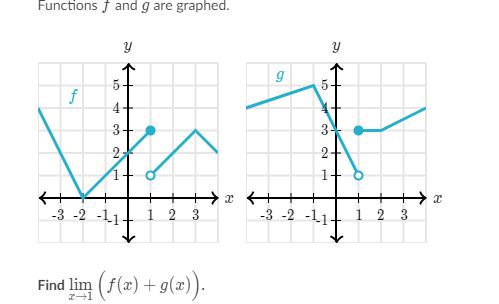 willow bear
lim f(x) and lim g(x) each individually do not exist, yes
but lim (f(x) + g(x)) exists since the jump discontinuities in f and g cancel each other out perfectly once the functions are added
f jumps by -2, g jumps by +2
 maiden pebble
oh, thats peculiar
 haughty cave
Could anyone possibly help me with this? Idk if it's how the problem is worded but I'm not even exactly sure where to start
willow bear
$i^i = (e^{i \pi/2})^i$ is what you're expected to use, i guess
obsidian monolithBOT
Ann:
jade heron
i^i is multivalued
Maybe try rewriting it in terms of exp( of something ) as ann said
alpine basin
How would I solve this problem? Help appreciated
viscid thistle
draw it out
alpine basin
wat
viscid thistle
draw it out
alpine basin
wat
alpine basin
The problems similar to this had nothing to do with drawing it out so nah
Didnt think that was needed
viscid thistle

ALWAYS DRAW YOUR GEOMETRY PEOBLEMS
Its a way to help you fcking visualise it
First rule of geometry 
^
alpine basin
i mean..
viscid thistle
It's like watching a movie without eyes
 fluid shore
I've watched movies without eyes, fite me
viscid thistle
i mean..
@alpine basin you mean??
alpine basin
its not needed tho right?
viscid thistle
alpine basin
lol
fluid shore
Mission Impossible Fallout didn't have eyes, as far as I'm aware.
 alpine basin
imma just get more confused tryna draw it when i have to do it on a test
viscid thistle
You won't understand it if you don't have a general idea of what you are doing
imma just get more confused tryna draw it when i have to do it on a test
imma just get more confused tryna draw it when i have to do it on a test

alpine basin
wut
fluid shore
There's not much point in helping someone who refuses to help themselves.
viscid thistle
We surrender
Go blindfolded through your problems
Good luck
Jokes apart, draw your geometry and eat your veggies
alpine basin
so converting the andle to radians and then multiplying it by the radius is not good enough, you think I should graph it?
 dusk mulch
Quick question: Theta=5 just means 5degrees right?
uncut mulch
depends on context
viscid thistle
If there is no ° then its radians
viscid thistle
Well first off writing 5 alone to express an angle without units is ugh
^^
Radians don't have unit though
True i mean like a word after it
dusk mulch
viscid thistle
Wow
dusk mulch
this is what I have
viscid thistle
np
stay blessed
It probably means degrees tbh
Why would it
5 degrees is a nice thing while 5 radians is weird
5rad is a lot tbh
But who knows
And this is probably something very introductory
What does the rest of the page look like @dusk mulch
no unit = radians
I know but not all math is written properly
Maybe the student hasn’t even been introduced to radians yet
dusk mulch
I have
I'll know in about a minute if its wrong or not, just have to input my answers
viscid thistle
Make your bets guys
dusk mulch
lol
viscid thistle
Everything on radians
If the book is wrong I won't lose anything

Everything on radians for me too
dusk mulch
Hoping someone can help me set up a framework to solve these
viscid thistle
What you got so far?
 white beacon
What does central angle of 6 radians mean?
dusk mulch
I think that just means the perimeter or the circle is 65 cm
6 radians is an entire circle right?
dusk mulch
HAving trouble understanding that a central angle is
Sorry for the odd spelling guys, just started using a split keyboard
white beacon
Ah i see a radian is $1 rad = \frac{360^\circ}{2\pi}$
obsidian monolithBOT
achilles199703:
dusk mulch
So 6 rad = aprox 344 deg?
dusk mulch
lol
viscid thistle
Thanks
dusk mulch
Your helping me with math, I wont judge
white beacon
does intercept mean something like intersect?
viscid thistle
The world of art has lost so much without you hobo
I know
Your helping me with math, I wont judge
Im mobile, that's the best I can do
Wait
Why did I draw a chord
Wait i dont even understand the question
It's weird
white beacon
Ah okay i think i get the question now:
We are looking for a radius of a circle which is big enough that the cut out of the last missing degrees to form the entire circle is exactly the arc with 65 cm or am i wrong
With cut out part i mean the angle of 6 radians only covers about 344° of the outer perimeter (no clue if you would call it that), so the last 16° are missing from the circle and the arc is supposed to go there
white beacon
yay that was my thinking, but the question is worded so weird that i have a hard time understanding it, because a 1 to 1 translation of this is only garbage
Well you have to fill in the gaps but from this point forward it shouldn't be too hard to compute, i guess
uncut mulch
the intercepted arc would be the major arc
dusk mulch
If it clears anything up, there looking for a answer in CM
white beacon
the intercepted arc would be the major arc
@uncut mulch so it is the inverted picture then?
So intercepted would mean the area, which is coverd by the 6 radians?
uncut mulch
arc not area
white beacon
sorry my fault, meant that
If it clears anything up, there looking for a answer in CM
@dusk mulch you are looking for the radius r in cm i presume
dusk mulch
I think I may have found the answer using the formula S=R(Theta)
white beacon
what is s
uncut mulch
arc length
uncut mulch
viscid thistle
My drawing was better
uncut mulch
you labelled the wrong arc though
viscid thistle
Not important
white beacon
Because he drew my thought, which was ultimatly flawed
uncut mulch
ic
dusk mulch
How the fuck do I work with miles? Do I just do the same thing but express my answer in a diff unit?
uncut mulch
pretty much yeh (also convert ° to radians)
white beacon
you can simply assume that there is no unit
in your formula the result for 6cm and 6miles are the same because regardless which you compute, you would just chuck in 6 in the formula and add the unit back later
Well thats what i would do if you don't have to convert from one unit to another
alpine basin
Why is the answer to this problem -4/5 and not 4/5? If its in quadrant 2 shouldnt both points be positive
viscid thistle
Points in 2nd quadrant have negative x
alpine basin
Oh oops
dusk mulch
When I start turning my deg to rads
Would I do 1/60(8) gives me 8/60 or is it 8/480?
obsidian monolithBOT
Al𝟛dium:
dusk mulch
I got this wrong and Im not sure why
1/60(8) = 8/60 deg = 0.002 RADS
3960 (0.002) = 7.92
Maybe I just didint understand the question correctly
white beacon
Maybe I just didint understand the question correctly
@dusk mulch Can't help you there, cause i am stuck at the word subtends, i thought my english was good
uncut mulch
rounding too early
viscid thistle
^
uncut mulch
,calc 8/60 * pi/180
obsidian monolithBOT
Result:
0.0023271056693258
,calc 8/60 * pi/180 * 3960
obsidian monolithBOT
Result:
9.2153384505301
(8/60)° is π/1350 rad
white beacon
still i do not understand the wording, what does rounding too early then refer to?
viscid thistle
Bc as the early you round, the accuracy of your result decreases
So its better to round the last/s steps
Like we did
white beacon
yes this is obvious, but how the question is phrased i don't understand to which part in the question the subtends then relates
white beacon
oh i see @uncut mulch didn't answer me when he was talking about the rounding too early part, so my problem lies still with the word subtends and its meaning
viscid thistle
So your problem is on the word "subtends"?
white beacon
Yes, not a native, never heard it before
viscid thistle
I mean i'm not native either but i can overlook at its meaning by the context
white beacon
I thought i was integral in understanding the question
dusk mulch
omg i cant read
viscid thistle
Lmao
dusk mulch
its 9.22
white beacon
Lmao
viscid thistle
I thought i was integral in understanding the question
@white beacon just don't overthink it, it just states that the angle is located between those 2 lines
white beacon
yeah thanks, most of the times i cant solve a problem cause i overlooked something
viscid thistle
Dw 
dusk mulch
,calc 8/60 * pi/180 * 3960
obsidian monolithBOT
Result:
9.2153384505301
I mean, yeah
white beacon
If you round it at the 2nd decimal, it should be
viscid thistle
But do you know if they ask you to round it
dusk mulch
Not explicitly
ok, so from now on I should only ever round my numbers at the very end?
alpine basin
How would I find the exact values of sin and cos for this angle?
viscid thistle
JEEZ THAT WAS QUICK
white beacon
every time you round you lose precision, so in the end you could be way of if you have to do multiple steps,
viscid thistle
^
@alpine basin lets move to #geometry-and-trigonometry , so we leave Corn for possible further questions
Let $P$ be the set of $42^{\text{nd}}$ roots of unity, and let $Q$ be the set of $70^{\text{th}}$ roots of unity. How many elements do $P$ and $Q$ have in common?
obsidian monolithBOT
Disabled_Skooter:
white beacon
may i get help if anyone is free?
@viscid thistle If I understand the question and wiki article right You have two sets
Set P contains all numbers for which the equation z^n = 1
viscid thistle
want a screenshot?
white beacon
want a screenshot?
@viscid thistle could help
white beacon
can look into it but will take a moment, have to look it up
viscid thistle
yea no problem
white beacon
Do you know how the root of unity works?
viscid thistle
not really
white beacon
Could try to explain it, care to switch to mathematics voice chat
white beacon
$z= x +iy = r(cos \theta + i sin \theta)$
obsidian monolithBOT
achilles199703:
white beacon
cos 72 + i sin 72

In mathematics, a root of unity, occasionally called a de Moivre number, is any complex number that yields 1 when raised to some positive integer power n. Roots of unity are used in many branches of mathematics, and are especially important in number theory, the theory of grou...
viscid thistle
z^3 = -2 - 2i
1-i
The equation
[z^5 = i]has $5$ solutions. The unique solution in the third quadrant is $re^{i\theta}$, where $r > 0$ and $0 \leq \theta < 2\pi$. What is the ordered pair $(r, \theta)$?
obsidian monolithBOT
Disabled_Skooter:
viscid thistle
(1,6\pi/5)
white beacon
$4/5 \pi + 1/2 \pi = 13/10 \pi$
obsidian monolithBOT
achilles199703:
viscid thistle
Let $P$ be the set of $42^{\text{nd}}$ roots of unity, and let $Q$ be the set of $70^{\text{th}}$ roots of unity. How many elements do $P$ and $Q$ have in common?
obsidian monolithBOT
Disabled_Skooter:
viscid thistle
$e^{i(\frac{2\pi+2\pi k}{42})}= e^{i(\frac{2\pi+2\pi k}{70})}$
obsidian monolithBOT
Disabled_Skooter:
white beacon
$e^{i(\frac{2\pi \times k}{42})}= e^{i(\frac{2\pi \times k}{70})}$
obsidian monolithBOT
achilles199703:
viscid thistle
@fringe stream may you help me out please?
white beacon
In mathematics, a root of unity, occasionally called a de Moivre number, is any complex number that yields 1 when raised to some positive integer power n. Roots of unity are used in many branches of mathematics, and are especially important in number theory, the theory of grou...
wide ocean
i thought the ans is C but it's "A"
i thought it was reflection on y axis, and horizontal compression by 5/9 ?
why is it expansion?
willow bear
it is horizontal compression by 5/9
it just happens to also look like a vertical stretch by sqrt(5/9) bc of this particular curve
wide ocean
OHH I see
Yeah compressing a root makes it bigger
I gotta remember that
@willow bear ty
 midnight lake
willow bear
midnight lake
willow bear
not clear exactly how the division is supposed to happen
willow bear
ask your professor to clarify
 unique meadow
@craggy dune infinity?
unique meadow
i think i do. so e raised to minus infinity would be 1/infinity?
 craggy dune
yes
unique meadow
thanks!!
alpine basin
How would I get the exact value for this?
it says the answer is sqrt(2)
but I got something different
craggy dune
hmm
can you write sec another way?
something you might know the values of already?
craggy dune
well if you got it its good no?
alpine basin
yeee
finite wraith
idk dude my trig game sucks
the only thing i always remember is sin^2(x)+cos^2(x)=1
also tan = sinx/cosx lol
not much
viscid thistle
infinite / infinite + 5/4 =?
finite wraith
infinity lul
viscid thistle
how
viscid thistle
i know
finite wraith
what do u think infinity/infinity is?
viscid thistle
1
viscid thistle
:))
finite wraith
infinity over infinity is basically undefined
viscid thistle
i know a guy said infinite : infinite = 1 :))
if this true , 0: 0 = 1 , and this is not true
alpine basin
yo why is it saying to use the reference angle of these angles to find the exact values of them?
but then the answer for a for example is -sqrt(2).. which getting the reference angle of 135 wouldnt help with getting -sqrt(2)
viscid thistle
wait i think 1 is solution....
infinite : infinite = 1 , infinite * 1 = infinite
alpine basin
yeah it'd be 45
alpine basin
I did it'd be sqrt(2) right?
finite wraith
,w sec(45)
obsidian monolithBOT


 Requested by trece#6139
finite wraith
Requested by trece#6139
finite wraith
yes sir
alpine basin
but the answer for a on the key is -sqrt(2).. so what is the point of me getting the reference angle
finite wraith
210 is in third quadrant
so you do 210 - 180
so you get the point
for fourth qudrant u do 360 - x
alpine basin
ye I know how to get the reference angle, Im just sayin it seems pointless cause it deosnt help me get -sqrt(2)
finite wraith
just do it like i showed u ?
alpine basin
wat
Yes I know how to get the reference angle
but in the question it says " And then use them to find the exact values of sec(135)" for example
how does getting the reference angle help with that.. when I just have to get the exact value of sec(135) and that'd be the answer is what Im tryna say
finite wraith
ok i see
what the question is asking now
ok so
for sec(135) we got that the referent angle is 45
and we got sqrt(2)
alpine basin
ye
alpine basin
negative
alpine basin
hm yeah I guess its just a weird question
finite wraith
sec(45) is in the first quadrant
if u "flip" it
in the second quadrant its just negative
alpine basin
cause I could just solve for sec(135) and I get same thing
since they already give me it
finite wraith
i mean they just want u to use reference angles
finite wraith
np
alpine basin
How would i solve this problem?
alpine basin
Uh Im not too sure to be honest
 upbeat bone
It's alright
Well,
A function $f$ is called even if $f(-x)=f(x)$ for all x, $\$
and $f$ is called odd if $f(-x)=-f(x)$ for all x
obsidian monolithBOT
Wilston Lynx:
upbeat bone
So, to figure out your function is even, odd, or neither, all you have to do is to check it with those definitions
craggy dune
the question can even be simplified a bit by using a trig identity
upbeat bone
$sin(2x)=2sin(x)cos(x)$
obsidian monolithBOT
Wilston Lynx:
upbeat bone
Yeah, you can simplify the function with this identity
upbeat bone
I'll show you how to check whether $f(x)=x^2$ is even or odd. $\$
If you notice from the definition, actually all you have to do is to plug in $-x$ to the equation, so, $\ \$
$$f(-x)=(-x)^2=(-1)^2(x)^2=x^2=f(x) \$$ $\$
Because $f(-x)=f(x)$, therefore by definition, $f(x)=x^2$ is an even function.
obsidian monolithBOT
Wilston Lynx:
alpine basin
hmm
upbeat bone
How do you come up that f(x)=x^3 is odd?
upbeat bone
I think you meant, $(-x)^3=(-1)^3x^3=-x^3$?
obsidian monolithBOT
Wilston Lynx:
upbeat bone
But yeah, that's correct
alpine basin
o
upbeat bone
Well now I think you have the tools to solve your own problem
alpine basin
how would I plug in -x to the trig functions tho
alpine basin
so f(-x) = 2sin(-x)cos(-x)
upbeat bone
Correct
upbeat bone
Oh
alpine basin
my bad
upbeat bone
You might need to take a look at several trig identities
$sin(-x)=-sin(x)$ and $cos(-x)=cos(x)$
obsidian monolithBOT
Wilston Lynx:
craggy dune
if you don't have that written down somewhere do so
you might need those again in the future
alpine basin
okay
upbeat bone
Yeah, I agree
upbeat bone
Emm that's not correct if you typed it that way
alpine basin
2-sinxcosx
uncut mulch
order of operations
upbeat bone
$2-sin(x) \neq 2(-sin(x))$
obsidian monolithBOT
Wilston Lynx:
alpine basin
okay so 2(-sinx)(cosx)
upbeat bone
Okay, you're almost there
alpine basin
(-2sinx)(cosx)?
upbeat bone
Look at your question again
finite wraith
$\sin(2x)=2\sin(x)\cos(x)$
obsidian monolithBOT
trece:
finite wraith
(as a reminder)
upbeat bone
Thanks but we're not really using that atm lol
upbeat bone
-2sin(x)2cos(x)?
alpine basin
ye
upbeat bone
How come from (-2sinx)(cosx) you get -2sin(x)2cos(x)
alpine basin
well it was 2(-sinx)(cosx)
obsidian monolithBOT
ramonov:
upbeat bone
The distribution property works like this $a(b+c)=ab+ac$, not $a(bc)=abac$
obsidian monolithBOT
Wilston Lynx:
alpine basin
mkay
it is odd tho right?
wait thats what I did tho
I distributed 2 to -sinx and cosx
upbeat bone
I mean, a(bc)=abac is wrong
upbeat bone
it is odd tho right?
@alpine basin Yeah, you should've write it like this, $\$
$(-2sinx)(cosx)=-f(x)$ $\$
by that way, you'll get that $f(-x)=f(x)$, or in other words, it's an odd function.
obsidian monolithBOT
Wilston Lynx:
alpine basin
I was trying to solve b, which was
upbeat bone
The concepts are still the same as before
alpine basin
and i got f(-x) = -3(sinx)(cosx)(secx)
How is it neither tho? Shouldnt it be odd as well?
upbeat bone
and i got f(-x) = -3(sinx)(cosx)(secx)
@alpine basin This is wrong
craggy dune
take a look at f(x) = sec(x)
the same way you did with the other functions
is it odd or even or neither?
alpine basin
idk thats what im tryna answer
craggy dune
for that it might help to turn sec into a function you know more about
uncut mulch
missing - sign in that tex
alpine basin
or
upbeat bone
Try changing sec(x) into another function
I mean another Trigonometry Function
What'll you get?
upbeat bone
Yep
alpine basin
how does that prove its neither, not sure
craggy dune
look at the definition again
what does even mean and what is odd
and then look at what you have
upbeat bone
Have you write down your work for that?
You'll realize that it's neither when you write it down
upbeat bone
$-3sin(x)cos(x)sec(x) \neq -3sin(x)cos(x)+sec(x)$
obsidian monolithBOT
Wilston Lynx:
upbeat bone
Your question is asking for 3sin(x)cos(x)+sec(x), NOT for 3sin(x)cos(x)sec(x)
upbeat bone
so -3sinxcosx + 1/cosx
@alpine basin and that's the same as -3sin(x)cos(x)+sec(x) right?
alpine basin
yes
upbeat bone
Hows that prove its neither tho
@alpine basin Look at the definition again
A function $f$ is called even if $f(-x)=f(x)$ for all x, $\$
and $f$ is called odd if $f(-x)=-f(x)$ for all x
obsidian monolithBOT
Wilston Lynx:
upbeat bone
so -3sinxcosx + 1/cosx
@alpine basin Now, can you rewrite this as -f(x) or f(x)?
so for it to be odd it would have had to change to - sec(x)?
@alpine basin Yeah, if it's -sec(x), the function would be odd
But here it's not
alpine basin
okay thanks
upbeat bone
You're welcome!
alpine basin
for the 3rd one, cos(-2x) would be cos(2x) right?
alpine basin
 still quarry
craggy dune
still quarry
craggy dune
another room
upbeat bone
This channel is still occupied @still quarry
craggy dune
buckets is here
upbeat bone
Please move to another question channel.
craggy dune
he's pretty violent
alpine basin
lmao
upbeat bone
lol
alpine basin
I got -sinx-2cos(2x), which would be neither as well right? Because the sign on -2cos(2x) didnt change to +2cos(2x) right? @upbeat bone
upbeat bone
for the 3rd one, cos(-2x) would be cos(2x) right?
@alpine basin Anyway, yeah
I got -sinx-2cos(2x), which would be neither as well right? Because the sign on -2cos(2x) didnt change to +2cos(2x) right? @upbeat bone
@alpine basin That's correct!
alpine basin
Okay great I think I got it down
craggy dune
alpine basin
thanks for all the help
upbeat bone
No problem!
willow bear
split into four cases, probably
 urban harness
well its double absolute values
added together
idk what to separate or how to take the y out
viscid thistle
what does absolute value mean?
yea, what does it mean?
or, what is |n| equal to?
urban harness
well its positive?
n
viscid thistle
ok
urban harness
non negative
viscid thistle
|n| is not always n
urban harness
oh
urban harness
ur right
urban harness
|-1| = -1 ?
urban harness
it equals 1
viscid thistle
|-1|=1
urban harness
yes
viscid thistle
but anyways
what does abs val mean for your problem?
how does know this improve your understanding?
and are the two abs values added together, the only thing you see?
urban harness
well added together to be less than or equal to 12?
do all the signs just become positive?
2x+y-3
2x+y+3*
viscid thistle
no
urban harness
hm
viscid thistle
what can you do?
that is what are you allowed to do right now, given your limited understanding?
your first idea was to seperate the variables?
right?>
urban harness
yes
viscid thistle
so, if you think you can't, what else could you do?
urban harness
somehow take out the absolute signs?
viscid thistle
Is that something you understand to do?
urban harness
no:(
viscid thistle
Then, what do you know to do?
As a tutor, my primary mission is to further your understanding from what you know.
So, I really won't tell you anything.
But I will work through your thoughts with you
urban harness
im not sure what i CAN do, i tried looking for videos and examples but apparently there isnt anywhere where there is x and y and double absolute values anywhere all together
so im not sure how to start
viscid thistle
Ok, so you see these two abs values less than a number.
urban harness
yes
viscid thistle
what do you see in the abs values?
urban harness
the x intercept and the y
viscid thistle
yes
urban harness
yes
viscid thistle
so how do we know what values are ok for the variables?
we know that there are values that belong there, but what ones?
urban harness
well all together it has to equal less than 12
viscid thistle
YAS
so, now that we reviewed our understanding of the problem
what is something different we can do to further our understanding rather than separating the variables
?
(separating the variables from the abs values that is, because we dont know how that works)
variables are what again?
they hold the place of a number
what could you do?
urban harness
can we use substitution?
urban harness
i mean cant we move the y to the other side
viscid thistle
did you figure it out?
urban harness
do we maybe take the derivative...?


 viscid thistle
try random numbers for x and y
what's the point in that?
I'm trying to further may's understanding from their point of view.
Just to get a feel for what seems right.
And, after trying out somethings that we can* do, working backwords and understanding the problem further to come up with a clearer systematic way.
hmm
I don't think this problem is all that easy to reverse engineer if you don't understand absolute value even if you know the answer
urban harness
im in calc but he gave us this problem saying its precalc related but i never did this in precalc either
so im confused
viscid thistle
you don't need any calc
you need the definition of absolute value
disagree, trying out some values in the ineq lets the person get a feel for the abs value
in a simpler case maybe, but this has too much going on in it
botn, pm me
ok
@urban harness you still here?
urban harness
yes
viscid thistle
yea, why not?
viscid thistle
ok
urban harness
its lessthan 12
viscid thistle
that's one number
urban harness
yes
viscid thistle
err
that's one point, two numbers
you should try a lot of numbers
like maybe 6 or 8 pairs of (x,y) points
urban harness
thats part of the solving process?
viscid thistle
first of all
you have math anxiety
and I need to get you to feel safe around math
by getting into the motion of trying everything you can do
urban harness
true
viscid thistle
which right now, is testing as many points as possible to get the feel of the problem
and once you do at least 6
we talk some more
and re-evaluate understandings
urban harness
wait dude its like past my bedtime i trying
 daring yarrow
@viscid thistle wanna keep explaining to me? im interested
 fleet yew
@daring yarrow explain what
daring yarrow
bruh nvm
willow bear
is there a problem you're stuck on?
 sweet wedge
I've tried everything I knew
The square of terms sequence isn't an A.P (common difference varies)
And it's not a telescoping series
That's all I am aware of.
You guys should check my statements for yourself. Never know when I might make a silly algebraic error
willow bear
it feels to me as if this question has no answer
yeah, no, this question is fucked up actually
it is possible to give examples of arithmetic progressions with the same values of a and n but different sums of squares
taking a = 1/2 and n = 5 as an example, the APs 0, 1, 2, 3, 4 and -4, -1, 2, 5, 8 both sum to an(n-1) = 10, but the sums of their squares are 30 and 110 respectively
@sweet wedge
willow bear
what i'm saying is
sweet wedge
No I understand
willow bear
you should either skip the question or bring it up with your teacher
rare zephyr
If theres 2 objects and 4 spaces how do you calculate the total possible arrangements for it?
 barren sapphire
Can you distinguish the two objects?
viscid thistle
@rare zephyr
remote veldt
I'm pretty sure that holds for all invertible matrices with an invertible product
patent beacon
It also happens to be true that AB is invertible iff A and B are invertible
 muted granite
matrix A and B are all different variables. I did the math and it came out false. I just want to make sure there is not something tricky going on.
A=A,B,C,D and B=E,F,G,H 2x2
patent beacon
So yes, that is true for all invertible A and B
muted granite
Ok, to be clear. The above statement is false?
 jagged glade
It's true.
muted granite
How? When I do the math A does not = B?
remote veldt
then there's an error in your algebra
patent beacon
Why does A have to equal B?
jagged glade
I guess it's an error when you compute the inverse.
remote veldt
oh wait lmao yes that's a bigger problem
muted granite
Thats what the problem is asking me to do.
muted granite
Yes
remote veldt
at no point does that say A = B
muted granite
It says show that (AB)^(-1) = B^(-1)A^(-1)
patent beacon
Oof that's quite the computation haha
remote veldt
expand all the denominators, factor out negatives
those should end up being the same
muted granite
oh, factor them out
hrmm
you can't bc on the top problem its + and -. you can't cancel out
also, there is nothing to cancel out.
patent beacon
-(a + b) / x = (-a - b) / x
patent beacon
That's how you get the negatives to match
 granite inlet
muted granite
granite inlet
muted granite
thanks
muted granite
if I factor the denominators they will match
patent beacon
Now, there's a few problems with this method.
- This is only a proof for a 2×2. If I asked for a 4×4 you'd be screwed
- It's a pain. That's too much computation.
muted granite
lol
patent beacon
So let's do this the easy way, using algebraic properties of a matrix
patent beacon
@muted granite
Sorry I got busy. Want to talk over this more?
muted granite
@patent beacon I think I get it. Now that I realize that there is the additional step of factoring. If I run into trouble I will @ you. Thanks.
patent beacon
Nah fam you don't want to actually multiply matricies together
Unless the question is specifically asking for a 2×2?
muted granite
No, the denominators need to be factored to make A=B
 glass nacelle
Sorry for a super dumb question but my brain is fried why does
glass nacelle
I got (-6i+2)/(-6i - 8)
 still meadow
Yup.
glass nacelle
So I got (6i+2)/10 = (3i+1)/5. Just messed up the conjugate. Thanks.
still meadow
You're welcome. :D
alpine basin
How would i show the asymptote of this equation?
I graphed the line and got the domain and range correctly, but not sure about the asymptote
viscid thistle
do you know what the asymptote should be?
alpine basin
its 4 I think right?