#precalculus
1 messages · Page 236 of 1
 wide ocean
Ah okay, ty
 muted granite
how do you input the x>=0 condition on a ti84 via the y= button? can't find a video on it. thanks.
 pale bison
$x\geq0$ and $y\geq0$ just means that you're focusing on the first quadrant only...
 obsidian monolithBOT
Publius:
muted granite
I know what it means. Just got this calculator today. And am trying to learn how to use it.
 remote veldt
@muted granite I think what you're looking to do is change the window; there should be a button that says "window"
muted granite
is there away i can input the inequalities as is, or do i have to always put it in y=whatever by hand first each time?
remote veldt

The Inequality Graphing app on your TI-84 Plus calculator can graph functions and inequalities that are defined in the Y= editor. Follow these steps to define a function or inequality of the form Press [Y=] to access the Y= editor. To erase any unwanted functions or inequaliti...
there is a way to change it apparently
pale bison
@muted granite https://www.youtube.com/watch?v=pbaW0e1VfkE

We graph a piecewise function on our calculator by restricting the domain. We use the test menu on our TI graphing calculator to restrict the domain.
it looks like stuff are mapped to 0 outside of the domain at least when i tried it
muted granite
@pale bison Thanks I will take a look.
 visual finch
Dude I am taking precal right now and it is kicking my butt
My friend was saying that calculus is easier than precal
Is that true?
 willow bear
the hardest part of calculus is algebra
wide ocean
@reef jasper What was the answer?
wide ocean
@harsh cipher nice! is this homework?
 rare zephyr
just a question i learned that sin x = cos (90 - x) and is there a visualization for this
cant wrap my head around it
willow bear
sin(x) = CB/AB
cos(90° - x) = CB/AB
does this answer your question? @rare zephyr
 elfin crescent
for a function if x doesnt equal 2, the correct function notation for the domain of that function would be [-∞,-2)u(-2,∞] right?
elfin crescent
@willow bear i thought the brackets meant that value is included, and the parenthesis means that value is excluded?
elfin crescent
y
willow bear
these aren't real numbers lol
willow bear
i mean.... h
elfin crescent
huh?
willow bear
i really am not sure what you mean
elfin crescent
like say if we had real numbers in replace with ∞
we would put the brackets around the real numbers since they're are real right?
 viscid thistle
You put [] for real numbers if x equals those numbers and you put () if x doesn't equal those numbers. You always out () around infinity and negative infinity
elfin crescent
alright ty
viscid thistle
I'm not to sure what I'm doing wrong, but insight would be greatly appreciated.
how did you get the first one
@viscid thistle
oh
so I know that |z+w|^2 is |4+2|^2
that would result in me getting
36
hold one, |z| is not z
i don't quite follow
|z| is not equal to z
its a real number
so it should right?
nope
hmm
then what would I have to chnage?
the absolute value of a complex number is always a real number
right
but like the magnitude of |1+3| is 4
right?
|a+b|!=|a|+|b|
how?

In mathematics, the triangle inequality states that for any triangle, the sum of the lengths of any two sides must be greater than or equal to the length of the remaining side. This statement permits the inclusion of degenerate triangles, but some authors, especially those wri...
isn't it the same properties
not at all
oh 😦
that's
hmm
interesting
so then how would i add |a + b|
you cannot
if you only know |a| and |b|
may you elaborate?
or explain how id go about answering that
$\abs{a+b}\leq \abs{a} + \abs{b}$
|a+b|
obsidian monolithBOT
HoboSas:
viscid thistle
you can answer "?"
it is allowed in the exercise
oooh
wait
so then according to that logic
|z-w| is also ?
yes
but
same reasoning
|zw| works
yes
and so does
it's a property of complex numbers
\frac{z}{w}
i made an error
$\abs{a\cdot b}=\abs{a}\cdot \abs{b}$
obsidian monolithBOT
HoboSas:
viscid thistle
but i think you get what im trying to show
ooooo
so |4(2)|^2 =64
$\abs{\frac{a}{b}}=\frac{\abs{a}}{\abs{b}}$
obsidian monolithBOT
HoboSas:
viscid thistle
right
okay that helps
a lot
so I |4/2|^2 also equals 4
that right corret?
correct*
$\abs{a+b}=\abs{a}+\abs{b}$ only if $\Im(a)=0$ and $\Im(b)=0$
obsidian monolithBOT
HoboSas:
viscid thistle
so I |4/2|^2 also equals 4
yes
ooooo
okay thank you so much
Im going to try it
which is the case of normal real numbers
right
nice
thank you so much
btw the properties I have shown you are pretty easy to prove, I suggest you trying it for exercise
oh yea
so this would be correct @viscid thistle
this is more interesting
we have one more equation
right
but I don't think it should affect it
have you read the explanation?
exactly what we said (but better explained)
slightky
now I have to go
I'll take a look later
try submitting it though
okay
ty'
viscid thistle
I think you can actually solve for |z+w| and the other one now
If you let w=a+ib and z=c+id you got 4 equations with 4 solutions
A lot of calculations though...
i dont follow
and rn im so lost
@viscid thistle
First equation is $\abs{z}=\sqrt{c^2+d^2}=5$
obsidian monolithBOT
HoboSas:
viscid thistle
right
Second is the same for w
$\abs{w}=\sqrt{a^2+b^2}2$
rightt
but what do i do from there
im so lost
Then you have $z\bar w =(c+id)(a-ib) = 6 + 8i$
obsidian monolithBOT
HoboSas:
obsidian monolithBOT
HoboSas:
viscid thistle
there aren't any imaginary numbers in 5 and 2
What?
lol nvm
i misinterpreted what you said
Now you have 4 equations
And 4 variables
yes, i understand that
but i was looking at it and i was thinking that
|z + w|^2
is equal to $(a+c)^2+(b+d)^2$
obsidian monolithBOT
Disabled_Skooter:
viscid thistle
and I got the result of 29
You expanded that
which was subsequently incorrect
yea
its just expanding it
but im not sure the following steps
Should be 25 + 4 + 2*6
You forgot 2ac + 2bd
It's a clever idea, nice one
41? 🙂
Same thing for |z-w|
41
and z-w
Try expanding that too
is 9
Try
okay
so $|z-w|^2 = (a+c)^2 - (b+d)^2$
obsidian monolithBOT
Disabled_Skooter:
viscid thistle
Not really
hm?
Try writing it
z-w
lol i realized my mistakr
so $|z-w|^2 = (-w+z) (-w+z)$
obsidian monolithBOT
Disabled_Skooter:
viscid thistle
?
In terms of a, b, c and d
yea so the result is 9
Aight
that right?
no its not
$ac-bd=6$ and $ad+cb=8$
obsidian monolithBOT
Disabled_Skooter:
obsidian monolithBOT
HoboSas:
viscid thistle
it was 25 my bad
lmao at this point
u gppg
?
not 25
my bad
ur goodo
is it correct?
yea lol
ty so much
viscid thistle
what's the goal?
 copper dirge
Solving it seems fairly simple
x=3-2b
just wondering what the restrictions on x would be
viscid thistle
it depends on what b is
copper dirge
it just says Solve for "x" and state any restrictions
i'm thinking x = 3 - 2b with no restrictions
viscid thistle
seems good
copper dirge
yolo
obsidian monolithBOT
Tuki:
copper dirge
The non permissible value would be 2 right?
viscid thistle
What is this
 uncut mulch
better use of parentheses and/or bot please
viscid thistle
Btw this is #prealg-and-algebra
uncut mulch
there isn't much of a distinction between pre-alg and pre-calc
 harsh cipher
@wide ocean Yea
viscid thistle
what is the inverse process of roots?
wide ocean
not sure
viscid thistle
consider using exponentiation in some way
before or after converting the log to exponent form, whichever you please
 past meadow
Whats $(\sqrt[3]{a})^3$?
obsidian monolithBOT
Sneaky:
 past meadow
It was in response to the above
They werent sure how to get rid of the cuberoot in an equation
It was meant to prompt cordial to realise that cubing is the inverse of cuberoot but they seem to have left 
willow bear
theyre still on the server theyre just ghosting you
willow bear
why would you cuberoot both sides if you already have a cube root you wanna get rid of lol
wide ocean
just one side?
willow bear
that'll fuck up the equation lol
you're just gonna get $\sqrt[3]{10^{2/3}} = \sqrt[9]{x^2 + 48x}$
obsidian monolithBOT
Ann:
willow bear
which is unhelpful to say the least
but that is what you will get upon cube-rooting both sides of $$10^{2/3} = \sqrt[3]{x^2 + 48x}$$
obsidian monolithBOT
Ann:
willow bear
what do you mean, "just one side"?
do you even algebra?
you can't just cuberoot only one side! what you'll get has nothing to do with the equation you started with!
wide ocean
like ^3
willow bear
you wouldn't "add 5 to just the LHS" in z - 5 = 11 would you?
viscid thistle
You could also have pulled a 1/3 out of the logarithm to remove the cube root at the beginning instead
 pallid cargo
a1= x; r=x-3; x E r What is the corresponding equation for s10= (9x+27).5 9x-135 Or 55x-135
 alpine basin
How do I find the inverse of this function?
viscid thistle
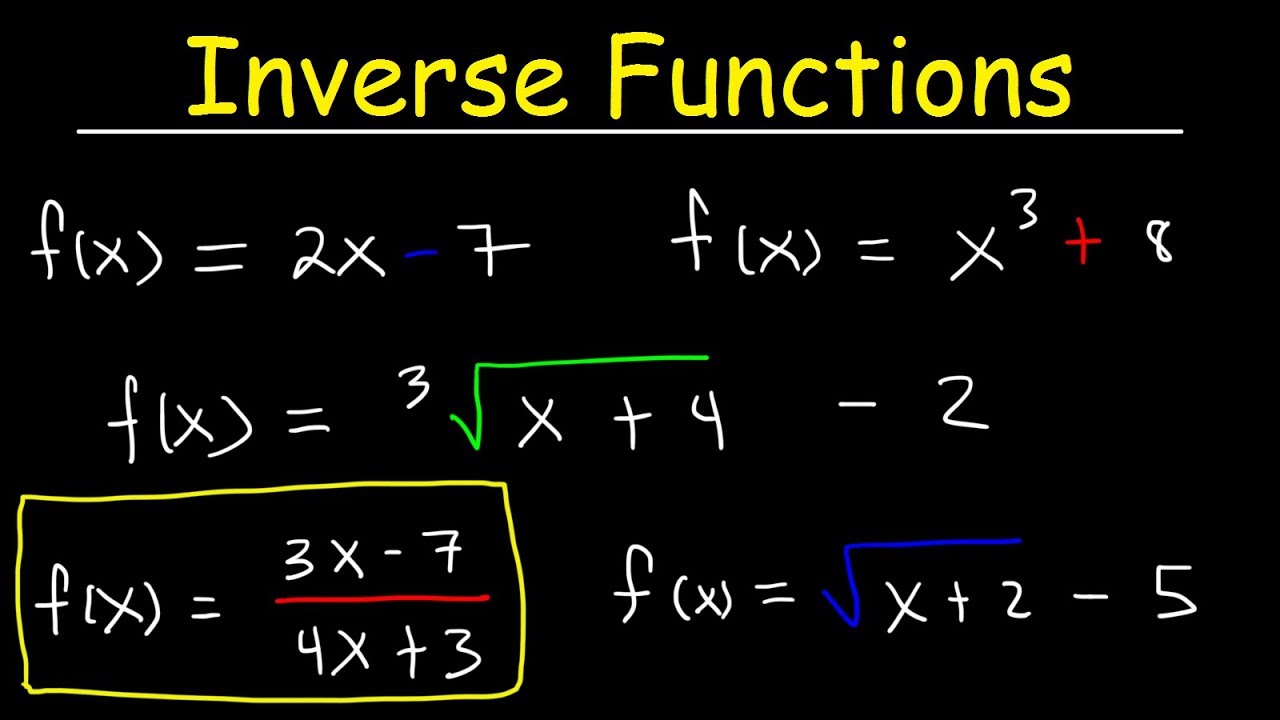
This algebra 2 and precalculus video tutorial explains how to find the inverse of a function using a very simple process. First, replace f(x) with y. Next, switch x with y. Finally, solve for the y variable and that's it. This video contains examples and practice problems ...
@alpine basin
alpine basin
You're supposed to replace the x's with y's and vice versa right?
viscid thistle
What have you tried
alpine basin
I got x=y(y+2)
Then I figured I multiply y+2 to both sides
And then thats where im stuck, y = x(y+2)
viscid thistle
I got x=y(y+2)
@alpine basin how? The q is x=y/(y+2)
You meant division there prolly right?
alpine basin
Oh
I was explaining how I got to y = x(y+2)
It was originally x=y/(y+2), then I multiplied y+2 to both sides
alpine basin
Im not sure how to get y by itself after that part
alpine basin
ye
viscid thistle
So from $y=x(y+2)$ expand it
obsidian monolithBOT
Al𝟛dium:
viscid thistle
@alpine basin
alpine basin
yea
viscid thistle
$y=xy+2x$
obsidian monolithBOT
Al𝟛dium:
viscid thistle
Now bring the xy to the LHS
alpine basin
whats the lhs, not sure what that abbreviation is lol
viscid thistle
Left hand side lol
alpine basin
oh mb
viscid thistle
Nw
alpine basin
so y - xy = 2x
alpine basin
oh..
viscid thistle
Yeah it was a lil bit tricky ngl
alpine basin
yeah i think i got it now, that shoulda been obvious lol
viscid thistle
Lol good
harsh cipher
Hi
1b
d) the exact value of the sum for each of the following series
I solved a= 1 which is the first term
number of terms = 8
ratio = -1/2
plugging this into the equation
a(1-r^n)/(1-r)
after plugging in the values. How is the sum 85/128 ?
nm got it
😛
pale bison
shh
willow bear
literally three goddamn terms just write it out lmfao
pale bison
lmao
viscid thistle
I guess we wait
willow bear
g h o s t
pale bison

 desert pendant
@harsh cipher there is a logarithm property that log(a^b)=b log(a), then log(2) will be a constant number, which you can take out of the sum, then you have the sum from 3 to 5 of "x", which is 3+4+5=12, so the answer is 12 log(2) or log(4096)
viscid thistle
So the composition of functions is almost never commutative. Are there cases where it is, excluding when f(x) and g(x) are defined by the same expression, or when they are each monomials where the exponents have the same product?
 wide lynx
 patent beacon
What does your class consider "invertibility"?
patent beacon
Odds are, they only care about a horizontal line test
But that isn't always the case haha. That's why I ask
 tawny nacelle
they dont even give u the domain and the codomain ?
you might as well blindly answer that
wide lynx
the key said it is not
patent beacon
It's entry stuff. Domain is "whatever makes sense" and codomain is R
wide lynx

tawny nacelle
plz 
tawny nacelle
but no just passing the horizontal line test means its one to one
you also need to check if the function is onto
wide lynx
 thorn mountain
A function doesn’t have to be onto in order to be invertible
thorn mountain
Invertible means having an inverse which is a function, yes?
thorn mountain
That is not a definition of invertible I have encountered
Nor is it what comes up when searching for a definition of invertible function
A bijective function is certainly invertible
But invertible does not imply bijective
 jagged glade

Khan Academy
Not all functions have inverses. Those who do are called "invertible." Learn how we can tell whether a function is invertible or not.
tawny nacelle
theres a better definition of invertible with like if $f: A \to B$ and there exists $f^{-1}:B \to A$ such that $f \circ f^{-1}= i_{B}$ and $f ^{-1}\circ f= i_{A}$ then $f$ is invertible
obsidian monolithBOT
soαρ:
tawny nacelle
but even according to this definition, invertibility is equivalent to injectivity and surjectivity
patent beacon
We are getting bogged down in different definitions of the word "function"
thorn mountain
No
patent beacon
In an early math class, all functions are assumed to be onto
tawny nacelle
you gotta say what the codomain is man
obsidian monolithBOT
Malix:
patent beacon
For example, sqrt(x) is invertible. That's because the codomain is automatically set to the range.
tawny nacelle
it doesnt make sense to say "not surjective" without even knowing the codomain
thorn mountain
Then it is likewise useless to tell a precalculus student that they have to check for surjectivity
tawny nacelle
i dont think u were talking about what precalc people need to check
thorn mountain
Is this channel for helping precalculus students?
 patent beacon
I'm also not certain this stuff is taught the same everywhere
thorn mountain
It could be argued that if the function is not surjective that the inverse function does not map some portions of the codomain
But that doesn’t change whether it is a function or not
And it doesn’t change whether the function is invertible or not
tawny nacelle
not sure if its even a function if it doesnt use up all of its domain
its like having 1/x defined all over R

also if u chop off surjectivity, surely you're gonna lose a lot of the nice properties
 frozen needle
there are two different concepts for "functions" but unfortunately they appear to have the same name in English
tawny nacelle

willow bear

 serene heath
2 different definitions
patent beacon
At least where I'm from, no precalc class considers surjectivity. Every function automatically has the codomain set to the range and surjectivity is assumed
serene heath
the right one and the wrong one
patent beacon
Is this the best way to do it? No.
thorn mountain
Can you think of a situation where that automatic reduction of the codomain to the range of a 1-1 function would cause problems for answering the question “is this function invertible?”
patent beacon
Note that when you use this convention, you don't have to define a codomain. There are problems with this, where not knowing where a function maps to is awkward
It's never a problem when you're just mapping into R^n all the time
Non-surjectivity is also a beautiful thing to recognize, linear algebra makes a lot of use of it
viscid thistle
you're beautiful
patent beacon
Yes
thorn mountain
Thanks Kaynex. It’s still beyond the scope of this channel, but I concede it is important.
thorn mountain
If the probability that math is favorite is 1/5 how many votes for math are there total?
 fluid sable
100
thorn mountain
Ok, so x+y=100
thorn mountain
What’s the sum of English, math, lit, and sci?
fluid sable
450
thorn mountain
Umm, no
fluid sable
150 + 100 + 200 = 450
thorn mountain
Adding all 4 classes together gets you all the votes
thorn mountain
350+2x+y=500
fluid sable
?
fluid sable
Ok
thorn mountain
This is not to say your earlier deduction of x=50 was wrong btw
thorn mountain
Well, when you added all you knew together to get 450+x=500 that’s mathematical too
thorn mountain
But where I was going is probably what your class is set up to encourage because you are probably in a section on solving systems of equations or having a review of that
fluid sable
64G = 376
thorn mountain
No
thorn mountain
Say x groups have 5 people and y groups have 7
thorn mountain
Then x+y is the total number of groups (64)
fluid sable
alrighty
thorn mountain
And then if we add 5x +7y we should have the total number of people
fluid sable
how
thorn mountain
Each group of type x has 5 people in it
So the number of people in the x sized groups is 5x
Similarly for the number of people in the y groups
thorn mountain
Yes
thorn mountain
Then 5x+7(64-x)=376
fluid sable
36 ?
thorn mountain
Yes, that is x
jagged glade
Should this be in #geometry-and-trigonometry ?
fluid sable
I solved it.
jagged glade
Okay.
wide lynx
write an equation for f(x) & the inverse
i already got the inverse but cant figure out the normal
fluid sable
What's the inverse ?
fluid sable
?
fluid sable
Well first
establish the rate
In our case, you are adding one each time ?
and multiplying by 3 in the x section ?
 jade heron
its not an arithmetic progression
fluid sable
hm ?
wide lynx
well for the inverse of it I got f^-1(x)= 3^x
jade heron
 wide lynx
im just trying to find the normal
jade heron
Yh, f inverse is 3^x
so
if you replace x with f(x)
you should get
f^-1(f(x)) = 3^f(x)
x = 3^f(x)
which makes sense if u look at ur table too
3^0 =1
3^1 = 3
3^2 = 9 etc...
jade heron
so you should get 3^f(x) =x so, f(x) should be the logarithm with base 3
wide lynx
not f(x)=3^f(x)
jade heron
It should be like $x = 3^{f(x)}$
obsidian monolithBOT
L'Âne 🍐:
jade heron
not f(x)=3^f(x)
fluid sable
jade heron
@elfin crescent f(x)/g(x) can not be negative ever can it?
sqrt(1-x) is strictly positive, and (x^2+5) is strictly positive too
wide lynx
ln(x^2 -3)?
viscid thistle
You are doing d. i suppose
wide lynx
yes
viscid thistle
No c
viscid thistle
Right so just leave it like that
bruh to find the original function, take the ln of both sides, then swap x and y
wide lynx
theres nothing else i can do?
viscid thistle
c) g(x²-3)=ln(x²-3) i can't think of anymore
bruh to find the original function, take the ln of both sides, then swap x and y
@viscid thistle wut
viscid thistle
so u have f^-1(x) =3^x correct?
What the hell are you taking about lol @viscid thistle
R u memeing or what
look at the earlier chat
so theres no solving that or anything?
Not really
There is no more simplification
@viscid thistle he needed help with finding the normal function of f^-1(x) = 3^x, so i responded
Oh ok
thats what i was referring to when i said what i said
i'll leave now. goodbye
viscid thistle
Who you are asking
wide lynx
u
 viscid thistle
Jeez im blind hold on
Yes you are right
@wide lynx i was looking at g(f(x)), yes g(h(x)) is x²
wide lynx
pog
wide lynx
can an answer come out to be just ln
viscid thistle
ln itself is not a thing. Ln is a function, ln(x) can come out but not "ln" lonely
 azure dove
Sequence and Series, try out Q8 from the CIE maths 9709 paper 12 winter 2019, if you get stuck check out the video solution
https://youtu.be/J4LsgjZSZQE

Sequence and Series
Image of the question can be found here
If link does not open all CIE exams can be found at
https://pastpapers.co/cie/?dir=A-Level%2FMathematics-9709
For more questions go to my playlist
wide ocean
can someone explain why cosine graph becomes on angle like this?
is it because of a translation by x to the right? i'm confused
viscid thistle
Think of the - in -x as a slope
 lilac pier
@wide ocean Use $P(t) = P_o e^{kt}$
obsidian monolithBOT
Sup?:
alpine basin
How do I simplify i^-3 + 5i^7?
viscid thistle
$ i^{-3} + 5i^7$
obsidian monolithBOT
HoboSas:
alpine basin
yea
viscid thistle
what is i^3
alpine basin
-i
viscid thistle
what is 1/(-i)?
viscid thistle
not really
alpine basin
1/-i is 1/-i
alpine basin
i
viscid thistle
yes
viscid thistle
alright
alpine basin
then it'd be i-5i whcih is -4i right?
viscid thistle
yes
alpine basin
okay thanks
viscid thistle
np
 copper vigil
provided that you have 2 vectors in R2 that are not colinear, can you form every single vector in R2
through a linear combination of those vectors
 stuck lark
what do you think
copper vigil
@stuck lark i think it's true but i don't know how to formally prove it
 finite wraith
informally prove it then. /s
stuck lark
i suppose it helps to break out definitions of things, eg collinear, linear combination, etc, then spitball as much as you can toward a cohesive proof
copper vigil
provided that A is not 0, the equation Ax=B always has one x value for which it is true
that's where my intuition is getting me
viscid thistle
JEEZ
 viscid thistle
What i meant is: isn't it easier to write where it IS continuous?
And not where its not
viscid thistle
I mean
viscid thistle
Yeah okay that's correct but could be written better (prev q)
Actual answer=5.83h?
copper vigil
@viscid thistle is it sufficient to prove that 2 colinear vectors can only form another vector that is also colinear
is that equivalent to stating that any 2 vectors that are not colinear can form any other vector
viscid thistle
Hmm, that's uh.. too short imo
i suppose it helps to break out definitions of things, eg collinear, linear combination, etc, then spitball as much as you can toward a cohesive proof
@copper vigil
copper vigil
c1(x1,y1)+c2(x2,y2)=(x3,y3). so c1x1+c2x2=x3. if (x1,y1) is colinear with (x2,y2), it is the same as stating that A(x1,y1)=(x3,y3), implying that the linear combination of colinear vectors must also be colinear with those vectors
patent beacon
You haven't touched what x3 and y3 can/can't be, which is the crux of your proof
Lets talk impossibilities. Assume there's some value (x3, y3) cannot be. What does that say about (x1,y1) and (x2,y2)?
copper vigil
they must be colinear then
patent beacon
That's true! Can you prove it?
copper vigil
didn't i just do that? by proving that the linear combination of colinear vectors must also be colinear with those vectors. so to represent any vector in R2, you need a combination of vectors that are not colinear
the gap in my logic is proving that ANY vectors which are not colinear can form any vector in R2
which is where i'm stuck right now
patent beacon
Yeah yeah okay I see where you are with this. Let's say (a,b) is one of these colinear vectors you can make. That is:
a = kx1
b = ky1
Clearly, (a, b+1) is also a member of R². But it's not colinear to (x1,y1). That's because k = a/x1 doesn't work for the other equation. So, you can't express (a, b+1) and so you can't use two colinear vectors to express any vector in R²
 fleet yew
Lmao from what it sounds like you literally just got into lin alg
Learn a bit more about matrices
Then you'll be able to do this proof
fleet yew
Specifically it has to do with taking the determinant of the matrix and realizing the conditions
finite wraith
@viscid thistle is that x-> infinity?
viscid thistle
How would I explain this?
finite wraith
the answer is
-infinity to +infinity
idk what else to say tbh
its not like the limit really exists
sinx alternates between -1 and 1
we do not know if x is being multiplied by -1 or 1 at infinity
viscid thistle
That’s a little bit more understandable
jagged glade
quick answer, find y' 😄
parallel-slope relationship?
note: y'(x) is the slope of the equation at x.
cool
well, for (a) 12(4x-7)^2 = ??
12(4x-7)^2 is the slope of tangent of the equation at x, and it is parallel to y=108+7
so...?
ah, for your convention, your gradient means slope i guess
sub 108 into the slope of tangent equation
very close, you just have to equate them 😄
yep
12(4x-7)^2=108
yea, gradient = gradient XD
 craggy dune
well the root of (2x - 4) should be simple enough
and x^2 = 4x should be manageable as well
whats 0^3?
harsh cipher
hi
I have a question about point of discontinuity
y= (x+2)(x-6)/(x+2)(x-2)
why would the horizontal asymptote be on y= -1?
jagged glade
the horizontal asymptote should be on y=1
jagged glade
,w graph (x+2)(x-6)/((x+2)(x-2))
obsidian monolithBOT
Requested by Biscuit#5208
jagged glade
I think you've missed out a negative sign
jagged glade
yep

Wolfram|Alpha brings expert-level knowledge and capabilities to the broadest possible range of people—spanning all professions and education levels.
wide lynx
patent beacon
Let's say the function is continuous. What should f(18) be?
wide lynx
for the top one it would be k*18 x<=18
pale bison
so f(18) = 18k
pale bison
do you know limits?
pale bison
ok, so $f(x)$ is continuous at $x=18$ if
$\lim_{x\to18}=f(18)$
obsidian monolithBOT
Publius:
patent beacon
I mean you also want the function to connect to the other part
wide lynx
yeah
patent beacon
So yes, f(18) = 18k
But also you want f(18) = 17
You can connect this to a limit yes. Find the left-sided and right-sided limit x → 18. Since the function is continuous, these should match
patent beacon
No lol
Give the above one more look-over. You'll be suprised by how simple it can be
wide lynx
fr
patent beacon
Or at least, don't overthink it
 shrewd storm
Do you know what a limit is?
wide lynx
yeah
shrewd storm
Ok so given that we know that as x approaches the limit your piece function must be continuous so the expressions must be equal
patent beacon
What's the left-sided limit, x → 18?
patent beacon
Bang you got it fam
wide lynx
i see
shrewd storm
Yep because think about it if the function could approach to different values from two different sides it wouldnt be continuous
Even for an English definition cause the function would jump
patent beacon
Both of those pieces had better be equal if the limit should exist
Np! Glad it makes sense
shrewd storm
What there is nothing to apologize for I’m about to go get some help too
willow bear
@pale bison that notation merits a copswing
 willow bear
what's giving you trouble
wide lynx
oh sick
pale bison
Nah Ann. They just need a confirmation and move on, no explanation or more thinking is required
willow bear
they could have asked "hey is this the correct answer"
 frigid sapphire
I thought of ) as infinity sorry lol
Can't infinity simply be an undefined number, like 1 million?
 fluid shore

- Infinity is an undefined number
- Infinity is 1 million, which is perfectly defined.
Do you see how that doesn't make sense?
 /j
fluid shore
/j
fluid shore
10*infty = infty => 10 = 1
obsidian monolithBOT
HoboSas:
stuck lark
$^\infty2$, ftfy
obsidian monolithBOT
RokettoJanpu:
fluid shore
$\infty^{\int \infty d\infty}$
obsidian monolithBOT
Abhijeet Vats:
viscid thistle
wrong channel
desert pendant
infnity=lim x->1 erf^-1(x)
 timber wraith
Shibe
 maiden pebble
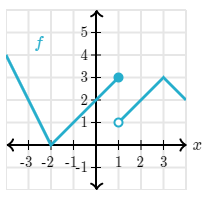
is the lim(x->1) = 1?
if so, is that because the left side of the graph doesnt have a limit, where as the right side does?
viscid thistle
it DNE
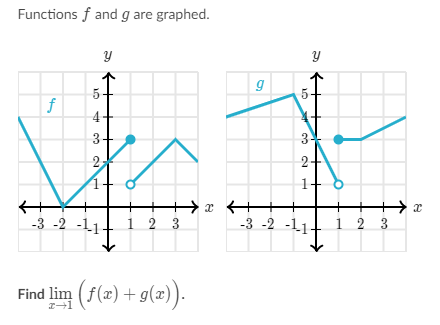 viscid thistle
p sure it is
 viscid thistle
the average of each limit in each graph is 2
and there are 2 graphs
so 2x2=4
makes sense
maiden pebble
So what are "each limit"
https://i.imgur.com/UAkLOnA.png
Are you saying that the lim(x->1) of red = 3 and of green = 1
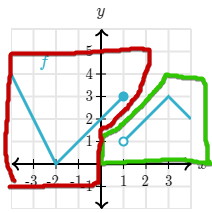 maiden pebble
yes, i udnerstand the average part
I just didnt know where the numbers 2+2 were comming from
maiden pebble
Yes I was just about to ask about that
because my next question is very similar but the answer is DNE
uncut mulch
apply it here, show work and tell me what you get
 grizzled orchid
this clearly looks like a test lol
 hallow cave
its not
grizzled orchid
especially if it's "urgent"
hallow cave
its homework points for a test
grizzled orchid

hallow cave
yes bruh
viscid thistle
welp brööther, we shalln’t give you the answers but we might help you through it.
alpine basin
How would I write the polynomial for this graph?
I got -(x+1)(x-2), but it has to be a degree of 3 but Im not sure which x Im supposed to square
viscid thistle
try using stationary points
alpine basin
wut
viscid thistle
derivative
alpine basin
Im not sure how id do that
viscid thistle
alright then try plugging some x's in
alpine basin
I mean the answer is -(x+1)^2(x-2)
But I was asking how am I supposed to know it should be x+1 thats ssquared and not x-2
alpine basin
@viscid thistle Is there a quicker way to do that or is that the only way
alpine basin
mk
viscid thistle
@alpine basin (x+1)is squared because the graph switched from decreasing to increasing when it hits the point
 stray dagger
Im trying to figure out how to complete this square to find the center and radius
can anyone help?
viscid thistle
ideas?
stray dagger
i know its b/2a
uncut mulch
the x and z components are already in square form
so you only need to focus on completing the square for
y^2 - 2y
what's it?
stray dagger
is it 2
uncut mulch
what's it?
uncut mulch
what does that represent?
stray dagger
the square???
uncut mulch
can you please be less vague?
stray dagger
Ok i dont know what it represents thats why
uncut mulch
$\cts$
obsidian monolithBOT
ramonov:
uncut mulch
alternatively if you have an equation, you can add that value to both sides
stray dagger
so is it y^2+2y+1
viscid thistle
I suggest ignoring the formula and thinking about it
viscid thistle
what if I wanted it to have multiple meanings
im joking alright 👍
thanks for that
uncut mulch
so is it y^2+2y+1
also no. that isn't anything you should have in any context here
stray dagger
ok so im confused what im suppose to be doing then
uncut mulch
read that summary above
gives a decent intro to completing the square
and/or i'll guide you through it if you prefer
stray dagger
i understand the b/2a and then adding subtracting it but i need a guide for it
uncut mulch
just stating b/2a is also meaningless without full context of how you're using it
did you read the guide i made above?
stray dagger
yes
uncut mulch
so currently you need to complete the square for
y^2 - 2y
what would be the b value?
stray dagger
2
uncut mulch
not quite
stray dagger
-2?
uncut mulch
yes
uncut mulch
just stating b/2a is also meaningless without full context of how you're using it
completing the square is slightly more complex if the coefficient of the ^2 term isn't 1
then the square is -1
NO
there isn't any need to involve a here
don't jump ahead
adding (b/2)^2 = (-1)^2 = 1 would complete the square for y^2 - 2y
based on the binomial expansion presented above
however you would need to +1 - 1 or add 1 to both sides of the equation
stray dagger
ok so wouldent that just make it x + 1)2 + y2 – 2y + z2 + 1 = 0
by adding 1 and subtracting on the other side
uncut mulch
$(x+1)^2 + (y^2 - 2y {\color{red}{\ + 1) - 1}} + z^2 = 1 \
OR \
(x+1)^2 + y^2 - 2y {\color{red}{\ + 1}} + z^2 = 1 {\color{red}{\ + 1}}$
obsidian monolithBOT
ramonov:
stray dagger
ok so once i have that i need to find the center and rsdius
uncut mulch
that then allows you to factorise y^2 - 2y + 1 to (y-1)^2
and then determine the properties with the equation in an appropriate form
stray dagger
so the center is at -1,1 and the radius is 2?
uncut mulch
no
this is 3-dimensional
you should use () when representing points
and r isn't 2
stray dagger
well isnt it 2 because u add +1 to the 1 on the other side of the =
ok so then the center should be at (-1,1,1)??
uncut mulch
just because the isolated integer on the right is 2, doesn't mean the radius is 2
check the z-coodinate
stray dagger
ok so (-1,1,-1)
obsidian monolithBOT
ramonov:
stray dagger
so the coefficent is 0?
stray dagger
ok so the quardanant of the sphere is (-1,1,0)
uncut mulch
quardanant ?
stray dagger
ok so then the radius is =2^2 right?
uncut mulch
no
a sphere with the equation : $(x-a)^2 + (y-b)^2 + (z-c)^2 = r^2$ will have the center: $(a,b,c)$ and radius: $r$
obsidian monolithBOT
ramonov:
stray dagger
ok so the radius is 2 then
obsidian monolithBOT
ramonov:
stray dagger
idk it cant be 1
obsidian monolithBOT
ramonov:
uncut mulch
you could write sqrt(2) in plain text
but that definitely isn't 1.4
and you should just leave r = sqrt(2) for your radius
 small cedar
$r=\sqrt{2}$
obsidian monolithBOT
Orange905:
wide ocean
" If P(x)= -4x3 + 8x2 - 8x -3 is divided by (x-4), what is the remainder? "
A) P(x - 4)
B) P(4)
C) P(x + 4)
D) P(-4)
I did synthetic division and the remainder I got the first factoring was -163. Not sure why the answer is "B". Isn't remainder the number after synthetic division? Why is it the zero of the divisor? or is this coincidence?
thank you, I am really stumped
jade heron
remainder theorem
@wide ocean
If $(x-a)$ is a factor of $f(x)$, then $a$ is a root of $f$. Otherwise, the remainder given when $f$ is divided by $x-a$ is $f(a)$.
obsidian monolithBOT
L'Âne 🍐:


 pale bison