#precalculus
1 messages · Page 231 of 1
 radiant ibex
 craggy dune
look at the term you have a sum left
now you want to get rid of that and you do that using a closed formula
thats why you prove it, then you can use it and you have the answer to the orignal question
craggy dune
if you need help just ask here it's the standard introduction to induction
radiant ibex
@craggy dune would you mind walking me through this?
craggy dune
+6
ya i can do that
okay with induction you always start with the base case
in this case that is n = 1
radiant ibex
right
craggy dune
so you show that the formula is correct in the case of n = 1
that should be simple enough right?
radiant ibex
yea
 obsidian monolithBOT
deekaan:
craggy dune
do you know how to get the upper bound back to n?
radiant ibex
not a clue, do you multiply it to k?
obsidian monolithBOT
deekaan:
craggy dune
you know what this sums equals to?
radiant ibex
3?
craggy dune
yes
radiant ibex
OK
craggy dune
how do you get there?
radiant ibex
1 + 2
obsidian monolithBOT
deekaan:
craggy dune
right?
radiant ibex
yeah that would be the same
obsidian monolithBOT
deekaan:
craggy dune
how would we do that?
radiant ibex
by adding it
radiant ibex
we could add it
craggy dune
exactly
obsidian monolithBOT
deekaan:
craggy dune
okay how do we get to the upper bound n?
radiant ibex
add 1
craggy dune
no
the upper bound is (n + 1)
1 2 3 .... n (n +1)
a sum is just shorthand for adding the same thing again and again
so $\sum_{k=1}^{5}k$
obsidian monolithBOT
deekaan:
craggy dune
means we have 1 + 2 + 3 + 4 + 5
radiant ibex
yea
obsidian monolithBOT
deekaan:
craggy dune
this way we can move the upper bound
we have to calculate 1 + 2 + 3 + ... + n + (n + 1)
or $\sum_{k=1}^{n+1}k$
obsidian monolithBOT
deekaan:
craggy dune
so how do we isolate the (n+1)
don't overthink it we're doing simple addition
n is just a placeholder for an integer
so if n = 9, (n + 1) would be (9 + 1) = 10
radiant ibex
yea
craggy dune
okay
try to do some calculation with sums
the issue right now is that either the n is too abstract for you or that you don't understand sums
$\sum_{k=1}^{n+1}k$
obsidian monolithBOT
deekaan:
craggy dune
take this sum and set n to 1, 2, 3, 4 and 5
and try to reduce the upper bound
use the rule before
$\sum_{k=1}^{2}k = (\sum_{k=1}^{1}k) + 2$
radiant ibex
im gonna take a break
obsidian monolithBOT
deekaan:
craggy dune
or this way
craggy dune
no worries
 fleet yew
@radiant ibex hi
Is your name supposed to just be a bunch of boxes
Or is it unicode i cant read
 thorn mountain
looks like boxes to my computer too
 hard mulch
I keep getting this wron
T_T
I tried doing -1t +28(5) for a
but I dont think thats how its done
 gritty sandal
u sub in t=5
U missed the quadratic at the front
so it would be $-(5)^2 + 28(5)$
obsidian monolithBOT
Parking Ticket:
gritty sandal
or 115 dollars
 full garden
hey guys does it make sense to ask for the acute angle of -53?
because the question says what's the acute angle of -53
and like i think -53 is already acute
full garden
I'll send u a screenshot because it's from online class
gritty sandal
you should probably go to geometry and trig
full garden
sorry
gritty sandal
nah dw
 violet nebula
I am lost on finding a second solution to a problem, I need to find 2 alternate solutions to this on top of my first find which was done with a summation of 4(n-1)+1 with n=1 below and an x on top to represent the layers. can anyone guide me to another way of solving it?
 willow bear
you can view it as a central column and four triangles
violet nebula
would that end up solving for area then multiplying by 4? or would it be another way. I dont see how i would go from area, and translate it to a number of cubes with the diagonal
 slim wigeon
Is counting an option?
violet nebula
i would assume, but i might get docked points for not having an original solution
slim wigeon
Well
violet nebula
this project is about describing the process
violet nebula
ah, I understand the triangle method now
thank you Ann
i worked it out a bit and that makes a lot of sense
fleet yew
$6+4(\sum\limits_{n=1}^5 n)$
obsidian monolithBOT
AMD:
fleet yew
,w $6+4(\sum\limits_{n=1}^5 n)$
obsidian monolithBOT
 Requested by AMD#4434
willow bear
Requested by AMD#4434
willow bear
amd you're late
obsidian monolithBOT
AMD:
fleet yew
Why
 maiden pebble
Oh, I did it as the sum of numbers from 1 to 11
$ (\sum\limits_{n=1}^{11} n)$
no way I got it to work
 exotic grove
$ (\sum\limits_{n=1}^{11} n)$
obsidian monolithBOT
MeepMoop:
maiden pebble
Thanks
exotic grove
Judicious use of {these}
maiden pebble
mhm
obsidian monolithBOT
Bridge:
 viscid thistle
How would I simplify this

 harsh smelt
you ll get tan btw
harsh smelt
SPOILEEERS
 tawny nacelle

tawny nacelle
have you factored cos(x) out ?
viscid thistle
How do I
tawny nacelle

viscid thistle
I’m dumb
tawny nacelle
no no we'll get through this 
theres still hope
lets factor something nicer first
like say we have the expression 6 + 10x
now can you factor out 2 from both ?
viscid thistle
2(3+5x)
tawny nacelle
nice 🎊
so when you factored out 2, you just divided both of the terms by 2
we kinda do the same thing for your expression
factor out cos(x)
and as there is cos(x) in both of the terms, they will cancel out to 1 when you divide by cos(x)
so now can you factor out cos(x)

tawny nacelle
ok think like this
viscid thistle
Also is sin^2x/csc^2x just 1?
tawny nacelle
$\frac{\cos(x)}{\cos(x)}(\sec^2(x)\cos(x) - \cos(x))$
obsidian monolithBOT
soαρ:
tawny nacelle
do you agree that this is the same thing as you had before
tawny nacelle
nice
viscid thistle
Yes
tawny nacelle
ok so now we move the 1/cos(x) inside the parentheses and distribute it to both of the terms
viscid thistle
What 1/cos
tawny nacelle
$\cos(x)(\frac{\sec^2(x)\cos(x)}{\cos(x)} - \frac{\cos(x)}{\cos(x)})$
obsidian monolithBOT
soαρ:
viscid thistle
Yee
tawny nacelle
well gg man now you just cancel out the cos(x)
acutallly i might have fucked it bad
this was prolly more confusing 
harsh smelt
why on earth did you do that, i mean it is correct but what is the sense
tawny nacelle
idk man i thought it would make sense to him
harsh smelt
by distributivity (sec^2cos-cos)=cos(sec^2-1)
viscid thistle
Also is sin^2x/csc^2x just 1?
tawny nacelle
but now i think using distributivity wouldve been much much beter
no it isnt
sin^2(x) * csc^2(x) = 1
viscid thistle
So what is it
harsh smelt
by distributivity (sec^2cos-cos)=cos(sec^2-1)
@viscid thistle also, since tan^2+1=sec^2 you have cos(tan^2)
 harsh smelt
since tan^2=sin^2/cos^2 youhave cos(sin^2/cos^2)=sintan
that's all in fact
where from you've taken csc?
 ember wave
Does anyone know how to do this problem? Normally, to find tangent lines; I thought you need coordinates.
 uncut mulch
solve y' = 0
there are infinitely many solutions, but you only need 2
alternatively, look at the graph as suggested
these types of lines have a slope of 0: ||h|||| ||||l||
ember wave
but for a slope of 0 for sin x wouldn't it just be a horizontal line?
 undone pawn
it would
ember wave
so just two random x values? or am I still missing something?
undone pawn
not two random x values..
at which points of sinx, are the tangents perfectly horizontal???
,w plot sinx from -15 to 15
obsidian monolithBOT
 Requested by FlynnXD#2733
viscid thistle
Requested by FlynnXD#2733
viscid thistle
look at the x coordinates of the peak point
ember wave
They touch the x axis at the horizontal line of sin x w sloe of 0
undone pawn
but that's not where slope is 0
what the heck
do you know what the slope is?
and specifically, what a tangent is?
the tangent to a curve
viscid thistle
@viscid thistle So what is troubling you
well where do you start?
first compose the function
with taking proper conditions
but the conditions, some of them are numbers and the others are in radians soooo
So take pi is like 3.14
oh that's it? i'll try again ig
Yess
Just take intersection of all the conditions
I mean if
for example if you take f(x) = [x] as function then -2 <= x<= -1 right
Ria u here
@viscid thistle
yea dw i think i got it
thx for the help
Okky
 wide lynx
How would I factor 6x^3+17x^2+11x+2
uncut mulch
apply rational root theorem, to test for factors.
wide lynx
didnt work?
thorn mountain
You tried all 16 option?
Cause I’ve tried 2 of them in my head and pretty sure I found one
wide lynx
i must be doing something wrong lol
 past meadow
ye there are some simple rational roots for this one
wide lynx
i dont get remainder of 0 on any of my synthetic division
assuming you do synthetic division 
past meadow
have you tried (x+2) as a factor
wide lynx
i just followed this video https://www.youtube.com/watch?v=4XytYH35AP0
How to use the Rational Root Theorem to narrow down the possible rational roots of a polynomial. You can then test these values using synthetic division to see if they are roots of the polynomial.
0:10 What is the Rational Root Theorem p/q
0:58 List of the Possible Rational ...
past meadow
also, you shouldnt have to divide to know if you're gonna get a remainder of 0
wide lynx
I followed that and don't get past synthetic division
past meadow
he doesnt test if theyre factors before doing the division
idk why he does that
anyway use factor theorem to test if the roots are factors or whatever before you actually divide
wide lynx
ill just watch a different video
past meadow
what do you think the possible rational roots are? test those by substitutuing them back into the polynomial, and if theyre zero, you have yourself a factor
wide lynx
you find possible rational roots by doing p/q
like the constant/coefficient of first term
past meadow
yeah, so which ones have you worked out?
wide lynx
1,(1/2),(1/3),(1/6),2,(2/3)
past meadow
+-
wide lynx
yes
can i use negative roots? like for the synthetic division
i didnt know that was allowed
past meadow
im 99 percent sure you can
although ive always just done polynomial long division
so have you tried the negative ones?
to see if there are any roots there?
(spoiler: all the roots are negative)
past meadow
so you found any factors yet?
wide lynx
yeah
but
in the workbook it had an x+2
but i got x-2
i saw this rule on yt about always having it be x-n but that would make my other answers incorrect
thorn mountain
@past meadow synthetic division is just fine with negative roots. It even works with complex roots if you do if sequentially for both roots in the conjugate pair... as long as the factor can be written as x-c (and c can be negative or complex), synthetic division can be used.
past meadow
i think you meant to ping the person who i was helping, but ive just always found polynomial long division makes more sense personally and i was never taught synthetic division
so i didnt want to give any certainties about what you could do with it
thorn mountain
EH, you expressed a small amount of doubt over whether it was applicable
past meadow
well thanks for the info
thorn mountain
So I was gonna clear that up for you if someone else in the future asked
past meadow
thanks then. that makes sense
past meadow
sorry if I'm being thick but how is that relevant to what i said?
past meadow
ok then
 remote bison
sneaky boi
 viscid thistle
Do sequences belong under precalc?
thorn mountain
Kinda depends...but the questions channels could always be used
 scarlet mirage
 patent beacon
@scarlet mirage
Good start! Let's solve that first one. When is cos(x) = -2?
 still meadow
cosx = -2 and cosx = -1/2 is correct.
willow bear
remote bison
bruh
the mode is basically the most frequent term
which is between 20 and 25
@surreal pivot
for the string box question, the minimum is 1, median is 3, maximum is 5
q1 and q2 are 1.5 and 4.5 respectively
 surreal pivot
Thanks bro
@remote bison but the dot graph is hard this my first time doing this ever
undone pawn
technically prob stat
remote bison
doesn't precalc stats include combinatorics and stuff?
undone pawn
ig
 silver matrix
Ping me when answering, thanks.
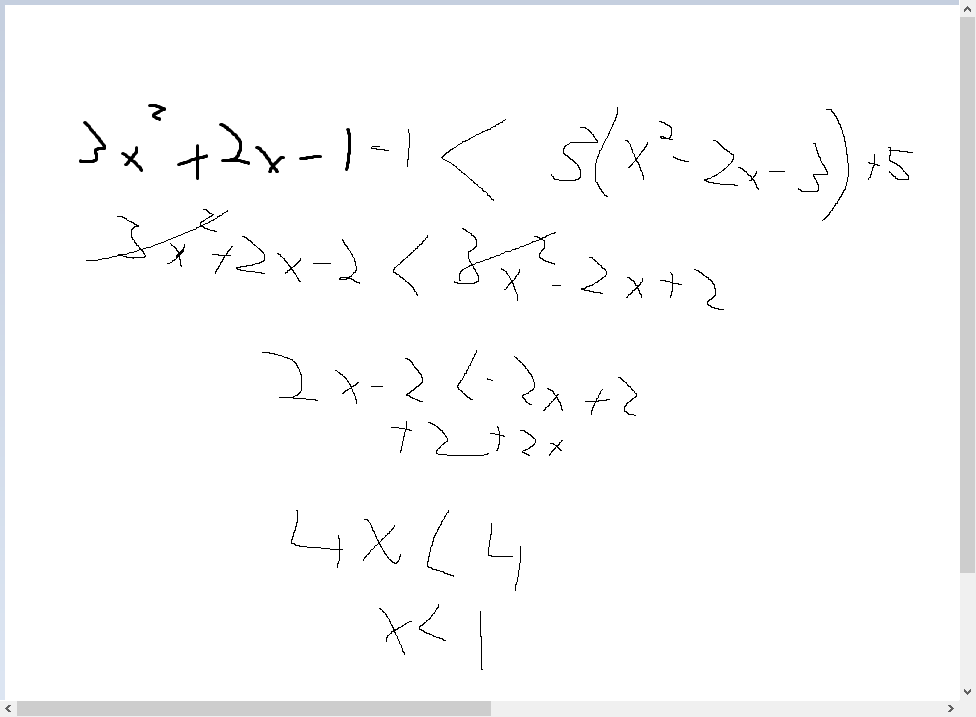 maiden pebble
OOH
I erased it and never wrote i back
pretty sure that dividing 4/4 wouldnt have been too hard though Ann
willow bear
don't take me for someone who can't do arithmetic
i was specifically questioning your omission of the 1
maiden pebble
just making a joke
 remote oyster
A club consisting of 6 juniors and 8 seniors is to be formed from a group of 13 juniors and 16 seniors. How many different clubs can be formed from the group?
 warped crypt
What have you tried @remote oyster
 robust edge
yeah try researching stuff about ncr and npr
remote oyster
i subtracted the possible seniors and juniors from the groups u choose
and i got & and 8
sorry 7 and 8
and i tried just adding 7! and 8!
unless youre supposed to multiply 6 and 8 and 13 and 16 and make no distinction between seniors and juniors
warped crypt
No
remote oyster
?
warped crypt
What you're trying to do is find the total combinations you can have of 6j and 8s
From a total of 13j and 16s
remote oyster
i thought you make one "object" out of the 6 juniors and so youre left with 7 possible junior combinations
or 7!
warped crypt
What is the number of combinations of 6 juniors when you have 13 juniors to pick from
warped crypt
No
 sour eagle
13!/(7!*6!)
warped crypt
That would be right if the order to juniors mattered
remote oyster
yeah i did the combination equation too
warped crypt
But if order doesn't matter it is the combination, not the permutation
remote oyster
but my calculator gave me a huge number i assumed it was wrong
wait let me try it again
warped crypt
You should get 13C6 = 1716
remote oyster
and then u would do the same combination equation for the seniors right
remote oyster
ok thank you
uncut mulch
shouldn't it be multiply
sour eagle
Yea i thought the same.
uncut mulch
considering the simplest case:
selecting 1j,1s from 1j, 1s
there would only be 1 'group'
sour eagle
I mean they are not separated events i guess?
uncut mulch
not 1C1+1C1 = 2
sour eagle
😔
 inner karma
why is there a precalculus channel
precalculus = everything before calculus [+ some calculusy stuff]
willow bear
not quite
in america there's a class specifically called precalculus which deals with trig, exponentials and logs with a hearty helping of algebra
 stuck lark
recall the definition of a limit and what each part of the definition means, then carefully reread the given statement with the definition in mind and understand what each part of the statement says about the whatever limit the statement is talking about
stuck lark
that's it @daring yarrow
 daring yarrow
thank you!
stuck lark
no prob
 gloomy mortar
I really need help on my online PreCalc homework. I’ve looked over our past work and videos and stuff and I still can’t figure them out. It’s completely different than our other problems and I don’t even understand how to do them. My teacher didn’t explain it and it’s super frustrating
-
A train is travelling at the rate of 10 mph on a curve of radius 3000 feet. Through what angle will the train turn in one minute? Round to the nearest whole number of degrees.
-
Two pulleys, one 6 in. and the other 24 in. in diameter, are connected by a belt. The larger pulley revolves at a rate of 60 rpm.
a. Find the speed of the belt in feet per minute.
b. Determine the revolutions per minute of the smaller pulley.- Calculate the angular speed in radians per minute of a Ferris wheel 250 feet in diameter that takes 45 seconds to rotate once. Express the answer in terms of π.
-
If you sat on the rim of the Ferris wheel in problem 3, what would your speed be in feet per minute?
gloomy mortar
Yes
willow bear
ok
let's start with number 1
how far did you get for number 1
also, will i have to ping you for every single reply? because i'd really like to not have to do that.
@gloomy mortar
gloomy mortar
Sorry I’m doing another assignment at the same time I’m trying to keep track of what you’re saying too it looks like I’m gonna have to turn on notifications for this channel since it didn’t do that automatically
willow bear
maybe focus on one thing at a time
gloomy mortar
I got to 52800ft/60min = 6000xπ/1min but I was like “Wait am I even doing this right?”
willow bear
sounds like you're not entirely sure what you're doing
52800 ft (which is 10 miles, converted to feet) is the distance your train travels in an hour.
you'll want to ask yourself the following question first: how far does the train travel in a minute?
gloomy mortar
52800•60?
willow bear
really?
so if the train moves at the same speed, it travels sixty times further in a minute than it does in an hour?
gloomy mortar
Ah I feel stupid. 52800/60
willow bear
that's more like it
so now, what's the angle in radians that makes an arc of (52800/60) feet on a circle of radius 3000 feet?
this is taking you a mighty while to answer
if you're trying to jump ahead, please don't
gloomy mortar
I’m not my brain is just really slow because I’m not having any motivation and pretty much having to force myself to do this
Uhhh well I know 52800/60=880. Arc length=central angle•radius.
880=theta•3000.
880/3000=22/75 but is that the radians? Does the radians have to have pi?
gloomy mortar
That’s my speciality 🙈
willow bear
,calc 52800/60
obsidian monolithBOT
Result:
880
oh it is.
my bad.
somehow i was under the impression that 5280 was not perfectly divisible by 3.
aight whatever
angle = arclength/radius, and yes in your case it works out to 22/75 radians, and no a radian measure need not contain pi in it
great, so now all that's left is to convert 22/75 radians into degrees
can you do that?
gloomy mortar
Uhhhh without pi in there equalling 180° I have absolutely no idea how to convert that to degrees
willow bear
1 radian = (180/π) degrees, don't overthink it
if you can convert between miles and feet you can convert between radians and degrees
willow bear
it really is just $\frac{22}{75} \times \frac{180}{\pi}$ degrees
obsidian monolithBOT
Ann:
willow bear
,calc 22*180/(75 * pi)
obsidian monolithBOT
Result:
16.806761990504
yup
willow bear
ok aight so
problem 2
2) Two pulleys, one 6 in. and the other 24 in. in diameter, are connected by a belt. The larger pulley revolves at a rate of 60 rpm.
 a. Find the speed of the belt in feet per minute.
  b. Determine the revolutions per minute of the smaller pulley.
as before i'd like you to show me your attempt
gloomy mortar
Sorry had to eat breakfast. I don’t really know where to start with this one
It’s all running together in my head and confusing me a lot. I think I’m overthinking again, I tend to do that a lot
willow bear
you might start by finding the speed at which points on the edge of the first pulley rotate
gloomy mortar
What
Sorry my brain isn’t really functioning very well today I’m super confused already
willow bear
er
sorry, bad wording
you might start by finding the speed at which points on the edge of the first pulley move
fleet yew
@willow bear you can add the digits to see if its divisible by 3
 spare walrus
What resources do you have?
 vague aurora
I got the school workbook for the course, but it’s mostly practice problems without the actual learning
I was thinking khan academy?
 north crescent
Khan academy is helpful yes
remote bison
can someone please help me with hyperbola equations from conic sections in my dms
god bless if you do
maiden pebble
When taking the derivative of something with multiple variables, such as (x^4)(y^3) do I 1. take the derivative of both? 2. Take the deriv of the one with the largest exponent? 3. do something else
uncut mulch
apply product and chain rule
obsidian monolithBOT
Bridge:
maiden pebble
just to clarify, the derivative of that would be 2xy+x^2?
 smoky pagoda
Partial derivative?
If it's simple derivative in terms of x
Then apply product rule to get dy/dx * x^2 + y*2x
maiden pebble
So I was right?
maiden pebble
 smoky pagoda
Yes
maiden pebble
the product rule has no dy/dx in it
maiden pebble
yep
smoky pagoda
dy/dx is simply y'(x)
Because we dont know the derivative of y with respect to x
So we simply mark it as "derivative of y with respect to x"
maiden pebble
agreed
smoky pagoda
Which is why you multiply x^2 with y'(x)
maiden pebble
Why do you keep saying y'(x)
maiden pebble
oh so its the fg' portion
smoky pagoda
No, the f'g portion is 2xy
maiden pebble
yea I corrected
smoky pagoda
Np
maiden pebble
@smoky pagoda would the derivative of 6xy be 6y or 6y+(6x * dy/dx)
smoky pagoda
the second option
maiden pebble
LETS GO
smoky pagoda
easier to do if you consider it to be 6 * the derivative of xy
so you get 6 * (y + x * dy/dx)
maiden pebble
Ahhh, smart smart
if there is a y on both sides of my equation then the dy/dx would cancel out right
smoky pagoda
wdym
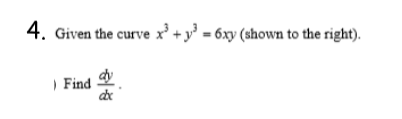 smoky pagoda
oh so you differentiate both sides first
maiden pebble
sorry, i Dont know what that means
smoky pagoda
to get 3x^2 + 3y^2 * (dy/dx) = 6(y+x*dy/dx)
and then you isolate dy/dx
so that it gives you the solution
id recommend looking at resources on implicit differentiation
because that's hwat you're doing
maiden pebble
it just so happens that thats the name of my worksheet
maiden pebble
Would the derivative of sin(xy) be sin(xy)' + sin'(xy)
uncut mulch
no
willow bear
sin(xy) is not the product of sin with xy
uncut mulch
lagrange notation is also horrible here

 pale bison
with chain rule
uncut mulch
^
maiden pebble
well thats what I tried but you said it wasnt right
uncut mulch
show your work
maiden pebble
oh I did the product rule
uncut mulch
it involves combinations of both
maiden pebble
not sure how to do both, but if I just did the chain rule I would get cos(xy)(xy'+y)
uncut mulch
= 0
maiden pebble
yes
uncut mulch
and that's fine.
maiden pebble
ok cool
uncut mulch
rearrange and isolate y' if required
gloomy mortar
Hey sorry I disappeared yesterday. Just needed a break. Here are the problems I still need help with:
-
Two pulleys, one 6 in. and the other 24 in. in diameter, are connected by a belt. The larger pulley revolves at a rate of 60 rpm.
a. Find the speed of the belt in feet per minute.
b. Determine the revolutions per minute of the smaller pulley.- Calculate the angular speed in radians per minute of a Ferris wheel 250 feet in diameter that takes 45 seconds to rotate once. Express the answer in terms of π.
-
If you sat on the rim of the Ferris wheel in problem 3, what would your speed be in feet per minute?
gloomy mortar
Also what am I doing wrong here? I tried 36 as the arc length and I also tried it as the radius and I am still apparently not getting the “correct” answer of 26.4cm
 lilac pier
It's not you, it's the answer that's wrong. They took 180 degrees as 2pi
you can see the difference b/w your and their answer is a factor of 2
@gloomy mortar
gloomy mortar
Ooooohhhhhh good point
 undone pawn
what do you want to do with it
 drowsy quail
what is the q?
maiden pebble
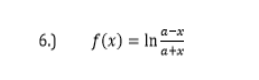
Trying to find the derivative of that picture 6.)
drowsy quail
ahh ok
undone pawn
$\ln\bigg ( \frac{x+a} {a-x} \bigg) $
obsidian monolithBOT
FlynnXD:
maiden pebble
well i was trying to type my answer but thanks
undone pawn
oh ok
undone pawn
$\frac{1}{(a+x)(a-x)}$
obsidian monolithBOT
FlynnXD:
maiden pebble
let me get a pic of my work
undone pawn
that's what you were typing?
undone pawn
aight
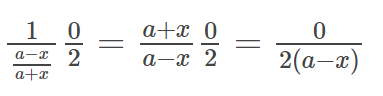 undone pawn
wtf 0 2?
dude wait, just split the log before differentiating
$\ln(\frac{a} {b}) =\ln(a)-\ln(b)$
obsidian monolithBOT
FlynnXD:
maiden pebble
didn't know that, looks helpful
willow bear
no
obsidian monolithBOT
Bridge:
drowsy quail
@maiden pebble i would recommend learning log laws and trig identites before calc stuff
that'll be a huge help
maiden pebble
ok, il review them between homeworks
drowsy quail
good idea
maiden pebble
I still need help with this problem
maiden pebble
turning ln(a/b) brought be to a dead end, so I went back to my first method of 1/a-x/a+x
drowsy quail
oof dont do that
maiden pebble
Thats the left side of my work, now im doing the quotient rule on the right side
😒
drowsy quail
${ln(a/b)} = ln(a)-ln(b)$
obsidian monolithBOT
MisterLJGibson:
drowsy quail
split it up like that
and then differentiate if you're still using l'Hopital's Rule
maiden pebble
idk what that is
maiden pebble
yes
drowsy quail
do you still need to know the answer?
maiden pebble
Im not sure how to find the deriv of a+or-x
obsidian monolithBOT
MisterLJGibson:
maiden pebble
$ ln(a-x)-ln(a+x)$
obsidian monolithBOT
Bridge:
drowsy quail
yes
drowsy quail
no
drowsy quail
differentiate both of the natural logs
maiden pebble
(a-x)'/(a-x) - (a+x)'/(a+x)
drowsy quail
no
maiden pebble
oh yes
drowsy quail
differentiate after you've used the log law
maiden pebble
(a-x)'/(a-x) - (a+x)'/(a+x)
drowsy quail
no
maiden pebble
what!?!?
maiden pebble
Derivative of (a-x)
drowsy quail
yes but what is the derivitive
maiden pebble
0
maiden pebble
ok, how do I solve for that
maiden pebble
oh, that would hlep
drowsy quail
and d/dx (-x) = -1
maiden pebble
ok good, that makes sense
drowsy quail
you got it?
maiden pebble
Il keep going through the problem
drowsy quail
bc remember you're differentiating with respect to x
so any non-x variable when differentiating goes
maiden pebble
yes
maiden pebble
(6xy)' wrt x = 6y right?
drowsy quail
ye
maiden pebble
So why doesnt the y go?
maiden pebble
oh ok
drowsy quail
small x means times btw
maiden pebble
yep that amkes sense
drowsy quail
does that help?
drowsy quail
yay! well done
gloomy mortar
I still need help with these problems:
-
Two pulleys, one 6 in. and the other 24 in. in diameter, are connected by a belt. The larger pulley revolves at a rate of 60 rpm.
a. Find the speed of the belt in feet per minute.
b. Determine the revolutions per minute of the smaller pulley.- Calculate the angular speed in radians per minute of a Ferris wheel 250 feet in diameter that takes 45 seconds to rotate once. Express the answer in terms of π.
-
If you sat on the rim of the Ferris wheel in problem 3, what would your speed be in feet per minute?
drowsy quail
this is more physics isn't it?
drowsy quail
rlly?
gloomy mortar
Yeah
 acoustic harbor
viscid thistle
acoustic harbor
viscid thistle
@gloomy mortar This is trig?
gloomy mortar
Our teacher said we were doing trig. Unless we switched to physics and I didn’t realize
viscid thistle
well $s=\frac{d}{t}$
obsidian monolithBOT
Slavoj:
 tepid basin
Can anyone help me with this? Find the exact equation for the end behavior line of y=2x^2+4x+1 / X+2
 heady harness
@tepid basin do you still need help with that problem?
viscid thistle
**If anybody is having trouble understanding pre-calculus, I can help you out. DM me! 🙂 **
 echo knot

 sinful parcel
o.O
 queen cave
okay, this might seem like a stupid question but i really just need to ask it: is dy/dx * dx/dy = 1 ??
smoky pagoda
you shouldnt treat leibniz notation as regular fractions
queen cave
so yes?
north crescent
No
queen cave
thanks
north crescent
Not always tho
smoky pagoda
only when they arent equal to 0
north crescent
Well that case does disprove it tho
queen cave
so would it be alright to say this is equivalent to R + dt/dQ * Q/C ?
smoky pagoda
yeah of course
but it you put the constraint that they arent equal to 0 it's true
im not saying ofc to your picture @queen cave
and again, you must be careful with constraints
generally speaking, I dont think dy/dx * dx/dy = 1 is applied a lot for conversions
smoky pagoda
is C the capacitance?
queen cave
i believe so
smoky pagoda
im guessing by knowing the subject you would know how one of these variables changes with time, but I dont know enough about circuitry to be able to tell you
because otherwise you cant know what the rate of change of Q with time is
queen cave
yeah this is from maths, so i know as much about circuitry as you :/
north crescent
U can find charge by isolating dq/dt and integrating both sides ig
smoky pagoda
im pretty sure the equation isnt separable
but i have very little experience with differential equations
stuck lark
@smoky pagoda this IS separable
@queen cave didn't expect DEs in precalc. this is fine so far
queen cave
@stuck lark sorry am i in the wrong channel? im new here ;))
 paper pecan


 stuck lark
too much of a bother to move, just know for future reference there's a more appropriate channel for this
anyway keep going, isolate Q
north crescent
O it’s multi no wonder I was so confused lmao
queen cave
Alright so I got this, and below it are the variables given in the question...
But this is the answer the textbook gives (q16)
stuck lark
you forgot this is an initial value problem, infer an initial condition from the text @queen cave
remote bison
can someone please explain how to solve this in my dms
tawny nacelle
y it gotta b in dms 
remote bison
bc the chat might get flooded with something else and I am busy
@tawny nacelle
<@&286206848099549185>
can someone please explain how to solve this problem (https://discordapp.com/channels/268882317391429632/363224154469826562/715180324342202429) in my dms
craggy dune
yeah soaps you pleb, he doesn't want to actually have to pay attention while you solve his problems for him @tawny nacelle
viscid thistle
@remote bison we don’t do your problems for you m8. You can get help, but we will not do the work for you.
tawny nacelle
remote bison
I don't want you to solve it for me, I asked for an explanation for how to solve it, sherlock (I didn't mean to hurt you with 'sherlock' there)
uncut mulch
the information indicates that the parabola has the parametric equations
x = bt^2 and y = 2bt
differentiate wrt t, and apply chain rule then sub in t = t_1 to get the slope of the tangent at (b(t_1)^2,2bt_1)
then get the slope of the normal from that
then apply point-slope formula and use the fact that (b(t_2)^2,2bt_2) also lies on that line
alternatively, the slope between those 2 points is the same as the normal
(different way to view it but the calculations are essentially the same)
then rearrange, solve for t_2
@remote bison
 vivid lake
x^2+y^2+6x-24=8y
already asked about it before, but i didn't see the response until later and it was too late for me to ask a question about some stuff I didnt understand.
Anyone know how to convert the equation into a standard circle equation?
vivid lake
Oh I think I remember what that is
past meadow
look to get something of the form x^2+2ax+a^2 and y^2+2by+b^2
vivid lake
Let me look that up rq
past meadow
i would suggest starting by moving the constant to one side, the x's and y's to the other, grouping the x's and y's and looking to complete the square for the x terms and the y terms
i gtg but ill recommend this video if you still have any trouble after rereading on completing the square:https://www.youtube.com/watch?v=Fx4rUC1EZPI

This video shows how to convert the equation of circle from general form to standard form.
vivid lake
Alright, thanks man
viscid thistle
ruh
remote bison
sneak 100
viscid thistle
Ending precalc this quarter with a 65
Dear trig identities,
Fuck you.
Unsencerely,
Me
 fossil raptor
F
viscid thistle
I mean I can still fix it if I do well on the last test
fossil raptor
try your best
 mellow sapphire
Good luck bud
 wicked jacinth
anyone able to help me with forming rational functions in the format of y=ax + b + f(x)/g(x) where f and g are polynomials? basically they give me holes and slant asymptotes. I'm really struggling to figure out this concept
here is an example i found from my text book
fleet yew
@wicked jacinth a hole is a 0/0 limit
 small kraken
Hi! Does anyone know how to prove 4ii)?
willow bear
make a diagram
mellow sapphire
How is this precalc lol
small kraken
O i got it tqtq :>
We dont go by calculus and pre calculus so i dont really know which this topic is under 😦
mellow sapphire
How'd you do it
willow bear
if it involves derivatives it's calculus
small kraken
Implicit differeciation
small kraken
:’>
viscid thistle
can someone please check if i did those 4 right?
and if i could add anything else to this response
thanks in advance
ping if u answer ughnh mom told me to take shower now
be back in couple mins
sour eagle
(fg)(x) = f(x)g(x) = (4x+6)2x^2=8x^3+12x^2
(f/g)(x)=f(x)/g(x)=(3x+2)/(3x-5), x =/= 5/3
(f+g)(x)=f(x)+g(x)=2x+6+4x^2=4x^2+2x+6
f(g(x))=f(8x-13)=sqrt(8x-13+9)=sqrt(8x-4)=2sqrt(2x-1)
I dont think you need to add anything else to the last problem.
viscid thistle
thank you so much @sour eagle i saw u typing so i didn't go shower yet but when i am back i will ask more..
sour eagle
No problem 
viscid thistle
idk what they mean in the 1st question
I know #2 is right
#4 i know is right
for #3 i know we have to use transformations
if y=f(x)+k, then the y value of any given point will be f(x) + k
uncut mulch
if you understand 2 and 4, you should be able to do 3
i mean this whole topic is transformations
and that reflection property should also have been covered in your notes
viscid thistle
what about #1 idk how to do that
uncut mulch
do you know what reflections are?
viscid thistle
for #3 i would say it's 2nd option am i right/
uncut mulch
yes
viscid thistle
thanks and could u explain to me for #1 a similar question or at least explain to me what it's asking i am confused
viscid thistle
I know reflection about y axis is f(x) = (x)^2
x axis is f(x) = -(x)^2
if we are given f(x) = x^2
viscid thistle
for #1 i think it's 3rd option right?

Desmos
it goes across x axis so 3rd option right?
It doesn't "go across the x axis" if you mean its a reflection respect to x axis, then yes
the question is above
Oh wait
#1
Well thats weirdly worded
yea
But yeah it is the 3rd option
thanks
Nw
wanna help me with more questions?
the next thing is 22 questions
i can do some but i like checking if i do them right
Jeez i wont go through 22 questions wtf
I have to sleep almost now so you'll wait for another one else
oh ok no worries
viscid thistle
is the 1st one right and for 2nd one i dont get it cause none answer choices match
<@&286206848099549185>
is it that i can ping helpers if i stated i was going to have questions soon or it starts the 10 minutes when i posted the new question?
/questions
on the 1st question i forgot how to tell if there is no point like -1
but the lines never decrease so i guess it's 3rd option?
is #6 right as well?
idk if someone would be nice to help me finish these questions
i will try tho
 hexed ermine
Right the rate of increase increases near x=0 and it dies down on both ends
So it's always increasing never decreasing
Also no 6 isn't right
There isnt a minimum at x=0
By that, that means that the vertex is there which it isnt
hexed ermine
Ok
viscid thistle
oh they went busy again so onto next questions
is (f + g)(x) the sum of two functions?
hexed ermine
Yes
 keen sigil
could someone help me with this?
willow bear
@keen sigil do you sitll need help with this
keen sigil
Oh I figured it out, thanks though
 smoky needle
Can someone help me solve this?
patent beacon
sinθ = -12/13
cos²θ + sin²θ = 1
smoky needle
Ohhh I didn’t know we had to use the Pythagorean trig identities
Thank you!
I don’t think I’m getting the answer when I solve it
I got this but I am not sure if it’s pos or meg
harsh smelt
$\sqrt{(-x)^2} = |x|$
obsidian monolithBOT
Commander Vimes:
smoky needle
Yes, I considered those as well, but I’m having a hard time knowing which quadrant it would be in
I’m not too familiar with -pi/2
harsh smelt
"-" means clockwise direction
smoky needle
So it is between Quadrant 2 & 3 right?
smoky needle
Oh so Quadrant 1 & 4?
Sorry can you explain what you mean by where all quadrants are
smoky needle
Ohhh
smoky needle
I see
viscid thistle
if someone can please check if i did some questions right thanks in advance
pale bison
what in the fuck
willow bear
woah wow
this is a Lot
uh
wait
is this a timed test or is this just an assignment
willow bear
ok
aight well
good news, you only messed up on one question out of the 19 you submitted
and that's question 18, which should've been Reflect the graph of f across the x-axis
everything else is correct
viscid thistle
thanks for checking it but can u explain #18 why
willow bear
i can show you the graphs if you want
viscid thistle
yes please
viscid thistle
oh yeah it intersects close to origin
willow bear
not really the point
my point is if you were to reflect y = x^4 across the y-axis you'd get y = (-x)^4
which is just y = x^4 again
viscid thistle
oh ok i got it thanks @willow bear
full garden
hey guys can someone please help me with this question
I really don't know how to start it
if someone can please help me it will be greatly appreciated
pale bison
a function means well defined,
i.e. 1 input does not map to more than 1 output
full garden
Yes
pale bison
this is the same as the vertical line test
full garden
Yes sir
full garden
2x+1 is the y intercept 😅 ?
willow bear
no
pale bison
the order pair are of the form
(input, output)
full garden
bro but like
pale bison

full garden
1 produces both 3x and y+2
does that mean I have to put them equal to each other 😅 ?
pale bison
ok maybe this will help:
this means
f(0) = 2x + 1
f(0) = y
f(1) = 3x
f(1) = y + 2
so since a function means same input must go to the same output, you have
f(0) = f(0) and f(1) = f(1) because 0 = 0 and 1 = 1
willow bear
does that mean I have to put them equal to each other 😅 ?
precisely.
full garden
okay I'll try rn
i got y = x -1 but idk if that's correct 😅
for the final equation
pale bison
can you show us all your work
since you're suppose to get some precise value for x and y