#precalculus
1 messages · Page 187 of 1
 valid violet
then sqrt(N) = sqrt(M^2+1)>sqrt(M^2)=M
and then the most important part of the proof
$\blacksquare$
 obsidian monolithBOT
gfauxpas:
 sturdy haven
So what would l and m be
valid violet
?
sturdy haven
L and M
valid violet
don't know what L is
sturdy haven
Because there was no epsilon delta
 wise bison
My text mentioned under the section on partial fractions that substituting certain values of x to "clear out" one or more of the variables does not work. Can someone give me an example of when this is the case?
wise bison
Never mind, I think I see how now. Seems to be the case if there is a repeated prime quadratic factor in the denominator.
 warm crescent
$\blacksquare$
obsidian monolithBOT
Raftaar:
 fading token

 dense oar

 rigid beacon

 bold isle
My book did this to show that f(x) = 1 - sqrt(1-x^2) is continuous in [-1,1] But it just plugged the -1 and 1 in order to claim that f(x) is continuous in -1 and 1. My problem is that I don't get how just plugging the values directly into the limit means that it is continuous for -1, I mean how do I know the function is continuous to the left of 1 and to the right of -1 because just plugging in the values just means that that specifically point is defined in f(x)
 willow bear
asserting that these limits are equal to the function's values at the corresponding points only shows continuity at -1 and at 1
bold isle
oh okay that's what I thought
 rigid sun
well
it's impossible to be symmetric over the x axis
or it wouldn't be a regular function, it would be an implicit function
if you arrive at the same solution by substituing x for -x, then it is even
if you arrive at a negative version of the original solution by plugging in -x, then it is over the origin
rigid sun
"it wouldn't be symmetric over the y axis either"
yes
it cannot be both over the y and the origin
 prisma prairie
i did
rigid sun
and find out
rigid sun
no
prisma prairie
oh
rigid sun
when you plugged in -x what did you get?
obsidian monolithBOT
The-Elite:
prisma prairie
no cause i only made the x -?
rigid sun
what
prisma prairie
im confused
prisma prairie
idk
rigid sun
what do you mean
prisma prairie
what are we finding right now?
prisma prairie
yeah
rigid sun
is this
prisma prairie
yea
prisma prairie
i think
rigid sun
you think?
prisma prairie
lol
prisma prairie
yeah it is -y
rigid sun
that is symmetric over the origin
prisma prairie
wait how did you know
rigid sun
remember
this means that all x, where x is postive, have a -x that =-y
essentially, when you cross the y axis, everything flips upside down or rightside up
that is over the origin
prisma prairie
i see
rigid sun
,w plot -x^3=y
obsidian monolithBOT
 Requested by maleb1964#6739
prisma prairie
Requested by maleb1964#6739
prisma prairie
yeah i have
if i have this would i just plug 0 into the top function?
then whatever i get from f(0) is the value of c?
 viscid thistle
@prisma prairie try pluggin 0 into the top function
prisma prairie
yeah i did
viscid thistle
and what'd you get?
prisma prairie
=tex \frac{12}{7x^2}-\frac{4sin\left(3x\right)}{7x^3}
$\frac{12}{7x^2}-\frac{4sin\left(3x\right)}{7x^3}$
obsidian monolithBOT
The-Elite:
prisma prairie
that ^
viscid thistle
typo left side, yes, what happens when x=0?
rigid sun
stop immediately
prisma prairie
what
prisma prairie
it turns to that function i just sent
viscid thistle
when x=0, you get that function?
prisma prairie
yeah i didnt mean to say that
rigid sun
do some more work
prisma prairie
so i deleted it
viscid thistle
yeah, the function isn't defined at 0
so you can't plug in the values and figure out what it should be
however, in your context
you can find the limit as the function approaches 0 from the negative and positive side
if the limits are equal, that is what C should be
viscid thistle
@summer sierra what have you tried?
 summer sierra
I was thinking of using one of the sum and differences formulas but I’m not sure if that would work
 uncut mulch
what do you get when you use it?
uncut mulch
the angle sum identities should work fine
they probably meant that instead of double angle
viscid thistle
they should result in the same thing
summer sierra
I'm not entirely sure if I combining the terms correctly so thats probably where I went wrong
uncut mulch
which identity would apply here?
cos(a)cos(b) + sin(a)sin(b) = ?
uncut mulch
well what did you get when you used it?
uncut mulch
huh?
cos(a)cos(b) + sin(a)sin(b) \neq 0.1 ?
when applying the identity, you should get the
cos of something.
what was the thing that you got?
summer sierra
cosine 6x?
summer sierra
cos a-b
uncut mulch
yes
summer sierra
thats the idenitity
summer sierra
but I dont know what to do with that
i inputted like 3-2
for like the insides
but im sure thats not what im supposed to do
uncut mulch
=cos(3x-2x) = cos(x)
summer sierra
yes
summer sierra
0
uncut mulch
yes. x=0 would be your solution
summer sierra
Thank you so much I really appreciate it
wise bison
Hey. Suppose I have a matrix and applied a row operation to it, can I write that the old matrix is equal to the new one using the = sign? If not, how would I connect each line in writing?
 stuck lark
row ops can be written as left-multiplication by an elementary matrix
willow bear
no, you can't say they are EQUAL
stuck lark
the result of a row op on A can be written as EA where E is the result of applying the same row op on the identity I
willow bear
two matrices are only EQUAL when their corresponding entries are also equal
wise bison
So what symbol may I use then?
Can I just point an arrow?
Also, RokettoJanpu, I'm not really sure what you mean. Just started. Sorry. 😰
stuck lark
if B is the resulting matrix of a row op on some matrix A, then B=EA...
where E is the result of applying the same row op on the identity matrix I
any unfamiliar words in there?
wise bison
Identity matrices, and the multiplication indicated by EA? The only thing I've learnt is representing a linear system as an augmented matrix and am starting to learn Gaussian elimination.
I'm just trying to figure out how to present my work for the practice problems.
stuck lark

an arrow showing work flow is fine
just know that row ops generally do not make the old and new matrix equivalent
wise bison
OK. Thanks! I wasn't thinking they'd be equivalent, hence why I asked if I could use the = sign. Didn't think I could.
stuck lark
no prob 
wise bison
Is this presentation OK?
willow bear
no, it's verbose and the brackets delimiting your matrices overlap between lines
wise bison
Oh. By verbose, do you mean I should remove the intermediate steps where I multiply and add?
willow bear
yes, and instead you should write the row operation above the arrow
wise bison
Is this better?
willow bear
somewhat
wise bison
If you don't mind me asking, how else am I supposed to improve it?
willow bear
your notation for row operations is unclear
wise bison
Is there any standardised notation? It's not given in my book. They give all the intermediate steps like the first one I sent.
Oh! Am I supposed to write -2R₁ + R₂ → R₂ and -R₂ → R₂?
Ah. I'm still confused as to which side of the arrow is the side to be replaced and which side is the side we are replacing it with.
 plush matrix
I need to check my answer
anyone willing to solve a property of log question?
3^(x+5)=4^(-3x+2)
uncut mulch
what did you get?
rigid sun
can't be bothered to work with this many fractions
uncut mulch
did the question ask for a decimal approximation?
otherwise you should leave the answer exact
plush matrix
ya it asks to round up to 4 decimal places
 serene heath
Wdym
 trim fable
like
(1+cotx)(1-tanx)
so
(1+cotx-tanx-tancotx)
@serene heath i have a question is there a trick to make trig identities easier coz
it makes my brain go
🤯
 ivory echo
Your best bet is probably to derive them imo.
At least that's how I remember identities.
serene heath
Na 7th grade
serene heath
Did u figure out ur question
trim fable
no lol
serene heath
Ok so
serene heath
$\frac{(1+\tan(x))(1-\tan(x))}{\cot(x)-\tan(x)}$
obsidian monolithBOT
the one n only:
trim fable
how do u plan everything in ur brain for trig coz
serene heath
This is what we have rn
ivory echo
I'll actually butt out while you're explaining lol.
trim fable
?
serene heath
U with me?
ivory echo
Was gonna explain what I meant by "deriving the identities"
trim fable
:c
trim fable
:c
ok
ill play with them i guess 😦
I love mathhh but im getting bad at it ;c
i think
ivory echo
Just google "Proof of (blank)"
ivory echo
Understanding why something works is much more effective at learning how, why, and where to use it.
trim fable
@serene heath can i work with the left side
serene heath
Yea
trim fable
ok
serene heath
Either side
serene heath
That's what we were doing all this wth
serene heath
What have u been doing lol
serene heath
Ok try what I suggested then
trim fable
ok
can u do me a favour
can u help me through the homework questions i dont get
coz i have a test on this and other stuff
serene heath
Just ask
ivory echo
Don't ask to ask.
trim fable
so
uh
rn im at
1-tan^2x / 1+cotx-tanx-tanxcotx so im left with cotxtanx?
right?
trim fable
ok
serene heath
Divide top n bottom by tanx
serene heath
With what
serene heath
What do u get after dividing
trim fable
lol
obsidian monolithBOT
the one n only:
trim fable
huh
trim fable
wow umm
serene heath
Now u can do some simplification
trim fable
;-;
serene heath
By factoring the bottom
serene heath
So u got it?
ivory echo
The bottom is a difference of squares. Factor it similar to how you might factor x^2 - 1
ivory echo
Idk how to do the Latex so. ¯_(ツ)_/¯
serene heath
All u had to do was factorise and cancel tho lol
ivory echo
^
@serene heath Btw, just my opinion, but cross multiplying probs would've been a better idea at the start.
No need to convert trig identities other than multiplication identities.
serene heath
Cross multiplying what
 ivory echo
I take it you mean by modifying both sides?
ivory echo
'Cause I'd say it's equally valid imo, it's one of the 3 ways to prove something.
trim fable
her*
ivory echo
My bad.
trim fable
its fine 😛
ivory echo
So much for Rule 16 xD
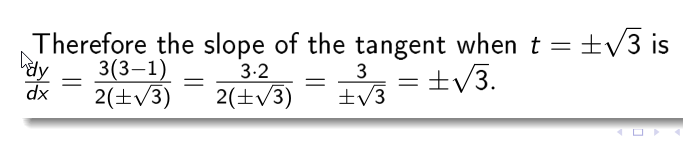 obsidian monolithBOT
JY1853:
viscid thistle
can somebody tell me what happened in the b lue circle?
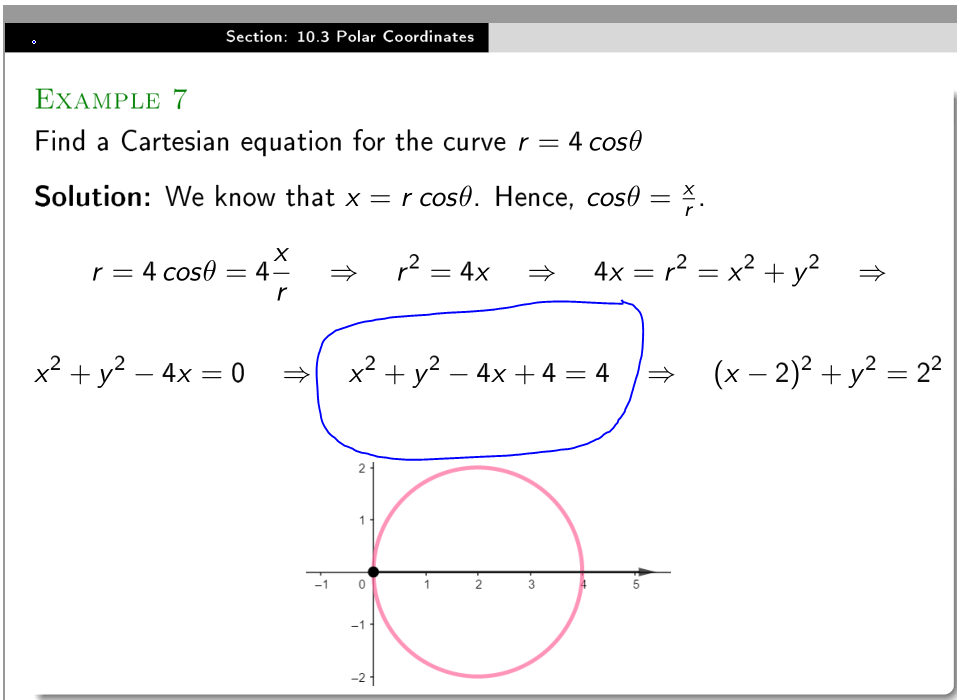
nevermind... i just firgur out.. add 4 both sides
 viscid thistle
well i wanted to ask waht happen, buit when i asked myself out loud i thats how i knowed
i say how did 4 happen to both sides, then i say oh, both sides
 shrewd tendon
 craggy olive
i didnt even know matrices were in precalc
 earnest barn
I used the binomial expansion formula to obtain a formula in terms of variables called k and r for the powers of x (where k ranges between 0 and 5 for the first bracket, and r ranges between 0 and 6 for the second bracket)
That formula was:
26 - 6k - 2r = ...
And that will give me the values of k (where k ranges between 0 and 5) and r (where r is between 0 and 6) for which I get the desired power of x
This worked for the coefficient x^-12. I used k = 5 and r = 4 to get 5C5 * 6C4 = 15 (exploiting the binomial coeffiicients)
For the coefficient of x^2, I've got that the pairs of k and r which give me 2 are
k = 2, r = 6
k = 3, r = 2
k = 4, r = 0
From this I got the equation
5C4 * 6C0 + 5C2 + 6C6 - 5C3 * 6C2
In order to get the coefficient of the x^2 term
The reason why there is a minus sign is because in my binomial expansion I had a term (-1)^k and since k = 3 that one term there will be negative
But this isn't giving me the right answer
Why might it not be giving me the right answer?
Here's the binomial expansion formula that I used to get the formula for the exponents
215 is meant to be the answer, not -135
earnest barn
Oh wait
I think I made an error typing it into my calculator
Ugh
Yeah
That was the problem
Sorry, don't need help anymore, typed in a '2' instead of a '3'
willow bear
undefined*
 karmic wave
at least when working in the reals...
rigid beacon
@ripe dust (x/2)^2 = x^2/4 right?
also (1/2)^2 = 1/4
that should lead you on the right path
 ripe dust
I mean
I did that
inside I have 64 - x^2
which is... what is in the picture since 4*16 is 64...
rigid beacon
yea
ripe dust
i just don't understand the x/2 outside..
rigid beacon
they factored out a 1/4 from the inside right?
ripe dust
yeah
ripe dust
oh ok thanks
karmic wave
typo? 4/4 is 1 tho
rigid beacon
what typo?
karmic wave
"multiplied 16 by 4/4"
rigid beacon
karmic wave
in other words "multiplied 16 by 1" unless I'm misunderstanding something
rigid beacon
well yea multiplied it by 1
but more specifically you need a 4 in the denominator
so like
4/4
so you get 4 in the denominator
karmic wave
maybe I should go to bed lol
ripe dust
Wait are you still here I'm a bit confused @rigid beacon
rigid beacon
yea what's up
ripe dust
so like
thats what I did but the answer is actually 0.5xetc etc
but like
shit
Can you re-explain again how it become 0.5
I removed the denominators 4 because they were both on 4
oh shit wait
Oooooooooooooooooooooooooooooo
I didn't think about factoring it,
I just removed the denominators since they were the same lmfao
goddamn it
rigid beacon
there ya go
karmic wave
moment_of_clarity.jpg
 odd helm
When I did this I got y as my answer
I did inversef(x)= x since it is (y,x) and then f(x)= y
odd helm
But wouldn’t b=y though because it’s f(a)= b so b is the output right? And y values are the output when it’s a function that isn’t an inverse right?
odd helm
Hm so like I’m thinking that since it is (y,x) when we do inverse if we plug in a y we will output an x. And then we plug that x into f(x) and we output a y
I think I understand now
Thank you
rigid beacon
yea
I mean that's also part of the definition of an inverse function
f^-1(x) is the inverse of f(x)
where f(f^-1(x)) = x
odd helm
Yeah that makes sense
valid violet
of a function?
viscid thistle
how does what become? @unborn python
 unborn python
with the + and -
 nocturne hollow
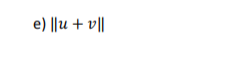
hi for this problem do i add the vectors then find the magnitude of the sum? https://i.imgur.com/yByDnJN.png
or is that the wrong order
 native timber
yes
nocturne hollow
ok thank u
 warped willow
viscid thistle
warped willow
viscid thistle
@warped willow that does indeed look like a problem
warped willow
i got how to do my problem
viscid thistle
@lethal oracle what are you struggling with?
 lethal oracle
Well I don’t really know how to get started tbh
viscid thistle
well, A + ? = B?
lethal oracle
Well A+3X=B in this case
viscid thistle
So, think of elementwise addition for now.
row -> row
so, first row
1 + ? = 4?
lethal oracle
3
viscid thistle
ok, and 3 + ? = 2?
lethal oracle
-1
viscid thistle
sweet!
so you know A + [3, -1] = [4, 2]
Now, the question is looking for 1/3 of [3, -1], because it multiplies it by 3
so what is 1/3 * [3, -1] ?
lethal oracle
[1,-1/3]
lethal oracle
[4,2]
lethal oracle
Thanks so much dude
viscid thistle
np, gl.
 inner knot
hey, so when are you supposed to use ln instead of log? i thought that it was ln only if it involved e in the problem, but i have a problem for homework and the book uses ln but theres no e in it and im confused, i have a test tomorrow and ive got to know why lol
2^(1-x) = 3^(2x+5) is the problem, and solving for x
 chilly lotus
Hey, I need help with radicals to exponent
Can anyone do radicals to exponents?
Solve for y, given 5y−8 = 5y−9:
changed subject
rigid beacon
That has no solution
 fleet yew
@inner knot the use of ln is mostly arbitary
fleet yew
you could just as easily solve it with the base 10 log, or the base 2 log, or any other log
it's just used for convenience
fleet yew
yeah
fleet yew
Algebra Calculator - get free step-by-step solutions for your algebra math problems
 rich kite
Hey does anyone know how to prove this identity?: 2tanx/cosx = 1/1-sinx - 1/1+sinx
viscid thistle
@rich kite what have you tried?
rich kite
I tried changing the 1's on the right side to sin^2x + cos^2x but it got too complicated
uncut mulch
try adding the two fractions on the right together
 distant basin
If I have this equation, can I simplify the exponents between the parentheses first (by adding them), or do I have to multiply each one by the exponent of the parantheses?
Probably a silly question but I just want to make sure lol
stuck lark
either's fine
distant basin
Thanks!
fleet yew
What is the difference between principal root and real valued root
Wolfram always asks that for anything more than a square root
Like cube roots and 4th roots etc
native timber
A real valued root is a root which is real, a principal root is solely positive roots
For example, $\sqrt[4]{16} = 2$ is the principal root, but the real valued roots would be $\pm2$
obsidian monolithBOT
Jiramide:
 astral mountain
so how do you know when u need what?
 junior roost
 strange adder
hey can someone help me with this question
i got the answer 30sin(6pi(x))
not sure if thats right or wrong
viscid thistle
@strange adder negative distance?
ripe dust
babymod @native timber
trim fable
i have a question for
is there any double angle formula for sec^2x?
like is there any identity?
viscid thistle
@trim fable did you google it?
trim fable
google what
viscid thistle
"sec^2 identity"
viscid thistle
try it
trim fable
ok
native timber
@ripe dust buby mode
trim fable
tan2 x + 1 = sec2 x
OH
WHAT
U CAN DO THAT?
who knew
hmm
wow thank u
lol
hmm wait
but its 2sec^2x
 trim fable
hmm
oh also
im stuck on a different one
i asked this here before but kinda like
skipped it coz i found it confusing but ye i get it but im stuck on one part
what i did so far is
cosx/cosx + sinx/cosx
sinx/sinx + cosx/sinx
=cosx+sinx/cosx
sinx+cosx/sinx
=cosx+sinx * sinx
cosx sinx+cosx
which got me to
sinxcosx+sin^2x
cosxsinx+cos^2x
so like sin/cos would be tan and cos/sin would be cot but like
ye..
idk where to do from here tho im close?
wise bison
Well, from (cos x + sin x)/cos x × sin x/(sin x + cos x), notice that we can cancel out the common (sin x + cos x) and be left with tan x.
Is there some way for us to show that the right side is also equivalent to this?
wise bison
Oh. In that case, multiply the simplified tan x by (cot x - 1)/(cot x - 1) and try to simplify it, perhaps?
trim fable
oh
odd helm
I’m not sure why it isn’t -35cos because instead of starting at the max we are starting at the min
I’m thinking this is a typo but if not could someone explain why?
viscid thistle
@odd helm why what isn't?
viscid thistle
please help
what is the area of the triangle ?
@viscid thistle what level of math are you allowed?
pre calc 11
i got an answer of my own with a scientific calc but i think it's wrong
ok
show your work
y1 = (x-2)^2
y2=|x-4|
2nd calc to find the intercepts
P = (3,1)
Q= (5,1)
Area = 1
to find the y intercept I used Tan
with the length on the x-axis
I think maybe I should used pythagoras to find the one side first
lemme work through it myself real quick
or perhaps law of sines
I solved it a different way and got 1 as well
your intercepts are correct
omfg thank god
it was on my final exam
lemme double check, but I think you're right
ahahaa
i was so concerned
how about this question...
double checked, you should be good.
sorry
bottom was x first I think
so it was $\frac{x+y}{x^{-2}y^{-2}}$?
obsidian monolithBOT
Sun:
viscid thistle
I think answer is either X^2Y^2 / X-Y or X+Y
oh y
yeah
ye
sweet, considering $\frac{A+B}{C} = \frac{A}{C} + \frac{B}{C}$, you can do it that way
obsidian monolithBOT
Sun:
viscid thistle
answer should be $x^3y^2 + y^3x^2$
obsidian monolithBOT
Sun:
viscid thistle
,w simplify (x+y)/(x^(-2)y^(-2))
obsidian monolithBOT
 Requested by Sun#3606
viscid thistle
Requested by Sun#3606
viscid thistle
ah, there it is. love ya, @obsidian monolith
no
i told it to you wrong
one sec
,w simplify (x+y) / (x^(-2) - y^(-2)
obsidian monolithBOT
 Requested by damanug#2689
viscid thistle
Requested by damanug#2689
viscid thistle
it doesn't solve the next step though..
,w simplify (x+y) / (y^2 - x^2)
, w simplify (x+y) / (y^2 - x^2) / (x^2*y^2)
brackets are a fickle mistress
obsidian monolithBOT
Requested by damanug#2689
viscid thistle
,w (x^2y^2) / (y-x)
obsidian monolithBOT
Requested by damanug#2689
uncut mulch
depends on what terms you have
did you find out what your expression was supposed to be?
viscid thistle
yes
viscid thistle
i think that's what I got
i factored out an x+y
i am stressed out because i dont know if i did well but seeing as we got the same area for the triangle question and this one i feel much better
the one i did the worst on I think was expanding a polynomial.
, w -(x+2)^2 (x)(x+2)^2
obsidian monolithBOT
Requested by damanug#2689
uncut mulch
was it actually written like that in your test?
uncut mulch
strange that you have (x+2)^2 twice
viscid thistle
it was -(x+2)^2 x(x-2)^2
uncut mulch
was one of them supposed to be (x-2)?
viscid thistle
all they gave me was the graph i figured out the function but i fudging wasn't able to expand it to polynomial form.. DERRRP
did i write the function wrong ?
uncut mulch
was it cut off past x=-2?
viscid thistle
yeah
uncut mulch
the first pic you had was correct assuming it's monic
or if you were asked for a possible function
viscid thistle
the function is what i came up with
uncut mulch
just (x+2) without the square. since there's no indication of even multiplicity at x=-2
viscid thistle
oh no
i thought i was going to get at least 1 mark for getting the function right.. damnit
yep you're right
damnit
hm when i put in both are squared i get symmetry between the min and max on each side of the y axis
like the +y value is the same as the -y value in terms of displacement from the x axis
but if i get rid of the square like you said, then the y positive absolute value is way more than the -y value
but i think your way makes more sense
i guess ill see when it gets marked tomorrow
feel like i failed myself anyways, ill probably pass but still
uncut mulch
its a bit bad that they cut it off at a potential critical point
viscid thistle
true
to illustrate what I was talking about
on the test question the picture of the graph looked more like the one on the left
where the mins and maxs LOOKED like they were the same absolute value
@uncut mulch
uncut mulch
ic
 pseudo sonnet
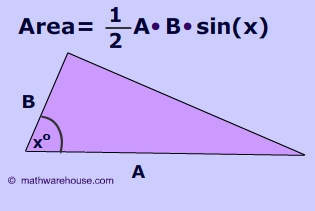
can someone tell me what formula was used kn the middle problem?
in*
the problem with A1 and A2
stuck lark
A_1, A_2 are triangles
pseudo sonnet
yeah i know
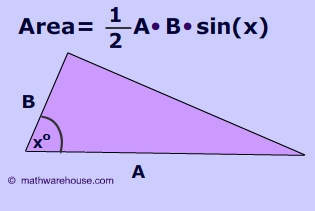
i know of heron’s formula and also A=1/2bh
is there another triangle area formula im missing?
stuck lark
that's only for right triangles. for non rights: https://www.mathwarehouse.com/geometry/triangles/area/images/SAS-formula/thumb1.jpg
 stuck lark
no prob
 summer monolith
Is this legal? To put a common multiplier behind the brackets for the 1st two summands neglecting the third one?
willow bear
why wouldn't this be legal
summer monolith
No idea. I imagined it would not for some reason.
Until i saw this in a textbook solution that is
 void lark
wise bison
void lark
wise bison
So I have this problem over here:
Describe a viewing rectangle that shows a complete graph of each polar equation while minimising unused portions of the screen: r = 4/(5 + 5 sin θ)
The supposed answer key answer is [-4, 4, 1] by [-10, 0.4, 1]. Not sure how this answer is reached, since these choices seem completely arbitrary. Normally the answer key places "Answers may vary.", but not for this one, which I find odd.
I suppose I can choose various values for y and plug it into a graphing calculator to see which is most appropriate, but I'm entirely clueless how they chose those values for x.
wise bison
Beats me. Looks like a poor question paired with an equally poor choice of answer.
valid violet
I guess they converted to rectangular and optimized x and y
willow bear
$\log(x^2)$ is defined for $x < 0$ but $2\log(x)$ is not
obsidian monolithBOT
Ann:
 whole socket
how would i convert log base 3 of X to a base of 27?
 blazing raven
oh
willow bear
using the change of base formula
blazing raven
yar (what she said)
then log base 27 of 3 is 1/3. so 3*(log_(27) (X))
You can also use the exponent method.
$$ K = \log_{3}(X) $$
$$ 3^K = X $$
$$ 27^{K/3} = X $$
$$ \log_{27}(X) = \frac{K}{3} $$
$$ 3*\log_{27}(X) = K $$
obsidian monolithBOT
DumbRanterHehe:
 steel venture
might be the wrong place for this (its an easy question either way) but
if i have a graph of y=1/x I can linearize it by plotting y vs 1/x
by that logic i should be able to linearize a graph of y=a*b/(a-x) by plotting y vs 1/(a-x) correct?
valid violet
looks right
steel venture
and slope should just be a*b with a y-intercept of 0 right
 harsh cipher
Hello
Question: I don't understand how the equation went from P=Po*5.278)
P=Po(5.278) to P= 5.278Po. Then after 60 days (5.278Po)/(2Po)
 errant timber


 dusky wave
Oh ok
So I’m
Doing partial fraction decomposition and
I got to here right
And I’m trying to find B
Can I multiply 27 on both sides or no?
wise bison
Why not?
 obsidian frost
as long as you do it for both sides i dont see the problem
wise bison
Yeah.
obsidian frost
are you trying to simplify the equation?
steel venture
@harsh cipher
at 60 days the population is Po(2^(60/25))
at 25 days the population is Po(2)
harsh cipher
hi
steel venture
then the population at day 60 is 2.64 times greater than at day 25 by doing Po(2^(60/25))/Po(2)
which equates to Po(2^35/25)
2^(35/25)=2.64
harsh cipher
and that is doubling time formula
steel venture
doubling time is Px=Po(2^(x/n))
x is the day at which you find the population
n is the number of days it takes to double
harsh cipher
okay
steel venture
and Po is the original pop, Px is pop at day x
harsh cipher
ty much appreciated.
steel venture
@errant timber you know C has to be equal to 1 as log(1) = 1 for any base, and the graph goes through 0,0 which means log(A*0 + C) = 0 => log(0+C) = log(1)
you know that logb(1.5A + 1) = -1 and logb((-3/8)A +1) = 1
therefore logb(1.5A+1)=-logb((-3/8)A+1)
1.5A + 1 = 1/((-3/8)A + 1)
(1.5A + 1)((-3/8)A + 1) = 1
(-9/16)A^2 + (9/8)A = 0
A = 0, A=2
and from there logb(2(3/2)+1) = logb(4) = -1
and logb(2(-3/8) + 1) = logb(1/4) = 1
as A cannot be zero because the function would just be logb(1) = 0 for all real b (i think)
and then 1/4 = B and 1/b = 4
hope that helped
steel venture
(x-i)(x+i)(x+2)
steel venture
(x^2+1)(x+2)
viscid thistle
maximo, the human calculator.
steel venture
so you know the zeroes are i,-i, and -2
viscid thistle
yes
steel venture
that means that the function can be written as 0=(x+2)(x-i)(x+i)
because if you plug any of those numbers
the function is zero
viscid thistle
right
steel venture
then you do (x+i)(x-i)
which is x^2+ix-ix-i^2
which is x^2+1
then you do (x^2+1)(x+2)
which is x^3+2x^2+x+2
did i lose you
viscid thistle
no not at all
steel venture
ok
steel venture
yeah i messed it up a lil up top but the second explanation is right i think
@hollow horizon you can multiply everything by sinx yielding sin^2x + 2sinxcosx = 1/2 sinx
or wait no you cant
 hollow horizon
yea i tried that lol
steel venture
sin^2x +sin2x -1/2sinx = 0
sinx=u
yup nvm lol
@hollow horizon square both sides? 1+sin2x = 1/4
or 1+2sin2x = 1/4 i believe
hollow horizon
yeaa but thats a gay solution
i hate doign solutions like thaaaaaaaaaaaaaaaaaaaat
but ig its the only thing to do
 icy spruce
can someone help me with this problem i have no idea what to do
wise bison
This is a parabola which is shifted down by 2 units. For y = x²/4, we can rewrite this as x² = 4y. Comparing this with the equation of a parabola, x² = 4py, we see that p = 1. The directrix has the equation y = -p, so in this case, y = -1. We shift the whole graph down by 2 units, giving us y = -3 as the directrix.
icy spruce
How'd you get p to =1?
wise bison
The standard equation for a parabola is x² = 4py, yes?
icy spruce
yes
wise bison
Ignoring the -2 for now (that's a vertical shift), we have the equation y = 1/4 × x², which simplifies to x² = 4y.
We can compare 4y to 4py to deduce that p = 1.
Because p = 1 is the only value of p that makes 4y equal to 4py.
willow bear
uhh
 timid dock
what about cancelation laws
timid dock
^
willow bear
no
timid dock
^
willow bear
no
timid dock
^
timid dock
^
willow bear
arcsin(-1.6) is undefined
timid dock
so sin(undefined) = undefined
willow bear
what else could it be
timid dock
ok
thank you
for helping me again
one more question
why does arccos(cos(3.8)) only get 1 value
willow bear
what do you mean by "only get one value"
steel venture
it should give you 2 values if im not wrong
timid dock
how many answers should there be
steel venture
infinitely many
but 2 values is standard
for example, the cos of 3.8 is in the third quadrant
timid dock
mhm
steel venture
instead lets use the cos(5pi/4)
timid dock
what about the entire "being in the domain crisis"
steel venture
the what in the what
oh
cos and sin can take all real numbers as their inputs
however arcsin and arccos only take numbers in the [1,-1] range
 hexed bolt
Could I get help for this question please?
steel venture
okk
so the cos was right
the arccos however was not
or well the cos was almost right
willow bear
y'all fucking nuts
arccos is single-valued
timid dock
aha
steel venture
ann no
fight me
whatever
kenja
the answer will be 3.8
thats what theyre looking for
however 3.8+pi will work too
and so will 3.8+2pi
willow bear
3.8+pi won't work
willow bear
but the thing is
steel venture
its 2npi
steel venture
within 0 and pi
steel venture
yeah
willow bear
pi
willow bear
no buts
timid dock
so it cant be 3.8
timid dock
why do we subtract from 2pi
willow bear
cos(2π - x) = cos(x), and 3.8 is in (π, 2π)
timid dock
y does it seem like i'm not taking in any information from class
willow bear
🤷♀️