#precalculus
1 messages · Page 54 of 1
 trim citrus
aaaah yeah i get it now is the answer e^u
 winter comet
trim citrus
aaaah yeah i get it now is the answer e^u
winter comet
trim citrus
aaaah yeah i get it now is the answer e^u
well yeah but remember you gotta sub u back in after and add C
xD
 gusty storm
If I had access and time, I would check every single neuron in my brain when I am doing math and some other smart person, mathematician's neurons and compare both to find what wrong am I doing
this may sound the worst possible way, but it would be the best for me
because there's nothing else I can understand
winter comet
yeah
winter comet
gusty storm
because there's nothing else I can understand
you can understand more
i think the first step is understanding how to do the chain rule
rn
gusty storm
first step is, how to think
winter comet
gusty storm
first step is, how to think
don't overthink it 💀
https://www.youtube.com/watch?v=HaHsqDjWMLU&ab_channel=TheOrganicChemistryTutor have you tried watching this video?
gusty storm
to be honest, my mind has given up understanding these things
I still will try if I can
winter comet
gusty storm
to be honest, my mind has given up understanding these things
maybe you could take a break and start again in like 30 minutes or somthing 😂

 lusty notch
what application to use?
winter comet
lusty notch
what application to use?
oh i just use the snip tool on my computer 💀
take picture of empty space and edit it lool
lusty notch
 jade spear
how is this solved
jade spear
how is this solved
simplify logarithm
lusty notch
winter comet
oh i just use the snip tool on my computer 💀
LOL
lusty notch
winter comet
oh i just use the snip tool on my computer 💀
I don't know how to do that
gusty storm
lusty notch
I don't know how to do that
at least you know how to do math
lusty notch
gusty storm
at least you know how to do math
yes
Last year I didn't know how to do dunks, but from one moment to the next I developed a lot of love for dunks.
 grim bolt
jade spear
how is this solved
grim bolt
jade spear
how is this solved
The final equation:-
a + b(log 7)/(log4) + 60(log14)/(log8) = 0
put any base of log
let's take 10 because i only know 10
lusty notch
yes
grim bolt
a + 0.84b + 60(0.84 + 0.3)/9 = 0
 iron notch
you have to find another equation to know the value of a and b
lusty notch
iron notch
you have to find another equation to know the value of a and b
exact
grim bolt
iron notch
you have to find another equation to know the value of a and b
integer values are asked
a + 0.84b + 68.4 = 0
lusty notch
a and b is 0
grim bolt
no
lusty notch
why
grim bolt
 lusty notch
XDDDDDDDDDDD
grim bolt
lusty notch
why
a + 0.84b + 68.4 = 0
putting a & b = 0, 68.4 is not equal to 0
lusty notch
ok
grim bolt
0,-82 approx
grim bolt
jade spear
how is this solved
a = 0;
b = -82
 arctic meteor
Is $$\lim_{x \to 0}\frac{\log_a(x+1)}{x}$$ the same with
 obsidian monolithBOT
wolly5114
 arctic meteor
$$\lim_{x \to 0}\frac{\ln(x+1)}{x}$$?
obsidian monolithBOT
wolly5114
 winter comet
lim x->0 log_a(x+1)/x = lim x->0 ln(x+1)/ [x ln(a)]
jade spear
grim bolt
a = 0;
b = -82
i knwo the answers theyre
-20 and -40
but
im not sure how to
get them
 winter comet
 tame pike
How do I do c?
tame pike
How do I do c?
you remember sec(x) = 1/cos(x)?
tame pike
Ok
winter comet
again, i'd just use the unit circle XD
tame pike
Ok 👌
tame pike
winter comet
again, i'd just use the unit circle XD
I’m assuming that’s the only option
winter comet
tame pike
I’m assuming that’s the only option
more or less yeah
tame pike
I’m supposing that u use the method too
winter comet
tame pike
I’m supposing that u use the method too
yeah i'd just use the unit circle
tame pike
winter comet
yeah i'd just use the unit circle
Likewise
 tepid basin
Aye wassup @winter comet
 strong hedge
tame pike
Likewise
strong hedge
tame pike
Likewise
i dont think you understand theyre trolling you lol
how are you calculating it with "unit of circle"
 hasty lily
strong hedge
how are you calculating it with "unit of circle"
hasty lily
strong hedge
how are you calculating it with "unit of circle"
Each angle in the unit circle corresponds to the sin and cos value
 arctic dagger
lol
arctic dagger
strong hedge
i thought you just use a triangle
the unit circle is a better tool
the word unit there means it's radius is 1. makes measurements simple
strong hedge
fair lmao never learned that
arctic dagger
so the hypotenuse is always 1.
so instead of sin x = o/h, you just have sin x = o/1 or just sin x = o
strong hedge
yeah i see now how itd be a better approach
arctic dagger
and u able to deal with negative values
strong hedge
makes sense, cheers mate
arctic dagger
it's fun
strong hedge
whats your major?
hasty lily
Taylor series is the best method generally imo
hasty lily
That or using complex numbers
Deriving identities became really easy with those two stuff
strong hedge
i agree with that part
 gusty crypt
guys how long would it take to master pre calc from 0?
hasty lily
Probably 6 months
gusty crypt
hasty lily
Probably 6 months
r u trolling
hasty lily
gusty crypt
my brother did it in 10 days
I doubt so
Normal people take 12 years
(entering kindergarten to highschool)
gusty crypt
taking pre calc in kindergarten lmao
i got an 760 on sat math section so i have everything else decently mastered
hasty lily
gusty crypt
taking pre calc in kindergarten lmao
To master precalc from 0 means that you have to master everything before it
gusty crypt
lets say i mastered everything before and have a good understanding of trig and a2
 quasi elbow
how do we solve this question?

 viscid thistle
At first sight I can say that tan(B-C) = (b-c)/(b+c) cot A/2 might work.
viscid thistle
viscid thistle
At first sight I can say that tan(B-C) = (b-c)/(b+c) cot A/2 might work.
@quasi elbow That indeed works.
This it the thing.
 quasi elbow
i got the answer but i did not know about this thing
thank you
i think that would be my next topic, yes
got it, thank you.
viscid thistle
quasi elbow
i got the answer but i did not know about this thing
This is the analogy.
strong hedge
yep that's it
viscid thistle
Btw does your worksheet cover all of trigonometry?@quasi elbow
Including inverse trigonometry functions?
quasi elbow
it's divided chapter-wise
viscid thistle
Can you send it to me? It'd come in handy.
quasi elbow
if you wanted me to share the worksheet(s) of inverse trigonometric functions, i can
well
a minute
viscid thistle
Send the trig equations and sine cosine rule part too.
quasi elbow
viscid thistle
Oh heck, I've got parental controls.
eh, how does that work though?
viscid thistle
quasi elbow
eh, how does that work though?
Only approved sites can be opened.
quasi elbow
interesting
strong hedge
what are you guys majoring in?
quasi elbow
computer science; what about you?
viscid thistle
I'm in 11th grade, i intend to major in math.
Most people I know on discord are majoring in CS.
Seems pretty competitive.
quasi elbow
viscid thistle
Seems pretty competitive.
it is but if you know what you are doing, it is also very easy
unlike math
but that is subjective, of course
viscid thistle
Definitely easier to earn money with CS?
quasi elbow
viscid thistle
Definitely easier to earn money with CS?
i mean
i do not know about that part honestly
do math majors make a lot of money?
does any major make a lot of money?
viscid thistle
quasi elbow
do math majors make a lot of money?
I guess they do.
quasi elbow
it's okay, you will get there! just take it easy and remember: one thing at a time
for an exam
quasi elbow
viscid thistle
I guess they do.
fair enough
i find the subject very, very vast though
viscid thistle
I does depend on what you do as a math major.
But if you want to earn money you can.
quasi elbow
yes
i never liked math though, it has always been my weakest subject
i just took it straight on my degree lmao
quasi elbow
i try my best to. it's just many things which are obvious to other people are not obvious to me and then i am like is this problem fucking stupid or am i fucking stupid
turns out, it's me
but oh well
quasi elbow
viscid thistle
That's why you got to study trig as a cs major.
interestingly, we do not have that in our course
i mean we did have mathematics-I and mathematics-II but
viscid thistle
quasi elbow
i try my best to. it's just many things which are obvious to other people are no...
Relatable.
quasi elbow
that did not include trigonometry
i do not know why an exam for computer science has 60% math
but it is what it is
viscid thistle
That's what you think.
It's hard for everybody.
That's a damn reality, and I have come to terms with it.
So should you.
 timber blade
practice later, regret now
also once you have regretted, you will hate it
arctic dagger
rly?
viscid thistle
arctic dagger
rly?
"Fr fr no cap"
arctic dagger
viscid thistle
"Fr fr no cap"
but maybe not forever
in that case, you have to move on quickly
and stand back on your feet
timber blade
perchance for eternity,
you will have to move slowly like a snail
and sit down
and relax
quasi elbow
why does this seem like a poetry section lol
arctic dagger
might as well be unborn
quasi elbow
+1
quasi elbow
what would be the first step to solve such kind of questions?

 tawdry canopy
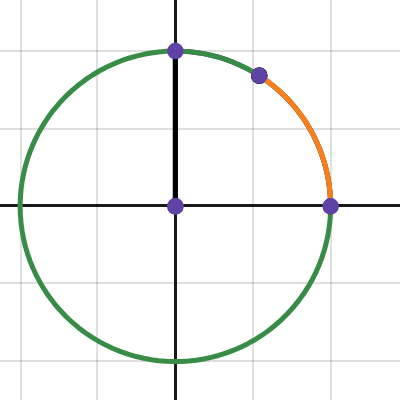
Desmos
guys, can you tell what are the missing details here
all about unit circle
 lyric jay
weird question but is there anyone here who could just give me a bit of their time and explain some questions about calculus and maybe give me a better idea?
(basically asking for as hort free tutoring session cuz i don't understand 😭 )
viscid thistle
quasi elbow
what would be the first step to solve such kind of questions?
I would bring them to one side like sin x...> 0 and then try to write it as sin nx > 0
My first thoughts say that you can write it as sin 4x > 0 and then solve.
viscid thistle
lyric jay
weird question but is there anyone here who could just give me a bit of their ti...
Ask in #calculus
This is literally precalculus.
quasi elbow
viscid thistle
I would bring them to one side like sin x...> 0 and then try to write it as sin ...
got it, let me try
it works! thank you
viscid thistle
quasi elbow
it works! thank you
Even better, you can divide both sides by (sin x cosx)^2
As a general tip, observe if dividing or multiplying x² can help with the inequality at hand.
It can save some work.
quasi elbow
viscid thistle
Even better, you can divide both sides by (sin x cosx)^2
ah yes that's simpler
quasi elbow
viscid thistle
As a general tip, observe if dividing or multiplying x² can help with the inequa...
got you
viscid thistle
Btw your consistency is inspiring.
viscid thistle
You are so negative towards your own self bruh.
 strong hedge
try this
strong hedge
viscid thistle
You know him?
hes a mathematician, no?
strong hedge
yeah he was
 dusky field
About to start a 6-7h study marathon, no coffee, no energy drinks and be as productive as I imagine myself to be.
I'll be working on simple stuff: Law of sines and cosines. I'll be working on some trigonometric equations as well ✌️
strong hedge
good luck
dusky field
thx! 🙏
 sinful halo
dusky field
About to start a 6-7h study marathon, no coffee, no energy drinks and be as prod...
sinful halo
dusky field
About to start a 6-7h study marathon, no coffee, no energy drinks and be as prod...
Takes breaks as needed please!!
dusky field
Definitely! I'm alternating 50 minutes activity/10 minutes breaks so that I can last long enough
viscid thistle
dusky field
Definitely! I'm alternating 50 minutes activity/10 minutes breaks so that I can ...
I'll try this too next Sunday
Thanks for the idea
gusty crypt
dusky field
About to start a 6-7h study marathon, no coffee, no energy drinks and be as prod...
all that for laws cosin and sin is crazy
 split mortar
quasi elbow
it works! thank you
split mortar
quasi elbow
it works! thank you
what did u get?
quasi elbow
split mortar
what did u get?
if I remember correctly, it was indeed sin(4x)
like the other person said
 sleek quarry
Is pre calc hard?
quasi elbow
sleek quarry
Is pre calc hard?
not really if you practice enough
sleek quarry
Gotta take it next year 😪
 granite temple
sleek quarry
Is pre calc hard?
granite temple
sleek quarry
Is pre calc hard?
it wasn’t that bad imo
 final pier
I would like some help with this problem if possible with finding the inverse

I keep getting this as an answer

but this is also the answer but am just confused on how 6 becomes the base even tho they are the same or whatever

 exotic barn
final pier
I keep getting this as an answer
exotic barn
final pier
I keep getting this as an answer
,, x = \log_4(4^x) \textbf{ then } \frac{\log_4(4^x)}{\log_4(6)} \text{ then I guess a change of base was performed }
obsidian monolithBOT
bacc (unhelpful)
 final pier
so how would the change of base be performed because I'm just unsure on how we get to the base being 6 and whatnot
exotic barn
 obsidian monolithBOT
bacc (unhelpful)
 final pier
okay I think I understand
how would you get
this

into this

I understand the chaning of x and Y but would I turn it back into a the b^x=y format and then solve it up
final pier
obsidian monolith
**bacc (unhelpful)**
and then I would be able to get to this point
unless I'm confusing myself 😭
I'm pretty sure I'll understand it in moment
I got it thank you
exotic barn
haha
exotic barn
obsidian monolith
**bacc (unhelpful)**
take a look at this again
final pier
exotic barn
take a look at this again
yeah I was confused on how it got to that point but now I understand how it got to that point, but yes a change of base was performed on where 6 became the base and whatnot
exotic barn
ya
dusky field
gusty crypt
all that for laws cosin and sin is crazy
No 🙏😭 I'm actually doing a mega review of 4-5 modules. Law of sines and cosines are the new notions that I have in my workload today 😅
 rain skiff
My people
tawdry canopy
thx bro, it help me a lot
 uneven nexus
Am I tripping or smth, where does this "i" come from?
 obsidian monolithBOT
faiyrose

 river drift
they are assuming that the number inside the square root is negative
 solar bridge
does calc ab count as pre uni?
 jade sleet
yes
winter comet
solar bridge
does calc ab count as pre uni?
you might want to have the undergrad role to have access to the calculus channel n stuff
 willow skiff
solar bridge
does calc ab count as pre uni?
willow skiff
solar bridge
does calc ab count as pre uni?
.
uneven nexus
If we know the limit =0, how can we determine the value of n?
 willow skiff
uneven nexus
If we know the limit =0, how can we determine the value of n?
willow skiff
uneven nexus
If we know the limit =0, how can we determine the value of n?
there are multiple values of n that could work
basically, n < 3
uneven nexus
Why n<3?
willow skiff
uneven nexus
Why n<3?
cause you know how $\lim_{x \to 0} x = 0, \lim_{x \to 0} x^2 = 0$ and so on right
obsidian monolithBOT
south's secret twin brother
 willow skiff
so you need $x^{3 - n}$ to be $x^1, x^2 \cdots$
obsidian monolithBOT
south's secret twin brother
 uneven nexus
I'm not sure if I understand but I feel n=3 also works
willow skiff
uneven nexus
I'm not sure if I understand but I feel n=3 also works
oh sht it's x^(4 - n), right
so n < 4
then you have a mistake cause you should have + o(x^5)
uneven nexus
willow skiff
then you have a mistake cause you should have + o(x^5)
How is the degree of x in this o determined?
willow skiff
uneven nexus
How is the degree of x in this o determined?
it's the next term
so you have x^4 / 3!
the next term would be x^5
willow skiff
uneven nexus
<@1151031274413228043> Theres still a term xsinx
no, it's the next higher power of the Taylor series of (x - sin x) x
willow skiff
np!
uneven nexus
Is it possible to find its original equation if we only know the soln like this?

 reef ore
What level of math is this, my school goes on a # system (ex. Math 3) instead of calling it algebra 2 or precalc so I’m curious
 arctic dagger
uneven nexus
Is it possible to find its original equation if we only know the soln like this?
arctic dagger
uneven nexus
Is it possible to find its original equation if we only know the soln like this?
yes. it must be a solution of a quadratic equation
since that is two roots
arctic dagger
reef ore
What level of math is this, my school goes on a # system (ex. Math 3) instead of...
idk either. What's the topic called
uneven nexus
arctic dagger
yes. it must be a solution of a quadratic equation
so how can we find the quadratic equation corresponding to this ?
willow skiff
uneven nexus
so how can we find the quadratic equation corresponding to this ?
the brute-force way is to expand $(x - (1 + i))(x - (1 - i))$
obsidian monolithBOT
south's secret twin brother
 willow skiff
over time though people realised that you just need the sum and product of the roots to write down the quadratic
cause $(x - a)(x - b) = x^2 - (a + b)x + (ab)$
obsidian monolithBOT
south's secret twin brother
 obsidian monolithBOT
0_א
 arctic dagger
it could be a parametric equation
willow skiff
$y'' = -1 \cdot \left(\frac{d}{dx} (\frac{1}{\sin t}) \frac{dy}{dt} + \frac{1}{\sin t} \frac{d}{dx} (\frac{dy}{dt}) \right)$
there's like a million chain rules
obsidian monolithBOT
south's secret twin brother
 willow skiff
but basically d/dx = dt/dx * d/dt = 1/(dx/dt) * d/dt as mentioned before
that would be $\frac{1}{dx/dt} \cdot \frac{d}{dt} \frac{1}{\sin t}$
obsidian monolithBOT
south's secret twin brother

 elfin cargo
Normal day at precalc channel when people just casually do calc 😂
uneven nexus
ooh sorry I misread the channel's name, I'll delete it
elfin cargo
You don't need to delete, tho. I am just saying
willow skiff
elfin cargo
Normal day at precalc channel when people just casually do calc 😂
it happens all the damn time
I'm not surprised
 winged meteor
I wanna solve conics
quasi elbow
how did we get this step?


 viscid thistle
quasi elbow
how did we get this step?
viscid thistle
quasi elbow
how did we get this step?
Write tan x/2 and cot x/2 in terms of sine and Cosine.
hasty lily
 hybrid spruce
how was gcd (x,y) shown to be x?
hybrid spruce
how was gcd (x,y) shown to be x?
I recommend posting questions like these in #competition-math the next time
quasi elbow
viscid thistle
Write tan x/2 and cot x/2 in terms of sine and Cosine.
yeah but
oh wait
viscid thistle
Try to add the two fractions
quasi elbow
wow yeah that was a stupid question; i was thinking about something else
thank you still
viscid thistle
How's it going people?
viscid thistle
Everyone so serious.
arctic dagger
i want to be able to read arabic
viscid thistle
It's pretty easy
arctic dagger
viscid thistle
I'm studying!
can u type in #chill ?
viscid thistle
Let me add general to my channel list.
arctic dagger
no, chill
wait, there's no general
only #discussion
but that channel is overcrowded
chill channel = #chill
viscid thistle
Discussion 2 is quiet rn
 ocean furnace
reef ore
What level of math is this, my school goes on a # system (ex. Math 3) instead of...
ocean furnace
reef ore
What level of math is this, my school goes on a # system (ex. Math 3) instead of...
Composite functions
 quasi elbow
in this question

here's my work:

how can I check which option is correct? I can see that it's not (1) but what after that
quasi elbow
what would be the first step to solve this question

i can kind of see that here we can apply the formula used when two angles and included side is given
but i do not get how to
or maybe that's not what we're supposed to use here
 safe basin
quasi elbow
or maybe that's not what we're supposed to use here
safe basin
quasi elbow
or maybe that's not what we're supposed to use here
law of sines says that sinA/a=sinB/b=sinC/c for any triangle, so if you're given additionally that cosA/a=cosB/b=cosC/c for this triangle, then what can we say about tan of the sides?
quasi elbow
oh
um, i am not sure if this is correct but
do we put a= ksinA; b= ksinB; and c= ksinC?
ah
so cotA=cotB=cotC
got it
thank you!
safe basin
yeah cot if you do cos/sin and tan if you do sin/cos but either way that can only be true if A=B=C so there's your answer
quasi elbow
makes sense, thank you
safe basin
np
 dry nest
quasi elbow
what would be the first step to solve this question
dry nest
quasi elbow
what would be the first step to solve this question
Is the answer √3 units?
I guess it's easier this way

 quasi elbow
dry nest
Is the answer √3 units?
quasi elbow
dry nest
Is the answer √3 units?
yeah
quasi elbow
dry nest
I guess it's easier this way
interesting. i am normally confused which formula to use where in this chapter
dry nest
The law of cosines is gonna help in this one easily
quasi elbow
yeah it makes sense
quasi elbow
how did we get this?
 quasi elbow
how can I check which option is correct? I can see that it's not (1) but what af...
quasi elbow
quasi elbow
how can I check which option is correct? I can see that it's not (1) but what af...
also, bump
 strong hedge
quasi elbow
strong hedge
quasi elbow
Since the angle is 90 it's a right angle triangle
Go from there
first calculate c and then the area and A
quasi elbow
not really the best
what about you?
i have got a huge quiz tomorrow
and i am running on two hours of sleep and i have got classes for the next ten hours and then there's internal exams and then there's math and i feel super overwhelmed
i need to get my shit together lmao
i know
i just
i make a lot of stupid choices after 9 pm and them regret them the next day
and, database management system
also you didn't answer me
i am good, thank you for offering though! 🌻
willow skiff
 short sun
hello i need assistance on precalc
short sun
hello i need assistance on precalc
Khan Academy
short sun
willow skiff
Khan Academy
oookay ill look there first
arctic dagger
CEO of Khan Academy
hasty lily
arctic dagger
CEO of Khan Academy
Genghis Khan
 stiff sluice
say what
winter comet
why :(
 topaz phoenix
why not
winter comet
what part of the integration part is confusing 💀
winter comet
JEE?
topaz phoenix
ye
topaz phoenix
who
winter comet
you 😭
topaz phoenix
why
winter comet
r u gona take it?
topaz phoenix
ye
topaz phoenix
i am good at other chapters
winter comet
noice
topaz phoenix
i am leaving complex numbers and integration part
dry nest
Broh Integration is important though
viscid thistle
pretty scoring in advance
topaz phoenix
even if it is i know i am going to leave its questions
why waste the time in that
i have to just do 15 questions in maths
dry nest
like it's gonna come in differential equations too. It's like differential equations are just to recall the integration.
topaz phoenix
i am doing the ones that i think i can nail
winter comet
dry nest
like it's gonna come in differential equations too. It's like differential equat...
i feel like jee integration is more pain than just average integration 💀
topaz phoenix
winter comet
i feel like jee integration is more pain than just average integration 💀
fact
viscid thistle
winter comet
i feel like jee integration is more pain than just average integration 💀
"more pain" is not enough to describe it xD
winter comet
viscid thistle
"more pain" is not enough to describe it xD
exactly
dry nest
Well I feel you bro I hate this fkin chemistry as you hate the math. I just don't understand anything bruh.
winter comet
you could be fine to take differential equations and do integration
and do horribly on JEE
(me, probably) as an example
💀
topaz phoenix
dry nest
Well I feel you bro I hate this fkin chemistry as you hate the math. I just don'...
agreed
winter comet
dry nest
Well I feel you bro I hate this fkin chemistry as you hate the math. I just don'...
i don't know a single thing about chemistry
dry nest
Bruh it makes no sense man I literally don't know if I know the basics bruh
winter comet
like maybe a bit about the periodic table and like neutrons/protons/electrons vaguely and thats about it 💀
topaz phoenix
winter comet
and do horribly on JEE
i got a list of 11 chapters which have a high concentration and can give you upto 50 marks in maths
in jee
winter comet
💀
dry nest
I bet trigonometry is not one of them
topaz phoenix
dry nest
Bruh it makes no sense man I literally don't know if I know the basics bruh
i started to just try to understand it
dry nest
But you're gonna see trigonometry mixed with other chapters, mostly in integration and differential equations and derivatives
topaz phoenix
then sequence and series
topaz phoenix
dry nest
But you're gonna see trigonometry mixed with other chapters, mostly in integrati...
trigo is easy for me
dry nest
Nah it's not that easy bro, it's gonna blow your mind when you solve the questions purely from trigo
winter comet
nothing is "that easy" on JEE 😭
topaz phoenix
true
i got a 95 in goc test that happened this sunday
but a 4 in comlex numbers
lmao?
dry nest
I can tell it's reverse in my case
topaz phoenix
my physics and chemistry are good enough to get me above 90 percentile in both
but i have to manage my maths more
i feel like i am weak in organic chemistry so i focused too much on that and forgot maths
dry nest
I gotta manage my physics and chemistry too bruh, it's like how do I do that man. It was my fault too. I messed up my organic in 11th grade.
dry nest
I gotta give boards too and my writing skills are literally down to 0 after 10th
winter comet
dude idk chemistry at all but then again im not taking the jee 💀
topaz phoenix
lol
winter comet
yall actually screwed, im just theoretically screwed
topaz phoenix
i will try to unfuck my self
dry nest
Fkin coaching, Imma stop going in there after 10 days cause they gonna complete the syllabus till 25. Going there isn't helping me at all
topaz phoenix
dry nest
Fkin coaching, Imma stop going in there after 10 days cause they gonna complete ...
i take online on zoom so that saves me a lot of time
it is good too
dry nest
Yea I guess but I gotta manage for boards and JEE in these 2 months, November and December. Gotta make a proper plan.
Our chemistry teacher is always like he is on weed or something, broh comes to class after having a cigarette and when he comes closer, his mouth smells like hell bruh
His face makes me sleepy all the time in class.
topaz phoenix
how is that even i allowed
dry nest
Nah teachers are allowed to do that, out of like 50m away from the coaching
topaz phoenix
fuck the institute
dry nest
Our maths teacher is the best we got till today. Broh it's like he knows each and every thing. He got 20-21 years of experience in that.
 blissful barn
dry nest
Our maths teacher is the best we got till today. Broh it's like he knows each an...
blissful barn
dry nest
Our maths teacher is the best we got till today. Broh it's like he knows each an...
are you in 12th?
jee 2025?
 sturdy canyon
dry nest
Our chemistry teacher is always like he is on weed or something, broh comes to c...
sturdy canyon
dry nest
Our chemistry teacher is always like he is on weed or something, broh comes to c...
lore accurate chem teacher
blissful barn
which institute
dry nest
Well my maths teacher smokes too and with that he will put that gutka in his mouth💀
Lord
sturdy canyon
what jee does to a mf:
dry nest
blissful barn
which institute
Aakash
dry nest
sturdy canyon
what jee does to a mf:
Nah but I gotta tell you It's the best maths teacher we got in the Institute
sturdy canyon
that's good
dry nest
blissful barn
hows prep
Going down.
blissful barn
whats your avg mains score
sturdy canyon
everybody going through the same shi
dry nest
blissful barn
whats your avg mains score
I probably get about 130 and yea that's too bad.
blissful barn
oh
viscid thistle
how to memorise periodic table fully?
sturdy canyon
viscid thistle
how to memorise periodic table fully?
mnemonics
blissful barn
viscid thistle
how to memorise periodic table fully?
mnemonics
sturdy canyon
beta maange car scooter baap raazi 👍
blissful barn
i get around 200s or 210s in mains, but thats pretty trash considering the expectations on me
dry nest
viscid thistle
how to memorise periodic table fully?
Bruh even teachers don't remember that. Ours says that he just remembers it when he teaches inorganic chemistry.
Lol
dry nest
Yea
sturdy canyon
f-block is mostly ignored
blissful barn
he li na ki rubina se friendship
sturdy canyon
until that chapter
dry nest
Life status: 📈
sturdy canyon
blissful barn
he li na ki rubina se friendship
[N]ewzealand [P]akistan (A)u(s)tralia (S)a(b) (B)h(i)kari (M)****(c)ho*
dry nest
Lol
dry nest
Well it was around 86 I guess.
blissful barn
ic
sturdy canyon
aw
dry nest
My school was like gangster type bruh
blissful barn
which school
sturdy canyon
every indian school
blissful barn
tf
dry nest
That's common nowadays
sturdy canyon
lmfaoo
dry nest
Ughh
blissful barn
💀
dry nest
Yea
sturdy canyon
me when deleted message logs
 viscid thistle
That could've been a discussion for #chill
I'd be interested in learning about the exploits of your principal
dry nest
Yea it but started with maths→chemistry→life status→chill
sturdy canyon
wild
@viscid thistle try these, these are logical enough to remember
obviously you need to know hindi for this
 dry nest
quasi elbow
how did we get this?
dry nest
quasi elbow
how did we get this?
Ayoo I tried this one and the calculation is going wild. I got the answer 2(√3 - 1)
Nah wait calculation is easy, I made it look big with extra steps TT
viscid thistle
quasi elbow
how did we get this?
Try to simplify.
sturdy canyon
quasi elbow
how did we get this?
It's one of the "standard" modifications if you know what I mean
the bottom sines have their arguments quite symmetric
their differences gives pi/6, something you can evaluate
thats why they mult and divided by sin pi/6 = the numerator there
This allows you to use those expansion formulae


 sturdy canyon
^^^
sturdy canyon
sturdy canyon
This allows you to use those expansion formulae
The numerator becomes $\sin{\left[\left(\frac{\pi}{4}+\frac{k\pi}{6}\right)-\left(\frac{\pi}{4}+(k-1)\frac{\pi}{6}\right)\right]}=\sin{\left(\frac{\pi}{4}+\frac{k\pi}{6}\right)}\cos{\left(\frac{\pi}{4}+(k-1)\frac{\pi}{6}\right)}-\sin{\left(\frac{\pi}{4}+(k-1)\frac{\pi}{6}\right)}\cos{\left(\frac{\pi}{4}+\frac{k\pi}{6}\right)}$
L moment
dry nest
Dang I don't even know how to use Latex
sturdy canyon
welp works i guess
dry nest
Ayoo it would be 0 then, edit it.
sturdy canyon
oh lmao
obsidian monolithBOT
@sturdy canyon
 dry nest
Yea that's good
quasi elbow
i will get back to it later, thank you
quasi elbow
dry nest
Here's how I did it.

what happened here?
also, please do not give me the whole solution next time. I do not mean it in a bad way or anything -- i am just fairly new to it so I want to understand how things can work
but, thank you 🌸
quasi elbow
sturdy canyon
It's one of the "standard" modifications if you know what I mean
unfortunately, i do not
but yeah it is kind of making sense now
viscid thistle
quasi elbow
what happened here?
Just plugged in values for k.
viscid thistle
quasi elbow
unfortunately, i do not
Kinda like rationalising in algebra.
Fudge you familiar with telescoping?
quasi elbow
i have definitely heard of it
dry nest
quasi elbow
what happened here?
Yea I expanded the summation in a way to observe the pattern in which the terms get cancelled. As you can see the pattern there, there is a cancellation of terms from right to left and in this way you don't need to write the whole expansion to 13 terms.
dry nest
quasi elbow

In this way
It's called the telescoping method, it's like you have equipped a telescope to see the farther terms. Lol
dry nest
quasi elbow
also, please do not give me the whole solution next time. I do not mean it in a ...
Yea sorry for that I get excited with the trigonometry 😅
sturdy canyon
quasi elbow
unfortunately, i do not
lmao that's fine
you do need to learn telescoping series though
its usually taught in this chapter
in a telescoping series you need to see how you can modify the summand in such a way that after subbing values for k or whatever variable you end up with cancelling terms
and one of those modifications if you see a fraction like this is
writing the numerator in terms of the difference of something in the denominator
This fraction modification method will be used in a more generalised way in Integration further down your math course
called Partial fractions
sturdy canyon
sturdy canyon
writing the numerator in terms of the difference of something in the denominator
Take the following example:
$\sum\limits_{k=1}^{n}\left(\frac{1}{n(n+1)}\right)$
obsidian monolithBOT
@sturdy canyon
 sturdy canyon
Notice that the denominator is a product of some terms; this is a biiig hint that this is a telescoping series (obv this is not a general thing to rely on but you may as well try)
And that you need to use partial fractions
Notice that the difference of the terms on the bottom is $n+1-n=1$, which is exactly the numerator
obsidian monolithBOT
@sturdy canyon
 sturdy canyon
You would modify the summand like this
$\sum\limits_{k=1}^{n}\left(\frac{1}{n(n+1)}\right)=\sum\limits_{k=1}^{n}\left(\frac{(n+1)-n}{n(n+1)}\right)$
obsidian monolithBOT
@sturdy canyon
 sturdy canyon
Now, separate the fractions
$\sum\limits_{k=1}^{n}\left(\frac{(n+1)-n}{n(n+1)}\right)=\sum\limits_{k=1}^{n}\left(\frac{\cancel{(n+1)}}{n\cancel{(n+1)}}-\frac{\cancel{n}}{\cancel{n}(n+1)}\right)=\sum\limits_{k=1}^{n}\left(\frac{1}{n}-\frac{1}{n+1}\right)$
obsidian monolithBOT
@sturdy canyon
 sturdy canyon
Substitute integers for k and you'll notice that the terms start to cancel
quasi elbow
that's a lot of information
sturdy canyon
real
quasi elbow
i think i get it; i need to practice questions on it though to understand when to do what
but thank you so much! 🌻
sturdy canyon
quasi elbow
i think i get it; i need to practice questions on it though to understand when t...
yes
 sturdy canyon
,w differentiate r(100-r^2)^(3/2) wrt r
obsidian monolithBOT


 sturdy canyon
,w solve for r: -4(r^2-25)\sqrt{100-r^2}
obsidian monolithBOT

 vagrant nymph
well do i take 10 or 5
sturdy canyon
,w differentiate -4(r^2-25)\sqrt{100-r^2}
obsidian monolithBOT
 vagrant nymph
sturdy canyon
,w differentiate -4(r^2-25)\sqrt{100-r^2}
vagrant nymph
sturdy canyon
,w differentiate -4(r^2-25)\sqrt{100-r^2}
whats this for?
idk much about differntiation
sturdy canyon
vagrant nymph
whats this for?
to check what values are the maximum and what are minimums
differentiating once and setting it to 0 gives you the points
where it is either max or min
differentiating it again and putting values will tell you which is max and which is min
vagrant nymph
so after differntiating it again i equate it to 0?
sturdy canyon
you would put the values you got before
aka 10 and 5
and check what it gives
,w differentiate -4(r^2-25)\sqrt{100-r^2} at r=5
obsidian monolithBOT
 sturdy canyon
,w differentiate -4(r^2-25)\sqrt{100-r^2} at r=10
obsidian monolithBOT
 vagrant nymph
ok so -ve value means maximum point
vagrant nymph
okay thanks @sturdy canyon
 obsidian monolithBOT
 quasi elbow
if that's what we're supposed to do here, that is
sturdy canyon
obsidian monolith
at the second last step subst y = 2s - x - z @quasi elbow
$\Delta\left[\frac{\cancel{2s-x-z}}{(s-x)(s-z)}\right]=y=\cancel{2s-x-z}$
strong hedge
would squaring work though or nah
sturdy canyon
yeah the next step is squaring
strong hedge
fair
obsidian monolithBOT
@sturdy canyon
 sturdy canyon
do it ye
dry nest
Does "s" Here represent semi-perimeter?
quasi elbow
strong hedge
square both sides
update: my quiz got postponed and it is on november 21st now
dry nest
So like is it given that x, y, and z are sides of a triangle?
quasi elbow
yeah
dry nest
They can be any real values though
quasi elbow
sturdy canyon
delta represents area iirc
yes
sturdy canyon
dry nest
So like is it given that x, y, and z are sides of a triangle?
also yes
quasi elbow
my bad
sturdy canyon
quasi elbow
do i plug in the value of s again?
this should get you to: $\frac{1}{2}\left[(x+z)^2-y^2\right]=xz$
obsidian monolithBOT
@sturdy canyon
 quasi elbow
question
sturdy canyon
and simplifying, $x^2+z^2=y^2$ which makes $\angle Y=90^\circ$
quasi elbow
is there another way to solve this question? a shortcut, maybe?
obsidian monolithBOT
@sturdy canyon
 sturdy canyon
quasi elbow
is there another way to solve this question? a shortcut, maybe?
sturdy canyon
quasi elbow
is there another way to solve this question? a shortcut, maybe?
¯_(ツ)_/¯
no idea tbh
dry nest
Ayoo I will try this one, can u elaborate on what we have to prove.
And the given things.
quasi elbow
tan(x/2)=x/(y+z)
dry nest
Ok and what is given?
sturdy canyon
dry nest
Ayoo I will try this one, can u elaborate on what we have to prove.
$\forall x,y,z\in\bR$, $x$, $y$ and $z$ are lengths of three sides of a triangle with the angles opposite to them $X$, $Y$, $Z$.
obsidian monolithBOT
@sturdy canyon
 quasi elbow
tan(x/2)+tan(z/2)=2y/(x+y+z)
dry nest
So is it tan(X/2) or tan(x/2) lol
sturdy canyon
X
quasi elbow
i am sorry
sturdy canyon
after deducing that the given triangle is a right triangle you can proceed with the proof
dry nest
Lol I was literally confused on this one.
quasi elbow
sturdy canyon
after deducing that the given triangle is a right triangle you can proceed with ...
yes, i got it. thank you!
dry nest
Maybe you can try something like conditional trigonometry with condition
X + Y + Z = π.
I guess it will do somehow.
sturdy canyon
Y = X + Z here as well (after proving the above)
dry nest
Hmm interesting. I should try it myself.
quasi elbow
but would not that just make it more complicated
sturdy canyon
real
dry nest
Oh I will try it once for sure 😁, gotta take the risk
sturdy canyon
i guess it'll be
dry nest
But after some tea ☕
sturdy canyon
$\tan{\left(\frac{X+Y}{2}\right)}=\tan{\left(\frac{\pi}{2}-\frac{Z}{2}\right)}$
obsidian monolithBOT
@sturdy canyon
 sturdy canyon
doesn't seem like it'll go anywhere tbh
dry nest
Hmmm it's worth a shot though, gotta satisfy myself
sturdy canyon
🤨
dry nest
Ayoo don't take it other way 💀
sturdy canyon
notty hora ke
dry nest
I am curious whether this question can be solved that way.
strong hedge
dry nest
Hmmm it's worth a shot though, gotta satisfy myself
bro is sus
 magic siren
someone help me plz 🙏
strong hedge
!da2a
 tender questBOT
No need to ask “Can I ask…?” or “Does anyone know about…?”—it’s faster for everyone if you just ask your question! See https://dontasktoask.com/
magic siren
oh ok cuz i posted my question in the helpers section but no one has responded. i need help with these

i think ive gotten the horizontal and vertical intercepts but the rest im not sure how to write them do u guys know the answer?
dry nest
The intervals in which function would be increasing is where it's slope is positive
magic siren
dry nest
The intervals in which function would be increasing is where it's slope is posit...
this i understand but when it comes to writing it how would i go about that?
like i could point it out but like do i just write 2 x’s? if that makes sense
like for the first part where its going up would it be (-inf, -1.5)?
dry nest
I don't understand, are u asking for the notation of interval?
magic siren
dry nest
I don't understand, are u asking for the notation of interval?
i think so yes
sturdy canyon
interval notation is just
[a, b] => all real numbers between a and b, including a and b
(a, b] => all real numbers between a and b, including b but excluding a
[a, b) => above, but including a and excluding b
(a, b) => all real numbers between a and b, excluding a and b
clearly a has to be < b
dry nest
In the interval you gotta plug in those x co-ordinates
magic siren
so its not like yk how it normally is with (x , y) for this case its (x1 , x2)?
like how the first x leads ti the second?
dry nest
Like starting from left, the function is decreasing from (-inf, to where it slope becomes 0)
No it's the x co-ordinate only
sturdy canyon
you're mixing coordinate notation with intervals
its the same notation i get it but yes
magic siren
oh ok i think i get that so now what about the intervals where concave up and down and the point of inflection how do u write those?
sturdy canyon
by "Intervals where Increasing/Decreasing" they mean you need to find such x1, x2 that f(x) is going to give greater/smaller values as you increase x1
sturdy canyon
magic siren
oh ok i think i get that so now what about the intervals where concave up and do...
the mnemonic i use is if it looks like a smiley face its concave up
dry nest
For example the function f(x) = x² is decreasing when the x varies from -inf to 0
So you would write "f(x) is decreasing in (-inf, 0]."
sturdy canyon
so in this case Concave up is [-3, 2]
magic siren
sturdy canyon
so in this case Concave up is [-3, 2]
ohh so like if im imagining kind of like a semi circle wether it be facing up or down?
sturdy canyon
yes
you have another concave up from 2 to 5
rest of the curves are down
Points of inflection are the places where the curve seems to "turn"
magic siren
oh ok cool so then the point of inflection is just whenever i think it switches so that would be my closest estimate i think right?
 magic siren
sturdy canyon
yes
magic siren
sturdy canyon
yes
thank u guys sm 🙏 its like 4 am rn i needa finish this quick i have 2 classes tmrw 😭
magic siren
sturdy canyon
how many are u left with?
this is the last one
sturdy canyon
ou
sturdy canyon
tomorrow as in, today?
magic siren
sturdy canyon
get some sleep if you can
ill try thanks so much
sturdy canyon
,w area enclosed by f(x)=x^4-4x^2 and g(x)=5x^2
obsidian monolithBOT
 sturdy canyon
f
quasi elbow
i wonder why is it taking the second word and not the first
viscid thistle
,w area
obsidian monolithBOT


 Requested by zaid_1938
viscid thistle
Requested by zaid_1938
viscid thistle
,w area enclosed
obsidian monolithBOT
 Requested by zaid_1938
obsidian monolithBOT
Requested by zaid_1938
obsidian monolithBOT
 Requested by zaid_1938
viscid thistle
Requested by zaid_1938
viscid thistle
,red balloons
quasi elbow
in such type of questions, how do we know which option to choose to start from? like even though we know that it is a standard question, is there any way you could probably eliminate a couple options out?
 sturdy canyon
quasi elbow
in such type of questions, how do we know which option to choose to start from? ...
sturdy canyon
quasi elbow
in such type of questions, how do we know which option to choose to start from? ...
with cot and tan its really not possible
with sin and cos you can eliminate out of range ones
quasi elbow
sturdy canyon
with cot and tan its really not possible
why?
sturdy canyon
quasi elbow
why?
well like
quasi elbow
i am sorry if that is a stupid question
 quartz pagoda
How do I approach a quadratic inequality that is a fraction?
viscid thistle
quartz pagoda
How do I approach a quadratic inequality that is a fraction?
Give an example
quartz pagoda
 viscid thistle
quartz pagoda
viscid thistle
quartz pagoda
Well you factorize.
quartz pagoda
I plug dominator and nominator separately in a quadratic formula but then I get 4 solutions and then I dont know what to do with 4 solutions
viscid thistle
Upper one is factorisible as (x-5)(x+4)
viscid thistle
quartz pagoda
I plug dominator and nominator separately in a quadratic formula but then I get ...
Did you get any imaginary answers?
viscid thistle
viscid thistle
Did you get any imaginary answers?
Nevermind
quartz pagoda
Nope, x1=4 x2=-5 and x1=5 x2=-4
viscid thistle
The lower one is factorisible too
viscid thistle
quartz pagoda
Nope, x1=4 x2=-5 and x1=5 x2=-4
That's not how one does it
You factorize and cancel the terms, then use wavy curve.
Do you know what the wavy curve method is?
It's basically streamlined commonsense but...
quartz pagoda
Thats how our professor did it and then he just crossed equal sign on the first x solutions and then did a table with + and - and got a solution
viscid thistle
quartz pagoda
Thats how our professor did it and then he just crossed equal sign on the first ...
Explain
quartz pagoda
viscid thistle
Do you know what the wavy curve method is?
Nope, I never really studied math before but since going to college I am like putting 90% of my focus only on math's cuz I really wanna understand it
viscid thistle
If your professor did it then it must be right.
quartz pagoda
viscid thistle
Explain
Lemme send a picture
viscid thistle
quartz pagoda
Nope, I never really studied math before but since going to college I am like pu...
Google wavy curve then
quartz pagoda
 viscid thistle
do you know how to solve inequalities like $\frac{x-a}{x-b}\leq 0$?
obsidian monolithBOT
گل کاک
 viscid thistle
quartz pagoda
viscid thistle
quartz pagoda
Incomprehensible
quartz pagoda
I do not, I know how to solve a basic one
quartz pagoda
viscid thistle
Incomprehensible
Yea my handwriting is really bad, lemme try to find a pic from someone else
viscid thistle
quartz pagoda
I do not, I know how to solve a basic one
You should start with these.
quartz pagoda
Ooh I already did a couple of those, normal ones
viscid thistle
@quartz pagoda How quickly do you want an explanation?
I might try writing it if you can wait
quartz pagoda
I've learned how to do it from this guy

This algebra video provides a basic introduction into solving quadratic inequalities using a sign chart on a number line and expressing the solution as an inequality and using interval notation.
How To Solve Simple Quadratic Equations: https://www.youtube.com/watch?v=-KWsS2FZVTA
Solving Quadratic Equations By Factoring:
https://w...
quartz pagoda
viscid thistle
<@399679174148620289> How quickly do you want an explanation?
I am in no hurry, I am just casually practicing maths
 obsidian monolithBOT
 viscid thistle
quartz pagoda
I am in no hurry, I am just casually practicing maths
viscid thistle
quartz pagoda
I am in no hurry, I am just casually practicing maths
If the quadratic is factorisible you can do this.
That's probably what your professor did too, but I've not got a way of knowing.
The thing is, you examine where your expression flips signs
quartz pagoda
Thats it? That doesnt seem complicated at all
 viscid thistle
quartz pagoda
Thats it? That doesnt seem complicated at all
viscid thistle
quartz pagoda
Thats it? That doesnt seem complicated at all
That's really it.
It's very uncommon to have polynomials with non rational zeros in such problems
But can you do this?

,rotate
obsidian monolithBOT
 quartz pagoda
But could we not like do it separetly, like x^2+x-20=0 then do quadratic formula, then x^2-x-20=0 and do formula for that separetly
viscid thistle
Yeah but that's tedious
viscid thistle
quartz pagoda
How did you know what numbers to include and what not?
On the line?
viscid thistle
quartz pagoda
Its less or equal to zero
The pic I sent?
quartz pagoda
Yea
viscid thistle
No, it's good for all reals
quartz pagoda
Like why is 5 included
viscid thistle
quartz pagoda
Like why is 5 included
Oh, the expression can only flip signs at those points. Like if x > 5 no term in the expression is negative.
Then if x<5 only one term is negative, thus the whole expression is negative.
viscid thistle
viscid thistle
Then if x<5 only one term is negative, thus the whole expression is negative.
*but greater than 4
Then if x<4 but greater than -4 two terms are negative and the expression is positive on the whole.
And so on, I hope you get it.
Try $x^2-x-20 \leq 0$ alone.
obsidian monolithBOT
گل کاک
 viscid thistle
It'll help.
quartz pagoda
Hmm lemme try
viscid thistle
quartz pagoda
Hmm lemme try
Done?
 obsidian monolithBOT
 quartz pagoda
Bcs it's less and including 0, both are included right?
Or 5 shouldnt be included?
obsidian monolithBOT
گل کاک
 viscid thistle
This will teach you something
quartz pagoda
So if its less than and equal to zero or greater than and equal to, that means both numbers are included right?
viscid thistle
quartz pagoda
So if its less than and equal to zero or greater than and equal to, that means b...
Unless they are in the denominator.
viscid thistle
obsidian monolith
You might be a little explicit here because your professor might think that you are pretending to know the answer.
$(x-5)(x+4)\leq0$
@quartz pagoda
obsidian monolithBOT
گل کاک
 viscid thistle
You should write this step.
So now the only place where you may have a problem is when the expression has complex roots.
quartz pagoda
You can have roots in this? Jeezus
viscid thistle
quartz pagoda
You can have roots in this? Jeezus
What exactly are you asking?
English isn't my first language.
quartz pagoda
Ooh mine neither hahaha, you said when the expression has complex roots I was just suprised it can get even more complicated because one of the problems we were doing in class took a whole ass page
viscid thistle
quartz pagoda
Ooh mine neither hahaha, you said when the expression has complex roots I was ju...
When it has complex (imaginary) roots, meaning when you can't factorize the quadratic, what will you do then?
quartz pagoda
obsidian monolith
**گل کاک**
I am still on this a bit confused is there no solution cuz it says less or equal to zero but its all positive there is no negative on the line
viscid thistle
quartz pagoda
I am still on this a bit confused is there no solution cuz it says less or equal...
Yep it has no solution.
Congrats
But how did you get that it has none?
obsidian monolithBOT
Couldn't find an attached image in the last 10 messages.
 obsidian monolithBOT
 viscid thistle
quartz pagoda
viscid thistle
quartz pagoda
You messed it up actually
quartz pagoda
Ooh I did where?
obsidian monolithBOT
گل کاک
 quartz pagoda
I am a dumbass wow
viscid thistle
quartz pagoda
I am a dumbass wow
But I'm surprised at how you did it afterwards
My dear JEE brother is this precalculus?
quartz pagoda
Jeeezus christ what the hell is this
viscid thistle
quartz pagoda
Jeeezus christ what the hell is this
Integration, calculus
viscid thistle
quartz pagoda
Jeeezus christ what the hell is this
It ain't that hard when you learn it.
Or you're prolly wondering at the question.
quartz pagoda
Nah I am just shocked at the image🤣
How are you pre university when you know all this stuff mate?
viscid thistle
quartz pagoda
How are you pre university when you know all this stuff mate?
He's indian actually
So you need to know it there.
quartz pagoda
I am asking you hahahaha
viscid thistle
quartz pagoda
I am asking you hahahaha
It's taught here, though I can't do this particular question.
@quartz pagoda You better practice or your professor will eat and roast you.
Roast and eat
dry nest
viscid thistle
My dear JEE brother is this precalculus?
Oh dang wrong channel
viscid thistle
quartz pagoda
Isn't this like 2 steps and done?
Yeah actually it is.
But you should state your reasons.
viscid thistle
Sketching a graph would help.
quartz pagoda
Tbh I havent sketched a graph for any inequality or equation
 edgy pagoda
hi
quartz pagoda
 edgy pagoda
quartz pagoda
edgy pagoda
quartz pagoda
i think its wrong
quartz pagoda
Yeeeeeeeep very much so hahahah
edgy pagoda
quartz pagoda
x-5<0 is x<5
viscid thistle
quartz pagoda
Tbh I havent sketched a graph for any inequality or equation
You should.
Otherwise you'll probably commit suicide as your course progresses.
quartz pagoda
Like searching for the tallest building in the city? 🤣
viscid thistle
quartz pagoda
Like searching for the tallest building in the city? 🤣
Probably.
quasi elbow
how can we prove this?
 quasi elbow
what
viscid thistle
Like ain't this beautiful?
quasi elbow
i do not think so
viscid thistle
quasi elbow
how can we prove this?
Draw the full triangle with the incentre, if you want to do it geometrically.
I'll send something wait.
timber blade
bro is mathsexual
quasi elbow
hi limey, how have you been?
timber blade
i have been fine :D hby
obsidian monolithBOT
 viscid thistle
Nvm the picture quality is ass
quasi elbow
timber blade
i have been fine :D hby
i have been okay too, thank you x
quasi elbow
obsidian monolith
i might just skip this proof lmao
viscid thistle
timber blade
bro is mathsexual
Fr fr no cap
viscid thistle
quasi elbow
i might just skip this proof lmao
Noooo
quasi elbow
also which grade book is it
viscid thistle
Just write the root forms of cos a/2 etc
quasi elbow
how low my level is
viscid thistle
You'll probably get it that way too
winter comet
why is there a turd in the corner
winter comet
💀
quasi elbow
...
viscid thistle
winter comet
why is there a turd in the corner
Apparently you turd has a weird texture, I bet it hurts you.
@quasi elbow You got the proof?
Emm did you die due to sleep deprivation?
 shut willow
Have I solved this correctly?

 round current
how do i do this https://discord.gg/math
wrong paste crap

i feel like i know how to do it but i think im doing it wrong
i got -4 , 0 for first table from left to right
and 5 and -11 for the next
im like plugging stuff in and stuff like
 storm lodge
round current
im like plugging stuff in and stuff like
storm lodge
round current
im like plugging stuff in and stuff like
exactly
for n(x)=-3m(2x)+5
try x=0, 1, 2, 4
solving shouldnt be hard from there
topaz phoenix

 fresh agate
 shut willow
How do I calc this
 viscid thistle
shut willow
How do I calc this
viscid thistle
shut willow
How do I calc this
use kings rule and simplify
you will get the idea
shut willow
viscid thistle
use kings rule and simplify
you will get the idea
Tysm
topaz phoenix
 river drift
shut willow
How do I calc this
river drift
shut willow
How do I calc this
for future please place calculus problems in #calculus
 dense hawk
someone explain the proving of sin a cos a + sin a cos a = 2 sin a + cos a im having a hardtime since theres 4 variable and after simplfying it appears to be 3 to me
dry nest
Where are the 4 variables? I can only see one that is 'a'.
timber blade
ig he trolling
arctic dagger
dry nest
Where are the 4 variables? I can only see one that is 'a'.
he probably meant 4 trig functions
arctic dagger
dense hawk
someone explain the proving of sin a cos a + sin a cos a = 2 sin a + cos a im ha...
did you mean:
$$\sin\alpha\cos\alpha+\sin\alpha\cos\alpha=2\sin\alpha\cos\alpha=\sin2\alpha$$?
0_א
 arctic dagger
dry nest
Where are the 4 variables? I can only see one that is 'a'.
arctic dagger
dry nest
Where are the 4 variables? I can only see one that is 'a'.
he's wearing eyeglasses
maybe the solution is to fix ur glasses 
dry nest
Fun fact: I'm wearing glasses too 
arctic dagger
cool fact
winter comet
dry nest
Fun fact: I'm wearing glasses too <:catthumbsup:614540188747563008>
🤓
jk more like 😎
viscid thistle
fr
 remote cove
Is anyone intrested in helping me with maths ?