
#precalculus
1 messages · Page 52 of 1
 quasi elbow
maybe that's not how it's supposed to go but oh well that's one thing i could think of
 mystic marten
is ir alr to talk about parabolas and ellipses here?
 willow skiff
mystic marten
is ir alr to talk about parabolas and ellipses here?
willow skiff
mystic marten
is ir alr to talk about parabolas and ellipses here?
yes
 winter comet
mystic marten
is ir alr to talk about parabolas and ellipses here?
winter comet
mystic marten
is ir alr to talk about parabolas and ellipses here?
practically everything is precalc at this point.
but even if it wasn't that definitely falls under precalc
mystic marten
winter comet
practically everything is precalc at this point.
but even if it wasn't that defi...
real
quasi elbow
how do we solve question 5?
 willow skiff
quasi elbow
how do we solve question 5?
willow skiff
quasi elbow
how do we solve question 5?
I found this nice way online

Mathematics Stack Exchange
Find the value of $$\sqrt3\csc 20^o -\sec 20^o.$$
How do you solve this? Please help. Don't even know how to start this.
same method but more steps skipped
 crisp carbon
Am I on the right track or is my answers completely wrong. 🤔 if someone can help me out with just this one or offer me a video of a better explanation would appreciate it
 willow skiff
crisp carbon
Am I on the right track or is my answers completely wrong. 🤔 if someone can hel...
willow skiff
crisp carbon
Am I on the right track or is my answers completely wrong. 🤔 if someone can hel...
range is 17 - 0 = 17 yes
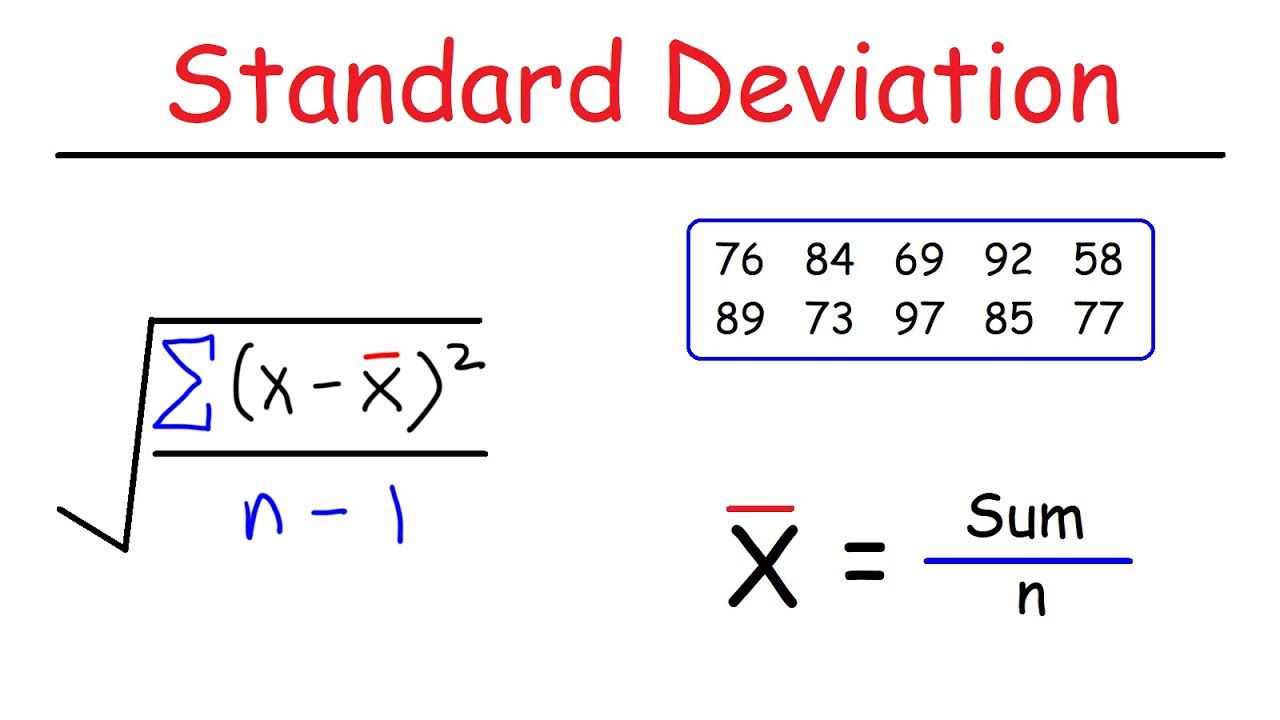
This Statistics video tutorial explains how to calculate the standard deviation using 2 examples. You need to calculate the mean before you can calculate the sample standard deviation.
Statistics Formula Sheet: https://bit.ly/47zjTVT
Introduction to Statistics:
https://www.youtube.com/watch?v=XZo...
for the standard deviation there's an entire process
it boils down to:
- find the mean
- find the sum of squared deviations
- divide by the (number of numbers - 1), then square root
crisp carbon
Got it ty so much
willow skiff
no worries!
oh and hopefully you ordered the data and stuff for the Q1 and Q3
yeah if you're not sure how to do that there's always videos on YT
np
quasi elbow
willow skiff
https://integratedmaths.quora.com/Show-that-math-sqrt-3-csc-20-sec-20-4-math
thank you
 viscid thistle
How do u identify the ellipse's major axis if the given has only the center and vertex of it?

 arctic meteor
$$\lim_{x \to \inf}x^{\left-\frac{1}{x}}\right$$
 obsidian monolithBOT
wolly5114
Compile Error! Click the  reaction for more information.
(You may edit your message to recompile.)
 arctic meteor
i really don't know how to type this
 elfin cargo
arctic meteor
$$\lim_{x \to \inf}x^{\left-\frac{1}{x}}\right$$
elfin cargo
arctic meteor
$$\lim_{x \to \inf}x^{\left-\frac{1}{x}}\right$$
$\lim_{x \to \infty} x^{\left ( -\frac{1}{x} \right )}$
obsidian monolithBOT
҉C ҉l ҉ø ҉s ҉e ҉r

 exotic barn
arctic meteor
i really don't know how to type this
exotic barn
arctic meteor
i really don't know how to type this
Log
arctic meteor
$$\frac{1}{x^{1/x}}$$
obsidian monolithBOT
wolly5114
 arctic meteor
and this is what I get to the second step
now what do I do?
the answer is $$e^0$$
obsidian monolithBOT
wolly5114

 hasty lily
arctic meteor
now what do I do?
hasty lily
arctic meteor
now what do I do?
Try to evaluate the denominator inside the limit
hasty lily
arctic meteor
i did but i get 1/e instead of 1
It's an indeterminate form so tru to manipulate it and apply L'hopital
quasi elbow
how did we get the thing in the box?
 willow skiff
quasi elbow
how did we get the thing in the box?
willow skiff
quasi elbow
how did we get the thing in the box?
sum of roots of $ax^2 + bx + c = 0$ is $-b/a$
product of roots is $c/a$
obsidian monolithBOT
higher's secret twin brother

 azure garden
Guys I need help with a proof
Prove that for odd values of p and m, 2^p ≠ 3m+1
Could anyone help
quasi elbow
i am not
 rapid burrow
Is the khan academy pre calculus course good?
 uncut mulch
its a good place to start for the basics
 warped shuttle
how can we write the formula of this parabola based on the graph ?
can we assume we also have (2, 3) because parabolas are symmetrical ?
 exotic barn
Very odd parabola
 daring tapir
exotic barn
Very odd parabola
daring tapir
exotic barn
Very odd parabola
probably a rotated one
willow skiff
warped shuttle
how can we write the formula of this parabola based on the graph ?
can we assume...
isn't that not enough information
you need 3 points for a unique parabola
warped shuttle
Well that’s what i’m wondering too.
What i came up with is since quadratics are symmetrical when we have a point on (4, 3) the other point should be (2, 3) then we can plug the values and get the formula but i am not sure if my assumption is correct
 left sage
We’d need at least one more point, if (2,3) and (4,3) are given; we don’t have enough information to identify the y-value of the vertex
Pretty sure we can determine it given (-2, -9) (assuming you still want that point), but it’d be a little tedious to find the equation
exotic barn
warped shuttle
how can we write the formula of this parabola based on the graph ?
can we assume...
well you are given only two points (3,4) and (-2,-9), but a normal quadratic equation has 3 unknowns, is one more information?
warped shuttle
exotic barn
well you are given only two points (3,4) and (-2,-9), but a normal quadratic equ...
it seems this is all the information, i will ask my teacher if the question is wrong
 fallow basalt
warped shuttle
how can we write the formula of this parabola based on the graph ?
can we assume...
fallow basalt
warped shuttle
how can we write the formula of this parabola based on the graph ?
can we assume...
If you know the vertex and another point on the parabola then you can use vertex form to make formula
arctic meteor
Can you calculate this limit without L'Hospital $$\lim_{x \to \infty}\frac{ln(x+1)}{x}$$
obsidian monolithBOT
wolly5114
 viscid thistle
obsidian monolith
**wolly5114**
viscid thistle
obsidian monolith
**wolly5114**
Yes!
viscid thistle
obsidian monolith
**wolly5114**
Write the expansion(Taylor series centred at 0) of log (1+x)
,w Taylor series of log(1+x)
obsidian monolithBOT


 Requested by cnidarian3103
viscid thistle
Requested by cnidarian3103
viscid thistle
:D
 river drift
the maclaurin series wouldn't be very useful given its radius of convergence
viscid thistle
We have to check for that too,while using expansions ?
arctic meteor
$$\lim_{x \to \infty}\frac{x}{e^{x}}$$
obsidian monolithBOT
wolly5114
 arctic meteor
I found something on mathexchange that e^x>y^2.Who is this y^2?
Mathematics Stack Exchange
This is my work so far
$$\lim_{x \to \infty} x^{\left ( -\frac{1}{x} \right )}=
\lim_{x \to \infty}\frac{1}{x^\left({\frac{1}{x}} \right)}=\lim_{x \to \infty}\frac{1}{e^{\ln x^\left({\frac{1}{x}}\r...
it also showed me a solution to lnx/x
exotic barn
arctic meteor
I found something on mathexchange that e^x>y^2.Who is this y^2?
They defined the sequence $(2n)^{\frac{1}{n}} =: 1+y_n$ where $y_n \to 0$ as $n \to \infty .\$
Then they applied this [ (x+y)^n = \sum_{k=0}^{n} \binom{n}{k}x^{n-k}y^k \stackrel{k=2}{\geq} \binom{n}{2}x^{n-2}y^2 ]
where $x = 1$ and $y = y_n$ in this context.
obsidian monolithBOT
bacc the sigma😔🤞
 elfin cargo
 storm lodge
i love it when <#363224154469826562> does calc
storm lodge
i love it when <#363224154469826562> does calc
Well, it has calculus in its name 
 tribal oar
11-12th
winter comet
storm lodge
truly the precalc of all time
everything is precalc
 gusty pivot
Does anyone have precalc exam papers I could use for practice? Send as many as you can
winter comet
gusty pivot
Does anyone have precalc exam papers I could use for practice? Send as many as y...
you could always look at the old AP exams
gusty pivot
Oh true, there's AP precalc
I'll peep
Thanks
I'm reading the openstax algebra and trig book to refine my skills before continuing with calculus and other advanced math topics
Should be done with it by January
Hopefully
winter comet
 silent prism
So no past exams exist
silent prism
So no past exams exist
there is 1
winter comet
silent prism
Worthless class imo
ikr
 snow goblet
tribal oar
11-12th
snow goblet
tribal oar
11-12th
You really start precalc when you start basic addition
its practically elementary calculus if you think about it
finding functions based on plugging numbers in
4 +4 = _ is also equal to 4+4=x
since variables can be anything
it can be a drawing of my pinky toe
its still a variable
winter comet
snow goblet
You really start precalc when you start basic addition
☠️
snow goblet
what
AP precalc aint worthless
you can use it to boost GPA
since the regular Precalc is either honors or CP
but if you do Precalc you get the prereq to AP Calc
without having to sacrifice GPA
winter comet
snow goblet
but if you do Precalc you get the prereq to AP Calc
you can take calc without taking precalc
...
snow goblet
winter comet
you can take calc without taking precalc
Not in my school
winter comet
some people may need it for practice but uh
winter comet
snow goblet
Not in my school
oh
snow goblet
also
winter comet
i didn't take precalc
snow goblet
whats BS
winter comet
didnt need it either
winter comet
snow goblet
whats BS
wdym
snow goblet
here
winter comet
AP calc BC is calc 1 and almost calc 2
snow goblet
It's the only class i can do
winter comet
AP calc AB is just calc 1
snow goblet
rn
snow goblet
winter comet
AP calc AB is just calc 1
exactly
winter comet
snow goblet
It's the only class i can do
but its not a prerequisite right?
that would be crazy
snow goblet
winter comet
but its not a prerequisite right?
it is
winter comet
cuz they alr teach calc 1 in BC
snow goblet
all of it is pre requisites
winter comet
snow goblet
it is
bruh 😭
winter comet
snow goblet
Geometry pre reqs algebra 1
THE HECK???
snow goblet
precalc you gotta take algebra 2
snow goblet
calc yu gotta take precalc
winter comet
algebra 1 -> algebra2/geometry -> calc 1 -> calc 2 -> allat
winter comet
snow goblet
but our school system making it geometry then algebra 1
thats....weird
snow goblet
i was the last year we did algebra 1 then geometry
the 7th graders rn doing geometry with us
winter comet
💀
winter comet
that sucks 💀
snow goblet
yah
snow goblet
obsidian monolith
**bacc the sigma😔🤞**
So
the summation
uses the sequence, but we really have to simplify and plug the x into 1s and the y into 0s, but you also can't forget that n is infinity. So the expression (2n) to the power of 1/n equals 1 so you know that n is equal to infinity, you can solve the equation and find w
sorry
i meant to say n
winter comet
n is infinity?
snow goblet
you have to find the limit between yn and n
sorry brain fart
and then you can solve the n and plug it in to see if it's correct. Since you can solve all the other variables except for k
then you can solve for k
so after expanding the binomial
and applying it
you can safely say that k=2 and
you also have to substitute the logarithms into the equation
y
n
2
😦
n
log(2n)
)
2
n
2
(log(2n))
2
n
2
(log2+logn)
2
.
so that's how you solve it
winter comet
formatting be like
snow goblet
lol
 unborn brook
How do we cope with this?

Maybe it's because if the m is even, the value in the left parenthesis cannot be negative in the first place
But I want to hear a more well-put explanation
 summer ruin
the even root is defined only for nonegative reals
if you want to stay in the real numbers, that is
river drift
we define the square root to be the positive number that squares to the input (making it a function):
[ \sqrt 4 = +2 ]
so when you solve an equation involving squares (and even powers generally) we have to append $\pm$: [ x^2 = 4 \implies x = \pm \sqrt 2 ] then for real numbers we define fractional exponents to work the same way
obsidian monolithBOT
cloud
 snow goblet
tribal oar
squab do u do math comps
snow goblet
tribal oar
squab do u do math comps
nope
tribal oar
why not
tribal oar
math comps are where you actually use your brainpower and problem solving
snow goblet
unborn brook
How do we cope with this?
They're basically just identiies
the m root of l to the power of m
is equal to l
because it cancels out
and l to the power of l/m
is equal to l
so if both are true
then l is equal to 1
since l is to the power of 1
snow goblet
tribal oar
why not
well are there any online ones
tribal oar
idk search
snow goblet
ok
silent prism
snow goblet
AP precalc aint worthless
If you take the exam you're just silly
It's pointless
I took just honors pre calc and I was able to advance to calc 1
Although if they integrate you needing the ap exam to get credit for pre calc in the future I wouldn't be surprised
All about money 💔
unborn brook

Am I supposed to see the quadratic equation hiding in there or could I find another way to approach this?
It's a real shame that I found this problem in a silly exam-oriented question bank, it's a good one
Though I can't help wondering if I could stumble upon that quadratic approach in a future time when I won't be so fluent with quadratics. Is everything actually built upon pattern-recognizing when it comes to problem solving in math  ?
?
summer ruin
unborn brook
Though I can't help wondering if I could stumble upon that quadratic approach in...
yes
unborn brook
That hurts
In natural sciences, I can approach problems using my thinking tools to find creative ways to eventually have an insight into the problem and that makes me feel alive.
summer ruin
you can't reason about complicated chemical reactions if you don't even understand how basic ones go
because they can involve many basic ones
same thing with physics tbf
unborn brook
Sure but building upon concepts doesn't really appear the same as the recognition of patterns in problem solving
summer ruin
you can't use your knowledge of easier concepts if you didn't notice that your complicated problem is a bunch of easy problems
same thing if you recognize that there's a pattern and lack the knowledge to solve the easy problem, you're stuck
you seem to think that "pattern recognition" is somehow not "creative thinking", which I don't think is true
unborn brook
Maybe we are not on the same page about the meaning of pattern recognition. What I meant by that is memorizing certain patterns to utilize them in future problems, kind of "thinking for once to avoid thinking again"; whereas what you seem to mean by that is analytic-thinking.
summer ruin
math is not about memorizing, no
unborn brook
summer ruin
yes
In that case, your answer would've probably be no
unborn brook
summer ruin
math is not about memorizing, no
Math is definitely not about memorizing per se, that goes without saying.
What I'm not convinced of is the conventional approach to math not being generally about memorizing
summer ruin
what does that mean
unborn brook
Never mind
Do you guys have a book (doesn't have to be a book actually, an online resource could also work) recommendation that would help me improve my problem solving skills? (Like Rusczyk's "Art of Problem Solving" but broader.)
winter comet
unborn brook
What I'm not convinced of is the conventional approach to math not being general...
memorizing is a broad term. In math, you learn things and you find ways to apply them. In "problem solving" math, you have to find a way to apply it that you maybe haven't done before, and the way to do this is generally practice problems and pick up tricks that may or may not come in handy for other problems.
by "picking up tricks", i mean like
you use a process to do something and now you know how to do that thing, so if you encounter that thing again you can try the same process
if you want to call that "memorizing" you can, but you still have to figure out a way to solve the problem lol
unborn brook
I see what you mean
To quote Tyson, "The act of solving the course's homework problems is, in a way, a slow re-wiring of your brain—ultimately empowering you to use a lens of investigation that's forged in the operations of nature."
The thing is I am a harsh dissident of the mindset that leads people more often than not to consider the pedagogy as a corpus of to-be-memorized-for-the-exam stuff. That's why I feel bad every time I sense a tinge of that sort of thing. But it seems like I should also recognize the fine line between memorizing and the other tools for grasping the essence of the material.
winter comet
unborn brook
The thing is I am a harsh dissident of the mindset that leads people more often ...
honestly i feel like one should understand however much they need to know
for passing their classes or a job
or just hobby :>
or goals
whatever they wanna do with it
unborn brook
I don't really think it's only about obvious practical returns
The pursuit of understanding is the only thing we do that transcends our mundane lives and tasks (i.e. process energy and stay alive until you reproduce so that your gene pool maintains)
And a species who has the cognitive ability to appreciate the importance of this should also see the role of educating the generations on this.
In the big picture, a literate society means more than any of us can imagine.
I am not saying that every single person should be fluent in multivariable calculus
I am saying that every single person should at least have an appreciation of why it matters in the most crucial terms
If practical returns are what matter at the end of the day, there you go, the greatest practical return one could ever think of.
unborn brook
unborn brook
I don't really think it's only about obvious practical returns
Maybe not obvious at first glance, but it's right there.
 formal wren
Does anyone know how to do arithmetic and geometeric
winter comet
formal wren
Does anyone know how to do arithmetic and geometeric
many people most likely do, whats the question
i assume ur talking about sequences or series
formal wren
winter comet
many people most likely do, whats the question
Alr so

 formal wren
winter comet
i assume ur talking about sequences or series
formal wren
winter comet
i assume ur talking about sequences or series
What’s the difference
winter comet
formal wren
What’s the difference
a sequence is a list of numbers, like {1, 2, 3, 4, 5} is just {n}
a series is the sum of the terms in a sequence, like 1 + 2 + 3 + 4 + 5 = 15
formal wren
winter comet
a sequence is a list of numbers, like {1, 2, 3, 4, 5} is just {n}
a series is th...
Oh i think we use n idk about series
winter comet
yea this isn't series
this is just sequence
so for the first one, it seems that every year your money gets multiplied by a certain amount, right?
like the cost is multiplied by another 1.1 every year
so the first year, each month you have to pay 1600
the second year, each month you have to pay 1600 * 1.1
the third year, each month you have to pay 1600 * 1.1 * 1.1
u see a pattern?
maybe a general formula where n is the number of years? :>
formal wren
I have a formula thingy
formal wren
winter comet
maybe a general formula where n is the number of years? :>
I just dk when it’s initial or when it’s first term
 winter comet
formal wren
I just dk when it’s initial or when it’s first term
winter comet
formal wren
I just dk when it’s initial or when it’s first term
well think about it logically
it tells you the first year, each month you pay 1600
the second year, you pay an extra 10% of that
a.k.a you multiply it by 110% or 110/100 or 1.1
and each year after that, you continue to multiply it by 1.1
formal wren
winter comet
a.k.a you multiply it by 110% or 110/100 or 1.1
But like what if it asks me a more complicated one
winter comet
formal wren
But like what if it asks me a more complicated one
like what?
formal wren
Like if it decreases by 66% per year over 4 years
winter comet
i mean if your initial value is a_1, and it decreases by 66% each year, and n is your amount of years, and lets say it decreases on the first year, then a_n = a_1 * (1-66/100)^n = a_1 (34/100)^n
so at n=4, its a_4 = a_1 * (34/100)^4
lemme see
formal wren
winter comet
so at n=4, its a_4 = a_1 * (34/100)^4
Wait why do we do 34
That’s were I get confusd
winter comet
formal wren
Wait why do we do 34
it decreases by 66/100
so you had 100/100
now you take out 66/100
you get 34/100
 winter comet
formal wren
Like how do I know it’s initial or not etc
winter comet
formal wren
Like how do I know it’s initial or not etc
well 2 is the first term, -6 is the second term, 18 is the third term, right?
theres no such thing as the zeroth term or nothin XD
formal wren
winter comet
theres no such thing as the zeroth term or nothin XD
Is there notttt
For like initial stuff
Like for equations
Where it’s asked
winter comet
formal wren
Is there notttt
there is its just not in this context
XD
so a_n = 2 * (something)^(something)
now you look at how they differ. it looks like each time you multiply by -3, so
a_n = 2 * (-3)^(something)
right?
formal wren
winter comet
there is its just not in this context
Ohhh when would I figure out there’s an initial
winter comet
formal wren
Ohhh when would I figure out there’s an initial
im just saying
since it says 11th term, i think its safe to assume the first term is the FIRST term, so the initial term
but uh
you can actually change the initial term
winter comet
winter comet
so a_n = 2 * (something)^(something)
now you look at how they differ. it looks l...
but you also have to change what "something" is
formal wren
winter comet
you can actually change the initial term
?
winter comet
for instance, lets say that we were starting at n=1
a_1 = 2
so a_1 = 2 * (-3)^0 = 2, so we know that a_n = 2 * (-3)^(n-1)
we could change this if we wanted by factoring out (-3)^(-1)
a_n = 2 * (-3)^(n-1) =2 * (-3)^n * (-3)^(-1) = -2/3 * (-3)^n starting at n=1
we could even do it again if we really wanted
formal wren
👍
winter comet
so like you can factor it out blah blah blah
as long as they are actually correct
so like you have to correctly identify the "something" in the first place
best way just by testing a few values :P
formal wren
winter comet
best way just by testing a few values :P
Ty
 golden harbor
can someone please help me with my precalculus problem, i am literally stuck on it and i feel dumb asf
i posted it in one of the channels but no helpers have been able to help me 😢
help #help-24
 leaden jay
Is anyone studying RS Aggarwal? Class 9
 ashen granite
Wat does this even mean
ashen granite
leaden jay
Is anyone studying RS Aggarwal? Class 9
RS Agarwal
Can someone solve this problem
quasi elbow
how do we do question 5?

 quiet mica
quasi elbow
quiet mica
quasi elbow
can you please guide me through it?
quasi elbow
yes?
viscid thistle
quasi elbow
how do we do question 5?
trying using this
1+cos(2theta) = 2cos^2(theta)
daring tapir
viscid thistle
probably didnt teach them domain and tange
Wouldnt matter
All they need is which quadrant 2*theta is in
As of now it could be either 3, 4
quasi elbow
is this correct?
 daring tapir
quasi elbow
is this correct?
daring tapir
quasi elbow
is this correct?
Yep that much is correct
But you cant do anything after this
daring tapir
quasi elbow
c
The answer is Wrong
Well not exactly wrong
But it could be either c d
quasi elbow
right

 viscid thistle
quasi elbow
viscid thistle
quasi elbow
this is right
quasi elbow
what did we do in the last two steps?

 timber blade
When we check f(x) differentiability in [a,b]
do we consider both limits (left hand and right hand) while checking differentiability at end points(ie a and b) or do we consider only right hand differentiability at x=a and left hand at x=b
(this question arose from rolles theorem statement because it mentions that f(x) needs to be differentiable in [a,b]
but we if consider both side differentiability at end points then f(x) will never be differentiable in closed interval
river drift
we usually consider differentiability on open intervals
timber blade
timber blade
(this question arose from rolles theorem statement because it mentions that f(x)...
.
river drift
a better statement would require continuity on the closed interval and differentiability on the open interval
timber blade
i see
quasi elbow
is cos(pi+3A) equal to -cos3A?
river drift
yes
quasi elbow
okay, thank you
 quartz pagoda
I need help, could anyone tell me how these lessons are called

So I can actually study them
I know they are inequalities but I dont see this table on any of the videos
quasi elbow
how do i proceed further? i need it in terms of tan or cot

"Given, diameter of circular wire = 10cm, therefore length of wire = 10π"
how does this sentence work
oh
never mind
timber blade
quasi elbow
how do i proceed further? i need it in terms of tan or cot
u want to reduce the expression to just tan and cot functions?
quasi elbow
mhm!
timber blade
hm ig this might work
 timber blade

quasi elbow
haha it's okay
timber blade
quasi elbow
how do i proceed further? i need it in terms of tan or cot
e
there's a mistake in ur expansion of sin3A
it should be be sin3A = 3sinA - 4sin³A
timber blade
 quasi elbow
got it! thank you so much
timber blade
welcome brother
quasi elbow
how do we solve question 5?

 tender questBOT
What step are you on?
1. I don't know where to begin.
2. I have begun but got stuck midway.
3. I got an answer but I was told that it's wrong.
4. I got an answer and would like my work checked.
5. I have a question about someone else's work/solution.
6. I have completed the problem and don't need help anymore. Thank you.
7. None of the above
I don't know if this is correct
 daring tapir
Yep
quasi elbow
we are not taking negative because of the power 4, right?
daring tapir
Yea
daring tapir
(Cos^2(x) + sin^2(x))^2
daring tapir
quasi elbow
do we make it (a+b)^2?
Yea
quasi elbow
yes! got it, thank you so much
quasi elbow
in question 10, do you open the whole thing of the first term or is there any other way of doing it?
 willow skiff
quasi elbow
in question 10, do you open the whole thing of the first term or is there any o...
willow skiff
quasi elbow
in question 10, do you open the whole thing of the first term or is there any o...
unfortunately you have to expand everything
and then refactor the terms
if you just want the answer tho
it's constant for all real x by assumption
so just sub in x = 0, call it a day
timber blade
quasi elbow
in question 10, do you open the whole thing of the first term or is there any o...
if you look at the final answers, none of them contain a trigonometric expression, which means all the sins and cos in original question will eventually be cancelled out
and there's nothing dividing this expression, which means taking common won't help
in short expand the terms and solve the question as author intended
quasi elbow
willow skiff
so just sub in x = 0, call it a day
that makes it so much easier
quasi elbow
timber blade
if you look at the final answers, none of them contain a trigonometric expressio...
makes sense!
one more question
so i tried solving question 6

but i do not think i was doing the right thing
how do we solve such kind of questions
obsidian monolithBOT

 willow skiff
,w (cot t + tan t)^2 (sec t - cos t) simplify
obsidian monolithBOT
 willow skiff
right then you want to use the identity sec^2 t - tan^2 t = 1
somehow
ah jesus try out one of the options and see what happens?
the time pressure is the challenge
 willow skiff
oh wait calculate $m^3 \cdot mn = (m^2 n)^2$ and so on, I have a feeling it's between options 1 and 4 for this reason
obsidian monolithBOT
south's secret twin brother
 willow skiff
yeah
quasi elbow
i am about to give up lol
willow skiff
,w (cot t + tan t)(tan t) - (sec t - cos t)(sec t)
don't mind me just WAing my way
oops
,w (sec t - tan t)(tan t) - (cot t + tan t)(sec t) simplify
yeah oops
quasi elbow
the answer is (1) just in case you wanted to know
so do i conclude that i skip such kind of question(s) in the exam
quasi elbow
i would not have the last bit xD
we gotta do 50 questions in 70 minutes
and i suck at math
willow skiff
willow skiff
,w (cot t + tan t)(tan t) - (sec t - cos t)(sec t)
yeah it is (1), typed the wrong thing
obsidian monolithBOT
 willow skiff
oh wait calculate $m^3 \cdot mn = (m^2 n)^2$ and so on, I have a feeling it's be...
willow skiff
willow skiff
oh wait calculate $m^3 \cdot mn = (m^2 n)^2$ and so on, I have a feeling it's be...
yep
obsidian monolithBOT
 daring tapir
I see one thing
willow skiff
if you have m^(5/3) and n^(5/3) that won't be neat
daring tapir
daring tapir
I see one thing
Nvm on second note it aint useful
willow skiff
np
quasi elbow
daring tapir
Nvm on second note it aint useful
what's it?
daring tapir
quasi elbow
what's it?
Well the options are like a combo of m^4/3 m^2/3 n^4/3 and n^2/3
That loooks to me so much like the expansion of (n^2/3 + m^2/3)^3
But ig the manipulation on the way there will be a pain
quasi elbow
i would not like to go there haha
daring tapir
Yee
timber blade
poor me
quasi elbow
timber blade
poor me
i am sorry!
daring tapir
willow skiff
nicely done limeyyy
Ikr would never have thought that
Considering the mess that the options are
willow skiff
they have experience ig with JEE
daring tapir
Id guess so
quasi elbow
is JEE math super tough?
daring tapir
Arent your questions from jee 💀
quasi elbow
no haha
quasi elbow
i am in my final year of undergrad lmao
willow skiff
WHAT
quasi elbow
i know i suck at math
willow skiff
why are you doing this stuff then
daring tapir
quasi elbow
i am in my final year of undergrad lmao
Brooooo? Brooooooo
How
Did you survive
quasi elbow
for an entrance exam for my master's programme
willow skiff
if you want to do research maths do more long problems from analysis and algebra
daring tapir
Aah makes sense
quasi elbow
daring tapir
Did you survive
and
willow skiff
if you want to do applied oh
quasi elbow
i had biology
quasi elbow
i know and i do not have any time left
it's in june and i have got so much stuff of uni too
 dark thorn
quartz pagoda
I need help, could anyone tell me how these lessons are called
dark thorn
quartz pagoda
I need help, could anyone tell me how these lessons are called
still need help?
quartz pagoda
I am really rusty at math tbh likw really, this is like high school level, I enrolled a college but my high school knowledge is really bad
Like wow bad hahah
So just struggling with everything
winter comet
 neon meadow
help
neon meadow
help
what u need help with
neon meadow
THAT equation
winter comet
neon meadow
THAT equation
its a function
there are no implicit instructions if you're just given a function
are you supposed to do smthn with the function?
neon meadow
idk i will ask my professer
left sage
Whyd they leave the server lol
 stiff sluice
they prolly needed to find domain or range of the function
 uneven nexus
I don't understand the nomerator
 winter comet
uneven nexus
I don't understand the nomerator
winter comet
uneven nexus
I don't understand the nomerator
you mean why they suddenly took sin of the numerator?
uneven nexus
yes!
winter comet
yea that makes no sense 💀
winter comet
viscid thistle
Oh,I didn't see the sin
i feel like its a sin
viscid thistle
lol
 karmic palm
neon meadow
what halp y = f(x) = 1/(1 + x2)
karmic palm
neon meadow
what halp y = f(x) = 1/(1 + x2)
im guessing u want the domain?
winter comet
karmic palm
im guessing u want the domain?
he isn't even in the server anymore 💀
 heavy wharf
oh nah
silent prism
Bro gave up
 crystal fossil
thats dope tysm
quasi elbow
no worries!
quasi elbow
how do you solve question 37?
 quasi elbow
in question 5, do we use the formula of cos(A+B) and cos2A? but does that not make it more complicated?
 timber blade
quasi elbow
how do you solve question 37?
timber blade
quasi elbow
how do you solve question 37?
can explain if the answer is D
quasi elbow
it's (c)
tell me the first step?
like how do i approach the solution
oh
wait
i was checking for #5
timber blade
quasi elbow
(b)
very sad
quasi elbow
i am sure you're thinking about the right thing, probably just a minor mistake here or there
quasi elbow
sure
timber blade
it says, that there are 4 angles A, B, C, D
such that their sine is equal to k
ie
sin(A) = sin(B) = sin(c) = sin(D) = k
and A<B<C<D
also "k" is a positive number"
since k is a positive number
and k is equal to sine of all these angles, then it means A,B,C,D must lie in quadrant where sine of angles is positive
in short all angles A, B, C, D lie in first and second quadrant
also A, B, C, D are smallest angles
which basically means that angle A must lie in first quadrant and angle B then must lie in second quadrant
similarly angle C must lie in first quadrant after one cycle is completed
and angle D will lie in second quadrant after one cycle is completed
using these we can say that:
angle A = A
angle B = 180° - A (because sin(180-A)=A)
angle C = 360° + A
angle D = 360+180-A = 540-A
now using these calculate-
sin(A/2) = x (say)
sin(B/2) = sin(90 - A/2) = cos(A/2) = y(say)
sin(C/2) = sin(180 + A/2) = -sin(A/2) = -x
sin(D/2) = sin(270-A/2) = -cos(A/2) = -y
now final expression was-
4x + 3y - 2x - y
2x - 2y
2(x-y)
2(sin(A/2) - cos(A/2))
(this was my logic )
(doesn't yield the answer tho)
quasi elbow
what mistake am I making here?
 quasi elbow
timber blade
it says, that there are 4 angles A, B, C, D
such that their sine is equal to k
...
quasi elbow
timber blade
it says, that there are 4 angles A, B, C, D
such that their sine is equal to k
...
oh, wow
how so?
 timber blade
quasi elbow
how so?
timber blade
quasi elbow
how so?
coz let's suppose u pick A as some random angle in first quadrant (say 45°) (lies in first quadrant)
now A= 45°
now you want to pick angle B, you can pick any angle you want but sin(B) must also be equal to sin(A)
The following are your choices for angle B:
135°(second quadrant), 405°(first quadrant , 495°(second quadrant)
||sine of all these angles is equal to sin45°||
you can pick any of these as your angle B but question mentions that A, B must be smallest angles possible, therefore naturally your angle B needs to be the smallest angle among all the choices you have
which means angle B = 135
quasi elbow
makes sense! thank you 🌸
timber blade
which means angle B would be 135
timber blade
quasi elbow
makes sense! thank you 🌸
yet to reach the answer sadly
quasi elbow
yeah let me take it from there
i will tell you if i figure it out
which i probably will not
timber blade
sure
quasi elbow
can we write sin(a/2)-cos(a/2) as root(1-sin(a))?

i don't know if this is correct or not
quasi elbow
oh so 2.root(1-k)
timber blade
i verified it graphically
sin(A/2) - cos(A/2) = -√(1 -sinA)
quasi elbow
can you show that to me?
timber blade
it stilp isn't the answer to me
the curve of both the functions overlap each other

btw you are only supposed to look at the region between x= 0 and x = 90
timber blade
bo NVM
quasi elbow
does that not solve the question though?
timber blade
i forgor it's supposed to overlap each other for x = 0 to x = 180
but after x= 90, it becomes opposite of each other
basically I am now suicidal
quasi elbow
do not say that
timber blade
i was jk sorry
timber blade
thanks!
quasi elbow
no, thank you
timber blade
hm i will come to it after my class
otherwise let's hope somebody else see this and solve it
quasi elbow
sure thing! good luck (:
timber blade
timber blade
it says, that there are 4 angles A, B, C, D
such that their sine is equal to k
...
broooooooo
literally the last line

this was the error omg 😭
it should be 2x + 2y, not 2x - 2y
2x + 2y
2(x + y)
2(sin(A/2) + cos(A/2))
let
y = sin(A/2) + cos(A/2)
y² = [sin(A/2) + cos(A/2)]²
y² = sin²(A/2) + cos²(A/2) + 2sin(A/2)cos(A/2)
y² = 1 + 2sin(A/2)cos(A/2)
y² = 1 + sinA
y = underoot(1 + sinA)
also k = sinA
therefore final answer is
2 * underoot( 1 + k)
quasi elbow
oh
what about the graph though xD
oh never mind i got it
thank you, limey
shouldn't the answer of question 17 be 1?
 crystal fossil
quasi elbow
shouldn't the answer of question 17 be 1?
crystal fossil
quasi elbow
shouldn't the answer of question 17 be 1?
nope, 3
quasi elbow
how so?
crystal fossil
lol
viscid thistle
i wonder how to solve it though
quasi elbow
 crystal fossil
is everyone here fucking stupid lmao
viscid thistle
crystal fossil
is everyone here fucking stupid lmao
no lol
viscid thistle
quasi elbow
oh
didn't know that tanA tan(60-A) tan(60+A) = tan 3A
got it
thanks
quasi elbow
no worries
quasi elbow
how do I proceed further? I think I have made a mistake somewhere because this seems too complicated but I cannot find it
 viscid thistle
quasi elbow
how do I proceed further? I think I have made a mistake somewhere because this s...
viscid thistle
quasi elbow
how do I proceed further? I think I have made a mistake somewhere because this s...
you could simplify this furthur

this is wrong
 viscid thistle
you could simplify this furthur
viscid thistle
viscid thistle
you could simplify this furthur
just simplify this and do it again
quasi elbow
okay
oh
i got it, thank you 🌸
how do we solve question 3? do we just find the values of sin(2B), sin(3B) and so on?

if yes, does it not make it a very lengthy process?
willow skiff
quasi elbow
how do we solve question 3? do we just find the values of sin(2B), sin(3B) and s...
$\cos 2A = \frac{1 - \tan^2 A}{1 + \tan^2 A}$
obsidian monolithBOT
south's secret twin brother
 quasi elbow
yes i calculated that
willow skiff
cause it's (cos^2 - sin^2)/(cos^2 + sin^2)
willow skiff
they know that already
 gilded steppe
i thought it was cos(2 * 1/2) = cos(1)
quasi elbow
how do we know what the value of lambda is, though?
gilded steppe
my bad
willow skiff
quasi elbow
how do we solve question 3? do we just find the values of sin(2B), sin(3B) and s...
well, check sin B isn't equal to that
then if lambda is 2, 2A and 2B would add up to pi/2
I think you should check lambda = 3 then
quasi elbow
so it's just guessing work? like, there's no hard rule to solve such questions?
gilded steppe
wait tan A = 1/2
so A = atan(1/2) = pi/3
willow skiff
gilded steppe
wait tan A = 1/2
so A = atan(1/2) = pi/3
no actually unfortunately
gilded steppe
no?
willow skiff
no, the hypotenuse would be sqrt(1^2 + 2^2) = sqrt5
gilded steppe
but tan = vertical/horizontal
willow skiff
quasi elbow
how do we solve question 3? do we just find the values of sin(2B), sin(3B) and s...
I would do $tan(A + B) = \frac{5/6}{1 - 1/6} = 1$
hence $A + B = \pi/4 \implies 2A + 2B = \pi/2$
obsidian monolithBOT
south's secret twin brother
 willow skiff
gilded steppe
but tan = vertical/horizontal
willow skiff
gilded steppe
but tan = vertical/horizontal
the hypotenuse is not 2
 gilded steppe
i always confuse the 2a and a*sqrt(3) sides
because we learned the 1:1:sqrt2 and the 1:2:sqrt3 triangles
but with that logic it's actually 1:sqrt3:2
quasi elbow
is cos(2A) coming out to be 1/2?
quasi elbow
gilded steppe
wait tan A = 1/2
so A = atan(1/2) = pi/3
how does this work
quasi elbow
willow skiff
I would do $tan(A + B) = \frac{5/6}{1 - 1/6} = 1$
hence $A + B = \pi/4 \implies...
this makes sense, thank you. i hate my mind does not automatically work like that
quasi elbow
gilded steppe
it was based on rules of sin and cos
i see!
willow skiff
yeah it only makes sense once you know what the answer is lol
I mean who's to say that lambda has to be an integer actually
gilded steppe
soh cah toa
sin = opposite/hypothenuse
cos = adjacent/hypothenuse
gilded steppe
willow skiff
the hypotenuse is not 2
taking this, sin(30 degrees) = a/2a
quasi elbow
willow skiff
I mean who's to say that lambda has to be an integer actually
is it not that in general?
quasi elbow
gilded steppe
taking this, sin(30 degrees) = a/2a
makes sense
willow skiff
quasi elbow
is it not that in general?
you shouldn't assume in general
gilded steppe
gilded steppe
taking this, sin(30 degrees) = a/2a
if a = 1, sin(30 degrees) = 1/2
so if sin(A) = 1/2, A = 30 degrees
quasi elbow
is cos(3pi/4) equal to sin(3pi/4)?
willow skiff
quasi elbow
is cos(3pi/4) equal to sin(3pi/4)?
no
 stark grotto
no whay
willow skiff
they have different signs
stark grotto
i am new here :)
quasi elbow
hi new here
willow skiff
in the 2nd quadrant, the x-coordinate is negative, so cos is negative
and sin is positive
quasi elbow
got you, thanks!
stark grotto
so yall know math
willow skiff
yeah we know some maths
quasi elbow
in question 7, i tried applying the formula of tan(A+B) and substituting the values of tan(A) and tan(B); are we supposed to do it this way?
 stark grotto
:0
quasi elbow
stark grotto
nvm hi
hey
willow skiff
quasi elbow
in question 7, i tried applying the formula of tan(A+B) and substituting the val...
yes
quasi elbow
okay, thank you
stark grotto
whats the range of m??
quasi elbow
it's not mentioned
quasi elbow
willow skiff
yes
i am getting a weird value though: (3m^2+2m)/[(m+1).(2m+1)-m^2]
mhm
stark grotto
putting m = 1

if it works with m = 1, it should work with m = anything orelse the question lacks information
quasi elbow
oh, got it.
obsidian monolithBOT
 willow skiff
oh wait there's the none of these option
willow skiff
stark grotto
if it works with m = 1, it should work with m = anything orelse the question lac...
unfortunately not
stark grotto
:/
stark grotto
ye it seems wrong
quasi elbow
how do we solve question 11? i tried applying the formula of sin(A+B) and then of sin(2A) and cos(2A)

but it is not simplifying
crystal fossil
go kys
crystal fossil
women 🍵
winter comet
crystal fossil
women 🍵
this...sounds more like a you problem...
gilded steppe
agreed
winter comet
quasi elbow
how do we solve question 11? i tried applying the formula of sin(A+B) and then o...
Let A = B = 0
3sin(2A + B) = sin(B) = 0 is true.
2tan(A) + tan(A+B), if A = B = 0, is 2tan(0) + tan(0) = 0
so at least one answer is 0, and since it is an option then the answer is 0 :>
as for how you'd actually do it, no clue. ☠️
quasi elbow
wow xD
winter comet
🗿
winter comet
quasi elbow
unfortunately, i do not think it works like that
why not ☠️
ur sayin there could be multiple answer? :l
quasi elbow
eh
winter comet
i mean like a should be a correct answer
thats just not...the best way to get to the answer
☠️
or maybe the intended way
one could argue it is the best way but uh
quasi elbow
can you actually just assume stuff to be 0 like that? genuinely asking
winter comet
quasi elbow
can you actually just assume stuff to be 0 like that? genuinely asking
oh yeah
i mean A and B are arbitrary
so i picked an A and B that satisfied the conditions
and then evaluated it
so that would be AN answer
quasi elbow
but it does not satisfy the equation for other values, does it?
i do not know what the answer is, by the way
maybe you are right
winter comet
quasi elbow
but it does not satisfy the equation for other values, does it?
lets say 3sin(2A + B) = sin(B)
is satisfied for a few values of A and B
we can see that if A = B = 0, then this condition is satisfied. All it wants is for this condition to be satisfied. Based on the way the problem says the "value" of 2tan(A) + tan(A+B), we can assume there is only one value and thus it should be the same for any A and B plugged in as long as they satisfy the first condition
the thing is, this only worked because A=B=0 satisfies 3sin(2A+B) = sin(B)
and I just guessed A=B=0
so if you can't guess it, this method doesn't work, so its not a great method in general it just worked for this problem 🗿
winter comet
so like for actually doing it instead of guessing? idk how 💀
quasi elbow
it's okay
how do you do question 7? i can see the pairs like sin^2(5) and sin^2(85) but i do not know where to go from there
 viscid thistle
quasi elbow
how do you do question 7? i can see the pairs like sin^2(5) and sin^2(85) but i ...
viscid thistle
quasi elbow
how do you do question 7? i can see the pairs like sin^2(5) and sin^2(85) but i ...
sin^2 (x) + cos^2 (x) = 1
winter comet
viscid thistle
sin^2 (x) + cos^2 (x) = 1
where the cos^2(x) tho :l
viscid thistle
90-x
winter comet
O
quasi elbow
oh
thank you!
also, does anyone know of a website/source which has a ton of trigonometry questions?
quasi elbow
i cannot find it online
viscid thistle
if you really want to piss yourself with a lot of problems
rd sharma is your answer
that book is a pain
quasi elbow
i would like to try
viscid thistle
but its worth it though
quasi elbow
(i say that as i struggle with 5 out of 6 questions i do)
quasi elbow
viscid thistle
but its worth it though
why not?
viscid thistle
quasi elbow
(i say that as i struggle with 5 out of 6 questions i do)
did you try khan academy ?
quasi elbow
i did not
does it have its own set of problems?
i do not have time to watch videos and stuff
winter comet
viscid thistle
did you try khan academy ?
those might be uh...a bit easier lol
quasi elbow
but i want my trigonometry to be okay enough because a lot of my syllabus needs that
viscid thistle
winter comet
those might be uh...a bit easier lol
oh,never tried it
viscid thistle
quasi elbow
i cannot find it online
i think there are solution videos online
youtube*
you could solbe the problem an dcheck your answer
winter comet
viscid thistle
oh,never tried it
they usually introduce topics and give like basic examples but the problems are generally pretty easy
 quasi elbow

 lusty notch
ok
timber blade
interesting
timber blade
use the fact that log(a) + log(b) = log(ab)
using these u can write the power as
log base 10 of (tan1° * tan2° * tan3°..... * tan89°)
now consider
tan(89°) = tan(90-1)
=> tan89 =cot1
similary tan88 = cot 2°
you can pair tan 1° with tan 89°
which would be equal to 1
similary on pairing tan(2) with tan(98) will also give you one
at last all the tan function will be paired with their cot ones equating to 1, except the one in the middle which is tan(45°)
so the final thing in power is log base 10 of tan 45°
which is log base 10 of 1
which is equal to 0
therefore e to the power 0 is one
please tell me the answer is (d)
quasi elbow
timber blade
please tell me the answer is (d)
it is! thank you 🌸
quasi elbow
lusty notch
parece ser un problema no tan complejo
Lo siento, ¿hablas inglés? La mayoría de la gente se siente cómoda solo con el inglés aquí
lusty notch
no
willow skiff
uy
willow skiff
es verdad, la gran mayoría de los materiales están en inglés
lusty notch
 lusty notch
quasi elbow
lusty notch
quasi elbow
mi respuesta coincide con la del otro compañero
lusty notch
quasi elbow
Is that a job they gave you?
quasi elbow
lusty notch
mi respuesta coincide con la del otro compañero
yes i got that, thank you (:
quasi elbow
lusty notch
Is that a job they gave you?
not "job", it's practice problems
lusty notch
ahh ok
quasi elbow
mhm! I can share the sheet with you if you'd like
if you wanted to practice, that is
lusty notch
yes of course
quasi elbow
can I send it tomorrow? I am not on my computer anymore and the speed of my internet connection sucks
 past drum
lusty notch
I developed a love for mathematics so quickly
past drum
lusty notch
I developed a love for mathematics so quickly
real me too
quasi elbow
lusty notch
I developed a love for mathematics so quickly
I do not think I am following haha
anyway, have a good day!
 plain osprey
lusty notch
no hablo ingles
plain osprey
lusty notch
no hablo ingles
La mayoría de nosotros somos angloparlantes
unborn brook
If a function provides a certain dependent value to more than one independent values, its inverse is not a function. Then how come there are inverses of trigonometric functions?
summer ruin
there is no global inverse, but there are local inverses
x^2 is not invertible, but sqrt(x) and -sqrt(x) are it's inverses for x >= 0 and x < 0
unborn brook
summer ruin
x^2 is not invertible, but sqrt(x) and -sqrt(x) are it's inverses for x >= 0 and...
Like this, right?
viscid thistle
Ok guys im doing a work sheet for AP precal, and the aswers are between 1-10 and I got 1 and 8 remaining and im stuck on these two cause im getting repeated asnwers. I feel like ik the asnwrs but its not working

 winter comet
viscid thistle
Ok guys im doing a work sheet for AP precal, and the aswers are between 1-10 and...
winter comet
viscid thistle
Ok guys im doing a work sheet for AP precal, and the aswers are between 1-10 and...
do you have work on them?
technically for the first one x=c=8 and x=c=1 are acceptable answers
but for the second one, lim x->infinity m(x) = 1 because as the x values grow larger the graph is approaching 1
so if having an answer eliminates another answer, then the answer to the first one would be 8
even though the answer to the question could be 8 or 1
(x^2 - 9x + 8) = 0
-> (x-8)(x-1) = 0
->x=8, x=1 are asymptotes
gilded steppe
winter comet
but for the second one, lim x->infinity m(x) = 1 because as the x values grow la...
it's actually lim x->-infinity m(x) but you're still correct
winter comet
gilded steppe
it's actually lim x->-infinity m(x) but you're still correct
oh my bad i didn't see the negative 💀
lusty notch
Good
quasi elbow
is the topic inverse trigonometric functions more difficult than trigonometric ratios?
viscid thistle
quasi elbow
is the topic inverse trigonometric functions more difficult than trigonometric r...
probably
quasi elbow
how does this work?

 dusty gyro
 quasi elbow
how do we decide what to add or subtract in such type of questions?
 viscid thistle
quasi elbow
how does this work?
viscid thistle
quasi elbow
how does this work?
Try to see what theta really is by drawing a graph.
viscid thistle
quasi elbow
how do we decide what to add or subtract in such type of questions?
What do you mean by "what to add or subtract"?
quasi elbow
viscid thistle
What do you mean by "what to add or subtract"?
like
how did we look at the question and go oh we want to add pi/6 to pi
if that makes sense
quasi elbow
viscid thistle
Try to see what theta really is by drawing a graph.
thank you!
viscid thistle
quasi elbow
how did we look at the question and go oh we want to add pi/6 to pi
Well in the photo you've shared you are trying to find all angles whose sine is -1/2, so you don't actually have do it like that, if you know that sin x is -1/2 then you just write theta = npi + (-1)^nx.
In other words it's about finding a particular angle whose sine is -1/2, you could choose -pi/6 instead of 7pi/6 it doesn't matter.
I would encourage you to make yourself more familiar with the values of trigonometric functions, after that it's going to seem obvious.
quasi elbow
shouldn't the answer of 4(iii) be n.pi+(-1)^n.(pi/6)?

 round night
wrote this test question, just need quick confirmation that it is in fact 38 days and that im not screwing something up
 viscid thistle
quasi elbow
shouldn't the answer of 4(iii) be n.pi+(-1)^n.(pi/6)?
viscid thistle
quasi elbow
shouldn't the answer of 4(iii) be n.pi+(-1)^n.(pi/6)?
Indeed.
viscid thistle
round night
wrote this test question, just need quick confirmation that it is in fact 38 day...
"due to magic."
round night
viscid thistle
"due to magic."
and
viscid thistle
Explain your reasoning, people generally wouldn't like to carry out the calculations.
viscid thistle
round night
and
Ain't that funny.
round night
fair
quasi elbow
viscid thistle
Indeed.
it says it's (-1)^n+1 and not (-1)^n
viscid thistle
quasi elbow
it says it's (-1)^n+1 and not (-1)^n
Can't be so, the equation would then have to be cosec x = -2.
viscid thistle
quasi elbow
it says it's (-1)^n+1 and not (-1)^n
You sure you didn't mix up the questions while looking up the answer?
viscid thistle
quasi elbow
it says it's (-1)^n+1 and not (-1)^n
When in doubt let n = 1, 2,... and observe whether the angle you found makes sense.
round night
viscid thistle
Explain your reasoning, people generally wouldn't like to carry out the calculat...
[anyway, that is on me, srry]
total surface area = 2.29022×10^9 km^2
2 * (3^38 days) * (0.000 000 001 km^2) = 2.7×10^9 km^2
quasi elbow
viscid thistle
You sure you didn't mix up the questions while looking up the answer?
i am sure. maybe they made a mistake
thank you though 🌸
viscid thistle
round night
[anyway, that is on me, srry]
total surface area = 2.29022×10^9 km^2
2 * (3^38 d...
Don't know about the exactness of your calculations but that's the way I'd go about it.
round night
k, thats all i need. sry to trouble you
viscid thistle
quasi elbow
i am sure. maybe they made a mistake
This seems to be a legit website.

you would get - pi / 6 as one of the solutions for (-1)^ n+1
and also we wont het pi / 6
quasi elbow
how do we do question 10? like do we use the formula of sin(A)+sin(B)?
 willow skiff
quasi elbow
how do we do question 10? like do we use the formula of sin(A)+sin(B)?
willow skiff
quasi elbow
how do we do question 10? like do we use the formula of sin(A)+sin(B)?
ah no
quasi elbow
just tell me the first step
willow skiff
so $\sin(m \theta) = \sin(\pi + n \theta)$ if you rearrange
obsidian monolithBOT
south's secret twin brother
 quasi elbow
right
viscid thistle
quasi elbow
how do we do question 10? like do we use the formula of sin(A)+sin(B)?
You could also have used the formula.
quasi elbow
what's the faster way though
viscid thistle
His way
daring tapir
viscid thistle
This seems to be a legit website.
Its not
Just for reference
Its like the worst website ever speaking from experience
viscid thistle
daring tapir
Its not
Perhaps not but the answer is correct.
Don't know much about it.
daring tapir
viscid thistle
Perhaps not but the answer is correct.
A few questions dont mean anything its kinda like gpt in that manner lmao
viscid thistle
That's why I didn't explicitly mention its name.
daring tapir
When itll finally be wrong itll be wrong so subtly you wont notice
daring tapir
viscid thistle
That's why I didn't explicitly mention its name.
Yea no i know the ui its toppr isnt it
viscid thistle
daring tapir
Yea no i know the ui its toppr isnt it
It's doubtnut
daring tapir
viscid thistle
It's doubtnut
Isnt that like orange-y 💀
daring tapir
Topprs ui is more or less the same anyways from what i can remember at least
timber blade
quasi elbow
<@1085210168054263948> are you doing okay limey?
oh sorry
yes I am very much fine
thanks for asking
was just busy with college and stuff
 tame pike
How do I find the other trig functions?
 daring tapir
viscid thistle
toppr is good
daring tapir
viscid thistle
toppr is good
Nuh uh ive gotten more wrong solutions from there than every other place combined
Their handwritten ones especially suck
winter comet
tame pike
How do I find the other trig functions?
tan(A) = opposite/adjacent = 100/1 right?
timber blade
tame pike
How do I find the other trig functions?
tan A = opposite/base
if tan A is given as 100 to u , just put opposite = 100 and base = 1
using opposite and base, you can find hypotenuse as √(100² + 1²)
now for sine use
sinA = opposite / Hypotenuse
for cos A = base /hypotenuse
and so on
tame pike
timber blade
tan A = opposite/base
if tan A is given as 100 to u , just put opposite = 100 a...
So I assume the base is 1?
winter comet
tame pike
So I assume the base is 1?
thats the easiest
you could, if you wanted, assume that the base is 2 and then the opposite is 200
it still works
anything with a ratio of opposite/adjacent = 100/1
timber blade
tame pike
So I assume the base is 1?
yes, just assume the numbers so that you get opposite/base as 100
if you were to put opposite as 1000
u would imagine base as 10
so that opposite / base is still equal to 100
we assume it to be one for ease of calculation, rest is upto u
tame pike
Thanks @timber blade @winter comet
timber blade
bro atleast thanks @winter comet too 
tame pike
I appreciate the both of u
winter comet
timber blade
bro atleast thanks <@764342735732867072> too <:catscream:941918398533758986>
naw its hilarious tho 🤣
 winter comet
timber blade
winter comet
timber blade
:<
quasi elbow
timber blade
yes I am very much fine
i am glad!
timber blade


 timber blade
quasi elbow
timber blade
quasi elbow
ig it just means "for both the cases"
for eg-
sintheta = sin a
cos theta = cos a
for both the cases
theta = 2npi + a
quasi elbow
divides
timber blade
quasi elbow
i do not like cats
winter comet
timber blade
does a cat divide or multiply in cellular mitosis
both :>
winter comet
quasi elbow
i do not like cats
😡
quasi elbow
they evil
winter comet
quasi elbow
they evil
thats...the point?