#precalculus
1 messages · Page 34 of 1
 golden cairn
Like you multiply the denominator and numerator by square root 2
Right?
Wait are both sides equal to 0 in the end?
 willow bear
no, they are not
willow bear
??
golden cairn
Like I take the fraction up and get the reciprocal
Oops
I meant to say
Denominator
Not numerator
willow bear
i don't know what "take the fraction up" means
golden cairn
Take the fraction that is in the denominator up to the numerator by taking the reciprocal
Sorry I’m not good at explaining what I am trying to say
I don’t even know
willow bear
if you can't explain it then it is likely to be bullshit
golden cairn
No it’s not
The teacher keeps doing that though
If something is in the denominator. You have to get the reciprocal of it to bring it to the numerator
willow bear
"bringing" is vague and easy to misapply
willow bear
"transport" is exactly zero improvement.
the first step i would take to simplify $\frac{\frac{1}{\sqrt{2}}}{1 - \frac{1}{\sqrt{2}}}$ is to multiply the num and denom of this fraction by $\sqrt{2}$, like so: $$\frac{\frac{1}{\sqrt{2}} \cdot \sqrt{2}}{\paren{1 - \frac{1}{\sqrt{2}}} \cdot \sqrt{2}}$$
 obsidian monolithBOT
|Ann⟩
 willow bear
this turns the fraction into $\frac{1}{\sqrt{2} - 1}$, prior to any further manipulations.
obsidian monolithBOT
|Ann⟩
 willow bear
no, we are nowhere close to anything final
i would take one further step to simplify this fraction
golden cairn
Rationalize it?
willow bear
yes
 tranquil inlet
is there a specific reason why certain rational functions have stuff in the middle vs just looking like a hyperbola


 proven void
how to do this: $\lim_{n \to \infty} (3 + \sin n)(0.8)^n$ ?
obsidian monolithBOT
milanesa de pollo


 winter comet
proven void
its 0
winter comet
proven void
its 0
how do you figure?
winter comet
oh right
sin is restricted so it cant be 0 or infinity
so it aint indeterminate anymore ig
wouldn't that make it undefined though?
i mean
winter comet
proven void
0.8^n is similar as 1/n
yea ik
but 0 * undefined isn't defined, although we do have bounds for the undefined number and it works between the bounds i guess
proven void
?
winter comet
usually when i see undefined but not indeterminate im like nahh
proven void
sin oscilates between -1 and 1
winter comet
proven void
sin oscilates between -1 and 1
yeah but its still undefined
but yeah ur right im pretty sure
its just still weird to me
proven void
,w lim to infinity (3 + sin n)(8/10)^n
obsidian monolithBOT


 winter comet
huh
i see why its right but still
i guess theres different types of undefined lol
 viscid thistle
I probably need some sleep but can anyone explain how we can factor (2-x) into -(x-2)? I tried proving it and it doesn't seem to work
 winter comet
viscid thistle
I probably need some sleep but can anyone explain how we can factor (2-x) into -...
winter comet
viscid thistle
I probably need some sleep but can anyone explain how we can factor (2-x) into -...
2-x = -(-2+x) = -(x-2)
viscid thistle
winter comet
2-x = -(-2+x) = -(x-2)
oh my god thank you man
winter comet
😂
viscid thistle
I didn't even consider that lmfao
winter comet
lol
 livid swift
how do i solve this

 summer ruin
lhopital
livid swift
OH THAT WAS EASY
 arctic tree
wtf im so bad a math
proven void

how do I do f
,, \lim_{n \to \infty} \left( \frac{3n^2 + 2n + 1}{3n^2 -5} \right)^{\frac{n^2 + 2}{2n+1}}
obsidian monolithBOT
milanesa de pollo
 proven void
ah its 1
 agile sparrow
livid swift
how do i solve this
agile sparrow
livid swift
how do i solve this
17
agile sparrow
summer ruin
lhopital
not gonna work bud
livid swift
agile sparrow
not gonna work bud
wait it worked for me tho and i got 17
what did you try
winter comet
viscid thistle
All the limits questions should be in <#326138772477575180> I think
technically its sumtimes taught in precalc but yeh
most of the limits use calc lol
 hearty bison
we're about to do limits and i'm excited for them
 tender mist
Limits were developed for the sake of calculus, but it's difficult to say if that makes them calc or pre-calc
I guess either way it doesn't matter, one way or another you're getting the knowledge anyway 
 silver kraken
do yall know what this is called a < x < b
winter comet
silver kraken
do yall know what this is called a < x < b
that's called an inequality
silver kraken
winter comet
that's called an inequality
ty
 dense citrus
Does anyone know how to solve this question
 agile sparrow
dense citrus
Does anyone know how to solve this question
agile sparrow
dense citrus
Does anyone know how to solve this question
Solve it
dense citrus
yeah I already figured it out
the rules dont matter for this one so we can rearrange them based on the vector pattern
 elfin patrol
Dear god someone help me please
I'm gonna fail my test tomorrow
I've been stuck on one question for decades
Can anyone help?
I cannot for the life of me figure out how to get x = 18
I will literally love whoever helps me for the rest of my life
winter comet
there is no 18
winter comet
lol
elfin patrol
My bad
18 c)

So basically I got as far as squaring both sides of the = sign
And then I got stuck
Idk if I'm supposed to foil it or what
I can show my work I have so far too
winter comet
elfin patrol
I can show my work I have so far too
yeah thats a good idea
winter comet
elfin patrol
So basically I got as far as squaring both sides of the = sign
you CAN do that but wouldn't it be better to subtract 5 from both sides first?
elfin patrol
Wait hold on
I'm gonna try that
I am actually gonna cry
I have been fighting with this question for almost an HOUR
And it was that easy
winter comet
🤣
elfin patrol
I'm actually so stupid sometimes
winter comet
nah lol we all have those moments
elfin patrol
I swear I'm not always this dumb
I had a 98% on my last test
My math teacher would be so disappointed in me rn
winter comet
😂
it's probably because the problems before and it seems like possibly after are all squaring first lol
elfin patrol
I swear my brain doesn't function right some days
I'm gonna shower before I try the last question on my review
Looking at this next question I may be back because I don't think I've ever tried this kind of question before
elfin patrol
Okay I'm back
Yeah 19 a) is confusing as hell
Would I just square both sides first?
 river drift
yes, you should square both sides
elfin patrol
When I square them it would just be the same numbers without the root sign right
river drift
but you have to be careful, because that can introduce solutions that don't exist in the original equation. so you have to go back and check you don't get invalid operations (square root of negative number)
elfin patrol
That's just the verifying step I think. I would put my answer for x in the original equation to see if it's extraneous or not
river drift
yes. it's just good to be aware that squaring does introduce extraneous solutions
elfin patrol
Okay I think I may have this figured out
I don't wanna jinx myself
Okay wait no I jinxed myself
For the next question I have:
y-3 = (y-9)(y+9)
What do I do?
I know it was a perfect square of y^2 - 9
river drift
if you multiply out the factors, and rearrange terms, it turns into the problem of finding roots of a quadratic
elfin patrol
Okay that's what I thought but I wasn't sure
I messed something up
It's supposed to be 3 not 9 for starters
And I'm supposed to end with y=3 and y=4
Neither of which are happening
willow bear
elfin patrol
I know it was a perfect square of y^2 - 9
y^2 - 9 isnt equal to (y-9)(y+9) tho
elfin patrol
I know
willow bear
can you show the original problem
elfin patrol
Yeah
willow bear
cause i personally am confused reading the backlogs
elfin patrol
Me too lmao
19 b)

So I figured out what I did wrong
I'm currently trying to fix it
I finally figured it out
I used my thonk tank and it worked
In case you guys couldn't tell, I am garbage at factoring
hearty bison
lol that's so real
hearty bison
what do you have after squaring
hearty bison
yeah
foil is ok and more useful for being fast but i feel like punnett squares are more intuitive for me personally for getting an idea of how everything multiplies out
elfin patrol
I've never used punnet squares, we were always taught to foil
K wait I'm lost again
hearty bison
i was taught foil originally and then my alg 2 teacher introduced me to punnett squares as an alternative method
lol i cannot spell
elfin patrol
Now I have 7n + 25 = n^2 + 2n + 1
elfin patrol
So like 5n + 24 = n^2?
willow bear
but be mindful that any solutions you get also have to satisfy 7n+25 ≥ 0 (otherwise the root in the original equation becomes undefined), thus you will need to throw away the ones that d onot
willow bear
elfin patrol
So like 5n + 24 = n^2?
that form is not very helpful
you'd like everything to be on one side
willow bear
also honestly the FOIL mnemonic is not that great
put a FOIL-pilled student in a situation where one of the brackets contains (gasp) three terms, and they're lost...
hearty bison
lol
elfin patrol
Sometimes I need to just not be a dumbass
hearty bison
don't beat yourself up everyone has lapses in judgement
and honestly calling math mistakes "lapses in judgement" is still being kinda harsh lol you really don't need to worry abt it 😁
elfin patrol
If I just thought a little bit harder sometimes it would be so easy
elfin patrol
I almost failed the radicals unit in Foundations & Pre-Calculus 10
So it makes sense
It's like my teacher wants me to fail
I have no idea where to start in d)
hearty bison
i've never done this unit so i'm not sure how much help i'd be but i'll try to solve it and if can do it correctly i will try to guide you through it
i think ann would probably be more qualified though lol
willow bear
what problem are we doing again?
elfin patrol
19 d)
 elfin patrol
I'm supposed to get m = 12 but idk how to get there
And m = 12/25 but that's the extraneous root
willow bear
i mean, why not square both sides immediately
willow bear
sounds like you're overthinking the whole concept of "foiling"
elfin patrol
I definitely am
willow bear
it's never illegal
elfin patrol
Factoring is my greatest enemy
willow bear
squaring both sides you'll get $8 - \frac{m}{3} = 3m - 8\sqrt{3m} + 16$
obsidian monolithBOT
|Ann⟩
 elfin patrol
Wait where did the 8√3m come from 😭
willow bear
$(\sqrt{3m}-4)^2$?
obsidian monolithBOT
|Ann⟩
 willow bear
i expanded this lol
elfin patrol
Okay wait would it not be 8 - m/3 = 3m^2 -8√3 + 16?
obsidian monolithBOT
|Ann⟩
 willow bear
and $(\sqrt{3m})^2 = 3m$, not $3m^2$.
obsidian monolithBOT
|Ann⟩
 elfin patrol
I forgot the m
I'm gonna have a stroke doing this test
Google has been telling me it's squared
Google is dumb
Anyways
elfin patrol
obsidian monolith
**\|Ann⟩**
Now that I have this, what do I do?
willow bear
multiply both sides by 3 and bring all the terms to one side, in either order.
show me what you get and i will tell you what comes next.
willow bear
why does it not feel right?
btw word of advice
√3m is ambiguous -- it's impossible to tell if that means sqrt(3m) or sqrt(3)*m [and these are not the same thing]
so write sqrt() and always include those parentheses to tell the two apart
but anyway yeah why does it not feel right?
elfin patrol
I just copy and pasted the root sign from google
My answers never feel right lmao
Now I have 0 = 10m - 24 sqrt(3m) + 24
Idk what to do
willow bear
where did the 24 multiplying the sqrt(3m) disappear to?
willow bear
yeah, ok
we can also divide by 2 to make
5m - 12sqrt(3m) + 12 = 0
just to make our lives a little easier
now watch carefully
this is in fact a quadratic equation in disguise
$5 (\sqrt{m})^2 - 12\sqrt{3} \cdot \sqrt{m} + 12 = 0$
obsidian monolithBOT
|Ann⟩
 willow bear
we can treat sqrt(m) as our unknown, rather than m itself.
elfin patrol
Yes
willow bear
right
ok
so we can make this equation look more familiar by making a substitution
x := sqrt(m)
then the equation becomes
5x^2 - 12sqrt(3)*x + 12 = 0
does that make more sense to you now?
elfin patrol
Kind of
willow bear
what part doesn't make sense?
 willow bear
they are showing you a different solution path
which is also valid but i am doing something else
elfin patrol
Where did the 100 come from?
willow bear
by the looks of it, they squared both sides, shuffled some shit around until the sqrt(3x) [our sqrt(3m)] term was on its own, then squared both sides again
omitting like
ten or so steps
so i probably couldn't tell you where the number 100 specifically came from without retracing all of their steps
elfin patrol
I think I might just leave that question for tomorrow morning
willow bear
up to you
elfin patrol
So if I had 0 = 10m -24 sqrt(3m) + 24, would isolating the square root help?
willow bear
i mean
you could
i think it's a lot more effort than my way, but you could do that
elfin patrol
Oops
willow bear
24 sqrt(3m) = 10m + 24
would have been correct
elfin patrol
elfin patrol
Making it:
24 sqrt(3m) = 10m + 24
Okay so once I have this, would I square it again?
Holy shit I got it
It only took a million steps
Basically
I squared it and then combined like terms then brought everything to one side, then I used the quadratic formula and got my answers
I had one question like this before and had to do the same thing
I hated it
I finally finished and I can go to bed
At 1 am
So proud of myself for using my head
My teacher taught us that if we get massive numbers then we should use quadratic formula instead
There is not a chance in hell I'm taking calculus
 willow bear
,rccw
obsidian monolithBOT
 willow bear
holy shit this is nasty
but yes
essentially you would have to integrate that big ugly fraction
 willow skiff
,w integrate (16x^3 - 42x^2 + 2x)/(-16x^8 + 112x^4 - 204x^6 + 28x^5 - x^4 + 1)^(1/2)
obsidian monolithBOT


 tender questBOT
Please show the original problem, exactly as it was stated to you, with the entire original context. A picture or screenshot is best. If the original problem is not in English, then post it anyway! The additional context might still be helpful. Do your best to provide a translation.
 willow skiff
 vagrant nymph
What did i do wrong ans is suppose to be sinx+cosx
vagrant nymph
What did i do wrong ans is suppose to be sinx+cosx
Actually it's neither
Recall that $\sqrt{u^2} = |u|$ and not $u$ (just try any other negative number for u)
obsidian monolithBOT
south
 willow skiff
So the integral will be -cos x - sin x on some intervals
And cos x + sin x on some other intervals
vagrant nymph
obsidian monolith
**south**
I am not great at maths I did not understand this
willow skiff
vagrant nymph
I am not great at maths I did not understand this
Do you know what the absolute value is?
 willow skiff
Yep so sin x - cos x (what you got before integrating)
That's negative in this domain
Like sin 0 - cos 0 = 0 - 1 = -1 (technically x can't be 0 but you get the idea)
But then the original function sqrt(1 - sin 2x) is positive cause of the square root
So you need to minus the function to make it positive
$-(-x) = x$
obsidian monolithBOT
south
 willow skiff

Desmos
vagrant nymph
Oh okay so because sqrt of a number is positive in this case I have to multiply by -1?
Am I correct?
willow skiff
vagrant nymph
Oh okay so because sqrt of a number is positive in this case I have to multiply ...
And because sin x - cos x is negative in that domain
vagrant nymph
Yep got it thanks
willow skiff
No worries
willow skiff
 queen shoal
ok
queen shoal
ok
It can't be integrated according to Wolfram Alpha
Are you sure you have the right question?
queen shoal
my class mate sent it to me
willow skiff
weird
willow bear
reconsider the quality of your classmate as a source of problems
queen shoal
i should
proven void
I only need two points to be able to deduce slope and the general formula for that line no?
Say for example I am given that f is a lineal function
And im being told f(1) = 5 and f(-3) = 2
This is a limear system of equations

 river drift
your slope formula is incorrect
 river drift
that looks correct, you can check your work by making sure the equation holds for the given points
proven void
Oki, thanks
 solemn notch
guys does anyone know about graph transformation
Im confused about something
you know when its vertical, y+1 would make it go up, y-1 would make it go down in a function but for (x-2) it would make it go right not left, and (x+2) it would make it go left not right
right
in a function
( y-1=f(x-2) )
obsidian monolithBOT
Dari
 solemn notch
for this
It goes right by 2 points
but shouldn't it go DOWN by 1 point?
I dont get why in this equations its going up by 1 for y
cause in text book it said it goes up when we do minus for vertical
BROO this makes no sense how does that equation make 3,4 to 5,5
summer ruin
solemn notch
cause in text book it said it goes up when we do minus for vertical
what did it say exactly
solemn notch
summer ruin
what did it say exactly
The example I remember was:
F(x)+k = Shift Up
F(x)-k = Shift Down
F(x+k) = Shift Left
F(x-k) = Shift Right
I just watched the The Organic Chemistry Tutor about this and hes showing the same rules so Im so confused
Using this logic I tried to figure a problem out which I got stuck at: I thought it would be B)
 summer ruin
y = f(x-2) + 1, so of course it is shifted up
summer ruin
you're saying the opposite
solemn notch
oh
summer ruin
you think it should go down
summer ruin
y = f(x-2) - 1
solemn notch
wait why are the signs switching
summer ruin
I moved 1 to the other side
solemn notch
we have to isolate?
summer ruin
you don't have to, but you're misunderstanding the statement otherwise
solemn notch
man I still dont understand 😭
summer ruin
solemn notch
The example I remember was:
F(x)+k = Shift Up
F(x)-k = Shift Down
F(x+k) = Shif...
the graphs (x, f(x)) and (x, f(x)+k) are different in that the second one is shifted up by k (if k is positive)
but you for some reason decide that you're supposed to write "upwards shift" as y + k = f(x), which was not what was stated
solemn notch
summer ruin
but you for some reason decide that you're supposed to write "upwards shift" as ...
so is it A
summer ruin
have you checked whether the point (3,4) indeed goes to (5,5) under this function?
solemn notch
nO
no
it goes to D
D)
y-1 = f(x-2)
+1 +1
y = f(x-2)+1
so I had to isolate Y to actually understand the
solemn notch
summer ruin
you don't have to, but you're misunderstanding the statement otherwise
proper shift
solemn notch
summer ruin
you're saying the opposite
so when I was doing B) I was basically doing
y+1 = f(x-2)
-1 -1
y = f(x-2) -1
ok
solemn notch
summer ruin
but you for some reason decide that you're supposed to write "upwards shift" as ...
so my only issue was I wasnt isolating it
solemn notch
summer ruin
you don't have to, but you're misunderstanding the statement otherwise
yes\
proven void

how to find image
also my exercises are called problems instead of exercises which is mildly annoying
even though they are exercises
summer ruin
find maximum and minimum, analyze derivative sign
proven void
i need to differentiate then?
mmm
what does central value say
idk how to say in english
central value theorem?
mmm
,w first derivative f(x) = 2sqrt(9x^2 + 84) - 9/10x^2
obsidian monolithBOT
 proven void
,w simplify 18x/(sqrt(9x^2 + 84)) -(9x)/5
it becomes zero when we plug zero to the first derivative
summer ruin
where else is it zero
proven void
thats what I wanted to ask you
summer ruin
just solve the equation
obsidian monolithBOT
 proven void
so?
summer ruin
find maximums and minimums, then analyze sign of derivative
proven void
do I need to plug in first derivative of f this roots?
summer ruin
do you know how to find local extrema?
 strong epoch
I need help

I think I got everything else
I’m just not sure what the limit is at - and positive inf
Would it be dne for both
?
summer ruin
proven void
i mean this derivative test is always confusing

👉 Learn how to find the extreme values of a function using the first derivative test. The extreme values of a function are the points/intervals where the graph is decreasing, increasing, or has an inflection point. A method that can be used to obtain the extreme values of a function is the first derivative test.
To obtain the extreme values of ...
summer ruin
strong epoch
I’m just not sure what the limit is at - and positive inf
it's positive infinity

 fierce fossil
is it one or two and i need surface area
 willow bear
fierce fossil
is it one or two and i need surface area
willow bear
fierce fossil
is it one or two and i need surface area
are you gonna try to ask for answers again now
fierce fossil
no i actually need help
willow bear
ok alright
so let's start with choosing the right net
do you know in general what a pyramid is? Y/N
@fierce fossil
fierce fossil
i never said i dont know what a pyramid is i said i dont know what the net is
willow bear
...
fierce fossil
now i feel like ur bein rude
willow bear
i asked you:
do you know in general what a pyramid is? Y/N
you answered:
no
fierce fossil
willow bear
so let's start with choosing the right net
u ask me and i say idk
willow bear
i didn't mean for you to immediately come up with the right answer for which diagram is the net
i meant for you to answer my guiding question
the first of a bunch that im planning to ask you, taking you through the reasoning for this problem
so let's try again:
do you know what a pyramid is?
fierce fossil
ye
fierce fossil
4
willow bear
are you sure?
willow bear
again, my asking you "are you sure?" is not an indication of whether you're right now.
the more guesses you throw into the air, the longer we will spend on this one step
fierce fossil
okay
willow bear
if you want, i can explain to you how to count the faces of a pyramid.
fierce fossil
i just need this hw done by 5:30 its 4:30 im in stress that y i came here
we can save for another time
willow bear
bruh.
no. im not going to just give you answers.
failure to plan on your part does not make an emergency on our part.
to construct a pyramid, you start with a polygon (called the base) and a point that isn't in its plane (called the apex -- the tip of the pyramid).
each vertex of the base is connected to the apex with an edge. and with these edges, every side of the base gives rise to a triangular face (with the apex being its third vertex)
so you have as many faces as the base has sides, plus 1 for the base itself.
does this make sense to you, or is your stress clouding your thinking too much?
 valid aurora
willow bear
do you know **in general** what a pyramid is? Y/N
valid aurora
willow bear
do you know **in general** what a pyramid is? Y/N
it's a singular 3-simplex
willow bear
valid aurora
it's a singular 3-simplex
yes congratulations you know how to describe it with $10 words
for us this is supremely unhelpful @valid aurora
valid aurora
fierce fossil
i just need this hw done by 5:30 its 4:30 im in stress that y i came here
oh I understand you ened to understand thethraehodn because of cauchy tetrahedon
willow bear
valid aurora
oh I understand you ened to understand thethraehodn because of cauchy tetrahedon
you are not helping.
valid aurora
so that you derive stress tensor
willow bear
cease this at once.
valid aurora
ok sorry
fierce fossil
valid aurora
oh I understand you ened to understand thethraehodn because of cauchy tetrahedon
huh
willow bear
@fierce fossil ignore that guy
he is basically just trying to be disruptive on purpose and nothing else
willow bear
willow bear
to construct a pyramid, you start with a polygon (called the *base*) and a point...
do you understand what i wrote here?
strong epoch
Anyone know precalc limits
And graphs
Confused on 2 small problems
They’d problem take a second I just don’t get it

Sorry for repost
willow bear
up to you...
thought i could at least try
so you have as many faces as the base has sides, plus 1 for the base itself.
thought this might have been clear
but probably not so if your thinking is clouded by stress.
fierce fossil
so i add 13x4 + 20
willow bear
😵💫
why are you jumping ahead
(and where did you even get those numbers from lmao)
proven void
what answer did you got for the surface area
strong epoch
strong epoch
 young gazelle
Any 1 here know how to simplify -4/2√ 13
winter comet
is the sqrt(13) on the bottom or top
 surreal crescent
strong epoch
surreal crescent
strong epoch
I would think that as x goes to negative infinity, y would approach positive, and the other one does not exists because x does not go to positive infinity
strong epoch
Hmmmm
Sounds like it would work
Everything else looks right ?
Like limit approaching 0 from left and right
strong epoch
surreal crescent
I would think that as x goes to negative infinity, y would approach positive, an...
Thanks for helping tho
I can kind of visualize it like you said
surreal crescent
Well, ig it would actually be indefinite not infinite
Everything else looks correct
It took me too long to relize infinity mean not finite
 white rapids
Uh would polynomial graphs belong here
 fiery creek
white rapids
Uh would polynomial graphs belong here
fiery creek
white rapids
Uh would polynomial graphs belong here
sure lil bro
strong epoch
I have a question

What would the dimensions of the rectangle be
Is it just x by y

Yeah I missed that
I missed 2 on it
 viscid thistle
Hint: It’s not y
winter comet
doesnt this belong in calc
winter comet
strong epoch
MY KNEE
ouch
strong epoch
winter comet
doesnt this belong in calc
I’m in precalc
winter comet
how did you get the answer?
strong epoch
Which answer x by y?
winter comet
the maximum area being 81 when x = 9
did you just know it a square?
bc thats usually max in this case?
strong epoch
strong epoch
Nah here
strong epoch
winter comet
bc thats usually max in this case?
Well
I got the max
Because I put it in a table
strong epoch
What.
winter comet
strong epoch
Because I put it in a table
a...calc?
winter comet
like a calculator table?
strong epoch
Yea
winter comet
how did you know the max tho
strong epoch
Well it’s usually low and the table is auto so it puts like 20 values 1-20 x value
And the max is the highest it gets
Out of the values
Because when it hits the max it dips
After
strong epoch
I’ll send a picture
winter comet
this is literally a calc problem just without calculus 💀
 strong epoch
winter comet
this is literally a calc problem just without calculus 💀
strong epoch
winter comet
this is literally a calc problem just without calculus 💀
Yea I saw some stuff on yt with more steps but my teacher just said to use the table
More steps to find the max^ x
winter comet
yeah cuz you dont actually know for a fact the max is 9 by the table
but yeh
for the class ur in he prob said that cuz hes not throwing any loops or nothin
lol
winter comet
and if you wanted the exact you'd do calculus
or -b/2a
i guess
-b/2a is just the vertex of a parabola
like
strong epoch
We’re doing more algebraic stuff now
winter comet
-b/2a, f(-b/2a)
winter comet
☠️
 winter comet
yea
winter comet
strong epoch
To get an A
bruh
winter comet
strong epoch
We have a new grading system that makes it
how is it?
strong epoch
At least for the average Joe like me who misses 1 -2 questions
On a test
And gets a c
winter comet
wait what ☠️
strong epoch
winter comet
how is it?
It’s called standards based it goes 1 2 3 4, 1 is a 60, 2 is a 70, 3 is a 90, 4 is 100
In order to get a 4 you have to get the level 4 question right which is like a challenge question
winter comet
oh bruh
strong epoch
If you get every question right even the challenge question and make a mistake like miss a negative sign
It goes from a 4 to a 2
So one tiny mistake gets you a 70
But we get to retake which I honestly don’t take full advantage of
Chilling with a B right now
Also retaking it requires remediation
So like all practices done and an extra review
winter comet
bruh 💀
strong epoch
I miss when it was 9/10 = 90 and not 70
viscid thistle
strong epoch
Is it related to x
Yes
strong epoch
Difference of cubes is so easy
Hopefully I don’t jinx it
Talking big game hopefully don’t get an f
winter comet
strong epoch
I miss when it was 9/10 = 90 and not 70
😭
strong epoch
I am doing all my homework
Gotten 2 assignments done today

3rd one
Let’s get it
strong epoch
viscid thistle
Yes
Is it just x
 runic patrol
 fiery creek
,rotate
obsidian monolithBOT
 fiery creek
you can factor out a three
you would get $\sin^2(x) + \cos^2(x) + \tan^2(x) + \cot^2(x) + \sec^2(x) + \csc^2(x) = \frac{29}{3}$
obsidian monolithBOT
aguaman
 fiery creek
but I assume the last term is csc
because it looks kinda weird
but you notice at the beginning with have a sin^2(x) + cos^2(x)
which is 1
so we have
$1 + tan^2(x) + cot^2(x) + sec^2(x) + csc^2(x) = 29/3$
obsidian monolithBOT
aguaman
 fiery creek
but there's another sneaky simplification you can do @runic patrol
do you know?
I wasn’t thinking of that
I was thinking 1 + tan^2
willow bear
variables
proven void
,w Solve[1 + Tan[x]^2 + Cot[x]^2 + Sec[x]^2 + Csc[x]^2 == 29/3 && 0 <= x <= 2 Pi, x]
obsidian monolithBOT

 proven void
,w Solve[1 + Tan[x]^2 + 1/Tan[x]^2 == 26/6 && 0 <= x <= 2 Pi, x]
obsidian monolithBOT
 proven void
,w Solve[1 + u + 1/u == 26/6, u]
obsidian monolithBOT
 proven void
,w Solve[Tan[x]^2 == 3 && 0 <= x <= 2 Pi, x]
,w Solve[Tan[x]^2 == 1/3 && 0 <= x <= 2 Pi, x]
 willow bear
this is strictly against the rules!!!
<@&268886789983436800> we got a test payment solicitor
agile sparrow
willow bear
<@&268886789983436800> we got a test payment solicitor
What's that
white rapids
Can somebody help me with this, i watched a lot of videos behind this, but i just cant seem to understand

I appreciate it if someone helped me go over this ty 🙏
river drift
f consists of a bunch of different linear factors multiplied together. find the sign of each factor on the interval, and multiply them together to get the sign of the whole function
white rapids
Uh
white rapids
river drift
f consists of a bunch of different linear factors multiplied together. find the ...
How do i start finding the sign for each factor
Is it like setting up inequalities somewhat
river drift
find where each factor is 0, then it has a particular sign on one side of when its 0 and the opposite sign on the other side
so then you just need to plug in a test value and find the sign on whichever side your interval is on
white rapids
river drift
find where each factor is 0, then it has a particular sign on one side of when i...
So what ever x equals, I plug in the set of factors?
river drift
the factors can only change sign when they're zero. so as long as know each factor isn't zero somewhere in the interval, then the function must be the same sign on that interval. if that's the case, you can find the sign by plugging in a value of x somewhere in the interval
white rapids
Oh alright
white rapids
river drift
the factors can only change sign when they're zero. so as long as know each fact...
Uh Im a little lost right now
Is it just 1 value within the interval that I have to plug in to prove whether it's negative or positive
Because I tried that
river drift
the value isn't 1 on the entire interval
but if it's never 0 or undefined on the interval, then the sign is the same
white rapids
Can you provide an example
hearty bison
white rapids
Can you provide an example
if you think about this problem graphically it is basically just asking whether the y value of the graph is above or below 0 within a given range of values. so to find that you can just plug in a value in that range (normally it's most convenient to just use an integer since it makes the computations easier) and then you just need to see if the end result is positive or negative
there are some shortcuts you can use too where instead of bothering to write the number out you just write a + or - and then depending on how things divide and multiply out you don't actually have to compute anything but addition can sometimes mess that up so i wouldn't worry about that until you get the hang of it more
for example in this graph you can see that on the interval -3 < x < -2 the sign of f would be positive but on the interval 0 < x < 1 it would be negative

and if you plugged a value between those intervals into that equation then the sign of your result would reflect what you see on the graph
hearty bison
hearty bison
for example in this graph you can see that on the interval -3 < x < -2 the sign ...
this specific graph has a bit of an ugly equation lol i just found it by searching "graph" on google
hearty bison
white rapids
Can somebody help me with this, i watched a lot of videos behind this, but i jus...
for the purposes of this problem though you don't need to make an actual graph
if you just sketch out a number line and plot each of those zeros on it then you know that at each of those the sign will either change as the graph dips below the x axis or it will remain the same as it bounces off of it
so you just need to find what the sign of each of those regions is by plugging in easy values into the equation
white rapids
I guess that works
But
I get confused when you have to split a given interval into 2
Because of the zeros
So it's like I dont know what specific value I have to use especially with fractions if im doing it mentally
hearty bison
before doing anything else you will want to draw out the number line and plot out the zeros. normally the intervals will just be within two of those zeros but if they aren't then you can find the signs of the regions the interval is a part of and if they match then that is the sign of the interval. if they don't then it will sometimes be positive and sometimes be negative
hearty bison
white rapids
So it's like I dont know what specific value I have to use especially with fract...
the fractions are annoying but converting them to decimal can help to get a more intuitive feel for where they lie on the number line
white rapids
Ye
hearty bison
is there anything that still doesn't make sense? i might be forgetting something
hearty bison
practice definitely helps with these
they can get a bit repetitive but if you practice them a bunch then eventually they become really easy to do
white rapids
👍 Sounds good
proven void
,, \int e^{x^2} dx
obsidian monolithBOT
milanesa de pollo
 proven void
how to integrate
willow bear
are you /srs or /j
 indigo dew
f(x) = ∣x∣ + ∣x-1∣
this function range will be [1, infinity)
willow bear
are you serious or joking
indigo dew
indigo dew
f(x) = ∣x∣ + ∣x-1∣
this function range will be [1, infinity)
is this correct?
proven void
willow bear
are you serious or joking
why joking
 mossy quiver
proven void
why joking
mossy quiver
proven void
why joking
this is not precalc at all lol
willow bear
$e^{x^2}$ is one of those functions that \textit{famously} don't have an elementary antiderivative
obsidian monolithBOT
|Ann⟩
 willow bear
yet you are posting it as if it was a homework assignment.
i do not believe that your professor is that much of a sadist.
proven void
mossy quiver
this is not precalc at all lol
that’s relative
proven void
willow bear
yet you are posting it as if it was a homework assignment.
i just asked how to integrate i didnt said it was my homework
mossy quiver
willow bear
$e^{x^2}$ is one of those functions that \textit{famously} don't have an element...
proven void
why doe
if its derivative exist can we represent it as an approximation using taylor expansion
I mean you dont have to answer since this is not my homework, but I wanted to know aswell
viscid thistle
proven void
that’s relative
That’s full blown calculus wym relative
willow bear
proven void
if its derivative exist can we represent it as an approximation using taylor exp...
i mean you can write out the taylor series for e^(x^2) and integrate it termwise if thats what you want
there just wont be any closed form expression for the result
proven void
,w taylor expansion e^(x^2)
obsidian monolithBOT


 uncut mulch
difference quotients and limits
 shut dust
A simple integration question. Can a limit from a number to the same number in negative and still give a value that’s not 0?
I always thought it did and today I found out I’m wrong
willow bear
...do you mean to ask: Can it happen that $\int_{-a}^a f(x) \dd{x} \neq 0$?
obsidian monolithBOT
|Ann⟩
 shut dust
Yeah
willow bear
yes, it can.
shut dust
Let’s say when it’s a cos X graph
Cuz I thought when ur finding areas in different quadrants it cancels out
willow bear
$f(x) = \cos(x)$? cool. $\int_{-\pi/2}^{\pi/2} \cos(x) \dd{x} = 2$.
obsidian monolithBOT
|Ann⟩
 proven void
,, \lim_{x \to 0} \frac{\cos(6x) - 1}{\ln(6x+1)}
obsidian monolithBOT
milanesa de pollo
 valid aurora
obsidian monolith
**milanesa de pollo**
valid aurora
obsidian monolith
**milanesa de pollo**
ez
winter comet
wait is the answer just 0
proven void
,w lim x to 0 (cos(6x) - 1)/(ln(6x+1))
obsidian monolithBOT
 winter comet
les goooooo
i did uh
ln(e^numerator)
then used l'hop ;-;
i might have overclmplicated that wait a min ute 💀
uncut mulch
if you're going to LH why not LH directly
winter comet
yea...
💀
i was tryna do something fancy and it didnt work so then i went back but
yeah that was overcomplicating it
could just take l'hop from beginning 💀
idk how to do it without tho
willow bear
first off you can get rid of the sixes by substituting t := 6x
so you get (cos(t) - 1)/log(t+1)
then perhaps you might remember the special limits of (cos(t)-1)/t and log(t+1)/t
 willow bear
yeah a bunch of simple limits that you prove once and reuse forever
proven void
I knew only the first one.
willow bear
proven void
horrible typesetting and a notational blunder committed 3 times
and also incomplete
i mean ok like
i guess log(1+x)/x at 0 could be seen as a modification of #3 there
but still
also the first = sign in each of those lines should be erased
proven void
willow bear
horrible typesetting and a notational blunder committed 3 times
I just noticed they wrote lim =
That’s hilarious
 proven void
how to find absolute extrema of a function on a closed interval
willow bear
assuming your function is differentiable and the interval is called [a, b]:
- find all points where f'(x) = 0
- filter the points in step 1 to only those that fall in [a, b]
- evaluate f at all points from step 2, and also evaluate f(a) and f(b)
- take the lowest and/or the highest value from the list in step 3 according to need
 coarse surge
You also can narrow it down more by putting the values of 2 lets say one of them is called x and finding what f''(x) is. If its positive its a minimum, if its negative its a maximum. Then just do step 3 with those.
winter comet
 desert void
and why are the numbers RED
desert void
and why are the numbers RED
because your eyes are bleeding
proven void
Let ( f ) : ( \left(-\frac{1}{2}, +\infty\right) \to \mathbb{R} ):
[
f(x) =
\begin{cases}
\frac{\ln(2x+1) + \cos(x^2) - 2x -1}{x} & \text{if } x \neq 0, \
0 & \text{if } x = 0.
\end{cases}
]
Find, if it exists, ( f'(0) ).
obsidian monolithBOT
milanesa de pollo
 summer ruin
use definition of derivative at 0
proven void
dont I need to check continuity first?
before applying the definition of derivative as a limit at x = 0?
I mean, dont I need to check lim x to 0 for both sides to check continuity (they both should be equal)
summer ruin
if it's differentiable then it's continuous at that point
summer ruin
differentiability at $x_0$ says that $f(x_0+h) - f(x_0) = f'(x_0)h + \alpha (h)h$, so if $f'(x_0)$ exists then taking limit as $h \to 0$ you get $\lim{h \to 0} (f(x_0+h) -f(x_0) = f'(x_0) \cdot 0 + 0 = 0$
obsidian monolithBOT
Transparent Elemental
 summer ruin
proven void
I dont get it what do I need to do?
summer ruin
proven void
I dont get it what do I need to do?
use definition of derivative at 0
proven void
 summer ruin
yes, a = 0
summer ruin
yes
summer ruin
you already given value of f at 0
proven void
ah true
sorry
that is zero
f(0) = 0
,, \lim_{x \to 0} \frac{f(x) - f(0)}{x - 0} = \lim_{x \to 0} \frac{f(x)}{x}
obsidian monolithBOT
milanesa de pollo
 proven void
,, \lim_{x \to 0} \frac{ln(2x+1) + cos(x^2) -2x -1)}{x^2}
obsidian monolithBOT
milanesa de pollo
 summer ruin
once will be enough
summer ruin
applying lhopital once will be enough
obsidian monolithBOT
 proven void
ah thats why you meant that
,, \frac{-2x\sin(x^2) - \frac{4x}{2x+1}}{2x} = \frac{-2x(\sin(x^2) + \frac{2}{2x+1})}{2x} = -\sin(x^2) - \frac{2}{2x+1})
,w -sin(0) + 2
obsidian monolithBOT
 summer ruin
you got the sign wrong when factoring x
obsidian monolithBOT
milanesa de pollo
 proven void
$f'(0) = -2$
obsidian monolithBOT
milanesa de pollo
 summer ruin
that's it
obsidian monolithBOT
milanesa de pollo

 cedar juniper
ok so idk what image is but for domain i would just say x belongs to all real numbers, x cannot equal to one? bc the denominator cant be 0
 hexed minnow
Hii can someone help me with this
 hexed minnow
Yes
winter comet
hexed minnow
Hii can someone help me with this
what progress have u made?
hexed minnow
I actually got the answer but I’m not sure about it because I can’t find the marking scheme for it
I got 8
white rapids
Can someone tell me what I did wrong, im currently self teaching this so im a little confused


With the log_9(8) I just expanded it do log_9(2^3) then moved it to 3log_9(2)
uncut mulch
z not 2
and missing () in several places
that's all I could catch due to image quality
white rapids
Oh crap lol
uncut mulch
power of 6 applies to the whole (zx), not just the x
white rapids
Ye
 silent oasis
Why is it not like -4≤x≤-2 for the decreasing part?

 arctic sundial
Is the midline 2 or 0

It’s 2 right
Bc (22-18)/2 =2
So the bank isn’t the midline?
So point g is (2,2)
?
viscid thistle
white rapids
Can someone tell me what I did wrong, im currently self teaching this so im a li...
just simplify it using the laws of logarithms
or identities whatever it is called
@white rapids

 past dune
silent oasis
Why is it not like -4≤x≤-2 for the decreasing part?
past dune
silent oasis
Why is it not like -4≤x≤-2 for the decreasing part?
decreasing means the function has downward slope like a slide
silent oasis
past dune
decreasing means the function has downward slope like a slide
so why is -2 not included?
proven void
cedar juniper
ok so idk what image is but for domain i would just say x belongs to all real nu...
yeah domain is R - {1} correct
how to get range of f doe
i tried first derivative test
 proven night
Hello


I found the solution for this equation and i am wondering whether i should leave the answer like that, or maybe do smth with that
The right pic is the solution
Photomath shows answer in another form, simpler form, but it does much more calculations throughout the solution
 wicked shore
proven night
Photomath shows answer in another form, simpler form, but it does much more calc...
wicked shore
proven night
Photomath shows answer in another form, simpler form, but it does much more calc...
what is it
proven night
wicked shore
what is it
One moment
proven night
wicked shore
what is it
 wicked shore
willow skiff
= ln(7/4) / ln(448)
wicked shore
willow skiff
= ln(7/4) / ln(448)
use Change of base formula to that
proven night
But
proven night
wicked shore
use Change of base formula to that
Is it necessary?
willow skiff
Also ln(7/4) = ln((7/4)^(-1)) = -ln(4/7)
willow skiff
proven night
Is it necessary?
No
The other form is totally fine and simplified already
proven night
willow skiff
Btw using log laws this is ln(7/4) / ln(4^3 * 7)
Okay, your answer is compressed, opposed to mine. But is mine still correct?
willow skiff
It's more important to be able to see how you might get to that answer, which (ln 7 - ln 4)/(3 ln 4 + ln 7) does
Then it is to have a random number like 448 imo
willow skiff
proven night
Okay, your answer is compressed, opposed to mine. But is mine still correct?
,w 7^(1 - x) = 4^(3x + 1)
obsidian monolithBOT
 willow skiff
Jesus
Anyway yes it's correct
Since I can manipulate what you have into the answers Photomath and WA are getting
proven night
Okay, thanks you guys a lot
willow skiff
No worries
proven night
I just started learning calculus, but i noticed i have small troubles with some precalculus topics like exponential equations
Also i'd like to ask what "solve algebraically" mean? I often hear smth kind of "algebraic way of solving"
 hushed sphinx
Usually it just means to solve whatever-it-is by doing algebraic manipulations. Do you have more context? That could help us explain what (if anything) the author meant it in contrast to.
proven void
Do you have an example?
Maybe you mean like solve this limit using limit algebra instead of differentiating numerator and denominator (if in indeterminate form)
proven night
Okay, thanks
No i dont have an example but i understood you
Also, i would like to ask
What logarithm base should i use when i want to take logarithm of both sides?
For example, here i took logarithm with base 3
uncut mulch
depends
proven night
 uncut mulch
usually one of the bases of the exponents
uncut mulch
doesn't really matter when there are multiple exponents as long as the base is valid
uncut mulch
no
hushed sphinx
You can't raise a negative number to a non-integer power in general.
 shadow summit
proven night
shadow summit
proven night
Try rewriting 9^x as 3^2x
uncut mulch
lowercase g not capital G
proven void
is this an exam?
uncut mulch
look at the praph where x=5
willow bear
do you know how to read function graphs in general?
reading graphs is more of an algebra 2 thing than precalc tho.
proven void
try plugging x = 5 to the graph
willow bear
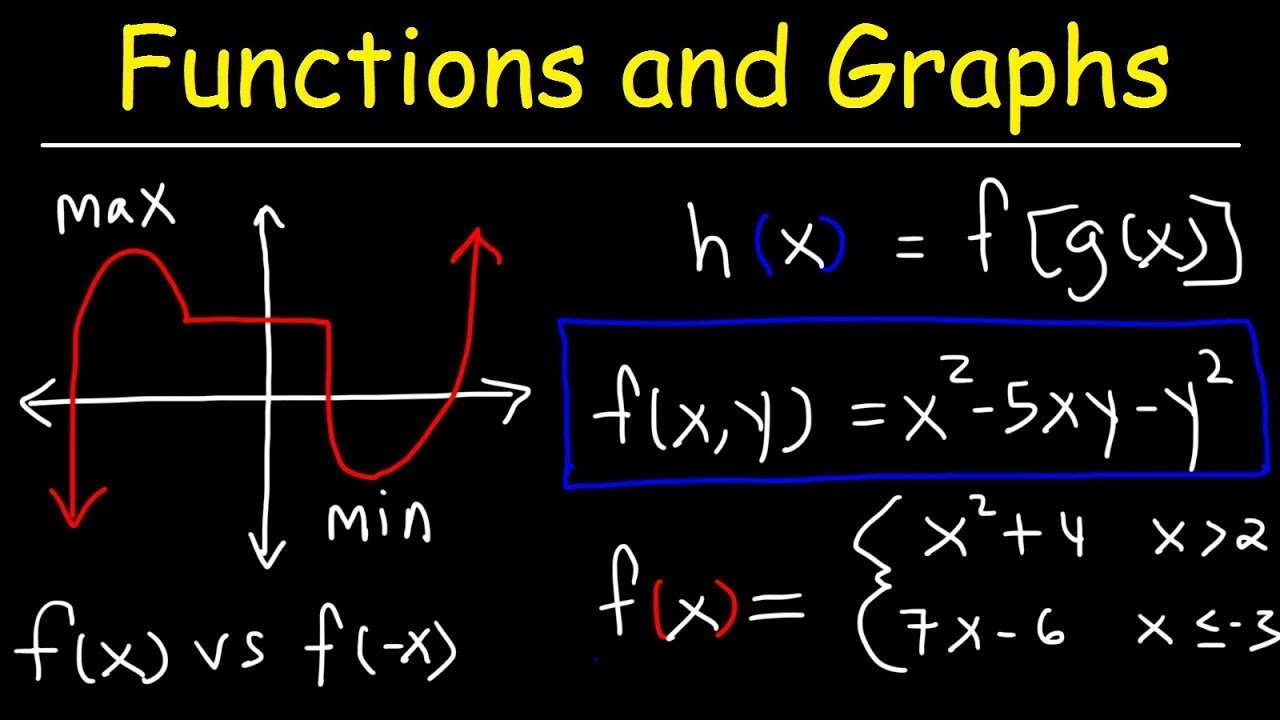
This precalculus provides a basic introduction into functions and graphs. It contains plenty of examples and multiple choice practice problems.
Full 51 Minute Video: https://www.youtube.com/watch?v=ZTEv8OnGaxo
Membership Program: https://www.youtube.com/channel/UCEWpbFLzoYGPfuWUMFPSaoA/join
___________________________________________...
try this
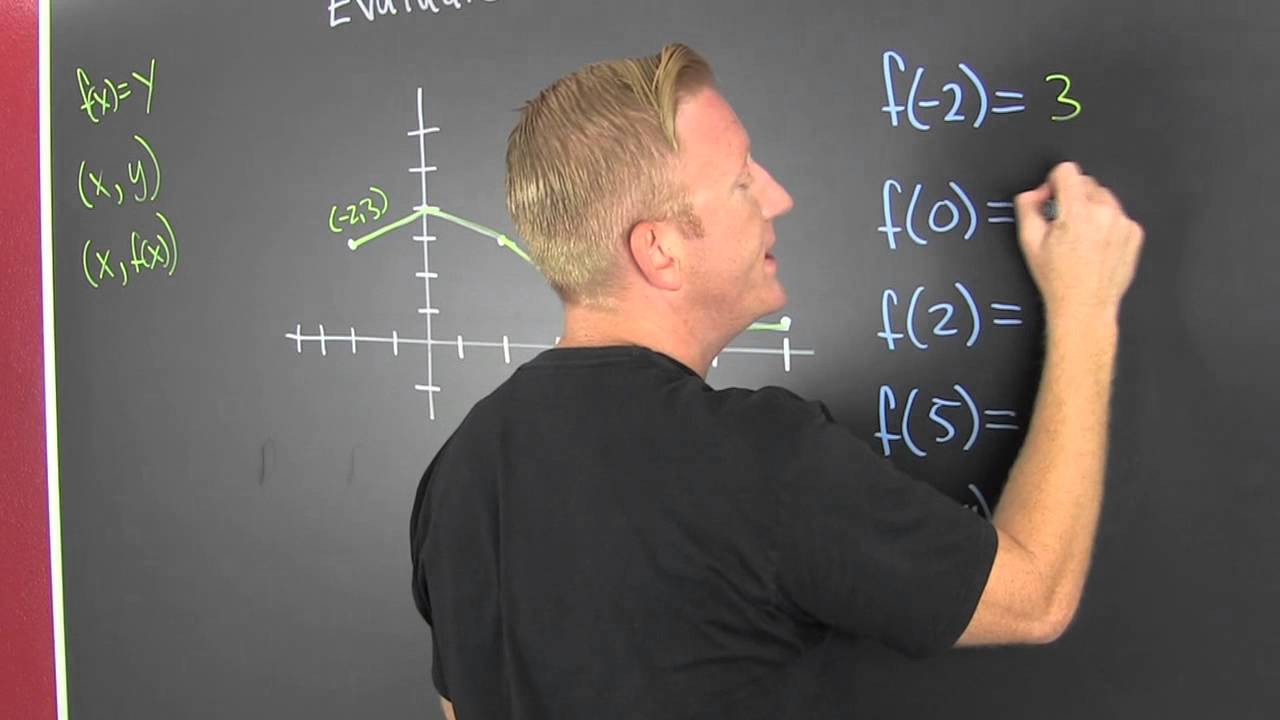
These videos are part of the 30 day video challenge. This vid is a how to for a tough topic, evaluating a function form a graph. here we go through several examples with function notation and describe what it means to evaluate a function from its picture.
For more math shorts go to www.MathByFives.com
this might also be good

 proven void
find x and y intercepts basically mean find when x = 0 when y = 0, imo