#precalculus
1 messages · Page 13 of 1
 wraith sequoia
 viscid thistle
u might if ur dad is rich
 slow coral
it's good to aspire
viscid thistle
or u are super talented
wraith sequoia
viscid thistle
or u are super talented
Idk about that, people who are 13 or less don't know differentiation ideally
slow coral
chain rule i'd imagine
wraith sequoia
idts
viscid thistle
wraith sequoia
Idk about that, people who are 13 or less don't know differentiation ideally
hat I am get a double digit rank in jee advanced to even get accepted in mit
plus u need to bring in olympic medals
 grave swallow
slow coral
chain rule i'd imagine
grave swallow
slow coral
chain rule i'd imagine
i think it is
wraith sequoia
viscid thistle
hat I am get a double digit rank in jee advanced to even get accepted in mit
You got a double digit rank in jee advanced?
slow coral
you use chain rule when you're differentiating composite functions
wraith sequoia
viscid thistle
plus u need to bring in olympic medals
I have more than double my age
medals
slow coral
if you're trying to differentiate gf(x) then you'd set u to f(x) and y to g(u)
wraith sequoia
oh
I hope I become a single digit ranker
how much does one need for iit bombay computer science?
double digit
Because I'm a tech nerd, math nerd, science nerd, so, I love Computer Science
yeah
grave swallow
slow coral
if you're trying to differentiate gf(x) then you'd set u to f(x) and y to g(u)
do u listen deftones?
ur bio
wraith sequoia
wraith sequoia
idk much about that
I don't even believe I'm getting in MIT
if I ever even going to
Nope, accredited institutions only
slow coral
grave swallow
do u listen deftones?
ya
wraith sequoia
you need US citizenship well
slow coral
probably one of my favourite bands ngl
wraith sequoia
you know why
grave swallow
slow coral
probably one of my favourite bands ngl
listened few of them before
 forest fern
can someone give me a precalc prob, im going to ap precalc next yr and i wanna see what its like
 marble leaf
forest fern
can someone give me a precalc prob, im going to ap precalc next yr and i wanna s...
marble leaf
forest fern
can someone give me a precalc prob, im going to ap precalc next yr and i wanna s...
Why not just search up problems?
forest fern
i did but i dont know which is beginning and which is harder
ok ty
is that rsm
lmao
13c3
so 13211
13x2x11
286
is it 286
@viscid thistle
hmm
is it a permutation..?
its um
286*6
so
1716
i think idk
lol ty
ty
ruh roh
is that ap?
damn it
im about to be a freshman
ty lol
alr gimme all the rsm
teamwork makes the dreamwork fr
idk
send me some
yes
like 5-10 problems
ill help u
mhm
ill try to do them
in dms
fr
viscid thistle
anyone know types of cardinals?
forest fern
viscid thistle
anyone know types of cardinals?
as in the birds??
viscid thistle
forest fern
what is that 😭
a true infinity that cannot be reached
forest fern
viscid thistle
a true infinity that cannot be reached
alright
viscid thistle
its useful for power scaling
forest fern
yes dawg ill do like 5 problems 😭
viscid thistle
also do you guys know what set theory is?
forest fern
kinda
viscid thistle
Cool i joined this server to understand such things as that, i want to scale goku's cosmology using mathematics
yk who goku is right
yes
yessir
The living world in db countains all sets of mathematics, including set theory and cardinals
slow coral
sdbh zamasu 🤮
forest fern
 terse thicket
Is tangent the length of the hypotenuse on a triangle in a unit circle
 flint bloom
it’s the ratio of the height of the triangle to the length of the triangle
 granite goblet
frfr
 old isle
think of its derivative
whats the derivative of e^x?
and for e^(x/2), we generally apply u-sub to x/2 and it follows from there
 spice yoke
can somebody help me solve this partial derivative?

 shy vine
this is just a regular derivative
to see this $z' = 2\sin(x+2) = 2\sin(z+2)$ or $\pdv{z'}{z} = \pdv{z'}{x}$
 obsidian monolithBOT
ForJoke
 grave swallow
derivative of a function is e^x. if we define the unknown function as c^x we can conclude that (c^x) * ln(c) = e^x. (ln(e) = 1) hence the unknown function is e^x it self.
spice yoke
shy vine
this is just a regular derivative
right, wait a sec
spice yoke
shy vine
this is just a regular derivative
ok what about now
can somebody help me solve this partial derivative?
 shy vine
technically this is 0
because 2sin(6) is a constant
and the derivative with respect to a number doesn't really make sense
unless you are saying that 2 is a symbol and not a number
spice yoke
shy vine
because 2sin(6) is a constant
ah, who cares about technicallity, how would I solve this algebreically, also 2* 4 is 8
shy vine
Are you trying to find the derivative at 4?
spice yoke
no that would be zero you brought up a good point tho
shy vine
derivative at 4 is not 0
slow coral
grave swallow
vice versa
that would be reverse chain rule
integration by substitution is like doing the chain rule but worse in every way
because you have to restate the integral in terms of u
and its sometimes extremely vague how you should do that
spice yoke
shy vine
derivative at 4 is not 0
thats not what I meant but its whatever
shy vine
sorry Im confused of what your question is
spice yoke
no its allright I have also formulated it wrong and mixed things up, but I finally understood my problem and managed to get a better grip on it
 olive tapir
hey, how can I get help for precalculus?
 willow bear
by posting the question(s) you need help with
spice yoke
Yo is this correct what I have done here?

 glad jetty
looks good
spice yoke
nice
spice yoke
idk, but I would have loved to study in sweden they appereantly have great education system
marble leaf
The math SAT is not too difficult. It is a standardized test that is designed to be balanced regarding the general population, so don't mistake it for the hardest math problems. That said, I do feel like the average US math curriculum for grades 1 to 12 is mediocre compared to math systems in certain other countries, although colleges are a different story.
There are many top colleges in the US, so completing a graduate course in the US is a decent option.
It depends what college tho
marble leaf
forest fern
math SAT is hella easy
Yes, but I didn't want to say that because it doesn't hold for everyone. That's why I said "not too difficult".
marble leaf
forest fern
its j alg 1
Algebra 1 is sort of the introduction into higher-level math, so it isn't supposed to be very hard. I would say the difficulty begins with integration, but it's different for everyone.
forest fern
difficulty is trig imo
marble leaf
I haven't taken integration yet but I've heard that a lot of people struggle with it.
marble leaf
forest fern
difficulty is trig imo
I didn't struggle with trig but math is a strong subject for me.
So I can see how it could be difficult to wrap your head around.
forest fern
should i take multivariable?
marble leaf
forest fern
should i take multivariable?
Idk, what grade are you in and what's the highest level of math you've taken so far?
forest fern
marble leaf
Idk, what grade are you in and what's the highest level of math you've taken so ...
im boutta be a freshman going into ap precalc
wbu
marble leaf
forest fern
im boutta be a freshman going into ap precalc
Then you could take mv calc in 11th grade if things go well for you
Or even 10th
forest fern
marble leaf
Then you could take mv calc in 11th grade if things go well for you
that would be too hard for me imo
marble leaf
forest fern
that would be too hard for me imo
Ya you decide ig
marble leaf
I'm about to finish 8th grade and I've completed everything up to alg 2. I haven't taken precalc yet but I have experience with limits, derivatives, and other calc topics so I think I'll be fine.
marble leaf
forest fern
dang u typing an essay
No I just was about to say something and then changed my mind lol
marble leaf
forest fern
lowkey thought you were a junior or something
Lol ya I talk like that
marble leaf
I think precalc will be quick for me so I might be able to unofficially take mv calc in 11th or 12th
marble leaf
forest fern
what are u takin next year
At school precalc
forest fern
marble leaf
I think precalc will be quick for me so I might be able to unofficially take mv ...
precal next yr?
forest fern
marble leaf
At school precalc
ap or normal
marble leaf
I might go for a math degree in college along with a cs degree or something
 stuck python
forest fern
that would be too hard for me imo
stuck python
forest fern
that would be too hard for me imo
I did it
a few kids in my school did it too, calculus in general is actually easier than algebra in many respects
at least calculus 1, assuming conceptual parts of math are not something you struggle with
Plus the added advantage of taking calculus as an AP course in highschool is you get a whole year to digest the concepts and be able to work with them, rather than in university where you are only given half a year (or less depending on how semesters go) so in a lot of respects you will actually learn it better
that is, assuming you are being taught just as well in both cases
highly recommend you do it if you aren't struggling right now in mathematics, if anything use this discord. I certainly wish I had something like this going through school
 oblique root
marble leaf
I think precalc will be quick for me so I might be able to unofficially take mv ...
oblique root
marble leaf
I think precalc will be quick for me so I might be able to unofficially take mv ...
Wdym unofficially
forest fern
oblique root
Wdym unofficially
i think he means hes not sure
forest fern
stuck python
I did it
multivariable in tenth grade??
forest fern
stuck python
Plus the added advantage of taking calculus as an AP course in highschool is you...
ye im taking 2 ap calcs
marble leaf
oblique root
Wdym unofficially
I meant that it's not counted by the school system when I skip levels after taking them outside of school, so in the school system I'm restricted to taking precalc next year.
Basically since the highest level of math I've taken in school is alg 2, I can't take calculus for example next year, I'm restricted to precalculus. Likewise, because I take one math course each year in school, even if I get to mv calculus early I still have to do the school prerequisites, which will take me 2 more years after precalc.
marble leaf
forest fern
i think he means hes not sure
That's not what I meant.
forest fern
marble leaf
That's not what I meant.
hes not sure as in youre not sure if youre allowed to take it
whos the owner of this server
stuck python
forest fern
multivariable in tenth grade??
no no no haha calc 1
but multivariable is very similar to calc 1
the generalizations are very natural
except maybe stoke's and green's theorem
marble leaf
stuck python
no no no haha calc 1
Ya calc 1 is totally doable in 10th, ik someone taking calc 1 in 8th.
marble leaf
stuck python
but multivariable is very similar to calc 1
What about calc 2? Is that also similar?
forest fern
marble leaf
Ya calc 1 is totally doable in 10th, ik someone taking calc 1 in 8th.
same
forest fern
marble leaf
What about calc 2? Is that also similar?
i take that junior
marble leaf
forest fern
i take that junior
I take it junior as well, at the current rate
 verbal garnet
It's the first half of calculus 2
 golden arrow
Can someone explain to me why if we take annual compount intrest with imaginary intrest rates the capital raises significantly after 8 years ie. We get spiral but if we have same intrest rate but we compound the intrest continiously (instead of annually) we get to a circle and dont make any profit in the end
marble leaf
Ya tbh idk if it's actually difficult or not but people have told me it is
verbal garnet
golden arrow
Can someone explain to me why if we take annual compount intrest with imaginary ...
Euler's method (for approximating solutions to differential equations) gets increasingly accurate as you decrease the unit step
slow coral
<@&268886789983436800>
verbal garnet
Mods are asleep I guess
slow coral

verbal garnet
They were
marble leaf
verbal garnet
Mods are asleep I guess
I mean they're still human, right?
verbal garnet
Of course.
I don't blame them for anything
 hushed sphinx
Sheesh, 3 minutes response time. Off with our heads!
verbal garnet
More like 20 to me
 warped ridge
Actually moderation is great here compared to some other servers I'm in. Let's appreciate it
verbal garnet
Yeah overall it's great
warped ridge
I mean, I'm in a server with like, what, 50k members? And moderation is zero tbh.
hushed sphinx
The modping shows at :43 for me, logs clock the ban and cleanup at :46.
warped ridge
Well uh mods have a life too.
They aren't living just to moderate the server
So pretty much understandable even if it takes more than that.
slow coral
warped ridge
They aren't living just to moderate the server
they should be grown in vats to moderate
warped ridge
slow coral
they should be grown in vats to moderate
strongly disagree.
slow coral
warped ridge
strongly disagree.
you'd be able to bioengineer them to be the perfect moderator
 elder marten
equation of circle: (x-a)^2 + (y-b)^2 = r^2
where the centre is (a,b) and the radius is r
marble leaf
slow coral
they should be grown in vats to moderate
Haha that might actually work!
verbal garnet
verbal garnet
More like 20 to me
This was regarding my ping 20 min earlier in #competition-math btw
 gloomy tide
is it always necessary to check the solution of radical equation ?
 summer ruin
it is when you make non-equivalent transformations, yes
gloomy tide
@summer ruin what do u mean by non-equivalent transformation?
summer ruin
applying functions which are not monotone
ln(x) > ln(y) if and only if x > y, provided x and y are positive numbers, meaning given the inequality x > y it is equivalent to stating ln(x) > ln(y), so it stating ln(x) > ln(y) implies that x > y
x > -5 and x^2 > 25 are not equivalent
same thing work for equations, the equation ln(x^2) = 1 and 2 * ln(x) = 1 are not equivalent because ln(x^2) is defined for all non-zero x, while 2 * ln(x) is defined only for positive x
the equation sqrt(x) = 5 - x is not equivalent to x = (5-x)^2
 lunar copper
hi
i finished 10th rn
and i wanted to revise precal in summer
is there a certain way in which i should approach the topics under it
for example matrices first, and then idk
viscid thistle
lunar copper
is there a certain way in which i should approach the topics under it
have you studies functions?
lunar copper
yes
lunar copper
what does full include
viscid thistle
then you may study matrices but it doesn't come under pre calc
viscid thistle
lunar copper
what does full include
well there's a lot
till where have u studies?
basic graphs and all?
lunar copper
quadratic equations represented on graphs
finding roots
vertex form
and all that stuff
lunar copper
not sin, cos and tan graphs
though
our school didnt teach us trig function graphs
viscid thistle
yeah
lunar copper
isnt that easy though
viscid thistle
but there's more than that
lunar copper
oh
viscid thistle
there are many properties
lunar copper
organic chemistry maybe
 cursive cairn
<@&268886789983436800>
 near flume
Does anyone know where I can find a better explanation of the tangent and cotangents of sums section here? https://en.m.wikipedia.org/wiki/List_of_trigonometric_identities#Tangents_and_cotangents_of_sums

In trigonometry, trigonometric identities are equalities that involve trigonometric functions and are true for every value of the occurring variables for which both sides of the equality are defined. Geometrically, these are identities involving certain functions of one or more angles. They are distinct from triangle identities, which are identi...
I'm looking for a source that gives a proof
 soft cedar
umm...
i think you shoukd try ck12.org
i think youll find good info there under the precalc section and analytic trig
hope this helps
 near flume
I'm looking for a source that gives a proof
near flume
near flume
I'm looking for a source that gives a proof
<@&286206848099549185>
 serene dock
near flume
Does anyone know where I can find a better explanation of the tangent and cotang...
serene dock
near flume
Does anyone know where I can find a better explanation of the tangent and cotang...
black pen red pen
near flume
soft cedar
i think you shoukd try ck12.org
Do they have a section on angle sum identities when the sum is arbitrary and potentially infinite?
near flume
serene dock
black pen red pen
For the identities tan(sum_i=1^n)=(e1-e3+e5...)/(e0-e2+e4...)
?
A lot of the resources I find on this are aimed at just basic trig identities - I'm looking for something that covers the more the more complicated formulas I've referenced which use more advanced math
I can't really ask in the advanced channels since they don't have a channel for trig
serene dock
advanced identities?
near flume
serene dock
advanced identities?
In the general angle sum section
There's a formula for sin angle sum involving infinite products
The ones for tangent and cotangent use elementary symmetric polynomials, etc.
But I didn't find any source explaining it online other than wikipedia
 hollow garnet
how do i do the volume of a curve around an axis out of the curve?
 minor lodge

 stiff tapir
hollow garnet
how do i do the volume of a curve around an axis out of the curve?
stiff tapir
hollow garnet
how do i do the volume of a curve around an axis out of the curve?
Depends on shape dawg. That could mean anything. Look into Paul’s notes. It’ll tell u how to do it and the difference between volumes of revolution (methods of disks, etc) as well as volumes described by multiple integrals
hollow garnet
stiff tapir
Depends on shape dawg. That could mean anything. Look into Paul’s notes. It’ll t...
I'll see into it thanks
 pale marlin
Why does lim x->infinity n choose x = k for some constant k plot an ellipse on the complex plane?
hushed sphinx
The phrasings "lim x -> infinity" and "for some constant x" don't look like they belong in the same thought.
stiff tapir
Lmao
lunar copper
i should be familiar with radian conversions before starting inverse trigonometry right
gloomy tide
are there any study group here
summer ruin
lunar copper
i should be familiar with radian conversions before starting inverse trigonometr...
ideally switch to radians completely
lunar copper
summer ruin
ideally switch to radians completely
ah
so just practice radian conversions then
do you have any conversion practice worksheets
summer ruin
there's nothing to practice though, π = 180°, rest of the angles can be obtained by division
summer ruin
if the question involves angles which are not part of the standard trig table then the question isn't supposed to be solved analytically in the first place
and calculator doesn't really care which angle you use - in radians or degrees, as long as you use it correctly
so only the angles pi/6, pi/4, pi/2, pi and so on matter
 summer crag
Why is a invertible function and it's inverse always symmetric about the line y = x , also can we make a reflection of a function about the generalized y = mx+c line , and does it have like some general condition to exist (just like how the inverse of a function exist iff fof⁻¹ = I and f⁻¹of = I (this condtition is for reflection about the line y=x )) ?
stiff tapir
lunar copper
i should be familiar with radian conversions before starting inverse trigonometr...
you cant really solve any problem if you dont know how either radians or degrees converts to coordinates
lunar copper
summer ruin
if the question involves angles which are not part of the standard trig table th...
standard trig table?
ive never heard of that 😢
summer ruin
 lunar copper
what the...
i really need a baseline from where i should start learning
someone told me to do inverse trig before doing differentiation and i needed radians before inverse trig
now im dying
 wanton vector
summer crag
Why is a invertible function and it's inverse always symmetric about the line y ...
wanton vector
summer crag
Why is a invertible function and it's inverse always symmetric about the line y ...
It is symmetric on the line y=x because the property of an inverse function is that for any output y it gives back the original value x wich is basically like swapping y and x axes. About the second question im not sure
wanton vector
lunar copper
i really need a baseline from where i should start learning
Depending on how much time you have (i.e. are you writing a test in a week or do you learn it just for fun and have years). If you dont have much time just start with differentiation and when you encounter some problems look them up and learn those. If you have alot of time or find yourself lost/missing alot of basics check if you can comfortably do the following:
- linear and quadratic functions, solving equations, Pythagorean Theorem, Quadratic Formula, polynomials in general etc.
- Trigonometric functions like cos(x),sin(x),tan(x) as well as exponentional functions etc.
- you might as well do the inverse functions too like log(x), arccos(x) etc.
You dont necessarily need radians for those but it makes everything easier. - Limits. Limits are commonly used to define differentiation and are thus useful if you want to understand whats going on.
lunar copper
wanton vector
Depending on how much time you have (i.e. are you writing a test in a week or do...
i just finished 10th and im in vacations
for like 2 months
wanton vector
From the four point i mentioned, at what point are you currently?
wanton vector
wanton vector
From the four point i mentioned, at what point are you currently?
@lunar copper
lunar copper
wanton vector
From the four point i mentioned, at what point are you currently?
i would say
im done with the second one
but i have to strengthen them
and also
i havent done any polynomials
only problems with a degree of 2
wanton vector
degree of 2 are also polynomials, polynomial is just the general term
lunar copper
i see
wanton vector
But if you study them a bit you will soon realise that if you understand linear and quadratic functions you will also soon understand any polynomial (the only thing that really changes alot is how hard it is to find the zeros of the function)
lunar copper
quadatics is easy
you can just
complete the middle term
or use formula
i saw one of those fun polynomial videos where factorizing increases with difficulty based on the degree
and from 2 to 3looked like a huge jump
ive done logs but i havent really completely done exponential problems
ive only learnt substituting x values to find y values for exponential functions
wanton vector
For quadratics you have the quadratic formula, wich is pretty simple. For degree 3 and 4 there also exists a formula, although never taught/used in school because it is too long. Any polynomial above degree 4 doesnt have a general solution only using addition, subtraction, multiplication, division and roots
wanton vector
@lunar copper you should probably either do exponentials, polynomials or, if you want to, start with limits and the concept of differentiation and seing whats missing like that. Introductory Videos about limits etc. often stick to simple functions that you already know so you should be able to follow those. Also that approach is more fun in my oppinion.
lunar copper
wanton vector
<@517676531825508362> you should probably either do exponentials, polynomials or...
sorry i fell asleep
ok i'll just revise exponential and polynomials
also should i learn factorizing a cubic equation
wanton vector
No. In case you need to do that just find one zero of the function through trial and error and factor it out to get a quadratic.
 rigid flax
i hate factorising cubics
you have to try one by one
But idk how those scientist calculate cubic when the answer is disgusting
 hollow summit
They use advance methods like newton rampson etc
slow coral
hollow summit
They use advance methods like newton rampson etc
i wouldnt call newton-raphson advanced by any means
and even then it wont get you the exact algebraic factorised form
 gritty dirge
rigid flax
But idk how those scientist calculate cubic when the answer is disgusting
gritty dirge
rigid flax
But idk how those scientist calculate cubic when the answer is disgusting
insert cubic formula
slow coral
rigid flax
can i learn it on youtube
yes easily
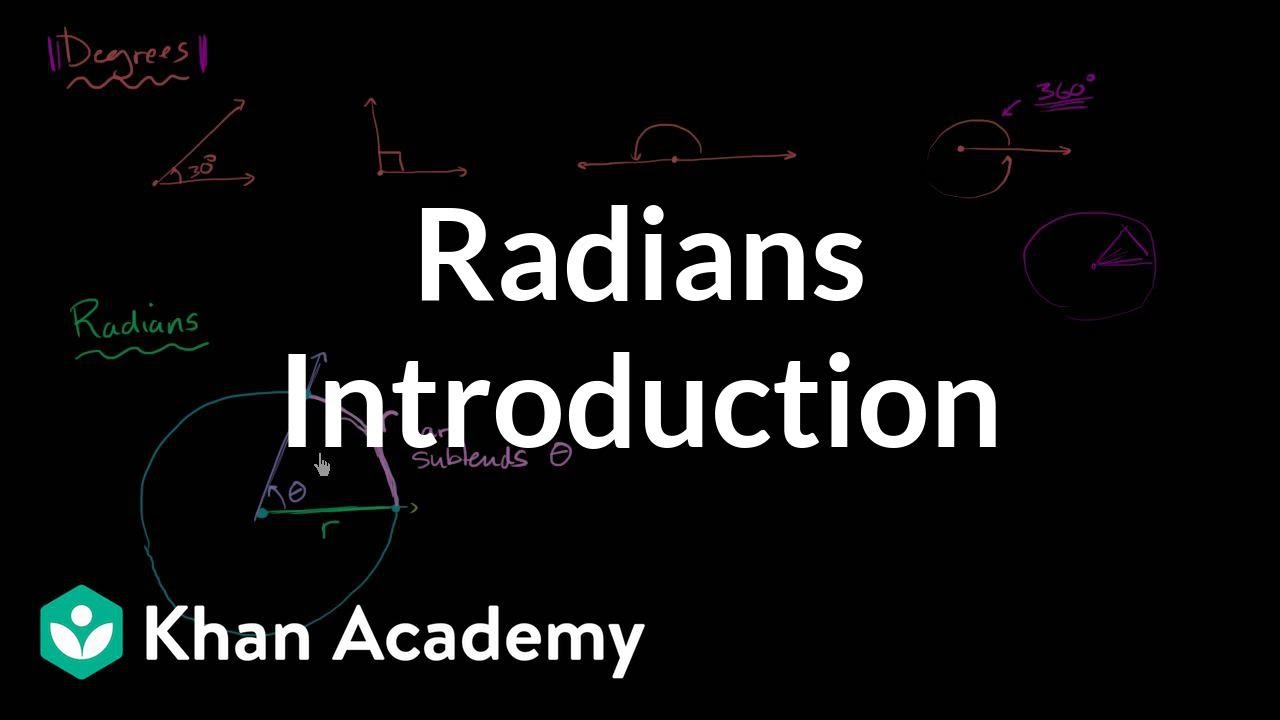
Understanding the definition and motivation for radians and the relationship between radians and degrees
Practice this lesson yourself on KhanAcademy.org right now:
https://www.khanacademy.org/math/trigonometry/unit-circle-trig-func/radians_tutorial/e/radians-on-the-unit-circle?utm_source=YT&utm_medium=Desc&utm_campaign=Trigonometry
Watch the...
oh you might've meant cubic formula
then maybe not
not because its particularly advanced just because it's very lengthy and a bit messy
and it's generally easier to just factorise at hs level
 hollow elbow
how to synthetic division when dividing by polynomial degree greater than 1
oblique root
like dividing by a quadratic for ex
 gray magnet
hollow elbow
how to synthetic division when dividing by polynomial degree greater than 1
gray magnet
hollow elbow
how to synthetic division when dividing by polynomial degree greater than 1
can't you just do the same thing
wait i don't think that works
what if you factorise it then divide by it's factors
also why have i never heard of synthetic division
 sleek dome
Pls help I don't understand stand integration
hollow elbow
gray magnet
what if you factorise it then divide by it's factors
yeah thats what I tried but In not sure where to go from when I end up with some extra remainer part (1/x-7 for example)
stiff tapir
sleek dome
Pls help I don't understand stand integration
Area under curve
 stark quest
why is an inverse function its reflection about y=x?
 stark quest
slow coral
then maybe not
stark quest
slow coral
then maybe not
I think Grant Sanderson goes through it on the way to the quintic : https://www.youtube.com/watch?v=aaW30_f2on0&t=5135s&ab_channel=TimothyNguyen i also prefer his approach of merging completing the square and s&p over the quadratic formula

Grant Sanderson is a mathematician who is the author of the YouTube channel “3Blue1Brown”, viewed by millions for its beautiful blend of visual animation and mathematical pedagogy. His channel covers a wide range of mathematical topics, which to name a few include calculus, quaternions, epidemic modeling, and artificial neural networks. Grant re...
stiff tapir
stark quest
why is an inverse function its reflection about y=x?
Given a function y=f(x). x associates an x vaule with an corresponding y vaule which is determined by the rule of the function. An inverse function of y=f(x) “undoes” this rule. Such that f^-1(f(x)) =x. The reason it reflects across the x=y access is because you are essentially changing the dependent into the independent
 dense verge
Any tips for linear algebra? specifically proving a basis of R³
hushed sphinx
You'll probably want the #linear-algebra channel. (But be a bit more specific about what you need to do when you ask there).
gray magnet
It’s derivatives
gray magnet
hollow elbow
yeah thats what I tried but In not sure where to go from when I end up with some...
Synthetic long division is weird
Just use long division
gray magnet
It’s parts of calculus so I think you should ask somewhere else

What is an "instantaneous rate of change" when change happens across time?
Help fund future projects: https://www.patreon.com/3blue1brown
This video was supported in part by Art of Problem Solving: https://aops.com/3blue1brown
An equally valuable form of support is to simply share some of the videos.
Special thanks to these supporters: http://3b...
This is a good video though
 unique sundial
Guys Im in 8th and I just started learning calculus. Any tips or video guides to help me?
gray magnet
unique sundial
Guys Im in 8th and I just started learning calculus. Any tips or video guides to...

YouTube
A free course offering the core concept of Calculus, with a visuals-first approach aimed at making you feel like you could have discovered the subject yourself.
i like dis
dis a good
unique sundial
is it for beginners
gray magnet
the derivative a the fuction
gray magnet
unique sundial
is it for beginners
yeee
unique sundial
thanks!!!
gray magnet
gray magnet
the derivative a the fuction
or like the gradient of the line that is tangent at that point if that makes sense
 coarse slate
Hello?
 dreamy escarp
hello, does anyone know any precalculus concepts that are much easier or faster if they were to be done with calculus
hollow elbow
gray magnet
Synthetic long division is weird
even if i would never use it, I'm curious how?
gray magnet
hollow elbow
even if i would never use it, I'm curious how?
i don't even know how it works
 pastel fossil
Can anyone explain why my book says that the function f(x)=3(-1/2(x-1))^2+2 has a horizontal stretch of 2?
if K=-1/2 wouldn't it just be the value of k?
There is no explanation, it just is a 2 for some reason and I am not sure why.
gray magnet
dreamy escarp
hello, does anyone know any precalculus concepts that are much easier or faster ...
well the whole point of precalculus is to get ready for calculus so i don't think there is any
shy vine
triangle inequality
since PF1F2 is a triangle, the sum of any two sides must be less than the 3rd side
shy vine
distance between P and F1
this notation is more often used for a "metric"
although metrics are analogous to distances
the "standard" metric is the distance we are all familiar with
 barren tulip
dense verge
Any tips for linear algebra? specifically proving a basis of R³
barren tulip
dense verge
Any tips for linear algebra? specifically proving a basis of R³
read LADR
in short, to prove a basis of R^3, you must prove it spans R^3, and that it is linearly independnt
Bascially: Prove some $x \in \mathbb{R}^3$ is in the span of the potential basis, and vice versa, and also that it is linearly independent, or that there is only one linear combination of the potential basi that equals the 0 vector.
obsidian monolithBOT
amukh1
 barren tulip
:D ah wrong channel shoot sorry
shy vine
barren tulip
read LADR
nah friedburg better as an intro
barren tulip
shy vine
nah friedburg better as an intro
I wouldn’t know, I only have ladr
viscid thistle
anyone know a good alg2 midterm practice final
I currently have an 89.2% in the class and I need to ace this last test to end with an A
 lime oasis
anyone know any videos or books that explain calculus to someone whos never done it before
shy vine
what part are you looking for?
 elfin girder
quick q does sinx-cosx have a specific value or..
 dull current
Hi how would you solve this?

 burnt hare
is anyone interested in checking my work for my midterm prep packet? it’s 9 pages lol just as much as you would want to do
summer ruin
<@&268886789983436800>
burnt hare
sure yea hollup i’ll dm u
burnt hare
sorry i forgot😭😭
gimme literally one second


Yea so as much as your willing to check
and i have several days till i need to hand the thing in too so whatevs
burnt hare
oh it’s all good homie thanks for trying
anyone else that wants to look at my work feel free to tell me the numbers i got wrong
 patent prism

 formal fox
burnt hare
formal fox
burnt hare
third page!!
check your qudratic equation
i think it should be 9+16 under the radical
formal fox
burnt hare
fourth page top a) check the range. it’s a parabola so it won’t be what you put
formal fox
burnt hare
fifth image -> check your solution to the top right problem. specifically the orignal function’s domain and range
formal fox
burnt hare
fifth image again at the very bottom. make sure you remember the formula is:
f(x)=a(x-h)^2 +k
you seem to have made the 7 into a -7 by using the logic for inside the parenthesis. remember -> this one follows the “true” sign, not the opposite sign
also - you switched you domain and range here.
alright i’m stopping at the seventh page. hope this helped
burnt hare
formal fox
alright i’m stopping at the seventh page. hope this helped
thanks homie
 red prism
What does this mean can anybody explain in a simpler language
 hushed sphinx
,rccw
obsidian monolithBOT
 summer ruin
absolute maximum/minimum value is unique, but points at which it is achieved are not unique
hushed sphinx
"Essential" in the last sentence is a rather strange word choice.
And it seems confusing that is speaks about "maximum and minimum values" in the first sentence and "absolute maximum or absolute minimum values" in the second -- but I can't imagine any distinction it's trying to make between those two phrasings.
shy vine
I guess they mean local max/min vs global max/min
hushed sphinx
Yeah, but that can't be it because local max/min are definitely not unique.
shy vine
Yeah idk what the difference is then
summer ruin
<@&268886789983436800>
hushed sphinx
(Wonderful, autodelete is glitching again).
stiff tapir
Why is this the channel where moderators are always pinned
 uncut mulch
observer bias
 grave forge

viscid thistle
Guys change the first letter of "Sigma" to L what you get?
uncut mulch
a <@&268886789983436800> ping
viscid thistle
uncut mulch
a <@&268886789983436800> ping
?
 smoky delta
This isn't the channel for that snexky
viscid thistle
smoky delta
This isn't the channel for that snexky
Ok sorry apologies
 warm patio
might be a little dumb but im doing logarithims and since they are inverses of an exponential function im thinking
a^x = y
set a = 3
x = 2
y = 9
3^2 = 9
since logarithims are inverses we flip x and y but then we get 3^9 = 2??
and even if we solve for y i still end up getting
y = loga(x) or 9 = log3(2)
 brazen scaffold
warm patio
might be a little dumb but im doing logarithims and since they are inverses of a...
brazen scaffold
warm patio
might be a little dumb but im doing logarithims and since they are inverses of a...
so 3^2 = 9 yeah
logarithm is the inverse of exponential
warm patio
since 2 is x and 9 is y we flip them when finding inverse right
brazen scaffold
logarithm is just like saying
base to the what equals this number inside
so log 3(9) would be saying
3 to the what equals 9
so what is the answer?
warm patio
2
warm patio
wouldnt the format be x = loga(y) then?
brazen scaffold
does that make sense yeah?
brazen scaffold
warm patio
wouldnt the format be x = loga(y) then?
what is x, a and y?
warm patio
im on stewarts precalc textbook and its giving me
y = loga(x) which is where my confusion is stemming from
brazen scaffold
ah maybe you misread the things?
 warm patio
yep
brazen scaffold
to find x you need to do log a on both sides
log a (a^x) = log a (y)
log a (a^x) = x
x = log a (y)
nani???
what is going on here?
warm patio
Yeah im like
brazen scaffold
maybe it is i making the mistake somewhere?
warm patio
It looks correct
warm patio
ill just stick with x = log a (y)
really confused as to why they have it reversed though
brazen scaffold
wait hold on
x = log a (y)
so log a (y) means that a to the what = y
to the what is x
so a^x = y
we already said that tho
yeah no they seem slightly off
warm patio
Any ideas?
brazen scaffold
?
warm patio
warm patio
ill just stick with x = log a (y)
like any ideas on how they got it or do i stick with this^
brazen scaffold
aight let me write it down real quick
brazen scaffold
warm patio
even on professor leonard
they got this wrong then
 fiery dirge
i can
stiff tapir
viscid thistle
Guys can someone explain complex numbers on my dms
It’s too complex 🫤
viscid thistle
stiff tapir
It’s too complex 🫤
Even if it's too complex I like complex situations in maps
Maths
 topaz wraith
warm patio
like any ideas on how they got it or do i stick with this^
topaz wraith
warm patio
like any ideas on how they got it or do i stick with this^
the inverse of a^x is loga(x) because loga(a^x) = x
(definition of inverse fuctions) if that's your question
but the original function and the inverse "swap" their domain and range, so if inverse of f is g: Df = Rg and Rf = Dg
obsidian monolithBOT
Nevemlaci
Compile Error! Click the  reaction for more information.
(You may edit your message to recompile.)

Nevemlaci
 topaz wraith
@warm patio
viscid thistle
obsidian monolith
**Nevemlaci**
Compile Error! Click the <:errors:504266556054962196> reaction for...
Give me the integral general rule
stiff tapir
viscid thistle
Even if it's too complex I like complex situations in maps
I was doing a play on words
viscid thistle
stiff tapir
I was doing a play on words <:opencry:586078614865444865>
Lol your tricky
@Mode
<@&268886789983436800>
Finnaly he got banned
 indigo halo
Does anyone know a good pre-calc (e)book?
 west rune
How do I set up the equation for alk?

 misty plover
for alk i guess u have to use 24000=8000*(1.17)^x
then x*12 to get the number of years when the city of Alk's population get triples
which also means that city of Bems population doubles in every (x*12) years
lunar copper
hi i just started learning about derivatives and came across this function in the "essence of calculus" series

the video said that he gave this function to the computer to look at many times between 0 and 10, and compute the distance function given "s(t)+dt", minus the value of this function t"
i didn't necessarily understand what he meant in this phase of the video
What is an "instantaneous rate of change" when change happens across time?
Help fund future projects: https://www.patreon.com/3blue1brown
This video was supported in part by Art of Problem Solving: https://aops.com/3blue1brown
An equally valuable form of support is to simply share some of the videos.
Special thanks to these supporters: http://3b...
this was the video at 6:30 if anyone is curious
summer ruin
he said compute s(t+dt) - s(t) for every point t and fixed dt
lunar copper
summer ruin
he said compute s(t+dt) - s(t) for every point t and fixed dt
s(t+dt) - s(t) is the function for the distance time graph?
summer ruin
he later adds he divided the difference by dt
lunar copper
all the possible values you can input into a function to get a real number output
lunar copper
summer ruin
he later adds he divided the difference by dt
so s(t+dt) - s(t) /dt is the function for the distance time graph in the video?
summer ruin
sure, but it's a function of dt
lunar copper
wha..
dt is an infinitely small change in time right
how can it have a function
im sorry if i sound dumb i dont really like functions
summer ruin
because the set of all values of t is already predetermined, its' some segment [a;b]
summer ruin
summer ruin
he said compute s(t+dt) - s(t) for every point t and fixed dt
.
if you change dt the graph that you see will change
summer ruin
lunar copper
dt is an infinitely small change in time right
it's finitely small, he says he chose dt to be 0.01
 stiff nebula
Does anyone know if this working out is correct for this question?
If not, can you please write a step by step working so I can better understand?


 dark scarab
@stiff nebula There are somethings that are not clear, for example when you take the u substitution (correct step), the t^2 dt is transformed into du so you don't need the t^2. Also recall that coefficients can be moved outside of the integral sign
 dire aspen
Is this really precalculus 
 oak path
In Precalc, never seen that
 rose rover
LOL this is spesh level
oak path
?
rose rover
specialist math is a math subject for the australian curriculum
oak path
Oh
rose rover
i have this formula on my formula sheet
dire aspen
oak path
In Precalc, never seen that
Because it’s not precalc lol
It’s calc 2
Dk why they’re asking in precalc channel tho
summer ruin
all you have to do is compute product AB and solve a couple of equations
that's the point
why not just write general B
b_11, b_12, ...
maybe you should be open minded and actually try my suggestion
a matrix B with entries b_11, b_12 and so on
summer ruin
the rest is just solving 4 equations for entries of B
hushed sphinx
(This belongs in #linear-algebra, by the way).
gray magnet
lunar copper
s(t+dt) - s(t) is the function for the distance time graph?
it would be the derivative of the distance time graph
 rose rover
gray magnet
YOOOOOO FELLOW AUSSIE
rose rover
gray magnet
YOOOOOO FELLOW AUSSIE
heh
 short saddle
Given x^2>=4/m^2, find the minimum value of x
gray magnet
dire aspen
Dk why they’re asking in precalc channel tho
Where is the calc channel

 autumn wadi
Is there any name for this "theorem"? I also don't rlly understand what it's saying

 zinc fulcrum
autumn wadi
Is there any name for this "theorem"? I also don't rlly understand what it's say...
zinc fulcrum
autumn wadi
Is there any name for this "theorem"? I also don't rlly understand what it's say...
this theorem has an analogue in differential equations and when sources “use it” they sometimes say they “used the method of undetermined coefficients” although i’ve never heard it named as a theorem in differential equations or difference equations
 languid schooner
Not sure if there is a name for your theorem.
You may think about it like this; Someone long time ago have done different problems in same shape tons of time and they already know what the solution looks like. Then they will propose that that form of solution they have come up is a "general solution".
When it comes to proving what they have is THE general solution, mathematicians often like to apply some existence-and-uniqueness-theorem to justify themselves, but that’s another story.
Applying method of undetermined coefficients means, you have the table of "general solution to common particular problems" in your mind already, what you need is just the accompanied coefficients to complete your solution.
One more classical example is partial fraction. You know how the decomposition will go already. The only thing left is solving for the unknown constants A,B,C,…


 dapper estuary

Is that correct because my calculator gives me another answer

Or am I solving it wrong
uncut mulch
they made a typo, they wrote cos but they used to correct ratio in their calculations
you shouldn't have followed what they've written
dapper estuary
uncut mulch
they made a typo, they wrote cos but they used to correct ratio in their calcula...
what's correct ratio?
uncut mulch
consider the position of x and the 100m side relative to your angle
relative to the given angle,
is x the opposite, adjacent or hypotenuse
dapper estuary
opposite
uncut mulch
relative to the given angle,
is the 100m side the opposite, adjacent or hypotenuse
dapper estuary
adjacent
uncut mulch
yes,
dapper estuary
oh
uncut mulch
hence what's the trig function that relates those three things,
sin, cos or tan
 kindred sluice
Can someone confirm if I did this correctly?

 hushed sphinx
Right, there doesn't immediately seem to be anything that indicates the scale of the diagram.
 desert socket
hushed sphinx
Right, there doesn't immediately seem to be anything that indicates the scale of...
desert socket
hushed sphinx
Right, there doesn't immediately seem to be anything that indicates the scale of...
yea figures. I was stuck and the prior examples provided at least 2 pieces of info.
ty
hushed sphinx
www.parliament.uk says:
The clock dials, framed in cast iron and glazed with 312 separate pieces of opal glass, are 7m in diameter
desert socket
4.2m long
The minute hands are made of copper sheet 4.2m long. They weigh 100kg, including counterweights, and travel a distance equalling 190 kilometres (120 miles) a year.
the 4.2 translates to about 13.75 feet which i guess i shouldve then rounded to 14
but thats not specified.
the rounding at least
hushed sphinx
Yes, but I think those 4.2 m must include the counterweight part sticking out behind the rotation axis.
desert socket
gotcha.
The clock's gun metal hour hands and copper minute hands are 8.75 feet (2.7 m) and 14 feet (4.3 m) long respectively.
googling feet provides exact length
shouldve just googled it first time since they used a real world example
thanks
hushed sphinx
The numbers are internally consistent between 7m and 190 km:
$ calc 190000/365.2425/24/4
    ~5.41877428466475469494
$ calc 7*3.1415/4
    5.497625
$
 dusky lark
if i am solving for a missing quantity such as the angle sector given theta and the radius, should i convert the the theta value to radians if they gave it to me in degrees?
 granite stream
I am having a block regarding a question in my homework, here is the equation: e^(2x) - e^x - 132 = 0. I am quite confused as I have tried a few different ways of solving but its just not coming to me, any help would be appreciated. Does anyone have any suggestions on how to go about solving this?
Oh wait this may be the wrong channel, my bad
 mellow kindle
granite stream
I am having a block regarding a question in my homework, here is the equation: e...
mellow kindle
granite stream
I am having a block regarding a question in my homework, here is the equation: e...
Take x = e^x
So your equation of
e^2x - e^x - 132 becomes
x^2 - x - 132 = 0
Solve the quadratic
x1 = 12, x2 = -11
e^x = 12
ln(12) = x = 2.485
We ignore x2 because you can't have a negative result to a logarithmic question
granite stream
Thank you so much for the response. I was able to figure it out on my own but thank you again!
mellow kindle
Oh nice good job
dusky lark
how do I find the exact value of the expression sin45 + cos30
mellow kindle
dusky lark
how do I find the exact value of the expression sin45 + cos30

Or use your calculator if your school allows you
dusky lark
how do I find cot (-pi/6) using reference angles
gray magnet
dusky lark
how do I find cot (-pi/6) using reference angles
I am assuming it it in radians
 solar olive
dusky lark
how do I find cot (-pi/6) using reference angles
solar olive
dusky lark
how do I find cot (-pi/6) using reference angles
cot(-pi/6) = cos(-pi/6)/sin(-pi/6) = -cos(pi/6)/sin(pi/6) = (-sqrt(3)/2)/(1/2)= -sqrt(3)
cos(-x) = cos(x) and sin(-x) = -sin(x)
because cos is an even function
and sin is an odd function
 tame flame
Hey! This may be the wrong chat but I don't know where to ask, I just got a new calculator and when trying it out I found that it says √2 = √2. How do I fix it?
tame flame
Fixed it
solar olive
yeah u prob accidentally put sqrt(2) and pressed ok
🤷
my casio calc doesnt look like that tho so idk
autumn wadi
so, how do I rigorously prove that:
- if I substitute a limit's value into the function I'm taking a limit of, if the numerator of the function is nonzero and the denominator is 0, then the limit doesn't exist
- If I did the same, but now both numerator and denominators are 0, then the limit may be exist
?
summer ruin
it seems like you want to prove something else than what you're saying there
"if i substitute a limit value... ...then the limit doesn't exist", but first part already assumes it exists?
autumn wadi
Ah right.
Hm...
How do I show that the limit won't exist unless I can factorise the numerator with a common multiple (which will show that it is a "removable discontinuity") tho? am I speaking sense here?
 vapid plaza
autumn wadi
How do I *show* that the limit won't exist unless I can factorise the numerator ...
vapid plaza
autumn wadi
How do I *show* that the limit won't exist unless I can factorise the numerator ...
Are you talking about rational expressions only?
Because you cant just “factor out” a zero from an arbitrary function
 graceful heart
Hello, I want to learn Calculus Can anyone help me?
 tender questBOT
graceful heart
Hello, I want to learn Calculus Can anyone help me?
tender questBOT
graceful heart
Hello, I want to learn Calculus Can anyone help me?
Please read #❓how-to-get-help
 warped cipher
graceful heart
Hello, I want to learn Calculus Can anyone help me?
warped cipher
graceful heart
Hello, I want to learn Calculus Can anyone help me?
Like resources?
mellow kindle
graceful heart
Hello, I want to learn Calculus Can anyone help me?
Pre calc or calc
 pure pelican
Pls explain L'Hospital's rule with example .
 lime bison
Ok guys so my friend is doing this double angle problem and I wanna know how the third solution isn't 7pi/6 (could possibly be 11pi/6) but why would quad 3 not be included?
 graceful heart
mellow kindle
Pre calc or calc
graceful heart
mellow kindle
Pre calc or calc
pre
graceful heart
warped cipher
Like resources?
no just generally like formulas
viscid thistle
lime bison
Ok guys so my friend is doing this double angle problem and I wanna know how the...
are the solutions given by sin(theta) = 1/2 or sin(theta)= -1?
lime bison
viscid thistle
are the solutions given by **sin(theta) = 1/2** or **sin(theta)= -1**?
Yep I figured it out, I tried to do it the precalc way which I got stuck on but I used u-substitution and got -1 as a given solution hence I got 3pi/2 for my third measurement
 untold spindle
<@&268886789983436800>
lime oasis
anyone know any precal video for beginners??
lime oasis
?
 turbid oxide

I am confused on part b. Here is my work and the solution from the back of the book


hm actually they say to express the real part
and jcos3t isnt real so my answer is correct
 rich elbow
When given sin2(x-pi)
what is the horizontal shift of the function
is it pi to the right? or 2pi to the right
 old kindle
how hard is precalc?
willow bear
depends on how adept you are w/ algebra, by a long shot
 royal gust
Im so tired of mathematicians putting calculus in everything

Wait
This is pre calculus channel
What have I been doing if not calculus
gritty dirge
royal gust
Im so tired of mathematicians putting calculus in everything
well, sorry to break it to you bud, a lot of math is calculus based. Even basic stuff like area of a circle to the value of pi came from calculus.
motion formulae are in that list
 gritty dirge
but please dont hate calculus. its a wonderfully useful tool with many real applications
royal gust
I always get integration and differentiation mixed up
gritty dirge
royal gust
I always get integration and differentiation mixed up
think of integration as just adding up a bunch of area of rectangles under the curve, with each rectangle being of infinitesimal(infinitely small) width, so you're "integrating" area together. differenciation is just the opposite
gritty dirge
royal gust
I was talking about equations
ok...
gritty dirge
a level
ok that is year 11
in total
a levels are a high school program of 2 years
royal gust
Year 1 of a level maths?
gritty dirge
anyways, calculus is a huge component of math in the a levels
gritty dirge
you're gonna need to get comfortable with it
gritty dirge
royal gust
I thought it was only 2 modules
yea but they're big modules
royal gust
 skip
skip
gritty dirge
and you also have differential equations
 lapis bramble
just leaned logarithms!!!!! calculus here I come

 wanton matrix
yay
autumn wadi
whaddabout your trig 
stiff nebula
What do you guys learn in precalculus?
uncut mulch
algebra, functions, polynomials
exponents, logs
 shadow summit
Can someone help me with this problem? I know that A^2 creates an identity matrix but I can't figure out the second part, "find another matrix (not I) with the same property."
 summer ruin
just use a number analogy
if (a)^2 = 1, then what else could be squared to output 1?
 austere zodiac
shadow summit
Can someone help me with this problem? I know that A^2 creates an identity matri...
austere zodiac
shadow summit
Can someone help me with this problem? I know that A^2 creates an identity matri...
 austere zodiac
austere zodiac
austere zodiac
A and A^-1 its the same
shadow summit
austere zodiac
A and A^-1 its the same
yeah i figured that out already, but i cant seem to form a general rule to create another matrix with the same property.
summer ruin
the exercise doesn't ask for that
shadow summit
how else am i supposed to find another matrix with the same property then?
austere zodiac
shadow summit
yeah i figured that out already, but i cant seem to form a general rule to creat...
A^-1=(Aadj)t/|A|
try this property
summer ruin
summer ruin
if (a)^2 = 1, then what else could be squared to output 1?
I suggested you one path
if you can't think of anything then trial and error is another completely valid way
and it doesn't even have to be of the same dimension, the question just asks for a matrix with property A^2 = I
austere zodiac
 shadow summit
summer ruin
and it doesn't even have to be of the same dimension, the question just asks for...
shadow summit
summer ruin
and it doesn't even have to be of the same dimension, the question just asks for...
i think thats just the question being worded poorly, my teacher doesnt find this textbook very good but its the one mandated by the school
summer ruin
no I think you're just overthinking it
shadow summit
austere zodiac
what does the "Adj(A^t)" mean?
summer ruin
a lot of basic LA exercises are really just trial and error and that's normal, it tests how well you understand the basic relationships and how well you can construct the desired result if needed

 summer ruin
if (a)^2 = 1, then what else could be squared to output 1?
summer ruin
summer ruin
if (a)^2 = 1, then what else could be squared to output 1?
like if you just consider this equation for some variable "a" that outputs 1 when squared, then you can fairly easily guess what other variable will square to 1
(not necessarily -1 or 1, this is an abstract equation)
austere zodiac
austere zodiac
A=A^-1=This
shadow summit
when i was trying to find a general rule for the problem i was able to get it nearly correct but the diagonal numbers weren't 1
austere zodiac
This will be the property
summer ruin
general rule for matrices with this property is certainly not going to involve actual computation of A^2, it's deeper than that
and it's very likely to be far more than what's being asked
shadow summit
ok
austere zodiac
sorry if i dont helped you
shadow summit
its fine
austere zodiac
its hard to explain especially if I am not talking native language
shadow summit
austere zodiac
its hard to explain especially if I am not talking native language
whats your native language?
austere zodiac
shadow summit
whats your native language?
Spanish
shadow summit
thought so, your username gave off spanish vibes
austere zodiac
shadow summit
thought so, your username gave off spanish vibes
its from a song
short saddle
show me again
 lucid trench
shadow summit
what does the "Adj(A^t)" mean?
lucid trench
shadow summit
what does the "Adj(A^t)" mean?
the adjugate of transposed matrix A
 plucky oak
im struggling with precalc tests even though i can do the practice and hw, any advice
uncut mulch
take a few past papers under test conditions to try identify the cause
 winter shuttle
how do i find real solutions to (4^x+2)(2-x)-6=0? (0,0.5 and 1 are easy to guess and they are the only solutions from the graph of it)
 forest canopy
It's easier to guess them and then prove that they are the only ones, rather than trying to solve directly
f(x) = (4^x+2)(2-x)-6 is continuous, so you know when f(x) = 0 by checking where the sign changes (intermediate value theorem)
You already know that 0, 0.5 and 1 are such number, so you only need to know that it doesn't change sign before 0, between 0 and 0.5, between 0.5 and 1 and after 1
winter shuttle
yeah i was trying to do exactly that, to show there are no more solutions..but trying to show, say, that it is always negative between 0 and 0.5 seems difficult
forest canopy
You can look at the derivative of the function to know when the function is increasing or decreasing, it would then be easy to check what it's inferior to on some intervals
 lament oyster
 opal tree
winter shuttle
how do i find real solutions to (4^x+2)(2-x)-6=0? (0,0.5 and 1 are easy to guess...
opal tree
winter shuttle
how do i find real solutions to (4^x+2)(2-x)-6=0? (0,0.5 and 1 are easy to guess...
If you really wanna suffer, you can learn about Newton's method or Lambert W
 white widget
Does anyone have a summary of infinite and trigonometric limits?
dusky lark
how do i find the coordinates i should use when graphing y=6sin(2/3x) -3
white widget
dusky lark
how do i find the coordinates i should use when graphing y=6sin(2/3x) -3
first you need to know which interval you want to represent
white widget
dusky lark
and the amplitude/ vertical shift for the y axis?
having the sine function written, just quote values to build a graph the way you want, as long as the maximum value of y is 1 or -1
 leaden ocean
Can someone help me, how will I know. How much each point on the x-axis is when graphing transformations of sinusoid functions
 stiff tapir
plucky oak
im struggling with precalc tests even though i can do the practice and hw, any a...
stiff tapir
plucky oak
im struggling with precalc tests even though i can do the practice and hw, any a...
Likely break under pressure
stiff tapir
leaden ocean
Can someone help me, how will I know. How much each point on the x-axis is when ...
If two ticks is pi/3 then 1 tick must be pi/6
 forest nacelle
can i please get help w log functions
we have to try and create a graph from locator points n the equation
is there a certain equation we use to do this
 storm schooner
y=log(x)

 dense mango
ok and
 vital cairn
plucky oak
im struggling with precalc tests even though i can do the practice and hw, any a...
vital cairn
plucky oak
im struggling with precalc tests even though i can do the practice and hw, any a...
Study for 10 mins or so an hour before the test
 ripe meteor
Hello I need help with part b. I thought the answer was 19 but I got it wrong. Could someone look at my work for part b and tell me what I did wrong?


This is pre-calc compound interest formula. Nevermind I got the answer I just needed to add 19 to year 1995.
untold spindle
<@&268886789983436800>
rigid flax
 willow bear
evaluate f(2) first
 gusty fulcrum
how?
viscid thistle
💀
rigid flax
are there enough info?
solar olive
gusty fulcrum
evalute f(2)
from the graph, f(2) = -2
now do g(f(2))
= g(-2)
ffrom the graph, its 1
 tardy glen
hello guys
i am trying to solve this

and i just discovered the u substitution

but i still can t figure it out
summer ruin
u substitution isn't going to help you here
summer ruin
no
vapid plaza
The standard approach for even powers of sine or cosine is to keep using trig identities to reduce the exponent
Maybe consider using
2cos^2(x) = 1 + cos 2x
solar olive
cos(x)^4 = 3/8 + 1/2 cos(2x) + 1/8 cos(4x)
 solar olive
dont be too pedantic smh 🙄
autumn wadi
Either u use reduction formulae or product to sum
solar olive
alternatively, turn it into taylor series, integrate per term and leaev it as that
/s
shy vine
or just do the physicist approach by and say cosx = 1
(turns out its not a bad approximation)
 tardy glen
ok guys the job is done thanks you
tardy glen
vapid plaza
Maybe consider using
2cos^2(x) = 1 + cos 2x
this helped a lot
( i am maybe in the wrong channel sry i am new and i don t have acces to the calculus channel )
shy vine
I think you need the undergrad tag, idk specifically tho
tardy glen
solar olive
cos(x)^4 = 3/8 + 1/2 cos(2x) + 1/8 cos(4x)
this work well too
shy vine
shy vine
I think you need the undergrad tag, idk specifically tho
(actually i dont even have  )
)
shy vine
I only have 1 role lmao
autumn wadi
active
 polar tulip
does anyone know how to find the inverse?

 solemn lantern
first u would do y=sqrt (x^2-1) then you would do x = sqrt (y^2-1) and then you would solve for y and that is ur inverse function
ripe meteor
When you do the inverse write y as f^-1(x) =
solemn lantern
yup at the end make sure you do that
ripe meteor
At the end
solemn lantern
i think that just means the x values have to be equal or greater than 1 cuz if its like 0 which is less than then the square root wouldnt be a real number
polar tulip
does making the function inverse do anything to that though?
opal tree
f(x) fails the horizontal line test if the domain was R. The x>= 1 domain restriction makes sure that it suffices the horizontal line test and that f(x) is truly invertible
The range of f(x) will become the domain of f^-1 (x)
polar tulip
ohh ok got it thank you!
polar tulip
anyone know how this graph would look like? and how to find values of c?
 willow bear
polar tulip
anyone know how this graph would look like? and how to find values of c?
willow bear
polar tulip
anyone know how this graph would look like? and how to find values of c?
do you still need help with this?
if yes:
are you able to graph y = x^2, y = 5.6-0.8x, and y=5 individually?
polar tulip
willow bear
if yes:
are you able to graph y = x^2, y = 5.6-0.8x, and y=5 individually?
yea, i just dont know how to find the limits
willow bear
well sketch the graph first
take the portion of y=x^2 that lies left of the line x=2
and the portion of y=5.6-0.8x that lies between 2 and 7
and the portion of y=5 that lies right of x=7
 glossy carbon
correct.
 hot roost

Khan Academy
The Precalculus course covers complex numbers; composite functions; trigonometric functions; vectors; matrices; conic sections; and probability and combinatorics. It also has two optional units on series and limits and continuity. Khan Academy's Precalculus course is built to deliver a comprehensive, illuminating, engaging, and Common Core align...
Would just doing this be enough for Calc AB?
 thorn creek
it should be adequate prep for enrolling in calc AB
willow bear
 the question never came
thorn creek
it was lost in translation
summer ruin
<@&268886789983436800>
ripe meteor
If the focus is (0,-2) and the vertex is (0,0) then the equation of the parabola should be x^2 = -4ay, correct? Since the vertex is (0,0) and the focus is (0,-a) I thought it would have been x^2 = 8y because x^2 =-4(-2)y but it's marked incorrect by the program.
Any ideas?
 stark shuttle
ripe meteor
If the focus is (0,-2) and the vertex is (0,0) then the equation of the parabol...
stark shuttle
ripe meteor
If the focus is (0,-2) and the vertex is (0,0) then the equation of the parabol...
since the foci is below the vertex, then i think it will be:
x^2=-8y
because the parabola is facing downwards
stark shuttle
you're welcome 🙂
 ruby sapphire

opal tree
 opal vault
multiply out the denominator
opal vault
multiply out the denominator
Fractions get annoying
 thorny heart
Recently entered grade 10. i wanna know wether i should start studying this
how do i remove the he him tag? seems kinda cringe
uncut mulch
#Channels and roles at the very top
thorny heart
thx
gusty fulcrum
thorny heart
Recently entered grade 10. i wanna know wether i should start studying this
If u wanna do apcalc by senior year i’d do that but some schools don’t require to go up to the ap calc level. So just study it if ur major relies on it, like for example nursing doesnt need precalc so you’d study stats, but like lets say engineering, you’d def wanna take the calc route
thorny heart
gusty fulcrum
If u wanna do apcalc by senior year i’d do that but some schools don’t require t...
thx for the info. any thing else to study for someone who wants to do chemistry?
gusty fulcrum
thorny heart
thx for the info. any thing else to study for someone who wants to do chemistry?
I’m not rly sure at the top of my head, i’d say do research on your own but definitely calculus for chemistry, and probably statistics too.
thorny heart
gusty fulcrum
I’m not rly sure at the top of my head, i’d say do research on your own but defi...
alr
untold spindle
<@&268886789983436800>
 timber spindle
What exactly about geometry do i need to know or would i be fine if i skipped geometry and went straight into algebra 2?
ripe meteor
I'm currently taking pre-calculus in college. We are currently going over Conic sections. We already went over piecewise functions, complex zeros, properties of rational functions, polynomial and rational inequalities, exponential and logarithmic equations.
thorny heart
ripe meteor
I'm currently taking pre-calculus in college. We are currently going over Conic ...
i use brilliant and it starts with conic sections
ripe meteor
Nice! If you have any recommendations for resources then feel free to share because im self learning.
thorn creek
college board, always looking for a way to soak more money out of students
someone is paying college board the fees for when you take an AP class
if it's not you, it's your school district
or whatever other entity funds your school
my kids' high school pays the fees for AP students i think, but i'm not 100% on this tbh
of course
but the universal is that College Board expects to be paid
solemn lantern
ripe meteor
I'm currently taking pre-calculus in college. We are currently going over Conic ...
i also took precalc at a college and this is basically what we also did
for me it was mostly a repeat of algebra 2 but a little bit harder and some more work
shouldnt be too hard
solemn lantern
timber spindle
What exactly about geometry do i need to know or would i be fine if i skipped ge...
for me i did algebra 2 and then geoemtry and we didnt really need to know much geometry for algebra 2 and i did fine in the class without knowing geometry
ripe meteor
solemn lantern
for me it was mostly a repeat of algebra 2 but a little bit harder and some more...
That's great! I'm glad you had a good foundation of algebra. I had good teachers in the past but I also had awful teachers that I wouldn't go to ask for help and so I became an autodidact in certain subjects.

Me
timber spindle
solemn lantern
for me i did algebra 2 and then geoemtry and we didnt really need to know much g...
In your opinion, do you think I should just go over triangles then go on to trigonometry?
opal vault
timber spindle
In your opinion, do you think I should just go over triangles then go on to trig...
i mean ofc
geometry is triangles
thats like 90 percent of it
opal tree
What about them specifically
 astral bronze
A conic( cone shaped) are two intersecting cones using the formula for volume of a cone in 3 dimensions you can isolate specific slices
It poses an interesting question like when an circle becomes an ellipse becomes a quadratic which is useful in hyperbolic trigonometry, relativity, and many others
opal vault
conics
so bad
they are a bunch of memorization ngl atleast for me
with the exception of parabolas and circles ig
ripe meteor
I think conics are interesting. Let me talk about the ellipse.
If the foci are near the vertices the ellipse is more of an oval shape however if the foci is closer to the center its more of a circular shape. Some ellipses are more oval than others. Planets orbits are an ellipse shape. The Eccentricity of an ellipse describes the ovalness or the roundness of an ellipse. It measures the ovalness.
The sun is considered a foci
The planet orbit with more eccentricity is mercury.
If eccentricity is near zero then the ellipse is more circular but if its closer to 1 then its more oval.
ripe meteor
opal vault
conics
I don't think it's about memorization. It's more about understanding. Math is the language of the universe.
There are vertical and horizontal ellipses each with their equation that is reversed.
thorn creek
the sun isn't just "considered" a focus (foci is the plural, and so "a foci" is agrammatical), it is at one of the foci, that's a basic consequence of orbital mechanics
ripe meteor
thorn creek
the sun isn't just "considered" a focus (foci is the plural, and so "a foci" is ...
sorry I meant to say is one of the foci
vertices is plural of vertex I get it
thorn creek
actually the sun orbits the center of mass the same as the planet, but because the sun is wildlyl more massive its orbit is very tiny
an eccentricity of 1 describes a parabolic orbit
and greater than 1 a hyperbolic orbit
some comets have orbits with eccentricity 1 or greater
they will make one pass and then depart forever
ripe meteor
Google- The eccentricity of an ellipse is always less than one. The closer the eccentricity is to zero, the more circular the ellipse. The closer the eccentricity is to one, the more elongated the ellipse. Eccentricity e= c/a
thorn creek
yes, and an eccentricity of one describes a parabola
ripe meteor
Oh I didn't know that I learn something new everyday
Im now learning about conics
Current unit
ripe meteor
thorn creek
the sun isn't just "considered" a focus (foci is the plural, and so "a foci" is ...
Thank you for the correction! Sun is at one of the foci, not that it is considered a focus. I understand now.
ripe meteor
thorn creek
some comets have orbits with eccentricity 1 or greater
Are saying that some comets orbits hyperbolic meaning you only see it once and passes? That's pretty sad that people only get to see it once. Are there elliptical comets? I google search and it says that comets are highly elliptical. So, is the majority have elliptic orbits?