#precalculus
1 messages · Page 12 of 1
 sour ore
 viscid thistle
is this the best way to fill this out?

 proven siren
viscid thistle
is this the best way to fill this out?
proven siren
viscid thistle
is this the best way to fill this out?
...
do you mean "can you check all my homework"
answer is no
viscid thistle
proven siren
do you mean "can you check all my homework"
yeah pretty much 👻
viscid thistle
proven siren
answer is no
to my question or yours?
 hybrid spoke
damm integration and differentiation is soo ez
 autumn wadi
hybrid spoke
damm integration and differentiation is soo ez
autumn wadi
hybrid spoke
damm integration and differentiation is soo ez
- Wrong channel
- Differentiation I suppose integration not really
now solve for the gamma function at 0.5 using its integral definition
 mental talon

 soft cedar
wait im confused, is deffrentiation part of ur guys' precalc
cuz this turned into the clalc chat
calc
calc channel
autumn wadi
No lmao
 gentle kettle
hybrid spoke
damm integration and differentiation is soo ez
gentle kettle
hybrid spoke
damm integration and differentiation is soo ez
u sure integration is easy?
 old isle
soft cedar
wait im confused, is deffrentiation part of ur guys' precalc
old isle
soft cedar
wait im confused, is deffrentiation part of ur guys' precalc
its called precalc for a reason 😭
gentle kettle
oh
old isle
and complex number stuff
old isle
yes
autumn wadi
gentle kettle
u sure integration is easy?
Just ignore them they probably trolling or smth, or they just know nothing abt what it actually is 
gentle kettle
autumn wadi
Just ignore them they probably trolling or smth, or they just know nothing abt w...
yeah probably
autumn wadi
gentle kettle
precalc is just an us thing right?
Not sure tbh, just a convention of classifying topics tbh
gentle kettle
i just wanted to write somrthinh
gentle kettle
autumn wadi
Not sure tbh, just a convention of classifying topics tbh
ah
autumn wadi
Lmao I keep on using tbh
old isle
its addictive tbh
 short saddle
Sidelines of an acute-angled triangle $T$ are colored in red, green, and blue. These lines were rotated about the circumcenter of $T$ clockwise by $120^\circ$ (we assume that the line has the same color after rotation). Prove that three points of pairs of lines of the same color are the vertices of a triangle which is congruent to $T$.
 obsidian monolithBOT
aSome1gussy
 proven siren
short saddle
Sidelines of an acute-angled triangle $T$ are colored in red, green, and blue. T...
proven siren
short saddle
Sidelines of an acute-angled triangle $T$ are colored in red, green, and blue. T...
do you just expect us to solve it for you?
viscid thistle
gentle kettle
u sure integration is easy?
its easy when you have a calculator
autumn wadi
viscid thistle
its easy when you have a calculator
... no
If you refer to an ordinary calculator, then idk what Yr on about. If yr talking abt wolfram, then Yr not even doing the integration
 outer stag
 autumn wadi
Rzn?
hybrid spoke
gentle kettle
u sure integration is easy?
yeah
autumn wadi
hybrid spoke
yeah
._.
please bring your trolling to another channel
and if you are being serious, just know that you probably barely scratched the surface of what lies behind all of integration.
 hot flame
i just wanna check
is this right

for part c: 7(6i -15j) - 4(-22i + 12j)
42i-35j - (88i-12j)
-46i - 47j
 violet kelp
the numbers on the integral sign mean the values you're integrating from
yes
$\int_a^bf(x)dx$ represents the area under the function $f(x)$ between the values $x = a$ and $x = b$
obsidian monolithBOT
blanket
 hot flame
how can i find the angle between two vectors?
violet kelp
hot flame
how can i find the angle between two vectors?
there's a specific formula for this
hot flame
oh there is?
violet kelp
yeah
Given two vectors $\vec u$ and $\vec v$, then the angle $\theta$ between $\vec u$ and $\vec v$ is defined to be
$$\cos\theta = \frac{\vec u \cdot \vec v}{|\vec u||\vec v|}$$
obsidian monolithBOT
blanket
 violet kelp
where the numerator is the dot product of the two vectors, and then || means the magnitude of the vectors
violet kelp
yep
hot flame
oh ok thxx
 solar olive
do note the calculation numerically is somewhat ill-conditioned near -1 and 1 for arccos
 wary ember

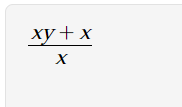
This can be rewritten as xy/x + x/x correct? And therefore the x on the left cancels and you're left with y+1? I'm simplifying trig equations and trying to make sure I'm doing this right
 frigid comet
wary ember
This can be rewritten as xy/x + x/x correct? And therefore the x on the left can...
frigid comet
wary ember
This can be rewritten as xy/x + x/x correct? And therefore the x on the left can...
yes thats correct
wary ember
Okay I thought so, thank you :> I have a ton of issues with complex fractions and simplification stuff so brain go brrr
frigid comet
yea i got you
 mossy sierra
i dont understand whats going on with the numerator😭 can someone help me find the notation for the sequence?
 obsidian monolithBOT
Ann

 willow bear
or was this something you wrote yourself
mossy sierra
sorry i shouldve cropped that out lol it was just me trying to solve it
 wise spoke
hey, can i distribute each e to a seperate ln? like we can with derivative or no?
 willow bear
ln(x+y) != ln(x)+ln(y)
obsidian monolithBOT
∫Inheritanc-e ♦
 obsidian monolithBOT
∫Inheritanc-e ♦
 wise spoke
the ln part
willow bear
well as it happens e^(2x) - 2e^x + 1 can be written as (e^x - 1)^2
for what purpose do you need all this tho
wise spoke
willow bear
well as it happens e^(2x) - 2e^x + 1 can be written as (e^x - 1)^2
ahhhh
yes it can
wise spoke
willow bear
for what purpose do you need all this tho
i was solving a question and it required me to simplify this $ln(e^{rx }\cdot (e^{2x} - 2x^{x} + 1 )$
obsidian monolithBOT
∫Inheritanc-e ♦
 willow bear
can you show the question in full
autumn wadi
exponential functions
tetration is also used to refer to smth like x^x^x... though I don't think it really fits your case
 carmine coral
the graph isnt anything like a exponential tho does it still classify under it?
 autumn wadi
carmine coral
the graph isnt anything like a exponential tho does it still classify under it?
autumn wadi
carmine coral
the graph isnt anything like a exponential tho does it still classify under it?
Well the exponential function is defined by this so I suppose so
 solar olive
yeah but the thing has x in the base and exponent so wouldn't it be morr appropriate to call it tetration
autumn wadi
well, fits the definition either way 
solar olive
exponential function is when the base is constant tho
autumn wadi
well I don't really see that from the what we call an exponential function from a glimpse in the wiki page. Could u perhaps provide a screenshot or smth? This function can be rewritten as $2e^{(x-1) \ln x}$, which kinda fits the definition here, so I don't quite see the issue tbh. Also, what's more important in mathematics is the implications of such a function, and not so much of the semantics.
obsidian monolithBOT
Kiameimon | Welt Rene
 autumn wadi
heck, just call it a function and you'd be right
viscid thistle
can someone help me w my homework plsss
 safe oak
What on gods green earth is the formula for the abomination that is what simplistic graphed
safe oak
mossy sierra
sorry i shouldve cropped that out lol it was just me trying to solve it
Take the differences of each numerator
1+2=3 , 3+4=7, 7+8…
2, 4, 8
2^n+1 for the nth term.
viscid thistle
Hey
viscid thistle
Hi
 modest whale
mossy sierra
i dont understand whats going on with the numerator😭 can someone help me find t...
modest whale
mossy sierra
i dont understand whats going on with the numerator😭 can someone help me find t...
2^n, 2^n+1 ...
for num
1: 2
2: 4
3: 8
4: 16
differences
viscid thistle
 stoic haven
Hey can someone help me with problem number 23

Here is what i did but the correct option is c. I know how to get that option but i cant understand where i went wrong

 tropic patrol
In feynmann’s technique, is it ok to say “differentiate with respect to the integral”?
 hushed sphinx
Neither of those words sound like they belong in PREcalculus.
 marble beacon
Someone can help me ?? :'))
proven siren
marble beacon
Someone can help me ?? :'))
 opal tree
tropic patrol
In feynmann’s technique, is it ok to say “differentiate with respect to the inte...
opal tree
tropic patrol
In feynmann’s technique, is it ok to say “differentiate with respect to the inte...
Uh
No
$\oint \int^2 + 2\int \hspace{2pt} \dd \int = \frac12 \int^3 + \int^2 + C$
obsidian monolithBOT
Umbraleviathan
 obsidian monolithBOT
Umbraleviathan
 opal tree
Or whatever your Feynman integration variable is
opal tree
obsidian monolith
**Umbraleviathan**
@undone sand I integrated with respect to the integral
 undone sand

 lone plover
Hey all; I have been working through solving rational equations; grunt work practice to kill some quiet time; and came across one question thats kinda made me think im missing something :P; I can work my way around it no worries; but used a math step solver app which provided a solution which has me scratching my head as to the how and why.....any chance someone can explain this one a little better?....(stby)

 wild badger
lone plover
Hey all; I have been working through solving rational equations; grunt work prac...
wild badger
lone plover
Hey all; I have been working through solving rational equations; grunt work prac...
i don't have much help to give sorry but i love your handwriting so much
right in between messy and very readable
idk it just looks great but carry on
lone plover
in the middle term of that equation the solver chucked in a -(2x-1) then canceled out the (2x-1) heaving the "-"; this i just cant get my head around. Obviously taking the (1-2x) and multiplying it by (-1) makes it the (1-2x) but....its got me stumped why its not a lcm of the whole equation. Enough to finally join a maths group and ask for help 🙂
lone plover
wild badger
idk it just looks great but carry on
haha; thanks, thats a messy page 🙂 it dosnt seem as much fun if its mesy. 🙂
Im sort of thinking that the (2x-1) is a factor for all; but that is a product of (-1)(1-2x) and the (2x-1) is sort of 'already including the -1'; and when in this middle term the -1 is pulled back out and left over during the canceling of the denominator? you will have to excuse my descriptions; hope that makes sense?

works out fine when you leave it; I guess im stuggling with; why isnt (-1) then just a part of the LCM and should be applied to all?
 floral ore
I'm having trouble with this question

When I solved it I got answers to be 1/9 and √3, but in the solutions the only correct answer is 1/9
I don't know how I'm supposed to get rid of √3 as a solution without substituting for x
 cursive holly
Just replace x with √3 in the equation and observe if the equality can be in real numbers
floral ore
floral ore
I don't know how I'm supposed to get rid of √3 as a solution without substitutin...
^
cursive holly
Oh, I didn't read the last part
floral ore
is there any other way that doesn't involve me wasting 2 minutes on every logarithmic equation
because if checking for x is the only way, then God help me
cursive holly
I think that's the only way to do it
You don't have to know if the entire equation can be in real numbers
For example, if you have:
$$√x - \frac{x - 2}{x^2\ln(x)} = a$$
obsidian monolithBOT
Rub05
 cursive holly
If, in that equation (imagine a is a number where the equation has a solution), x = -1, you don't need to waste time replacing x with -1. You can see that it's a √x there. That's enough to conclude that x = -1 is not a real solution
floral ore
yeah, I was thinking if we could apply something similar in my question
similarly x can't be 1 either
since that'd make ln(x) 0
cursive holly
Correct
floral ore
but I'm not sure what limitations I have for √3
without substituting √3 in place of x
cursive holly
If you don't have trouble with √3, then you did something wrong in the resolution
If you replace x with √3, the left side would be 2 instead of 0
floral ore
for a little more context, I solved it by assuming log_x 3 to be t
log 3 base x
and I squared both sides as well
so it probably did create an extraneous root
I ended up getting t = -1/2 and 2
cursive holly
floral ore
so it probably did create an extraneous root
That can be the reason
floral ore
but how do I detect the extraneous root is the problem
unless I'm meant to check the solutions of every equation I solve by squaring
floral ore
floral ore
I ended up getting t = -1/2 and 2
can we reject t = 2 here?
cursive holly
floral ore
unless I'm meant to check the solutions of every equation I solve by squaring
You need to do that
cursive holly
floral ore
can we reject t = 2 here?
Replace and observe if it's correct
floral ore
when I put in t = 2 I get √4 = -2
cursive holly
And that's wrong
floral ore
I guess this happened because I squared -t
cursive holly
Yep
floral ore
Welp
I guess I'll have to keep it in mind then
thanks for the help
This was my solution btw

 half night
lone plover
half night
lone plover
I don't know the answer but what pen do you use? lol
lone plover
😝 Pilot Evolt (2+1) and the mechanical pencil is a uni Kuru Toga

The two greatest pieces of engineering in human history 😝
lone plover
half night
I don't know the answer but what pen do you use? lol
I spent years looking for these, trying ever pen I could find/buy/steal knowing that out there somewhere was the perfect pen; made by centuries of samurai swordmaking bloodlines; untill the day I found them.....instantly I knew. 😝 (I would recommend)
half night
lone plover
I spent years looking for these, trying ever pen I could find/buy/steal knowing ...
Hahaha, thank you some much
I am looking to buy some stuff, all I got is a pencil now
lone plover
The Evolt is red black and a pencil. It's awesome. (In my opinion anyway). Refills are hard to find, you gotta get the origional Pilot ones. (Can be found on eBay)
 lost crane
How do I find the perpendicular of a vector? Given multiple choices.
willow bear
"the perpendicular of a vector" is not something you hear often
but if you're given some vector and a list of options and asked which one of them is perpendicular to your given vector,
then you can check them all one by one
do you know how to check if two vectors are perpendicular to each other, or do you need a refresher?
@lost crane
lost crane
willow bear
<@664675305050472448>
Oh I forgot I have already received help. Using the dot product to find the perpendicular of a vector. Thank you for the reply though!
 autumn snow
Anyone know how to explain what a segment is?
 summer crag
autumn snow
Anyone know how to explain what a segment is?
summer crag
autumn snow
Anyone know how to explain what a segment is?
do you mean "line segment" ?
 void matrix
 obsidian monolithBOT
r3g56

 bitter turtle
floral ore
This was my solution btw
bitter turtle
floral ore
This was my solution btw
While squaring both sides, should the interval of t change(idk)
 mortal tartan
obsidian monolith
**r3g56**
mortal tartan
obsidian monolith
**r3g56**
i am actually confused about this formula . I always used to know as in the attached picture
 obsidian monolithBOT
r3g56

 crystal girder
- A massa de substancia radioactiva em certa amostra é dada pela
fórmula:
( )
Com em anos e ( ) em miligramas.
1.1. Quantos miligramas havia no inicio da contagem do tempo?
1.2. Quantos miligramas restavam decorridos 10 anos, desde o início da
contagem do tempo? Apresenta o resultado com uma casa decimal.
half night
crystal girder
1. A massa de substancia radioactiva em certa amostra é dada pela
fórmula:
( )...
Qual é a formula?
 warped cipher
why you keep spamming this anyway?
 bitter compass

can someon explain how -2 is being approached from below for the right hand side?
it makes sense for the left hand side of the graph but isn't the right hand side approaching zero?
warped cipher
you're not?
 vapid plaza
bitter compass
vapid plaza
bitter compass
because of how h(x) behaves around x = 1; no matter x approaches 1 from the left or right, notice that h always approach 2 from the bottom; so if we put h(x) on the horizontal axis again then it is always approaching 2 from the left
 iron fern
hi, i need help understanding the sandwich theorem (limits)
proven siren
iron fern
hi, i need help understanding the sandwich theorem (limits)
google it first
iron fern
okay
crystal girder
half night
Qual é a formula?
 half night
Quantos mg?
mossy sierra
if n=0 in summation notation, do i plug 1 or zero into a1? basically does a1 mean i plug in 1 or does it mean the first term of the sequence (0)??
proven siren
mossy sierra
if n=0 in summation notation, do i plug 1 or zero into a1? basically does a1 mea...
Can you give more context
 half night
mossy sierra
ok take 49 and 53 as examples
half night
mossy sierra
ok take 49 and 53 as examples
your just gonna do 3(3:2)^0 + 3(3:2)^1 until 20
it's called sum so you basically replace the value as you would for a "x" but your adding with the previous value each time you do it
mossy sierra
yes but to find a1 would i plug in 0 since thats the first term?
half night
i'm not sure if your course demands a different kind of approach to this question, though
half night
mossy sierra
yes but to find a1 would i plug in 0 since thats the first term?
wydm by a1?
mossy sierra
so the equation to find the sum is Sn= n/2(a1+an) but i need to find a1 first which is the first term in the sequence. if the sequence starts at 0, do i plug 0 into the equation to find a1 or do i plug in 1? so sorry if this is confusing lol i am also confused
cause a1 means plugging 1 in as n but it also means the first term which, in the case of those 2 problems, is 0
vapid plaza
mossy sierra
so the equation to find the sum is Sn= n/2(a1+an) but i need to find a1 first wh...
Why would this even work? Isn’t that formula for arithmetic series but your screenshot is geometric series
mossy sierra
ok yeah it is geometric sorry but thats not what im asking cause my question would apply to both arithmetic and geometric
since the formula to find the sum of a finite geometric sequence is Sn= a1(1-r^n/1-r) i still need to find a1
vapid plaza
If your formula uses the “first term” just put in the “first term” in the series
mossy sierra
so it would be 0? since thats where the sequence starts in the sigma
vapid plaza
mossy sierra
so it would be 0? since thats where the sequence starts in the sigma
That’s not always the case
Number below the sigma isn’t always 0
mossy sierra
what
mossy sierra
proven siren
The first term is 300(1.06)^0=300
thats the equation to find the terms
proven siren
yes and
the first term, if n=0 is the start, is when n=0
ignore the a1
Just think about the first term
 still nymph
any tutors ?
mossy sierra
to find the sum i have to find a1
proven siren
but what is a1
Get your head out of thinking just about a1
It’s the first term
That’s what they mean
mossy sierra
my whole question is about a1
proven siren
sometimes the first term is when n = -2
mossy sierra
the first term can be anything
mossy sierra
im asking how to find the first term if n=0
proven siren
Which is not always the case
mossy sierra
yes but a1 means first term but it also means plugging 1 in an
proven siren
I’m explaining why that mindset is wrong
no it doesn’t
that definition is bad definition
You’re basing your understanding on something that is not generalised
mossy sierra
ok ill just talk to my teacher tomorrow
mossy sierra
so id plug in 0
 untold field
mossy sierra
ok take 49 and 53 as examples
untold field
mossy sierra
ok take 49 and 53 as examples
what are you trying to solve?
im rlly good at calculus
i can rlly do that in my head
 mint sapphire
is this just cause I didn’t draw fx line?
viscid thistle
The epsilon should have L+/L- and the delta should have a+/a-
I can demonstrate it
Give me a minute
mint sapphire
ight
 mint sapphire
do we show the greater delta
or do we use the smaller delta and replicate it both left and right
viscid thistle
mint sapphire
do we show the greater delta
It says to sketch the delta-epsilon definition of a limit, and the only thing wrong you had in your sketch is forgetting a and L.
If you cant read my handwriting I can try fixing it
 balmy gorge
Fun stuff
 balmy gorge
 grave forge
Ok actually trig is annoying
grave forge
Ok actually trig is annoying
Nah
It‘s easy
I completed that work in about 5-10 minutes
grave forge
No its ez, but like not enjoyable
crystal girder
half night
Quantos mg?

 deep cove
whats a good beginner friendly calculus book?
 slim dew
deep cove
whats a good beginner friendly calculus book?
slim dew
deep cove
whats a good beginner friendly calculus book?
Michael Spivak's Calculus is a good classic you could look into. Try #book-recommendations for more recommendations.
 steep mountain
grave forge
Ok actually trig is annoying
steep mountain
grave forge
Ok actually trig is annoying
belive me trig is easy
its calc thats tuff
autumn wadi
slim dew
Michael Spivak's Calculus is a good classic you could look into. Try <#716264872...
I wanted to recommend it too but I wouldn't say that it's "beginner friendly", if that is meant to mean "easy/gentle"
deep cove
autumn wadi
I wanted to recommend it too but I wouldn't say that it's "beginner friendly", i...
i did not necessarily mean easy, but it must cover like basics and should teach u from the beginning
deep cove
autumn wadi
What do u intend to learn calculus for? The computations or for the proofs?
for uni + programming related
autumn wadi
Ah.... ic. Not interested in axioms, proofs etc then?
deep cove
i guess so
autumn wadi
Then I'd recommend stewart's calculus instead. Spivak is more rigorous and provides an introduction to mathematical analysis
Which doesn't really suit your needs
deep cove
autumn wadi
Then I'd recommend stewart's calculus instead. Spivak is more rigorous and provi...
ill check it out ty
 indigo halo
balmy gorge
Fun stuff
indigo halo
balmy gorge
Fun stuff
Man i wish i understood that kind of math
grave forge
Wdym xd
Its high school math or middle school in some cases
U just gotta spend some time
summer crag
finding general solutions of trig eqns is more fun actually
you get to struggle more lol
summer crag
ohh, that's a pure math guy ^
grave forge
Real
summer crag
you must have enjoyed real analysis and abstract algebra , then ?
grave forge
Bro fr believe me
U will love the proof of uncountability of the real number set
grave forge
summer crag
you must have enjoyed real analysis and abstract algebra , then ?
Yes
But switching from school math to pure and competitive math on my own is very challenging
I still struggle with algebra
summer crag
grave forge
I still struggle with algebra
clarify , are you talking about abstract algebra or algebra
summer crag
hmm, I too algebra is too vast and there are lot of theorems ,proofs and manipulations involved
summer crag
grave forge
I have the prerequisites tho
you need to be good at formal proof writing and need mathematical maturity , is that it or are there any other prerequisites as well
grave forge
Im a diophantine equations enjoyer
grave forge
summer crag
you need to be good at formal proof writing and need mathematical maturity , is ...
Elementary counting and number theory would help too
summer crag
grave forge
Number theory is the fancy math
Everyone loves it
I've no experience with number theory :/
grave forge
And also linear algebra for abstract vector spaces
grave forge
summer crag
I've no experience with number theory :/
You are missing out
Go go
Learn NT
summer crag
grave forge
And also linear algebra for abstract vector spaces
linear algebra is extension of matrices and determinants and vectors , right ?
summer crag
grave forge
Learn NT
yeah, gotta learn NT , will start from scratch.
grave forge
Wdym
Linear algebra IS matrices
It just generalizes matrices and vectors using vector spaces
Anything that obeys linearity can be treated as a vector
summer crag
grave forge
Wdym
Linear algebra IS matrices
ohh, yeah , sorry I meant in grade 12 (cbse) I learned all this , without the linear transformarions and vector spaces introduced formally
grave forge
Bro
Fuck indian schools
Its a shame that they weren't introduced to us
It would have made a lot of math enthusiasts
summer crag
yeah , totally, I watched the essence of linear algebra by 3B1B recently,and realized how fun all this stuff is , which is taught in such a dry manner in school
grave forge
Ye
When he said go play around with transformations, I actually did
Lmao it was a good experience learning linear algebra from scratch
summer crag
yeah, did you take a linear algebra course as well (in clg) ?
grave forge
CMI stopped asking from Linear algebra, i think they weren't able to come up with tough problems
grave forge
summer crag
yeah, did you take a linear algebra course as well (in clg) ?
Ye
I hated the way it was told to us(keyword: Told)
summer crag
grave forge
Ye
I hated the way it was told to us(keyword: Told)
LOL , I expect colleges also aren't that good , the same school system is extended
yeah , except a few like ISI, CMI
and IIT's (maybe)
grave forge
In state Colleges yes
But IITs IISERs and other prestigious ones may be good
grave forge
summer crag
and IIT's (maybe)
IITM has a very good math department btw xd
summer crag
grave forge
In state Colleges yes
But IITs IISERs and other prestigious ones may be good
Not as good as the way 3B1B does tho ^-^
grave forge
CMI and IITM actually did a few collabs
grave forge
summer crag
Not as good as the way 3B1B does tho ^-^
He is like born for teaching
But a drawback is that, he uses way too much visualisations, so he maynot do videos on number theory 😔😔
summer crag
grave forge
IITM has a very good math department btw xd
yeah , I'm taking their level 4 (think out of the box course) , really excited how the lectues will be
grave forge
Ye IITM is really good
I really want to teach math to a large audience one day
Idk how it feels like
Must be good
summer crag
grave forge
But a drawback is that, he uses way too much visualisations, so he maynot do vid...
yeah , he has made vids on abstract algebra in the past , so maybe he can
summer crag
yeah, the guy can do anything
grave forge
U could've applied for CMI imo
If u really like math
CMI and ISI is even worth a dead shot
grave forge
summer crag
yeah, the guy can do anything
Are u giving IATs?
summer crag
grave forge
Are u giving IATs?
not very confident , not sure , coz I suck at phy ,chem and bio
grave forge
Just do it
summer crag
yeah
grave forge
Im giving IAT if i fail to get into CMI
My last resort on record before obliteration
summer crag
grave forge
Im giving IAT if i fail to get into CMI
hmm, iiser's are really good
summer crag
grave forge
Ye
my shot is cuet , maybe I can get into some good uni via it
summer crag
hindi ? wdym
grave forge
In TN there only one reputable institute for sciences via cuet
And its not that good
But in other states there are really good ones
But it is rumoured that they teach primarily in hindi
I only know tamil and Telugu 😔
summer crag
grave forge
In TN there only one reputable institute for sciences via cuet
And its not that ...
, like hyd uni teaches in english ig
and they have a good math course
grave forge
Ye its awfully hard to get in due to competition 💀💀
But ye
I should have given CUET
summer crag
grave forge
Ye its awfully hard to get in due to competition 💀💀
ik , <_>
grave forge
But dont lose hope tho
summer crag
grave forge
But dont lose hope tho
yeah , thanks buddy , hope you get into CMI / ISI
grave forge
Naw ISI is next level
I have some hopes for CMI
If i manage to solve 1+1/2 questions from part B
I have a good chance of getting in
😩banger syllabus
summer crag
YEAH
grave forge
The best part about the exam is that
It has very interesting questions
So if u solve one question correctly, the morale just increases wildly
Even if u partially solve, it feels good
summer crag
Yeah , the subjective questions are really hard , INMO level stuff
grave forge
Nah INMO is out of reach
I have tried INMOs and i couldn't solve one question without dying more than 7363times
It is ridiculously hard
Even the RMOs god damn
grave forge
This one here is actually a good RMO level problem but the hint made it elementary
 summer crag
grave forge
This one here is actually a good RMO level problem but the hint made it elementa...
summer crag
grave forge
This one here is actually a good RMO level problem but the hint made it elementa...
wth is that
NT ?
grave forge
Yep
One key fact to notice right of the bat is that one of the numbers divides the other
summer crag
grave forge
Yep
We are taught almost no number theory in school, it becomes really hard to even solve the most trivial NT problems
combinatorics is also neglected
grave forge
Ikr
I was like
Struggling to solve even smol NT probs in SECTION A LMAO
then i just had this book called excursion in mathematics and gave a lot of hours to math
Now section is solvable and section B is really hard for me
And i have CMI in two days
summer crag
grave forge
Ikr
I was like
Struggling to solve even smol NT probs in SECTION A LMAO
then i j...
I've heard Challenges and thrills of pre college maths also got some good questions on NT , combinatorics , geometry (which are neglected in school curriculum)
summer crag
Does excursion in math also has theory in it ?
grave forge
Ye it covers everything except calc
grave forge
Ye
summer crag
And math olympiads usually don't have calc
grave forge
Now i gotta go solve problems ig
summer crag
Yeah
grave forge
summer crag
And math olympiads usually don't have calc
Calc can be used
It doesn't exclude calc
Calc is just not in the syllabus
summer crag
grave forge
Calc can be used
Yep , like how you used Taylor expansion to solve that problem
summer crag
Hmm , does CMI allow all that stuff tho
grave forge
i actually enjoyed that problem
Got elementary real analysis vibes
grave forge
summer crag
Hmm , does CMI allow all that stuff tho
Ofc
summer crag
grave forge
i actually enjoyed that problem
Got elementary real analysis vibes
, I understood nothing out of that , lol
grave forge
It is rumored that they actually weigh good proof writing over marks
But a rumour
Idk for sure
summer crag
hmm ,it could be
 vast cliff
grave forge
summer crag
, I understood nothing out of that , lol
vast cliff
grave forge
summer crag
, I understood nothing out of that , lol
They asked me to prove that the function is a line
It just doesn't have a second degree term
The second derivative stands on the second degree term, if it is zero, then the solutions are lines(the second degree term is the remainder)
But now
I gtg
Bye
summer crag
Yeah , bye
 minor forge
 candid chasm
Does anyone know any good websites where I can learn precalc?
 terse thicket
Have you heard of coolmathgames?
Yeah, so they have a sister site coolmath
It goes from elementary to precal and the person who wrote it is a great teacher
 royal flare
is there a BC calc channel?
autumn wadi
royal flare
is there a BC calc channel?
#calculus or #multivariable-calculus depending on your needs
royal flare
thanks.
 thin stratus
hushed sphinx
thin stratus
hushed sphinx
Wrong channel? Also nobody will be able to help you until you ask a question.
terse thicket
does exponential/logarithmic functions have horizontal stretch/shrink transformations
 viscid thistle
Is there no general channel?
hushed sphinx
There's #discussion.
gentle kettle
i "solved" this by making the inequality $\sqrt{n}+\sqrt{n-1} \geq 100$ and then showing that for n<=2500 this isnt true and for 2501 that it is the smallest possible
 obsidian monolithBOT
Affe
 gentle kettle
the given solution was the same
but i was wondering if there was another way of solving this since the way i did it feels weird
hushed sphinx
That looks like a pretty neat approach to me.
 crimson canyon
Is this right?
 autumn wadi
gentle kettle
i "solved" this by making the inequality $\sqrt{n}+\sqrt{n-1} \geq 100$ and then...
autumn wadi
gentle kettle
i "solved" this by making the inequality $\sqrt{n}+\sqrt{n-1} \geq 100$ and then...
I'm curious- why >= 100? Is it some.... conjugate property? (ah, yes, it is.... You multiplied both sides by the conjugate. Nice one)
viscid thistle
Is this right

 cold badge
#math-discussion sorry i cant find the channel
soft cedar
3 is incorrect
or 5
i meant
because u found sine theta and not tan
everything else is right
i believe
 cursive cairn
<@&268886789983436800> spam?
gentle kettle
f(x) is concave over interval I if f''(x)<0 over I and its convex if f''(x)>0 over I right?
now while learning calc, the thing I thought meant convex is called concave upwards
was I remembering something different?
or is concave upwards just the same as convex
 mild swan
gentle kettle
f(x) is concave over interval I if f''(x)<0 over I and its convex if f''(x)>0 ov...
mild swan
gentle kettle
f(x) is concave over interval I if f''(x)<0 over I and its convex if f''(x)>0 ov...
concave up/down
I've always been taught concave up/down
gentle kettle
concave down was what i remembered as concave and concave up the thing i thought meant convex right?
mild swan
concave up is like a cup, concave down is like a frown

 summer ruin
well yes you want to be able to say the linear function is both convex and concave
gentle kettle
ok ty
 pulsar geyser
To find the dot product of a pair of vectors, you just multiply their values together and then just add them, right? And then how would you determine if they’re orthogonal?
autumn wadi
Wdym "multiply their values and add them"? That isn't concise enough for us to tell if you understand how to do it computationally
And you can tell when they are orthogonal when their dot product is 0. Can you convince yourself why this is true? Or is it?
pulsar geyser
Im not quite sure honestly about the dot product and what it is. It seems simple but i don’t fully understand it.
pulsar geyser
autumn wadi
And you can tell when they are orthogonal when their dot product is 0. Can you c...
Uhhhh
Is it something to do with the unit circle? Or am I thinking of something else?
autumn wadi
Mmm.... not quite
Math explained in easy language, plus puzzles, games, quizzes, worksheets and a forum. For K-12 kids, teachers and parents.
This explains the geometric interpretation of a dot product
Should make things clear
 north remnant
Could somebody please explain how these steps are completed? I just memorized how to do it but I would like to understand the process.

the relation portion, I understand the derivative process
 stiff tapir
north remnant
Could somebody please explain how these steps are completed? I just memorized ho...
stiff tapir
north remnant
Could somebody please explain how these steps are completed? I just memorized ho...
product rule of derivitves
 north remnant
Ohh okay, thank you
stiff tapir
np
vapid plaza
people will literally post anything other than precalc in #precalculus 
 viscid thistle
no clue how to do part c, part a and b i have done and is one help channel 1: https://discord.com/channels/268882317391429632/269573202018041856
 vapid plaza
viscid thistle
no clue how to do part c, part a and b i have done and is one help channel 1: ht...
vapid plaza
viscid thistle
no clue how to do part c, part a and b i have done and is one help channel 1: ht...
What’s your answers for a and b?
summer crag
viscid thistle
no clue how to do part c, part a and b i have done and is one help channel 1: ht...
A(x) is the area of pentagon in terms of x , right ? , so now we can differentiate A(x) wrt x and we get A'(x) i.e the gradient function of A(x) and we can equate A'(x) with 0 , to find where the slope of function A(x) is equal to 0, next step would be to the 2nd derivative test,
viscid thistle
summer crag
A(x) is the area of pentagon in terms of x , right ? , so now we can differentia...
i posted it in precalc for a reason lmao
summer crag
viscid thistle
i posted it in precalc for a reason lmao
Ohh , sorry.
viscid thistle
all g understandable, i know calc but this q is in a non-calc sec of our content
but i figured out
a(x) is a parabola
u find the t.p.
however I don't understand why that is the max area
viscid thistle
vapid plaza
What’s your answers for a and b?
@vapid plaza check teh thread
nvm i am actually straight up stupid
a(x) is area of the pentagon
its a model for the area
and the highest would be a the t.p
oml
when maths works out
no
cuz if u read q
the penagon isn't normal
it is made up of a equilateral triangle and rectangle

 vapid spire
@viscid thistle when in doubt, use derivatives to find solution

Or in the case where you haven't done derivatives yet, you can try vertex analysis for the quadratic function written above. Get its zero points and pick the middle between them
viscid thistle
vapid spire
Or in the case where you haven't done derivatives yet, you can try vertex analys...
thanks
legend

 patent tundra
please help lets say I have 0 = (-x2^-x) * (ln(2)) + (2^-x) how would isolate x? is there a specific order I should follow like Bedmas or Pemdas?
summer ruin
factoring
 hot sable
how do i factor this cubic trinomial when i know that (x-2) is one of its roots x^3-3x-2
willow bear
polynomial long division
or perhaps synthetic division if that is more your thing
either way knock it down a degree
hot sable
thx
 tawdry bloom
I made a formula to calculate pi
 viscid thistle
tawdry bloom
I made a formula to calculate pi
viscid thistle
tawdry bloom
I made a formula to calculate pi
Bro it's ain't clear
Even though explain how we should do it
Hi
 torn parrot
tawdry bloom
I made a formula to calculate pi
torn parrot
tawdry bloom
I made a formula to calculate pi
explain derivation + i did the same by taking the limit of a natual polygons inscribed triangles sums
little different to that greek guy tho
 burnt hare
Could someone check if this is right

i wasn’t in class and idk if i’m doin it right lol
specifically how do i do #1 at the bottom
i’ll post in a helper section lol
 main terrace
Can someone explain to me how (sqrt(2) / 2) * (sqrt(3) / 2) - (sqrt(2) / 2) * (1/2) = (sqrt(0) - sqrt(2)) / 4
Bc I’m coming up with = (sqrt(6) - sqrt(2)) / 4
main terrace
burnt hare
Could someone check if this is right
I mean it looks good based off the formulas you were provided, tho I can’t say for sure bc I haven’t done logs for a few months
main terrace
main terrace
Can someone explain to me how (sqrt(2) / 2) * (sqrt(3) / 2) - (sqrt(2) / 2) * (1...
Nvm my teacher made the mistake
stiff tapir
main terrace
Nvm my teacher made the mistake
Bro your profile photo 💀
 wanton vector
burnt hare
Could someone check if this is right
wanton vector
burnt hare
Could someone check if this is right
Sorry in case you already got an answer in another channel, but why did you divide at 6)?
burnt hare
wanton vector
Sorry in case you already got an answer in another channel, but why did you divi...
Yea i realized 6 was wrong lol
all the others r right tho
just a stupid mistake
wanton vector
Yeah. Did you find help for the last question too?
burnt hare
Yea my teacher was free
wanton vector
great.
 lime frost
burnt hare
Could someone check if this is right
lime frost
burnt hare
Could someone check if this is right
Thank god I already finished that part
burnt hare
lime frost
Thank god I already finished that part
wym
 eternal flint
hi
autumn wadi
So, how would you derive the formula to find the slope of a line perpendicular to it, given that you know the original line's slope? i.e taking the inverse and reciprocal of the original line's slope
summer ruin
whatever you choose to be y
viscid thistle
when i graph this is x_1 considered x and x_2 considered y?
so like y = 5-x
since youre here, this is what im trying to figure out
 summer ruin
the point is that it's irrelevant, it will only change the names of the axis so you can choose any one to be x and y
viscid thistle
so for example 5x1 + 6x2 = 30 it doesnt matter
summer ruin
yes, you just need to be consistent throughout with your choice
viscid thistle
alright then 🙂 thank you very much
summer ruin
 viscid thistle
summer ruin
viscid thistle
summer ruin
lol i learned something new
summer crag
nope, it is nx^(n-1)
 faint echo
i am new to calculus . please help me get started
 green delta
What do you want to start with?
summer crag
I believe learning about average rate of change of a function is a good place to start with (atleast that's how I started) , and some basic limits algebra and learning non rigorously what limits are
and then we can learn about instantaneous rate of change of a function , precisely the derivative of the function.
autumn wadi
man, where's that message where someone said in precalc channel we discuss anything BUT precalc?
summer crag
hmm , I feel there's a very thin line between pre calculus and early calculus , and most often when someone has got a elementary calculus question, they feel it would be better to ask it in the pre calc channel as opposed to the calculus channel (which is made for actual calc)
Nevertheless, calculus questions are more than welcome here ig , the server doesn't put any air tight restriction on where one can put their question, especially when one subject is sort of merging into another.
vapid plaza
how exactly does precalc merge into calc?
if it involves derivatives/integrals then its calculus
otherwise its not
summer crag
Yeah , I agree but usually pre calculus is the stepping stone for calculus, and I mean precalculus curriculum is also somewhat flexible , at some places limits algebra , functions , average rate of change of a function is part of precalculus.
summer crag
vapid plaza
if it involves derivatives/integrals then its calculus
Yeah , that's why there aren't any actual differential and integral calculus questions asked here , the questions asked here are more about definitions or they are elementary in nature.
vapid plaza
i guess so
hushed sphinx
summer crag
~~Nevertheless, calculus questions are more than welcome here ig , the server do...
We frequently tell askers "that is not precalculus", but the "pre-" seems to be invisible to many.
summer crag
hushed sphinx
We frequently tell askers "that is not precalculus", but the "pre-" seems to be ...
hmm , but still ig students are more hesitant to ask elementary calculus questions i.e questions involving definitions, or some really simple rules in the calculus channel, but stll I take my words back.
autumn wadi
So, how would you derive the formula to find the slope of a line perpendicular to it, given that you know the original line's slope? ( i.e taking the inverse and reciprocal of the original line's slope)
hushed sphinx
Similar triangles.
(draw a horizontal line through the intersection point, with a perpendicular 1 unit to the right of the intersection).
summer crag
autumn wadi
So, how would you derive the formula to find the slope of a line perpendicular t...
Yeah , consider a line with slope m₁ = tan(θ) , now the slope of a line perpendicular to this line will be tan(π/2+θ) = -cot(θ), thus slope of perpendicular line is -1/m₁ , but the method troposphere has suggested is much more intuitive (and it's geometric).
viscid thistle
who can help me with comics parametric and vectors $$$
autumn wadi
hushed sphinx
(draw a horizontal line through the intersection point, with a perpendicular 1 u...

 golden cairn
How do I find the vertex of this

 slim steppe
Use the formula (-b/2a)
 dull current
Hi how do you solve this: A rectangle is bounded by the x-axis and the graph of y = 4 − x2. What are the coordinates of 4 corners of the rectangle so that that its area is a maximum?
 glossy whale

Do you do the stretches within the parenthesis first or inverse first? Cuz these give two very different answers
glossy whale
dull current
Hi how do you solve this: A rectangle is bounded by the x-axis and the graph of ...
Suppose bounded by x-axis, y-axis and first quadrant. Then it should be the half way point along the line y=-2x+4 which is (1,2). Therefore (0,0) (0,2) (1,2) (0,2)
glossy whale
So in that case you would construct a formula that will give us the area of the rectangle. Which is essentially (x times y)=(x times (4-x^2))=4x-x^3. However, since it is not bounded by the y-axis, there are both sides of the area, so the (formula times 2) = 8x-2x^3. Just plug that equation into a calculator and you'll see the local climax between -2 and 2 is when x=1.155. Therefore, the rectangle would be max at (-1.155,0) (-1.155,2.66) (1.155,0) (1.155, 2.66)
dull current
That makes sense, thank you!
 snow whale
can someone explain why a isnt a function
 grave forge
±
snow whale
doesn't the square root take out the square on x
 wild kite
grave forge
±
wild kite
grave forge
±
Thanks
wild kite
snow whale
doesn't the square root take out the square on x
Idk what you’re takking bout
x^2 +y^2=8
y^2=8-x^2
sqrt(y^2)=sqrt(8-x^2)
The square doesn’t go
snow whale
i see and then the square would make it not a function
wild kite
snow whale
i see and then the square would make it not a function
I ain’t sure bout that
snow whale
explain pls
wild kite
Idk bro I need to look up the definition of a function
slim steppe
A function is something that has an input and output
snow whale
right and y cant repeat right
wild kite
slim steppe
A function is something that has an input and output
I was trying to think of how to phrase that lol i had a brain fart thanks
wild kite
snow whale
right and y cant repeat right
Y isn’t repeating
 crystal wedge
can i get some help on some optimization questions
 trim light
precalc scares me
 lilac quail
Take the differential and then solve when it is 0
But I kinda suck
Lol
But send anyway
 formal fox
snow whale
can someone explain why a isnt a function
formal fox
snow whale
can someone explain why a isnt a function
function: for each input, there is only one output. this is a circle, so you will get two outputs.
snow whale
formal fox
function: for each input, there is only one output. this is a circle, so you wi...
right and thats what makes it not a function
formal fox
exactly
snow whale
jyup
 tepid narwhal
im confused on probability
i dont get venn diagrams
or how to approach a problem
i think how i approach questions is half my battle
 willow bear
you got the sides the wrong way around i think
 echo owl
Reference angle is from the top of the tower, which is why it's refered to as angle of depression. Opposite side from said angle is 65.4m long.
 uncut mulch
angles of elevation and depression are angles made with the horiztonal
these angles are congruent

 granite quiver
What are your thoughts on the new AP pre calculus class?
uncut mulch
where
in what country are you referring to and what's the content
and how does it compare to the calc class and the stuff before it
granite quiver
In the US
idk what’s in pre calc
I’m in algebra 2 rn
And they gave me a choice of AP stat, AP pre calculus or AP calculus BC
uncut mulch
alg2 and pre-calc pretty much overlaps from what i've seen
formal fox
granite quiver
And they gave me a choice of AP stat, AP pre calculus or AP calculus BC
i would not reccomend AP stats. that class is not easy nor is it difficult. do pre-calc then stats or calc.
i am shocked they gave you the option to do stats before pre-calc
granite quiver
Stat doesn’t really have a pre requisite
formal fox
well in public education. college is different i guess
formal fox
WHAT
granite quiver
Because I didn’t want calculus BC to end up like the class I was struggling on
granite quiver
And they don’t offer AB
formal fox
the ap pre-calc probably covers a bit of AB
i am suprised i guess. go with what you want to, but i strongly advise you do pre calc first
granite quiver
Also I’m a sophomore
formal fox
so you have plenty of time
granite quiver
Idk how to feel about junior in AP calc Bc
My teacher said after you’ve done BC In junior, there’s nothing else after that for high school
Which is why she recommends BC as a senior
formal fox
okay so we are in a similar position.
i did alg2 in 10th, prec in 11th, then ap stats and ap calc ab in 12th
granite quiver
You can do both?
granite quiver
They only allow 3 AP per year
formal fox
ideally you’d take calculus right after pre-calc
so maybe think about stats -> pre -> calc bc
ap stats is not difficult, but it is a lot of testing
calculator work
Testing as in running tests on sets of data. not like you sit in your seat and do an exam
also do dual enrollment if it is available for you 🙂 the best thing ever
 slow coral
thats exactly what you'd do
a derivative is just a function to find the tangential gradient at any given point on the curve
dy/dx literally means the change in y divided by the change in x, which is how we define the gradient of a line
as the gradient at any given value of x is given by 2x - 5, you'd plug values of x in to that equation to find the gradient of the tangent at those points 😄
viscid thistle
 carmine pollen
I want robux plssss
carmine pollen
I want robux plssss
You good bro?
carmine pollen
No im not
warped cipher
carmine pollen
I want robux plssss
This is a math server not a roblox server
hushed sphinx
That user is banned already.
warped cipher
I see
granite quiver
Do people like him appear often?
uncut mulch
yes
wise spoke
what would be the simplification of $-ln(-u)+ln(-2u)$
obsidian monolithBOT
∫Inheritanc-e ♦
 slow coral
gradient = slope of a straight line
slow coral
yeah we call it gradient in my country
formal fox
obsidian monolith
**∫Inheritanc-e ♦**
sounds like you already got it, but if we have the form:
ln(-2u/-u)
can we cancel out the negatives inside the log?
if anyone knows
hushed sphinx
Yes, (-a/-b) and a/b always produce the same result, no matter whether you're taking the log of that same result after the divisions ...
 fervent gate
formal fox
sounds like you already got it, but if we have the form:
ln(-2u/-u)
can we canc...
fervent gate
formal fox
sounds like you already got it, but if we have the form:
ln(-2u/-u)
can we canc...
Even more than that. Yes you can cancel the negatives, but 2u/u is just 2
if u != 0 of course
Very late response now that I look at it 😅
formal fox
fervent gate
Even more than that. Yes you can cancel the negatives, but 2u/u is just 2
okay, sounds good. ty 🙂
 formal fox
Use a computer to help you 🫡
viscid thistle
Are you asking how to find a specific term the expression?
Cuz yeah if your gonna expand a 100 degree polynomial, your gonna wanna have a chat with Mr Turing
Here, I plugged (a+b)^100 into wolfram alpha
 hushed sphinx
 icy sparrow
Haha but for real, what approach could you take to solve that?
icy sparrow
Haha but for real, what approach could you take to solve that?
There doesn't seem to be any problem to solve yet, just a statement of a theorem?
Is your task to prove the binomial theorem?
viscid thistle
hushed sphinx
There doesn't seem to be any problem to solve yet, just a statement of a theorem...
I think he is asking if theres any trick to computing it when n is large
hushed sphinx
If you have concrete numbers? Add them first, then raise to the nth power.
icy sparrow
viscid thistle
I think he is asking if theres any trick to computing it when n is large
Yep thats what I was wondering
icy sparrow
viscid thistle
Here, I plugged (a+b)^100 into wolfram alpha
Pheeww that’s interesting to see
icy sparrow
hushed sphinx
Is your task to _prove_ the binomial theorem?
Didn’t really have a task, just learned about the binomial theorem and my first question was what if n is a large number.
For (a+b)^2 its pretty fast to get to a^2 +2ab +b^2
dull current
Hi can someone explain how to solve this?
 willow bear
ordinarily you would make an expression for the total time spent rowing and walking in terms of x, then minimize it
here, however, a shortcut exists
 thorn pagoda
At first glance it's very easy since the walking and rowing speeds are the same
Just use the ||triangle inequality||
 granite goblet
yea
hushed sphinx
icy sparrow
Didn’t really have a task, just learned about the binomial theorem and my first ...
Well, the theorem is still true if n is large. That doesn't mean you're obliged to write out all of the dozens or hundred of terms, if you don't have a task to solve where that would make progress.
Writing out all the terms is not the only way the theorem can be useful. There are plenty of situations where you can get something useful out of just having the sum in its symbolic indexed form and reasoning about the general expression for the terms instead.
For example, if a and b are integers and p is prime, we can prove that (a+b)^p and (a^p + b^p) have the same remainder when divide by p: Expand (a+b)^p by the binomial theorem. The first and last terms are a^p and b^b, and all the ones in between are some powers of a and b multiplied by a binomial coefficient that is a multiple of p, and therefore each of those middle terms leave no remainder. We don't need to physically write them down to see that -- the general form of (p choose n)·a^n·b^(p-n) is enough to complete that argument.
This also shows a common theme that we're often only interested in a few of the many terms, and there's a common line of reasoning that justifies ignoring all the rest of them.
wanton vector
icy sparrow
Yep thats what I was wondering
If you want to expand the polynomial fast without calculating each you could draw (or learn for small n) pascals triangle and use the numbers in the corresponding row as prefactors for the expander form
Those would be a few rows as an example, each number is the sum of the 2 numbers diagonal above it, the entry in the nth row and kth column is ${n}\choose{k}$ wich is why it can be useful.
 obsidian monolithBOT
OfiezierOfShadow
 icy sparrow
Thank you both for the explanation!
slow coral
does anyone have the proof for the derivative of e^x being e^x handy
no explanations i’m reading online are making any sense to me
hushed sphinx
That's not precalculus.
(And it depends on which of the handful of possible equivalent definitions of e^x you're using anyway).
formal fox
slow coral
does anyone have the proof for the derivative of e^x being e^x handy
not really a proof, but doing the pre-calc way of taking the limit:

Mathematics Stack Exchange
I was wondering how we could use the limit definition
$$ \lim_{h \rightarrow 0} \frac{f(x+h)-f(x)}{h}$$
to find the derivative of $e^x$, I get to a point where I do not know how to simplify the
none of these are done the way a prof i watched show it to a pre-calc class though. a bit higher level than what i wanted
slow coral
hushed sphinx
That's not precalculus.
idk what precalc is tbh i’m not american
formal fox
slow coral
does anyone have the proof for the derivative of e^x being e^x handy
oh i do remember it now:
after you get to the part where it:
$(e^x)Lim_{h -> 0} [(e^h)-1]/h$
we took a part of the limit->
$(e^x)Lim_{h->0} [(e^0)-1]/h $
so that the numerator became 1-1 and anything dividing 0 is zero itself.
$(e^x) Lim_{h->0} (1-1)/h$
$(e^x) Lim_{h->0} (0)/h$
so we are left with e^x
slow coral
it’s pre-university stuff where i’m from
formal fox
slow coral
it’s pre-university stuff where i’m from
cool stuff
obsidian monolithBOT
.Thomas
Compile Error! Click the  reaction for more information.
(You may edit your message to recompile.)
 formal fox
not too sure how nice it is, but i trust my prof and it was in a pre-calc class so it seems okay
slow coral
ahhh i assumed you could do something like that with first principles but didn’t know exactly how to approach it
ty
hushed sphinx
slow coral
idk what precalc is tbh i’m not american
I don't know it in detail either, but by the name it has to be something that comes before calculus, and derivatives is what calculus is about.
slow coral
hushed sphinx
I don't know it in detail either, but by the name it has to be something that co...
ah
we get taught exponentials and logarithms AFTER derivatives and integrals where i’m from
hence the confusion
hushed sphinx
Ah, I see how the channel description can be confusing then.
slow coral
all good now anyway
viscid thistle
formal fox
oh i do remember it now:
after you get to the part where it:
$(e^x)Lim_{h -> 0} ...
Im confused, if your saying the limit as h approaches 0 of (1-1)/h = 0, then we would be left with 0, because we multiply that by e^x
slow coral
viscid thistle
Im confused, if your saying the limit as h approaches 0 of (1-1)/h = 0, then we ...
surely that’s just e^x * 0 = 0
oh wait
yeah now i’m confused too
gonna see if i can work through it on my own now i know where to start
formal fox
viscid thistle
Im confused, if your saying the limit as h approaches 0 of (1-1)/h = 0, then we ...
oh yeah that makes sense. it might have been addition between the two, i can try to remember it but it certainly along those lines
just trying to pull it from my memory, but i absolutely agree with what you say
hushed sphinx
You do need to cough up a definition of "e^x" before you can prove anything about its derivative, though.
viscid thistle
yeah, you gots to define it as a limit right?
hushed sphinx
I know at least 5 ways to define it:
- Define exp(x) to be the unique function that is its own derivative and satisfies exp(0)=1.
- Define exp(x) as the inverse function of the natural logarithm (itself defined as the integral of 1/x).
- Define exp(x) by the power series 1 + x + x²/2 + x³/6 + .... + x^n/n! + ....
- Define exp(x) as the limit for n->infty of (1+x/n)^n.
- First define b^x where b is a positive real and x is rational, by powers and roots. Extend it to arbitrary real x by continuity. Let e be the value of b such the resulting function exp(x) = e^x satisfies exp'(0)=1.
They lead to quite different proofs for the derivative.
viscid thistle
Interesting
slow coral
hushed sphinx
You do need to cough up a definition of "e^x" before you can prove anything abou...
how can you define a term
i don’t understand this
it’s just e raised to the xth power
hushed sphinx
I just showed (or at least alluded to) five different definitions.
slow coral
are they not all the same thing
hushed sphinx
They define the same function, yes.
slow coral
all of math is random symbols that don’t mean anything until you start thinking about them
hushed sphinx
You can't think your way to the meaning of symbols. That's what definitions are for.
slow coral
is it not pretty self-defined
you take a constant, e, and you raise it to the power of x
that seems pretty cut and dry to me
what am i missing there
hushed sphinx
Without a definition, those words mean nothing.
slow coral
without wheels a car can’t go anywhere, that doesn’t mean i give every car i drive a new set of wheels before going on a journey
hushed sphinx
You seem to be a troll. I'm going to stop replying now.
slow coral
what
i’m trying to ask - at the high school level - how can you prove that the derivative of e^x is e^x
without getting philosophical about what exponentiation really means or about what e is exactly
hushed sphinx
And you refuse to reveal how you define the function you want a derivative of. If you don't have a definition, a proof is impossible.
slow coral
hushed sphinx
And you refuse to reveal how you define the function you want a derivative of. I...
i define it as the constant, e, raised to the power of x
e multiplied by itself x times
hushed sphinx
That only works as a definition if x is an integer. A function that is only defined for integer inputs does not have a derivative.
Never mind that you have not defined what ""the constant e" means.
slow coral
euler’s number
hushed sphinx
That is not a definition.
slow coral
it’s a constant why does it need defining
hushed sphinx
Sorry. i should not have continued replying after I promised not to.
Good luck finding other victims or your trolling.
wanton vector
In case you use the 3rd defenition this is a possible proof. If you use any of the other defenitions you would either need to use a diffrent proof or first proof that the exponentionalfunction is really equal to that infinite sum

,rotate
obsidian monolithBOT
 wanton vector
using the limit defenition
 slow coral
wanton vector
using the limit defenition
slow coral
wanton vector
using the limit defenition
someone explained this proof to me last night
all is good now
or something to that effect
formal fox
slow coral
someone explained this proof to me last night
mine was wrong though, i like what ofie said here. look at their’s
 stoic atlas
Pls integrate (secx)(tanx)
hushed sphinx
No no, the definitions are equivalent -- you get the same function out of each one.
The point is that if you want to prove things about that function, that proof has to start from some definition. And if it's a different definition than then one you're using, then the proof won't be convincing to you -- or at least not without an additional proof that the definition the proof starts from is equivalent to the definition you've been using.
On the other hand, if you already know that all the definitions I listed are equivalent, then there's nothing to prove, because the first one them explicitly defines that exp is its own derivative.
stoic atlas
stoic atlas
Pls integrate (secx)(tanx)
.
hushed sphinx
stoic atlas
Pls integrate (secx)(tanx)
That's not precalculus. And even in the right channel, you won't get anyone to just do your work for you -- please read the advice in #❓how-to-get-help before asking.
I'm sorry, it seems to be difficult for me to get express the point in an understandable way.
 wild shale
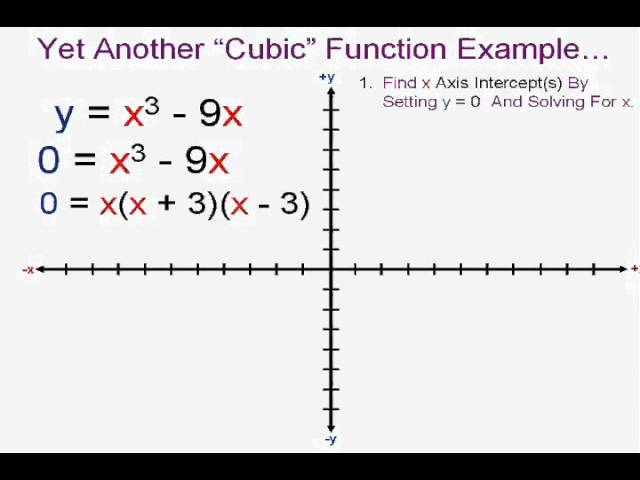
Does anyone any good videos about finding the equation of a graph & graphing them (like for (x-3)^2(x+2) etc)?
viscid thistle
Hey
 quiet stag
hi
 untold spindle
wild shale
Does anyone any good videos about finding the equation of a graph & graphing the...
untold spindle
wild shale
Does anyone any good videos about finding the equation of a graph & graphing the...
https://youtu.be/a0RW8B3RVIM This video explains how to graph cubic equations like the one in your example.
 abstract tusk
can anyone solve this for d, f and g?
 vapid plaza
d, f and g are the roots of x^3 - 3x^2 - 10x + 24 = 0
 marble leaf
abstract tusk
can anyone solve this for d, f and g?
marble leaf
abstract tusk
can anyone solve this for d, f and g?
Just use substitution
 vapid badger

Gumroad
CalculusVerified Questions and answers. A comprehensive and complete study guide
 versed mesa
Hello
Does anyone have any practice work sheets with these kind of topics? Im doing mathematical methods (australia) and just flopped on my exam
 limpid sand
slow coral
i just need a proof
limpid sand
slow coral
i just need a proof
its really simple
its just the limit of (1 + 1/n)^n as n approaches inf
you can plug in the number for higher and higher values to get e
limpid sand
slow coral
i’m trying to ask - at the high school level - how can you prove that the deriva...
using taylor series
you can take the taylor expansion of e^x
differentiate each term
and voila
you get e^x again
oh wait at a high school level
slow coral
limpid sand
oh wait at a high school level
ya taylor series is too advanced for me lul
i found a proof using first principles
or using limits
they’re the same thing apparently
i’d never heard the phrase “taking limits” but the method was first principles
so i assume they mean the same thing
thanks for the help anyway tho
 grave swallow
derivative of functions in form of [c^x ]where [c] is a constant (a.k.a exponential functions)is [ln(c) .(c^x) ]
yes
limpid sand
slow coral
thanks for the help anyway tho
No problem
slow coral
log base e, yes
limpid sand
Y
Yes
It's called natural logarithm cause e appears in the nature
I think
Like it shows up in compound interest which is the most obvious fact
But yea
What else
I'm asking lol
What else has e
Natural growth
ye it will be e^(x/2)
Great
slow coral
convention
the answer for 99% of "why does this symbol represent this thing" questions is convention
ya
delta always means change in a variable
n is really commonly used in series and sets
etc etc
 rugged crater
can someone help me figure out how to find what x cannot be. I have factored all of them down, but i don't understand how to find what x cannot be

 wraith sequoia
Hi guys, I'm in grade 7 and rn I'm on differentiation, can anyone guide me or like help me like a map which tells me which topic to do after which so I can learn advanced calculus before 15
wraith sequoia
wraith sequoia
Hi guys, I'm in grade 7 and rn I'm on differentiation, can anyone guide me or li...
in an orderly manner
and I'm self learning, so that's why I'm asking here
slow coral
wraith sequoia
Hi guys, I'm in grade 7 and rn I'm on differentiation, can anyone guide me or li...
learn to differentiate simple algebraic expressions
learn integration alongside differentiation
grave swallow
ln(e) * e^(x/2) * 1/2
slow coral
then learn to integrate and differentiate logarithms and exponents, then trig functions
then start learning the more fiddly techniques for integration and differentiation like chain rule, reverse chain rule
product rule, quotient rule, integration by substitution, integration by parts
then you'll be at the level most high-schoolers are at before they go to university
grave swallow
stewart is a good book to start with
wraith sequoia
Right now, I am referring to Eddie Woo's playlist Introduction to Differentiation
slow coral
also try to really familiarise yourself with the first principles
where you find derivatives using limits
wraith sequoia
slow coral
also try to really familiarise yourself with the first principles
I've to do that only now
slow coral
thats good
wraith sequoia
slow coral
where you find derivatives using limits
I'm doing that only rn
slow coral
do you understand where first principles comes from graphically?
like what h represents
wraith sequoia
I'm not there yet
wraith sequoia
wraith sequoia
I've to do that only now
I'm going to
slow coral
it really helped me when i was first learning it to see the graphical representation
wraith sequoia
slow coral
like what h represents
kinda rn
slow coral
otherwise it's quite daunting
h is the hypotenuse of this triangle

the idea is that with the limit, you make the perpendicular sides of that right triangle infinitely small and the hypotenuse tends towards the instantaneous gradient at a point
gradient = slope if you're american
wraith sequoia
yeah, I'm referring to that and I understand that
slow coral
that's good
practise using the equation to differentiate some simple expressions
like f(x) = 2x^3
wraith sequoia
slow coral
the idea is that with the limit, you make the perpendicular sides of that right ...
yeah, the gradient = rise/run
slow coral
that's the one
wraith sequoia
slow coral
like f(x) = 2x^3
I've differentiated 1 or 2 expressions
I'm using [f(x+h)-f(x)]/h
slow coral
keep practising first principles until you're super super confident with it, why it works, and how it works, then move on to learning all the nice shortcuts
slow coral
yeah you basically manipulate it until h can disappear if it were 0
wraith sequoia
yeah
slow coral
are you confident with what a derivative actually represents
viscid thistle
just learn l hospital rule works 80 percent of tym
slow coral
the idea that it's a gradient function
wraith sequoia
slow coral
gradient = slope if you're american
I'm Indian, but I use that
slow coral
viscid thistle
euler identities are lyf saver
idek these
viscid thistle
like e^x expansion
slow coral
what
viscid thistle
sinx expansion
viscid thistle
oh sorry its called taylor series
slow coral
ah
taylor series too advanced if you're only just learning basic differentiation
save that for later
wraith sequoia
slow coral
the idea that it's a gradient function
Can I DM you, you seem like a really helpful person
wraith sequoia
slow coral
save that for later
ok
slow coral
no im much worse at math than i let on