#geometry-and-trigonometry
1 messages · Page 374 of 1
 drowsy elm
 patent quarry
 trail magnet
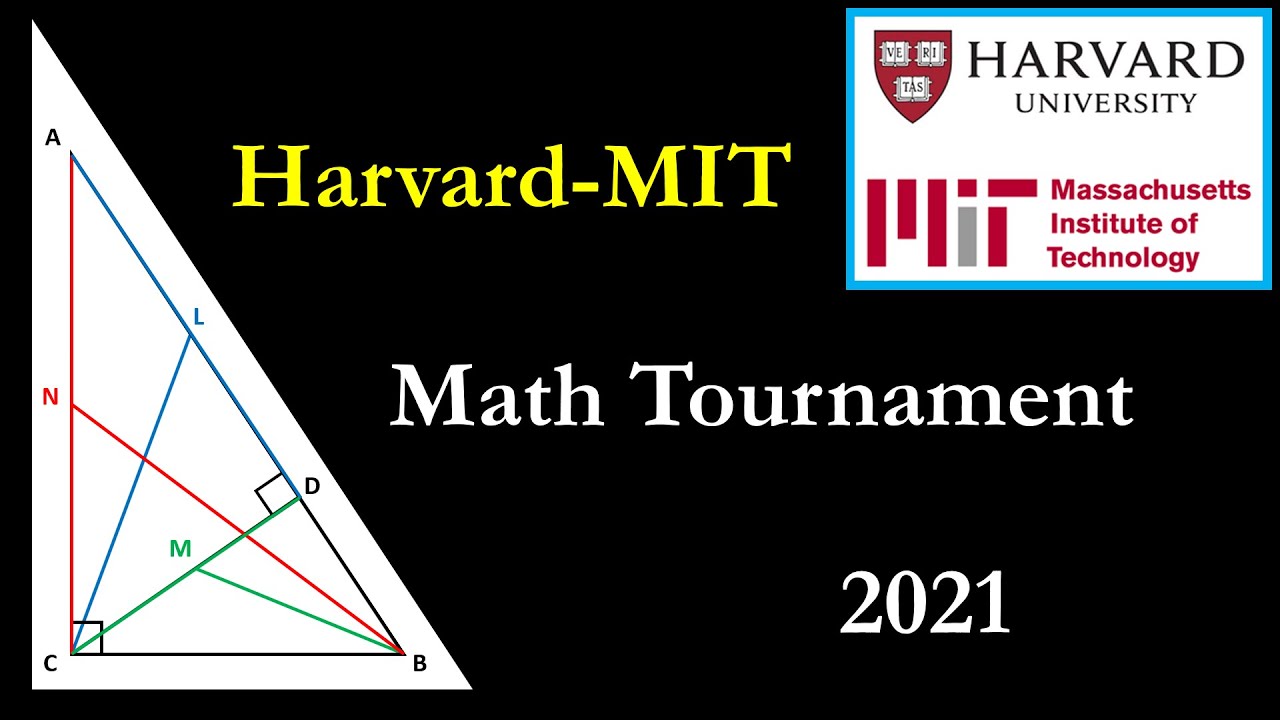
We solve this geometry problem. Harvard MIT Math Tournament (HMMT) 2021 Prob.3
 royal citrus
Here, AOB and CBO are alternate angles right?

 deft veldt
royal citrus
Here, AOB and CBO are alternate angles right?
deft veldt
royal citrus
Here, AOB and CBO are alternate angles right?
yh they are equal
 placid parrot
How do I solve?

 thorny current
is theta and x interchangeable
 grave pond
All variable letters are interchangeable.
 gleaming nova
if only one appears in your question yes
they’re all basically just random letters
actually i guess even if they both appear they’re interchangeable
grave pond
That might be too uncompromising a statement, though. Some variables letters have conventional uses that will often be assumed without stating them explicitly. For example, you often won't find "I'm using x to denote the coordinate that grows towards the right, and y to denote the coordinate that grows upwards" stated in so many words, but if you're using them reversed (which is allowed, for sure), or if you're using p and q instead, you had better state that explicitly or risk being misunderstood.
thorny current
think i got the gist of it thanks
 near sand
Okay, I'm not a fan of geometry but I was to show that x=5 and y=6.7. How can I write this conclusion in a proof format? I know I will use ASA for x, and SAS or ASA for y

 pseudo ore
hey guys I wanted to ask how we can identify by an equation the type of ellipse it is whether it lies on x axis or y

 inner spoke
Does anyone have some hard problems on trigonometry? Like they must be super hard
pseudo ore
sin x = ? 
 signal swallow
pseudo ore
hey guys I wanted to ask how we can identify by an equation the type of ellipse ...
signal swallow
pseudo ore
hey guys I wanted to ask how we can identify by an equation the type of ellipse ...
what do you mean by this

 shrewd osprey


 inner spoke
Please give me hard trigonometry questions
pseudo ore
signal swallow
what do you mean by this

see here
this is a table of two different types of equations as we know

but How can we identify what equation

this is from the table
a>b?
 pseudo ore
Oo thank you!
near sand
near sand
Okay, I'm not a fan of geometry but I was to show that x=5 and y=6.7. How can I ...
Can someone help me?
inner spoke

 chrome sable


Did I solve the first photo correctly? It’s a shadow problem and how do I solve the second problem
This is geometry H chapter 8
chrome sable
@violet nest
 forest drift
any trig function except sine and cosecant
the person who calls others useless is useless
cuz nobody receives hate from people who have done more than them
there are good geometry books out there
 upper karma
Wrong channel sorry
 sharp flame
how to answer this? im confuse
"Area and Sector of a Circle"

A. Direction: Find the area of the following circle

a. A= _____________ if r = 10m
Remember the formula for the Area of a circle?
sharp flame
area of sector = θ/360 x πr^2
sharp flame
θ
 silent plank
you're also overcomplicating this
sharp flame
what formula should i use?
area of circle = πr^2?
silent plank
yes
you're being asked for the area of a circle so it would make sense to use the formula for the area of a circle
sharp flame
so it will gonna be Area of circle = π10m^2
silent plank
no
sharp flame
xd what im super confuse to this lesson
upper karma
silent plank
no
It should be, without typing the "m"
silent plank
pi10m^2 doesn't correctly represent the area
sharp flame
ahh
silent plank
as 10m^2 isn't the same as (10m)^2
upper karma
the ^2 is only on the radius yes
silent plank
the radius is 10m,
and that should be squared properly
upper karma
πr² = π(10)² = 100π
silent plank
units are still important
units are given for the radius and the relevant unit should be in the final answer
upper karma
≈ 314 meters
sharp flame
a. A= _____________ if r = 10m
soo my a is 314m?
silent plank
no
Area of circle = π10m^2
you can't just blindly replace r with 10m like that
you need to add parentheses to maintain the value of your expression
i.e.
$$A = \pi \cdot \red{(}10m\red{)}^2$$
and simplify that
 somber coyoteBOT
ℝamonov

 lapis adder
what's cot (-π)

 dark sparrow
@lapis adder in case you couldn't use a calculator to answer this question yourself,
it's undefined.
lapis adder
dark sparrow
<@!794249293338771456> in case you couldn't use a calculator to answer this ques...
yeah
upper karma
lapis adder
what's cot (-π)
<:bhappy:924710573885755422>
Ye its undefined
Because cot=cos/sin
sin of a full 180 degree rotation becomes 0
Wether if π is negative
we really don't care about cos anymore
As if denominator is 0
Whatever the numerator is
The result is always undefined
upper karma
Ok then this one is something hard I guess if I take a cube and note I am saying in 3 dimensions and imagine rotating that cube on the z axis, fine! Makes sense! Now imagine a light veritcally over the cube projecting the cube on a 2D plane if I tell you angle theta of that cube what will be the area of its projection


 upper merlin
assuming that it is being rotated about the centre this should be useful
 upper karma
upper merlin
assuming that it is being rotated about the centre this should be useful
upper karma
upper merlin
assuming that it is being rotated about the centre this should be useful
Thanks
And also
The length
Of the cube
Is 2
Ig I finally got it

In that sense
One side is equal to sqrt(1^2-sin2(theta))
The other one is 2 ofc
So it's sqrt(1-sin2(theta)) * 2

 thorn valve
guys is there a trig identity for cos^2-sin^2-tan^2
gleaming nova
that’s not really an identity
 late lion

does the order matter in naming the polygon
for example, does ABCD imply it's like this

rather than this
 late lion
well it's the same thing either way
 misty knoll
late lion
well it's the same thing either way
misty knoll
late lion
well it's the same thing either way
Nop, it's the first not the second
misty knoll
But people usually plot the point from A to D in the clock way
 wide pumice
B should be top right then?
misty knoll
Yes
wide pumice
Then it is neither of those options
misty knoll
Yes but the first is technically not wrong, it only not the right direction
The second would be ACDB
misty knoll
The second
misty knoll
Yes
late lion
misty knoll
Nop, it's the first not the second
no i mean counter clockwise and clockwise are the same
no?
for all intents and purposes
misty knoll
That is not the case
They are not the same
Well you can try to do a demo but good luck 
gleaming nova
late lion
no i mean counter clockwise and clockwise are the same
how are they the same
misty knoll
Since we are talking about normalization of mathematics and rule that have been put to make mathematics an universal language
Understandable in only one way to avoid confusion and put precision as the most important thing
late lion
icic
 upper karma
 low fable
What do I put in for the equation
low fable
What do I put in for the equation
I suppose those 3 are the angles
upper karma
I guess
It's simple
(19x-18) + (7x+1) + (10x-9) = 180
I mean all angles of a triangle sums up to 180 right @low fable
upper karma
U can remove the brackets though
upper karma
low fable
Thanks for helping it’s so annoying when teachers don’t explain the instructions
Lmao 👍
silent plank
(19x-18) + (7x+1) + (10x-9) = 180
is not correct
upper karma
U need to simplify it though
silent plank
based on what i see in the diagram, 19x-18 isn't an angle in the triangle
low fable
19 times 5 -18 is 77
low fable
I’m just confused what you put in for the equation
upper karma
low fable
I’m just confused what you put in for the equation
Is (19x-18) a angle inside the traingle?
silent plank
no it is not
upper karma
silent plank
no it is not
Then ofc it's angle inside the traingle?
silent plank
what?
silent plank
i see the image, and 19x-18 is not the angle inside the triangle but the exterior angle
if you know the exterior angle theorem you can apply that directly
or go the long way and consider the angle sum on a line and angle sum of a triangle
low fable
You do 19x-18 equals 7x plus 1 plus 10x-9
silent plank
yes
upper karma
silent plank
i see the image, and 19x-18 is not the angle inside the triangle but the exterio...
Ye
upper karma
low fable
You do 19x-18 equals 7x plus 1 plus 10x-9
Is 19x-18 inside or outside the traingle?
silent plank
outside...
upper karma
Then it's right
silent plank
as i've said and implied multiple times
low fable
I just need the equation
silent plank
and what's implied in the image
upper karma
low fable
I just need the equation
To find the answer we need to understand the question though
upper karma
silent plank
and what's implied in the image
And he also is saying the same
low fable
We have x?
silent plank
you have your equation
19x - 18 = 7x + 1 + 10x - 9
and then solve for x
low fable
Yeah
upper karma
silent plank
you have your equation
> 19x - 18 = 7x + 1 + 10x - 9
> and then solve for x
Ye
low fable
Ok thanks m8’s
upper karma
That's the equation
 red tapir
 low fable
How to solve?
grave pond
The triangle is isosceles, which gives you a relation between two of the sides.
It's really just a camouflaged algebra problem.


 dark oasis
 ebon thistle
Use sin(30°)
upper karma
ebon thistle
Use cosin(60°)
upper karma
ebon thistle
cotan(30°), I think that will work
upper karma
ebon thistle
tan(45°)
Then sqrt(7 * 7 + 7 * 7)
which is equal to: 9,899494936611665
 vernal grotto
bro how am I supposed to find the angle of a sinusoidal function when all I'm given is the value of y, am I suppose to use a calculator? Because that would be easy but it doesn't say that I can use a calculator, and the number isn't on the unit circle at all
 jade kite
So, my algebra teachers gives me a geometry challenge problem that idk how to do. This may seem easy to you, but plz help me

 wide pumice
For which? 4.?
wide pumice
So the first one uses rigid transformations, meaning those 2 figures are equal. They are congruent figures
You have to use definition of a rhombus to solve this. Opposite angles in a rhombus are congruent. And same side ones add to 180
Or you could notice that only one of the options is obtuse LMAO
wide pumice
@finite gull The second one is much easier, your answer was wrong because the lines are clearly not perpendicular, they would have to be marked with a right angle for that to be true. The correct answer is corresponding angles. So option D was correct.
 finite gull
ahhhhh
wide pumice
I sent you a helpful video
wide pumice
Yes


 cerulean orbit

 silk charm
cerulean orbit
silk charm
cerulean orbit
is this a timed assignment/quiz?
cerulean orbit
no
upper karma
Is there an image that goes with the question?
royal citrus
RPQ = POS [alternate angles]
is that right?

 solemn hinge
Can anyone explain me multiple and sub multiple angles ?
If u can pls do
U can just tag me and write about multiple and sub multiple angles
Or u can recommend me a vid in yt
 mild birch
cerulean orbit
mild birch
cerulean orbit
sin2(x) + cos2(x) =1
cotx = cosx/sinx
gleaming nova
people just don’t know how to use exponents do they
mild birch
i cba at times
gleaming nova
why yes, sin(2x)+cos(2x) does equal 1
mild birch
but you my friend, you’re being pedantic
upper merlin
royal citrus
RPQ = POS [alternate angles]
is that right?
yes
mild birch
royal citrus
RPQ = POS [alternate angles]
is that right?
yeah. and ROP is a straight line so 180. and ROS is an isosceles triangle because OR= OS because they’re radii. base angles in isosceles triangles are equal.
royal citrus
ye thanks
upper karma
https://media.discordapp.net/attachments/785856938536599552/940434403107143690/20220208_081457.jpg yo can anyone help me with qno 4

<@&286206848099549185>
Help
Qno 4

 brave narwhal
 unique oyster
H
unique oyster
H
hopefully I am not too late
11pi/8 is what theta is
you can achieve this by taking arccos of both sides
now 11pi/8 is the same angle as adding or subtracting 2pi from it
11pi/8 radians = 27pi/8
unique oyster
No, i am listening but i will review it tomorrow thanks for the help. I will take a picture of your explanation. Thanks
日本人ですか?
unique oyster
私も日本人じゃありませ。私はベネズエラ人です。少し日本語も分かります。
brave narwhal
unique oyster
H
is there another answer choice?
unique oyster
No, i think there is only four answer
unique oyster
Answer is C, but i just need simple explanation
brave narwhal
well what you would normally do is set all the answer choices equal to the original function
and solve for k
so
-75pi/8 +2pik = 11pi/8
-75pi + 16pik = 11pi
16pik = 86pi
k = 86/16
but that isn't an integer
so idk how that can be the right answer
unique oyster
Oh, okay no problem. Helped me a lot. Thank u tho lol


 prisma quartz
sqrt30=sqrt(3^2+HF^2)
cerulean orbit
 deft veldt
cerulean orbit
deft veldt
cerulean orbit
Are you familiar with $\tan(x) = \tan(x-180^{\cdot})$
somber coyoteBOT
azeem321
 solemn hinge
cerulean orbit
solemn hinge
cerulean orbit
There might be a chance of getting the answer , if u convert 330° to rad form
330°×π/180
As per my opinion
near sand
Is anyone familiar with non-euclidean geometry?
unique oyster
brave narwhal
but that isn't an integer
Okay, got it. 16pi/8 is the same as 2pi of unit circle. So, 16pi/8 x 4=64pi/8. Then, put it on C. Since, we know the answer of Cos(theta)=-cos(theta). -75pi/8+64pi/8=-11pi/8. So, it is the same as cos(theta)=cos(11pi/8)
 solemn hinge
unique oyster
Okay, got it. 16pi/8 is the same as 2pi of unit circle. So, 16pi/8 x 4=64pi/8. T...
solemn hinge
unique oyster
Okay, got it. 16pi/8 is the same as 2pi of unit circle. So, 16pi/8 x 4=64pi/8. T...
Convert it to radian
solemn hinge
 floral coyote
Like if u mark a point "O" at the centre and apply Pythagoras theorem , you'll get the answer
You'll get the value of BO and multiply it with 2
That's it 👍
unique oyster
solemn hinge
Convert it to radian
What radian? Isn't the question in radian form?
unique oyster
Maybe this, give it a try

 fallen sleet
does there exist a 2D shape for which no circle exists such that: shares at least three points with the edge of the shape AND the area of the shape is a subset of the area of the circle
grave pond
A straight line segment?
 devout mango
 solemn hinge
I misunderstood
@unique oyster sry
I was talking about @cerulean orbit 's ques
Sry my bad
solemn hinge
upper karma
https://media.discordapp.net/attachments/785856938536599552/940434403107143690/2...
Is it cosec^2theta + cosec^4theta = cottheta - cot4theta ???
 loud fulcrum
how do i graph one period of f(x)=5sin(2x+2)-3
 iron spoke
okay well
you know how the sine function looks like and how to transform functions, so get the amplitude (which is 5), how much it is displaced vertically (-3 times), how much it is displaced horizontally (-2 times), and get the period, which is 2pi/2 = pi
now graph it with this information
loud fulcrum
yeah i figured it out i’m stupid
loud fulcrum
iron spoke
okay well
thanks tho
unique oyster
solemn hinge
<@924182679988092933> sry
No, problem my brother. You got my approve.
upper karma
who can help me
solemn hinge
unique oyster
No, problem my brother. You got my approve.<:catthumbsup:614540188747563008>
Lol
 upper karma
upper karma
upper karma
They are asking if line segment AC bisects the angle BCD bi means two so does line segment AC give two parts of angle BCD
 lone sandal
Help

 snow kite

Hey everyone, I'm not sure why this formula works to find the area of a triangle?
I understand the ones where you do 0.5ba*sin(phi)
Because the asin(phi) is supposed to represent the h. Which brings you back to the original formula of 0.5b*h
grave pond
Isn't your formula the same, just using different names for the sides?
Two sides of the triangle, times the sine of the angle between those two sides, divided by two.
deft veldt

The text states that [BGD]=[CGD] because the triangles share an altitute from G. But this line is not an altitute, it's a median right? So how do we know that it's necessarily perpendicular to BC?
dark sparrow
they're not talking about the line GD
they are talking about a perpendicular dropped from G onto the line that contains BD or CD (it is the same line for them both, hence the same perpendicular)
deft veldt
dark sparrow
they are talking about a perpendicular dropped from G onto the line that contain...
ohhh my bad. thanks
royal citrus
Here, can we say that $\overrightarrow{AB} + \overrightarrow{BC} = \overrightarrow{AC}$ and $ \overrightarrow{BD} = \frac{1}{2} (\overrightarrow{AB} + \overrightarrow{BC})$ ?????
 somber coyoteBOT
Inheritanc-e ♦

 whole bone
From a vector perspective ab + bc = ac because its tail to head + tail to head if that helps
 loud fulcrum
how do i find the period of 7tan(5x+10)
 fervent ember
I made a guide covering perpendicular bisectors, medians, altitudes, and angle bisectors. Can anyone tell me if I am missing anything?
PERPENDICULAR BISECTOR
Perpendicular to the side
Does not touch opposing vertex
At the midpoint of the side
All perpendicular bisectors meet at the circumcenter
MEDIAN
Not perpendicular to the side
Touches opposing vertex
At the midpoint of the side
All medians meet at the centroid
The centroid is 2/3 of the distance from each vertex to the midpoint of the opposite side. Another way of stating this is that the distance from the opposing vertex to the centroid is twice the distance from the side to the centroid.
ALTITUDE
Perpendicular to the side
Touches opposing vertex
Not at the midpoint of the side
All altitudes meet at the orthocenter
ANGLE BISECTORS
Divides an angle in half
Perpendicular to all sides in equilateral triangles
Does not divide opposing side in half (except if perpendicular, that is in equilateral triangles and for the unequal angle in isosceles triangles)
Touches vertex
Lengths along the angle bisectors are equal
All angle bisectors meet at the incenter
 strange reef
I constructed a triangle with side lengths 3, 3, and 5.9. I want to find the angle between the two sides of equal lengths. To do this, I used the special case of $a^2=b^2+c^2-2ab\textrm{cos}\theta$ where $a=b$ to get $-(\frac{l^2}{2s^2}+1)=\textrm{cos}\theta$, where $l$ and $s$ are the long and short sides. However, plugging in the side lengths, this got me $-2.93...=\textrm{cos}\theta$, which shouldn't be possible. What's wrong with my thinking?
somber coyoteBOT
person2709505
 strange reef
Nevermind, solved for $\cos\theta$ wrong
somber coyoteBOT
person2709505
 near sand
Can someone explain which do I use to solve this problem? Scalene inequality or triangle inequality?
 gleaming nova
,
somber coyoteBOT
 near sand
Thank you
I hardly use this bot
We haven't proved that all angles equal 180, but we have proved that it cannot exceed 180
So the third angle can be 5 or less
gleaming nova
ok then i can’t help lol sorry
gleaming nova
near sand
We haven't proved that all angles equal 180, but we have proved that it cannot *...
i wasn’t aware that this could be a condition 
near sand
I'm just confused about the inequality theorems
near sand
gleaming nova
i wasn’t aware that this could be a condition <:hmmCat:831508801646755850>
Yeah it's called Saccheri-Legendre Theorem
gleaming nova
are you allowed to say that, for example, the side opposite to the second largest angle is the second longest side?
near sand
Which side?
gleaming nova
side RS is opposite to the second largest angle
near sand
That would prove it?
Cuz opposite of the largest angle is ST
Then that leaves RT being the smallest
gleaming nova
yeah
near sand
Ohh
gleaming nova
and you already know that the last angle is the smallest
no matter what
since that it must be less than or equal to 5 degrees
and the other two angles are greater than 5 degrees
near sand
Ohh okay thank you
fallen sleet
how to prove "is parallel to" is an equivalence relation?
dark sparrow
use the definition
grave pond
What is your definition of "is parallel to", though?
fallen sleet
grave pond
What _is_ your definition of "is parallel to", though?
Does this work: A line is parallel to another line if and only if: they are in the same plane and share a point if they share all points.
Transitivity seems the hardest to prove here because you need to break it down into 5 cases.

 dark sparrow
you have a system of three equations in three variables: $$\begin{cases}x_A + x_B = 2 \ x_A + x_C = -8 \ x_B + x_C = 4 \end{cases}$$
somber coyoteBOT
Ann
 dark sparrow
(you also have a similar system for the y coordinates but we can come back to those later)
this is a system of linear equations.
do you know how to solve systems of linear equations?
@lusty abyss
grave pond
fallen sleet
Does this work: A line is parallel to another line if and only if: they are in t...
Sounds good. That makes reflexivity and symmetry trivial. The claim that this relation is transitive fails in the hyperbolic plane, so it is actually equivalent to the parallel postulate (and is sometime stated as an alternative formulation of it).
fallen sleet
grave pond
Sounds good. That makes reflexivity and symmetry trivial. The claim that this re...
very interesting information! thank you!!
 lusty abyss
dark sparrow
do you know how to solve systems of linear equations?
lusty abyss
dark sparrow
do you know how to solve systems of linear equations?
We do simultaneous equations?
Confused
 untold forge
Yeah, simultaneous equations are also called systems of linear equations
dark sparrow
i don't know what you mean by "do simultaneous equations"
lusty abyss
untold forge
Yeah, simultaneous equations are also called systems of linear equations
But here are 3 unknowns, how does simultaneous work here?
untold forge
dark sparrow
i don't know what you mean by "do simultaneous equations"
When I first learnt systems of linear equations with just 2 equations they were taught as simultaneous equations, back in middle school
lusty abyss
lusty abyss
What will be the next steps?
dark sparrow
well, one possible next step would be to add together all three equations that i mentioned
you will get $2(x_A+x_B+x_C) = -2$
somber coyoteBOT
Ann
 dark sparrow
though of course before you do that you will have to understand that "simultaneous equations" does not refer only to systems of 2 equations in 2 unknowns.
 dark sparrow
,rccw
somber coyoteBOT
 dark sparrow
your handwriting sure does leave a lot to be desired
your x's barely look like x's
they look more like fucked up n or u
lusty abyss
ok
dark sparrow
and disregarding that, this line: $$2 - x_B + x_C = -8 - 2 + x_B = 6 + x_B$$ is somewhat unclear
somber coyoteBOT
Ann
 dark sparrow
and you have a couple of arithmetic mistakes further down...
 median berry
I need some help with vectors
 lusty abyss
dark sparrow
and you have a couple of arithmetic mistakes further down...
lusty abyss
dark sparrow
and you have a couple of arithmetic mistakes further down...
I think I’m failing. Fuck
dark sparrow
you don't have to isolate one of the variables in one of the equations, by the way.
i can tell you tried to do that.
lusty abyss
 lusty abyss
dark sparrow
you don't _have_ to isolate one of the variables in one of the equations, by the...
lusty abyss
dark sparrow
you don't _have_ to isolate one of the variables in one of the equations, by the...
Is the x-coordinate of B correct now?
dark sparrow
let me take a look
gleaming nova
you can just write slowly if that helps
dark sparrow
ok yes this seems ok now
let me doublecheck
ok yeah checks out
now you can find the x coords of the other two points and do the same thing for the y coords
fallen sleet
grave pond
Sounds good. That makes reflexivity and symmetry trivial. The claim that this re...
also just realized its supposed to be "share all points if they share a point"
grave pond
Yeah -- I think I instinctively read it as "iff".
For synthetic reasoning in plane geometry I think you could get through without too much pain if you start by proving that lines that have a common perpendicular are parallel, and that two parallel lines share all their perpendiculars.
 ancient elm
hello can i have a quick question about euclid third postulate?
grave pond
 ancient elm
what is the different of using any center only from the with any centre and any radius ? in the 3rd postulate. im in confuse with the term using and from with any centre
 tender shell
Hey guys I keep getting confused with sine and cosine (of degrees). Is there anything I can really do to try to remember or should I just keep practicing?
grave pond
Are you saying you forget which of them is which?
tender shell
yeah i forget which one is opp. over hyp. and adj. over hyp.
grave pond
The silly mnemonic train-of-thought I've always used (which may or may not work for you, of course) is something like
when we say
cosinewe start earlier in the word than when we say justsine, therefore the cosine should come first in the pair (cos a, sin a), so therefore the cosine is the x-coordinate and the sine is the y-coordinate of the point on the unit circle that represents the angle.
You'd need to remember separately that the angle is measured counter-counterclockwise from "due right", though.
Even better, make up your own mnemonic device. The sillier the better, really, as long as it's memorable.
tender shell
oh okay thanks man
silent plank
i suppose you could start with the mnemonic that most people use
soh cah toa
tender shell
silent plank
i suppose you could start with the mnemonic that most people use
soh cah toa
ohhhh yeah I've heard that one before
thx
grave pond
That one is a mystery to me, on the other hand. Why would it be easier to remember that particular nonsense word than e.g soh-coa-toe?
The only way I would be able to remember that would be by actually knowing how the trig functions work, then reconstruct it letter for letter by imagining little right triangles in my unit circle.
silent plank
cah toa not coa toe
its sufficient for basic right triangle trig
ofc later on you should learn/know the unit circle definitions
grave pond
My question was, how is that nonsense word supposed to be more memorable than the actual underlying math?
It's just a completely random-looking string of letters. That's the opposite of memorable.
silent plank
its the mnemonic describing the right triangle definitions of the basic trig functions
silent plank
a whole lotta stuff reduced to 9 letters
grave pond
The point of a mnemomic is to help remembering something, and if the only way to remember the mnemonic itself is to already know the thing it was supposed to remind of, then it's a really shitty mnemonic.
tender shell
well i dont really know about the unit circle definitions yet since im in 8th grade so just a phonetic string of letters to remember which function does what. obviously I'll learn the underlaying math, but right now its a good mnemonic to know what function does what.
grave pond
But those nine letters would be exactly the same when given in a different order that doesn't describe the right thing.
 snow mesa
i am also in 8th grade 🕶
grave pond
There's nothing in that particular random order that makes it easier to remember than a different random order that results in the wrong conclusion.
silent plank
evidently its common enough that a vast majority people use it and people recognise it at a shear mention of it
grave pond
It is not a functioning help to memory at all.
silent plank
i mean you can make up your own way to memorise if you want
grave pond
I do, as noted above.
silent plank
whatever floats your boat
grave pond
What I'm saying is that we shouldn't ask other people to use a shitty nonsense word that will not actually help memorizing anyting and tell them to spend effort on memorizing the random nonsense when that is not actually any easier than remembering something meaningful instead.
silent plank
whether the mnemonic is useful to them depends on them
i mean i could type out a whole paragraph stating what sin,cos,tan do in a right triangle
but how would you condense that info
and would they need to recall that paragraph verbatim every time they want to do a right triangle trig problem
snow mesa
guys i think soa cah toa is pretty useful personally. I’m in 8th grade and not there yet but i understand it to some level due to that
tender shell
silent plank
but how would you condense that info
yeah thats why i think I'll use soh cah toa for the time being
grave pond
"Condense" seems to me to be the opposite of what you'd want for making something memorable.
You'll want something that paints a vivid picture in your mind, not random syllables that could just as well have been other random syllables.
tender shell
grave pond
"Condense" seems to me to be the opposite of what you'd want for making somethin...
I see what you're saying, but it is simpler to understand. I will definitely learn the "uncondensed version" but for right now soh cah toa makes more sense to me
snow mesa
tender shell
I see what you're saying, but it is simpler to understand. I will definitely lea...
precisely 🕶
grave pond
I completely fail to see how a nonsense string of letters is "easier to understand" that anything. There's nothing even TO understand there. There's no meaning at all, except the meaning you supposedly don't have present in your mind at the time you'd need a mnemonic trick for it.
snow mesa
soh (sin=opp./hyp) cah (cosin=adj./hyp) toa (tan=opp/adj)
grave pond
If you know that you don't need a mnemonic in the first place!
tender shell
That's what I was struggling on
grave pond
The premise of needing a mnemonic is that you don't remember the thing it is supposed to help you remember.
tender shell
I kept getting sin and cos confused
silent plank
well the knowledge should be there, mnemonics help you remember
snow mesa
it helped me remember now that i know becaus it helped me doesn’t revert it back to not a mnemonic
silent plank
and if soh-cah-toa works for whoever wants to use it, there's no reason to complain
tender shell
well yeah it does help me remember the difference now
snow mesa
same
grave pond
If the way you say you remember what the right nonsense word is, is "because that is the particular sequence of nine letters that gives the right result", then it hasn't actually helped you remember anything. You need to know the answer before you can reconstruct the word the will tell you what the answer is.
snow mesa
we know the construction because it may have been taught to us. By no means are we saying we created it
grave pond
silent plank
well the knowledge should be there, mnemonics help you remember
Mnemonics only help remembering anything if the mnemonic is actually easier to remember than the thing it's supposed to help with.
tender shell
ohhhhh yeah I see what you're saying. But the thing is my school hasn't taught me how to construct and reconstruct stuff to get these functions besides showing us triangles
So I dont know how to break it down to these functions. As you said the information is just not in my brain
grave pond
And then how can you ever hope to remember whether it is soh or coh, either?
silent plank
the sounds when pronouncing them are also quite distinct
tender shell
I was just confused on which one was adjacent over hypotenuse and what was opposite over hypotenuse
grave pond
tender shell
I was just confused on which one was adjacent over hypotenuse and what was oppos...
Exactly. And no matter which one it is, there will be a nonsense word describing it. So remembering "there is some nonsense word made up of these letters that gives the right correspondence" is actually useless as a way to remember what the correspondence was.
tender shell
So I wanted a way to remember it for the time being until I learn the right correspondence without needing these, "nonsense words"
grave pond
I mean, it's your funeral.
tender shell
And I'll be playing the coffin dance music
silent plank
i mean doing rotations and reflections and dilations for a basic right triangle problem and strictly applying unit circle definitions would be complete overkill
grave pond
Look, if you want a mnemonic device that's not based on the unit circle, you have my full blessing for that. Just come up with one that is ACTUALLY MEMORABLE instead of being based on a nonsense word that could just as well have been the opposite nonsense word, and therefore doesn't help with remembering anything, in any capacity, ever.
snow mesa
ok buddy
grave pond
"Actually memorable" means that if you remember it wrong you would automatically think "wait a minute, the story makes no sense this way around", no matter whether the story itself has nothing to do with the mathematics.
silent plank
i mean you could also use a phrase if you wanted
tender shell
Yeah that makes more sense than some letters. Like it makes more sense to logic your way into the answer instead of remembering something. That being said Soh Cah Toa is pretty easy to remember.
silent plank
there also may be a little bias if you've done trig enough that you don't require the use of that mnemonic
but yeh, use whatever you're most comfortable with and find most helpful
tender shell
okay thanks guys
 upper blaze
Guys i have a fast inversio question thats is bugging me
If i have triangle and one of its vertacies is center of inversion will it map onto itself and not move at all or it maps into point at infinity even thpugh that concept isnt supported in euclidian geometry?
By definiion it should stay there but by intuition and knowing other geomezrys it makes sense to go to infinity
dark sparrow
what definition are you looking at that is making you conclude the center of inversion stays where it is?
@upper blaze
upper blaze
Hmm actualy I am tutoring one student and since I didnt have inversion on that subject few years ago I used definition they are provided with. And it stats "Given point O in plane A and real number k inversion is a map I: A/{O} -> A ..." and later it explains that when point M gets closet to center its image should go to infinity but it states also as I said that we dont do that infinity becouse its Euclidian geometry
@dark sparrow
dark sparrow
did you mean \ and not /?
if so, the definition explicitly says that O isn't in the domain of the inversion at all
inversion acts on all points EXCEPT the center
its action on the center is left undefined
upper blaze
dark sparrow
did you mean \ and not /?
Set difference xD And yes I thought the same but then comes the problem of Finding image of triangle that has one point being center of inversion. And I cant decide do I just leave it there or what? xD
Its image should not contain that point or it should thats my problem how to precisely define its image
in any neighbourhood of that point
dark sparrow
your messages are hard to read
upper blaze
😦 Okay 😦
dark sparrow
...
upper blaze
I will try to make it short and clear
dark sparrow
perhaps you could just ignore the one vertex that happens to be the center.
and invert everything else
upper blaze
Well I did that
dark sparrow
you should get an unbounded shape
enclosed by... i think it would be two rays and a circular arc
with the third vertex 'at infinity' except we don't actually plot it
upper blaze
Yes exactly. Thank you 😄
 rich parcel
can I write cos(X-Y)= cos(X)-cos(Y) or can u not do that <@&286206848099549185>
 broken dock
no
 serene vale
no
upper karma
But is there a way you can do it?
rich parcel
idk
serene vale
$\cos(a-b) = \cos(a)\cos(b) + \sin(a)\sin(b)$
somber coyoteBOT
winston gergill
 upper karma
Huh intresting
rich parcel
what about cos^2(x-y)
serene vale
$\cos^2(a-b) = (\cos(a)\cos(b) + \sin(a)\sin(b))^2$
somber coyoteBOT
winston gergill
 serene vale
i dont have the energy to expand that/abuse mathematica lo siento
rich parcel
so it is not (cos a - cos b) (cos a - cos b)
upper karma
Juat assume it equals z and continue with your problem.
serene vale
yea $(\cos(a) - \cos(b)) (\cos(a) - \cos(b)) = \cos^2(a) - 2\cos(a)\cos(b) + \cos^2(b)$
somber coyoteBOT
winston gergill
 serene vale
big headache
 young zephyr
 wet violet
I was solving some questions for fun
I need to get the yellow angle
Got all possible angles normally
Its not a cyclic quad
What is steps to get yellow angle
After getting all normal angles and that green is 150
 silent plank
are you told whether that line is bisecting the green angle?
wet violet
Nope
Would be ended by now
silent plank
then unless you make that assumption,
the size of the yellow angle cant be determiend
wet violet
I constructed alot of things
But at a point
It seemed useless
Like my proof went that a clearly acute angle is 155
wet violet
silent plank
then unless you make that assumption,
the size of the yellow angle cant be deter...
So there is no other way?
wet violet
Ok ty
Gonna assume the problem is in given info
And that the line bisects green angle
 silk patio
It’s not one green angle it’s two green angles
silent plank
they really need to do a better job at labeling
sharp flame
what is the formula for finding 3 geometric means of the sequence?
 stable forge
F = kx
upper karma
what
upper karma
sharp flame
what is the formula for finding 3 geometric means of the sequence?
nth root when you multiply n numbers
near sand
Could someone give me an example of an isosceles triangle in taxicab geometry?
Just an example
 vagrant ore
How do you solve this?

 vagrant ore
Oh ok thanks
 signal spade
@near sand an isosceles triangle is a triangle with all the three sides and angles not equal
near sand
I know that lol I just needed an example in taxicab geometry but I got it after all
Thank you tho
signal spade
Ooh okay 👍
vagrant ore
In the law of sines do all angles in a triangle still add up to 180°?
vagrant ore
idk I'm running on 3 hours of sleep
Just asking so I can try and figure out the law of sines better
dark sparrow
the law of sines does not cancel whatever theorems came before it
 little terrace
does anyone know how to do this¿
 upper karma
hello can i get help, i've been stuck at this for 30 mins tt
 upper blaze
upper karma
hello can i get help, i've been stuck at this for 30 mins tt
upper blaze
upper karma
hello can i get help, i've been stuck at this for 30 mins tt
Hmmm if I am correct and i am sure I am there is a mistake there. From $x^2+x=5x$ you get $x^2-4x=0$ so $x=0 or x=4$. Becouse US is lenght and must be positive you have $x=4 $and $US=40$. Also you get $HO=OU=14$ so$ HU=28$. So we have here P=14*40 which is 560. And you are correct. Anyone see something that I miss?
somber coyoteBOT
MotionMath

 glossy atlas
No that's not true
grave pond
The sine function is not a logarithm.
 sly venture
 grave pond
Use similar triangles to find KM, then Pythagoras.
(All the three triangles in this diagram are similar).
 late hemlock
the angle of elevation when you look at the top of the tower, which is 67° and the angle of depression when you look at the bottom of the tower, which is 45°. Using a tape measure, you went out and determined that the distance between your school and the tower is 80 feet. How tall is the tower?
Im confused as to why Elevation and depression are both different angles, I thought they were equal?
What should I do if the given are both given?
grave pond
Apparent you're watching from a point somewhat higher than the base of the tower.
So the angle of elevation is how much above horizontal you see the top, and the angle of depression is how much below horizontal you see the bottom.
late hemlock
Then what ways can I solve it? if it's ok can I get the formula?
 crystal quail

So I'm working on this problem, full thing posted in #multivariable-calculus. I've gotten to a part that might just be geometry but I'm failing to see how it all comes together. In the picture posted above I have some vectors, r, r', and r-r'. And in my full problem, I have to find some way to evaluate sin(|r-r'|). If it's possible through geometric methods that's best, and I have the answer I'm expecting to probably see, but I don't know how to get there.
is this possible to show with vector geometry or should I keep searching for another way to solve my dilemma?
grave pond
late hemlock
Then what ways can I solve it? if it's ok can I get the formula?
Have you drawn a diagram? If not, that's always the first step.
late hemlock
grave pond
Have you drawn a diagram? If not, that's always the first step.
I got it now thanks ty for the help
late lion
idk if this goes in geometry but
how come the volume of a parallelepiped determined by vectors a, b, and c is
$\Vec{a} \cross \Vec{b} \cdot \Vec{c}$
somber coyoteBOT
Leon
 somber coyoteBOT
Leon
 crystal quail
it the height was 90 degrees to the surface of axb then yes
but sometimes it's not
grave pond
late lion
$(\Vec{a} \cross \Vec{b})|\Vec{c}|$
That would give you a vector.
late lion
grave pond
That would give you a vector.
my bad I forgot to put || on a x b
okay but I don't see why $\Vec{a} \cross \Vec{b} \cdot \Vec{c}$ can give you the volume
somber coyoteBOT
Leon
 crystal quail
my informal, non-rigorous answer is that axb gives you the area formed by a and b, and the "dot c" part tells you how much of that area can be projected (hence the dot product) into that 3rd dimension, and is entirely dependent on the angle. If the angle between axb and c was 90 degrees, then you're looking at a flat surface (no volume). If axb is parallel to c then the whole area of axb can get projected into the 3rd dimension and you just get the magnitude of what you wrote earlier, the axb*|c|
for a more formal answer you'd have to wait for one of the math guys to get to you
crystal quail
yep
 wide dragon

I dont know what my next step should be. Absolutely confused cuz the most ive learnt was Tan (90 - Theta) = Cot Theta
 wintry tundra
You can transform the tan function into cot
By subtracting the whole inside from 90°
wide dragon
So turn it into cot (3x + 30)’ = Cot (90 - 4)?
 serene widget
yo just starting trigonomatery what do the symbols mean such as tan, cos, etc.?
wintry tundra
wide dragon
So turn it into cot (3x + 30)’ = Cot (90 - 4)?
90-(x-4)
wintry tundra
serene widget
yo just starting trigonomatery what do the symbols mean such as tan, cos, etc.?
Those are periodic functions
serene widget
wintry tundra
Those are periodic functions
?
wintry tundra
They have to do with side ratios of a triangle as you increase the reference anglr
Which will make more sense as u study trigonometry
serene widget
wintry tundra
They have to do with side ratios of a triangle as you increase the reference ang...
ok
math is in minecraft
 wide dragon
wintry tundra
90-(x-4)
wide dragon
wintry tundra
90-(x-4)
Why does that work? How come I can just get the reciprocal of tan just cuz I did -90
wintry tundra
wide dragon
Why does that work? How come I can just get the reciprocal of tan just cuz I did...
Bc of the periodicity of the functions
And their symmetry
wide dragon
Idk what that means 😩
wintry tundra
Trig functions are periodic
wide dragon
Periodic means repeats itself
late hemlock
wait what "(80) tan 45" is equal to 80ft?
I thought it it was 129 smth
im so confused
grave pond
tan(45°)=1
 sand verge
Hi, could someone explain to me why the answer to question 3. shall be (d)
 upper karma
Im stuck on a question, it is : A Electric engine that uses 750W active effect (P), has the power factor cosφ = 0,89, the voltage is 230V
What they want to find out with this information is: How large is the apparent effect?
I need to find apparent effect which is S but I dont know what formula to use to find it.
near sand
Does anyone know how to construct a midpoint on a segment? Like proving it?
grave pond
Generally, draw circles around each endpoint with the line segment as the radius; connect the two points where the circles intersect each other.
near sand
grave pond
Generally, draw circles around each endpoint with the line segment as the radius...
Not in that way, sorry I wasn't too specific
I meant where we are given a segment and we use the ruler postulate
grave pond
What is "the ruler postulate"?
 grave pond
Ah, then you're just after $\frac{a+b}{2}$?
somber coyoteBOT
Troposphere
 near sand
I'll show what I got
So far

I have to prove that using this point that has coordinate q/2 is the midpoint and then prove that PM=MQ
grave pond
Isn't that as simple as noting that |q/2-0|=|q/2-q|, as by part 4 of your postulate?
 quasi galleon
can someone help me with this? ive been stuck at it for like 10 mins by now

 craggy river
Start with the coordinates of A and B
Since it's linear, you can do the ratio bit componentwise, so just the x then just the y then combine them
Find the difference in the x positions, split that into (7+2) sections, then find the x value with 2 sections on the left and 7 on the right (which will be the same x value as one of the splits you just made)
Do the same for y
Then it's finished
quasi galleon
thanks!
craggy river
I got ||(-32/9,8/3)||
vagrant ore
Does anyone know the cos(30)?
quasi galleon
do u have a calculator to find the cos?
craggy river
vagrant ore
I need it in decimal form
There u go
 vagrant ore
Oh thanks
 sly drift

 vale valley
can someone help me w this? Im not sure how to solve it at all
 vale valley
yup
upper karma
they be mad at me for getting c's
upper karma
vale valley
it kind of sucks
lol
i mean
it seems easy
as
u dont act stupid
and do ur hw
vale valley
vale valley
it kind of sucks
now im on prozac 
vale valley
upper karma
and do ur hw
theres so much of it
upper karma
vale valley
now im on prozac <:thinkies:827642567775748163>
what do u take in senior year
upper karma
vale valley
theres so much of it
yea im getting hw every night in 8th grade already
upper karma
vale valley
what
what math u take in senior year
vale valley
i did algebra in 8th grade
imight do alg 2 as a summer course though
then id be another year ahead
i just suck at geometry
upper karma
 vale valley
upper karma
i just cant wait to do that!
vale valley
upper karma
i just cant wait to do that!
same!
upper karma
tf is this shit
 pure void
hi
vale valley
hi
upper karma
i gotta take that
vale valley
uh
pure void
im in geometry
upper karma
pure void
can someone help me
sure if i can
pure void
 vale valley
upper karma
vale valley
upper karma
biology is nice ngl
pure void
 upper karma
and im in 8th grade
upper karma
lmao
vale valley
same
upper karma
imma have to do that next year
vale valley
pure void
im in 9th
wait can u tell me if u know hiw to do smth in geometr
do you know how to do this
 pure void
vale valley
do you know how to do this
pure void
vale valley
do you know how to do this
uh hm
vale valley
i did
upper karma
until one of them respons
vale valley
three times
vale valley
sobbing crying throwing up
upper karma
xd

i gotta take one of these each year
starting 9th grade
prob worse than math
vale valley
chem?
upper karma
yep
vale valley
physics is also a more advanced course i think
vale valley
ah
upper karma
then physics
upper karma
i did life science last year and earth science this year
vale valley
next year is space and or chem
vale valley
upper karma
i did life science last year and earth science this year
oh i did those last year
 upper karma
;-;
vale valley
BY SENIOR YEAR
upper karma
bruh
upper karma
vale valley
BY SENIOR YEAR
idk there was a kid with like 1000 hours
once
at my school
gtg
gb
gn
vale valley
gbye gn
deft veldt

Just learning about prisms
From the information given, are we able to deduce that the other faces will be rectangles?
 buoyant palm
4 rectangles and 2 squares, so you follow the general rules of each shape when answering those questions
deft veldt
all faces are rectangles 
deft veldt
ik, that's kind of my question. They state that all the faces will be rectangles, but why? A prism can have any kind of parallelogram for sides.

Since it's a rectangalur prism the bases
will definitely be rectangles
but the sides don't have to be
buoyant palm
That's a really odd diagram if they want to argue that the faces are all rectangles
Because the way I saw it, you'd effectively have the length of those square faces 1 to 1 and then the height for each of the rectangles
And there you go
You have all dimensions
 prisma glade
what is the midline in a right trapezoid if we know that the inscribed circle divides the larger leg by m and n
answer is (sqrt(m) + sqrt(n))^2 idk how to prove it
oooh
i solved it
it was so easy bruh
upper karma
I have question about Jordan curves.
If I choose a point on a Jordan curve, can I always obtain an isosceles triangle with the vertex where the two equal sides are being the point, with any angle theta , 0<=theta<=180* ?
My intuition is that one can take a circle originating from the given point.
Start with r=0. This will give the 180* case as a Jordan curve can be approximated as a line at sufficiently small scales.
As the radius increases and we reach the radius where any increase will result in no intersection with the curve, we could generally have a few cases. In the simplest we get one point of intersection. In that case the triangles go from theta=180* to theta = 0* smoothly as the intersection of the circle and the curve move from the given point to the furthest point.
(Thus giving the desired result
aside from a few exotic curves I can come up with, but I am not sure they are Jordan curves, so I am satisfied with this reasoning)
We can get more than 2 intersection points at some point. I resolve this by requiring that we keep track of the original 2 intersection points that we had at r=0. In this case we'd also have to move the radius up and down as we decrease the theta
dark sparrow
you want your triangle to have all three vertices on your jordan curve, right
upper karma
yes
I also would like to model this problem. Unfortunately though geogebra does not support intersections with parametric curves 😦
grave pond
a Jordan curve can be approximated as a line at sufficiently small scale
Nobody guarantees this -- Jordan curves can be wild and fractal everywhere. (Just wrap a Weierstrass function around a circle, for example).
upper karma
I thought so
I am sorry, I just did not know exactly the definition of a Jordan curve
I was inspired to ask this question by the inscribed square conjecture
I thought it was about Jordan curves, but if all these exotic curves can be considered Jordan curves then I don't understand how the proof was at all successful for the inscribed rectangle theorem
grave pond
Usually a Jordan curve is a function from [0,1] into the plane which is continuous, and injective except that f(0)=f(1).
upper karma
Okay, I looked closer. The inscribed rect theorem concerns itself with simple closed curves
grave pond
"Simple closed curve" is usually the same as "Jordan curve".
upper karma
Thank you
But in any case, do you know a good software/site where I can model this?
with "well behaved" parametric curves?
grave pond
Sorry, no.
gleaming nova
only if you ask your actual question
mild birch
 dry hemlock
hello
dry hemlock
hello
sure. just use one of the free help channels
dry hemlock
could i message you privately rylo?
grave pond
Don't you get a textbook?
 hybrid yoke
Nop
 weary drift
@edgy silo dont shitpost here
 edgy silo
sad
upper karma
Just a quick one, can someone jog my memory: is the height of a right-angled isoceles = to the hypotenuse/2?
edgy silo
that makes sense ye
 humble pulsar
upper karma
Just a quick one, can someone jog my memory: is the height of a right-angled iso...
humble pulsar
upper karma
Just a quick one, can someone jog my memory: is the height of a right-angled iso...
If the leg is L, then the hypotenuse is sqrt(2)L
upper karma
humble pulsar
If the leg is L, then the hypotenuse is sqrt(2)L
Can you tell me where I'm going wrong in this calculation? I feel like it's where I square the hypotenuse.
 upper karma
IPythagorean theorem on top.
X would be a leg of the isoceles triangle.
sqrt(2)x is the hypotenuse.
upper karma
I guess I'm trying to solve for x.
grave pond
The triangle can have any size.
So the equation you know doesn't tell you anything about what x can be
upper karma
right
humble pulsar
any right isoceles will have that equation hold
provided the length of the leg is x
 maiden totem
uhh do I just like send da thing here '='
 upper karma
maiden totem
uhh do I just like send da thing here '='
upper karma
maiden totem
uhh do I just like send da thing here '='
I have no real reason to say anything but I know how to find x and the other side of the line if you'd like me to show you ( although I won't be much help)
upper karma
Help

 little sedge
 upper karma
if you can help me please dm me
 next stag

 merry onyx
At the second problem you know the area and the base of the triangle. You can use the formula:BC(the base of the triangle)*height/2=area
I am sorry,but I can't help you with the other problems,I haven't worked with these for years
craggy river
For problem 1, there's a square, and there's a circle
Finding the area of each individually shouldn't be that hard, as long as you're careful to get the radius of the circle right
Since the shaded region is everything in the square and not the circle (and technically because of the way they overlap), you can just subtract the circle from the square
Kori got problem 2 already
For problem 3, you'll use that same formula, but instead of finding the height, you'll use it to find the area. Do that for the two triangles facing you, then double both of those to account for the triangles on the back, because they're the same anyways
And the base is a rectangle with those given side lengths
 hearty cape
I'm not actually sure if this should be in this channel, not sure what channel it should be in but
Is there any easy way to find lots of exponential equations between two points?
I'm looking to make a scaling cost for something and would like to be able to adjust exactly how exponential it is, while still falling between the two points
if that makes sense
fallen sleet
how in the world do you calculate segment GB without the use of trigonometric functions???
 grave pond
Is AGD, CGF, etc? supposed to be collinear?
upper karma
We just learned about dilation vectors in class today, are these the type of vectors I’m thinking of?
Like there are so many things with the name of vectors is so confusing
Vector-spaces, vector dilations and vectors with magnitude and direction.
It’s confusing, can I get some light shed on my questions and confusion?
 cerulean socket
fallen sleet
how in the world do you calculate segment GB without the use of trigonometric fu...
cerulean socket
fallen sleet
how in the world do you calculate segment GB without the use of trigonometric fu...
that is the orthocenter i beileve
cerulean socket
fallen sleet
how in the world do you calculate segment GB without the use of trigonometric fu...
it has similar triangles in it
 nocturne remnant
cerulean socket
that is the orthocenter i beileve
nocturne remnant
cerulean socket
that is the orthocenter i beileve
That does not really look like orthocenter
BGE looks bent
nocturne remnant
Yeh mb
near sand
Can someone help me finish this problem?

I'm trying to use the tangent theorem to solve it's corollary
Trying to prove PA congruent to PB and PO bisects angle APB
nocturne remnant
Try to prove that PAO and PBO are congruent
near sand
The triangles?
nocturne remnant
Ye
nocturne remnant
Yep!
near sand
Not sure after that
nocturne remnant
Check the angles
near sand
Can angle APO be congruent to angle BPO?
nocturne remnant
What is special about the tangent line of a circle
near sand
A tangent line to a circle can be perpendicular to a line from the center?
nocturne remnant
Ye
It’s always perpendicular to the radius which passes through the point of tangency
nocturne remnant
Yes, exactly
near sand
So they're congruent
So by SsA, those two triangles are congruent
Thus angle APO is congruent to BPO
nocturne remnant
near sand
So by SsA, those two triangles are congruent
Ye
But normally we can use SSA only if the A is also 90 degrees
Which it is in this case
near sand
I think I'm going in the right direction but I'm not so sure. I stated KM is congruent to KN because they're equidistant. Same with MT and NT. Then I said KT is congruent to KT by reflexive. By SSS, Triangle MKT and triangle NKT are congruent

,rotate
somber coyoteBOT
 near sand
My hint was to use the perpendicular bisector theorem
grave pond
Roughly 97.3?
upper karma
ok

 tall fractal
yes
wintry tundra
oh yeah bc AM is parallel to GE bc its a rhombus
tall fractal
how can you answer so fast i dont eve know what to do :')
wintry tundra
tall fractal
how can you answer so fast i dont eve know what to do :')
well a rhombus is a parallelogram
so all the opposite sides are parallel to each other
cerulean socket
opposite angles are the same
and the diagonals split the angles
so x and y should be the same
cerulean socket
no
wintry tundra
well because of side angle side both of the triangles are equal
cerulean socket
oops
cerulean socket
nice job
tall fractal
ILL TRY AND ANSWER STUFF I DONT REALLY GET THIS LESSON
I DONT EVEN KNOW WHAT SHAPE 💀
cerulean socket
keep trying and youll get it

