#geometry-and-trigonometry
1 messages · Page 358 of 1
 upper karma
upper karma
upper karma
ahh ok I see
thank you
@silk patio Thats ingenious how do people find these solutions to these problems?
Is there any logic behind it?
 silk patio
Yeah but it involves projective geometry
upper karma
@silk patio Do you know what is logic behind that solution? How did someone come up with that?
I was trying to find solution on my own and it was too hard
silk patio
Unless you know projective geometry it’s gonna take too long to explain it in an intuitive way
And I’m lazy
Yeah it’s hard
upper karma
Can sm plzzz help me with this

 torpid hearth
upper karma
Can sm plzzz help me with this
torpid hearth
upper karma
Can sm plzzz help me with this
can you tell me what the problem is saying?
upper karma
torpid hearth
can you tell me what the problem is saying?
I’m supposed to find how much ice cream he lost
torpid hearth
Whenever you lose something, the total amount you have is reduced. What mathematical operation describes reduction?
@upper karma


 sturdy vortex

can someone help? very beginner trig question but I'm a freshman doing some extra credit trig courses
 silent plank
@upper karma23° isn't 27°
also based on my calculations, h should be over 1000
 grim rampart
can someone helpme

how did they get this first step that its 90 degrees?

@dark sparrow
 dark sparrow
???????????
grim rampart
im confuse how they got that first step
i mean the second sentence
angle ACB = angle CDB = 90 degrees
but how do they know its 90 degrees?
 tepid crow
grim rampart
but how do they know its 90 degrees?
tepid crow
grim rampart
but how do they know its 90 degrees?
The question says "Triangle ABC is a right triangle"
silent plank
the diagram implies that triangleABC is right triangle with a right angle at C
it is also given that CD perp AB
grim rampart
so are comparing two triangles?
silent plank
which by definition means that <CDB is 90°
grim rampart
oh okay, but how do we prove that the pythogorean thm works?
thats where i get confuse
silent plank
consider corresponding sides of similar triangles
and set up a few equations
grim rampart
got it ty
 ember ruin
 lethal robin
If ∠ B and ∠ Q are acute angles such that sin B = sin Q, then prove that ∠ B = ∠ Q.
How do i solve this?
 storm portal
If B and Q are acute angles, then they are in between 0˚ and 90˚
or 0 radians and π/2 radians
In this range for B and Q values, sin B and sin Q never repeat values
If B could be any real number, then there are multiple inputs that yield the same output (the outputs repeat)
storm portal
storm portal
In this range for B and Q values, sin B and sin Q never repeat values
Given this, if you know the value of sin B, then you only have 1 possibility for B
The same applies with sin Q and Q
 nocturne remnant
For a less trig proof, consider a triangle with b and q as angles
storm portal
As a result:
if sin B = sin Q, then B must be equal to Q, since there are no other possibilities for B or Q
storm portal
nocturne remnant
For a less trig proof, consider a triangle with b and q as angles
I like this
nocturne remnant
nocturne remnant
For a less trig proof, consider a triangle with b and q as angles
Sine law tells us that triangle is isosceles and then done
 twilit mist
If COS-1=(3/6) cause the hypotenuse is the longest
 cloud stump
The rectangle with max area is a square
 narrow plinth
Are you sure about that because i remember solving it and don't remember it being a square
cloud stump
I am not xD
It's a square if it's a 45 45 90 triangle but just noticed that's prob not true for other right triangles
The rectangle of max area has half the area of the triangle that's for sure
 astral kettle
is -ln(x+x) = ln(x-x)?
upper karma
need help

 wise pawn
have you learned SOH CAH TOA?
 robust crane
can it be said, that if two arc segments intersect that you can check the line intersections of the radial vectors coming from each end of the arcs? such as like this terrible drawing:

this is after a radius check from both circles aswell
because im surprisingly not finding an easy way to check if two arcs intersect each other
 pure cape
not really, because the radii when extended will always intersect
no matter if the arcs intersect each other
wise pawn
depends on how much you like geometry I guess
silk patio
I read it and it’s not worth
Unless you’re interested in constructive geometry
Most of what people call Euclidean geometry isn’t that style anymore
Just do simple Olympiad problems and work up
 unique spire
silk patio
Just do simple Olympiad problems and work up
unique spire
silk patio
Just do simple Olympiad problems and work up
yea
cloud stump
Is a rectangle-trihadral angle a trihedral angle with a dihedral of 90° or a trihedral with a 90° angle on one of its faces
Different sources give different answers
What is the most appropiate
 sinful niche

 glacial dawn

 acoustic jungle
looks like a special case of stewarts theorem
silk patio
It’s even easier than that
It’s Archimedes theorem or whatever. Make it into a parallelogram and do it that way
Consider vectors a b. c=b-a
2m=a+b
Then dot product with itself and add
 nocturne thicket

So these are the answers for the questions on my homework
but I thought you can't simplify x^2 and x? Like they're two completely different things?
silent plank
x^2 is the product of x and x
nocturne remnant
grim rampart
This is Apollonius’s Theorem
It and the angle bisector theorem are both special cases of Stewart
 stuck dragon
I don't quite understand

because wouldn't the difference be 0 because it would be split into 4 congruent pieces?
dark sparrow
they're asking you to consider all the possible ways to cut up your wood into 4 congruent rectangular pieces
and all the possible dimensions that can result

here are a few examples of cutting patterns
@stuck dragon
dark sparrow
what do you mean
dark sparrow
yeah, and you can use 10/6 = 6/c to find c in the same fashion

 verbal beacon
nocturne thicket
verbal beacon
nocturne thicket
for the 19th question , join the center of the circle to the point of contact of the tangent and then as you know that the tangent to a circle is perpendicular to the radius , you'll have a right triangle ,now just use pythagoras theorem to get x
silent plank
tan-sec
sec-sec
or more generally power of a point

 humble pulsar
 wheat helm
does anyone know how to do this and can teach me
wheat helm
does anyone know how to do this and can teach me
Intersecting Chords Theorem
product of the 2 segments on the chord is constant
 wheat helm
so mk is 17 and x= 0?
wheat helm
nah i was just asking for help
 sage jay
;-;
wheat helm
@humble pulsar did i solve that right ?
sage jay
9th grade u sure cant help?
humble pulsar
wheat helm
so mk is 17 and x= 0?
x=0, yes
wheat helm
how would i solve for mk then?
humble pulsar
plug x=0 in...
 junior light
sage jay
will u offer me help cuz math exam soon
junior light
sage jay
will u offer me help cuz math exam soon
Don't ask for help on tests.
stuck dragon
stuck dragon
thank you
my imagination got stuck on the last one so it was confusing
junior light
sage jay
Why 1=2
This is #chill -tier content. Don't meme in help channels.
wheat helm
@humble pulsar do you know how to solve these


 graceful patrol
Hey guys I got a question
 dry jungle
 silent plank
what have you tried?
 pure cape
please ping after a minimum of 15min
and notice all of those three angles add up to 180
or those two unknown angles add up to 90
 agile ether
uh
 raven gulch
and using this fact, u can get a linear equation
which u can solve to get x
now try to do it
agile ether
ok
narrow plinth
If AB and CD are parallel diamaters of 2 bases of a cylinder with height H and the point E splits AB into a ratio of 1:2.Find the volume of the cylinder if line through E and D makes a 45° angle with the base of the cylinder

I did it like this and hgot the wrong answer
It should be H^3*pi/3
But idk how to get that answer
I tried doing it a xouple of times and keept getting this
<@&286206848099549185>
nocturne thicket
verbal beacon
for the 19th question , join the center of the circle to the point of contact of...
ooohhh, thanks
verbal beacon
np

 trim breach
upper karma
Can sm help, I’m supposed to find the area of this
trim breach
upper karma
Can sm help, I’m supposed to find the area of this
Separate the shape into a right triangle and a rectangle. Find the areas of each, then add them together to get the total area of the shape.
upper karma
trim breach
Separate the shape into a right triangle and a rectangle. Find the areas of eac...
What would the l and w be for the triangle
I mean b and h
trim breach
Well, to make the rectangle, opposite sides need to be congruent. So, the rectangle should have a dimensions of 4.8 and 13.5.
That means the triangle’s base is 5.7 - 4.8.
And because the triangle shares a side with the rectangle, the height is 13.8.
upper karma
trim breach
And because the triangle shares a side with the rectangle, the height is 13.8.
Okay thank you, when I do the work can I show you to make sure it right?
@trim breach
 trim breach
Not quite. I think I might have confused you.
The rectangle’s area is correct, but the triangle is not.
upper karma
trim breach
Not quite. I think I might have confused you.
Can you draw on paper how it’s supposed to look
upper karma
trim breach
You sketched it correctly.
Oh okay so what did I do wrong
Oh
What is it?
trim breach
5.7 is that total segment. 4.8 of that makes up the rectangle.
So the expression to calculate the base of the triangle is:
,,5.7 - 4.8
 somber coyoteBOT
Lidoh
 upper karma
Ah okay so is the square right?
trim breach

 trim breach
Yes!
upper karma
trim breach
Yes!
Thank you
acoustic jungle
at tanx = 1
 edgy juniper
in the example it said find b
then it just said c = 90 with no explaination.
is there any rule on this?
my guess is the rule is if line a and b pass through the centre in a straight line, then c will always be right angled?
 silent plank
Thales/inscribed angle theorem
 acoustic jungle
@alpine wadi are there more than 1 possible value for 1?
or are we assuming -90<=sin-1(),cos-1()<=90
 alpine wadi
@acoustic jungle im not sure, thats all the teacher gave me
acoustic jungle
then it's probably between -90 degrees and 90 degrees.
you will need to know sin(a+b)=sinacosb + sinbcosa
for sin(arccos)) you'll need to draw out a triangle.
for example let theta = arccos(7/25)
the height of this triangle with sides 7 and 25 is sqrt(25^2-7^2) = 24
so sin(theta) = 24/25
and so sin(arccos(7/25))=24/25
do the same thing with the others.

 gusty breach
edgy juniper
in the example it said find b
then it just said c = 90 with no explaination.
is ...
gusty breach
edgy juniper
in the example it said find b
then it just said c = 90 with no explaination.
is ...
angle c=90 degree so A+B+C=180 B=180-90-37 B=53 DEGREE
acoustic jungle
 near fiber
use arctanx - arctany = artan((x-y)/(1+xy)) 4 times
or change 4tan-1(1/5) to arctan(120/119) and apply tan to both sides
near fiber
acoustic jungle
use arctanx - arctany = artan((x-y)/(1+xy)) 4 times
Thanks

 earnest basin
Simplify
nocturne thicket
earnest basin
Simplify

edgy juniper
gusty breach
angle c=90 degree so A+B+C=180 B=180-90-37 B=53 DEGREE
yeah i know but, how did you get angle c ?
 vital perch
From her eye, which stands 1.61 meters above the ground, Savannah measures the angle of elevation to the top of a prominent skyscraper to be 24^{\circ}
∘
. If she is standing at a horizontal distance of 340 meters from the base of the skyscraper, what is the height of the skyscraper? Round your answer to the nearest hundredth of a meter if necessary.
what could I do for this?
silent plank
have you drawn a diagram?
vital perch
not yet no
silent plank
start by drawing one
vital perch
what do i draw for it sorry for asking?
silent plank
draw some lines/triangle/rectangle to represent the problem
vital perch
ok so i drew a triangle

would there be a specific side I put down the 340 and 1.61?
silent plank
in your diagram, there should be an indication of where the ground is
vital perch
so my adjacent
silent plank
no
silent plank
first start by drawing the ground
and vertical lines to represent a human and a skyscraper
vital perch
did that
 young bloom
Give 2 sphere S1 has radius of 4 S2 is 6 they share both center point of (4:0:0)
Give point A (-4:0:0) and line d tangent with S1 and intersect S2 at B and C
In what condition does the area of the triangle ABC is the largest
And how to calculate it
 soft arrow
Hello
I'm in need of calculating a "Look at" rotation/vector between 2 points in space. It is 2d vector operation
So far I have this in pyhton:
import math
# X = ------ x
# Y = |||||| Y
vecA = [100, 0] # look right 90 deg
vecB = [0, 100] # look up 90 deg
eye = [0,0] # centre of world - ignoring for now lets assume were at 0 anyway

dot = vecA[0] * vecB[0] + vecA[1] * vecB[1]
det = vecA[0] * vecB[0] - vecA[1] * vecB[1]

print(math.atan2(det, dot)) ## should give me 90 deg? if its in deg...
This should give me... some value, but all I got is 0 :- (

 fervent valley
yep
tepid crow
And they have given the TOTAL surface area as T
TOTAL surface area will be the curved surface area + the area of the top and bottom circles
fervent valley
so that would be 2pirh + 2pir^2 right?
tepid crow
exactly
we basically got the answer already
see the RHS of what they're asking us to prove
we already got 2pir^2
fervent valley
tepid crow
pi r^2 h = 1000
so then I go back to this formula
tepid crow
fervent valley
so then I go back to this formula
yup
fervent valley
then I find the height?
tepid crow
and write 2pirh in terms of v
tepid crow
fervent valley
then I find the height?
ye
fervent valley
Then I put that formula in the SA formula roght?
fervent valley
then thats how u get the T ig
 tepid crow
 anytime
 fervent valley
hmm no not really
tepid crow
kk
im trying to think 
nothing's coming up lol
I really think we need calculus for this
tepid crow
fervent valley
<@&286206848099549185> is it possible to find the minimum surface area here without differentiation?
 granite forge
Can anyone help me solve my math problem about trigonometric ?
 granite forge
Make The D and F to product

i'm stuck with that
i tried many times
many formulas
tepid crow
the question itself asks you to "convert into product"?
granite forge
yes man
tepid crow
🤔 yeah im getting stuck too, ill get back to you if i find anything
granite forge
okay sure thanks man
 frail nebula
can someone help me?
 tepid crow
yeah im not getting anywhere @granite forge
granite forge
Angle A = 180 - 90 - 37 , Side b = 15cm/ Sin(37), Side a = Cot(37) x 15 @frail nebula
@tepid crow thanks for your time anyway

 granite forge
@frail nebula do you know law of sines & cosines?
the formula?
or you're already pass that level
frail nebula
im pretty sure i learned it but ive forgotten it
frail nebula
wdym
 frail nebula
man i dont even know online messed me up
granite forge
but idk if i answer your problems it would too high for you or not
granite forge
granite forge
Angle A = 180 - 90 - 37 , Side b = 15cm/ Sin(37), Side a = Cot(37) x 15 <@!351...
like this
granite forge
frail nebula
in your problems they asking about what formula will ur use
they will talk about law of sines & cosines
frail nebula
its the law of sins i think
granite forge
i think i should give you an answer with that laws
granite forge
granite forge
this must help you
frail nebula
and sorry for not making sense😅
granite forge
keep concentrate on study online
 old fable
When drawing a normal line to PQ does the angle become θ/2 or does it stay θ?

<@&286206848099549185>
 shadow reef
dont spam!
old fable
bro
shadow reef
also normal line throught where?
old fable
to R
shadow reef
through R?
shadow reef
jup
old fable
yes
shadow reef
just calculate 1/2 of PQ with the angle you know have
thats just a length
but its only half of what you need
old fable
yes
shadow reef
so take it by 2 in the end
old fable
yes
shadow reef
no need to mess about the angles
shadow reef
lol you just dont have the right intuition yet
old fable
nvm im dumb as fuck
yeah i meant i was dumb that i didnt see it cuz I saw it right away after you said it lmao
what class is that?
shadow reef
maths
shadow reef
maths 2 i guess
old fable
huh
shadow reef
we dont have it split up like that
shadow reef
integrals, matrices, differential equations, fourier expansion is one class here. its called maths 2
old fable
ohhh i saw it was german
shadow reef
jup
 granite notch
 shadow reef
old fable
shadow reef
old fable
What did I do wrong? Idk how to proceed

im getting a imaginary term and idk if that's what supposed to happen
A(theta) and B(theta) is the area function
old fable
<@&286206848099549185>
acoustic jungle
@old fable what is the question
 slate pendant
how do you find ab
 acoustic jungle
you can either use AB = CD or prove that using the pythogorean theorem
old fable
acoustic jungle
<@!703651576199250041> what is the question
find the lim as theta -> 0+ of A(theta)/B(theta)
A(theta) and B(theta) are the area functions
acoustic jungle
of what
old fable
upper karma
Amateur math
what
acoustic jungle
couldn't you find the answer online
old fable
no
acoustic jungle
pretty sure that proof or smth is in every calculus intro
old fable
what proof
old fable
so 1/2pi r^2
acoustic jungle
nevermind then, it's not the proof I was thinking of.
old fable
ok
old fable
old fable
What did I do wrong? Idk how to proceed
where did i make a mistake?
old fable
acoustic jungle
you should probably post this in calculus
alright
acoustic jungle
I haven't taken calculus, but here's what I have. wlog the side lengths be 1
area of triangle is sinx/2. Area of semicircle is d^2pi/8. (d is diameter) d^2 = 1^2 + 1^2 -2cos(x) (cosine law). Substitute in, the area of semicircle is (1-cosx)/4 @old fable
you'll need to figure out the limit yourself
acoustic jungle
@old fable what did you get?
 north ether
anyone able to help me with some questions on Interior and Exterior Triangle Angles
 distant ravine
north ether
anyone able to help me with some questions on Interior and Exterior Triangle Ang...
distant ravine
north ether
anyone able to help me with some questions on Interior and Exterior Triangle Ang...
sure! what's the problem?
 cloud stump
Use the inverse trigonometry complex cool method
Convert into arctan and then do arguments
$\arctan{\left(\frac{a}{b}\right)}+\arctan{\left(\frac{c}{d}\right)}=\arg{(b+ai)}+\arg{(d+ci)}=\arg{((b+ai)(d+ci))}$
somber coyoteBOT
September22nd

 covert swallow
Use the addition formula. Then for the first part, draw a right triangle with sides 7, 24, and 25, and mark the angle theta where cos(theta) = 7/25, and find sin(theta). Repeat with the other angles and add everything up
old fable
acoustic jungle
<@!703651576199250041> what did you get?
0 I didn’t use you method
My first attempt I did Pythagorean theorem but that came out to complicated
But it was way easier
alpine wadi
acoustic jungle
sin(a+b) = sinacosb + sinbcosa
no im not quite sure how to do that
acoustic jungle
then you'll need to use that and do what mchen10 said after.
acoustic jungle
old fable
0 I didn’t use you method
nice, I also got 0.
old fable
acoustic jungle
nice, I also got 0.
It was way easier than you method haha
We over thought it
acoustic jungle
what's your method then?
if the radius was 1, the area of the triangle was sin x/2. Using the cosine law, the area of the semicircle is (1-cosx)/4
old fable
acoustic jungle
what's your method then?
PM was 10sin(θ/2)
PQ was 20sin(θ/2)
MR was 10cos(θ/2)
And that was just by looking at the triangle
So calculating the limit it was like π/2 • lim tan(θ/2) as θ ->0+
acoustic jungle
nice, that works too.
old fable
Yeah so no cosine law haha
 tender palm
 acoustic jungle
If a triangle has a right angle, then a^2 + b^2 = c^2. If a^2 + b^2 = c^2, then the triangle has a right angle. In other words, a triangle has a right angle if and only if a^2+b^2=c^2.

 signal phoenix
Help?

 covert swallow
try cubing the whole equation, and plugging in what you know
upper karma
Ok thanks
old fable
upper karma
Cosec θ 🤢
alpine wadi
covert swallow
Use the addition formula. Then for the first part, draw a right triangle with si...

like this?
somber coyoteBOT
ΔToni=Toni-Toni_0

 runic magnet
y_2=-9, y_1=-7
x_2=-6 x_1=1
and then, when you have the slope, m, you need to use the formula point-slope
somber coyoteBOT
ΔToni=Toni-Toni_0
 runic magnet
then replace y_0 and x_0 with any of the two points given, (1,-7) or (-6,-9)
and there you have it, your function equation
Hope that this helped a bit
 rigid acorn
Anyone here?
humble pulsar
rigid acorn
Anyone here?
no, clearly no one is here
runic magnet
humble pulsar
no, clearly no one is here
people these days
humble pulsar
k
runic magnet
humble pulsar
k
I was agreeing with you
humble pulsar
no reason to ping me
runic magnet
sorry ig pfft
 acoustic jungle
@pallid plover is h the midpoint of the lines
 pallid plover
I don't believe so, I'm pretty sure it's arbitrary?
acoustic jungle
what is the answer supposed to be in terms of.
pallid plover
im not exactly sure
 silent plank
what have you tried?
 rotund scaffold
Nothing
 signal swallow
well try somethin
what do you know that can relate the side of length 13, side x, and the angle 40 degrees?
signal swallow
if you don't know the basic trig equations you should probably watch a video on it
before attempting to solve problems using trig
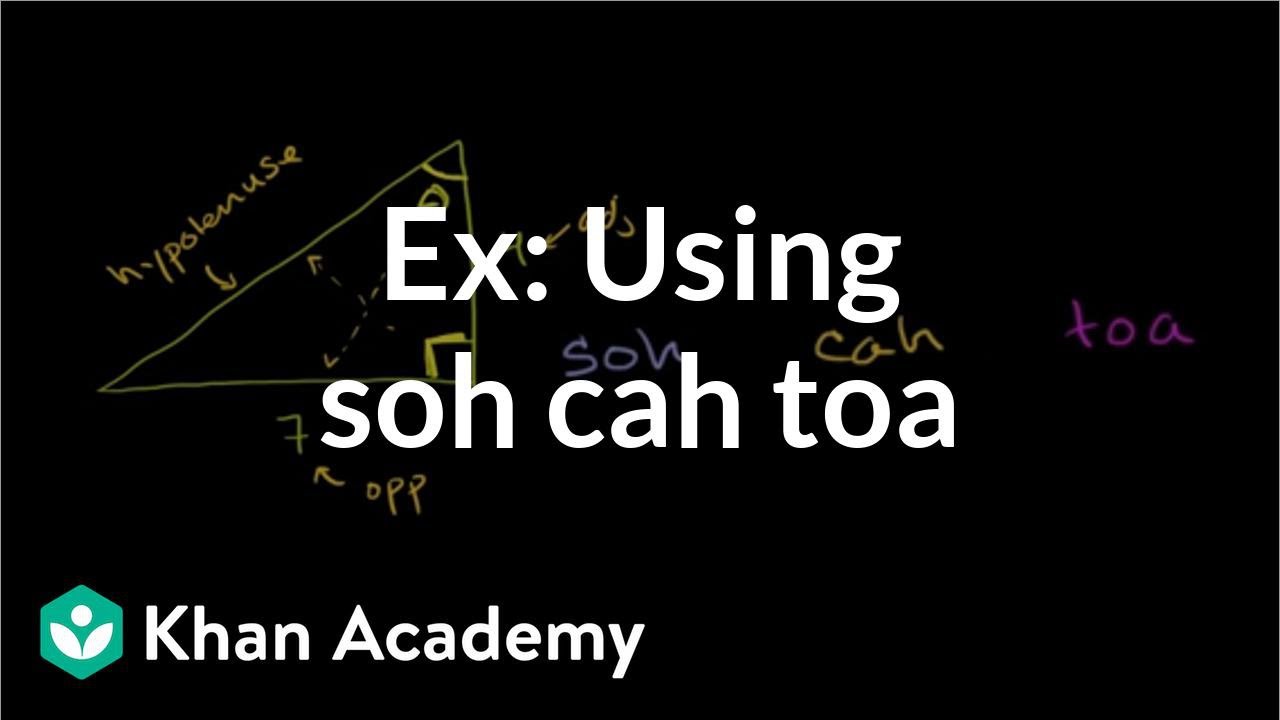
Worked example evaluating sine and cosine using soh cah toa definition.
Practice this lesson yourself on KhanAcademy.org right now:
https://www.khanacademy.org/math/trigonometry/basic-trigonometry/basic_trig_ratios/e/trigonometry_0.5?utm_source=YT&utm_medium=Desc&utm_campaign=Trigonometry
Watch the next lesson: https://www.khanacademy.org/mat...
 lavish geyser
why if i use theorem of marlen or euclides theorem gives me different results?

 simple rune
What are the rotational symmetries of the rational plane Q^2?
dark sparrow
those would be the rotations by angles whose sine and cosine are both rational i suppose

 waxen flume
@spring tusk exam?
 spring tusk
nah jus homework
 hollow coral
sin(60)/cos(60) = tan(60)= sqrt(3). Dunno if this is what they want tho.

 rotund scaffold
2 rad 6/rad 3=? in simplest radical form?
rotund scaffold
radical
humble pulsar
specify which radical
rotund scaffold
2
humble pulsar
so sqrt()
 silent plank
consider the special properties of the type of triangle you are given
 signal swallow
have you attempted any of them?
 upper blaze
pallid plover
upper blaze
pallid plover
This one looks interesting to try, do you have any ideas?
 high bramble
 marble copper
POOP
dark sparrow
wrong server?
upper karma
Damn I thought you were talking about the rectum
that chamber at the end of the large intestines
pallid plover
upper blaze
This one looks interesting to try, do you have any ideas?
Nope, I'm stuck
spring tusk
Given tan 2theta = 0.8234 solve for 0 degrees <= theta <= 720 degrees to the nearest degree (Hint: there are several angles that satisfy )
how would i solve this?
do i jus do the recipricle to find the answer?
spring tusk
<@&286206848099549185>
 hazy valve
spring tusk
do i jus do the recipricle to find the answer?
hazy valve
spring tusk
do i jus do the recipricle to find the answer?
so the inverse of tan (and then dividing by 2) will give you 1 answer
but from 0 to 720, tan(2x), you'll get the same answer multiple times, so you need to think about the period of tan(2x)
(also reply to my messages so i get ping'd)
spring tusk
hazy valve
so the inverse of tan (and then dividing by 2) will give you 1 answer
but from 0...
so do i just get the recipricle answer and subtract it by 720?
and devide by 2?
hazy valve
spring tusk
so do i just get the recipricle answer and subtract it by 720?
i think we should do a few steps before doing this question if that's alright
can you solve tan(x) = 1 for me, and how you get there?
spring tusk
tan^-1 1 =45
hazy valve
spring tusk
tan^-1 1 =45
be careful with brackets but yes, that's right
what you're using here is "tan inverse" (sometimes called "arctan") - not to be confused with the "reciprocal", which means 1/tan (sometimes called "cot"). i know they use very similar notation but unfortunately it's something to keep in mind
hazy valve
spring tusk
tan^-1 1 =45
now, 45 degrees is one correct answer. can you give me another answer that solves tan(x) = 1?
spring tusk
hazy valve
now, 45 degrees is *one* correct answer. can you give me another answer that sol...
uh i cant think of one
root 2025?
hazy valve
spring tusk
uh i cant think of one
here's a bit of a clue
 spring tusk
225
hazy valve
spring tusk
225
yes exactly
now, tan is periodic by 180 degrees. that means that you if you add (or subtract) 180 to any degree, you get the same value of tan (notice that 45 + 180 = 225)
with that, can you give me another answer to tan(x) = 1?
spring tusk
405
hazy valve
spring tusk
405
perfect
now let's try tan(2x) = -1
can you give me a few answers for that?
spring tusk
135,315,495 and so on
hazy valve
spring tusk
135,315,495 and so on
so tan of (those values) gives me -1
but i was very sneaky and asked for tan(2x) = -1
can you modify your answer? (also reply to my messages to ping me)
spring tusk
hazy valve
so tan of (those values) gives me -1
but i was very sneaky and asked for tan(***...
67.5,157.5,247.5
hazy valve
spring tusk
67.5,157.5,247.5
perfect 🙂 now you can try your original question
spring tusk
ok i think i got the answer for it
spring tusk
hazy valve
perfect 🙂 now you can try your original question
i got 379.73402064
hazy valve
spring tusk
i got 379.73402064
i think you're slightly off by a few digits, just double check your calculation (also don't forget to give your answer to the nearest degree)
spring tusk
hazy valve
i think you're slightly off by a few digits, just double check your calculation ...
ok thanks a lot man
hazy valve
spring tusk
ok thanks a lot man
want me to check your final answers?
spring tusk
ya if u can
spring tusk
hazy valve
want me to check your final answers?
i double checked it n got the same answer
hazy valve
spring tusk
i double checked it n got the same answer
great, if you're happy 🙂
earnest basin
@hazy valve hi can u help me with this

 tame pumice
earnest basin
tame pumice
earnest basin
Huh
hazy valve
earnest basin
<@352625096772288513> hi can u help me with this
i don't understand the question?
also in general you're better off asking in the Math Help category, and if no one responds in 15 mins, using the @helpers ping
upper karma
yeah that makes sense but they should specify to avoid confusion
Like the same triangle, not the same type
I mean you could have the same type of triangle that being an equilateral but not congruent to the initial
So you could have been given a unit equilateral
hm you're probably not getting me
idk how to explain it verbally

What i'm asking is this
so lets say you've been given a 5 cm equilateral triangle
are you only allowed to use that
so we can't change the size of it

yeah but angles won't change
upper karma
upper karma
so take in this image for example
all interior angles are 60
apart from the exterior angles

 lyric bridge
spring tusk
quick question both of these can be found in quadrant 2
lyric bridge
spring tusk
quick question both of these can be found in quadrant 2
yes i believe so
 versed river
 toxic ravine
could someone help me with f
 silent plank
What's the question asking for?
 unique condor

İs there any proper method other than solving for annoying equations and substuting
 silent plank
what have you tried
earnest basin
Help me
humble pulsar
earnest basin
Help me
someone did try and help, you ignored it
earnest basin
Where?
humble pulsar
literally read after you posted the picture..
earnest basin
Idk who she's talking about i didn't know
humble pulsar
I mean you also pinged helpers right away, so clearly you havent read the rules
clearly they were talking to you...
who else would they have been talking to?
humble pulsar
it was very clearly directed at you, given it was 7 minutes after you posted, and the previous question was from an hour prior to yours
earnest basin
I didn't read the hours after the girl posted her question.
U should've say, " oh someone will help me, look up"
I didn't IGNORED it
That's different
humble pulsar
then why didnt you respond to it
you also have yet to answer the question Ramonov asked you
earnest basin
What respond? Why would i respond if i think i am not the one ramonov talking to
Didn't i told u multiple times i didn't know ramonov is talking to me bobalicious kengenemers
silent plank
regardless, now you know
earnest basin
Yeah i know now
silent plank
now since you want a ping to make sure:
@earnest basin
what have you tried?
acoustic jungle
what is a bobalicious kengenemers
toxic ravine
silent plank
What's the question asking for?
sorry about the confusion, i shouldve added detail and not sounded so vague but essentially i needed to determine an equation for F
silent plank
did you still need help with the question?
toxic ravine
yeah
silent plank
are you familiar with the standard equation of a circle?
toxic ravine
not really
silent plank
the equation of a circle with centre $(h,k)$ and radius $r$ is:
$$(x-h)^2 + (y - k)^2 = r^2$$
somber coyoteBOT
ℝamonov
 earnest basin
acoustic jungle
what is a bobalicious kengenemers
earnest basin
acoustic jungle
what is a bobalicious kengenemers
Beautiful😀
 south igloo
Can someone explain this

 restive nexus

 cursive jewel
south igloo
Can someone explain this
cursive jewel
south igloo
Can someone explain this
what part do you need help with?
south igloo
cursive jewel
what part do you need help with?
All
cursive jewel
alright so a line is composed of infinitely many points
but a few points are defined in the graph
what are 2 points that form a line where one of them is C
south igloo
yes
cursive jewel
yeah but they are pretty helpful
dark sparrow
@wheat dome if you are suicidal then you should contact a suicide hotline and/or get a therapist, preferably both.
 wheat dome
oh I'm not lol
I prob should have said that 😳
I've never been more happy to be fair
wheat dome
cursive jewel
yeah but they are pretty helpful
yea I guess
and too the calculator does make it much easier
upper karma
Okay, I've been studying trig for about 2 years now and I still don't know what sine ACTUALLY means, when you say sin(30) what are we doing to that 30? why do we have trigonometry at all? I can't comprehend the sine function or the curves in my head, just what??
<@&286206848099549185>
humble pulsar
it's the y value of the co-ordinate on the unit circle when the arm makes a 30 degree angle
upper karma
I still don't quite understand, can you elaborate?
so is there a specific "expression" we have to follow? like f(x) = 4x+3 so sin(x)= ?
what are we doing to the x?
@humble pulsar
humble pulsar
I mean, yeah there's taylor expansions for sine and cosine, but what I said is sufficient
a point (x,y) on the unit circle can be written as (cos(t),sin(t)) for the corresponding angle t
upper karma
nono, why do we have sine, cosine or anything really? how was it invented and how was it defined as originally?
upper karma
humble pulsar
you also dont need to ping me every message
yeah, sorry
humble pulsar
"sorry for pinging, let me ping you again"
upper karma
yeahh, no pings, got it lol
humble pulsar

Early study of triangles can be traced to the 2nd millennium BC, in Egyptian mathematics (Rhind Mathematical Papyrus) and Babylonian mathematics. Trigonometry was also prevalent in Kushite mathematics.
Systematic study of trigonometric functions began in Hellenistic mathematics, reaching India as part of Hellenistic astronomy. In Indian astronom...
modern math just stuck with sine cosine tangent secant cosecant and cotangent
upper karma
I'm much more confused now, What is chord theta? How was it derived? Why did they use sine to define sine? I've had the same problem with other explanations, What are we doing to that 30 in sin(30)??
humble pulsar
"why did we use sine to define sine"
this floor is made of floor
and idk im not a historian
 flint nova
Sin(x) can be defined in a lot of ways. The most common one is the one defined for right angled triangles where sin(x) = opposite side / hypotenuse.
flint nova
flint nova
Sin(x) can be defined in a lot of ways. The most common one is the one defined f...
This can be used in the real world to find angles given sides or sides given angles.
 low estuary
can someone help 🥲

all of them are asking the degrees dont care about the lang
<@&286206848099549185>
grim rampart
can someone help me with a proof
i got stuck
i need to prove
d => e

this is what ive tried so far

if someone can please help
im not sure if im on the right path
upper karma
I was trying to show in $\mathbb{H}$ -Poincaré half-plane model- that hypercycles defined for a given line $l$ and a given $a$ in $\mathbb{R}$ as $$H(l)={z \in \mathbb{H} : d_{\mathbb{H}}(z,l)=a } $$
are not lines.
To prove something I tryed to argue that given that $Mob(\mathbb{H})$ acts transitvely on the lines of $\mathbb{H}$ I can find the hypercycles of the imaginary axis and via the $\gamma \in Mob(\mathbb{H})$ that maps my line in the imaginary axis i can state $$H(l)=\gamma^{-1}(H(\gamma(l))$$
Where I'm using the fact that a Möbius transformations preserves distances. At this point I defined [already here i have doubts] $d_{\mathbb{H}}(z,l)$ for a given $z \in \mathbb{H}$ and a line $l$ as the inf of the distances $d_{\mathbb{H}}(z,w)$ with $w \in l$.
Given this and the general assumption $z=a+bi$ and $w=ki$ i'm left with trying to calculate the inf of $$arccosh(1+\frac{|a+(b-k)i|^{2}}{2bk})$$.
Is any of this correct? There is any "distance from a given point to a given line" standard formula in hyperbolic geometry? Thanks for any help and hint.
somber coyoteBOT
Stephen

 grave marsh
low estuary
can someone help 🥲
grave marsh
low estuary
can someone help 🥲
hi

we get, 180-(96+x)=180-(96-x+56) implies x=28 and angle BAC=96-x=68°
grave marsh
low estuary
can someone help 🥲
btw can you share the question booklet with me?
low estuary
grave marsh
we get, 180-(96+x)=180-(96-x+56) implies x=28 and angle BAC=96-x=68°
oohh
danke sehr schön
low estuary
grave marsh
btw can you share the question booklet with me?
ofc but its in turkish
grave marsh
low estuary
ofc but its in turkish
nvm can you share? they look awesome
 grave marsh
low estuary
it is this and if i find the pdf i will send ti
grave marsh
low estuary
it is this and if i find the pdf i will send ti
i think i got the pdf. thanks
low estuary
nice 👍👍👍
the yellow ones are easy, blue ones are medium and pink ones are the hardest ones
grave marsh
okayy
cursive jewel
yeah i took geometry
 uneven dust
Geometry
 uneven dust
I converted -cos2pi/7 to +cos5pi/7 and then we get all 3 in the n*pi/7 where n is odd..but iam stuck there
 uneven dust
Ok sure I'll get back with u
upper karma
club the 1/7 and 3/7 terms
uneven dust
Yea I'll do it
 naive storm
find the sector bounded by an arc whose measure is 2/3 pi radians and whose diameter is 4 ft to the nearest whole number
naive storm
area of sector*
dark sparrow
and 4 ft is meant to be the diameter of the circle that the arc is taken from, right?
naive storm
yeah
dark sparrow
okay, so what is troubling you?
dark sparrow
it seems that @naive storm chose not to respond to me even two and a half hours later
who, me? or them?
dark sparrow
where's D?
do you find the 2D equivalent of this bizarre too?
that the two tangents to a circle from the same point have the same length?
upper karma
Can sm help with thiss
 dark sparrow
do you know how to find the sum of all interior angles of a polygon?
upper karma
dark sparrow
do you know how to find the sum of all interior angles of a polygon?
No sorry
dark sparrow
(hint: it depends only on the number of sides)
upper karma
dark sparrow
(hint: it depends only on the number of sides)
Yeahhh... I don’t know what that means
So do you mind helping me solve it?
dark sparrow
to find the sum of all interior angles in a polygon, you don't need to know its exact shape, only how many sides it has
and the sum of all interior angles in a polygon with n sides is 180*(n-2) degrees.
upper karma
It has 10 sides
upper karma
dark sparrow
and the sum of all interior angles in a polygon with *n* sides is 180*(n-2) degr...
So what do I do
What’s the formula
Would is be (180) 10-2?
@dark sparrow
Since it has 10 sides
dark sparrow
me: [literally gives you the formula]
you: what's the formula???
dark sparrow
upper karma
Would is be (180) 10-2?
no. be careful about your placement of parentheses
upper karma
dark sparrow
no. be careful about your placement of parentheses
I got this is this right?
 upper karma
Thank lmao
 silver fog
I tried expanding and stuff but nothing seems to help
 flint nova
do you have to prove the sin identity given that the cot identity is true?
or the other way around xD
dark sparrow
both
silver fog
flint nova
do you have to prove the sin identity given that the cot identity is true?
Both ig
dark sparrow
this looks like it may be very painful to do unless there's some kind of trick for it
hm. i have an idea.
but i'll need some time to write it out in full
all i've managed to do is to reduce the right half of the iff to $$(\cot(\theta) - \cot(A))(\cot(\theta) - \cot(B))(\cot(\theta) - \cot(C)) = \frac{1}{\sin(A)\sin(B)\sin(C)}$$
somber coyoteBOT
Ann
 dark sparrow
dunno how helpful that is
dark sparrow
i know how to prove iff-statements, thank you very much
dark sparrow
man the typesetting on that site is just painful
 viral kestrel

 fossil yacht
what are you trying to accomplish?
 spice plank
How do I start Bc I have no idea how to start this in a 2 column proof

 rotund garnet
First of all, you learn that D=E
And you learn that ABC = ACB
So: EBC = DCB (E=D)
DBC = DCB (ABC = ACB)
DBC = DBC
covert swallow
$\angle ABC \cong \angle ACB, and \angle BDC \cong \angle BEC$, because angles with the same measure are congruent
somber coyoteBOT
mchen10
 covert swallow
you can use the third angles theorem to determine that $\angle EBC \cong \angle DCB$, and because the angles are congruent, then their measures are equal
somber coyoteBOT
mchen10
 silver fog
Can someone pls help out ....I tried squaring the original eqn and writing and using multiple angle formulae but ain’t working
 silver fog
I did this too but to no avail...Could u be a bit more specific
somber coyoteBOT
Cooler Euler

 rotund linden
@silver fog
somber coyoteBOT
Cooler Euler

 lime shuttle
Hello,
is that someone would have the proof of Simpson's formulas with the complexes
dark sparrow
...what formulas?
 obtuse patio
lime shuttle
Hello,
is that someone would have the proof of Simpson's formulas with the compl...
obtuse patio
lime shuttle
Hello,
is that someone would have the proof of Simpson's formulas with the compl...
this is pre uni
not after uni
lime shuttle
Tous formulas cos(p)+cos(q)=2cos(p+q)/2*cos(p-q/2
I think we should use Euler's formula
lime shuttle
Yes this is Simpsons formula
dark sparrow
first time i've heard it called that
in any case, their proofs rely on the angle sum/difference formulas, which can be proved in the complex case without much trouble
lime shuttle
But i would like to solve it with the complex
dark sparrow
what do you mean
you want to spend hours and hours painstakingly verifying cos(p) + cos(q) = 2 cos( (p+q)/2 ) cos( (p-q)/2 ) with careful manipulation of complex exponentials?
lime shuttle
dark sparrow
in any case, their proofs rely on the angle sum/difference formulas, which can b...
I m in upper sixth and not in a university. It s a little bite complicated for me but i found the solution.
dark sparrow
$\cos(x+y) = \cos(x)\cos(y) - \sin(x)\sin(y)$ is not uni-level
somber coyoteBOT
Ann
 lime shuttle
Simpson formula IS uni level
 small prawn
no it's not i have it in my textbook too
upper sixth student as well
and i thought simpson's formula is for integration?
 earnest echo
Why is it called Simpson formula
I'm pretty sure greeks knew it
 ivory steeple
This may be an algebra problem. Let me know if anyone can help. Translating y=2^x right 3 units and up 5.
 bitter spoke
earnest echo
Why is it called Simpson formula
I'm pretty sure greeks knew it
bitter spoke
earnest echo
Why is it called Simpson formula
I'm pretty sure greeks knew it
simpson's rule for approximating the definite integrals?
earnest echo
No, sum to product formulas in trig
covert swallow
ivory steeple
This may be an algebra problem. Let me know if anyone can help. Translating y=...
translating a function to the right by n units is the same as subtracting n from x first, then applying the function. translating up is just adding to the function
 lusty pollen
Hey guys I kinda need help I’m stuck on trying to figure out what delta math is trying to tell me

 lime shuttle
small prawn
upper sixth student as well
lime shuttle
small prawn
upper sixth student as well
In France, we learn this formula in the first year of university called "classe préparatoire". With my professor we proove it with the complex.
robust crane
does any one know if there is an easy way to test whether a point is interior to an arc as in facing the arc from the inside vs from the outside like this:

note that blue point could easily be outside of the radius too on the other side of the circle
so radius check won't cut it
 maiden path
You can check the concavity of the arc around that point
maiden path
robust crane
does any one know if there is an easy way to test whether a point is interior to...
rotund garnet
You could draw a line between the point and the arc so that the line has a 90° with the arc
robust crane
not sure i understand
can you draw what you mean
@maiden pathi tried convexity test but it doesn't work for me
the way i tested it might be flawed tho but i created a polygon of 4 points but the problem is the polygon is complex with intersecting edges so it makes it very tricky
rotund garnet
Can you show it?
robust crane

@rotund garnet
i was hoping to get a nice quadrilateral then use cross products to test convexity
but since the edges some times intersect it didn't work as i hoped
maybe i need to use a different set of 4 points
rotund garnet
Why you don't you a straight line?
robust crane
what do you mean
rotund garnet
P -> Arc so that the dot product is 0
rotund garnet
robust crane
im not seeing why derivatives help me here though i can't visual it
rotund garnet
When you got a straight line from the x-axis through the arc and the point, what could length of O -> A and O -> P say?
robust crane
oh you mean check the directions of P-O and ArcP - O ?
rotund garnet
The direction ist the same because it's 90° to the arc
robust crane
well my original thought was to check the direction to the radial vector like this

so if the two lines point the same way i must on the underside of the curve
but it didnt work
rotund garnet
I don't understand why you don't you only a straight line and the angle
robust crane
as you see here the dot is negative but im still on the outside of the curve
 robust crane
rotund garnet
I don't understand why you don't you only a straight line and the angle
robust crane
rotund garnet
I don't understand why you don't you only a straight line and the angle
because i don't know what you mean by that
can you draw what you mean ?
rotund garnet
 robust crane
but you've got 2 arcs going on there im confused by what is going on there
rotund garnet
That's the sign for a 90°
robust crane
yeh but your curve is multiple arcs
rotund garnet
And?
robust crane
im just trying to check this nothing more

im not seeing how your diagram solves that
for convexity
robust crane
nevermind i think i got it
somber coyoteBOT
ryam

 lavish torrent
upper karma
lavish torrent
upper karma
hi
i joined this place because i found a proof that i want to share but i am bad at proofs but i discovered this myself

so it starts with these triangles, and the angle between these two triangles (assuming that they are right triangles) is supposed to be 45
idk how to prove it formally, but i made i diagram proving it is 45
 acoustic jungle

or use the cosine law because the middle triangle is a sqrt5 sqrt10 sqrt5 triangle
cos(theta) = 1/sqrt2 => theta = 45
upper karma
i never heard of a sqrt5 sqrt10 sqrt5 triangle in geometry idk how
i discovered it on accident while working on a ball


 acoustic jungle
Yes. The side lengths are from the pythogorean's theorem.
upper karma
and since all triangles are "upright", you can tell that there is a right angle there by calculating the slopes (-2, 1/2) and seeing that they are negative reciprocals of each other. knowing that it is a right triangle and isosceles, you can now tell that that angle must be 45
 acoustic jungle
yes, that works as well.
grave marsh
upper karma
and since all triangles are "upright", you can tell that there is a right angle ...
hey which application do you use to edit these figures?
upper karma
grave marsh
hey which application do you use to edit these figures?
i use gravit designer, its an in browser based vector graphics editor free to use
grave marsh
upper karma
i use gravit designer, its an in browser based vector graphics editor free to us...
okay nice
upper karma
its not for graphing equations though, you cant really make things like parabolas and waves
 pure bronze
upper karma
this triangle?
pure bronze
upper karma
this triangle?
Do you still need help with that?
I might have an idea of maybe how to do this, it involves trigonometry though, if that’s fine with you
 radiant girderBOT

 covert swallow
all of them?
upper karma
gimme a sec
for 33, angle XBC has an angle of 102 degrees i think
that is because of the angle properties in parallel lines and stuff, this is only possible to solve because it is an isosceles trapezoid
covert swallow
since the trapezoid is isosceles, the base angles are congruent, so the left lower angle has a measure of 78 degrees. BC is parallel to AD, and by the same side interior angle theorem, the angle is supplementary to angle A.
 untold cosmos
covert swallow
all of them?
untold cosmos
covert swallow
all of them?
sadly yea
upper karma
idk how to do 34, i think you do 57 - 21 then add 57 but im not sure
 arctic glade
anyone here good at proofs? i really need 2 proofs done by tomorrow
dark sparrow
we won't do your homework for you here
arctic glade
never said i need you to do my hw but ok
humble pulsar
arctic glade
never said i need you to do my hw but ok
have you tried asking the question...?
dark sparrow
sure did sound like you wanted someone to do those proofs for you
if that wasnt the case then you gotta word your questions better
untold cosmos
anyone know how to do this
 subtle palm
untold cosmos
anyone know how to do this
subtle palm
untold cosmos
anyone know how to do this
hiii i might can
for 34 use similarities between KLAB and KLMJ
since 2*LA = LM
and 2*KB = KJ
so it should be smooth sailing from here; diff between KL and AB are half as KL and MJ
that's the only one i can do, others seem jibberish
#❓how-to-get-help for the rest
subtle palm
upper karma
that is because of the angle properties in parallel lines and stuff, this is onl...
that is correct
lol i just realized mchen10 did 34
DAGNABIT
 limber vapor
i love geometry
subtle palm
me too
limber vapor
i rlly love it more than anyone else
subtle palm
limber vapor
i rlly love it more than anyone else
oh is that so
limber vapor
and wait a sec i rlly love kar98 and scope x6 too
subtle palm
limber vapor
and wait a sec i rlly love kar98 and scope x6 too
sorry your hints are beyond comprehension
have you ever TRIED cod ww2?
it's the best interpetration
acoustic jungle
Ohh he asked a question lol
I thought he just said "I need help" and posted nothing
limber vapor
alot i think
acoustic jungle
untold cosmos
2*57=JM+21. It's a theorem
you can prove it with similar triangles and area.
subtle palm
acoustic jungle
you can prove it with similar triangles and area.
lol everyone got 34
you seem qualified to do the exercises part
we already did 33 34
subtle palm
limber vapor
i know every sniper ever existed
name all kar98k zooms then
limber vapor
subtle palm
name all kar98k zooms then
i mean it depends
on what game u r playing with kar98
subtle palm
not the game
limber vapor
subtle palm
not the game
ok lemma see
subtle palm
i meant the alltime hit Real-Life 2 Alyx
subtle palm
limber vapor
ok lemma see
bruh cheating
subtle palm
limber vapor
x4,x6 and x8
"ok lemma see" do you have a list of scopes from the 20th century lol
limber vapor
subtle palm
"ok lemma see" do you have a list of scopes from the 20th century lol
i meant "ok lemma think"\
subtle palm
limber vapor
i meant "ok lemma think"\
ah yes the all-new innovative mind-seeker
where you can see minds

limber vapor
bruh dude
subtle palm
limber vapor
bruh dude
nothin, just sussin u out
btw it is correct, there are x4 x6 and x8
ok now can we move to #chill
acoustic jungle
untold cosmos
For exercise 1. Use congruent triangles. 2x+20=5x-4. y^2+26 =90 because that is a right angle and AC is double of AF
for exercise 2. Use congruent triangles again
for exercise 3, it seems like trig bash to me.
dark sparrow
you mean if a light ray lands exactly on a corner?
it gets scattered.
i suppose so
though a single ray would just bounce off randomly
i think you're overthinking it
in the real world, no corner is perfectly sharp. if you zoom in far enough you'll find rough spots, especially at corners like what you've depicted
¯_(ツ)_/¯
go ahead ridicule me
 patent plume
Maybe some sort of quantum shenanigans
grave marsh
how do you define a tangent
i mean i only know that "tangents are curve that touch a curve at exactly one point"
idk anything else
so you can make this curve yes?
x axis
 dense bough
it's undefined at a sharp point
grave marsh
isnt x axis the tangent line??
dense bough
the proof is that from the left, the limit is -x but from the right, the limit is x]
thus we have two different tangents which can't happen
grave marsh
no it wont?
a line passing through (0,0) not x axis intersects the parabola at two points
grave marsh
dense bough
the proof is that from the left, the limit is -x but from the right, the limit i...
isnt that circular reasoning? cuz you define the derivative at the point to be the slope
dense bough
well my point is that it's non-differentiable at x = 0
grave marsh
is this true? if you zoom in it intersects twice
dense bough
so the tangent doesn't exist
grave marsh
dense bough
so the tangent doesn't exist
but it's kinda circular reasoning ig becuz tangents come before calculus
i mean slopes are primitive than differentiation
dense bough
you need calculus to rigorously define tangents
except when the gradient is constant, such as for a straight line
grave marsh
dense bough
you need calculus to rigorously define tangents
okay