#geometry-and-trigonometry
1 messages · Page 357 of 1
 upper karma
 cloud stump
this guy put it as an axiom that's why i say it
@grim rampart does "a" stand for axiom? it's a theorem
 grim rampart
ah yeah
 dark sparrow
though of course different axiomatizations of geometry exist
so maybe all this is pointless
cloud stump
Yeah true
@grim rampart just make sure to not mix up axioms with theorems like in the specific axiom system you're using
grim rampart
oh okay
how can i solve certain geometry problems
i get stuck on how to start the proofs
dark sparrow
make a diagram depicting all the info you're given
attempt to recognize familiar objects such as triangles or arrangements of straight lines
 lost jetty
 dark sparrow

just to copy your diagram and make it slightly more readable
i have a stinking feeling like itll involve a lot of fuckery with the laws of sines and cosines
 silk patio
AD is parallel to BC?
upper karma
if you make a copy of ABD and paste AB along CD (calling the new point E), ECBD will be a trapezium and point A will coincide C, so angle A will be equal to D = 50
the fact that its a trapezium can be proven by similar triangles ig
silk patio
The trapezium trick is pretty
upper karma

 lofty oxide
does anyone know why inverse functions are reflected in the line y=x? if we have a point (x,y) and we flip the order, how do we know those two points are reflected in the line y=x?
 balmy stream
lofty oxide
does anyone know why inverse functions are reflected in the line y=x? if we have...
balmy stream
lofty oxide
does anyone know why inverse functions are reflected in the line y=x? if we have...
Cause the definition of inverse implies, expressing x, in terms of y. Now think of it :)
lofty oxide
balmy stream
Cause the definition of inverse implies, expressing x, in terms of y. Now think ...
yeah i know the points swap but why does that swap cause a refelction in y=x
is there like a geometric proof of this?
 dreamy ridge
Not sure of a geometric proof but think about what an inverse function does intuitively, for the original function it takes an input and maps that to an output. The inverse will reverse that process and revert The new input (which is actually the output of the original), into the output of the new function ( which is the input of the original)
When we find an inverse function algebraically, we swap the x and y’s in order for this to occur
Hence the functions are reflections of each other in the line y=x
lofty oxide
dreamy ridge
Not sure of a geometric proof but think about what an inverse function does intu...
oh ok that makes sense
thanks!
 heady bronze
Hi! So I tried this problem but I keep getting 32 but my teacher says it's wrong and I'm not sure what to do-

I believe this is coordinate geometry
dreamy ridge
How are you working out 32 btw?
So first find the vector PQ and the vector QR, these are perpendicular to each other. Find the magnitudes of these vectors (the lengths) and multiply them together for the area of the rectangle
 smoky rover
 heady bronze
dreamy ridge
So first find the vector PQ and the vector QR, these are perpendicular to each o...
heady bronze
dreamy ridge
So first find the vector PQ and the vector QR, these are perpendicular to each o...
Oh sorry let me send the work I tried-
I did two things, I tried this square method which led me to 32 and also the distance formula which got me to 25


Wait
6 square is not 12 hold on
Hmm she says the answer is 30
dreamy ridge
heady bronze
Hmm she says the answer is 30
I got that also
6^2 +3^2
Is 36+ 9
45*
heady bronze
Oh my I wrote 48 that's why-
dreamy ridge
So the other length is root 45, so area = root 45 x root 20
Which is root 900
Which is 30 units^2
dreamy ridge
Go ahead
 dreamy ridge
See the triangle WXY? All you need to use is the fact that angles in a triangle sum to 180, so that 8x-3+3x+12 + <WXY =180
Then solve for the angle
dreamy ridge
Unless I’m under simplifying it lol
heady bronze
Oop- Honestly Imma take your word for it!! THANK YOU!!
dreamy ridge
But you need to find x first
dreamy ridge
heady bronze
Oh so would we just do 8x-3+3x+12 =180?
But it isn’t, how did you get that?
heady bronze
Oh I just took the equation that you gave but took the wxy out-
I'm guessing thats not correct-
dreamy ridge
Bc it’s a rhombus the supplementary angles sum to 180, so that 8x-3+5x+6 + wxy also= 180
So now we have simultaneous equations
Am I overcomplicating this horrifically? Probably
XD
But yeah if we can solve the simultaneous equations we can work out wxy
dreamy ridge
Basically
These angles sum to 180:

And so do these angles

So we can form 2 equations in terms of x and WXY
And I’m assuming you know how to solve simultaneous equations I’m sure you can get x and the angle that way
dreamy ridge
Yep
Bc that’d eliminate the WXY
And then you can sub the value of x in
To find the angle
dreamy ridge
heady bronze
8x-3 + 5x + 6
That equals 8x-3 +3x+12
dreamy ridge
Solve that to find x
heady bronze
SO WE PUT THEM EQUAL TO EACH OTHER-
dreamy ridge
Yes
dreamy ridge
Bc they’re both 180
dreamy ridge
Yep
dreamy ridge
Yep
heady bronze
Yaya!
dreamy ridge
Then just 180 - (8x-3)-(3x+12) for the angle
heady bronze
Would I substitute x in?
heady bronze
Ah alrighty!!
dreamy ridge
Does it give you the right answer?
heady bronze
Ah it's taking a bit sorry!! I was moving rooms
dreamy ridge
No worries lol I was just eager to know if all that was for nothing haha, haven’t done angles in years
dreamy ridge
Hmm I didn’t get that
heady bronze
138?
heady bronze
Oh wait
dreamy ridge
I got 138
heady bronze
Hopefullyyyy!!! THANK YOU SO MUCCHHH
dreamy ridge
No problem haha
heady bronze
: DDDD
balmy stream
dreamy ridge
Not sure of a geometric proof but think about what an inverse function does intu...
Yep exactly that's correct.
balmy stream
dreamy ridge
Am I overcomplicating this horrifically? Probably
Kind of XD
look, the diagonal acts as an angle bisector.
Or, use properties of isosceles ∆
It would Become a linear in one variable either ways
 livid glen
Hi, I would like to know how to solve the question 3. It says: "Find the equations of the tangent lines to the elipse (first equation describes the elipse) that are parallel to the line (equation of the line)

 wise pawn
are you allowed to use calculus?
livid glen
no unu
wise pawn
good luck 👍
livid glen
xD
I´ve been trying to solve it with a friend for about 3 hours
time to mail my teacher, i guess
wise pawn
it's probably not that bad to solve tbh, make a line with the same slope with an undetermined y-intercept and make it intersect at one point, so that probably will end up amounting to setting a discriminant=0
cloud stump
Creo que había un método fácil para determinar tangentes a cónicas
 willow kiln
cloud stump
Creo que había un método fácil para determinar tangentes a cónicas
willow kiln
cloud stump
Creo que había un método fácil para determinar tangentes a cónicas
it's really easy assuming calculus, by using implicit differentiation. Without that, Merosity's suggestion is probably the best way
 tepid path
I feel like if we scale the x and y axis properly and shift the origin, this will just be the same as finding a tangent to a circle with origin as centre of a given slope, and because of the perpendicularity of tangents to the line joining the radius i think this shouldn’t be so bad
Oh i just saw merosity’s answer, i think even in my way you would need to solve a quadratic so it isn’t really any better
 fickle trout
Hey guys, I tried in the questions channels, without any luck. Since it's geometry, I thought I might try here:
I have two 2d coordinate systems, and I need a formula to transform a point from system 1 to system two. All I have is the information that 3051/7966 is -127.94/49.1 and that 9664.96/8836.96 is -114.4/155.55
Someone told me to normalize, and then compare angles and whatnot, but I'm unable to pick up from there.
 umbral snow
Yike that's jibberish.
What is 3051/7966?
What does it mean for something to be "is"?
Maybe your point is (3051, 7966) and after the transformation you expect it to go to (-127.94, 49.1)?
fickle trout
yes 😉
and the other point too
my gut feeling tells me with those two "point pairs" it should be possible to come up with a transformation "formula", but I have no idea how
umbral snow
,w solve system -127.94 = 3051a + 7966b, 49.1 = 3051c + 7966d, -144.4 = 9664.96a + 8836.96b, 155.55 = 9664.96c + 8836.96d
fickle trout

 somber coyoteBOT


 Requested by Kaynex#7520
umbral snow
Requested by Kaynex#7520
umbral snow
Okay so there's exactly one linear system that can be used as a mapping for your points
If you keep (0,0) to (0,0) and stretch/rotate everything else, it can be done
umbral snow
I don't know what "do" means here
fickle trout
Well, come up with a "formula" to transform arbitrary points from the first coordinate system to the second. Sorry if I don't know the right words to ask the question, bear with me, I'm an old man.
umbral snow
Right. So if your point is (x,y) and you want to transform to (u,v) then:
u = ax + by
v = cx + dy
Where a,b,c,d are those numbers in the picture
fickle trout
oh! I'll try that, thanks!
umbral snow
They should probably be written as decimals oop Wolfram just didn't feel like doing that
fickle trout
sure, I can do that 😉
umbral snow
Good luck with it! Feel free to ask if you need anything else with it
fickle trout
thank you very much
 dapper bronze
 dense trellis
@dapper bronze i can help.
silk patio
It’s a practice test, what’s the rule against that
 humble pulsar
silk patio
It’s a practice test, what’s the rule against that
humble pulsar
silk patio
It’s a practice test, what’s the rule against that
read test
 narrow plinth

The distance between A and D is 1
It's a equal sided triangle in a circle
Find a,CD and the radius

I've tried to use the cosine theorem after i got that 1+BD=CD but idk hot to continue
cloud stump
You have to calculate DCA
The angle DCA
Use the fact it is a cyclic quadrilateral
@narrow plinth
cloud stump
It's the angle formed by DC and CA
narrow plinth
Okay thx
cloud stump
It's an inscribed angle
After that you'll notice AD is the side of a regular polygon inscribed in the circumference
And then u get the radius from that
narrow plinth
One more question
I tried to do this

Is the sin of the angle CAD times CD equal to the gray line
cloud stump
Are you required to use trigonometry?
cloud stump
Okay do you know inscribed angles?
narrow plinth
Yes
cloud stump
Okay, since the angles DAB and BCD are both subtended by the same arch, they are equal
And you know BCA because that's an equilateral triangle, so you can take the difference to get DCA
Btw all the answers are nested radicals
 empty slate
Is it possible to divide a circle's circumference by the distance a point has traveled along said circle to get the arc's degree of measure?
Or am I wildly drawing false thoughts
 frigid tundra
hello
wise pawn
the path travelled / circumference = angle degree travelled / 360 degrees
frigid tundra
a basic EFG prism such as EF = 3cm, EG = 4cm and FG = 5cm and the height of 10cm
a) calculate the volume of the prism
b) calculate the lateral surface of the prism
c) calculate the total area of the prism
 stuck edge
how do I find b (the period) of the trig equation y = 2sin(x)+1?
frigid tundra
someone help me w this geometry hw 💔

 static python
 median needle
can someone help me with this
median needle
can someone help me with this
for number 7
the amplitude would be 3

period is 2pi/2, which is pi
phase shift is none
cause there's nothing being subtracted or added to x (in paranthesis)
 quick crag
can somebody help plz
 upper karma


 nova rose

 uncut path
 rapid tartan
Use area of sector formula
rapid tartan
which is? @uncut path
uncut path
Pi r^2 * theta/360
rapid tartan
what’s the theta? @uncut path
uncut path
rapid tartan
what’s the theta? <@849988637173350410>
Angle of sector i.e 112
 zenith garnet
How can I find tan(275), given sin(85) = 0.996? Without using any calculators to directly calculate the value.
 finite edge
tan(275) = tan(275-360) = -tan(85) = -sin(85)/cos(85)
rapid tartan
would it be 98? @uncut path
 inland mountain
Triangle xyz will undergo a transformation to create triangle x'y'z' which of the following rules will result im triangles that are the same size?

Would it be the first and the 4th ones?
 half patio
A triangle has angles that measure 35°, 65°, and 80°. If the shortest side of the triangle is
18 inches, find the length of its longest side to the nearest inch.
how would i solve something like this
 manic plank
half patio
A triangle has angles that measure 35°, 65°, and 80°. If the shortest side of th...
manic plank
half patio
A triangle has angles that measure 35°, 65°, and 80°. If the shortest side of th...
You learn any trig identities yet?
half patio
manic plank
You learn any trig identities yet?
nope
cause of covid we aint rlly learn anything
the course was all over
and idk how to do it
manic plank
Well there is more then one way to solve this, but I'm not sure what tools you can use. I assume you can use the trig functions and Pythagorean theorem at least?
manic plank
Eh, you could use the same method to derive the law of sines to solve it without the law of sines too
dark sparrow
it'd be exceedingly cumbersome
manic plank
A little, yep. But some parts of the world still teach it by asking them to solve it without law of sines first.
dark sparrow
@half patio do you have access to the law of sines?
half patio
dark sparrow
<@752079102982225951> do you have access to the law of sines?
no, what is that
like cos sin?
dark sparrow
$\frac{a}{\sin(A)} = \frac{b}{\sin(B)} = \frac{c}{\sin(C)}$
somber coyoteBOT
Ann
 dark sparrow
does this sound familiar to you?
half patio
yeah i seen it before
dark sparrow
make a diagram of your triangle
half patio
and put all 3 angles in?
dark sparrow
make a diagram of your triangle, label it ABC (for convenience), and label all angles with their values
just the angles for now.
then show me what you got.
dark sparrow
ping me once you upload the pic here.
 dark sparrow
could've made the triangle not seem isosceles... but okay, whatever, we're not drawing it to scale anyway.
half patio
ohh
dark sparrow
this diagram is fine.
it's not to scale, but it's fine.
now, the shortest side of the triangle is 18 inches.
are you able to identify, based on the angles, which side of ABC is the shortest?
half patio
uhh they are all equal but
dark sparrow
no.
half patio
yeah i can pick one sure
dark sparrow
no, they are not all equal.
no, they are not all equal. this is not an equilateral triangle.
half patio
yeah i know
half patio
yeah
dark sparrow
okay, yes, you are correct. side AC is the shortest.
now, the problem asks for the longest side.
which side is the longest?
dark sparrow
uppercase.
AB, yes.
AB is the longest side.
now, back to your diagram, label the side AC with its length 18 in, and label AB with the letter x
and show me the diagram once you made these labels
half patio
@dark sparrow
 half patio
 dark sparrow
yes.
do you see how each fraction involves one of the sides and the angle opposite to it?
half patio
18/sin(35) = x/sin(80)
dark sparrow
no, this is not correct.
dark sparrow
and cut out the side we don't care about.
half patio
like that?
half patio
uhh not sure how to get rid of sin
dark sparrow
sin(35) and sin(80) are just numbers.
dark sparrow
no.
you cannot just erase the word "sin" from both sides of an equation just because you don't like trig.
that'd be like erasing the digit 7 from everywhere in an equation.
it's nonsense.
dark sparrow
if you really insist on pulling out the calculator at this stage...
i wouldn't do that.
you're overthinking things.
all it takes to solve for x is multiply both sides by sin(80)
half patio
then the other sin would cancel out, but wouldnt it create another?
dark sparrow
no! the sines would not cancel out!
what is it with you and your urge to cancel things out in nonsensical ways!
half patio
LOL i got no clue
dark sparrow
sin(80) does not mean the product of 80 with a number called sin !!!
the answer is x = 18 sin(80)/sin(35) !!!
and NOW you can get your beloved calculator out and have it find the value of that.
dark sparrow
jeez, hell if i know
but you need to round it to the nearest inch, which you definitely haven't done.
dark sparrow
,w 18 * sin(80°)/sin(35°)
somber coyoteBOT

 half patio
tyy
 vernal nacelle
i need HELP with some ORTHONORMAL SYSTEM / TRIGONOMTERY
show that OH x 4√5 = 4 x 8
OH x EF = OE x OF
how do i do

 silent plank
consider area of a triangle
silent plank
apply the formula for the area of triangle FOE in two different ways
vernal nacelle
i
think my calculations are wrong
i did (FO x EO) / 2 for the area
is that right
silent plank
Area = 1/2 bh where
h is the altitude relative to the respective base b
silent plank
yes
vernal nacelle
but in the end i use (FE x OH) / 2 = 16 ?
and replace numbers
but what about the equation they gave us

this is the question
silent plank
(FO x EO) / 2
(FE x OH) / 2
can both be used to get the area of the triangle
and would give you the same value. note that I at no point actually asked you to calculate the area of the triangle
vernal nacelle
i see
thanks
we calculated the area in the question before
so ill use that and write them both will equsl to 16
thank you
empty slate
I'm pretty sure a graph is needed, but wouldn't you be able to plug in A and t into the original equation?

 empty slate
are you familiar with Pythagorean theorem? a^2+b^2=c^2?
 lethal crow
yea somewhat
empty slate
let a=5 and 12=b, calculating those should allow you to find c
lethal crow
then do i find the square root of c
empty slate
yes, since you squared both 5 and 12, you would reverse the process and square root the result to find c
lethal crow
 empty slate
All angles in a triangle add up to 180 degrees; since you know two angles, can you figure out the 3rd using algebra?
empty slate
If you want, explain to me the process you think is correct and I'll add on if needed?
empty slate
right idea, wrong application; add the two known angles together, 90 and 36, and subtract that from 180.
lethal crow
then that will give me x?
empty slate
That will give you what 3 * x equals
divide the answer you got by 3, and that will leave you with x
lethal crow
ok
empty slate
What was your final answer for x?
lethal crow
18
empty slate
Nice
lethal crow
how would i find x if theres no number with x
empty slate
Using your last triangle, you would add 90 and 36, 126, and subtract 126 from 180
180-126=54, or x
lethal crow
oh so the number i get out of subtracting is x
empty slate
yes
 empty slate
oh, hold on
lethal crow
i think i got it but idk how to do the other one
empty slate
@lethal crow you could use the reciprocal of tangent to find x, since you have the opposite side with angle 25
lethal crow
empty slate
<@!757764830466932804> you could use the reciprocal of tangent to find x, since...
how do i do that (sry im kinda dumb)
empty slate
Using the reciprocal of tangent, (cot), you would do cot25(x/8)
@lethal crow or so I believe, I can't figure out my own question so I'm frying my brain over it
lethal crow
so 25x/200?
empty slate
it's been awhile since I've done that, but I don't think that's it. There's a lot of external equations that go into that one
 empty slate
Sin=o/h Cos=a/h Tan=o/a
The thing to remember is these inputs will vary on what angle you choose, with the exception of the hypotenuse.
You also need to use an angle other than the 90 that's provided
@lethal crow
lethal crow
ok
silent plank
what's that number supposed to be for?
 heady lagoon
Would anyone be able to help me personally with a couple find domain,range,period questions?
humble pulsar
 fervent valley
Does anyone understand quadratic graphs?
fervent valley
Does anyone understand quadratic graphs?
yes, glad I could help
umbral snow
Mosh is capable of helping you. I'm glad I could be of service.
fervent valley
Yes Mosh please assist me
umbral snow
Lol in the future just start with the question right away. What's up?
fervent valley
nono im stuck with the q so i cant proceed
umbral snow
Yeah what's the q?
fervent valley

so if u like look at A
The vertex would be ( -2, -3) right?
But there are 2 graphs that interesect at the same vertx
graph e and f
how am I supposed to know which one is the correct one?
umbral snow
One of those two graphs has more vertical stretch than the other
a and e have the same vertex, which has more vertical stretch?
upper karma
Anyone need math help?
 rough brook
I’m stuck in a problem could someone help? I’m supposed to find the exact cube roots of the complex number, no decimals, and I’m supposed to use radians and leave my answer in polar form -4sqrr(2)(1-i)
@upper karma could you help me??
upper karma
rough brook
I’m stuck in a problem could someone help? I’m supposed to find the exact cube r...
are u trying to find the angle in degrees?
rough brook
I don’t think I’m trying to find angles
I’m supposed to get the cube roots of the complex number
In polar form
rough brook
I’ll send a pic
upper karma
aight
 rough brook
The instructions say to find the exact cube root for that complex number
Then to leave the answer in polar form
umbral snow
Okay so putting it into polar form is the first step
rough brook
Ohh ok
umbral snow
If you can identify the magnitude and angle of the number, that's enough to put it into polar
umbral snow
Sorry missed the negative haha. Yeah! That's perfect
Now Demoivre's theorem, says that when we take the cube root, we can put it into the sin and cos instead
A cube root of this number is
2(cos(π/4) + isin(π/4))
We can get another cube root by first changing the angle by 2π, then doing this
There's three cube roots to get
rough brook
I’m getting a little confused so I’m gonna plug in the cube root for sin and cos??
umbral snow
Instead of doing
[cos(t) + isin(t)]ⁿ
You can do
cos(nt) + isin(nt)
That's DeMoivre's theorem
n is 1/3 here
dark sparrow
[walks into a restaurant] "Hellooooo!!! Can someone serve me some food!!!!!!!!!"
@earnest basin this is what you sound like rn
 livid moss
I would give Ann food before I helped Shoer with their unknown math problem.
 earnest basin
Oh sorry i'm newbie
dark sparrow
you should, first and foremost, tell us what you need help with.
 livid moss
Can you draw a picture?
dark sparrow
this problem reads very weird to me
earnest basin
livid moss
Can you draw a picture?
Nah, sorry..
dark sparrow
it sounds like there's a lot of data missing
like... we are not told when or where the airplane lands. does it land at the airport? if it does, then how are we supposed to find how far it travels after landing?
.............
what is this smiley react supposed to mean?
earnest basin
Idk i just did it lol
earnest basin
K
cloud stump
What the actual...
rapid tartan

i did one just like this with the correct equation and i got it wrong so i don’t rlly know what i was doing wrong it’s kinda confusing to me also
 silent plank
that's for the equation for radius,
you'd still need to go through a bit of work before applying that.
rapid tartan
yea ik i do and then later on i made the a and b the centers
silent plank
consider completing the square
and expressing the equation of the circle in centre form
silent plank
completing the square is the most common method for
converting the equation of a circle in general form to center/standard form
which will let you easily identify the centre and radius of the circle
 ember loom
Can anyone help me with this question?

 storm portal
@ember loom Corresponding Parts of congruent triangles are congruent
So given the congruence statement of ABCD = EFGH,
A corresponds to E
B corresponds to F
C corresponds to G
D corresponds to H
the same applies with angles and sides
ember loom
storm portal
<@!688905561173000238> Corresponding Parts of congruent triangles are congruent
Thats what I was thinking but its apparently wrong
 storm portal
you need a numerical value
ember loom
storm portal
you need a numerical value
So I would be adding the angels togther right? I tried 307 which is the sum of the angles 127 + 127 +53 but it said incorrect again
ember loom
storm portal
If you can find the measure of angle ABC, then that's it
Yes ,I did, E=53 so A does too, B=127, G=127 so C does too, You add them up and its 307, yet I tried that answer but it said it was incorrect.
storm portal
angle ABC ≠ angle A + angle B + angle C
ember loom
storm portal
angle ABC ≠ angle A + angle B + angle C
I dont understand, if I dont add them and its a numerical value then how what do I do to find it?
storm portal
 ember loom
But this isnt numerical
storm portal
the measure of angle ABC is the measure of angle B
that's pretty much it
A and C specify the rays that make up the angle
ember loom
Hmm alright I think I understand
ember loom
Any help?
 ember loom
 cursive python
They are alternate interior angles
cursive python
They are alternate interior angles
thanks bro could you also help me with this

 hoary moat
Hi. The exponential has sinh and cosh as its odd/even components. It turns out to be an important function. What about some function that has sin and cos as its odd/even components. It'd be f(x) = cos(x) + sin(x). Is that special or interesting somehow?
dark sparrow
not very - though it does happen to be a sinusoid itself
to get the interesting stuff you'll want to multiply the sine by i
$f(x) = \cos(x) + i \sin(x) = e^{ix}$
somber coyoteBOT
Ann
 ember loom
thanks bro could you also help me with this
ember loom
ember loom
thanks bro could you also help me with this
<@&286206848099549185>

 manic anvil
Wrong


 honest valley
 tropic marsh
there's nothing tricky in this question, you just need to plug the numbers into the formulas for the volumes of stuff and add them all together

Need a custom math course? Visit https://www.MathHelp.com.
This lesson covers the volume of a cone. Students learn that the formula for the volume of a cylinder is pi times radius squared times height, so the volume of a cylinder that has a radius of 10 feet and a height of 40 feet is pi times 10 squared times 40, or pi times 100 times 40, or 4...
tropic marsh
honest valley
there's nothing tricky in this question, you just need to plug the numbers into ...
preciate it alot
 graceful light

I ended finding the base for number 1 I think it's 176.8 but I'm not sure if I'm supposed to multiply the base with Height
honest valley
graceful light
I ended finding the base for number 1 I think it's 176.8 but I'm not sure if I'm...

This video was created to help teach students in Grade 5 or 6 how to calculate the volume of a rectangular prism. This was specifically designed to be used in a classroom with the teaching acting as the facilitator, but it could also be used for home schooling or personal learning.
graceful light
thanks i'll check it out right now
honest valley
graceful light
i don't think the question gives you enough information to calculate the volume of the slanted prism but the volume of the prism that's standing straight up will be bigger
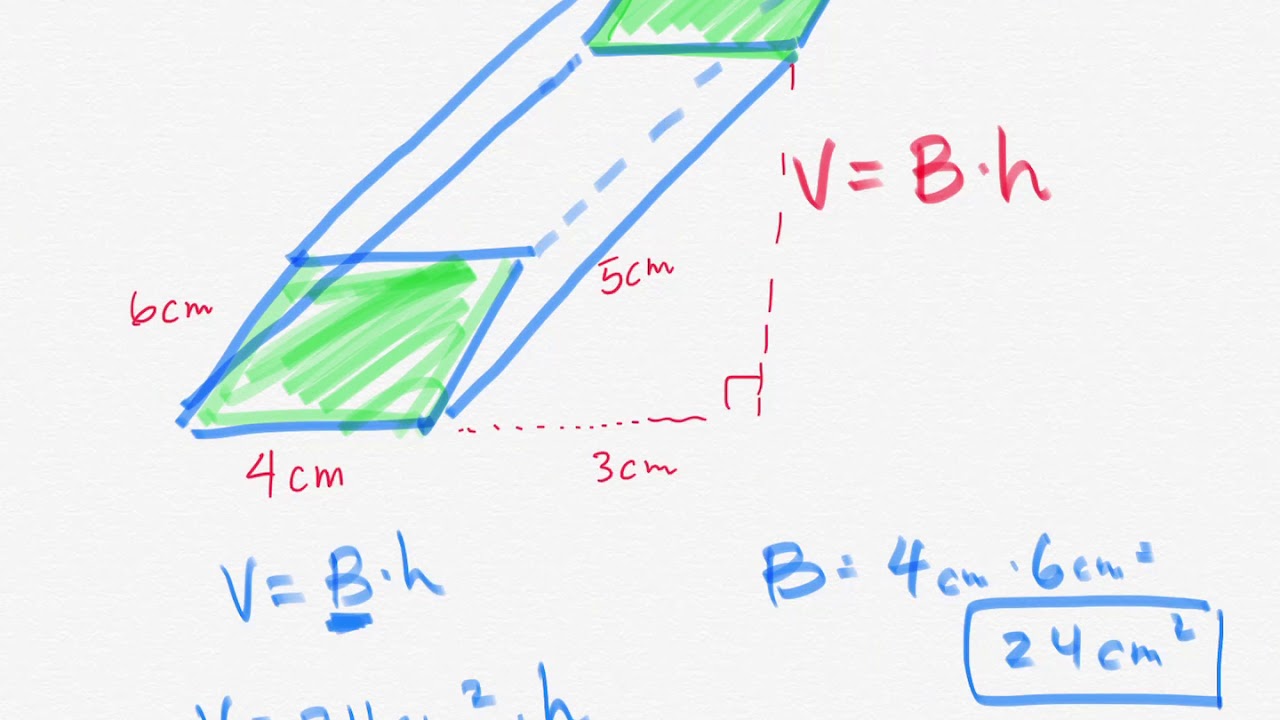
The height is NOT the slant!
Ways to find the height of a prism is using the Pythagorean theorem or trig functions.
 velvet sand
 upper karma
help Q17
 dark sparrow
no
 tepid crow
upper karma
help Q17
tepid crow
upper karma
help Q17
what have you tried so far?
dark sparrow
ordering others to solve it
tepid crow
dark sparrow
ordering others to solve it
lmao "SOLVE THIS FOR ME" 
silent plank
,w SOLVE Q17
somber coyoteBOT

 Requested by ramonov#0921
tepid crow
Requested by ramonov#0921
tepid crow

dark sparrow

dark sparrow
the terms, as written, are all real
unless you are suggesting ||writing them as arg(3+i), arg(7+i), etc.||
tepid crow
isn't it just a simple telescopic series?
this might be more simple, never thought about it with the complex plane
tepid crow
tepid crow
isn't it just a simple telescopic series?
my idea was using the tan^-1 (a) - tan^-1 (b) formula
the series' general term should be tan^-1(n+1) - tan^-1(n)

never thought about it in that way and now it seems like common sense
thanks 
earnest basin
 fervent valley
draw a right angled tri
I think the angle within the line of the 90 degrees is the 15 degrees
earnest basin
I cannot draw
 cursive python
ember loom
thanks bro could you also help me with this
cursive python
ember loom
thanks bro could you also help me with this
May I see the options for each one? (also DP and WS are given)
upper karma
tepid crow
the series' general term should be tan^-1(n+1) - tan^-1(n)
i solved by this later
but that complex plane method is great ia m now trying to understand it
tepid crow
True, I have never thought of it in that way too
Seems like the logical way to look at inverse trigonometry
 wintry harbor
 waxen glen
I get 25/34 is it right?
waxen glen
I get 25/34 is it right?
Yes
 honest valley
graceful light
honest valley
graceful light

Learn More at mathantics.com
Visit http://www.mathantics.com for more Free math videos and additional subscription based content!
graceful light
thank you
 floral imp
Can someone help me with this??
 silent plank
draw a diagram
cloud stump
In the triangle ABC you draw BP perpendicular to AC and the median BM.
Is it a theorem that (PB)(PM)=(AP)(PC)? The textbook I use states that with no poof whatsoever
Or am I being really dumb and it is a very obvious thing idk
cloud stump

 hallow panther
help pls?
honest valley
hallow panther
help pls?
i don't know if i can help you until i see what you need help with
hallow panther
honest valley
i don't know if i can help you until i see what you need help with
okay 1 sec
 hallow panther
honest valley
i don't know if i can help you until i see what you need help with
hallow panther
honest valley
i don't know if i can help you until i see what you need help with
HELPS pls before
honest valley
hallow panther

This math video tutorial provides a basic introduction into trigonometry. It covers trigonometric ratios such as sine, cosine, and tangent. It explains how to evaluate it using right triangle trigonometry and SOHCAHTOA. In addition, it explains how to solve the missing sides of triangles and how to find the missing angles using inverse trig f...
 digital rose
does anyone know how to solve this?
 hallow panther
digital rose
does anyone know how to solve this?
hallow panther
digital rose
does anyone know how to solve this?
yus circumference en radius
wat u ned help with
hallow panther
honest valley
https://www.youtube.com/watch?v=PUB0TaZ7bhA
ty bro!
cloud stump
The arch is double of the inscribed angle
That's it
And the whole circle is 360 obviously
@digital rose
digital rose
cloud stump
The arch is double of the inscribed angle
so the arch is 112 degrees?
cloud stump
Yes
digital rose
cloud stump
Yes
could you help me with 2 more?
cloud stump
Uh maybe
digital rose
 cloud stump
The radius always forms 90 degrees with the tangent line
Well I mean what perimeter are they even talking about
Like the arch and the angle thing? Tf
digital rose
cloud stump
Like the arch and the angle thing? Tf
no idea
i think it could be the arch?
nah it’s the angle
i think?
cloud stump
Ok so you know the formula for the lenght of cirumceference?
cloud stump
Yea exactly
So if you wanna know the lenght of an arch you are gonna have to take a fraction of that
So if you wanna know the lenght of arch VT you'll need to its measure in angles
digital rose
cloud stump
So if you wanna know the lenght of arch VT you'll need to its measure in angles
so how do i get a fraction of it?
cloud stump
Well the radius forms 90 degrees with tangent lines
After that you get a quadrilateral with 3 known angles
The angles of a quadrilateral sum 360 degrees
The angle for VT is that unknown angle
digital rose
cloud stump
The angle for VT is that unknown angle
i’m sorry dude i’m really confused
upper karma
Anyone need math help
 vital orbit
anyone know how to do this
 wise pawn
do you know how to find the midpoint of two points?
upper karma
@vital orbit
 vital orbit
thank you very much
 elder violet
i have a question
a triangle with an angle of 30, 60, and 90
all of the triangle sides must not be a decimal number
what is the length of the 3 sides of the triangles?
i need this for my track piece for a game
it has to be proportional so that it can connect to each other

it kinda look like this atm
upper karma
@elder violet, I don’t think there is any way you can have all 3 sides of a 30, 60, 90 triangle as whole numbers. I will try to double check tho
dark sparrow
@elder violet why do you need all the lengths to be integers?
as it stands, your problem is impossible
elder violet
dark sparrow
<@454555833930350603> why do you need all the lengths to be integers?
for it to connect perfectly
but it's actually impossible
 upper karma
Yes, there’s no way not with this triangle
elder violet
closest i can get
 dark sparrow
the sides of a triangle with 30, 60 and 90 angles are in the ratio 1 : sqrt(3) : 2
why can't you have non integer lengths tho
elder violet
well it simply that there would be a tiny tiny gap that i bothered about
i need the end of the track has a position which is equal to the start piece of the track
it somewhat works

but the gap

 silent plank
note that according to your graph,
b > 0 > a
you have identified the 2 intercepts, but haven't associated them with the correct variables
fervent valley
oh i see

I cant factorise the qyadratic above
wait they are asking for the line of symmetry right?
no idea how the ans is (4,5)
I used the line of symmetry formula -b/2a thats how I got 4
not sure abt 5
 nova sable
i need help, How do you find the perpendicular height of a cone given volume, ab and radius
storm portal
nova sable
i need help, How do you find the perpendicular height of a cone given volume, ab...
Use the equation for the volume of a cone and solve for h
Wait
Lemme check the volume of a cone
 storm portal
np
ember loom
This is <AED correct?
 storm portal
Look good to me
ember loom
thanks
 storm portal
What shape is the cleared area?
Given this shape, you can use a formula to find its area
@digital rose
digital rose
a half circle?
storm portal
👍
So if you can find the area of this half circle, then you have your answer
In order to find the area, you need the formula for the half circle
digital rose
what is the formula for a half circle?
storm portal
do you know what the formula for a circle is?
storm portal
what was the formula you used for the half circle?
digital rose
pie then radius divided by two
storm portal
the divided by 2 is accurate - but the formula for a circle is πr**^2**
so your answer for the area of the half circle is
$\frac{\pi (12.75)^2}{2}$
somber coyoteBOT
Shen
 storm portal
👍
 honest valley
i don't have the equations memorized but once you look them up, you just put in the numbers and solve for x
lateral area = 100 pi = something something r
surface area = 136 pi = something something r
then you'll have 2 equations and 2 variables and so you can figure out what r is
do you know how to solve a system of equations?
honest valley
 neon hamlet

The first part of this algebra video tutorial explains how to solve systems of equations by elimination and the second part explains how to solve systems of equations by substitution with 2 variables. This tutorial contains plenty of examples and practice problems.
My Website: https://www.video-tutor.net
Patreon Donations: https://www.patr...
neon hamlet
@honest valley I think I figured that out but do you know how I would complete this:?

I know I have to use system of equations here but what formula or the equation basically
honest valley
neon hamlet
<@!178328402233786368> I think I figured that out but do you know how I would co...
same strategy, set up the equations, put it all the information you know, and then solve the system of equations
do you know how to calculate the volume of those shapes?
honest valley
neon hamlet
but im missing information like the height and the length of the box
you have all the info you need to solve it

 covert rune


 pure cape
Probably an error
upper karma
@covert rune do you need help proving it?
covert rune
upper karma
<@199556456909897728> do you need help proving it?
It's unprovable
Thanks for the offer, though
upper karma
@covert rune that is true what kind of question 😂

 trim breach
tropic marsh
trim breach
tropic marsh
You perform the multiplication the same way as if it were two binomials: multiply each term within the trinomial by each term in the binomial.
 lavish plover
Yo I'm online and I need help
It let me copy and paste it and I dont want to cheat and look up answers
"Find all points of intersections of the circle x2 + 2x + y2 + 4y = -1 and the line x - y = 1
Find the area of the triangle enclosed by the x - axis and the lines y = x and y = -2x + 3" I'm confused on 1 and 2
trim breach
The second one you should approach by finding the point of intersection between the two lines.
That will give you the third vertex of the triangle, and from there, you can use distance formula, then Herron’s formula.
lavish plover
OH
OH I THINK I GOT IT
WAIT
ONE SEC
OH OH THANK YOU SO MUCH
LOVE YOU FOR THAT MAN
BYE
TY
 hushed seal
bro
i need someone
to teach me
sin cos and tan
like
fast
n
good
;-;
its 9:30 pm i have been studying for
10:30 hours
i just want a revision my exam is tmrw
lavish plover
Sin is equal to the side opposite the angle that you are conducting the functions on over the hypotenuse which is the longest side in the triangle. Cos is adjacent over hypotenuse. And tan is opposite over adjacent, which means tan is sin/cos. this can be proved with some basic algebra.
lavish plover
JSJSJS I CANT
I'm doing a test
wait what grade are you in?
so basically
sin equals opposite/hypotenuse
so just think of it as the opposite
well yeah, no shit
its actually Sine, Cosine and Tangent
but its just shorten
tan adjacent 0 = adjacent cot opposite θ = Unit circle definition. For this definition 0 is any angle.
Are you on right triangles
 woeful cosmos
 trim breach
woeful cosmos
trim breach
woeful cosmos
Find DO, then draw OH. I think you should be able to see where to take that afterward.
woeful cosmos
DO is 4 in
woeful cosmos
no
trim breach
Therefore OH is a radius.
trim breach
That is correct, but you don’t necessarily need those.
Consider triangle ODH.
You said OD was 4.
And we know that OH is a radius.
trim breach
Well, the problem states that the radius of the circle is 7.
woeful cosmos
oh ya
trim breach
Do you know how to find DH then?
trim breach
So in triangle ODH, you have:
Leg DO = 4
Hypotenuse OH = 7
DH is a leg, so we want to use the Pythagorean Theorem.
trim breach
Yes!
 obtuse smelt
hushed seal
sin cos and tan
obtuse smelt
hushed seal
sin cos and tan
ayyooo idk if i am too late but i remember them like this
this is for right triangles btw
Soh- Cah-Toa
Sin = opposite/hypotenuse
Cos =adjacent/hypotenuse
Tan = opposite/adjacent
honest valley
 cedar kiln
Can someone help me on some homework?
cedar kiln
Can someone help me on some homework?
i don't know if i am able to help you without seeing what you need help with
 acoustic jungle
usually when they say this they will dm you and it's actually their test.
 stone tulip
Can someone point me in the right direction here, I’m trying to help someone on their math but I haven’t taken geometry in 8 years
 silent plank
inscribed angle theorem
stone tulip
Yea I got that y is 48
But I don’t know where to go from there
Or is x just 33?
Inscribed angle is any that has a point on the circle?
Why they give so many things if you don’t need all of them 
stone tulip
Not mine I’d never use a MacBook but also who cares


 honest valley
upper karma
honest valley
upper karma
 upper karma
honest valley
upper karma
honest valley
Thank you I get it now
upper karma
does it matter if you rearange (1-sin^2x) or (1-cosx) for this question?
 honest valley
upper karma
does it matter if you rearange (1-sin^2x) or (1-cosx) for this question?
honest valley
upper karma
does it matter if you rearange (1-sin^2x) or (1-cosx) for this question?
i'm not sure what you're asking but you can always check if what you have is correct at wolfram alpha
,w tanx = sinx/cosx
somber coyoteBOT

 Requested by AdellaideSkyhart#4236
 steep temple
can I answer this question without differentiating?
 silent plank
yes
steep temple
my approach was to create another line, a normal to L
set the 3 equations equal to eachother and solve for the intersection
silent plank
consider double root / discriminant
steep temple
i am not sure how the discriminant is relevant here
it may tell me if they intersect, not where, no?
silent plank
for a tangent you'd want the curve to just bounce off the line
here you'd only want 1 place where they intersect
silent plank
the quadratic you get when trying to determine where they intersect
steep temple
the k in y=3x+k tells me the y-intercept of L, no?
silent plank
yes, but you aren't really interested in that
steep temple
so if i rearrange $$ \frac{1}{3}x^2 + 8 = 3x+k$$ into $$ k = \frac{1}{3}x^2 - 3x + 8 $$
somber coyoteBOT
dlp
 steep temple
i am not sure how this gives me the intersection
silent plank
basic principles of solving a system of equations
the solutions to this quadratic equation are the x-coordinates of the intersection points between the curve and the line
for a tangent, you'd want this to have 1 solution
consider rearranging this to general form
and solving D = 0
steep temple
the latter equation is already in general form, no?
steep temple
but then i'd have k in the quadratic?
silent plank
yes
steep temple
so c becomes (8-k)?
silent plank
yes
steep temple
silent plank
for a tangent, you'd want this to have 1 solution
very helpful explanation
 round prism
Can someone please help I’m timed on this and I have no idea what I’m doing
narrow plinth
How do i find the maximum area of a rectangle that's inscribed in a right angle triangle and one of the sides of the rectangle is on the hypotenuse
narrow plinth
<@&286206848099549185>
humble pulsar
narrow plinth
How do i find the maximum area of a rectangle that's inscribed in a right angle ...
draw a diagram to start
humble pulsar
oh wait, side is on the hyp
narrow plinth
Yeah
This is like the last step of this one big geometry problem and i just wanna be done with it
silent plank
the earlier parts will probs be useful
narrow plinth
I know all side lenghths
 karmic glade
Its vertices will touch the middle of the side of the triangle maybe
narrow plinth
Myb but how would i prove that
silent plank
seems like this will involve similar triangles
karmic glade
does it look like this tho ?
 narrow plinth
Well it should look something like that ig
tepid crow
tepid crow
Found my mistake, it's 11 terms, not 10 
grim rampart
does anyone know how to graph a right triangle on geogebra ?
pure cape
just graph two lines perpendicular to each other, and a slanted line intersecting those two lines
 upper karma
so imagine line rotating from that single point and than it hits circle
how do I find point where it meets circle

its basically how to find tangent but from specific point
dark sparrow
again, what do you mean by "find"? do you want the coordinates of the point, or what?
upper karma
yes I want cordinates of point where line and circle meets
dark sparrow
okay
and i'm assuming the coordinates of the red point and the center of the circle are known? and also the radius of the circle?
upper karma
yes
dark sparrow
are you using any notation for them that i could follow?
upper karma
what do you mean notation? Sorry english is not my first language
dark sparrow
what is your first language
upper karma
Croatian
dark sparrow
okay nevermind
 compact galleon
Oh wait I'm serbian I can help
dark sparrow
have you given any names to the radius and the points
upper karma
Lepo lepo
I am basically using old CAD program and I dont know how to find tangent of circle from specific point, sizes are not even important
they dont have function that automatically finds it
dark sparrow
okay so you don't have any names
that's fine
i'll write O(x_0, y_0) for the center of the circle, A(x_1, y_1) for the red point, and r for the radius
upper karma
 dark sparrow
if we write T for the point of contact, then we must have OT = r and angle ATO = 90°
so AT = sqrt(AO^2 - r^2) by the Pythagorean theorem
 hard arrow
upper karma
hard arrow
upper karma
I am not sure if this is what you want to find exactly but, i think finding the Cartesian equation is what you are after. For that matter, let (xa,ya) be the coordinates of the red point A, and let (xo, yo) be the coordinates of the circle center O, and let P with coordinates (xp,yp) be the tangent point. So, finding the Cartesian equation of AP boils down to finding two things : a point that belongs to AP ( say A for example ) and a normal vector perpendicular to AP, which in this case is vector(OP) with coordinates (xp-xo = M, yp-yo = N). So the equation is : Mx + Ny + c = 0, and as A belongs to AP, so c = - ( Mxa + Nya ). And thus, (AP) : M(x-xa) + N(y-ya) = 0 where M = xp-xo and N = yp-yo
upper karma
silk patio
There is a coordinate-less construction of it
can you please explain how without cordinates?
silk patio
Draw some lines and stuff
 tropic moon
Quick question.
So we know with the trig identities that sin^2(x) + cos^2(x) = 1
Considering that, would sin^2(2x) + cos^2(2x) = 1 work too?
upper karma
silk patio
Draw some lines and stuff
well can you show me how?
 nova sable
this isnt really directly geometry, but lets say you have a hollowed sphere filled with a carbonated drink, will the sphere be strong from the inside? (I assume so)

