#geometry-and-trigonometry
1 messages · Page 352 of 1
 gray minnow
 dark sparrow
$\cos^4(x) \leq \cos^2(x)$
 somber coyoteBOT
Ann
 dark sparrow
that's how
gray minnow
dark sparrow
$\cos^4(x) \leq \cos^2(x)$
is there any guide to use this bot
dark sparrow
in #resources there is a cheat sheet for common LaTeX commands
 sick torrent

 supple rose

 tame quail
hello i have a question about geometry
i just need to know what formula i should do for these questions

 silent plank
formula for arc length
tame quail
arc length for all of them?
silent plank
same formula yes
silent plank
you could consider the ratio of your arc to the circumference if you want
(or the angle to a full revolution)
silent plank
do you know the formula for arc length?
silent plank
can you fix that formatting
tame quail
wdym
silent plank
wtf is TT
tame quail
oh its just pie lol
silent plank
pi not pie,
just write pi
somber coyoteBOT
ℝamonov
 tame quail
alright good thanks
silent plank
yes, is something you can use
 slender oak
 silent plank
156 would go in for arc length
but would go in for r?
no
156° is your angle
r would represent the radius
tame quail
oh i see
tame quail
would the radius be 5
silent plank
5 ft yes
tame quail
alright
i got a big number
13.61356817
but i round to the nearest hundreth
13.61

 steady shoal
 upper karma
<@&286206848099549185>
upper karma
<@&286206848099549185>
Do you know the formula for surface area of sphere
upper karma
steady shoal
Do you know the formula for surface area of sphere
4pir^2
steady shoal
upper karma
4pir^2
Where are you getting stuck then
upper karma
steady shoal
Where are you getting stuck then
Because I don’t understand what the question is asking
steady shoal
Do you know the relation bw diameter and radius ?
upper karma
Radius is half diameter
upper karma
steady shoal
Do you know the relation bw diameter and radius ?
Can u still help me?
steady shoal
upper karma
Can u still help me?
Oh sorry I wasn’t active
upper karma
It’s alr
upper karma
Would the diameter be 2 for the first sphere?
steady shoal
Surface area 1 / surface area 2 what will it be
upper karma
3.5 and 153.94?
steady shoal
Surface area is 4pi r^2 which is 4pi (d/2)^2
upper karma
What would I plug in there tho
steady shoal
4pi is a constant when you take ratios ,constants get vanished or can say they cancel out
upper karma
I know but what’s the radius
 upper karma
So (2/7)^2?
steady shoal
Yes
 dark sparrow
do you know, in general, how to find the surface area of a polyhedron (i.e. a shape bounded by flat surfaces)?
@south spade
 south spade
wdym
dark sparrow
if you're given a shape whose surface consists of a bunch of flat faces, how do you find its surface area?
the answer i expected here is "find the area of each face, then add them all up."
...
hello?
south spade
oh ok
dark sparrow
wait, so was that like... news to you?
did you not make the connection between the surface area of your shape and the areas of each face prior to posting here?
south spade
No I did but my teascher thought it a different way
and she just posted video notes
so didn't rlly understand it
 humble pulsar
How do you find surface area a different way than finding the area of the surface 
south spade
idk man ask my teacher she doesn't teach
dark sparrow
i mean ok like, im trying to probe how much knowledge you have about the concept of surface area in general
anyway ok
so can you tell me what faces your hexagonal prism has?
just their shapes.
south spade
rec
dark sparrow
"rec"?
south spade
yes rec
dark sparrow
do you mean rectangle?
also if you don't want me walking you through this please let me know
i would rather not pull info out of you like rotten teeth.
@south spade are you willing to continue & cooperate with my attempts to guide you towards the answer? Y/N
👻

 buoyant flower
<@&286206848099549185>
 high spindle

 weak lichen

 unkempt crag
use cosine
 slim path
use cosθ = a/h
unkempt crag
in a right triangle the cos(x)=A/H, where A is the adjacent side and H is the hypotenuse. So in this case JK is adjacent and the hypotenuse is 9
cos(26)=JK/9
JK=9*cos(26)


 storm portal
 long ferry
I got it done till here
long ferry
I got it done till here
idk how you got here - but regardless, can you get the tan(x/2) in terms of sin and cos?

 neon hamlet
how'd you get it @regal spruce
 regal spruce
Angle A + angle C = 180
neon hamlet
ah gotcha
regal spruce
Yo boi✌️
 fervent imp
How in the world do I solve this?

Last question till I am done for the day. I got 270, and 540. I am not so sure if it is right, coz 540 is greater than 360.
dark sparrow
@fervent imp can you show your work? i might be able to pinpoint a mistake you're making

 dusky surge
long ferry
I got it done till here
dusky surge
long ferry
I got it done till here
You can make use of this:
$$\frac{1-\tan{\frac{x}2}}{1+\tan{\frac{x}2}} = \pm \sqrt{\frac{1-\sin{x}}{1+\sin{x}}}$$
and this:
$$\cos{\alpha}=\frac{1-\tan^2{\frac{\alpha}2}}{1+\tan^2{\frac{\alpha}2}}$$
somber coyoteBOT
Biscuit
 dusky surge
neon hamlet
Anyone know how to solve for this angle?
dusky surge
neon hamlet
Anyone know how to solve for this angle?
What do you know about tangents and alternate segments?
dusky surge
Yea
dusky surge
the angle between a chord and a tangent through one of the end points of the chord is equal to the angle in the alternate segment.
Hmm...
Alternate segment
Do you know which one is the alternate segment?
dusky surge
Please take a look at this example 😁
https://brilliant.org/wiki/alternate-segment-theorem-2/

The alternate segment theorem (also known as the tangent-chord theorem) states that in any circle, the angle between a chord and a tangent through one of the end points of the chord is equal to the angle in the alternate segment. In the above diagram, the angles of the same color are equal to each other. For easily spotting this property of a ci...
dusky surge
" the angle in the alternate segment, i.e. the angle subtended by the chord in the opposite side of the previous angle."
neon hamlet
okay so XZ is touching the tangent MZ
dusky surge
Yea, then we find the alternate segment
The given angle is the MZX 38.5° side
So, MZX is congruent to XYZ
Just look at "the opposite side of the previous angle"
neon hamlet
ah so both are 38.5
dusky surge
Yep
dusky surge
Yea?
 dusky surge
Not sure at first glimpse
I think DWC is not 87/2
Like the 112° of SY means the angle at center is 112° right?
neon hamlet
yeah
dusky surge
So, since point W is on the circumference of the smaller circle, so SWY is 112/2
But W is not a point on the circumference of the bigger circle, so you cannot use angle at centre = 2 times angle at circumference
neon hamlet
true
dusky surge
Hint: adding a line passing through AD
upper karma
Anyone help with surface area questions?
dusky surge
Is it about geometry or trigonometry ?
upper karma
Geometry
dusky surge
Great! Then feel free to post it here 😁
Of course this channel is for pre-university level
 dusky surge
Hmm... Did you try to draw the regular hexagon with apothem 8√3 out?
upper karma
I did but I have to find out the base and the problem is that I can’t use Pythagorean theorem since I only know the height
dusky surge
Note that a regular hexagon can be split into 6 congruent equilateral triangles. And then you can find the length of a side of the hexagon with the triangles
Are you not allowed to use Pythagorean Theorem?
upper karma
Nope
dusky surge
How about sine cosine tangent?
upper karma
Yeah I can
dusky surge
Then with the equilateral triangle, you can solve for the side
First split it like this
upper karma
Ok
 upper karma
Ah ok makes sense
dusky surge
Then you can find the length of one side of the equilateral triangle, and hence the area of it
 spice solar
can anyone help me with this? ive been at it for a while now and im lost
 upper karma

 sharp plume
upper karma
sharp plume
upper karma
u know what cos will be?
upper karma
wdym
sharp plume
which one will it be opposite/hypotenuse, adjacent/hypotenuse or opposite/adjacent
 abstract barn
I have some homework to do, but my teacher never taught us how to solve it, can someone help me?
Its circle angles btw
abstract barn
Its 20 questions
 long garnet
you should get the gist of it after a few questions
abstract barn
Its not fluent
abstract barn

I already know I need to multiply it by 2, then try to make use of all 360 degrees
long garnet
oh so what do you need help wit then?
long garnet
well a semicircle is 180 degrees, correct?
abstract barn
yes
long garnet
and BD is a semicircle
abstract barn
theres a bit of an angle on it
long garnet
hmm there's no other given information
abstract barn
So thats the main thing im stumped on for it
Yeah thats precisely why im not sure
theres a lack of information
long garnet
well you can't assume so i'll try and think of something else
abstract barn
ok
long garnet
yeah there's no other information given, you can only assume
abstract barn
And im bad at making assumptions
abstract barn
so 142?
long garnet
yes
 abstract barn
129
abstract barn
Im not sure where this is going
long garnet
this is the angle you're trying to find
 abstract barn
ok
long garnet
...
okay
so
you wanna add the semicircle's measure with XW
to get WYZ
understand?
long garnet
how.
abstract barn
bc im pretty sure to find the measure I multiply the interior thing 51 by 2
long garnet
that's not the case for central angles
abstract barn
ok
long garnet
alright here
 leaden birch
do you know about vertical angles? @abstract barn
abstract barn
leaden birch
do you know about vertical angles? <@788879505238130718>
yes
long garnet
this is what you're talking about
 abstract barn
ok yeah
long garnet
central angles are congruent
abstract barn
gotcha
leaden birch
so going back to this, how would you go about solving for arc WYZ?
 abstract barn
I dont have notes on how to figure out this situation
leaden birch
what is the measure of arc WXY?
abstract barn
Because everything I was shown had at least 2 things to go off of
leaden birch
leaden birch
what is the measure of arc WXY?
@abstract barn can you figure this out?
abstract barn
180
abstract barn
so its 180?
leaden birch
so how many degrees is WXY
yes
and which arc do you add to arc WXY to get arc YZ?
abstract barn
WX
long garnet
...
leaden birch
and what is the measure of arc YZ?
leaden birch
in a circle, an arc that's drawn from the central angle has the same measure
long garnet
alright at this point it's logic tbh
leaden birch
can you vc?
spice solar
ive been trying this for an hour on end? anyone able to help?
 sharp plume
use the law of sines
long garnet
^
abstract barn
in relation to the whole circle, its a smaller piece?
spice solar
sharp plume
use the law of sines
maybe my calculator is gone stoopid then
long garnet
spice solar
maybe my calculator is gone stoopid then
download a calculator app
abstract barn
well since youre saying its 180 degrees, itd be 1/2?
 thin folio
hey who can help me with 10 grade geometry
leaden birch
 abstract barn
yes I see it
thin folio
51 i think its a vertical
thin folio
^
abstract barn
Im surprised my teacher didnt give us notes for this
thin folio
 abstract barn
listen, im REALLY dumb

this is another one I did but wanna double check
yes
47
I do not have an answer sheet no
so my math for this ended me with x=14
yes but its not correct
Its an example answer
That I have to try and get an answer for

I think I got this right as well
I will be honest, I need help with everything
ok so it is

ok
I dont understand this at all so I guessed

never saw an example about this
leaden birch
inscribed angles that intersect the same arc are congruent
leaden birch
where are you learning geometry
abstract barn
leaden birch
where are you learning geometry
in person
leaden birch
no like what school district
abstract barn
at an IB school
leaden birch
ib school?
abstract barn
International Baccaleureate
leaden birch
what country is that
abstract barn
America
long garnet
multiply 58 by 2
abstract barn
Its not a school district
abstract barn
long garnet
multiply 58 by 2
116
 leaden birch
remember how an inscribed angle is one half of the intercepted arc?
abstract barn
yes?
long garnet
then half the semicircle's angle
leaden birch
so what is the measure of the arc that angle ABC is intercepting?
abstract barn
180 degrees?
abstract barn
90 degrees?
leaden birch
yes
abstract barn
ok
long garnet
gj
abstract barn
 leaden birch
and REMEMBER THIS: any angle inscribed within a semicircle is 90 degrees
abstract barn
so this is also 90?
long garnet
no
leaden birch
which is 90?
 woven haven
P is 90° right
abstract barn
I set the variables to each other right?
180 degrees
x=16?
Ill be honest I feel really stupid right now
woven haven
abstract barn
P= 90°
∆QRP=
4x+3 + 90° + x+7=180°
abstract barn
so its 180 degrees?
woven haven
The entire triangle is 180° yes
abstract barn
@lapis snow I cant talk or ill be yelled at
long garnet
👍
long garnet
abstract barn
so its 180 degrees?
no
long garnet
woven haven
P= 90°
∆QRP=
4x+3 + 90° + x+7=180°
this is correct
OR you can say
4x+3+x+7=180 just to simplify it a bit
abstract barn
long garnet
4x+3+x+7=180 just to simplify it a bit
I have to have it simplified to an angle
leaden birch
wouldn't it be 4x+3+x+7=90
long garnet
leaden birch
wouldn't it be 4x+3+x+7=90
is that not what i just said.
leaden birch
long garnet
4x+3+x+7=180 just to simplify it a bit
180
abstract barn
so is it 90 or 180?
leaden birch
90
 abstract barn
x=16
abstract barn
23
abstract barn
long garnet
16+7
^
abstract barn
so the answer is 23
long garnet
do you know the theorem for this question?
abstract barn
wait hold up
I just realized something
Every answer weve gotten has been in the previous answer thing on the nexdt question
long garnet
that's hwat i said.
abstract barn
Imma see if I cant get a 100 off that
long garnet
so do you understand everything
leaden birch
or you could try actually learning the applications of the maths
abstract barn
leaden birch
or you could try actually learning the applications of the maths
I technically have
Ive written down everything you guys have told me
long garnet
abstract barn
Ive written down everything you guys have told me
alright tell us how to do this problem

if you understand everything
abstract barn
That may take a while for me to work out on paper
long garnet
we can wait 🙂
long garnet
alright so you were capping?
 abstract barn
not capping, just very lazy
long garnet
then tell us how to solve this problem lmao
just to make sure
you understand the application of mathematics
abstract barn
ok thats not a square, but im pretty sure counts as a quadrilateral
which means it needs to be 360 degrees
long garnet
yes
abstract barn
and since those angles seem to be congruent or at least similar, I believe I set the equations shown equal to each other to then find x
long garnet
no
abstract barn
ok
abstract barn
I am going to take math applications next year
long garnet
...
abstract barn
If I pass my math this year, I will be done with math for my graduation credits
leaden birch
why don't you put more effort in?
long garnet
study theories and postulates that relate to geometry
long garnet
abstract barn
Its kind of hard when I get yelled at every time my grade dips a little
i wonder why your grades dip.
abstract barn
long garnet
i wonder why your grades dip.
I actually try
its not due to lack of effort
long garnet
you should put more effort in learning theorems then, that's the whole concept of geometry
long garnet
now that your grades are dipping you realize you should study more then, correct?
abstract barn
Its just that I struggle with circle angles thats all
leaden birch
what part of it do you struggle with
long garnet
then go study circle angles? that's what studying is for
abstract barn
yeah
long garnet
why don't you actually put effort in
abstract barn
I plan on asking my teacher if she has any recommended sites to study on
abstract barn
leaden birch
what specifically
center points angles
long garnet
leaden birch
what specifically
in the past hour, we can see he struggles in LOGIC
he doesn't understand addition and subtraction within circles
.
abstract barn
I understand that, I just overthink things
long garnet
abstract barn
I plan on asking my teacher if she has any recommended sites to study on
we have some sources
abstract barn
I overcomplicate it for myself for some unknown reason
leaden birch
abstract barn
center points angles
"in a circle, the measure of a central angle is equal to the measure of the intercepted arc." do you know what this means?
abstract barn
leaden birch
"in a circle, the measure of a central angle is equal to the measure of the inte...
Doesnt that mean the center is equal to the measure of the chords that intercept it?
leaden birch
what do you mean by the measure of the chords
leaden birch
do you know what a chord is?
abstract barn
Im sorry to trouble you guys wih my idiocy
abstract barn
leaden birch
do you know what a chord is?
yes
abstract barn
a line segment that is specifically straight with endpoints that are both on a circle arc
leaden birch
a circle arc?
abstract barn
circular arc
simplified, a segment whose endpoints are on a circle
Math is no my strongsuit
*not
English and History are
long garnet
abstract barn
a line segment that is specifically straight with endpoints that are both on a c...
so like this ?
 long garnet
😐
 clear sun
like this
 abstract barn
 long garnet
it this correct?
 abstract barn
I memorize the terms by pairing them with visual qeues
long garnet
bc that's what u meant when u gave your definition
clear sun
long garnet
it this correct?
that aint a circle
 long garnet
so this is a chord
 clear sun
jaoson are you trollin
long garnet
nope i'm trying to make him understand that definitions in mathematics are very important
abstract barn
a segment that has both endpoints inside a single circle
that better?
both endpoints inside a whole, single circle
long garnet
this is a chord?
 clear sun
abstract barn
a segment that has both endpoints inside a single circle
clear sun
abstract barn
a segment that has both endpoints inside a single circle
touching the circumference
called it
abstract barn
this makes me realize how much I hate about myself when it comes to learning
clear sun
is this correct?
 long garnet
that's why it's important to study
long garnet
clear sun
is this correct?
use specia lright triangesl
leaden birch
clear sun
is this correct?
yea
 long garnet
90 60 30
it's another special right triagnle
do you know the formula?
not formula mb
clear sun
uh i forgot it
abstract barn
special right triangles I sortof remember
long garnet
clear sun
which law do i use for this?
 abstract barn
But imma get to studying so I dont get schooled like this again
long garnet
abstract barn
special right triangles I sortof remember
but you can't do this problem 😂 https://cdn.discordapp.com/attachments/326138757474680852/842912139760500746/unknown.png
yeah go study
abstract barn
time to hit the books, and sites
clear sun
oh so its x√3?
 leaden birch
SOH CAH TOA
long garnet
abstract barn
time to hit the books, and sites
do you need sources?
clear sun
leaden birch
SOH CAH TOA
so Toa?
abstract barn
long garnet
do you need sources?
yes please
dm them to me so I can reference them easier if possible
leaden birch
clear sun
so Toa?
what would TOA be here?
clear sun
leaden birch
what would TOA be here?
Tanget Opposite/Adjacent?
leaden birch
mhm
clear sun
so its COH?
 fickle sleet
yes
 trim breach
clear sun
so its COH?
trim breach
clear sun
so its COH?
SOH*
leaden birch
okok so
fickle sleet
Now my eyes are playing tricks on me
leaden birch
@clear sun when using SOHCAHTOA, it's always looking from the perspective of the angle
so what's the angle in this question?
 clear sun
67 degrees
leaden birch
which is the hypoteneuse and which is the adjacent?
clear sun
20 = H
X = A
 arctic isle
X is opposite?
clear sun
i thought adj was at the bottom
fickle sleet
Common mistake
leaden birch
okok
fickle sleet
Adjacent is the side in contact with the angle
leaden birch
yes
clear sun
ohhh
fickle sleet
Opposite is the side not in contact with the angle
clear sun
i see
arctic isle
Nah adj is adj to the angle, but there are two, but one will be the opposite so which ever one is left over
X is opposite 67 and so the only other adj angle is the left side
clear sun
so sin(67)x20?
clear sun
so 18.41?
arctic isle
Idk if that's what the calculator says then yes lol
clear sun
thank you
arctic isle
But round to nearest tenth as it asks
fickle sleet
The tenth place is 1 digit after the point
arctic isle
OK cool
clear sun
do i need to use a law for this question?
 arctic isle
Probably sohcahtoa again
fickle sleet
sohcahtoa only works for 90 degree triangles. Non-applicable here for direct solving
arctic isle
Capital letters = angles and lowercase = sides, so it's probably best to draw a triangle with the given measurement
clear sun
oh ok
clear sun
alr
fickle sleet
Since you're likely starting out, you're probably taught triangle congruences to find out whether to use cosine or sine law
clear sun
 clear sun
fickle sleet
Since you're likely starting out, you're probably taught triangle congruences to...
clear sun
fickle sleet
Since you're likely starting out, you're probably taught triangle congruences to...
ye i think i was but i most likely forgot
arctic isle
I would add the labes ABC abc too just to make it easier
clear sun
oh ok
arctic isle
side a is opposite to angle A btw etc
clear sun
 clear sun
arctic isle
side a is opposite to angle A btw etc
clear sun
arctic isle
side a is opposite to angle A btw etc
uh what does that mean?
fickle sleet
Actually yes, Flodz is right here
clear sun
so am i right?
arctic isle
No, bottom right side is b/8
As only other angle left is top left, which is B. Opposite of that is the side AC
 arctic isle
erm no
Sorry I might be explaining bad, trig isn't my thing
You're angles were correct, 'b' was just in the wrong place
 clear sun
arctic isle
You're angles were correct, 'b' was just in the wrong place
clear sun
arctic isle
You're angles were correct, 'b' was just in the wrong place
like this?
arctic isle
 fickle sleet
^
arctic isle
Bit unclear as the letters aren't that thick but as I've done
clear sun
ohhhhhh i see now
fickle sleet
It's really important to be able to recognize opposite sides to angles
clear sun
ye i think i understand
fickle sleet
Practice more and you'll be able to get it really quickly
clear sun
ok
arctic isle
It shouldn't matter which angles you choose to label as AB or C just make sure the opposites are correct and the measurements are correct too
clear sun
I see
arctic isle
But now with those you can use the sin/cos rule
leaden birch
is that the law of sines?
arctic isle
Yeah
 vapid stag
hey umm. If tan(x) = -1/4 and x is in Quadrant IV
doesn't sin = -1
cos = 4?
arctic isle
I'm not sure, someone else can help with that
fickle sleet
vapid stag
hey umm. If tan(x) = -1/4 and x is in Quadrant IV
doesn't sin = -1
cos = 4?
Not possible. No values of sin and cos in the unit circle can go beyond 1,-1
vapid stag
the person used some of the Pythagorean identities. I'm just confused on why I can't just use tan(x) as tan(x) = sin(x)/cos(x)

i must of missed some info on the logic behind tan(x) = sin(x)/cos(x) and assuming tan(x) = y/x
clear sun
arctic isle
so a is 12.2?
fickle sleet
Use theta instead of x for future reference when working with unit circle
let me think for a sec
vapid stag
yes of course. i just typed it here for the sake without having to type sin(theta)
arctic isle
@clear sun I'm not sure as I'm in bed and can't work it out, but it'll be sin A/a = Sin B/b
clear sun
oh i see
arctic isle
Which is Sin(40)/a = Sin(25)/8
clear sun
so i just have to solve Sin(25)/8
clear sun
i feel like the number would be to small
arctic isle
No I'm wrong
vapid stag
😢 @fickle sleet pls save me
arctic isle
Erm wait how do I rearrange sin(25)/8 = Sin(40)/a
To get a on its own?
Sin (40)/ (Sin(25)/8)
clear sun
arctic isle
Sin (40)/ (Sin(25)/8)
seems confusing but ill try
fickle sleet
Ok so like I remember trying this before to get tan(theta) = y/x and it was definitely wrong. But I don't exactly remember why
clear sun
aight done
arctic isle
What's the answer for that?
clear sun
i got 0.42261826174069943618697848964773
arctic isle
So sin(40) = a x 0.422...
So sin (40) / 0.422... should be a
 arctic isle
I have a strong feeling I've done this wrong
If you have the time, I'd go to the maths help part of this server
There are better people there who could help
clear sun
oh ok
leaden birch
i'm pretty sure i got the cos(theta) part right, but how would i go about rationalizing the denominator for tan(theta)?
 fickle sleet
vapid stag
😢 <@!173952257635778560> pls save me
fickle sleet
vapid stag
😢 <@!173952257635778560> pls save me
Well here's the thing. tan(theta) is actually y/x on the unit circle, so you're right about that. But -1/4 doesn't necessarily imply that y is -1 and x is 4 or that y is 1 and x is -4. All it really says is that the ratio between y and x is -1/4. In the 4th quadrant, cosine is positive and sine is negative. This is the only thing you can be 100% sure of. So by this logic, it should be y = -1 and x should be 4 correct? But then that doesn't make sense considering that x cannot go above 1. Wait you must be thinking, so that means that you just have to reduce their ratios until one of them is 1 or -1 right? Not exactly. In this case if you did that, y = -1/4 and x = 1 since you divided them both by 4. Now you're close, but the problem is that the coordinate doesn't touch the unit circle. Have a look for yourself.

So judging by the unit circle, both values have to be smaller, but still keep the -1/4 ratio. But you can't determine this normally
Here's something interesting. If you draw a slope of -1/4, you'll actually be able to find the exact point at which this slope intersects with the unit circle. That point is what the values of the cos(theta) and sin(theta) are

and correlating with the answer sheet your teacher gave, those numbers matches up with this


 fickle sleet
Your drawing is correct. Just make sure to use lowercase letters for sides, and uppercase letters for Angles
clear sun
oh ok
clear sun
fickle sleet
Your drawing is correct. Just make sure to use lowercase letters for sides, and ...
uh what do i do after this step? 😅
clear sun
leaden birch
do you know that?
ill search it up
fickle sleet
vapid stag
i must of missed some info on the logic behind tan(x) = sin(x)/cos(x) and assumi...
Anyways if the above graphs I sent were a bit unclear, I apologize for that. This is a more cleaned up version of the graph. Here's a brief overview of it. Red circle is the unit circle. The red point represents the y and x values of what you think they are. The blue line is the -1/4 ratio, visualized as a slope. The green dot is the correct coordinates for the values of sin(theta) and cos(theta) as your teacher gave on the sheet you sent. You can see that the ratios of both points are on the blue line. However, notice that the only correct coordinate is the one actually touching the unit circle. Hopefully this helped you realize as to why you can't directly find sin(theta) and cos(theta) given tan(theta), and need to solve for it using other methods.

 vapid stag
@fickle sleet From my understanding one of my friend told me the concept i understood is correct. but the combination is infinite. so assuming tan(theta) = sin(theta)/cos(theta). The theta for sin and cos can be 1/1, 2/2, 3/3, and so on and so forth. so it is not a way to find the exact value that is the solution.
I think i understand a bit more based on that.
long garnet
 tawny dragon
which one do u need?
tawny dragon
@long garnet arc CD

 rugged sage
dark sparrow
rugged sage
dark sparrow
why exactly do you need such a conversion?
 edgy scarab
does anyone here know how to find volume of sphere
 mint turret
does anyone here know how to find volume of sphere
@edgy scarab it’s like 4/3 *pi * r^2
 dark sparrow
you should not ping random people like this
edgy scarab
sorry
i am new to the server and didn’t know that
but do you know how to find lateral and surface area of this?
edgy scarab
i’m confused
dark sparrow
do you know how to find the surface areas of spheres and cylinders?
dark sparrow
then look up "surface area of a sphere formula"
edgy scarab
ok
 topaz slate
edgy scarab
topaz slate
edgy scarab
yeah i did
upper karma
Given an isosceles triangle, write a function that shows the dependency betwen the angle at the base (isosceles angle)
and the angle between two heights coming out of these angles(srry for bad terminology i have no idea how math or any of that stuff works in english)

who the heck came up with this
 unique condor

ABCDE is a regular pentagon
What is measurement of angle alpha by degrees
Very golden ratio question
 mental crystal
Is geometry hard for many people ?
I get some tasks telling about some points moving
I just cannot cannot do anything with it, I just cannot answer things correctly
It makes no sense to me
 civic zenith
mental crystal
Is geometry hard for many people ?
civic zenith
mental crystal
Is geometry hard for many people ?
i don't know i enjoy it but i would not say that i am that good at it
 prisma glade
geometry is easier than algebra for me
prisma glade
at first, i thought algebra was easier tbh
but then i got used to geometry
i caught a grip
mental crystal
I hope I will ever understand it
It really anoys and demotivates the crap out of me
mental crystal
Like I saw something like tan(40)
1 / tan (50)
or something like that
that those were equal
I just..
How
Someone please explain why tan 40 = 1 / tan 50
civic zenith
oh yeah sorry
okay
i'll explain
1/tan(50)= cot(50)
tan a= cot(90-a) so tan 40= cot (90-40)=1/ tan 50
mental crystal
What's cot ?
civic zenith
oh yeah well in my country we use cot for 1/ tan
mental crystal
Ah okay
civic zenith
oh well it is also right in english
cotangent
but this has nothing to do with visualisations of transformations
mental crystal
Thank you for explaining
I guess i'm going to do pre-geometry on khanacadamy
And then do high-school version
 stoic plank
Good afternoon, People
I was assigned Khan Academy by my teacher, but the thing is. . . I don't understand it
I am in 7th grade
Does anyone here know how to solve or can help me out with formulas of how to solve for Surface Area?
silent plank
khan should be providing you with the relevant information in text and videos
what have you been viewing and what don't you understand?
fervent imp
stoic plank
Does anyone here know how to solve or can help me out with formulas of how to so...
You can search up the formulas for surface area.
fervent imp
What is the problem?
stoic plank
Thanks @silent plank and @fervent imp
stoic plank
fervent imp
What is the problem?
Well kinda just the four questions I was assigned
Do you want me to take screen shots and do them together?
fervent imp
stoic plank
Do you want me to take screen shots and do them together?
1 problem at a time.
stoic plank
Yeah
Np
1 problem is already a lot of help

I think to find one part is to do base * height and then cut that into half, but from there I am confused
fervent imp
Give me a second to work it out.
stoic plank
So
This is the video I learned from
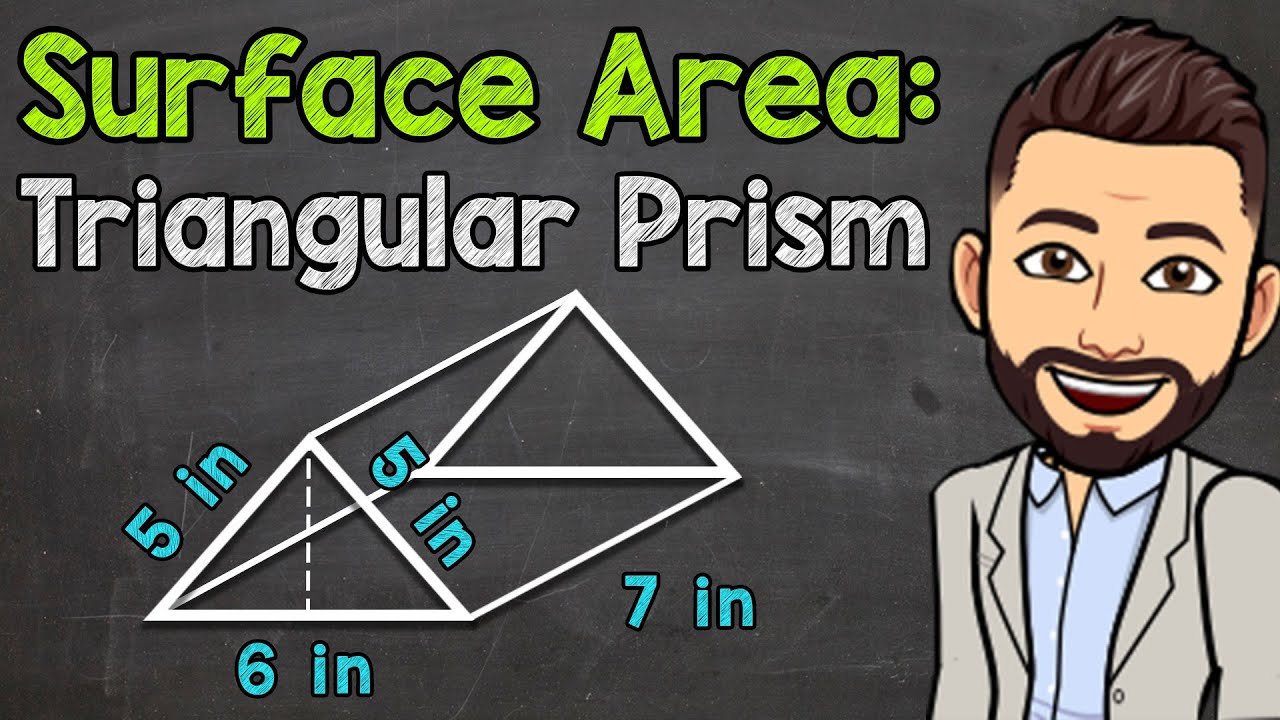
Welcome to How to Find the Surface Area of a Triangular Prism with Mr. J! Need help with finding the surface area of a triangular prism? You're in the right place!
Whether you're just starting out, or need a quick refresher, this is the video for you if you're looking for help with triangular prism surface area. Mr. J will go through calculatin...
I looked up how to solve for the surface area of a triangular prism
And that came up

 fervent imp
Find the height of the pyramid first.
Then use the formula and you will get the answer
fervent imp
Use the Pythagorean theorem to find the height.
fervent imp
stoic plank
The height is 6
No.
stoic plank
It think one step is to do 6 x 8 = 48
And then cut that in half
28
So then you would do 28 + ( 8 x 8 ) = 88
So SA = 88?
 stoic plank
Oh
fervent imp
So, x^2 + 4^2 = 6^2
Solve for x.. which is the square root of 20.
Then, use the formula.
stoic plank
But does it ask for the Pythagorean theorem?
fervent imp
PS: Don't use the formula if it is not givern to you. In my school we have a data booklet with formula.
stoic plank
I haven't learned that
fervent imp
Okay. What formulas have you learnt
stoic plank
None for pyramid
fervent imp
We could find the SA for all 4 triangles and the square then add it up.
fervent imp
Okay, find the surface area for 1 triangle then times it by 4. Then, find the surface area for the square. Then add all surface areas up.
Got it?
stoic plank
fervent imp
Okay, find the surface area for 1 triangle then times it by 4. Then, find the su...
This is what it said
I got it wrong
 fervent imp
Okay, ya, that is like what I said.
fervent imp
fervent imp
Okay, find the surface area for 1 triangle then times it by 4. Then, find the su...
^^^
Sorry I am not much use of help. I am still in highschool
stoic plank
fervent imp
Sorry I am not much use of help. I am still in highschool
You taking your time to try to help somebody else is already so much help
 stoic plank
fervent imp
I am solving it now.
stoic plank
fervent imp
I am solving it now.
I am trying too
fervent imp
stoic plank
I am trying too
 fervent imp
Look at how I solved it and try solving it on your own without looking at the solution.
@wet loom is correct.
fervent imp
stoic plank
God that was fast
Lol, I thought I wasn't fast enough.
stoic plank
I wish I could try to do what you did for this problem
 fervent imp
Did you get the answer correct?
stoic plank
fervent imp
Did you get the answer correct?
Yeah
Thank you so much
So 4 * 2 1/2?
More like
4 (2.25)
Oh right
Sorry I got it mixed up for a second
fervent imp
A=37.5. Did you get that?
stoic plank
So 37.5 is correct?
fervent imp
stoic plank
So 37.5 is correct?
yes
stoic plank
Okeh, lemme try it
fervent imp
Grave marks?
stoic plank
Yay it is correct
Except I got a 75% percent on it since one was wrong
Oh whelp
At least it is something
Better than 25%
fervent imp
I don't have that.
stoic plank
Do you guys wanna try again and speed run through it?
Like I would do it and you guys would correct me?
fervent imp
stoic plank
Do you guys wanna try again and speed run through it?
Yeah sure.
stoic plank
okah

I think you would do
5 x 8
Then split that in half
so 20
From there I believe you do 8 x 4
32 + 20 = 52
I think the Surface area is 52 squared meters
fervent imp
@stoic plank Sorry dude, I got to go. It is midnight. Good luck with math
stoic plank
fervent imp
<@!801817226024845394> Sorry dude, I got to go. It is midnight. Good luck with ...
Midnight?
For me it is 3:55 PM
Interesting time zone
fervent imp
It is going to be the next day in 4 minutes.
stoic plank
Oh god
Okay
It was nice meeting you, @fervent imp
IS the surface area 52 squared meters?
Oh


 fervent imp
The formula for SA for square is 6a^2. Over here "a" represents the length of the side. So, substitute in the values. 6 (2/3)^2 and solve.
fervent imp
i was just emphasizing it.
stoic plank
Oh as in
3^5 is the same as 3 * 3 * 3 * 3 * 3
Oh
Okay
But I am still confused on how to solve this problem
Like if I make it into a decimal
do I multiply it by 6 and then by 4?
I believe it is "Length * Width"
All sides have the same value, right? ( Or at least for this problem )
so 6 (2/3)
But idk how to make that 2/3 into a decimal
Oh
So when you multiply fractions the denominator stays the same, right?
So
6 x 2 = 12
so 12/3
right?
This is just so confusing
Mhm
Each square is 2/3
Mhm
Oh

This one
If I am correct
Here lemme find your message
"Ok do its the same concept. realize that a pyramid with a square base is 4 triangles and one square.
the triangles on each side are just two right triangles joined together. remember the area of a right triangle is just (l * w) / 2.
so the the area of one of those obtuse triangles is 2 * (4 * 5) / 2 since we have two of them which is 4 * 5 which is 20 so the total area of all the triangles is 4 * 20 which is 80.
the base of the pyramid is a square (thats why its called a square pyramid). we know that the area of a square is just l^2. 8^2 = 8 * 8 = 64.
now we the total area of the triangles and the area of the square and we get 80 + 64 which is 144"
Wait no
This is for triangle
Right?
This one
15^4?
Oh
So I believe the answer for the problem with the present is 1350 squared cm
Ogeh
I can NOT thank you enough
Thank you so much @wet loom and @fervent imp
It was really nice of the both of you to take your time and help me out
I am really appreciative for the both of you
Thank you
 jolly dove
oh sorry wrong channel
upper karma
hey