#geometry-and-trigonometry
1 messages · Page 351 of 1
 honest pumice
and many other values
but the unit circle has a circumference of 2pi
and can keep measuring a with more than 2pi
or less than 0
by just adding 2pi + the extra angle you want
you should really study the unit circle
it's essential to know it
 valid magnet
yes
honest pumice
can't really explain it with words here in a chat
valid magnet
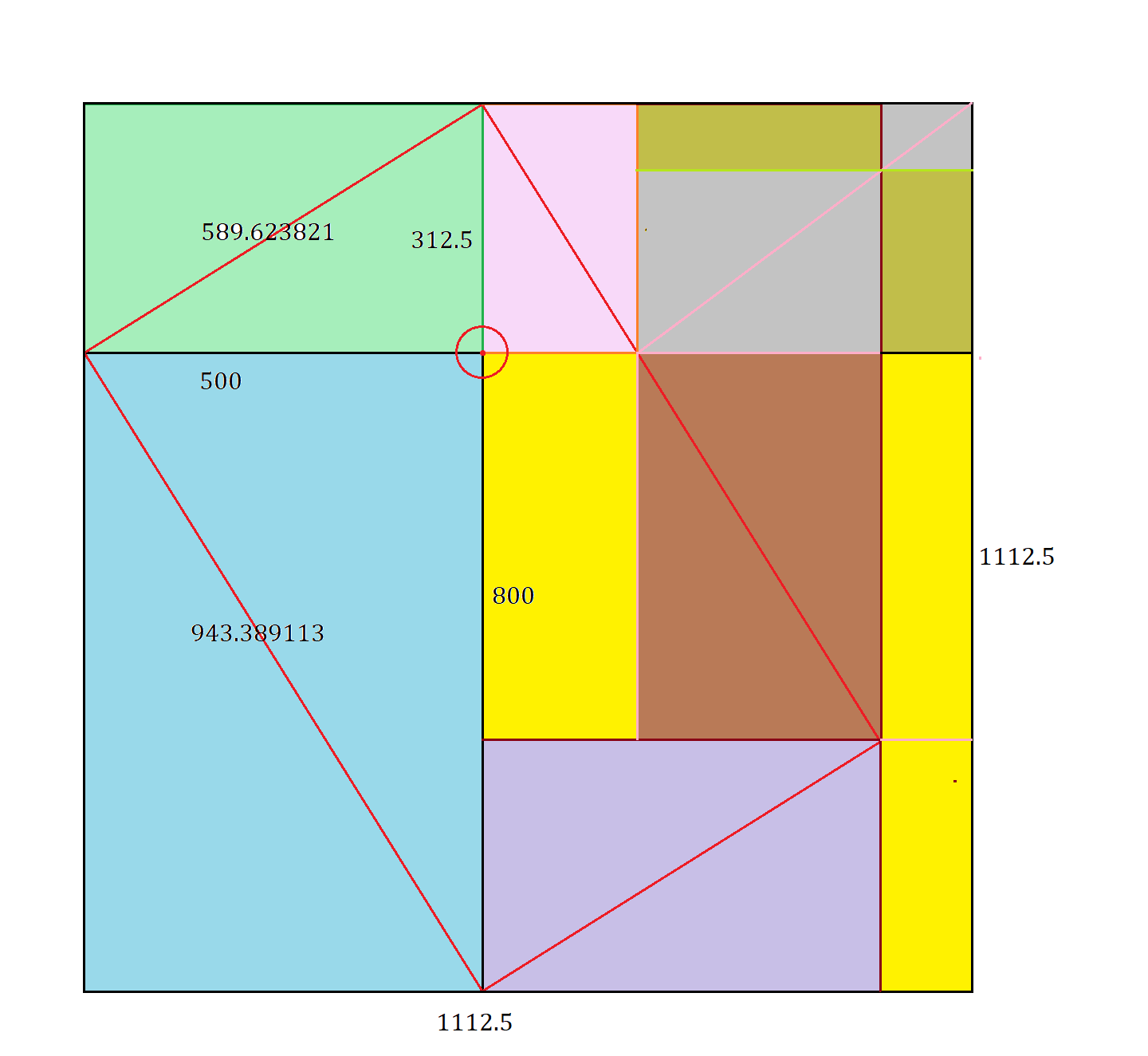
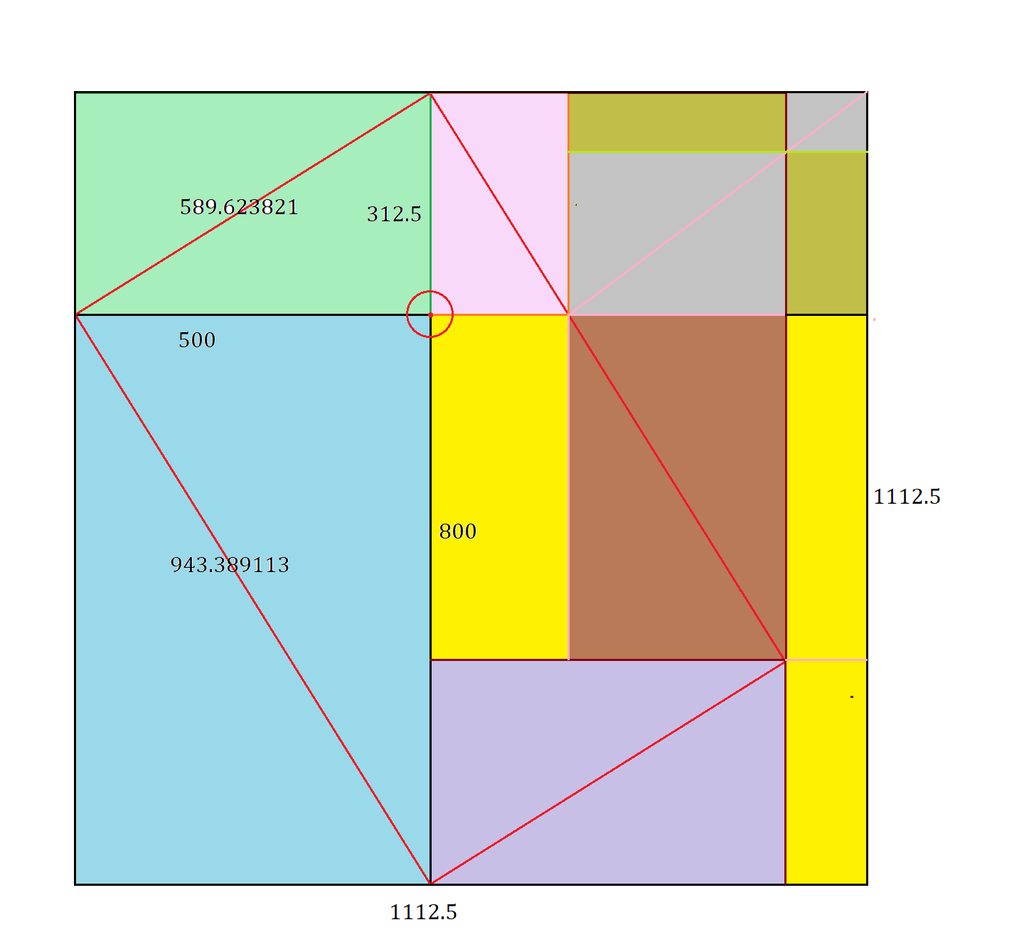
i'm trying to figure out how to calculate the hypotenuse of a right triangle w/o doing sqrt(x^2 + y^2)
honest pumice
Extending SOH CAH TOA so that we can define trig functions for a broader class of angles
Practice this lesson yourself on KhanAcademy.org right now:
https://www.khanacademy.org/math/trigonometry/unit-circle-trig-func/Trig-unit-circle/e/unit_circle?utm_source=YT&utm_medium=Desc&utm_campaign=Trigonometry
Watch the next lesson: https://www.khana...
valid magnet
 pearl finch
can someone show me how this is wrong? tag me if u have a reasonable explanation plz

 pure cape
remember, they are asking for the slope of segment WZ not segment YZ
segment WZ is perpendicular to YZ at Z
pure cape
that's because WXYZ is a rectangle
pearl finch
so a rectangle has specific rules is what you're saying?
pure cape
what do you mean by specific rules?
pearl finch
like, specific rules when it comes to questions like this
pure cape
if a rectangle is named WXYZ, the vertex has to follow that order
 pure cape
for example this rectangle is not WXYZ

this rectangle is WYXZ
it has to follow an order, thats just how they are named
pearl finch
oh
pure cape
pearl finch
so something like this
this is a WXYZ rectangle
pure cape
pearl finch
so something like this
so here, you can see that WZ and YZ are perpendicular
and the question asked for the slope of the segment WZ, and not YZ
but you answered the slope for segment YZ
pearl finch
 pure cape
but it has to either go in anti-clockwise or clockwise order
pearl finch
yeah lol
pure cape
pearl finch
for example that rectangle could also be called XWZY
or ZWXY
it doesnt matter, you just need to get the order right
pearl finch
yeah but it's always following that order
yep
and since it's perpendicular to the slope we already know
it'd have to be 3/2
pure cape
yes
pearl finch
tysm'

 dark sparrow
you don't need the angle itself tho
 trim laurel
yea ik but i need to get it
so then i can get the ratios
i dont understand how to get it tf
dark sparrow
no you don't need theta itself
trim laurel
what do i need
dark sparrow
you need the point where the ray OP intersects the unit circle
its coords will be (cos(θ), sin(θ))
you can also find this by dividing each coordinate of P by the length of OP
trim laurel
what?
dark sparrow
O stands for origin of course
 dark sparrow
but you can also get yourself a right triangle instead. just be mindful of the signs
trim laurel
it is a right triangle already though no?
dark sparrow
 dark sparrow
yeah ok so you have two of its sides given to you
dark sparrow
and the third is the hypotenuse, which can be worked out using the pythagorean theorem
trim laurel
i got square root of 63
dark sparrow
sqrt(63)? that looks sus
trim laurel
which is 7.9 but i wrote it as 3 times the square root of 7
dark sparrow
show work?
trim laurel
okay
dark sparrow
i think you fucked up your arithmetic somewhere
trim laurel

 finite edge
-12 times -12 is not -144
dark sparrow
^
dark sparrow
i mean you should've gotten a red flag when you tried to shove a negative number (-63) under the root
instead of just sweeping that minus under the rug
dark sparrow
yes the hypotenuse is 15
now you have enough info to get all three trig ratios of theta
trim laurel
appreciate it
got it
i have 2 more questions that im reallllly confused with
if ur willing to help

 dark sparrow
is #4 the same angle θ that we worked with in the previous problem
dark sparrow
no i mean like
trim laurel
 dark sparrow
is there a different point or something
trim laurel
maybe this will help
dark sparrow
for problem 4
trim laurel
yea i think its completely different
dark sparrow
okay then youll have to give the coordinates of the new point
dark sparrow
in problem 3 we worked with the angle whose terminal ray contains the point P (9, -12)
in problem 4 are we still looking at the same angle or not
trim laurel
no
dark sparrow
what????
hold on
what angle is even being talked about in #4?
is #4 a continuation of #3 or not???
trim laurel
lmaooo thats what im saying but i think he told us that whenever we see "right triangle"
we use special triangles
dark sparrow
who's "he"
trim laurel
my teacher
dark sparrow
and who is he to claim that right triangles with angles other than 30, 45 or 60 degrees just don't exist
trim laurel
hes not saying that
dark sparrow
either your teacher has done a poor job of writing down the problem(s) in a clear and solvable manner
or you're misleading me into thinking there is no data given for problem 4
trim laurel
hes saying that whenever we do get one of those angles, we use the hyp adj and opp angles he gave us
dark sparrow
fucking hell
this is a communication breakdown this is a communication breakdown this is a communication breakdown
trim laurel
ill look in my notes for something related to this
dark sparrow
your notes are useless
this isnt a notes issue
this isnt a knowledge issue
this is a reading comprehension issue
trim laurel
yea i know
because the question doesnt say if its connected to the angle we got in 3 or not
trim laurel
ohhh
dark sparrow
SEE THATS WHAT IM TALKING ABOUT
trim laurel
it does
finite edge
trim laurel
^
dark sparrow
but moe was insisting
trim laurel
i didnt see that lmao
trim laurel
LMAOOOO
dark sparrow
so we still have our triangle with sides 9, 12 and 15
dark sparrow
we're looking at the reference angle
which is in the first quad by defn
so that side is just 12
trim laurel
why first?
dark sparrow
reference angle
trim laurel
opp is negative
dark sparrow
reference angle
the reference angle of θ is the angle in the first quad whose sin and cos are the same as the original up to sign
trim laurel
yes ik
dark sparrow
and if you didnt know what that means you could have and should have asked me outright
and made both of our lives easier
trim laurel
ik what it is
dark sparrow
great
so you know that the reference angle always lies in the first quad
by its very definition
dark sparrow
don't call me bro...
trim laurel
so ur saying that there cant be a reference angle in quad 2 3 or 4?
dark sparrow
reference angles are acute
by definition
Purplemath
Describes reference angles, explains the two (drawn) definitions, and demonstrates how to find reference angles in each of degrees and radians.
no matter which quad the original angle is in, the reference angle will be acute
trim laurel
aight
i just thought that since we're in quad 4 i thought the reference angle would be also
dark sparrow
no the reference angle is acute
no matter what quadrant the original is in
the reference angle is acute
as ive said like a dozen times already
trim laurel
so to get an angle i can use cos-1(3/5)?
dark sparrow
cos^-1(3/5) yes
if you wanted you could also do sin^-1(4/5) or tan^-1(4/3)
these all give the same result
trim laurel
and that gives me the reference angle
so ref angle is 53 degrees
and the other angle is 127?
dark sparrow
,calc acos(3/5) * 180/pi
 somber coyoteBOT
Result:
53.130102354156
okay yes 53°
but why would the other angle be that large all of a sudden
its also supposed to be acute
which 127° decidedly isnt
dark sparrow
how did you get this 127° angle?
trim laurel
oh is it 180-53/2
trim laurel
yea
dark sparrow
and who will account for the right angle that's already present?
and which contributes 90 degrees to the angle sum?
which you just went and lumped in with the other acute angle...
dark sparrow
yes it is
trim laurel
thank u
helped a lot i appreciate it

what kind of triangle do i use for this
if it says how long, would it mean the adjacent side?
 silent plank
the wording of the problem is so bad and vague
dark sparrow
theres like a dozen different places the 15° angle could go honestly
trim laurel
the angle is for the side 30m
thats what he means
yea ik he words all his shitty questions like this
dark sparrow
"the angle is for the side 30m" is not any better
trim laurel
yes it is
dark sparrow
can you draw a diagram that shows your interpretation
trim laurel
we use the sine law for this
dark sparrow
because i'll be honest
i have no idea what's going on
and i need you to explain yourself to me
with a diagram
trim laurel
im trying to figure out what triangle to use for this
dark sparrow
why is "make a diagram" not the first priority in your process for solving geometry problems???
can you draw a diagram
dark sparrow
okay make your diagram and ping me when it's done and show it to me
trim laurel
nah i cant even understand it
 trim laurel
no but the 15 should be on the other side
because it says 30m at an angle of 15 degrees
silent plank
that statement implies that the 30m side forms an angle of 15degrees with another side
here, its the length of the pond AB
dark sparrow
the question itself is confusing
silent plank
ignoring the wording of the question,
would you be able to calculate the length of the red line AB?
(bring up the wording issue with your teacher)
trim laurel
yea probably
id use cosine law
no i did it wrong
because i got 22 m
that doesnt make any fucking sense
@dark sparrow did u figure it out?
dark sparrow
going by ramonov's picture... let me calculate it rq
yeah 22 is way off. how did you get it?
the answer i got is ||78 m, to the nearest meter||
trim laurel
i used cosinse law
dark sparrow
show your work.
trim laurel
so i did (50^2+30^2)-(2(30)(50)cos(15))
dark sparrow
this does not correspond to ramonov's picture
silent plank
ur not applying the cosine law properly
dark sparrow
note the placement of the 15° angle. it is not between the two known sides.
dark sparrow
trim laurel
so i did (50^2+30^2)-(2(30)(50)cos(15))
this assumes the 15° angle is at B, which it is not
trim laurel
so what do i do
dark sparrow
apply the cosine law properly.
perhaps you could denote the unknown side with a letter like x, and write out the law of cosines in terms of that
trim laurel
okay
dark sparrow
in your case you will get a quadratic equation in x
dark sparrow
$50^2 = 30^2 + x^2 - 2 \cdot 30 \cdot x \cdot \cos(15)$
somber coyoteBOT
Ann
 trim laurel
i dont understand how angle 15 is corresponding to 50m
the angle is for 30m is it not?
because the angle isnt right next to the side, its the opposite of the side
@dark sparrow
dark sparrow
??
the 15° angle is between the 30 and x, and opposite to the 50
c^2 = a^2 + b^2 - 2ab cos(C)
trim laurel
oh
I thought that 30 m was at an angle of 15
and ur saying that its between 30 and x which i understand, but if it was 15 degrees would be right next to the 50m
 dark sparrow
but if it was 15 degrees would be right next to the 50m
then you would have a different diagram
trim laurel
Yea that’s what I mean
That’s why I think the diagram he made was wrong
But I was wrong too though
 hot flume
I may have an idea

I used CH as the height of the triangle and now I have 2 rectangle triangles
Therefore I can use trivial trigonometry
But maybe I'm wrong, what do you think?
trim laurel
Well what’s ur answer
hot flume
Around 78
trim laurel
Also
hot flume
Seems legit
hot flume
O okay
trim laurel
Yea would that be right
Because the angles have to be on the opposite side
Idk though because ann said ur way is right
hot flume
Yeah but maybe my way doesn't answer the right question
Maybe ur right and this is not the right angle...
I don't really know, did a teacher gave it to you?
If so, u could ask him
 upper karma
what does this sign mean
 dark sparrow
"straight line" maybe?
upper karma
If u have 2 points, connect them with line segment and draw two circles with center one of them radius line segment length it will intersect in 2 points. if u connect those they will intersect line segment. How to prove that that intersection point is the middle of the 2 original points?
dark sparrow
so you have two points A and B, and you have two circles with radius AB, one centered at A and the other at B
and they intersect at two other points C and D
upper karma
yea
dark sparrow
and youre asking how to prove that CD bisects AB
dark sparrow
splits into two equal parts
yes
okay
there are different ways to go about this
the simplest would be to just say the whole picture is symmetric about CD or something
dark sparrow
mmm
 tiny snow
@upper karma If you are allowed to use knowledge about a rhombus, the construction in blue is sufficient. If not, you can create two larger triangles (orange) which you can prove are equilateral, from which the symmetry then follows.

 tired knoll
howw

 tired knoll
yepp ToT
dark sparrow
OAB is a right triangle thats correct
OAC however is equilateral
all of its sides have length 2
now what do you know about equilateral triangles
(also, never use the word it in math unless you are absolutely 110% certain that you understand exactly what the word refers to)
tired knoll
oo
tired knoll
dark sparrow
(also, never use the word `it` in math unless you are absolutely 110% certain th...
lol what does it mean
dark sparrow
??
dark sparrow
now what do you know about equilateral triangles?
tired knoll
they have the same angles and sides
dark sparrow
how big is each angle in an equilateral triangle?
dark sparrow
60 degrees, that's right.
dark sparrow
so in particular, angle AOC (which is also known as AOB) is 60 degrees
tired knoll
tyty
upper karma
what's the difference between barycenter and circumcenter?
i can see that it does 3 90° angles

dark sparrow
eh?
afaict barycenter is another name for centroid in the context of triangles
centroid is the intersection of the medians
and the circumcenter is the intersection of the perp bisectors
dark sparrow
because that's what the circumcenter is
it's the center of the circumscribed circle lol
upper karma
oh
 median needle
help me in this one i am feeling stuck tried various ways to approach the question but still stuck

 lost hound
im taking a trig final on tuesday if anyone has any practice problems that i could use it would be much appreciated
 zenith garnet

 junior light
Yes. How would you prove it, though?
 warm locust
is there a way to construct the height of a triangle with ruler and compass? (there must be i feel like) i want to prove that, given a triangle, you can construct a square with the same area. my approach was to just construct sqrt(1/2gh)., because i know that you can construct the square root of a constructible number. 1/2 is constructible and g is given, so i just need to show that h can be obtained
 tame panther
Cant you just measure from one point of the triangle, perpendicular to the opposing side to find the height?
warm locust
but can i measure perpendicular ?
well wait
no i think you are right. lmao i
m dumb
tame panther
Keep one side of the ruler on the top point, and move the other side of the ruler around until you have a 90 degree angle with the bottom of the triangle
warm locust
yea, thanks 🙂
or wait no if i keep the needle of the ruler on the topside of triangle then i can measure the distance until i reach the base, but i can't say for sure that it is a right angle. I can just approximate
hmm well i think this was maybe lost in translataion, compass in my language can just be used to connect two points with a straight line
so i can't measure angles with it
tame panther
I got compass mixed up actually
I was thinking you could measure angles with it
I'm trying to think how to measure a right angle with your tools
I have an idea but it is a little cumbersome
Put one side of the compass on the top of the triangle, put the other side where you think the perpendicular point is
Draw a small portion with the compass and it should be tangential to the base
That tangent point is perpendicular
 warm locust
i really like these construction problems 😄
pretty elementary but still satisfying if you get it
tame panther
Yes I get it. Math can be very satisfying
I recall reading about an ancient greek mathematician who spent lots of time trying to solve geometry problems with only a ruler and compass. Possibly pythagoras?
warm locust
i think many greek mathematicians thougth about these constructions. I mean euclid formulated his entire elements in terms of construction with ruler and compass afaik
tame panther
It must be Euclid that I am thinking of
warm locust
could be ^^
 tawny dragon
Are you guys familiar on how to find circle diameters. If so can you help me out with this question?
 tiny snow
 mellow gate
If opposite is hypotenuse?
mellow gate
If opposite is hypotenuse?
The only angle facing the hypotenuse is the right angle.
tiny snow
tawny dragon
Are you guys familiar on how to find circle diameters. If so can you help me out...
OD is a radius. MOD is a right angled triangle, with the legs OM and MD known, so you can use Pythagoras.
 vapid stag
Hello, my professor is showing us the ways to find the asymptotes for sin,cos function through using -2pi < x < 2pi. Is this part of the squeeze theorem? I watched a lot of tutorials on trig and they all showed a different way to solve the problem. Which one would you guys recommend?
 humble pulsar
vapid stag
Hello, my professor is showing us the ways to find the asymptotes for sin,cos fu...
humble pulsar
vapid stag
Hello, my professor is showing us the ways to find the asymptotes for sin,cos fu...
sine and cosine dont have asymptotes
vapid stag
i meant to find the points to graph it over one interval period.
i'm still confused on whether to use it or not.
humble pulsar
Ok so if you're picking points to plot the graph.. where does squeeze law come into play?
vapid stag
let me see if i can pull up an example he did

this is what he used. which I'm kind of confused on what it is. and wonder why it's so different than how all the youtube tutorial is lecturing a different way to find the solution.
 vapid stag
understood
i'm kind of lost in what it's supposed to help me find. do you by chance know the purpose of it?
humble pulsar
to find the domain of a period
sine is 2pi-periodic so $\sin(\theta)=0 , D={\theta \in\mathbb{R}|0\leq \theta\leq 2\pi}$
somber coyoteBOT
moshill1


 trim breach
 dapper bronze
20 and 21 can anyone help?
dapper bronze
20 and 21 can anyone help?
MH and MA are radii of circle M. The tangents meet at point T, so plane MATH is a kite.
What immediately comes to mind is drawing segment HA to form right triangles within the kite and solving that way.
 trim breach
 waxen roost
need help with this
waxen roost
need help with this
Were you given the formula to find volume of a cone in your notes?
waxen roost
nvm I solved it
I saw a tutorial on youtibe

can someone tell me how to solve this
 ember canopy
waxen roost
ember canopy
waxen roost
use the formula of volume for cones

where h=6 and r=8
thats the bigger cone
then find the volume of the smaller cone
and subtract it from the big one
waxen roost
ember canopy
then find the volume of the smaller cone
how do I find the smaller cone volume without a base?
 final pine

 golden garnet

Anyone wanna help me solve this? This is an ixl study guide for my upcoming quiz and was stumped on this question. The assignment does not go towards my grade but I would like to know how to do a question like this.
waxen roost

 blissful willow
waxen roost
blissful willow
waxen roost
its 125 cm squared
dark sparrow
@blissful willow do not give out answers here
 cosmic sundial
golden garnet
cosmic sundial
golden garnet
I can help! DM
 long garnet
i'm confused about this review question for our test, can anybody help?

 faint bramble
long garnet
i'm confused about this review question for our test, can anybody help?
faint bramble
long garnet
i'm confused about this review question for our test, can anybody help?
such a good question i can't figure this one out

 slim saddle
<@&286206848099549185>
 compact jasper
Sometimes i see this formula. but what is C? 🙂
 silent plank
circumference of the circle
trim breach
long garnet
i'm confused about this review question for our test, can anybody help?
Square prism basically means that the two-dimensional square was given depth, which is your height. So two sides are the same by definition of a square, and the problem tells you what the height should be in terms of a variable.

 dreamy ridge
valid magnet
dreamy ridge
valid magnet
 foggy talon
(4c) - 25 = (6c) - 59
((59 - 25) / (6-4)) = 17
we notice that the differnce between 59 and 25 are 2c
2c = 34
59 - 25 = 34
(59 - 25) / 2 = c
@foggy talon
when you look at the 25 and to get to the 59, you add 2c to 4c
valid magnet
(4 * c) * (2 * c) = ?
 quartz cedar
Would anyone recommend any books that could help you succeed in a trigonometry class?
valid magnet
i might be able to find you some free books related to trigonometry
quartz cedar
valid magnet
i might be able to find you some free books related to trigonometry
That would be helpful. Thank you.
 tall lava
Anyone down to teach me some trigonometry during my 4 hour car ride? 😂
trim breach
tall lava
Anyone down to teach me some trigonometry during my 4 hour car ride? 😂
I can’t guarantee you four hours of help, but if you have questions definitely ask them here.
tall lava
Driving atm. I’m in 8kb channel, though. I just barely started learning and I don’t want to waste four hours doing nothing but drive. 😂 If you or anyone who wants to talk with a mic can just start from the beginning , that’d be helpful.
foggy talon
valid magnet
(4 * c) * (2 * c) = ?
8c?
valid magnet
not 8(c^2) ?
foggy talon
Then I was mistaken
quartz cedar
tall lava
Driving atm. I’m in 8kb channel, though. I just barely started learning and I do...
soh cah toa = sho cha tao
 simple bear
How to verify this identity using de Moivre's Theorem?

 zinc cradle
Hello all. Anyone good with some shapes
 coarse shoal
could someone help please?


 tender lion
 trim breach
coarse shoal
could someone help please?
trim breach
coarse shoal
could someone help please?
I would recommend using trigonometric ratios to find x. The first triangle you have to actually do the algebra, but the second triangle can be solved easily if you recognize a pattern.
upper karma
For finding a length of an arc in geometry can it end as a decimal pi or just a decimal. Or does it have to be a whole number pi?
 rancid sigil
@abstract barn put it here

 steady shoal
rancid sigil
<@&286206848099549185>
steady shoal
rancid sigil
<@&286206848099549185>
Why aren’t you helping him?
steady shoal
How old are you ?
 abstract barn
16
rancid sigil
steady shoal
Why aren’t you helping him?
I aint smart, I don't do the math for this server
steady shoal
Do you know what the interior angles of a rectangle are ?
abstract barn
Yes
Ive repeateadly tried to solve, and I keep getting 14
and it just doesnt add abck up
*back
abstract barn
SO basically I used the given numbers and variables (3x-30) (2x+10) and multiplied by 4
Then I did 360-120(sum of the -20)
240+40(sum of the +10)
280/20=14
then I plugged 14 in and it just wouldnt add back up to 90
steady shoal
Why did you multiply (3x-20) and (2x+10)
abstract barn
didnt multiply them by each other but by 4
steady shoal
Why
abstract barn
I guess I tried to take a shortcut and screwed up tbh
steady shoal
No you possibly took the longest path
abstract barn
oh
steady shoal
What’s the interior angle of a rectangle
steady shoal
And at the corners ?
abstract barn
90\
steady shoal
Use that instead
abstract barn
what do you mean by that
steady shoal
You’ve been given an angle which must equal 90
abstract barn
Im not sure exactly how to set it up
 grim beacon
nice
 waxen glen
 upper karma
waxen glen
upper karma
waxen glen
This is simply melanous theorem , do u know it, or do i show u a proof?
There r plently of ways of doing this tho
waxen glen
upper karma
This is simply melanous theorem , do u know it, or do i show u a proof?
idk what is it
let me research a bit please
$$\frac{AD}{BD}\frac{DF}{FE}\frac{BF}{FC}=1$$
somber coyoteBOT
Hyl1s
 waxen glen
@upper karma like this?
upper karma
waxen glen
Ok a good way to solve this is areas, join be and af
Then let area of the big triangle abe be A
then area of adf = 5/9 area of ade = 5/9 ( 2/5A)
= 2/9 A
similarly area of bdf is A/3, and of bfe = 4A/15
Is this good?
 rich wolf
,w 3/323 - 1/121
somber coyoteBOT


 grim schooner
use the two-tangent theorem
grim schooner
upper karma
two segments tangent to a circle and that meet at an endpoint are both equal
so 28=3x+4
24=3x
x=8
tiny snow
waxen glen
 tiny snow
Not that I am aware of... It's only arithmetics and similar triangles, with one additional parallel line drawn.
 topaz nimbus
tiny snow
Not that I am aware of... It's only arithmetics and similar triangles, with one ...
topaz nimbus
tiny snow
Not that I am aware of... It's only arithmetics and similar triangles, with one ...
do it by the similarly criteria
like BPT
basic proportionality theorem
upper karma
Guys.
It's simple:

I've found these three value scopes.
Should be there more?
Should be there the fourth one?
 sturdy iris
I think you're fine
zinc cradle

If row 1 is length of outside line, then row 2 is the next inner line, what is the ratio of row1/row2 for an octagon
The numbers on the sketch are from ruler observation, not maths
zinc cradle
Correct, if diameter is known, how to calculate the length of each side of polygon
I don't know that equation
upper karma
Ok , look at the triangle formed by the centre of circle and any two adjacent points
And split it into 2 right triangle
zinc cradle
It is 45degree of arc and the total diameter we will say is 100
upper karma
45 degree for any n sided polygon?
zinc cradle
In the picture, the first inscribed octagon each member will touch every 45 deg on the circle
This will be at full diameter of 100
upper karma
Yes, for octagon n=8 and arc=45degree
For any n, the arc angle will be total angle÷number of angles=360/n
K?
zinc cradle
Yes that is easy, but what is equation for side length
zinc cradle
Ahhh.. I think I got it, I look at it as a circle, not a square.
If I imagine the octagon in a square it's much easier
 upper karma
Okay, that does work for this case, tho equation for length for any n side would be a=dsin(180/n)
d is diameter
Ok?
trim laurel
how do i get standard angle from referenec angle
my ref angle is 238, what is it in standard position? please help
 sick torrent

 main lintel
trim laurel
how do i get standard angle from referenec angle
main lintel
trim laurel
how do i get standard angle from referenec angle
Not sure what is standard angle nor referenc angle? Any definitions in your book?
I think both of these mean the same, and equal 238. But am not sure
main lintel
sick torrent
Surface area is the sum of areas of all sides, right?
sick torrent
yes
main lintel
So what is the problem?
sick torrent
I dont know the problem
sick torrent
yes how to solve it
main lintel
You know what is surface area? So where did you get stuck?
main lintel
No, you add (sum) all surfaces.
main lintel
main lintel
Surface area is the sum of areas of all sides, right?
we said this
sick torrent
main lintel
No, you add (sum) all surfaces.
what is the equation?
main lintel
You just need to sum each and every side on the image.
You said this is clear to you
main lintel
sick torrent
yes
.
sick torrent
so 16 + 12 + 9 + 20 +
sick torrent
main lintel
.
.
main lintel
There are 5 sides
bottom, top, and 3 "lateral"
Wait, you are confused a lot.
One thing is "side" the other is "edge"
Edges are the lines. Sides are surfaces.
This is one side:

This is not a side but an edge:
 sick torrent
oh
main lintel
There are 5 sides. And there are 9 edges.
For Surface Area you need to sum the areas of all 5 sides (surfaces)
sick torrent
main lintel
There are 5 sides. And there are 9 edges.
624
sick torrent
than midle is 16 times 9
sick torrent
ok
main lintel
Yea, 624.
 trim laurel
i used tan-1(2/7) and got 16
rounded to 16
then it said larger than 180 but smaller than 360 so I used quad 4
360-16= 344
 clever ginkgo
yo
<@&286206848099549185>

I know the ansawer is 6pi
but idk how
they got it
I dont understand how to do this
 latent ore
Can you see that the shaded area is 3/8 of the circles area?
clever ginkgo
yea
somber coyoteBOT
.itsjustnai
 latent ore
6pi

 latent ore
np
clever ginkgo
@latent ore wait but how did you get 3/8
like did you just wing it
I just guessed
clever ginkgo
OOOOOOOOOOOO
latent ore
I mean
You can also look at it this way
it's obvious the top part is 1/2 of the circle area
and the 45 degrees is 45/360 the circle area, which is 1/8
so 1/2+1/8=4/8+1/8=5/8
so the white area is 5/8
and the shaded one is 1-5/8 which is 3/8
if you're wondering why it's obvious the top part 1/2 of the circle area it's because RP is the diameter
@clever ginkgo
 heavy tinsel
can someone help me with geometry
humble pulsar
heavy tinsel
can someone help me with geometry
Have you tried asking the question? That's usually a good place to start
 trim breach
heavy tinsel
Im not sure what the formulas are
trim breach
heavy tinsel
Im not sure what the formulas are
Are you confused about the relationship between scale factor and surface area/volume?
heavy tinsel
Im confused on what the formulas are for each one
trim breach
It is not necessarily a formula…it is using ratios between the two prisms.
The scale factor is simply the ratio of
humble pulsar
\frac{}{}
somber coyoteBOT
Lidoh
 somber coyoteBOT
Lidoh
 trim breach
You can set up a proportion since you know at least three of these values since they are given in the problem.
pure cape
is there a method to solving open form trigonometric equation? For example like x=sin(x)
i have been thinking and it seems like it could only be solved graphically or numerically
dark sparrow
open form?
pure cape
because im wanting to solve an equation that is almost like that over the variable, but since i cant do it algebraically, ig im stuck
more specfically Asin(bx+c)=x
pure cape
so basically thats part of a bigger problem. I need to find functions whose inverses are tangent to the original functions at point (a,b) on the line y=x
basically like e^(x-1) and ln(x) +1 which is the only exponential function i found
so i found the best way to do this is that since the inverse is symmetric to the original function thru y=x, we just need to find a function that is tangent to y=x
so i split it into the basic types of functions, (linear functions are off the table), power functions, which does not exist any that fits into the description, exponential functions (which i did and found only one function which is f(x) = e^(x-1) )
now im working on trigonometric functions which is really scary, i tried playing around, and found that sinx and arcsinx actually works
but the thing is, those are not the only one i think.
so which is why i need to work on it, i start off with the standard form f(x)=Asin(Bx+C), find the tangent point from the equation f(x)=x, and then substitute that x into f'(x)=1 to figure out the coefficients. im stuck at the second step
hmm i guess i think we can assume from the fact that sinx is tangent to x at (0,0). And it seems like only sin(x-a-2kpi)+a where a is in R, k is in N fits into the description
hmm
 hallow wedge
 tiny snow
@hallow wedge There is something wrong with the terminology in the question. Altitudes intersect in the orthocenter. The medians of the sides intersect in the centroid.
upper karma
Pretty sure this falls under geometry
How do I solve for side length with only the area of the figure
trim breach
Is it a regular polygon?
upper karma
Yes
trim breach
You can think of the polygon in right triangles by drawing apothems and radii.
upper karma
That’s the thing it only gives me the area of the complete hexagon, not the apothem, side lengths, radius, or perimeter
I know the central angle is 60, and divided into a right triangle to come to 30 degrees but I have no further information to set up 306090
Each triangle has an area of 81 square root 3
trim breach
You have to do a bit of algebra. Might want to take a look at this video since they explain it better than I feel I could.
 upper karma
Okay, thanks!
pearl finch
does anyone know how to solve this problem
 pearl finch
bro idk
i just have no idea how
to solve this problem
like ive never seen problems like these before
pearl finch
ok just please help with this problem
some of these questions take my teacher so long to solve
these are the most difficult problems ive seen all year
dark sparrow
got a phone call sorry
 untold cosmos
can someone help me on my geomtry test?
dark sparrow
@pearl finch do you know how to find volumes of cylinders and cones?
pearl finch
yes
dark sparrow
okay
so let's say you already knew the volumes of both of your shapes. would you be able to find how many times the cone's volume fits in the cylinder's volume?
pearl finch
i dont think so
dark sparrow
okay let's try a simpler problem. set that one side for a while
let's say you have a cup that holds 0.4L of water and a big jug whose volume is 6L
would you be able to find how many cups it'd take to fill the jug?
pearl finch
6/0.4?
dark sparrow
so you do know
pearl finch
oh wow
dark sparrow
same concept here
dark sparrow
except your cup is conical and your jug is cylindrical :p
but that only affects the calculations of their volumes
pearl finch
@dark sparrow thanks
is it normal to forget most of the math you've done in the school year if you havent practiced them in a while
dark sparrow
not really something specific to math
lack of practice in anything will make you forget it eventually
pearl finch
i feel so dumb because i cant remember enough to solve most of the problems :/
dark sparrow
sometimes you gotta step back and think
like. here the key was to understand that the volumes of your cone and cylinder were the necessary stepping stone between the givens and the answer
pearl finch
i removed all the old papers for the class because there was just nowhere to put them
and they were very messy
dark sparrow
that's unfortunate
pearl finch
some of the problems took my teacher 15 minutes to do lol
so im just wondering how i can complete it

is this AAS
dark sparrow
the distinction between AAS and ASA is nearly pointless as far as triangle congruence tests go but yeah the intended answer is AAS it looks like
 dark sparrow
one moment
how'd you get 67?
(180-46)/2?
if so, that gives you angle ADB (or ABD, they are the same)
so it's simply not what was asked for
pearl finch
i assumed BAD was equal to ADC
 gusty estuary
pearl finch
gusty estuary
pearl finch
Do you know the correct answer?
pearl finch
no
gusty estuary
okay, this is how i worked it out:
pearl finch
ok i see a way how to get the answer
gusty estuary
First you take 46 and subtract 180 by it, because its a straight light (AD).
Once you get that answer, divide it by 2 to get the measure of angle B and D.
Once you have the measure of angle D, subtract that number from 180, which is going to equal the other side of D (ADC).
Then you subtract the new number from 180, and divide the new number by two to get your final answer
pearl finch
i got 33.5
gusty estuary
Yep
pearl finch
thanks
gusty estuary
Could anyone help me out with this?

i read the question wrong. i might need help with a diff one
 shut venture
@gusty estuary do you mind tell me what book is that?

 gusty estuary
yeah he makes storylines and stuff like that
shut venture
I need to learn how to do those 😄
gusty estuary
haha
shut venture
It seems motivating to learn like that
silent plank
draw circles of radius 5 centred at those points
shut venture
@silent plank why radius 5?
silent plank
because the problem states that the killer is within 5 miles of them
shut venture
oh right i didnt see that

 upper karma
 weak lichen
Know what trig ratio applies here?
pearl finch
@upper karma the teacher gave out the answer
pearl finch
well they did but it got so confusing
i need it to be re-explained
I know RP is the altitude
but i forgot how to use it to solve for the rest of the triangle
upper karma
So PT is 12 less than SP right? just clarifying I know it says it there
pearl finch
yes
upper karma
alright
shut venture
Why not using the straight rectangle metric relationships?
pearl finch
whats that
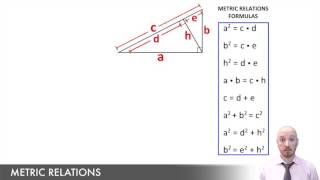 pearl finch
not more formulas oh my god
 shut venture
thanks
upper karma
never heard of these so they can explain
shut venture
im not entirely sure its the solution
but ill have to write it
@pearl finch what does it mean
is it a 12?
pearl finch
what
bro my teacher never taught us this
plus my brain is shit at memorizing formulas
thats how the brain works iirc
weak lichen
 shut venture
@frank pasturewa sin(25)=x/7
upper karma
upper karma
ok in this case
e is PT
So just find every equations that includes e
and kinda mess around with em
 frank pasture
shut venture
<@252215962818838528>wa sin(25)=x/7
frank pasture
shut venture
<@252215962818838528>wa sin(25)=x/7
?
shut venture
@pearl finch you dont need the relationships
upper karma
frank pasture
?
they mean't to ping @weak lichen
shut venture
sorry @frank pasture not that used to discord.
@pearl finch you can do triangle similitarity


 fluid wasp
 shut venture
Sorry i cant understand the image
pearl finch
shut venture
<@832373781216755784> you can do triangle similitarity
Bro continue on that
Please
shut venture
what do you want to know
pearl finch
I still dont know how to solve this problem

 pearl finch
shut venture
<@832373781216755784> use triangle similarity
pearl finch
shut venture
<@832373781216755784> use triangle similarity
Bro theres an altitude and nothing else, what can i do sir
pearl finch
shut venture
so 8/x=x-12/8
Why not 8/x-12?
pearl finch
U wont get the same answer if u flip the numbers around
shut venture
how come?
pearl finch
How would the algebra be the same if 8/x is equal to both x-12/8 to 8/x-12
pearl finch
Oh ok
pearl finch
shut venture
so 8/x=x-12/8
What did you get for this
shut venture
the dimensions given in the problem
pearl finch
No i meant whats your answer for it
shut venture
what do you mean
pearl finch
Do you need quadratic equation
can you show me how you got 4
Can you picture and show me
Yes you need quadratic equation
One of the answers is 16
-12 = 4
upper karma
where are the four triangles? I mean I do see only two, one is the tiny
one on the left, and the other one, is the one that is subdivided, while
the rest are rectangles
https://imgur.com/Il97R3h <@&286206848099549185>

 onyx cloud
those trapezoids to the right of the smallest triangle on the left make up bigger triangles
upper karma
I'm sorry I still do see only two and not four
 upper karma
oh, I'm an idiot, thanks
 agile furnace
Name the single translation vector that can replace the composition of these three translation vectors: <2, 3>, then <–5, 7>, then <13, 0>.
<@&286206848099549185>
 upper merlin
what happens when you translate using 2 vectors
the resultant translation vector is just the sum of the two vectors
for example going a miles north and b miles east, then going c miles north and d miles east, is the same as going a+b miles north and c+d miles east
so just add the 3 vectors
 woeful shuttle
could someone help me with a geometry practice because I am struggling because I suck at circles
upper karma
woeful shuttle
could someone help me with a geometry practice because I am struggling because I...
post it
 hardy kindle
hi can someone help me with my hw?
no. 19 and 20 only :D ty
 upper karma
hardy kindle
hi can someone help me with my hw?
no. 19 and 20 only :D ty
upper karma
hardy kindle
hi can someone help me with my hw?
no. 19 and 20 only :D ty
So for a, what do you know about angles in a straight line
and what do you know what alternate exterior angles
q. 19
hardy kindle
upper karma
and what do you know what alternate exterior angles
all i know is that its a pair of angles on the outer side of each of those two lines
upper karma
ok a pair of what angles
upper karma
hardy kindle
hi can someone help me with my hw?
no. 19 and 20 only :D ty
- a=115 b=115 20)a=65 b=65
dark sparrow
@upper karma do not give out answers
upper karma
dark sparrow
<@456226577798135808> do not give out answers
?
dark sparrow
!
upper karma
wy
dark sparrow
 slate lodge
 upper karma
slate lodge
https://cdn.discordapp.com/attachments/269573202018041856/842317026399879178/ima...
upper karma
slate lodge
https://cdn.discordapp.com/attachments/269573202018041856/842317026399879178/ima...
Which ones?
slate lodge
upper karma
Which ones?
sorry nvm i watched a youtube video and got it
 small flume
slate lodge
sorry nvm i watched a youtube video and got it
small flume
slate lodge
sorry nvm i watched a youtube video and got it
what did you get for the first one?
i was thinking about this theorem
 slate lodge
i did 2x-4=x+1
slate lodge
small flume
what did you get for the first one?
^
 tender storm
slate lodge
^
tender storm
slate lodge
^
wait is it possible for u to help me in #help-8 ?
i have similar problem with circles
slate lodge
yea ill try
tender storm
thank you
 gray minnow


 dark sparrow
what about it do you need explained?