#geometry-and-trigonometry
1 messages · Page 285 of 1
 little osprey
You said you learned exact trig ratios
little osprey
yeah did you learn 30 60 triangles
 lavish glacier
Yes
 upper karma
Yep
lavish glacier
What kinda number u looking for?
little osprey
one with a square root
lavish glacier
But i dont have any other variables
little osprey
yes you do
upper karma
Yep
lavish glacier
Ok
upper karma
But do you understand how we got 6
little osprey
Do you understand the process
lavish glacier
6i s what?
lavish glacier
Oh
little osprey
so basically
you have a rectangle
and in a rectangle
opposite sides are equal
so 28-16
would give you the length of the base of the 2 triangles
and
28-16/2 would give you 1 triangle base
upper karma
Very hard to explain through words
little osprey
Hope u get it
upper karma
Good luck u people
little osprey
ok
lavish glacier
Ok thx
Very much for yalls help@little osprey @upper karma
And for the moral support
upper karma
yes
 gritty sail
can someone help
note: this is not like a test q or anything its just an old practice
i know how to do it but i keep getting wrong answer. ig ill lay out what i did
Consider the top triangle and the first time it hits a square (let this height be h). This triangle is similar to the triangle where it hits the diagonal of the second square.
2/h=(2sqrt(2))/(h+2+sqrt(2))
h=(2+sqrt(2))/(sqrt(2)-1)
h=4+3sqrt(2)

height of the whole triangle --> h+2+2sqrt(2) = 6+5sqrt(2)

Now consider similarity of the triangle with height h and the whole triangle. let the base of the whole triangle be x
(6+5sqrt(2))/x=(4+3sqrt(2))/2
x=2(6+5sqrt(2))/(4+3sqrt(2))

Now find the area
A=1/2 * (2(6+5sqrt(2))/(4+3sqrt(2))) * (6+5sqrt(2)) = (6+5sqrt(2))^2/(4+3sqrt(2)) = (86+60sqrt(2))/(4+3sqrt(2))=3+48sqrt(2)

After subtracting area of squares (2*4=8), you get 48sqrt(2)-5

WHIch is WRONG
woah there son
 wary bone
how call those triangles where circumference = surface area ?
 dark sparrow
uh what
did you mean triangles whose perimeter is equal to their area?
because that's a unit-dependent property
like idk
if your triangle has the same number of meters in its perimeter as square meters in its area
it won't be the case anymore if you measure it in feet even though it's the same triangle
@wary bone there is no special name for those
wary bone
there is... i found it on the weekend but forgot it 😦
and yes i mean perimeter
there are only 5 that work iirc
units can be converted... i just want the numbers. n wait, i wanted the name of thos triangles!
wary bone
doesn't matter. i think 2 of them were pythagorean.
OK i found a working (rectangular) triangle:
a = 5, b = 12, c = 13
Perimeter / Circumference = 30
and Surface Area = 30
just how are they called??
(also that works with feet and meters likewise, if Ann is still interested here)
wary bone
@soft gulch BIG TY 🙂
dark sparrow
don't use x for multiplication
upper karma
666
6 . 6. 6*
then I found the surface area of the cylinder which is 2 pi 2 * 6 + 2 * pi * 2 squared 100.53 as an answer
then i subtracted the prism by the cylinder
216 - 100.53 = 115.47
 regal shell
Subtract the 2 circles from the prism but add the inside
upper karma
oh
You got it son
I believe in you
lol
190?
the answer
Hold on son
yeah ok
Yes
190.86
U got it
oh
surface area is that correct?
Yep
okay thanks
👍
what does a hemisphere with a closed base mean?
upper karma
yea
regal shell
Include the circle in ur calculations
dark sparrow
it's a hemisphere but the circle at its base counts towards the surface area
upper karma
Noice
upper karma
Find the surface area of a hemisphere with a closed base, and has a circumference of 26 cm
is this 161.53?
or 161.38
or neither lol
dark sparrow
it'd be much better if you gave exact answers rather than decimal approximations ngl
would be a lot easier to check
 eternal crag
she means in terms of pi
upper karma
oh
eternal crag
i don't think 161.5369243 is the exact value
upper karma
My hw assignment tells me not to put it in terms of pi
actually it just doesnt say anything
eternal crag
then don't approximate
dark sparrow
it'd be nice to see WHAT you're plugging into your calculator as opposed to just the output
upper karma
ok
upper karma
what does it mean?
 tame ore
fuck geometry help the #prealg-and-algebra 😔
dark sparrow
exact means exact
upper karma
3 * pi * 4.14 squared
upper karma
oh
oh I get 4.14 cause I guess and checked until I got the circumference of 26
In order for me to get the radisu
radius*
dark sparrow
do you not know the formula relating the circumference and radius of a circle
or do you not know how to do algebra
upper karma
Probably forgot
dark sparrow
C = 2πR
can you isolate R in this formula
upper karma
To be honest no idea
upper karma
I just plug in formulas
dark sparrow
i was away, sorry
anyway i'm just kind of upset that you've chosen to go the "mindless plug and chug" route
upper karma
It does not really matter to me yet
dark sparrow
...
upper karma
Online learning for me in math is so bad
dark sparrow
i mean ok like... you couldn't even go from $C = 2\pi R$ to $R = \frac{C}{2\pi}$
 somber coyoteBOT
Ann:
upper karma
Plus I am pretty sure I got the radius correctly
dark sparrow
,calc 26/(2*pi)
somber coyoteBOT
Result:
4.1380285203893
you rounded it
upper karma
wtf
dark sparrow
which probably caused some really unwanted imprecision in your answer for the surface area
upper karma
I blame my texas instrument
upper karma
you might be right on that
dark sparrow
don't round until you've got a formula for your desired quantity in terms of everything you're given directly
upper karma
damn it
dark sparrow
yes, you will have to do some algebra
you can no longer get away with mindlessly throwing numbers into formulas
 upper karma
Which angles are you given?
do angles 1-18 have the same angle?
also, are rulers expensive where you live?
because you can use the side of a book or a copybook, you know
inscribed angle theorem
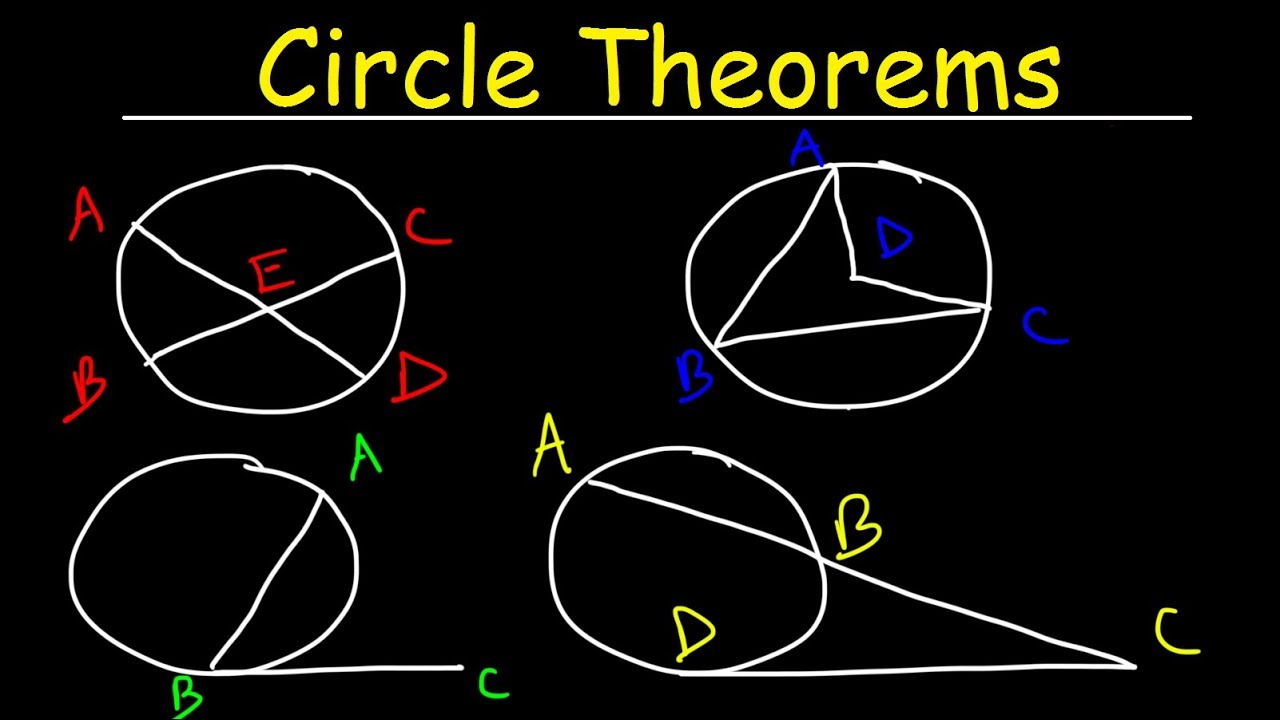
This geometry video tutorial provides a basic introduction into circle theorems. It contains plenty of examples and practice problems.
Here is a list of topics:
- If a radius is perpendicular to a chord, it bisects the chord into two congruent segments. The point of conta...
 outer ravine
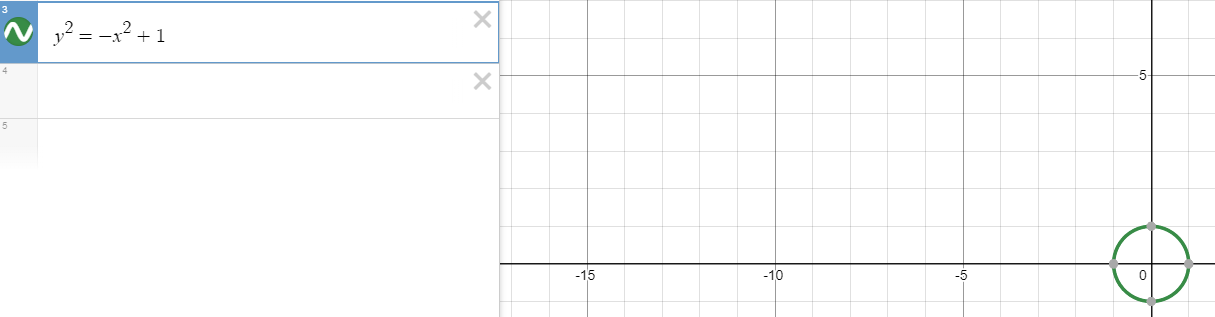
Can anyone explain why this foruma forms a circle? Also why do you need the square roots?
https://i.ibb.co/dmj02Xz/opera-6g-Qnv5vfaf.png
 dark sparrow
x^2 + y^2 = 1
outer ravine
Ok I kinda figured it out after looking at math open reference
 outer ravine
@finite fractal no clue of this is right but I tried m8

just do line tan or cos or sin or somethin
 finite fractal
yeah i did that its apparently wrong
outer ravine
really?
 harsh lintel
0k isnt it just cos inverse of 8.6/11.9? or is that the wrong answer as well
harsh lintel
67 + 2
outer ravine
well you couldn't do my thing because if you just take a point from a random section in the triangle and angle length of that hypotenuse is different
harsh lintel
true true
outer ravine
😦 I wanted to solve it
 civic jolt
A little help with mine pwease
upper karma
@civic jolt 
upper karma
Well do you know of limits when x approaches by a side?
civic jolt
?
upper karma
Basically $\lim_{x\to{1^{-}}}{f(x)}$ means the limit when f(x) approaches x from the LEFT side
somber coyoteBOT
Al𝟛dium:
civic jolt
Oww
upper karma
And $\lim_{x\to{1^{+}}}{f(x)}$ means the limit when f(x) approaches x from the RIGHT side
somber coyoteBOT
Al𝟛dium:
upper karma
So now look at the function
civic jolt
Alright
upper karma
Point with your finger at x=1 ON the function
civic jolt
Ok
 hot trail
can i ask questions here?
or should i ask in the questions thing
sorry, you're in the middle of something
finish what you are doing
upper karma
Now notice that when we move the finger a very little bit to the right side, it is y=1
upper karma
Uh lemme think of a way of explaining this verbally
Ok now i think i have it
Limits is an important concept so you gotta understand this well
Now
Remember what i said and remember the definition of a limit
Basically $\lim_{x\to{1^{-}}}{f(x)}$ means the limit when f(x) approaches x from the LEFT side
somber coyoteBOT
Al𝟛dium:
civic jolt
Yes
upper karma
Where the function from the left side of x=1 is at
civic jolt
0
upper karma
Its not at y=1
Good job
Thats it
Its like thinking of a very close value for f(x) without touching x=1
For example f(1.99999999)
Which is f(1.999999)=0
civic jolt
So isn't x-> 1 positive = 2?
upper karma
No, look again. What would be the value of f(2.00000001)
Or from the other way of looking it, move the finger a VERY little to the right
civic jolt
Approaches from the right side to 1
upper karma
Yeah its 1
civic jolt
Not 2?
upper karma
No
You can test it yourself
Or from the other way of looking it, move the finger a VERY little to the right
@upper karma .
civic jolt
It doesn't touch 2
upper karma
Where is your point after doing this? At y=1
civic jolt
So that means we're focusing on these 2 graph only?
upper karma
Uh those 2 lines aren't graphs
Are parts of the function
The graph is the whole thing
The function is basically, "the lines that are drawn"
civic jolt
The given graph is
f(x)=[x]
upper karma
You should reread all i said, bc i wont keep repeating myself
Saying the function won't really help if you wanna locate it graphically
civic jolt
I know x-> 1 negative means that it's approaching from the left side and x-> 1 positive means that it's approaching from the right side
upper karma
Good
upper karma
You do understand that $\lim_{x\to{1^{-}}}{f(x)}=0$?
somber coyoteBOT
Al𝟛dium:
upper karma
Aight what is f(2.000001)=?
civic jolt
2?
upper karma
2 approach from the right is 1
@civic jolt yeah
(As an example)
Do you understand it now?
civic jolt
f(x)=1
upper karma
Its taking values of x very close to 1, from the right, but without being 1
Wait im tripping
I mean f(1.0000001)=1 SORRY
civic jolt
So it's y=1
civic jolt
But x=1
upper karma
$\lim_{x\to{1^{-}}}{f(x)}=0$ and $\lim_{x\to{1^{+}}}{f(x)}=1$ because look, we take values of X, close to 1, from the right like 1.0001. Do f(1.00001)=?, we can put into the function f(x)=[x] or look at the graph and think when we move the finger from point (1, 1) a VERY LITTLE to the right, y is ....? We notice that its y=1 after moving
somber coyoteBOT
Al𝟛dium:
civic jolt
1
upper karma
Thats it
civic jolt
So WHATEVER I do
Y=/ 2
upper karma
You gotta look at values of x, very close of 1, from the right WITHOUT BEING 1
So WHATEVER I do
Y=/ 2
@civic jolt ?
civic jolt
:nervous_laugh: isn't obvious to me...
:sweats_profusely:
upper karma
You dont see that there is no point at all of the function at x=1, where y=2?!
On point (1, 2) there is literally nothing
Its blank
civic jolt
I know it's blank
civic jolt
Is it like this for every graph?
upper karma
Ok tag me help is needed
civic jolt
Wait, I'm thinking of how I want to ask
Ok
Y is this discontinuous at x=1?
@upper karma
I've already simplified it to x-1
Where x=1
upper karma
dont simplify it tho
the domain of a fraction, is when the denominator = 0
x-1=0 and x=1
so x=1 isnt continuous
civic jolt
How?
upper karma
the domain of any fraction doesn't exist when the denominator = 0
SO WE ARE GONNA LOOK at when the denominator equals 0. We set up the denominator to 0, x-1=0 and x=1
so x=1 isnt continuous
civic jolt
What is meant by "the domain of any fraction"?
upper karma
you haven't heard of the domain?
civic jolt
I may hv forgotten the name
upper karma
wait lemme search a better definition
 silent plank
the domain of any fraction, is when the denominator = 0
didn't make sense
upper karma
oh whoops
the domain of any fraction doesnt exist when the denominator = 0
the domain or set of departure of a function is the set into which all of the input of the function is constrained to fall. It is the set X in the notation f: X → Y. @civic jolt
upper karma
good
upper karma
post it
civic jolt
How do u prove that it is discontinuous by doing
lim f(x)=f(a)
x->a
civic jolt
It's 33.213 haha
civic jolt
Ow shit...
I can do this but I can't even solve my own...
upper karma
How do u prove that it is discontinuous by doing
lim f(x)=f(a)
x->a
@civic jolt it is continuous at that point iff: the limit at that point, the limit at that point from the left side, the limit at that point from the right side and f(that point) are all equal
civic jolt
I see
upper karma
as you can see, f(1) doesnt exist
but you should first check for the domain first than everything else
always
civic jolt
Yes
Because 1 does not =0
finite fractal
KAI HALP
civic jolt
Did u get 5.94 for the height of the pyramid?
finite fractal
was i meant to get the height 
silent plank
height isn't needed
silent plank
did you determine the length of the diagonal of the base square (or length from vertex to center)?
civic jolt
What do u hv?
civic jolt
So m I




 civic jolt
U got 33?
finite fractal
u divide by 2 yes?
civic jolt
Yes
finite fractal
ok thank u
silent plank
depends how you're applying it
finite fractal
:>
civic jolt
We're counting the base first
civic jolt
Ish...
finite fractal
but i get the process now
civic jolt
Ouch
silent plank
i.e. whether you're using a big triangle to get the long diagonal
or applying it to the small triangle to get the length you need directly
finite fractal
xd
civic jolt
Yesh!
silent plank
pythag isn't actually needed since you can just use trig
civic jolt
trig?
silent plank
trignometry
finite fractal
:> what is this big brain sayin
silent plank
from properties of a square and right isosceles triangles
AE=BE=CE=DE = 5.5cm/sqrt(2)
upper karma
Yes
Because 1 does not =0
@civic jolt
 civic jolt
If I determine the value of f(a)
upper karma
x=1 is the only value of x that makes the denominator = 0, which is indetermined
If I determine the value of f(a)
@civic jolt wdym
silent plank
alternatively,
BD =AC = 5.5cm * sqrt(2)
AE = AC/2 = 5.5cm * sqrt(2)/2 (= 5.5cm/sqrt(2))
and then apply the appropriate trig ratio
upper karma
you wanna find f(1)?
upper karma
when the denominator x=1, the denominator = 0, BUT NOT THE FUNCTION
civic jolt
Thanky
upper karma
are you asking if the answer in blue is correct?
civic jolt
No
upper karma
then what are you asking
upper karma
welp you can't if they just give you the drawing, with no values
if thats what you are asking
harsh lintel
omg bruh i literally just learnt what { meant today but i forgot
civic jolt
Welp
I've lived 11 yrs through unclear instructions...
regal shell
That’s a piecewise function
civic jolt
?
upper karma
welp you can't if they just give you the drawing, with no values
@upper karma .
civic jolt
Yeah
Welp
I've lived 11 yrs through unclear instructions...
@civic jolt
N I'm still alive...
regal shell
The question says the graph is abs(x)
upper karma
do you mean if you are given f(x)=|x|
regal shell
So you know the values of the graph still
civic jolt
- & - yeah
regal shell
The graph shows a visualization of where to split up the piecewise function
upper karma
i dont understand what your question is, when you have specified tag me
civic jolt
I winged that question already
Hope it's correct
Doing a new one now with no graphs given
regal shell
What’s the function
upper karma
post it literally
upper karma
what are you asked
 obsidian ravine
do you have to graph it?
upper karma
do. the. domain
upper karma
what on earth is that
civic jolt
Domain
upper karma
the domain of the previous function was all real numbers except x=1
obsidian ravine
lol
upper karma
because x=1 made the denominator = 0
upper karma
-1 can be tho, it'd make the denominator = 2
obsidian ravine
ah forgive
civic jolt
The range?
obsidian ravine
sorry bout that hahaha
upper karma
the domain of the previous function was all real numbers except x=1
@civic jolt
obsidian ravine
im an idiot
upper karma
no worries lol
obsidian ravine
didn't see the modulus lol
upper karma
Is the domain here?
@civic jolt as you can see at the right side, the function isn't expressed on x=1
civic jolt
The ones in the brackets?
civic jolt
Isn't that the range for x?
 white cradle
it's a piece wise function
defined over different values of x
the set of all the values of x mentioned in the function definition, is its domain
white cradle
oh it's a choice, you can get the helper role, but I'd get pinged everytime
white cradle
thanks for the vouch though :p
obsidian ravine
i wouldn't want to be pinged all the time hahah
civic jolt
So...
upper karma
but its fun to help to ppl
obsidian ravine
i just help when i feel like it
white cradle
yeah plus it'd be stuff I can't help with sometimes too
civic jolt
x range is the domain?
white cradle
Ohno don't do that
don't use both terms together like that
range is associated with the values that y can take
civic jolt
Yes
white cradle
domain is the values that x can take
civic jolt
Ehh
white cradle
here you see function is defined for
x<0
0<x<1
x>1
upper karma
Yes
@civic jolt have you really understand it now while i have repeated that a bunch of times?
civic jolt
How do u get the highlighted answer?
 graceful narwhal
the denom was just turned around you can do this by multiplying the denom with -1
civic jolt
(1+2x+x^2) / 1-x^2
@civic jolt
Like this?
harsh lintel
@civic jolt so
- multiply 2/(x-1) by -1
- multiply -1/1 by (1-x)
- add the numerators
- simplify
@upper karma it would be D im pretty sure because the perpendicular restriction rules out A and C, and the congruent restriction rules out B
upper karma
how does it rule out b
silent plank
it doesn't
upper karma
so kite works right? because every rhimbus is a kite
harsh lintel
oh lol true i just looked up the definition im small brain
the question asks for the most restrictive class though so idk
upper karma
ok kite
 stark breach
Which angles are you given?
@upper karma None of them, that's the funny part
also, are rulers expensive where you live?
@upper karma Haha, funny xd
It should be done just by calculation, not by a ruler
Already calculated it
upper karma
what makes you think it's 80?
This geometry video tutorial provides a basic introduction into circle theorems. It contains plenty of examples and practice problems.
Here is a list of topics:
- If a radius is perpendicular to a chord, it bisects the chord into two congruent segments. The point of conta...
 soft gulch
@vital plank १०० है
upper karma
upper karma
but then n would be 100
soft gulch
Exactly
upper karma
also, what makes you think angle CDE is the same as angle CED?
soft gulch
Radius
It's an isosceles triangle
x=m
Since you dont know the theorem
Those two triangles are congruent
upper karma
you don't know that
soft gulch
I can deduce such
soft gulch
Oof
upper karma
is "x = m" now?
soft gulch
CE=CD
upper karma
same radius, same thing
soft gulch
Yes
upper karma
soft gulch
What?
upper karma
hint: ||vertical angles||
upper karma
@vital plank well?
soft gulch
No it's 100
upper karma
upper karma
good
soft gulch
ARC BC will directly correspond to angle BCE
As c is the center
If the the vertex is touching the circumference
upper karma
arc BC?
soft gulch
Be
 supple onyx
Bc is not an arc
soft gulch
Typo
If the the vertex is touching the circumference
@soft gulch then the angle would be half the direct correspondence
 light star
ohh right, i literally wrote it down then forgot
regal shell
And u can do law of sines or law of cosines for the last side
light star
quick question: why do you to have sin(-1) after you fin the result of a law of sines equation
regal shell
?
 umbral snow
So you have
sin(B) = 0.7614
But you don't want sin(B), you just want B
So in order to take the sin off, you have to inverse sin both sides
light star
thanks that makes sense
light star
how was my instructor able to do this
arent you supposed to multiply the entire equation on the right side by 20.25? he only did it to the numerator
umbral snow
Multiply both sides by 20.5
light star
but why did he only multiply the numerator by 20.25
umbral snow
$\frac{\sin(C)}{20.25}20.5 = \frac{\sin(29)}{12.8}20.5$
That's me multiplying both sides by 20.5
Maybe I should TeX that haha. 1 sec
light star
ok, if it becomes (sin(29)/12.8)20.5, then wouldnt the product of that equal: sin(29) * 20.25 / 12.8 *20.25 because its in one bracket
somber coyoteBOT
Kaynex:
umbral snow
Okay haha. THAT'S after the multiplication by 20.5. That's a legal move.
Now, I hope you can see that, on the left, the 20.5 just cancels
light star
yea that I get
umbral snow
Therein why we did it in the first place
On the right, you can put the 20.5 onto the numerator. That's the same thing.
$\frac{20.5}{12.8}\sin(29)$
somber coyoteBOT
Kaynex:
umbral snow
That's a legal answer too. It even looks pretty!
light star
the thing is i would accept that, but I did another question by multiplying the right side's numerator and denominator and I got the right answer
this is what I did with another question, on step 3, i mulitplied the left side by 3
but on this question if i did that, according the teacher, i would get a wrong answer
umbral snow
And you did, lol
light star
yea lol i know but why did it work for that equation and not this one
umbral snow
,w 3sin(50 degrees)/2.5
somber coyoteBOT
 Requested by Kaynex#7520
umbral snow
Requested by Kaynex#7520
umbral snow
It didn't, you got the wrong answer
light star
wait what
umbral snow
There's a cheaty way to think of this:
If something is in the denominator, it can be moved to the numerator of the other side.
Likewise, if something is in the numerator, it can be moved to the denominator of the other side
light star
how??? if you do sin-1(0.3053), you get 17, which is the answer for angle B in this triangle:
so i got the wrong answer in the equation but the right answer for the angle?
umbral snow
I don't know what info you started with
I'm going to guess that you accidentally used your answer to get the other answers, and thus constructed a working triangle, but the incorrect one.
light star
this was the starting one
umbral snow
,calc sin(50 degrees)/2.5
somber coyoteBOT
Result:
0.30641777724759
,calc sin(113 degrees)/3
somber coyoteBOT
Result:
0.30683495115081
,calc sin(17 degrees)/1
somber coyoteBOT
Result:
0.29237170472274
oh i get this now, i remember how a number as a whole is a fraction so 3 would be 3/1
umbral snow
Huh, grats it does obey the sin law everywhere
light star
the previous answer?
umbral snow
Your triangle
light star
i only figured out the 17 part so far but i guess that wouldve let to other parts too
wow i dont how i missed this
its because theres two possible answers
thats literally what the lesson was about and it went over my head
thats why i got 0.3053 and the robot said 0.9
i got triangle 1s answer, robot got triangles 2s answer
thanks for your help
 onyx nova
Hello i neeed help can someone help me
eternal crag
Maybe
light star
i cant figure out how to do C)
i tried doing solving the big triangle first but got the wrong values
regal shell
Use law of sines to find the top angle of the combined triangle
U have the 25 10.5 degree pair so use that to complete the 66 pair
Then use 180 degrees in a triangle to find angle y
@light star
Since the medium triangle is isosceles, the angle next to angle x is equal to angle y
Since they make a 180 degree angle together, angle x is equal to 180 minus angle y
light star
yea i did the first 3 steps, but i got the wrong answer
text book said Y was equal to 18 degrees, I got 28(steps shown in the other pic)
light star
wouldnt it be the same if I did the same equation but B and C instead of A and B?
sin B / 66 = sin 10.5 / 25
regal shell
Well the top angle isn’t y tho
After you find the top angle, you still need to find y
light star
then i get 180 - 28.68 - 10.5 = 140.82 which is impossible, how can angle Y which is clearly acute be obtuse
regal shell
The calculator will show 28 because the angle is 90+28
@light star
The top angle is 118
light star
where did you get 90 from
light star
i remember hearing about something like that from my teacher
light star
but if its 118, then angle y is: 180 - 118 - 10.5 = 51.5
right?
yea but didnt you say its 118, not 110?
light star
but the textbook says y is 18 degrees 😦
regal shell
Probs a mistake in calculations I’ll go over them again
Oh wait I see problem
When dealing with ssa triangle, it’s either the given angle or 180-the angle
Since using sin rule gets us 28, we do 180-28 which equals 152
And 152 fits and gets 18 as the right answer
Sorry it took me a while haven’t done this or any math in a while lmao
@light star
light star
where does 152 fit
upper karma
Rip
light star
lol
onyx nova
@upper karma thank you so much but i figured it out thank you again
upper karma
Cool
regal shell
152 is the top angle
 supple onyx
Translation and stretch
 pearl lava
wa.......
supple onyx
For x and y axes at least
Nvm its just for your specific case i can see how that sounds confusing
But yeah here you're translating and then dilating
supple onyx
Not really geometry or trig
upper karma
I can’t tell but is that cone a hole in the thing? Or are we solving for the cone ;-;?
 strange laurel
any1 know the formula for surface area and volume for a regular heptagonal pyramid?
 kind goblet
google is ur friend @strange laurel
strange laurel
i couldn't find the formula it only showed for hexagonal and pentagons lol
which is why im here 😦
kind goblet
u obviously didnt search hard enough
so im not gonna help u
@strange laurel thats all im gonna help u with
nvm
thats hexagon
RIP
@strange laurel
this? im not sure if its 100% accurate but i found this
heres the website for it

Wolfram|Alpha brings expert-level knowledge and capabilities to the broadest possible range of people—spanning all professions and education levels.
regal shell
18
silent plank
$1+1 \neq ?$
somber coyoteBOT
ramonov:
upper karma
i love trig functions

 wooden current
lol
 oak shale
anyone know how to solve this? I figured out C I think, but got stuck trying to find A and B
wooden current
Do you know Circle Theorems? It should be pretty easy to find a and b, and with the values of a and b you can compute c. I don't know how you found c though.
oak shale
Ill check out the circle theorems right now, thanks
upper karma
c is kinda long
wooden current

This is a graphic, simple and memorable way to remember the difference from a chord or a tangent or a segments and sectors! I made this after struggling to understand it myself, once i got to grips with it i decided to help others who were also stuck.. so this video was create...
upper karma
the process of c is: knowing a and b, get the third angle value of that triangle by the sum of angle's theorem. And as they are both angles congruent, it should be the value for c
well not really long lol
but yeah
@oak shale
@oak shale how did you found c?
the process of c is: knowing a and b, get the third angle value of that triangle by the sum of angle's theorem. And as they are both angles congruent, it should be the value for c
@upper karma .
oak shale
idk i usually use some really flawed math and i think i thought that the angle next to C was 42
so ijust did 180-42 = 138
idk if its correct tho
upper karma
,w 21+42+c=180
somber coyoteBOT
 Requested by Al𝟛dium#4084
upper karma
Requested by Al𝟛dium#4084
upper karma
c is 117
@oak shale look at my comment
the process of c is: knowing a and b, get the third angle value of that triangle by the sum of angle's theorem. And as they are both angles congruent, it should be the value for c
@upper karma .
upper karma
all of the angles from a triangle need to add up to 180
good job repeting what i said xD
"triangle angle sum theorem"
wooden current
breh
upper karma
which is basically that
wooden current

upper karma
,w 21+42+c=180
@upper karma .
wooden current
i love these cat emotes
upper karma
lol
wooden current
I mean it's just basic stuff. If you know those theorems, it will be much easier to solve problems like these.
um
@upper karma ?
wooden current
lol it's ok
upper karma
Can u help me with probability?
wooden current
Probability is not my strong suit, sorry.
You can ask in #probability-statistics
or #❓how-to-get-help-* channels
pearl lava
When you rotate a square, does the orientation of the figure stay the same?
upper karma
what?
no
it's now oriented to the right (or to the left)
you meant "shape", right?
not "figure"
 upper karma
this is more of a philosophical question
"if you rotate a circle does it really change its orientation?"
but I mean, if you rotate any shape, it does change its orientation
if you rotate a square that was "pointing" up, by 90 degrees to the right (clockwise), it's now "pointing" right
you can tell by the corners of the square
pearl lava
Do the orientation of the vertices change in a rotation?
upper karma
🤔
@pearl lava https://www.youtube.com/watch?v=oZzWMGnvkF0



this guy says nah
and your question has a negative in there, so then its "true"
"true" as in "that's right, the orientation of the figure does not change"
pearl lava
So a square would be an exception?
 lavish umbra
Aight I need some help
very strange problem
I can do everything besides the last condition
upper karma
🐣
lavish umbra
Let me post this in #probability-statistics
wooden current
wait oops nevermind i didnt read the first part
so for the first digit we can have { 2, 2, 3, 3, 5 } = 5 options. For the second digit 5-1 = 4 options. For the third 4-1+2 = 5 options. For the fourth 4 options, fifth 3 options, 6th 2 options and for the 7th 1 option. So the number of possibilities is 5 x 4 x 5 x 4 x 3 x 2 = 2400. So the probability is 1/2400.
@lavish umbra
wooden current
No problem !
@lavish umbra Wait can you use the digits more than once?
Actually nevermind it wouldnt make sense to say "2,2,3,3"
lavish umbra
Yeah
wooden current
Sorry 😄
 viscid ginkgo
True or false: if sinA is positive, then sin A/2 is positive as well.
idk how to solve this
I tried indicating the range
using A = 90 for example
I solve for sin A/2 and it's always positive
upper karma
draw it on a unit circle
viscid ginkgo
how?
 molten holly
Have the answer from the key, just confused on how to get there.
upper karma
@molten holly
wooden current
@molten holly Idk why "smaller" segment. But the area of a segment is basically area of sector - area of the triangle determined by the radii. Since the angle is 60 degrees, the area of the triangle is $r^2\frac{\sqrt{3}}{4} $ ( properties of equilateral triangles ). The area of the sector is just that formula with angle = 60 degrees.
somber coyoteBOT
DanCastan:
viscid ginkgo
why did you write 12?
upper karma
it was meant for @molten holly
viscid ginkgo
lmao
upper karma
but for your problem, do you see the area marked in blue?
this entire half is 180 deg
if you split it in half, 90 degrees is pointing straight up


so do you see where the green "sin" line would end up?
straight up
oak shale
x^2+y^2+6x-24=8y
how would I convert this into a standard equation of a circle?
viscid ginkgo
uh
upper karma
@viscid ginkgo and since it ranges from zero to "whatever the radius is"
let's say... 12
from 0 to 12
but it can be any number
on the unit circle it's usually 1
viscid ginkgo
damn, it really has been a while since I did equation of a circle...
upper karma
the radius is 1
viscid ginkgo
let me tryu
upper karma
anyway, A/2 will always be positive
upper karma
yep
True or false: if sinA is positive, then sin A/2 is positive as well.
@viscid ginkgo
it's "true"
wooden current
^
@oak shale the standard form of the equation of a circle is (x-a)^2 + (y-b)^2 = r. It's just basically completing the square in terms of x and y.
 slate bay
book says false
It's false. A = 361 degrees is a counter.
upper karma
361 degrees = 1 degree
viscid ginkgo
361 huh? that's interesting
upper karma
same spot
slate bay
Does A have a domain restriction?
viscid ginkgo
no
slate bay
361 degrees = 1 degree
Sure, but 361/2 degrees does not coinicide with 0.5 degrees, right?
upper karma
it does, yes
slate bay
Wait, really?
wooden current
but the condition was sin A is positive. why choose A > 180
somber coyoteBOT
Requested by DSpider#6917
slate bay
@wooden current sin(361 deg) > 0
upper karma
sin(361) = sin(1)
slate bay
Yes, I agree with sin(361 deg) = sin(1 deg).
viscid ginkgo
(x+3)² + (y - 4)² = 24
slate bay
Wait...
Is the statement sin(A) positive implies sin(A/2) positive, or sin(A) positive implies sin(A)/2 positive?
wooden current
first i think
slate bay
I interpreted it as the former, yeah.
slate bay
Red HerringToday at 4:37 PM
361 degrees = 1 degree
Sure, but 361/2 degrees does not coinicide with 0.5 degrees, right?DSpiderToday at 4:37 PM
it does, yes
Ok, clarification needed.
wooden current
where are the parantheses
viscid ginkgo
sorry
slate bay
Or it does as in it doesn't coincide?
viscid ginkgo
I thought it was obvious because of half angle etc
wooden current
it's ok
viscid ginkgo
it seems sin (361/2) = +?
wooden current
maybe you can use the fact that sin(A/2) = $\pm\sqrt{\frac{1-cosA}{2}}$
slate bay
361/2 degrees = 180.5 degrees, which does not coincide with 0.5 degrees is my reasoning.
somber coyoteBOT
DanCastan:
wooden current
?
viscid ginkgo
yes I got a positive answer for 361
slate bay
it seems sin (361/2) = +?
No, it's negative, because 361/2 degrees is 180.5 degrees is below the x-axis.
Right?
upper karma
,w sin(180.5) = sin(0.5) in degrees
viscid ginkgo
hmm
I get a positive answer on my calc. I think what I have to do
is apply a negative?
but if it's in Q1
then it's positive?
slate bay
wooden current
wait
viscid ginkgo
so is everyone else as confused as I am?
slate bay
I'm confused with what the problem with my counterexample would be.
upper karma
viscid ginkgo
hmm 361 = 180.5