#geometry-and-trigonometry
1 messages · Page 149 of 1
 dull egret
 foggy oxide
hint : try some geometric transformation
almost like that
(by geometric transformation i mean, reflection, rotation)
dull egret
yeah yeah
foggy oxide
This one is very geometric and i remember this solution because there was another problem with the same case (AP^2 = BP^2 + CP^2) where it wanted the total area of the triangle
dull egret
so well, by some property of the circle the name of which i forgot P must be on a circle around A right?
or wait
foggy oxide
idk 😂 , let me try to remember it
dull egret
if there is a singular solution, then a valid point to use is the vertex B(actuall C too)
then the angle doesnt exist
great
foggy oxide
😂 dafuq
foggy oxide
You're right xD
i have no idea how you came to this sol
but yeah , that's the answer 😂
dull egret
well, get the point P arbituarily close to B which is a possible position for P
then the angle PBC is gonna be half of ABC
and cause that is 60 in an equilateral it is 30
dull egret
similarly it is gonna be 0 for PCB
yeah just that i have a more algebraic solution again xDDD
foggy oxide
xDDDDDD, i would not say that, but i can almost have certainty that you're the only one who solved it like that 😂
dull egret
hahaha
foggy oxide
well bro, i'll watch something or practice M U S I C see you later xD
dull egret
alright :P
 upper karma
can someone help with math
dull egret
probably
 crude kraken
Sorry, this is a French Culture discussions server
upper karma
All points in a grid lie in the same plane. Each point is 1 unit from its nearest neighbors. How many circles in the plane have a radius 1 unit and pass through at least 2 of the 4 points?
Can someone help?
crude kraken
4
crude kraken
I read 4 points sorry xP
upper karma
Oh np
upper karma
mhm
upper karma
lol
crude kraken
:p
upper karma
Wait is 13 the final answer?
upper karma
Someone ;-;
crude kraken
Never heard of it, can you explain? @foggy oxide
foggy oxide
You can see that (y+a)(x+b) - ba - xy = the parallelogram area
(ax + by)
and it's also b * sqrt{x^2 + y^2}
ax + by = b sqrt{x^2+y^2} < or = sqrt{x^2 + y^2} * sqrt{a^2 + b^2} (supposing that the parallelogram area it's minor or equal to the rectangle area)
<=>
b < or = sqrt{a^2 + b^2} (squaring both sides)
b^2 < or = a^2 + b^2
crude kraken
Yea just realized my mistake, only 8
 oblique raft
This is Khan academy's explanation for the initial question I had. We had to derive that the two lines were parallel using the left triangle
Here is the pic of the triangles btw
@dark sparrow
 dark sparrow
oh
right

yeah
you do need that left triangle
to verify that those two lines are parallel
sorry
 marsh wing
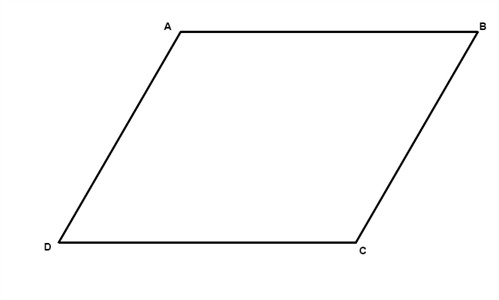
if a rectangle and a parallellogram (a tipped one like this one: https://www.mathplanet.com/Oldsite/media/44000/parallelogram_499x300.jpg) has the same area
Mathplanet
dark sparrow
then...?
marsh wing
which of them has the
how do you say it
hmm
least amount of perimeter
does not sound right
dark sparrow
which of them has the shorter perimeter?
marsh wing
yea yea
dark sparrow
you can make a rectangle's perimeter arbitrarily big
just take an x by 1/x rectangle
its area will be 1 but its perimeter will be 2x + 2/x
and that can be made as large as you wish
lol
it's always at least 4 tho
while say the parallelogram (0,0)-(1,0)-(2,1)-(1,1) also has area 1
but perimeter 2 + 2 sqrt(2)
so the answer to your question is
not enough info
marsh wing
hmm
ok
it has let's say 77cm^2
will the parallellogram have the shorter perimeter compared to the rectangle
marsh wing
alright
 heavy path
Each of the tubes that make up the Holland Tunnel's inbound and outbound lanes are about the same length. The north tube is 8558 ft, while the south tube is 8371 ft long. The diameter of each tube, which were initially cylindrical, is roughly 20 feet.
a)Based on the above information, what is the volume of dirt that had to be removed from the ground to create these tubes? Express your answer in cubic meters. My answer to this was 150600.38m^3 which is correct however for part B i dont get, B) Using your answer for the previous question, what would the height of a giant cube be that was made out of this much dirt?
dark sparrow
what is the edge length of a cube whose volume is 150600 m^3?
heavy path
no information is given for part A they want you to find amount of dirt removed, Part B is asking hieght of a giant cube that was made of all that dirt
dark sparrow
do you know how to calculate the volume of a cube given its edge length?
heavy path
it has the same legth width and hieght so V=a^3
heavy path
so i just square it to the third , sorry dont know how to write it in computer
heavy path
yea
dark sparrow
that's called taking the cube root
heavy path
oh
 charred spearBOT
53.20367811
heavy path
yes
dark sparrow
...that's your answer
heavy path
for part c they are asking this If they wanted to dig the tunnels in no more than 91 days, how many kilograms per minute of dirt would have to be removed? Assume a density of 1826 kg/m3 for the wet dirt, clay and rock that would be found under the Hudson, and that they could work around the clock.
oh thats a neat bot
thank you
dark sparrow
do you want me to walk you through that one?
heavy path
Yea i dont know which formulas they might be asking me fore
dark sparrow
...
okay, so
you want to remove 150600 m^3 of dirt
1 m^3 of dirt weighs 1826 kg
how many kilograms of dirt do you want to remove?
heavy path
isnt the question asking if for new values? do you still have to use the answer for part a?
dark sparrow
is this all part of the same question?
heavy path
yea its all one problem
dark sparrow
it's reasonable to assume that since you had to reuse in part b the values you got in part a, you should also use them here
you want to remove 150600 m^3 of dirt
1 m^3 of dirt weighs 1826 kg
how many kilograms of dirt do you want to remove?
heavy path
Kg/min
dark sparrow
we'll get to that in a moment
answer my question, please
i want to guide you through it step by step
dark sparrow
yes
heavy path
thats a big number..
dark sparrow
== 150600 * 1826
charred spearBOT
274995600
heavy path
3600? is it?
dark sparrow
no
heavy path
606060
heavy path
lol i thought i was using my calculator
heavy path
24
dark sparrow
how many minutes are in an hour?
heavy path
60
 umbral rivet

dark sparrow
how many minutes are there in a day?
heavy path
1440?
dark sparrow
yes
umbral rivet
👍
 rare iron
== 60*60 *24
charred spearBOT
86400
dark sparrow
you can use a calculator
heavy path
yes, 131040
dark sparrow
== 91 * 1440
charred spearBOT
131040
dark sparrow
yup
so now
you need to remove 274,995,600 kg of dirt
and you have 131,040 minutes to do it
how many kilograms will you have to remove every minute?
heavy path
we just devide
dark sparrow
divide, but yes
heavy path
== 274,995,600 / 131,040
charred spearBOT
40
heavy path
40 kg per min?
dark sparrow
...the bot doesn't respond well to numbers with thousand separators
== 274995600/131040
charred spearBOT
2098.56227106
heavy path
oh, okay, learning to use the bots
umbral rivet
Wouldn't you round it to 2099? 🤔
umbral rivet
:3
heavy path
so to summarize you have to first muliply the density times the amount then just figure out the time it takes in the amount given
dark sparrow
mass = density * volume
and quantity = rate * time
really, that's it
those are the two "formulae" you could use
umbral rivet
Formulae :D
dark sparrow
?
heavy path
thats neat, i was not always good with real life applications hehe, but i feel like this was super easy to understand thanks alot
dark sparrow
:+1:
umbral rivet
I was unaware that was the plural word for formula :p
dark sparrow
formulas and formulae are both fine according to OED, iirc
i prefer the Latin-derived plural
umbral rivet
X3
crude kraken
Formulas is what I say, formulae is what I wish I could get used to saying because it sounds fancy :3
 crude kraken
🍞
 crude kraken
That's not geometry you ding dong
crude kraken
Okay
umbral rivet
"How many loaves of bread will it take to fill a 20 inch by 10 inch by 10 inch box?"
We need to find the average measurements for a piece of bread first
And we're not using end pieces >:T
umbral rivet
K
crude kraken
If a loaf of bread is baked in an empty 3d space, in the end it is a perfect 3d oval with a width of 5 inches and a length of 16 inches. When the loaf of bread is instead baked on a sheet, because the sheet presses onto it, the bottom 2 inches from the perspective of width are cut off. What is the volume of the loaf of bread?
 crude kraken
=tex \text{Area of oval } = \frac{length}{2} \frac{width}{2} \pi
charred spearBOT
umbral rivet
uwu
crude kraken
=tex V = \frac{4 \pi r^2}{3}
charred spearBOT
crude kraken
for sphere
but idk how that works for ovals
but I do know the area of the oval is 62.8, and I know how to calculate the area of a segment of a circle
I don't know how to apply circle maths to ovals though. 🤔
umbral rivet
😡🖐
crude kraken
so wait
pi(r)^2 = area of circle
so it's pirr
oval is just pi(l)(w)
so therefore any time I see r squared I just replace with length * width
so
umbral rivet
😡🖐
crude kraken
=tex V = \frac{4 \pi lw}{3}
charred spearBOT
umbral rivet
🛑
crude kraken
whatchuwant
crude kraken
so we know the volume of the ovaloid is 4pi(5)(16)/3 = 1004.8/3 = 334.93
Now spherical cap is
=tex V= \pi h^2(R-(h/3)) = \frac{1}{6} \pi h(h^2 + 3r^2)
charred spearBOT
crude kraken
We know to replace r^2 with lw, and that h is 2
foggy oxide
sup guys
foggy oxide
Woah, what is this formula
crude kraken
So the solution is 334.93 - 255.39 and because that makes absolutely no sense I know I dun messed up
and oh, that changes a lot
foggy oxide
idk, depends
foggy oxide
What are you guys discussing ?
crude kraken
If a loaf of bread is baked in an empty 3d space, in the end it is a perfect 3d oval with a width of 5 inches and a length of 16 inches. When the loaf of bread is instead baked on a sheet, because the sheet presses onto it, the bottom 2 inches from the perspective of width are cut off. What is the volume of the loaf of bread?
foggy oxide
Oh god
crude kraken
shrug
crude kraken
xD
crude kraken
mk so basically
the same problem in 2d is: you have an oval of length 16 and width 5, you take off a segment of height 2 from the width-side and you calculate the area remaining when the segment is gone
but in 3d
dull egret
well, just integrate that right?
crude kraken
I've been trying to figure out what an integral is for the longest time
and I don't even know
so I'm trying to use simpler formulas made for spheres and apply them to ovals and it's not working and I'm sad ;3;
dull egret
well, so, i mean we know a circle is defined by r^2=x^2+y^2. r is 5 and the whole thing is moved down two.
wait diameter
so 6.25=(x+1/2)^2+y^2
dull egret
now find the volume of the bottom section essentially
crude kraken
Mhm
h is 2 where a and c are both 2.5 and b is 8
Trying to find the area of not-blue
*volume
that's this problem in a nutshell
dull egret
yeah i got that
crude kraken
mk
dull egret
i m just contemplating what is the easiest way to go about things kinda
i mean. let s just be stratic about it. lets first find the area of a circle which has the bottom section disregarded i guess.
and then integrate that formula along the x axis while cahnging r depending on x
so with that we re back to 2.5=sqrt((x+1/2)^2+y^2)
positive sqrt
solving for y
sqrt(6.25-(x+1/2)^2)=y
wait
this is gonna have problems cause it s two sides
hmmmmm
sqrt(6.25-(x-1/2)^2)=y
better
so... integrate that
let s be lazy
should have shifted in y not x
charred spearBOT
Query made by @dull egret
Data sourced from Wolfram|Alpha: http://www.wolframalpha.com/input/?i=sqrt(6.25-(x-1%2F2)^2)%3Dy
Do more with Wolfram|Alpha Pro: http://www.wolframalpha.com/pro/
dull egret
6.25=x^2+(y-1/2)^2
therefore
sqrt(6.25-x^2)+1/2=y
=wolf integrate sqrt(6.25-x^2)+1/2=y
charred spearBOT
Timeouts
Integral, GlobalExtrema, Inequality2D, Geometry, Inequality, Simplification, ImplicitDifferentiation, FredholmIntegralEquation
Query made by @dull egret
Data sourced from Wolfram|Alpha: http://www.wolframalpha.com/input/?i=integrate+sqrt(6.25-x^2)%2B1%2F2%3Dy
Do more with Wolfram|Alpha Pro: http://www.wolframalpha.com/pro/
dull egret
should have shifted it in x too, now stuff is partially negative
do you get where i m going?
dull egret
where did you suddenly get that from?
crude kraken
I found a formula for the volume of an ellipsoid cap because I don't know the first thing about integrals 🤔
Still interesting solution tho
dull egret
not a full solution yet xD
crude kraken
Still interesting semi-solution tho
I don't get it but it looks fancy 😮
that but without transparent background
dull egret
essentially i would have gotten the caps area for each slice, subtract that off the circles area and split the ovaloid into infinitecimally small slices of cylinders
crude kraken
Ohhh
Yea I've seen that analogy before, interesting way of looking at it
and I do know the formula for taking off a segment of a cylinder so I can definitely see it working
I just don't know the "syntax" (if that's a math term) for it
dull egret
generally works quite well for geometry problems.
crude kraken
But isn't it calculus?
dull egret
what is the way you are expected to solve this if you dont know calculus
cause yes, it is calculus
crude kraken
Well uhh
I didn't exactly know it was calculus 🤷
I just thought of changing the formulas for segments of a sphere to match ovaloids
and hope that works
*also learned that ellipsoid is the proper term
dull egret
whatever
is this some school task or so?
like, how are you mean to solve it?
what are people expecting you to do with it?
crude kraken
If you scroll to right before I posted the problem at first you would see that me and @umbral rivet were trying to come up with a geometry problem about bread
dull egret
oh lol
crude kraken
and I came up with a perfect ellipsoid loaf volume being an interesting problem
because loaves are often in that shape but flat at the bottom so
y'know
dull egret
getting yourself into complicated stuff, great...
crude kraken
I dunno if I'll need it but will note when I learn calculus that it can do this
dull egret
trivial task with calculus tbh with you. bit tedious tho
just need to move stuff around correctly :P
crude kraken
turns out I need to know what a "derivative" is to know how to integrate, so guess I'll just self-teach myself derivatives sometime
dull egret
lol
crude kraken
and hope I don't have yet another prerequisite for that, so see ya around I guess 😛
dull egret
well, good knowledge of algebra then it s all very simple really
crude kraken
Searches derivatives I have to know limits, integrals are a lot more complex than I thought ;3;
dull egret
limits are stupidly complex if done rigorously, but simple af if done with theorems
crude kraken
I semi-get limits though
sorta
not really but I know that the bottom thing means "as x approaches y"
dull egret
lol
crude kraken
but I don't know what the thing on the right is, and I also don't think that I should ask what that is in #geometry-and-trigonometry xP
umbral rivet
:3
dull egret
on the right side?
dull egret
the actual formula?
umbral rivet
:o
crude kraken
:o
dull egret
tell me you know calculus @umbral rivet
crude kraken
Angel is a grade level below me
umbral rivet
I have no knowledge of calculus :3
crude kraken
=tex \lim_{x \rightarrow 0}3x+4
charred spearBOT
crude kraken
What is the 3x+4
crude kraken
...
dull egret
this limit would go to 4 for instance
umbral rivet
Who? 👀
crude kraken
Then what does the limit mean about the formula >:o
umbral rivet
:u
dull egret
cause you can just plug in 0 cause it s continous everywhere
crude kraken
okay so as x approaches 4, 3x?
crude kraken
=tex \lim_{x \rightarrow 4}3x?
charred spearBOT
dull egret

YouTube
The goal here is to make calculus feel like something that you yourself could have discovered.
crude kraken
ooo
dull egret
wrong one
crude kraken
uuu
umbral rivet
ggg
dull egret
fixed
crude kraken
ooo
umbral rivet
uuu
dull egret
...
umbral rivet
!!!
dull egret
we should stop
crude kraken
We should.
dull egret
otherwise sqrt 2 is gonna make us go bakc to the bin again
dull egret
:P
umbral rivet
:P
crude kraken
:P
crude kraken
:T
dull egret
stfu
crude kraken
re-eats
dull egret
😛
crude kraken
You're now -eatenjelly
crude kraken
no
if you eat something already eaten
it's now negative
so he's -jelly
because 3 - 3 = 0
0 - 3 = -3
umbral rivet

umbral rivet
 pale crow
 umbral rivet
Need help with that? @pale crow
crude kraken
2.5x+x = 5x-3
After simplification: 3.5x = 5x-3 (Combine like terms)
3.5x - 5x = 5x - 3 - 5x
-1.5x = -3
umbral rivet
ugh
crude kraken
x = 2
crude kraken
sorry ;c
 thorn talon
Rip
umbral rivet
;c
crude kraken
You can carry on c:
umbral rivet
tru
crude kraken
that's just a declaration that x=2
umbral rivet
Need to substitute that in
umbral rivet
@pale crow do you understand how we solved this problem?
(also I'd like to answer more question if you have them) :3
umbral rivet
Hm okay
pale crow
hold on one minute
umbral rivet
pale crow
im gonna redo it
umbral rivet
^3^
umbral rivet
Okie :)
So here
All we need to do is substiture all those letters for the numbers and variables
so...
MN + NR = 5x - 3
Would turn into...
2.5x + x = 5x - 3
Does this make sense?
pale crow
ookk
umbral rivet
:D
pale crow
this makes much more sense
umbral rivet
:DDD !
pale crow
http://prntscr.com/ggqp8v I could solve this (find the answer, but if anyone could explain how. it would be nice
 pale crow
17
school started this week and hes making us do these for homework before we do the lesson
so im kinda lost
umbral rivet
:(
School started for me recently as well
Let me see...
ah okay
The keyword in this problem is "midpoint"
Whenever you see the word midpoint, it always means that the line is split into two equal parts
Because these two parts are equal, we can, well... Set them equal to each other
So...
2x + 4 is equal to 3x -1
Once again, this is because we know E is the midpoint between them
Does that make sense?
pale crow
i got x=5
umbral rivet
^3^
pale crow
http://prntscr.com/ggqt12 what does bisect mean??

divide into 2 parts?
so like half??
 scarlet quail
divides into two, yes
pale crow
ook
umbral rivet
Yup :3
pale crow
So its like the midpoint
thorn talon
kind of yes
scarlet quail
Yes it is
umbral rivet
yee
umbral rivet
I got chu
okay so
Since we know that PQ = QR
It means that QR = 3y
Right? :D
so...
6y = 42
:3
Does that make sense? :3
pale crow
YAHHH
THATS WHAT MINE LOOKS LIKE
ok so i understand the first step
now hwat
oh
just divid
ook
 mint axle
Beth we have the same math problem :O
umbral rivet
:3
hm
I mean
both sides add up to 6y
And the whole segment is 42
6y = 42
:P
mint axle
How are you so good at math
pale crow
how did u get 6
umbral rivet
I'm not xP
umbral rivet
I'm bad at math x3
umbral rivet
I'm a guy ^.^
So
I got 6y because
If you remember earlier...
Q is the bisector of PR
pale crow
so it doubles??
umbral rivet
Which means that both sides are equal
if one side equals 3y, the other side must equal 3y as well
Pretty much, yeah Beth
pale crow
im slowly understading
umbral rivet
:)
pale crow
y=7
 thorn talon
I tried to do Pythagoras and got nowhere
 dusty timber
Oh, no. It's similar triangles

 dusty timber
The ratio between the big and the small triangles will remain constant. Get the ratio and then find the missing leg of the small triangle
mint axle
I know how to get the top triangle does this mean I'm smart
umbral rivet
👍
Smart to me
I don't think similar triangles and ratios are used here
Let me solve the problem real quick
one min
thorn talon
25/37 = x/x+10 ?
dusty timber
Yes
umbral rivet

dusty timber
It happens. You knew how to set it up teal quick tho
thorn talon
Wait do I have to prove it?
dusty timber
Uh I don't think so. It's a proven theorem that a line parallel to any leg cutting through a triangle creates a similar smaller triangle
thorn talon
Alright thanks
umbral rivet
15 :3
dusty timber
I'm 17. I hated my geometry class. My teacher had a terrible monotone voice
And guess what... he's my calculus teacher now lolol
umbral rivet
w t f
crude kraken
df
dusty timber
That's unusual. Geometry is usually where proofs are first introduced. It usually ends up diving into probability and such
umbral rivet
^
Hopefully you don't do 2 column proofs
If you do though
🙏
They were the hardest thing for me to learn
I always failed that part on every single test
thorn talon
what's that?
dusty timber
I always hated those. They give a bad name to actual proofs.
umbral rivet
^^^^
there are two types of proofs:
- 2 column proofs
- paragraph (written proofs)
2 column proofs are basically like
You have one column with a statement, and another column with reasoning
thorn talon
that sounds like what we did
umbral rivet
So like an example would be
"A is parallel to B"
And in the other column you would write the reason or the theorm that proves it
It's awful
thorn talon
sounds like what we did
dusty timber
It's horrible. It's just a series of steps and you are given all the pieces, which in turn gives no understanding at all
umbral rivet
Once my teacher introduced proofs to us, my grade in geometry went downhill
I ended with a C- or a D at the end of the year I think :\
thorn talon
better than me
umbral rivet
That was an honors class
Now I'm in an academic algebra 2
Which is actually good :3
<3
thorn talon
i have no idea what i'm doing
thorn talon
i have to study basic arithmetic to quadratic functinos
dusty timber
Learn your algebra well. Very well. Without that you're gonna have a hard time with everything else
thorn talon
basic arithmetic, i think i'm fine
algebra and surds, i think is fine
equations is fine
geometry, i should probably work on
same with functions and graphs
and trig
linear functions is fine for me i think
intro to calculus i think is alright
quadratics is not too bad
umbral rivet
me + graphing = 💥
thorn talon
so i need to study at least 3
and probably revise calc
cause i don't remember a thing from calc
dusty timber
What's the most advanced math you've taken?
thorn talon
quadratics functinos apparently
umbral rivet
👀
dusty timber
I took a trig class in a junior college and honesty I don't remember half of it
dusty timber
Is it really useful to learn this stuff? I mean, I understand it but is it really worth it to learn all these rules despite having graphing calculators or is it just for the fun of it? @upper karma
thorn talon
we don't get graphing calculators
so i guess i need to learn it
hmm
i understand only the basic graphs
i guess i'll need to learn
umbral rivet
o3o
thorn talon
i got my exam on friday
dusty timber
Yeah, you're right, but I guess a little rigor would be ideal instead of juat learning the algorithm
thorn talon
hopefully enough time
my brain still feels stuffed from english
yeah
i can do that
ehh
for what types?
dusty timber
I thought it'd be easier to graph things like hyperbolas and such. I figured there would be a way to graph them quickly just by knowing the coordinates of the foci and stufd
Stuff*
I see. Sines/cosines are kinda easier because they cycle
dull egret
trying to remember what you knew then is the hardest part
 blissful hill
Yea
I know solution which using tan(15)
But why the hell i was given this task in the 7th grade
dull egret
what did you know then?
dull egret
pythagorean
umbral rivet
x3
blissful hill
Thx
dull egret
i wouldnt have complained actually, but oh well, you asked for it
blissful hill
it is good for me to learn more and more in english
dull egret
were you maybe meant to just solve this by measurement?
where are you from?
russia?
blissful hill
Russia
dull egret
but yeah, only thing i cna think of is measuring things
blissful hill
For ?
I need to find angle a
A
And this is possible to do with trygonometry
But i think there must be another way
dull egret
trigonometry
blissful hill
Oh
dusty timber
There is another way
They are similar triangles. The ratio between the 2 is... 2. The angle is 30
I mean, if there's any other way, it's similarity
 topaz valley
Wait, do you know that that triangle is solvable?
Because at first glance it doesn't look so.
No nvm you're right it's 30.
No, it's not 30
angle = atan(x/2x)
topaz valley
26.6 degrees
topaz valley
Lol that second triangle really threw me off
blissful hill
Hm
Similarity
2 similar triangles have same angles
They are not similar
Answer is 30 but i don't know how to prove it without trigonometry
Btw A is 30, B is 75 and C is 75, its an isosceles triangle
Let H be the point of height
2CH=AB
upper karma
I'm having a hell of a time trying to prove the volume formula for a frustrum. I still just can't figure out what I'm doing wrong


 surreal bolt
still there?
upper karma
always and forever
Was just torturing myself physically since I've mentally beat everything out of myself
the original question.
surreal bolt
Hmm is it assumed the pyramid has an equilateral triangular or square base?
I'll do this for a square base, but the answer works for other shapes as well.
(knowing that it works for lots of shapes means we can just find it for one ... and that is how I am cheating a bit here.)
upper karma
I believe square, since the first was square
surreal bolt
So I think h is supposed to be the height of the fulcrum. If the whole pyramid were intact, what would be the height of the pyramid (not fulcrum) with base s1?
It ends up being a ratio. Let H (capital) be the height of the nonexistent pyramid. (H-h)/H = s2/s1
Hs1 - hs1 = Hs2 --> H(s1 - s2) = hs1 --> H = hs1/(s1 - s2)
The pyramid with base length s1 has height H --> V1 = 1/3 (H)(s1)^2
The pyramid with base length s2 has height H-h --> V2 = 1/3 (H-h)(s2)^2
V = V1 - V2 = (1/3)(H(s1)^2) - (1/3)(H(s2)^2) + (1/3)(h(s2)^2)
= (1/3) (H ((s1)^2-(s2)^2) + h (s2)^2) ... Sub hs1/(s1 - s2) for H
= (1/3) ((hs1/(s1 - s2))((s1)^2-(s2)^2) + h (s2)^2)
= (1/3) h (s1(s1 + s2) + (s2)^2)
= (1/3) h ((s1)^2 + s1s2 + (s2)^2)
And you are right I wasn't paying attention. It was definitely square.
It says two ways ... have a preference?
anyway that is one way. Hope that helps.
upper karma
sorry about that
was talking to my daughter
so where does the h (not H) come from?
surreal bolt
um from the original problem 😃
upper karma
alright, alternative wording, where does H come from?
it says (in original problem) that h = height from base to top
surreal bolt
Yes. But note that the "top" in the problem is also a base.
upper karma
right, so it isn't the entire distance of a pyramid
surreal bolt
Yeah. Just making sure .... you have a picture of a fulcrum in your books or notes, no?
upper karma
Thanks, sorry bunch of household mess getting handled on top of me working on this as well
surreal bolt
yup yup. We are here to support your math -- something which can distract and be distracted by life.
upper karma
far too true
upper karma
I'm having trouble here "= (1/3) ((hs1/(s1 - s2))((s1)^2-(s2)^2) + h (s2)^2)
= (1/3) h (s1(s1 + s2) + (s2)^2)"
I can post what I have, but I feel like I'm straying further from the path
surreal bolt
you are basically there if you understand up to: (1/3) h (s1(s1 + s2) + (s2)^2)
upper karma
I doon't understand how you got rid of the 1/(s1-s2)
surreal bolt
oh cause s1^2 - s2^2 is a diff of 2 squares.
surreal bolt
hehe
upper karma
helps if you look in the right place
upper karma
I've got nothing but pencil lead, ink, paper, and time
surreal bolt
oh I found it online.
From a hopefully reputable / accurate website:
Nikola Tesla visited Henry Ford at his factory, which was having some kind of difficulty. Ford asked Tesla if he could help identify the problem area. Tesla walked up to a wall of boilerplate and made a small X in chalk on one of the plates. Ford was thrilled, and told him to send an invoice. The bill arrived, for $10,000. Ford asked for a breakdown. Tesla sent another invoice, indicating a $1 charge for marking the wall with an X, and $9,999 for knowing where to put it.
(not as long and dramatic as the version I heard but it might be more accurate)
anyway ... about the "right place" 😃
surreal bolt
oh last small mistake. s1^2 - s2^2 = (s1 + s2)(s1 - s2) ... which one cancels away and which one stays?
surreal bolt
s1(s1 + s2) + s2^2
upper karma
where is that other s1 coming from?
surreal bolt
you dropped it between the second to last and last line 😃
oh
I see.
H = hs1/(s1 - s2)
H has an extra s1 term
upper karma
and so that sqrt in the middle is fabricated?
because now it matches save for the sqrt(s1^2 s2^2)
surreal bolt
I think they were worried you didn't have enough math to do 😃
upper karma
so it's just made up?
surreal bolt
good good. progress is usually touted here.
upper karma
Now to determine how to prove it once more. Last time I just did 6 of these is a cube, but with this. I don't think it will work as nicely
 thorn nymph
3√-4 = -3√4 or no?
 vale raven
==3*sqrt(-4)
charred spearBOT
(3.6739404e-16)+6i
vale raven
They're not equal
upper karma
Due to being a creature of habit. Multiplying it by 6 would give me s^3 - s2^2(H-h)/3, right?
blissful hill
@thorn nymph you can't take square roots of negative numbers in real numbers
thorn nymph
@blissful hill yeah, I misstyped it, supposed to be cbrt(-4x)
blissful hill
Then you are right
 supple knoll
So I know that Euclid described in his axioms that we could "describe any circle with any center and radius r", but how exactly does he give meaning to the notion of circumference of a circle? If I wanted to define pi geometrically, I would say that it's the ratio of this circumference to 2r, but that doesn't mean much to me. Without using any calculus to describe it based on arc length etc., how was the circumference of a circle defined?
Probably sounds like a retarded question but I'm being serious
foggy oxide
two times pi, times the radius @supple knoll
that's exactly how we think about "creating" a circuference
well, idk euclid, now we can think in another way about circuference
but i think about it as the set of points that are equidistant, in a certain distance (radius) to a single point, (center)
and that's how the circle is defined in a equation
{x - xP}^2 + {y- yP}^2 = r^2
where, (xp, yp) are the center
and r the radius
this is a consequence from pytaghorean theorem, and distance of two points formula (both are basically the same)
but, in the time of euclid they didn't have rigorous definitions for this, i think xD...
supple knoll
Isn't that circular? Pi is defined as the ratio of the circumference to the diameter, so saying that the circumference is defined in terms pi doesn't make sense
supple knoll
I was looking for something that didn't involve coordinates and could just be described using the postulates
but it seems that, going through the Elements, he just defines a line (not necessarily a straight one) as some length, and defines a circumference to be a line
and talks about ratios somewhere else
foggy oxide
well, that's probably what he did
supple knoll
So I guess we're restricted to talking about ratios as equivalence classes, of which pi is one such equiv. class
foggy oxide
i heard that he avoided using the postulates that he wasn't confident in the definition
supple knoll
I think you're referring to the last postulate (5), which he thought could be proven as a proposition but no one ever managed to
the one about parallel lines
There weren't really any concerns about the others
foggy oxide
i'm back, well
i think it was about parallel lines or "planes"
something like that
supple knoll
Yeah, he specifically tried to avoid using the last postulate, but that doesn't really have anything to do with the construction of circles
foggy oxide
yeah, i was just commenting hehe
 glacial grail
Guys how can I find b?
a I found by using pythagorean theorem
@upper karma How?
Using 30
@upper karma So it will be b = sin60/8 ?
8 * Pi/3 = b
Thanks alot
charred spearBOT
foggy oxide
hm
my brain it's kinda messed up today
this problem asked up
to find the pink angle
how do i prove the P P' C angle its right
i got the correct answer, (i'm probably missing something elementar)
i just rotated 90 degree the APB clockwise
wait
if PP'
it's 2sqrt2
OH
(2sqrt2)^2 + 1^2 = 3^2 .-.
so it's a right triangle
 past mantle
I'm having trouble with algebraic proofs 😭
pale crow
Does anyone know the formula i can use to solve these???
dark sparrow
i take it that you don't know how to find the midpoint of a segment
pale crow
Uh
dark sparrow
(everyone else: no spoilers)
dull egret
awwww
pale crow
Wahat
dark sparrow
i would like you to answer a few questions for me, so that you can derive the formula yourself
pale crow
Ok
dark sparrow
what is the midpoint of (0,0) and (2,0)?
dull egret
there is nothing special to this, what is there to be derived?
dark sparrow
i don't want to give the formula as a black box
pale crow
Um
dark sparrow
can you mark the points (0,0) and (2,0) on the xy plane?
dark sparrow
can you identify their midpoint?
can you find the point that is halfway between (0,0) and (2,0)?
pale crow
1???
upper karma
👏
dark sparrow
not 1
(1,0)
this is important
now
can you find the midpoint of (2,1) and (3,5)?
pale crow
(1,4)??
dark sparrow
no
pale crow
Oh
dark sparrow
how did you get that?
pale crow
well i kinda guessed
dark sparrow
...
upper karma
LOL
upper karma
no
don't apologize
not everyone is good at math some people just need a little help
pale crow
its ok.
dark sparrow
okay, so
let's consider only the x coordinates of my two points
what number is halfway between 2 and 3?
upper karma
no beth
dark sparrow
don't give up now
upper karma
keep trying
pale crow
Its ok
upper karma
you're getting it i promise u r