#geometry-and-trigonometry
1 messages · Page 26 of 1
 dense ibex
 lime crownBOT
Please do not advertise your help channel or thread in other parts of the server. There are many people who need help, and no one person can be prioritized over other people, so please patiently wait. Anyone who chooses to help you is a volunteer who is doing so out of their own kindness.
dense ibex
oh
 hard garnet
anyone ever seen this "Find all the solutions to the equation a^2 +(b^2)+c^2+(d^2) = (e^2), in integers a, b, c, d, and e."
 lament tree
was cavilieri's principle rigorously proven before calculus?
 woven folio

 lament tundra

 idle thicket
I forget how to do this stuff

 tepid oyster
I cannot read anything can you get better quality
 timber cargo
idle thicket
I forget how to do this stuff
timber cargo
idle thicket
I forget how to do this stuff
Get a phone that isn't made in China
 smoky jetty
timber cargo
Get a phone that isn't made in China
smoky jetty
timber cargo
Get a phone that isn't made in China
yk iphones are mostly made in china
timber cargo
They clearly shouldn't be
smoky jetty
eh, apple's business strategy
 strong vault
Hey could anyone help me
 dark sparrow
strong vault
Hey could anyone help me
dark sparrow
strong vault
Hey could anyone help me

strong vault
@sullen nimbus I’m doing geometry and having to find the value of angles without a protractor
dark sparrow
 sullen nimbus
Wrong Ann
sullen nimbus
Wrong Ann

 queen knoll
 smoky jetty
u can think of point M as an enclosed point of rays GE and OE. So if you draw ray EM, u can try and see their relationship regarding angles
 limpid oracle


i dont get it
i know that multiplying a complex number by exp(I * theta) rotates its theta but it still doesnt make sense
 lime summit
limpid oracle
i know that multiplying a complex number by exp(I \* theta) rotates its theta bu...
lime summit
limpid oracle
i know that multiplying a complex number by exp(I \* theta) rotates its theta bu...
it makes sense, but in complex plane
use the fact that e^(i * theta) = cos(theta) + i sin(theta)
it this case it is 1/2 + i sqrt(3)/2
limpid oracle
lime summit
it makes sense, but in complex plane
It seems that the book did make a typo where z3 * z1 was supposed to be written as z3 - z1 and likewise for z2 * z3
 pliant current
I'm trying to learn complex numbers what books recommend?
 upper karma
why does geometry suck
worst math class i ever took
why tf i gotta prove a triangle is a triangle when its got 3 sides
anyways i need help
i got a fat test on monday on transformations and i still dont know the pattern for rotations
 pearl moon
upper karma
i got a fat test on monday on transformations and i still dont know the pattern ...
pearl moon
upper karma
i got a fat test on monday on transformations and i still dont know the pattern ...
what year are you in
upper karma
like grade?
pearl moon
upper karma
like grade?
yeah
upper karma
10th
 foggy parcel
upper karma
why tf i gotta prove a triangle is a triangle when its got 3 sides
foggy parcel
upper karma
why tf i gotta prove a triangle is a triangle when its got 3 sides
That's why geometry is unique bud
upper karma
geometry is pointless
 lyric sonnet
not true
 autumn thistle
upper karma
geometry is pointless
autumn thistle
upper karma
geometry is pointless
the triangle has points.
bah dum tss
anyway
my problem
is this
individual question:
- Theorem Reflexive Property of Congruence for Angles:
Given: ∠A
Prove: ∠A ∼= ∠A
im like
oh ok
well the measures are equal so there
NO
gotta do it like this
1: Theorem All right angles are congruent:
Given: ∠A is right, ∠B is right
Prove: ∠A ∼= ∠B
Proof:
m∠A = 90º (definition of right)
m∠B = 90º(definition of right)
m ∠A = m∠B (substitution property of equality)
m ∠A ≡ m ∠B (definition of congruent)
so
yep
yeah
 weak oar
If i say some shape is a rectangle given some statement. Then say that because this shape is a rectangle by definition, another statement is true. Are any of these converse statements?
 gentle haven
upper karma
otherwise it rlly is pointless
gentle haven
upper karma
otherwise it rlly is pointless
In what sense
 pseudo nebula
weak oar
If i say some shape is a rectangle given some statement. Then say that because t...
pseudo nebula
weak oar
If i say some shape is a rectangle given some statement. Then say that because t...
if the "another statement" can be used to say the shape is a rectangle then probably
weak oar
pseudo nebula
if the "another statement" can be used to say the shape is a rectangle then prob...
Ok
So would I say converse of a definition a rectangle
?
pseudo nebula
weak oar
So would I say converse of a definition a rectangle
I have no clue what the hell you're trying to do
weak oar
pseudo nebula
I have no clue what the hell you're trying to do
mb. I was just trying to use a few given statements in a proof, to prove that a shape was a rectangle. Then using the fact that the shape was a rectangle, I was going to prove something else. It's fine though. I got it. Thanks for answering.
pseudo nebula
Honestly not sure the wording
I always just wrote rectangle implies ...
but ig that doesn't make sense
definition of rectangle implies?

 grave pond
The central angle theorem gives you angle ECD, and angle CED is right by Thales's theorem
From there it seems to be just a matter of chasing angles in the various triangles.
 opal girder
could you show me work please because idk what thales theorem is is
grave pond
Please don't crosspost in mutiple channels, though.
grave pond
opal girder
oh thank youi get it now
 lapis vault
is trig after algebra 2 or after geo
lapis vault
k
 spring escarp

 fickle rose
can anyone help in my channel?
 snow crystal
guys what are the properties of a triangle overscribed on a circle?

if I do something like this, in what ratio are the equal sides divided by the tangent points?
 grave pond
If you also draw lines from the center to the vertices of the triangle, you get some right triangles that you can do trig on. (Note that those new lines bisect the angles of the triangle).
snow crystal
hmm, I'm not even sure if I'm asking for the right thing
basically I'm trying to find the equation of the circle inscribed in this triangle

I know that the triangle is isosceles and I also know the coordinates of its vertices
but idk what to do next
grave pond
So what you want is to find the incenter of the triangle. You do that by intersecting two of its angle bisectors.
Alternatively, as a shortcut for this particular situation, you know the incircle will be tangent to the short side at its midpoint -- that is where the bisector you already have meets it.
So the center of the incircle must be at the point on y=2-x/2 whose distance from (2,1) is the same as its distance from the line y=3.
You can write both of these distances as a linear function of, say, the x-coordinate and set them equal to each other.
snow crystal
But how am I supposed to use this information
snow crystal
grave pond
You can write both of these distances as a linear function of, say, the x-coordi...
ok so now I know the radius which is basically the distance from (2,1) to the incenter of the triangle
it's equal to $\frac{5-\sqrt{5}}{2}$
 somber coyoteBOT
IamMax420
 snow crystal
but I still don't know how to find the coordinates of the incenter
grave pond
snow crystal
it's equal to $\frac{5-\sqrt{5}}{2}$
How did you find that? Not saying it's wrong, I haven't done the calculations myself, but I don't see how you got it.
If you have the right inradius, then you know the incenter is on both of the lines y=2-x/2 and y=3-r.
snow crystal
I calculated the area of the triangle and it's perimeter. We can evaluate the area of a triangle overscribed on a circle with the formula A=(half of the perimeter)(radius of the inscribed circle)
that's how I got it
grave pond
Huh, I didn't know that formula, but it looks legit now that you state it.
snow crystal
 grave pond
The numerical value of your radius looks like it's in the right ballpark for the diagram, too. And with a slope of -1/2 involved, having a sqrt(5) somewhere is par for the course.
snow crystal
Ok I figured it out, tysm
though I didn't use the information you told me
I basically substracted (radius) from 3 to find out on what height is the incenter situated
and then set it up to -x/2 + 2
grave pond
grave pond
If you have the right inradius, then you know the incenter is on both of the lin...
Which is what I said here, right?
 opaque rock
I want to clear my doubt
In q3 Because if pq ll ab then by bpt aq/qc=bp/pc .....(i)
And rp ll ac then again by bpt br/ra =bp/pc ....(ii) then by i and ii aq/qc=br/ra and by converse bpt bc ll rq but the diagram doesent agree
 upper karma
snow crystal
but I still don't know how to find the coordinates of the incenter
upper karma
snow crystal
but I still don't know how to find the coordinates of the incenter
it depends if you are talking about coordinate geometry or linear algebra
 merry parrot
 bright isle
in india a 10 grade student can do it
bright isle
in india a 10 grade student can do it
so?
bright isle
nothing.

 hasty stratus
Can someone help me with Geometry (Segments and Congruence)
hasty stratus
It's my first time learning Geometry and I don't understand anything.
hasty stratus
I know
 late kraken
Ok lets see if i know what im doing
hasty stratus
It pisses me off and I am on my 3rd lesson starting Tuesday. I have a test tmrw on Segments and Congruence.
hasty stratus
Problem: On RT, RS=2x-8, ST=3x-10, and RT = 17. Write an equation in terms of x. Solve the equation. Then find RS and ST.
 hasty stratus
 late kraken
Dont forget the 17 below (or above either way, i prefer below so it doesnt get crowded)
hasty stratus
Where did you get 17 from lol
late kraken
hasty stratus
Problem: On RT, RS=2x-8, ST=3x-10, and RT = 17. Write an equation in terms of x....
RT=17 u said
late kraken
Uhh sure
hasty stratus
Ok
late kraken
Idk where the call is tho
hasty stratus
Oh DM’s maybe
late kraken
Sure
 warm goblet
 bold whale
calculate the gradient by y2-y1/x2-x1 then u see the y intercept is -6 bc the x axis is set at 0 so then just substitute the gradient and x axis into the equation
upper karma
For finding a midpoint between two undisclosed variables on a number line, can I use (b-a)/2 or still (b+a)/2
 little owl
upper karma
For finding a midpoint between two undisclosed variables on a number line, can I...
little owl
upper karma
For finding a midpoint between two undisclosed variables on a number line, can I...
(-1-1)/2 =/= 0
b=-1, a=1
upper karma
Ohhh ty
 toxic pier
 little owl
for the third time? 
draw line, make a mark
copy one segment 1 arc
copy one endpoint of other segment 2 arcs
copy other endpoint of other segment 2 arcs
 onyx relic
bold whale
onyx relic
bold whale
step 1: find slope of the line (y2-y1)/(x2-x1)
replace in
(y-y1)=m(x-x1)
where m is slope
 crisp pawn
quick question cos^2(2x) = 1/2(1 - cos(4x)) half angle formulas?
 azure anchor
crisp pawn
quick question cos^2(2x) = 1/2(1 - cos(4x)) half angle formulas?
azure anchor
crisp pawn
quick question cos^2(2x) = 1/2(1 - cos(4x)) half angle formulas?
first expan right side
opal girder
 crisp pawn
azure anchor
first expan right side
crisp pawn
azure anchor
first expan right side
cos^2(x) = 1/2(1-cos(2x) cause half angle formula
was wondering what happens if it is cos^2(2x)
 jolly slate
Making equations for desmos is very difficult isn't it? I can't even figure out how to make a stretched semicircle
 coarse fossil
yall how do i find weighted averages
 naive jackal
can anyone help me with these questions?


 upper oracle
naive jackal
can anyone help me with these questions?
upper oracle
naive jackal
can anyone help me with these questions?
I think the for the first one, x would be 93°
For the first blank haven’t gotten to that yet lol
2nd question is ez lol I’m literally doing hw on that exact thing rn
- Corresponding
- Vertical
- Alt interior
- Alt exterior
- Supplementary
 jaunty spruce
can someone help me with this cos graph function? i don't understand how is the amplitude -6

 mystic charm
jaunty spruce
can someone help me with this cos graph function? i don't understand how is the ...
mystic charm
jaunty spruce
can someone help me with this cos graph function? i don't understand how is the ...
are you sure the amplitude is -6? an amplitude can not be a negative number
 wind tree
hey I have a question. is cos^2(2x) equal to (cos^2 (x) - sin^2(x)) ^2?
mystic charm
wind tree
hey I have a question. is cos^2(2x) equal to (cos^2 (x) - sin^2(x)) ^2?
yes
 visual totem
Can someone solve this
 upper karma
visual totem
Can someone solve this
upper karma
visual totem
Can someone solve this
Have u heard of de moivres throrem
naive jackal
upper oracle
1. Corresponding
2. Vertical
3. Alt interior
4. Alt exterior
5. Supplementary
thank you so much
 olive condor
ive just started geometry as someone in 8th grade, and i need tips on how to memorize what sin, cosin, tan is easiler
tysm, have a great day
ill remember that
 maiden brook
opal girder
maiden brook
opal girder
aops!
 unkempt siren
Let O be an octagonal prism defined such that each of its faces contains regions both transparent and opaque. For each adjacent pair of octagonal faces:
(i) An arc originates at the bottom vertex of one face, and concludes at the top vertex of the diagonally opposing corner on the adjacent face.
(ii) Symmetrically, from the second face of the pair, an arc commences at the top vertex and terminates at the bottom vertex of the diagonally opposing corner on the first face.
This configuration produces a series of parabolae, each spanning two contiguous faces. The region situated above each such parabola is opaque, while the region beneath is transparent.
Let the octagonal boundary of the prism's height be denoted by P, with its variable radius as r.
Problem 1: Deduce a function, f(P), that determines the set of points on P from which an observer, looking perpendicular to P, perceives the opaque regions of the prism exclusively through the transparent sections within a 120-degree field-of-view.
Problem 2: Investigate the behavior of f(P)with respect to variations in the radius r of the octagonal boundary P. How does f(P) evolve in response to changes in r?
 unkempt siren
Let O be an octagonal prism defined such that each of its faces contains regions...
unkempt siren
unkempt siren
Let O be an octagonal prism defined such that each of its faces contains regions...
Made this puzzle up myself it’s not homework but I can’t do it and spent too long to leave without knowing the answer
 halcyon glen
Could someone please explain?

 trail mirage
Pls Someone help me I’m lost and stuck

Ik it’s probably ex and I’m over thinking it
smoky jetty
u have any idea regarsing law of sine and cosine?
upper karma
trail mirage
Pls Someone help me I’m lost and stuck
SohCahToa
yes there isn't a different slope
just a different translation
trail mirage
smoky jetty
u have any idea regarsing law of sine and cosine?
I do I solved it dw

 hasty ravine
Did you try swapping the the x & y values of each point?
 crystal marsh
hasty ravine
Did you try swapping the the x & y values of each point?
crystal marsh
hasty ravine
Did you try swapping the the x & y values of each point?
i already figured it out lol
 hexed raven
upper karma
SohCahToa
hexed raven
upper karma
SohCahToa
Cant use trigo ratio if not right angled triangle
 elder quartz
uhhhhhhhhhhh
nah
i dont think so'
they are curved
honestly idk
if 2 curved lines like that are parallel
 little geode
 elder quartz
visual totem
upper karma
Have u heard of de moivres throrem
elder quartz
visual totem
upper karma
Have u heard of de moivres throrem
yeah but how do i use that here
upper karma
visual totem
yeah but how do i use that here
Express the left hand side
In terms of sin n theta
Where n is an integer
 frail frost
really failing to grasp angles. i passed alg1 with ease but i’m struggling with geometry

mainly question 7
 delicate loom
frail frost
really failing to grasp angles. i passed alg1 with ease but i’m struggling with ...
delicate loom
frail frost
really failing to grasp angles. i passed alg1 with ease but i’m struggling with ...
Read Euclid's "Elements"
Pretty good basis, should still be required in public schooling
 cursive agate
delicate loom
Pretty good basis, should still be required in public schooling
cursive agate
delicate loom
Pretty good basis, should still be required in public schooling
I don't think reading a 404 page book for one problem is really assisting him lol
upper karma
hexed raven
Cant use trigo ratio if not right angled triangle
🙄 didnt notice
cursive agate
frail frost
really failing to grasp angles. i passed alg1 with ease but i’m struggling with ...
Geometry is tricky! I sent you some dms that (hopefully) help guide you a bit :D
delicate loom
cursive agate
I don't think reading a 404 page book for one problem is really assisting him lo...
For all future problems lol
cursive agate
Fair lmao
 unkempt zodiac
Can somebody privately dm me and help me? I am currently a sophomore and we are doing two column proofs and I don’t rlly understand.
unkempt zodiac
Anybody?
fickle rose
unkempt zodiac
Can somebody privately dm me and help me? I am currently a sophomore and we are ...
on one side you write down a step towards proving what the problem tells you to do, and on the other side you write down the theorem that allows you to do that step
thats the simplest way i can explain it
fickle rose
frail frost
really failing to grasp angles. i passed alg1 with ease but i’m struggling with ...
think about the 2 smaller angles inside angle lpr. you already know the value of one of them so use that to find the measure of angle lpe
we know that angle tpa is vertical angles with angle lpe, which means that they are the same measure. remember that apr is a linear pair with epr, and we know the value of angle epr, and angle tpa. use this to find tpr
i explained tpa above.
angle tpe is vertical angles with apl. you have angle tpe by doing simple addition.
unkempt zodiac
fickle rose
on one side you write down a step towards proving what the problem tells you to ...
Nah Ik that but the main problem is utilizing the evidence and using the proper evidence
fickle rose
unkempt zodiac
Nah Ik that but the main problem is utilizing the evidence and using the proper ...
do u get a theorem sheet
unkempt zodiac
Yea but we don’t get to write all of them
fickle rose
unkempt zodiac
Yea but we don’t get to write all of them
what do u mean
fickle rose
unkempt zodiac
Nah Ik that but the main problem is utilizing the evidence and using the proper ...
give me an example problem and i can walk u step by step. lets move this to one of the help channels
unkempt zodiac
Let’s say we learn ten theorems we can only have eight in the theorem sheet
fickle rose
unkempt zodiac
Let’s say we learn ten theorems we can only have eight in the theorem sheet
oh really
unkempt zodiac
fickle rose
give me an example problem and i can walk u step by step. lets move this to one ...
Ok can u open one
unkempt zodiac
K
halcyon glen
Could someone please explain?

 merry chasm
I got a decimal is that my fault??

 zealous vessel
merry chasm
I got a decimal is that my fault??
zealous vessel
merry chasm
I got a decimal is that my fault??
does this mean the angle at A is 3x+5 and angle at B is 2x and sides AB and BC are equal?
zealous vessel
,calc 170/8
somber coyoteBOT
Result:
21.25
was that your answer?
zealous vessel
was there some constraint saying you can't have decimals?
zealous vessel
merry chasm
We also haven’t had decimals
I didn't get what you mean
Well from what I can see, 21.25 is the answer, it's mathematical so you can prove it : )
merry chasm
Okay!
Well I was just unsure because we haven’t had any problems which had have decimals

 frozen ocean
,rccw
somber coyoteBOT
 frozen ocean
do you know what is the area of trapezoid?
 flint marlin
(Ab+dc)/2 × h
frozen ocean
[A=\frac{a+b}{2}h]
somber coyoteBOT
Akira 🍉
 maiden brook
somber coyote
maiden brook
somber coyote
coordinate geometry looks easy for this
 teal talon
lament tree
delicate loom
Pretty good basis, should still be required in public schooling
teal talon
lament tree
delicate loom
Pretty good basis, should still be required in public schooling
I think it isn't cus our geometry is based on hilbert, not euclid
and the lack of algebra gives a really big headache
reading old math texts is really confusing cus of the lack of recent notation
 violet kiln
Same
 carmine ore
when solving for theta,
1 = tan theta, doesn't this have multiple solutions for theta?
err
actually isn't is just root 2 / 2 / root 2 / 2 = 1?
so tan is 1 when cos and sine are root 2 / 2
lyric sonnet
carmine ore
so tan is 1 when cos and sine are root 2 / 2
yes
 silent plank
that's only one case, and even then there are infinitely many values of theta where sin and cos theta are sqrt(2)/2
zealous vessel
carmine ore
when solving for theta,
1 = tan theta, doesn't this have multiple solutions fo...
So does cot, their period is just pi instead of 2pi like for other functions.
Wait even though sin and cos have period of 2pi they also have two solutions for any given value right?
 young kestrel
Yeah dawg i need help bruh
 shut barn
hello
frozen ocean
young kestrel
Yeah dawg i need help bruh
 frozen ocean
 vagrant tendon
help me please
vagrant tendon
help me please
we don't give out answers for you since this is against the rules
but we are here to help you
what's the question asking?
vagrant tendon
Idk they werent specific
All i csn rlly say
Somehow
It adds to 180
But x aint 60
Im working it rn so ill ask if i need helo but thx
frozen ocean
isn't the question asking to find the angle x?
try adding 180 and subtract the other angles on the angles given
you should be getting your x
 icy cobalt
vagrant tendon
It adds to 180
icy cobalt
vagrant tendon
It adds to 180
Concave Quadrilaterals add up to 360 degrees on the inside "(n - 2) * 180, where n =4 (the number of sides)"
smoky jetty
vagrant tendon
u can extend the lines and do angle chasing
zealous vessel
$$sec(x) = \frac{tan(x)}{sin(x)}$$ right?
But $$tan(0) = 0$$ and $$sin(0) = 0$$ and $$\frac{0}{0} = undefined$$
and yet $$sec(0) = 1$$
How?
somber coyoteBOT
Navee

 storm escarp
zealous vessel
$$sec(x) = \frac{tan(x)}{sin(x)}$$ right?
But $$tan(0) = 0$$ and $$sin(0) = 0$$ ...
storm escarp
zealous vessel
$$sec(x) = \frac{tan(x)}{sin(x)}$$ right?
But $$tan(0) = 0$$ and $$sin(0) = 0$$ ...
secant is defined as 1/cosx
it is the same as tanx/sinx everywhere except for where sinx is 0
zealous vessel
Why is that, like algebraically that seems contradictory
storm escarp
zealous vessel
Why is that, like algebraically that seems contradictory
I don't have a good answer for why secant is 1/cosx instead of tanx/sinx. You are right that it seems wrong because secant is supposed to be the length of the hypotenuse of a triangle with 1 as its base and tanx as its height, so it follows that sinx=(tanx/secx) or secx=(tanx/sinx)
zealous vessel
I think I should post it as a question in the forum but I don't see any chance of attention being drawn to that 😐
 queen prairie
 timber cargo
Well technically that would be tangent(gerine)
 ember urchin

Three people are pulling on a stuck object at the same time. Once the object gets unstuck, draw the vector path that the object will follow. Below is the diagram of the forces the people are placing on the object
frozen ocean
queen prairie
!memes
lime crownBOT
queen prairie
memes go in #chill
frozen ocean
ember urchin
Three people are pulling on a stuck object at the same time. Once the object g...
do you still need help with this
smoky jetty
if in intercept form (i.e (x/a)+(y/b)=1 where a= x intercept; b=y intercept) y/b is negative, does it automatically means y intercept is negative? tho its slope intercept form says it is negative
frozen ocean
depends on equation if it's positive or negative
but yea since you're saying it's negative then negative
smoky jetty
alright thanks!
gentle haven
Is #3 asking for the midpoint of the first two things as if they were in a number line

Like the average
And the 2nd part of it makes no sense to me
 pearl elk


 maiden blade
I’ve never been so confused in my life

 strong gorge
queen prairie
strong gorge
queen prairie
sin(q)/cos(q)
weak oar
maiden blade
I’ve never been so confused in my life
You know that the whole angle of should be 180 right. So you are given that there is a 90 and 46 degree angle. Together they make a 136 degree angle. Meaning you have q-3=180-136. This simplifies to q-3=44. Add 3 you get q=47.
zealous vessel
Is the fact that all trig functions can be represented as slopes of lines a trivial fact?
 mortal sundial

i an not sure how to answer these questions would love it somebody could help me answer them
lime crownBOT
To ask for mathematics help on this server, please open your own help channel or help thread. See #❓how-to-get-help for instructions.
zealous vessel
mortal sundial
!help
lime crownBOT
mortal sundial
To ask for mathematics help on this server, please open your own help channel or help thread. See #❓how-to-get-help for instructions.
fickle rose
maiden blade
I’ve never been so confused in my life
46 + 90 + (q-3) = 180
mortal sundial
!help
lime crownBOT
To ask for mathematics help on this server, please open your own help channel or help thread. See #❓how-to-get-help for instructions.
zealous vessel
mortal sundial
!help
Nah bro read the channel and ask for help according to that.
mortal sundial
ok cool cheers mate
upper karma
hi, does someone know in which yt video I can learn this?

or the name of the topic
and also things like:
sen80º = cos10º
I get why, but I want to watch a video about it and know the name of the topic to save the notes in a page with that name
zealous vessel
upper karma
hi, does someone know in which yt video I can learn this?
what a coincidence, I just watched this video : )
https://www.youtube.com/watch?v=f2pLhomzFXc&ab_channel=EddieWoo ( forgot to paste link out of excitement : )
- minor correction, it's not sen but sin. As in sine
- what you're looking at for sin and cos is them complimenting each other
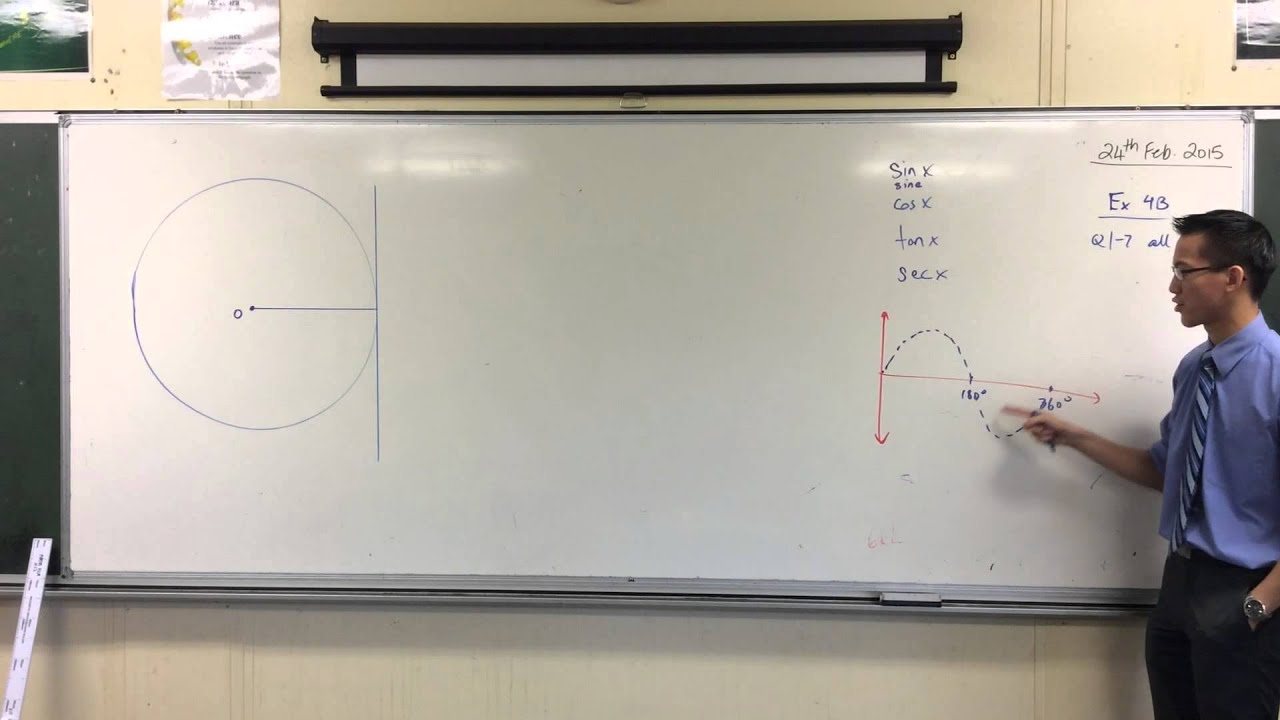 upper karma
zealous vessel
what a coincidence, I just watched this video : )
https://www.youtube.com/watch?...
upper karma
zealous vessel
what a coincidence, I just watched this video : )
https://www.youtube.com/watch?...
oh that's great, thanks (:
and in spanish is seno, or sen
yepp
zealous vessel
ah ok, I didn't account for the language part : |, anyway happy to help
 vague vortex
so close to crying can someone help

 granite hollow
m<D = 108
foggy parcel
granite hollow
m<D = 108
!nosols
lime crownBOT
granite hollow
m<D = 108
As a helper, please do not give out answers that could be copied as a homework solution. Have the student work through the problem themselves and guide them along the way.
fickle rose
vague vortex
so close to crying can someone help
it’s a parallelogram
use parallel lines to figure it out, or use any of the properties of a parallel organ (opposite angles are congruent and consecutive interior angles are supplementary are some that should work)
frail frost
was not in school when we learned this and i have a quiz today on it

please break it down and tell me if my answer to 20 was right
if 20 is right i understand it and only need to know how to do 21
silent plank
q20 as written doesn't make much sense
for q21, you can apply stuff like pythagorean theorem and/or distance formula
(effectively the same thing)
smoky jetty
frail frost
was not in school when we learned this and i have a quiz today on it
how did u get 135 already in your equation?
idk if these are shortcuts but they're unclear
 fickle rose
frail frost
was not in school when we learned this and i have a quiz today on it
fickle rose
frail frost
was not in school when we learned this and i have a quiz today on it
ur wrong on q20
135 is the measure of one interior angle
ur adding the measures of 2 interior angles which should equal 270 not 135
smoky jetty
fickle rose
135 is the measure of one interior angle
let him cook lmao
fickle rose
smoky jetty
let him cook lmao
?
fickle rose
how to get help in this server. been asking for help requests periodically for the past 4 hours for the same math question and not one response, meanwhile the person who comes in right after me gets a response instantly from someone else
is there some sort of way where u can get help when no one has responded for several hours
smoky jetty
fickle rose
how to get help in this server. been asking for help requests periodically for t...
the #help channel?
u could ping @ helpers there once, after 15 mins of no response afaik
 regal scarab
We have started with Unit circles, but I am extremely confused. I simply cannot understand what the numbers mean and the textbook did not provide any background information, simply threw me into the deep end. Does anyone have any good sources that explain (preferably visually, fine if not) from the ground up, the knowledge i need to start learning about Unit Circles? I do not know how to research it and the videos/articles I have found go off of the same assumption that I simply know some information before-hand
zealous vessel
regal scarab
We have started with Unit circles, but I am extremely confused. I simply cannot ...
Try 3b1b trig lecture, Eddie woo's vids (on YT) they show it visually.
But unit circle is just a circle with radius 1, and it's diameter 2π. Also try to get what is radians, that'll give more insights.
regal scarab
zealous vessel
Try 3b1b trig lecture, Eddie woo's vids (on YT) they show it visually.
But unit ...
Many thanks! i will check them out
 deep ruin
An equilateral triangle ABC with side 3 is inside in a circle point D lies on the arc AB doesnt have the too find BD and CD.
frail frost
smoky jetty
how did u get 135 already in your equation?
i missed school the day my teacher went over it so i was looking on youtube for a breakdown and they said 180-360/n lmao
frail frost
are vertical angles sometimes never or always supplementary
smoky jetty
afaik vertical angles are formed by the intersection of 2 distinct lines, so they are never supplementary?
 frail ridge

I have this open box
How do I solve for the middle square in the cross figure?
I can find the length of most edges of the cross figure, except for the furthest edges
smoky jetty
i kinda not get your diagram, but maybe try pythagorean
 inner vapor

 smoky jetty
which site do u make those symbols stuff on an image?
smoky jetty
hey guys so I was learning how area of triangle on a coordinate plane is derived, and I was able to understand the processes and concepts involved. upon simplifying the terms (encircled green), I got the ff. terms on the 2nd image. However, idk how i could simplify it further to get the final terms (encircled red) below the 1st image. I tried observing it and got a sensible idea, but idk the formal name of the process(i kinda suck in algebra oof)


so uhh how do I simplify the 2nd image further by following a formal process (that idk rn) to get the encircled (red) temrs below?
I found another quicker method to derive the area of triangle, called determinant and thought it was quite similar to shoelace method, but I wish to know this one first, lol
 slow spruce
What axiom or theorem do I need to prove if the vertex is on the edge of the circle, the angle is half the arc?
smoky jetty
smoky jetty
hey guys so I was learning how area of triangle on a coordinate plane is derived...
tl;dr how can I simplify further the 2nd image to get the bracketed terms in encircled (red) RHS expression (1st image)? Dont mind the (1/2)
smoky jetty
nvm it was a simple factorization that i didnt know, lmao
 round remnant
Demonstration of the half-angle formula in trigonometry
 upper karma
Are there any of you that have learned Trigonometry by using predominantly the degree measurement ? Anyway, that's what I've seen in a High School near, and thought it quite bizarre.
 surreal escarp
Does my math make sense

 wraith harness
fickle rose
surreal escarp
Does my math make sense
wraith harness
fickle rose
surreal escarp
Does my math make sense
good
 junior verge
hello
i had a question on a quiz yesterday that told me to give a counter example to this conjecture
a^2 < b^2
a<b
so i said
3^2 < (-5)^2
3 > -5
did i get it wrong or right
silent plank
you'd probably need an additional line and some words to go with what you're writing for full marks
3^2 < (-5)^2
according to the conjecture,
3 < -5
which is false since 3 > -5
(also not geo/trig)
junior verge
thanks for telling me
i didnt put words cuz i thought counter examples needed tp be very specific and limited to numbers
im stressing about that question ngl
 jagged venture
Need some help with this one guys
The equilateral triangles ADF and BCE are constructed outside the square ABCD. If DE intersected by CF = G show that triangle ABG is equilateral

Pretty stuck
 gray girder
because the height of an equilateral triangle within a square where the triangle and square share a side is always going to be 7/8ths of the side length of the square?
idk if that really shows it though
cuz you don’t actually know any values
 modern thicket
junior verge
a<b
modern thicket
junior verge
a<b
I think its a mistake in this line, because if we dont know a is more or less than 0, we should write sqrt. a^2 = module of a
modern thicket
junior verge
3 > -5
module of -5 is more than 3
junior verge
modern thicket
module of -5 is more than 3
wdym
im kinda stupid can you explain it simpler lol
modern thicket
junior verge
wdym
before i write why its a mistake in question, because sqrt. -5^2 != -5, right?
modern thicket
junior verge
did i get it wrong or right
ok, u right, but because its incorrect line in question
junior verge
modern thicket
ok, u right, but because its incorrect line in question
incorrect line?
im so confused sorry
modern thicket
sqrt from negative number in square is equal to module of this number, may be its my mistake, but i know that sqrt can be only positive
modern thicket
junior verge
the sqrt i put was equal to a positive number
but why than you put a negative 3< -5?
junior verge
junior verge
3 > -5
@modern thicket
modern thicket
junior verge
<@463971817644752907>
bro, can i describe it by photo in your dm?
junior verge
modern thicket
bro, can i describe it by photo in your dm?
yeah
 smoky jetty
Ever heard of the cosine function? Cos x = (adjacent side/hypotenuse)
upper karma
smoky jetty
Ever heard of the cosine function? Cos x = (adjacent side/hypotenuse)
how do i find the hypotenuse side
 dire snow
In the trapezoid ABCD, from the midpoint L of the diagonal AC draw the parallel to the bases, which meets the diagonal BD in P and AD and CB in E and F respectively.
Prove that LP (AB-CD).

I don't know how can I find it lol
smoky jetty
upper karma
how do i find the hypotenuse side
u can plug in the values in that equation and do some manipulation
round remnant
How much geometry would you learn from reading Euclid's elements?
grave pond
It would get you all the way up to the state of the art as of about 300 BC.
smoky jetty
you're given angle 71, so as a reference to its cosine function we get the ratio = 6.3cm/CB
cos 71deg = 6.3/CB(isolate CB)
CB cos 71deg = 6.3
CB (cos71deg/cos71deg) = 6.3/cos 71 deg
CB = ?
from here u can put it in a calculator to find the approximate value of CB
u can also refer to its secant function
upper karma
question
Consider the rhombus $ABCD$ with centre $O$, with $\angle DAB < 60°$ and the equilateral triangle $ABE$ so that the points $E$ and $D$ are on either side of the line $AB$. The center circle $E$ and radius $AB$ intersect the line $AC$ at the points $F$ and $A$, and the line $BD$ at the points $G$ and $B$. Prove that the centres of the circles circumscribing triangles $EBA$, $FBD$, and $GCA$ form an equilateral triangle.
idea
We see that $\angle BGA*2=\angle BEA=60$, which means that $\angle BGA=30$
Because $ABCD$ is a rhombus, the diagonals are perpendicular $=> \angle GOA=90$
Using the 30-angle theorem we can simply show that $OA*2=GA=CA$
Because $OG$ is the perpendicular but also the median of the triangle $GCA =>CG=GA $
From the congruences, we can show that $CGA$ is an equilateral triangle.
WE can show that $B$ isn't the center of the circumscribing circle, because $OA^2=OB*OG$, which makes $BG=3k$ and $OK=k$
We also know that triangle $DFB$ is isosceles.
ALSO $BFAG$ is an writable quadrilateral
I don't know what to do forward. Hope one of you can help me! Thank you!
somber coyoteBOT
Ionela
 upper karma
dire snow
In the trapezoid ABCD, from the midpoint L of the diagonal AC draw the parallel ...
upper karma
dire snow
In the trapezoid ABCD, from the midpoint L of the diagonal AC draw the parallel ...
Shouldnt LP=(AB-CD)/2???
dire snow
upper karma
Shouldnt LP=(AB-CD)/2???
Yeah it's the same
upper karma
dire snow
Yeah it's the same
This us like a formula. You don't really have to demonstrate it
upper karma
dire snow
Yeah it's the same
I know how to demonstrate it. Do you wanna know how?
dire snow
Ook
dire snow
upper karma
You just have to use the theorem of the middle line
Name of the th?
upper karma
PF*2=DC
upper karma
somber coyote
**Ionela**
Help
frail frost
how do i get better at geometry when we dont have a textbook and my teacher hates teaching?
 polar jewel
hey
 gentle haven
frail frost
how do i get better at geometry when we dont have a textbook and my teacher hate...
gentle haven
frail frost
how do i get better at geometry when we dont have a textbook and my teacher hate...
Try online courses

 slate pewter
$1+\dfrac{2}{3}\simeq 1.667$ test
somber coyoteBOT
Yui Hirasawa
 slate pewter
oh nice it worked
SOOOOOOOOOOO
i got sick and for a week and missed school when i came back they were doing this kind of dark magic
i am in a turkish school and tbh the turkish lessons arent helping so i was thinking if yall can just tell me where i can learn this or , what is the name of this subjects the only thing i know is that its related to trig
$\dfrac{\sin ^{2}\left( x\right) }{1-\cos \left( x\right) }\Rightarrow \dfrac{1-\cos ^{2}\left( x\right) }{1-\cos \left( x\right) }\Rightarrow \dfrac{\left( 1-\cos \left( x\right) \right) \cdot \left( 1+\cos \left( x\right) \right) }{1-\cos \left( x\right) }\Rightarrow 1+\cos \left( x\right)$
somber coyoteBOT
Yui Hirasawa
 slate pewter
or something like this
$\dfrac{\dfrac{1}{\sin \left( x\right) }+\dfrac{\cos \left( x\right) }{1}}{\dfrac{1}{\cos \left( x\right) }+\dfrac{sin\left( x\right) }{1}}\Rightarrow \dfrac{\dfrac{1+\cos \left( x\right) \cdot \sin \left( x\right) }{\sin \left( x\right) }}{\dfrac{1+\sin \left( x\right) \cdot \cos \left( x\right) }{\cos \left( x\right) }}\Rightarrow \dfrac{\cos \left( x\right) }{\sin \left( x\right) }\Rightarrow \cot \left( x\right)$
somber coyoteBOT
Yui Hirasawa
 smoky jetty
frail frost
how do i get better at geometry when we dont have a textbook and my teacher hate...
smoky jetty
frail frost
how do i get better at geometry when we dont have a textbook and my teacher hate...
there are many resources online, and perhaps more enganging lectures available for u to enjoy learning geometry
u can try khan academy in particular, but i suggest referring to an online textbook as well for supplementary definitions/concepts
dire snow
upper karma
Help
Hmm I don't understand why el*2=cd but I understood the theorem
 orchid forum
why does this happen

 upper karma
yes
upper karma
 errant beacon
1 + cot^2 if sin=1/3 is 13/9 right?
errant beacon
1 + cot^2 if sin=1/3 is 13/9 right?
9
upper karma
 brittle fiber
what is the answer
 upper karma
 hollow osprey
how would you solve for z?
hollow osprey
how would you solve for z?
Z is 112
180-x bcoz it's a cyclic quadrilateral
t = 44 btw
kite property or sm
smoky jetty
hollow osprey
u can refer to central and inscribed angles theorem, or property of cyclic quadrilaterals
or possibly other ways
 night mist
how does one calculate sin(2x) = 0.2197?
this is part of a physics problem but i cant for the life of me remember how to solve a simple thing like this
i suspect i can just do:
sin2θ = 0.2197
arcsin(0.2197) = 2θ
2arcsin(0.2197) = θ``` sinful forge
 dark sparrow
night mist
i suspect i can just do:
```
sin2θ = 0.2197
arcsin(0.2197) = 2θ
2arcsin(0.2197) ...
dark sparrow
night mist
i suspect i can just do:
```
sin2θ = 0.2197
arcsin(0.2197) = 2θ
2arcsin(0.2197) ...
last step is wrong
 raw tusk
Hey everyone, I want to know why in an equation sinx-sin3x=0 I can't just do:
Sinx=sin3x
X=3x
I know this is wrong, but why exactly?
night mist
dark sparrow
last step is wrong
oops, should have divided 🙏
 toxic edge
Is x 50m or 121m? Or none?
 somber coyoteBOT
Personal LaTeX configuration.
autotex: Disabled (may be overriden by guild settings)
keepsourcefor: Don't delete source (may be overriden by the guild)
colour: Using the grey colourscheme
alwaysmath: Disabled
alwayswide: Disabled
namestyle: DISPLAYNAME
autotex_level: WEAK
To see more detailed information use ,texconfig <option>.
To set an option use ,texconfig <option> <value>.
Preamble
No personal or guild preamble, using the global default preamble.
Use ,preamble to view or modify your preamble!
You have switched to the darkgrey colourscheme.
 cedar flower
Sorry, my mistake, I thought I was writing in my private chat with TeXit
smoky jetty
i forgot how to solve this one easily, but I did some angle chasing and extended the segments' length and got an answer quite far but <50m
smoky jetty
||~33.32m||
toxic edge
smoky jetty
||~33.32m||
Regarding my problem?
smoky jetty
yeah
toxic edge
Can you show the solution? This was a test task
And we (the class) are quite divided between 50 ish and 121
smoky jetty
smoky jetty
yeah
i assumed that this side is equal to 15m + x, otherwise my solution is nothing but fallacy
 smoky jetty
toxic edge
And we (the class) are quite divided between 50 ish and 121
smoky jetty
toxic edge
And we (the class) are quite divided between 50 ish and 121
wdym?
toxic edge
Yes you are right on that
smoky jetty
yall got diff answers?
toxic edge
Yeah we quite divided
smoky jetty
yall haven't gotten the aswer key yet?
toxic edge
My priv teacher says its 53 ish
smoky jetty
oh
lemme grab my notes real quick
im certain theres a much easier way to find that
realative to what i did which was just overkill i'd say lmao
toxic edge
Oh wait i think im dumb
smoky jetty
smoky jetty
im certain theres a much easier way to find that
there prob is, but i couldnt find a similar problem lmao
toxic edge
Just get the hypothenuse of small triangle using theorem of sine and then just sin (58deg)
sin 58deg = x/hypothenuse
smoky jetty
whats your hypotenuse's value?
smoky jetty
alr alr
 opal ermine
im supposed to find the value of NP, does my math check out? just started learning abt this so not sure and its messy
 toxic edge
Around 62.6
opal ermine
that’s what NP equals?
smoky jetty
toxic edge
Around 62.6
mind to share?
smoky jetty
smoky jetty
mind to share?
oh wait, on which problem? lol
 royal bear
where do we get the reasons for Euclidean geometry
toxic edge
Sorry for bad writing, gggyeah, not easy to write on a lap while in train
 royal bear
where do we get the reasons for Euclidean geometry
royal bear
royal bear
where do we get the reasons for Euclidean geometry
example In ∆ABC III ∆ADE
 =  (given) <- this
smoky jetty
toxic edge
Sorry for bad writing, gggyeah, not easy to write on a lap while in train
it's ok, wait a few mins as I try to make mine understandable, lmao
smoky jetty
whoops I had a small but impactful arithmetic error earlier lol
but heres my improved/more accurate solution
and yeah the answer is ~53@toxic edge

 smoky jetty
i hope u dont get overwhelmed by the amount of equations there, I just elaborated them to show how I approached the problem. Should be easy if u know properties of quadrilaterals
smoky jetty
toxic edge
Dont got the perfect score :(
is it the only problem u didnt get right?
toxic edge
Yeah most likely
toxic edge
No idea, will find out on thursday
smoky jetty
oh, im in 10th
smoky jetty
lol
toxic edge
Still hoping for a 9/10 tho
Or at least 8
A mini test task had the same points as this one
smoky jetty
what topic was it in?
toxic edge
Trig
Quite basic stuff
I was prepping like 2 hours previous day
And i overprepped
smoky jetty
u should practice problems with increasing difficulty
toxic edge
I did that
Here we have a website with like tasks
An actual cheat code
And i went thru ALL the tasks
Got 89%
100 ish tasks
smoky jetty
wow, may I see the problems?
toxic edge
They differ in difficulty
Some take 10 seconds
Others like 3-7 minutes
https://www.uzdevumi.lv/p/matematika-pec-skola2030-paraugprogrammas/matematika-i note: you will need a translator. The tasks are at VII

Teorija, uzdevumi un testi Matemātika I.
smoky jetty
toxic edge
https://www.uzdevumi.lv/p/matematika-pec-skola2030-paraugprogrammas/matematika-i...
i see, yeah seems like introductory lessons to trigo
smoky jetty
I wish u good luck!
toxic edge
smoky jetty
I wish u good luck!
thanks!
upper karma
i would like a beginner textbook on geometry, with pdf
upper karma
upper karma
i would like a beginner textbook on geometry, with pdf
geometry like 3D or 2D?
upper karma
upper karma
geometry like 3D or 2D?
2d
upper karma
upper karma
2d
try cengage
or
there is an author named rd sharma
his book for maths 2d is good too
upper karma
upper karma
try cengage
they have a textbook?
yeah
textbook with theory
solved examples
and practice problem
alright
thanks
u can get the pdfs online easily
for free
so yeah
 stable jay
Are there any convenient ways to find the radius of a circle given 3 points?
upper karma
stable jay
Are there any convenient ways to find the radius of a circle given 3 points?
yep ig
maybe if u show me figure
i can help
or else general method is if u have like three points
make sure one lies on the centre
and other 2 lie on the circumference
then u use distance formula
and find out the lengths
then u can see if ur getting the radius as same
upper karma
i made this math thing that uses cos and sin after learning about them

it uses scratch
upper karma
I am trying to solve a problem, this... A is a variable point belonging to P, where P is defined by (x-1)^2 = 8(y+1), with abscissa λ, λ belonging to real numbers. Line S is parallel to the x-axis through point A, and line T is defined as x = λ-1. The intersection between T and S is M. Find the locus (geometric locus) of M." how I should start it, I am two hours on in it and I don't understand it
 lavish dew
Planter Box Project
You are building a rectangular planter box. The designer gave you the following instructions:
a) The top of the box should have sides parallel to 2x+3y=6. Since it is a rectangle, you know
that the other sides should be perpendicular to the given line
b) Two of the vertices are given as C (7,0) and E (3,7)
c) The rectangular box has a height = 3 feet.
d) Each side is made of concrete with thickness of 2 inches
e) All length measurements are in feet
f) The volume of a rectangle =lengthwidththickness
- Find the equation of the lines that represent the sides of the top portion of the planter box
- Find the missing vertices
- Draw a sketch, by hand, of the top rectangle on a coordinate grid and another sketch of the box
- Find the perimeter of the top rectangle. Round to the nearest hundredth.
- Find the volume of the concrete in each side of the rectangle
- If concrete costs $5.25 per 6 cubic feet, how much does the box cost?
- It was mentioned in the instruction that the diagonal of the top rectangle makes an angle of
2x+3 with the shorter side. Write an equation to represent the measure of the angle formed
by the diagonal with the longer side. - If the angle formed by the longer side and the diagonal is 52 degrees, find x
- Use Google Slides to represent your work and post it on your e-portfolio.
someone please help this is due tomorrow as an exam grade
 frail wind
hey, my geo teacher doesnt rlly teach and he doesnt give hw, although i find it to be frustrating i helps a lot, any websites to use for preactice? or mabey a book with problems to do?
lavish dew
youtube
frail wind
true
 unkempt finch
Can someone lend me a hand with this question


 shut quartz
which one
unkempt finch
Both
shut quartz
ok um i can barely read it that and the fact that i need glasses
 solar heron
A ship sees a whale at 10 degrees. After 10 minutes the ship sees the same whale at 50 degrees. The height of the boat is 100m. Find the mph of the whale.
 woven shoal
solar heron
A ship sees a whale at 10 degrees. After 10 minutes the ship sees the same whale...
woven shoal
solar heron
A ship sees a whale at 10 degrees. After 10 minutes the ship sees the same whale...
Is the ship at rest?
solar heron
woven shoal
Is the ship at rest?
Yes
im stuck on this probkem for 2 hours
pleae help
woven shoal
solar heron
Yes
Well, draw a diagram, first
 woven shoal
You see, logically speaking...
That 10 degree angle you made.
Is bigger than the 50 degree angle.
solar heron
it was not meant to be drawn to scale
woven shoal
solar heron
it was not meant to be drawn to scale
Well still.
solar heron
the ship sees the 10 degree angle before the 50 degree angle
woven shoal
If you see something at a 10 degree angle, and then at a 50 degree angle
Did it come closer
solar heron
no it went furtthe
thats what im asying
cause the whale went further from the ship
woven shoal
It didn't go further.
solar heron
yes the whale went away from the ship
woven shoal
Well then your angles are drawn wrong
solar heron
and we r supposed to find the mph of the whale
woven shoal
Its not written so
woven shoal
The whale is coming towards the ship from what I understand
solar heron
no
i dont think ur understanding the question
the whale is going away from the ship
regardless the question is not regarding that
it says
after 10 minutes
it sees a 50 degree angle
therefore we can conclude that the whale has moved away from the ship
right... @woven shoal
that 10 degrees is not to the whale
thats the degree to the base of the ship
we arent trying to find that
woven shoal
Degree to the base of ship?
The observer would sit on top of the ship
So he would look down
solar heron
yeah look to do the whale not to the base of the ship
solar heron
hold on
 solar heron
ill show u
woven shoal
Nearer to the ship, or farther.
solar heron
farther
because the angle has increased
ok how about this
like ill give u a real life example
if you and ur friend were standing on ground level
and you guys are looking straight at eachother
woven shoal
Bruh.
solar heron
and then ur friend climbs up a hill
and you look at him
he is farther from you now
does the degree from you looking at him increase or decrease
woven shoal
 solar heron
 woven shoal
Seriously.
woven shoal
woven shoal
Look here.
You're measuring the angles from the horizontal
The ten degree angle is smaller
So the line at a 10 degree angle is gonna be going further ahead
solar heron
which side represents the ship?
woven shoal
Left.
solar heron
let me edit ur image
it dosent matter which angle is bigger @woven shoal
first you see the 10 degree angle
and then you see the 50 degree angle after 10 minutes
woven shoal
The difference will give you the distance travelled.
woven shoal
Why the sum?
solar heron
because the total distance travlled was the 10 degree and the 50 degree
woven shoal
It was FROM the 10 degree TO the 50 degree (according to you)
solar heron
 solar heron
ok then u do it
woven shoal
Whats that 576 128
solar heron
the side length
woven shoal
128 is what
woven shoal
,w 100 tan(40)
somber coyoteBOT


 Requested by muhammadhussaini
woven shoal
Requested by muhammadhussaini
woven shoal
So tell me now
Oh boy
How do I make you understand
Yk what
Lets make a whole diagram
As per your way.
solar heron
ok...
woven shoal
I even lost my mouse now
solar heron
..
woven shoal
 solar heron
perfect
solar heron
so what does BDC stand for
solar heron
sry
woven shoal
What did you find BD as
solar heron
567.128 ft
solar heron
83.9
woven shoal
Okay

Now for God's sake tell me, if BC is bigger how's it only 83
and BD which is supposed to be a part of BC is 567
woven shoal
Well you found BC using a right angled triangle
Where angle C was 50 deg
Doesn't it tell you that you flipped the angles?
solar heron
but how would that make sense
woven shoal
Or you're still very stubborn
solar heron
??
woven shoal
I mean just think
solar heron
what does stubbornous have to do witht his
woven shoal
Wait a min I got something for you
woven shoal
Wait a minute.
I gotta use Desmos now
You have the undergraduate role.
I'm still preuni
woven shoal
It took me 10 mins but I hope it helps you
See as that angle gets bigger the base of the triangle gets smaller and smaller
@solar heron
solar heron
woven shoal
ok how about this
we can do two different triangles
it dosent need to be on the same triangle
clearly its a problem
solar heron
i get that now
@woven shoal ok so continue
how do we find the distance
and why do we subtract
woven shoal
Okay now tell me
We have to find the distance.
Distance means: Final position minus initial position
 woven shoal
solar heron
i get that now
woven shoal
solar heron
i get that now
...
solar heron
DonutDude | ZT5 Player profile
 proper quarry
i just joined and im very dumb but hi
 zealous meadow
do yall know how to solv this
 smoky jetty
zealous meadow
do yall know how to solv this
smoky jetty
zealous meadow
do yall know how to solv this
u can find the value of c using the 2nd triangle, and then the value of d using the 4th triangle. Substitute them for sides c & d of the 3rd triangle and try heron's formula?
 heavy stream
zealous meadow
do yall know how to solv this
heavy stream
zealous meadow
do yall know how to solv this
u could use heron's formula but it would be very time taking
smoky jetty
same thinking, lol
 quaint tide
smoky jetty
u can find the value of c using the 2nd triangle, and then the value of d using ...
quaint tide
smoky jetty
u can find the value of c using the 2nd triangle, and then the value of d using ...
how would you find C???
smoky jetty
oh right, lemme think
quaint tide
maybe it can be solved with a system of equations
something makes me feel like a = c
zealous meadow
smoky jetty
u can find the value of c using the 2nd triangle, and then the value of d using ...
how will i find c
💀
and herons
will giv
5 variables
and 4
quartic equations
tht i aint evn gunna try to slove
zealous meadow
prolly some elegant way to slove
tht i dont kno
smoky jetty
time to be creative, nifty
quaint tide
hm
print out the question
and
cut out the triagnles
then put each equal side
on itself
then create a quadrilateral
idk
smoky jetty
quaint tide
something makes me feel like a = c
ikr, transforming the first triangle to make a parallelogram w/ the 2nd triangle seems sensible.. i dont got proofs tho
zealous meadow
smoky jetty
ikr, transforming the first triangle to make a parallelogram w/ the 2nd triangle...
if
quaint tide

quaint tide
oh yeah
quaint tide
ye
zealous meadow
quaint tide
<:catscream:941918398533758986>
fr
me rn
quaint tide
h m m m
smoky jetty
however from the reflection itself, b's heightto the base of 1st triangle is lower than the 2nd's

so a is not equal to c
zealous meadow
smoky jetty
however from the reflection itself, b's heightto the base of 1st triangle is lo...
ofc
the height has to be greater
so tht the area is greater
since the base is alr same
💀
quaint tide
💀
zealous meadow
um
quaint tide
lets atleast just note down the heights man
gotta do something
wth those are some pretty goofy heights
zealous meadow
quaint tide
lets atleast just note down the heights man
triangle 1 : 4/3
2 : 5/3
3 : x/3
4: 13/3
quaint tide
Hmmmmmmm
@zealous meadow @smoky jetty technically we can join these two triangles by the 90° angles to make a new isosceles triangle

Nvm
I'm wrong srory
smoky jetty
is the 2nd triangle a right triangl?
quaint tide
Unless there isn't sufficient information then i'mma be hella mad
quaint tide
smoky jetty
is the 2nd triangle a right triangl?
not rlly specified so idts
smoky jetty
quaint tide
dude where did you find this question this is hella interesting
a lil' more interest and i might dive into it with my notebook, lmao
quaint tide
if it was the question would be a 100 times easier
quaint tide
smoky jetty
a lil' more interest and i might dive into it with my notebook, lmao
lessgo
zealous meadow
quaint tide
dude where did you find this question this is hella interesting
my friend sent it
i searched it on google
and only 1 site
has the answer
but i need to pay
smoky jetty
zealous meadow
my friend sent it
yall doing competition math?
zealous meadow
smoky jetty
yall doing competition math?
no rn
he sent it for fun
smoky jetty
quaint tide
THAT WOULD'VE BEEN SO HELPFUL
don't, we brainstorm here
quaint tide
quaint tide
THAT WOULD'VE BEEN SO HELPFUL
In the past obv
quaint tide
smoky jetty
don't, we brainstorm here
aight
brain has stopped working after seeing this question
zealous meadow
quaint tide
brain has stopped working after seeing this question
fax
quaint tide
I'll just try the herons formula man
zealous meadow
quaint tide
I'll just try the herons formula man
best of luck
 quaint tide
wdym
quaint tide

smoky jetty
nvm
smoky jetty
eyes fumbled
smoky jetty
do the rigor! lol
zealous meadow
quaint tide
rigor
aint no way u dont know wht rigor means
quaint tide
nope....
pls explain
Guys the herons formula is √[s(s-a)(s-b)(s-c)] where s is half of perimeter right?
zealous meadow
quaint tide
Guys the herons formula is √[s(s-a)(s-b)(s-c)] where s is half of perimeter righ...
yes

 smoky jetty
quaint tide
Guys the herons formula is √[s(s-a)(s-b)(s-c)] where s is half of perimeter righ...
smoky jetty
quaint tide
Guys the herons formula is √[s(s-a)(s-b)(s-c)] where s is half of perimeter righ...
we need to have the value of all sides of a triangle
quaint tide
zealous meadow
wat grade r yall even in, tryna help me
idek
💀
10th
quaint tide
smoky jetty
we need to have the value of all sides of a triangle
we can just make 4 linear equations
zealous meadow
quaint tide
we can just make 4 linear equations
trust me
it aint
linear
its quartic
quaint tide
idk if that stuff is even possible
zealous meadow
i tried
zealous meadow
quaint tide
10th
o same
smoky jetty
same