#geometry-and-trigonometry
1 messages · Page 20 of 1
 young lintel
I think this is a fine way to use chat gpt actually
As long as you verify after the fact (which is what I'm doing now)
This kind of definition-to-name is exactly the kind of thing that Google is bad at
young lintel
 floral shale
As long as each side is 1 unit in magnitude, you'll have a unit cube
floral shale
As long as each side is 1 unit in magnitude, you'll have a unit cube
Each side is length 2 in this cube though
floral shale
young lintel
Each side is length 2 in this cube though
Well if every vertice was (+- 1, +-1)?
Well you'd have a cube whose centroid is the origin
In simple terms
young lintel
Right
floral shale
Now if you google "alternating cube" a bunch of Rubik's cube ads pop up
So idk where it's even getting that info
young lintel
floral shale
So idk where it's even getting that info
It probably hallucinated it
young lintel
There's probably something else called the alternating something
That's \pm 1 over and over, idk what it would be
 lethal jackal
idk what this is but anyone know this one?

it has something to do with combination and permutation
 dark sparrow
lethal jackal
idk what this is but anyone know this one?
dark sparrow
lethal jackal
idk what this is but anyone know this one?
your question belongs in #discrete-math
 late tangle
 upper karma
Find the minimum value of 2^sin^2theta + 2^cos^theta.
upper karma
Find the minimum value of 2^sin^2theta + 2^cos^theta.
find critical points and use first derivative test ?
nvm that would be calc way uh i think best way might be to graph it if thats allowed
lethal jackal
dark sparrow
your question belongs in <#496785905474994186>
ok thanks
upper karma
8sin A - 6cos A=?
The value of A should be such that the answer of equation is highest
Also y^2 is indirectly proportional to x^3 graph
upper karma
late tangle
find critical points and use first derivative test ?
Alr
 reef glade
geometry is kinda hard

 young tiger
 slim goblet
can someone write a respose for me
slim goblet
can someone write a respose for me
Draw the figures

A chord is a segment that connects two endpoints that are on the circle.
young tiger
young tiger
Draw the figures
Let O and G be the centers of each circle
Notice how OA, and OB are the radii of circle O because they connect the center to a point on the circle.
young tiger
The radii of the same circle are congruent. This means:
 slim goblet
but
young tiger
Yup for △AOB
slim goblet
why not for GCD tho
young tiger
Now if you notice that GC and GD are also radii of circle G, you get:

△CGD is also an isosceles triangle
slim goblet
ohhhh
but how does that help us find out
if the arcs are also congruent
cuz we dont know the values
young tiger
So arc AB is intersected by chord AB, right?
slim goblet
yeah
young tiger
And arc CD is intersected by chord CD
slim goblet
mhm
young tiger
The measure of the arc is equal to the measure of the angle is subtends or "bounds"
So this means that m∠AOB = measure of arc AB
And m∠CGD = measure of arc CD
young tiger
So we just need to find out if m∠AOB = m∠CGD
young tiger
Nope that's an inscribed angle
∠AOB and ∠CGD are central angles
You see here

∠ABC is half the measure of arc AC
∠ABC is an inscribed angle
An inscribed angle is an angle formed by two chords and has its vertex on the circle
And you can see here

m∠AOB = measure of arc AB
∠AOB is a central angle
A central angle is an angle formed by two radii and has its vertex on the center of the circle
Do you understand now?
slim goblet
young tiger
A central angle is an angle formed by two radii and has its vertex on the center...
so that arc/2=angle thing doesnt apply for central angles
young tiger
slim goblet
so that arc/2=angle thing doesnt apply for central angles
Right. Only for inscribed angles
slim goblet
okkk
so anyways
so arc AB= Angle AOB and Arch CD = Angle CGD
but is arc AB = arch CD??
young tiger
slim goblet
but is arc AB = arch CD??
We will find out if you can prove that m∠AOB = m∠CGD

since m∠AOB = measure of arc AB
and since m∠CGD = measure of arc CD
You can do it if you can first prove that △AOB ≅ CGD
There are 5 ways you can prove triangles to be congruent:
SAS (Side-Angle-Side) ≅
SSS (Side-Side-Side) ≅
HL (Hypotenuse-Leg) ≅ - only use for right triangles
AAS (Angle-Angle-Side) ≅
ASA (Angle-Side-Angle) ≅
So are you familiar with proving triangles to be congruent?
slim goblet
i think so yeah
young tiger
Alright
young tiger
ofc
slim goblet
i dont want to disturb you but I also had this question on my mind im not sure how to do it
 slim goblet
young tiger
ofc
slim goblet
young tiger
ofc
🙏
 thorn hedge
slim goblet
i dont want to disturb you but I also had this question on my mind im not sure h...
thorn hedge
slim goblet
i dont want to disturb you but I also had this question on my mind im not sure h...
Using Tangent Secant Theorem
12^2=7(7+x)
144=49+7x
95=7x
x=13.57
young tiger
And round it to the nearest tenth
So it'd be 13.6
Here's a picture of the tangent secant theorem xrayne referred to:

 smoky jetty
young tiger
So is there any way we can prove that **△AOB ≅ CGD**?
smoky jetty
young tiger
So is there any way we can prove that **△AOB ≅ CGD**?
how come the arc measures are not congruent if the radii of both circles are congruent, so is their chords?
cant it be proven using SSS criterion?
 snow crystal
Can someone help pls
 young tiger
smoky jetty
how come the arc measures are not congruent if the radii of both circles are con...
young tiger
smoky jetty
how come the arc measures are not congruent if the radii of both circles are con...
The question says that the two circles have different radii 🙂
smoky jetty
yeah, but i didnt get why you illustrated the two circles as having congruent radii
young tiger
smoky jetty
yeah, but i didnt get why you illustrated the two circles as having congruent ra...
No I didn't
You see here

The radii for circle O are OA and OB. OA = OB.
The radii for circle G are GC and GD. GC = GD.
OA ≠ GC, OA ≠ GD, OB ≠ GC, OB≠ GD
slim goblet
help 😦

 acoustic knoll
first find the areas of the circle and rectangle
which would be
area of circle = 28.27(28 approx.)m^2
area of rectangle = 216m^2
probabilty = 7/54
that would be option 2
slim goblet
how did u find the area of the circle
ohw ait nvm
but once i got the area what do i do from there
 mystic charm
slim goblet
but once i got the area what do i do from there
mystic charm
slim goblet
but once i got the area what do i do from there
the area of the rectangle is 216 and the area of the circle is 28, as concoran_edmund said. the point P is gonna be certainly placed in the rectangle and the circle only covers 28/216 m^2 of the rectangle, so there is 7/54 chance that the point P will be placed within the circle
upper karma
snow crystal
Can someone help pls
isn't 1-sin^2x equal to cos2x already?
snow crystal
it is
but what should i do next
I thought it was easier tu substitute 1-2sin^2x with cos^2x-sin^2x
upper karma
I'll try to do it but it probably doesn't have a easy solution sadly
so its gonna be a bit painful
snow crystal
ok ty lol
upper karma
maybe we can do it from the square difference formula?
will be equal to cos2x itself
 remote wharf
ill do us a favour and turn that image sideways
remote wharf
okk
upper karma
 remote wharf
plus it wouldnt let me download it
upper karma
heree
snow crystal
i don't see difference of squares here tho
upper karma
oh damn wait
ok I have seen something wrong
that doesn't work
I thought of the 2's like they do not affect the square

 snow crystal
that's funny, I've never seen those formulas before lol
upper karma
and thats equal to cos2x
 upper karma
same but I think its not gonna give anything I believe since sin2a*sin2a is sin^2 4a and not sin^2 2a
the own formulas itself still are painful tho
snow crystal
the funny part is that the textbook where I found the equation didnt mention those formulas
idk how they expect me to solve it lol
upper karma
maybe there is another way that we don't see?
snow crystal
probably
upper karma
but I can't see any other way doing it without the formulas
 upper karma
hmm if its -cos4x = cos2x
maybe we can write -cos2(2x) = cos2x
so does that make -2cos^2(2x)-1=cos2x
-2cos^2(2x)-1-cos2x=0
-(2cos^2(2x)+1+cos2x)=0
I was trying to find a smiliar question and found the equation for cos4x=cos2x
can it lead to somewhere?
snow crystal
lmao
 upper karma
ohh
snow crystal
I can ask my teacher tomorrow, thanks for trying to help tho
upper karma

yw but still sending these just in case it can help

by the way if you guys solve it tomorrow, can you also send it here I am really curious lol
snow crystal
yeah sure
upper karma
thanks a lot
snow crystal
<@&268886789983436800>
upper karma
that looks hard
snow crystal
try finding the coordinates of the vertex
 sturdy jackal
what is g(x)=?
snow crystal
idk why they posted it here but it's not trigonometry
sturdy jackal
this? @snow crystal ?
snow crystal
yeah
upper karma
oh damn I really did not notice that I sent it here Im sorry
but I already sent it to a friend so I guess there is no need for help
still ty ❤️
snow crystal
yw
upper karma
upper karma
still ty ❤️
ew
snow crystal
snow crystal
what can we do now?
@upper karma turns out you can substitute sin^22x with 1-cos^22x and you get a quadratic formula
 vagrant isle
I have finally finished my trigonometry assessment
I can finally finish up for the night and sleep
 fickle void
Does anyone know how I can determine the area of this figure?

i really forgot how to do it and my friend is asking me for help with it
snow crystal
Try dividing it into smaller figures
fickle void
snow crystal
Try dividing it into smaller figures
couldn't manage to
dark sparrow
is this the only pic you have of it
also should we assume everything that looks like a right angle is one
snow crystal
also is that an actual textbook exercise or did you think it up
not all side lenghts are given too
<@&268886789983436800>
 exotic yarrow
<@&268886789983436800> spammed advertisement ^
snow crystal
?
 hollow badger
?
 wind coral
<@&268886789983436800>
reef glade
Geometry is pretty easy if you compare with algebra 2 and other algebra classes
But I still prefer algebra than geometry
reef glade
floral shale
You wanna know what you learn in geometry?
“Proof me why is this a triangle”

floral shale
3 sides motherfucker you can count them. One, two, fucking three
Gonna prove my teacher why his wife divorced him
 pure ether
reef glade
Geometry is pretty easy if you compare with algebra 2 and other algebra classes
pure ether
reef glade
Geometry is pretty easy if you compare with algebra 2 and other algebra classes
bro...
geo so hard
acoustic knoll
reef glade
Geometry is pretty easy if you compare with algebra 2 and other algebra classes
eh both are equally easy
 solar skiff
hello guys
im in class 8
is there any good book
i can practice trigonometry from
reef glade
i'm not required to take trig so i never took it so i'm not sure
acoustic knoll
solar skiff
i can practice trigonometry from
You can just google worksheets . There's plenty of challenging as well as easy ones in those online worksheets .
 proper sierra
What exactly about geometry do i need to know or would i be fine if i skipped geometry and went straight into algebra 2? The goal is to be ready for pre-calc/calc
 calm dawn
proper sierra
What exactly about geometry do i need to know or would i be fine if i skipped ge...
calm dawn
proper sierra
What exactly about geometry do i need to know or would i be fine if i skipped ge...
i wanna know too
proper sierra
calm dawn
i wanna know too
Hopefully we find out🫡
calm dawn
🫡
reef glade
proper sierra
What exactly about geometry do i need to know or would i be fine if i skipped ge...
i took algebra 2 first and then geometry
i prefer taking algebra 2 first than geometry
because algebra 1 skills can be used in algebra 2 even though i think algebra 2 is basically the same as algebra 1 but i think if you took algebra 1 ( honors ) then algebra 2 would just be a easy class for you to take.
proper sierra
reef glade
because algebra 1 skills can be used in algebra 2 even though i think algebra 2 ...
Ive graduated not too long ago but i had no idea what i wanted to do for my future, now im going to college for comp sci and im currently trying to catch up on math but idk how badly i need to relearn/know geometry for pre-calc/calc 1
reef glade
dam
that's tuff man
computer science is pretty good
i'm taking business class so i have to learn about math in business
Yeah
Especially when they want you to proof it in a paragraph
Is like another English class
Use your eyes

We did flow chart proofs and paragraph proofs and 2 Column proofs
Oh okay I need a magnifying lens then
proper sierra
All my homies hate proofs
reef glade
You need to write soo much is crazy
Is not hard to understand the thing is different subject have different proofs
And you want us to remember all that and they be like you can build a house with geometry
Cya
upper karma
uh
this might be stupid but
if pi is an infinite number
wouldn’t it be true that there is a 100% chance that there is an infinitely long chain of 0s
which means it’s a constant
 lucid condor
upper karma
wouldn’t it be true that there is a 100% chance that there is an infinitely long...
lucid condor
upper karma
wouldn’t it be true that there is a 100% chance that there is an infinitely long...
If that were the case, pi would be rational, at some ratio with an arbitrarily long numerator and denominator, but it is possible to prove pi as being irrational
lucid condor
upper karma
which means it’s a constant
Pi is nonetheless still a constant
Pi never changes according to some variable
It is simply a number
Even if it is irrational
lucid condor
I see
 lapis vault
can someone teach me the aspects of geometry
cuz i am preparing myself
for the finals
 manic hollow
Guys, In triangles is there a relation between the orthocentre and and its vertices which shows the type of triangle(equilateral, isosceles, scalene )?.
floral shale
The location of the orthocenter can help you determine whether a triangle is obtuse, acute, or right
Uh but I do I know what in equilateral triangles, the orthocenter is also it's centroid
@manic hollow
As far as isosceles and scalene triangles go, not too certain
 vivid plinth
upper karma
if pi is an infinite number
vivid plinth
upper karma
if pi is an infinite number
irrational*
vivid plinth
upper karma
which means it’s a constant
It's a constant anyway since its value never changes
vivid plinth
upper karma
I meant finite
Oh I didn't read this sry
vivid plinth
upper karma
wouldn’t it be true that there is a 100% chance that there is an infinitely long...
I don't think u can prove a number with this property is finite
 slow hazel
How would you find a tangent line at a sharp corner of a curve that only intersects the point at the corner? If not the tangent line, then a line that behaves at described
 vagrant jacinth
slow hazel
How would you find a tangent line at a sharp corner of a curve that only interse...
vagrant jacinth
slow hazel
How would you find a tangent line at a sharp corner of a curve that only interse...
It's not always possible:
 slow hazel
fair, I guess im looking at something more like this, blue representing the tangent line I'm getting at the moment
 vagrant jacinth
ahhh
if you know the curve is smooth to the left of the point (or the right) you could calculate the left-derivative of the curve
or the right depending on the side
like if you look at f(x) = |x|
the left derivative at x = 0 would be -1 and the right would be 1
slow hazel
would the output of that be something similar to the blue line depicted:
 vagrant jacinth
no, it would be like your first picture, basically the direction the curve is headed if you approach the sharp point from the left or right, the problem is that if the curve is sharp there's no real way to get a "tangent line" at that point, precisely because there's no derivative at that point
you could do some things like take the average of the left and right derivatives, but that won't always give you what you want, since curves with a point don't have tangents at that point
 bitter nymph
Just put a normal over everything and hope for the best
pure ether
slow hazel
How would you find a tangent line at a sharp corner of a curve that only interse...
not possible most of the time
theres a physics phenomenon which also
explains how u cant find the direction of normal force from an edge
which is kinda similar that ur looking for tangent lines
thats why an absolute value graph is not differentiable for all values of x
bc of the (0,0)
slow hazel
Understood thanks for the help!
floral shale
slow hazel
fair, I guess im looking at something more like this, blue representing the tang...
Can't. You'd have an infinite number of tangent lines. And we hate infinity
That's the easiest way to describe it
The moment a mathematician rotates 8 90°, they start shitting themselves and screaming
pure ether
floral shale
The moment a mathematician rotates 8 90°, they start shitting themselves and scr...
wat
does that mean
floral shale
Good question
 manic prawn
Can you divide a square into 3 equal area triangles?
dark sparrow
!status
 lime crownBOT
What step are you on?
1. I don't know where to begin
2. I have begun but got stuck midway
3. I got an answer but I'm told it's wrong
4. I got an answer and would like my work checked
5. I have a question about someone else's worked solution
6. None of the above
Why do they hate infinity?
floral shale
slow hazel
Why do they hate infinity?
Infiniteez nuts
Nah but when it comes to tangent lines
By definition there only should be one locally
At corners you'll have an infinite number of tangent lines

 storm grotto
Anyone able to help?
 lime crownBOT
What step are you on?
1. I don't know where to begin
2. I have begun but got stuck midway
3. I got an answer but I'm told it's wrong
4. I got an answer and would like my work checked
5. I have a question about someone else's worked solution
6. None of the above
 reef yarrow
@storm grotto What do you need in order for a triangle to be isosceles?
storm grotto
reef yarrow
<@522163652665540609> What do you need in order for a triangle to be isosceles?
2 equal sides and 2 equal angles
pure ether
storm grotto
2 equal sides and 2 equal angles
no just one
its an if and only statement
so u only need one to prove the other'
reef yarrow
Yeah, those both have to be true but if you show one then the other has to be true
Sorry I misread it anyway. They've already given you the steps of the proof, you just need to label each step
I'm guessing you have a textbook that gives you names for the different rules you can use in a proof
 vast saffron
can I ask about vectors here 👀
 gaunt nexus
that goes in algebra, ig
gaunt nexus
vast saffron
vectors are geometry right 🤔
no they are linear algebra
vast saffron
hmm
 graceful vale
Is there some Chinese in this group,i want help
With a math video that is in Mandarin possibly
It's the only video on that topic that i can find.....
https://youtu.be/AP8Wvn9X6v8
This is the video
The time duration where i need clarification is from 15:00,from 25:45 and from 27:20...
Here he discusses
1)Some Rhombus sort of structure,i want to know with what arguments did he arrive at that conclusion
2)He talks about Cauchy Crofton Formula,what context is he talking about it.....(like why is using that there),i have rough idea of what Crofton Formula is...
3)third in 27:20 one,He talks about evaluating integral(it comes up in his slides) integral(1/(1+x^3)) how does it come up there
Help with these,even if you can just translate and type what he said,i would be very thankful
 wind coral
<@&268886789983436800>
 tawdry condor
vast saffron
vectors are geometry right 🤔
tawdry condor
vast saffron
vectors are geometry right 🤔
Depends on what you do with them
Many geometric theorems with vector in R^2, but if you have a question that involves vectors in an algebraic way then algebra channel
snow crystal
guys I'm lost, what am I doing wrong here??

 nocturne remnant
The sum to product thing doesn’t work because there’s a sqrt(3) attached to the left term
snow crystal
so what can I use instead?
nocturne remnant
You need some other observations to solve it
Consider writing sqrt(3)cosx + sinx as 2sin(pi/3)cosx + 2sinxcos(pi/3)
Then use compound angle formula in reverse
upper karma
i need help
 frozen ocean
 wooden patrol
Send me math problems to solve so I can get better and better!!! :)
 old geyser
wooden patrol
Send me math problems to solve so I can get better and better!!! :)
old geyser
wooden patrol
Send me math problems to solve so I can get better and better!!! :)
@wooden patrol are you still there?
I'm having trouble with analytic geometry
look


Do any of you get it?
floral shale
Not sure why you need to use vectors and linear algebra to prove triangle OAB is equilateral
if e1 and e2 are unit vectors with an angle of 60°, it should be easy to prove that AOB will be a unit equilateral triangle
 dark sparrow
how did you get D?
upper karma
so
I did 12x+8=10x+15
and the -10x so it became 2x+8=15
and then i subracted 8
so it was 2x=7
then divided by 2
so it was x=7/2
then i plugged that into the equation
and got 50
wait so is the answer C?
upper karma
upper karma
is the answer of this D?
someone pls help
dark sparrow
upper karma
then i plugged that into the equation
what equation
sorry for the delay on my part -- was busy
upper karma
dark sparrow
sorry for the delay on my part -- was busy
it's okay
upper karma
dark sparrow
what equation
12+8
12x*
i plugged it in 10x+15 too
and got the same answer
dark sparrow
yes, so that way you know your x value is correct
note that the two sides of the equation 12x+8=10x+15 are AM and MB
you are asked for AB
upper karma
dark sparrow
you are asked for AB
okay what do i do next?
@dark sparrow C was wrong, so is the answer D?
the answer is A nvm
dark sparrow
upper karma
the answer is A nvm
no, it is not.
in fact you had the right answer the first time round
you just could not justify it properly
upper karma
dark sparrow
in fact you had the right answer the first time round
so D is the answer?
but I'm still confused
how did we get 100?
dark sparrow
we got x = 7/2
we got AM = 12*7/2 + 8 = 42+8 = 50
thus also MB = 50
AB = AM+MB = 100
upper karma
how do i find the answer to this

someone please help me
i have 5 mins before the assinment is due
 viral merlin
upper karma
how do i find the answer to this
viral merlin
upper karma
how do i find the answer to this
pythagoras
upper karma
viral merlin
pythagoras
is that a^2+b^2=c^2
viral merlin
ye
viral merlin
that's for you to figure out
upper karma
okay thanks
 fresh wedge
help

 pseudo viper
the laws of sine / cosine are to be used when you're not working with a right angled triangle, right? otherwise you work with the whole sohcahtoa thing right?
upper karma
pseudo viper
the laws of sine / cosine are to be used when you're not working with a right an...
Yea for right angled triangles you can just use the ratios of the sides to the angles (sohcahtoa)
 night idol
Someone help please, I’m not sure how to do the second and third one

 upbeat helm
night idol
Someone help please, I’m not sure how to do the second and third one
upbeat helm
night idol
Someone help please, I’m not sure how to do the second and third one
For 2 you should first find the length of the bottom side in the top picture
The “ends at the same point on the ground” part and then just use Pythagorean thm
3 is similar
night idol
Alright, thank you!
 pine river
did i do this right?

 obsidian goblet
yea
 neat python
In the isosceles triangle ABC, B=120 CD is the height of the triangle,
Find AD if the length of the altitude through the vertex B is 10.
<@&286206848099549185>
neat python
Another programmer nice XD
neat python
Sure
 zealous stag
In isosceles triangle ABC:
- B = 120 degrees (angle at vertex B)
- CD is the height of the triangle
right?
neat python
Yes
zealous stag
We're also given that the length of the altitude through the vertex B is 10 units.
neat python
Yes
zealous stag
Let's denote this altitude as BE, where E is the point where the altitude intersects side AC.
neat python
Sure
zealous stag
Now, since the triangle is isosceles, we know that angle A = angle C. Thus, angles A and C are equal.
neat python
Yes
zealous stag
Let's denote AD as x (the length we need to find). To find AD we need to determine the relationship between x and the known lengths in the triangle
AND
Since CD is perpendicular to AB, angle CDB is a right angle. Angle CDB = 90 degrees.
right?
neat python
Yes
zealous stag
Since angle CDB is a right angle and angle B is 120 degrees we can find angle C using the following equation:
angle C + angle B + angle CDB = 180 degrees
angle C + 120 + 90 = 180 degrees
then solving we get angle C = 30 degrees
as angle C = 180 - 120 - 90
right?
neat python
Lol
zealous stag
yea but how
zealous stag
error in the statement?
neat python
I don't think so
 neat python
😂
neat python
zealous stag
am i dumb?
I am dumb too
zealous stag
lemme open a help channel
 mortal raft
neat python
I am dumb too
mortal raft
neat python
I am dumb too
I am dumb three
neat python
mortal raft
I am dumb three
Lol i found AD
mortal raft
neat python
Lol i found AD
W
 drowsy hatch

can someone explain me this
in both cases the 2 planes are cutting the same quadric if im not wrong
mortal raft
drowsy hatch
in both cases the 2 planes are cutting the same quadric if im not wrong
no idea but u should help me #help-2
pine river
pls help idk how to do this
 smoky jetty
pine river
pls help idk how to do this
smoky jetty
pine river
pls help idk how to do this
have a read on inscribed angles and central angles theorem
 cedar ether
I dont understand how the top equation can be turned into the lower equation. The video im watching attempts to explain the concept called a "Perfect square" I dont see how that applies here.
 nocturne remnant
First of all, that's an expression, not an equation.
if you had to turn the lower expression to the upper one, could you do it?
cedar ether
I can understand the X squared and the lone four; but I dunno where the 4X came from. sorry for the wrong vocabulary
nocturne remnant
Do you know how to expand something like (a+b)^2?
(It is not the same as a^2 + b^2)
nocturne remnant
well- what about (a+b)(c+d)? How would you expand that
cedar ether
wouldn't you multiply cd by a and b then like add or smt?
nocturne remnant
can you try it? Like write out the expanded form of (a+b)(c+d)
if you cant do that then there is quite a lot of catching up to do
cedar ether
I dont remember being taught this bud
 cedar ether
its in a geometry problem nvm
neat python
In the triangle ABC, the line AD is perpendicular to the median BM and bisects it.
Find the length of side AB if MC =10.
<@&286206848099549185>
 compact tapir
neat python
In the triangle ABC, the line AD is perpendicular to the median BM and bisects i...
compact tapir
neat python
In the triangle ABC, the line AD is perpendicular to the median BM and bisects i...
excuse the bad drawing
 neat python
compact tapir
excuse the bad drawing
neat python
compact tapir
excuse the bad drawing
10 is good but it's wrong XD
Answers are
A)2
B)3
C) 5
D)8
 silk dove
neat python
10 is good but it's wrong XD
silk dove
neat python
10 is good but it's wrong XD
i tried and got 10 as well , but i might just be bad at geometry, ill draw it one sec
exotic yarrow
I also got 10
silk dove
neat python
In the triangle ABC, the line AD is perpendicular to the median BM and bisects i...
since BM is the median, it dissects AC into 2 equal parts AM and MC, so AM = MC = 10
BO = OM, because AD is perpendicular to BM and bisects it at O
Triangles BOA and MOA share the side AO, and BO = OM and the angle between them is equal (90 deg)
so they have 2 equal length sides and the angle between them is also equal, therefore the remaining sides AB and AM are equal, so AB = AM = 10
sorry if this was worded badly, first time actually trying to explain anything in math in english

tried ,y best to make the drawing fit too
neat python
silk dove
since BM is the median, it dissects AC into 2 equal parts AM and MC, so AM = MC ...
Am will be 5
AC=10
silk dove
you said MC = 10
neat python
Done XD ty
silk dove
no worries, happens
 near mica
cedar ether
I can understand the X squared and the lone four; but I dunno where the 4X came ...
near mica
cedar ether
I can understand the X squared and the lone four; but I dunno where the 4X came ...
(x+2)^2= (x+2)*(x+2) , you can write like that: (x+2)*x + (x+2)*2 = (x^2 +2x) + (2x + 4) and here we come to x^2 + (2x+2x) +4 = x^2 + 4x + 4
 tepid inlet
How would you go about finding DEG in this photo

 zenith escarp
tepid inlet
How would you go about finding DEG in this photo
zenith escarp
tepid inlet
How would you go about finding DEG in this photo
🙂 DEG = 31*
tepid inlet
Thank you I see now
 wind knoll
can someone help my friend with this question
 silk dove
wind knoll
can someone help my friend with this question
silk dove
wind knoll
can someone help my friend with this question
v: Angles on a straight line always add up to 180º, so 30º + v = 180º, v = 150º
y: Angles 30º and 2y are called alternate interior angles, because they lie on the opposite sides of a line that is passing through two parallel lines, they are equal. 2y = 30º, y = 15º
z: Angles on a straight line always add up to 180º, so z + 130º = 180º, z = 50º
w: Angles 130º and w are called co-interior angles, because they lie on the same side of a line passing through two parallel lines, they add up to 180º. 130º + w = 180º, w = 50º
x: Angles on a straight line always add up to 180º, so x + w + 2y = 180º, x + 30º + 50º = 180º, x = 100º
wind knoll
tysm!
dark sparrow
silk dove
v: Angles on a straight line always add up to 180º, so 30º + v = 180º, v = 150º
...
!nosols
lime crownBOT
silk dove
v: Angles on a straight line always add up to 180º, so 30º + v = 180º, v = 150º
...
As a helper, please do not give out answers that could be copied as a homework solution. Have the student work through the problem themselves and guide them along the way.
dark sparrow
wind knoll
can someone help my friend with this question
tell your friend to come here and ask for help herself
silk dove
dark sparrow
!nosols
my bad my bad i thought it was better to explain stuff but that makes sense
silk dove
Would it have been better if i just said the answers? should i also give the rules used to find the answers, but not tell them in which steps exactly the rules are used?
 silent plank
Have the student work through the problem themselves and guide them along the way.
avoid giving answers if possible
silk dove
right, so i should've just explained the rules that were used in the solution, but not where to use them
My bad, I'll know next time
silent plank
progressively go into more detail as needed
question their understanding of rules, clarify rules if needed
see if they are able to identify where they're applicable
direct them to where to apply them if required,
silk dove
alrightt
upper karma
can someone help with this?

 patent apex
just wondering is there is the a way to expand tan(a+b)
similar to expanding sin(a+b)
 last quiver
yes tan(a+b) is simply sin(a+b)/cos(a+b) now simplify this to get it in tan form
 potent dragon
patent apex
just wondering is there is the a way to expand tan(a+b)
potent dragon
patent apex
just wondering is there is the a way to expand tan(a+b)
[tan(a) + tan(b)]/1-tan(a)tan(b)
 opaque phoenix
silk dove
opaque phoenix
silk dove
like as a religion or?
pure ether
why do ppl like math so much smh
 timber cargo
Something that came out of our heads and describes the universe, is deeply mesmerizing
 unreal crag
bro math is just like every other religion, it explains natural phenomena
 rotund radish
pure ether
why do ppl like math so much smh
rotund radish
pure ether
why do ppl like math so much smh
We are just crazy
patent apex
last quiver
yes tan(a+b) is simply sin(a+b)/cos(a+b) now simplify this to get it in tan form
oh yeah completly forgot about that
 foggy parcel
upper karma
can someone help with this?
foggy parcel
upper karma
can someone help with this?
In the first one, apply the formula s = rθ
upper karma
ya I'm struggling w b
foggy parcel
Wdym?
foggy parcel
upper karma
can someone help with this?
Anyways, to get through the 2nd one firstly u have to get the area of AOB and the area of AOC triangle individually
Then summing it all up would give the desired solution u r looking for
For the AOB
Apply (θ/360)* πr^2
For the triangle,
Draw a perpendicular from A to CB and use sine to get the height of the perpendicular
Then Apply the normal formula for triangles.
@upper karma
foggy parcel
U r welcome
smoky jetty
saw this fun highschool lvl problem online im pretty happy to have solved it and thought to share it to yall
 snow crystal
smoky jetty
saw this fun highschool lvl problem online ~~im pretty happy to have solved it~~...
snow crystal
smoky jetty
saw this fun highschool lvl problem online ~~im pretty happy to have solved it~~...
I got 36π-56sqrt(3), is that the answer?
smoky jetty
close, but nope
snow crystal
silent plank
show work
 smoky jetty
silent plank
looks off
smoky jetty
silent plank
looks off
oh right!
snow crystal
,rotate
 somber coyoteBOT
 silent plank
6*9 isn't 56
smoky jetty
there you go!
snow crystal
so it's 36π-54sqrt(3)
 smoky jetty
snow crystal
it's 9 lol
smoky jetty
snow crystal
it's 9 lol
ohh ight. lol my handwriting is no better eitherway
how was the problem?
snow crystal
I did something similar a couple of months ago in school
so it wasn't THAT hard
This is what we did

,rotate
somber coyoteBOT
 snow crystal
10th
smoky jetty
the 10th grade textbook I have doesnt have those
smoky jetty
you're in college?
snow crystal
nah I'm in high school
smoky jetty
oh lol
snow crystal
idk I'm from Poland so it probably looks different from your school
but basically we choose 2 subjects that we're going to major
in high school
 patent apex
 violet kiln
you take the exterior angle
wait no
exterior angle is 18
divide by 360
360/18=20
mystic charm
violet kiln
I didn't understand
do you know how you can find the interior total angles of a polygon? (for example the angles of a triangle)
mystic charm
correct
violet kiln
violet kiln
I use the equation (n-2) × 180
Where n is the number of sides
mystic charm
so if we divide it by n, it means that each angles is 172, right?
violet kiln
Divide what by n??
mystic charm
violet kiln
I use the equation (n-2) × 180
this formula
(n-2)*180/n = 172
now try to find n
mystic charm
yes, multiply both sides with n, which will give us, (n-2)*180=172n, therefore 180n - 360 = 172n
now find n with this equation
move 172n to the left side of the equation and 360 to the right side, we will have 180n-172n=360
8n=360, n=45
 wet abyss
I started with SL loney's plane trig book.
I needed a bit of advice on whether the ones who solved it solved all the questions and how much time it took them to finish the book
patent apex
violet kiln
which equation I use
The sum of all the exterior angles of a polygon is 360
So 360 = 8n
violet kiln
So n=360/8
patent apex
I apologise for being a dumb as
violet kiln
violet kiln
So n=360/8
n=45
 patent apex
violet kiln
n=45
patent apex
violet kiln
n=45
Ye
upper karma
guys how do I do this
 silent plank
do you know your parallel line theorems
and/or have access to a list
violet kiln
- x=70 alternate angles are equal
- x=130 Vertically opposite angles are equal
IDK about 7 and 9
lime crownBOT
violet kiln
8. x=70 alternate angles are equal
10. x=130 Vertically opposite angles are equa...
As a helper, please do not give out answers that could be copied as a homework solution. Have the student work through the problem themselves and guide them along the way.
floral shale
upper karma
guys how do I do this
Use parallel-transversal laws
upper karma
floral shale
Use parallel-transversal laws
idk what they are
upper karma
silent plank
do you know your parallel line theorems
and/or have access to a list
I know a bit about them
upper karma
violet kiln
8. x=70 alternate angles are equal
10. x=130 Vertically opposite angles are equa...
ohhhh
upper karma
violet kiln
8. x=70 alternate angles are equal
10. x=130 Vertically opposite angles are equa...
x=130 is number 10
snow crystal
Just post it
 prime musk
I did in the help-forum.... no one helped
anyways
Prove that sin pi/14 is a root of the equation 8x^3-4x^2-4x+1=0.
This is the question
I would be grateful if u could help....
snow crystal
Ok so you have to substitute x with sin pi/14 and see if it's equal to zero
prime musk
I did... but the equation is becoming too lengthy... and nor am I able to simplify it
snow crystal
Basically when you have such equation and want to check whether certain number is its root you have to substitute x with the given number
snow crystal
prime musk
I did... but the equation is becoming too lengthy... and nor am I able to simpli...
Hmm
prime musk
could u just tell how I can simplify it?
 somber coyoteBOT
 snow crystal
,rotate
somber coyoteBOT
 prime musk
hmm
so these are the roots...
and I basically replace x with sin pi/14 and check right?
snow crystal
Yeah
snow crystal
I Don't have time rn but try to plug in sin pi/14 and find some trig identities/formulas that will help you to simplify the equation even more
prime musk
snow crystal
I Don't have time rn but try to plug in sin pi/14 and find some trig identities/...
ohh ok... thanks
pseudo viper
the only time you can use the sine rule is when you have two angles + a side opposite one of the angles or two sides + an angle opposite one of the sides right?
 weary hound
pseudo viper
the only time you can use the sine rule is when you have two angles + a side opp...
weary hound
pseudo viper
the only time you can use the sine rule is when you have two angles + a side opp...
When you're given two angles and one side of a triangle
Or, when you're given two sides and the opposite angle to either one of the sides
Alternatively, when you're given one side of the triangle and the radius of the circumcircle
(Or one angle and the radius of the circumcircle)
pseudo viper
" when you're given two angles and one side of a triangle "
the law of sine wouldn't work if you have angle A, angle B and side c bc you need atleast one angle and it's opposite side for the law of sine to work?
side a (unknown) / sin A (known) = side b (unknown) / sin B (known) = side c (known) / sin C (unknown )
unless the resources i've been using haven't explained it properly and i'm wrong
weary hound
pseudo viper
" when you're given two angles and one side of a triangle "
the law of sine woul...
You can find angle C anyways if you know angle A and B
Because, A+B+C = π
-> C= π-(A+B)
 dapper dome
upper karma
guys how do I do this
dapper dome
upper karma
guys how do I do this
This article has a detailed explanation for this type of question.
https://www.mbacrystalball.com/blog/2015/10/02/lines-and-angles/

Tutorial on Lines and Angles: Definitions, properties of parallel lines, types of angles (acute / obtuse / right angle), complementary, supplementary, opposite and more
upper karma
dapper dome
This article has a detailed explanation for this type of question.
https://www.m...
oh thanks
11 is parallel, 12 is neither, and 13 is perpendicular. Did I do these right?
 dark sparrow
yes
upper karma
okay thanks
upper karma
what is the answer to number 4 and 6?

number 1 is alternate interior angles, number 2 is alternate exterior angles, number 3 is corresponding angles, and number 5 is corresponding angles
I can't figure out what 4, and 6 are
silent plank
Q5 isn't corresponding
Q6 is similar to one of the ones you'd already completed
there's also a listed option you haven't selected yet,
if you're not sure what they are, its recommended that you look it up
upper karma
silent plank
there's also a listed option you haven't selected yet,
if you're not sure what t...
what exactly do i search up
silent plank
a listed option you haven't selected yet,
upper karma
ohh okay
upper karma
silent plank
Q6 is similar to one of the ones you'd already completed
is it consecutive?
silent plank
no
upper karma
what
silent plank
circle/highlight angles 1 and 8 on the pic
and compare that to your parallel line theorems
upper karma
silent plank
circle/highlight angles 1 and 8 on the pic
I'm talking about question 5 not 6
upper karma
silent plank
Q5 is consecutive, yes
ohh okay
upper karma
silent plank
you replied to the comment about Q6
oh mb
upper karma
silent plank
circle/highlight angles 1 and 8 on the pic
it's a vertical angle
silent plank
make sure you reply to the correct messages, i'm taking these at face value
1 and 8 aren't vertical angles
upper karma
silent plank
1 and 8 aren't vertical angles
what are they, I'm so confused
silent plank
circle/highlight angles 1 and 8 on the pic
and compare that to your parallel line theorems
upper karma
upper karma
what is the answer to number 4 and 6?
wait is question 3 and 5 vertical?
upper karma
silent plank
> circle/highlight angles 1 and 8 on the pic
> and compare that to your parallel...
okay
silent plank
note that
Q6 is similar to one of the ones you'd already completed
and answered correctly
upper karma
silent plank
note that
> Q6 is similar to one of the ones you'd already completed
and answere...
okay will note
Q6 is alternate exterior
silent plank
yes
upper karma
yea it made sense after
upper karma
upper karma
what is the answer to number 4 and 6?
is Q4 alternate interior
upper karma
silent plank
it doesn't sound like you've searched up the option you haven't selected yet
I did but the pictures aren't like matching
silent plank
what did you search up
upper karma
Q4 is vertical right?
upper karma
silent plank
what did you search up
vertical angles, and consecutive interior angles
silent plank
upper karma
Q4 is vertical right?
yes
upper karma
silent plank
yes
ahh okay thank you for your help
upper karma
How do I do 19

 grave pond
The two indicated angles add up to a right angle.
upper karma
grave pond
The two indicated angles add up to a right angle.
so is it 75 + (x+8)=180?
grave pond
Is a right angle 180°?
In particular, does angle ABC in the diagram look like it's 180°?
upper karma
no nvm i got confused with anoter question
upper karma
grave pond
The two indicated angles add up to a right angle.
so 90
grave pond
Yes.
grave pond
Yes.
grave pond
Yes.
upper karma
ahh thanks for the help
smoky jetty
always remember that if two lines are perpendicular, then each angle in their intersection measures 90 degrees
 quaint chasm
anybody know how to do cross product on a vector of arbitrary dimension?
grave pond
The usual concept of "cross product" only applies to dimension 3 (and in a somewhat different guise in dimension 2).
quaint chasm
fair enough
grave pond
In higher dimension there are different generalizations of the 3D cross product that preserve different of its properties, but none of them give you the whole package.
quaint chasm
kk
was just curious cause i have implementations of it in my code for 2 and 3d, but was wondering if it worked in higher dimensions
 solid needle
not sure if this is the right place for this question but
i have a question that is relatively open-ended and vague

given the radius of this circle in blue
can anyone help me find a "natural" way to construct the line/length in red?
geometric constructions are fine, but i also don't want to limit myself to that, if anyone has any other clever ideas
 winter rover
can anyone tell me how we use trigonometry in real-life problems? Because I'm not sure how we use it though I know most of the concepts.
solid needle
winter rover
can anyone tell me how we use trigonometry in real-life problems? Because I'm no...
The most direct application is just the geometry
I have a wooden frame that is 3m by 4m, and in order to strengthen it, I want to add diagonal wooden beams connecting the opposite corners. However I need to know the angle of the diagonal beams so I can cut the ends accordingly. How would I calculate the angle?
These types of problems occur all the time in arts and crafts, construction, etc. Anytime you have enough information to determine the exact triangle, but you need the exact measurements of the sides or angles, you need to use trigonometry.
There are slightly more abstract usages, such as vectors, which are important in physics. Im pulling on a string in order to drag a heavy object up a ramp. How much strength is needed to pull this string? We can calculate this using vectors, but we will now need to apply trigonometry in the formula
There are also some much more abstract applications of trigonometry, but these are the kinds of topics that everyone here is excited to talk about so I'll let other people chime in on those
winter rover
thank u
 ember stratus
Hi I'm trying to prove $sin(\theta)= 2sin(\theta/2)cos(\theta/2)$
somber coyoteBOT
aSome1gussy
 ember stratus
What I was given is 𝑒𝑖𝜃=cos(𝜃)+𝑖sin(𝜃)
with 𝑒^𝑖𝜃=(𝑒^𝑖𝜃/2)^2
so what am i meant to do next
on second line (this "trick" yields De Moivre's formula).
idu how DM's formula relates to this, apart from maybe the modulus arguemnt form for r cis theta
dark sparrow
ember stratus
Hi I'm trying to prove $sin(\theta)= 2sin(\theta/2)cos(\theta/2)$
are you not allowed to simply invoke the double angle identity for sine, of which this is an instance?
also  for a lot of it
perhaps, though, you could do this, for example:
let $z = \cos(\theta/2) + i \sin(\theta/2)$; acknowledge that $z^2 = \cos(\theta) + i \sin(\theta)$ by de moivre's, and expand $z^2$ the ``honest'' way and read off the imaginary part that results.
somber coyoteBOT
Ann
 dark sparrow
don't ping everyone
dark sparrow
ember stratus
Ok, how do you expand z^2
well, [cos(θ/2) + i sin(θ/2)]^2 = ?
you've got the square of a sum here, do you know how to expand that?
ember stratus
bru i'm legit tripping, can you do it for me
i'm literally caffeinated
ok i guess cos^2(theta/2)+2cos(theta/2)(isin(theta/2)-sin(theta/2)^2
r8?
ANQUAN AN NIE!
@dark sparrow
ye?
dark sparrow
ember stratus
bru i'm legit tripping, can you do it for me
no
cos^2(theta/2)+2cos(theta/2)(isin(theta/2)-sin(theta/2)^2
yes
dark sparrow
ember stratus
ANQUAN AN NIE!
what was this about
ember stratus
sorry my pleas for help
isn't that contrived solution though?
SEEMS CONTRIVED
NAH?
OHHH i get it now ty
pseudo viper
law of sines, if im trying to find a side then i should write the law as side over sin(angle) and if im trying to find an angel, i should write the law as sin(angle) over side. is that correct?
nocturne remnant
pseudo viper
law of sines, if im trying to find a side then i should write the law as side ov...
There’s no “correct” way of writing that you “should” use but if you find it easier this way then sure, go ahead
After all, it’s just the same fact written in two different ways
pseudo viper
nocturne remnant
After all, it’s just the same fact written in two different ways
true
ngl trig is way easier than i remember from when i was school
ig i have a different mindsent now and actually wanna learn / understand
 upper slate
NQ would be an angle bisector right?
 last quiver
no , it need not be angle bisector
It's a implication of the angle bisector theorem ig
 last quiver
upper slate
NQ would be an angle bisector right?
last quiver
upper slate
NQ would be an angle bisector right?
So in this case NQ is a angle bisector only if NL : NM = 1
upper slate
last quiver
So in this case NQ is a angle bisector only if NL : NM = 1
ok thank you
i put angle bisector but i wasnt 100 percent sure lol
upper karma
how do i solve this?
 upper karma
how do i solve this?
upper karma
upper karma
how do i solve this?
option D is 90
yea
is it 5x+x=90?
ohhh okay
thank you


 fossil burrow
Correct ans is B
For second one
I dont find any corresponding angles in the 1st question though... there arent even any || lines
upper karma
fossil burrow
For second one
ohhh
upper karma
fossil burrow
I dont find any corresponding angles in the 1st question though... there arent e...
wait how
fossil burrow
upper karma
wait how
Corresponding angles need parallel lines right?
upper karma
fossil burrow
Corresponding angles need parallel lines right?
no i dont think so
wait they might
fossil burrow
Corresponding angles are the angles which are formed in matching corners or corresponding corners with the transversal when two parallel lines are intersected by any other line
upper karma
yea
upper karma
upper karma
the answer is b right
what do i put for this tehn
but angle 3 and angle 7 hold the same position meaning they are corresponding
pseudo viper
arcsin(0.960672361) returns 74, but it should instead return 106. if you subtract 74 from 180 you get 106, so is there something i don't know about?
am i supposed to subtract the returned angle from 180 ( or 2pi if im working in radians ) if the angle doesn't make sense?
upper karma
find "k" (with solution please :'v)
 dark sparrow
pseudo viper
arcsin(0.960672361) returns 74, but it should instead return 106. if you subtrac...
dark sparrow
pseudo viper
arcsin(0.960672361) returns 74, but it should instead return 106. if you subtrac...
arcsin only ever returns values between -90° and 90°
if you want the obtuse angle that has sine equal to your number, then yeah, subtract 180 - arcsin(...)
smoky jetty
https://youtu.be/LOPT0mAsyCM there's this cool video I watched before regarding that
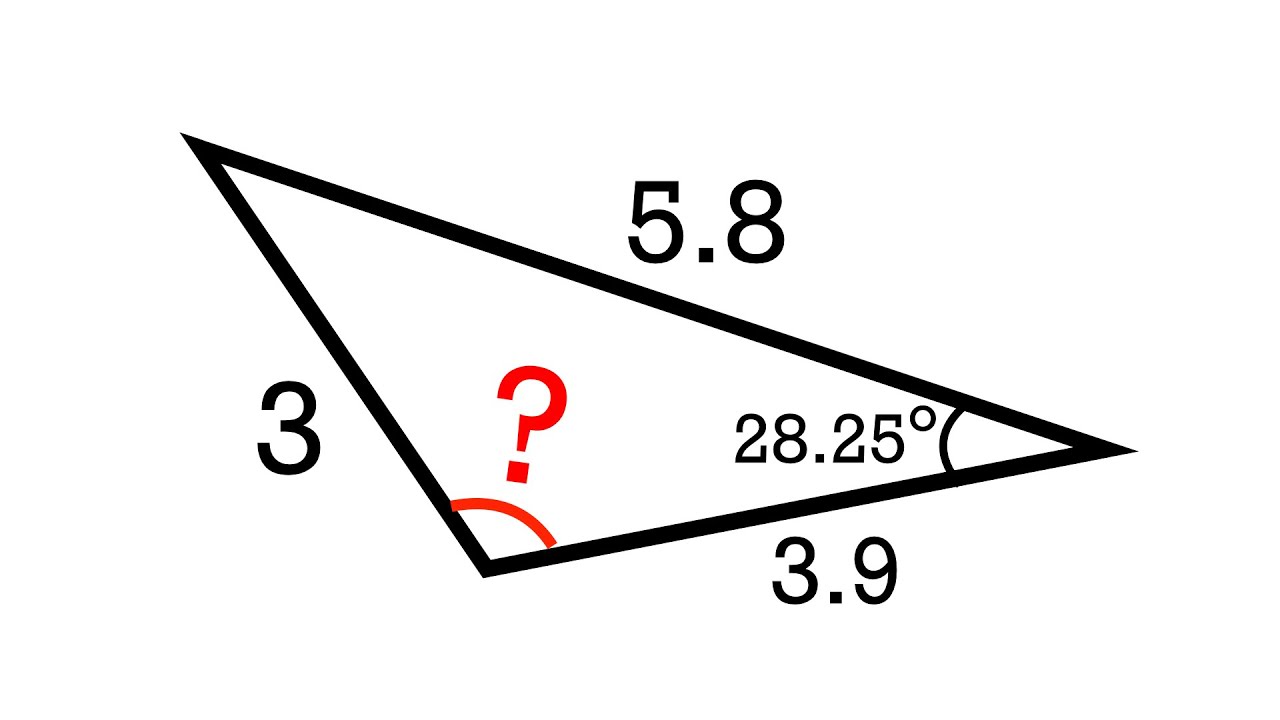
Learn more about the law of sine and cosine on Brilliant: https://brilliant.org/blackpenredpen/ (now with a 30-day free trial)
I came up with this tricky test question challenge for my precalculus students. Start with an obtuse triangle, give students the length of all three sides and one of the acute angles. Ask the students to find the measu...
pseudo viper
dark sparrow
if you want the *obtuse* angle that has sine equal to your number, then yeah, su...
okay so i have to evulate everything and decide whether the angle it gave me is the angle i need, or whether i need to subtract 180, etc
that's a pain
pseudo viper
smoky jetty
https://youtu.be/LOPT0mAsyCM there's this cool video I watched before regarding ...
i'll give that a watch on my lunch break! thanks
i see the word calculus and i shiver
weary hound
upper karma
find "k" (with solution please :'v)
What is (tan 45° -1)
I was excited about this problem then I got extremely disappointed
pseudo viper
upper karma
find "k" (with solution please :'v)
what does the ... mean?
last quiver
upper karma
find "k" (with solution please :'v)
||k is 0 obv||
because tan45° -1 = 0
dark sparrow
last quiver
||k is 0 obv||
!nosols
lime crownBOT
last quiver
||k is 0 obv||
As a helper, please do not give out answers that could be copied as a homework solution. Have the student work through the problem themselves and guide them along the way.
weary hound
pseudo viper
what does the ... mean?
To fully express, k=(tan 5°-1)(tan 15°-1)(tan 25°-1)(tan 35°-1)(tan 45°-1)(tan 55°-1)(tan 65°-1)(tan 75°-1)(tan 85°-1)
And that is why we use the abbreviation as ...
Because else my hand hurts to type this entirely
pseudo viper
are those standard angles? bc why not (tan10-1) or is that also included
weary hound
pseudo viper
are those standard angles? bc why not (tan10-1) or is that also included
You assume that the questioner wrote like that believing the reader of this problem notices the pattern of the angles: 5, 15, 25, 35,... and so on until 75, 85
And no ofc we do not know what the heck tan 5° or 25° is for now
This is why we have to think
What is 0× sin 385° × sin 5/8° ×e^(√(2π²-1))
Whatever we multiply anything to 0, 0 is still 0
pseudo viper
im not understanding step 3 and 4
if i get angle 60 from my calculations and subtract that from 180 to get a second angle that is 120
if i add 60 and 120 together, of course it's always going to equal 180?? im adding 60 + the difference between 60 and 180 so i don't see how it'll ever be more or less than 180?

unless by original angle it means the angle that i'm starting with and use in my formula?
pseudo viper
@rugged wind ^ spam
smoky jetty
pseudo viper
im not understanding step 3 and 4
if i get angle 60 from my calculations and sub...
this is probably about an ambiguous case right (I just read smth about it coz I forgot it already)? I think it means that the original angle and its supplementary angle cannot be in the triangle
does it have any figure u could share? im also confused with the wording
pseudo viper
this is the article im looking at
https://www.softschools.com/math/calculus/the_ambiguous_case_of_the_law_of_sines/
just confused bc if i subtract angle 80 from 180 to get an angle 100
adding 80 + 100 obviously equals 180 so i don't get what they're tryna say
silent plank
<@&268886789983436800> scamp didn't get purged
smoky jetty
pseudo viper
this is the article im looking at
<https://www.softschools.com/math/calculus/the...
do u know the very first step to determine if there are two triangles possible to be formed, one triangle, or none at all?
pseudo viper
no
smoky jetty
since you're given an SSA case, we wouldnt know for sure if the figure in the article has side b's length, long enough to enclose the triangle or at the shortest length to do the same
for that, we know that sinC/c has to be proportional with sinB/c as the law of sine states. Now, plug the given values and solve for the value of sin B
the value cannot be greater than one (or less than negative one), personally i dont know exactly why rn, but I'd say because 1 indicates sin90 degrees, and any sin of a degree higher (i.e an obtuse angle of a triangle) could be subtracted to 180 deg giving value less than 1
if the value meets this condition, say that the triangle can have 2 possible angles for the 2nd triangle, then the original angle or the given angle, 33deg, added to the possible angles of B (65.19 deg or 114.81 deg), should still give space to the 3rd angle u could easily find by 180deg= 33deg - (65.19deg or 114.81 deg) - angle A
do u get this elaboration @pseudo viper ?
because if the angle is greater than 180, then u basically have a triangle whose two angles are supplementary, and by property of triangle, it's simply false.
imagine a triangle with angles 120,60, and B. Doesn't make any sense right?
however if the second angle had a value when added to the given angle would give 90deg to the third one, then you have a right triangle as the only possible triangle to be formed.
i'd appreaciate anyone's correction on my elaboration
pseudo viper
pseudo viper
im not understanding step 3 and 4
if i get angle 60 from my calculations and sub...
so im guessing by original angle they mean the first angle that we know?
bc that's what im getting confused with
smoky jetty
pseudo viper
so im guessing by original angle they mean the first angle that we know?
yeah i think so
it's the only way I could say the steps are reasonable, otherwise im also confused by it
https://mathbitsnotebook.com/Geometry/TrigApps/TAUsingLawSines.html u can refer to this aswell
pseudo viper
so lets say you end up with two angles
is there a way to actually figure out if one is the correct one
or do you just have to pick one based off what makes the most sense?
ig they're both correct
smoky jetty
both triangles formed are correct, again there are two possible triangles, so, u have 2 possible answers
smoky jetty
pseudo viper
ig they're both correct
precisely
pseudo viper
wouldn't one angle result in one of the lengths being shorter / longer
like if i get 60 and 120 as my angles
the sides with angle 60 would be shorter than the sides with angle 120
so wouldn't that allow you to figure out which is the one you actually wanna find
math is complicated smh
smoky jetty
pseudo viper
wouldn't one angle result in one of the lengths being shorter / longer
like if i...
let's say it's angle B that can have 2 possible angles (acute and obtuse), it already has a given side, 10, and the only side length that could have two possible values would be the opposite side to A, since angle A could also have two values
to check if 10 as b' s length is correct according to law of sine:
sin33/6 = sin65.19/10 = sin114.81/10
~0.091 = ~0.091 = ~0.091
(sine of 114.81 is equal the sine of its complementary angle, if you're familiar with reference angle stuff)
also, in the figure, it's side a's length that shortens as angle B becomes obtuse, and vice versa
pseudo viper
so to check if your angle matches up with what you already know, use law of sine as if you were trying to figure out side b ( if you just calculated angle B from the law of sine )
smoky jetty
considering that u already determined that whatever angle you're checking is valid, then yeah
smoky jetty
your welcome!
pseudo viper
i've come to the conclusion that i hate the law of sine when tryna find an angle
it's a bunch of hassle 😭
pseudo viper
pseudo viper
so to check if your angle matches up with what you already know, use law of sine...
okay well that doesn't workl
(5 * sin(74 degrees) ) / sin(36 degrees)
(5 * sin(106 degrees) ) / sin(36 degrees)
both equal 8.17698038688
which i realise why now
so what do you do if you get an ambiguous case and need to know exactly which angle it is 😔
 dense kettle
hii
 leaden quail
hello i know this sounds cursed but for my finals they made me find the equation of an inscribed circle
looking at the test answers now, i somehow got it correct, although that subject was a pain
maybe even a big one
i mean all the stuff related to finding equations of tangents from point outside of circle was excruciating
i felt like the universe was fileting my self esteem
,help
somber coyoteBOT
A brief description and guide on how to use me was sent to your DMs!
Please use ,list to see a list of all my commands, and ,help cmd to get detailed help on a command!
leaden quail
,list
somber coyoteBOT
My commands!
Use ,ls to obtain a briefer listing, and use ,help <cmd>to view detailed help for a particular command, or ,help to view general help.
If you still have questions, talk to our friendly support team here.
LaTeX Rendering
Render LaTeX code and configure rendering options.
tex: Render LaTeX code.
ctan: Searches the ctan
texdoc: Searches the texdoc
autotex: Toggle whether your LaTeX is automatically rendered.
preamble: View or modify your LaTeX preamble.
texconfig: View or modify your personal LaTeX rendering options.
guildpreamble: View or modify the guild's default LaTeX preamble
Guild Admin
Guild administration
config: View and set the guild configuration.
rmrole: Deletes the provided role
disable: Disable commands in this guild.
editrole: Create or edit a server role.
autoclean: Automatic deletion of messages in the current channel.
forgetrolesfor: Forget stored persistent roles for one or all members.
Page 1/4
leaden quail
wowie zowie
 sonic mulch
Does anyone recommend a book for me to start studying geometry for the Olympics?
pseudo viper
what do you do if you get an ambiguous case with the law of sine when trying to solve for an angle?
i know you can use the law of cosine to find an angle, but if i only have two sides and an opposite angle, then i can't use law of cosine bc i'm missing a side
i know in a real world scenario, you'll most likely know all the sides of the triangle
but what if you didn't?
grave pond
This reflects the fact that SSA triangles generally do have two solutions -- one where the angle at the end of the first side is acute and one where it's obtuse.
Sometimes you can eliminate the "obtuse" case because it would lead to those two angles alone to total more than 180°.
But in the rest of the cases the ambiguity is real and you'll have to hope the problem contains other information that will tell you which of the solutions is the one you want.
upper karma
How strong does my trigonometry need to be, in order to advance to calculus?
 hollow dust
pseudo viper
upper karma
How strong does my trigonometry need to be, in order to advance to calculus?
hollow dust
pseudo viper
upper karma
How strong does my trigonometry need to be, in order to advance to calculus?
apparently you need a very strong understanding of algebra bc that's where everyone falls over
smoky jetty
after almost 3 hours of trying to find this only using geometry, I gave up and used law of sines lmao. Was able to find it, fortunately (took some bruteforce coz im dumb)

@pseudo viper wanna give it a try?
there are a few ways the problem can be tackled, im gonna share mine in a few mins
 pseudo viper
i'm like 7 years outta school so anything i learnt back then is forgetten
i did run through the geometry section on khan academay lmao but i quite literally just ran to get some basics down
smoky jetty
i see
well i'd say that it's doable with basic knowledge on circles, rectangles, and law of sine
at least on the solution I came up with
pseudo viper
hmmmm
snow crystal
smoky jetty
after almost 3 hours of trying to find this only using geometry, I gave up and u...
How did you use law of sines here?
It's not a 30 60 90 triangle
smoky jetty
snow crystal
How did you use law of sines here?
i'll share my solution later
smoky jetty
im trying to make it understandable rn, coz the draft i have involves too much process that wasnt necessary after using law of sine
smoky jetty
snow crystal
Maybe you just evaluated the angles
ooh, welp u could def give it a try and check
snow crystal
Ok I will
pseudo viper
snow crystal
It's not a 30 60 90 triangle
law of sines isn't only for a 30 60 90 triangle
snow crystal
I know
But I want to approach this problem more geometrically first
Without using the law of sines
pseudo viper
gotcha
yeah i wouldn't know where to start
p much my only knowledge atm is algebra and trig
should probably spend a lil time on actual geometry
snow crystal
Welp idk how to do it with geometry 😸
At least not yet
The answer I got is 4sqrt(3)-4π/3
@smoky jetty is that the answer?
smoky jetty
hmm nope
if it's equal to ~ 1.87, it's quite close
ffs i used ballpen and im struggling to make my solution pretty now
 somber coyoteBOT
 snow crystal
@smoky jetty I'll be grateful If you find the mistake (if there is any)
smoky jetty
ight im gonna share it
sorry if many parts are simplified to such extents ( i dont have correction tape with me atm, so mistakes were hard to erase, hence dirtier work), so feel free to ask for elaboration
@snow crystal
 smoky jetty
was this your final answer?
 smoky jetty
welp it's pretty off i'd say
snow crystal
But are you able to find any mistake in my solution
smoky jetty
im checking rn
snow crystal
Cause I've been trying to for past 10-15 minuts and haven't found anything yet
smoky jetty
but both of our handwriting looks so uhh lmao
snow crystal
Lol true
snow crystal
Did u find something?
smoky jetty
sorry for the late response, i couldnt find exactly where u got it wrong
hopefully others could try and check
smoky jetty
snow crystal
So that means the answer I got is correct
no, the correct answer is ~1.252
smoky jetty
yeah, the video reference to it has the answer as 1.252 as well
snow crystal
That's weird
smoky jetty
https://www.youtube.com/watch?v=2Seb863FnfU lol ignore the clickbaity title
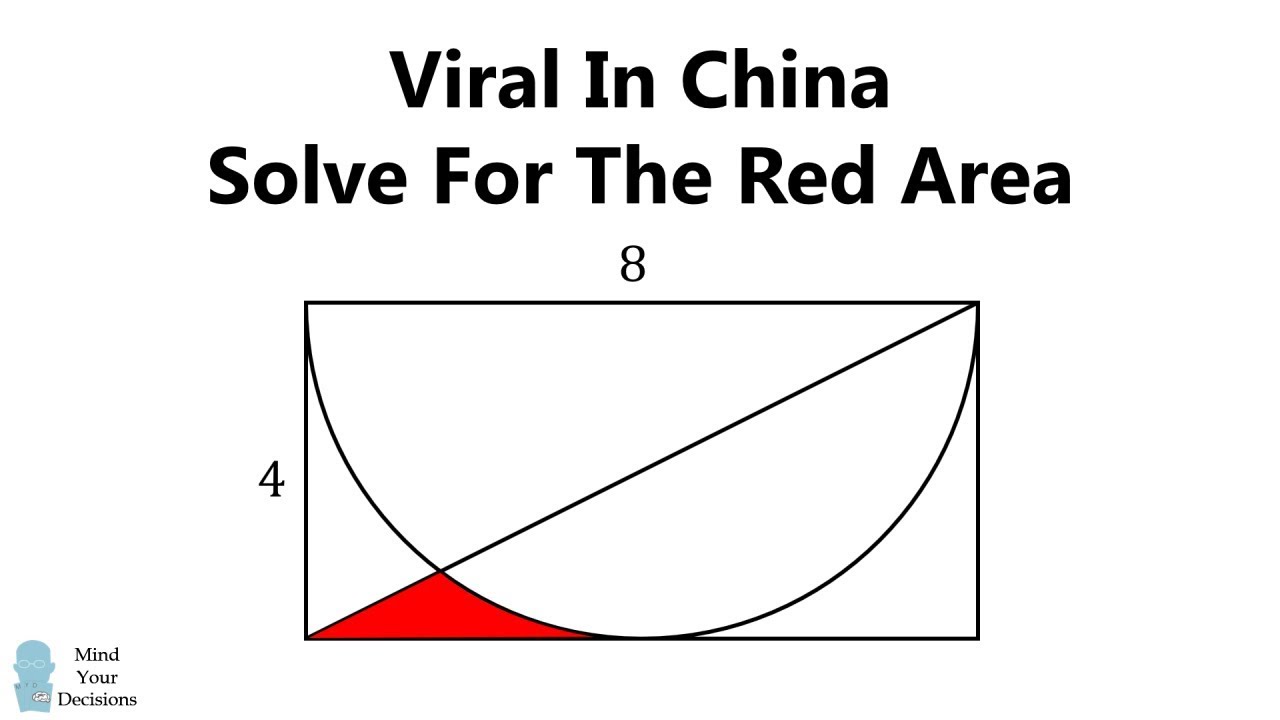
This is harder than it looks!
Many people found a possibly easier way too! Here's a video I made about that method: https://youtu.be/_2lzv41RksA
Subscribe: https://www.youtube.com/user/MindYourDecisions?sub_confirmation=1
Playlist to watch all videos on MindYourDecisions: https://www.youtube.com/playlist?list=UUHnj59g7jezwTy5GeL8EA_g
This is...
had others try it as well (they were pretty much olympiad nerds) and got the same anwer.. lmao they said it wasnt even difficult
snow crystal
Ok so tell me what I did wrong
smoky jetty
soorry but i just couldnt see the wrong part, and the handwriting also is pretty confusing to me
though certainly something is wrong there
snow crystal
Ok Im gonna show this exercise to my teacher and maybe she'll tell me
snow crystal
Though I'll have to wait for like a week or something