#geometry-and-trigonometry
1 messages · Page 11 of 1
 blissful spire
 thin locust
yes
thin locust
ye
 upper karma
Area of the Circle= pi r^2= pi*5^2 which is approx. 78.53982 (round it accordingly)
blissful spire
I think it’s just asking for the exact answer so I can keep it in pi form
upper karma
alr!
 bronze sand
in a rectangle, the base is twice as long as the height. calculate the area of the rectangle if the diagonal is √215 cm.
Can someone tell me how to solve this question??
 nocturne remnant
represent the base and height in terms of the same variable
 wind coral
bronze sand
in a rectangle, the base is twice as long as the height. calculate the area of t...
wind coral
bronze sand
in a rectangle, the base is twice as long as the height. calculate the area of t...
Here I drew you a model

Use Pythagoras to determine x
upper karma
what do they mean by this

 dry atlas
upper karma
what do they mean by this
dry atlas
upper karma
what do they mean by this
Trig is used all over the place where angles are involved, not necessarily only when triangles are involved
upper karma
dry atlas
Trig is used all over the place where angles are involved, not necessarily only ...
ah thanks
 limpid onyx
Prove CU x CV=DU x DV where U and V are the circumcenters of AOC and BOD respectively

 cold chasm
is there some sort of list for theorems abt circles
wind coral
cold chasm
is there some sort of list for theorems abt circles
https://thirdspacelearning.com/gcse-maths/geometry-and-measure/circle-theorems/ found this. It might help
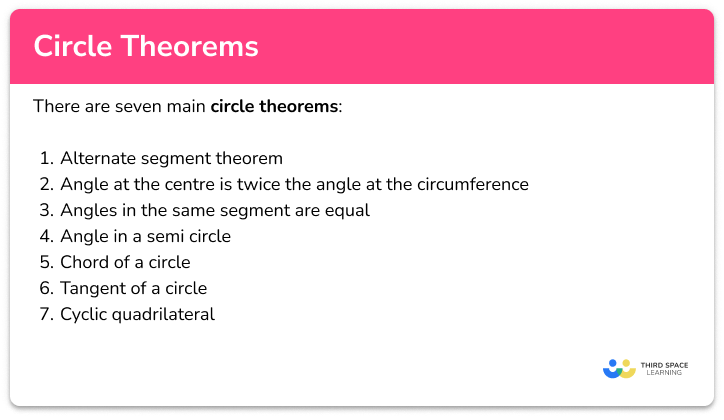
Third Space Learning
Free circle theorems GCSE maths revision guide, including step by step examples, exam questions and free worksheet.
wind coral
Oh ok, I can't help prove them sty
cold chasm
its ok
 visual ermine
Guys so like if I'm evaluating functions and like it gets to cos(-1) like then what
Cus tbh my trig is not great and like I just keep getting messy decimals and no good values or anything
Unless I'm being really dumb and it's pi but I'm pretty sure that's not how trig works

 foggy parcel
 south pawn
could somebody help
south pawn
could somebody help
How far u have done with this ques?
 wicked narwhal

 dull seal
south pawn
could somebody help
dull seal
south pawn
could somebody help
Use the cosine rule
 rough stratus
 river blaze
Find X?
river blaze
south pawn
could somebody help
1610sin(67°)
 lapis wind
help pls

 pallid vine
lapis wind
help pls
pallid vine
lapis wind
help pls
Start off with y= tan x
You can see that the graph is translated pi/4 to the right first, so we now have y = tan (x - pi/4).
From here, we check for at least one point:
E.g. when x = pi/2, the y-coordinate should be 3. As tan (pi/2 - pi/4) = 1, we need to multiply this equation by three to stretch it parallel to the y-axis, and get the desired equation y = 3 tan (x-pi/4)
upper karma
"Prove that if a plane is perpendicular to two secant planes, then it is
perpendicular to the intersection of these planes."
help pls
 floral shale
You can try doing the cross product of the planes' normal vectors first
Not entirely sure but that's something you could try
upper karma
hello. im not sure if i can post this question because its in calculus. but basically im trying to solve a question that deals with arctan and the limit as "a" is approaching -infinity of arctan(a). should i look at the tan(x)'s domain to justify the behavior of arctan?
pallid vine
Seems like a reasonable step, but just be careful to justify, since tan(x) has the domain over all the reals, whereas the domain of tan(x) is restricted to define arctan(x) as a function, such that it's range is (-pi/2, pi/2).
Since we're in geometry chat, you could also consider, if you had a right-angled triangle, and one of the acute angles has fixed adjacent side, but an opposite side which has its length approaching infinity...
Seems kind of wishy washy, but it seems like as if the angle gets closer to pi/2.
upper karma
pallid vine
Seems like a reasonable step, but just be careful to justify, since tan(x) has t...
thank you for explaining. that's what i was worried about, getting confused with the domain. ok just so im clear completely, tan(x) is only restricted to define arctan(x) from -pi/2 to +pi/2, so the limit would only exist between -pi/2 and +pi/2?
pallid vine
That would probably be fine, so long as you keep domains/ranges clear for each function, and don't get mixed up between the two :)
upper karma
pallid vine
That would probably be fine, so long as you keep domains/ranges clear for each f...
ok great thanks for helping 
 granite sparrow
 fallow sable
Can someone explain the operations on deriving half angle identifies from the Euler formula
my tutor showed me the formula for if I forgot my identities
I kinda forgot how he even started it 🥲
I’m in precalc 2 btw if that’s necessary information
 verbal jacinth
What is the given informations
nocturne remnant
There are at least 9 things named “Euler’s formula”
 spiral mesa
You may want to look at this too

In mathematics and physics, many topics are named in honor of Swiss mathematician Leonhard Euler (1707–1783), who made many important discoveries and innovations. Many of these items named after Euler include their own unique function, equation, formula, identity, number (single or sequence), or other mathematical entity. Many of these entities ...
 warm canopy
verbal jacinth
What is the given informations
warm canopy
verbal jacinth
What is the given informations
the things i sent are all the info i have
upper karma
I think the sum is 180 degrees
You just have a star right ?
a random pentagram with nothing specified
lemme try
Lemme upload pic


@warm canopy
warm canopy
thank you!!
nocturne remnant
...you literally asked them if it was asking for angle sum and it wasnt tho
tho honestly that's the only reasonable thing that would be asked
 wraith mirage
 warm canopy
upper karma
warm canopy
upper karma
wait which angle is which and where did the A’ B’ C’ D’ E’ come from are those the interior angles of the polygons
fallow sable
nocturne remnant
There are at least 9 things named “Euler’s formula”<:opencry:586078614865444865>
I meant this one

 half eagle
how do i solve this?

 grave pond
Doesn't your textbook explain how to find the distance between points in a coordinate system?
half eagle
it does
i think'
but i dont have it on me rn
soo
its a formula
but i didnt memorise it
grave pond
You might have to rederive it, then. Draw a hoizontal line through one of the points and a vertical line though the other. Together with the line connecting your two points, they form a triangle with one right angle. Apply the most famous theorem about right triangles you remember.
... or you could also use what Daht posted and lose the learning opportunity.
 flat owl
My bad
 timid thistle
is there things like
uh
like you have $\sin \theta = \frac{a}{b}$ and then $\sin^2 \theta = \frac{a^2}{b^2}$, is there such a thing as eg. $\arcsin^2$?
 somber coyoteBOT
 grave pond
There's not a particular name for it, no.
In some situations it can be useful to know that (by trigonometric identities about squared sines) we do have $$\sin^{-1}\sqrt x = \frac{cos^{-1}(1-2x)}{2}$$
somber coyoteBOT
Troposphere

 timber cargo
half eagle
how do i solve this?
timber cargo
half eagle
how do i solve this?
You could use the pythagorean theorem or the distance formula
 smoky jetty
grave pond
You might have to rederive it, then. Draw a _hoizontal_ line through one of the ...
smoky jetty
grave pond
You might have to rederive it, then. Draw a _hoizontal_ line through one of the ...
if i drew this correctly, line AB is hypotenuse right?
 pliant pumice
Hello! I have a question about proofs. I learned that proofs are usually written using table of statements and reasons, and every small step should have a reason (name of some property, not just explanation). I find this way very long and exhausting. Are there other ways to write proofs and solutions in geometry?
 dark sparrow
you learned that 2-col proofs were the "usual" format?
cause yeah thats bureaucratic as shit and tiring to stick to
usually a porof is just plain-english prose maybe interspersed with some calculation
pliant pumice
So usual "non-bureaucratic" proof is just explanations in words and some calculations when needed?
dark sparrow
yes, essentially.
 silent plank
two col is excessive in the need to explicitly state "given" and trivial theorems
which yeh, can be exhausting, there's no real need to have all that
grave pond
smoky jetty
if i drew this correctly, line AB is hypotenuse right?
Yes.
I think "two-column" proofs could make some sense if they were taught as a scratchwork technique for making sure you have all your ducks in a row before you start writing out the human-readable proof. But they're likely harmful if they become a homework objective in and of themselves.
pliant pumice
Thanks!
 dire mortar
yo hello can anyone help with my homework? trig
upper karma
@everyone does anyone know about pythagoras theorem?
grave pond
Nobody knows about Pythagoras' theorem; the last surviving description of it was lost when the Great Library of Alexandria was sacked.
upper karma
grave pond
Nobody knows about Pythagoras' theorem; the last surviving description of it was...
I think you're talking about arithmetic, Pythagoras theorem is actually described in the Bible
timber cargo
Okay
upper karma
how do I know if my foci is parallel to the y-axis or the x-axis?
im wondering if its related to the semi-major, but im not quite certain
grave pond
The foci of an allipse always lie on the major axis.
 devout warren
is there any reasoning behind this being ex. sin(v+pi) and not sin(v ±pi)?
 upper karma
grave pond
The foci of an allipse always lie on the _major_ axis.
upper karma
grave pond
The foci of an allipse always lie on the _major_ axis.
ok, where a is greatest, that's where the focal is?
since semimajor = the a component
 tender token
upper karma
ok, where **a** is greatest, that's where the focal is?
tender token
upper karma
ok, where **a** is greatest, that's where the focal is?
So I'm assuming you're asking about the focal point of an ellipse, which is one of the two points that define the major axis of the ellipse.
In an ellipse, the distance between the center and each of the two foci is denoted by c, and the distance between the center and each vertex (i.e., the endpoints of the major axis) is denoted by a. The semi-major axis of the ellipse is then given by a, and the semi-minor axis is given by b, where b = sqrt(a^2 - c^2).
So to answer your question, no, the location of the focal point(s) is not determined solely by the value of a. The location of the focal point(s) depends on the values of both a and c, as well as the position and orientation of the ellipse.
However, it is true that the value of a is related to the length of the major axis of the ellipse, and therefore to the distance between the two vertices. Specifically, the length of the major axis is given by 2a.
upper karma
tender token
So I'm assuming you're asking about the focal point of an ellipse, which is one ...
i was asking more so about the foci's relationship to the y-axis versus the x-axis. because sometimes you need to use different equations for the same problem
@tender token

is it just the semimajor that decides?
sorry if im asking the same thing after you explained but i dont really understand ellipses
tender token
What would the points of my own geometrical algebra equation be? I used such 2 + 2 = 2x (squared (2)) which both sides of a square is 2 it converts into a cube which is entered into cube = 2x (squared (2))?

Summary: Square (both sides are 2) = 2x² = Cube 2x²
 median igloo
My whole class strugglin need som help


 dark sparrow
!nosols
 lime crownBOT
As a helper, please do not give out answers that could be copied as a homework solution. Have the student work through the problem themselves and guide them along the way.
 snow tide
"find the length of the unknown sides of this right trapezoid, and find the area of the trapezoid"

im struggling with this problem
 austere light
not sure what i did wrong here, deltamath says im wrong


nevermind i figured it out
 abstract dagger
👌
 copper lark
I need help
Can u do this question

Help
Ignore the writing around it can you help with that question tho
 lofty tangle
median igloo
My whole class strugglin need som help
lofty tangle
median igloo
My whole class strugglin need som help
do you still need help
lofty tangle
median igloo
My whole class strugglin need som help
for the bonus (29) use Heron's formula to solve ((1/2)(a+b+c))=s then sqrt(s)(s-a)(s-b)(s-c)

 lofty tangle
median igloo
My whole class strugglin need som help
lofty tangle
median igloo
My whole class strugglin need som help
for #25 use law of sines to find angle z, then use angle sum theorem to find angle y
grave pond
I've drawn a few more lines -- red is horizontal and green is parallel to the inclined plane so the angle between red and green is the angle of the ramp.

Now red is perpendicular to black, and green is perpendicular to dashed blue.
smoky jetty
snow tide
"find the length of the unknown sides of this right trapezoid, and find the area...
the only way I could think of rn, is by finding the opposide side to angle 25 (you'd need a calculator), then it should be easy.
 grand heron
snow tide
"find the length of the unknown sides of this right trapezoid, and find the area...
grand heron
snow tide
"find the length of the unknown sides of this right trapezoid, and find the area...
you can figure out the sides easy with the trigonometric rules of right angled triangles. Is thr problem figuring out the area of a triangle?
 graceful quest
b
timid thistle
snow tide
"find the length of the unknown sides of this right trapezoid, and find the area...
what can you do to that angle that gives you some insight to the sides?
grand heron
 grand heron
timid thistle
what can you do to that angle that gives you some insight to the sides?
grand heron
timid thistle
what can you do to that angle that gives you some insight to the sides?
with these trigonometric rules you can figure out the sides if the triangle
smoky jetty
you may also use law sine for the oblique trianglge
timid thistle
grand heron
with these trigonometric rules you can figure out the sides if the triangle
indeed
foggy parcel
Ups here B & C are the centre of the two circles

Since radius 2
AB = BC = AC = 2
so according to the tringle being equilateral
angleABC = angleACB = angleBAC = 60degrees
so [ABC circular cut] = theta/360 * pier^2
= 60/360 pie * 2^2
= 1/6 * pie * 4
= 2pie/3
and [tringleABC] = rootover3 a^2/4
= rootover3 * 4/4
= rootover 3
so [black region under ABC circular cut] = 2pie/3 - rootover 3
= 2pie - 3rootover3/3
So the other one is also 2pie - 3rootover3/3
And the down black region can be divided with the tringle where it creates the same situation like the upper one
So there should be 2 other black region under circular cut with same area
So all black regions under circular cut are 4
[all black regions under circular cut] = 4{(2pie - 3rootover3)/3}
= 8pie - 12rootover3/3
And the other same tringle (with same area) should also be added as the down black region except the 2 down black regions under circular cut
So the actual [black region] = 8pie - 12rootover3/3 +root3
= 8pie -12rootover3 + 3rootover3/3
= 8pie - 9rootover3/3
Hence,
8pie - 9rootover3 / 3 = apie - b rootover c/d
a = 8
b = 9
c = 3
d = 3
and gcd{8,9,3,3} = 1
              So     ( a + b + c + d)   =  8 + 9 + 3 +3
                                                    = 23
                                                     {Ans?)
Am I right or not?
<@&286206848099549185>
foggy parcel
foggy parcel
Ups here B & C are the centre of the two circles
THis ques
 dense galleon
Isn’t ABC triangle equilateral
foggy parcel
Yea
foggy parcel
foggy parcel
Since radius 2
AB = BC = AC = 2
so according to the tringle being equilateral
...
Well I have added a solution but not sure if this is correct or not plz help me <@&286206848099549185>
 chrome timber
Hey anyone here studies Euclidean geometry
grand heron
chrome timber
Hey anyone here studies Euclidean geometry
from all of the people that are in this server there is a very high chance that someone is or did
 reef frigate
obc is 50 because ob bisects ac. so obc is 50 so u know bac. ob = oa so z = 50 - bac.
 split grail
aob = 180 - oba - oab = 180 - 2*50 = 80;
bac + bca + abc = 180 ==> bac = (180 - abc )/2 ==> bac = 40
upper karma
hello. just a question, is the definition of horizontal tranverse axis means that the parabola opens upwards and down?
 graceful idol
can anyone help me with this one, i thought the answer was 82 but i guess not
 upper karma
OMG I'M LEARNING THIS, TOO
SOO FRIKIN HARD+EASY LMAO
just use this formula... m<1=(m of arc AB + m of arc CD)
(These are just random letters, you can do it accordingly for your problem)
he left oml
upper karma
graceful idol
can anyone help me with this one, i thought the answer was 82 but i guess not
76= (82 + x)/2
76= 41 + x/2
x=70 {x: arc BC}
upper karma
hello guys, i have a question. Idk if this is basic or advanced math too so i ask here
i saw this guys calculate circumcircle of a given triangle's coordinates with something called D. I have no idea what that is and how do this work

you may confuse by coding, but at the end he give result of the triangle circumcircle coordinate is:
(X / D, Y / D)
 grand cargo
Hi, can someone help me with this one? We're supposed to find the area for the ones that are shaded.
 upper karma
grand cargo
Hi, can someone help me with this one? We're supposed to find the area for the o...
upper karma
grand cargo
Hi, can someone help me with this one? We're supposed to find the area for the o...
assume 2 rectangle's edges is x and y, you calculate "7" and "5" based on x and y
and reversed the formular
grand cargo
upper karma
assume 2 rectangle's edges is x and y, you calculate "7" and "5" based on x and ...
Something like this?
 upper karma
grand cargo
Something like this?
upper karma
grand cargo
Something like this?
yeah
upper karma
i dont really remember any formula from high school, but there would be something to do with the angle
if you have 1 angle and 2 edge, you can calculate the other edge
grand cargo
Huh
upper karma
you apply that formula to both triangle, you will have an equation
solve that equation you will have the answer
grand cargo
does that only applies for right triangles or not?
upper karma
no, obs not
grand cargo
The angle is unknown in the problem however
grand cargo
Wait which one
 grand cargo
Wait how do we find the 2 angles though, they clearly don't make a 90°
And how do we find the area after that 💀
nocturne remnant
upper karma
i dont really remember any formula from high school, but there would be somethin...
You meant cosine rule
just use it on each triangle and hope that stuff cancel
A solution without trigonometry probably exists but is not very easy to find
nocturne remnant
The angles are supplementary; their cosines sum to 0
grand cargo
Huh
nocturne remnant
Fyi I was talking about this
 grand cargo
Ah


 exotic yarrow
 worldly tundra
im confused an what nEZ does
worldly tundra
im confused an what nEZ does
It means $n$ is an integer, $\mathbb{Z}$ represents the set of integers
somber coyoteBOT
Civil Service Pigeon
 exotic yarrow
It’s because you need to add integer multiples of the period

Cause otherwise, you could say stuff like $\sin(\pi/2)=\sin(\pi)$, which is clearly false.
somber coyoteBOT
Civil Service Pigeon
 worldly tundra
ty!
 astral viper
 exotic yarrow
astral viper
exotic yarrow
astral viper
Pythagorean theorem
exotic yarrow
astral viper
What’s m
Probably the unit metres?
timber cargo
Such a tall building with only 3 floors
worldly tundra

what i did so far was made 3x=a and then said 10(2sinacosa)=0
but im not sure where to go from there
 timber cargo
 gaunt path
What do you know about trigonometric functions?
gaunt path
Ik sin cosine and tangent and law of sine and law of cosine but I forgot how to implement the law of sine and cosine
law of sine right
since its an enclosed angle
timber cargo
For this problem it's more convenient to use tangent
You are given a side length that is opposite of the angle and adjacent to the angle
So, you'll have to use tan^-1 (30/8) to get the angle
 gaunt path
ohhhhh
ok thank you that makes sense
I forgot abt the inverse ones
I was trying to write 8tan(x)=30
so 75.07 deg?
timber cargo
If they ask you to round to the nearest hundreds, then yes
blissful spire
Is there a clear formula to calculate volume?
Sry it was just unclear for me
Nvm sry got it
timber cargo
blissful spire
Is there a clear formula to calculate volume?
The formula varies by the shape
 shy sun
Not really sure how to explain this. I have a line to a point and a 3d vector from that point with an X and Y rotation. How can I find the angle between the line and the vector?
 gilded topaz

Can someone please tell me if 13 is right
I think I did it wrong but idk how else to do it😭
guys?
pls
nocturne remnant
i think arc YVU stands for the arc that starts from Y and goes counterclockwise around the circle until meeting U

 hexed shale
are you trying to find the hypotnuse
 lethal fable
yes
timber cargo
lethal fable
how to do this
Use your trigonometric function rules
 half iron
 upper karma

 neat plank
lethal fable
What the formula I dont have my notes
neat plank
lethal fable
What the formula I dont have my notes
sin 31 = 16/x
 proven badger
Need help with these questions (last three especially) Thanks!!

 agile oyster
proven badger
Need help with these questions (last three especially) Thanks!!
agile oyster
proven badger
Need help with these questions (last three especially) Thanks!!
area of triangle = ((ab/2)*sin(C)) where a and b are two side lengths and C is the angle between the sides. the answer is now just plug to calculator
smoky jetty
You may also refer to Heron's formula as 3 sides are also given
use calculator for convenience

 dire snow
How do I prove that in a triangle the semi perimeter is always bigger than a side?
silent plank
a late?
silent plank
what have you tried?

 void charm
dire snow
A side?
void charm
dire snow
A side?
its the semi perimeter
semi perimeter=(a+b+c)/2
dire snow
Yeah I mean that
silent plank
use lowercase notation instead of segment notation,
it'd be much easier to read
dire snow
?
void charm
whats the equation?
void charm
brb
silent plank
its just basically sorting the lengths in order for convenience
dire snow
Is it fine if I subtract two egual sides in every part?
dire snow
silent plank
its just basically sorting the lengths in order for convenience
Oh never heard
But I can try it
Then I have to do another thing
It asks me another thing
silent plank
and apply that to get more info about
s = (a+b+c)/2
dire snow
silent plank
and apply that to get more info about
s = (a+b+c)/2
Did I do it well?
void charm
backk
silent plank
well your inequalities are just saying that double the perimeter is greater than the perimeter
which is trivially true
dire snow
dire snow
Is it fine if I subtract two egual sides in every part?
Yeah but
void charm
can u tell me the equation?
dire snow
dire snow
How do I prove that in a triangle the semi perimeter is always bigger than a sid...
.
void charm
let me think ;-;
The sum of any two sides in a triangle is greater than the third side.
Let a b and c be the length of the three sides
So we have (a+b) >c
Adding c to both sides we bave
a+b+c > 2c
This implies (a+b+c)/2 > c
The LHS is semi- perimeter of a triangle.
So semi- perimeter of a triangle is greater than any side of the triangle.
dire snow
Lmao you are a computer to write this in a second
void charm
its basically like
silent plank
consider given
a <= b
then
if a = k
you can conclude that
b >= k
silent plank
did you want greater than at least one side, or the longest side
dire snow
I try to do the other part
dire snow
void charm
what grade are u in rn?
Uhmm
void charm
?
dire snow
Let me check
dire snow
I'm Italian we don't have grade lmao
dire snow
Year 11 for Uk
dire snow
I looked only my age lol
dire snow
void charm
so like how old are u
15
dire snow
What is csa
dire snow
Oh
void charm
yeh
void charm
2 pie r h
dire snow
Didn't do it yeah
dire snow
For lateral you mean all the area without counting the bases right?
dire snow
Oh k I did it
void charm
yeh ;-;
dire snow
void charm
do u remember statistics?
Yes
dire snow
Not probability bcs I can't do nothing
dire snow
void charm
mean,median and tsuff
Ok this yeah
void charm
dire snow
Not probability bcs I can't do nothing
yeh that kinda complicated but yeh
dire snow
Btw I can't do the other part
void charm
which one?
dire snow
How do I prove that in a triangle the semi perimeter is always bigger than the height ?
void charm
uh wait
dire snow
I try it too
void charm
i thought u understood?
dire snow
Oh got it
void charm
;-;
dire snow
It's the height now
void charm
dire snow
How do I prove that in a triangle the semi perimeter is always bigger than the h...
idk that ;-; let me try
yeah idk
ask someone from ur class
if they know it
dire snow
 dire snow
Yeah lesgo
void charm
goodjob
dire snow
I have mainly to start thinking on what it asks
I have another exercise I will see if I have problems
dire snow
Thx for the help again
void charm
ur final exams?
void charm
dire snow
Thx for the help again
happy to help
dire snow
You mean to graduate to university?
void charm
yeh
dire snow
I have to do another 4 years
dire snow
So basically I go to university at 18 years
dire snow
Yup
dire snow
Maybe I think we have done like a melting pot of science in the last years ahaha
void charm
dire snow
Maybe I think we have done like a melting pot of science in the last years ahaha
uh
dire snow
Ok Lmao I didn't do tissues
void charm
help!
im so bad in bio
fr
i lost like 4 marks
forgot
we shouldnt curse
;-;
and the assertion and reason ong 💀
dire snow
We've only did muscular and nervous but in general we didn't do biology. I can help you more in astronomy and chemistry
void charm
yeh chem
dire snow
We've only studied the human body
dire snow
Lmao at 14 you've already did these things? 💀
void charm
i have just memorised first 20 elements in the periodic table
void charm
dire snow
Lmao at 14 you've already did these things? 💀
uh yeahhh
dire snow
void charm
i have just memorised first 20 elements in the periodic table
Ok we have studied like 60
void charm
yeh
dire snow
We'll doing these things the next year
dire snow
Lmao
dire snow
It's because the schools in the world aren't the same
dire snow
Yeah we are here
void charm
yehh
so tell me what do u understand by it
homogeneous has like solutions
and heterogeneous is of 2 types
colloids and suspensions
have u studied about saturated ,un saturated and super saturated solutions?
dire snow
void charm
and heterogeneous is of 2 types
I'm writing what I know about them lmao
dire snow
void charm
have u studied about saturated ,un saturated and super saturated solutions?
Nop
Satured is like when you can't dissolve anything else
void charm
do u want me to give u a brief about it
so u can answer confidently in ur class when the q comes!
dire snow
Lmao we are i the geometry part btw
void charm
dire snow
I didn't see it
what?
dire snow
That we are in this channel
dire snow
Where do you want but I will have to study astronomy and chimics for tomorrow test
void charm
dire snow
Where do you want but I will have to study astronomy and chimics for tomorrow te...
okay study i dont wanna disturb ima do maths ig
or science
foggy parcel
dire snow
Where do you want but I will have to study astronomy and chimics for tomorrow te...
Good luck for your exam bud!
dire snow
void charm
okay study i dont wanna disturb ima do maths ig
No problem
You can say it and I will see when I can
dire snow
foggy parcel
Good luck for your exam bud!
only 60 pages
foggy parcel
dire snow
_only 60 pages_
🙂
dire snow
Ok goodbye and thanks everyone
foggy parcel
Then why r u doin maths go study that topics xD
dire snow
foggy parcel
Then why r u doin maths go study that topics xD
I have homework for tomorrow
void charm
dire snow
You can say it and I will see when I can
okay ig
dire snow
I have even to do Olympics of Italian then 💀
void charm
dire snow
Ok goodbye and thanks everyone
byee all the best for tmrw
dire snow
At least it's for Monday (the Olympics)
 dreamy cave
cos(x-pi) = cos(pi-x)
sin(x-pi) = -sin(pi-x)
this is correct?
dark sparrow
yes
dreamy cave
dark sparrow
yes
thanks ♥️
 sudden marlin
Can someone help me with this?
 timber cargo
You know that a circle is 360 degrees
and 98 degrees is 40.62 in^2 in area
so make a proportion
sudden marlin
Ah, I get it, Thx
upper karma
can i get help on this (both perimeter and area)
 wind coral
upper karma
can i get help on this (both perimeter and area)
wind coral
upper karma
can i get help on this (both perimeter and area)
firstly label all of the side lengths to make this easier
upper karma
ok
wind coral
after you do so, find the perimeter by adding all of the side lengths together
upper karma
are these correct?


 mighty sparrow
Yes
 cedar grotto
can the unit circle be used if the hypotenuse of a triangle is not 1
mighty sparrow
No because the unit circle has a radius of 1
cedar grotto
so whats the point of it then
if it can only be used with a triangle that has a hypotenuse of one
mighty sparrow
Because the hypotenus = sqtrt(cos(x)²+sin(x)²)
You have a triangle defined by sinus and cosinus
cedar grotto
what does that mean
you can use it with a traingle that has a hpyotenuse of anything?
mighty sparrow
I don't understand
mighty sparrow
If you take a point on the unit circle it is defined by a cosinus and sinus which bot have a value between -1 and 1 and if you use the pythagoras theorem with cos(x) and sin(x) you get the radius of the circle
So if you have a cosine you can get it's related sinuses
Thanks to the pythagoras theorem
cedar grotto
what is a cosinus
mighty sparrow
Cos(x)
cedar grotto
x is theta right
mighty sparrow
Yes the angle
cedar grotto
ok so let me get this correct because i have a very basic understanding of the unit circle
the unit circle is used to find the x and y of a triangle when you have the angle right?
like sin is y and cos is x
mighty sparrow
Yes
cedar grotto
so i just dont understand how it can be very useful if you can only use it to find the x and y values of a triangle where the hypotenuse is 1
unless im wrong about that
mighty sparrow
With a cosine you can find a sinus and vice-versa because the hypotenus is always 1 it's easy
cedar grotto
ok but im still not understanding
mighty sparrow
What are you not understanding?
cedar grotto
mighty sparrow
With a cosine you can find a sinus and vice-versa because the hypotenus is alway...
this
like what if the hypotenuse of my triangle is 34
mighty sparrow
Then you don't use the unit circle
cedar grotto
but then why even use the unit circle
mighty sparrow
Because in trigonometry you have a circle and a triangle that are alike
cedar grotto
so what im not understanding about this is the 1 being the hypotenuse
mighty sparrow
I guess
 pale snow
cedar grotto
like what if the hypotenuse of my triangle is 34
pale snow
cedar grotto
like what if the hypotenuse of my triangle is 34
It has nothing to do with that. The unit circle has a radius of 1 unit because it is easier to work that way but you can really have ANY MEASURE OF RADIUS. Since, in reality, there the concept of RADIANS is at stake (which has to do with the relationship of a radius and the perimeter of the circumference). That said, those RADIANS are used to measure an angle (counterclockwise, from the x axis).
That angle determines a point on the circumference (in any of the four quadrants) and from there the cosine (abscissa of the point on the circumference) and the sine (the ordinate of the point) are defined.
cedar grotto
i know why it is 1 because its the UNIT circle and 1 radian but im not getting why its that useful if you can only use it for a triangle with 1 as the hypotenuse
cedar grotto
pale snow
It has nothing to do with that. The unit circle has a radius of 1 unit because i...
so can the unit circle be altered to be able to use 34 as the hypotenuse
mighty sparrow
I don't think so
cedar grotto
but he said " but you can really have ANY MEASURE OF RADIUS. "
 limpid condor
does e=mc2?
mighty sparrow
He said that it's easier to use 1 as a radius but you could tweak it to have any radius
cedar grotto
yeah so why did u say i dont think so when the hypotenuse is the radius
and how would you tweak it to use and radius and therefore any hypotenuse
mighty sparrow
Because i personaly didn't learn any purporse for a unit circle to have a different radius than 1
mighty sparrow
cedar grotto
and how would you tweak it to use and radius and therefore any hypotenuse
Multiply cos(x) by the new radius as well as sin(x) i guess
timber cargo
limpid condor
does e=mc2?
What are you talking about
cedar grotto
mighty sparrow
Multiply cos(x) by the new radius as well as sin(x) i guess
is that all you would have to do?
pale snow
cedar grotto
so can the unit circle be altered to be able to use 34 as the hypotenuse
Yes, but you would have to change the measures of the angles (there is a formula, I think it is x/r) but just understanding the unit circle is enough. If you want, to understand better, looks for "the Euler function" that function associated to each real number an arc on the unit circle. From there, it can be expanded.
upper karma
are these correct

 silent plank
perimeters are wrong
 sand matrix
cedar grotto
i know why it is 1 because its the UNIT circle and 1 radian but im not getting w...
sand matrix
cedar grotto
i know why it is 1 because its the UNIT circle and 1 radian but im not getting w...
It is valid for all triangles. Remember that sinx and cosx are periodic functions which means they repeat values on a certain interval.
Think about a simple value like sin(30*), this evaluates to some ratio which is 1/2. Now let's use your aforementioned example of a hypotenuse of 37. By using the unit circle we know that a value of 30 degrees or pi/6 radians evaluates to 1/2 and this can be applied to any triangle.
Let's say that your triangle has sin(x) = 37/74, we know that x = pi/6 works because of the unit circle.
I hope this makes more sense @cedar grotto
 frail ridge
This might be a dumb question, but how do you draw a triangle given it's name (∆abc for example) ?
And is ∆abc and ∆cab the same triangle or is it different?
silent plank
usually capitals should be used for points
triangle ABC, is just a triangle with points,vertices A,B,C
you can have your A,B,C clockwise or anticlockwise, doesn't matter
silent plank
well for a triangle it doesn't matter, it'll be in order no matter which way you arrange them
silent plank
it can
well for a triangle it doesn't matter, it'll be in order no matter which way you arrange them
try as much as you can to screw it up
frail ridge
Now my second question
Do different names results to different triangles?
Given that both names share the same points
silent plank
wdym
frail ridge
Like I said before
frail ridge
frail ridge
And is ∆abc and ∆cab the same triangle or is it different?
This
silent plank
triangles ABC, ACB, BAC, BCA, CAB, CBA are all names for the same triangle
order doesn't matter
frail ridge
Okay then
silent plank
if you're referencing just a lone triangle
if you're doing stuff with similarity/congruence then
you'd order the names based on corresponding points
frail ridge
silent plank
if you're doing stuff with similarity/congruence then
you'd order the names base...
That's what I'm doing
Finding the corresponding sides and angles
silent plank
you should always start with the original problem
frail ridge
My assignment is that given two triangles that are Cogurrent, enumerate all the corresponding sides and angles
silent plank
you can use whatever order you want for the first triangle
but for the name of the second triangle
the corresponding points will need to be in the same order
silent plank
yes,
assuming they have been for some reason been represented with lowercase letters
frail ridge
silent plank
assuming they have been for some reason been represented with lowercase letters
But what about the sides? Seems tricky to do
silent plank
sides between the corresponding angles would be corresponding
 lavish portal
Anyone does have idea 🌚
 nocturne remnant
lavish portal
Anyone does have idea 🌚
nocturne remnant
lavish portal
Anyone does have idea 🌚
(somewhat) famous problem https://www.cut-the-knot.org/triangle/80-80-20/IndexToLong.shtml
nocturne remnant
The length of the line segment
frail ridge
How is it used?
nocturne remnant
Wdym how it is used
AB means the length of the line segment joining A and B. Like i just said
frail ridge
So I can say AB = BC if seg AB is equal in length as BC?
nocturne remnant
Yes
frail ridge
What is the difference between AB and AB with a line over it?
nocturne remnant
Some people use AB with a line over it to emphasise that they’re talking about the line(/line segment) itself rather than its length
Some people don’t put a line over it for any occasion
frail ridge
nocturne remnant
..have you not done any geometry at all????
You could say that
nocturne remnant
Oh
frail ridge
nocturne remnant
The angle ABC
What does abc mean here?
nocturne remnant
You have a long way ahead of you then xd
frail ridge
nocturne remnant
You have a long way ahead of you then xd
Just learning triangle congruence
nocturne remnant
The angle ABC specifically means “the angle formed by the arms AB and BC”
frail ridge
Is <AB also valid?
nocturne remnant
No
frail ridge
Good to know
lavish portal
nocturne remnant
(somewhat) famous problem https://www.cut-the-knot.org/triangle/80-80-20/IndexTo...
why ∆ACE = 10°
 lavish portal
Oh I see 😁
 vast trail
is this a soild geometry channel ?
dark sparrow
you can post solid geometry here
vast trail
what is the vol of a parallelpiped if he gave me the 3 points in 3d directions ?
 fossil lava
Guys I want to clarify something, if we have tan(nx) it's period is π/n right
fossil lava
I don't know how to put them into words
 native jay
type in "period of tan nx"
 cobalt bone
help pls
 grave pond
Note that cos(pi/6 - x) = sin(pi/3 + x). That gives a pretty nice set-up for using a sum-to-product formula.
 lilac otter
grave pond
Note that cos(pi/6 - x) = sin(pi/3 + x). That gives a pretty nice set-up for usi...
lilac otter
grave pond
Note that cos(pi/6 - x) = sin(pi/3 + x). That gives a pretty nice set-up for usi...
Do you mind telling me how you came up with this result please? I see that cos(pi/6-x)=sin(pi/3 - x/2) so I don't know where the mistake lies.
grave pond
It just cos(a) = sin(pi/2 - a), and then simplify pi/2 - (pi/6- x) = pi/3 + x.
lilac otter
oh ok thank you very much
 novel axle
 upper karma
I need help with a test, I’m struggling
 rough timber
how did they get ybar = 215
for the triangle
you would think it would be 45/3 = 15, no?
grave pond
Which triangle where?

 hollow turtle
i’m pretty sure this is really simple but i got it wrong:
a pyramid with a square base of a side length 8m has a height of 3m find the length of a sloping edge to once decimal place
silent plank
show your attemp
smoky jetty
upper karma
you may find the value of the diagonal using Pythagorean theorem
where base^2 + height^2 = hypotenuse^2
since the diagonal cuts the rectangle into two congruent right triangles, then u can use the inverse of sin function (or the other trigo funcs) to find the angle (use calculator for convenience)
And refer to the theorems of parallel lines cut by a transversal so that you need not solve for the other right triangle's angle measures. Take note of the vertical angle theorem


 smoky jetty
for the first part, I would say that "also a blop" is like a bigger set that the set of "something is a blip" is enclosed in. Though, I am not completely sure.
For the second part, u may do the Pythagorean theorem i.e sec(theta)= a/n
thin locust
is this correct?
 thin locust
 astral bison
contrapositive since normal = contrapositive (in truth values)
smoky jetty
thin locust
is this correct?
seems like it
upper karma

after i subtract an area from another area, what is that red area called in english?
im a bit new to english math so i dont know those term
dark sparrow
dunno of a special word for that. is there a term for it in your language?
 glad sphinx
remainder?
I don't know what to say
you can also say rectangular donut but I don't think that's a real word
 valid comet
upper karma
valid comet
upper karma
Usually we just call it the shaded region
upper karma
valid comet
Usually we just call it the shaded region
ah thats the word, thanks
imma die googling by myself to find that keyword
pliant pumice
Hello! My question is about triangle congruency. SSS - side/side/side rule is that if all 3 sides of 2 triangles are equal, they are congruent. The reason for this is showed on the picture. We can see that triangles AB1C and AB2C are absolutely same, but how do we prove that?
 pallid vine
Knowing that AB1 and AB2 are radii of the left circle, CB1 and CB2 are radii of the right circle, each pair of those sides have the exact same length. From there, as you said, it will be SSS congruency as they also share the side AC
 deft tiger
hie
can anyone help me
to prove : if a triangle has two angles equal to one another than the sides subtending the equal angles will also be equal to one another.
can anyone??
pliant pumice
pallid vine
Knowing that AB1 and AB2 are radii of the left circle, CB1 and CB2 are radii of ...
But we are proving SSS! How can we prove SSS is true using SSS?
pallid vine
pliant pumice
But we are proving SSS! How can we prove SSS is true using SSS?
Ah I see... sorry for misunderstanding your question. I'd imagine it's something to do with the angles in the triangles, and the properties of isosceles triangles, since it's a super symmetrical figure, and the fact that it uses circles.
 pliant pumice
pallid vine
Ah I see... sorry for misunderstanding your question. I'd imagine it's something...
pliant pumice
pallid vine
Ah I see... sorry for misunderstanding your question. I'd imagine it's something...
I will try to use it, thanks for the idea!
 bleak blade
 river galleon
sin area
timber cargo
river galleon
Multiply the two side lengths by the sin of 114 and divide the whole thing by 2
Let me rephrase that
$absin(c)/2$
somber coyoteBOT
Daniel S.
 timber cargo
@river galleon A and B being your side lengths, and sin(114 degrees)
river galleon
that was very helpful thank you
timber cargo
river galleon
that was very helpful thank you
Is that a genuine expression or... Because it sounded sarcastic
river galleon
not sarcasm
i do have a follow up question
what if you only have one side and two angles
for example 61 degrees 80 degrees and 17ft
to again find the area
timber cargo
Let me draw it out for you
timber cargo
river galleon
for example 61 degrees 80 degrees and 17ft
Take this as an example
 timber cargo
Are you asking, how to get 17 km
river galleon
from your example how you got 60 and 54
timber cargo
Drawing a perpendicular line that bisects the two side lengths
But notice that I added 30 degrees as the angle
river galleon
oh 30 60 90
timber cargo
Wait, I screwed up the triangle
river galleon
XD
timber cargo
But, do you get the idea/
river galleon
so when I find all the angles i can just use the same formula from before?
timber cargo
If the two side lengths are adjacent to the angle, then yes
timber cargo
✅
upper karma
A ship sails on a bearing of 156°T until it is 45 km south of its starting point. How far
east is it, correct to two decimal places?
help
grave pond
What does the T mean?
 wind herald
can someone dm I have somethings I need help with
timber cargo
You know sending the problem here works too
In fact you'll get more people to help you
grave pond
Many helpers are motivated at least in part by the fact that they can be seen to be helpful and/or knowledgeable. If you want a closed DM conversation that motivation disappears.
floral shale
Shhh don't expose us
 subtle palm
lol
neat plank
does anyone know how to solve or could point me in the right direction of finding the local min and max of 3/(4+2sinx-cosx) without differentiation?
silent plank
harmonic trig identity
 thin locust
given a convex quadrilateral ABCD where ABC + ADC = 180°, is the quadrilateral always cyclic
im not sure if
cyclic quadrilateral -> ABC+ADC=180°
or
cyclic quadrilateral <-> ABC+ADC=180°
upper karma
thin locust
im not sure if
cyclic quadrilateral -> ABC+ADC=180°
or
cyclic quadrilateral <-...
hm
well think of it this way
can you imagine a quadrilateral where opposite angles add up to 180 and it isn't cyclic
upper karma
"The converse of this theorem is also true, which states that if opposite angles of a quadrilateral are supplementary, then the quadrilateral is cyclic."
I think this answers your question
upper karma
supplementary angles are angles adding up to 180
thin locust
yes thank you
upper karma
thin locust
yes thank you
np
thin locust
could this be proven by dividing the quadrilateral into 4 right triangles
and then wait
let me try it
nvm
but thank you
 latent compass
I can’t find the answer anywhere on google so 😭
 thin locust
1.since ABC = ADC = 90, ABC+ADC=180 -> cyclic
2.since ABC=90, then AOC has to be 180 -> A, O, C are colinear -> diameter

this is correct right?
blissful spire
I just started learning about tangents and stuff and I’m confused how to solve for x here
 floral shale
blissful spire
I just started learning about tangents and stuff and I’m confused how to solve f...
floral shale
blissful spire
I just started learning about tangents and stuff and I’m confused how to solve f...
Start with identifying what tan(49) would be in terms of the triangle parts
Remember that tangent is opposite/adjacent
blissful spire
Ok
Wait what is opposite/adjacent?
That would mean it would be tan(49)=14/x?
If I did it correctly I got x=16.1056
How do I solve for an angle using tangents when I have all the sides and a 90 degree angle alr?
Like this

 trim lion

 scarlet shell
Could anyone dm me a good trigonometry book recommendations? 😄
timber cargo
upper karma
help
Pythagorean theorem to find the height
Then you base times height your way to victory
upper karma
 timber cargo
upper karma
timber cargo
upper karma
Use your knowledge of angles and trig functions to solve this problem
upper karma
timber cargo
Use your knowledge of angles and trig functions to solve this problem
bro i dont have knowledge of everything i literally flunked school
upper karma
upper karma
bro i dont have knowledge of everything i literally flunked school
ok find dis angle using trig and then u can find the base of that triangle on the left with more trig functions and then do the same with the other triangle and then use base times height divided by 2

then just add all of it up
 sage bison
latent compass
I can’t find the answer anywhere on google so 😭
sage bison
latent compass
I can’t find the answer anywhere on google so 😭
send the full question ty
 viscid shoal
Hi, can I get a help or tips about these problems?
What is the area of quadrilateral ABCD given 2 sides and radius of inscribed circle? AD= 5cm, BC = 4cm, radius of circle is 2 cm
And how to find the length of a radius of circumscribed circle around a regular hexagon, if I know the length of the radius of inscribed in it circle (it is 6√3 cm)?
smoky jetty
upper karma
also has something to do with special triangle 45-45-90 caSE
silent plank
viscid shoal
Hi, can I get a help or tips about these problems?
What is the area of quadrila...
for geo, always make a diagram
glad sphinx
scarlet shell
Could anyone dm me a good trigonometry book recommendations? 😄
art of problem solving precalculus
 chilly zinc
blissful spire
Like this
chilly zinc
blissful spire
Like this
Set up your equation as normal with SOHCAHTOA, but this time, theta is your unknown variable. You'll have to solve for theta using an inverse tangent
 crisp valley
 timber cargo
crisp valley
Can you just give answers
timber cargo
crisp valley
Can you just give answers
What do you think this is? Google, Chat gpt, Twitter?
crisp valley
@timber cargo Bro be fr
smoky jetty
we're here to guide you on getting it.
 golden nymph
Could someone point out my error here? The answer should be 0 if you use the 1+tan^2(5) identity. But shouldn't this work too? I'm sure it's a stupid mistake, but I'm not seeing it.
 exotic yarrow
golden nymph
Could someone point out my error here? The answer should be 0 if you use the 1+t...
exotic yarrow
golden nymph
Could someone point out my error here? The answer should be 0 if you use the 1+t...
This should be a negative sign
 golden nymph
Why?
exotic yarrow
golden nymph
Why?
b/c $\sin^2 5^{\circ}-1=-(1-\sin^2 5^{\circ})=-\cos^2 5^{\circ}$
 prime musk
Cos square theta plus sine square theta is one
somber coyoteBOT
Civil Service Pigeon
 golden nymph
🤣 I knew it was something stupid. Thank you!

 leaden seal
 deep vapor
good afternoon , i don't know ,what i did wrong
deep vapor
good afternoon , i don't know ,what i did wrong
Angle C and E are flipped
 arctic breach
Determine all values of k for which the points A=(1,2), B=(11,12), and C=(k,6) form the vertices of a right-angled triangle.
I tried this using the pythagorean theorem by calculating AB^2, AC^2, and BC^2 and using the Pythagorean theorem but i'm not getting the right answer
nocturne remnant
arctic breach
Determine all values of k for which the points A=(1,2), B=(11,12), and C=(k,6) f...
maybe you could show us your working
arctic breach
AB^2 = (11-1)^2 + (12-2)^2 = 200
AC^2 = (k-1)^2 + (6-2)^2 = k^2-2k+17
BC^2 = (k-11)^2 + (6-12)^2 = k^2 - 22k + 157
leaden seal
Isn’t it all the points on a circle
nocturne remnant
arctic breach
AB^2 = (11-1)^2 + (12-2)^2 = 200
AC^2 = (k-1)^2 + (6-2)^2 = k^2-2k+17
BC^2 = (k-...
after that what did you do
arctic breach
AB^2 + AC^2 = BC^2
simplifying this you get k = -3
if you sub in the values
the answer is supposed to be 1 and 11 i believe
nocturne remnant
arctic breach
AB^2 = (11-1)^2 + (12-2)^2 = 200
AC^2 = (k-1)^2 + (6-2)^2 = k^2-2k+17
BC^2 = (k-...
...hey, where did the 12 come from?
it's supposed to be 2 i think
upper karma
I NEED HELPPP
leaden seal
arctic breach
Determine all values of k for which the points A=(1,2), B=(11,12), and C=(k,6) f...

This is every point for a right triangle using those 2 points
I think
nocturne remnant
arctic breach
the answer is supposed to be 1 and 11 i believe
is that the answer given? because i think there should be 4 answers
upper karma
Ion know y this is wrong... what's my mistake?
 arctic breach
nocturne remnant
is that the answer given? because i think there should be 4 answers
arctic breach
nocturne remnant
is that the answer given? because i think there should be 4 answers
yeah it only says 1 and 11
arctic breach
how do you get that?
nocturne remnant
for k = 3 and 9 <ACB is 90 deg
for k = 1 <CAB is 90 deg
for k = 11 <ABC is 90 deg
arctic breach
but how did you find those numbers?
arctic breach
nocturne remnant
for k = 1 and 11 should be obvious
could you explain it? im not really sure
arctic breach
isnt AB on an angle?
nocturne remnant
?
arctic breach
if its going from (1,2) to (11,12)
arctic breach
oh yes sorry i wrote the wrong number
nocturne remnant
arctic breach
if its going from (1,2) to (11,12)
is that true or is your original message true because you made a typo
arctic breach
i meant 11,12
arctic breach
nocturne remnant
is that true or is your original message true because you made a typo
sorry, my mistake
 maiden kelp
?
arctic breach
nocturne remnant
in that case it's even weirder than k = 1 and 11 is the given answer
sorry its 1 and 13 thats the answer 😭
i screwed up the numbers
Determine all values of k for which the points A=(1,2), B=(11,12), and C=(k,6) form the vertices of a right-angled triangle.
the answer is 1 and 13
nocturne remnant
huh i got -1, 13 and others
floral shale
upper karma
Ion know y this is wrong... what's my mistake?
Knowing that $C = 2\pi r \implies r = \frac C{2\pi}$, we can say that:
$$\begin{align*}
A &= \pi r^2 \
&= \pi\parens{\frac C{2\pi}}^2 \
&= \frac{C^2}{4\pi}
\end{align*}$$
You can plug in $C$ directly. It's probably an intermediate rounding error that caused you to goof up because your work is fine.
somber coyoteBOT
Umbraleviathan
Compile Error! Click the  reaction for more information.
(You may edit your message to recompile.)
 floral shale
leaden seal
Isn’t it all the points on a circle
floral shale
leaden seal
Isn’t it all the points on a circle
Yup
Although it only wants points on the circle where y = 6
Which has two answers
Either you use projection or pythag
Although your circle uses (11,2) instead of (11,12)
 deft helm
Please help. (This is probably a easy geometry question, but I don't know how to do it)
 timber cargo
deft helm
Please help. (This is probably a easy geometry question, but I don't know how to...
timber cargo
deft helm
Please help. (This is probably a easy geometry question, but I don't know how to...
The two triangles are similar, meaning their side lengths are in proportion
24 is proportional to 8 as 10 is to x
so
24-8
10-x
solve for x by cross multiplying
or you can just do this intuitively
and see that it’s 10/3
^ This should help you with analyzing future problems
timber cargo
deft helm
And thanks for the answer
But do you understand why
deft helm
I think that if the shape of both of the triangles is similar, it is proportional.
smoky jetty
the bigger one was essentially just scaled up to a factor of 3
scarlet shell
glad sphinx
art of problem solving precalculus
Thanks
 vernal parrot
can someone help me with my problem (help -12)
 sick hemlock
upper karma
Ion know y this is wrong... what's my mistake?
sick hemlock
upper karma
Ion know y this is wrong... what's my mistake?
I got 436.9
You probably shouldn't have rounded the value of r at the start
Just kept it as it is, square it and multiply with pie
 vast vapor
somber coyote
**Umbraleviathan**
Compile Error! Click the <:errors:504266556054962196> reactio...
vast vapor
somber coyote
**Umbraleviathan**
Compile Error! Click the <:errors:504266556054962196> reactio...
C^2/4pi^2
don't forget
timber cargo
upper karma
Ion know y this is wrong... what's my mistake?
It's 436.944776539
You rounded your r, don't do that

 dusk marten
do vectors belong here or somehwere else
valid comet
dusk marten
do vectors belong here or somehwere else
#linear-algebra probably
 static magnet
can someone please explain this to me

because 36.8*2
and 180- the sum = 106
which is wrong
and hwo they got the equation at the bottom

complete ss


or how do they prove tan^2 x = 0.5
I dont' understand that part
 viral merlin
why does a conic section always touch the cone in one point?
<@&268886789983436800>
floral shale
viral merlin
<@&268886789983436800>
Aww what did I miss
viral merlin
floral shale
Aww what did I miss
porn
floral shale
Ah yes
viral merlin
very weird porn
cold chasm
what are tangent circles
valid comet
circles that touch each other at exactly one point
 timber cargo
maiden kelp
timber cargo
maiden kelp
Set (3x+19) equal to (4x+14)
Solve for x
y+(3x+19) are supplementary
they add up to 180 degrees
If you know what x is, you’ll know what y is
grave pond
If x is 5, what is then 3x+19?
grave pond
Yes, but does 34 + 24 make 180?
maiden kelp
no
 tender rain
Is anyone good with factors ?
grave pond
So x=5, y=24 is not a solution.
 cunning acorn
can someone help me with this please

 cunning pumice
could someone teach me how to identify the side lengths

i'm not sure why it's so difficult for me
i feel like it should be easy
 gilded lion
Find RQ and Triangle of PRQ

me and my whole class has trouble with this 😂
ifa nyone wanna help
 atomic moat
foggy parcel
atomic moat
foggy parcel
u shouyld extand the line PQ
and create a perpeniducular from R to that line
then u can use the cosine
to identity the whole adjacent line
smoky jetty
gilded lion
Find RQ and Triangle of PRQ
Since it's an SAS case, u may refer to law of cosine where p^2 (or segment RQ^2) = q^2 + r^2 - 2qr cos(45deg)
smoky jetty
foggy parcel
then u can use the cosine
yea i think so as well
 foggy parcel
my plesesure
have u got what u have to do
?
U can use cosine to get the value of PQ'
then u can get QQ' and same way u can get the valuye of RQ' using sine
 floral storm
smoky jetty
foggy parcel
U can use cosine to get the value of PQ'
floral storm
smoky jetty
foggy parcel
U can use cosine to get the value of PQ'
u mean 10cos45deg correct?
or im confused, lol
smoky jetty
oh wait
foggy parcel
SO from here u can get the value of PQ'
smoky jetty
I essentially just got the value of PQ'
foggy parcel
Okay good
smoky jetty
since it's a right triangle, i just did 10cos45deg.. is this correct?
smoky jetty
for triangle PRQ'
smoky jetty
foggy parcel
is the angle 45 or 15
45
gilded lion
45*
foggy parcel
Oh then u can just use cos 45
gilded lion
