#geometry-and-trigonometry
1 messages · Page 1 of 1 (latest)
 dawn adder

 silent plank
what have you tried
 gusty wind
help with these 2
 silent plank
what have you tried
silent plank
are there any words in the problem you don't understand?
have you made any attempts to draw a diagram
gusty wind
no and no
silent plank
so what exactly don't you know
gusty wind
nvm i got it
 hoary sapphire
im new to geometry so
i was wondering how you would solve this

This is my attempt
 hoary sapphire
How would you find x if it was written as equal to each other?
 dark sparrow
well you have the equation 5x - 18 = 3x + 42
you would solve it just as any other linear equation in one variable
hoary sapphire
dark sparrow
well you have the equation `5x - 18 = 3x + 42`
This is my second attempt but I understand that it isn’t correct, I’m not sure what my mistake was.

 mellow vector
You need to add 18, not subtract
dark sparrow
that and also subtracting 18 from 5x-18 would not have given you -5x anyway
and also the last step is just nonsense - why divide one side by 8 and the other by 13?
hoary sapphire
mellow vector
You need to add 18, not subtract
Why do we need to add 18? I know that subtracting will lead me to the wrong path but I dont understand the concept
mellow vector
You add 18 so it will cancel out with the -18 on the left side
You want to isolate all of the variables on one side, and the constants on the other side
So you move the -18 to the right, by adding 18 and cancelling it out.
After that you should subtract 3x to cancel it out with the 3x on the right side
And you will be left with only x's on the left, and only constants on the right
 hollow plume
hoary sapphire
Why do we need to add 18? I know that subtracting will lead me to the wrong pat...
hollow plume
hoary sapphire
Why do we need to add 18? I know that subtracting will lead me to the wrong pat...
You might get the answer if you subtracted, however it is best to get rid of the negatives
ASAP
So adding will get rid of them
Will clear lots of confusion
I would say add 18 instead of subtract 42
Both are correct ways, however adding 18 gets rid of negatives
 hoary sapphire
thank you i will attempt it again
hoary sapphire
hoary sapphire
thank you i will attempt it again
practice makes perfect 

 spring scarab
 wispy pecan
did I do something wrong... :с
 gleaming portal
<@&286206848099549185>

 sharp hare
Please note that this question doesn't fall under either geometry or trigonometry
It should be asked in #proofs-and-logic
 inland stone
gleaming portal
<@&286206848099549185>
inland stone
gleaming portal
<@&286206848099549185>
also, to ask for help use the help channels and don't ping helpers before waiting 15m after you posted your question
gleaming portal
sharp hare
Please note that this question doesn't fall under either geometry or trigonometr...
it's a conditional statement
in geometry
gleaming portal
inland stone
also, to ask for help use the help channels and don't ping helpers before waitin...
ok
sharp hare
gleaming portal
it's a conditional statement
I still feel like this falls under "logic"
gleaming portal
sharp hare
I still feel like this falls under "logic"
conditional statement is under geometry
but wtv
 hollow plume
 finite idol
You learn quickly don’t you
hollow plume
finite idol
I only missed one problem in that whole class
Take AP calc lmao
finite idol
I will as a junior
hollow plume
finite idol
I’m taking Linear Algebra and Multivariable Calculus Senior year
Here’s the thing
finite idol
Maybe Discrete on top of that idk
hollow plume
My school only offers calc for discrete math
finite idol
I’ll run out of math classes at my high school
hollow plume
finite idol
I’ll run out of math classes at my high school
You should’ve distributed them over the course of 4 years
finite idol
Ik
Cuz after BC my school offers 1 term of multi variable and 1 term of linear algebra
hollow plume
finite idol
Cuz after BC my school offers 1 term of multi variable and 1 term of linear alge...
How lucky you are
finite idol
Indeed
finite idol
Lol
 undone coral

 undone coral
<@&286206848099549185>

 stray cliff
Hi , I know math
 upper karma
can somebody help me with b
 dark sparrow
@upper karma do you still need help with this
 dark sparrow
multiple things wrong with that
- specifying a height for the prism is inappropriate - what if the relation between volumes were different if the height wasn't 50?
- even if you are going to specify a height, you have to include the units - otherwise, it's not clear if you mean 50 cm or 50 in or what
- the values you gave for either prism's volume either don't have the units at all (1500) or have the wrong units (21,600 cm).
- and even the numbers themselves are wrong: the volumes of the prisms so constructed would not be 1,500 and 21,600 cm^3, but 30,000 cm^3 and 43,200 cm^3.
the volume of a prism is the product of its base area and its height, so if the heights are the same, then the ratio of volumes equals the ratio of the base areas
 grand horizon


 weary drift
@grand horizon pls dont ping specific users for math help
sharp hare
undone coral
Have you got a table with frequent tangent values?
undone coral
sharp hare
Have you got a table with frequent tangent values?
noo
upper karma
can somebody check these for me


 misty needle
upper karma
can somebody check these for me
misty needle
upper karma
can somebody check these for me
Check the volume of pyramid in 1st question again
Also the cube
sharp hare
undone coral
noo
In that case draw a right triangle with base 2 and height 1
Then you can see what the angles should be
And you can calculate the sine and cosine by the lengths
 shy mural
i have a question thats not particular a problem itself
but in triangle abc, if I is the center of the incircle of the triangle (the intersection of 3 angle bisectors), and A is arbitrary, but B,C, and alpha isnt (alpha is angle BAC), then is I arbitrary?
upper karma
shy mural
i have a question thats not particular a problem itself
but in triangle abc, if ...
i think A will move on the circumcircle of ABC with BC as a chord
then only alpha would be const
BC as a fixed chord
shy mural
I is the center of the incircle btw
upper karma
so I will be arbitrary
shy mural
do u want to see the original problem
upper karma
lets see
shy mural
Acute triangle ABC has B,C fixed, A is arbitrary such that $\angle A = \alpha = const.$ Let I be the center of the incircle of ABC. E,F are the altitudes from I to AC,AB, respectively. M is the midpoint of BC. Prove that the distance from M to EF is constant.
 somber coyoteBOT
blueberry faygo
 shy mural
i constructed some additional points
let H be the altitude from M to EF, which means MH is the distance from M to EF
upper karma
I should be arbitrary
shy mural
Let Z and Y respectively be the altitudes from B and C to EF
when i construct the figure this way, MH = (BZ+CY)/2
because MH is the midline of the trapezoid BZYC
also i figured that triangles AFI and BZF are similar as well as AEI and CYE
so $BZ = BF \cdot \frac{AE}{AI} = BF \cdot \cos \frac{\alpha}{2}$
but the thing is if I is arbitrary then shouldnt BF be arbitrary?
or do we just want to prove that BZ+CY is arbitrary instead of specific BZ and CY
somber coyoteBOT
blueberry faygo
 upper karma
hu idk
shy mural
is it arbitrary
if I is the center of the incircle ABC and IF and IE are altitudes dropped from I to AB and AC
upper karma
shy mural
if I is the center of the incircle ABC and IF and IE are altitudes dropped from ...
yeah maybe
i dk the proof just intuition
shy mural
oh
it definitely should be fixed
or else the problem is wrong
@upper karma
heres the figure
 upper karma
ohh
shy mural
how to rotate
upper karma
i ma doing something else now

 rapid flare
Can you solve this question:
∆ABC is right angled at B.
A semicircle is drawn with BC as diameter and touching AB. If the radius of the semicircle is 10.
Find the minimum area of ∆ABC
hollow plume
rapid flare
Can you solve this question:
∆ABC is right angled at B.
A semicircle is drawn w...
First draw the figure
rapid flare
hollow plume
First draw the figure
Why? Isnt the question clear
hollow plume
rapid flare
Why? Isnt the question clear
It’s better to draw it out
That way you clearly know what you’re finding
rapid flare
hollow plume
It’s better to draw it out
Ok i will provide my high quality image

@misty needle
rapid flare
misty needle
What is the question?
Ok leave it. Its bit too easy for jee aspirants like you
Come back to #calculus
rapid flare
rapid flare
Can you solve this question:
∆ABC is right angled at B.
A semicircle is drawn w...
Correction.
AB is diameter.
And it touches AC
 vital maple
shy mural
BF+CE
vital maple
shy mural
BF+CE
if s is the semiperimeter, a, b, c are side lengths then BF=s-b, CE=s-c, so BF+CE=a, which is constant
shy mural
vital maple
if s is the semiperimeter, a, b, c are side lengths then BF=s-b, CE=s-c, so BF+C...
how'd you get BF=s-b and CE=s-c?
is it some formula related to the inscribed circle
wait
BF=s-b = a+b+c/2 - 2b/2 = a+c-b/2
where is this from
vital maple
it's a well known formula
shy mural
may i have the name
vital maple
there is no name
shy mural
how do you derive it
vital maple
you can derive it by noticing AF=AE, BF=BD, CD=CF where D is the foot from I to BC
then writing systems of equations
shy mural
what D
oh
thanks
let me try deriving
wait you dont even need the semi perimeter
its just BF+CE=BD+CD=BC
thankyou
 rare kelp
Bruh I just understood exactly how tangents work
if you multiply f(x)=x by the tangent of a constant in a graph, like desmos, the line will smoothly turn while changing the constant
rare kelp
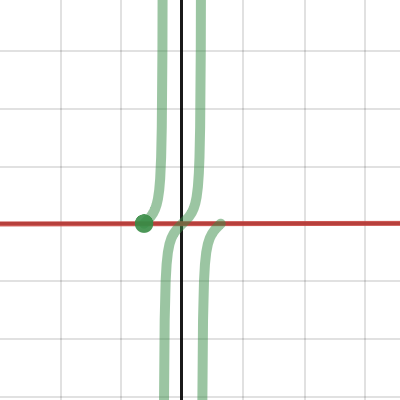
Desmos
 chilly whale
Hello, in a problem I am supposed to simplify $\sin x -\cos x$ into $\sqrt{2}\cos \left(x-\frac{3 \pi}{4} \right ) $, where as a hint it was said it might be helpful to use the addition formula later on.
\
How would one go about this? I tried googling about the derivation for this identity but with no avail. Thanks.
 royal raptor
somber coyoteBOT
royal raptor
somber coyoteBOT
Aslan

 worthy sapphire
@chilly whale cos(x-3pi/4) = cos(3pi/4)cos(x) + sin(3pi/4)sin(x)
chilly whale
worthy sapphire
<@207147500161859584> cos(x-3pi/4) = cos(3pi/4)cos(x) + sin(3pi/4)sin(x)
I see, how would one come up with this?
Take note that the answer I provided was not listed in the problem, but only for me to clearly show what the answer was supposed to be.
Is it just intuition ? Can't think of a systematic way of seeing that just from sin x - cos x alone, which was the only thing available in the problem
 glacial urchin
Can someone please help me with this?

 verbal gulch
glacial urchin
Can someone please help me with this?
verbal gulch
glacial urchin
Can someone please help me with this?
Can u use any theorem?
verbal gulch
verbal gulch
Can u use any theorem?
@glacial urchin learn about Euclid's Theorem 1 & 2
worthy sapphire
chilly whale
I see, how would one come up with this?
Take note that the answer I provided w...
you can work backwards from sqrt(2) cos(x - 3pi/4)
you want to split it into sin(x) and cos(x) somehow
and with the hint of 'addition formula' this was the only logical option
oh wait
i didn't read the note
hm
@chilly whale what was the question then?
i guess it is to simplify to the form a*cos(x - b) or smth
in that case, you want to use cos(a+b) = cos(a)cos(b) - sin(a)sin(b), and you can note that this looks incredibly close already like sin(x)-cos(x), just that you have these 'annoying' cos(b) and sin(b)
you want to make them equal to each other so you can factorize
chilly whale
worthy sapphire
<@207147500161859584> what was the question then?
The original question was to solve the equation sin(3x) - cos(3x) = 1, and the same hint was specified but for sine.
So it was a slight modification on my part because I only wanted to know how to derive the identity. Because the cheat sheet simply glossed over that part but took use of it.

But thank you, i think I'm more comfortable now if i ever encounter a similar problem again
worthy sapphire
ah ic
 hollow plume
upper karma
hollow plume
upper karma
AA
upper karma
 worthy sapphire
upper karma
worthy sapphire
upper karma
what is your question?
upper karma
i solved it
worthy sapphire
ah nice :D
upper karma
but thx for trying to help
worthy sapphire
this is the angle bisector theorem if you're wondering
there's also a nice other proof, do you wanna see it?
 opal hare
Its not E. And I'm betting its not D, and possibly a, anyone got ideas

 abstract mesa
I got C(20 degrees
abstract mesa
Yes
opal hare
The answer is C, but how did you get it
abstract mesa
 abstract mesa
No
20 80 80
It says in the problem isosceles and the ABC is 20
So (180-20)/2= angle A= Angle C
abstract mesa
Because we're solvint for angles b
Yes
A + B +20=180
But because it's isosceles by def sides AB and BC Respectively are equal and the angles that corresponds to them from across are also equal
So angle A and angle B are equal
So in reality you get A+A+20=180
And solve for A which also gives me out B
You
abstract mesa
Yes
opal hare
abstract mesa
You write E
abstract mesa
It doesn't matter whether it's changed or it's symmetric in that sense
abstract mesa
But no I did it right
opal hare
U could've tried lol
abstract mesa
Lol
opal hare
ah im done with math, im literally going to use very few math modules
abstract mesa
Why did you send me a request you perve

 spiral bough
Not sure if it’s the same in English, but in my language it’s “nedian”
 nocturne remnant


 round cedar
I did all of this but forgot to out the value of y can't be more angry at myself
What other variable is their it doesn't tell you what z plus x is
round cedar
Yeah I was thinking about it do you think they are gonna cut marks for it?
upper karma
does anyone know how to solve this ;-;

 hoary sapphire
Seems correct to me
 eager berry
is there such a thing as arccot? desmos calculator isn't acknowledging it
dark sparrow
the graphing calculator acknowledges it just fine.
 ocean pond
can some1 help pls :D
 worthy sapphire
upper karma
does anyone know how to solve this ;-;
worthy sapphire
upper karma
does anyone know how to solve this ;-;
hint: let the line through Q perpendicular to LI intersect LI in X. then prove triangles QXL and IML are similar :D
upper karma
worthy sapphire
hint: let the line through Q perpendicular to LI intersect LI in X. then prove t...
thank you!
 upper karma
i understood! though I haven't solved it yet right now
upper karma
ocean pond
can some1 help pls :D
use this bro

 rapid flare
 polar plaza
idk anything abt trigonometry
polar plaza
idk anything abt trigonometry
Then learn it
hollow plume
polar plaza
help pls T-T
4)sin is opposite side over hypotenuse
- calculator question
6)sin(36)=x/8
7)sin(46)=8/x
For 6 and 7 solve for x
The trigonometric symbols will be done on calculator
upper karma
can somebody check this for me
 hollow plume
upper karma
can somebody check this for me
hollow plume
upper karma
can somebody check this for me
Looks good
upper karma
thanks


 onyx onyx
this question makes no sense
 upper karma
Hi! Does anyone know how to solve this?


 sweet minnow
quick question. Is this trig identity valid? If so, how or why is the cos negative?
 upper karma
Ig, it is like:
$sin (2t - π/2) = -sin (π/2 - 2t) = -cos (2t)$
somber coyoteBOT
Subrat Panda
 upper karma
sweet minnow
quick question. Is this trig identity valid? If so, how or why is the cos negati...
upper karma
sweet minnow
quick question. Is this trig identity valid? If so, how or why is the cos negati...
Pls check this, and if anything is wrong in it, do tell
sweet minnow
yeah that makes sense, thanks!
worthy sapphire
upper karma
Hi! Does anyone know how to solve this?
uhm... there is a theorem that will let you solve this in one step, i'll just give that theorem i guess
 hollow plume
upper karma
hollow plume
upper karma
It says use special right triangles and not trigonometric functions
Though you may have gotten the right answer, you have to do it they way the question asked
hollow plume
upper karma
That is correct
 floral moon
upper karma
Hi! Does anyone know how to solve this?
floral moon
upper karma
Hi! Does anyone know how to solve this?
NH is a chord and HR is a tangent, there is a theorem that says "the measure of the angle formed by a chord and a tangent is equal to half the measure of the intercepted arc". Since HN is 114, <NHR will be 57 degrees because 114/2 is 57.
 night cape
are there any good resources for learning trig?
hollow plume
night cape
are there any good resources for learning trig?
SOH CAH TOA
There’s the universal acronym
 hearty pivot
does anybody have resources for learning proofs?
night cape
hollow plume
SOH CAH TOA
wait thats it O.o
hollow plume
There’s khan academy
 hollow plume
 brave rock
So the hypotenuse is 6
brave rock
sorry, i forgot to delete because i solved that one
 timid fulcrum

 steep flax
Hi is anyone here
timid fulcrum
ye
steep flax
I have a treat for any anime lovers in here
timid fulcrum
ok.
steep flax
Do you like anime
timid fulcrum
sure, but i don't watch very much
timid fulcrum
 carmine abyss
maybe review the bisecting diagonals theorem and other theorems, because i proved it as: PX = SX because TX = AX, thus AT must bisect PS. PAST is a parallelogram because of the bisecting diagonals theorem.
You could also first prove that TP also = AS since TX = AX and they're inside a quadrilateral.
after that state that ST = and || AP because there's a pair of opposite equal and parallel sides. And then prove that it's a parallelogram because of the opposite pairs theorem
 timid fulcrum
onyx onyx
this question makes no sense
timid fulcrum
onyx onyx
this question makes no sense
the question is basically saying: out of these 5 rectangles, create one that is 15 by 11. You can only place them next to each other but use take multiple. I think it's best to first eliminate some choices. And i feel like the best way to do this is copy the image into something like mspaint and copy and rotate the pieces around to see if the sides add up correctly.
timid fulcrum
upper karma
Hi! Does anyone know how to solve this?
main thing here is to just focus on arc HN since it's only needed for solving. If you draw lines JN and HJ, you make an isosceles triangle since JN = HJ because they're the radius of circle J. Use what you know about angles in isosceles triangles to find the two smaller ones. Since line LR is a tangent, < JHR has to be 90 because HJ perpendicularly bisects LR. then just find the complementary angle of < NHJ
carmine abyss
timid fulcrum
thank you so much this really helped!!😇
 silent plank
are you omitting any information?
 timid fulcrum
you may want to review the opposite sides theorem because since KL is congruent to LM and JKLM is a parallelogram, then all sides of it must be the same length (equal sides being the main thing for rhombi)
 foggy osprey
hi can somebody help
 hollow plume
foggy osprey
hi can somebody help
hollow plume
foggy osprey
hi can somebody help
The center is the numbers in the parenthesis times -1
Radius is determined by the square root
(x-h)^2 + (y-k)^2 =r^2
Where the center is (h,k) and the radius is r
foggy osprey
ok thanks
upper karma
hii, does anybody know how to make the stem-leaf plot for this?

 opaque ibex
i have a question
is the circumference of the inner tangent circle equal to the tangent triangle?
 dark sparrow
no, not even close
the perimeter of a triangle is in fact always longer than the circumference of its inscribed circle
opaque ibex
is this true: ((a+b+c).r)/2 = A(ABC)
dark sparrow
if A() means area, then yes
opaque ibex
and how can i proof
it
prove it
i dont want the proof just what can i try
okay thank you
spiral bough
opaque ibex
and how can i proof
If you name the incenter I, consider the areas of triangles ABI, BCI and CIA
 bitter lodge
Is it proven that it is not possible to construct Pi as a line segment? (using only a compass and straightedge ofc, and no approximations)
dark sparrow
yes but the proof goes way way way beyond the extent of highschool geometry
bitter lodge
dark sparrow
yes but the proof goes way way way beyond the extent of highschool geometry
Ok thanks, do you know what it's called so I can look it up.

 latent leaf
would this be a enlargement? just double checking

 soft sail
latent leaf
would this be a enlargement? just double checking
soft sail
latent leaf
would this be a enlargement? just double checking
yes.
hollow plume
soft sail
yes.
The blue figure is a dialation of the black figure
Therefore the blue is the image
You are therefore incorrect
silent plank
<@&268886789983436800>
hollow plume
Ping doesn’t work lmao
 worthy igloo
I wonder why the bot didn't delete it
worthy igloo
hollow plume
Ping doesn’t work lmao
I hope you realize these are bots
hollow plume
worthy igloo
I hope you realize these are bots
👍🏼
 zealous hollow
Hi guys! Hope everyone's doing well. If anyone is able to give me guidance or some help on this question. It'd be much appreciated <3
 worthy sapphire
zealous hollow
Hi guys! Hope everyone's doing well. If anyone is able to give me guidance or so...
worthy sapphire
zealous hollow
Hi guys! Hope everyone's doing well. If anyone is able to give me guidance or so...
label everything like this 

 smoky jetty
thats a lot of composite figures (for my level atleast)👀
 zealous hollow
worthy sapphire
label everything like this <:hehe:853555811842261063>
zealous hollow
worthy sapphire
label everything like this <:hehe:853555811842261063>
Thank u bro! I understand now💯 💯
 last oak
Yo
Can someone help me figure smth out

How did they go from i to 2 and sqrt 44 to sqrt 11i
How did they simplify it
zealous hollow
Do u know what i is equal to?
They just simplified the expression that's all
44 is the same as 4*11
hollow plume
last oak
If there’s a negative in the root, there will be an i
$\sqrt{44}=\sqrt{4}*\sqrt{11}$
somber coyoteBOT
% Openglobe %
 hollow plume
Square root of 4 is 2
hollow plume
zealous hollow
Alg haha
I can’t believe it
I can’t believe I replied to the wrong person
zealous hollow
XD happens mate

 clever viper
just use a calculator
upper karma
i nee help
 inland vale
hollow plume
In this case degree number stays the same
inland vale
hollow plume
In this case degree number stays the same
how come
nvm
figured it out
 valid musk
inland vale
valid musk
inland vale
It is tan 20, I’m not too sure how to explain it
 hollow raft
sin = y
cos = x
tan = y/x
In unit circle terms
That’s a way to explain it?
So yeah y(20)/x(20) would simplify to y/x(20)
dark sparrow
tan(x) is literally defined as sin(x)/cos(x), nothing else to it
glacial urchin
verbal gulch
<@688415640666636321> learn about Euclid's Theorem 1 & 2
Bet thanks
nocturne remnant
Fix your language dude🗿
Let angle A be the smallest angle of triangle ABC. BC divides the circumcircle of the triangle into two arcs. Let U be a point on the arc BC not containing A. The perpendicular bisectors of AB and AC meet AU at V and W respectively. BV and CW intersect at T. Show that UA = TB + CT.
I assume you meant perpendicular bisectors because I have no idea
floral moon
basic trig question: will the initial side always be the positive x axis
 low sky
what's the initial side?
low sky
how would i go about showing that the red line is parallel to AC? Here G is the centroid and D is constructed by drawing a line through the midpoint of the median
 signal peak
Bruh I just joined this server as a 10th grade student looking for enlightenment but instead I got blinded by this geo prob💀

 stray wigeon
low sky
how would i go about showing that the red line is parallel to AC? Here G is the ...
stray wigeon
low sky
how would i go about showing that the red line is parallel to AC? Here G is the ...
** Below is where reking's question comes from**
“Here is my attempt at solving this geometry problem:
(1) Draw the median of side BC and name its point of intersection with DC as K,
(2) We know that K is the centroid of triangle ABC, so 2 * DK = KC,
(3) We also figure out that DK = 2m, KF = m, and FC = 3m,
(4) Connect points K and E, and show that KE is parallel to AC in order to get FE / AF = 1/3.
I am simply stuck on the “showing that KE // AC is true” part.”
(Solution: #help-3 message)

Discord
Discord is the easiest way to communicate over voice, video, and text. Chat, hang out, and stay close with your friends and communities.
low sky
yeah i just took the part we were stuck on
 silver blaze
 somber coyoteBOT
Pebble

 heavy mortar
hey guys i have a dumb question that im stuck on
 teal kayak
Hey, do you guys know of any programs like geogebra I could use that can like, record values as they change and automatically graph them
heavy mortar
dw about the french text its useless
teal kayak
Or just better programs than geogebra idk it doesn't seem like The best
i think you are supposed to use homework help section
teal kayak
teal kayak
Hey, do you guys know of any programs like geogebra I could use that can like, r...
update: nvm
spiral bough
teal kayak
Hey, do you guys know of any programs like geogebra I could use that can like, r...
There’s an instrument called locus in geogebra, that can help with your problem I think
smoky jetty
teal kayak
Hey, do you guys know of any programs like geogebra I could use that can like, r...
desmos?
teal kayak
smoky jetty
desmos?
not quite bc it was geometrical values i wanted to graph and i was hoping for something cleaner than just graphing a bunch of points but i figured it out
teal kayak
spiral bough
There’s an instrument called locus in geogebra, that can help with your problem ...
i just made a point in the second graphics view with its x and y values corresponding to the thing i wanted to graph, and then made geogebra trace the point
very clean uwu

 pure void
how to do this
 silent plank
angle chasing, angle sums on lines and of triangles
low sky
anyone think they can figure this out?

 final yew
Find the value of $\tan \frac{\pi}{15}+\tan \frac{2\pi}{15}+\cdots+\tan \frac{5\pi}{15}$
somber coyoteBOT
Eren Yeager
 floral moon
Rewrite $\sqrt{cos^2\theta + sin^2\theta + cot^2\theta}$ in nonradical form without using absolute values for $\pi < \theta < 2\pi$.
somber coyoteBOT
Chrovo
 floral moon
ok so I solved most of it and got up to | csc theta |
but the answer says its -csc theta
oh wait nvm
I ignored the pi < theta < 2pi part
 dense bough
low sky
anyone think they can figure this out?
dense bough
low sky
anyone think they can figure this out?
dude is this a competition problem or something?
it was just asked here: https://math.stackexchange.com/questions/4505640/show-that-frac-sin3-beta-sin-alpha-frac-cos3-beta-cos-alpha/4505684#4505684

Mathematics Stack Exchange
Let $$\frac{\sin (\alpha)}{\sin (\beta)} + \frac{\cos (\alpha)}{\cos (\beta)} = -1 \tag{$1$}$$ where $\alpha, \beta$ are not multiples of $\pi / 2$. Show that
$$\frac{\sin^3 (\beta)}{\sin (\alpha)}...
 eternal pier
Hello?...
I just need help for number 1 and 8...

(I just started this Trigo stuff)
silent plank
were you able to solve 2 to 7
eternal pier
silent plank
were you able to solve 2 to 7
Nope... Not any...
silent plank
consider sohcahtoa
eternal pier
silent plank
consider sohcahtoa
I also don't know "sohcahtoa"...
silent plank
do you know any trig at all
eternal pier
silent plank
do you know any trig at all
Nope... Just started...
silent plank
I'd recommend you start with something like a lesson on khan
eternal pier
Khan Academy?
silent plank
yes
smoky jetty
eternal pier
Nope... Just started...
welp, u gotta know the fundamentals first. From triangles
low sky
dense bough
it was just asked here: https://math.stackexchange.com/questions/4505640/show-th...
that was me who asked it on stackexchange!😅
worthy sapphire
low sky
it's certainly not the way you wanted to solve the problem, but vectors work (sadly)
(youll get the midpoint of the median from C is 1/4a + 1/4b + 1/2c, D = 1/3 b + 2/3 c, G = 1/3(a + b + c))
(so vectors GD = 1/3 AC)

i'll look for a synthetic solution
i think it's a very nice result though
low sky
someone else helped me out on that one, and figured out a nice way to show it
if you want i can show you
worthy sapphire
@low sky ah got it!
important step is to prove that TAB~TDE with factor 3:1 (where E is the intersection of BT and AC, and N is the midpoint of AB, and T the midpoint of CN)
do this by defining E' and D' such that AE':E'C = 1:2 and BD':D'C = 1:2, and then that T', the intersection of AD' and BE', is the midpoint of CN [footnote 1] -- this will imply T = T' and since there is only one possible intersection for AT with BC, we must have D' = D and E' = E analogously
then since NG:GC = 1:2 so NG:GT:TC = 2:1:3, we know TGD~TCA by sas, so AC//GD
footnote 1: see second picture


:p i was typing while you said that
i wanna know tho!
 tame pulsar
worthy sapphire
low sky
if you want i can show you
tame pulsar
worthy sapphire
low sky
if you want i can show you
please do btw
low sky
worthy sapphire
low sky
https://discord.com/channels/268882317391429632/903463355619110912/1004241509996...
that one's nice -- should've thought of that because of all the ratios (also kinda the reason why i did harmonic mean because of intersecting at the median)
i don't do menelaos often enough anyway--

 candid comet
 low sky
worthy sapphire
<@123486388548141059> ah got it!
important step is to prove that TAB~TDE with fa...
low sky
worthy sapphire
<@123486388548141059> ah got it!
important step is to prove that TAB~TDE with fa...
in this proof, can you explain how you get that T' is the midpoint of CN from footnote 1? all i can gather from this is that we now know the length of the line PQ... PQ is not visible in the first image right?
upper karma
can somebody pleas ehelp me with this
worthy sapphire
low sky
in this proof, can you explain how you get that T' is the midpoint of CN from fo...
if you let P,Q to be on AC,BC respectively such that PQ//AB and P,T',Q collinear, then |PQ| = 2/(1/|AB| + 1/|DE|) = 2/(1/|AB| + 1/(1/3 |AB|)) = 2|AB|/(1 + 3) = 1/2 |AB|
by PQ//AB we know that a homothety from C with scale factor 2 sends CPQ to CAB, so also T' (the midpoint of PQ) to N (the midpoint of AB), so T' is the midpoint of CN
i did leave that as a big gap to be checked, so i'm glad you asked me about that
oh, and read T as T' lol (edited)
if you don't like random people just citing homothety, you can also note CPT~CAN by PT//PQ//AB//AN so CT/CN = PT/AN = (2PT)/(2AN) = PQ/AB = 1/2

this is also the reason why T lies on EM, where E and M are the midpoints of CA and CB respectively, and then you can also apply ceva on triangle MCA and point T

but ceva is basically menelaos
low sky
worthy sapphire
i did leave that as a big gap to be checked, so i'm glad you asked me about that
okay i get that part then! now in the original proof you then show that AE:EC = BD:DC = 1:2, but why does it follow that TAB~TDE with factor 3:1? are you using SAS here?
worthy sapphire
low sky
okay i get that part then! now in the original proof you then show that AE:EC = ...
yeah, CDE~CBA by sas implies DE//AB implies TAB~TDE by aa
and AB/DE = CA/CE = 3
this is very similar to showing that the centroid lies on ratios 1:2 on a median
actually just the same
somber coyoteBOT
potato

 slender wasp
If you need more detail I can explain
floral moon
yea I know that but can't sin^-1 be rewritten as 1/sin
slender wasp
(note really we have to restrict sin to an interval)
floral moon
and if not why

 slender wasp
As a similar example, we can take the function f(x) = x^2 defined on positive numbers. Then the function 1/f would send x to 1/x^2, but the function f^-1 sends x to its square root.
It's completely analogous to that, though the notation is a bit confusing potentially, because of course with numbers we expect a^-1 = 1/a
somber coyoteBOT
potato
 slender wasp
Or as another example, sin^-1(1/2) is just 30 degrees, whilst 1/sin(1/2) is some weird decimal
floral moon
somber coyote
**potato**
oh so sin^-1 is kind of an exception to this rule
slender wasp
I'd actually view it as being the other way round aha - sin/cos etc are the exceptions :)
Typically (in my experience at least) if f is a function then f^n is what happens when you apply f n times
So f^-1 is when you apply it '-1' times i.e. inverse
slender wasp
somber coyote
**potato**
It's just that with sin, cos etc typically we mean this
It's just a weird thing I guess here
Hope that clears it up?
I remember asking my teacher the exact same thing a few years ago
floral moon
oh
yeah I that makes sense
If I'm understanding correctly
Since $f^-1(x)$ implies inverse function, in an ordinary function, you would have to do stuff to find its inverse.(swap the x and y, and solve for y). On the other hand, $f^n(x)$ is different, it is $(f(x))^n$.
somber coyoteBOT
Chrovo
 slender wasp
That's only strictly true for sine and cos, but correct for them
somber coyoteBOT
potato
 slender wasp
(ignore the either)
floral moon
wait so you can't do tan^2 theta
slender wasp
I'd say it depends on context but wouldn't worry about it too much
Oh sorry well yes tan, csc, etc
Any standard trig thing.
floral moon
wait so which trig functions were you referring to? vers theta, covers theta, etc..?
 grave pond
If the reader recognizes it as a trigonometric function in the first place, they will probably use the general convention that positive exponents refer to exponentiating the function value rather than iterating the function.
Always remember that this is about notational conventions rather than deductive facts that follow crisp rules.
slender wasp
Can't say I've ever seen anyone use vers for non meme purposes aha
floral moon
Oh alright
 grave pond
Probably the volume of a cube with a side length ot 1 "yard", which is an archaic unit of length still used in the USA.
I think there are 3 "ft" to one "yd" and therefore 27 ft³ in 1 yd³.
 wanton merlin
what is 8-10?

can you use the properties of rotations to show what the measures of the length of diagonals are equal?
worthy sapphire
low sky
okay i get that part then! now in the original proof you then show that AE:EC = ...
does everything make sense now? sorry for skipping over some similarity stuff--
worthy sapphire
the harmonic mean argument was not even needed btw
you can work with ratios on the median CN and show that T'=T from that
so it'll become completely elementary
 weak smelt
wanton merlin
what is 8-10?
weak smelt
wanton merlin
what is 8-10?
-
you can see that the shape you're given is nothing, but 4 triangles and a rectangle, now do something with triangles to show that the given shape is indeed a rectangle
-
notice what triangles the bisecting lines form within the main triangle, find a way to apply pythagoras once or twice and deduce the lengths from that
-
for this one you just need to draw these points and then remind yourself what a square is
upper karma
inverse sin and sin to the power -1 are different
i remember when i was dumb and thought inverse sin was csc
lol
weary drift
@upper karma cut it out
 dapper sable

 worthy sapphire
 red bluff
hw would i do part 2 and 3?
red bluff
hw would i do part 2 and 3?
for part 2, visualize cos(k θ) on the unit circle and use the fact that the centroid of an inscribed regular 7-gon is (0,0)
and for part 3, look at what you've done at part 2
 spare stump
hey this is a pretty basic concept but im confused, can anyone tell me the difference between aa similarity and aa corollary of triangles, like i just dont get when to mention which one of these theorems
grave pond
I don't think "AA corollary" is a standard name. Can you quote (or post screenshots of) the exact statements of the two theorems you're talking about?
 naive rivet
red bluff
naive rivet
red bluff
For Part 3: You can have a completely algebraic solution if you know this fact:
for a complex number z
$$z^7-1=(z-1)\prod_{k=1}^{3}{\left[z^2-2z\cos{\frac{2k\pi}{7}}+1\right]}$$
dividing by z-1 both sides
$$\sum_{k=0}^{6}{z^k}=\prod_{k=1}^{3}{\left[z^2-2z\cos{\frac{2k\pi}{7}}+1\right]}$$
dividing by $~z^3~$both sides we have :
$$1+\sum_{k=1}^{3}\left[z^k+\frac{1}{z^k}\right]=\prod_{k=1}^{3}{\left[z+\frac{1}{z}-2\cos{\frac{2k\pi}{7}}\right]}$$
Now you could substitute $~z+\frac{1}{z} =t~$.
You'll get RHS as (t-a)(t-b)(t-c) = some polynomial now just use the fact that a,b,c are the roots of the polynomial in the LHS, and use vietas directly.
somber coyoteBOT
mkay
 worthy sapphire

worthy sapphire
naive rivet
For Part 3: You can have a completely algebraic solution if you know this fact:
...
hm, how to see the factorization in the first line algebraically (geometrically with vieta it's alright)
cool sol though!
naive rivet
worthy sapphire
hm, how to see the factorization in the first line algebraically (geometrically ...
z^7-1= (z-1)* product.. that line you get from geo yeah

 turbid berry
Hey idiot engineer here.
I look for midpoints on lines using x = ym + b (Most lines are close to vertical) on a screen, and I find the midpoint of these lines using
m = (x1 - x0) / (y1 - y0)
b = x0 - y0*m
line_midpoint_on_screen = (SCREEN_HEIGHT*0.5 * m + b, SCREEN_HEIGHT*0.5)
But if the offset goes beyond the screen width or below 0, I get a problem finding this midpoint. My idea so far is to just isolate y and find the midpoint by
y = x/m - b
y = SCREEN_WIDTH*0.5/m - b
But is there perhaps a more clever way of doing it? A bit annoying to have special cases everytime b is outside screen space or m goes to infinity
nocturne remnant
Isn’t the midpoint just
Tutors.com
The Midpoint Formula is applied when one is required to find the center point between two defined points. Learn how to find the midpoint with this equation.
Wait no, I read your question again
upper karma
How can I prove that |sin x| <= |x| (the absolute value of sin x is less than or equal to the absolute value of x)?
spiral bough
upper karma
How can I prove that |sin x| <= |x| (the absolute value of sin x is less than or...
If $|x| \geq \frac{\pi}{2}$, then $$|x| \geq \frac{\pi}{2} > 1 \geq |\sin{x}|.$$
somber coyoteBOT
DVD_Koce_DVD
 spiral bough
Therefore you only need to look at the case $|x| < \frac{\pi}{2}$
somber coyoteBOT
DVD_Koce_DVD
 spiral bough
But then if you look at the unit circle and build both angles x and -x, they cut off an arc AB, which length is bigger than the length of the chord AB
Or in other words $2|\sin{x}| < \frac{2x}{2\pi} \cdot 2\pi$
somber coyoteBOT
DVD_Koce_DVD
 upper karma
Thanks. That was really useful.
upper karma
nocturne remnant
https://tutors.com/math-tutors/geometry-help/midpoint-formula
yeah
Xm [ (X1 + X2)/2 ] , Ym [ (Y1 + Y2)/ ]
 amber condor
 nocturne remnant
Hint: First prove that BE and CF are angle bisectors of D1E1F1 and reduce the problem


 rapid elm
worthy sapphire
think back on the definition of a circle and draw in another radius
rapid elm
worthy sapphire
think back on the definition of a circle and draw in another radius
How i'm supposed to find the value of r?
 scarlet glade
rapid elm
How i'm supposed to find the value of r?
scarlet glade
rapid elm
How i'm supposed to find the value of r?
x²+y² = r²
Area = xr + r²
y² + (x+r)² = 6²
x²+y²+r²+2xr = 36
2r²+2xr = 36
Area = 18
Hope that helps
rapid elm
Ok thanks you
rapid elm
scarlet glade
y² + (x+r)² = 6²
I don't understand this
scarlet glade
6 squared is the hypotenuse
Pythagorean theorem
One side is x+r, the other side is y
So we get (x+r)² + y² = 6² = 36
rapid elm
OH ok i see
scarlet glade
I'm supposed to solve for the angle x, but I'm stuck. Any tips?
 worthy sapphire
scarlet glade
I'm supposed to solve for the angle x, but I'm stuck. Any tips?
worthy sapphire
scarlet glade
I'm supposed to solve for the angle x, but I'm stuck. Any tips?
let CAB = alpha and ABC = beta, then find as many same angles as you can! :p
vital maple
or notice that ABQP lies on a circle with center M the use inscribed angle theorem

 plush robin
do i need to know algebra before learning geometry
 covert pine
plush robin
do i need to know algebra before learning geometry
covert pine
plush robin
do i need to know algebra before learning geometry
No, but if you know algebra, solving geometry would be more easier
rare kelp
worthy sapphire
think back on the definition of a circle and draw in another radius
Brackysowchrom
Whacky stochrome
 valid harbor
vital maple
or notice that ABQP lies on a circle with center M the use inscribed angle theor...
valid harbor
vital maple
or notice that ABQP lies on a circle with center M the use inscribed angle theor...
why do you say that M is the center of that circle
actually nvm lol
 floral shale
 rancid wave
Extend this line (shown in red) then use right triangle altitude theorem

 amber quartz
why doesn't bezout's thereom apply for circles?
final yew
isn't bezout a number theoretic stuff?
amber quartz
final yew
isn't bezout a number theoretic stuff?
According to the theorem, they can have 2 more points of intersection as well. But in reality, they do not have more than 2 intersection points. why?
final yew
i am really sorry to bother but afaik , bezout theorem says that there exist solutions to diophantine eqn ax+by=c iff gcd(a,b) divides c iirc
i am unable to relate it to circles
nocturne remnant
final yew
i am really sorry to bother but afaik , bezout theorem says that there exist sol...
The NT one is called Bezout’s Lemma or sth
nocturne remnant
amber quartz
According to the theorem, they can have 2 more points of intersection as well. B...
Found this on Wikipedia

Not that I understand it but seems like it would be of use
upper karma
nocturne remnant
Found this on Wikipedia
musk? is that u?
 dusk light
I am super confused on this problem. Can someone possibly help me? (:

<@&286206848099549185>
floral shale
You can use special triangles
A regular polygon of $n$ sides has $n$ number of congruent isosceles triangles whose vertex angle is $\frac{360}{n}$ degrees
somber coyoteBOT
Umbraleviathan

 velvet jolt

 austere hearth
can someone help me find x in fonction of a and b
 plush robin
covert pine
No, but if you know algebra, solving geometry would be more easier
plush robin
covert pine
No, but if you know algebra, solving geometry would be more easier
thanks im in rational expression want to learn next geometry
worthy sapphire
austere hearth
can someone help me find x in fonction of a and b
calculate the area of triangle ABC two different ways, and use the similarity AFB~ABC

 upper karma
 fleet cosmos
I couldn't simply it further
fleet cosmos
I couldn't simply it further
maybe mutltiply divide by sin(r+2-r)
 sterile sail
How to find the Surface of this triangle
 slender wasp
Uhh
I can't tell if this is just a joke, this could be any triangle unless the task is to measure it with a ruler or smth lol
hollow plume
sterile sail
How to find the Surface of this triangle
There are no labels…
 clever fable
can someone help pls, I get that the direction changes i.e. it can't be a, but idk how to find which of the other options it will be?
 floral shale
sterile sail
How to find the Surface of this triangle
floral shale
sterile sail
How to find the Surface of this triangle
Measure side lengths with a ruler, use Heron's Formula
 analog breach


 grand olive
Do graphs of equations fall into geometry?
upper karma
grand olive
Do graphs of equations fall into geometry?
yeah
 opaque ferry

 onyx cloud
have you heard of the law of sines?
@opaque ferry
also, how did you manage to solve 2 without getting an answer for 1
silent plank
Q2 can be solved from applying cos law directly. finding other angles is unnecessary despite what the hint says
onyx cloud
yeah but im still curious on how they thought of the cos law but not the sin law
silent plank
perhaps they did but had trouble using inverses
 last fable

 runic beacon
last fable
runic beacon
last fable
not the right channel for this question, but do you still need help with it?
last fable
runic beacon
not the right channel for this question, but do you still need help with it?
Yes
runic beacon
Okay so what exactly do you have trouble with? And what does the question state?
floral shale
onyx cloud
yeah but im still curious on how they thought of the cos law but not the sin law
Should be sine law
 flint rose
fleet cosmos
I couldn't simply it further
flint rose
fleet cosmos
I couldn't simply it further
I guess u can use defactorization formula
2SinASinB = cos(A - B) - cos(A + B)
fleet cosmos
upper karma
maybe mutltiply divide by sin(r+2-r)
well this did the job
flint rose
I see great
Hmm was this is a jee level question?
I've seen few with Inv trigo in it
fleet cosmos
flint rose
Hmm was this is a jee level question?
yup jee adv
flint rose
Ic
 jade merlin
hi

i put 12 * tan (55) into my calculator and I got -542.1970549
what did I do wrong and how did they get 17.1
oh bruh i got it
floral shale
Imagine being in radian mode
 quick crater
Dead
upper karma
ig the the formula is derived from like if we keep the largest possible square pyramid in a cube of same side lenght as of the square and then we ahave to find the volume of it
ofc this would require some calculus
right
 stiff bloom
Is it true that the altitude of an equilateral triangle with an inscribed triangle of a certain radius is just 3r?
*inscribed circle
Not triangle
upper karma
yeah its right
 static glacier
But it seems to easy and I'm worried
upper karma
what the hell becoz it is easy no need to worry
just ask
the arc angle
ig
and ef too
which angles u want to find
ig they have calculate angle 140 for the major arc DF
yeah
for the minor arc
it is 160
for major it is 140
yess
but idk about how the hell they got 140
 zenith raptor
can someone give me the answer
 upper karma
zenith raptor
can someone give me the answer
upper karma
zenith raptor
can someone give me the answer
ye one sec
zenith raptor
upper karma
ye one sec
I heard i could use desmos but I have absolutely no idea how to use it
upper karma
zenith raptor
I heard i could use desmos but I have absolutely no idea how to use it
my math teacher also told me that when doing calculus
zenith raptor
upper karma
my math teacher also told me that when doing calculus
lmao I'll probably watch something
zenith raptor
uh
upper karma
y=0.4x
floral shale
zenith raptor
can someone give me the answer
Are you able to click on the points and see their coordinates?
upper karma
Does anyone know how to solve this?

 fierce shadow
 vital maple
use complex numbers
fierce shadow
vital maple
use complex numbers
it's for me?
vital maple
yes
fierce shadow
@agile roost
 empty star
upper karma
empty star
upper karma
I have been given a project to make a model on trigonometry, So I wanted a new innovative idea which is not generally available on search engine, like something completely creative.
So can anybody help me out
 lucid sandal
What kind of model
upper karma
math
 opal sedge
why does sin(x) have an inverse function when it doesn't pass the horizontal line test
upper karma
lucid sandal
What kind of model
Means?
 gusty umbra
upper karma
Does anyone know how to solve this?
gusty umbra
upper karma
Does anyone know how to solve this?
Answer is D
AB/DE = AC/CE = 6/7 and <c is congruent to <c
Two pairs of corresponding sides that form the same ratio and one pair of congruent angles can be found in the two triangles ABC and EDC, therefore satisfying the SAS similar postulate
upper karma
But i said they arent similar since their ratios arent the same
silent plank
opal sedge
why does sin(x) have an inverse function when it doesn't pass the horizontal lin...
it doesn't have a true inverse function. the domain can be restricted so that it does.
opal sedge
huh
somber coyoteBOT


 Requested by ramonov#0921
upper karma
upper karma
I have been given a project to make a model on trigonometry, So I wanted a new i...
Requested by ramonov#0921
upper karma
upper karma
I have been given a project to make a model on trigonometry, So I wanted a new i...

The versine or versed sine is a trigonometric function found in some of the earliest (Vedic Aryabhatia I) trigonometric tables. The versine of an angle is 1 minus its cosine.
There are several related functions, most notably the coversine and haversine. The latter, half a versine, is of particular importance in the haversine formula of navigation.
I found this on the web.
I mean, versine, coversine, haversine are rarely known and rarely used trig functions.
you can do your presentation on this. it will be amazing.
how do you feel about my idea?
hollow raft

Could I use this in a lesson on dilation for kids in grade 5?
Billy and his dilating anabolic steroids, although maybe increasing his outside size, don't increase the angles from within. :)
Cause in reality, he's still the same old triangle.
upper karma
lucid sandal
> ... a project to make a model on trigonometry
Anything that is new that I can represent in front of everybody
upper karma
upper karma
I mean, versine, coversine, haversine are rarely known and rarely used trig func...
Thank you very much this is also very useful
 hollow hazel
@gusty umbra Not correct. The angle should be between the pair of lines. Here <c is not between AB and AC. So your argument is wrong.
upper karma
Can someone help me with trigonometry
If u can even read my handwriting that is

It's due today....
grave pond
Is it correctly understood that all you have done so far is copy the problems verbatim to your own notepaper?
grave pond
I'm trying to figure out if there's any work of your own (other than penmanship) in the image you posted.
upper karma
My teacher gave it to me. And I don't understand how to work it out, and the teacher won't help.
None of the questions above are from me.
It's from my teacher.
upper karma
hollow raft
Could I use this in a lesson on dilation for kids in grade 5?
lol sure
what is that bro lol
...no help?
<@&286206848099549185>
Can anyone help?
grave pond
Does your textbook at least contain statements of the law of sines and the law of cosines?
upper karma
I'm sure.
It does
Troposphere
Just froegt about it
Nvm
I can barely even understand u
grave pond
Your teacher's handwriting is not terribly legible, but in context I suppose the squiggle at the top of (3) is supposed to say "use the law of sines" and (4) says "use the law of cosines".
upper karma
I'll just deal with my punishment 
upper karma
grave pond
Your teacher's handwriting is not terribly legible, but in context I suppose the...
Tyats my handwriting but ok.
grave pond
upper karma
My teacher gave it to me. And I don't understand how to work it out, and the tea...
You said your teacher gave it to you?
upper karma
grave pond
You said your teacher gave it to you?
Thanks for ur time but...I'll just figure soem5jiyn put
 upper karma
-1/2
grave pond
Amazing, that is indeed what the calculator says.
grave pond
It doesn't seem at all obvious why it would be exact.
upper karma
it looks better if we convert these sines into cos
sterile sail

so we are going to make the red one 2:1 to the blue one, is there a quick method to find it?
and the red one has to have the same form as the blue one


 lime crownBOT
Please only use the <@&286206848099549185> ping once if your question has not been answered for 15 minutes. Please do not ping or DM individual users about your question.
 carmine marten
 stark sentinel
Your first step is to read the rules
stark sentinel
Your first step is to read the rules
ok
carmine marten
carmine marten
<@&286206848099549185>
upper karma
Please help ;-;
 grave pond
It doesn't seem at all obvious why it would be exact.
grave pond
grave pond
It doesn't seem at all obvious why it would be exact.
Okay, I have it. The bold diagonals that make up this 7-pointed star each have unit length, and the star is oriented such that A points due right. By the central angle theorem, angle EAD is pi/7, so the direction from E to A is pi/14 above the horizontal. Then the direction from E to B is 3pi/14, and the direction from F to B is 5pi/14. This means that the y-coordinate of A is sin(pi/14) above that of E, which is sin(3pi/14) below that of B, which is sin(5pi/14) above that of F.
The sought-for expression is therefore just the difference in y-coordinate between A and F, but by symmetry this is just half the length of CF, which was 1.
 floral moon
upper karma
Please help ;-;
floral moon
upper karma
Please help ;-;
<TSE is 57 degrees, line ED is a tangent, ST is a chord. There is a theorem that says "the measure of the angle formed by a chord and a tangent is equal to half the measure of the intercepted arc". By the theorem, we can write this as 57 = x/2, multiply 2 on both sides, x = 114(A).
 frail karma
Where do Plane M and line K intersect? I don’t understand

 slim tundra
E
upper karma
floral moon
<TSE is 57 degrees, line ED is a tangent, ST is a chord. There is a theorem that...
Thank u so much!
floral moon
np
floral moon
frail karma
Where do Plane M and line K intersect? I don’t understand
The line k cuts through plane M. You need to find the point where the line touches the plane, which would point E
you could think of it like sticking a pencil(line k) through a piece of paper(plane M) and the hole formed would be where it intersects (point E)
 exotic roost
how do i solve for x
 floral shale
What do the dots mean
final yew
those angles are equal obvio
||use similar triangles DAF~ DBG => 14/(x+5)=x/24|| @exotic roost
grave pond
Hmm, they don't look equal in the diagram.
Diagrams are not required to be to scale, of course, but this looks unequal enough to warrant some doubt about the interpretation.
dark sparrow
grave pond
Hmm, they don't _look_ equal in the diagram.
maybe the dots in the angles serve to mark their equality?
gusty umbra
carmine marten
For the buidling problem, you are given a rectangle, and on top of that rectangle is an isosceles triangle (if base angles are congruent, 30 degrees = 30 degrees, then the triangle is isosceles). As the base of the isosceles triangle and the width of the rectangle are equal (assumed from the diagram), the base of the isosceles triangle is 30 units. Now dropping an altitude in the isosceles triangle to form two 30-60-90 triangles and bisecting the base of an isosceles triangle (Dropping an altitude in an isosceles triangle bisects the base as the two triangles that are formed are congruent by AAS), it can be derived that the base of both 30-60-90 triangles is 15. Now to find the altitude of the isosceles triangle, the ratio Tan(60)= 15/x (x being the altitude)can be established, which yields 5 root 3 as x. The height of the structure is the height of the rectangle (22) plus the altitude (height) of the triangle (5 root 3), meaning that the answer is 22 + 5 root 3.
gusty umbra
carmine marten
For the problem regarding the intersection of perpendicular sectors, the answer would be 14. Using the perpendicular bisector thm which states that the distances from any point on the perpendicular bisector to the line segment the perpendicular line segment lies on is equivalent allows us to distinguish that CD is 14. In this case, DG would be the perpendicular bisector, and the distances would be AD and DC, which are both equal as the thm states. AD = DC or CD would be equal to 14 as well.
 jovial stag


 floral shale
 coarse prism
Difference of squares basically
Its a bit disguised in trigonometry voodoo but its a difference of squares
You see if you let:
$$a = \sin{(A)}\cos{(B)}$$
$$b= \cos{(A)}\sin{(B)}$$
You'll notice that youll get the following phenomenon: $(a+b)(a-b)$. This is what you might recognize as the factored form of the difference between two squares. $(a+b)(a-b) = a^2 - b^2$, so if we just plug in we get your answer
somber coyoteBOT
Umbraleviathan
 floral shale
yo @coarse prism you here bud
smoky jetty
exotic roost
how do i solve for x
Use Pythagorean theorem
smoky jetty
upper karma
try using either law of sine and cosine, or use both.
upper karma
..thx ig
smoky jetty
i hope it helps..
gusty umbra
upper karma
..thx ig
Here for the 1st problem set up this ratio: Sin80/16 = Sin50/a (Just solve for a and u get c as well as it is an isosceles triangle if base angles are congruent then the triangle is isosceles)
 upper karma
@upper karma basivally theres smth called the law of sines which lets u find a trianglws sides and angles
so if that kinda problem comes up again or you wanna study for a test
https://www.khanacademy.org/math/precalculus/x9e81a4f98389efdf:trig/x9e81a4f98389efdf:law-of-sines/v/law-of-sines this video could help, if you wanna bookmark it or smth

Khan Academy
Sal is given a triangle with two angle measures and one side length, and he finds all the missing side lengths and angle measures using the law of sines.
cuz in trig classes it tends to be used a bit
hope all goes well for u in the class bro
 wooden moon
yo
gn everyone
i would like to know if in the triangle inequality theorem you can have c=a+x or just c<a+x
 mighty trout
if you had equality then you'd have a degenerate triangle aka a line
upper karma
upper karma
hope all goes well for u in the class bro
It didn't but thanks
 pure birch
 orchid pulsar
<@&286206848099549185>

I understand the fundamentl rules
but these, i just cannot
gusty umbra
@orchid pulsar For problem number 18, we must find the m<ACD which is 1/2 of the measure of minor arc ad by inscribed angle thm. Using the inscribed angle thm, we can derive the value of major arc ACD is 244 as the angle the measure of the inscribed angle that intercepts it is 122 (The measure of the intercepted arc is two times the measure of the inscribed angle that intercepts it). We know that the sum of non-overlapping arc measures in a circle is 360, so the equation 360-244 = arc ac can be established. From this equation, arc ac is 116 meaning that the inscribed angle that intercepts that arc ( angle ACD) is 58.
gusty umbra
For problem number 19, we know the measure of angle OAR is 90 degrees as the angle subtended by the intersection of a radius and a tangent line (Im making the assumption the line is tangent) is 90 degrees. The measure of angle BAR is 1/2 the measure of arc BA, From the previous problem, we know Angle ACD is 58, so arc AD must be 116, which means that angle AOD is 116. As linear pairs are supplementary, angle AOB is 64 which means arc BA is also 64. As angle BAR is 1/2 the measure of BA, angle BAR is 32. Angle OAB = Angle OAR-Angle BAR = 90 - 32 = 58. So angle OAR is 58.
For problem 20, BAR is 32 as derived in the explanation for problem 19.
gusty umbra
wooden moon
i would like to know if in the triangle inequality theorem you can have c=a+x o...
The sum of the two sides must be greater than or equal to the third side for a triangle to be a triangle, so both a +x > c and a +x = c would create a triangle
orchid pulsar
Thank you @gusty umbra
somber coyoteBOT
British people
 gusty umbra
280/30 = x sin(360+120)
= 28/3 = x (Sin360Cos120 + Cos360Sin120)
= 28/3 = x(Sin120)
= 28/3 = x(Sin(60+60))
=28/3 = x( Root 3/2)
= 168root3/27 = x
= 56root3/9 = x
 bright rover
How do I do this question ?

 dense sierra

hey hey, can someone explain me why this equalities happen that way by explaining the logic of it?
candid comet
dense sierra
hey hey, can someone explain me why this equalities happen that way by explainin...
Have you heard of the idea of ASTC?
Sine is always positive in A,S (First and Second Quadrants).
Cosine is always positive in A,C (First and Fourth Quadrants).
This may have to do with the explaination.
Also, Sine is an odd function and Cosine is an even function.
So, cos(-x) = cos(x) and then sin(-x) = -sin(x).
 sterile epoch
 upper karma
The question asks to find the missing endpoint given that R is the missing endpoint and S is the midpoint is T is another endpoint. For the co-ordinates of R, I am getting (-10, 0) however, the online homework grader is showing that this is wrong. May somebody please be willing to verify? Thanks.
 silent plank
read the question carefully
specifically about which point is supposed to be the midpoint
 steel trout


 broken iron
gusty umbra
sterile epoch
broken iron
gusty umbra
sterile epoch
You can use the interpolation formula, mx2 + nx1/m +n = X and my2 + ny1/m+n = Y for points (5,2) and (12,-5). This will yield answers (9,-2) and (8,-1). Note that you must consider both (5,2) as (x1,y1) and (12,-5) as (x1,y1) as the 3:4 ratio can be split up both ways.
dense sierra
candid comet
So, cos(-x) = cos(x) and then sin(-x) = -sin(x).
Thank you sm
candid comet
Has anyone done Euclid's book 7?
upper karma
what do mathematicans call the power to ban someone from a server?
ban theta (mispelling of tan theta) LOOOOAOOAOAOOAL
nocturne remnant

 mossy briar

 lusty crane
 broken nimbus
4(4 - x) - 2(8 - y) = 8
16 - 4x - 16 - 2y = 8
4x - 2y = 8what do I do after i've done this
question:
"find the equation of line A under central symmetry in the point (2, 4)"
A = 4x - 2y = 8
broken nimbus
 strange robin
y = 2x-4
strange robin
y = 2x-4
why remove the 8 tho
broken nimbus
so you just swap them around ?
broken nimbus
strange robin
sure
any idea how to do (v) ?
 broken nimbus
strange robin
y= (2/7)x +2?
broken nimbus
strange robin
y= (2/7)x +2?
did i start the central symmetry part right tho
strange robin
wdym
strange robin
broken nimbus
> 4(4 - x) - 2(8 - y) = 8
>
> 16 - 4x - 16 - 2y = 8
> 4x - 2y = 8
>
> what do ...
-2 * -y
= 2y
 distant scarab
The two points on the line 2x+3y+4 = 0 which are at a distance 2 away from the line 3x+4y-6=0 are
ans. (64,-44) and (4,-4) obtained thru point-line distance eqn.
When I tried to solve this without using the point-line distance eqn., I used a drawing similar to the one in the pic
Solving for the angle between the two lines using (M2-M1)((1+M2*M1)^-1) returns tan(theta) = 1/18
Assuming that the triangle was a right triangle, tan(theta) = Opposite/Adjacent, and that the opposite side was 2, scaling that would leave me with with a distance d of 36
However when checking against the actual answer (4,-4) with the intersection of the two lines at point (34,-24), I get a distance of 10sqrt13 or approx 36.05551275
Did I just draw the fig wrong or perhaps used the angle between two lines eqn wrong? What wrong assumption did I make? my brain hurts bruh

oh wow nvm guys the right angle was on the opposite line
thx
Anal.Geom. is suffering
rapid flare
Guys can anyone tell detailed solution:
How to find the volume of void between 4 unit spheres that touch each other
@supple fern
 supple fern
I wasn't hired for this, I just redirected you to the more appropriate channel
 mellow copper
rapid flare
Guys can anyone tell detailed solution:
How to find the volume of void between ...
mellow copper
rapid flare
Guys can anyone tell detailed solution:
How to find the volume of void between ...
what does this mean? seems like they dont enclose a void.
 mellow copper
yea so it doesnt seem bounded by the spheres
 sly halo

 rapid flare
mellow copper
yea so it doesnt seem bounded by the spheres
rapid flare
mellow copper
yea so it doesnt seem bounded by the spheres
It is bounded by spheres
R equal spheres
 mystic grotto
Why am I not getting the same solution set when substituting 2sinxcosx with sin2x?
 supple fern
mystic grotto
Why am I not getting the same solution set when substituting 2sinxcosx with sin2...
supple fern
mystic grotto
Why am I not getting the same solution set when substituting 2sinxcosx with sin2...
I can't quite read everything, but you can probably prove that both sets are in fact equal
they might not give the same formulas
but the points they generate should be the same
mystic grotto
supple fern
I can't quite read everything, but you can probably prove that both sets are in ...
how to prove that both sets are equal?
supple fern
mystic grotto
how to prove that both sets are equal?
can you type out more cleanly what you got for each set?
you usually do that by assuming an element is in one of the sets, and then showing that it must also be in the other and vice versa
so for example if a number has the form x = pi/3 + 2kpi/3 (left set) then it also must be in one of the four other forms from the right set