#study-discussion
1 messages · Page 19 of 1
 proven hull
I feel that too
Having right person around you really motivates you
Not only that one should always know their limits and boundaries
 icy basin
Wait we need more ppl
proven hull
icy basin
Wait we need more ppl
No its fine
Sometimes all we need is ourself
Completely not against socialisation
But ine should try to stay alone and bore for an hour or saw
icy basin
Ok whats the topic about
proven hull
It will help us to reflect
icy basin
Ok
So for studying there 2 typoes of my main motivation a person can have one is rational and one is irratinal its badicly when u do smh to prove to others not for urself and rational is to become better person irrationallity can be used as a good weapon cuz its basically emotional thinking but if you let it control you and let how people see u be ur identity u might get problems with stress when it comes to proving urself
Hello?
 finite yacht
I feel like there could be a lot of other motivations beyond those 2, like having a better understanding and apperception of the world around you and maybe learning skills that could help you in your career
icy basin
Yh this is rational
Cuz ur doing smh to become better person
Or for urself
Maybe enjoyment
finite yacht
But isn’t doing it to show off to others also doing it for yourself. I guess maybe what you mean is intrinsic vs extrinsic motivation
icy basin
No
Cuz then
Ur trying to shape ur identity on others views
Like its like having obsessive ideas and trying to proof obsessive ideas wrong
For example
Or tryung to show people that your better bcz u feel like they dont see u as best
Its basically smh related to ego mostly
And attention seeking thats why u see nerd thats are nice and help pfhers and ones that are mean and try to prove that best and are very defensive
Narriscm usually comes from this
finite yacht
Yeah that makes sense
Basically you’re trying to prove something about yourself to others instead of trying to prove theorems lol
icy basin
Like its when u dint admit ur mistake
Sometimes it can be good
Like it can work as a drive to make u insane
Talking from experience
And sometimes it can also be bad
Cuz holding to much responsibility for something is bad
Cuz it increase anxiety and obssessives
Like its a great way to reach high points dont get me wrong but
Dont make ur image ur first goal
But make it a sidequest
And u becoming better for urself is the goal
finite yacht
I think that being motivated to improve yourself is a lot more of reliable and allows you to be more consistent than doing things because of other people
icy basin
It is
But in enviroments like good schools and uni there a lot of competition
So people rely on this type of motivation to climb the ranks
Once ur there
U make a small mistake
U get more mad
Then when u climb for urself
 frosty gate
Thabks for the tips, I could try sports , they do make me extremely exhausted sometimes but they work, ah well I definitely do not have ocd ig I do tend to have obsessive ideas but definitely not that extreme , maybe im just burned out, yet again thabks for ur advice on this
icy basin
Np
frosty gate
proven hull
Having right person around you really motivates you
Ahh well, mosr of my friends too are stressed about exams and stuff so I feel like a leech when the discussions with them go about stress, maybe I should find seniors who can guide me better
Where can I find a study partner? I feel like it would be a lot more helpful tbh
finite yacht
Honestly I feel like it’s hard to find people that really motivate me and I can study with in my personal experience
Most people just aren’t willing to go so deep into a topic but just study to pass exams
finite yacht
I guess it depends on what year you’re in
I haven’t really got to stuff like Real Analysis yet
icy basin
I am grwde 8 but i study anything that other day i was studying defined integratiom
That other dya benford law
Like anything
finite yacht
That’s honestly pretty good tbh if you’re only in grade 8
icy basin
Thx
finite yacht
I don’t think I was that motivated when I was at that age
icy basin
I do robotics and coding to aswell as 3d design
Yh i understand
Its prob that i had better like
Consequences
finite yacht
Wait is defined integration the same as a definite integral
icy basin
Like
When u put numbers on integrals
Up and down
And then solve
For example 3 2 and then u have 2x next to it the answer would be xpower of 2 and then u subsit 3 and 2 and subtract both answers which is 5
My explanation is prob bad
frosty gate
finite yacht
Most people just aren’t willing to go so deep into a topic but just study to pas...
Thats true, it is not that most of the ppl aren’t interested , but with the current system, the amount of exams , it gets hard to dig in deeper, because now the exams are around the corner and you’d likely be lagging a bit behind, it’s sad how things are
This is just the experience of a bunch of ppl ik
I’m sure there r a lot of ppl out there already digging in deeper, but im mostly talking about how things generally are where I am from
proven hull
frosty gate
Ahh well, mosr of my friends too are stressed about exams and stuff so I feel li...
Tbh same here
Even my friends are stress
We talk about it everyday amd then we all study at the end of the day
I guess that's a mindset few of friend helped me to develop
icy basin
Its cuz yall are taking the thing to seirously
It means u have great responsibility
And love to what ur doing
proven hull
The only stress we have disappointing our little self and are dream
proven hull
icy basin
It means u have great responsibility
Mostly of dreams well atleast me and my friends
Some have society pressure
And also burnout
Like this week I've 7 classes
Including sunday
proven hull
finite yacht
Most people just aren’t willing to go so deep into a topic but just study to pas...
But that doesn't work for a lot of exam such as those college entrance exams
proven hull
frosty gate
Thats true, it is not that most of the ppl aren’t interested , but with the curr...
I agree a lot
And a lot of people dont have enough materials to study or even do extra curriculum activities
proven hull
frosty gate
I’m sure there r a lot of ppl out there already digging in deeper, but im mostly...
Same
 brazen mist
finite yacht
Wait is defined integration the same as a definite integral
brazen mist
finite yacht
Wait is defined integration the same as a definite integral
What's defined integration?
 storm tide
Almost certainly a failed attempt to write "definite", given the subsequent explanation from 員わぼ.
 eternal sparrow
I have a math test on Tuesday. I also have a really important exam on Friday. there is a possibility i can skip school on tuesday to avoid the test cause I don’t know anything at all and i would prepare for the exam which i care more ab. But that possibility isn’t guaranteed. And if i go on tuesday I will fail my class. But if I don’t prepare for the exam on Friday, I will lose a huge opportunity.
Does anyone have any suggestions 😭
There is just so much to study and I doubt i could do both
 bold lake
Is there a discord server that can help with classical and quantum mechanics?
storm tide
There's a physics server linked from #old-network.
 snow prawn
Hey everyone, I need some brutal honesty and advice regarding "mathematical ingenuity" or intuition.
I'm currently a 2nd-year math major and I feel like I'm hitting a massive wall. For every single subject, my study method has been to grind like crazy: I memorize all the extensive theorems, their proofs, and solve literally every single problem sheet provided by the professors (hundreds of exercises). I always go into exams feeling like I've done everything humanly possible.
But the exams always follow the same brutal pattern: they give us completely unseen, abstract problems. You're supposed to solve them by combining the theory with some specific "trick" or "mathematical ingenuity" that you have to come up with on the spot.
When we ask professors how to prepare for this, they usually just say that this ingenuity "can't be taught", that it just "clicks" eventually, or that it has to come to you naturally.
Well, it hasn't clicked for me. Despite giving 100%, I keep getting bad grades. My brain just searches its database of solved problems, and if it doesn't find an exact match, I freeze. Brute-forcing the study material just isn't working anymore, and I'm seriously considering dropping out because I'm running out of funds.
My questions for those who have survived this transition:
Is this "mathematical ingenuity/maturity" a real innate thing, or is my studying strategy (brute-forcing hundreds of repetitive exercises and memorizing) completely flawed?
How do you actually train yourself to see the "tricks" in unseen problems when you are studying alone? How do you transition from purely mechanical solving to actual abstract problem-solving?
Any advice is appreciated, because I feel like hard work alone isn't enough anymore.
storm tide
Ideally the ingenuity ought to have been trained throughout the course with exercises that are also completely unseen problems that need puzzling out.
snow prawn
So I should be ideally focusing on understanding the basic theory problems and then try to apply it to the rest?
storm tide
If the exercises you've done along the way have all just been applications of precooked methods already presented, whereas the exam requires independent thought, then there’s something wrong with the course.
snow prawn
storm tide
If the exercises you've done along the way have all just been applications of pr...
Well all exams seem to be like this, the professors like to say 'We want to make you think a little bit more' then they make a problem with the same principle that use ''tricks'' that we havent even seen
storm tide
However if you did have such exercises, and you've been satisfied with just memorizing model solutions to the ones you failed to crack yourself, then you're using those ecercises wrong.
In case of the course not providing exercises of the same kind as exam problems, a strategy could be to train with old exam sets rather than the official homework. (Of course, knowing that to be the case before the exam can be difficult).
snow prawn
Alright I see, I apreciate the help tyvm
 tropic void
snow prawn
Hey everyone, I need some brutal honesty and advice regarding "mathematical inge...
tropic void
snow prawn
Hey everyone, I need some brutal honesty and advice regarding "mathematical inge...
in my case i found that anki flashcards were quite helpful for memorization
often when i found a new trick or insight or explanation of a misconception, i'd make a flashcard for it
my idea was that i might make mistakes or miss things at roughly the same rate as my peers, but ideally i'd only have to do that once
this helped me massively in doing undergrad math, perhaps it could work for you as well?
i also don't know how to force ingenuity or anything like that
but this strategy helped for me
often, i would figure out insights just from trying to simplify my flashcards
each area of math has its own bag of "tricks", sure, but it's a smaller bag than you'd realise
especially at exam level
it's just easy to vastly overestimate your capacity to remember tricks
 strong oar
tropic void
in my case i found that anki flashcards were quite helpful for memorization
strong oar
tropic void
in my case i found that anki flashcards were quite helpful for memorization
i KNEW you all used flashcards!!!
sorry for my excitement
 normal sleet
strong oar
i KNEW you all used flashcards!!!
normal sleet
strong oar
i KNEW you all used flashcards!!!
Well i never
bold lake
Has anyone learned classical and quantum mechanics before? Dm me
icy basin
snow prawn
Hey everyone, I need some brutal honesty and advice regarding "mathematical inge...
Understand bcz at the end u need to use this to solve problems so u cant just understand how numbers work u need to understand how they sre used more
Its the diff between an actual job and studying
And ur being prepared to solving problems so when u go to ur job yh
 proper rain
Is Khan Academy good for reviewing?
 leaden laurel
snow prawn
Hey everyone, I need some brutal honesty and advice regarding "mathematical inge...
leaden laurel
snow prawn
Hey everyone, I need some brutal honesty and advice regarding "mathematical inge...
how confident do you feel at explaining / deriving those concepts to someone else?
snow prawn
leaden laurel
how confident do you feel at explaining / deriving those concepts to someone els...
Good question lol
Mostly I just stay it’s trivial and go on
leaden laurel
snow prawn
Mostly I just stay it’s trivial and go on
thats probably where these problems start, being able to explain something clearly is an important skill on its own, even more so for maths since it helps you to build up and use whatever you learnt in different ways
snow prawn
So overall I should first be able to understand the theory and concepts, and be able to explain them to a 12 yo pretty much and then move on to the theorems first and try to sketch for a while to figure something out, to get used to being stuck and not solving something in 10 minutes right? and then move on to the problems doing the same thing
leaden laurel
snow prawn
So overall I should first be able to understand the theory and concepts, and be ...
you might also find it helpful to go on sidequests by asking what if's even on simple things
eg volumes of revolution are normally done around the x or y axis, how can you extend that to find the volume of revolution around the line y = ax + c or y = xtan(theta) + c
leaden laurel
snow prawn
So overall I should first be able to understand the theory and concepts, and be ...
the main thing is to be able to reason and derive and convince yourself on how you could have reached that same result / theorem and go through all the steps of reaching it
leaden laurel
snow prawn
Mostly I just stay it’s trivial and go on
this can be a very dangerous mentality to have because it leads to weak foundations where you can only work with things that match exactly that, so its hard to offshoot from there without being confident and understanding what your doing
snow prawn
leaden laurel
this can be a very dangerous mentality to have because it leads to weak foundati...
I see, I get if now. I appreciate the help
leaden laurel
snow prawn
I see, I get if now. I appreciate the help
you are really well though since youve been sticking to your major for nearly 2 years i think now even with all these difficulties present, which means you have really good commitment
alot of people in your situation facing adversity like that might have given up earlier so it shows you are strong willed which is very important and needed for maths
snow prawn
leaden laurel
you are really well though since youve been sticking to your major for nearly 2 ...
Lol I don’t like to hear that since it’s easy to just stay and keep doing this wrong even if I didn’t notice that I was doing then wrong.
But for example for real analysis, the last chance to pass the class I studied by memory 40 long proofs, didn’t understand 80% of them
just went with memorisation as the last choice
storm tide
snow prawn
So overall I should first be able to understand the theory and concepts, and be ...
In most situations it would be counterproductive to try to follow a strict phase distinction of "first concepts, then theorems". Very often, the only way to really understand the definitions and concepts is to see how they're used to support proofs, and spend some time thinking about how they fit together. If the definitions had been slightly different, would the proofs still work? Or could some proofs become easier with different definitions, but those definition would cause other proofs to go down in flames?
The more energy you invest in such analysis, the easier will it be both to remember the actual definitions and to use the concepts in new settings.
It can be useful to read though the text extensively at first, deliberately not trying to memorize any proof details, but just to get a feel for how things fit together. Then on the second and later pass, you can stop after each statement of a theorem and ask yourself "with the high-level overview I have now, can I reconstruct how this proof would go?" Having been past the proof once is not "cheating" for this purpose; on the contrary it will often enhance the learning benefit of trying to reconstruct it.
snow prawn
storm tide
In most situations it would be counterproductive to try to follow a strict phase...
About the “what if”, is it worth it to ask these questions on the lectures? Or do I simply write them down for myself to try to answer them on my own later on?
storm tide
As a general rule, I'd say not in the lecture where the concepts are first presented. If you spend some time thinking about them afterwards and don't reach an answer that feels satisfying, then it can be good to bring them up afterwards at an appropriate occasion (after the next lecture, or at office hours, or with a TA, or in a study group, or online such as this server).
It will often result in more instructive answers to phrase the question not as "why isn't it such-and-such", but instead "would doing such-and-such also work?"
leaden laurel
snow prawn
About the “what if”, is it worth it to ask these questions on the lectures? Or d...
"what ifs" and other offshoot projects are really useful for getting you to be more familiar on using those concepts your learning in a different way, eg you might want to extend reflection to be around a line in 2d --> around a line in 3d --> reflecting general space curves around a general plane
snow prawn
leaden laurel
"what ifs" and other offshoot projects are really useful for getting you to be m...
So I asume that the what ifs take majority of the studying time, they can be done anywhere right? What I mean is that I don’t need a paper out to write. Because I usually spend around 5h a day commuting to the university so it’s pretty tough
leaden laurel
snow prawn
So I asume that the what ifs take majority of the studying time, they can be don...
on the 5 hours of commuting is like active commuting where you have to focus and go travel between many stops and if you dont pay attention you will miss your stop or is it like 1 long journey and you can just sit down?
storm tide
It will depend from topic to topic whether you can keep everything your need in your head. Sometimes one definitely can; I've gotten some splendid insights while bicycling to school/work.
snow prawn
leaden laurel
on the 5 hours of commuting is like active commuting where you have to focus and...
nah it’s 1 journey on bus
snow prawn
storm tide
It will depend from topic to topic whether you can keep everything your need in ...
I see
leaden laurel
snow prawn
nah it’s 1 journey on bus
if your on bus with only 1 journey then thats the perfect opportunity imo to try the "what if's" and any offshoot projects
snow prawn
leaden laurel
if your on bus with only 1 journey then thats the perfect opportunity imo to try...
sounds fair i’ll do that too
leaden laurel
the best way to do it is taking a notebook and pen with you and maybe use your phone periodically to look at notes if you need to look at it while doing it
leaden laurel
snow prawn
sounds fair i’ll do that too
during that time you can also try to explain a concept you feel your already familar with but not all the way there to yourself until you feel confident that you can explain and teach it well
thinking about it and explaining it mentally to yourself
 gaunt ruin
I'm scared of triple integrals surfaces and spherical and cylindrical coordinates
surface integrals I am also scared of them
snow prawn
leaden laurel
thinking about it and explaining it mentally to yourself
Perfect, thanks a lot
 winged crow
I got a question for all those doing problem sets/ assignments on their tablet. How do you do it? Do you split-screen? Copy-paste screenshots? Use a laptop/ PC beside to show the assignment and only write on it?
 rotund zodiac
winged crow
I got a question for all those doing problem sets/ assignments on their tablet. ...
rotund zodiac
winged crow
I got a question for all those doing problem sets/ assignments on their tablet. ...
i do laptop/PC. if im in a pinch, i open the pdf on my phone and squint
 torn olive
winged crow
I got a question for all those doing problem sets/ assignments on their tablet. ...
torn olive
winged crow
I got a question for all those doing problem sets/ assignments on their tablet. ...
copy paste screenshot of problem statements
 marsh cargo
winged crow
I got a question for all those doing problem sets/ assignments on their tablet. ...
marsh cargo
winged crow
I got a question for all those doing problem sets/ assignments on their tablet. ...
Either I use a laptop to show the questions, or use goodnotes and copy paste screenshots
usually the second
but the first is pretty comfortable to do
 fleet moss
Hello,
I need a favor. I need advice on how to study with adhd.
I have realised I need help with studying, albeit very late, although I was diagnosed early on. After being diagnosed, I have never once gone for counselling, which is why I am here.
I can study really well at night, I can focus really well and go very in-depth into the subject. Due to the fact that this is really close to my bedtime, I sometimes go past my bedtime and mess up my sleep schedule.
However, although I can focus amazingly during this random time, I cannot focus during the day at all. I have a really important exam coming up and the fact that I can't focus while studying during the day really puts me at a disadvantage. My theory of the subject is really good since I study in-depth at night, but I am not able to practice during the day.
So, I ask you, how do I study during the day?
Whenever I study during the day my mind is like "This is so boring, I can't focus. I'll close the book now and study later" , and by later I mean like max 1.5 hrs, but I just forget about it and study when I get a bout of energy at night.
 grave valley
is it not possible for you to shift some stuff around so you have more time at night to study? in my experience its easier to try and shift your life around your brain than the other way around
but its easier said than done
fleet moss
It messes up my sleep schedule
it is already messed up, so I don't want to mess it up anymore
grave valley
that is fair
fleet moss
nice cat pfp
grave valley
ty :3
grave valley
in that case i'd recommend having a place where your brain is in study mode, like all u do is study there. like a particular area in the library or something. and dont go on ur phone or do anything that isnt studying there.
having a routine around this location is also helpful, like for example getting coffee every time before u go there. after a while ur brain associates coffee and the location with getting stuff done
this is a more generic study tip tho
my main tip for adhd is to work around ur brain and not try and make it fit ur schedule (which is hard)
grave valley
fleet moss
It messes up my sleep schedule
if you don't have obligations that make you keep a strict sleep schedule i would recommend seeing if you can bend it a bit to take advantage of ur nightly hyperfocus. like maybe take a nap when youre unproductive during the daytime and spend an extra hour studying at night or something
grave valley
grave valley
this is a more generic study tip tho
another general tip is to take boring breaks like i literally stare at the wall 😭
fleet moss
grave valley
another general tip is to take boring breaks like i literally stare at the wall ...
I don't find that boring
I drift into another world
 floral musk
fleet moss
Hello,
I need a favor. I need advice on how to study with adhd.
I have realised ...
floral musk
fleet moss
Hello,
I need a favor. I need advice on how to study with adhd.
I have realised ...
lowk adderall if its available
otherwise switch books frequently
i slowly become illiterate when i spend too long reading a given book, but the progress resets when i switch books
idk if that holds for everyone, but its probably worth trying
winged crow
torn olive
copy paste screenshot of problem statements
How do you not run out of space? I have tried the copy paste part, but had to always scroll back up to see the problem.
torn olive
winged crow
How do you not run out of space? I have tried the copy paste part, but had to al...
You scroll back then
I mean presumably after working on a problem for a bit you just remember it as you work
 low viper
Hello, people! I would like to ask for advice.
How do I exactly self study maths? I have a textbook, and I found a free course on YouTube which uses the textbook I have. Do I just listen to the course, write down notes, ask questions and do exercises, or is there anything else?
winged crow
torn olive
You scroll back then
Assuming that the problem is split into sub-problems a) ... d) with one big block of assumptions beforehand. Do you then also screenshot this big block seperately and paste it before the smaller sub-problems?
torn olive
I'd screenshot each sub problem
I mean again you will remember the assumptions as you work on the problem idk how you wouldn't
Also I feel this would have been more quickly resolved if you actually went and tried doing stuff rather than asking what others do.
Study techniques are quite personal, at the end of the day you must go try the thing
torn olive
low viper
Hello, people! I would like to ask for advice.
How do I exactly self study mat...
Doing the exercises is the most important part
If you want to write your own notes go for it
low viper
torn olive
If you want to write your own notes go for it
Understood, thank you
storm tide
And not just doing exercises, but also actively think about what you can learn from them, other than merely "such-and-such is true".
 frank marsh
i need some help
guys i have a friend who does pre-college mathematics and sometimes college level mathematics, I am just a level below him, im currently in 10th grade (he's in 10th too) but I study 11th and 12th grade syllabus, how do I reach his level?
 fleet hill
frank marsh
guys i have a friend who does pre-college mathematics and sometimes college leve...
fleet hill
frank marsh
guys i have a friend who does pre-college mathematics and sometimes college leve...
I wouldn't worry about reaching someone else's level, just improving your own understanding. KhanAcademy is a good source!
 tired oxide
hello everyone :) im not exactly sure how appropriate of a question this is, but i have mild to moderate chronic fatigue syndrome, and struggle to study (at school) full time as it is. i am currently self studying the entire algebra 2 course and planning on precalc in the near future, but i find it really difficult to stay consistent with my studying due to how much of my days get interrupted (by sleep) and how distorted my nights are. does anyone else suffer from this illness and/or have any recommendations on how to better approach my learning?
frank marsh
fleet hill
I wouldn't worry about reaching someone else's level, just improving your own un...
hey, thanks for telling me that :))
frosty gate
heyy guys, what are some of the things that help u feel well charged or refreshed during breaks (the problem im going thru is, im very productive in the morning but by evening im toooo exhausted to get things done, then i just mindlessly spend my time trying to feel relaxed, and hours pass by with nothing essentially productive being done) so looking forward to trying things u guys do
 crimson elm
frosty gate
heyy guys, what are some of the things that help u feel well charged or refreshe...
crimson elm
frosty gate
heyy guys, what are some of the things that help u feel well charged or refreshe...
Watch a video on Edward Frenkel yapping during my break helps me get well charged when the break is over
 mental radish
Hi everyone, what is the best way to prepare for ap calc bc?
storm tide
Not possible.
 ashen totem
 warped torrent
hello,whats the best way to learn all of linear algebra in 4 days
warped torrent
hello,whats the best way to learn all of linear algebra in 4 days
you may accomplish 10% of your objective if you replace days by decades
in 4 days maybe you'll have time to understand what a basis is and know the rank theorem
if you go through the first chapters of a book really fast
 tacit pebble
mental radish
Hi everyone, what is the best way to prepare for ap calc bc?
tacit pebble
mental radish
Hi everyone, what is the best way to prepare for ap calc bc?
Idk, I just do more practice problems
Ooh or try to teach other people in your class
My teacher uses the Algebros
mental radish
what is algebros?
tacit pebble
mental radish
what is algebros?
It’s a website
They do AP bc, AP precalc, pre algebra, geometry and algebra
 warped torrent
storm tide
Not possible.
warped torrent
storm tide
Not possible.
im gonna try to do it
my short term memory is goated i can cram it in
frosty gate
warped torrent
hello,whats the best way to learn all of linear algebra in 4 days
Watxh one shot lectures
 compact current
I just want to vent about algebra—damn, this is hard. They always make the course seem impossible and not very fun.
leaden laurel
warped torrent
hello,whats the best way to learn all of linear algebra in 4 days
it depends if you know what topics are going to come on your test
if its a blind test and all you know is all the content that youve gone through in class has a possibility of showing up in the test then its not going to be fun for you
but if you know whats coming up you have a better chance atleast
 pearl turret
compact current
I just want to vent about algebra—damn, this is hard. They always make the cours...
pearl turret
compact current
I just want to vent about algebra—damn, this is hard. They always make the cours...
linear algebra?
 signal bay
compact current
I just want to vent about algebra—damn, this is hard. They always make the cours...
signal bay
compact current
I just want to vent about algebra—damn, this is hard. They always make the cours...
emdash!?
 edgy sierra
pearl turret
linear algebra?
edgy sierra
pearl turret
linear algebra?
probably abstract algebra
 left yacht
It'd be quite funny if they were referring to middle school algebra
And I will headcanon as such
 rocky terrace
Higher algebra
crimson elm
<@&268886789983436800>
 cobalt sun
rocky terrace
Higher algebra
cobalt sun
rocky terrace
Higher algebra
higher!  algebra
 compact current
pearl turret
linear algebra?
compact current
pearl turret
linear algebra?
abstract
signal bay
left yacht
 rose ferry
Is there a site where i can test my level of education in math to see where or how good i am in math?
 astral lantern
khan academy has course challenges i guess
 shell glade
left yacht
shell glade
left yacht
the problem is @crimson elm does algebraic number theory/arithmetic geometry.
shouldn’t he like higher algebra?
left yacht
shell glade
the problem is <@290010858258563072> does algebraic number theory/arithmetic geo...
he got hacked
idk
 weak geyser
<@&268886789983436800>
 teal pulsar
Next year I'm taking a gap year, and was thinking of doing some self study in math, and possibly add also chemistry and physics.
I have already chosen some books to study, I came to ask how many hours a week should I give to each, and also if you have any suggestions / improvements about the books, order, note taking, or anything else.
The books I chose:
- A Gentle Introduction to the Art of Mathematics -- Joseph Fields
1.5. Possibly after it I'll look at Book of Proofs by Richard Hammack - Linear Algebra -- Kenney Hoffman and Ray Kunze
- Mathematical Analysis I & II -- Vladimir A. Zorich
3.5. After Zorich possibly to look at Baby Rudin
grave valley
🐀 kunze
teal pulsar
grave valley
🐀 kunze
Oops lol
 green terrace
teal pulsar
Next year I'm taking a gap year, and was thinking of doing some self study in ma...
green terrace
teal pulsar
Next year I'm taking a gap year, and was thinking of doing some self study in ma...
Afaik you don't strictly need rudin after zorich unless you want to do the exercises, ans zorich 1 and 2 + all the others in a year is a lot of work
teal pulsar
green terrace
Afaik you don't strictly need rudin after zorich unless you want to do the exerc...
I think I definitely want to do at least Fields, H&K and Zorich 1
Do you have any suggestions for how many weekly hours should I give each?
 smoky canopy
Would #advanced-analysis be a suitable channel for questions regarding complex analysis in several variables? Just need some validation I guess
 whole wing
smoky canopy
Would <#576511214025310260> be a suitable channel for questions regarding comple...
whole wing
smoky canopy
Would <#576511214025310260> be a suitable channel for questions regarding comple...
Yeah, it should be fine. If you post in #real-complex-analysis it'll just get drowned
crimson elm
@left yacht there u go
 cobalt sun
left yacht
we need a channel for these clips theyre hilarious
cobalt sun
left yacht
we need a channel for these clips theyre hilarious
unironically meta suggestion time?
left yacht
i dont think it would get approved
cobalt sun
i am serious
left yacht
ok ill request
left yacht
cobalt sun
i am serious
done
cobalt sun
ok we cannot discuss said proposal now
well i can
you can't
well i can't outside of #1386250529713422497
left yacht
cobalt sun
ok we cannot discuss said proposal now
i didnt like actually submit a google form
i snet it in #『meta-discussion』 to query people
@cobalt sun there is immediate backlash from a meta committee member. defend your honor.
 unborn venture
What would you guys say are good resources to get started in coding as a complete beginner to which you later want to use for maths
rocky terrace
left yacht
ok ill request
Maybe we can name it "highlights" or something 
signal bay
left yacht
<@1253852708826386518> there is immediate backlash from a meta committee member....
What is ts cronism 💔
edgy sierra
j
 ornate sleet
I need to study for a math test but I don't want to
Does anyone have tips??
 junior umbra
<@&268886789983436800> here too
storm tide
<@&268886789983436800> Mrbeast
signal bay
storm tide
<@&268886789983436800> Mrbeast
rare troposhere modping
left yacht
"Rare"
left yacht
cobalt sun
unironically meta suggestion time?
 cobalt sun
ok but this is off topic
 uneven jackal
left yacht
uneven jackal
left yacht
😭🥀
 slim temple
yo
i waanna train fast calculations
like super fast
and i sit on a pretty slow speed now
 vestal shore
slim temple
i waanna train fast calculations
vestal shore
slim temple
i waanna train fast calculations
like multiplication?
slim temple
how to do that
vestal shore
wait
vestal shore
slim temple
multiplication addition division
https://worldmentalcalculation.com/how-to-multiply-large-numbers-in-your-head-cross-multiplication/ prolly worth having a look
this is the fastest method i use
slim temple
vestal shore
this is the fastest method i use
thanks
slim temple
vestal shore
https://worldmentalcalculation.com/how-to-multiply-large-numbers-in-your-head-cr...
any vids you recommend
i am a visual
and sound learner
vestal shore
ill see
vestal shore
slim temple
and sound learner
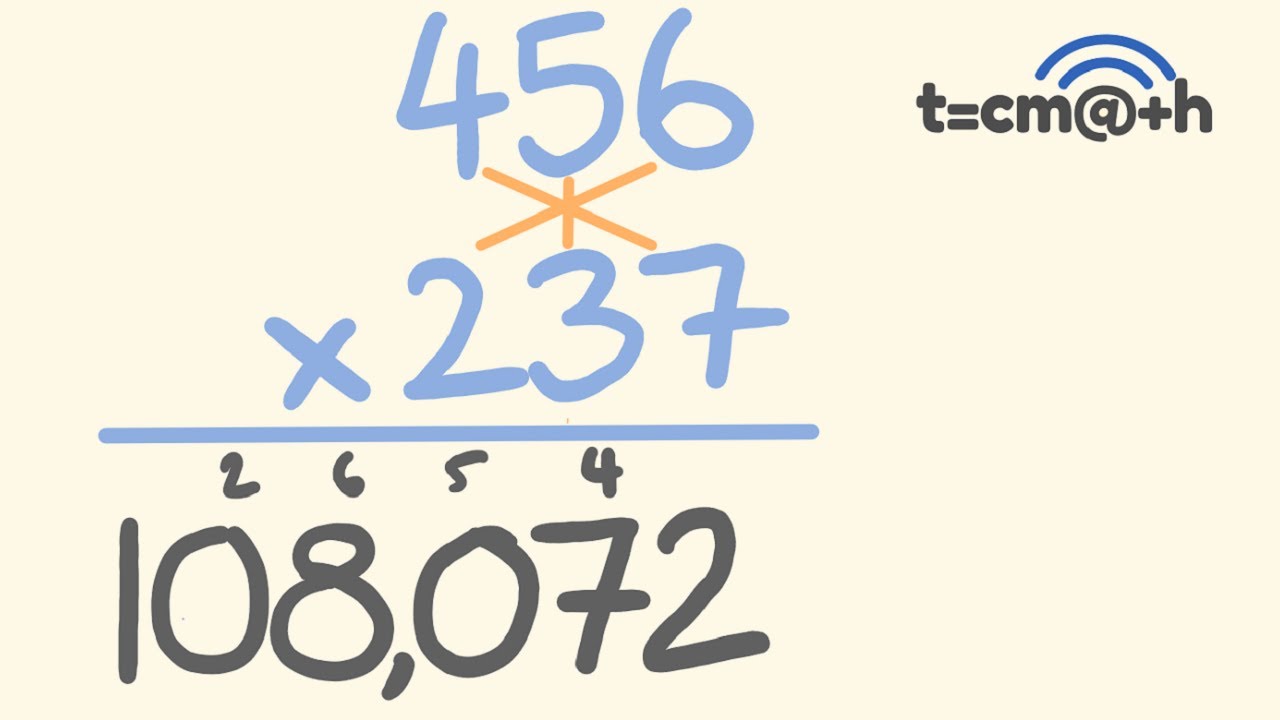
#fastmathtricks
#mentalmath
#mathtrick Using this math trick for fast calculation you will be able to multiply any pair of three digit numbers with each other faster than you ever imagined. On top of that this fast math trick can be easily used to multiply any numbers faster than you've been taught. Become a math genius in no time at all usin...

 tropic field
storm tide
<@&268886789983436800> Mrbeast
tropic field
storm tide
<@&268886789983436800> Mrbeast
Hey tropo
fleet hill
tropic field
Hey tropo
hey clerk!
tropic field
fleet hill
hey clerk!
Hi Eric
fleet hill
tropic field
Hi Eric
how are you?
bold lake
Has anyone learned Complex Analysis before? Dm me
 quick elk
too bad there isn't a large server where you could discuss that publicly
such a shame
 mighty mortar
mr beast and his consequences have done irreparable damage to the human race
 heady timber
hes done it all
left yacht
cobalt sun
ok but this is off topic
do you guys think it's detrimental to typeset notes without any form of paper, just straight reading textbook -> typesetting? i think it worsens my retention but that might just be a skill issue

 worn dove
left yacht
do you guys think it's detrimental to typeset notes without any form of paper, j...
worn dove
left yacht
do you guys think it's detrimental to typeset notes without any form of paper, j...
I think if you are just copying the text book it is definitely worse and there's no real point to doing it
 fresh moss
What are some good resources for like 3d vectors and like their proofs, thanks
 red rapids
@uneven jackal Lets talk here
uneven jackal
Yeah, thanks!
red rapids
uneven jackal
Yeah, thanks!
I'm a mathematical physicist. Even if I'm currently not doing research in a uni atm it's by choice. I never gave the exam. I know tons of astrophysicists and ppl in several other fields who never even bothered with it. The market force just sells you the idea of JEE that hard. The public perception is also clouded by said market force, so the social pressure also does the same.
uneven jackal
Some of my friends were telling me to join one of the JEE batches because they teach much deeper than ncert, I was very unsure of what they meant by depth, i thought that they rigorously teach and prove the material in NCERT, and go into depths in this way.
uneven jackal
uneven jackal
Some of my friends were telling me to join one of the JEE batches because they t...
The online batches.
red rapids
uneven jackal
Some of my friends were telling me to join one of the JEE batches because they t...
They don't. Rigor has no meaning in the Indian system. You can explore the UG math curriculum in pan Indian states and you'll find a course on proofs only appear at the end of 2nd year at most and Analysis has essential theorems recommended to be used for problems without proof. If that's the standard of math in the country barring very few places, I doubt anything for competitive prep ever gets anything even close to rigor.
What those guys mean is that they cover a lot more topics is all and that's by nature of the syllabus.
uneven jackal
red rapids
https://discord.com/channels/268882317391429632/716264872018706443/1498623330570...
Social pressure is soo true, friends trying to convince or force, parents looking at others excellent marks in examinations → parents telling to join the batch that they are studying from.
red rapids
uneven jackal
Social pressure is soo true, friends trying to convince or force, parents lookin...
Aye. Ignore the noise. Do what you like. Do it well. Take multiple opinions into account (by ppl who have nothing to do with JEE preferably). There are always ways to do things even if they're not as heavily marketed as JEE lol.
uneven jackal
red rapids
https://discord.com/channels/268882317391429632/716264872018706443/1498623330570...
Yes, I was a bit convinced about 2-3 years ago for giving jee advanced but I saw the insane amounts of competition, people losing their lives, losing the genuine interest or curiosity and so much more, and that was literally opposite to how I used to have the perspective on a curious driven kind of learning.
So later i thought about different examinations like NEST, IAT but then I was still extremely unsure about my future and still am, i wanted and want a job that can be enough for living comfortably and where I can still do self learning of mathematics and physics, some recommended being a data analyst can give enough time for hobbies like these but then I had and have no idea for what I will do for living and on top of that, I had long periods of gradual lose of curiousity and interest (due to some external factors) about the hobbies I am talking about and I had felt internally guilty because that kind of desire about learning about the universe and mathematics was kinda still there even with the loss of curiosity or interest, like as if it was internally hidden. And so because of that I am still very unsure of hobbies though I have a desire to continue to learn before i diy. And so can you tell me about how you dealt with that and are you still learning things related to mathematical physics while managing your job ?
Btw I wanted to ask, "Did you ever had periods of lose of curiosity or interest, like being unproductive for a while", if yes then how did it came back for you?
uneven jackal
red rapids
They don't. Rigor has no meaning in the Indian system. You can explore the UG ma...
Though, I have seen a lot of proofs in NCERT and even physics book asking for proof, though i am not sure how true those proofs are.
Btw do you remember the thales theorem proof ?
red rapids
uneven jackal
Yes, I was a bit convinced about 2-3 years ago for giving jee advanced but I saw...
And so can you tell me about how you dealt with that and are you still learning things related to mathematical physics while managing your job ?
My job currently is teaching for the most part and I'm blessed with a few students who are skilled and know stuff way beyond their age suggests. So that's good enough to keep me on my toes and prepared. Besides that I am writing books on a few things that range from senior high to grad level.
So I'm good when it comes to my field, but then again, research is a different game. That's something that has been slow going on my part as an independent atp. But I'll get back to it in a couple years when I start my PhD.
As far as hobbies and curiosity go, I stopped paying any attention to the noise around me while I was like 16. So I pretty much never lost any of that. And honestly, my biggest hobby which is to teach and curate teaching resources is now paying me as well lol.
Btw I wanted to ask, "Did you ever had periods of lose of curiosity or interest, like being unproductive for a while", if yes then how did it came back for you?
Around the end of grad school, I had intense burnout. Mostly because I had stupidly taken too much on to my plate beyond my research as well. I simply wasn't ready for that much. Not to mention living alone and on a budget so I had a lot of things to juggle simultaneously. That's primarily why I'm not doing a PhD rn. Needed some rest lol.
red rapids
uneven jackal
Though, I have seen a lot of proofs in NCERT and even physics book asking for pr...
NCERT isn't the worst, but it is also incredibly dry and devoid of life. And I wouldn't call the stuff in NCERT proofs really. They're like proof sketches for the most part. There were a few mistakes here and there too, but that was a decade ago so I hope they fixed it. Unlikely tho given I found the ISC board text to have 13 errors in the first 5 pages and their analytical geometry stuff had very very flawed proofs. It was so bad that I had to write type up impromptu notes for literally every construction and it's proofs. Thankfully my students were able to work through sketches and paid attention to the class where I fleshed them out.
 stoic brook
how long does it take you guys to usually read a textbook? this semester we had linalg 2, but I didn't really like the approach the professor took, what with introducing determinants from the get go (the defn using permutations), schur compliment and stuff. i realize that these are probably important for solving some problems, but i don't like such a matrix heavy approach. i would have preferred if he had developed it for just operators and then moved on to how the permutations defn follows, like how i have seen it being done in axler (tho i haven't yet read it)...he went on to inner product spaces after that, spectral theorem and all that, but he just kept introducing new kinds of matrices without any motivation. it was all rigorously done ofc, but i found it dry and feel like i don't really understand linear algebra. so i intend to go through axler this summer, when i have a break of aboyt 2.5 months, from the ground up. i was actually reading axler during the previous semester, and went till half of ch3 (the one on linear maps), and it didn't take me very long about 4 days). usually do the exercises in my head, and i did go through most of the exercises that looked hard or interesting and not busy work. so do i realistically have a chance of covering solid ground in these 2.5 months?
oh and the most egregious of all, the definition of an adjoint didn't make any sense to me, like why that would be something we would want to study. feel like doing that without riez representation theorem is a fucking waste.
red rapids
stoic brook
how long does it take you guys to usually read a textbook? this semester we had ...
To answer your last point, in finite dimensions, it is kind of a waste because it coincides with symmetric operators lol.
If you wish to a rather quick and very rigorous recap of Linear Algebra you can try Halmos's Finite Dimensional Vector Spaces. It also bridges to Functional Analysis quite well should you be doing that after.
Generally, 2.5 months is more than enough for a book like Axler if you've already seen most of the material tbf. Though, I'm not sure even he motivates things really well. Your prof might have been following Shilov's approach, which starts off with determinants. Perhaps have a look at the source. It's quite a nice book imho.
stoic brook
i did read some of halmos and i really liked his description of quotient spaces as a natural compliment, but I don't want to go through it cuz of the outdated notation. and axler really does motivate things, some of his examples are really good, and he even motivates the definition of the standard inner product on C, with the motivation being wanting to define a norm.
uneven jackal
red rapids
NCERT isn't the worst, but it is also incredibly dry and devoid of life. And I w...
NCERT's foreword and preface talks a lot.

 rocky terrace
red rapids
NCERT isn't the worst, but it is also incredibly dry and devoid of life. And I w...
rocky terrace
red rapids
NCERT isn't the worst, but it is also incredibly dry and devoid of life. And I w...
tbh I enjoyed reading them when I was in HS (like 5-6 years ago)
 iron wagon
red rapids
Generally, 2.5 months is more than enough for a book like Axler if you've alread...
iron wagon
red rapids
Generally, 2.5 months is more than enough for a book like Axler if you've alread...
lmao, I spent like more than 5-6 months reading axler's LADR tho it was my first math book after calc 2 (I learned matrices, vectors, and scalars for the first time from there 😂)
red rapids
iron wagon
lmao, I spent like more than 5-6 months reading axler's LADR tho it was my first...
Typically a bad idea to pick up LADR if you've never seen matrices and vectors before.
iron wagon
red rapids
Typically a bad idea to pick up LADR if you've never seen matrices and vectors b...
yeah, I was so confused how one can think of linear maps (or functions, more generally) as vectors. It took me a while to get a feel for it. But I really loved and enjoyed the book, and made me major in math cuz I was so curious what would happen in infinite-dimensional vector spaces, and at that time I heard math majors learn that stuff in functional analysis. That was the main reason why I decided to major in math. I was just super curious lol 🤣
 halcyon fjord
Any help would be great but I have a PAT coming up and idk how to do some of the things for it
left yacht
iron wagon
yeah, I was so confused how one can think of linear maps (or functions, more gen...
based alert and you're literally me and we're twins and other stuff
 tender gazelle
@tribal spear you asked for help?
 tribal spear
tender gazelle
<@511280243730808846> you asked for help?
tribal spear
tender gazelle
<@511280243730808846> you asked for help?
Ah yes, sorry I'm a at little loss here. Basically I was trying to see if anyone had any recommendations for resources that I could use to re-learn the fundamentals of fractions since its been so long since ive had to do that kind of math.
 ebon flume
tribal spear
Ah yes, sorry I'm a at little loss here. Basically I was trying to see if anyone...
ebon flume
tribal spear
Ah yes, sorry I'm a at little loss here. Basically I was trying to see if anyone...
Youtube tbh  or any social media rlly... i balled precalculus but because of the math vids appearing on my reels, i got a 96 somehow, i just designed my fyp to be educational >< if you don't like that, then consider making a new account just for educational stuff
tender gazelle
tribal spear
Ah yes, sorry I'm a at little loss here. Basically I was trying to see if anyone...
theres tutoring schools out there that can help, but mostly yt videos like that person said, books. if you have questions you can dm me. this is my alt but I will answer your questions when im online
uneven jackal
rocky terrace
tbh I enjoyed reading them when I was in HS (like 5-6 years ago)
Did they feel explanatory and motivating to you ?
 tawdry flint
tribal spear
Ah yes, sorry I'm a at little loss here. Basically I was trying to see if anyone...
tawdry flint
tribal spear
Ah yes, sorry I'm a at little loss here. Basically I was trying to see if anyone...
I reccomend you to check out the website "Khan Academy" and the channel "Organic Chemistry Tutor" on youtube
tawdry flint
ebon flume
Youtube tbh <:sus:1497863613111861320> or any social media rlly... i balled prec...
Reels are not a nice way to learn for reasons. One is that theyre shallow and the second you miss out on active learning which is crucial to learning problem solving skills.
ebon flume
tawdry flint
Reels are not a nice way to learn for reasons. One is that theyre shallow and th...
Well tbf I do integrate active learning with it by answering questions alongside watching, it just worked for me and my grade was higher than my prev years :D the shallow part i think depends on the topics... im about to enter senior math so im not really that advanced into math since i havent tackled actual calculi
rocky terrace
uneven jackal
Did they feel explanatory and motivating to you ?
Ya
tawdry flint
ebon flume
Well tbf I do integrate active learning with it by answering questions alongside...
You can find depth in every idea. Imho 3 minutes isnt near enough for that.
 dapper glen
Hello
Can anyone help me about pre calculus..???
red rapids
dapper glen
Hello
Can anyone help me about pre calculus..???
What help about it do you need?
dapper glen
red rapids
What help about it do you need?
Tell me the topics i cover before start calculus…
red rapids
dapper glen
Tell me the topics i cover before start calculus…
Precalculus?
 elfin crypt
How does someone use multiple books to comprehensively understand a topic? Do they go one book at a time or like what's the method?
 dusky glade
How long does it take you guys to self study books from cover to cover (specifically higher math)?🤔
I did abbott’s analysis in 6 months, excluding some topics in the last chapter. Idk how some people read Riemannian geometry while in undergrad…
iron wagon
dusky glade
How long does it take you guys to self study books from cover to cover (specific...
I read Axler's Linear Algebra Done Right as my first rigorous math book when I was in high school, and it took me about 5-6 months to read it cover to cover. Now I usually don't read a book cover to cover. But for baby rudin, it took me about 4 months to read chp 1-7 (also doing all the exercises). I think other books are kinda similar (such as Munkres or Folland - ofc not cover to cover)
dusky glade
iron wagon
I read Axler's Linear Algebra Done Right as my first rigorous math book when I w...
Hmmm, so it does seem to take that much time
Thanks for the input
iron wagon
But for ladr, I was new to proof, so this is probably the reason why it took a bit longer
iron wagon
yeah, I also found it hard as a first linear algebra book.
I should 've read something like Friedberg's book (which I did after reading Axler's book)
dusky glade
If only linear algebra was taught to me like in hubbard and hubbard 
Thats the good stuff
rocky terrace
dusky glade
I did abbott’s analysis in 6 months, excluding some topics in the last chapter. ...
I did Abbott's analysis in...

nvm
dusky glade
Nooo finish the sentence!!! 😭 😭
rocky terrace
Have a look at #1059828221887135774 
dusky glade

rocky terrace
So basically 3 years 🥀
iron wagon
iron wagon
I read Axler's Linear Algebra Done Right as my first rigorous math book when I w...
oh wait, I forgot to say that I read Tao’s Analysis I and II before reading baby rudin. That means if I didn’t read Tao’s book, it’d probably take more time for me to read baby rudin’s chp 1-7.
rocky terrace
rocky terrace
So basically 3 years 🥀
But I was procrastinating like crazy and was going through 4 books at once
Procrastination is the big issue though
iron wagon
rocky terrace
Procrastination is the big issue though
lmao, I started reading D&F Abstract Algebra book about 1.5 year ago, and I haven’t even finished the group theory part yet cuz I kept procrastinating and stopped reading for several months, and I’ve stopped again few weeks ago 🤣
dusky glade
rocky terrace
But I was procrastinating like crazy and was going through 4 books at once
Omg sameeee  . Currently doing three books at once, havent event finished the first chapter of graph theory book since February. 😂
Surely this month (May) will be different … surely
rocky terrace
dusky glade
Omg sameeee <:nozoomi:651816986837254148> . Currently doing three books at once,...
Go one or two books at a time
rocky terrace
iron wagon
lmao, I started reading D&F Abstract Algebra book about 1.5 year ago, and I have...
🙏
dapper glen
red rapids
Precalculus?
Prerequisites
red rapids
dapper glen
Prerequisites
Middle school algebra. Ability to count and do basic arithmetic operations on numbers. Basic Euclidean Geometry.
left yacht
iron wagon
lmao, I started reading D&F Abstract Algebra book about 1.5 year ago, and I have...
intro group theory is so ugly to me
left yacht
iron wagon
I read Axler's Linear Algebra Done Right as my first rigorous math book when I w...
twinning
i read ladr front to back, started in october and finished in february
but i also got really busy by december and ended up reading ch5 twice because i felt like my knoweldge of it was still bad after the first pass
im about to finish abbott (which i started in march-ish) btu its also significantly easier than rudin so /shrug
 frigid pivot
Chat what topics do u think will be on gcse's im going to priortise revising them
I would check past papers
But they arent accurate
Plus they'll ask less of repeated topics
And if possible
Any tips and tricks for those topics (like the hand thing for sin cos tan)
 stable prawn
wat do u guys think of trying to devise your own formal definitions for mathematical ideas? as in, dedicating substantial amounts of time to trying to derive the ideas from "scratch".
i have the impulse to do this for almost everything i come across (i might even call it a compulsion, i used to have pretty bad obsessive mental compulsions when i was younger and this certainly feels like an extension of the same "muscle") and i feel (probably irrationally) averse to internalizing concepts and definitions that don't feel like they're "mine".
i understand this is probably very silly and it does get immensely frustrating having to completely rebuild an idea due to a false assumption i made early on, but do any of u have advice ? how do u deal with this, if you've experienced it?
the first sentence was actually rather misleading. i don't actually think that's the question i care to hear the answer to. i know how i feel about that. i am more curious about how you all approach it, how you make it productive, when you choose to take breaks, and so on
i should also say - my grades don't often suffer because of this but my sleep schedule does.
i don't actually know if i think it interferes with my comprehension of things - it is just immensely frustrating sometimes. i struggle to put things down because i feel like the thoughts i am having will "get away" from me if i get up to take a break
 swift tartan
stable prawn
i should also say - my grades don't often suffer because of this but my sleep sc...
swift tartan
stable prawn
i should also say - my grades don't often suffer because of this but my sleep sc...
when do you start trying to study relative to the assignment or exam/quiz?
thats some context that is important, if you are doing it the night or even a week before a quiz/exam, thats usually a red flag
stable prawn
it depends - ideally a week. this is usually long enough for me. but usually it ends up being 3-4 days beforehand
swift tartan
but your sleep schedule is still suffering?
It may be long enough to get it down, but you would likely learn much better with a proper routine (and this is coming from a recovered insomniac btw -- like literally prescribed sleeping meds in the past)
stable prawn
yes. this isnt a function of my wanting to keep my grades up. this is just a function of how obsessive i get, if that makes sense.
swift tartan
Ohhhh yeah thats valid
Yeah honestly, similar boat, I just have to force myself into studying sometimes even if I dont feel it
But idk it became easier overtime, I now sleep by 11pm and have to try my best to stay awake, like rn 💀
Im studying for a final today morning
stable prawn
yeah fair enough
swift tartan
I personally like to study a little everyday for each course and then also being able to sit down after class and try to actually absorb and understand wtf happened in class that day bc sometimes im just writing down info in class, and then whatever break I have inbetween classes I take that time to type up my handwritten notes into latex and look into things I boxed/wrote questions about during class to look into on my own or even stuff I didnt consider while in class
stable prawn
swift tartan
Yeah honestly, similar boat, I just have to force myself into studying sometimes...
i think i may also have to keep doing the same to some extent. hearing this from someone who empathizes makes me feel less confused and bad about doing this, so thank you
stable prawn
swift tartan
I personally like to study a little everyday for each course and then also being...
i see
yes im often very inconsistent because of how much of a time sink it is when i do actually sit down and learn. it's hard to find a routine
especially a daily one
but i might have to do it anyway
uneven jackal
red rapids
> And so can you tell me about how you dealt with that and are you still learnin...
You temporarily teach in a school right? And so, how did those few students reach functional analysis and different geometry levels ?
Is it because their curiosity sparked earlier and they self learned from books, youtube, internet, starting from lower levels to higher levels and gone through all the grind or they just loved to explore higher level topics or they did both (exploring those topics while doing the grind, like learning calculus I while trying to explore tensors).
What is an independent "atp" ? Btw you were in 10th grade 10 years ago, so you could be 15-16, 10 years ago so now I assume that you are 25-26 years old, so you are going to start your PhD later.
Yeah lol. Your hobby is to teach and so in your teen years did you used to explain concepts to yourself or to some imaginary person, like in my early teen years i remember that whenever I used to go for night walks under stars, i quite frequently and just randomly used to explain why a certain concept is amazing to a imaginary and internal person, and also used to explain the "why" properly to imaginary version of those people who used to mock my curiosity and interest because I was obsessed so I tried to express it to others and as a result, I used to get mocked from my classmates, though from late 2023, i completely stopped talking about my interests to anyone. Btw can you tell me, what sparked your interest in mathematical physics (or in any math or science related field), when did it begin and how you stated to learn stuff ?
Ooh, it's great that things got recovered. I barely remember somewhere, like a survey or something like that, where they described that PhD people are very depressed and they are getting more and more depressed.
uneven jackal
red rapids
They don't. Rigor has no meaning in the Indian system. You can explore the UG ma...
Geniunely cant believe, Analysis without proofs !? 😭
 random fractal
uneven jackal
Geniunely cant believe, Analysis without proofs !? 😭
random fractal
uneven jackal
Geniunely cant believe, Analysis without proofs !? 😭
Bro, ..., I think, Indian system is misunderstood.
There are good books that have decent rigor that even some high schoolers read and undergraduates read. Like "Challenges and Thrills of Pre-College Mathematics" by Krishnamurthi, or "Excursion in Mathematics."
Venkatachala's "Functional Equations"
"Topics in Number Theory" by S. Bhargava
"The Congruence Subgroup Problem: An Elementary Approach Aimed at Applications" by B. Sury
"Representation of Finite Groups" by C. Musili.
The Math programs at CMI and ISI are rigorous, and I think, deserves appreciation.
I have intentionally started with elementary and easy book names like "Excursion in Mathematics" and built up my way to higher and higher levels. This is to show that at every level of the Indian system, there exists really good rigor-filled books to read, that have a lot of proofs.
It's just a matter of sight
rocky terrace
random fractal
Bro, ..., I think, Indian system is misunderstood.
There are good books that ha...
If you look at the best UG math programs in the country then yeah sure they're good, but I think they're talking about the average UG math programs
Or the bottom 90% even
 finite torrent
hi
red rapids
random fractal
Bro, ..., I think, Indian system is misunderstood.
There are good books that ha...
Bro, ..., I think, Indian system is misunderstood.
Yes, by their own public for the most part. Mainly the ones who argue which board is the best without a second thought.
There are good books that have decent rigor that even some high schoolers read and undergraduates read. Like "Challenges and Thrills of Pre-College Mathematics" by Krishnamurthi, or "Excursion in Mathematics." Venkatachala's "Functional Equations" "Topics in Number Theory" by S. Bhargava "The Congruence Subgroup Problem: An Elementary Approach Aimed at Applications" by B. Sury "Representation of Finite Groups" by C. Musili.
These are great books indeed and there are many more. But let's ask the question of how large the country is, how many unis and colleges offer math programs and whether we see such books or any other good ones being used there.
The Math programs at CMI and ISI are rigorous, and I think, deserves appreciation.
Credit where credit is due. They are good. IISc is good too. IISERs are trying theur hand as well. Couple of private ones like SNU and Ashoka are pretty good too. Among grad schools TIFR, IMSc are amazing. So are 2-3 IITs. But let's look at the student proportions there and admission policies.
red rapids
uneven jackal
Geniunely cant believe, Analysis without proofs !? 😭
You can see for yourself. It's not entirely without proofs but a few very crucial things are being omitted. I should add that among the courses listed as electives most would never be offered because profs aren't qualified to teach it or will be offered haphazardly. Also this bullshit was proposed last year as a revision.
 stoic viper
Hey guys, how are you all?
uneven jackal
red rapids
NCERT isn't the worst, but it is also incredibly dry and devoid of life. And I w...
Thought, the explanations in latest NCERT feels kinda explanatory and motivating/meaning-driven, thought the questions in them felt very disconnected and as far as i have seen, no one really reads NCERT (so maybe only few people enjoys reading some parts of them).
Though, i have never seen someone deeply questioning the rigor in the mathematics textbooks (including other references that people use) and also the lectures they watch to learn math.
red rapids
uneven jackal
Thought, the explanations in latest NCERT feels kinda explanatory and motivating...
NCERT like I said, isn't the worst when it comes to the natural sciences, but the modern context is missing still. But math, is a bit circumspect.
stoic viper
red rapids
NCERT isn't the worst, but it is also incredibly dry and devoid of life. And I w...
What kind of errors did you find? I am curious as I think I may have a look at NCERT books as references for HSSC-1 and 2 cuz I am giving my board exams in FBISE.
red rapids
stoic viper
What kind of errors did you find? I am curious as I think I may have a look at N...
The errors I found were in the ISC book. Mostly poorly thought out statements. Proofs involving straight lines that just straight up assume any line can be meaningfully expressed in the slope intercept form without specifying. No completion to the proofs even when specified. A lot of formulae which are easy to prove with the machinery developed are not proved in the text. It's weird because you can exclude it from being examinable but at the very least you can show how it works to help students understand as opposed to memorise. If I recall NCERT from a decade ago it very much was like this as well but to a lesser extent. Oh and the topic of mathematical logic is such an afterthought. If you're gonna include it, do it a little bit nicely ffs.
stoic viper
red rapids
The errors I found were in the ISC book. Mostly poorly thought out statements. P...
hmm, well that's a bit worrying.
stoic viper
stoic viper
hmm, well that's a bit worrying.
But most textbooks here are like that anyways.
They really do often just spit out formulae at you, it's quite inconsistent as sometimes they prove them for you, most times don't, I wonder why.
uneven jackal
red rapids
NCERT like I said, isn't the worst when it comes to the natural sciences, but th...
Yes, like physics. But what do you mean by "modern context" ?
like outdated sutff ?
stuff*
stoic viper
I remember that in my grade 9 book, they included a pattern for 'general geomteric proofs' but instead of giving an example, had us memorise the steps in order and then tested us on it. Like in MCQ's
red rapids
You temporarily teach in a school right? And so, how did those few students reach functional analysis and different geometry levels?
Is it because their curiosity sparked earlier and they self learned from books, youtube, internet, starting from lower levels to higher levels and gone through all the grind or they just loved to explore higher level topics or they did both (exploring those topics while doing the grind, like learning calculus I while trying to explore tensors).
Yep. Mostly self study and not letting knowing stuff getting to their head and building too much of an ego.
Btw can you tell me, what sparked your interest in mathematical physics (or in any math or science related field), when did it begin and how you stated to learn stuff ?
I simply wanted to study stuff that allows me to study far more than what I already know. Physics and mathematics by far have the most access to pretty much everything else. I was already quite interested in them, mainly physics after being unable to figure out whatever Hawking had written in his book "The Grand Design". I don't like not understanding things so I took that upon myself as a challenge. By the time I was in my second year of undergrad I'd done enough to mostly get it.
uneven jackal
red rapids
> You temporarily teach in a school right? And so, how did those few students re...
text glithc ?
stoic viper
red rapids
> You temporarily teach in a school right? And so, how did those few students re...
I c
red rapids
stoic viper
They really do often just spit out formulae at you, it's quite inconsistent as s...
sYLLaBuS
stoic viper
red rapids
sYLLaBuS
truer words have not been said
red rapids
I got so frustrated in one year of full time teaching that I have taken it upon myself to write a book that goes above and beyond the syllabus but contains everything tailored for it as well. Honestly, it's a disservice to students who want to learn but don't know where to get the information in a manner that's accessible to them at their stage.
Let's hope that goes well lol.
stoic viper
red rapids
I got so frustrated in one year of full time teaching that I have taken it upon ...
I hope you succeed in your endeavor
Oh, I remember why I came here. Yeah so I was trying to make a timetable for myself specifically a holistic one (you know like those daily time tables that everyone makes). And I think I don't quite have the time to accomplish much of what I have set-forward for myself. Like I NEED to do Calc 1 till 4 by June the 30th next year, also need to do Linear Algebra (formally) and Geometric Algebra in the next 3 months so I can FINALLY embark on a project I have been wanting to do for soooo long. BUT alongside this, I also need to manage school( 2 to 3 hours a day after coming back) and extra-curriculur activities (45 mins a day) and I don't know how I am gonna do it.
I wanted to ask,out of these things, which would be the best one to slightly tune down so I have enough time to do the rest, like what's the best middle ground.
I know that matters on my priorities so:
Math: 8/10, School : 7/10, Extra-curriculurs: 6/10.
So yeah, if anyone wants to help feel free to do so.
stoic viper
uneven jackal
You temporarily teach in a school right? And so, how did those few students reac...
Talking about your hobbies is a pretty good way to reflect on them I think especially if you talk to other people about it cuz you get a diverse set of opinions.
stoic viper
red rapids
> And so can you tell me about how you dealt with that and are you still learnin...
It's pretty cool that you have been doing something that you really like (teaching), so congrats.
uneven jackal
red rapids
> You temporarily teach in a school right? And so, how did those few students re...
what do you mean by ego ?
Did you meant that they were reflecting and questioning the things they learnt and the resources that they learnt from, so that they don't assume to know a lot ?
I simply wanted to study stuff that allows me to study far more than what I already know. Physics and mathematics by far have the most access to pretty much everything else. I was already quite interested in them, mainly physics after being unable to figure out whatever Hawking had written in his book "The Grand Design". I don't like not understanding things so I took that upon myself as a challenge. By the time I was in my second year of undergrad I'd done enough to mostly get it.
So basically, you were interested into physics and mathematics, and you read a pop-science book -> did not understood few things from it -> took it as a challenge.
red rapids
uneven jackal
what do you mean by ego ?
Did you meant that they were reflecting and questioni...
What do you think people mean when they use the word ego?
uneven jackal
red rapids
What do you think people mean when they use the word ego?
belief in oneself, like "i like math", "i like physics".
stoic viper
uneven jackal
belief in oneself, like "i like math", "i like physics".
isn't that just confidence?
red rapids
stoic viper
It's pretty cool that you have been doing something that you really like (teachi...
I'd more so not only teach but do something to challenge the status quo of education today but let's see where life takes me.
stoic viper
stoic viper
Oh, I remember why I came here. Yeah so I was trying to make a timetable for mys...
It would be nice IF I do it, so well I might as well try
stoic viper
stoic viper
It would be nice IF I do it, so well I might as well try
But not really sure if I can cuz of time constraints.
actually let me plaster my thoughts for one sec:
uneven jackal
red rapids
What do you think people mean when they use the word ego?
I thought "reflecting on themselves and questioning stuff, so that they don't assume to know a lot" by not building ego.
red rapids
uneven jackal
belief in oneself, like "i like math", "i like physics".
That's not belief. That's just understanding yourself.
stoic viper
2 hours for calc, 1 for L.A (for the next one month, replace with G.A after this period), 45 mins for extra-curriculurs, 2 for school, 1 for learning Python, and 1 hour for projects, that's about 7 hours and 45 mins so round about 7. I have from 3 till 10 PM on weekdays which is about 7 hours so I may be a bit short on some days by like 1 hour . On weekends I should have enough time, but I think I am genunely cooked. I wonder what burn-out feels like though I doubt I will have to go through that.
uneven jackal
red rapids
That's not belief. That's just understanding yourself.
yes, i firstly thought about "high confidence", like thinking that they know a lot while they really don't. But i don't truly understand ego.
red rapids
stoic viper
2 hours for calc, 1 for L.A (for the next one month, replace with G.A after thi...
Honest advice. This time tabling stuff is just another way to procrastinate. Just go and do what you wish to in a flow. As you do it, you'll have a good idea about your pace and adjust on the fly for whatever target you have.
uneven jackal
uneven jackal
yes, i firstly thought about "high confidence", like thinking that they know a l...
High confidence may not be ego. I am not sure.
red rapids
uneven jackal
High confidence may not be ego. I am not sure.
Egotism is defined as the drive to maintain and enhance favorable views of oneself and generally features an inflated opinion of one's personal features and importance distinguished by a person's amplified vision of one's self and self-importance. It often includes intellectual, physical, social, and other overestimations. The egotist has an ove...
stoic viper
red rapids
Honest advice. This time tabling stuff is just another way to procrastinate. Jus...
Hmm, yeah ig I am just wasting time(no pun intended) doing this. Well I will let you know later how it goes ig, so C ya
storm tide
I don't think the word "ego" can be expected to reliably refer to "ego__tism__".
red rapids
red rapids
Honest advice. This time tabling stuff is just another way to procrastinate. Jus...
I saw this with extreme certainty as someone who thought they work efficiently due to this only to waste most of my time doing this. I stopped this since Covid and I'm super productive lol.
uneven jackal
storm tide
I don't think the word "ego" can be expected to reliably refer to "ego__tism__".
Oh, why do you think that ? can you elaborate, please ?
red rapids
storm tide
I don't think the word "ego" can be expected to reliably refer to "ego__tism__".
In the context of what I said, it does.
storm tide
At least for me it primarily seems to refer to Freud's id-ego-superego model.
red rapids
storm tide
At least for me it primarily seems to refer to Freud's id-ego-superego model.
I agree. That's another meaning.
storm tide
Oh, the conversation went deeper than what I scrolled back to. Apologies.
 acoustic salmon
what do I do when i develop a slight sense of dislike towards the books that I'm using? im in analysis paralysis right now regarding real analysis books. some time ago i said "f it, let's choose one damn book and do something" and i did. i learnt everything except the last three chapters of Tao analysis 1. then I got bored with the way he does stuff( i don't remember the exact reason or feeling) so i switched to pugh. i was able to keep up with it's pace for the first chapter but it got tough so i quit again 😭. now I'm REALLY confused where to continue from. i've checked a LOT of textbooks and I can't choose one. pugh, tao, abbott, rudin, apostol etc..
red rapids
acoustic salmon
what do I do when i develop a slight sense of dislike towards the books that I'm...
Lmao so you basically did most of the stuff before the meat of analysis begins eh.
It's hard to pick a book at times. What exactly are you looking for in it? Perhaps ask with your parameters in #book-recommendations
iron wagon
acoustic salmon
what do I do when i develop a slight sense of dislike towards the books that I'm...
mmm I see. I also read Tao's Analysis I, and he spends quite a bit of time on set theory compared to other analysis books, which can be a bit boring for some people. However, things are very different in the last three chapters, where the book starts to cover calc I topics (continuity, differentiability, and the Riemann integral), which are much more interesting than the earlier sections (tho I personally found the chapter 8 on Infinite Sets to be the most interesting and surprising).
acoustic salmon
iron wagon
mmm I see. I also read Tao's Analysis I, and he spends quite a bit of time on se...
i liked the sequences and series chapters. and chapter 8 too. i just feel a little bit that he defines a lot of stuff just to get to the point
acoustic salmon
red rapids
Lmao so you basically did most of the stuff before the meat of analysis begins e...
exactly and I feel like i have to go through all of those again 😭 to understand the significant part
 hushed latch
acoustic salmon
what do I do when i develop a slight sense of dislike towards the books that I'm...
hushed latch
acoustic salmon
what do I do when i develop a slight sense of dislike towards the books that I'm...
the way I find textbooks I like is if they pictures (if they have color yay!) and if they have problems or questions you can try on your own, the key is engagement, like do you not like that Tao analysis? was it too rigid sounding and academic and did u wish he was more colorful and expressive with his language?
u deleted smth?
acoustic salmon
hushed latch
u deleted smth?
no?
acoustic salmon
hushed latch
the way I find textbooks I like is if they pictures (if they have color yay!) an...
i loved the integration(pun intended) of propositions and theorems into the exercises
made me prove so much stuff by myself that I never would have if I had just simply read
acoustic salmon
hushed latch
the way I find textbooks I like is if they pictures (if they have color yay!) an...
that does sound like something i would do 😂, i agree than engagement is the key. i worked through ch 1 to 8 of Tao in a single sitting
red rapids
acoustic salmon
that does sound like something i would do 😂, i agree than engagement is the key...
Single sitting?
Really?
acoustic salmon
yesss, the first few (until rationals) were really easy. only from ch 5 I had to concentrate
red rapids
acoustic salmon
i loved the integration(pun intended) of propositions and theorems into the exer...
If that is what you're after, you can consider Cummings for a minimal read or Zorich for a lot of detail and variety of problems.
acoustic salmon
red rapids
If that is what you're after, you can consider Cummings for a minimal read or Zo...
minimal as in less stuff to read?
red rapids
acoustic salmon
minimal as in less stuff to read?
Friendlier and lesser yes. Not less for a typical first course in Analysis but for the entire thing. Tao has a continuation to Analysis 2 and so does Zorich. Cummings does not.
acoustic salmon
red rapids
Friendlier and lesser yes. Not less for a typical first course in Analysis but f...
i do not think friendlier is what I need. Tao was easy, i would have liked something harder in fact.
green terrace
acoustic salmon
i do not think friendlier is what I need. Tao was easy, i would have liked somet...
Rudin
acoustic salmon
green terrace
Rudin
😭 that just defined stuff and proved facts about it. i had no idea why I was doing things. (i did ch 1 and 2)
(my cat says hello to your cat)
(im sorry if I'm being a prick)
red rapids
acoustic salmon
😭 that just defined stuff and proved facts about it. i had no idea why I was do...
Then you want to do Zorich. Considering you found Pugh a lot harder, which it kinda is given the nature of how it jumps across topics. If it's motivation you want, it's got all of it. Very comprehensive in coverage too.
quick elk
every time Killuminati recommends Zorich, a hungry child in Beverly Hills get fed
by their nanny
please support a good cause
 weary sable
I am currently at the GCSE level and want to start studying A-Level to prepare for a university application. Are there any apps similar to Duolingo that teach AS or A-Level?
red rapids
weary sable
I am currently at the GCSE level and want to start studying A-Level to prepare f...
Duolingo is famously useless for learning languages. Are you looking for famously useless resources for the same?
weary sable
red rapids
Duolingo is famously useless for learning languages. Are you looking for famousl...
I didn't mean the application itself rather its style of learning, or you meant that its style of learning is also useless but i specfically choose it because I learnt c extremely well on coddy.tech which has the duolingo style but that is anecdotal ofc, what is an ordered free course may you suggest then?
red rapids
weary sable
I didn't mean the application itself rather its style of learning, or you meant ...
It is precisely the style of learning due to which duolingo is terrible for what it markets itself as. In any case, I don't know much about these things (GCSE that is) but I've heard that Z Notes is good. Pretty sure it's mostly free too.
weary sable
Thanks
 barren remnant
I've been procrastinating learning trigonometry for over a month now because there's an assignment I have to do in it that requires brain power and energy that makes me unsure if I want to expend that  I don't wanna get burnt out but I wanna continue my math learning journey anyway
red rapids
barren remnant
I've been procrastinating learning trigonometry for over a month now because the...
I'm very confused. You have the undergrad math role and you're procrastinating on learning trig? Sus
barren remnant
red rapids
I'm very confused. You have the undergrad math role and you're procrastinating o...
There's a legitimate explanation, I could share it if you'd like.
Thanks a lot!
red rapids
barren remnant
There's a legitimate explanation, I could share it if you'd like.
Sure. I'm curious (and admittedly bored)
barren remnant
That makes me feel way better, I think I'll take my time
Sysiphus didn't climb the mountain in a month
barren remnant
red rapids
Sure. I'm curious (and admittedly bored)
I learned calculus before any of the basics
and I applied for post-grad role naively, thinking that what I was reading at the time (other than caluclus) was post-grad level but it was actually undergraduate, and got that role instead
red rapids
barren remnant
I learned calculus before any of the basics
How does one learn Calc before learning trig?
barren remnant
red rapids
How does one learn Calc before learning trig?
I skipped the stuff that had trig in it
and as for the super basic stuff I understood it
red rapids
barren remnant
I skipped the stuff that had trig in it
That's like, most of it?
barren remnant
red rapids
That's like, most of it?
Yeah, I only learned a tiny bit of calc, from the first few videos present in professor Leonard's youtube playlist on it
When did you learn calc?
Assuming you have
red rapids
barren remnant
and I applied for post-grad role naively, thinking that what I was reading at th...
Damn. I won't judge lol. I had very weird ideas about math myself early on. But what made you think that it was post grad lol
red rapids
barren remnant
When did you learn calc?
Between 9th and 10th grade
barren remnant
red rapids
Damn. I won't judge lol. I had very weird ideas about math myself early on. But ...
I don't remember, I thought it was advanced stuff
red rapids
Tho it was not properly done
barren remnant
red rapids
Between 9th and 10th grade
Oh wow, did you take it early?
red rapids
I only learned it the stupid way
red rapids
barren remnant
Oh wow, did you take it early?
No. I was done with Precalc and also basic Discrete Math by 8th grade.
barren remnant
red rapids
No. I was done with Precalc and also basic Discrete Math by 8th grade.
That's wonderous!
When I was in 8th grade, we were learning rudimentary algebra.
red rapids
barren remnant
Wdym
Well. There's famously the old school way of doing math, which is rather imprecise and kinda useless for math itself but can help intuition and is ubiquitous among engineers and some physicists.
This is the kind of math they (rightly) tend to teach in schools.
barren remnant
I see, so was it more like how to apply methods but less teaching you what they do perhaps?
red rapids
Sadly most people do not have the instruction to suggest that this is not how math is really studied today and the reasons lie in a lot of rich history between the late 1800s to the mid 1900s.
barren remnant
red rapids
Sadly most people do not have the instruction to suggest that this is not how ma...
I feel like the pedagogy of math evolves year by year at this point (21st century now).
red rapids
barren remnant
I see, so was it more like how to apply methods but less teaching you what they ...
A bit of that but even the resources I used for my own self study were a bit more so not teaching me things precisely and I had no clue what precise meant until I took Calculus in uni.
And I thought I mastered that shit
barren remnant
red rapids
A bit of that but even the resources I used for my own self study were a bit mor...
I feel like math precision is best(est) taught with mathematical maturity, would you think so? I say this as someone with neither though in the sense that I'm still learning the basics, but I'd guess that learning something like analysis is when the properness begins?
red rapids
barren remnant
I feel like the pedagogy of math evolves year by year at this point (21st centur...
Not in practice. Not at the school level. Definitely not across disciplines either. Math itself tends to be rather flexible so long as you are precise and know to ask the right questions.
barren remnant
red rapids
Not in practice. Not at the school level. Definitely not across disciplines eith...
When I was in grade-school in a certain country, it felt like the curriculum was changing a bit each year. I could be incorrect though
red rapids
barren remnant
I feel like math precision is best(est) taught with mathematical maturity, would...
Depends on how you hammer it in imo. I don't think you need to be super precise or even care to write proofs but the language used should start getting precise at least around high school.
red rapids
barren remnant
When I was in grade-school in a certain country, it felt like the curriculum was...
Where is this and it's kinda strange that you would know that in grade school tbf
barren remnant
red rapids
Depends on how you hammer it in imo. I don't think you need to be super precise ...
I'm curious about this and I'll ask you since you've seen more math than me, does math progressively become more logical throughout pre-uni to uni and strict in that sense by requiring more of say the process that gets you to the final answer for example solving algebraic equations?
barren remnant
red rapids
Where is this and it's kinda strange that you would know that in grade school tb...
I think I'm just hallucinating because how would I possibly know that without comparison to previous years.
red rapids
red rapids
Depends on how you hammer it in imo. I don't think you need to be super precise ...
I tend to live in this boundary really as a physicist. I do care about the proofs as well but I care more so about the language I use and have caution when making heuristic arguments. Something that's uncommon in theoretical physics aside from ppl like me who do mathematical physics.
barren remnant
red rapids
I tend to live in this boundary really as a physicist. I do care about the proof...
Interesting!
Mathematics and physics are fascinating to me, I wish to fully learn them someday 
red rapids
barren remnant
I'm curious about this and I'll ask you since you've seen more math than me, doe...
Ideally should, but definitely does not unless you're in uni and pursuing math or are doing it by yourself in pre uni. Some places try tho. France and the USA famously tried this (mid-late 1900s) but in a very poorly thought out manner.
barren remnant
I've been trying to learn Cumming's proof book through his youtube playlist on it, and it has definitely taught me to think more precisely in how I write an answer to a question like "how many x."
barren remnant
red rapids
Ideally should, but definitely does not unless you're in uni and pursuing math o...
Interesting, but I think the general population (through universal curriculum) should probably not be exposed to something that is only necessary to those -as you said- pursuing math.
red rapids
barren remnant
I've been trying to learn Cumming's proof book through his youtube playlist on i...
If you are indeed going through that book then I would suggest you to go through a book like Daniel Kim's Advanced Precalculus on the side rather than learning trig through some traditional text. Tho, something like Axler's Precalculus could be handy to have on the side.
barren remnant
red rapids
If you are indeed going through that book then I would suggest you to go through...
I really appreciate the recommendations!
I'll definitely consider that, I've been learning precalc on Khan Academy
red rapids
barren remnant
Interesting, but I think the general population (through universal curriculum) s...
Sure, I don't agree with teaching the general population all that logic, proofs and stuff. But that doesn't mean the language used in texts and teaching cannot be precise or be made aware that is not so when it isn't.
Good texts do that tho.
Teachers on the other hand are a hit or miss.
barren remnant
barren remnant
I'll definitely consider that, I've been learning precalc on Khan Academy
Though I've been procrastinating
red rapids
barren remnant
I'll definitely consider that, I've been learning precalc on Khan Academy
Yeah what I just suggested (Kim, not Axler) is nothing like what you'll find in Khan Academy lol. It's a proper math text. It does have its own flaws tho, but nothing that will matter too much. Especially if you use Axler alongside.
barren remnant
red rapids
Sure, I don't agree with teaching the general population all that logic, proofs ...
true
barren remnant
red rapids
Good texts do that tho.
yep
barren remnant
red rapids
Teachers on the other hand are a hit or miss.
from my p experience that's only in chem/bio
barren remnant
red rapids
Yeah what I just suggested (Kim, not Axler) is nothing like what you'll find in ...
What if it's too hard?
I'll just check it out and see
Have you read LA done right?
red rapids
barren remnant
What if it's too hard?
It's more on the abstract and proofy side. If it's hard but you're interested, all the more reason to do it. Besides you have a suggestion to help you "understand" beyond the abstraction ofc.
red rapids
barren remnant
Have you read LA done right?
Yes
barren remnant
red rapids
It's more on the abstract and proofy side. If it's hard but you're interested, a...
Yep! And on top of that I'm a pretty decent math student.
barren remnant
red rapids
Yes
Nice! I looked at some of the last pages to see what it looks like, and it looked like something I'd love to learn someday, like it's a deeper insight into mathematics (which it is)
It looked very detailed and simple because of the definitions and structure of the text.
red rapids
barren remnant
Nice! I looked at some of the last pages to see what it looks like, and it looke...
It's one of the most basic courses lol. You're supposed to learn some aspects of it in Precalc already.
barren remnant
red rapids
It's one of the most basic courses lol. You're supposed to learn some aspects of...
Through matrices etc?
red rapids
barren remnant
Through matrices etc?
And Euclidean Vectors and Linear Equations and Analytical Geometry.
barren remnant
red rapids
It's one of the most basic courses lol. You're supposed to learn some aspects of...
Yes! It's a subject to pass if one wishes to study something deeper than that.
barren remnant
red rapids
And Euclidean Vectors and Linear Equations and Analytical Geometry.
Fun things!
They're the basis of 3d games
red rapids
barren remnant
They're the basis of 3d games
Yes and no. But sure.
barren remnant
Super interesting subjects
red rapids
Anyways. Nice chatting. Was an interesting case to hear about. Good luck.
 violet solstice
Hi everyone, I’d really appreciate some insight from those at the graduate level or beyond.
How do you approach studying serious mathematics in practice? By that I mean both the theoretical side (understanding proofs, building intuition) and the problem-solving side.
I’m especially curious about your workflow and routines:
How do you typically structure a study session?
How do you balance reading, proving, and solving problems?
Do you rely more on digital tools (LaTeX, tablets, note apps), or do you prefer a more traditional pen-and-paper approach?
Any concrete habits, strategies, or even small details from your daily practice would be very helpful.
Thanks in advance!
red rapids
violet solstice
Hi everyone, I’d really appreciate some insight from those at the graduate level...
My answer might prove a bit different from others since I'm originally from a physics background.
How do you approach studying serious mathematics in practice? By that I mean both the theoretical side (understanding proofs, building intuition) and the problem-solving side.
When I'm new to a subject, I usually read, make notes of the subject and solve in-text exercises if any. I usually add my own commentary to the notes for how I understand things and make sure to ask someone or look up if my understanding is flawed or if there are subtleties I may have missed.
I remember my analysis prof used to do this thing where he would make us defend our proofs to fill in gaps. I try to do something similar by myself by using online forums and mathematician folks ik.
How do you typically structure a study session? How do you balance reading, proving, and solving problems? Do you rely more on digital tools (LaTeX, tablets, note apps), or do you prefer a more traditional pen-and-paper approach?
I prefer a chalkboard when available. Today I have one at home too lol. Feels good to have something like that. I usually transcribe that onto TeX after as if I'm explaining the material to another reader. That personally helps me a lot.
I don't really obsess over structuring my time spent. I have found that to be a colossal waste of time. I just start doing the things I want to do and adjust on the fly depending on my pace.
violet solstice
red rapids
My answer might prove a bit different from others since I'm originally from a ph...
Thank you for your response Killuminati. I would also like to ask about your approach to problem solving. When you are working through exercises, in measure theory for instance, and you find yourself stuck on a particular problem, how do you typically handle it? Do you tend to stay with it until it breaks, working through it with a kind of obsessive focus, or do you set it aside, continue with the remaining problems, and return to it later with fresher eyes? I am curious whether you have a deliberate method or whether it varies depending on the nature of the problem itself.
dusky glade
violet solstice
Thank you for your response Killuminati. I would also like to ask about your app...
For me if i run out of options or ideas to test, i try to get some help. Sometimes there is a time limit to learn this stuff such as exams approaching, in which case i may look for help earlier
red rapids
violet solstice
Thank you for your response Killuminati. I would also like to ask about your app...
I try a few things for a while and if I get stuck I try a couple more things obsessively for a while. It's at this point when I seek out a hint of some sorts. Whether what I've been doing is too roundabout or if I'm missing only one essential piece and stuff along those lines. In any case, once I find out, I take a break. Move on. Come back to it later. My fatal flaw is looking for that balance between elegance and explanatory power in my proofs. Though I've learned to do this AFTER I've solved the problem by whatever means necessary first.
A chalkboard really helps because you can just walk back and take a bird's eye view of what you're doing. Sometimes helps identify issues in how you're proceeding.
random fractal
violet solstice
Hi everyone, I’d really appreciate some insight from those at the graduate level...
There is no right way to study. So thinking much about structuring your study sessions does not seem fruitful (personally) to me.
There will ALWAYS be a better way to do what you probably did, just that it escaped your planning. Rather than obsessing over finding the best way (which likely does not exist), you should just study the way that is good enough, even if it has flaws.
signal bay
random fractal
There is no right way to study. So thinking much about structuring your study se...
by zorns lemma the must be a best way, but best way is ill defined in this case
random fractal
signal bay
~~by zorns lemma the must be a best way, but best way is ill defined in this cas...
"The Axiom of Choice is obviously true, well-ordering theorem obviously false, and who can tell about Zorn's Lemma?"
 storm jasper
barren remnant
Yep! And on top of that I'm a pretty decent math student.
storm jasper
barren remnant
Yep! And on top of that I'm a pretty decent math student.
Nice
junior umbra
signal bay
~~by zorns lemma the must be a best way, but best way is ill defined in this cas...
how do you know every chain has an upper bound
green terrace
junior umbra
how do you know every chain has an upper bound
axiom of choice equivalence to zorn?
mighty mortar
random fractal
There is no right way to study. So thinking much about structuring your study se...
I agree with this. I feel I “wasted” a lot of time/mental energy as a student stressing abt optimal studying
The truth is math is just hard; it’s not your studying method that’s the problem
In class do whatever keeps you paying attention. Out of class just make sure you’re doing practice problems
Outside of those 2 things it doesn’t matter too much what you do
fleet hill
I do think there's vicious cycles you can get stuck on that are counterproductive, like rushing through something without knowing the foundations well enough and then realizing years later you didn't understand anything that you thought you did
IMO if you have friends and people who are further along to talk to to compare study strategies, this is greatly mitigated
I agree there's not a perfect study strategy but there are certainly bad ones
random fractal
fleet hill
I agree there's not a perfect study strategy but there are certainly bad ones
You can only decide good or bad according to a metric. It all boils down to study goals. A strategy that you deem "bad" may be bad just because you are using it to achieve the wrong goals. It is "mismatch" that's the problem, not the strategy itself.
fleet hill
Sure
random fractal
For e.g., if your goal is cross-pollination, like getting quick ideas, focusing more on breadth than depth, then your study strategy will differ compared to say, mastery over a subject.
So, you will naturally adopt different strategies that are "good enough" for the task. To claim a strategy is unproductive requires you to stick to one goal, and call it the metric for deciding the merits/demerits of a strategy.
rocky terrace
mighty mortar
I agree with this. I feel I “wasted” a lot of time/mental energy as a student st...
You waste time stressing about optimal studying
I waste time not studying

We are not the same
rocky terrace
fleet hill
I do think there's vicious cycles you can get stuck on that are counterproductiv...
There is also the other end of this, spending too much time on one thing and not learning the rest of the foundations 
 iron ridge
Hi, I need advice. I'm in 8th grade rn and i sadly got a b first sem and a- sec sem of alg 2. I was wondering if i should retake or not to help my gpa. And i would like to know if precalc is very hard?
red rapids
rocky terrace
We are not the same
 red rapids
iron ridge
Hi, I need advice. I'm in 8th grade rn and i sadly got a b first sem and a- sec ...
red rapids
iron ridge
Hi, I need advice. I'm in 8th grade rn and i sadly got a b first sem and a- sec ...
Difficulty is subjective really. If you like the subject and work on it regularly, I doubt it will be hard tho, at least for Precalc. Also, Idk where you are from but I've never heard of 8th grade GPAs being important anywhere. So, suit yourself.
 mossy shadowBOT
Removed the studying! role from you.
 tardy hemlock
I study by listning to recorded lectures far above my paygrade whilst solving 2000 piece Jigsaw puzzles.
 real herald
violet solstice
Hi everyone, I’d really appreciate some insight from those at the graduate level...
real herald
violet solstice
Hi everyone, I’d really appreciate some insight from those at the graduate level...
A person with perfect and optimal study setup (perfect lighting for eyes, perfect noise cancellation room, proper notebooks and all the other tools) with expensive hardcover books but no interest in mathematics would get nothing from it, while on the other hand, A person obsessed with mathematics would read Rudin on a cracked phone with small screen at 3 AM AND still deeply absorb it even with less availability of proper resources.
 tepid creek
does anyone know who has the best course for University Math 2 (discrete math/structures)?
 frigid gate
How do you guys deal with failure?
First time I truly don't understand something. How do you cope with that?
red rapids
frigid gate
How do you guys deal with failure?
First time I truly don't understand something...
I don't. I just continue failing at newer things.
 mental raptor
how do i cope with studying the whole day everyday but still doing bad sometimes while others i know barely study and always do way better do I just have to accept that some are a lot smarter
red rapids
mental raptor
how do i cope with studying the whole day everyday but still doing bad sometimes...
I don't. I only study for a few hours.
mental raptor
red rapids
I don't. I only study for a few hours.
so ur solution is to give up at being "good" and just study a couple hours
red rapids
mental raptor
so ur solution is to give up at being "good" and just study a couple hours
There's no being "good" to begin with. Sure, there are a few guidelines that suggest whether you're competent or not, but there's nothing overall that can suggest you're "good". It's not really giving up if the ideal itself is a fallacy.
Study because you like it and have the desire to learn more. Not because you want to be some facetious version of "good" that you may have built up for yourself.
mental raptor
red rapids
There's no being "good" to begin with. Sure, there are a few guidelines that sug...
I guess you are right, it's just some professors tell me you need to do better and grad schools are competitive and stuff and then when i look around me I see people putting in a lot less effort and doing better and It's difficult to cope with you know
red rapids
And have a life beyond that as well.
mental raptor
red rapids
Study because you like it and have the desire to learn more. Not because you wan...
you are right I will try to convince myself that this is some kind of impossible thing I have in my head
red rapids
mental raptor
I guess you are right, it's just some professors tell me you need to do better a...
Ask them what's "better"
mental raptor
red rapids
Ask them what's "better"
its just writing better performing better on exams studying more
red rapids
mental raptor
its just writing better performing better on exams studying more
Written exams are arguably one of the most stupid ways to judge whether you're competent at a topic.
mental raptor
red rapids
Written exams are arguably one of the most stupid ways to judge whether you're c...
why
red rapids
mental raptor
why
All they tell you is that you can write an exam and solve those problems in that amount of time.
mental raptor
what other factors are there to competency in a topic
red rapids
You can't use that as a metric to judge whether someone is competent just by repeating it over different things. It's just logistically more feasible for unis. Doesn't mean it's a smart idea.
red rapids
mental raptor
what other factors are there to competency in a topic
Depends on the topic.
mental raptor
A pure math topic I guess
red rapids
If I'm doing analysis, how rigorous my proofs are for instance. More or less extends to other areas of math.
mental raptor
yeah measure theory is what im struggling with now haha
red rapids
Not only does it matter how rigorous the proofs are but how well does the proof convey the essence of the proposition itself.
And that's the part that helps understand things well
Formal proof aside, one should be able to build mental pictures to conjecture things and attempt to prove them.
The formal proof is only a guiding principle on making sure you're air tight.
mental raptor
red rapids
Formal proof aside, one should be able to build mental pictures to conjecture th...
I see.. that is a nice way of looking at it because I might be decent at those things, but I judge myself too harshly based on my performance at exams or my ability to do exercises quickly (which are kind of the same thing?)
Do you think that being able to solve difficult exercises in a topic quickly is a big part of competency in it?
red rapids
mental raptor
I see.. that is a nice way of looking at it because I might be decent at those t...
There's always a trade off. It's always two out of the three. Precise, Quick, Comprehensive. You can never be all three. Quick and Precise is ideal for doing formal math, but Precise and Comprehensive is ideal for understanding formal math. Comprehensive and Quick rarely meet the standards for rigor in formal math but that's helpful for teaching.
In my opinion, being precise and comprehensive is the most useful. Once you have gone through a comprehensive round of work which is precise, it is easy to whittle it down to the bare minimum to make things quicker.
It's a lot harder the other way around.
mental raptor
red rapids
In my opinion, being precise and comprehensive is the most useful. Once you have...
This is great to hear because I do feel that I am more on that side than the others.. I will just try to be better in this sense rather than be quicker or whatever
red rapids
That said, as you develop this over time you'll be able to make quicker reads more comprehensive. But that's a function of your mathematical maturity and experience.
red rapids
mental raptor
This is great to hear because I do feel that I am more on that side than the oth...
Might hinder you in exams a little bit for sure, but will get you through interviews and research better.
mental raptor
red rapids
Might hinder you in exams a little bit for sure, but will get you through interv...
yeah
also like are math exercises generally difficult haha because i always seem to find (atleast a big part of them) difficult
im talking mostly about topology and measure theory
or are they not supposed to be really difficult
red rapids
mental raptor
also like are math exercises generally difficult haha because i always seem to f...
Quite normal. There will definitely be some routine stuff but on average they'll be on the harder side for anyone new to them.
red rapids
mental raptor
I don't have that much experience ive only been doing math for 2 years
This suggests you are quite new.
mental raptor
red rapids
Quite normal. There will definitely be some routine stuff but on average they'll...
that's comforting to hear..
mental raptor
red rapids
This suggests you are quite new.
yeah and I have been rushing to take all the courses I can and stuff
i basically finished the standard undergraduate math degree at my uni
I guess I expect too much of myself too quickly
red rapids
Aye. Must pace yourself. And never compromise on the quality of your work with no regard for time taken. There's only so much you can do in a short while. Dumping too much onto yourself will hinder said quality. If the quality is hindered, there's no metric of performance that can justify taking on so much of a load.
mental raptor
red rapids
Aye. Must pace yourself. And never compromise on the quality of your work with n...
You're right. Thank you for all this by the way it really helped me
 flint orchid
I wanna pre-learn Calculus II before I start taking actual classes for it. Where should I start? Should I do a review of Calculus I first?
mental raptor
flint orchid
I wanna pre-learn Calculus II before I start taking actual classes for it. Where...
The concepts in Calculus I are important, however, from my experience calculus II is mainly integration techniques which isn't really strongly related to Calculus I
But its always good to have a strong foundation
left yacht
flint orchid
I wanna pre-learn Calculus II before I start taking actual classes for it. Where...
Learn calc 1 first
left yacht
mental raptor
The concepts in Calculus I are important, however, from my experience calculus I...
How are you going to understand taylor series without knowing what a derivative is
Calc 2 absolutely requires calc 1
left yacht
left yacht
Learn calc 1 first
Try khan academy they're good with calc 1-2, past that they're bad
mental raptor
left yacht
How are you going to understand taylor series without knowing what a derivative ...
well yeah i said its good to have a strong foundation but i interpreted calc 2 (or preparing for calc 2) as more of learning integration techniques
which does not really require calc 1
green terrace
mental raptor
which does not really require calc 1
Well, u-substitution and integration by parts are both methods that assume you know how to take derivatives, same with other methods of integration less commonly taught in calculus 2 such as leibnitz' trick or anything with taylor/maclaurin series, etc...
red rapids
mental raptor
which does not really require calc 1
It absolutely does.
To develop Riemann integrability, you don't really need knowledge about derivatives. So long as you know about continuous functions, you're fine. But your typical Calc courses do not rigorously define Riemann integrability and instead directly jump to the applying the fundamental theorem of calculus and integration techniques for which you definitely need to know how derivatives work.
left yacht
Calc 1 teaches ftoc
So if you do calc 2 first you won't know ftoc which is a yikes
Just do calc 1 then calc 2
 oblique prawn
Greetings, I want to approach self studying some topics in my textbooks that were not covered in lecture material. I was wondering if anyone has done this, and if so, how have you taken notes? While reading, after reading, after completing the end of section problems, or not at all? Thank you.
mental raptor
red rapids
To develop Riemann integrability, you don't really need knowledge about derivati...
honestly i forgot revising calc 1 means revising how to do differentiation i just thought that meant limits and continuity and stuff
my bad
mental raptor
left yacht
Just do calc 1 then calc 2
agreed
mental raptor
green terrace
Well, u-substitution and integration by parts are both methods that assume you k...
yes
The way I learned this stuff in school and uni was a bit over the place so that's why i gave a bad answer.. sorry 😅
for example in A levels they don't teach you calc 1 in the standard way but u learn all the integration techniques and differentiation without knowing what is a limit
so in that sense I knew calc 2 before i knew calc 1
red rapids
oblique prawn
Greetings, I want to approach self studying some topics in my textbooks that wer...
When I was in uni, I used to revisit old courses on my own from beginning to end but be more comprehensive in my coverage. So I used to refer to material that allowed for this. What I would do is restructure and try to write notes in a manner as if I were teaching them, with detailed proofs and remarks to help intuition. I'd first do scratch work on my board and then typeset all of it. I'd maintain a separate document for problems but if I found the problem as a good addition to my notes on the topic I'd add them. For the problems I'd typically cherry pick things that seem interesting to me or stuff that I cannot think of how to approach at first glance. Long and tedious way to work, but very helpful tbf. I'd only do this courses I enjoyed tho.
mental raptor
mental raptor
so in that sense I knew calc 2 before i knew calc 1
also the person that asked implied that they already took calc 1 and said "revise"..
from my experience what people struggle with the most is integration techniques and time to get comfortable with those so that's what i meant
oblique prawn
red rapids
When I was in uni, I used to revisit old courses on my own from beginning to end...
Thank you for the suggestions. I am looking to balance how detailed I am with my notes, primarily noting key theorems but will also include some useful examples if I see them fitting. Regarding the problems, I will do problems that encapsulate each part of the section, and leave the more difficult problems as a way to test my knowledge.
 warm spire
Yo everyone, im trying to get better result on math because i love MATH but im really bad at it ngl.. And im trying to get into a big ingeneer school in France, i wanted to know if anybody got any type of advice for me to get good please : D
oblique prawn
warm spire
Yo everyone, im trying to get better result on math because i love MATH but im r...
What exactly are you trying to improve?
warm spire
oblique prawn
What exactly are you trying to improve?
mostly Complex Numbers, Differential Equations first and second order, Laplace Transforms, Linear Algebra, and some mindset because even if i know the right formula to use i struggle to do the exercice right so
oblique prawn
warm spire
mostly Complex Numbers, Differential Equations first and second order, Laplace ...
Do you have past experience with those subjects, or are you approaching them fresh? Regarding the mindset, do you have example problems to see? Sometimes it can help seeing an example to understand how to approach certain problems.
warm spire
oblique prawn
Do you have past experience with those subjects, or are you approaching them fre...
We saw all those topic at school but i didn't understood it well, and i know its reaalllyy important subject for my future school so im trying to learn them, i don't really have example right now ill try to look
oblique prawn
warm spire
We saw all those topic at school but i didn't understood it well, and i know its...
You're completely right about those subjects being important for engineering. Given complex numbers, I presume you're looking to study electrical engineering? Do you have textbooks on these subjects? If not, have you looked at Khan Academy or MIT OCW?
warm spire
oblique prawn
You're completely right about those subjects being important for engineering. Gi...
Yeah electrical, I'm trying to work on HFT after school. I do not have textbooks about it and already looked at khan academy but i didn't like it, I don't know mit ocw I'll look at it rn
oblique prawn
warm spire
Yeah electrical, I'm trying to work on HFT after school. I do not have textbooks...
Electrical is very math heavy, we are heavily focused on linear algebra, complex variables, and differential equations. I didn't see Calculus in your list so I presume you have a good understanding of those subjects. I am not familiar with HFT so I unfortunately can't give you advice related to that. Regarding Khan Academy, it gives a good introduction to the subjects, but not enough to sufficiently learn them. OCW offers many courses including the ones you listed, look for SC, scholar courses, those provide the most amount of material for self-learners. https://ocw.mit.edu/course-lists/scholar-courses/

MIT OpenCourseWare
OCW Scholar courses are complete introductions to essential math, science, engineering and economics subjects, designed especially for independent learners.
warm spire
oblique prawn
Electrical is very math heavy, we are heavily focused on linear algebra, complex...
Oh ok thank I'll take a look tysm
 sick needle
oblique prawn
Greetings, I want to approach self studying some topics in my textbooks that wer...
sick needle
oblique prawn
Greetings, I want to approach self studying some topics in my textbooks that wer...
I find it most helpful to follow the derivations/justifications the textbook usually gives, and take notes in your own words breaking down each step to make sure you conceptually understand why they did everything. Then of course note any final forms of equations so that when doing problems you know what to use. If there is no generic formula, note down the general steps used to solve a problem so you can refer to it when practicing. I learn primarily from textbooks and I've found that sometimes it is hard to connect the derivations to what you actually use to solve problems, so make sure you do practice problems to ensure you know how to actually use what they walk through in addition to understanding the justification behind it works.
Sometimes you can skip taking notes on the derivation if all the problems follow a generic form, but it helps for more open-ended topics since it will get you comfortable the general background reasoning for cases where problems take a form you haven't seen before. It helps you not rely on just pluggin n chuggin.
oblique prawn
sick needle
I find it most helpful to follow the derivations/justifications the textbook usu...
Thank you, my only concern is when the note taking process should occur. In my university, I will take notes during lecture and then read the textbook, then do the homework. My goal for self-study is to read the section, after this, take the main points, definitions, primary examples, and use the notes to solve the practice problems.
sick needle
I'd take small footnotes while initially reading through the section on anything you didn't immediately understand, then use those and all the key points to make proper notes to then use with the practice problems.
oblique prawn
sick needle
I'd take small footnotes while initially reading through the section on anything...
The point I am trying to make is how much is enough in terms of notes that I can look back and understand what I was doing as review. Following your advice and what the previous person said, I will mentally note everything on the page, and then on the second pass for notes return and develop ideas that either confused me or require a dedicated spot given the complexity, etc.
sick needle
Yeah that works, just putting like an asterisk next to the stuff you didn't fully get on the initial runthrough helps me.
oblique prawn
Seems like a simple problem, but at this point I may be overthinking about it.
sick needle
Yeah I mean you figure out what works best for you but I've learned my workflow works best as
Initial making small footnotes -> Proper summarized notes using the footnotes an outline -> Problems
oblique prawn
sick needle
Yeah I mean you figure out what works best for you but I've learned my workflow ...
Thank you, how many problems on average would you say you do?
sick needle
oblique prawn
Thank you, how many problems on average would you say you do?
I mean it depends on the topic but in general just until I feel comfortable getting the right answer without looking back at the notes at all
And make sure you do spread out problem #
so say they have practice problems #1-20 I'd do like 3 8 14 19 or smth like that initially
Just cause they typically cluster similar applications together
And then depending on how well you do on those go back and pick more etc.
oblique prawn
That's exactly what I was thinking of doing, and then doing the end of chapter problems as an "exam" to test my knowledge of the entire section.
sick needle
Yeah perfect and that use those 'exam' results as a gauge of what you need to go back and do more problems for
oblique prawn
sick needle
Yeah perfect and that use those 'exam' results as a gauge of what you need to go...
Thank you so much for all this, I am just going into robotics, and want to go beyond what my courses at university offered for mathematics.
sick needle
Yeah of course man doing outside work is great
And the more you read the textbook the more you get used to the type of language it uses and the easier it gets
red rapids
Let's talk here @gaunt ruin
gaunt ruin
is the basics of linear algebra covered in highschool?
red rapids
gaunt ruin
is the basics of linear algebra covered in highschool?
If you're talking about the USA, I believe some aspects mainly around 2 by 2 matrices, Linear Equations and analytic geometry do get covered in Precalc. But I'm not American, so not really sure.
gaunt ruin
Germany
red rapids
gaunt ruin
Germany
Dunno much about the school system there. I'm sure some of the basic intuitive stuff about Euclidean vectors and plane and space geometry is taught tho. Because alongside Analysis the other first courses are Linear Algebra in uni math.
Again, a German person who's been through that would be able to confirm better, but you can just look it up.
gaunt ruin
i see
 radiant halo
Not necessarily a "math" question but for anyone who has took the AP calc AB/BC exam what are your best suggestions and tips? Thanks!
dusky glade
Ain't no way, nobody is coming to my graph theory thread 😭💀https://discord.com/channels/268882317391429632/1499422558594797679
signal bay
dusky glade
Ain't no way, nobody is coming to my graph theory thread 😭💀https://discord.com...
!noads exists for a reason
 wide cryptBOT
dusky glade
Ain't no way, nobody is coming to my graph theory thread 😭💀https://discord.com...
wide cryptBOT
dusky glade
Ain't no way, nobody is coming to my graph theory thread 😭💀https://discord.com...
Please do not advertise your help channel or thread in other parts of the server. There are many people who need help, so advertising can quickly turn into spam.
dusky glade
👍
unborn venture
 nova whale
study g?
nova whale
study g?
Friend
 rocky kraken
Hello
 junior linden
Hi
I want to be rich with mathematics, Im in 2nd year of university pure mathematics
Could you give me a plan for that ?
left yacht
Rich with mathematics 
 heavy needle
junior linden
Could you give me a plan for that ?
heavy needle
junior linden
Could you give me a plan for that ?
Well, if you solve the Millennium problems
Shouldn't be too hard
 craggy bolt
rocky terrace
heavy needle
Well, if you solve the Millennium problems
craggy bolt
rocky terrace
heavy needle
Well, if you solve the Millennium problems
with that you can afford to live in New York for 2 months 
heavy needle
rocky terrace
with that you can afford to live in New York for 2 months <:true:146730746195764...
maybe if you solve all of them
rocky terrace
1 year 🔥
crimson elm
rocky terrace
with that you can afford to live in New York for 2 months <:true:146730746195764...
Solve them all and you get 1 year sotrue
Very feasible
icy basin
Being in correct environment is what makes u realize the importance of ur life suffering makes u realize the importance of relaxing and being sick makes u enjoy being normal everything is bad is made to make whats good seem good If we dont have negative we dont have positive because everything will feel neutral and there will be no importance or enjoyment in our life so never try to run from suffering lr bring tired because it what will make u different its just a pain that will end even if its small of big it will make u tuffer and if its small its reward will be bigger nothing deserves to be sad for long but at the end the strong and the one who suffered will shine think of all of the proboems that happend in ur life and now you are here to proof everyone every situation wrong and show the world that u are not different but you are strong and you are the one who will make a change
 hazy vigil
Blud is yappin
icy basin
Just an advice
storm tide
175 words of run-on sentence with not even a comma.
icy basin
I mean its not meant to be grammar homework
storm tide
Apparently it's not meant as a serious attempt to communicate.
icy basin
I mean u could focus on so much things other then punctuation
storm tide
I choose to focus on people who don't express themselves in unreadable walls of word salad.
icy basin
Ur choice
 lapis sluice
i made some changes to hopefully make it a bit more readable. i don't necessarily endorse the contents
Being in correct environment is what makes u realize the importance of ur life. suffering makes u realize the importance of relaxing and being sick makes u enjoy being normal. everything is bad is made to make whats good seem good.
If we dont have negative, we dont have positive because everything will feel neutral, and there will be no importance or enjoyment in our life, so never try to run from suffering lr bring tired because it what will make u different. its just a pain that will end even if its small of big it will make u tuffer, and if its small its reward will be bigger. nothing deserves to be sad for long, but at the end the strong and the one who suffered will shine.
think of all of the proboems that happend in ur life. now you are here to proof everyone every situation wrong and show the world that u are not different, but you are strong and you are the one who will make a change.
edgy sierra
icy basin
Being in correct environment is what makes u realize the importance of ur life s...
chatgpt can you please summarize this in 1 sentence tank you
icy basin
lapis sluice
i made some changes to hopefully make it a bit more readable. i don't necessaril...
No point they just hating to hate
Average discord experience
Anyways thx
at least ur not like these ppl flaming who is tryna help
heavy needle
icy basin
I mean u could focus on so much things other then punctuation
The punctuation is necessary, it helps people figure out what the fuck you're saying
Ah that reads with hostility. Unintended. Just emphatic
red rapids
icy basin
Being in correct environment is what makes u realize the importance of ur life s...
I tried speed reading this and my mind slowed me down lol.
red rapids
lapis sluice
i made some changes to hopefully make it a bit more readable. i don't necessaril...
...it will make u tuffer, and if its small its reward will be bigger.
Could've corrected the spelling of tougher*
red rapids
junior linden
I'm not able

 stable onyx
how do u guys read books,
my goal is building intuition and mathematical maturity, rn im in precalc and i feel like im doing too much
well to be fair this is a 900 page book including the non lesson stuff and i do most of the odd numbered exercises
red rapids
stable onyx
how do u guys read books,
my goal is building intuition and mathematical maturi...
Just go and study. No sense in planning and setting goals only to come up short, contrary to what was mentioned as a response by another user. Adjust your workload on the fly depending on your pace. Ideally quick isn't as helpful as comprehensive, so take your time to understand every bit of what you're studying and do sufficient exercises.
As far as building maturity goes, see that you're able to check whether definitions make sense and can prove claims made about formulae, equations and methods that you learn in traditional Precalc. Most textbooks rarely go about providing proofs, so it's a good exercise for you to be able to write them while simultaneously solving the typical textbook exercises.
Be detail oriented and try to get feedback on your proofs and conceptual understanding from more experienced human beings and avoid using AI.
 calm trench
in khan academy, if i do badly in an exercise, do i keep doing that exercise or move on to the rest of the lesson and come back to it later. I am fixated on getting every exercise 100% of the way before i move on to the next video
calm trench
edgy sierra
do another version of the exercise
i don't see other versions of the exercise on the website, should I try to find excercises on the topic somewhere else? what do you mean spend a lot of time on your solution? like spend a lot of time before giving up?
calm trench
edgy sierra
ok what type of exercise is it
im doing pre algebra, lesson 2 visualize ratios on khan academy
edgy sierra
ok so you can probably either create a similar exercise and solve it
or search for outside of khan academy
like online
then solve it
 nimble wave
Hi!!
First of all, if this is the wrong channel to ask this, please just redirect me to the correct channel, if there is one :)
i read one article about fractional calculus and it looks very interesting and honestly even kind of fun to me
So i would like to ask whether anyone knows some good yt videos about the topic or articles about it since id love to learn more about it
left yacht


This is the English translation of a Japanese video posted in March 2024.
[BGM]
かえるのピアノ https://dova-s.jp/bgm/play568.html
ほのぼのワルツ【リコーダー】 https://commons.nicovideo.jp/works/nc116360
Caravan https://dova-s.jp/bgm/play2457.html
[Materials]
VOICEVOX:ずんだもん (Zundamon, illustrated by sakamoto_AHR)
...
nimble wave
Thanks!
Ill watch it rn
Yep i love this topic even more now
heavy needle
Lorentz be booostin
 devout sun

 last furnace
hi do you guys have any idea how i can study for a math competition thats in about a week?
in the last one i got almost the same score as one of my good friends, off by half a point, and my teacher is expecting me to come this time aswell
problem is i geniuenly haven't studied for that last competition, nor have i worked anything outside of class for about two years. no homework, no math problems solved, nothing.
i cant say no to him and i don't want to disappoint, but idk if this year ill get a good score again
for reference im 17
and my brain is tiktok fried
i js need some advice bc i cant find any material that looks promising😭
are videos better for studying or will doing it by myself work better ?
if i order a book it will come in a few days and i wont have time to study
 scenic shuttle
last furnace
hi do you guys have any idea how i can study for a math competition thats in abo...
scenic shuttle
last furnace
hi do you guys have any idea how i can study for a math competition thats in abo...
I had a math competition last semester and I didn't really study for it, still ended getting first place
your best is just know what topics are going to be and work faster
during my math competition, I had too many cheaters but still got first place lol
last furnace
man i wish i could cheat
but its gonna be really hard
theres like 3 ppl from schools all across the country
scenic shuttle
cheating won't make you win
last furnace
i got like 22/26 right last time and so did my friend and he studies consistently but theres no way i could do it again now
scenic shuttle
well that's still good
last furnace
scenic shuttle
cheating won't make you win
i know im just saying what i wish i could do lol
i denied the olympiad and the teacher went bonkers
so i don't want to disappoint
scenic shuttle
last furnace
i know im just saying what i wish i could do lol
it only works if you have friends with hosted people that doing the competition
last furnace
scenic shuttle
it only works if you have friends with hosted people that doing the competition
nope
scenic shuttle
we played on kahoot and whenever a question show up, there is always that one person answers fast
in 1 second
scenic shuttle
btw there was a huge ass geometry question that I didn't really get but when I did random guess I got it right 
last furnace
myself
last furnace
scenic shuttle
btw there was a huge ass geometry question that I didn't really get but when I d...
😭😭😭
scenic shuttle
last furnace
ik i said i wish i could cheat but honestly i actually wanna do good by mself
my suggestion is don't cheat at all
last furnace
we also get a bonus question about some
last furnace
lmaoo
for us its like abt idk some old math philosopher or how u call it
and u had to prove whatever there
i dont remmeber
scenic shuttle
it's on paper?
last furnace
yes
scenic shuttle
icic
last furnace
im cooked
last furnace
i mean ngl i want to win this one aswell
scenic shuttle
goodluck
last furnace
its like
next to impossible
but
idk
the teacher also told my parents and they were also mad
cuz why i didn't go
so now im forced to go
scenic shuttle
🥀
last furnace
😵
scenic shuttle
my parents doesn't really force me but they call me stupid at everything
and they didn't actually believe that I could win
 until I did it and they were surprised
last furnace
scenic shuttle
my parents doesn't really force me but they call me stupid at everything
mine do both
last furnace
scenic shuttle
<a:smh:986733134387240981> until I did it and they were surprised
well im glad u won it and showed them
i wanna show mine too but
my math homework notebook is empty
like i have the one from 9th grade
still unfinished
scenic shuttle
sad
last furnace
and i don't work anything else at all either so
itll be hard
but ty for answering
atleast i feel better
🤒
scenic shuttle
like I said I didn't really study for it and still won
you are going to do it, I believe in you


 placid cedar
$\frac{\sin!\big((x^2 - 5x + 6)^5\big)}{(x-2)^2 + (x-3)^2 + 1} + \ln!\big((x^2 - 5x + 6)^2 + 1\big) - \ln(1) = 0$
Please solve this
mossy shadowBOT
Weinnion

 tough tinsel
What should I study for my AP Calc AB exam above all??
edgy sierra
placid cedar
$\frac{\sin!\big((x^2 - 5x + 6)^5\big)}{(x-2)^2 + (x-3)^2 + 1} + \ln!\big((x^2 -...
the first term doesn't make a lot of sense
do you want to take the factorial of sine
oh i didn't notice it also happens to the second term
edgy sierra
ok i had to read this again
this probably doesn't have a solution
ln(1) simplifies to 0
move the second term to the right
oh my bad it might
i forgot the gamma function can have negative arguments
 timber cedar
Hello. I’m not sure if this is the correct channel for this type of question, if not please let me know. I’m looking for some advice. I am a Computer Science Major and also working on a minor in Mathematics. Here is a background of the courses I have taken so far:
Calculus I
Calculus II
Linear Algebra
Discrete
Probability & Statistics (taking this over the summer)
I would like to go to grad school to study mathematics and earn a Masters degree. That said I have been feeling uncertain about the courses which I should take to elevate my application. So here are a few questions I have:
- Is it plausible for someone with a CS undergrad to pursue a masters in mathematics? That is to say, would grad schools look at my application?
- If the answer to question 1 is “yes”, the next question becomes, what courses should I take during my undergrad to “elevate” my application and make me stand out. Some people have recommended real analysis, which would require me to take calculus 3 and intro to proofs as pre-requisites.
- Am I looking at this the wrong way overall? What do you guys think?
Thank you for your time.
 hoary kindle
timber cedar
Hello. I’m not sure if this is the correct channel for this type of question, if...
hoary kindle
timber cedar
Hello. I’m not sure if this is the correct channel for this type of question, if...
If you want to do a maths degree, you 100% need real analysis, a proper linear algebra course and a course in abstract algebra at the very least
I would also reccomend you taking those to see if you even want to do a maths degree, because as it stands youve not really gotten into what a lot of maths is
red rapids
timber cedar
Hello. I’m not sure if this is the correct channel for this type of question, if...
- Is it plausible for someone with a CS undergrad to pursue a masters in mathematics?
Plausible, yes.
That is to say, would grad schools look at my application?
That would depend on the grad school but based on your present coursework alone the evidence suggests that you've not yet been through the proper undergrad math training which beyond the syllabus is more so about the ability to write rigorous proofs. This will make things a challenge unless you look for an applied math track. But of course, some grad school applications are purely based on entrance examinations. If you're in such parts of the world you'll be in luck.
- If the answer to question 1 is “yes”, the next question becomes, what courses should I take during my undergrad to “elevate” my application and make me stand out. Some people have recommended real analysis, which would require me to take calculus 3 and intro to proofs as pre-requisites.
Real Analysis is a must. That is typically the course where people get properly initiated into rigorous mathematical proof writing. A proofs course is more so about the know-how of it. As far as other courses go (Abstract Algebra is a must), it's best to look at the expectations the grad programmes you're targeting have from their applicants. A better idea may come about by looking at the same department's undergrad programmes. Since this varies from place to place, one needs to be careful about how many credits and what not you have. You can also do courses that you prefer over others if you have a choice in this regard.
- Am I looking at this the wrong way overall? What do you guys think?
Nothing wrong about it. Where there's a will, there's a way. Might be hard tho. It may be more feasible to switch to a math major with a cs minor if a math grad school is your next goal. But you should evaluate this once you get a taste for what it's like. Best way to do it is sit in a few real analysis lectures randomly.
hoary kindle
Yeah where you are is a big thing. In the US or elsewhere this might (might being operative) be reasonable, but in a lot of europe this would be equivalent to about a semesters worth of university maths, and I think youd really struggle to get into a european programme without taking a lot more courses
timber cedar
thank you guys i will definitely take this advice 🙂
 sterile rapids
yo, how hard is a level further mathematics?
 tranquil nimbus
sterile rapids
yo, how hard is a level further mathematics?
tranquil nimbus
sterile rapids
yo, how hard is a level further mathematics?
it's considered the hardest A Level subject (second hardest by those who think chemistry is the hardest). i dunno much other than that. I'll start my further maths course in July
it also has one of the highest pass rates of any a level subject
because most people who take it know what they're getting themselves into
if I'm gonna be completely honest, i don't think it's as crazy as people make it out to be. even before you get to pick your o level subjects, your seniors and teachers will put an idea into your head that a level f maths is this boogeyman that you've always gotta be scared of. but so many people take it every year and get A*s. if you enjoy maths and are decently good at it, you should just take it. if you don't like it, you can always drop it later. then again i haven't even started my own course yet so take everything i say with a grain of salt
 limber oriole
would anybody happen to know/have some problems i could practice on for my upcomeing finals? (I'm in 9th grade geometery)
 pulsar saddle
sterile rapids
yo, how hard is a level further mathematics?
pulsar saddle
sterile rapids
yo, how hard is a level further mathematics?
Hard is subjective. You would be better off looking at the grade statistics, syllabus, and past year questions for you to develop your own understanding of the difficulty of the subject
pulsar saddle
limber oriole
would anybody happen to know/have some problems i could practice on for my upcom...
what topics were you taught?
whole wing
Mods so fast you don't even have time to ping them
 hollow fable
How do I remember and never forget what I study?
scenic shuttle
hollow fable
How do I remember and never forget what I study?
by reviewing your materials
or notes
placid cedar
X-3=2
X-3-5=2-5 [-5 Both Sides, Balancing]
X-8=-3
(X-8)^2=(-3)^2 [Square Both Sides]
X^2-2X.8+8^2=9
X^2-16X+64=9
X^2-16X+64-9=0
X^2-16X+55=0
X^2-11X-5X+55=0
X(X-11)-5(X-11)=0
(X-5)(X-11)=0
X=5, X=11 since we have to satisfy the condition.
Add - both sides at both answers
SOLVED THE HARDEST ALGEBRA
whole wing
placid cedar
X-3=2
X-3-5=2-5 [-5 Both Sides, Balancing]
X-8=-3
(X-8)^2=(-3)^2 [Square Both Si...
Please stop spamming (and in multiple channels to boot)
tranquil nimbus
placid cedar
X-3=2
X-3-5=2-5 [-5 Both Sides, Balancing]
X-8=-3
(X-8)^2=(-3)^2 [Square Both Si...
when you square both sides, you add extra solutions to the problem since you lose some information about the signs on both sides prior to squaring
so you're also solving -x+8=-3 now
because x² is basically |x|²
that's why you can get some weird answers when solving problems with a modulus on both sides of an equal sign
 marble relic
hi, how do u make those bot commands
over here
like this rotated the pic

nd this

(yea i use dc on light mode, cry abt it)
normal sleet
rcw and rccw probably
But idk if you have the permissions for that
marble relic
normal sleet
rcw and rccw probably
But idk if you have the permissions for that
hmmmmmmmmmmm
marble relic
marble relic
nd this
rccw
mossy shadowBOT
 marble relic
normal sleet
In case you didnt get that
marble relic
normal sleet
In case you didnt get that
ah nvm i found cmds in #helpers-info
ty tho
left yacht
<@&268886789983436800> @storm tide mr beast
storm tide
Please don't do that.
left yacht
oka
red rapids
 upbeat wraith
numerical analysis seems very interesting to me where should i start
upbeat wraith
numerical analysis seems very interesting to me where should i start
FNC Book
quick elk
red rapids
FNC Book
how is Solomon's Numerical Algorithms?
he has the 1st edition available free, and a 2nd in the works that isn't openly distributed (yet)
and recent lectures on youtube
 jagged cedar
guys how can i study for the ap precal test on tues
quick elk
start now
quick elk
the real answer was start months ago
idk, take a practice exam, identify your weak points, follow a study guide to focus on these
jagged cedar
i mean i alr took a practice test in school last week
got exactly a 5. one less point and i wouldve gotten a 4
red rapids
quick elk
how is Solomon's Numerical Algorithms?
he has the 1st edition available free, an...
Haven't come across it really so dunno
red rapids
#book-recommendations message better to discuss it here @quick crane
 quick crane
red rapids
https://discord.com/channels/268882317391429632/716264872018706443/1502835212088...
quick crane
red rapids
https://discord.com/channels/268882317391429632/716264872018706443/1502835212088...
my bad
red rapids
quick crane
my bad
Since you're in high school still for one thing you shouldn't get obsessed with theory for the sake of theory. Learning how experiments work and how the data is studied is just as important.
And I'd suggest you to start doing mathematics rigorously. You don't need to train yourself in being able to write air tight proofs but at the very least you need to be able to read rigorous mathematical arguments and be precise in your use of terminology so that you know the subtle details where your intuition may not entirely hold up. I see that you're already attempting to study differential geometry and have seen some analysis before so that's good. Make very elaborate notes on the basis of your own understanding and make sure they hold up.
A nice exercise you can do occasionally for yourself is see to what extent you're able to rebuild the physics you've learned using what you already know. Intuit, formulate, derive and prove whatever ideas you get in your head in the process. And as you go forward, think about stuff you haven't learned about properly yet and try to guess how they might work based on some surface level understanding if you have any.
 midnight beacon
Hi!
I need advice or tutoring on how to study math reasoning effectively. I've been given the opportunity to apply for a scholarship and I'm afraid of losing it.
Could someone help me or give me some advice? It's basic high school reasoning, but I don't know where to start practicing.
quick crane
red rapids
Since you're in high school still for one thing you shouldn't get obsessed with ...
Thanks! I've taken a few physics courses, such as AS-Level Physics and Physics C-Level. I've found labs terribly boring, very hard to learn from. The math portion has always been easier for me
quick elk
midnight beacon
Hi!
I need advice or tutoring on how to study math reasoning effectively. I've ...
it's not 100 clear to me what you're asking, but it sounds like you want something like Book of Proof
if you look at it and that's not what you mean, try to explain clearer
midnight beacon
quick elk
it's not 100 clear to me what you're asking, but it sounds like you want somethi...
Sorry, my English isn't good, please wait a minute.
red rapids
quick crane
Thanks! I've taken a few physics courses, such as AS-Level Physics and Physics C...
They might be boring, but the complete package generally requires us to be able to suggest how to test theories too. That is quite a difficult thing to do unless you're well acquantied with the essentials of experimental physics. It's less to do with the technical know-how of troubleshooting experiments in a lab but more so about how the experiments work. To this end, even simulations are fine, but the lab exposure is best. And this becomes even more important on the quantum side of things where there is a pretty big gulf between theory and experiment.
midnight beacon
quick elk
it's not 100 clear to me what you're asking, but it sounds like you want somethi...
I’m preparing for a scholarship exam and I’m a bit lost with the "math reasoning" section. My background in this area isn't the strongest, and I’m afraid of failing. Could someone help me figure out a study plan or suggest some practice materials for high school level reasoning? I’d really appreciate any guidance on how to get started.
red rapids
midnight beacon
I’m preparing for a scholarship exam and I’m a bit lost with the "math reasoning...
You should specify what this section entails. It's a very broad term, even when limited to high schools. Not only that, high schools are different across the planet.
midnight beacon
red rapids
You should specify what this section entails. It's a very broad term, even when ...
To be more specific: I'm preparing for a scholarship exam focused on 9th-grade level skills.
The 'Math Reasoning' section covers:
Arithmetic: Averages, percentages, and ratios.
Logic: Syllogisms, Venn diagrams, and sequence patterns.
Basic Algebra: Variable substitution and simple equations.
Problem Solving: Rate/Time problems, combinatorics, and data interpretation (graphs/tables).
Since I feel my school background is a bit weak in these areas, I'm looking for resources that explain the logic behind these problems rather than just the formulas. Any suggestions for platforms or study plans for these specific topics?"
red rapids
midnight beacon
To be more specific: I'm preparing for a scholarship exam focused on 9th-grade l...
For basic algebra check our Hall and Knight's Algebra for Beginners. The others I'm not really sure what to suggest. They're a bit all over the place. Perhaps you can use Khan Academy?
midnight beacon
red rapids
For basic algebra check our Hall and Knight's Algebra for Beginners. The others ...
"Thanks for the tips! I actually hadn’t heard of Khan Academy before, so I’ll definitely check it out to brush up on the basics. I'll also take a look at Hall & Knight for algebra.
To be honest, my biggest issue isn't really the theory or the formulas, but the reasoning part. My school system was pretty bad and they basically just taught us to memorize stuff without actually understanding it. So, I struggle a lot with the transition from reading a problem to actually knowing how to set it up.
I’ll use those resources to refresh my memory, but if you have any advice on how to develop that 'logic' mindset from scratch, I’d really appreciate it!"
 livid knot
Hi I want to pursue a degree in either maths or physics in the future subsequently after I study those subjects deeper and conceptually while building a "mathematical mind" but i've only just finished the GCSE additional mathematics syllabus. I did went quite deeper for differential calculus, like just going through all of 3b1b's essence of calc playlist, but Idk if this is even where I should start for this roadmap, there are lots of fields in maths I dont even know their existence of and Idk which to start on and how to build them up with effective understanding. I'm starting my a levels (a pre to early uni course) next year and I'm planning to prestudy their maths and further maths syllabi, finishing it before I even take my first lessons on them at school, as Idt time is sufficient if I actually want to excel. I also want to take competitions on maths, small to big, Idk which is good enough for someone like me with a knowledge merely like a mote of dust in a large room full of universal theories. Which should i try participate in after I finish which parts of maths in detail? For their preparations is a separate inquiry but just the whole idea of a journey to enlightenment is what I'm emphasising here for advice. Pls help.
Specifically, a roadmap including the order of the branches and fields I should go along, the tips to actually develop this mathematical mind and resource suggestions by someone who are already walking along that path successfully?
livid knot
How do I learn the content through it? I assume it's impossible to just read through all the content from scratch and be able to understand all of them from the book itself only
Is it beginner friendly? I just finished grade 10 mathematics so
Omg I never realised 'numbers' itself can be this large 😭 with the sets too
cus they're the most trivial topics in my curriculum right now
From the book too?
Wait I'll just skim through it a bit
I mean the Napkin book seems too concise but I was able to understand 13.2 and 13.3 from Hammack's book
he explained deeper
red rapids
midnight beacon
"Thanks for the tips! I actually hadn’t heard of Khan Academy before, so I’ll de...
You might wanna try looking at Cummings's book titled Proofs after having stuck it out with Hall and Knight. The entire thing might be too much for a 9th grader who's just starting out, but I think the first 5 chapters may be very accessible and will help you with this goal. In any case, it's a nice book to have and you can check out the rest of it once you're more comfortable with math in general.
Anything I can offer as advice, you'd be better off learning from the book directly. It conveys these things rather well. It's also worth playing around with mathematics puzzles appropriate for your age and writing down elaborately detailed solutions when you figure them out. You'll start being able to whittle out the core steps of your reasoning to solve them eventually.
Martin Gardner has some great books in this regard.
livid knot
thx
 bold path
Hi, I wanna master the GCSE maths and Addityonal maths course.
I was wondering if anyone could help?, I have a cpg book for revsion and pratice fpor the normal one.
but like videos and practice questions could come in handy.
bold path
im tryna get like hella good for my age, not insa e but reliable knowledge
 shadow sinew
have i cooked or am i cooked?
 whole wing
shadow sinew
have i cooked or am i cooked?
whole wing
shadow sinew
have i cooked or am i cooked?
Wrong channel (and server), but seems correct except for the units in a)
shadow sinew
whole wing
Wrong channel (and server), but seems correct except for the units in a)
what is it supposed to be
whole wing
shadow sinew
what is it supposed to be
Ohms
shadow sinew
Omega?
rocky terrace
That's the symbol used to denote Ohms, yes
whole wing
Yes, that's the symbol for Ohms
shadow sinew
ok thanks
also i cant send any work that isnt math here?
since this is sudy, not math study
 whole wing
shadow sinew
since this is sudy, not math study
whole wing
shadow sinew
since this is sudy, not math study
#study-discussion is for discussing studying strategies etc, as indicated in the channel description
shadow sinew
im alreay in it its just dead
shadow sinew
whole wing
<#1364708617072148591> is for discussing studying strategies etc, as indicated i...
ohh ok, My apolgies then
rocky terrace
It's not dead
rocky terrace
rocky terrace
It's not dead
it just might take some time for people to respond depending on the time of day 
shadow sinew
rocky terrace
it just might take some time for people to respond depending on the time of day ...
 rocky terrace
10m ago
shadow sinew
ok u got me there but i made anoth one 2 days ago and still 0 responds
whole wing
shadow sinew
ok u got me there but i made anoth one 2 days ago and still 0 responds
can somone tell me the basics and give me questions to solve(please @ me)
Of course most people can't be bothered to teach you a subject...
shadow sinew
well i just finished learning it
shadow sinew
whole wing
> can somone tell me the basics and give me questions to solve(please @ me)
Of c...
u are a great detective BTW
edgy sierra
how do i study while sleeping
shadow sinew
edgy sierra
how do i study while sleeping
u dont
u dont sleep at all
sleeping is over rated