#help-49
1 messages · Page 117 of 1
 calm quest
 burnt idol
its more to present the work for the person grading it.
 tribal temple
Of course, I don't think it's too difficult to see that 15 is greater than 1 
But that's pretty much it 
calm quest
tribal temple
Of course, I don't think it's too difficult to see that 15 is greater than 1 <a:...
lmao
thank you so much for your patience in helping me understand!!
i really appreciate it 
tribal temple
It's always a pleasure to see and help you  and hopefully that helped
 midnight plankBOT
Channel closed
Closed by @calm quest
Use .reopen if this was a mistake.
midnight plankBOT
 Available help channel!
Send your question here to claim the channel.
Remember:
• Ask your math question in a clear, concise manner.
• Show your work, and if possible, explain where you are stuck.
• After 15 minutes, feel free to ping <@&286206848099549185>.
• Type the command .close to free the channel when you're done.
• Be polite and have a nice day!
Read #❓how-to-get-help for further information on how to ask a good question, and about conduct in the question channels.
 twilit field
I would like some help proving the divisibility rule for 11
midnight plankBOT
twilit field
I would like some help proving the divisibility rule for 11
twilit field
A number is divisible by 11 iff the difference of sum of the even digits and odd digits is divisible by 11
Any hints?
We first consider $11 \mid a_1a_2\dots a_n$\ implies 11\mid (11-1)^{n-1}a_1+(11-1)^{n-2}a_2+ \dots + a_n$
[
11 \mid a_1a_2 \dots a_n \implies 11 \mid (11-1)^{n-1}a_1 + (11-1)^{n-2}a_2 + \dots + a_n
]
 grand pondBOT
A dense set(Ping when reply)
 twilit field
ooh
 steep falcon
You can write the number as a_n*10^n and so on
twilit field
yeh, that's what I've done
 viral dagger
if you expand doesent that imply $11\mid a_1(-1)^{n-1}+a_2(-1)^{n-2}+\dots+a_{n-1}(-1)^1+a_n$
grand pondBOT
Skissue ping4response
 steep falcon
whats 10 mod 11?
twilit field
grand pond
**Skissue ping4response**
right
twilit field
steep falcon
whats 10 mod 11?
1
grand pondBOT


 Requested by physicsrocks
steep falcon
Requested by physicsrocks
steep falcon
-1 = 10 mod 11
twilit field
grand pond
**Skissue ping4response**
ah yes
this is what I was trying to arrive at
thanks
steep falcon
then you get a_n*(-1)^n, if n is even then its just summing up a_n if n is odd you subtract it
so you have addition and subtraction alternating
twilit field
yup got it
thanks
now the opposite direction
if $11\mid a1(-1)^{n-1}+a_2(-1)^{n-2}+\dots+a{n-1}(-1)^1+a_n \implies 11\mid a_1a_2\dots a_n$
grand pondBOT
A dense set(Ping when reply)
 twilit field
well, this sin't too hard
We add and subtract stuff
that's it
I take that back
what do I do
midnight plankBOT
@twilit field Has your question been resolved?
twilit field
<@&286206848099549185>
 south seal
Do you need to prove!
midnight plankBOT
Channel closed
Closed by @twilit field
Use .reopen if this was a mistake.
Available help channel!
Send your question here to claim the channel.
Remember:
• Ask your math question in a clear, concise manner.
• Show your work, and if possible, explain where you are stuck.
• After 15 minutes, feel free to ping <@&286206848099549185>.
• Type the command .close to free the channel when you're done.
• Be polite and have a nice day!
Read #❓how-to-get-help for further information on how to ask a good question, and about conduct in the question channels.
 dry ore
Ik how this works here but I don't understand why doesn't the part labelled Under attention works ? Why can't we js cancel them out
 midnight plankBOT
dry ore
Ik how this works here but I don't understand why doesn't the part labelled Unde...
midnight plankBOT
dry ore
Ik how this works here but I don't understand why doesn't the part labelled Unde...
 surreal moon
dry ore
Ik how this works here but I don't understand why doesn't the part labelled Unde...
surreal moon
dry ore
Ik how this works here but I don't understand why doesn't the part labelled Unde...
It's a nuance of derivatives. dy, dx, and dt are not variables that you can just cancel out like regular algebraic variables
$\frac{\dd y}{\dd x}$ is all one variable.
grand pondBOT
SWR
 surreal moon
The chain rule does not work because you are cancelling out dt. We just chose a notation that makes it look that way (for better or worse)
And it completely breaks down when you consider the second derivative, or when you consider partial derivatives
So the point the textbook is trying to make is that the chain rule looks like algebraic cancellation, and it can be handy to think of it as such, but that is not what is actually happening
dry ore
surreal moon
And it completely breaks down when you consider the second derivative, or when y...
Hmm could you further explain this part if possible? What do you mean by completely breaks down
Hope u cld explain in terms of 2nd derivative I have learnt that not partial derivatives yet tho
surreal moon
If you think that chain rule is just an algebraic simplification, then you may be inclinded to believe that $\frac{\dd^2 y}{\dd x^2}=\frac{\dd^2 y}{\dd t^2}\frac{\dd^2 t}{\dd x^2}$. But that is simply not true
grand pondBOT
SWR
 dry ore
Js a random qn ig d^2y/dx^2 is d/dx(dy/dx) aren't we technically js expanding them like fractions?
dry ore
grand pond
**SWR**
Oh
surreal moon
dry ore
Js a random qn ig d^2y/dx^2 is d/dx(dy/dx) aren't we technically js expanding t...
wdym? Could you explain more, or work out what you mean?

 tawdry laurel
Here we cant treat them algebraically
surreal moon
dry ore
This is valid, yes, and you can get a sort of chain rule going here, but it's going to like quite different from the first-order derivtive's chain rule
midnight plankBOT
Channel closed
Closed by @dry ore
Use .reopen if this was a mistake.
midnight plankBOT
Available help channel!
Send your question here to claim the channel.
Remember:
• Ask your math question in a clear, concise manner.
• Show your work, and if possible, explain where you are stuck.
• After 15 minutes, feel free to ping <@&286206848099549185>.
• Type the command .close to free the channel when you're done.
• Be polite and have a nice day!
Read #❓how-to-get-help for further information on how to ask a good question, and about conduct in the question channels.
 vestal moth
(I think this one is easy but can't figure it out, I am a beginner when it comes to vectors)
 midnight plankBOT
vestal moth
(I think this one is easy but can't figure it out, I am a beginner when it comes...
midnight plankBOT
vestal moth
(I think this one is easy but can't figure it out, I am a beginner when it comes...
 serene cypress
did u draw that diagram?
vestal moth
yes
this is what I tried:
M mid-point of CD
⇒MC⃗=1/2⋅DC⃗
=1/2⋅(DA⃗+AC⃗
MA⃗=MC⃗-AC⃗
=1/2⋅DC⃗-AC⃗
=1/2⋅(DA⃗+AC⃗)-AC⃗
=1/2⋅DA⃗+1/2⋅AC⃗-AC⃗
=1/2⋅DA⃗-1/2⋅AC⃗
=-k/2⋅DB⃗-1/2⋅AC⃗
=-k/2⋅DB⃗+k/2⋅CB⃗
=-k/2(DB⃗-CB⃗)
=-k/2DC⃗
=-kMC⃗
Now if we can show that MC⃗=-k⃗MB , we're done
midnight plankBOT
@vestal moth Has your question been resolved?
 spring wave
Try say A=0 B=1, and calculate the position of all other points, also in your diagram, you have drawn as if k is negative.
If k was positive, d would be between a and b
vestal moth
 midnight plankBOT
@vestal moth Has your question been resolved?
Channel closed
Closed by @vestal moth
Use .reopen if this was a mistake.
Available help channel!
Send your question here to claim the channel.
Remember:
• Ask your math question in a clear, concise manner.
• Show your work, and if possible, explain where you are stuck.
• After 15 minutes, feel free to ping <@&286206848099549185>.
• Type the command .close to free the channel when you're done.
• Be polite and have a nice day!
Read #❓how-to-get-help for further information on how to ask a good question, and about conduct in the question channels.
 drifting root
how do I prove by induction?
 midnight plankBOT
drifting root
how do I prove by induction?
midnight plankBOT
midnight plankBOT
drifting root
how do I prove by induction?
midnight plankBOT
Channel closed
Closed by @drifting root
Use .reopen if this was a mistake.
midnight plankBOT
Available help channel!
Send your question here to claim the channel.
Remember:
• Ask your math question in a clear, concise manner.
• Show your work, and if possible, explain where you are stuck.
• After 15 minutes, feel free to ping <@&286206848099549185>.
• Type the command .close to free the channel when you're done.
• Be polite and have a nice day!
Read #❓how-to-get-help for further information on how to ask a good question, and about conduct in the question channels.
 river marten
 midnight plankBOT
river marten
midnight plankBOT
river marten

 plain osprey
river marten
Looking to solve these but idk what to do with the 2
plain osprey
river marten
Looking to solve these but idk what to do with the 2
the horizental asymptote will use that 2
well tbf the 2 is a part of the function, u would have to use it
midnight plankBOT
@river marten Has your question been resolved?
river marten
plain osprey
well tbf the 2 is a part of the function, u would have to use it
Do I
Multiply it to the numerator?
plain osprey
river marten
Do I
u can
but that will not help at all
ur given the expanded form of the function and the factored form of the function so that u can determine the asymptotes
and the x intercept(s)
river marten
Sooo how do I solve for the Horizontal asymptote then?
plain osprey
river marten
Sooo how do I solve for the Horizontal asymptote then?
- If the degree of the numerator is higher than the denominator, then there is no asymptote
- If the degree of the numerator is equal to the degree of the denominator, then the asymptote is the ratio of the coefficients of the highest degrees
- If the degree of the numerator is less than the degree of the denominator, then the asymptote is y = 0
plain osprey
then apply it
plain osprey
u see that the numerator and denominator have the same degree right?
they both have x² with the highest exponent
plain osprey
river marten
I have 2 x's up top
Two below
u mean cancellation?

 plain osprey
oh
plain osprey
they both have same degree 2
so divide the coefficients of x²
thats ur horizental asymptote
plain osprey
dont forget that 2
river marten
So 6/1?
river marten
I actually know this now
river marten
plain osprey
lmao
Thank you a bunch ~〰︎~
Non-math question
Is season 3 out yet?
.close
midnight plankBOT
Channel closed
Closed by @river marten
Use .reopen if this was a mistake.
midnight plankBOT
Available help channel!
Send your question here to claim the channel.
Remember:
• Ask your math question in a clear, concise manner.
• Show your work, and if possible, explain where you are stuck.
• After 15 minutes, feel free to ping <@&286206848099549185>.
• Type the command .close to free the channel when you're done.
• Be polite and have a nice day!
Read #❓how-to-get-help for further information on how to ask a good question, and about conduct in the question channels.
 carmine hawk
 midnight plankBOT
carmine hawk
carmine hawk
midnight plankBOT
carmine hawk
carmine hawk
im not sure aboutb
b
i think a is unconnected
b idk i feel like its unconnected as well because theres no way to acces d
id assume c is strongly connectyed
midnight plankBOT
@carmine hawk Has your question been resolved?
midnight plankBOT
Channel closed
Closed due to timeout
Use .reopen if this was a mistake.
Available help channel!
Send your question here to claim the channel.
Remember:
• Ask your math question in a clear, concise manner.
• Show your work, and if possible, explain where you are stuck.
• After 15 minutes, feel free to ping <@&286206848099549185>.
• Type the command .close to free the channel when you're done.
• Be polite and have a nice day!
Read #❓how-to-get-help for further information on how to ask a good question, and about conduct in the question channels.
 runic hamlet
x <= t <= x+1 and -1 <= sint <= 1
 subtle torrent
midnight plankBOT
subtle torrent
midnight plankBOT
Channel closed
Closed by @subtle torrent
Use .reopen if this was a mistake.
midnight plankBOT
Available help channel!
Send your question here to claim the channel.
Remember:
• Ask your math question in a clear, concise manner.
• Show your work, and if possible, explain where you are stuck.
• After 15 minutes, feel free to ping <@&286206848099549185>.
• Type the command .close to free the channel when you're done.
• Be polite and have a nice day!
Read #❓how-to-get-help for further information on how to ask a good question, and about conduct in the question channels.
 tidal turret
 midnight plankBOT
tidal turret
tidal turret
midnight plankBOT
tidal turret
tidal turret
let $\mathbb{S} = \langle (1,1,1,0),(1,0,0,-1) \rangle$ and $\mathbb{W} = { \mathbf{x} \in \mathbb{R}^4 \mid x_1 - 2x_2 + x_3 + x_4 = 0}$ , $\mathbb{H} = { \mathbf{x} \in \mathbb{R}^4 \mid x_1 - x_2 + x_4 = 3x_1 + 2x_2 - x_3 = 0 }$ Find if possible a subspace $\mathbb{T}$ that satisfies $\$ $dim(\mathbb{T}) = 2$ , $\mathbb{S} + \mathbb{T} = \mathbb{W}$ and $\mathbb{S} \cap \mathbb{T} \subseteq \mathbb{H}$
grand pondBOT
Renato Chavez
 tidal turret


<@&286206848099549185>
<@&286206848099549185>
<@&1280681159495385169>
,, S + T = { \mathbf{x} \in \mathbb{R}^4 \mid \mathbf{x} = \mathbf{s} + \mathbf{t}, , \mathbf{s} \in S, , \mathbf{t} \in T }.
grand pondBOT
Renato Chavez
 tidal turret
,, S \cup T = { \mathbf{x} \in \mathbb{R}^4 \mid \mathbf{x} \in S \text{ or } \mathbf{x} \in T }.
grand pondBOT
Renato Chavez
 midnight plankBOT
@tidal turret Has your question been resolved?
tidal turret
<@&286206848099549185> <@&1280681159495385169>
midnight plankBOT
@tidal turret Has your question been resolved?
tidal turret
<@&286206848099549185> <@&1280681159495385169>
midnight plankBOT
@tidal turret Has your question been resolved?
midnight plankBOT
@tidal turret Has your question been resolved?
 gilded spear
hm
midnight plankBOT
@tidal turret Has your question been resolved?
tidal turret
.close
midnight plankBOT
Channel closed
Closed by @tidal turret
Use .reopen if this was a mistake.
midnight plankBOT
Available help channel!
Send your question here to claim the channel.
Remember:
• Ask your math question in a clear, concise manner.
• Show your work, and if possible, explain where you are stuck.
• After 15 minutes, feel free to ping <@&286206848099549185>.
• Type the command .close to free the channel when you're done.
• Be polite and have a nice day!
Read #❓how-to-get-help for further information on how to ask a good question, and about conduct in the question channels.
 flint anchor
how can i solve this with limits?
 midnight plankBOT
flint anchor
how can i solve this with limits?
midnight plankBOT
flint anchor
how can i solve this with limits?
 velvet oar
This is just a function, what are you supposed to do with it? Can you post the full context with all instructions?
 polar socket

 flint anchor
i just need to know how do i determine the limit
midnight plankBOT
@flint anchor Has your question been resolved?
midnight plankBOT
Channel closed
Closed due to timeout
Use .reopen if this was a mistake.
Available help channel!
Send your question here to claim the channel.
Remember:
• Ask your math question in a clear, concise manner.
• Show your work, and if possible, explain where you are stuck.
• After 15 minutes, feel free to ping <@&286206848099549185>.
• Type the command .close to free the channel when you're done.
• Be polite and have a nice day!
Read #❓how-to-get-help for further information on how to ask a good question, and about conduct in the question channels.
 last slate
I have 4 different balls and 3 different boxes.Each box can hold any number of balls.
Find the total number of possibilities.
midnight plankBOT
last slate
I have 4 different balls and 3 different boxes.Each box can hold any number of b...
last slate
How to find it ?
viral dagger
well the firsr ball can go into 3 bins, the second can go into 3, and so on
midnight plankBOT
Channel closed
Closed by @gleaming geode
Use .reopen if this was a mistake.
 knotty forge
last slate
How to find it ?
knotty forge
last slate
How to find it ?
Stars and Bars
last slate
stars and bars?
knotty forge
.reopen
midnight plankBOT
✅
knotty forge
you said any number of balls, does that mean that some boxes can be empty?
last slate
yeah
viral dagger
its distinct balls
knotty forge
then you want theorem two here
In combinatorics, stars and bars (also called "sticks and stones", "balls and bars", and "dots and dividers") is a graphical aid for deriving certain combinatorial theorems. It can be used to solve many simple counting problems, such as how many ways there are to put n indistinguishable balls into k distinguishable bins.
Theorems one and two are...
$\binom{n+k-1}{k-1}$
viral dagger
knotty forge
https://en.wikipedia.org/wiki/Stars_and_bars_(combinatorics)
"how many ways there are to put n indistinguishable balls into k distinfuishable bins."

Distinct objects into distinct bins is a type of problem in combinatorics in which the goal is to count the number of possible distributions of objects into bins. A distribution of objects into bins is an arrangement of those objects such that each object is placed into one of the bins. In this type of problem, the objects and bins are distinct....
last slate
stars are also different
grand pondBOT
Melvin Eugene Punymier
 knotty forge
(n indeistinguishible objects and k bins)
last slate
n is also distinguishable
knotty forge
It's called "Stars and Bars" because you can picture it like lining up some stars and partitioning them with bars
knotty forge
last slate
n is also distinguishable
are they? The wiki should be updated if that is so
they are not distinguishible in theorem 1
last slate
last slate
I have 4 different balls and 3 different boxes.Each box can hold any number of b...
different balls and different boxes
knotty forge
oh, hm...
last slate
knotty forge
https://en.wikipedia.org/wiki/Stars_and_bars_(combinatorics)
wikipedia says "such as how many ways there are to put n indistinguishable balls into k distinguishable bins."
n indistinguishable
knotty forge
ah
last slate
3^4?
knotty forge
I think you are right
last slate
.close
midnight plankBOT
Channel closed
Closed by @gleaming geode
Use .reopen if this was a mistake.
last slate
thank you
knotty forge
yeah I misread
 ebon mica
last slate
each ball has a chance to go to 3 boxes
ebon mica
last slate
each ball has a chance to go to 3 boxes
wait i have a question
cant a box hold no balls too
last slate
it is possible
viral dagger
thats still accounted for
last slate
and it is considered in 3^4
ebon mica
how
last slate
.reopen
midnight plankBOT
✅
ebon mica
doesnt 3^4 account for each ball going in either box 1 box 2 or box 3
last slate
ebon mica
how
a box having no balls is possible
ebon mica
yeah
last slate
all the boxing containing 0 balls is not possible
because we have to place the balls somewhere
ebon mica
yeah
last slate
well?
knotty forge
last slate
because we have to place the balls somewhere
we do?
ebon mica
i see
last slate
making it 4^4
last slate
.close
midnight plankBOT
Channel closed
Closed by @gleaming geode
Use .reopen if this was a mistake.
midnight plankBOT
Available help channel!
Send your question here to claim the channel.
Remember:
• Ask your math question in a clear, concise manner.
• Show your work, and if possible, explain where you are stuck.
• After 15 minutes, feel free to ping <@&286206848099549185>.
• Type the command .close to free the channel when you're done.
• Be polite and have a nice day!
Read #❓how-to-get-help for further information on how to ask a good question, and about conduct in the question channels.
 half vigil
 midnight plankBOT
half vigil
midnight plankBOT
midnight plankBOT
half vigil
midnight plankBOT
Channel closed
Closed by @half vigil
Use .reopen if this was a mistake.
midnight plankBOT
Available help channel!
Send your question here to claim the channel.
Remember:
• Ask your math question in a clear, concise manner.
• Show your work, and if possible, explain where you are stuck.
• After 15 minutes, feel free to ping <@&286206848099549185>.
• Type the command .close to free the channel when you're done.
• Be polite and have a nice day!
Read #❓how-to-get-help for further information on how to ask a good question, and about conduct in the question channels.
 stiff forum
 midnight plankBOT
stiff forum
stiff forum
midnight plankBOT
stiff forum
stiff forum
The red parts should cancel out in theory, but what happens to that absolute value?
(pls ping me when answering @stiff forum )
midnight plankBOT
@stiff forum Has your question been resolved?
 median solar
How’d they go from the first step to the second?
 midnight plankBOT
@stiff forum Has your question been resolved?
stiff forum
median solar
How’d they go from the first step to the second?
I already claimed this channel, u gotta ask in one of the unclaimed ones
stiff forum
stiff forum
<@&286206848099549185>
median solar
stiff forum
I already claimed this channel, u gotta ask in one of the unclaimed ones
I got help ty
midnight plankBOT
@stiff forum Has your question been resolved?
midnight plankBOT
Channel closed
Closed due to timeout
Use .reopen if this was a mistake.
midnight plankBOT
Available help channel!
Send your question here to claim the channel.
Remember:
• Ask your math question in a clear, concise manner.
• Show your work, and if possible, explain where you are stuck.
• After 15 minutes, feel free to ping <@&286206848099549185>.
• Type the command .close to free the channel when you're done.
• Be polite and have a nice day!
Read #❓how-to-get-help for further information on how to ask a good question, and about conduct in the question channels.
 humble wraith
i dont understand how they got the first equation from substituing w for a +jb

 midnight plankBOT
humble wraith
i dont understand how they got the first equation from substituing w for a +jb
midnight plankBOT
humble wraith
i dont understand how they got the first equation from substituing w for a +jb
 hard shard
we know w is a complex number which can be written in the form a+jb
humble wraith
yea
hard shard
that way we can split the purely imaginary parts from the purely real parts
humble wraith
whered the j go though
hard shard
|c+jd| = sqrt(c^2+d^2)
magnitude of a complex number is a nonnegative real number
j is the imaginary unit
you people need to stop deleting your messages
you learned something
cool
be glad about it
 upper crag
deleting messages is a cowardly act
hard shard
i wouldnt go that far
humble wraith
hard shard
|c+jd| = sqrt(c^2+d^2)
why not c^2 + d^2 ? since j^2 = -1
 gray mist
hard shard
j is the imaginary unit
gray mist
hard shard
j is the imaginary unit
I would write it as 8j instead of j8 so I was confused. Thanks anyways!
hard shard
if you draw the complex plane, the magnitude of a complex number is the distance from that complex number to the origin
you can use the distance formula
humble wraith
this one ?
 hard shard
yup
 hard shard
you need to split the real and imaginary parts
they kinda skip a lot of steps, so im gonna break it down
we start with |x/y| = |x|/|y| which we do the first one
then we multiply by the denominators to clear them
humble wraith
oh wait
hard shard
this gives you 3|w-12|=5|w-8j|
humble wraith
i forgot to multiply 12 by 3
hard shard
why?
hard shard
any other steps youre stuck on?
midnight plankBOT
Channel closed
Closed by @humble wraith
Use .reopen if this was a mistake.
midnight plankBOT
Available help channel!
Send your question here to claim the channel.
Remember:
• Ask your math question in a clear, concise manner.
• Show your work, and if possible, explain where you are stuck.
• After 15 minutes, feel free to ping <@&286206848099549185>.
• Type the command .close to free the channel when you're done.
• Be polite and have a nice day!
Read #❓how-to-get-help for further information on how to ask a good question, and about conduct in the question channels.
twilit field
Prove
 midnight plankBOT
twilit field
Prove
twilit field
midnight plankBOT
twilit field
Prove
twilit field
I was thinking of proving ab|lcm* gcd
and vice versa
Let the prime factors of a,b be 1,a_1,a_2,\dots, a and 1,b_1,b_2,\dots, b
let the largest common factor be some a_i and b_j
so gcd(a,b) = a_i
or wait
let gcd(a,b)=1
then lcm(a,b)=ab and we're done
let b=ka
then gcd(a,b)= a, and lcm(a,b)=b
so gcd*lcm=ab
let the prime factors of a = 1,a_1,a_2,\dots, a_n
\
Let the prime factors of b be b_1,b_2,\dots, b_m
\
we then have gcd(a,b) = a_1a_2 \dots a_k where thesre are the common prime factors
I'm lost
<@&286206848099549185>
Alternatively, I thought I could prove $lcm(a,b) \cdot gcd(ab) \mid (a,b)$ and vice versa
grand pondBOT
A dense set(Ping when reply)
 twilit field
.close
midnight plankBOT
Channel closed
Closed by @twilit field
Use .reopen if this was a mistake.
midnight plankBOT
Available help channel!
Send your question here to claim the channel.
Remember:
• Ask your math question in a clear, concise manner.
• Show your work, and if possible, explain where you are stuck.
• After 15 minutes, feel free to ping <@&286206848099549185>.
• Type the command .close to free the channel when you're done.
• Be polite and have a nice day!
Read #❓how-to-get-help for further information on how to ask a good question, and about conduct in the question channels.
viral dagger
for real number x and natural number n, prove that
 midnight plankBOT
viral dagger
for real number x and natural number n, prove that
viral dagger
midnight plankBOT
viral dagger
for real number x and natural number n, prove that
viral dagger
topic is induction
midnight plankBOT
@viral dagger Has your question been resolved?
Channel closed
Closed by @viral dagger
Use .reopen if this was a mistake.
Available help channel!
Send your question here to claim the channel.
Remember:
• Ask your math question in a clear, concise manner.
• Show your work, and if possible, explain where you are stuck.
• After 15 minutes, feel free to ping <@&286206848099549185>.
• Type the command .close to free the channel when you're done.
• Be polite and have a nice day!
Read #❓how-to-get-help for further information on how to ask a good question, and about conduct in the question channels.
midnight plankBOT
 whole yarrow
yo is there a math bot here for homeworl?
 remote jasper
i dont know
midnight plankBOT
Channel closed
Channel closed due to the original message being deleted.
If you did not intend to do this, please open a new help channel,
as this action is irreversible, and this channel may abruptly lock.
Available help channel!
Send your question here to claim the channel.
Remember:
• Ask your math question in a clear, concise manner.
• Show your work, and if possible, explain where you are stuck.
• After 15 minutes, feel free to ping <@&286206848099549185>.
• Type the command .close to free the channel when you're done.
• Be polite and have a nice day!
Read #❓how-to-get-help for further information on how to ask a good question, and about conduct in the question channels.
 inland patio
Let ${E_r}_{r>0}$ be a family of Borel subsets of $\mathbb R^n$. They are said to "shrink nicely" to $x\in\mathbb R^n$ if \
- $E_r\subset B(r,x)$ for each $r$,\
- there is a constant $\alpha>0$, independent of $r$, such that $m(E_r)>\alpha m(B(r,x))$.\
Let $U$ be a Borel subset of $B(1,0)$ such that $m(U)>0$. Then $E_r={x+ry:y\in U}$ shrinks nicely to $x$. How? My attempt: 1) is straightforward to verify, but I struggle with 2). $E_r$ is the translation by $x$ of the set $rU$, so $$m(E_r)=m(rU)=r^nm(U),$$but I don't know how to continue here.
midnight plankBOT
inland patio
Let $\{E_r\}_{r>0}$ be a family of Borel subsets of $\mathbb R^n$. They are said...
grand pondBOT
psie
 midnight plankBOT
@inland patio Has your question been resolved?
midnight plankBOT
@inland patio Has your question been resolved?
midnight plankBOT
@inland patio Has your question been resolved?
midnight plankBOT
Channel closed
Closed by @inland patio
Use .reopen if this was a mistake.
Available help channel!
Send your question here to claim the channel.
Remember:
• Ask your math question in a clear, concise manner.
• Show your work, and if possible, explain where you are stuck.
• After 15 minutes, feel free to ping <@&286206848099549185>.
• Type the command .close to free the channel when you're done.
• Be polite and have a nice day!
Read #❓how-to-get-help for further information on how to ask a good question, and about conduct in the question channels.
 wanton sleet
We consider the linear system of equations (1st image) We consider the linear system of equations Determine the coefficient matrix and the augmented matrix of this system of equations, check whether it has solutions and determine them if necessary.
My numbers look werid. I would be thankful, if you could look over it.


 midnight plankBOT
wanton sleet
We consider the linear system of equations (1st image) We consider the linear sy...
midnight plankBOT
wanton sleet
We consider the linear system of equations (1st image) We consider the linear sy...
@wanton sleet Has your question been resolved?
midnight plankBOT
Channel closed
Closed due to timeout
Use .reopen if this was a mistake.
Available help channel!
Send your question here to claim the channel.
Remember:
• Ask your math question in a clear, concise manner.
• Show your work, and if possible, explain where you are stuck.
• After 15 minutes, feel free to ping <@&286206848099549185>.
• Type the command .close to free the channel when you're done.
• Be polite and have a nice day!
Read #❓how-to-get-help for further information on how to ask a good question, and about conduct in the question channels.
 merry garnet
 midnight plankBOT
Channel closed
Closed due to timeout
Use .reopen if this was a mistake.
Available help channel!
Send your question here to claim the channel.
Remember:
• Ask your math question in a clear, concise manner.
• Show your work, and if possible, explain where you are stuck.
• After 15 minutes, feel free to ping <@&286206848099549185>.
• Type the command .close to free the channel when you're done.
• Be polite and have a nice day!
Read #❓how-to-get-help for further information on how to ask a good question, and about conduct in the question channels.
 left meadow
I am confused about eigenvectors. Lets say we have the matrix A, which has an eigenvalue -1 (with multiplicity 2). Now, when calculating eigenvectors, both $x_1$ and $x_2$ are free, so we get eigenvectors (1, 0) and (0, 1). This means that for $\lambda$ = -1, A(1, 0) = -1(1, 0), and A(0, 1) = -1(0, 1), (which is true). However, consider any random vector $\in R^2$, for example (8, 5). A(8, 5) = -1(8, 5). So shouldn't (8, 5) be an eigenvector? I understand that because both $x_1$ and $x_2$ are free, for every vector (a, b), A(a, b) = -1(a, b), so then why isn't every vector considered an eigenvector, since it satisfies Ax = $\lambda$x for $\lambda$ = -1?
$$A = \begin{bmatrix} -1 & 0\0 & -1 \end{bmatrix}$$
midnight plankBOT
left meadow
I am confused about eigenvectors. Lets say we have the matrix A, which has an ei...
grand pondBOT
Ezlanding

 exotic pelican
they are eigenvectors, too. Maybe you might want to look up eigenspaces
to each eigenvalue, a whole subspace of eigenvectors corresponds to it
it's just that (1, 0) and (0, 1) form a basis for this eigenspace
(excluding (0, 0) which I think is usually not considered to be an eigenvector, but still contained in every eigenspace)
 humble torrent
exotic pelican
(excluding (0, 0) which I think is usually not considered to be an eigenvector, ...
humble torrent
exotic pelican
(excluding (0, 0) which I think is usually not considered to be an eigenvector, ...
Yes or else any lambda would be an eigenvalue
midnight plankBOT
@left meadow Has your question been resolved?
left meadow
exotic pelican
it's just that (1, 0) and (0, 1) form a basis for this eigenspace
So span{ (1, 0), (0, 1) } forms all the vectors that Ax = -1x, and eigenvectors are the just basis for these vectors
exotic pelican
eigenvectors are all these vectors except 0, not necessarily just the basis vectors
they are $\mathbb{R}^2 \setminus {0}$ while the eigenspace is $\mathbb{R}^2$
grand pondBOT
rbit
 left meadow
exotic pelican
eigenvectors are all these vectors except 0, not necessarily just the basis vect...
left meadow
exotic pelican
eigenvectors are all these vectors except 0, not necessarily just the basis vect...
So you're saying the eigenvectors are the vectors such that span${v_1, v_2, ..., v_p}$ are the vectors such that satisfy Ax = $\lambda$x for the specific $\lambda$?
exotic pelican
you can ignore any spans, the eigenvectors are just all the vectors ${x \in \mathbb{R}^2, x \neq (0, 0): Ax = \lambda x }$

 midnight plankBOT
Channel closed
Closed due to timeout
Use .reopen if this was a mistake.
exotic pelican
it's really just that (1, 0) and (0, 1) are "nice" eigenvectors, because they form a basis for this whole space (if we include (0, 0) again)
left meadow
exotic pelican
you can ignore any spans, the eigenvectors are just all the vectors $\{x \in \ma...
So then why isn't every vector the eigenvector (such as (8, 5)) of $\begin{bmatrix} -1 & 0\ 0 & -1 \end{bmatrix}$ rather just (1,0) and (0,1)?
grand pondBOT
Ezlanding
 exotic pelican
yes every vector excluding (0, 0) is indeed an eigenvector
midnight plankBOT
Available help channel!
Send your question here to claim the channel.
Remember:
• Ask your math question in a clear, concise manner.
• Show your work, and if possible, explain where you are stuck.
• After 15 minutes, feel free to ping <@&286206848099549185>.
• Type the command .close to free the channel when you're done.
• Be polite and have a nice day!
Read #❓how-to-get-help for further information on how to ask a good question, and about conduct in the question channels.
twilit field
Show $e \mid a \land e\mid b \implies e\mid gcd(a,b)$
midnight plankBOT
twilit field
Show $e \mid a \land e\mid b \implies e\mid gcd(a,b)$
grand pondBOT
A dense set(Ping when reply)

 strong lava
"gcd"
greatest common divisor
for what order, one might ask, standard order or divisibility order?
Doesn't matter, how wonderful
twilit field
so $a=ek_1; b=ek_2 ]\implies ab=e^2k_1k_2\implies gcd(a,b) \cdot lcm(a,b) = e^2k_1k_2$
grand pondBOT
A dense set(Ping when reply)
 twilit field
a question set
strong lava
I'd refer to the definition and see if it doesn't happen to be immediate
 dreamy lichen
gcd(a,b) * lcm(a,b) = ab might be an overkill tbh
strong lava
yeah in no world did you prove this without proving that first
twilit field
That was the previous question
dreamy lichen
grand pond
**A dense set(Ping when reply)**
but this is still not it
twilit field
wdym
dreamy lichen
grand pond
**A dense set(Ping when reply)**
how does it show that e divides gcd(a, b)?
strong lava
strong lava
"gcd"
greatest common divisor
for what order, one might ask, standard order or d...
$gcd(a, b) = \inf{}_| {a, b}$
If you ever encounter this, it might come up one day
That's what it's related to
grand pondBOT
Bezier
 twilit field
dreamy lichen
how does it show that e divides gcd(a, b)?
twilit field
dreamy lichen
how does it show that e divides gcd(a, b)?
It doesn't
not directly
Well, this tells us $e$ is a common factor of $a$ and $b$
grand pondBOT
A dense set(Ping when reply)
 dreamy lichen
twilit field
so we have gcd(a,b)k_3=ek_1k_2
dreamy lichen
twilit field
so we have gcd(a,b)k_3=ek_1k_2
does this suffice?
twilit field
oh no
strong lava
twilit field
so lcm{a,b}/e is an integer
how unnecessarily complicated of a proof for that fact
strong lava
twilit field
and we're done
you think you are
dreamy lichen
You wont need any fancy theorems for this one
strong lava
strong lava
you think you are
but you still haven't understood what can and cannot pretend to qualify as a proof
go do some lean
dreamy lichen
Just few defns:
a is a divisior of b iff b = ka for some k
gcd(a, b) is the greatest common divisor of a, b
dreamy lichen
strong lava
but you still haven't understood what can and cannot pretend to qualify as a pro...
Lmao
You don't need to go to the axioms every time, but you should be confident that you would be able to trace your proof down to basic theorems and axioms. And if you're not, don't skip the steps
twilit field
I';m sorry, but when I see ENT, I just short circuit
 graceful drum
.. all this while i was thinking e divides a to the power e
and i was confused why you all said its so easy
strong lava
high schooler encounters logic notation in the wild, freaks out
graceful drum
twilit field
I';m sorry, but when I see ENT, I just short circuit
according to definition of gcd of a and b, if d|a and d|b, then d| the gcd
try to use this
dreamy lichen
graceful drum
according to definition of gcd of a and b, if d|a and d|b, then d| the gcd
Hmm
that doesnt sound like the most common defn of gcd
strong lava
graceful drum
according to definition of gcd of a and b, if d|a and d|b, then d| the gcd
that's probably not his definition
graceful drum
oh thats the definition in my book
twilit field
$e=k* gcd(a,b)+ r \implies (e-r)/gcd(a,b) =k. 0\leq r<gcd(a,b). so r=0
strong lava
dreamy lichen
that doesnt sound like the most common defn of gcd
yeah
the standard definition afaik is
"Z is a principal ring so aZ + bZ = dZ for some d > 0. d is unique and is called gcd(a, b)"
Barely into the second month of undergrad
I miss this
Simpler times
dreamy lichen
strong lava
yeah
the standard definition afaik is
"Z is a principal ring so aZ + bZ = dZ for...
The simplest defn is gcd(a, b) is the greatest common divisor of a, b imo ¯_(ツ)_/¯
strong lava
show it exists
twilit field
WOP
dreamy lichen
has a maximum
strong lava
ok fair
dreamy lichen
twilit field
WOP
careful, WOP guarantees existence of minimum
not maximum
you actually need it to be bounded from above
strong lava
also WOP sounds like axiom of choice to me
dreamy lichen
which WOP doesnt require
dreamy lichen
strong lava
also WOP sounds like axiom of choice to me
That's weird
twilit field
twilit field
$e=k* gcd(a,b)+ r \implies (e-r)/gcd(a,b) =k. 0\leq r<gcd(a,b). so r=0
Does this work?
strong lava
well ordering principle is kinda like the AOC thing
dreamy lichen
are you confusing it with WOT?
strong lava
what's WOP then
twilit field
Well ordering princple
strong lava
"N is well ordered" isn't a principle, it's a theorem
We don't do physics here, there are no principles beyond the axioms
dreamy lichen
twilit field
$e=k* gcd(a,b)+ r \implies (e-r)/gcd(a,b) =k. 0\leq r<gcd(a,b). so r=0
hmm
k is gonna be 0
r is gonna be 0
is e 0?
twilit field
why does k have to be zero
dreamy lichen
strong lava
what's WOP then
WOP says that every non-empty set of naturals has a minimum
WOT says that every set can be well-ordered
strong lava
why on earth do you call that a principle
dreamy lichen
dreamy lichen
WOT says that every set can be well-ordered
this is where you use choice
dreamy lichen
strong lava
why on earth do you call that a principle
Why not
grand pondBOT

 twilit field
$gcd(a,b)=ek_1+r$
grand pondBOT
A dense set(Ping when reply)
 strong lava
grand pond
strong lava
grand pond
none of those are even close to "theorem"
twilit field
I work using this
dreamy lichen
principle isnt the same as axiom
strong lava
that puts it on the same level as principles in physics
which are kinda like axioms
that's why I never see the term principle in math
dreamy lichen
physics can go fuck itself tbh
strong lava
yes
dreamy lichen
grand pond
**A dense set(Ping when reply)**
okay lemme check now
twilit field
so $gcd(a,b)-r)/e=k$
grand pondBOT
A dense set(Ping when reply)
 dreamy lichen
grand pond
**A dense set(Ping when reply)**
dreamy lichen
grand pond
**A dense set(Ping when reply)**
fractions rarely lead to anything
dreamy lichen
twilit field
if r were not zero, this would be negative
really? Why?
what if gcd(a,b) was 2 and r was 1
twilit field
e\geq gcd(a,b)
dreamy lichen
e is a common divisor of a, b that is greater than the greatest common divisor of a,b?
dreamy lichen
not sure
my approach would be different
but i cant say with certainty that yours doesnt work
twilit field
I'm just not sure how to show r=0
graceful drum
twilit field
oops
how is gcd(a,b) defined in your book
twilit field
d \mid a \land d\mid b
dreamy lichen
graceful drum
how is gcd(a,b) defined in your book
greatest common divisor of a,b ig
graceful drum
twilit field
d \mid a \land d\mid b
bruh
dreamy lichen
twilit field
d \mid a \land d\mid b
Wait is this your defn?
graceful drum
it becomes so simple then
twilit field
that was the den for integers
for naturals we used a different defn
d \mid a and d\mid b
graceful drum
i mean itll be the same
twilit field
if e | a and e| b then e \leq d
dreamy lichen
Btw there is an elementary theorem that uses gcd and that would be extremely helpful
 dreamy lichen
dreamy lichen
dreamy lichen
its named after this guy
graceful drum
overkill
twilit field
ah yes
graceful drum
so did u find the def
graceful drum
ok, now do you realise that the conditions given in the question statement match the property of gcd given by the definition
dreamy lichen
twilit field
d | a and d|b and if e|a and e|b then e \leq d
I think this isnt the defn that was intended by the problem set
twilit field
yes
dreamy lichen
because then your task is literally the defn of gcd
graceful drum
prolly just a warmup
dreamy lichen
graceful drum
prolly just a warmup
1 is an integer. Prove that 1 is an integer
that's literally what the problem would be asking
graceful drum
i mean we can see its important
cus op struggled
the authors of the book are beyond us
twilit field
No, I'm just bad at number theroy
dreamy lichen
twilit field
can I not
using bezout is easier, bezout is probably more elementary and I still dont see how you would use that to prove it
graceful drum
twilit field
No, I'm just bad at number theroy
ur just a beginner dont be hard on urself
dreamy lichen
twilit field
No, I'm just bad at number theroy
Compare yourself with yourself few months ago
twilit field
dreamy lichen
using bezout is easier, bezout is probably more elementary and I still dont see ...
Prime factorisation?
dreamy lichen
twilit field
Prime factorisation?
I wouldnt go into that
you would need to define gcd using prime factorization
etc
dreamy lichen
twilit field
so what do I do then
bezout
twilit field
the $\alpha a+ \beta b = gcd(a,b)$ one?
grand pondBOT
A dense set(Ping when reply)
 dreamy lichen
yeah
dreamy lichen
grand pond
**A dense set(Ping when reply)**
so you would need to prove that e divides that
dreamy lichen
Yeah
bezout is a pretty elementary theorem so I think that you can use it here
and bezout is only proved with stuff like induction, euclidean algorithm etc which are like the most elementary it can get
twilit field
fiar
thanks
I didn't use it because this version of bezeouts was on the next page
but it will fly in the exam
Thanks!
good night!
.close
midnight plankBOT
Channel closed
Closed by @twilit field
Use .reopen if this was a mistake.
midnight plankBOT
Available help channel!
Send your question here to claim the channel.
Remember:
• Ask your math question in a clear, concise manner.
• Show your work, and if possible, explain where you are stuck.
• After 15 minutes, feel free to ping <@&286206848099549185>.
• Type the command .close to free the channel when you're done.
• Be polite and have a nice day!
Read #❓how-to-get-help for further information on how to ask a good question, and about conduct in the question channels.
wanton sleet
The task is:
Determine the coefficient matrix and the augmented matrix of this system of equations, check whether it has solutions and determine them if necessary.
I would be glad if you could help me, because I am not sure about my result. The numbers look ‘funny’.


 midnight plankBOT
wanton sleet
The task is:
Determine the coefficient matrix and the augmented matrix of this ...
midnight plankBOT
wanton sleet
The task is:
Determine the coefficient matrix and the augmented matrix of this ...
@wanton sleet Has your question been resolved?
midnight plankBOT
Channel closed
Closed due to timeout
Use .reopen if this was a mistake.
Available help channel!
Send your question here to claim the channel.
Remember:
• Ask your math question in a clear, concise manner.
• Show your work, and if possible, explain where you are stuck.
• After 15 minutes, feel free to ping <@&286206848099549185>.
• Type the command .close to free the channel when you're done.
• Be polite and have a nice day!
Read #❓how-to-get-help for further information on how to ask a good question, and about conduct in the question channels.
 nova wharf
Hi there I was tring to do this eccercise . THought of adding the director vector u = 3 4 2 and trying to find another called v = [ x , y , z ) such that u . v = 0 and then i got stucked
 midnight plankBOT
nova wharf
Hi there I was tring to do this eccercise . THought of adding the director vecto...
midnight plankBOT
nova wharf
Hi there I was tring to do this eccercise . THought of adding the director vecto...
@nova wharf Has your question been resolved?
 midnight plankBOT
@nova wharf Has your question been resolved?
nova wharf
@gray widget No c como seguir
 nova wharf
<@&286206848099549185>
midnight plankBOT
@nova wharf Has your question been resolved?
midnight plankBOT
Channel closed
Closed due to timeout
Use .reopen if this was a mistake.
Available help channel!
Send your question here to claim the channel.
Remember:
• Ask your math question in a clear, concise manner.
• Show your work, and if possible, explain where you are stuck.
• After 15 minutes, feel free to ping <@&286206848099549185>.
• Type the command .close to free the channel when you're done.
• Be polite and have a nice day!
Read #❓how-to-get-help for further information on how to ask a good question, and about conduct in the question channels.
 stiff terrace
is the answer A?
 midnight plankBOT
stiff terrace
is the answer A?
surreal moon
stiff terrace
is the answer A?
midnight plankBOT
stiff terrace
is the answer A?
surreal moon
stiff terrace
is the answer A?
!show
midnight plankBOT
stiff terrace
is the answer A?
Show your work, and if possible, explain where you are stuck.

 midnight plankBOT
@stiff terrace Has your question been resolved?
surreal moon
@stiff terrace I'm still reading it fyi
stiff terrace
okk thank u
surreal moon
Okay your $\lambda_1=1$ and $\vec{\alpha}$ look good so far
grand pondBOT
SWR
 surreal moon
And your $\lambda_2$ and $\vec{v}_2$ and $\vec{v}_3$ look good.
grand pondBOT
SWR
 surreal moon
So yeah, I would say A is correct
surreal moon
(I do not know if the other options would all be wrong though. I doubt any of the other options would be correct. And even if they were, the problems says to find a matrix, not all matrices, so choosing A should be sufficient)
surreal moon
stiff terrace
does the order i put v1 v2 v3 matter?
No. The order will simply determine the order of eigenvalues along the diagonal matrix, but it'll be diagonalized nonetheless
stiff terrace
ok 😭
ill try A
omg
it was right phew
thank uu
can u help me with this problem too? im not sure how i should approach it
 surreal moon
stiff terrace
surreal moon
stiff terrace
will take a look in a few min
@stiff terrace $P_3$ is the space of all quadratic polynomials?
grand pondBOT
SWR
 midnight plankBOT
@stiff terrace Has your question been resolved?
midnight plankBOT
Channel closed
Closed due to timeout
Use .reopen if this was a mistake.
midnight plankBOT
Available help channel!
Send your question here to claim the channel.
Remember:
• Ask your math question in a clear, concise manner.
• Show your work, and if possible, explain where you are stuck.
• After 15 minutes, feel free to ping <@&286206848099549185>.
• Type the command .close to free the channel when you're done.
• Be polite and have a nice day!
Read #❓how-to-get-help for further information on how to ask a good question, and about conduct in the question channels.
 jolly roost
can someone explain how in the cofunction identity and angle can be negative?
midnight plankBOT
jolly roost
can someone explain how in the cofunction identity and angle can be negative?
jolly roost

Like this one
how does it make sense for the top angle of the triangle to negative
 sharp coral
that would indicate that we are dealing with unit circle trigonometry rather than right triangle trigonometry
midnight plankBOT
Channel closed
Closed by @jolly roost
Use .reopen if this was a mistake.
midnight plankBOT
Available help channel!
Send your question here to claim the channel.
Remember:
• Ask your math question in a clear, concise manner.
• Show your work, and if possible, explain where you are stuck.
• After 15 minutes, feel free to ping <@&286206848099549185>.
• Type the command .close to free the channel when you're done.
• Be polite and have a nice day!
Read #❓how-to-get-help for further information on how to ask a good question, and about conduct in the question channels.
 iron flame
I might be stupid, but why is
 midnight plankBOT
iron flame
I might be stupid, but why is
iron flame
midnight plankBOT
iron flame
I might be stupid, but why is
iron flame
not equal to sec(x^4)?
Mind you, both sec(x^4) and 4x^3 * sec(x^4) (the right answer) seem very reasonable, it's just that I cannot pin down why the first one is wrong.
iron flame
I don't know, it just seems reasonable, is all.
 lavish venture
what’s the derivative of x^4
iron flame
4x^3, granted.
lavish venture
yep
iron flame
But FTC states that g'(x) = f(x).
lavish venture
i’ll write it for you
iron flame
f(x) is not 4x^3 * sec(x^4).
lavish venture
$\frac{d}{dx} \int_{h(x)}^{g(x)} f(x) dx = f(g(x)) \cdot g’(x) - f(h(x)) \cdot h’(x)$
perhaps to see why we need the chain rule here it would be best to consider an example
other than the one given of course
how about
$\frac{d}{dx} \int_{0}^{x^2} \cos(x) dx$
let’s save the derivative until after
and first evaluate the integral
lemme change the lower bound actually
iron flame
sin(x^2), no?
grand pondBOT
knief
 iron flame
Wait, was it supposed to be pi or 0?
lavish venture
iron flame
sin(x^2), no?
yes but about about the lower bound
lavish venture
iron flame
Wait, was it supposed to be pi or 0?
i changed it to zero
iron flame
Ah, gotcha.
iron flame
You would do F(b) - F(a), hence sin(x^2) - 0, no?
lavish venture
yes exactly
now
let’s take the derivative of it
what’s the derivative of sin(x^2)
iron flame
Which gives us sin(x^2), which gives us cos(x^2) * 2x, granted.
grand pondBOT
knief
 lavish venture
do you see where the chain rule comes in
iron flame
I mean, I can see why it is needed, but I am struggling to see how it being needed doesn't contradict the FTC rule of g'(x) = f(x).
lavish venture
that’s only when the upper limit of integration is simply x
FTC is more commonly written as
$\frac{d}{dx} \int_a^x f(t) dt = f(x)$
grand pondBOT
knief
 lavish venture
this is because we’re differentiating with respect to x
lavish venture
yep
lavish venture
indeed
lavish venture
lol
 neat coral
you dont have exams tmrw
lavish venture
nah
i have to hand in homework for one class tomorrow
then i’m off for the rest of the week
neat coral
lavish venture
i have to hand in homework for one class tomorrow
then do that now
lavish venture
and finals thereafter
lavish venture
neat coral
then do that now
it’s in person
he’s the one professor who wants paper homework
neat coral
lavish venture
it’s in person
teleport
neat coral
lavish venture
he’s the one professor who wants paper homework
lmao
iron flame
By all means, if you have something you need to do, knief, please don't let me keep you from that.
lavish venture
nah i don’t
neat coral
what are you majoring in?
lavish venture
neat coral
what are you majoring in?
pure/applied math double major
lavish venture
grand pond
**knief**
does this make sense to you
the upper limit is no longer x, it’s x^2 so the derivative with respect to x is no longer 1
iron flame
Do you mind if I write how I'm sort of picturing it in my head in iMath and then upload the picture in just a bit?
lavish venture
sure
@iron flame
maybe i can mention something else which may give you more of an intuition for this
perhaps it’s because we’re writing x which is very common to use
but for instance we could just as easily write u or x^2
like
$\frac{d}{dx^2} \int_0^{x^2} f(t) dt = f(x^2)$
grand pondBOT
knief
 lavish venture
if we were differentiating with respect to x^2
then yes it would be true
but we’re differentiating with respect to x
not x^2
so chain rule applies
iron flame
I think I somewhat get it.
the derivative of f(t) from 0 to x is F(x) - F(0). If we take the derivative of that, it is quite clearly going to be d/dx F(x) - d/dx F(0). Assuming F(0) (and therefore it's derivative) is zero, for conveniences sake, the derivative of F(x) will be d/dx F times d/dx x - and should x not simply be x, the chain rule will apply.
Regardless, however, we can still say that F'(x) = f(x), because f(x) does not refer exclusively to f(X^1).
Something along those lines, I think.
lavish venture
F(0) need not be zero
F(0) will always be a constant
hence its derivative will be zero
iron flame
Hence why I said for conveniences sake, since I did not want to think about it.
lavish venture
but the rest is good
midnight plankBOT
Channel closed
Closed by @iron flame
Use .reopen if this was a mistake.
midnight plankBOT
Available help channel!
Send your question here to claim the channel.
Remember:
• Ask your math question in a clear, concise manner.
• Show your work, and if possible, explain where you are stuck.
• After 15 minutes, feel free to ping <@&286206848099549185>.
• Type the command .close to free the channel when you're done.
• Be polite and have a nice day!
Read #❓how-to-get-help for further information on how to ask a good question, and about conduct in the question channels.
twilit field
Here, I wrote a=nk+b
 midnight plankBOT
twilit field
Here, I wrote a=nk+b
twilit field
midnight plankBOT
twilit field
Here, I wrote a=nk+b
twilit field
feel that's overkill
so like I got gcd(nk+b,b) ; gcd(b,n)
easy enough to show they're equal
 misty gorge
twilit field
feel that's overkill
misty gorge
twilit field
feel that's overkill
using the definition of equality mod n isn’t overkill
midnight plankBOT
Channel closed
Closed by @twilit field
Use .reopen if this was a mistake.
midnight plankBOT
Available help channel!
Send your question here to claim the channel.
Remember:
• Ask your math question in a clear, concise manner.
• Show your work, and if possible, explain where you are stuck.
• After 15 minutes, feel free to ping <@&286206848099549185>.
• Type the command .close to free the channel when you're done.
• Be polite and have a nice day!
Read #❓how-to-get-help for further information on how to ask a good question, and about conduct in the question channels.
 low tiger
 low tiger
Help with question 8 please
 rose trout
What do you think?
low tiger
 rose trout
It is indeed not surjective, since 6^x and 6^|x| are both positive for any x
Now is it injective?
 rose trout
Let's say you're given some value y, like 12.
Can you solve the equation $6^x + 6^{|x|} = 12$?
grand pondBOT
Azyrashacorki
 rose trout
Try and split into cases
rose trout
If you solve that equation I just gave and end up finding multiple solutions, then the function can't be one-one
 midnight plankBOT
Channel closed
Closed by @low tiger
Use .reopen if this was a mistake.
midnight plankBOT
Available help channel!
Send your question here to claim the channel.
Remember:
• Ask your math question in a clear, concise manner.
• Show your work, and if possible, explain where you are stuck.
• After 15 minutes, feel free to ping <@&286206848099549185>.
• Type the command .close to free the channel when you're done.
• Be polite and have a nice day!
Read #❓how-to-get-help for further information on how to ask a good question, and about conduct in the question channels.
 vocal swan

Indonesia
The first population census was done during the colonial era, 1930. Before that, a non-overall census was already conducted in 1920. After that census was done irregularly. The first census after independence was 1961, followed by 1971. Since 1980 it is conducted regularly every 10 years. In between, there is also economical census (ev...
midnight plankBOT
vocal swan
https://youtu.be/Xzv7citDgsE?si=asXg3c1U3obWbxKA
 dawn dagger
real
 feral sedge
complex
 junior flower
what the actually fuck
 brazen moth
Cool
serene cypress
ok.
 brittle shoal
junior flower
what the actually fuck
brittle shoal
junior flower
what the actually fuck
laylaaa :3
junior flower
brittle shoal
laylaaa :3
hi swerriee ily 
midnight plankBOT
@vocal swan Has your question been resolved?
brittle shoal
junior flower
hi swerriee ily <a:01_hug:1218524415956881610>
ily moree 💞
midnight plankBOT
Channel closed
Closed due to timeout
Use .reopen if this was a mistake.
Available help channel!
Send your question here to claim the channel.
Remember:
• Ask your math question in a clear, concise manner.
• Show your work, and if possible, explain where you are stuck.
• After 15 minutes, feel free to ping <@&286206848099549185>.
• Type the command .close to free the channel when you're done.
• Be polite and have a nice day!
Read #❓how-to-get-help for further information on how to ask a good question, and about conduct in the question channels.
last slate
guys
midnight plankBOT
last slate
guys
last slate
help me again
a cicular racetrack has a radius of 100. if a car drives halfway around the circle what is the distance traveled?
is it 50 or 200
or wait no
100
brazen moth
100 pi
midnight plankBOT
@last slate Has your question been resolved?
last slate
.close
midnight plankBOT
Channel closed
Closed by @sullen plinth
Use .reopen if this was a mistake.
midnight plankBOT
Available help channel!
Send your question here to claim the channel.
Remember:
• Ask your math question in a clear, concise manner.
• Show your work, and if possible, explain where you are stuck.
• After 15 minutes, feel free to ping <@&286206848099549185>.
• Type the command .close to free the channel when you're done.
• Be polite and have a nice day!
Read #❓how-to-get-help for further information on how to ask a good question, and about conduct in the question channels.
 graceful ferry
\lim_{n \to \infty} \frac{1 + \sqrt[n]{n} + \sqrt[n]{n} + \dots + \sqrt[n]{n}}{n}\
midnight plankBOT
graceful ferry
\lim_{n \to \infty} \frac{1 + \sqrt[n]{n} + \sqrt[n]{n} + \dots + \sqrt[n]{n}}{n...
graceful ferry
😭
last slate
$\lim_{n\to\infty}\frac{1+\sqrt[n]{n}+\sqrt[n]{n} +\dots+\sqrt[n]{n}}{n}$
grand pondBOT
roach
 graceful ferry
Thanks
last slate
is that it though
 lethal path
I don't think this is what you mean though
graceful ferry
Yes
last slate
what
graceful ferry
I mean this is something I wrote
Wait

To solve this (the upper one)

Honestly i have no idea if this is right
I'm tryig to use squeeze theorem
,rotate
grand pondBOT
 last slate
replace the 1 with a \sqrt[n]{n} too maybe
graceful ferry
?
 last slate
wait no idk what i wrote there
last slate
grand pond
oh yeah for the LHS just replace every root with 1 since theyre greater and you get n/n = 1
last slate
yeah you got sqrt[n]{n} its limit is 1
graceful ferry
And by squeeze theorem the middle converges to 1 too right ?
last slate
yep
graceful ferry
$\lim_{n \to \infty} \left( \left( 1 + \frac{1}{1} \right)^{1} + \left( 1 + \frac{1}{2} \right)^{2} + \left( 1 + \frac{1}{3} \right)^{3} + \dots + \left( 1 + \frac{1}{n} \right)^{n} \right)$
grand pondBOT
prograce
 humble torrent
graceful ferry
This cinverges to 2 ?
humble torrent
graceful ferry
This cinverges to 2 ?
Why do you believe it converges in the first place?
graceful ferry
The first value is 2
Second is 9/4+2
Third is 16/9+9/4+2
Just intuitevely I feel like it convereges to 2 by how it behaves
I'm not sure, Maybe it goes to infinity becayse it keeps getting bigger
graceful ferry
->e
humble torrent
Not quite, but that’s sort of irrelevant
What we do know is that it doesn’t go to 0
graceful ferry
Okay, yes
graceful ferry
Oh
graceful ferry
graceful ferry
By the way this the lim (the second one) I'm just looking at the denominator for now but this might be a wrong thing to do
humble torrent
Oh you wrote it wrong
humble torrent
grand pond
**prograce**
This is not the denominator
graceful ferry
Ohhh
humble torrent
graceful ferry
Of the thing you’re talking about over here
graceful ferry
Yes my bad
humble torrent
In any case, yes in that case the terms go to e
But I would not recommend checking it like this
The denominator will indeed diverge
But that might not be a bad thing, since your original problem is the reciprocal of that
humble torrent
graceful ferry
Diverges meaning approaches infinity ?
Yes in this instance
humble torrent
graceful ferry
Then my expression converges to 0 ?
Maybe, maybe not
You’ll have to analyze it more directly
humble torrent
One possible route is to bound it below and above

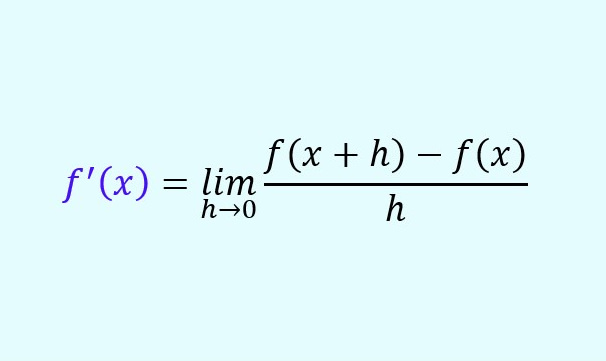 humble torrent
graceful ferry
?🙂
humble torrent
graceful ferry
?🙂
Is this really true?
humble torrent
graceful ferry
But here the LHS converges to infinity and RHS converges tk 1/e
Yes for the RHS that’s in the right direction
Wait
No, sadly you’ve manipulated the inequality inappropriately
The RHS must be smaller the way you’ve written it
So it’s a lower bound
Not a upper bound
graceful ferry
Okay
humble torrent
Now since you’ve got 1/e as a lower bound
Try and see if you can find 1/e as a upper bound
Or atleast as the limit of one
graceful ferry
Ok I will try
midnight plankBOT
@graceful ferry Has your question been resolved?
midnight plankBOT
Channel closed
Closed due to timeout
Use .reopen if this was a mistake.
midnight plankBOT
Available help channel!
Send your question here to claim the channel.
Remember:
• Ask your math question in a clear, concise manner.
• Show your work, and if possible, explain where you are stuck.
• After 15 minutes, feel free to ping <@&286206848099549185>.
• Type the command .close to free the channel when you're done.
• Be polite and have a nice day!
Read #❓how-to-get-help for further information on how to ask a good question, and about conduct in the question channels.
 twin kernel
For polar equations am I supposed to make a table or not
midnight plankBOT
twin kernel
For polar equations am I supposed to make a table or not
twin kernel
And if I used a table how much is the theta or rsupposed to go up by
 nova yoke
can you show what you are trying to solve
twin kernel
nova yoke
can you show what you are trying to solve
Any polar equations
Like this

But some videos don’t use tables so I’m confused
nova yoke
well if you're able to graph it without making a table, that seems fine unless the problem explicitly says to make a table
twin kernel
nova yoke
well if you're able to graph it without making a table, that seems fine unless t...
If I’m using table how much is the theta or r suppose to be going up each time
twin kernel
twin kernel
Like this
Like this one is 0,pi/6,pi/3 etc
nova yoke
it's up to you, unless someone asks for a particular step size
whatever helps you to draw the graph properly
if there are trig functions involved and you have to compute by hand then there are only a few angles you can do easily anyway
pi/6, pi/4, pi/3, pi/2 etc
nova yoke
yea except recognize that's in polar coordinates
meaning: radius = 2 and angle = 0
it's not the point (x=2,y=0)
(well in this case it is)
(but in general it won't be)
nova yoke
well consider the last entry in the table: (r,theta) = (-2, pi)
that's not the point x=-2 and y=pi
you have to do the conversion (either explicitly or mentally) if you want to plot the right point
nova yoke
twin kernel
Like the second one is (sqrt3,pi/6)?
yea, if you wanted to write this as an (x,y) point, i.e. rectangular coordinates, do you know how to do it?
twin kernel
How r these theta with pi graphed on the x axis
twin kernel
nova yoke
yea, if you wanted to write this as an (x,y) point, i.e. rectangular coordinates...
Yeah but what if I just wanted to graph it like that
nova yoke
wdym
you mean without converting?
just start at the origin, and mentally draw a line in the direction of angle theta, of length r.. your desired point is at the other end of that line
if r is negative then you go the opposite direction from theta
twin kernel
nova yoke
just start at the origin, and mentally draw a line in the direction of angle the...
U mean I just draw these points in random spots?
nova yoke
well pi/6 is the angle
aka 30 degrees
measured counterclockwise from the positive x axis
and sqrt(3) is the length
to get the x y coordinates you would do:
x = r cos(theta), y = r sin(theta)
where cos(theta) = sqrt(3)/2 and sin(theta) = 1/2
twin kernel
So I always have to convert them to Cartesian?
twin kernel
nova yoke
where cos(theta) = sqrt(3)/2 and sin(theta) = 1/2
I still don’t know how I would graph those points with the x y coordinates
nova yoke
the same way you graph any x,y points
twin kernel
nova yoke
the same way you graph any x,y points
So I always have to convert them into x,y first before plotting?
nova yoke
that's one way
the other way is to do what i said earlier
start at the origin, and draw an invisible line in the direction of angle theta, of length r
and when you reach the end, that's your point (r,theta)
twin kernel
nova yoke
start at the origin, and draw an invisible line in the direction of angle theta,...
I don’t understand what that means
midnight plankBOT
@twin kernel Has your question been resolved?
midnight plankBOT
Channel closed
Closed due to timeout
Use .reopen if this was a mistake.
Available help channel!
Send your question here to claim the channel.
Remember:
• Ask your math question in a clear, concise manner.
• Show your work, and if possible, explain where you are stuck.
• After 15 minutes, feel free to ping <@&286206848099549185>.
• Type the command .close to free the channel when you're done.
• Be polite and have a nice day!
Read #❓how-to-get-help for further information on how to ask a good question, and about conduct in the question channels.
 barren onyx
i thought answer was m+nC2 -mc2-nc2
 midnight plankBOT
barren onyx
i thought answer was m+nC2 -mc2-nc2
midnight plankBOT
barren onyx
i thought answer was m+nC2 -mc2-nc2
 rough birch
um
namely when we form a triangle we are choosing 3 points not 2 points
so replace your 2 with 3 and this fact is correct
you additionally will have a bit more complicated casework when you include A
barren onyx
rough birch
namely when we form a triangle we are choosing 3 points not 2 points
oh ye
barren onyx
rough birch
you additionally will have a bit more complicated casework when you include A
but the solution is different