#🔒 Need help figuring out what I'm doing wrong (iterating over a string)
182 messages · Page 1 of 1 (latest)
 spice niche
 chrome adderBOT
spice niche
```py
def check_palindrome(string):
n=len(string)/2
for i in string(0,n)...
chrome adderBOT
spice niche
```py
def check_palindrome(string):
n=len(string)/2
for i in string(0,n)...
@spice niche
 Python help channel opened
Remember to:
- Ask your Python question, not if you can ask or if there's an expert who can help.
- Show a code sample as text (rather than a screenshot) and the error message, if you've got one.
- Explain what you expect to happen and what actually happens.
:warning: Do not pip install anything that isn't related to your question, especially if asked to over DMs.
Closes after a period of inactivity, or when you send !close.
spice niche
so I know for a fact that the variable name string isn't the issue because I made another function that used the same variable name as an argument and it worked fine
ah I forgot to add the error
 shrewd arrow
In addition to the / operator, others exist.
When writing operators, it is often nice to place a space on either side, so tgat thry are visually seperated from the operands.
a + b vs a+b
spice niche
spice niche
ah I forgot to add the error
 spice niche
shrewd arrow
a + b vs a+b
spice niche
shrewd arrow
a + b vs a+b
I'm using a shitty 60% keyboard rn until my other one arrives so yea, I apologise for that
(it doesn't even have arrow keys and I need so swtich b/w wasd and arrow keys)
shrewd arrow
Is there other code you've not shown?
 verbal cosmos
The core of your problem is this expression:
string(0,n)
What should it do? A for-loop iterates over something, and this is the something.
shrewd arrow
I spotted that just before you posted. I was getting there, I was getting there.
spice niche
shrewd arrow
Is there other code you've not shown?
def word_count(string):
    return len(string)

def check_palindrome(string):
    n=len(string)/2
    for i in string(0,n):
        if (i!=-i):
            FLAG=False
            break
        else:
            FLAG=True
    return FLAG


print(check_palindrome("abcddcba"))
#print(word_count("Hello World!"))```The battle is not always to the string strong, nor the race to the swift.
spice niche
this is the full thing but the other function's not in use
shrewd arrow
!e py "abc"()
chrome adderBOT
shrewd arrow
!e ```py
"abc"()```
:x: Your 3.14 eval job has completed with return code 1.
001 | /home/main.py:1: SyntaxWarning: 'str' object is not callable; perhaps you missed a comma?
002 | "abc"()
003 | Traceback (most recent call last):
004 | File [35m"/home/main.py"[0m, line [35m1[0m, in [35m<module>[0m
005 | [31m"abc"[0m[1;31m()[0m
006 | [31m~~~~~[0m[1;31m^^[0m
007 | [1;35mTypeError[0m: [35m'str' object is not callable[0m
um?
I use i as a pointer to parse thru string and check the first against the last, second against the second last (n so forth)
I thought you could iterate over a string w a for loop
shrewd arrow
You can.
spice niche
how so?
verbal cosmos
Python doesn't have pointers per se.
You can iterate over a string; it gets you each letter as its own single character string:
for ch in string:
But that isn't what you wrote.
What did you intend to obtain from string(0,n) ?
shrewd arrow
Well, it's not what you've written.
spice niche
verbal cosmos
Python doesn't have pointers per se.
You can iterate over a string; it gets you ...
I think I'm mixing the for i in iterable with for i in range(first value, limit, increment)
verbal cosmos
Likely. They're both iterables 🙂
shrewd arrow
Start stop step.
spice niche
can I not specify how it moves thru the string without converting it to a list first
spice niche
i should be a pointer that can be used to point at both the start and end of the string
so i and -i
verbal cosmos
Ok. Then in python, that means an index into the string. An integer. And you've got a function which produces those integers.
shrewd arrow
!e py print("abc"[0]) print("abc"[1]) print("abc"[2]) print("abc"[-1]) print("abc"[-2]) print("abc"[-3])
chrome adderBOT
shrewd arrow
!e ```py
print("abc"[0])
print("abc"[1])
print("abc"[2])
print("abc"[-1])
print(...
:white_check_mark: Your 3.14 eval job has completed with return code 0.
001 | a
002 | b
003 | c
004 | c
005 | b
006 | a
so do I use a while loop instead?
verbal cosmos
No. A for loop is what you want.
shrewd arrow
You could, but a for loop is going to be the better choice.
verbal cosmos
If i is an index to the string, an integer, what values should it take on for the loop iterations?
spice niche
verbal cosmos
If `i` is an _index_ to the string, an integer, what values should it take on f...
i should be 0, 1, 2... and -i should be -1, -2, -3...
except.. I can't use -i, I'd need to compare it with -i + 1
verbal cosmos
That's ok. Let's take the first part.
What will produce the numbers 0, 1, 2 etc?
spice niche
a ranged for loop
verbal cosmos
Right, so write that bit now, here.
spice niche
for i in range len(string)(0,n)```BTW, a "ranged for loop" is just a for-loop which iterates over the result of range(.......). it's nothing special - the iteration just comes from the range.
That's close. Have you used range before?
shrewd arrow
!e py (123)()
chrome adderBOT
shrewd arrow
!e ```py
(123)()```
:x: Your 3.14 eval job has completed with return code 1.
001 | /home/main.py:1: SyntaxWarning: 'int' object is not callable; perhaps you missed a comma?
002 | (123)()
003 | Traceback (most recent call last):
004 | File [35m"/home/main.py"[0m, line [35m1[0m, in [35m<module>[0m
005 | [31m(123)[0m[1;31m()[0m
006 | [31m~~~~~[0m[1;31m^^[0m
007 | [1;35mTypeError[0m: [35m'int' object is not callable[0m
ah-
verbal cosmos
If you've used range before, what did it look like?
spice niche
spice niche
```py
for i in range len(string)(0,n)```
for i in range (0,n)```Right. That counts from 0 through to n-1. Which is what you want.
So inside the loop you've got i, the index of the left character. What gets you the left character itself?
spice niche
string[i]```Correct.
Now, let's compute j, the index of the right character.
What would that be?
spice niche
can't I just use -i + 1 ?
or is there some advantage to using j as a separate pointer?
verbal cosmos
1: you can't just use -i + 1 because it's not quite correct. We'll get there.
2: we're using j just to keep each step separated out so that we can talk about it.
spice niche
got it
verbal cosmos
So you're advocating using j = -i + 1 above.
Sorry, -i, I mistyped.
spice niche
ahhh-
verbal cosmos
If i=0, and string is "abc" like Opal example earlier. What does that make?
spice niche
if we go by what I said earlier that would make j = 1
verbal cosmos
Yeah. But what is the index of c ?
spice niche
the index of c is -1 or 2
verbal cosmos
Ok. So since we're counting backwards, we're subtracting i from some rightmost position.
If i=0 s the rightmost, then we want 2 (for the c).
Or -1, either will do.
So the starting (rightmost) position is when i=0 (meaning we can drop i when thinking about it).
This means the starting rightmost poition is -1, or 2. And we subtract i from that?
So write a j = for that.
spice niche
-# sorry, gimme a moment, I gotta afk rq
verbal cosmos
Me too. back in a few minutes.
spice niche
I'm back
spice niche
verbal cosmos
Ok. So since we're counting backwards, we're subtracting `i` from some rightmost...
j would be i - 1
spice niche
verbal cosmos
Me too. back in a few minutes.
also tyt~
spice niche
-# omg, I completely forgot that the start value in the range function was optional and that if you only pass one argument it assumes that that's the stop value :")
-# I should get something to eat cause my empty stomach isn't helping my empty head
verbal cosmos
spice niche
-# I should get something to eat cause my empty stomach isn't helping my empty h...
I just ate.
So: i - 1. This has a positive i in the expression. So as i goes up (index 1, index 2 etc) will j go up or down?
Also, you're starting from 2. Write the expression with 2 and things involving i (because i starts at 0 so it should just be 2 the first time around the loop).
 safe gust
(it might help to verify the current state of the code?)
verbal cosmos
We're building the for loop from scratch. No need yet.
So far we've got a for loop, i the left index, and we're computing j, the right index.
spice niche
-# I'm back from eating some food :p
spice niche
verbal cosmos
I just ate.
So: `i - 1`. This has a positive `i` in the expression. So as `i` g...
j goes down as i goes up, we can add a j -= 1 right b4 the loop repeats
verbal cosmos
I was hoping to compute j directly from each i instead of setting it at the start and adjusting it. Both work, but I want you to think about an expression for j
spice niche
verbal cosmos
I was hoping to compute `j` directly from each `i` instead of setting it at the ...
we could write j as j = -i - 1
verbal cosmos
Ok that makes j = -1 when i=0, and counts down. That will be fine.
So now you have an index for the left char and the right char. To compare those 2 characters, what do you do?
spice niche
if (i != j):
  FLAG = False
  break
else: FLAG = True```oh wait yea @.@
spice niche
spice niche
```py
if (i != j):
FLAG = False
break
else: FLAG = True```
if string[i] != string[j]:
  FLAG = False
  break
else: FLAG = True```Looks good. Let's see the entire function then.
spice niche
def check_palindrome(string):
    n=len(string)/2
    for i in range(n):
        j = -i - 1
        if (string[i] != string[j]):
            FLAG=False
            break
        else:
            FLAG=True
    return FLAG
the only issue would be if len(string) is an odd number, then we'd need to round up the divident
verbal cosmos
Up? Why up?
spice niche
cause we'd need the range for i to be long enough to cover the full string no?
verbal cosmos
But won't that be comparing the middle character... with itself? Always equal I'd hope.
SO it would work. But it would be unnecessary.
!e
So really, you can round down. Let me introduce you to the // operator:
print(5 / 2)
print(5 // 2)
:white_check_mark: Your 3.14 eval job has completed with return code 0.
001 | 2.5
002 | 2
oh wait yea, since the middle character's well.. in the middle it's obv equal to itself and doesn't need to be checked :")

but TYSM for being patient w me!!
verbal cosmos
So: is your function correct?
spice niche
I was just gonna check it loll
verbal cosmos
There are 2 ways to check:
- run it with various strings, look for mistakes
- eyeball its logic and ddecide if it makes sense
The second is faster for finding bugs, if they're there and if you recognise them.
The first is only as good as your test data.
Beware of bugs in the above code; I have only proved it correct, not tried it.
- Donald E. Knuth
spice niche
verbal cosmos
There are 2 ways to check:
- run it with various strings, look for mistakes
- ey...

looks like it works
 verbal cosmos
So first: why does that happen?
spice niche
verbal cosmos
So first: why does that happen?
cause we're trying to floor divide len(string) by two and that returns 0 which isn't iterable
verbal cosmos
No.
Number are not (whoops) iterable, and range(0) does work, though it produces no numbers.
But if range(0) produces no numbers, how many times does the loop run?
spice niche
it doesn't
verbal cosmos
Right. AKA zero times.
And where is FLAG defined? Inisde the loop.
verbal cosmos
Describe to me your human logic for checking the palindrome.
verbal cosmos
spice niche
so I could fix it with another elif
No. Why would that help? (What's your thinking here?)
spice niche
verbal cosmos
No. Why would that help? (What's your thinking here?)
if the n = 0 then we could return "invalid string input" instead of returning the flag value
verbal cosmos
But an empty string isn't invalid.
spice niche
that way the loop never runs unless it can
verbal cosmos
What about "a". That also shows the same behaviour, and it also is not invalid.
spice niche
could return True instead then
-# ~~ had to look up what a palindrome is again :")~~
verbal cosmos
Right. That's one approach: "early return" (before the end of the function) for the trivial case.
spice niche
cause both "a" and "" are read the same way front and back
verbal cosmos
But we don't need to. let's back up.
As a human, how do you decide if a string is a palindrome.
spice niche
verbal cosmos
As a human, how do you decide if a string is a palindrome.
if it is read the same way forward or back
verbal cosmos
And how do you check that. As a human.
Or more to the point, when you wrote this loop how were you thinking?
spice niche
I personally flip between a few ways, either read it left to right and then right to left, or the way I wrote the code
verbal cosmos
Test data: https://www.youtube.com/watch?v=eIty7RqbF9o

“Bob” by “Weird Al” Yankovic - HD Version
Listen to “Weird Al” Yankovic: https://weirdalyankovic.lnk.to/listenYD
Subscribe to the official “Weird Al” Yankovic YouTube channel: https://weirdalyankovic.lnk.to/subscribeYD
Watch more “Weird Al” Yankovic videos: https://weirdalyankovic.lnk.to/listenYC/youtube
Follow “Weird Al...
Ok, doing the left to right version, we can cast this as a theory, to be falsified or not, in the style of Karl Popper.
Theory: this string is a palindrome. Look along it, and if you find it isn't, it's false and you stop.
safe gust
maybe this is a simpler way to think about it: what is the definition of a palindrome?
verbal cosmos
No, we've got that. And we've got a function to test it.
I'm chasing down the thought process which leads to reliably defining FLAG.
Thus the theory falsification approach.
verbal cosmos
np
safe gust
but it's a good question to ask again after the code works.
verbal cosmos
@spice niche still with us? Or listening to the video?
spice niche
verbal cosmos
<@699606909338255381> still with us? Or listening to the video?
I'm here
verbal cosmos
So: does the idea of having a theory that this string is a plaindrome, then discoveing it isn't work for your thinking?
spice niche
yeah, that works
verbal cosmos
So, FLAG is the result of testing the theory.
If that's our theory, can we work with:
FLAG = True # maybe this is a palindrome
for ......
    if the characters don't match:
        FLAG = False # it's not a palindrome!
        break
return FLAG
The difference here is that FLAG is always set. Then corrected if it was wrong.
But regardless of how many times the loop runs, FLAG has a value.
Lot of things are written this way: set some initial values, then work on them. You had the set-the-value inside the loop, so it might not happen at all with a short string.
This one unconditionally sets the value before the loop.
spice niche
that is pretty helpful :0
verbal cosmos
Article about the song above, which is all palindromes: https://en.wikipedia.org/wiki/Bob_("Weird_Al"_Yankovic_song)
This "falsification" approach is describe here for science:
https://en.wikipedia.org/wiki/Falsifiability
and was introduced by Karl Popper:
https://en.wikipedia.org/wiki/Karl_Popper
Worth a read.
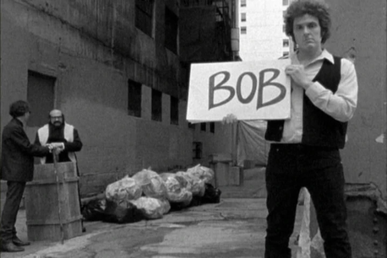
"Bob" is a song by "Weird Al" Yankovic from the 2003 album Poodle Hat. The song is a parody sung in the style of Bob Dylan, and each line of the lyrics is a palindrome, as is the title. For example, the song's first line is "I, man, am regal—a German am I".
The song did not chart at the time of its release, but later became the subject of crit...
Falsifiability is a standard of evaluation of scientific statements, including theories and hypotheses. A statement is falsifiable if it belongs to a language or logical structure capable of describing an empirical observation that contradicts it.
In the case of a theory, falsifiability requires that, given an initial condition, the theory must...
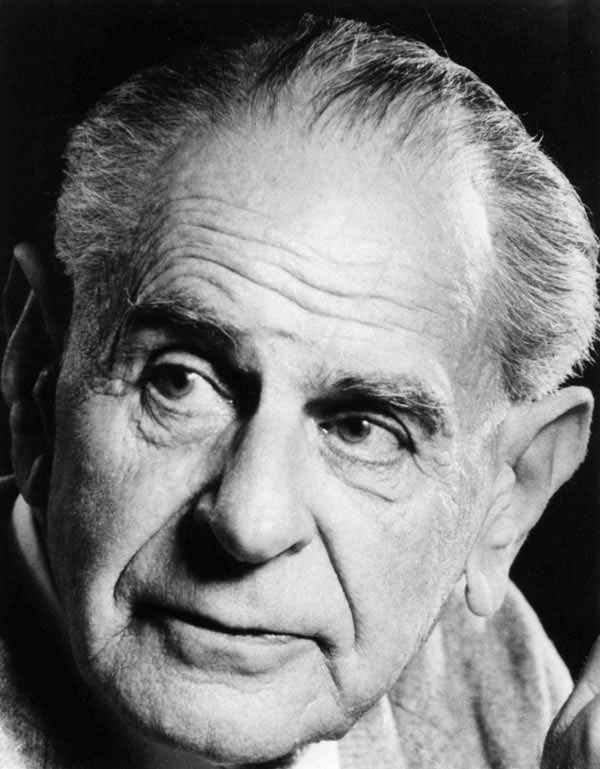
Sir Karl Raimund Popper (28 July 1902 – 17 September 1994) was an Austrian–British philosopher, academic and social commentator. One of the 20th century's most influential philosophers of science, Popper is known for his rejection of the classical inductivist views on the scientific method in favour of empirical falsification made possible b...
spice niche
verbal cosmos
Article about the song above, which is _all_ palindromes: https://en.wikipedia.o...
will 100% read thru these
tysm for the help and the patience!~
I really appreciate it
verbal cosmos
np, that's why we're here
shrewd arrow
@spice niche I would like to show you a thing.
Are you still around?
First, here's a link to the slice documentation.
!d slice
chrome adderBOT
class slice(stop, /)``````py

class slice(start, stop, step=None, /)```
Return a [slice](https://docs.python.org/3/glossary.html#term-slice) object representing the set of indices specified by `range(start, stop, step)`. The *start* and *step* arguments default to `None`.

Slice objects are also generated when [slicing syntax](https://docs.python.org/3/reference/expressions.html#slicings) is used. For example: `a[start:stop:step]` or `a[start:stop, i]`.

See [`itertools.islice()`](https://docs.python.org/3/library/itertools.html#itertools.islice) for an alternate version that returns an [iterator](https://docs.python.org/3/glossary.html#term-iterator).
Similar names: django.slice, term.slice
spice niche
shrewd arrow
Are you still around?
I'm still here, just stepped away from the computer
shrewd arrow
!e py print("abc"[::-1])Here is a quick shorthand for a slice that reverses.
chrome adderBOT
shrewd arrow
!e ```py
print("abc"[::-1])```Here is a quick shorthand for a slice that reverse...
:white_check_mark: Your 3.14 eval job has completed with return code 0.
cba
This is effectively py "abc"[None:None:-1]
I'll leave you to ponder how you might choose to take advantage of this.
spice niche
Ooooo~
I had the idea to slice the string in half, flip the latter half n compare but that seemed a little overcomplicated but I never thought of doing this (like this)
I also did think of flipping the string and comparing the og and the flipped string but didn't want too many loop statements by doing it the conventional way
I did end up doing just that tho
shrewd arrow
Strictly speaking, you need write no loops.
shrewd arrow
Definitely play around with slicing. It can be a pain in the arse, especially when going in reverse if you need something more specific than this.
But it's worth knowing about.
chrome adderBOT
 Python help channel closed for inactivity
This help channel has been closed. Feel free to create a new post in #1035199133436354600. To maximize your chances of getting a response, check out this guide on asking good questions.