#AoC 2022 | Day 9 | Solutions & Spoilers
1800 messages · Page 2 of 2 (latest)
 grave delta
 lost steppe
and access at index and index-1
grave delta
whole ass class there, just update the x, y attributes 😄
 rugged heron
🎉
 grave delta
wooooo
lost steppe
my thing was roughly
last = head
for cur in tail:
  # update cur wrt last
  last = cur
```which was quite convenientWhich route did you take?
lost steppe
me?
grave delta
no, doggo 😄
lost steppe
oh, which fix
rugged heron
grave delta
Which route did you take?
 vivid vergeBOT
events/advent_of_code/2022/9/python/script_day9.py lines 104 to 109
for index, (previous, knot) in enumerate(pairwise(knots), 1):
    new_knot = move_knot(previous, knot)
    knots[index].x = new_knot.x
    knots[index].y = new_knot.y

visited.add((knots[-1].x, knots[-1].y))``` frosty orbit
functional programmers seething
grave delta
mutate all the things!
lost steppe

for index in range(1, len(knots)):
    knots[index] = move_knot(knots[index-1], knots[index])
 placid torrent
    for direction, distance in data:
        for _ in range(distance):
            head = (head[0] + direction[0], head[1] + direction[1])
            for i, (prev, next) in list([head, *tails]).windowed(2).enumerated():
                if list(zip(prev, next)).mapped(lambda i: abs(i[0] - i[1])).max() > 1:
                    tails[i] = move_towards(prev, next)
            visited[tails[-1]] = True
Yep, that passes too
 lost steppe
(and is arguably simpler)
 lost steppe
my thing was roughly
```py
last = head
for cur in tail:
# update cur wrt last
...
lost steppe
lost steppe
my thing was roughly
```py
last = head
for cur in tail:
# update cur wrt last
...
for my own solution I also did mutation, but I also had head separate from tail 
placid torrent
lost steppe
for my own solution I also did mutation, but I also had head separate from tail ...
That's exactly what I did lmao
lost steppe
I still need to either pick a better hash table impl or implement my own thing...
placid torrent
lost steppe
I still need to either pick a better hash table impl or implement my own thing.....
What?
lost steppe
my solution is almost >1ms :/
too close for comfort
and I know the hash table is a big chunk of the runtime
like 2/3
I suspect my 1ms limit will be impossible soon enough, but not quite yet 😛
 novel berry
hope they have some cryptography based question this time. I love some of those
 grim lagoon
So uh is there a better way to do this than brute forcing all 12 directions and moving the tail?
For part 1
 shy monolith
yes
 valid ember
I just knew part two would be ||a longer rope||, messing up the logic from my solution to part 1.
My solution for both parts today: https://paste.pythondiscord.com/sulufasebi.py
It's not very efficient, but ¯_(ツ)_/¯
lost steppe
I was confused about the warning about new types of movements in the p2 description
 timber brook
I bet tomorrow's will also involve a coordinate plane
lost steppe
turns out my logic was fine already
timber brook
maybe some matplotlib
lost steppe
timber brook
I bet tomorrow's will also involve a coordinate plane
psyche, it's 4d hyperspace
 spiral storm
If I have an issue with my code Im allowed to ask here right?
timber brook
It'll probably have something to do with river currents
lost steppe
timber brook
We're at the bottom of a ravine
I haven't followed the story 🥲
frosty orbit
theres a story !?
lost steppe
🧝
 cosmic shore
my part_one() solutions works and i get the right answer, but for part_two() it always prints out 1, no matter what set of input instructions I use. I can’t see what i’m doing wrong… any help? https://hastebin.com/itixoqavey.py
Hastebin is a free web-based pastebin service for storing and sharing text and code snippets with anyone. Get started now.
timber brook
elf
 frosty orbit
timber brook
And you're a weird looking elf
frosty orbit
timber brook
And you're a weird looking elf
rude
lost steppe
||x||elf
timber brook
||s||elf
valid ember
lost steppe
turns out my logic was fine already
Ah right yeah. My logic for part 1 was to move the tail to the intersection of two sets: the cardinal neighbours of the head, and the ordinal+cardinal neighbours of the tail. It turns out this doesn't work if the head can move diagonally (the sets don't intersect).
lost steppe
ok, time to actually be at my keyboard to improve my solution from this morning
valid ember
So for part 2, I found the intersection of the ordinal+cardinal neighbours of both sets, then picked the coordinate out of these that has the minimum Manhattan distance to the head.
By head, I mean the previous knot in the rope.
lost steppe
why not just: if >1 L∞ norm, then move x and y closer by 1 if you can?
i.e. if max(xdist, ydist) > 1, move closer
and the move closer part is just x += sign(dx)
(same for y)
cosmic shore
cosmic shore
my `part_one()` solutions works and i get the right answer, but for `part_two()`...
I believe it has to do with my Knot.follow(a, b) method, but im not sure what needs to be changed
valid ember
lost steppe
why not just: if >1 L∞ norm, then move x and y closer by 1 if you can?
Yeah, that's what I do. What I explained above is just the logic of figuring out where to move.
valid ember
lost steppe
and the move closer part is just x += sign(dx)
Oh right yeah  I find it a bit easier to reason in terms of sets than numbers, for some reason.
 golden socket
we're definitely going to have to like, climb out of the ravine somehow
def some 3d pathfinding thing
 light echo
Finally got it
wow
from collections import namedtuple


def tail_in_range(tail: list[int], head: list[int]) -> bool:
    return (tail[0] - head[0] in [-1, 1, 0]) and (tail[1] - head[1] in [-1, 1, 0])


def position_change(val_tail: int, val_head: int) -> int:
    if val_tail - val_head > 0:
        return -1
    elif val_tail - val_head < 0:
        return 1
    else:
        return 0


def solve(amt: int) -> int:
    Movement: namedtuple = namedtuple("Movement", "d n")
    movements = [Movement(d, int(n)) for d, n in [m.split() for m in open("input.txt").read().strip().splitlines()]]

    seen = list()
    knots: list[list[int]] = [[0, 0]] * amt
    seen.append(knots[0])
    changes: dict[str: list[int]] = {"U": [0, 1], "D": [0, -1], "L": [-1, 0], "R": [1, 0]}

    for move in movements:
        for _ in range(move.n):
            dx, dy = changes[move.d]
            knots[0] = [knots[0][0] + dx, knots[0][1] + dy]

            for i in range(1, amt):
                tail = knots[i]
                head = knots[i - 1]

                if not tail_in_range(tail, head):
                    match move.d:
                        case 'U' | 'D':
                            knots[i] = [tail[0] + position_change(tail[0], head[0]),
                                        tail[1] + position_change(tail[1], head[1])]

                        case 'L' | 'R':

                            knots[i] = [tail[0] + position_change(tail[0], head[0]),
                                        tail[1] + position_change(tail[1], head[1])]
            if knots[-1] not in seen:
                seen.append(knots[-1])

    return len(seen)


print(f"Part 1: {solve(2)}")
print(f"Part 2: {solve(10)}")```it used to be way longer
then decided to start from scratch
Thoughts/improvements?
 fossil hemlock
part 1 :
from dataclasses import dataclass

def read_file(filepath):
    with open(filepath) as file:
        return file.read()

@dataclass
class Coord():
    x: int
    y: int
    def __hash__(self):
        return hash((self.x, self.y))

head_movements = {
    "R": lambda coord: Coord(coord.x + 1, coord.y),
    "L": lambda coord: Coord(coord.x - 1, coord.y),
    "U": lambda coord: Coord(coord.x, coord.y + 1),
    "D": lambda coord: Coord(coord.x, coord.y - 1),
}

def dist(first, second):
    return Coord(x=first.x-second.x, y=first.y-second.y)

def norm(coord):
    n = Coord(x=0, y=0)
    if coord.y != 0:
        n.y=coord.y//abs(coord.y)
    if coord.x != 0:
        n.x=coord.x//abs(coord.x)
    return n

def tail_movements(tail_coord, head_coord):
    d = dist(head_coord, tail_coord)
    if abs(d.x) <= 1 and abs(d.y) <= 1:
        return tail_coord

    n = norm(d)
    return Coord(x=tail_coord.x+n.x, y=tail_coord.y+n.y)

def part1(content):
    head_position = tail_position = Coord(x=0, y=0)
    visited = {head_position}

    for instr in [l.split(" ") for l in content.strip().split("\n")]:
        for i in range(int(instr[1])):
            head_position = head_movements[instr[0]](head_position)
            tail_position = tail_movements(tail_position, head_position)
            if tail_position not in visited:
                visited.add(tail_position)

    return len(visited)

input_data = read_file("../input.txt")
print(part1(input_data))
 misty cradle
part2 is hard
golden socket
it's just like part 1
fossil hemlock
and part2 with the same design
def part2(content):
    nodes = [Coord(x=0, y=0)] * 10
    visited = {Coord(x=0, y=0)}

    for instr in [l.split(" ") for l in content.strip().split("\n")]:
        for i in range(int(instr[1])):
            nodes[0] = head_movements[instr[0]](nodes[0])
            for i, n in enumerate(nodes):
                if i == 0:
                    continue
                coord = tail_changes(n, nodes[i-1])
                if coord == n:
                    break
                nodes[i] = coord
            if nodes[-1] not in visited:
                visited.add(nodes[-1])

    return len(visited)
took me 1h TT__TT
there's more than 3 indentations levels too, which is unacceptable
 idle flame
fossil hemlock
and part2 with the same design
```py
def part2(content):
nodes = [Coord(x=0,...
idle flame
fossil hemlock
and part2 with the same design
```py
def part2(content):
nodes = [Coord(x=0,...
fwiw str.splitlines exists
it accounts for CRLF and LF at the same time
misty cradle
misty cradle
trying to figure out how to do the diagonal stuff
solved
timber brook
idle flame
it accounts for CRLF and LF at the same time
open() does that for you with universal line endings.
idle flame
for real?
timber brook
!pep 278
vivid vergeBOT

**PEP 278 - Universal Newline Support**
Status
Final
Python-Version
2.3
Created
14-Jan-2002
Type
Standards Track
timber brook
it's the default in python 3
 devout locust
what am i misunderstanding about part2?
this step doesnt make sense to me
 timber brook
when the head starts going up, each knot needs to go 1 in the direction of the next knot
(if the distance is > 1)
devout locust
so why isnt that panel like ⬇️
 timber brook
after 2 moves, 3 is not directly to the left of 3. It's slightly down as well.
 heady pike
def move_rope(data, length):
    visited = set((0, 0))
    rope = [np.array([0, 0]) for _ in range(length)]

    for row in data.splitlines():
        dr, x = row.split()
        for _ in range(int(x)):
            rope[0] += {'R': (1, 0), 'L': (-1, 0), 'U': (0, -1), 'D': (0, 1)}[dr]
            for i in range(1, len(rope)):
                dir_vector = rope[i-1]-rope[i]
                if abs(dir_vector).max() > 1:
                    rope[i] += dir_vector.clip(-1, 1)
                    if i == len(rope)-1:
                        visited.add(tuple(rope[i]))
    return len(visited)```
1st day after "learning" numpy. Working with vectors is a lot nicer than using tuples.You know you can use * on the list?
numpy will unpack all the list instances to its own values
np.array([[0, 0]] * length)
heady pike
ah thank you, thought it was gonna do the usual thing
timber brook
You could also do ```py
np.array([0] * 10 * 2).reshape([10, 2])
array([[0, 0],
[0, 0],
[0, 0],
[0, 0],
[0, 0],
[0, 0],
[0, 0],
[0, 0],
[0, 0],
[0, 0]])
not sure i get this either,
H moves one up, 1 moves one up diagonally to the right to stay in range, 2 moves where 1 is, 3 moves where 2 was, etc
timber brook
all move (possibly diagonally) to stay in range of the next knot
devout locust
but theyre in range if only 1 moves diagonally and everything shifts to the right? no?
 willow cedar
you're moving every time instead of moving when the one in front of you is over 1 away.
timber brook
so you should use pairwise
heady pike
any other things that could've been done smarter with numpy?
willow cedar
heady pike
any other things that could've been done smarter with numpy?
Not convinced this was a great numpy problem. But willing to be convinced if there's a great np solution.
heady pike
well just for ease of use operations wise
willow cedar
devout locust
so why isnt that panel like ⬇️
because you're missing the middle state?
heady pike
oh you used complex numbers that solves any need to use arrays
devout locust
whats the middle state then
willow cedar
start:
......
......
......
....H.
4321..
h moves 1 up:
......
......
....H.
......
4321..
1 follows:
......
......
....H.
....1.
432...
2 follows:
......
......
....H.
...21.
43....
etc....
......
......
....H.
.4321.
5.....
after step "1 follows:" knot 2 can move to where 1 was and be in range
why would it move diagonally up to the right and not just right
willow cedar
devout locust
after step "1 follows:" knot 2 can move to where 1 was and be in range
they always move diagonal
if they're not on the same row/col
timber brook
What I did was put the distance into a numpy array and used the sign function
np.sign(head - tail)
Ironically, I think I did part 1 wrong, but still ended up with the right answer.
willow cedar
devout locust
after step "1 follows:" knot 2 can move to where 1 was and be in range
If the head is ever two steps directly up, down, left, or right from the tail, the tail must also move one step in that direction so it remains close enough.
Otherwise, if the head and tail aren't touching and aren't in the same row or column, the tail always moves one step diagonally to keep up:
devout locust
i am actually blind
lmao i did part1 without taking this into account, false positive i guess
heady pike
i think the easiest solution for part1 makes any consideration of that unnecessary
willow cedar
You got the right count, but the wrong places. That is lucky I'm surprised the input didn't account for that.
heady pike
if abs(rope[i+1]-rope[i])>=2: how does this work with c numbers?
willow cedar
heady pike
`if abs(rope[i+1]-rope[i])>=2:` how does this work with c numbers?
abs() returns the magnitude.
timber brook
negatives are important for direction.
heady pike
ah, math has been too long
grave delta
lost steppe
I was confused about the warning about new types of movements in the p2 descript...
This made zero sense to me. I can only assume (hah) there's an assumption people are likely to make in P1? I gave it zero consideration and my P1 logic for movement was unchanged for P2.
fossil hemlock
^ I used litteraly the same movement algo
lost steppe
lost steppe
it's not the right metric
it happens to work for funky reasons
willow cedar
lost steppe
eww, using magnitude >=2 is just...disturbing
"if you're more than 2 away" is literally the metric from the puzzle. 🙂
lost steppe
willow cedar
"if you're more than 2 away" is literally the metric from the puzzle. 🙂
2 in L^∞ metric, no?
heady pike
you'd be screwed if it was something other than 2 right?
willow cedar
well it was better than my original method, which calculated all the neighbors and then checked for membership.
near = lambda x: {x+complex(dx,dy) for dx in (-1,0,1) for dy in (-1,0,1)}
if rope[i+1] not in near(rope[i]):
it depends a bit, but basically
0 is ok, 1 is not, 2 is ok, 3 and above I think is not ok
heady pike
i guess still a neat trick if it works
i guess you could also just do max(abs(x.real),abs(x.imag)) > 1
lost steppe
heady pike
i guess still a neat trick if it works
more like eww
heady pike
haha
fossil hemlock
def next_tail_pos(tail_coord, head_coord):
    d = dist(head_coord, tail_coord)
    if abs(d.x) <= 1 and abs(d.y) <= 1:
        return tail_coord

    n = norm(d)
    return Coord(x=tail_coord.x+n.x, y=tail_coord.y+n.y)
this is how I did it
timber brook
is norm() like the sign() function?
lost steppe
normalize would be the better term
fossil hemlock
idk what's the sign function ?
timber brook
!d numpy.sign
vivid vergeBOT
numpy.sign(x, /, out=None, *, where=True, casting='same_kind', order='K', dtype=None, subok=True[, signature, extobj]) = <ufunc 'sign'>```
Returns an element-wise indication of the sign of a number.

The [`sign`](https://numpy.org/devdocs/reference/generated/numpy.sign.html#numpy.sign "numpy.sign") function returns `-1 if x < 0, 0 if x==0, 1 if x > 0`. nan is returned for nan inputs.

For complex inputs, the [`sign`](https://numpy.org/devdocs/reference/generated/numpy.sign.html#numpy.sign "numpy.sign") function returns `sign(x.real) + 0j if x.real != 0 else sign(x.imag) + 0j`.

complex(nan, 0) is returned for complex nan inputs.give it a number and it will return -1 if the number is negative, +1 if it's positive, and 0 if it's 0
fossil hemlock
yes
lost steppe
is normalization even meaningful in L^∞ norm?
timber brook
To me, normalization is clamping a number between -1,1
fossil hemlock
it gives you the direction to go to get closer to the head
heady pike
yea but normalization wouldn't work for (2,1)
lost steppe
timber brook
To me, normalization is clamping a number between -1,1
normalization for vectors scale the vector to length 1
fossil hemlock
and since the max movement distance is limited to [-1, 1], the direction and the "offset" for the next move are the same thing
lost steppe
lost steppe
normalization for vectors scale the vector to length 1
which is unambiguous for the regular euclidean norm
 runic mirage
timber brook
To me, normalization is clamping a number between -1,1
runic mirage
timber brook
To me, normalization is clamping a number between -1,1
I was working on figuring out the most efficient way to do this, and what I came up with so far was min(max(x, -1),1). Has anyone found anything shorter?
lost steppe
timber brook
To me, normalization is clamping a number between -1,1
clamping is not normalization in the math sense
you scale to normalize
clamping is...clamping
fossil hemlock
runic mirage
I was working on figuring out the most efficient way to do this, and what I came...
!! you're a genius, I can actually use that as impl of my norm() func
fossil hemlock
heady pike
can't you just divide x/abs(x)
that's exactly that, with a a little handling if x is 0
fossil hemlock
lost steppe
`x/||x||` is normalizing in general
do you think min(max)) is faster than the math norm with the extra ifs ?
lost steppe
lost steppe
`x/||x||` is normalizing in general
which is projecting onto the unit circle
only the unit circle in our L^∞ norm is a square 😛
lost steppe
fossil hemlock
do you think min(max)) is faster than the math norm with the extra ifs ?
(if you cared about such level of optimization you wouldn't use python)
fossil hemlock
I'm just interested
I hate my implementation if the 2 ifs to check if the x/y are 0 or not
grave delta
lost steppe
(if you cared about such level of optimization you wouldn't use python)
Of course you would. Stop slow-shaming Python you brute
fossil hemlock
it's ugly af
lost steppe
fossil hemlock
it's ugly af
do the cleaner impl
lost steppe
fossil hemlock
which is ?
def clamp(x):
  return max(-1,min(1, x))
That's a good one, I can use that to chop a couple characters off. ```py
min(max(x, -1),1) # OLD
x/max(abs(x),1) # NEW
imo
lost steppe
runic mirage
That's a good one, I can use that to chop a couple characters off. ```py
min(max...
why do you need the max?
runic mirage
or even better
runic mirage
x/abs(x or 1)```oh div by 0
err, didn't mean to reply to that
runic mirage
yup
willow cedar
ok I think this looks a little messier, but no abs(complex) for you puritans.
if not(-1<=(a := rope[i].real - rope[i+1].real)<=1):
    rope[i+1] += a//abs(a)
if not(-1<=(b := rope[i].imag - rope[i+1].imag)<=1):
    rope[i+1] += b//abs(b)*1j
*1j ?
willow cedar
fossil hemlock
*1j ?
complex numbers.
fossil hemlock
witchcraft
grave delta
can do anything you want if you can just make up numbers
lost steppe
my impl went like
 runic mirage
fossil hemlock
*1j ?
runic mirage
fossil hemlock
*1j ?
Python uses j instead of i, often math uses i for "imaginary" numbers
lost steppe
signum is what you want here
fossil hemlock
runic mirage
Python uses j instead of i, often math uses i for "imaginary" numbers
oh no I just hate math in general. j or i it's not really the problem lol
lost steppe
math good :V
runic mirage
This is my implementation for the tail following
 lost steppe
runic mirage
This is my implementation for the tail following
lost steppe
runic mirage
This is my implementation for the tail following
yeah, that's the same as I did except for using a sign function
runic mirage
runic mirage
This is my implementation for the tail following
items is a dict of py { 0: [0,0], 1: [0,0], ... }where items[0] is the head and items[max(items.keys())] is the end of the tail
I suppose I could use list with enumerate instead of a dict
fossil hemlock
I tried to enumerate a slice of items except the first one and I got so confused : the index python gives you is the index in the slice, not the index in the list
lost steppe
separating the head and the tail makes the code a bit neater
willow cedar
fossil hemlock
oh no I just hate math in general. j or i it's not really the problem lol
so complex numbers are also represented as tuples of 2 numbers, which is what we have here.
the nice thing about complex numbers though, unlike tuples of numbers, is that you can add/subtract them.
for instance here was how I handled moving the head:
path = {'L':-1,'R':1,'U':1j,'D':-1j}
rope[0] += path[line[0]]
whatever the direction is, I just add that to the head.
fossil hemlock
vade retro
runic mirage
lost steppe
separating the head and the tail makes the code a bit neater
I thought about it, but I ended up not really seeing any reason to
fossil hemlock
willow cedar
so complex numbers are also represented as tuples of 2 numbers, which is what we...
so what's you're saying
you couldn't be bothered to write your own abstraction so you used one that did pretty much what you wanted
I wrote my own abstraction, I feel dumb now
lost steppe
willow cedar
so complex numbers are also represented as tuples of 2 numbers, which is what we...
1j**'RUL'.index(x) you could code golf that for fun
willow cedar
lost steppe
`1j**'RUL'.index(x)` you could code golf that for fun
I'm trying to avoid golf.
other than anything I accidentally tursly right cause I hate excess code.
lost steppe
but this is actually a cute trick 😭
willow cedar
lost steppe
but this is actually a cute trick 😭
It is a cute trick though. 🙂
lost steppe
but yeah, I don't code golf much anymore
I had fun code golfing in C a while back
it teaches you weird corners of the language...
lost steppe
willow cedar
ok I think this looks a little messier, but no abs(complex) for you puritans.
``...
abs(int) is fine
if abs(a := rope[i].real - rope[i+1].real) > 1:
    rope[i+1] += a//abs(a)
if abs(b := rope[i].imag - rope[i+1].imag) > 1:
    rope[i+1] += b//abs(b)*1j
(alcohol pun not intended)
fossil hemlock
a shame there's no 3 ways operator in python
fossil hemlock
really ? why did it get removed ?
lost steppe
idk the rationale
stuff like sorted could also accept cmp functions rather than key functions
fossil hemlock
found this : https://peps.python.org/pep-0207/
golden socket
fossil hemlock
a shame there's no 3 ways operator in python
yk... rust has a built-in cmp method 👀
novel berry
lost steppe
there was one back in the day
we already had that discussion a while ago on golf chat
lost steppe
C++ recently got <=>
novel berry
else the golf would've been way loweer
lost steppe
(spaceship operator)
fossil hemlock
golden socket
yk... rust has a built-in cmp method 👀
I'm trying to learn rust, but all those "weird" things with lifetime and borrowing are making my life difficult 🙂
lost steppe
python has made you soft 😛
fossil hemlock
it's a whole new concept for me
lost steppe
I guess coming from something like python it might be a bit much
novel berry
lost steppe
python has made you soft 😛
give it 5 years and code won't be needed to be written. chatgpt ftw
fossil hemlock
well it's pretty unique right : you declare a variable and call a function on it; now the variable is destroyed
lost steppe
coming from C and C++ it felt not so weird
fossil hemlock
if you move everything I guess not
golden socket
I'm pretty sure modern C++ uses ownership semantics a lot
fossil hemlock
but I haven't given up yet, am doing the advent of code in all 3 languages (at least trying)
lost steppe
golden socket
I'm pretty sure modern C++ uses ownership semantics a lot
it doesn't have a destructive move though
std::move is only a cast
but sure, there is ownership semantics in things like unique_ptr
grim lagoon
fossil hemlock
but I haven't given up yet, am doing the advent of code in all 3 languages (at l...
I can’t do it in one 
lost steppe
ok cool, moving away from a hash map slashes my time to 1/3
<1ms dream lives another day
golden socket
how do you maintain the count of what you've visited? BTreeSet?
timber brook
hash a struct?
golden socket
hm?
cosmic shore
my part_one() solutions works and i get the right answer, but for part_two() it always prints out 1, no matter what set of input instructions I use. I can’t see what i’m doing wrong… any help? https://hastebin.com/itixoqavey.py
Hastebin is a free web-based pastebin service for storing and sharing text and code snippets with anyone. Get started now.
 sinful tulip
def solve(n: int, data: str) -> int:
    ks = [0] * n
    v = {0}

    def update(h, t):
        d = h - t
        return (
            t
            if abs(d) < 1.5
            else t
            + complex(
                int(d.real / (abs(d.real) - 0.1)), int(d.imag / (abs(d.imag) - 0.1))
            )
        )

    for d, s in get_tuples(data):
        w = {"U": 1j, "D": -1j, "R": 1, "L": -1}[d]
        for _ in range(int(s)):
            ks[0] = ks[0] + w
            for i in range(1, n):
                ks[i] = update(ks[i - 1], ks[i])
            v.add(ks[-1])

    return len(v)
 trim garden
cosmic shore
my `part_one()` solutions works and i get the right answer, but for `part_two()`...
trim garden
cosmic shore
my `part_one()` solutions works and i get the right answer, but for `part_two()`...
what looks like is happening is that your rope is "detatching", i.e. you aren't covering all possible movement cases and so part of the rope just stops moving forever
cosmic shore
thank you, I will double check my follow(self, other) function and make sure im covering all the cases
trim garden
because sometimes when i call follow() it doesn't go to any of the if statements
 warm spindle
I need some help figuring out what's going on with my code. It works for both of the example cases, but it's too low as as soon as I try it on my actual input
https://paste.pythondiscord.com/idopodipuc
trim garden
if i put a else clause at the end the function goes to that a lot
which shouldn't be happening
trim garden
remember that with the 10 knots there are more possible movement cases
as stated on the website
then with the 2 knots
cosmic shore
i see that it says that, but it also says
Each knot further down the rope follows the knot in front of it using the same rules as before.
so im not sure what these new rules / cases are
trim garden
consider this example, what happens if you move up twice?

when knot 5 is moved, knot 6 will be 2 down and 2 to the left from it
on the 2nd move
cosmic shore
ahh, so now it isnt guaranteed that a knot will be at most, 2 units away from another knot
now it can be 3?
trim garden
by 2 units do you mean 3 Manhattan distance?
cosmic shore
yes
trim garden
cosmic shore
now it can be 3?
perhaps (yes)
small thing: the way you have your logic structured would be a great use for match
cosmic shore
in what way?
trim garden
some other cases are also slipping through upon further inspection
such as this # other.x = self.x + 1, other.y = self.y - 1
cosmic shore
i understand for the move(self, direction) command I can change it to python def move(self, direction): match direction: case ‘R’: self.x += 1
trim garden
perhaps an iterative approach would be less error-prone then manually checking all the possible conditions
since there are more of them now
warm spindle
warm spindle
I need some help figuring out what's going on with my code. It works for *both* ...
Alright, nice. Found the case I was missing :)
cosmic shore
trim garden
perhaps an iterative approach would be less error-prone then manually checking a...
yea as I was writing it all out, I knew there had to be a better way… I just couldn’t figure out how it would look
trim garden
consider the itertools.permutations function
cosmic shore
i will take a look at the documentation for it right now
trim garden
also, what's the relationship between other.x - self.x, other.y -self.y and the actual change you want in the position?
that would be something to consider
cosmic shore
im not sure im totally following, but I will try messing around with it for a bit
lost steppe
golden socket
how do you maintain the count of what you've visited? BTreeSet?
an array of bools
trim garden
adjacency matrix !! (jok)
golden socket
lost steppe
an array of bools
ah, nice. what n did you get? it's probably only like 200 right?
lost steppe
200 is enough I think, I went a bit higher to be safe
oh cool, the point counting went from like 2/3 of runtime to <10%
I wonder if the simulation of the thing could be made faster, I can see some potential for simd, but that feels like way too much work
golden socket
lost steppe
oh cool, the point counting went from like 2/3 of runtime to <10%
yeah minimizing n would improve it quadratically
lost steppe
golden socket
yeah minimizing `n` would improve it quadratically
why?
I think it's just hashmaps having a really big constant factor
golden socket
you have to loop over all points to see which are true right?
lost steppe
the complexity should be the same
no
when I try setting a point, if the current value is false increment a counter as well
lost steppe
right, it would probably help
though the array should still be faster
this is basically a hashmap with perfect hashing
golden socket
yeah it's direct addressing
lost steppe
hmm, I think simd is actually doable
but a bit awkward
you compute manually until you have a diagonal like this, i.e. the head (1) is 5 along, next tail piece lags one behind, next tail piece one more behind, and so on
....1
...2
..3
.4
5
the next element on row 2 depends on 2 and 1
the next element on row 3 depends only on 2 and 3
and so on
so no data dependencies
so you can compute the next diagonal in parallel
cosmic shore
trim garden
that would be something to consider
ok i rewrote follow to be a bit more clear, and i even put comments to make sure i was covering all cases, but I’m still only getting 1 as my answer
Hastebin is a free web-based pastebin service for storing and sharing text and code snippets with anyone. Get started now.
lost steppe
lost steppe
so you can compute the next diagonal in parallel
(but god I don't want to write that)
but it could give a significant speedup
if you shove coords in 8 or 16 bits, potentially a really big speedup
4x or maybe 8x
cosmic shore
im covering the cases where the tail a knot needs to move North, East, South, West, Northeast, Northwest, Southeast, Southwest
idk what other possible moves it could even make
lost steppe
the tail can only move in those directions
cosmic shore
im confused lol my brain is melting
lost steppe
how are you covering those cases?
cosmic shore
https://hastebin.com/ohobaqokas.py in the Knot.follow(self, other) function here
Hastebin is a free web-based pastebin service for storing and sharing text and code snippets with anyone. Get started now.
with a very long if/elif chain that im sure can be made better but its all i got at the moment
lost steppe
that's not all cases in part 2
you can get a case like
..B
...
A..
(and yeah, there are better ways to do this that is not hard coding cases)
cosmic shore
you can have that case?
oh if B is previously northeast of A, and then B gets pulled northeast again due to C moving somewhere
lost steppe
...  ..3  ..3
..3  ...  ..2
.2.  .2.  ...
1..  1..  1..
(I probably reversed the numbering the problem used)
cosmic shore
i understand the scenario youre trying to describe
i think i know what i need to add to account for that, but still lost on how to use itertools.permutations to make it all very clean and concise
lost steppe
you can look at the differences in coordinates
that will tell you if you need to move (chrcking distance) and in which direction to move
 worthy igloo
oh my god
i bet someone else did this as well
but this working
made me so happy

LMAO
GLORIOUS
golden socket
my why didn't you just use a loop
 dapper anvil
can't have a loop in your rope
dapper anvil
U 2
D 2
L 1
R 1
L 1
R 1
B A
 wind hawk
hacks
 spare ice
can anyone explain to me how to do part 2 of todays challenge? I'm not quite sure on how to do it.
 analog bolt
basically in part 1 you have a head knot and a tail knot
and in part 2 you get a chain of multiple knots
spare ice
yup i understand that part
analog bolt
I was trying to give a better explanation but came up short sorry XD
spare ice
yea no like i understand the problem its asking
its just im not quite sure on how to solve it
analog bolt
if you have a chain: T-1-2-3-4-H
Then 4 behaves as H's tail, and as 3's head
H is the only one that moves and then you have to update all the tails in a descending order, hopefully with the same logic you already have defined for part 1
spare ice
well the way i solved part 1 was just to simulate the entire movement and then log the unique positions that the tail visited
however the problem i have with part 2 is this (the example)

im not sure why the 4,3,2 also moves up with 1
 cerulean gorge
they move up-right with 1
spare ice
but cant they stay below and that would still be okay? as 2 is diagonal to 1?
cerulean gorge
2 would not touch 1
analog bolt
did you make a visualisation for this day die?
cerulean gorge
yep
analog bolt
can I see?
cerulean gorge
spare ice
oh damn thats neat
spare ice
cerulean gorge
```
....H.
....1.
432...
```
if they didn't move
okay my brain is absolutely dead. lets say the roped ended at 4, would that have been an okay move then?
cerulean gorge
spare ice
okay my brain is absolutely dead. lets say the roped ended at 4, would that have...
2 and 1 don't touch in my post
there's a column separating them
rugged heron
dapper anvil
can't have a loop in your rope
Where do you think the knots came from??
cerulean gorge
Start:
......
....H.
4321..
Head moves:
....H.
......
4321..
1 Follows:
....H.
....1.
432...
2 Follows:
....H.
...21.
43....
3 Follows:
....H.
..321.
4.....
4 Follows:
....H.
.4321.
......
What do you use to make these UIs?
cerulean gorge
!pypi nurses_2
vivid vergeBOT

A widgetful and async-centric library for terminal graphics.
warm spindle
cool
analog bolt
rugged heron
Where do you think the knots came from??
something something planck length something something quantum mechanics
spare ice
cerulean gorge
Start:
```
......
....H.
4321..
```
Head moves:
```
....H.
......
4321..
```
1 F...
okay thank you for making the visualization but im still a bit confused
....H.
....1.
432...

  to

....H.
...21.
43....
why did 2 have to move up? could it not have move to the right? like
....H.
....1.
43.2..
that's not how the rules specify it should move
spare ice
cerulean gorge
that's not how the rules specify it should move
so it also has try to follow the direction given? like in this case Up?
cerulean gorge
spare ice
so it also has try to follow the direction given? like in this case Up?
Otherwise, if the head and tail aren't touching and aren't in the same row or column, the tail always moves one step diagonally to keep up:
spare ice
cerulean gorge
> Otherwise, if the head and tail aren't touching and aren't in the same row or ...
thank you so much
i must have misread that
cerulean gorge
illustrated with the example
.....    .....    .....
.....    ..H..    ..H..
..H.. -> ..... -> ..T..
.T...    .T...    .....
.....    .....    .....

.....    .....    .....
.....    .....    .....
..H.. -> ...H. -> ..TH.
.T...    .T...    .....
.....    .....    .....
np
 stone vapor
is it guaranteed that s is always at the bottom left corner?
lost steppe
you know what would be fun? up the ante and make this problem higher dimensional
RLUDIO
golden socket
stone vapor
is it guaranteed that s is always at the bottom left corner?
it doesn't matter where s is
 odd star
s can be wherever you want it to be since it's technically an infinite board
stone vapor
oh wait yeah lmao
odd star
I think most people would've had the start be 0,0
stone vapor
i was gonna use numpy for this but ngl i might just use a cartesian plane
odd star
but you could set it to like 69,420 and the code would still work
lost steppe
lost steppe
you know what would be fun? up the ante and make this problem higher dimensional
(this won't at all screw people who used complex numbers over)
golden socket
lost steppe
you know what would be fun? up the ante and make this problem higher dimensional
conway's 4d rope tomorrow
dapper anvil
so i didn't specify a starting location and only counted the distance.
lost steppe
against my better judgement I wrote the setup to be able to have simd...
odd star
lost steppe
(this won't at all screw people who used complex numbers over)
time to implement RxC
lost steppe
now I would have to think about how to actually simd this operation
    for j in i..N {
      let cur_x = diag_x[j];
      let head_x = diag_x[j-1];
      let dx = head_x - cur_x;

      let cur_y = diag_y[j];
      let head_y = diag_y[j-1];
      let dy = head_y - cur_y;

      let distx = dx.abs();
      let disty = dy.abs();

      if distx.max(disty) >= 2 {
        diag_out_x[j] = diag_x[j] + dx.signum();
        diag_out_y[j] = diag_y[j] + dy.signum();
      }
    }
(and learn how I do such intrinsics in rust)
 undone apex
hey any1 minds to look into my code i get the example correctly everything moves as it should but i cant get my puzzle input to work i have no clue whats wrong
odd star
dapper anvil
so i didn't specify a starting location and only counted the distance.
that'd basically be like starting at 0,0 tho
since at the start the rope should be 0,0 distance from the start
trim garden
lost steppe
you know what would be fun? up the ante and make this problem higher dimensional
id love that
100% agree
odd star
it'd be limited at 4D I think
since it'd be annoying to introduce new LR equivalents for each newer dimension
golden socket
odd star
since it'd be annoying to introduce new LR equivalents for each newer dimension
who says you have to stick to letters :P
1 -3
3 10
``` means move -3 in dimension 1, +10 in dimension 3that way you can use any hashable as a dimension 
basically what i had in mind for my infinity tictactoe
you could also use lower/upper case, or odd and even numbers.
odd star
fair
lost steppe
1j 5
 odd star
nothing wrong with using classes
you could argue complex numbers are easier but if you're not familiar with them classes work just fine
grim lagoon
does this logic make sense for part 1? if we need to move the tail along along a horizontal or vertical axis, the direction we move it will be the same direction we just moved the head, so I can just reuse that command on the tail:
import numpy as np

def need_move(h, t):
    return (max(abs(h[0] - t[0]), abs(h[1] - t[1])) > 1)

with open ("moves.txt", "r") as f:
    moves = f.read().split('\n')

directions = {
    'U': np.array([0,1]),
    'D': np.array([0,-1]),
    'L': np.array([-1,0]),
    'R': np.array([1,0])
    }

head = np.array([0,0])
tail = np.array([0,0])

for m in moves:
    d, dis = m.split()
    for _ in range(int(dis)):
        head = head + directions[d]
        if need_move(head, tail):
            dx = head[0] - tail[0]
            dy = head[1] - tail[1]

            if (dx and not dy) or (dy and not dx):
                tail + directions[d]
            else:
                #diagonal move
                pass
that's basically what i did.
grim lagoon
now i just need to figure out the diagonal logic
cerulean gorge
works for part 1...
grim lagoon
cerulean gorge
works for part 1...
...but not part 2?
timber brook
look at using numpy.sign on the array([dx, dy])
cerulean gorge
...
grim lagoon
timber brook
look at using numpy.sign on the array([dx, dy])
to replace my need_move ?
timber brook
also, the if check should compare if abs(dx) > 1 or abs(dy) > 1
need_move is basically calculating dx and dy
grim lagoon
yeah, but i never return it
just using it as a bool to determine if the tail is in range of the head
timber brook
Looks good to me. It probably works.
except I would add the sign to the tail via +=
grim lagoon
oh yeah typo
timber brook
tail += np.sign(np.array([dx, dy]))
grim lagoon
timber brook
also, the if check should compare `if abs(dx) > 1 or abs(dy) > 1`
but we know it will be because its called after need_move no?
cerulean gorge
grim lagoon
to replace my `need_move` ?
your need_move function is called the chebyshev distance and it's included in numpy already! np.linalg.norm(..., ord=np.inf)
timber brook
I didn't read that function
cerulean gorge
grim lagoon
but we know it will be because its called after `need_move` no?
or np.linalg.norm(head - tail, ord=np.inf) to be specific
grim lagoon
wow, of course theres a function for that
cerulean gorge
alternatively, you can vectorize your operations: abs(head - tail).max()
grim lagoon
i guess i shouldnt be surprised for using numpy
i used wanted easy array addition haha
grim lagoon
cerulean gorge
alternatively, you can vectorize your operations: `abs(head - tail).max()`
ill probably use this, because there is no way i will ever remember what the hell my code does if i use that other function
cerulean gorge
grim lagoon
ill probably use this, because there is no way i will ever remember what the hel...
that's fair, but you can look up p-norms on wiki if you want to learn about the ord= arg on the norm function (ord=2 is normal euclidean distance, ord=1 is manhattan distance, and ord=inf is chebyshev distance or chessboard distance)
grim lagoon
guess i should have paid attention in algos
cerulean gorge
it's more math-y than algo-y, might not be covered
cerulean gorge
https://sabbiu.com/p-norms-taxicab-norm-euclidean-norm-and-infinity-norm here's an article on it
In Linear Algebra, norms are the measure of distance. Here, we derive 1-norm, 2-norm and infinity-norm and visualize them as a unit circle.
wind hawk
(a^n+b^n+...)^1/n
grim lagoon
so like
def need_move(h, t):
    return np.linalg.norm(h- t, ord=np.inf) > 1
yeah i think that works
odd star
wind hawk
(a^n+b^n+...)^1/n
with absolute values
stone vapor
i genuinely cannot read
made a whole vis with matplotlib only to realize that it was only asking for the places tail 9 visited, not the entire rope
cerulean gorge
stone vapor
made a whole vis with matplotlib only to realize that it was only asking for the...
stone vapor
holy shit lmao
odd star
an infinitely long rope would've been interesting
cerulean gorge
i don't think the tail would move
warm spindle
If it's infinitely long, it would just be 1
 blissful pendant
def newposition(ly,lx,fy,fx):
#"l" and "f" used as in leader and follower
    ymoved = False
    xmoved = False

    if ly-fy > 1:
        fy+=1
        ymoved = True
    elif ly-fy < -1:
        fy-=1
        ymoved = True

    if lx-fx > 1:
        fx+=1
        xmoved = True
    elif lx-fx < -1:
        fx-=1
        xmoved = True

    if xmoved and not ymoved:
        fy = ly
    elif ymoved and not xmoved:
        fx = lx

    return fy,fx
my function for moving the follower
analog bolt
warm spindle
If it's infinitely long, it would just be 1
why? you can move the head twice and a knot would move too
 tame lynx
odd star
could've asked how many knots got moved out from the start
tame lynx
odd star
could've asked how many knots got moved out from the start
ooh that's a nice problem
you can't just make an infinitely long rope at the start
odd star
I would probably use like a defaultdict and just move a knot when it's needed
depends on if a knot moving back to the start counts tho
warm spindle
analog bolt
why? you can move the head twice and a knot would move too
The tail wouldn't move, because the tail is at the end. But if it's infinite, is their a tail at all?
grim lagoon
grim lagoon
does this logic make sense for part 1? if we need to move the tail along along a...
oh also this shoudnt be an else it should be elif: dx and dy
or wait that is else
lol
cerulean gorge
blissful pendant
```python
def newposition(ly,lx,fy,fx):
#"l" and "f" used as in leader and follo...
usually considered bad practice to compare booleans like this in an if statement : if xmoved and ymoved == False:
instead use if xmoved and not ymoved:
wind hawk
odd star
could've asked how many knots got moved out from the start
wouldn't this just be the maximum chebyshev distance of the head from the origin
lost steppe
I'm sad, my simd didn't end up much faster 😦
like 5% faster at best
maybe forcing the problem into a simd-able state makes things slower overall
analog bolt
warm spindle
The tail wouldn't move, because the tail is at the end. But if it's infinite, is...
yea, but they said how many knots got moved not necessarily the tail
analog bolt
lost steppe
maybe forcing the problem into a simd-able state makes things slower overall
what's a simd?
lost steppe
lost steppe
maybe forcing the problem into a simd-able state makes things slower overall
(at least I'm now familiar with the simd stuff in the rust stdlib, it feels quite user friendly)
lost steppe
analog bolt
what's a simd?
single instruction multiple data
wind hawk
pretty sure how many knots is actually a easier problem than part 1 of the original
lost steppe
special instructions that can compute things in parallel
wind hawk
because you only need to track the head
analog bolt
lost steppe
special instructions that can compute things in parallel
ahh, I see
grim lagoon
would this be considered fine or is it better syntactically to just do 4 if ... and ...s
                if dx > 0:
                    if dy > 0:
                        tail += directions['RU']
                    tail += directions['RD']
                else:
                    if dy > 0:
                        tail += directions['LU']
                    tail += directions['LD']
You know what my solution would actually handle this super easily
wind hawk
grim lagoon
would this be considered fine or is it better syntactically to just do 4 `if ......
this seems wrong
wind hawk
sure
grim lagoon
import numpy as np

def need_move(h, t):
    #chebyshev distance
    return np.linalg.norm(h - t, ord=np.inf) > 1

with open ("moves.txt", "r") as f:
    moves = f.read().split('\n')

directions = {
    'U': np.array([0,1]),
    'D': np.array([0,-1]),
    'R': np.array([1,0]),
    'L': np.array([-1,0]),
    'RU': np.array([1,1]),
    'RD': np.array([1,-1]),
    'LU': np.array([-1,1]),
    'LD': np.array([-1,-1])
    }

head = np.array([0,0])
tail = np.array([0,0])

for m in moves:
    d, dis = m.split()
    for _ in range(int(dis)):
        head = head + directions[d]
        if need_move(head, tail):
            dx = head[0] - tail[0]
            dy = head[1] - tail[1]

            if (dx and not dy) or (dy and not dx):
                tail += directions[d]
            else:
                if dx > 0:
                    if dy > 0:
                        tail += directions['RU']
                    tail += directions['RD']
                else:
                    if dy > 0:
                        tail += directions['LU']
                    tail += directions['LD']
 grim lagoon
idk thats how i would move the tail
wind hawk
oh yeah that too
grim lagoon
wind hawk
just compose cardinal translations lol
honestly im not even sure what that means
cerulean gorge
grim lagoon
it was <@431341013479718912> 's suggestion
note that when you do need to move, you move in the directions of the dy , dx --- that is, you move in the sign of them
blissful pendant
only x,y i think
placid torrent
Right I missed the need_move bit
Eniraa's suggestion is the right answer then
Composing the translations means check x movement, then check y movement, but they don't need to know about each other
grim lagoon
cerulean gorge
note that when you do need to move, you move in the directions of the `dy` , `dx...
my thinking was when you need to move in a cardinal direction you are moving in the same direction as the head just moved
so thats why i have += directions[d] which is what the head just did above
cerulean gorge
grim lagoon
my thinking was when you need to move in a cardinal direction you are moving in ...
yep, but the sign of a dx or dy that is 0 will be 0 as well
odd star
wind hawk
wouldn't this just be the maximum chebyshev distance of the head from the origin
good point didn't think about that
cerulean gorge
grim lagoon
so thats why i have `+= directions[d]` which is what the head just did above
tail += np.sign(head - tail) is the one-liner for all that logic
placid torrent
grim lagoon
my thinking was when you need to move in a cardinal direction you are moving in ...
This isn't true for
..^..
..H..
...1.
..2..
Im guessing thats some part 2 chicanery
placid torrent
1 goes up-left, 2 goes straight up
cerulean gorge
placid torrent
This isn't true for
```
..^..
..H..
...1.
..2..
```
pretty sure, we're still on part 1
placid torrent
Oh lol
grim lagoon
yeah
placid torrent
Mb
grim lagoon
i already know what part 2 is at this point from watching the visualizations
grim lagoon
cerulean gorge
`tail += np.sign(head - tail)` is the one-liner for all that logic
for that entire if else i had?
cerulean gorge
grim lagoon
for that entire if else i had?
yep, i think you can work it out
grim lagoon
cerulean gorge
yep, i think you can work it out
Yep, we take the difference of the head and the tail and the magnitude tells what direction to move
I feel stupid after writing all that and it’s a function already
cerulean gorge
that's numpy -- will continue to do that for you for years
cerulean gorge
for nim i had to define all my vector operations 😦
type vec2 = array[2, int]

using a, b: vec2

proc `+=`(a: var vec2, b) =
  a[0] += b[0]
  a[1] += b[1]

proc `-`(a, b): vec2 = [a[0] - b[0], a[1] - b[1]]

proc sign(n: int): int =
  if n > 0: 1 elif n < 0: -1 else: 0

proc sign(a): vec2 = [a[0].sign, a[1].sign]

proc chebyshev(a): int = max(a[0].abs, a[1].abs)

proc simulate_rope(nknots: int): int =
  var
    rope = collect(for _ in 0..<nknots: [0, 0])
    seen = toHashSet [[0, 0]]

  for (dir, n) in commands:
    for _ in 0..<n:
      rope[0] += dir
      for i in 0..<nknots - 1:
        let delta = rope[i] - rope[i + 1]
        if delta.chebyshev > 1: rope[i + 1] += delta.sign
      seen.incl rope[^1]

  seen.len

part 1: simulate_rope 2
you can just add random functions to existing types in nim?
cerulean gorge
so nim uses uniform function call syntax
lost steppe
right, I was about to ask
cerulean gorge
so the a.method(...) is the same as method(a, ...)
lost steppe
(these some people included Bjarne Stroustrup)
cerulean gorge
which is the my_proc argument no parens
if you mark all these procs with {.inline.} pragma, probably this is just as fast as c++
lost steppe
I mean, this is basic enough stuff where I hope that would be the case
does nim use llvm or do they do something custom?
cerulean gorge
can compile to c
lost steppe
cerulean gorge
using llvm or whatever
or nim -> c -> llvm rather, i guess. i don't know all the logistics here
lost steppe
right, that
cerulean gorge
lost steppe
llvm is the compiler backend for clang in this case
or you could decide to go with gcc at that point, for fun
cerulean gorge
but nim can also target js
odd star
grim lagoon
I feel stupid after writing all that and it’s a function already
whenever I use numpy I spend like 90% of my time just looking at the documentation
I search up like every single thing I want it to do
golden socket
but it's nice because there's a function for everything you want it to do
 limber gazelle
cerulean gorge
but nim can also target js
limber gazelle
cerulean gorge
but nim can also target js
is the thing you used to visualize usable in windows?
cerulean gorge
limber gazelle
is the thing you used to visualize usable in windows?
the preview is windows terminal
limber gazelle
cerulean gorge
the preview is windows terminal

async centric means if i dont know async yet i shouldnt touch it?
limber gazelle
cerulean gorge
the preview is windows terminal
oh lol its your own package
cerulean gorge
uhh, well there's at least one async function you have to implement, but you don't necessarily need tasks and awaits and everything
cerulean gorge
limber gazelle
async centric means if i dont know async yet i shouldnt touch it?
https://github.com/salt-die/Advent-of-Code/blob/main/2022/visuals/day_09/rope_bridge/__main__.py this is the source for the visual above, there's not really any async code
limber gazelle
may i know all this
import App,Button;Slider,Widget
is it all done by yourself from scratch
or is it something that is from tkinter/pygt etc?
cerulean gorge
it's all from scratch
limber gazelle
cerulean gorge
it's all from scratch
cool stuff then
grim lagoon
alright so maybe this is a little cursed, but i append every tail into a list and numpy it so i can apply unique on the axis (cant use set) but it doesnt seem to give the intended result
history = []

for m in moves:
    d, dis = m.split()
    for _ in range(int(dis)):
        head = head + directions[d]
        if need_move(head, tail):
            tail += np.sign(head - tail)
            history.append(tail.copy())

np_history = np.array(history)
print(np_history)
print(np.unique(np_history, axis=0))
[[1 0]
 [2 0]
 [3 0]
 [4 1]
 [4 2]
 [4 3]
 [3 4]
 [2 4]
 [3 3]
 [4 3]
 [3 2]
 [2 2]
 [1 2]]

[[1 0]
 [1 2]
 [2 0]
 [2 2]
 [2 4]
 [3 0]
 [3 2]
 [3 3]
 [3 4]
 [4 1]
 [4 2]
 [4 3]]
you can add the tail to a normal set if you turn it into a tuple first
my_set.add(tuple(tail))
it's almost time for yet another choke by me
analog bolt
for this day 9 I did test against the input but that didn't help much lol
odd star
so i'm still just commenting out the test file line
grim lagoon
odd star
just take the length of that and you're good
I think I forgot (0,0) so I was one short
undone apex
Is there anything that i may be missing out from part 1 if the example works just fine?
The tail moves to all good positions but for my puzzle input i cant get good answer
odd star
send your code?
undone apex
ye ok just a sec
    "R": [0,1],
    "L": [0,-1],
    "U": [1,0],
    "D": [-1,0]
}


# tells if tail has to go diagonal

def go_diagonal(head_pos, tail_pos):
    if head_pos[0] != tail_pos[0] and head_pos[1] != tail_pos[1]:
        return True
    return False

with open("day 9/data.txt") as file:
    lines = file.readlines()
    head_pos = [0, 0] # x:y position of head atm
    tail_pos = [0, 0] # x:y position of tail atm
    visited = [[0, 0]]
    last_pos = head_pos[:]

    for line in lines:
        motion = line.strip().split(" ") # line of code giving instructions
        way = motion[0] # right, left, up, down
        length = int(motion[1]) # how long move
        for moves in range(length): # go step by step based on how big is length of move
            last_pos = head_pos[:]
            head_pos[0] += directions[way][0]
            head_pos[1] += directions[way][1]
            if abs(abs(head_pos[0]) - abs(tail_pos[0])) > 1 or abs(abs(head_pos[1]) - abs(tail_pos[1])) > 1:
                if go_diagonal(head_pos, tail_pos):
                    tail_pos = last_pos[:]
                else:
                    tail_pos[0] += directions[way][0]
                    tail_pos[1] += directions[way][1]


            if tail_pos not in visited:
                visited.append(tail_pos[:])
    print(len(visited))
you're not keeping track of duplicates
undone apex
i was debugging this on example from site
and tail seemed to move to all correct positions
odd star
I think your code might error if the head is on (0,0), tail on (0,-1) and the head moves R
because the tail should move R
but the way you have the condition set up, ||1|-|-1|| would be 0
you should just have abs(head pos - tail pos)
undone apex
what do you mean by head_pos - tail_pos
i see what you mean what is working bad but dont get what you meant about the condition i should have
oh ok i get it
thanks a lot 😄
 pseudo remnant
lost steppe
for some large enough n
pseudo remnant
lost steppe
for some large enough n
where will the starting position be
(n/2, n/2) or (0,n)
lost steppe
in my setup 0, 0
pseudo remnant
also why did you choose 200 just a guess or
pseudo remnant
lost steppe
in my setup 0, 0
but what if you had to imediately go UP 4 or something then woulldnt you go index out of bound
pseudo remnant
whoa
lost steppe
but I could have just shifted the start position
lost steppe
it's not in python
pseudo remnant
aww man, sed
lost steppe
but it's nothing fancy
pseudo remnant
how do you shift?
do you dynamically increase the size of the 2d array if it goes out
oh wait nno you dont increase you shift my bad
hmh
what language did you write it in?
lost steppe
porting it roughly tp python
class Points:
  def __init__(self, n):
    self.n = n
    self.visited = [[False]*(2*n+1) for _ in range(2*n+1)]
    self.dupes = 0
  def insert(self, x, y):
    x += self.n
    y += self.n
    if not self.visited[x][y]:
      self.dupes += 1
      self.visited[x][y] = True
rust, I'm doing it in AoC to learn it
in hindsight just moving the start point would have been sensible

GitHub
Contribute to algmyr/aoc-2022 development by creating an account on GitHub.
 mellow thistle
I sat down with a pen and paper and eventually managed to work out what was going on and get a part 1 solution, but now I'm getting brain-ache trying to work out the logic of extending it to part 2
def move_parser(move, head_pos, tail_pos, tail_table):
    move_table = {
        '[-1, 2]': [1, -1],
        '[0, 2]': [0, -1],
        '[1, 2]': [-1, -1],
        '[-2, 1]': [1, -1],
        '[2, 1]': [-1, -1],
        '[-2, 0]': [1, 0],
        '[2, 0]': [-1, 0],
        '[-2, -1]': [1, 1],
        '[2, -1]': [-1, 1],
        '[-1, -2]': [1, 1],
        '[0, -2]': [0, 1],
        '[1, -2]': [-1, 1]
    }
    direction, extent = move.split()[0], int(move.split()[1])
    for x in range(extent):
        if direction == 'U':
            head_pos[1] += 1
        elif direction == 'D':
            head_pos[1] -= 1
        elif direction == 'R':
            head_pos[0] += 1
        elif direction == 'L':
            head_pos[0] -= 1
        relative_tail = [tail_pos[0] - head_pos[0], tail_pos[1] - head_pos[1]]
        distance = [abs(tail_pos[0] - head_pos[0]), abs(tail_pos[1] - head_pos[1])]
        if distance[0] > 1 or distance[1] > 1:
            adj = move_table[str(relative_tail)]
            tail_pos = [tail_pos[0] + adj[0], tail_pos[1] + adj[1]]
            tail_table.append(tail_pos)
    return head_pos, tail_pos, tail_table


with open("input_9.txt", "r+")as input_file:
    head_pos = [0, 0]
    tail_pos = [0, 0]
    tail_table = [tail_pos]
    for line in input_file:
        head_pos, tail_pos, tail_table = move_parser(line, head_pos, tail_pos, tail_table)
print(len(set([str(x) for x in tail_table])))```aaah, I don't understand this issue at all!
I wrote a new function, ran it, it did nothing. I thought it might be an issue iterating over the input so I changed how that works. Now both parts work...but the first part gives the wrong answer
Pastebin
Pastebin.com is the number one paste tool since 2002. Pastebin is a website where you can store text online for a set period of time.
any help would be much appreciated!
grim lagoon
For part 2 can we just make a bunch of nodes and just have each node check the position of the one in front of it like we did for head tail and just update the history based on the last tail? I dont see how the logic would change
grim lagoon
import numpy as np

def need_move(h, t):
    #chebyshev distance
    return np.linalg.norm(h - t, ord=np.inf) > 1

def part_two():
    with open ("day9/moves.txt", "r") as f:
        moves = f.read().split('\n')

    directions = {
        'U': np.array([0,1]),
        'D': np.array([0,-1]),
        'R': np.array([1,0]),
        'L': np.array([-1,0])
        }

    knots = [[0,0] for _ in range(10)]
    rope = np.array(knots)
    history = set()

    for m in moves:
        d, dis = m.split()
        for _ in range(int(dis)):
            rope[0] += directions[d]
            for knot in range (len(rope)-1):
                if need_move(rope[knot], rope[knot+1]):
                    rope[knot+1] += np.sign(rope[knot] - rope[knot+1])
                    history.add(tuple(rope[-1]))

    print(len(history))
part_two()
lets go
got it
just had to add like one line from my part 1
undone apex
any1 can give me some tips on what im doing wrong it seems like it starts to screw up when they start to cover each other but i dont understand why (part 2)
https://paste.pythondiscord.com/herujileqi
vivid vergeBOT
Hey @undone apex!
You either uploaded a .txt file or entered a message that was too long. Please use our paste bin instead.
mellow thistle
I've sorted out the input thing but the function isn't working and I can't tell why
Is this for part 1?
undone apex
part 2
mellow thistle
sorry can't help 😅
undone apex
well i start to lose faith if i can complete it tbh
spent way too much time on this
and still cant figure this out ;/
mellow thistle
I've got like that with previous days, so far I've done them all but it's been hairy
undone apex
do you have any tips that may help when it comes to just thinking about this part 2
maybe sth that helped you solved it
mellow thistle
what I'm trying to do is take my part 1 logic and apply it to each subsequent knot with a for loop
And looking at line by line outputs it seems to be working at first
but at some point things move too far apart and it breaks
undone apex
undone apex
any1 can give me some tips on what im doing wrong it seems like it starts to sc...
just for bump so maybe some1 sees it
placid torrent
        if knot[0] not in visited:
            visited.append(knot[-1][:])
I don't know which way round your rope is supposed to be, and neither do these two lines of code
They should both be either [0] or [-1]
undone apex
ye i fixed it
i noticed it a second ago but it didnt fix much hah
the problem is with how all the parts are following each other
pasted a changed version
mellow thistle
Ah, so it works?
undone apex
nah haha
just pasted a version without this mistake so people dont notice it as a mistake
 heavy night
I did part 1 quite easily but I'm struggling with part 2
heavy night
I am doing the example to get the logic correct but I'm not sure how A) My tail jumps from one place to another and B) the diagram looks nothing like the example's "solution"lol

 mellow thistle

I just added some extra entries to my moves table and it works fine
for some reason in the second day the knots can move away from each other so they're seperated by a single diagonal space, like
...1
....
.2..
and in that case the knot needs to move diagonally like
...1
..2.
....
no idea why this is but when I changed my program to work like this it gave the correct answer immediately
mellow thistle
Sure, give me a sec, I'll put it on my github
mellow thistle

GitHub
Contribute to SydneyCardew/Advent-of-Code-2022 development by creating an account on GitHub.
I'm not particularly clever at maths so I just used a table to move the knots
 limpid wraith
 unkempt parrot
<@310263589913100288>
unkempt parrot
<@310263589913100288>
oh i see you hardcoded some points
unkempt parrot
I'm going to sleep now
limpid wraith
unkempt parrot
do you mean the direction var?
the quadrants
unkempt parrot
um
oh yeah
I tototally didnt have day 8 opened
yes.
(and I did it in a really stupid way please don't point it out)
 deep bison
I just did
if abs(x-px) > 1 or abs(y-py) > 1:
  ...
2022/Python/day9.py line 46
if ((prev_knot.real - knot.real)**2 + (prev_knot.imag - knot.imag)**2)**0.5 <= ROOT_2:```i think i did exactly what you did
limpid wraith
unkempt parrot
yes
why did you have to get the individual parts, subtract, then do **2 then **.5
unkempt parrot
except you used < and I used <=
deep bison
limpid wraith
why did you have to get the individual parts, subtract, then do `**2` then `**.5...
sqrt(a^2 + b^2)
unkempt parrot
^
limpid wraith
deep bison
sqrt(a^2 + b^2)
yes that's what abs(complex_number) does
unkempt parrot
unkempt parrot
(and I did it in a really stupid way please don't point it out)
I coded this 3 hours ago and its 6am for me
unkempt parrot
I'll leave the left upto you
unkempt parrot
ugh do you guys really want me to update it lol
done
now I could make my code better by using complex as key and not using phase at all, but am I going to? 
god what was I thinking a few hours ago
im off to sleep now
pseudo remnant
yo
---      -H-
-H-  ->  ---
--T      --T
if this was the scenario where would you move the tail
directly up or diagonal
limpid wraith
pseudo remnant
directly up or diagonal
i'm pretty sure it said diagonal
pseudo remnant

my answer worked with example and is giving wring result for the actual input i dont even know where to start debugging
pseudo remnant
I DID IT I SOLVED PART 1 OF DAY 9
 signal jacinth
pseudo remnant
I DID PART 2 TOOO
signal jacinth
pseudo remnant
I DID PART 2 TOOO
how did you do part 2? i have no clue what to do with the multi-knot logic
i tried iterating through each pair of knots (H&1, 1&2, 2&3, etc.) and applying the logic from part 1, but i cant seem to get the right answer...
pseudo remnant
class board():
    def __init__(self, n):
        self.size = n-1
        self.grid = [[0 for i in range(n)] for i in range(n)]
        self.count = 0

    def display_board(self):
        for row in self.grid:
            for cell in row:
                if cell: print('#', end='')
                else:     print('-', end='')
            print('')


class node():
    def __init__( self, x, y ):
        self.x = x
        self.y = y


b = board(500)
rope = []
rl = 10 # length of rope
for i in range(rl):
    rope.append(node(int(b.size/2), int(b.size/2)))

direction_map = {
    'L': (-1,  0),
    'R': ( 1,  0),
    'U': ( 0, -1),
    'D': ( 0,  1),
}


def mark_map(dir, steps):
    for _ in range(steps):

        rope[0].x += direction_map[dir][0]
        rope[0].y += direction_map[dir][1]


        dist_x = rope[0].x-rope[1].x
        dist_y = rope[0].y-rope[1].y

        for i in range(1,rl):
            if not((abs(dist_x) in [0,1]) and (abs(dist_y) in [0,1])):
                # print("not connected")

                if dist_x < 0:     rope[i].x += -1
                elif dist_x > 0: rope[i].x += 1

                if dist_y < 0: rope[i].y += -1
                elif dist_y > 0: rope[i].y += 1

            if i != rl-1:
                dist_x = rope[i].x-rope[i+1].x
                dist_y = rope[i].y-rope[i+1].y


        if not b.grid[rope[rl-1].y][rope[rl-1].x]:
            b.grid[rope[rl-1].y][rope[rl-1].x] = 1
            b.count += 1


with open('input.txt') as input_:
    for i in input_:
        dir, steps = i.split()

        mark_map(dir, int(steps))


b.display_board()
print(b.count)
this is my solution
signal jacinth
ok thx! lemme read it rq
ohh hooray our solutions are going to be fundamentally different lol, i used imaginary numbers
pseudo remnant
i created an array of and append n number of nodes
the 0th node -> head
the n-1th node -> tail
pseudo remnant
i update where the head is supposed to be in the mark_map function
        rope[0].x += direction_map[dir][0]
        rope[0].y += direction_map[dir][1]
and then update where the rest of the nodes are supposed to be except the last one and update the dist varable
you know whhat ill
share you the code that helped me figure out my solution
that was wasyy too clean and readable
signal jacinth
and then update where the rest of the nodes are supposed to be
this is the problem, i dont understand the part 2 knot logic
pseudo remnant
reddit
59 votes and 975 comments so far on Reddit
signal jacinth
thanks!
 sleek wharf
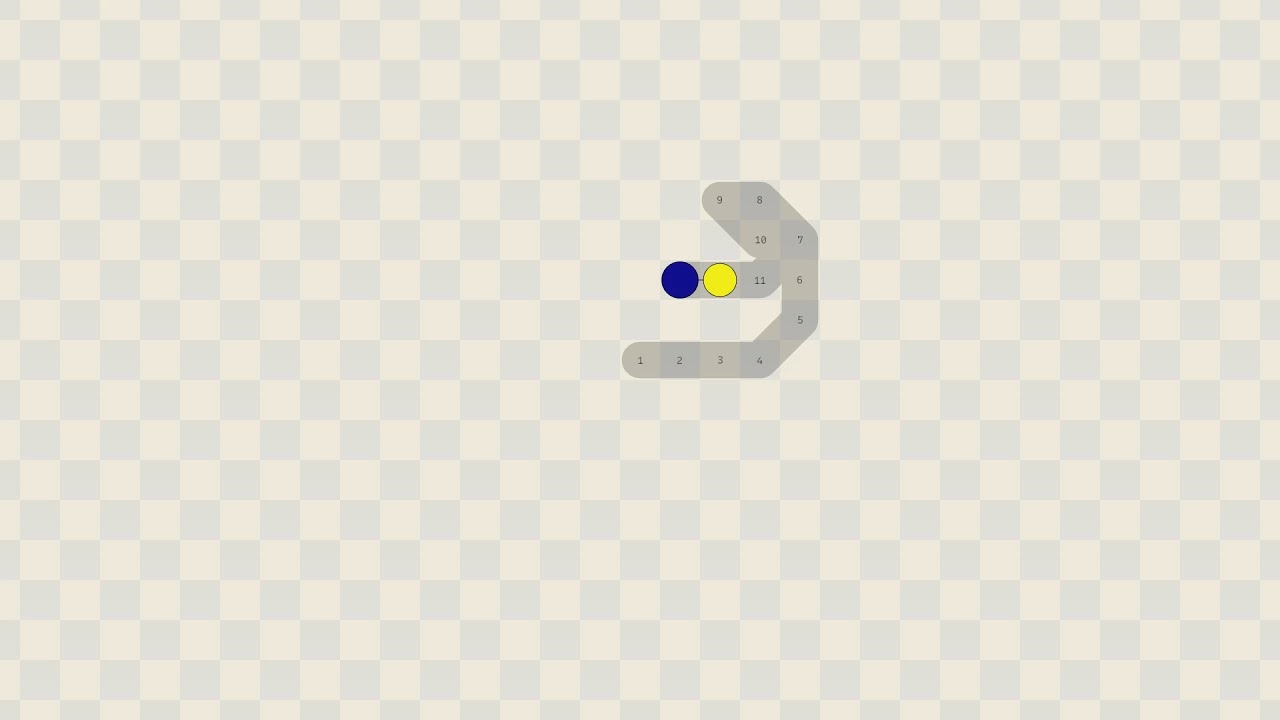
Visualization of https://adventofcode.com/2022/day/9 (⚠ spolier for part 2 ⚠)
00:00 Act |: Follow the Leader
00:34 Act II: Longer Faster Harder Smarter
01:41 Act III: Dial it up to 11385
 inner mauve
https://paste.pythondiscord.com/odizepakiq.py day 9 solved with the complex plane :D
 slim jetty


