#internals-and-peps
1 messages · Page 127 of 1
 nova iris
well not really, a metaclass can do way more stuff
like hooking into class creation
although there are some times where a class decorator, __init_subclass__, or just plain old inheritance would do the job
so you should only learn metaclasses to understand python classes' inner workings
since you would almost NEVER use them
https://github.com/Objectivitix/dunder-magic/blob/main/easysubsuper.py here is a thing i made demonstrating a possible use for metaclasses
no idea. ask in #esoteric-python, this is beyond my knowledge 🤣
 static bluff
I'd like ask you guy's advice
And if I'm not. I need to collect potentially hundreds of configuration settings from the user when they launch my framework. I think I might be up the creek in terms of static checking these settings, at least as far as things are configured now
class Application(object):

  def __init__(appSettings: AppSettings = {}, consoleSettings: ConsoleSettings = {},
      serverSettings: ServerSettings, cefSettings: CEFSettings = {}, cefSwitches: CEFSwitches = {},
  ):

    appSettings = AppSettings(appSettings)
    consoleSettings = ConsoleSettings(consoleSettings)
    serverSettings = ServerSettings(serverSettings)
    cefSettings = CEFSettings(cefSettings)
    cefSwitches = CEFSwitches(cefSwitches)
The idea, the original idea, would be that each of these annotations is a special subclass of TypedDict that's rigged up to enforce annotations on values at runtime. Each packet of settings would be passed in as a normal dictionary. This way when appSettings is provided, for example, the static checker would issue warnings to the IDE if there were any incorrect values.
And then when the normal dictionary appSettings was converted from a normal dict to an AppSettings object, runtime enforcement would occur. Runtime enforcement is as a secondary safety measure to keep the framework running properly, and to assist 'beginner' users of Python who have no concept of a static type checker
But static-checking on TypedDict's is, at least for PyCharm's linter, abysmal.
An example of a warning I get when I feed in a bad value is: expected type 'AppSettings', got 'dict[str, int]' instead
This is not a help message.
So I beseech you, Python Jedi of old. Is there a better way?
nova iris
hey, does anyone know why __prepare__ in a metaclass is supposed to be a class method? i found this from PEP 3115:
The
__prepare__method will most often be implemented as a class method rather than an instance method because it is called before the metaclass instance (i.e. the class itself) is created.
however, i still don't see why it's a class method and even less why it should be explicitly declared so. couldn't it be a static method? and couldn't it be like __class_getitem__, where it's implicitly transformed into one?
 verbal escarp
static bluff
So I beseech you, Python Jedi of old. Is there a better way?
verbal escarp
static bluff
So I beseech you, Python Jedi of old. Is there a better way?
i can give you a solution how i solved my config needs with attrs
from ast import literal_eval
import attr

class ConfigurationError(Exception):
    pass

class boolean:
    def __init__(self, x):
        if isinstance(x, str):
            try:
                self.x = bool(literal_eval(x))
            except ValueError:
                raise ConfigurationError(f"{x} is not a Value of True or False!")
        if isinstance(x, bool):
            self.x = x

    def __str__(self):
        return str(self.x)

    def __repr__(self):
        return repr(self.x)

    def __bool__(self):
        return self.x

@attr.s(
    auto_attribs=True,
    on_setattr=attr.setters.convert,
    field_transformer=lambda cls, fields: [
        field.evolve(converter=field.type) for field in fields
    ],
)
class Config:
    # "False" is a non-empty string -> True :|
    first_start: boolean = True
    lucky_num: int = 1
    count: int = 1
    telegram_user: int = 0
    telegram_token: str = None
    tictoc_volume: int = 50
    activity_color_body: str = "darkred"
    activity_color_mind: str = "darkblue"
    activity_color_spirit: str = "indigo"
    generated_faces_token: str = None
    tutorial_active: boolean = True

    def write(self):
        with open("config.stay", "w") as f:
            try:
                f.write(dump(attr.asdict(self)))
            except Exception as e:
              ...
and have Config(**d) from a json/toml/whatever
advantage is that everything is nicely typed and checked and defaulted, IDE-compatible
disadvantage is that it's a bit verbose, but i guess the boilerplate could be imported
static bluff
DMing
 paper echo
Big +1 to attrs for this
You could translate the attribute names from kebab case to snake case if you wanted
Or implement your own __getitem__ that does the translation
That said I think the typeddict also makes sense
In the latter case you will need to figure out a way to "prove" to the type checker that a particular dict is in fact an instance of that specific typeddict
Working with a dependently typed language has given me a much better intuition for how type checking works
The alternative is something like Clojure spec, which you could build around TypedDict
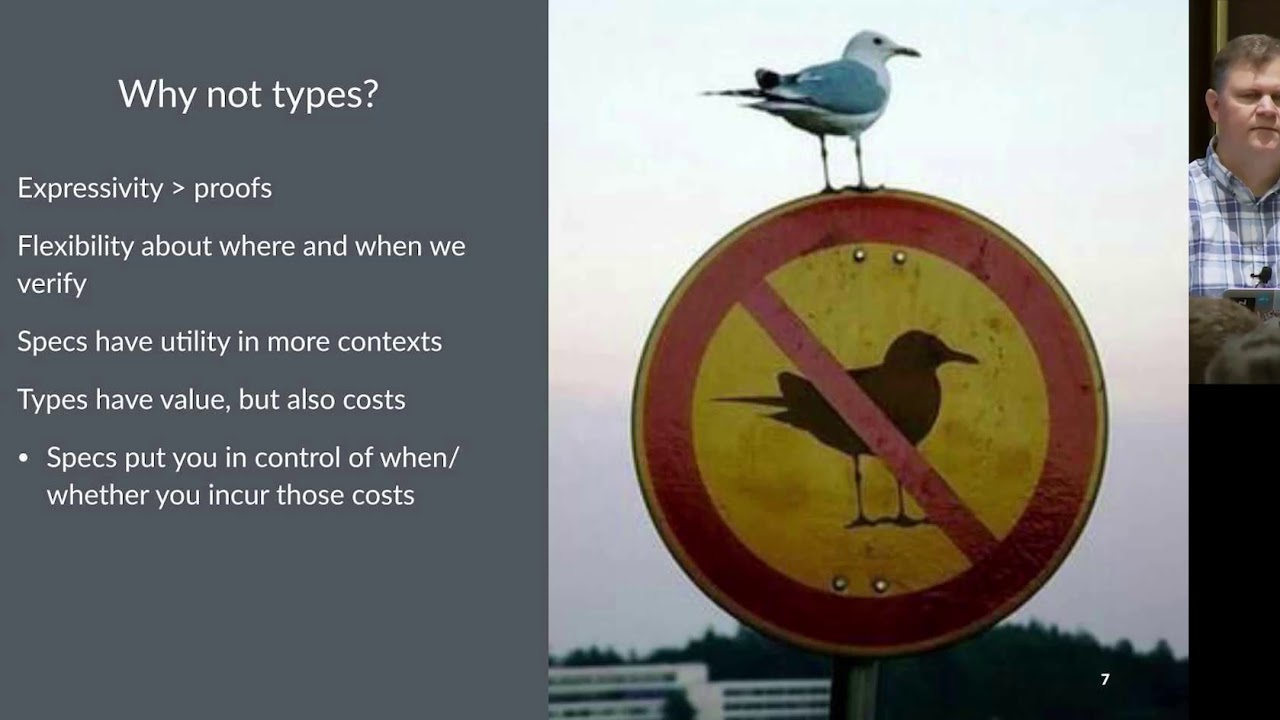
This is giving me some fun ideas, I will draft them up when I get home
verbal escarp
hehe
paper echo
Like an attrs class that also inherits from typeddict!
verbal escarp
salt rocks and their ideas
paper echo
Now the real magic of either syntactic macros or dependent types is that you can introspectively generate data types like that, without having to write out every attribute by hand
But you could also do something like generate python code from a jsonschema specification
I would much rather statically generate code than try to dynamically dispatch, but I think python developers tend to be afraid of build pipelines and code generation
Because if you have statically generated but properly annotated code you get to keep all your IDE tooling
 elder blade
paper echo
Like an attrs class that also inherits from typeddict!
elder blade
paper echo
Like an attrs class that also inherits from typeddict!
Isn't that just dataclasses?
Does anyone know what funny business TypedDict does? I want to do something like the following: ```py
from typing_extensions import TypedDict
class MyTest(TypedDict):
title: str
description: str
__getattr__ = __getitem__
__setattr__ = __setitem__
t = MyTest(title='Title Cased Title', description='See this one is a bit longer yeah')
Why is there so much magic involved for TypedDict?
 grave jolt
@elder blade when you call MyTest, it returns a dict
 peak spoke
I think it works similarly to NmaedTuples where you have a function that returns a type which directly inherits from dict to make it a normal dict at runtime, but restricted to only annotations
elder blade
Hmm, yeah thank you
paper echo
elder blade
Isn't that just dataclasses?
No because you don't have getitem
elder blade
Ah, right
elder blade
paper echo
Does that example you posted actually work?
No sadly not, __getitem__ is not defined
elder blade
Honestly a bit disappointed more types don't incorporate the bitwise operators
They're super useful
Like lists would be awesome in my use-case
peak spoke
what functionality would you give them?
elder blade
[5] | [10] would become [5, 10]
I realize I can use addition now
🤦♂️
I guess you can AND like this as well: ```py
a = [5, 10, 20]
b = [5]
tempt = a - b
c = a - temp
 charred pilot
how does subtraction on lists work?
elder blade
charred pilot
how does subtraction on lists work?
Am I just imaging stuff now? Maybe it's time for bed
!e ```py
a = [5, 10, 20]
b = [5]
tempt = a - b
c = a - temp
print(c)
 fallen slateBOT
@elder blade :x: Your eval job has completed with return code 1.
001 | Traceback (most recent call last):
002 |   File "<string>", line 4, in <module>
003 | TypeError: unsupported operand type(s) for -: 'list' and 'list'
 nova iris
https://docs.python.org/3/reference/datamodel.html#customizing-class-creation details how classes are created. i noticed that nowhere in there says anything about MRO resolution... there is the resolution of MRO entries, but at what point are the __mro__ and mro attributes of the class defined?
i need this information to make a graph detailing every step of class creation, i'd greatly appreciate any help!!
grave jolt
elder blade
I guess you can AND like this as well: ```py
a = [5, 10, 20]
b = [5]
tempt = a ...
!e
😉
from collections.abc import Set

class ListSet(Set):
    def __init__(self, iterable):
        self._values = []
        for item in iterable:
            if item not in self._values:
                self._values.append(item)

    def __contains__(self, value):
        return value in self._values

    def __iter__(self):
        return iter(self._values)

    def __len__(self):
        return len(self._value)

    def __repr__(self):
        return "ListSet({!r})".format(self._values)

a = ListSet([1, 2, 3, 4, 5])
b = ListSet([1, 2, 3, 6])
print(f"{a | b=}")
print(f"{a ^ b=}")
print(f"{a & b=}")
print(f"{a - b=}")
@grave jolt :white_check_mark: Your eval job has completed with return code 0.
001 | a | b=ListSet([1, 2, 3, 4, 5, 6])
002 | a ^ b=ListSet([4, 5, 6])
003 | a & b=ListSet([1, 2, 3])
004 | a - b=ListSet([4, 5])
oh god why
elder blade
grave jolt
!e
😉
```py
from collections.abc import Set
class ListSet(Set):
def __init...
Please stay away from me and my family 
grave jolt
in the __init__
I guess it's useful when you have a small amount of things, and those things aren't hashable
You could also shorten the implementation a little bit by using magic
@autorepr("_values")
@delegate("_values", ["__contains__", "__iter__", "__len__"])
class ListSet(Set):
    def __init__(self, iterable):
        self._values = []
        for item in iterable:
            if item not in self._values:
                self._values.append(item)
https://docs.python.org/3/reference/datamodel.html#customizing-class-creation details how classes are created. i noticed that nowhere in there says anything about MRO resolution... there is the resolution of MRO entries, but at what point are the __mro__ and mro (method) attributes of the class defined?
i need this information to make a graph detailing every step of class creation, i'd greatly appreciate any help!!
wait a second- are they even defined at all in the class
NO WAY THEY'RE ATTRIBUTES OF THE METACLASS
AH THIS IS MAKING ME CRAZY
OH GOD WTF
__name__ is not in a class's __dict__???
nova iris
Python's absolutely convoluted af class creation system has led me to make this monstrosity of a graph

just how-
and i still don't understand 🤷
finally, 40 minutes of writing down to this final line:
"CLASS OBJECT CREATED"
i probably got a few things wrong
but eh, this was my best attempt lmao
paper echo
@nova iris if you can draw this up in a more "digital" format it might be a very useful resource for future readers
grave jolt
 robust anvil
how can i make a website using C# and python?
robust anvil
how can i make a website using C# and python?
Why do you want to use both?
robust anvil
my friend and I wanted to make a website but he's using c# and mine is python
and we dont have any idea on how to make one so
can anyone give me idea on how we can make it
 high pewter
Python isn't generally used to make websites
Majority if not all websites will use an HTML base with python, C#, or Java(Rest in peace) elements
grave jolt
I think they meant the backend of the website
grave jolt
robust anvil
can anyone give me idea on how we can make it
You can have two processes that communicate via sockets
either via HTTP or with your own protocol
high pewter
Is there anyway to add extra 'layers' of security to windows using a python program running in the back ground?
I'm looking to add both security to people physically getting my device and running malware, as well as network security
 charred wagon
high pewter
Is there anyway to add extra 'layers' of security to windows using a python prog...
charred wagon
high pewter
Is there anyway to add extra 'layers' of security to windows using a python prog...
It's better to ask in #cybersecurity
high pewter
Cheers, There's so many channels I have no idea where to put things
robust anvil
high pewter
Majority if not all websites will use an HTML base with python, C#, or Java(Rest...
oh, can we use c# and python for the elements?
high pewter
No elements, I meant that as in some sections of the websites
Not elements in the programming sense
Sorry, Poor word choice
Parts might have been a better word choice
robust anvil
oh okay thanks man!
uhm, one more favor, do you know any tutorials for it?
@high pewter
high pewter
Nothing for the backend stuff sorry
Try stack overflow for the python stuff, and W3 schools for html
paper echo
is it possible to hook into the import system somehow to keep track of which module a name was imported from?
charred wagon
Maybe... My memory of the internals of the import system are a bit vague right now but I think it might be at least aware temporarily of what is importing it
 pliant tusk
You could also traverse stack frames to find out
paper echo
hypothetical output:
import my_magic_import_tracking_thing as mmitt

import ast
import math as py_math
from datetime import datetime as DateTime
from random import Random

assert mmitt.imports == [
    mmitt.ImportedModule('ast', path='/path/to/ast.py'),
    mmitt.ImportedModule('math', path='/path/to/math.py', alias='py_math'),
    mmitt.ImportedName(
        mmitt.ImportedModule('datetime'), 'datetime', alias='DateTime',
    ),
    mmitt.ImportedName(
        mmitt.ImportedModule('random'), 'Random',
    ),
]
the path= would be nice for debugging purposes but isn't necessary in the case i have in mind
the case i have in mind is, reloading individual top-level names by importlib.reload-ing the module, and then re-binding the appropriate names in globals() (or maybe even inside a smaller scope)
pliant tusk
You could just overwrite __builtins__.__import__
paper echo
that is mildly terrifying
pliant tusk
like inside mmitt.py you could do ```py
old_import = import
def my_import(name, *args, **kwargs):
print(name) # do something here
return old_import(name, *args, **kwargs)
builtins.import = my_import
yeah, that makes sense
and overriding __builtins__ like that is truly global? and not just "module global"?
so i can do it in mmitt.py and it will affect all modules?
pliant tusk
yea it will affect all modules
paper echo
imports = []
old_import = __import__
def my_import(name, globals=None, locals=None, fromlist=(), level=0):
    imports.append((name, globals, locals, fromlist, level))
    return old_import(name, globals=globals, locals=locals, fromlist=fromlist, level=level)
__builtins__.__import__ = my_import
that's alarmingly easy
pliant tusk
yeah
paper echo
if i really wanted to be thorough i'd probably want to resolve the relative imports to absolute imports when storing this data
is there a function for that?
pliant tusk
as long as you call the original old_import you dont need to do anything else
oh
i dont know if there is
paper echo
e.g. if i'm inside the foo package, and in foo.utils i have x = 5, and in foo.things i have from .utils import x, i want to be able to do mmitt.reload('foo.utils') and and have x be re-bound when foo.utils is reloaded
i'd need to get the value of __name__ in the user's currently running module probably
which might be tricky (impossible?) if the code to do this is being imported from another module
maybe you'd have to pass the __name__ of the current module in order to resolve relative imports, as an extra feature
pliant tusk
old_import = __import__
def my_import(name, *args, **kwargs):
    frame = sys._getframe(1)
    print(frame.f_globals['__name__'])
    return old_import(name, *args, **kwargs)

(__builtins__ if isinstance(__builtins__, dict) else __builtins__.__dict__)['__import__'] = my_import
``` or use stack framesooh
that could be useful for a logger setup function too
def new_logger():
    frame = sys._getframe(1)
    name = frame.f_globals['__name__']
    return logging.getLogger(name)
yea
paper echo
(i actually really wish this was the default for getLogger() instead of the root logger)
this is a good start, thanks
 raven ridge
You probably could do this all with an import hook. https://docs.python.org/3/reference/import.html#the-meta-path
paper echo
sys.meta_path would be good for tracking the actual filename of the imported module i think
pliant tusk
you could also just pull frame.f_globals['__spec__'] but import hooks are much cleaner
paper echo
i don't see how you could use the import hook machinery to track the names imported from a module, or the name that a module itself is bound to (with as)
in fact, can you even do that with __import__?
the docs suggest that you can't capture as bindings at all with the import machinery
pliant tusk
i mean you can cheat
paper echo
more stack frame magic?
pliant tusk
you can read the bytecode to look for the STORE_* or you could set a tracing function that'll get called later and look for the module in the namespace then
paper echo
thanks, i hate it
paper echo
wdym a tracing function?
pliant tusk
sys.settrace
you could also store the module and the namespace from the frame and lazy evaluate when you read from the log
so when you read from the log, search the namespace for the module
but then if del {name} is called you lose it
!docs sys.settrace
fallen slateBOT
sys.settrace(tracefunc)```
Set the system’s trace function, which allows you to implement a Python source code debugger in Python. The function is thread-specific; for a debugger to support multiple threads, it must register a trace function using [`settrace()`](https://docs.python.org/3/library/sys.html#sys.settrace "sys.settrace") for each thread being debugged or use [`threading.settrace()`](https://docs.python.org/3/library/threading.html#threading.settrace "threading.settrace").

Trace functions should have three arguments: *frame*, *event*, and *arg*. *frame* is the current stack frame. *event* is a string: `'call'`, `'line'`, `'return'`, `'exception'` or `'opcode'`. *arg* depends on the event type.

The trace function is invoked (with *event* set to `'call'`) whenever a new local scope is entered; it should return a reference to a local trace function to be used for the new scope, or `None` if the scope shouldn’t be traced.!eval ```python
from dis import dis
def f():
from foo import bar as BAR
dis(f)
@paper echo :white_check_mark: Your eval job has completed with return code 0.
001 |   3           0 LOAD_CONST               1 (0)
002 |               2 LOAD_CONST               2 (('bar',))
003 |               4 IMPORT_NAME              0 (foo)
004 |               6 IMPORT_FROM              1 (bar)
005 |               8 STORE_FAST               0 (BAR)
006 |              10 POP_TOP
007 |              12 LOAD_CONST               0 (None)
008 |              14 RETURN_VALUE
so i'd have to look for IMPORT_* immediately followed by STORE_*
!eval ```python
from dis import dis
dis('from foo import bar as BAR')
@paper echo :white_check_mark: Your eval job has completed with return code 0.
001 |   1           0 LOAD_CONST               0 (0)
002 |               2 LOAD_CONST               1 (('bar',))
003 |               4 IMPORT_NAME              0 (foo)
004 |               6 IMPORT_FROM              1 (bar)
005 |               8 STORE_NAME               2 (BAR)
006 |              10 POP_TOP
007 |              12 LOAD_CONST               2 (None)
008 |              14 RETURN_VALUE
!eval ```python
from dis import dis
dis('import a as aaaa; from a.b.c import hello as HellO')
@paper echo :white_check_mark: Your eval job has completed with return code 0.
001 |   1           0 LOAD_CONST               0 (0)
002 |               2 LOAD_CONST               1 (None)
003 |               4 IMPORT_NAME              0 (a)
004 |               6 STORE_NAME               1 (aaaa)
005 |               8 LOAD_CONST               0 (0)
006 |              10 LOAD_CONST               2 (('hello',))
007 |              12 IMPORT_NAME              2 (a.b.c)
008 |              14 IMPORT_FROM              3 (hello)
009 |              16 STORE_NAME               4 (HellO)
010 |              18 POP_TOP
011 |              20 LOAD_CONST               1 (None)
... (truncated - too many lines)
Full output: https://paste.pythondiscord.com/ijewemosip.txt?noredirect
paper echo
so i'd write a tracing function that looks for specific opcode sequences
seems very flaky
pliant tusk
!e ```py
import dis, sys
old_import = builtins.import
def my_import(name, *args, **kwargs):
frame = sys.getframe(1)
code = frame.f_code
co_code = code.co_code
lasti = frame.f_lasti
next_op = dis.opname[co_code[lasti + 2]]
next_arg = co_code[lasti + 3]
if 'IMPORT' in dis.opname[co_code[lasti]] and 'STORE_' in next_op:
if next_op in ['STORE_GLOBAL', 'STORE_NAME']:
print(name, 'as', code.co_names[next_arg], 'in', frame.f_globals['name'])
else:
print(name, 'as', code.co_varnames[next_arg], 'in', frame.f_globals['name'])
return old_import(name, *args, **kwargs)
builtins.import = my_import
import os as OS```
fallen slateBOT
@pliant tusk :white_check_mark: Your eval job has completed with return code 0.
001 | os as OS in __main__
002 | abc as abc in os
003 | sys as sys in os
004 | stat as st in os
005 | posixpath as path in os
006 | os as os in posixpath
007 | sys as sys in posixpath
008 | stat as stat in posixpath
009 | genericpath as genericpath in posixpath
010 | os as os in genericpath
011 | stat as stat in genericpath
... (truncated - too many lines)
Full output: https://paste.pythondiscord.com/ukewogaloy.txt?noredirect
pliant tusk
@paper echo ^
paper echo
@pliant tusk that's horrifying but fascinating
makes sense though
i wonder if there are edge cases involved where it would pick up the wrong things
doesn't quite work for from ... import but i can start there at least
 vivid heath
what's a good resource to learn how python works under the hood?
elder blade
There's a book from a core developer iirc
verbal escarp
vivid heath
what's a good resource to learn how python works under the hood?
github
a lot of details aren't even documented, so there's no substitute to looking at the source
 brave badger
vivid heath
what's a good resource to learn how python works under the hood?
brave badger
vivid heath
what's a good resource to learn how python works under the hood?
Anthony Shaw has a book on the matter
https://realpython.com/products/cpython-internals-book/
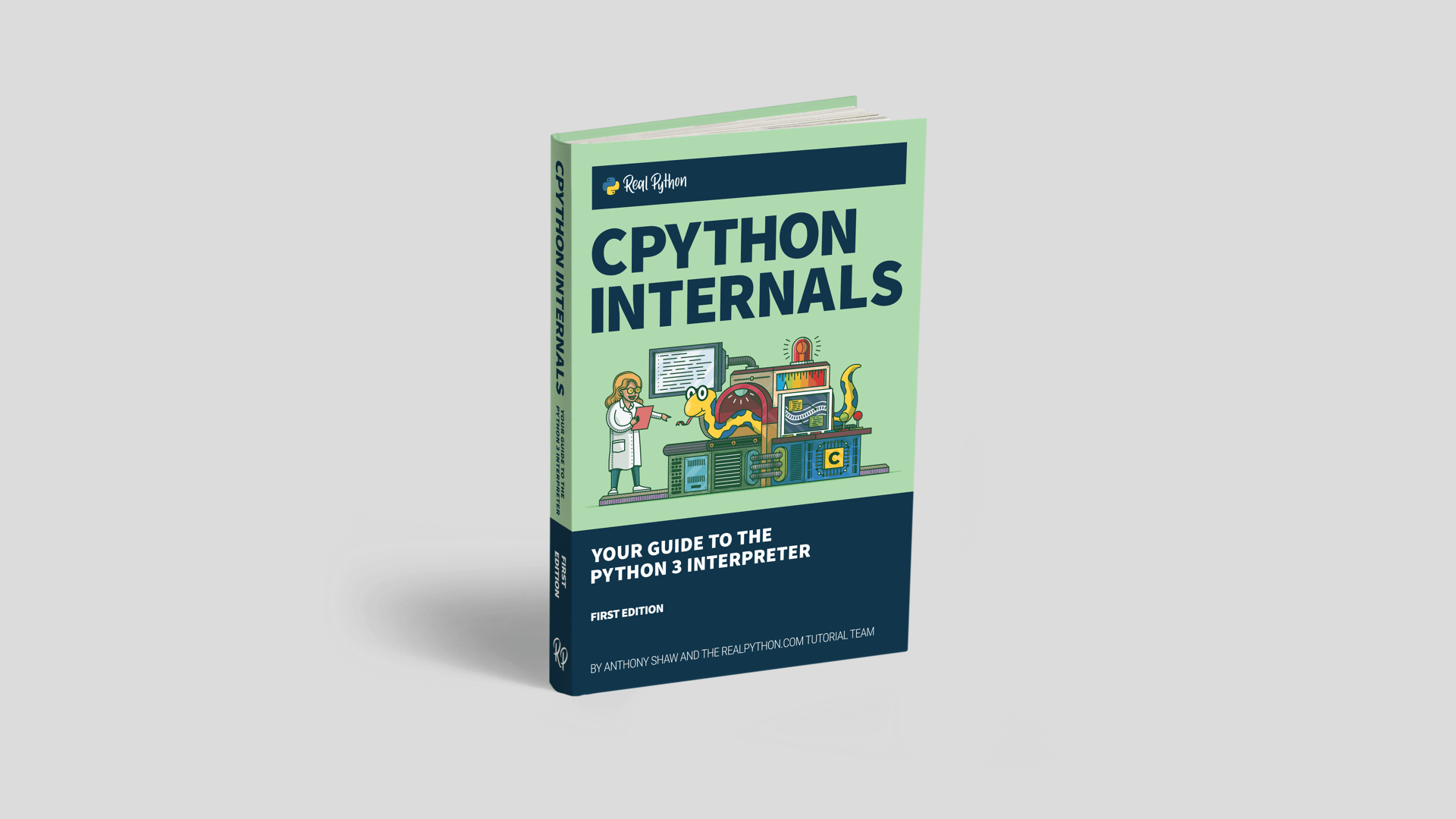
Unlock the inner workings of the Python language, compile the Python interpreter from source code, and participate in the development of CPython. The "CPython Internals" book shows you exactly how.
verbal escarp
there's so much deprecation going on in there.. it's surely nice to have a book as a reference, but i wouldn't count on it
well, at least it says 3.9, so it's fairly recent
nova iris
paper echo
<@!769221607888912487> if you can draw this up in a more "digital" format it mig...
Really? I'll get started working on it today! Then maybe you can help me find some errors (the documentation was very convoluted, I worked with what I have and most of the time I needed to run a bunch of experiments to confirm the docs)
nova iris
pliant tusk
!e ```py
import dis, sys
old_import = __builtins__.__import__
def my_import(na...
Oh god frame objects 
verbal escarp
you might want to check the regular help channels
verbal escarp
nova iris
Oh god frame objects <:lemon_eyes:754441879885447296>
inspect.currentframe().f_back.f_back.f_code.co_filename - gotta love code like that ^^
paper echo
nova iris
Really? I'll get started working on it today! Then maybe you can help me find so...
I guarantee you know more about it than I do, diagrams are always valuable resource
 unkempt rock
D
nova iris
paper echo
I guarantee you know more about it than I do, diagrams are always valuable resou...
right. i don't really have a good flowchart creator though...
oh wait, perhaps google slides can work
charred wagon
elder blade
Dammit https://www.python.org/dev/peps/pep-0655/
The syntax with the operators would've been pretty nice


 nova iris
paper echo
I guarantee you know more about it than I do, diagrams are always valuable resou...
nova iris
paper echo
I guarantee you know more about it than I do, diagrams are always valuable resou...
part one is done! i'll work on part 2 later today, gotta go check out 3.10 now
sneak peak vvv
 paper echo
nice
anything is better than nothing!
there are some nice diagram/flowchart creators online
you could use graphviz or mermaid.js
nova iris
paper echo
there are some nice diagram/flowchart creators online
yeah, i tried some but i somehow think that google slides is the easiest 😂
perhaps someone could yeet it into a full blown graph after i finish this prototype
nova iris
python's new __match_args__ is gamebreaking

indeed
and me being the python-breaking object-apprentice i am
i must find your dunders
lmao yeah, just yeet __match_args__ everywhere to mess things up
imagine: the order of __init__ is different than the order in match syntax-
whaaaat

c'mon
i might be doing it wrong
i can already see the match case enthusiasts making whole discord bots whose code is only match case
paper echo
thanks, i hate it
i think one of the big design innovations of "modern" programming languages is everything-is-an-expression
 flat gazelle
Yeah, it is quite nice. One more good thing from functional programming
paper echo
the more i try to write code with match/case the less i want to
i think it'd be a great idea in Hy because of syntactic macros, or in Coconut where the syntax is already a superset of python
verbal escarp
nova iris
oh wait, perhaps google slides can work
what about powerpoint (no joke)
nova iris
paper echo
i think one of the big design innovations of "modern" programming languages is e...
hm, true
flashbacks to when print became a function
nova iris
paper echo
i think one of the big design innovations of "modern" programming languages is e...
lol, soon you're going to get global and nonlocal and similar statements as functions
nova iris
verbal escarp
what about powerpoint (no joke)
hm, could work, but i don't have powerpoint-
 true ridge
nova iris
lol, soon you're going to get `global` and `nonlocal` and similar statements as ...
true ridge
nova iris
lol, soon you're going to get `global` and `nonlocal` and similar statements as ...
how so? global or nonlocal are just directives to the compiler, so it doesn't make sense to treat them like functions
verbal escarp
it might actually be a great tool for this job with layers, infinite zoom, gradients etc..
verbal escarp
paper echo
the more i try to write code with match/case the less i want to
how come?
i really should give match/case a spin myself 😒
paper echo
true ridge
how so? `global` or `nonlocal` are just directives to the compiler, so it doesn'...
this. print() should always have been a function, like open(), because it represents a "computation". global and nonlocal don't really represent "computation". and import kind of needs to be not-a-function because it needs to capture raw "symbols"; otherwise you'd be stuck with strings
yet another reason why syntactic macros are so nice - fewer special cases in the parser
verbal escarp
paper echo
this. `print()` should _always_ have been a function, like `open()`, because it ...
import really should be a function 😉
paper echo
no, import should be a macro that expands to importlib.import_module !!
verbal escarp
import should be a function, otherwise you need to change the syntax every time you want to change something, which is really a big issue
if you want it as a kind of macro, you also need special syntax for that
paper echo
but then you're stuck passing strings for import
which a lot of languages have (go, js) and i think it's anti-pythonic
import numpy
versus
numpy = import('numpy')
it's not anti-pythonic, it's explicit
paper echo
unless you have import() also modify the current frame's globals
verbal escarp
there is a very specific point in the zen of python about this, btw
true ridge
I wouldn't expect something anything like that (e.g tracing a frame back, updating the locals) from a builtin function
verbal escarp
Special cases aren't special enough to break the rules.
paper echo
yes, and the rules are "no capturing unevaluated expressions / raw symbols" and "no dynamic scope"
true ridge
import as a statement is a wise choice, considering that both there are actions that are required by the compiler to recognize it is changing locals (in the symbol table pass) and also working with raw identifiers (as @paper echo commented)
verbal escarp
why is import so very special that one needs to invent a whole DSL just for this case?
paper echo
because it's a fundamental operation and numpy = import('numpy') is ugly and repetitive
and by "is" i mean "is, from the perspective of guido in the 90s"
look at javascript, i don't think imports are ugly there at all
or lua
and they do use the explicit version you propose
i personally like it too
the one downside is that you can't do from foo import *
one could argue that's a good thing, star imports are bad
but i don't know how else you'd do it other than something like import_all('foo', globals())
verbal escarp
well, your conundrum could be solved in a different way
paper echo
import('foo', to=globals())
verbal escarp
exactly
true ridge
And another thing is that, you can't do local imports
verbal escarp
take the name, assign it as a global var within the import func
paper echo
you can do local imports but the modules are loaded and cached globally
true ridge
paper echo
you can do local imports but the modules are loaded and cached globally
if the compiler doesn't know the imported symbols
it can't lexically analyze the scope (per PEP 227)
paper echo
wait, what do you mean by "local" in this case
true ridge
def something():
    import x, y
x, y are names, what's the problem with that?
true ridge
x and y needs to be explicitly available to the compiler, so that it can construct the scope of something and know it defines x and y at the compile time
paper echo
def die(status, message=None):
    import sys
    if message is not None:
        print(message, file=sys.stderr)
    sys.exit(status)
this works fine in python
but sys is executed and loaded once, globally, for the entire application, and cached
true ridge
paper echo
`import('foo', to=globals())`
what I mean is that, if you make import an expression like this
verbal escarp
yup
paper echo
even if it's only bound to sys in the die namespace
true ridge
and pass import('foo', to=locals())
paper echo
ohhh yeah
true ridge
it simple wouldn't work
paper echo
yep
verbal escarp
sure, caching is a problem
true ridge
since you can't change the local variables defined in the function's scope (per PEP 227)
paper echo
at least it can't be analyzed statically anymore
true ridge
verbal escarp
sure, caching is a problem
this is not about caching
verbal escarp
it kind of is, at least that's what the internal code is all about
paper echo
@verbal escarp i think they're saying that with import('foo', to=...) it becomes impossible to statically determine where the imported module names should be bound
verbal escarp
oh
paper echo
you can add a special case check for literal globals(), but otherwise you're on your own
which... maybe is fine
maybe we should have __globals__ instead? idk
verbal escarp
sorry, i don't understand the issue with the statical determination
true ridge
verbal escarp
sorry, i don't understand the issue with the statical determination
unlike the global scope, locals are lexically scoped which means that anything that defines new locals should be available to the compiler
e.g a = b is explicitly defining a, or import x as y is explicitly defining y
if you make import a function, then you need to be bound to the python's mechanics, which would mean that it would be impossible* to statically determine which names are imported
unless you continue to use assignment syntax, e.g a, b = import('a', 'b') which brings back the issue of being redundant and repetitive
paper echo
well hold on
you can add special cases for: 1) string literals, and 2) globals()/locals()
true ridge
what do you mean by 1 and 2?
paper echo
so ```python
def foo():
import('a', to=locals())
can be statically analyzed, it's isomorphic to
```python
def foo():
    import a
but
def foo(mod):
    import(mod, to=locals())
is no better than
def foo(mod):
    l = locals()
    l[mod] = importlib.import_module(mod)
no, not really. How could you understand import is indeed the builtins.import
paper echo
make it a keyword 😛
like True
the argument here is that it shouldn't be a statement with custom syntax, it can still be disallowed to assign to that particular name for safety
true ridge
verbal escarp
`Special cases aren't special enough to break the rules.`
then, you still need to syntactically represent it and differ it (like True is a Constant but not a Name), which would hit this issue
but yes, if you make it a keyword
then you can analyze it
and once you do that, you can actually keep using raw identifiers
instead of strings
since it would be handled by a separate rule in the parser (and in the compiler/vm), which I think would be more troubling then the current version + the illusion it causes
peak spoke
how would from imports and renames work with it being a func? Having to handle that manually through a sequence sounds messy
pliant tusk
paper echo
so ```python
def foo():
import('a', to=locals())
```
can be statically analy...
this cannot work with how local variables work. local names have to all be known at compile time, thats why py def foo(): from FOO import name is valid but py def foo(): from FOO import * is not
paper echo
i never actually tried the latter
so then fine, don't add the special case for to=locals() and just treat it as a dynamic import
pliant tusk
!e py def foo(): from FOO import *
fallen slateBOT
@pliant tusk :x: Your eval job has completed with return code 1.
001 |   File "<string>", line 1
002 | SyntaxError: import * only allowed at module level
you cannot currently add names to a local namespace at runtime
paper echo
great, that's one less special case to worry about
pliant tusk
(without shenanigans like rebuilding the frame object at runtime)
paper echo
but you can do something along the lines of
def foo():
    l = locals()
    l.update(importlib.import_module('foo').__dict__)
nope you cannot
the dictionary returned by locals() is a snapshot, not a live mapping like globals()
paper echo
interesting, also TIL
peak spoke
In [7]: def foo():
   ...:     l = locals()
   ...:     l.update(a=1)
   ...:     print(a)
   ...:

In [8]: foo()
---------------------------------------------------------------------------
NameError                                 Traceback (most recent call last)
<ipython-input-8-c19b6d9633cf> in <module>
----> 1 foo()

<ipython-input-7-615daf686f26> in foo()
      2     l = locals()
      3     l.update(a=1)
----> 4     print(a)
      5
NameError: name 'a' is not defined
in that case there's no need to even bother trying to analyze that case
pliant tusk
its due to how local variables are implemented
paper echo
that's a good thing
pliant tusk
to make them faster they are essentially just stored in a c array instead of a whole python dictionary
verbal escarp
one less special case to worry about ^^
paper echo
so the special cases you have to check for are:
import('foo', to=globals())at the top level onlyfoo = import('foo')a = import('foo', 'a'), or fun combinations thereof like(a, b, c), (x, y, z) = import('foo', 'a', 'b', 'c'), import('bar', 'x', 'y', 'z')
if you get those 3, i'm pretty sure import() is isomorphic to the existing import statement with respect to what can be statically determined
maybe i missed a case or two
otherwise you can treat it as importlib.import_module
verbal escarp
well, there is a different problem
thinking of packages with long chains of a.b.c.d.e
would it be import("a", "b.c.d.e") or import("a.b.c.d.e") or import("a.b.c.d", "e")? and what should the variable in the namespace look like?
paper echo
yeah well now you're starting to see why sometimes you just want special syntax even if you don't need it 😉
but the point isn't import isn't a statement because it has to be, it's because if it weren't a statement it'd be a lot less ergonomic
unlike nonlocal which kind of has to be a statement for fundamental technical reasons
conversely, print was less ergonomic as a statement than as a function
verbal escarp
paper echo
but the point isn't `import` isn't a statement because it _has_ to be, it's beca...
you know how strongly i think that import is non-ergonomic :p
one simple example
import assumes to know what you want, which makes it very hard to convince it to do something different if you need it to
like.. import something from a parent folder
or import a module instead of a similarly-named package
paper echo
well "folders" are an entirely different can of worms
as is the precedence between foo.py and foo/__init__.py
those are design decisions unrelated to the import statement syntax
the #1 biggest problem with packages is the name "package"
verbal escarp
"distribution" is the name used on pypi
paper echo
"distribution package" really
versus "import package"
that's what the python docs glossary says, i don't know when that was formalized
verbal escarp
which is quite confusing to me, coming from a linux background, but that's a different issue
verbal escarp
yup!
verbal escarp
which term are they using?
paper echo
"module" for everything
foo.lua and foo/init.lua
and require('foo') i think prefers the latter over the former like in python, but don't quote me on that
verbal escarp
hm.. yeah, okay. not sure if using a single term for everything does away with all ambiguities but ymmv
verbal escarp
paper echo
and `require('foo')` i think prefers the latter over the former like in python, ...
i think so, sounds right
btw, another thing i got annoyed with, regarding imports - they are case-insensitive
i thought it was just a convention to use lower-case module names, but it's actually enforced
which might actually be another reason why import-as-a-function with the (on first glance) redundant mod = import("mod") syntax would be a good thing
you could kick most naming restrictions to the bin and allow filenames like ".testA.py" etc without interfering with the internal naming
paper echo
wait what
verbal escarp
what what?
paper echo
i don't think they're case-insensitive... are they?
on my mac, the filesystem is case insensitive
verbal escarp
last time i checked they were
paper echo
so maybe that's what's happening
cat <<< 'x = 3' > a.py
python -c 'import A'
# Traceback (most recent call last):
#   File "<string>", line 1, in <module>
# ModuleNotFoundError: No module named 'A'
cat <<< 'x = 4' > B.py
python -c 'import b'
# Traceback (most recent call last):
#   File "<string>", line 1, in <module>
# ModuleNotFoundError: No module named 'b'
i stand corrected. although, the leading-. convention still doesn't work with .py files
paper echo
wait, why would it?
you would want .foo.py to be "hidden" from the import system?
or you would want it to be not hidden?
pretty sure python can't import .foo.py
verbal escarp
paper echo
pretty sure python can't import `.foo.py`
exactly
paper echo
would you want python to import foo.py as foo? or _foo? or something else?
verbal escarp
for example, i'd like to have .test files that aren't run by my testrunner but that i still could import if i explicitely ask to
i don't think that's too unreasonable, is it?
with import-as-a-function that would be simply doable via foo = import(".test.py") or somesuch, no problem
verbal escarp
let's be real for a second. most times, you don't just import foo
BUT you do import numpy as np
or import tensorflow as tf
and that isn't any better than `tf = import("tensorflow")
paper echo
imagine writing this with import():
from sklearn.feature_extraction.text import HashingVectorizer
you'd have to add a special case for a.b.c imports otherwise users would go nuts
HashingVectorizer = import('sklearn.feature_extraction.text', 'HashingVectorizer')
of course if you have syntactic macros you can write a macro like the former that expands to the latter
verbal escarp
hmm.. hold on a sec
how about a special syntax for import modules like..
import("sklearn.feature_extraction.text") * "HashingVectorizer"
it's a bit wonky, but might get the job done
i stole the idea from pathlib
path / "somefile" -> path
import("sklearn.feature_extraction.text").HashingVectorizer would also work, but that doesn't assign the variable to the name
so i figured * vs .
sadly : is not a valid operator, that would fit better
well, you see i'm on the fence myself ^^
nova iris
true ridge
how so? `global` or `nonlocal` are just directives to the compiler, so it doesn'...
hmm... why not? don't functions perform a particular task?
nova iris
paper echo
unless you have `import()` also modify the current frame's globals
yes please... and as syntax can be just an optional parameter
verbal escarp
but then i'd like to have as as a general syntax for any assignment 😉
 clever shoal
Hey ma dudes
Does anyone know any dunder method cheat sheets
Like im tryna become an expert at oop
unkempt rock
https://docs.python.org/3/reference/datamodel.html#special-method-names The docs has them all
clever shoal
unkempt rock
https://docs.python.org/3/reference/datamodel.html#special-method-names The docs...
May you produce healthy offspring
Lol
👍
verbal escarp
verbal escarp
`import("sklearn.feature_extraction.text") * "HashingVectorizer"`
actually, it might be feasible to pass in a regex or simplified pattern matching, and with ~ instead as operator a "star-import" might look something like import("sklearn.feature_extraction.text") ~ "*"
import("sklearn.feature_extraction.text") ~ "*Vectorizer" could import all kinds of Vectorizers
paper echo
nova iris
hmm... why not? don't functions perform a particular task?
we hashed this all out above 🙂
nonlocal and global are more or less declarations or compiler directives
verbal escarp
"*Vectorizer" in import("sklearn.feature_extraction.text") on the other hand..
wished "from" would map to a method..
no, "from" as a keyword, like "in"
not what i'm asking 😉
pliant tusk
!e ```py
import dis, sys
old_import = builtins.import
def my_import(name, *args, **kwargs):
try:
frame = sys.getframe(1)
except:
return old_import(name, *args, **kwargs)
code = frame.f_code
co_code = code.co_code
lasti = frame.f_lasti
next_op = dis.opname[co_code[lasti + 2]]
next_arg = co_code[lasti + 3]
if 'STORE' in next_op:
if next_op in ['STORE_GLOBAL', 'STORE_NAME']:
print(f'importing {name} as {code.co_names[next_arg]} in {frame.f_globals["name"]}.{code.co_name}')
else:
print(f'importing {name} as {code.co_varnames[next_arg]} in {frame.f_globals["name"]}.{code.co_name}')
else:
print(f'importing {name} in {frame.f_globals["name"]}.{code.co_name}')
return old_import(name, *args, **kwargs)
builtins.import = my_import
import os```
fallen slateBOT
@pliant tusk :white_check_mark: Your eval job has completed with return code 0.
001 | importing os as os in __main__.<module>
002 | importing _io in _frozen_importlib_external.get_data
003 | importing abc as abc in os.<module>
004 | importing sys as sys in os.<module>
005 | importing stat as st in os.<module>
006 | importing _io in _frozen_importlib_external.get_data
007 | importing _stat in stat.<module>
008 | importing _collections_abc in os.<module>
009 | importing posix in os.<module>
010 | importing posix in os.<module>
011 | importing posixpath as path in os.<module>
... (truncated - too many lines)
Full output: https://paste.pythondiscord.com/godecikoko.txt?noredirect
pliant tusk
@paper echo ^

 charred wagon
 cyan elbow
This is not a help channel.If you need help please see #❓|how-to-get-help
paper echo
pliant tusk
<@!389497659087650836> ^
this is getting hairy 👀
pliant tusk
paper echo
this is getting hairy 👀
!e ```py
import dis, sys
old_import = builtins.import
def my_import(name, globals=None, locals=None, fromlist=(), level=0):
try:
frame = sys.getframe(1)
except:
return old_import(name, globals, locals, fromlist, level)
loc = frame.f_globals["name"]
code = frame.f_code
co_code = code.co_code
lasti = frame.f_lasti
next_op = dis.opname[co_code[lasti + 2]]
next_arg = co_code[lasti + 3]
fl = ', '.join(fromlist) + ' from ' if fromlist else ''
if 'STORE' in next_op:
if next_op in ['STORE_GLOBAL', 'STORE_NAME']:
print(f'importing {fl}{name} as {code.co_names[next_arg]} in {loc}.{code.co_name}')
else:
print(f'importing {fl}{name} as {code.co_varnames[next_arg]} in {loc}.{code.co_name}')
else:
print(f'importing {fl}{name} in {loc}.{code.co_name}')
return old_import(name, globals, locals, fromlist, level)
builtins.import = my_import
import os```
fallen slateBOT
@pliant tusk :white_check_mark: Your eval job has completed with return code 0.
001 | importing os as os in __main__.<module>
002 | importing _io in _frozen_importlib_external.get_data
003 | importing abc as abc in os.<module>
004 | importing sys as sys in os.<module>
005 | importing stat as st in os.<module>
006 | importing _io in _frozen_importlib_external.get_data
007 | importing * from _stat in stat.<module>
008 | importing _check_methods from _collections_abc in os.<module>
009 | importing * from posix in os.<module>
010 | importing _exit from posix in os.<module>
011 | importing posixpath as path in os.<module>
... (truncated - too many lines)
Full output: https://paste.pythondiscord.com/goqakahewe.txt?noredirect
pliant tusk
it got worse
paper echo
what's the try at the top?
pliant tusk
oh because __import__ is sometimes called from c code where there is no upper frame
paper echo
ahh
all this just to resolve import as'ed names for module reloading
the ultimate idea would be something like, invoke a reload() function or %reload ipython magic, and then it would:
- re-exec the reloaded module
- go through all the tracked imports and overwrite all top-level bindings w/ the new versions from the newly-exec'ed module
possibly something @verbal escarp might want to pursue ☝️
pliant tusk
that should be fairly simple now that we can get all the info we need from hooking __import__
grave jolt
!ban 750923801885409321 It seems like you're only here to post a referral link.
fallen slateBOT
:incoming_envelope: :ok_hand: applied ban to @rugged cape permanently.
paper echo
@pliant tusk this is actually really helpful, this would be a nontrivial productivity boost in notebook environments. do you know if there's a way to figure out which modules were loaded into the "current" globals? i wouldn't want to go around re-binding names that shouldn't be re-bound
it looks like i might also have to do a topological sort of the import tree and reload each imported module from the bottom up
i do not have the stomach for such a project right now
pliant tusk
you could check if the __name__ of the globals is __main__
paper echo
hmm
i think ipython uses something other than __main__ for the name, but yeah that seems reasonable
i could make it a callable class instead of a function and check __name__ against self.module_name
ooh it's missing one more edge case
from datetime import datetime as DateTime, time as Time
importing datetime, time from datetime in __main__.<module>
it's missing the aliases for each of the imports... i'll try to take a crack at it using the pattern you laid down
pliant tusk
@paper echo loop over fromlist and increment lasti by 2 each time
wait not that simple, python does something weird here
ah my code doesnt handle from foo import bar as Bar either
verbal escarp
paper echo
possibly something <@!500372058186842123> might want to pursue ☝️
heh :p well, my version of module reloading works, and i'm happy with it 😉
i find it much more convenient to just go ahead and attempt to reload than requiring the user to trigger it
going through the bound names also doesn't resolve the lingering-object issue
checking if the module is function-only is a nice assurance
it also helps to not use __import__ for this because of all the caching
 boreal umbra
@stuck valley @unkempt rock This channel is not an alternative to esoteric python. Be sure to stay on topic for this channel.
 stuck valley
Understood. Thank you.
nova iris
boreal umbra
<@745530441838231662> <@456226577798135808> This channel is not an alternative t...
"The line between advanced and esoteric is thin."
--- me, 2021
man, metaclasses are really messing with my head
boreal umbra
nova iris
"The line between advanced and esoteric is thin."
...
We make an effort to keep this channel especially on-topic. Feel free to leave any thoughts on that in #community-meta
nova iris
boreal umbra
We make an effort to keep this channel especially on-topic. Feel free to leave a...
oh yes lol, i just said that as a meme
sometimes it's easy to yeet into esotericness (well, not really but)
boreal umbra
nova iris
man, metaclasses are really messing with my head
What are you finding confusing about meta classes?
nova iris
boreal umbra
What are you finding confusing about meta classes?
...a lot of stuff lol
first off, according to the class creation process documentation, __prepare__ can accept optional keyword arguments; however, those kwargs are also passed to the immediate superclass's __init_subclass__. then what happens when we want to pass kwargs into __prepare__ but not into the latter, since it might not be implemented for the specified kwargs?
quick and dirty fix could be to overwrite __init_subclass__ of a superclass to do nothing
but that is unelegant
secondly, why is it that __bases__ and __mro__ and such attributes aren't stored in a class's __dict__, but instead i see them as slot members of the metaclass? this is super weird, why are they descriptors?
thirdly, when in the class creation process is a class's MRO determined? in the metaclass? before during MRO entries resolution? the documentation does not say explicitly
and there are probably some more that i can't think of at the top of my head right now
ah yes, the entirety of this weird section https://docs.python.org/3/reference/datamodel.html#special-method-lookup
Incorrectly attempting to invoke an unbound method of a class in this way is sometimes referred to as ‘metaclass confusion’
you don't say 🤣
OH WAIT NEVERMIND I UNDERSTOOD THIS LAST ONE
fallen slateBOT
Hey @unkempt rock!
It looks like you tried to attach file type(s) that we do not allow (.zip). We currently allow the following file types: .gif, .jpg, .jpeg, .mov, .mp4, .mpg, .png, .mp3, .wav, .ogg, .webm, .webp, .flac, .m4a.
Feel free to ask in #community-meta if you think this is a mistake.
 chrome summit
nova iris
chrome summit
nova iris
MAN THESE ERRORS ARE SO GOOD IN 3.10
 cyan elbow
Finally got some good results
 charred wagon
Interesting that at one point long ago, there were plans for access modifiers https://github.com/python/cpython/commit/a75d306e2b799aa891666899ca973bec82b2362b#diff-bf5934ae010cae0082fec9a020b9bd2deb9f39721b6886332a35f26d73845adcR472-R482
elder blade
charred wagon
Interesting that at one point long ago, there were plans for access modifiers ht...
I don't understand this, what would access modifiers mean to Python?
Is it like the difference between importing type definitions / symbols and running the file?
 lusty scroll
elder blade
I don't understand this, what would access modifiers mean to Python?
lusty scroll
elder blade
I don't understand this, what would access modifiers mean to Python?
sounds like they meant "visibility" -- which, I'm very glad we didn't get
elder blade
Ooooh, so like private, public stuff?
charred wagon
Did you read the documentation in the link? It states it's for class attributes. Like private/protected in Java
elder blade
Yeah that's a part I really love about Python
elder blade
charred wagon
Did you read the documentation in the link? It states it's for class attributes....
Oh that was documentation? I thought that was changes to the parser or like grammar file
lusty scroll
elder blade
Oh that was documentation? I thought that was changes to the parser or like gram...
just part of a commit message that i saw
yeah underscores do a fine job of communicating the stability of the interface, imo
stuck valley
nova iris
MAN THESE ERRORS ARE SO GOOD IN 3.10
meanwhile in 3.9.1


(to be fair the last one was excactly what I should have expected)
 cloud crypt
yeah well
it should be c_uint32 or c_uint16 depending on the platform I think
due to int representation in memory
stuck valley
>>> ctypes.cast(id(4),ctypes.POINTER(ctypes.c_int))[6]=5
>>> 2+2
5
the better way
nova iris
stuck valley
```py
>>> ctypes.cast(id(4),ctypes.POINTER(ctypes.c_int))[6]=5
>>> 2+2
5
```
the...
what.
nova iris
stuck valley
meanwhile in 3.9.1
LMFAO WTF
lusty scroll
stuck valley
https://cdn.discordapp.com/attachments/746994822593642616/872718285702066176/unk...
offset of 16 would be two 8-byte fields, right? for ob_type and ob_size ?
nova iris
stuck valley
```py
>>> ctypes.cast(id(4),ctypes.POINTER(ctypes.c_int))[6]=5
>>> 2+2
5
```
the...
what.
 lusty scroll
stuck valley
meanwhile in 3.9.1
lusty scroll
stuck valley
meanwhile in 3.9.1
curious what craziness is happening in datetime to break dir...
lusty scroll
nova iris
what.
the REPL running your code through some kind of socket, and the remote process crashed, would be my guess
 prime estuary
It sorts the return value, looks like someone used a function as a __dict__ key somehow…
nova iris
lusty scroll
curious what craziness is happening in `datetime` to break `dir`...
didn't break for me lol
nova iris
lusty scroll
the REPL running your code through some kind of socket, and the remote process c...
ah, i see, this happened with anonymous as well
welp, guess i can't perform any ctypes dark magic lol
lusty scroll
rip lol
if there's a python on your box you could always rough it with regular python i guess
stuck valley
yeah the ctypes voodoo occasionally crashes
lusty scroll
occasionally haha
stuck valley
prime estuary
It sorts the return value, looks like someone used a function as a `__dict__` ke...
this is from a personal #esoteric-python project
verbal escarp
soo.. what's the big advantage of subinterpreters? ( https://www.python.org/dev/peps/pep-0554/ )

Python.org
The official home of the Python Programming Language
elder blade
verbal escarp
soo.. what's the big advantage of subinterpreters? ( https://www.python.org/dev/...
As far as I know, right now the advantages are small and the PEP seems kind of forgotten.
There's a potential to have separate GILs for each subinterpreter, and that's when you get advantages in concurrency.
 tulip cloud
I need help, I want to distribute a shared library with statically linked the python interpreter + a statically linked cython extension. I already found how statically link the python interpreter to the shared library but I'm unable to link the cython extension to it. Anyone knows how do that?
 main ginkgo
verbal escarp
soo.. what's the big advantage of subinterpreters? ( https://www.python.org/dev/...
main ginkgo
verbal escarp
soo.. what's the big advantage of subinterpreters? ( https://www.python.org/dev/...
if there ends up being a way to share objects directly between the interpreters without any kind of serialization thatll be a pretty big boost. youll be able to get the same kind of parallelism that multiprocessing provides minus a lot of overhead
verbal escarp
as far as i'm aware their current approach to that is to put everything into strings, which is the contrary of efficient ^^
main ginkgo
yeah, at the moment the design is based on serialization and message passing. but the potential is there, and the groundwork is at least being done.
verbal escarp
maybe some kind of transactional memory sharing?
main ginkgo
that would be ideal yeah
verbal escarp
@lusty scroll you hear? make a note on our list of problems-to-be-solved 😉
it should be put right after "save the climate" ;p
lusty scroll
verbal escarp
<@!856229099952144464> you hear? make a note on our list of problems-to-be-solve...
who knows, maybe we remove GIL too while we're at it 😂
verbal escarp
sure!
what could possibly go wrong 😄
i wonder if it would help if we had more people paid to work on python for these kinds of tasks
or.. we could build a system that uses genetic programming and ML to solve those issues for us! muahahaha
main ginkgo
think the difficult aspect would be dealing with the refcounting in a way that doesnt significantly degrade performance. might require a sizeable rework of the current gc. sharing semantics would be pretty straightforward. just a mutex and some kind of api for a subinterpreter to say 'pls let me acquire this object, okay im done with it here you go'
verbal escarp
actually, i'm only half-joking regarding the code-generation. a machine might come up with a totally novel solution humans couldn't think of since we're stuck in a rut
it would definitely be an interesting project 🙂
 broken furnace
definitely agree
stuck valley
verbal escarp
actually, i'm only half-joking regarding the code-generation. a machine might co...
like what, skynet?
verbal escarp
stuck valley
like what, skynet?
pff :p
stuck valley
#esoteric-python would have a field day if interpreter goes live
main ginkgo
verbal escarp
actually, i'm only half-joking regarding the code-generation. a machine might co...
a method like this would have to be massively tweaked for maintainability in the case of something like cpython, otherwise we'd end up with code that would be indecipherable to humans. in which case, it might be less effort to just let humans figure out the problem in the first place.
you see this already sometimes in things like neural networks and auto generated fpgas. they work, but the designers dont have a clue how or why because of how complex the result is.
verbal escarp
main ginkgo
a method like this would have to be massively tweaked for maintainability in the...
i don't think that would be the biggest issue
just mutate the AST until you're happy with the performance, then run black over the AST, then sourcery for style, then another pass of black
done
main ginkgo
prettifying some code isnt enough to make it maintainable or understandable. mutating code without consideration for thing like adherence to the conventions of the codebase, ease of extensibility, code smells, etc, will lead to some ugly outcomes despite performance gains
also isnt black a python formatter? this would have to be done on the c level
main ginkgo
and by conventions i mean things that might be specific to the cpython codebase itself, e.g. the use of certain macros where necessary
something that wouldnt be easily generalized to all c code
lusty scroll
well it would be very, very slow but you might be able to do it in pure Python? at least as a proof of concept
and start with
import ast
that code practically wrote itself
verbal escarp
:p
i'm not actually sure if it's slower in python than in c
the notion of an AST in python makes this endeavour actually feasible
in c you could mutate goto and get nowhere
main ginkgo
i think theres a misunderstanding. this is something that would have to be explicitly supported at the c level to really work. the machinery needed to safely share an object between subinterpreters just isnt there at the moment. though you could maybe hack together something via ctypes but thats all it would be, a hack.
broken furnace
main ginkgo
i think theres a misunderstanding. this is something that would have to be expli...
My thought was that if everything was built on top of the subinterpreters channel interface, maybe you could hack together enough marshaling/un-marshaling to make it somewhat approachable, though there would be no actual shared memory space of course. I don't know how useful that would be in practice.
elder blade
broken furnace
My thought was that if everything was built on top of the subinterpreters `chann...
I can see uses for it with passing strings and what-not
For example APIs, just don't deserialize the payload on the "main" interpreter
broken furnace
yeah exactly
elder blade
main ginkgo
i think theres a misunderstanding. this is something that would have to be expli...
Are you sure, subinterpreters have been in Python for a long time through the C API but never had a standard library for it or much attention at all
main ginkgo
elder blade
Are you sure, subinterpreters have been in Python for a long time through the C ...
afaik cpython's reference counting has no awareness of which interpreter(s) are currently using an object, so there is no synchronization for updating a shared refcount. more like each subinterpreter gets its own separate garbage collector.
that being said https://docs.python.org/3/c-api/refcounting.html
The following functions are for runtime dynamic embedding of Python: Py_IncRef(PyObject *o), Py_DecRef(PyObject *o). They are simply exported function versions of Py_XINCREF() and Py_XDECREF(), respectively.
you could accessPy_IncRef/DecRefat runtime via ctypes.pythonapi
and if you an pass an object's id to a subinterpreter, it should in theory be accessible via ctypes.cast(id_of_object, ctypes.py_object).
im actually not sure how ids and addresses would in the context of subinterpreters
do object like 1 have the same id in both for example?
peak spoke
I think the integer cache was already changed to be per interpreter, with the goal of every object not being shared
 mighty pasture
So i am getting the _tkinter.TclError and i don't really understand what is wrong. So could someone please tell me ?
 grave jolt
@mighty pasture You should see #❓|how-to-get-help and claim a help channel, or ask in #user-interfaces
broken furnace
main ginkgo
do object like `1` have the same id in both for example?
surely not; they don't share objects, at least that was my impression from the PEP.
main ginkgo
was thinking that immutable singletons like 1 wont really even need reference counting to begin with, so maybe theyre shared
can see how it would probably be easier to deal with a separate int cache for each from a interpreter initialization/destruction point of view though
main ginkgo
peak spoke
I think the integer cache was already changed to be per interpreter, with the go...
do you know if there's a pep or tracker issue or something that covers this
https://bugs.python.org/issue39511 nevermind there it is
lusty scroll
main ginkgo
was thinking that immutable singletons like `1` wont really even need reference ...
ah, not sure
verbal escarp
heh.. i googled just for fun, this is curious - https://blog.christianperone.com/tag/genetic-programming/
i guess the secret sauce to genetic programming on the AST is to use a restricted set
Sat September 11, 2021
in a month this is going to be topic in the pycon australia 😄
funky coincidence
the title is "Doing stupid things with ASTs"
lol
verbal escarp
actually, now that i'm thinking about it, there may be some cases where GP might be an interesting and useful approach in python
like instances where you have a slow but correct solution to a problem and you're wondering if there are better algorithms that have the same results
then you have a very simple way of testing and comparing
paper echo
the search space is still enormous
you can do a lot better at code gen with dependent types, see https://www.youtube.com/watch?v=nbClauMCeds

Idris is a functional programming language with first-class types and with built-in support for interactive editing. Together, these features mean that Idris is ideally suited to "Type-driven development," where we begin by writing a type and an empty function definition, then refine the definition to a complete working program.
Recently, Edwin...
 charred pilot
is there a downside to having everything be a soft keyword? i guess it would make parsing more annoying?
nova iris
charred pilot
is there a downside to having everything be a soft keyword? i guess it would mak...
https://www.python.org/dev/peps/pep-0622/#use-a-hard-keyword i'm just reading all the scraped ideas, i find this very interesting
Python.org
The official home of the Python Programming Language
YO NO WAY I THOUGHT OF THE SAME THING
i agree though, str(x) or str() as x is better syntax than x: str

BRUH NO WAY-

THESE ARE ALL THINGS I'VE THOUGHT "wait why didn't they add this"
...

at this point python is just reading my mind
how. are all these rejected/changed ideas ones i've once thought about
also, super cool addition, some of the standard libraries will have automatic support with structural pattern matching using __match_args__
 summer hedge
Not sure if this is the right place, and forgive my ignorance, but most ORMs you have to define the model. Why couldn't the ORM be able to inspect the database at load and define the models from there?
I mean, I know some features of ORMs is model creation and updates through some type of tooling, but assuming an existing database or someone that wants to roll their own creation scripts etc
 spark magnet
many ORMs have a way to introspect existing databases. "legacy" is what they'll call it.
summer hedge
I might be just dreaming here, but a solution where you could plug in an ORM for basic crud stuff, but still basically rely on regular SQL to form your more complex queries sounds good
so far with an ORM, I felt I was bound by the ORM. Then with raw sql, I felt it was too much boilerplate. Haha
ok I see sqlalchemy has some type of automap
paper echo
nova iris
THESE ARE ALL THINGS I'VE THOUGHT "wait why didn't they add this"
rejecting else was a mistake imo and i am not convinced by the PEP
the syntax could have been
match:
    x + 5
case pattern1:
    ...
case pattern2:
    ...
else:
    ...
instead we have this double indented monstrosity and special-case handling of _ which is elsewhere a normal python identifer and lack of symmetry with if/for/while/try
match x + 5
case pattern1:
    ...
case pattern2:
    ...
else:
    ...
that is true
the thing is, indentation level of else would become unobvious to a beginner
paper echo
i realize that, but maybe that's because the double indentation isn't nice 🙂
nova iris
and the wildcard character _ is used, well, as a wildcard in more complicated patterns
so there's a consistency of using _
paper echo
but it could have been a naked *
case *: is like "unpack everything and drop it into the void"
nova iris
paper echo
i realize that, but maybe that's because the double indentation isn't nice 🙂
hm. i personally prefer double indentation just because it's easier to see that all the cases are within the match
paper echo
yeah i assume that's why they went with it
nova iris
paper echo
`case *:` is like "unpack everything and drop it into the void"
but then in that case i'd prefer else over case * lol :P
paper echo
match x + 5:
    case pattern1:
        ...
    case pattern2:
        ...
    case else:
        ...
i like that as much as i can like case in python
nova iris
why are case and match inverted?
paper echo
because i mistyped
nova iris
ah lol
yes, case else would really be the merge of two consistencies and two ways of doing it
i like it
elder blade
paper echo
```python
match x + 5:
case pattern1:
...
case pattern2:
...
!e ```py
else = 'test'
print(else)
@elder blade :x: Your eval job has completed with return code 1.
001 |   File "<string>", line 1
002 |     else = 'test'
003 |     ^
004 | SyntaxError: invalid syntax
Oh that's nice
main ginkgo
paper echo
the syntax could have been
```python
match:
x + 5
case pattern1:
...
cas...
wouldve been cool if it was an expression too
paper echo
https://github.com/hylang/hy/pull/2084#issuecomment-855305814
(match (Point -1 1)
  (Point 0 0) "The Origin"
  (Point 0 :y y) f"One on the Y axis at {y}"
  [(Point :x 0 y1) (Point 0 :y y2)] f"Two on the Y axis at {y1}, {y2}"
  _ "some place off in the ether")
now we're talking
paper echo
main ginkgo
wouldve been cool if it was an expression too
this is kind of a fundamental problem in python. there's basically no sensible way to turn statements into expressions. i came up with something like this:
x = list(map(begin def(x, y):
    u = x + 3
    v = y / 10
    return u * v
end, data)
but it's hideously ugly, and the semantics are funky, because python doesn't currently have any semantics for how to handle multi-expression statements. do you allow return inside begin blocks?
result = begin
    result = None
    if x > 0:
        result = fetch_stuff()
        result = process_response(result)
    return result
end
eh? was just thinking along the lines of
x = (
  match thing:
    case some_case: ...
    case some_other_case: ...
    case _: ...
)
yeah, then you're overloading the meaning of ()
main ginkgo
not really
paper echo
is that even possible to parse?
main ginkgo
you can already break expression into multiple lines with brackets
paper echo
that's a compound statement, not a compound expression
main ginkgo
e.g.
my_string = (
  'part 1'
  'part 2'
  'part 3'
)
that's because () makes newlines not-special and treats them as whitespace
you'd have to change how () works to infer where the statement breaks are, or manually require ; inside ()s
and again you have to assign new evaluation semantics to if, where, etc. - what's the value of a where expression? is it the value of the last expression executed?
i don't know if the infer-where-the-statements-end is possible from a parsing perspective. maybe it is!
in which case yeah () would be great
the current behavior of () supports stuff like:
x = (
         foo
 .thing1
     .thing2()
)
which is the same as foo.thing1.thing2()
what does this do? and is this even unambiguously parseable?
x = (
         x = foo
 .thing1
     .thing2()
  if x:
   x -= 7
)
it'd be nice if it "expanded" to something like
__tmp1_x = foo.thing1.thing2()
if __tmp1_x:
    __tmp1_x -=7
x = __tmp1_x
at which point we're semantically in lisp territory, but again i don't know if the new parser can handle this sort of thing
main ginkgo
paper echo
that's a compound _statement_, not a compound _expression_
so then in your view, what is the prescribed 'meaning' of () in python?
and what's a where expression?
like haskell's where?
paper echo
sorry i meant while 😆
paper echo
main ginkgo
so then in your view, what is the prescribed 'meaning' of `()` in python?
in my view it still wraps a single expression, with the difference that \n is just regular whitespace
i'm not saying it can't be different, but if you change it, there will be some hard design decisions in the process
nova iris
By default, when in the
__main__module,__builtins__is the built-in modulebuiltins; when in any other module,__builtins__is an alias for the dictionary of thebuiltinsmodule itself.
from py3.9 docs ^
i'm wondering why is the language designed this way? i ran some tests, and the documentation is correct - accessing custom_imported_module.__builtins__ or printing __builtins__ within that module itself does indeed give me a dictionary instead of the builtins module object. also, within built-in modules, the attribute __builtins__ doesn't exist. probably to be more efficient? i'm not sure
the main question is why is there this difference?
 sand python
from some brief reading, __builtins__ isn't part of the language design. it's just an implementation detail of cpython. Other implementations of python may not have it at all
nova iris
sand python
from some brief reading, `__builtins__` isn't part of the language design. it's ...
oh yes, sorry about that, i meant why does this behaviour exist in cpython
it just seems weird to have different things that __builtins__ point to depending on whether or not the module is __main__
sand python
mm, I think I found the reason for it

it's to prevent the entire __builtins__ dict from being printed in interactive consoles when you do vars()
ideally it would always have been a dict
main ginkgo
paper echo
in my view it still wraps a single expression, with the difference that `\n` is ...
btw have you checked out rust and kotlin's pattern matching?
both of those treat it as an expression, though since they have explicit blocks using {} its a different situation
 red solar
Python 3.10 also has os.eventfd 🙂 (maybe useful for #async-and-concurrency )
Linux only I think
elder blade
red solar
Python 3.10 also has `os.eventfd` 🙂 (maybe useful for <#630504881542791169> )
What does that do?
 undone hare
nova iris
undone hare
nova iris
after hours of work
https://docs.google.com/presentation/d/16c3ErFZ8a5YHwF_ERErGQ23jyWgsj6s8v1Z1HD3iewg @paper echo it's here

Google Docs
No Yes Yes No Yes No Yes No Yes No Yes This is where it starts. class name(*bases, *, metaclass, **kwargs): Iterate over the base classes: is the base a type object? Yes No Store the base Save for later All bases have been checked. Are there any non-type bases? Yes No These bases are stored in th...
this is my best attempt at explaining the class creation process with a flowchart - advanced discussion people seeing this, if you're experienced with this topic, don't hesitate to correct me at parts where i'm wrong! it'd be greatly appreciated, i really want to make this a valuable resource like salt lamp said :D
if there are any cpython developers seeing this and would like to contribute, it'd be amazing lol
stuck valley
Thanks! This looks very useful!
nova iris
thank you for the feedback! i was going to do that at the start, but then i realized how HORRIBLE google slides is with diamonds
i would try, for sure
oblongs though? what are those?
nova iris
stuck valley
Thanks! This looks very useful!
thank you for taking a look! i'm glad it could help!
stuck valley
Do you have any resources about MRO?
nova iris
got it
nova iris
stuck valley
Do you have any resources about MRO?
mro and c3 linearization? i'll add a slide for all the resources later :D
nova iris
stuck valley
Do you have any resources about MRO?
for now, check this https://en.wikipedia.org/wiki/C3_linearization
alright, i'll go take a look!
https://github.com/Objectivitix/ccc-flowchart <- btw, got a better link for sharing
stuck valley
How does the __prepare__ dunder work?
Also, how does one pass a metaclass to type()?
nova iris
stuck valley
How does the `__prepare__` dunder work?
- https://docs.python.org/3.9/reference/datamodel.html#preparing-the-class-namespace
- https://www.python.org/dev/peps/pep-3115/
these are sources i used, along with a lot of testing
Python.org
The official home of the Python Programming Language
once again, i'll put all the resources together in the next version (and the graph is meant to be an organizer, after you already read the resources)
i need to go for now, cya!
stuck valley
sure!
 sonic dagger
is anyone numpy smart? if yes #help-apple
summer hedge
Been looking at differnet ways people approach things. Saw this in a FASTAPI Project template. Am I right thinking this is just a glorified repository pattern that wraps an ORM?
https://github.com/tiangolo/full-stack-fastapi-postgresql/blob/master/{{cookiecutter.project_slug}}/backend/app/app/crud/crud_user.py

GitHub
Full stack, modern web application generator. Using FastAPI, PostgreSQL as database, Docker, automatic HTTPS and more. - full-stack-fastapi-postgresql/crud_user.py at master · tiangolo/full-stack-f...
Typical usage looks like
@router.post("/", response_model=schemas.User)
def create_user(
    *,
    db: Session = Depends(deps.get_db),
    user_in: schemas.UserCreate,
    current_user: models.User = Depends(deps.get_current_active_superuser),
) -> Any:
    """
    Create new user.
    """
    user = crud.user.get_by_email(db, email=user_in.email)
Interesting as it uses DI directly in the route to get the database context, and calls directly on the repository from the route
 buoyant island
not sure if this qualifies as "advanced," but i am using an implementation of the entity-component-system and would like to use dot notation to access entity components (i.e. entity.meta.name instead entity["meta"]["name"]. i have made the following class that i initialize with entity components to do this: ```pythonclass ObjectLite(dict):
def __getattr__(self, key):
    try:
        return self[key]
    except KeyError as k:
        raise AttributeError('attribute ' + str(k) + ' not found')

def __setattr__(self, key, value):
    self[key] = value

def __delattr__(self, key):
    try:
        del self[key]
    except KeyError as k:
        raise AttributeError(k)

def __repr__(self):
    return '<ObjectLite ' + dict.__repr__(self) + '>'```
i essentially want people's opinion on if this approach is "pythonic." i really would like to use dot notation personally but ideally this engine will be used by more people than just me at some point, and if forcing dot notation onto what are essentially large nested dictionaries is bad for performance / readability / maintainability etc., i'd like to know now before i run up against it later in the process
summer hedge
I've subclassed Dict before as well, but I remember hearing a lot of caution in doing so as some behavior becomes unexpected due to optimizations of the types in the standard library.
I’ve created dozens of Python Morsels since I started it last year.
At this point at least 10 of these exercises involve making a custom …
haha I like how he changed his article name to be less aggressive but didn't change the slug
stuck valley
just don't inherit from dict or list
buoyant island
stuck valley
just don't inherit from dict or list
like, keep what i sent the same but remove the inheritance? or just don't use this approach at all
stuck valley
not sure what the solution is but inheritance from dict is awful
nova iris
@stuck valley i've updated https://github.com/Objectivitix/ccc-flowchart to now contain resources and contributing
GitHub
Contribute to Objectivitix/ccc-flowchart development by creating an account on GitHub.
stuck valley
thanks!
 nova iris
stuck valley
python is complex
nova iris
stuck valley
python is complex
Yep, it sure is
Still waiting for the first person to find an error lol
If there are no errors then 
My dream would be for a cpython dev to see this and maybe give a review :D
boreal umbra
I wish there was a way for non-function, non-class objects to know their name. Things like UserId = NewType('UserId', int) are not elegant.
Perhaps there could be an optional dunder method that gets called after assignment, but I'm not sure what effect that would have on performance.
Would it be any worse than __del__?
charred wagon
How would that work considering an object can be assigned multiple names?
boreal umbra
charred wagon
How would that work considering an object can be assigned multiple names?
you could have an instance variable like self._is_named = False, set it to True the first time it learns its name, and not make any subsequent changes if it's True.
charred wagon
That's implicit and unintuitive behaviour.
boreal umbra
I'm just thinking of how one could do it without any semantics changes other than calling a newly created dunder after assignment.
charred wagon
__set_name__ is kind of like that, but for class attributes
pliant tusk
boreal umbra
I wish there was a way for non-function, non-class objects to know their name. T...
its possible to implement this using some bytecode parsing but its hacky
!e ```py
import sys
import dis
class name_aware:
def init(self):
frame = None
level = 1
while frame is None or 'STORE_' not in (op := dis.opname[
(bc := (code := frame.f_code).co_code)[(idx := frame.f_lasti + 2)]
]):
try:
frame = sys._getframe(level)
except ValueError:
self.inst_name = None
return
level += 1
if op in ['STORE_GLOBAL', 'STORE_NAME']:
self.inst_name = code.co_names[bc[idx + 1]]
elif op == 'STORE_FAST':
self.inst_name = code.co_varnames[bc[idx + 1]]
else:
self.inst_name = None
def __repr__(self):
    if self.__inst_name__:
        return f'{self.__inst_name__} = {super().__repr__()}'
    else:
        return super().__repr__()
class a(name_aware):pass
class b(name_aware):
def init(self, arg):
...
super().init()
A = a()
B = b(1)
print(A, B)```
fallen slateBOT
@pliant tusk :white_check_mark: Your eval job has completed with return code 0.
A = <__main__.a object at 0x7f2fee399d90> B = <__main__.b object at 0x7f2fee399d30>
Hi. How can I use a metaclass with the __prepare__ dunder to hook a classes' attributes dictionary?
 tawny current
alright
!e ```py
class A(type):
def prepare(self, *args):
print(*args)
return{'lt':print}
class B(object, metaclass=A):pass
B() < "Does this work?"
@tawny current :white_check_mark: Your eval job has completed with return code 0.
001 | (<class 'object'>,)
002 | Does this work?
 crystal nest
import os
from discord.ext import commands
from discord.ext.commands import Bot
from keep_alive import keep_alive
client = commands.Bot(command_prefix='!')
my_secret = os.environ['token']


@client.event
async def on_ready():
    print('We have logged in as {0.user}'.format(client))

    if os.path.exists(os.path.join("winrate")):
            client.load_extension(f"winrate.cog")

keep_alive()
client.run(my_secret)
Main.py^
from discord.ext import commands

class Ping(commands.Cog, name="Ping"):
    """Receives ping commands"""

    def __init__(self, bot: commands.Bot):
        self.bot = bot

    @commands.command()
    async def ping(self, ctx: commands.Context):
        """Checks for a response from the bot"""
        await ctx.send("Pong!")

def setup(bot: commands.Bot):
    bot.add_cog(Ping(bot))
winrate.py^
Error :- command "ping" not found
Help someone ^
Stuck on this from hours
tawny current
#❓|how-to-get-help @crystal nest
crystal nest

tawny current
!e ```py
type('A',(type,),{'prepare':lambda s,o:{'lt':print,'args':o}})(type('B',(object,),{}))() < 'Will this work?'
@tawny current :x: Your eval job has completed with return code 1.
001 | Traceback (most recent call last):
002 |   File "<string>", line 1, in <module>
003 | TypeError: type.__new__() takes exactly 3 arguments (1 given)
bruh
pliant tusk
You are passing the metaclass a class instead of the args to make the class
Remove the call to type for B
stuck valley
>>> class fake:
    def __init__(self):
        self._={'a':'b'}
    def __setitem__(self,name,value):
        self._[name]=value
    def __getitem__(self,name):
        return self._[name]
>>> x=type('',(),fake())
Traceback (most recent call last):
  File "<pyshell#14>", line 1, in <module>
    x=type('',(),fake())
TypeError: type.__new__() argument 3 must be dict, not fake
this does not work either
 short heron
Hi all. I'm trying to figure out how to handle differences in file locations while developing a project vs when it's deployed. I've got a config file in /path/to/project/etc/name/config.json, but when it's deployed, it'll be /etc/name/config.json or /usr/local/etc/name/config.json. Anyone know how to handle this the right way?
 pulsar iris
can you just use a base or relative path? is it ultimately going to be in the same folder or folder tree as the script itself?
 visual shadow
Take a look at importlib.resources
From python 3.7 it let's you import resources using top level folder in a project. That should now be the recommended way
verbal escarp
on the subject of typing - what's the point of ABCs if you can't even reliably tell if something is iterable :p
that's the only one thing i need from ABCs, ever, and not even that is reliably doable
prime estuary
visual shadow
From python 3.7 it let's you import resources using top level folder in a projec...
If you're on earlier versions it's available as importlib_ resouces on PyPI.
You can check if something is iterable though?
verbal escarp
by trying to iterate over it, yeah, but not just by looking at the ABC
prime estuary
No, isinstance(x, Iterable) would work.
verbal escarp
class collections.abc.Iterable
ABC for classes that provide the iter() method.
Checking isinstance(obj, Iterable) detects classes that are registered as Iterable or that have an iter() method, but it does not detect classes that iterate with the getitem() method. The only reliable way to determine whether an object is iterable is to call iter(obj).
prime estuary
That's because iter() implements a fallback, doing obj[0], obj[1] etc up until IndexError.
visual shadow
But I suppose you specifically want ABC to be able to tell you
verbal escarp
well, yeah. what's the point of the ABC if i can do it better in a different way?
prime estuary
Those cases should be fairly rare though.
Iterable could check, but it'd have to call __len__ and __getitem__, which is a bit unexpected for an isinstance() call.
Catching exceptions from iter() is more straightforward though.
lusty scroll
stuck valley
```py
>>> class fake:
def __init__(self):
self._={'a':'b'}
def _...
x = type("fake",(object,), fake.__dict__)
should work if you want to call type like that
lusty scroll
but
x = fake()
also worked
lusty scroll
stuck valley
```py
>>> class fake:
def __init__(self):
self._={'a':'b'}
def _...
you want to explicitly call type.__new__ or you don't
 real turtle
@unkempt rock żyjesz?????
nova iris
boreal umbra
I wish there was a way for non-function, non-class objects to know their name. T...
I mean, you have __set_name__ in classes
paper echo
How does Pip determine if a distribution has been installed?
nova iris
charred wagon
`__set_name__` is kind of like that, but for class attributes
Ah lol, too late
paper echo
Does it keep a local database? There isn't always a 1:1 mapping between "import packages" and "distribution packages"
nova iris
paper echo
Does it keep a local database? There isn't always a 1:1 mapping between "import ...
Hey salt lamp :D
Did you see the class creation flowchart yet? I mentioned you yesterday and sent you the final product (I'd like to see what can be improved, if you find some errors/incomplete parts and tell me that'd be amazing!)
https://github.com/Objectivitix/ccc-flowchart here's the link

GitHub
A flowchart detailing the CPython class creation process. - GitHub - Objectivitix/ccc-flowchart: A flowchart detailing the CPython class creation process.
paper echo
nova iris
Hey salt lamp :D
Did you see the class creation flowchart yet? I mentioned you y...
This is excellent work! You should maybe post this on https://discuss.python.org and https://reddit.com/r/python as well, I'm sure people would appreciate it. You definitely know more about class creation than I do at this point so I don't think I'm qualified to make corrections.
Minor complaint: the colors are ugly

reddit

Discussions on Python.org
Discussions related to the Python Programming Language, Python Community, and Python Software Foundation operations.
I would use a white background
nova iris
paper echo
This is excellent work! You should maybe post this on https://discuss.python.org...
Thank you so much !! Yes, I do agree, it needs a good color scheme and better indicators of the flowing (which is what I'll work on today once I'm on my PC). Perhaps some time I could even migrate it onto a real flowchart site - I prefer google slides however since it's easy to access and I can still make good charts there.
paper echo
you could definitely clean it up visually but the real content is the research you put in
nova iris
Yep! But visuals are still a big part lol, i need to make it easier to understand and add a legend
verbal escarp
nova iris
Yep! But visuals are still a big part lol, i need to make it easier to understan...
i'd still make it an svg in inkscape and from there pdf. if you use standard flowchart symbols, no legend is necessary either
also, you can probably merge all those type-errors into one
takes less space
rearrange the elements a bit
paper echo
i don't know if inkscape has good flowchart tools
what you really want in a flowchart tool is the ability to "attach" arrows to shapes
so you can drag the shape around and the arrow follows
i know for a fact you can do this in powerpoint, it's a surprisingly great flowchart/diagramming tool
verbal escarp
paper echo
what you really want in a flowchart tool is the ability to "attach" arrows to sh...
you can do that with inkscape, yep. i've used it to produce nice flowcharts a while back
verbal escarp
there are some good tutorials for that on youtube, https://www.youtube.com/watch?v=G5LI695MiLY for example

How to create simple and professional Flow Charts using native tools in Inkscape. This video is an introduction to all the tools and shows how to make a flow chart based on: http://controlguru.com/the-components-of-a-control-loop/
(might not be the best tutorial in hindsight, but still works 😉 )
grml 😐
Deprecated since version 3.9: In the future, the population must be a sequence. Instances of set are no longer supported. The set must first be converted to a list or tuple, preferably in a deterministic order so that the sample is reproducible.
instead of making sets behave like dicts they just make things more annoying
charred pilot
random.sample?
peak spoke
can they make sets behave like dicts without losing performance on set operations?
verbal escarp
charred pilot
random.sample?
yep
verbal escarp
peak spoke
can they make sets behave like dicts without losing performance on set operation...
i'd bet on it
but i don't know for sure
 stone field
peak spoke
can they make sets behave like dicts without losing performance on set operation...
stone field
peak spoke
can they make sets behave like dicts without losing performance on set operation...
no
charred pilot
stone field
no
could you elaborate? i'm curious now
 gusty marsh

 paper echo
verbal escarp
Deprecated since version 3.9: In the future, the population must be a sequence. ...
paper echo
verbal escarp
Deprecated since version 3.9: In the future, the population must be a sequence. ...
huh... so dicts are allowed but sets aren't? or is it that now only instances of Sequence are allowed?
i would be ok with the latter, the former is just confusing (even if dicts technically are order-preserving now)
stone field
Currently sets use different algorithms from dictionaries that gets tiny performance boosts from the fact insertion order does not need to be retained. The simplest example of this is that set intersection can simply loop over the smaller of the two sets. This would obviously no longer be the case if insertion order had to be retained.
The current dictionary implementation of having a sparse index array coincide with a dense array is not suitable for sets. The biggest issue in my opinion is that deletions become an issue (like they did with the ordered dictionary), making it so the sets need to be re-organized often as they get changed. At least in my years of experience with Python, sets are much more prone to more complex mutation than simply insertion compared to dictionaries.
paper echo
what if it was just a warning instead of an error?
if not isinstance(data, Sequence):
    warnings.warn('Sampling is not reproducible on data structures that do not have a well-defined sequential ordering. Results might not be consistent even with the same random seed.', category=RandomReproducibilityWarning)
    data = list(data)
sets were explicitly allowed by converting to a tuple internally, no idea why that was the case though
stone field
Currently that is the behaviour, and there have been talks on whether this should be the permanent solution, but as it currently stands the plan is to raise hard errors
paper echo
peak spoke
sets were explicitly allowed by converting to a tuple internally, no idea why th...
see above, why not just make them all allowed and let the user decide if reproducibility is relevant?
ty for the explanation @stone field i've wondered about this too
peak spoke
Eh, I'd rather have the users take care of that with making it a clear choice on their part
stone field
Sampling is fairly trivial to implement yourself, but I also agree that it is inconvenient not to be able to sample sets with the standard-library provided method. I would simply have a warning in the documentation, akin to __del__ instead of even having a warning.
paper echo
right, if we have .pop on sets we should be able to have sample
nova iris
paper echo
This is excellent work! You should maybe post this on https://discuss.python.org...
https://github.com/Objectivitix/ccc-flowchart has been updated to version 1.1 🥳
the color scheme is actually not so ugly now that i added other colors!
oh, and there's also the legend :D
nova iris
also posted it on r/python
unkempt rock
What's the right way to check if something has the fspath interface? i.e. check if something is a file path and matches the type Union[str, bytes, os.PathLike[Any]]
 crimson niche
that is a great question to be honest.
unkempt rock
I can't just do isinstance(thing, (str, bytes, os.PathLike[Any])) surely 
isinstance(thing, (str, bytes, PurePath)) would work most of the time I guess
crimson niche
I feel like the answer I get in python most of the time is, "You don't need to check things; duck typing..."
But a lot of times I am writing that need to accept different types of paths.
unkempt rock
Though aren't Union[str, bytes, os.PathLike[Any]] and os.PathLike[Any] effectively the same since os.fspath works on strings and bytestrings? I'm still confused by this recommendation https://stackoverflow.com/a/61804884
(assuming you only care about things you can call os.fspath on)
visual shadow
they aren't the same, i think you ended up being bit by the same issue that you tried to avoid. if you want to see if they quack like a fspath, then one option could have been to just run fspath on it and catch errors if any. if you specifically want it to be like a isinstance thing, then os.PathLike has it's own hierarchy of parents and what not, even if str and PathLike could both quack like a path.
verbal escarp
crimson niche
I feel like the answer I get in python most of the time is, "You don't need to c...
since i know how awesome pathlib is, i refuse the temptation to accept str or bytes as paths
only pathlib.Path for me please
crimson niche
verbal escarp
since i know how awesome pathlib is, i refuse the temptation to accept str or by...
I somehow end up with strings and path objects in different places, its horrible. Its possibly just a testament to my awful organization skills.
peak spoke
I've had to work with some py2 compat code where Path objects are immediately converted to strings on receival and I didn't think I'd miss pathlib that much
verbal escarp
i think they have a lot in common to how bytes and str should be handled
bytes outside, str inside - str/byte outside, path inside
onion style
cyan elbow
How do I create this kind of program
 verbal escarp
cyan elbow
How do I create this kind of program
verbal escarp
cyan elbow
How do I create this kind of program
what is that o.O
cyan elbow
It's a noaa software
verbal escarp
oh
verbal escarp
cyan elbow
How do I create this kind of program
are you asking for the process of creating or the structure?
cyan elbow
Yes
verbal escarp
both? ^^
crimson niche
There are so many steps and parts involved in making a GUI application that its a very general question.
cyan elbow
Yes
verbal escarp
well, for the process i'd say you create vertical and horizontal prototypes first
maybe do some powerpoint mockups
which is much cooler and more useful than it sounds
then you define the platform you want to deploy your software on and pick your gui framework accordingly
then you need to figure out which data you need inside and how it should be stored
prototypes for everything
then put things together
for the structure, there's not much to say ahead of time, since it depends strongly on the data, platform etc.
cyan elbow
I already created the GUI I just need help with the graphs and importing the data frome websites
verbal escarp
well, it looks like multiple graphs overlayed
cyan elbow
I am experimenting with matplotlib to import weather radar data as 3D but there are no pdf or resources
verbal escarp
rather try pyqtgraph
matplotlib isn't really ideal for use inside a gui
there are other frameworks that also are better suited for this than matplotlib
cyan elbow
There is a program called metpy but its only compatible with Jupyter I have tried with visual studio code but it wouldn't work :(
unkempt rock
Say is there a simpler way of optionally sending stuff to stdout or a file that still uses with? ```py
if output_file is None:
print_stuff_to_file(sys.stdout)
else:
with open(os.fspath(output_file), 'w') as file:
print_stuff_to_file(file)
This would nearly work but closes stdout py with open(os.fspath(output_file), 'w') if output_file else sys.stdout as file: print_stuff_to_file(file)
 deft pagoda
you can always print to stdout, but redirect stdout only if there's another output
or use kw argument of print
print(text, file=output or sys.stdout)
I would do sth like
from contextlib import ExitStack, redirect_stdout
stack = ExitStack()
if output_file is not None:
    a = stack.enter(open(os.fspath(output_file), 'w'))
    stack.enter(redirect_stdout(a))
with stack:
    print('hello, world')
```but it may be a tad overkillInteresting 
unkempt rock
Why is 0.1 + 0.2 not equal to 0.3?
grave jolt
unkempt rock
Why is 0.1 + 0.2 not equal to 0.3?
TL;DR: float values are stored as a finite binary fraction (like a decimal fraction, but in base 2 instead of base 10). Just like you can't represent 1/3 perfectly in a finite decimal fraction, you can't represent 0.1, 0.2 or 0.3 perfectly as a binary fraction.
I get autocomplete in the browser
unkempt rock
flat gazelle
I would do sth like
```py
from contextlib import ExitStack, redirect_stdout
stac...
if something errors between a = stack.enter(open(os.fspath(output_file), 'w')) and with stack: will the output_file still get closed properly?
main ginkgo
is a little bit of redundancy really so bad in cases like this? at most you write a few extra lines in exchange for simpler code
honestly the original snippet seems the simplest imo
very straightforward to follow
boreal umbra
@main ginkgo I'm not sure what code you're referring to, but readability counts
main ginkgo
boreal umbra
<@601934616114364436> I'm not sure what code you're referring to, but readabilit...
boreal umbra
@main ginkgo I can't think of a good way to make that more concise
Salt's solution would work except that you have to open the file and then possibly not use it.
main ginkgo
yea its fine as it is imo
unkempt rock
Does open call os.fspath or do I have to myself? i.e. is open(file) the same as open(os.fspath(file)) ?
!e guess I could test it py class C: def __fsopen__(self): print('CALLED') open(C())
fallen slateBOT
@unkempt rock :x: Your eval job has completed with return code 1.
001 | Traceback (most recent call last):
002 |   File "<string>", line 4, in <module>
003 | TypeError: expected str, bytes or os.PathLike object, not C

!e oh, fspath, not fsopen```py
class C:
def fspath(self):
print('CALLED')
return 'foo'
open(C())
@unkempt rock :x: Your eval job has completed with return code 1.
001 | CALLED
002 | Traceback (most recent call last):
003 |   File "<string>", line 5, in <module>
004 | FileNotFoundError: [Errno 2] No such file or directory: 'foo'
it does do it 
unkempt rock
If you really do want to run moduleX directly, but you still want it to be considered part of a package, you can do python -m package.subpackage1.moduleX. The -m tells Python to load it as a module, not as the top-level script.
https://stackoverflow.com/questions/14132789/relative-imports-for-the-billionth-time
really wish this was in the tutorial docs for python
 lofty sierra
This is definitely not advanced but is it possible to add custom buttons in tkinter?
Like maybe an image of a cup as a button
Or maybe a button shaped circle or something
fallen slateBOT
:incoming_envelope: :ok_hand: applied mute to @unkempt rock until <t:1629458265:f> (9 minutes and 59 seconds) (reason: burst rule: sent 9 messages in 10s).
 elder crane
hey guys i need help at multithreading / multiprocessing
stuck with something that cant figure out i want to start main function with different arguments but i put them at the same time and i want it to start with the top one and than with the others
verbal escarp
elder crane
hey guys i need help at multithreading / multiprocessing
did you check #async-and-concurrency ?
cyan elbow
#armogorkon I got pyqtgraph working do you know how to import weather api
stone field
unkempt rock
Say is there a simpler way of optionally sending stuff to stdout or a file that ...
cm = nullcontext(sys.stdout) if output_file is None else open(os.fspath(output_file), 'w')
with cm as f:
    print_stuff_to_file(f)
That looks pretty good
unkempt rock
Oh neat, nullcontext enters but never exits so stdout won't get closed 
nova iris
>>> 99999999999999999 is 99999999999999999
True
>>> a = 99999999999999999
>>> b = 99999999999999999
>>> a is b
False
>>> a = 1
>>> b = 1
>>> a is b
True
>>> a = b = 99999999999999999
>>> a is b
True
```i don't need sleep, i need answersNot sure why the first one is true but the rest I understand
charred wagon
Do you know why the 1st is true? Because it contradicts that
nova iris
charred wagon
Not sure why the first one is true but the rest I understand
i agree. i've heard something about caching all the way to 256 but the first disproves it
charred wagon
Well, on the surface it's a contradiction but it's probably not actually caching that
nova iris
 sacred yew
-5 to 256 is cached by cpython
sacred yew
-5 to 256 is cached by cpython
yep
 neon tartan
pliant tusk
neon tartan
pliant tusk
the first one is true because the line is compiled first, then executed. 999... is cached as a constant value
neon tartan
The easiest example of 256 is
#python-discussion message
sacred yew
!e __import__("dis").dis("999 is 999")
fallen slateBOT
@sacred yew :white_check_mark: Your eval job has completed with return code 0.
001 | <dis>:1: SyntaxWarning: "is" with a literal. Did you mean "=="?
002 |   1           0 LOAD_CONST               0 (999)
003 |               2 LOAD_CONST               0 (999)
004 |               4 IS_OP                    0
005 |               6 RETURN_VALUE
ohh!
sacred yew
yeah it refers to the same const
nova iris
wow, super cool
i mean, identity shouldn't be relied on anyways, i'm just curious of the implementation details
neon tartan
!e
a = 4
print(a+253 is a+253)
a = 3
print(a+253 is a+253)
@neon tartan :white_check_mark: Your eval job has completed with return code 0.
001 | False
002 | True
ah, that's where the cache comes in
pliant tusk
its due to how the idle console works (it doesn't cache constants between blocks)
neon tartan
I didn't know about -5 to 0 though, is that true?
nova iris
!e
a = 4
print(a-9 is a-9)
a = 3
print(a-9 is a-9)
fallen slateBOT
@nova iris :white_check_mark: Your eval job has completed with return code 0.
001 | True
002 | False
yes
nova iris
yes, it's true
nova iris
but this might only be for cpython
pliant tusk
yea the behavior of is for literals is definitely implementation dependent
nova iris
>>> 1,
(1,)
```lol, i never knew you could do thisi mean, it makes sense, tuples are formed by commas
but bruh-
>>> 1,.0_0,0_0_0.0,.1
(1, 0.0, 0.0, 0.1)
```lmao pseudo cradle
This isn't the right channel for this, this is more related to advanced topics regarding the python language itself. If that was a string, however, you could use .split("},{") I believe
 short ermine
nvm
 crystal kindle
I made up some new math for describing curves using secondary meshes
https://www.youtube.com/watch?v=XLHOisiIflw
Shrink wrap smart project in py over frames + sample noise where not shrink wrapping
cyan elbow
Can I use pyqtgraph for dna analysis
verbal escarp
cyan elbow
Can I use pyqtgraph for dna analysis
i thought you wanted to plot weather stuff?
but yeah, if you can express something as a plot, pyqtgraph should be able to plot it, why not
crystal kindle
it's slow though
compared to using openGL / a uniform array
I would use pyOpenGL and a vertex shader / frag shader
Python Programming tutorials from beginner to advanced on a massive variety of topics. All video and text tutorials are free.
 mint dock
verbal escarp
but yeah, if you can express something as a plot, pyqtgraph should be able to pl...
mint dock
verbal escarp
but yeah, if you can express something as a plot, pyqtgraph should be able to pl...
pyqtgraph maintainer here; we don't support as many plot types as say matplotlib; but we do cover line plots, scatter plots, images, meshes, bar plots and graphs (like network graphs)... if there is a plot type you think would be good to have in pyqtgraph, but it's not there presently, let us know
verbal escarp
mint dock
pyqtgraph maintainer here; we don't support as many plot types as say matplotlib...
hey, good to know and thanks for the reply 🙂 i was just responding to an ongoing project of some kind by @cyan elbow where I recommended pyqt with pyqtgraph over a cobbled-together solution with matplotlib (and i'm guessing tkinter). The visuals in question looked like multiple graphs plotted over each other as overlays
@mint dock #internals-and-peps message
mint dock
I love matplotlib, but if you have a lot of data, or updating data, or want to get interactive w/ your data running in a local application, than yeah pyqtgraph should probably be the first stop 👍
@cyan elbow if you haven't used pyqtgraph before, we bundle an "example app" that has the code used to generate respective plots; most of the code is pretty minimal, it's not a great way to highlight how to build out a Qt application, but it does a good job to highlight how to create plot objects, how to update them, how to handle mouse events and so on; after installing pyqtgraph you can run the example app by running python -m pyqtgraph.examples
 dawn harbor
why does the hubler equation take very long to calculate even on tensor cores
45 seconds a epoch out of 1000 for me
stuck valley
 dusty verge
I was responding to TheGoodyGoat- no results were found on google
stuck valley
Apologies.
 cosmic lava
In Python, if I have a_list = [1, 1, 1, 1, 1], each item is a reference to the same PyObject 1 right? Then, wouldn't this mean that I have one PyObject pointing to 1 with a reference count of 5?
Compared to C, if I made the similar array, I would have five units of 1 right? If say, I created a list and array of millions of 1 in both Python and C respectively, wouldn't Python use less memory than C as the only thing that increased is the reference count?
boreal umbra
@cosmic lava keep in mind that the python list of a million 1s is an array of PyObject pointers in C. This is unrelated to the reference count.
There would need to be a pointer at each index in the array, so the space complexity would be the same if it has been an array of ints
cosmic lava
So in this specific example, Python uses 2x more memory than C and the fact that there is still only one PyObject with millions of pointers, right?
boreal umbra
There's still the one PyObject struct, yes, but then there's still as many pointers as there are references to it in the array
If you wanted to optimize this for memory, you'd need an implementation that knows that all the elements within a certain range are the same.
cosmic lava
boreal umbra
There's still the one PyObject struct, yes, but then there's still as many point...
I see. ok. A PyObject has 3 parts - type, ref_count, value. So every Pyobject is at least 3x the memory of every data in C right? What about pointers?
boreal umbra
cosmic lava
I see. ok. A PyObject has 3 parts - type, ref_count, value. So every Pyobject is...
What are you asking about pointers? Their memory footprint?
cosmic lava
How much smaller is a pointer than a PyObject?
boreal umbra
I'm not sure. Crowthebird said that they're 8 bytes.
cosmic lava
Oh right.
grave jolt
cosmic lava
I see. ok. A PyObject has 3 parts - type, ref_count, value. So every Pyobject is...
depends on what "a data" is
boreal umbra
A PyObject struct and the values it has pointers for is going to be larger than a pointer to the struct itself.
cosmic lava
Okay, from all that has been discussed, lets say in a growth curve of instantiating 1, 10, 100, ... list/array of data, both Python and C will the same? But due to Python's implementation, it always uses more memory than C?
grave jolt
grave jolt
depends on what "a data" is
If you want to store lots of integers from 0 to 255, each of them is going to be 1 byte in C. But in Python (CPython) it's going to be 8 bytes
boreal umbra
@cosmic lava yes, the space complexity is still going to be O(n)
cosmic lava
cosmic lava
Okay, from all that has been discussed, lets say in a growth curve of instantiat...
Is this a true concept, or at least most of the time
ok thanks
grave jolt
yes, the time/space complexity will be the same
cosmic lava
Thanks
boreal umbra
@cosmic lava any other questions?
cosmic lava
No. Thanks
boreal umbra
Cool. I hope this was interesting for you.
cosmic lava
Yes indeed
flat gazelle
linear with respect to pattern width and number of patterns
it's more or less equivalent to an if elif chain, at least in CPython IIRC