#internals-and-peps
1 messages · Page 80 of 1
 raven ridge
In any event, I'm not trying to sell anyone on notebooks right now, since that's a pretty big workflow change for someone who is happy without them. If you ever run the Python repl interactively, though, try IPython. You're likely to find it strictly nicer to work with. Same basic workflow, with lots of minor quality of life improvements, and some neat tricks.
 grave gale
Writing a script/module should be the "final product", notebooks for example used to compare things related to each other in some way
 safe hedge
Tbh I do all my data work in R. ggplot >>>>>> anything in python. but now we are seriously off-topic
grave gale
I use IPython more than notebooks but yeah, I believe that notebooks have their uses also
 smoky turret
as far as data visualization goes, this guy seems to be the guy to listen to, heres a talk I found very interesting https://www.youtube.com/watch?v=vTingdk_pVM

"Speaker: Jake VanderPlas
The Python world has a staggering array of data visualization tools, and choosing which to use can seem like a daunting task. But which tool you use is far less important than how you use it. In this talk I’ll walk through some of the important consi...
that talk in particular takes its time to ramp up, but man that payoff
 hazy cloak
Not the right channel, @unkempt rock . See #❓|how-to-get-help . Also, last python version is 3.9.
 desert peak
Notebooks are an excellent feature that made data analysis way faster on a project I was working on in the past week
Especially pandas
 sacred tinsel
notebooks are a super cool tool for some tasks, but they make it too easy to write bad code
too often you across something that only works when the cells are executed in a specific order, or doesnt work at all, because the author had some name still in memory that is no longer being declared (or worse is being redeclared somewhere when executed top to bottom)
it's a nightmare to debug
desert peak
that is true. I wasn't doing anything "big" with it
imports, data loading, data transformation, output
 boreal umbra
notebooks are a super cool tool for some tasks, but they make it too easy to write bad code
@sacred tinsel a recurring problem I've had while doing help sessions is that people not familiar with programming will use a notebook and not understand why their code doesn't do what they think it does. And then it's a nightmare to help people debug notebooks if you don't know they're using a notebook.
it should work!
sacred tinsel
yea, I usually urge others to break their notebooks into functions and move them to .py modules
it's super convenient to be able to hold big data in memory as you're writing the code, but large notebooks become impossible to maintain
it doesn't help that I often think of the code that goes into a notebook as "throwaway" and take shortcuts sometimes
boreal umbra
I've used a system where I write a regular program and then do python -i
and then I can mess with the data
sacred tinsel
oh yes, although I prefer typing code into the notebook over a terminal
that's a neat trick though, I could probably make more use of it
boreal umbra
the use case was I logged all the data a program I wrote was spitting out, and then used eval to reconstruct all the data into a list, and then did sql-like queries to see what was in it
 grave jolt
you can also use ipdb and just put breakpoint() where you want to run an interactive debugger
raven ridge
I've used a system where I write a regular program and then do
python -i
@boreal umbra for this use case, tryipython -i. Same workflow, but it really is a nicer repl
boreal umbra
hmm will do @raven ridge
 heady mauve
Is there a way, when writing python code, to ensure that a nop bytecode is placed in the .pyc file when compiled? Or is a breakpoint included in the .pyc file and if so, how do I insert one?
Implementation is CPython 3.7.8
grave jolt
CPython is always compiled to bytecode before running
 wicked holly
are you trying to manipulate the pyc?
grave jolt
when you do breakpoint(), you're just getting a global variable called breakpoint and calling it
But there are ways to not launch the debugger in production.
Anyway, this is not the right channel. You can open a help channel in #❓|how-to-get-help
heady mauve
ok thanks guys
 trail warren
guys I'd like I've always wanted to learn a bit more about multithreading/multiprocessing, anyone give me some advice on what would be a good way to go about it? The "final" goal is to have good understanding how python/CPython does these things internally, and a bit about how it interacts with the OS to do it.
I could do some sort of general course concerning these topics (I guess that would have to be some sort of general C/C++ course mostly happening at OS level), but it would be cool if I could also play around with stuff using python, and learn by doing.
Then again, I'm not at all experienced at all in python when it comes to lower level stuff, and so it might be best to just start with getting more knowledge concerning that sort of stuff (interpreter/bytecode).
 icy tartan
@trail warren I recommend Raymond Hettinger's talk on concurrency in Python as a good first primer https://www.youtube.com/watch?v=9zinZmE3Ogk

Keynote for https://pybay.com, 2nd annual Regional Python Conference in SF.
Slides: http://pybay.com/site_media/slides/raymond2017-keynote/index.html
It's a nice broad overview of concurrency options available, pros and cons, and a baseline understanding that should help choose where to go from there
trail warren
looks great, thanks!
boreal umbra
@trail warren going forward, #async-and-concurrency is the best place to discuss that. That channel isn't limited to just asyncio.
trail warren
cool, thanks.
 magic python
@sacred tinsel the cell ordering things (re nb's) has a pretty easy fix though - just restart the notebook and run the cells from top to bottom.
 worldly venture
!unshh
 fallen slateBOT
✅ unsilenced current channel.
 wild kraken
"first" 😄
 swift imp
Man people at work treat notebooks like their modules
It's terrible
Especially with papermill bc they'll submit them to the cluster to run and crap
It's like way too much stuff going on in them
 gleaming rover
Man people at work treat notebooks like their modules
@swift imp I think that largely happens with people who aren't software engineers first
there was a DS @ my old company who was like that
it was pretty demonic
swift imp
Technically speaking I'm an EE
gleaming rover
okay, that was not clear
swift imp
I just have a fetish for doing things lazily which promotes good programming lol
gleaming rover
I mean, who don't approach problems with the "this is software" mindset
...not sure if that makes any more sense
like that dude was a statistician first and foremost
so he thought of code purely as a way to replace the tools he used to use
 unkempt rock
I need a novelty voice TTS engine with python..
but the only good engine I see is pyttsx3
and microsoft bob is most definitly not a novelty voice...
Im specifically trying to approximate glados
from portal
I found this: https://github.com/EtiennePerot/gladosvoicegen

GitHub
GLaDOS voice generator - Windows/Melodyne GUI automation code - EtiennePerot/gladosvoicegen
but it looks terrible... and is 6 years old
and requires melodyne which wont work on my linux server
next I found this

GitHub
Portal GLaDOS voice generator. A TensorFlow implementation of Google's Tacotron speech synthesis with pre-trained model (unofficial) - kairess/tacotron
but that takes a 130 GB dataset
so... yea thats out
gleaming rover
@unkempt rock this is a language discussion channel. you might want to try #data-science-and-ml or #❓|how-to-get-help.
unkempt rock
oh ok
 void thorn
Hey I am getting error while using python audiobook package
FileNotFoundError: [Errno 2] No such file or directory: 'sample.pdf'
 amber nexus
@void thorn Not the channel for that, claim a help channel #❓|how-to-get-help
 scarlet rock
i have to make a program on steganograhpy as a project
wicked holly
numpy is good for that
are you embedding into images? audio? video? any compression?
 runic musk
is it possible to add a property when creating a class using type()?
 flat gazelle
you can use the property 3 argument constructor
 viscid finch
Is there a way to make a python app or game to .apk plz help
 sturdy timber
Kivy may be what you are looking for https://kivy.org/doc/stable/guide/packaging-android.html
viscid finch
Ok ty
sturdy timber
Although this isn't really the channel, sorry didn't realise where we were
You should look in #❓|how-to-get-help in the future
viscid finch
Ok ty again sir
 lavish sparrow
Hello do you know anyone who does c++ programming?
grave jolt
@lavish sparrow This is a Python server. If you want help with C++, ask in an off-topic channel or see another server, like https://discord.gg/gn6HH9
 spark magnet
or just laziness?
wicked holly
if it is they should just step it up and make it mitchell baker's face
spark magnet
(or naive misunderstanding about how groups get attached to their imagery)
 west nymph
@spark magnet They modified the Rust logo with a thematically consistent "C & C++".
I think that took effort.
wicked holly
i mean my guess is that the rust cinematic universe has a lot of overlap with C/Cpp
spark magnet
sure, i meant laziness of imagination
wicked holly
wouldnt surprise me if the discords were made by the same folks
 bleak shard
c
 heady siren
can i use θ as a variable in python? https://i.imgur.com/ZBf9bo5.png it looks like i can
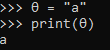
any issues that can arise
 feral cedar
people yelling at you
west nymph
Yes, in Python 3.
grave jolt
You can if you want, especially if it is some mathematical or physical convention
but people will yell at you
 radiant fulcrum
I have a massive amount of respect if you are determined enough to manually set all of the symbols instead of just using their names 🤣
grave jolt
In Julia you can type \pi in the repl, and it will insert the pi letter, for example. Maybe you can create something like this for your editor.
but theta is fine
heady siren
https://i.imgur.com/tkqov9E.png https://i.imgur.com/dlLyTda.png what looks better

 grave jolt
it's weird that it's a container
 peak spoke
The one you can type on a normal keyboard; just stick to basic ascii for var names (or whole source) unless there's some special case or an another language for the devs
 gloomy rain
Feels like it would be a bit of a hassle if you ever wanted to view the code via a terminal without proper encoding configuration.
feral cedar
wait, what are you storing in theta, if not an angle
heady siren
feral cedar
i c
grave jolt
oh, ok
 sick sedge
anybody good with making .py to .exe? bc i get an error
 granite current
Hey, I saw this discord has a bot that evaluates arbitrary python code, to my knowledge this is insecure and vulnerable to exploits, I imagine this is fixed in some way for the bot. Could anyone tell me how this is done, or point me in the right direction? Thanks!
@sick sedge you might want to give https://pypi.org/project/auto-py-to-exe/ a shot
 grave jolt
@granite current This is done in a safe sandbox using nsjail: https://github.com/python-discord/snekbox.
heady mauve
anybody good with making .py to .exe? bc i get an error
@sick sedge try TechWithTim's pyinstaller tutorial on youtube
grave jolt
@sick sedge This is not a help channel. See #❓|how-to-get-help to get help.
granite current
@grave jolt I wasnt aware of this project, thanks!
feral cedar
yeah, it's definitely not a naked eval
grave jolt
@granite current The central tool is nsjail. It can be a bit tricky to configure, but it's worth it.
granite current
Sadly I'd need it to work on windows, still interesting to read up on though
spark magnet
@granite current these things always rely on the OS to provide the isolation
I built one for Ubuntu that used AppArmor
radiant fulcrum
Could possibly for windows make use of hyper v and a VM to isolate it some what but I'm definately not going to gatentee how secure it is
granite current
Yeah I'm broadly aware of these tools, mainly for use with docker, but I'm really looking for a good windows solution, with a vm sadly not being an option @spark magnet
@radiant fulcrum It'd be for use in a game, so I can't really virtualise
radiant fulcrum
Hmm probably a bit of a yikes
grave jolt
You want to run user Python code in a game?
granite current
yeah it is my best option right now is pypy
radiant fulcrum
I highly doubt docker is secure enough even if you lock it down fully
PyPy isn't anything similar
It's a python jit
grave jolt
it has some kind of sandbox, but idk how good it is
granite current
no I wouldnt use docker for this i meant ive used apparmor in docker to shore it up for something unrelated
@radiant fulcrum pypy still runs python code i dont really care how too much
radiant fulcrum
I know docker can (on Windows) lock everything down right down to ipc
granite current
@grave jolt it's not very finished i would have to do a lot of work myself
spark magnet
@granite current PyPy by itself provides no isolation. it has a sandbox features sort of, but you have to use it.
granite current
@spark magnet yes I'm aware their current implementation would be too slow anyway
radiant fulcrum
Does it need to be this secure if this is (I assume) running on your pc as more of a test bench?
spark magnet
@granite current too slow? PyPy is often faster
granite current
@spark magnet Sorry, I was referring to how the sandboxing is done, ultimately all code has to be stringified at some point to be passed into the sandbox
radiant fulcrum
That's the same for pretty much everything
granite current
@radiant fulcrum could you give me an example
Maybe I'm looking at this wrong then
radiant fulcrum
Example of what
granite current
@radiant fulcrum I assumed you replied to me saying that code would have to be stringified to be sandboxed? if so could you give me an example of that outside of pypy sandboxing?
radiant fulcrum
Any code that you would send to a sandbox would end up being stringified because they're ultimately ran in a seperate process that's isolated and that process needs to have the code to be executed
If you're aim is to have it essentially execute the code in isolation in the same process I don't think that's possible regardless of the system without isolating the entire process to begin with
granite current
@radiant fulcrum Yeah you are correct on that that is my aim, usually lua is used for this purpose because its relatively easy to implement this
radiant fulcrum
Alot easier todo with a language designed to be sandboxed
granite current
exactly
radiant fulcrum
Python was never really made with sandboxing in mind so you will 3nd up spawning seperate processes todo zo
granite current
You are probably right, that's my impression too, I just saw the bot and I was curious if it maybe used something clever that could be of use to me, sadly thats not the case
thanks everyone anyway!
wicked holly
docker/k8s is negative security benefit, the benefits there are all from a convenience/deployment speed standpoint.
smoky turret
another little puzzle: Explain why the first two work and the last doesnt
grave jolt
!warn @unkempt rock Advertisement is not allowed on this server. Keep the channels on topic.
fallen slateBOT
:incoming_envelope: :ok_hand: applied warning to @unkempt rock.
grave jolt
@smoky turret (a) is the same as a, not (a,) 😛
smoky turret
a much faster response than my last puzzle
grave jolt
!e
print([[[[[42]]]]])
print((((((42))))))
@grave jolt :white_check_mark: Your eval job has completed with return code 0.
001 | [[[[[42]]]]]
002 | 42
though my last one was much more interesting
grave jolt
!e
(((((((((((((((((((((((((((((((((((((((((((((((((((((((((((((((((((((((((((((((((
(((((((((((((((((((((((((((((((((((((((((((((((((((((((((((((((((((((((((((((((((
(((((((((((((((((((((((((((((((((((((((((((((((((((((((((((((((((((((((((((((((((
(((((((((((((((((((((((((((((((((((((((((((((((((((((((((((((((((((((((((((((((((
42
)))))))))))))))))))))))))))))))))))))))))))))))))))))))))))))))))))))))))))))))))
)))))))))))))))))))))))))))))))))))))))))))))))))))))))))))))))))))))))))))))))))
)))))))))))))))))))))))))))))))))))))))))))))))))))))))))))))))))))))))))))))))))
)))))))))))))))))))))))))))))))))))))))))))))))))))))))))))))))))))))))))))))))))
@grave jolt :x: Your eval job has completed with return code 1.
001 | s_push: parser stack overflow
002 | MemoryError
how fun
grave jolt
interesting that CPython crashes on that and PyPy doesn't
 smoky shuttle
true
smoky turret
the question is why is it true
spark magnet
False == 0 and 0 in [False]
spark magnet
nice 🙂
feral cedar
ooh those are from the wtfpython repo right?
 glossy burrow
?
 radiant garden

GitHub
What the f*ck Python? Contribute to satwikkansal/wtfpython development by creating an account on GitHub.
smoky turret
oh, cool project. I got them from twitter, perhaps they originated from there
 bleak lantern
I'm processing a bunch of data, and wanted to group my data based off "zones". for example, if our "margin = 0.3" i would put it into the zone 0-1, if 'margin=1.5', put it into zone 1-2. I'd like to have some hash table, so that when i say zone['0-1'], it will give me all the IDS of the objects that i appended to that zone.... anyone have any ideas how to do this without doing a bunch of if/else statements?
ideally would just like to collections.Counter() all my results
 crystal pebble
Can you write a conversion from margin to zone?
bleak lantern
@crystal pebble not really sure what u mean by that
kind of wanted:
dict['0-1'] = ['over', 'under', 'under']
but the key inputted will be based off the margin's value
so if the margin=0.3, it would go into dict['0-1'] key
I could do this with a bunch of if/else statements, but when u have 20-30 different keys it will get messy
crystal pebble
Well, ignoring that for a second... a simple but maybe not great way to do it is to set up an object of some sort. Something like,
[('0-1', range(0, 0.3)), ('1-2', range(0.3, 1))] and then search through it until you find a hit
Your predicate would be that whatever number you want is in the range
What I was talking about before was converting things. Think F to C or vice versa
Hmm... how big are your decimals? You can just multiply them by some large number to get rid of them
(I have no idea what does and doesn't work in your case, just throwing out ideas)
q = [('A', lambda n: 0 <= n < 0.3), ('B', lambda n: 0.3 <= n < 1)]
list(filter(lambda m: m[1](0.4), q))[0][0]
>>> 'B'```It's not clean though
NP. Good luck
boreal umbra
@bleak lantern be sure to stick to the channel description in this channel especially. This isn't a help channel.
crystal pebble
Oops, sorry. I lost track of what room I was in
boreal umbra
def do_list_stuff():
    list_thing: List[Tuple[str, int, float]]
    list_thing = <some list comp>
is this sort of syntax supported by any/all linters?
crystal pebble
Yes. I'll take a pic, one sec
boreal umbra
the first line that mentions list_thing doesn't actually assign anything to it but I've had a few cases where I've wanted to specify the type in advance
though I wouldn't want that to be the default pattern for using types because then we're tricking people into thinking that you have to declare variables.
boreal umbra
the white block on line 5. Is that a type warning?
crystal pebble
That's the warning for line 5
(Hard to take a good screenshot since my name shows up and I don't have paint or anything installed)
boreal umbra
it looks like it's not really supported by this particular linter, then
crystal pebble
It may be my configuration. I get the following when I don't have the function there
fallen slateBOT
You are not allowed to use that command here. Please use the #bot-commands channel instead.
crystal pebble
boreal umbra
@kind karma this is a discussion channel. You're welcome to join the conversation but please don't interrupt.
crystal pebble
feral cedar
neovim?
crystal pebble
Yeah, with Ale, Pyflakes, and maybe one more thing
feral cedar
looks pretty good
crystal pebble
I'm pretty certain you can get it to type check like you want in functions as well, I just don't have it set up properly
boreal umbra
I also had a case recently where I was using type annotations for a class I was defining
let me see
class MeasuresDict(UserDict, t.Mapping[str, Measures]):
    ...
That definitely works
boreal umbra
I feel like it should have -> notation
crystal pebble
That's for the return type only, IIRC
boreal umbra
yeah, but class is not def, so I don't think it should be required that -> means exactly the same thing
I don't know what t.Mapping[str, Measures].__init_subclass__ does but I feel like we're not making a subclass of that in any meaningful way
but maybe we are
peak spoke
The typehint does get put into local __annotations__ si I don't see why an up to date linter wouldn't understand it
boreal umbra
@peak spoke are you talking about when the type hint is in the class constructor (or whatever ClassName(...) is called), or if the proposed ClassName(...) -> TypeHint[...] were it?
peak spoke
Was a bit scrolled up, for the previous convo with the typehinted name before it was assigned a value
boreal umbra
ah yes
 true ridge
The typehint does get put into local
__annotations__si I don't see why an up to date linter wouldn't understand it
@peak spoke No linters knows anything about the__annotations__. It is a runtime attribute inserted by the interpreter, linters does static analysis so they either have to support the PEP 484/526 etc. or just ignore them.
is this sort of syntax supported by any/all linters?
@boreal umbra all type checkers whom implement PEP 526 (https://www.python.org/dev/peps/pep-0526/#id7) supports this (which I believe all of them)

Python.org
The official home of the Python Programming Language
The general purpose linters usually just ignores the type hints (like pycodestyle / pyflakes)
peak spoke
They don't know about the attribute, but when it's a thing that's properly constructed and may be used around python with the pep being accepted then I don't see why they'd ignore the hint
true ridge
The ignoring is done for keeping tools boundaries in a single scope.
For example, these guys are the dynamic typing tools (not linters / type checkers) that uses the powers of the __annotations__ https://github.com/ethanhs/python-typecheckers#dynamicruntime

GitHub
A list of Python type checkers (PEP 484 compliant and not, static and runtime/dynamic) - ethanhs/python-typecheckers
 pliant tusk
Does anyone know the reason why these are different types?```py
dict.setitem
<slot wrapper 'setitem' of 'dict' objects>
dict.getitem
<method 'getitem' of 'dict' objects>
@pliant tusk huh that's a good question
 undone flame
No, that's really interesting. I'd bet that it has to do with c implimentation efficiency, but I have no idea what.
pliant tusk
im looking at the c implementation, and the getitem method is put in the slot as well
boreal umbra
I thought slots were to decrease the memory footprint of objects with a fixed number of attributes. But dict items are not attributes
 spice pecan
those are different slots IIRC
pliant tusk
mp_subscript is set to the same func
undone flame
Right, and classes have their attributes stored in a dict named .__dict__ unless there's something stored in .__slots__.
spice pecan
Lists have the same thing, __getitem__ is a method while __setitem__ is a slot-wrapper 
smoky turret
what im gathering is that slot-wrappers are a thin wrapper over the C Api, but this doesnt explain why set is a slot wrapper and get isnt
undone flame
But if it works well enough without taking that last __get__() step, maybe nobody bothers...
Though that doesn't explain why they're different.
pliant tusk
>>> type(dict.__getitem__)
<class 'method_descriptor'>``` its actually a method descriptornot wrapper
undone flame
from collections import defaultdict

def attrs(cls):
    ret = {}
    for n in dir(cls):
        v = getattr(cls,n)
        if callable(v):
            vn = repr(v)
            try:
                vn = vn[1:vn.index("'")]
            except:
                vn = vn[1:vn.index(" at ")]
            ret[n]=vn
    return ret

glossary = defaultdict(lambda : defaultdict(set))
classes = {dict, list, int, float, tuple, object, Exception, bool}
for cls in classes:
    w = attrs(cls)
    for k,v in w.items():
        glossary[k][v].add(cls)

pglossary = {k:{kk:vv for kk,vv in v.items()} for k,v in glossary.items()}

difglossary = {k:v for k,v in pglossary.items() if len(v)>1}

pprint(difglossary)```according to ^, only these classes have differences in wrapper types: {'__contains__': {'method ': {<class 'dict'>}, 'slot wrapper ': {<class 'list'>, <class 'tuple'>}}, '__getitem__': {'method ': {<class 'list'>, <class 'dict'>}, 'slot wrapper ': {<class 'tuple'>}}}
That's in python 3.8. remind me of other classes you want me to add.
undone flame
still only those two attributes.
just noticed how weird copyright is. <class '_sitebuiltins._Printer'>
 fluid gale
Thoughts on making a chat bot that learns from the help channels?
undone flame
Sounds cool.
fluid gale
Nevermind, I just looked at some of them, not very quality content >.<
 cloud crypt
Is there any way to use 32-bit pointers in 64-bit python with ctypes?
raven ridge
that question doesn't even really make sense...
cloud crypt
well yeah but it's hard to explain
raven ridge
a 64-bit program has a 64-bit address space. So, the location of an individual byte of memory in that address space could be any one of 2**64 different places, and so you need a 64-bit type to represent it.
cloud crypt
that’s not really my use-case
basically I am interacting with a 32-bit process, and having data types in there requires me to use appropriate types
think I can just stick integer type instead of a pointer and use it as address, honestly
if there isn’t a better solution
raven ridge
there's not really a difference between a 64-bit pointer type and a 64-bit unsigned integer, in terms of how they're represented in memory. They're different for the type system, but not in terms of binary representation.
cloud crypt
definitely
was wondering if I could use that nice ctypes.POINTER(Type), though
but seems like not the case
raven ridge
ctypes is for code that you're interacting directly with, in DLL's / shared libraries. since a 64-bit process can't load a 32-bit library, there's no reason it would need to have a type representing 32-bit pointers
cloud crypt
not only shared libraries but yeah
raven ridge
well, shared libraries or the interpreter itself - that's it, right?
I guess it does give you C compatible data types that you could use for structure packing/decoding, too.
cloud crypt
Yeah, it does
heady siren
Anyone know the speed difference between cupy and py cuda?
It’s not exactly the same type of thing
unkempt rock
print("Hi I'm Botty the robot. Please enter the the five scores that you")
print("need me to find the average of")
score1=int(input("Enter score 1"))
score2=int(input("Enter score 2"))
score3=int(input("Enter score 3"))
score4=int(input("Enter score 4"))
score5=int(input("Enter score 5"))
#change the total score calculation to include score3, score4, score5
totalscore=score1+score2+score3+score4+score5
#change the formula for average to find the average of 5 values
average= totalscore/2
print(average)
Does this work
grave jolt
@unkempt rock This is a discussion channel, not a help channel. See #❓|how-to-get-help.
gleaming rover
do you consider Python lacking block scope desirable?
 sacred yew
tbh there's not really much of a need for block scoping
most of the time, when I'm using other languages, I feel that block scoping makes me do more work with no benefit
gleaming rover
most of the time, when I'm using other languages, I feel that block scoping makes me do more work with no benefit
@sacred yew me too, especially when I want to set multiple variables based on the outcome of a conditional
sacred yew
yeah that was the main case i was referring to
grave jolt
There's at least one issue caused by lack of block scoping
e = 1
try:
    1/0
except ZeroDivisionError as e:
    print("it's fine")
print(e) # e is not defined
and it may add more headache with pattern matching
but otherwise, not a big deal for me
gleaming rover
There's at least one issue caused by lack of block scoping
e = 1
try:
    1/0
except ZeroDivisionError as e:
    print("it's fine")
print(e) # e is not defined
and it may add more headache with pattern matching
but otherwise, not a big deal for me
@grave jolt WTF?
why is it like that
grave jolt
i have no idea
grave jolt
yep
gleaming rover
no, I mean
why?
like I get what's happening but is that a deliberate design choice
grave jolt
we can ask core devs 😄
sacred yew
i mean, there aren't any more references to e anymore after the except
since it was rebound to the exception
sacred yew
the original e value would have been gc'd already, right?
grave jolt
hm, yes
gleaming rover
it doesn't make sense to refer to the as binding with with, since presumably it won't be in a usable state after __exit__
but that's not the case for except
grave jolt
with's binding is accessible after the with
sacred yew

Stack Overflow
exc = None
try:
raise Exception
except Exception as exc:
pass
...
print(exc)
NameError: name 'exc' is not defined
This used to work in Python2. Why was it changed this way? If I cou...
looks like its due to avoiding circular refs
grave jolt
Another issue is the closure gotcha, but I don't know whether scoped bindings can fix it
fs = []
for x in range(5):
    fs.append(lambda: x)
print(fs[0]())  # 5
fs = []
for (const x of [0, 1, 2, 3, 4]) // x only exists in the scope of the for
    fs.push(() => x);
console.log(fs[0]())  // 0
isn't that because of late binding
grave jolt
Well, the lambda stores a reference to the x in the enclosing scope.
And the for loop just performs many assignments
sacred yew
since it can't store a ref to the current iterations value because of no block scope
grave jolt
But if it's a new scope every time, it's going to be a different reference every time
Basically, lambda doesn't store a reference (pointer) to the object, it stores a reference to a reference to an object.
Like, it stores a reference to the local name x
raven ridge
it doesn't make sense to refer to the
asbinding withwith, since presumably it won't be in a usable state after__exit__
@gleaming rover that's entirely dependent upon the class - in fact, it's pretty common for__enter__to returnself, in which case it's often perfectly valid after__exit__has run.
grave jolt
!e
def f():
    def g():
        return x
    def h():
        return x
    x = 5
    return (g, h)

(g, h) = f()

g.__closure__[0].cell_contents = 6
print(g())
print(h())
@grave jolt :white_check_mark: Your eval job has completed with return code 0.
001 | 6
002 | 6
yes, but I have personally never seen context managers being used after their blocks end
Like, it stores a reference to the local name
x
@grave jolt yeah, but is this behaviour bad?
personally I think it's fine...?
grave jolt
It's bad because of this:
fs = []
for x in range(5):
    fs.append(lambda: x)
print(fs[0]())  # 5
print(fs[1]())  # 5
print(fs[2]())  # 5
print(fs[3]())  # 5
print(fs[4]())  # 5
yes, but I have personally never seen context managers being used after their blocks end
@gleaming rover it's usually unnecessary, because in the cases where theasvariable is still meaningfully usable after the block ends are also the cases where__begin__doesn't construct a new object, so you'd already have an instance to work with.
grave jolt
So you have to do fs.append(lambda x=x: x).
raven ridge
It's a common gotcha.
but, to be fair, default parameters being bound at function definition time is an even more common gotcha.
gleaming rover
It's bad because of this:
fs = []
for x in range(5):
    fs.append(lambda: x)
print(fs[0]())  # 5
print(fs[1]())  # 5
print(fs[2]())  # 5
print(fs[3]())  # 5
print(fs[4]())  # 5
@grave jolt like I get that that's the behaviour
but I've made use of it before
it (late binding of closures) seems more intuitive to me
grave jolt
I made use of this too 🙂
gleaming rover
when I saw that most languages bind early I was like "WTF"
grave jolt
It doesn't make sense to me specifically in a loop like this.
gleaming rover
I suppose not
grave jolt
So if the loop had its own scope, the lambda would refer to a new cell every time. But it probably is too narrow of a use case to actually implement block scopes with something like
for x in range(5):
    scoped x
    fs.append(lambda: x)
(because doing otherwise is a breaking change)
...and still doesn't get rid of the gotcha
raven ridge
the loop kinda does have its own scope, though only for the loop variable...
x isn't usable after the loop ends (anymore)
fallen slateBOT
@grave jolt :white_check_mark: Your eval job has completed with return code 0.
4
ah, I'm mixing it up with exceptions - that's the one that changed
and comprehensions.
!e ```py
print([x for x in "abc"])
print(x)
@raven ridge :x: Your eval job has completed with return code 1.
001 | ['a', 'b', 'c']
002 | Traceback (most recent call last):
003 |   File "<string>", line 2, in <module>
004 | NameError: name 'x' is not defined
in Python 2 that would've printed c.
grave jolt
Yeah, a comprehension is a function call to an anonymous function with the iterable as an argument...
raven ridge
and exceptions are the other one where the scope changed.
!e ```py
try:
1/0
except Exception as e:
exc = e
print(exc)
print(e)
@raven ridge :x: Your eval job has completed with return code 1.
001 | division by zero
002 | Traceback (most recent call last):
003 |   File "<string>", line 6, in <module>
004 | NameError: name 'e' is not defined
in 2, that'd print "division by zero" twice.
smoky turret
comprehensions actually had some weird behavior with yield up to 3.7
now yielding is a syntax error
as for the block scope discussion, I havent thought about this example enough to say definitively, but given that you can do things like this, im not sure you really can have block scope in python without changing a lot of whats allowed
assignment targets are super flexible
which really blurs the line of what would even count as a block level variable
grave jolt
Hm, I didn't think about this 🤔
 plain spindle
is there any advantage to using @staticmethod over @classmethod?
smoky turret
its nicer semantically, assuming its appropriate for the method
 last pollen
they both do different things, @staticmethod for basically associating a regular function (one that doesn't need a class instance) to a class, @classmethod for methods that use the class itself rather than instances of the class
 slim plover
anyone good with instagram api dm me i need help
grave jolt
@slim plover This is a discussion channel, not a help channel. If you want to get help, see #❓|how-to-get-help. If it doesn't break our rules, there is no reason to ask it in DM instead of here
plain spindle
@last pollen i'm aware of their stated intent, however i don't see any disadvantage of just always using @classmethod, even when a @staticmethod would work too
like, the obvious advantage of using staticmethod is that you can do Class.method(x) instead of needing an instance. but this applies to classmethod too
smoky turret
well yeah, staticmethod is basically exactly the same as classmethod, it just throws away the class param, so it provides strictly less info. But dont discount the semantic meaning that entails for users
raven ridge
@plain spindle if it doesn't need the class or an instance, then you should prefer just not making it part of the class at all. It should just be a global function.
grave jolt
I officially failed the Turing test
plain spindle
i disagree there. i prefer the organization benefit of associating it with the class, especially if it's a private helper
raven ridge
If it's a private helper, make it a private global function instead. 🤷♂️
smoky turret
naw, having things be organized into the nice namespaces that are classes is nice
grave jolt
Sometimes a function has to be in a class. For example, a method of a tree visitor/transformer if you never need self.
smoky turret
"Namespaces are one honking great idea -- let's do more of those!"
 teal yacht
the zen of python went into the trash bin 25 years ago
raven ridge
No, I don't think I've ever created a nested class in production code.
teal yacht
it's no longer a relevant "argument"
smoky turret
gonna say a hard no to that
plain spindle
hmm… is overriding an instance method with a classmethod a breaking change
teal yacht
shouldn't be as far as i can tell
smoky turret
certainly an unusual maneuver
plain spindle
fix error here is suggesting it with their NodeVisitor example
idk man, reading that, i would have to pause and check the docs, or else comment why i'm making it a classmethod and not an instance method
grave jolt
Well, class methods are usually factory methods or something like that. When you need the class, but not the insrance (because sometimes you don't have an instance)
a class method can access other class methods of that class, unlike a static method
smoky turret
only real times I've used classmethods were for alternative constructors
plain spindle
i guess i just mean, if they removed staticmethod i'd be okay with that
i think it's a holdover from old-style classes anyway
thanks everyone
smoky turret
not sure the 2.x 3.x class distinction is too relevant
plain spindle
@smoky turret i saw a really cool example that combines zip() and dict loop target assignment to invert a dict
smoky turret
Im pretty sure the math module uses basically a bunch of staticmethods
grave jolt
those are ordinary functions, no?
smoky turret
ah yeah, strike that
grave jolt
random uses bound methods, which is a different thing
plain spindle
🐍 d = {1: 'a', 2: 'b', 3: 'c'}
🐍 i = {}
🐍 for k, i[k] in map(reversed, d.items()): pass
••
🐍 i
{'a': 1, 'b': 2, 'c': 3}
cursed ps1
plain spindle
i like it
i like my ps2 better though as my emoji font is a little annoying
mostly that it's ascii-character-width shorter than >>>
safe hedge
If it's a private helper, make it a private global function instead. 🤷♂️
@raven ridge What about the case where its a private helper on an interface which gets new subclasses where the helper is specifically tied to that subclass implementation
raven ridge
Then make it an instance method
safe hedge
But why. If it doesn't ever need self
The add_arguments method here is prime candidate to actually be a staticmethod imo: https://github.com/django/django/blob/master/django/core/management/base.py
 raven ridge
Just because it's an instance method doesn't mean you need to use self, and you can't know whether your subclass will need access to instance state to perform that method's duty, and people above were confused about the semantics of overloading one type of method with another, so forcing that on your users is a completely unnecessary maintenance burden
grave jolt
speaking of cursed prompts 🙂
safe hedge
Wouldn't the implication of making it static be precisely that it shouldn't be using state?
raven ridge
Then I don't understand the question. If the subclass override of the method wouldn't use any of the subclass's state (instance or class variables), then why would the subclass override of that method be different?
smoky turret
The usecase of staticmethod is, in the real world, basically just the case where you have a bunch of functions that are vaguely related by meaning/context (though decidedly not by state) and you want to group them together. I cant imagine many cases where a "real" class would have a reasonable staticmethod
safe hedge
Because it's doing something totally different? Look at the django example. The method is just an entrypoint to add extra arguments to a parser...
And the parser is passed and not accessed via self
raven ridge
@smoky turret I agree completely, but that should be a module and someone is just being lazy.
smoky turret
@raven ridge meh, in the case of wanting multiple different groups of functionality, sure you could have subpackages, but I dont think theres anything wrong with the class approach
raven ridge
Look at the django example.
@safe hedge that example calls super with no arguments. That can't be done in a static method, because super needs to know the MRO, which it finds from the class or instance passed to the method that uses it
smoky turret
lol gottem
safe hedge
Does it call super?
I thought the only call was self.add_arguments(parser)
Which could easily be replaced with a staticmethod call
raven ridge
def add_arguments(self, actions):
super().add_arguments(self._reordered_actions(actions))```Ah we are looking at different add_arguments
That's the one on HelpFormatter. I'm talking about the one on BaseCommand
def add_arguments(self, parser):
        """
        Entry point for subclassed commands to add custom arguments.
        """
        pass
Link to a line number next time 😋
smoky turret
strikes me as unlikely that its gonna be a good idea to make it a static method regardless
to make something a staticmethod is to say definitely that it does not, and will never require any mutual state
which is why basically the only time it makes sense to do is, as previously said, when you got some truly seperate functions you want to group together
sacred yew
Doesn't that explicitly say it's for the subclasses to override
safe hedge
What's that got to do with it?
raven ridge
The point I made earlier still stands. If this was a static method, subclasses would need to override it with a regular instance method. Which people find confusing.
smoky turret
well, that decidedly violates the "knowing it will never require state" req @safe hedge
a static, abstract method is a very weird idea
no conceivable usecase I can come up with
grave jolt
class Monoid:
    @staticmethod
    def zero(): ...

    def __add__(self, other): ...
but that's, um... esoteric
smoky turret
god damn functional people
grave jolt
Sorry, couldn't find a different example 😦
class IConcatenatableAndNeutralelementable:
    @staticmethod
    def zero(): ...

    def __add__(self, other): ...
better? 🙂
smoky turret
better add something about functors, really get the functional people going
safe hedge
The point I made earlier still stands. If this was a static method, subclasses would need to override it with a regular instance method. Which people find confusing.
@raven ridge Why would they?
raven ridge
hmm… is overriding an instance method with a classmethod a breaking change
idk man, reading that, i would have to pause and check the docs, or else comment why i'm making it a classmethod and not an instance method
They are. 🤷
flat gazelle
Doing that would violate LSP, since a subclass should not demand a different calling convention from a superclass, which it would do if you overrode staticmethod with a regular function
raven ridge
Would it be observable to users of the class?
If it's a static method in the base class it can't be made an instance method on the subclass without violating Liskov. It could be made a class method. I think
Actually... Given that Liskov only says anything about how instances of the class behave, not the class itself, I think even overriding a static method with an instance one doesn't violate Liskov.
You wouldn't be able to call the method on the subclass without an instance, but I don't think Liskov requires that to be possible, since Liskov only deals in instances.
(that said, the very fact that it's not clear whether or not it violates LSP is itself a very good reason not to do it)
undone flame
Because dict values aren't unique, for reversing a dict I ususally use something like:
[result[value].add(key) for k,v in input.items()]
return result
or
return {k:v for k,v in result.items()}``` mint forge
In what circumstances or situations do we use @classmethod?
 brave badger
Alternative constructors are the main one
mint forge
huh?
brave badger
For example, if you have a class that models an API response e.g. from the YouTube API
class Video:
    def __init__(self, video_id, video_metadata):
        ...
```instead of passing that information by yourself, you can create a class method that reads that data directly from the JSON response
```python
class Video:
    def __init__(self, video_id, video_metadata):
        ...
    @classmethod
    def from_json(cls, data):
        ... # Do processing
        return cls(video_id, video_metadata)
mhm
unkempt rock
How can I run a discord client with a proxy?
grave jolt
@unkempt rock This is not a help channel. See #❓|how-to-get-help.
...and I'm not sure there are legitimate uses for that.
 hearty monolith
Question: PEP 617 (accepted in Python 3.9) mentioned ```
The new proposed PEG parser contains the following pieces:
- A parser generator that can read a grammar file and produce a PEG parser written in Python or C that can parse said grammar```So....one can just define their own version of Python(?) grammar now?
brave badger
I believe it just means that the new PEG parser generator can use the existing grammar that Python uses
and that it's more flexible than it currently is
swift imp
Heres a question, why cant they just make generators be iterable as many times as possible?
If they keep the original, they're still only accessing one element at a time..
grave jolt
A generator is iterable as many times as you want.
!e
def forever():
    i = 0
    while True:
        yield i
        i += 1

generator = forever()

print(next(generator), end=" ")
print(next(generator), end=" ")

for i in generator:
    print(i, end=" ")
    if i == 7:
        break

for i in generator:
    print(i, end=" ")
    if i == 12:
        break
print()
@grave jolt :white_check_mark: Your eval job has completed with return code 0.
0 1 2 3 4 5 6 7 8 9 10 11 12
@swift imp
It's just that the generator is a stateful object, and by iterating over it you change its state, as shown here ^
And you might exhaust the generator if it's finite. Then it will not have any more values to generate.
If you mean iterator, not generator, the answer is the same. An iterator can be a view on some iterable. It's stateful as well.
unkempt rock
import sqlite3 # Builtin imports
import secrets

from typing import Optional # Direct element import from builtin

from utils.logger import logger # Local direct import
What would be the best way to organize these imports?
also, i think this channel is not the best for that
but it's related to import conventions
boreal umbra
@unkempt rock you do stdlib, then a blank line, then other libraries, then a new line, and then imports from the same package
it's in pep8
unkempt rock
i get a bit confused by imports with from
they must keep at the bottom with the local packages?
boreal umbra
Python.org
The official home of the Python Programming Language
if you're using pycharm, control + o will organize your imports
unkempt rock
actually using vscode
but thanks anyways, i'll give a better read into the pep8 imports
 reef otter
You can use isort module for import formatting and black for code formatiing.
If you are using github then you can use restyled bot which will format code for you. 😎
 molten onyx
Hettinger posted some interesting results about the lru_cache decorator on twitter: https://twitter.com/raymondh/status/1320411457607983105
I am able to reproduce this but I genuinely have no idea why it is faster, does anyone have some insights into this?

2/ Here are the timings:
$ python3.9 -m timeit -r11 -s 'def s(x):pass' 's(5)'
5000000 loops, best of 11: 72.1 nsec per loop
$ python3.9 -m timeit -r11 -s 'from functools import cache' -s 'def s(x):pass' -s 'c=cache(s)' 'c(5)'
5000000 loops, best of 11: 60.6 nsec per loop
 Twitter
Surely bytecode-wise it should be slower, since it's just a LOAD_CONST
I'm assuming it's something to do with CPython not running the "actual" python interpreter for C function implementations, but cheating somehow
(since you know C code cant be compiled into bytecode)
grave jolt
...technically it can, but why 🙂
flat gazelle
I would guess it is because cache[x] is faster since that class has slots, which regular functions do not.
 uncut sage
I think it's also because cached functions minimize the amount of work done by the interpreter
basically, the call opcode is never actually executed
functools.cache is great whenever you can leverage it
unkempt rock
Hello folks. Can anybody think of a faster alternative to this:
sum(letters_scores[letter] for letter in all_hands)
@unkempt rock what are you doing that this isn't fast enough?
unkempt rock
all_hands being a really, really, long list. letters_scores a dictionary such as: dict(q=10, z=10, a=1, etc)
@unkempt rock what are you doing that this isn't fast enough?
@boreal umbra I am computing the scores in JSON lists of 3+ million long strings.
boreal umbra
I believe it would be faster if the data were in a structure like a pandas DataFrame, but putting all the data into a DataFrame if it isn't already would probably be the same speed as the line you gave.
you might see if pandas can get data out of a json
unkempt rock
Unfortunately I can detect few duplicates among the words. I tested a slower alternative solution considering words lookups instead of letters, to take advantage of duplicates.
boreal umbra
iteration in Python is slow, so libraries for crunching large quantities of data do the iteration in C.
unkempt rock
I believe it would be faster if the data were in a structure like a pandas DataFrame, but putting all the data into a DataFrame if it isn't already would probably be the same speed as the line you gave.
@boreal umbra Of course, agreed. I am limited to the standard builtins. No imports.
boreal umbra
I don't know of a solution, then.
unkempt rock
Thanks anyway.
boreal umbra
why do you have that constraint anyway?
unkempt rock
Academic exercise.
boreal umbra
in that case, I would emphasize readability, and your sum statement is very much that.
gloomy rain
@unkempt rock You have to do this in Python too?
unkempt rock
@boreal umbra I don't need to be readable in this case. I merely want to test the limits of the setup/language.
gloomy rain
I wonder if it would be slightly faster to manually implement a function to map the letters to scores rather than use a dictionary to do the lookup.
unkempt rock
@gloomy rain Yes, Python and no mas. Nothing else.
spark magnet
@unkempt rock maybe you already mentioned this: why does it need to be faster?
unkempt rock
I wonder if it would be slightly faster to manually implement a function to map the letters to scores rather than use a dictionary to do the lookup.
@gloomy rain Yeah ... but what could possibly beat a dictionary lookup? A switch statement?
gloomy rain
@unkempt rock Just a sequence of if else
It would be a very very slight improvement, if any, though
unkempt rock
@unkempt rock maybe you already mentioned this: why does it need to be faster?
@spark magnet Somebody mentioned there's a faster alternative to my code. So I am looking for it!
boreal umbra
@gloomy rain I think using a dict would be one call to hash and one call to __eq__, whereas chained if-else would be multiple calls to __eq__
spark magnet
all_hands is a list of single letters?
boreal umbra
it's probably unlikely that you'd get a collision if it's just ABCDF as keys
unkempt rock
@gloomy rain Perhaps I could analyse the most frequent letters in the sample data and break out of a carefully constructed series of if ... a would go first, e after, etc.
gloomy rain
Sounds unlikely.
 rancid hull
In need of a competent discord bot developer who would be interested in an exciting new project/business venture. Please contact me if interested
unkempt rock
it's probably unlikely that you'd get a collision if it's just ABCDF as keys
@boreal umbra Absolutely. I tested whether using dictionariesgetwith a default value was faster than the index notation (perhaps no missing key exception check) ... but it's not.
boreal umbra
@rancid hull this server isn't a place to solicit paid help. Take a look at #career-advice for a link to the official Python job board.
rancid hull
appreciate it 😄
unkempt rock
all_handsis a list of single letters?
@spark magnet It is. I joined a list of strings to make just one big list of characters. The join operation is incredibly fast and it helps as I have to count the number of letters (len)
spark magnet
@unkempt rock perhaps there isn't a faster way to do the sum you showed us, but there is a faster way to do the larger problem that it's a part of?
unkempt rock
@unkempt rock perhaps there isn't a faster way to do the sum you showed us, but there is a faster way to do the larger problem that it's a part of?
@spark magnet I profiled the whole code and >90% of the time is spent on thesumline. But yes, perhaps I could prepare the setup better. I did explore several alternatives. The initial list of list of strings was slow to operate on. Thejoinstatement amounts to 2% of execution time.
spark magnet
@unkempt rock ok, hard to comment without seeing the original problem
unkempt rock
@spark magnet Understandable. Thanks though.
boreal umbra
@unkempt rock well, what else is the code doing? because even though it's one line, it sounds like what it was doing was the biggest job to be done anyway.
unkempt rock
This is the relevant code, all else is not very relevant and can't be optimised:
_letters_scores = dict(
        q=10, z=10,
        j=8, x=8,
        k=5,
        f=4, h=4, v=4, w=4, y=4,
        b=3, c=3, m=3, p=3,
        d=2, g=2,
        e=1, a=1, i=1, o=1, n=1, r=1, t=1, l=1, s=1, u=1)

    @profile
    def score_letters(self):
        letters_scores = self._letters_scores           # local variable caching helps with frequent lookups
        all_hands = ''.join(self.hands)
        return len(all_hands), sum(letters_scores[letter] for letter in all_hands)
I was surprised to learn that the letters_scores local assignment actually helps!
flat gazelle
try sum(map(self._letters_scores.__getitem__, all_hands)), and compare ''.join with itertools.chain.from_iterable
unkempt rock
try
sum(map(self._letters_scores.__getitem__, all_hands)), and compare''.joinwithitertools.chain.from_iterable
@flat gazelle You've create a monster. It's way faster than the standard [] dictionary lookup + comprehension. I am reading up on why that is the case. Thanks a bunch!
boreal umbra
@hoary kite try asking in #data-science-and-ml or open a help channel. There are instructions for that on #❓|how-to-get-help
unkempt rock
The map generator seems to be way faster than for letter in all_hands and that makes all the difference. Thanks again, @flat gazelle
flat gazelle
map is only faster for non-python functions IIRC
unkempt rock
map is only faster for non-python functions IIRC
@flat gazelle I don't fully understand. What do you mean by non-python functions? Builtin functions such assumor__getitem__but not ones I define?
smoky turret
 hoary orbit
anyone can help me with a problem with json
unkempt rock
Thanks @smoky turret . I had read that, although it seems somewhat dated.
smoky turret
yeah
hoary orbit
yeah
@smoky turret how i can extract data from a big json?
smoky turret
not a help channel, but whats wrong with the json module?
hoary orbit
not a help channel, but whats wrong with the json module?
@smoky turret i dont know how extract a value from a json because is so big
smoky turret
ask in #python-discussion or claim a help channel, im busy
magic python
i almost never use generators 🤔 feel that i'm missing out on something
 crystal kindle
hey all
I have a position, scale, and a set of points I want to make a worldTransform matrix from
origin
origin+normal = Z axis
origin + (origin- ((v2+v1)/2) ) = X axis
I don't understand how to use the data I have to produce a world_transform matrix
(scale+rot+pos)
 signal tide
what advantage does (more-)itertools provide compared to creating generators manually?
feral cedar
other than you don't have to make them manually?
 digital mist
i too have a question
i have beginner-intermediate python experience
id like to make an app on my phone thatll have logs and notifications and daily checklists.
trying to research android dev, is it worth it to use python to achieve this or should i try using a different language? idk how supported python is on android
signal tide
ya I'm just wondering if there's a performance advantage
cloud crypt
with itertools, there is
feral cedar
i believe kivy can be used to create android apps @digital mist . java and kotlin are probably the most common languages for android app dev
digital mist
is kivy available for those languages?
feral cedar
no
digital mist
how does exporting kivy to android work?
feral cedar
i have no idea, try asking in #user-interfaces
digital mist
ty
signal tide
@cloud crypt do you happen to know why? (or have any metrics)
flat gazelle
Itertools are written in C
smoky turret
I love itertools
cloud crypt
they are written in C and they should be several times faster
fallen slateBOT
Character Info
\ufffc : OBJECT REPLACEMENT CHARACTER - 
feral cedar
nice
magic python
i looked at moreitertools recently and didn't see too much usage for myself
most of it seemed as though it was a listcomp or whatever, but maybe it's bc i don't use generators enough
boreal umbra
@magic python my favorite thing in more itertools is the chunking function
magic python
yeah you said that! I need to try it out, i did think it looked interesting
you use it much?
boreal umbra
I've used it much, but I've helped several people implement the same functionality by hand
it's one of the most obvious things that Python doesn't have in the stdlib, I think.
magic python
hrm - a lot of this i think i don't need because i'm always in pandas as well
swift imp
Their groupby function is pretty nice too
smoky turret
I've never actually used more-itertools, and I'd probably just copy/paste something from it instead of adding it as a dependancy, but I can appreciate its existence
eh its under MIT, guess no copy paste then
peak spoke
mit is pretty much just copy paste
smoky turret
you'd have to include the license with it
at that point I'd just install it
its a lightweight dependency anyways
I think, anyways
its pure python right?
peak spoke
yes
crystal kindle
got it!
sacred yew
yeah why isn't grouper in the stdlib already
it's the only itertools recipe I actually use
teal yacht
No, there is no SIMD in itertools
It's a utility module to do a bunch of stuff with iterables
 pastel steppe
feral cedar
pastel steppe
feral cedar
are you trying to write it in python?
pastel steppe
ye
boreal umbra
@pastel steppe probably a question for #data-science-and-ml
boreal umbra
what if t.List[t.Tuple[str, str, str]] was t.List[t.Tuple[str * 3]]
would probably be problematic for parsing unless the parser treated it as a special case
teal yacht
ew no, that's a terrible edge case
crystal pebble
Seems like a good place for an alias or generics with constraints though
boreal umbra
@crystal pebble it would be if not for the fact that I only use it once
it exists temporarily and becomes a dataframe
peak spoke
That doesn't look too good imo, if you have tuples huge enough that it'd make sense to use the mult then perhaps it'd make sense to restructure or at least make it an alias; would love some more flexibility with list though
crystal pebble
The closest I found is:
To specify a variable-length tuple of homogeneous type, use literal ellipsis, e.g. Tuple[int, ...]. A plain Tuple is equivalent to Tuple[Any, ...], and in turn to tuple.
I don't know much about the type system, but maybe you can use something hacky using *args
# This makes each positional arg and each keyword arg a "str" def call(self, *args: str, **kwargs: str) -> str: request = make_request(*args, **kwargs) return self.do_api_query(request)```But at that point you're just making things harder to read
raven ridge
Maybe an unpopular opinion, but: typing is most valuable for the public API of a module. Within a module's implementation, typing seems to require a lot of work for very little payoff. It does a subset of what unit tests do, and a proper unit test suite is much more valuable.
boreal umbra
@raven ridge I use them for the signature of any function/method that I anticipate someone else will use, and then I only sprinkle them internally where I think they're helpful for someone trying to understand the implementation.
raven ridge
That's pretty much my strategy, too.
boreal umbra
in fact, this is the only line in that function that uses them: rows: t.List[t.Tuple[str, str, str]] = []
I only did it because the list starts out as empty.
peak spoke
Unless it's something really complicated to do (getting easier as the typing peps get implemented), I prefer to hint everything
boreal umbra
@peak spoke for function signatures, or assignment expressions as well?
crystal pebble
I use them for my sanity since it's one less thing to worry about 
raven ridge
It's literally one more thing to worry about
peak spoke
Well, with properly typed functions expressions don't need many hints, but also expressions if it's something larger in scope where the name is not sufficient
safe hedge
Maybe an unpopular opinion, but: typing is most valuable for the public API of a module. Within a module's implementation, typing seems to require a lot of work for very little payoff. It does a subset of what unit tests do, and a proper unit test suite is much more valuable.
@raven ridge Strongly agree
crystal pebble
Do you mean writing the hint? That's not a big deal at all
raven ridge
Writing it, and maintaining it over time, yeah.
peak spoke
I do get a bit angry with libs that don't have hints and I have to look into their source for the types nowadays
raven ridge
typing private functions is extra work, makes for more verbose code, and add very little value - especially considering the you should have unit tests confirming that every type you want to be handled actually works as you expect.
safe hedge
They can get really unwieldy and then you find yourself defining a custom type which you of course have to place/import
crystal pebble
To be fair, Python is really weak in a lot of ways so it makes sense that it can become an issue
It'd be nice if you could add more constraints to things
safe hedge
Doesn't that defeat the point of being dynamically typed though
crystal pebble
No, it just gives you the option to make some guarantees when you want them
safe hedge
Adding hard constraints upfront is antithetical to python's design
raven ridge
typing isn't the way to add more constraints. isinstance checks and the like are.
typing is ignored at runtime, and constraints should be enforced at runtime
crystal pebble
Maybe you guys are right. OOP requires its own way of thinking and I suck at it
And dynamic typing too
safe hedge
OOP is neither here nor there with regards to constraints on types
crystal pebble
Here's a code snippet from an old project. TBH, that's still nowhere near making me happy since there's a couple of things left to guarantee
Is there an easy way to refine things like that in Python? Expanding attributes, for example
raven ridge
Given that the Python interpreter does not check arguments for consistency with declared types at runtime, I don't much see the point.
crystal pebble
So that if you have an enum with data (locations in a game, for example) you can just the number of elements as an upper bound dynamically
crystal pebble
Also, the more I read and learn the more it seems that C and C++ were the problem and not OOP
Quick question though z what does it mean to for something to only be "available on the class"? Does that mean only the class can access it
__members__ is a read-only ordered mapping of member_name:member items. It is only available on the class.
raven ridge
It's not an instance attribute, it's only a class attribute.
given foo = Foo(), you can do Foo.__members__ but not foo.__members__
crystal pebble
Ah, okay. Thanks
raven ridge
Also, the more I read and learn the more it seems that C and C++ were the problem and not OOP
I'm not sure what this refers to. C isn't even an OOP language. C++ is a multi-paradigm language, like Python is - not pure OOP.
crystal pebble
NM, I'm just gonna stop talking. New meds, two of of sleep in as many days. Sorry, good night
 prisma star
programming in c is like sleeping in the middle of a highway. It's not a safe feeling
-my systems prof
 open plaza
Can anybody please help to start contributing to python language?
Some pointer would be good?
gleaming rover
Can anybody please help to start contributing to python language?
@open plaza what do you mean
smoky turret

PyBay 2016 Keynote
What I've learned from being a maintainer and core developer for the past 15 years. Thoughts on channeling Guido, stability, hyper-generalization, Sturgeon's law and egativity, evaluating submissions, inability to predict the future, user centric design, tr...
sacred yew
isn't there a developers guide somewhere
open plaza
or issue fixes
open plaza
Thanks
smoky turret
perhaps best foot in the door would be find some docs to cleanup/improve
open plaza
Ok
smoky turret
👍
 tribal token
Anyone knowing a good way to encode chinese characters and western characters with on encoding?
boreal umbra
@tribal token that's probably a question for a help session. See #❓|how-to-get-help. Strings are unicode by default if that matters.
tribal token
ok. I will try that. I have problems with encoding in the cryptography library.
grave jolt
@peak spoke
I do get a bit angry with libs that don't have hints and I have to look into their source for the types nowadays
Have you seen the source ofmotor?
It doesn't have type hints, and looking into the source doesn't help
peak spoke
Last lib I had problems with was bs4 which was somewhat frustrating to work with as the source code is all over the place
boreal umbra
Is there a way package maintainers usually keep track of changes they're going to make when they increase the bottom supported version?
gleaming rover
Is there a way package maintainers usually keep track of changes they're going to make when they increase the bottom supported version?
@boreal umbra can you elaborate? I feel like I don't fully understand
boreal umbra
@gleaming rover I'm working on a library (by myself) and because my uni refuses to upgrade past 3.7 (and sometimes they won't upgrade past 3.6) there are features from 3.8 and 3.9 that I can't use
but eventually things that are legal in 6 and 7 will be deprecated
for example, once 3.9 becomes the oldest supported version, I'll need to change expressions like t.List[str] to be list[str]
because by the time 3.9 is the oldest supported version, I'd want to be ready for when t.List[str] is deprecated.
spark magnet
deprecated doesn't mean it stops working
boreal umbra
another example, once I stop supporting 3.7, I can remove a dependency and use functools.cached_property
point being, I want to have a list of changes I want to make for the first version that stops supporting a given python version, and I'm wondering if there's a standard practice for that. Should it be a github issue or a document in the repo, for example?
 visual shadow
So you're basically asking if there's a good way to keep track of code that you know will be marked as depreciated, as a way to make it future proof?
boreal umbra
@visual shadow I wasn't planning to keep track of specific parts of the code that would need to be changed, just general statements like "switch the generics" or "remove this library as a dependency and use functools"
gleaming rover
point being, I want to have a list of changes I want to make for the first version that stops supporting a given python version, and I'm wondering if there's a standard practice for that. Should it be a github issue or a document in the repo, for example?
@boreal umbra this basically sounds like a more specific version of "how to write a changelog"
or did I get you wrong
boreal umbra
If a change log can be something where you describe changes that you're going to make, then yes
I've never heard of that
gleaming rover
well, a proposed changelog, I guess
I feel like there should be a rough correspondence between what's in your changelog and your Git commits (assuming you use Git, of course)
not sure if that's diverging from your original intention though
visual shadow
Interesting question, I don't know if there's a formal way of doing this.
boreal umbra
well, the goal is to have it written down what changes I will make years in the future, since I'm not likely to remember that one of my dependencies is made redundant by 3.8, for example.
visual shadow
Yeah, I think something as simple as commiting a documentation file for this should suffice. Just not something I've ever seen before
gleaming rover
that sounds like a roadmap
gleaming rover
👋
sacred tinsel
with github specifically, you can make an issue which describes what needs to be done, and assign it to a milestone
looking at the milestone for a specific release, you can then see all the issues that you wanted to complete by then
boreal umbra
@sacred tinsel oh, that's pretty cool
I'd probably go with something like that if it were collaborative.
sacred tinsel
you can use github issues even for private / personal projects, I do
but you could probably have a similar system with e.g. a trello board, create a list of cards for each future release
or a tag for each release
I think what you're looking for is creating some kind of a ticket that can be assigned to a specific category or group, so any tagging system should work
 spiral willow
sacred tinsel
spiral willow
sacred tinsel
I just had this thought - would there be any issue with using the underscore thousands separator for the repr of ints?
e.g.:
>>> repr(10000)
'10_000'
since that would be a valid int literal with much better readability, although afaik there are some cultural differences in the way separators are used
grave jolt
Well...
if print is unchanged, it my be fine
Because print can be used to pump the data to another program that probably doesn't really like 10_000
with |, that is
sacred tinsel
ah true
grave jolt
it also might be a bi confusing to beginners, because repr is used for the REPL
boreal umbra
@sacred tinsel I personally would like that but I'm not sure how universal separating every third decimal is
I don't want to diverge of kwzrd's topic if we're not done with it but are pandas/numpy doing anything to make type hinting with their types more robust?
like specifying the shape of a matrix?
grave jolt
It was discussed on the stream that more cool types may be going to be added to typing.
Specifying the shape of a matrix is only feasible if you never do anything other than get/set rows, get/set columns, get/set elements, comparing two matrices, or zipping two matrices (doing something for a pair of elements in each matrix).
You can also Add/remove a single row/column at a time if you use recursively defined naturals in types
But gluing two matrices together will need something like (Matrix[A, N1, M], Matrix[A, N1, M]) -> Matrix[A, N1+N2, M]
teal yacht
I just had this thought - would there be any issue with using the underscore thousands separator for the repr of ints?
e.g.:>>> repr(10000) '10_000'
@sacred tinsel A bit late, but you can do "{:_}".format(1000000)
boreal umbra
!e print(f'{1000000000:_}')
fallen slateBOT
@boreal umbra :white_check_mark: Your eval job has completed with return code 0.
1_000_000_000
ayyy
sacred tinsel
yea, I meant the repr of the int type specifically
teal yacht
(similar to {:,})
sacred yew
repr is supposed to be unambiguous
that means it shouldn't confuse people that dont know what the thousands separator is in python
teal yacht
yeah, if readability is the concern, you should use str and or format
sacred yew
and not everyone would agree that str for an int needs thousands separators
so better to leave it up to the programmer
because then there wouldnt be any method to get the current format
if you change str to use seperators
 manic arch
repr is supposed to be unambiguous
@sacred yew also, preferably, the output of repr should be suitable to put intoeval()to create the exact same object again. if that is not possible, you should preferably return the <Foo object at 0x....> thing you often see when you print stuff
where 0x... is the address you can get via id()
but i believe that that is the default behavior of a non overridden repr already anyway 🙂
spice pecan
It is, yeah
 lime fractal
hi
 candid rose
grave jolt
candid rose
grave jolt
@elfin river This is not a help channel. See #❓|how-to-get-help
We will not help you with bypassing captcha, though.
!rule 5
fallen slateBOT
5. Do not provide or request help on projects that may break laws, breach terms of services, be considered malicious or inappropriate. Do not help with ongoing exams. Do not provide or request solutions for graded assignments, although general guidance is okay.
grave jolt
And don't post links to resources like that @tardy mason, see ^ as well
smoky turret
also, a thousands seperator is not even consistent across the world https://youtu.be/0j74jcxSunY?t=383

Audible free book: http://www.audible.com/computerphile
Catering for a global audience is difficult, Tom takes us through a 'timezones' style explanation of the things you need to keep in mind when internationalising your code.
This video features Tom Scott - more from him at:...
 halcyon trail
How does one define a variadic generic class in python?
boreal umbra
@halcyon trail what's variadic?
halcyon trail
It means it has an arbitrary number of type parameters
for example, Tuple, Union, Callable
well Callable perhaps has a list of type parameters, so that's a bad example
boreal umbra
so like a function with *args or **kwargs in the signature?
spark magnet
@halcyon trail you want to pass arbitrary number of parameters? Or type parameters?
halcyon trail
@spark magnet type parameters
so basically imagine something like this
class foo(typing.Generic[?]):
    data: typing.Union[?]
what would that mean?
halcyon trail
where the ? means, I don't know what to put in here, but its' the same idea
that means that if I have an instance of foo[int, str]
called say f
then f.data has type Union[int, str]
and so on
grave jolt
@halcyon trail You can do U = TypeVar("U"), define Foo as class Foo(Generic[U]), and then use Foo[Union[int, str, str]]. I don't think it's possible to use type varargs now.
halcyon trail
@grave jolt ah that's unfortunate
though I'm not that surprised
i guess even a list would be better?
So it would be Foo[[int, str, str]]
is there a way to do that?
raven ridge
You could do that with 3 separate TypeVar's...
Realistically, your users are going to need casts or isinstance checks whenever they access that Union, so you may as well just declare it as Any instead.
 fading trellis
Hello, I have some questions about using yFinance. I have the code ready, is this the correct place to ask for help?
halcyon trail
@raven ridge well,. This is a simplification of what I need it for
grave jolt
@fading trellis Is yFinance scraping Yahoo? Or is it accessing an API?
halcyon trail
And doing it with three type vars.isnt a solution, what if I only want to pass 1,.or 2,.or 4,. Etc
grave jolt
@fading trellis Either way, see #❓|how-to-get-help. This is a discussion channel, not a help channel.
fading trellis
@grave jolt scaping yahoo.
grave jolt
Then it probably breaks the ToS of Yahoo, so you can't get help with that on this server; but you can read them and see whether it does.
fading trellis
well, I guess I need to go to the helping channel
I was just trying to find out how to get 4 hours data instead of 1 day data
couldn't find any answer on google haha
grave jolt
Well, if it breaks ToS, that's a no-no here.
fading trellis
well, I don't think so because yahoo do allow to download historical data but only for 1 day but not 4 hours...
but I wasn't sure so ill look somewhere else I guess
anyone know where I can get helps for my question?
grave jolt
I already told you to see #❓|how-to-get-help
fading trellis
right, I mean other places beside discord
I tried stackoverflow but people on there kinda sucks
raven ridge
And doing it with three type vars.isnt a solution, what if I only want to pass 1,.or 2,.or 4,. Etc
@halcyon trail that's going back to your earlier question - I don't think there's a way to make it variadic. I don't believe you can create a generic type that doesn't take a fixed number of arguments with the Python static typing system.
gleaming rover
@raven ridge well,. This is a simplification of what I need it for
@halcyon trail what do you need it for
sounds interesting TBH
halcyon trail
yeah it appears not unfortunately
well, what I need is actually pretty simple, I'll probably just define this as a class and overloaded the operator[] in its metaclass myself
what I need it for is basically I want to create a type annotation
actually, ugh, my approach prob doesn't work.
Anyhow what I want is to create a type annotation that is similar to a Union, but different, for the purposes of some generic code I have
@dataclass
class foo:
    x: Union[int, str]
    y: DefaultUnion[int, str]
so I have generic code that can deserialize dataclasses automatically from json
The way it works for something like Union is that in the corresponding place in the json, there has to be an entry __type__ that specifies which of the entries in the Union it contains data for
grave jolt
You can define a linked list of types, like Cons[int, Cons[str, Nil]] somehow, but that's pretty esoteric
halcyon trail
this works well in my code and i'm happy with it
 rotund yew
Hey, if I want to make a class that has many arguments, what will be the best way to do it so that when I make the objects later on (that will also quite many), so that I don't really have to memorize the argument orders? and is it going to be effective if I'll add let's say 15 - 20 objects with this class? So let's say I want to make a class of BuildingMaterial that will have these args:
class Material():
    """name, material type, standard dimension, usage, thermal           conductivity, density, finishing, connection"""
def __init__(self, name, matType, standDim, usage, thermal, dens, finish, con):```You can define a linked list of types, like Cons[int, Cons[str, Nil]] somehow, but that's pretty esoteric
...If you're doing that for the type checker, of course
gleaming rover
You can define a linked list of types, like
Cons[int, Cons[str, Nil]]somehow, but that's pretty esoteric
@grave jolt did someone sayHList? 👋
halcyon trail
but now I'm in a situation where I have some dataclass like this:
@dataclass
class foo:
    x: bar
And I want to upgrade it, backwards compatibility like this:
@dataclass
class foo:
    x: DefaultUnion[bar, baz]
are you trying to do this for type checking, or for code generation?
grave jolt
@rotund yew You can use keyword args. Material(name="rock", matType="solid", ...). Also, check out PEP 8, Python's style guide -- names except class names are in snake_case.
halcyon trail
Anyhow, from a type system perspective going from bar to Union[bar, baz] is backwards compatible for something that's an input
after all, you're broadening what you'll accept
however, because there will be no __type__ field in the existing json, it will not actually be backwards compatible
hence, I want this DefaultUnion thing. It type checks identical to Union
rotund yew
@rotund yew You can use keyword args.
Material(name="rock", matType="solid", ...). Also, check out PEP 8, Python's style guide -- names except class names are insnake_case.
@grave jolt Oh thank you!
grave jolt
@rotund yew This is not really a help channel, so for further help see #❓|how-to-get-help
halcyon trail
but, my generic code is able to see that its' something different. And simply default the union type to the first type, if __type__ isnot supplied
rotund yew
@rotund yew This is not really a help channel, so for further help see #❓|how-to-get-help
@grave jolt Okay i'll check it, just joined the server yesterday
halcyon trail
an alternative would be to change how I handle Union generally I suppose, but that seems dangerous, I'd rather error in general if __type__ isn't provided
I want to opt in
raven ridge
so you're using __annotations__ dynamically at runtime to change the behavior of your code
halcyon trail
Sure
halcyon trail
not sure if you are implying with that statement that it is a form of code generation
@gleaming rover i guess like everything, somebody is using it, but lenses are typically used with immutable data structures, and python really makes it a pain to try to use immutable data structures throughout your code
I've played around with them in Kotlin
They're nice
gleaming rover
I have a project where I more or less use namedtuple exclusively
just to see how it goes
halcyon trail
heh, so youare thinking about what it will look like to change things when you have nested nametuples ?
raven ridge
not sure if you are implying with that statement that it is a form of code generation
@halcyon trail Well, it's not, not exactly - but it's similar to@dataclass, in that you're using the annotations to do stuff, outside the normal type checking use case for annotations
gleaming rover
oh man poor random user 😦
heh, so youare thinking about what it will look like to change things when you have nested nametuples ?
@halcyon trail yup
think I'll go hack something up
halcyon trail
Eh, I dunno, dtaclass is a decorator, it actually does more or less generate code
raven ridge
yeah, I blame discord for that.... heh
gleaming rover
too bored to work on startup
halcyon trail
my code is just a function
it uses the fields function from datacalsses to inspect the types, and literally just branches based on that
I'd call it introspection rather than generation.
But yeah. Life is too short not to have generic, automated reflection 🙂
(and thus, serialization/deserialization)
raven ridge
yeah. from my POV, that's still an esoteric thing to do with typing. Most users of type annotations use them only to with static type checkers.
what you're doing doesn't sound unreasonable to me - at worst a little bit esoteric - but I have no idea how to accomplish it
halcyon trail
Esoteric in the context of pythons type system, or generally?
raven ridge
in the context of Python typing. It's generally used for opt-in static type checking.
halcyon trail
Sure
raven ridge
Union is implemented in Python - https://github.com/python/cpython/blob/3.9/Lib/typing.py#L388-L389 - so maybe it's possible to do what you're trying to do, if you dig into how typing works a bit.
halcyon trail
It's pretty.par for the course in most languages that have reflection and static typing
raven ridge
yes, but Python isn't really one of those, at least not IMHO.
halcyon trail
Oh it's definitely not statically typed
But still, it's just an obvious use case
How do you do deserialization otherwise?
raven ridge
In my experience it's pretty common to hit the limits of Python's type system and need to just throw up your hands and say Any. There are too many things that are reasonable uses of the language that are completely impossible to describe to type typing system.
gleaming rover
indeed.
halcyon trail
Yeah, no doubt
raven ridge
How do you do deserialization otherwise?
@halcyon trail the same as you're doing, but without the type hints.
halcyon trail
Static type annotations are an improvement but tbh I wish I was using a statically typed language often
Err how?
You have to tell it what to deserialize
raven ridge
you have a schema, the schema describes what types to expect on deserialization, you check the schema whenever you're pulling a field out to make sure that it conforms to the schema - but I wouldn't represent that schema using type hints, I'd represent it in some other form. jsonschema or xsd or protobuf or something.
raven ridge
I'd do it the same way as I would have done it before Python 3.5, before the language had type hints. 🤷
halcyon trail
You are repeateing yourself
raven ridge
not really - you're defining the schema in code. I would define the schema in another language entirely.
halcyon trail
But I already have the static types in python
It's only not repetition if you aren't anyway using type annotations
halcyon trail
Sure, that's different though
But in this case,.you can see for the same amount of work, you get the additional benefits, mypy checking, IDE help, etc
Schemas are ok if you need to exchange the data across languages
This did give me an idea though, perhaps instead of stuffing it in the type I can put it somewhere else... Like the default value
Or in the meta information for the field. We'll.see I guess
raven ridge
you get the additional benefits, mypy checking, IDE help, etc
IDEs often interpret type hints differently than mypy, and possibly incorrectly. And I generally find mypy more of a help than a hindrance.
halcyon trail
Not going to get into that one :-)
raven ridge
well, I'm just saying: you're taking it as a given that there's benefits to using typing for this. I disagree.
I find mypy to be useful for the public interfaces of libraries, and that's pretty much it. Within a library, I find it much more of a hindrance than a help.
halcyon trail
Yes, I'm taking it as a given, for myself
raven ridge
I wonder if you can make DefaultUnion[Union[int, str, float]] work.
that'd even allow you to make the default type explicit rather than implicit. UnionWithDefault[Union[int, str, float], str] or something.
halcyon trail
Well, I think I can make it work in terms of my deserialization code,.yes
Making it type check,.not sure
I can't inherit from Union I don't think
raven ridge
Making it type check,.not sure
I'd just useAnyfor that, heh.
Though there may be a way to make it work. 🤷
halcyon trail
Yeah hopefully. Alternatively I could just not support a default, and programmatically rewrite all the current configs
It's one or the other
 lusty patrol
Hi all. Can anybody describe what I/O is and how it's used?
Every definition I come across feels kind of arcane, other than using it as the definition for file objects (.py,.jpg,.exe, etc...). I ask because I feel like I'm missing a lot about I/O
smoky turret
in this context, IO refers to non-cpu bound operations that take a lot of CPU time to finish. Usually file operations, or socket stuff/requests
or did you mean just general input/output user interaction stuff?
 tired void
Hi can anyone suggest what is the best approach pandas or normal csv excel library
if i want to fetch file data and import in db
 haughty meadow
hey guys so i have a question i was recently looking up decorators and came across two ways to create a decorator, class decorator and function decorator. Trying to understand the difference i read that class decorators are better when you want to maintain the "state". I am not quite sure what they mean by this. Can someone help me with this
smoky turret
not "the state" but just maintaining state
as in, theres some extra information your logic requires, that has to be persisted for some amount of time
for example, if you had a decorator that implemented caching of the functions outputs, you have to maintain that cache (the state)
haughty meadow
ahh
but wont the life scope of the function expire as soon as the callable is called in the class?
smoky turret
uhh, local function variables dissapear, yes, but the class attributes of the decorator wont, no
haughty meadow
alrighty i get it, thank you!
smoky turret
np
raven ridge
Hi all. Can anybody describe what I/O is and how it's used?
@lusty patrol I/O stands for "input and output", and it basically just means every place where your program needs to talk to something else before it can continue working - waiting for the filesystem to read a file off a disk, waiting for a web server to send an HTTP response, waiting for a database to give query results, waiting for the user to type or click something, etc. Any time your program needs to talk to any other program or device, basically. Any time input is taken into your program from some other place, or your program sends output to some other place.
If data is being read into or written out of your Python program, that's I/O.
lusty patrol
That clears a lot up thanks very much for the explanation!
 quick snow
I don't understand why after importing requests, I can use requests.adapters, even though it's not in the __init__.py of requests. Some kind of magic?
I found some import magic in packages.py, but it seems to be unrelated.
gleaming rover
I don't understand why after importing
requests, I can userequests.adapters, even though it's not in the__init__.pyof requests. Some kind of magic?
@quick snow long story short, in__init__.pysessionsis imported
and in sessions something from adapters is imported.
this resolves the adapters module in the requests package.
quick snow
Oh, interesting. I didn't know it worked that way
heady mauve
If one needs their code to run in a very tight, fast loop, would it be faster to check a condition once every loop and then change a few function definitions rather than check that condition every time you need to do something?
 undone hare
Instead of changing function definitions, why don't you store the result of the condition as a variable, and use it everytime you need it?
If your condition is O(1) though, the speed gain will be very little to be honest
heady mauve
okay. I guess it would be best to figure out how to use timeit and test this myself.
 drifting slate
hi can i use python to send commands to the kernal
wicked holly
Stack Overflow
I want to make syscall in Python and the function is not in libc, is there a way to do it in Python?
More specifically, I want to call getdents, whose manpage says
Note: There are no glibc wra...
swift imp
Say I have the triangle scenario, I make a new class C that inherits from both A and B. Both A and B have a foo property. How do I decide which foo to inherit in C? Well not decide but specify...
flat gazelle
python uses C3 linearization on its MRO, so it will take whichever is first in the bases list
Python.org
The official home of the Python Programming Language
swift imp
Can you monkey patch a Dunder on a class? I can't imagine why you couldnt right?
 charred wagon
Yes
swift imp
And yes I would want the monkey patch to affect all instances of the class
 jade whale
Does anyone have a rec for a good technical write up on optimizing coroutines/generators/lazy code? I've been kicking around a personal project for a while and benchmarking lazily piped code has made me question some assumptions ive always made
raven ridge
Say I have the triangle scenario, I make a new class
Cthat inherits from bothAandB. BothAandBhave afooproperty. How do I decide whichfooto inherit inC? Well not decide but specify...
@swift imp the one that gets used be default is the one that's earlier in the MRO (with just a diamond, that's the one you list first in your list of base classes). If you want the other one to get used, you can call it explicitly, usingB.__getattr__(self, "foo")or the like
raven ridge
Or B.some_method(self) more commonly.
 proud sandal


 uncut sage
this doesn't belong here.
grave jolt
Why does Python allow both variants?
!e
assert B"hi" == b"hi"
assert R"hi" == r"hi"
assert F"hi" == f"hi"
@grave jolt :warning: Your eval job has completed with return code 0.
[No output]
I don't see a reason to have an uppercase variant.
reef otter
@grave jolt maybe for sql programmer 😂
peak spoke
I saw some cases where r and R were used to differentiate between regex and other uses, but I don't see a reason why not to allow it with other literals behaving in the same way
grave jolt
Hm, well, r vs R can indicate to a highlighting engine whether it's a regex or not.
I see
raven ridge
https://docs.python.org/3/reference/lexical_analysis.html#string-and-bytes-literals The grammar for that is pretty tortuous, heh
grave jolt
string literal go br"rrr"
 barren aurora
lol
 prisma cypress
Hey guys what do you use for linting?
Because I'm coming across pycodestyle and pylint and aren't too sure the difference between the two.
I see some people using both as well.
 main lynx
pycodestyle, it used to be called pep8 and afaik follows that doc
grave jolt
I recently started using flake8 because it's easy to configure and run, and I just wanted to stop the internal bikeshedding.

raven ridge
No, it's pycodestyle plus pyflakes plus any other plugins you choose to use, all integrated under a common configuration system, single CLI, and consistent pragmas to disable specific warnings
prisma cypress
Hello, question about project directory setup.
I'm running into issues regarding the way I set things up and would love some advice.
This is how I'm setting it up right now.
project/
│
├── .gitignore
├── spider/
│    ├── __init__.py
│    ├── spiderclass.py
│    └── spider_subclass.py
├── test/
│    └── test_spider.py
├── pipeline/
│    └── pipeline_script.py
├── LICENSE
├── README.md
└── requirements.txt
I'm running into importing troubles when importing the crawler class from test and pipeline folder.
 hexed belfry
$excuse

All purpose excuse maker from Wimpy Kid
Subject
My Dog
Action
Injured
Obeject
My Lunch
Final Excuse
My Dog Injured My Lunch
follow me on insta @noeltudu
mint forge
self botting?
teal yacht
showing off your self-bot, in a discussion channel, in a public server may not be the smartest move you've made