#algos-and-data-structs
1 messages · Page 96 of 1
 drifting marsh
 wispy hare
don't forget from collection import defaultdict
 sterile basalt
hello everyone
who help plz
Choose the first note randomly or consider the first note of the
original score (e.g. G) ;
See in the table the notes that succeed it (Ex: for the note G, the successors
are : G, G i, D, D, C, A) ;
Choose a random note among these successors;
Repeat this process, as many times as necessary, starting from step b) by considering
each time the successors of the last selected note.
it's my pb in python
wispy hare
sterile basalt
hello everyone
who help plz
Choose the first note randomly or consider the first...
"as many times as necessary" what's the condition to stop?
 pallid phoenix
hello, not sure if i should ask this here or in data-science, i'm trying to generate all the permutations given 12 numbers, and using between 12 and 6 at a time
so if i had [1,3,5,7,9,11,13,15,17,19,21,23],and length 8 i would want for example, ('3', '7', '13', '11', '9', '5', '1', '15')
but once i try for length 10,11 or 12, my pc freezes
a length of 10 has 239,500,800 permutations, and 11 and 12 lengths have 479,001,600
also, whenmever i click on a Topical chat/help, and click on a different one, the previous one disappears from the list
 oblique panther
pallid phoenix
hello, not sure if i should ask this here or in data-science, i'm trying to gene...
oblique panther
pallid phoenix
hello, not sure if i should ask this here or in data-science, i'm trying to gene...
are you trying to store all possible permutations in memory at the same time?
oblique panther
pallid phoenix
also, whenmever i click on a Topical chat/help, and click on a different one, th...
you must have it set to not show channels where you've "read" all the messages. Clicking on the name of the category should undo this effect.
It looks like you found your way back to the data science channel; hopefully itertools.permutations suited your needs.
pallid phoenix
yes i store all the permutations in a list, fortunately it seems i wont have to do permutations longer than 9
 agile sundial
that's a lot of stuff to store
oblique panther
pallid phoenix
yes i store all the permutations in a list, fortunately it seems i wont have to ...
Be sure to respond to people in a way that pings them, especially if more than a few minutes have passed.
Ultimately you're limited by the memory capacity of your computer. What calculations do you ultimately need to do? You could have, say, 100 buckets that you put all the different permutations into, and then do the different computations on each bucket, and then aggregate those results.
 devout flower
anyone have a good article on hash functions?
oblique panther
devout flower
anyone have a good article on hash functions?
what is it that you want to know about them?
The basic idea is that you take a value, and you have a function that converts that value to an arbitrary number. But it has to be the same arbitrary number every time for that function and that value.
Sometimes you do this for security. But it's also very useful for storing and finding data.
 spring jasper
And its also hard to reverse
oblique panther
spring jasper
And its also hard to reverse
An ideal hash function isn't reversible, if it's for security.
though I certainly don't have to tell you that.
Python has some randomization in the initial setup of its hash functions, but the hash of a given value is consistent during a given interpreter session. Apparently that's for security. Not entirely sure why.
 cloud moth
i am trying to implement sobel operator algorithm using python without using external libraries. I am bit stuck. The image produced after sobel operations is bit crappy.

GitHub
Bugs. Contribute to ZerothVector/BuggyAlgorithms development by creating an account on GitHub.
Please provide some suggestions, of what i am doing wrong. i based it off on this video, i assume, i had done correctly as per this video https://www.youtube.com/watch?v=uihBwtPIBxM

Our eyes can spot edges with no problems, but how do computers determine what's an edge and what's not? Image Analyst Dr Mike Pound explains the Sobel Edge detector.
How Blurs & Filters work: https://youtu.be/C_zFhWdM4ic
The Problem with JPEG: https://youtu.be/yBX8GFqt6GA
Secrets Hidden in Images (Steganography): https://youtu.be/TWEXCYQKyDc
M...
cloud moth
am i asking this question in wrong place ?
 sick oar
Hi all. I am trying to solve an optimization problem for a group of my friends playing game ...
I feel lost - not sure if the problem is too complicated or just I get a wrong direction.
Each player can form up to 3 teams (A, B, C), each team can be used once to deal damage to 1 of 5 bosses (1,2,3,4,5).
So a player can have a list like (A, 2, 50), (A, 3, 80), (B, 4, 70) ...
The last number is damage.
This example means that player can hit boss 2 with 50 dmg or boss 3 with 80 dmg with team A.
What I want to do is try to allocate the team and damage before we actually fight.
Imagine the boss 1 has 1000 hp. The goal of allocation is to sum up our team damage and reduce overkill
I feel like solving the coin charge problem and create a large decision tree for all the possible team combination. It seems like solving 2 hard problems together. Any hints or thoughts on this problem?
I think I can solve the coin charge problem (sum up damage to minimize overkill and still enough to beat the boss).
But the constraint of same team can only be used once - and there are so many teams combination when there are many players - I have no idea how to deal with it
 north cosmos
can u sort a number faster than n log n, i just heard it somewhere that you can't.
Don't remember where
wispy hare
sick oar
I think I can solve the coin charge problem (sum up damage to minimize overkill ...
can you give me an input/output example?
 dusk estuary
sick oar
Hi all. I am trying to solve an optimization problem for a group of my friends p...
dusk estuary
sick oar
Hi all. I am trying to solve an optimization problem for a group of my friends p...
How does the team composition affect the damage of the team?
 brave oak
north cosmos
can u sort a number faster than `n log n`, i just heard it somewhere that you ca...
brave oak
north cosmos
can u sort a number faster than `n log n`, i just heard it somewhere that you ca...
not in the general case
assuming you mean a collection of numbers
north cosmos
i don't get what u mean by that
brave oak
you can for certain special classes of input if you know they fall into those classes beforehand
but if you don't know anything about the input, then no
also assuming no parallelisation
sick oar
dusk estuary
How does the team composition affect the damage of the team?
Just assume it is simple summation and subtraction for counting damage and overkill.
Boss hp
1 100
2 200
3 300
4 400
5 500
Player team and damage
Player Cat [(A, 1, 55), (A, 4, 300), (B ,1, 20), (C, 5, 350)]
Player Duck [(A, 1, 90), (A,2, 100), (B, 5, 200)]
Player Ethan [(A, 1, 70), (A, 3, 300), (B, 5, 480)]
Recommended damage allocation to reduce overkill while trying to beat the boss:
1: Cat B, Duck A (90+20)
2: Duck B (100) [Best effort] No team to deal dmg
3: Ethan A (300)
4: no team to deal dmg Cat A 300 [Best effort, cannot beat boss 4]
5: Duck B and Cat C (350+200)
I try to find the closest to optimal solution and come up with above numbers.
wispy hare
can a player hit twice?
Like for boss A, could we take Cat A 1 55 and Cat B 1 20?
I know it wouldn't be enough, but what if Cat B 1 was making 50 dmg for example
sick oar
I fixed the 2 boss case.
 fiery cosmos
hey
wispy hare
okay then my idea would be that for each boss, you keep taking the maximum hit from a player, you sort them, then you keep taking until you deal enough damage
fiery cosmos
i wanted to ask if i attempted a challenge on codechef but am able to solve only few of the given problems will my rating increase?
sick oar
wispy hare
Like for boss A, could we take Cat A 1 55 and Cat B 1 20?
Oh wait,
Cat A 1 55
Cat B 1 20
Cat can use team A and team B to attack boss 1
I misread your message, sorry
sick oar
Yes. Same team can only hit once
wispy hare
for player in players:
  for hit in hits:
    boss, team, dmg = hit
    hit_map[boss].append((player, boss, team, dmg))
for boss in hit_map:
  hit_map[boss] = sorted(hit_map[boss], key=lambda hit: hit[3]) # sort by damage
  total_dmg = sum([hit[0] for hit in hit_map[boss])
  while hit_map[boss]:
    smallest_dmg = hit_map[boss][-1]
    if total_dmg - smallest_dmg >= hp_map[boss]:
      hit_map[boss].pop()
not hit_map should contain each boss and the optimal hits to kill it
didn't try the code, try it and tell me
sick oar
Let me try ... It takes some time
sick oar
It freezes for boss 4 in the case (no enough dmg to beat the boss)
from collections import defaultdict

hp_map = {
  1: 100,
  2: 200,
  3: 300,
  4: 400,
  5: 500
}

players = {
  # simple case
  "Cat": [("A",1,55), ("A",4,300), ("B",1,20), ("C",5,350)],
  "Duck": [("A",1,90), ("A",2,100), ("B",5,200)],
  "Ethan": [("A",1,70), ("A",3,300), ("B",5,480)]
}

hit_map = defaultdict(lambda: [])

for player, hits in players.items():
  for hit in hits:
    team, boss, dmg = hit
    hit_map[boss].append((player, team, boss, dmg))

for boss in hit_map:
  hit_map[boss] = sorted(hit_map[boss], key=lambda hit: hit[3]) # sort by damage
  total_dmg = sum([hit[3] for hit in hit_map[boss]])

  while hit_map[boss]:
    smallest_dmg = hit_map[boss][-1][3]
    # print(total_dmg, smallest_dmg, "sd") - infinite loop here for boss 4
    if total_dmg - smallest_dmg >= hp_map[boss]:
      hit_map[boss].pop()
hey I fixed it:
hp_map = {
  1: 100,
  2: 200,
  3: 300,
  4: 400,
  5: 500
}

players = {
  # simple case
  "Cat": [("A",1,55), ("A",4,300), ("B",1,20), ("C",5,350)],
  "Duck": [("A",1,90), ("A",2,100), ("B",5,200)],
  "Ethan": [("A",1,70), ("A",3,300), ("B",5,480)]
}

hit_map = defaultdict(lambda: [])

for player, hits in players.items():
  for hit in hits:
    team, boss, dmg = hit
    hit_map[boss].append((player, team, boss, dmg))

for boss in hit_map.keys():
  hit_map[boss] = sorted(hit_map[boss], key=lambda hit: hit[3], reverse=True) # sort by damage
  total_dmg = sum([hit[3] for hit in hit_map[boss]])
  while hit_map[boss]:
    smallest_dmg = hit_map[boss][-1][3]
    if total_dmg - smallest_dmg >= hp_map[boss]:
      hit_map[boss].pop()
      total_dmg -= smallest_dmg
    else:
      break
print(hit_map)```I forgot to:
- add else case to break the loop
- set reverse parameter to true while sorting to get decreasing order
- subtract the dmg of the hit we popped from total dmg
If n is the number of players, m the number of bosses, k the maximum hits for a player, I'd say that the time complexity would be O(nklognk)
sick oar
Something wrong with the team re-use in this case:
1: [('Duck', 'A', 1, 90), ('Ethan', 'A', 1, 70)], # <= Ethan A used here
4: [('Cat', 'A', 4, 300)],
5: [('Ethan', 'B', 5, 480), ('Cat', 'C', 5, 350)],
2: [('Duck', 'A', 2, 100)],
3: [('Ethan', 'A', 3, 300)] # and here
wispy hare
hmm that's right
I'll try to think about it again later
tell me if you found a solution
sick oar
That is one of the hardest problem in this part - no team re-use (assignment problem as I searched)
Then we try to do the coin charge problem to determine if the assignment problem solution is good enough or not
The worst case would be ... each player has all the 15 combinations (3 teams x 5 bosses). And there are more players
Thanks for the attempt anyway @wispy hare
fiery cosmos
I was trying to solve this problem (https://www.codechef.com/JAN21C/problems/FAIRELCT). I tried this solution (https://pastebin.com/kJ9TtCbq) and encountered TLE error. Can someone tell me how to optimize this approach/solution? Thanks!
wispy hare
fiery cosmos
I was trying to solve this problem (https://www.codechef.com/JAN21C/problems/FAI...
following my intuition, I'd say that the solution would be to sort packs of John in ascending order and those of Jack in descending order, then for each index, you add the difference to John and subtract it from Jack, until John nb total votes exceeds Jack nb total votes
  john_sum = sum(john)
  jack_sum = sum(jack)
  john.sort()
  jack.sort(reverse=True)
  i = 0
  while i < len(john) and i < len(jack) and john_sum <= jack_sum:
    diff = jack[i] - john[i]
    john_sum += diff
    jack_sum -= diff
    i += 1
return i if john_sum > jack_sum else 'IMPOSSIBLE' ```time complexity: O(nlogn+mlogm) where n is len(john) and m is len(jack)
fiery cosmos
wispy hare
```def min_swaps(john: List[int], jack: List[int]) -> int:
john_sum = sum(john...
This is really impressive, Thanks for your prompt and a detailed reply mate. Also i was wondering how you were able to figure out that this would work? Like at times like this I can only think of some brute-force approach like I mentioned above.
And once again thank you so much!
wispy hare
I just thought of what move would have the most impact on the difference between number of votes
I find out that swapping the smallest pack of john with the greatest pack of jack would have a great impact
so the solution would be to keep swapping between min(john) and max(jack)
and to avoid always searching for min and max, I sorted john in ascending order and jack in descending order
fiery cosmos
Ah, I see. So instead of calculating the john_sum, jack_sum, min, max at every step it is better to sort them.
wispy hare
exactly
 pine cliff
Need a code for assembly language can some one help me kindly
 trim fiber
pine cliff
Need a code for assembly language can some one help me kindly
trim fiber
pine cliff
Need a code for assembly language can some one help me kindly
How is this related to this channel?
pine cliff
Sorry I am new to discord where should i ask assembly language question?
oblique panther
pine cliff
Need a code for assembly language can some one help me kindly
We aren't really a platform for assembly questions. Perhaps there's another Discord server you could join for that.
pine cliff
oblique panther
We aren't really a platform for assembly questions. Perhaps there's another Disc...
Kindly guaide me please
oblique panther
pine cliff
Kindly guaide me please
https://discord.gg/010z0Kw1A9ql5c1Qe
There's a channel for assembly/bare metal.
 split obsidian
Is there a good way to think about structuring DP problems? I can tell when to use DP, but I'm not as confident determining what (and where) the recursive relationship should be
oblique panther
split obsidian
Is there a good way to think about structuring DP problems? I can tell when to ...
So if you have a problem that can be solved with recursion, yes? You can use DP if the same recursive calls would have to be made more than once
The goal is to save the answer from earlier instances of the same recursive call so that you don't have to re-explore branches of the decision tree you've been to before, so to speak.
Perhaps I'm missing the point of your question
split obsidian
oblique panther
Perhaps I'm missing the point of your question
Most of the time when I see a DP problem, I instinctively think of some sort of recursive tree process, and I need to store the results.
My intuition is to have an outer function that gets called and handles state, and an inner function that will get called recursively and store the values. (Not 100% if this is correct, but it sounds right to me)
I usually trip up when it comes to the state. How do I traverse the state from the recursive call, how do I know where to even put the recursive call, etc.
wispy hare
a DP solution doesn't need a recursive function
oblique panther
wispy hare
a DP solution doesn't need a recursive function
you're referring to the option where you build a matrix-like structure? I never wrapped my head around that approach.
wispy hare
we have two approaches for dynamic programming:
we have the top-down approach (memoization), where we start by solving the initial problem, and for that we need to solve smaller and smaller instances until we reach the base case, this one is usually done recursively by using a lookup map
oblique panther
split obsidian
Most of the time when I see a DP problem, I instinctively think of some sort of ...
if the recursive function requires more or different parameters than one would intuitively expect, I'd have an inner-function.
def outer_function(thing: list):

    cache = {}
    def inner_function(thing_: list, start: int, end: int):
        if (start, end) in cache:
            return cache[start, end]
        cache[start, end] = ...  # recursive call
        return cache[start, end]

    return inner_function(thing, 0, len(thing))
and we have the bottom-up approach (tabulation), where we use an array or a matrix or something like this, we initialize cells whose we know the value (base cases), and we keep generating the next value from ones we already computed, this one is usually done iteratively
wispy hare
oblique panther
if the recursive function requires more or different parameters than one would i...
yes this one is memoization
oblique panther
wispy hare
yes this one is memoization
isn't memoization and DP different words for the same thing?
wispy hare
oblique panther
isn't memoization and DP different words for the same thing?
nope when we say memoization we refer to the top-down approach, and when we say DP, it can mean memoization, but it usually means tabulation, the bottom-up approach
we have 4 easy steps to implement memoization on a recursive function
1- add a parameter lookup, which is a dict where we will store values that we computed before
2- inside the function, create the key, the key is something that characterizes that call, we can for example put a string that contains the concatenation of all changing parameters separated by a space, or we can just use a tuple that contains all changing parameters
(by changing parameter I mean a parameter whose value can change between the different calls)
3- add a condition that checks if we already computer the value before, so we write: if key in lookup: return lookup[key]
4- before every return statement in recursive cases, store the output in lookup[key] then return it
and because in Python a default value of a parameter shouldn't be mutable, we need to create a function that creates the lookup map, and calls the recursive function
Example: longest common subsequence
def lcs(str1, str2, i = 0, j = 0):
if i == len(str1) or j == len(str2):
return 0
elif str1[i] == str2[j]:
return 1 + lcs(str1, str2, i+1, j+1)
else:
return max(lcs(str1, str2, i+1, j), lcs(str1, str2, i, j+1))
# with memoization:
def rec(str1, str2, i, j, lookup):
key = str(i) + " " + str(j)
if key in lookup:
return lookup[key]
elif i == len(str1) or j == len(str2):
return 0
elif str1[i] == str2[j]:
lookup[key] = 1 + rec(str1, str2, i+1, j+1, lookup)
return lookup[key]
else:
lookup[key] = max(rec(str1, str2, i+1, j, lookup), rec(str1, str2, i, j+1, lookup))
return lookup[key]
def lcs(str1, str2):
lookup = {}
return rec(str1, str2, 0, 0, lookup)``` lean dome
split obsidian
Most of the time when I see a DP problem, I instinctively think of some sort of ...
lean dome
split obsidian
Most of the time when I see a DP problem, I instinctively think of some sort of ...
you can often use the @functools.cache decorator to automatically provide that outer function.
or @functools.lru_cache(maxsize=None) before Python 3.9
 calm spade
How do i make a list print like
[['0','0','0'],
['0','0','0'],
['0','0','0']]
Instead of
[['0','0','0'], ['0','0','0'], ['0','0','0']]
?
 runic tinsel
str(), then replace "," → ",\n"
you can just print(*lst, sep ='\n'), that looks different tho
wispy hare
or
arr = [[0, 0, 0], [0, 0, 0], [0, 0, 0]]
print(np.array(arr))```Ty
lean dome
calm spade
How do i make a list print like
```cmd
[['0','0','0'],
['0','0','0'],
['0','0'...
import pprint and use pprint.pprint instead of print. It's a pretty printer.
split obsidian
wispy hare
we have two approaches for dynamic programming:
Is there a "book" of approaches to problems (beyond DP?)
split obsidian
lean dome
you can often use the `@functools.cache` decorator to automatically provide that...
I think lru_cache only stores intermediate results. You need an enclosed function if you want to track state?
wispy hare
there surely exist books about problems, but I didn't learn through so I can't suggest some sorry
 hollow quest
Hello! I've stumbled upon a problem that I don't know how to solve.
So I've stored some data in a json file that would look like this:
{
    "cars": [
        {
            "190z": {
                "price": "$900,000"
            }
        },
        {
            "9F": {
                "price": "$120,000"
            }
        },
        {
            "9F Cabrio": {
                "price": "$130,000"
            }
        }
    ]
}
My question is: How can I loop trough all the price elements of the json file? What I want to do is to remove the $ and the comma with the .replace() but I don't know how can I loop trough all the price elements.
Doesn't work. Throws me this error Exception has occurred: KeyError
I think it's because the json is something like cars -> name -> price
That's what I want to do, to skip the name and just search for the price
Now I get this one haha list indices must be integers or slices, not dict
Thanks for the help!
'dict_items' object is not subscriptable
Damn. Harder than I thought it'd be
ok
Same error
'dict_keys' object is not subscriptable
'dict_itemiterator' object is not subscriptable
unhashable type: 'dict'
Damn
The thing is that there are more elements
after the car name
I only put price because I wanted to be more explicit. One element looks like this:
        {
            "FQ 2": {
                "spawn": "fq2",
                "speed": "72.43",
                "seats": "4",
                "acceleration": "45.00",
                "braking": "8.33",
                "handling": "60.61",
                "image1": "https://www.gtabase.com/images/gta-5/vehicles/suvs/main/fq-2.jpg",
                "image2": "https://www.gtabase.com/igallery/6401-6500/GTA5_Fq2_Online-6450-108.jpg",
                "real-life": "Infiniti QX70",
                "class": "SUVs",
                "manufacturer": "Fathom",
                "traction": "AWD",
                "price": "$50,000"
            }
},```Hell yeah! It worked! Thanks man!
 knotty gate
I have a neural network doubt
In implementing logistic regression
So my teacher was telling me implementation of this if we didnt use for loop
He updated the parameter in the end
And said this is one step of logistic regression
Can someone plz tell me that why are we updating the value just once?
 eager hamlet
@knotty gate maybe #data-science-and-ml would be better for your question
eager hamlet
say i had 2 arrays, A and B
how would i go about finding the Kth greatest pairwise sum that could be made from an element of A and an element of B?
(ping 2 help plz)
knotty gate
The long way (may not be favourable)
Loop element of a over elements of b
And check sum
And keep on adding it to an array
Then sort the array
Then kth largest sum if k-1 th array element
@eager hamlet
knotty gate
@eager hamlet
There one other way also
So u put just one for loop on any one arrat
Array*
Then using numpy and element to other array ......so that you get and array that has each element of array added by that looping number
Then concatenate those all arrays
Then find kth highest number in that array
Using numpy you will be able to do one for loop only
 half lotus
But what would be the cost of the numpy operation
agile sundial
sort both then walk through them sorta like the merge part in merge sort
half lotus
That was my idea that would be n * nlogn I believe
agile sundial
yeah
half lotus
Which is slower than n^2
agile sundial
wait no, it would be nlog n + n
half lotus
Oh yeah
Never mind
If there are no duplicates, I wonder if there is a good way to get roughly the right index to start at
Cause you know that -1, -1 is the largest sum and -1,-2 and -2,-1 would be the 2nd and 3rd largest (but not which one is which)
Well the exception being that one of those could also have the same sum as -1,-1
No that actually wouldn't be possible of there aren't duplicates
fiery cosmos
I have created a reddit bot that gave me a bunch of submissions, I am looking to write a program that reads all of them, and than writes its own submission, a sort of general summary of everything its read. I have seen similar programs do so with movies and stories. I am not looking for help with the specific code, just a general plan of how to do this
eager hamlet
agile sundial
sort both then walk through them sorta like the merge part in merge sort
wait how would that work
agile sundial
since both lists are sorted, then adding the last elements in both ists is the biggest number
eager hamlet
ok? yeah?
agile sundial
since it's sorted, the next biggest is either A[-2] + B[-1] or A[-1] + B[-2]
eager hamlet
go on?
agile sundial
then you just count until you reach K
eager hamlet
so let's say it's A[-2] + B[-1] is the smallest
then there's now 3 possibilities?
A[-3]+B[-1], A[-3]+B[-2], and A[-1]+B[-2]?
agile sundial
no since A[-3] + B[-1] >= A[-3] + B[-2]
 cloud bough
does someone know a good implementation of a hash function
im confused on how to code it up
class HashTable:
    def __init__(self):
        self.max = 100
        self.arr = [None for _ in range(self.max)]

    def hash(self, key):
        c = 0
        for char in key:
            c += ord(char)
        return c % self.max

    def insert(self, key, value):
        h = self.hash(key)
        self.arr[h] = value
am i on the right track here
 mint jewel
you will want lists on each element of self.arr, since you can get hash collisions. Python also automatically increases max when there are too many collisions
cloud bough
mint jewel
you will want lists on each element of self.arr, since you can get hash collisio...
ahh i see
cloud bough
mint jewel
you will want lists on each element of self.arr, since you can get hash collisio...
ok ill do that, thank u
eager hamlet
agile sundial
no since `A[-3] + B[-1] >= A[-3] + B[-2]`
wait howd you know that
oh yeah i'm dumb lol
A[-3]+B[-1], A[-2]+B[-2], and A[-1]+B[-2]?
and even then
linear time wouldn't be good enough
agile sundial
linear time isn't good enough?
eager hamlet
what
runic tinsel
I don't know
lean dome
split obsidian
I think lru_cache only stores intermediate results. You need an enclosed functi...
I'm not sure what you're getting at with this. In top down dynamic approaches (ones solved with memoization instead of tabulation), the intermediate results are what you memoize. They're your only state. At least, for pure functions.
eager hamlet
https://paste.pythondiscord.com/debajenuzi.py
hey so i'm doing this problem (problem link is in the code doc comment)
the thing is this TLEs on a test case
complexity is n log n so it should pass
so now it's just matter of constnat factor optimization
any pointers?
 lean junco
@half lotus numpy would be even faster
as numpy.dot is linear ie O(n)
u would just have to sort it thats it
 trail oracle
hello guys !
I want little help with programming in python
I want to get input from the user using the command line and I want to get multiple integer values as input and set it inside a list. I want the user to enter each number and then press enter and again enter another number and press enter. how to do this way?
here is the code I am trying right now:
fiery cosmos
This is not the appropriate channel for that
fiery cosmos
sorting a dictionary by the value of the keys transforms it into a list. why?
agile sundial
dictionaries are unordered
oblique panther
fiery cosmos
sorting a dictionary by the value of the keys transforms it into a list. why?
when you iterate over a dictionary, it does so in the order that they keys were inserted into the dictionary. But beyond that, they're not meant to be thought of as ordered. They're a system for looking up values by keys.
Why do you need them to be ordered? If it's for human readability, you don't have to think about how they're ordered in the dictionary until you go to transform the dictionary into a table of some kind. But if you're doing a computation where order matters, you probably want to think of a different data structure, like a queue.
Thanks for including samples of the data you're talking about. You probably could have used even fewer rows for each so that your original question wouldn't be off-screen.
As I understand your question, you want to select the Symbol, Date, and Close/Last columns from each csv, regardless of what other columns exist in each csv, and put all that data in one csv?
This is a question for #data-science-and-ml, so ping me there if you want to continue with this question.
eager hamlet
http://www.usaco.org/index.php?page=viewproblem2&cpid=1043
ok so this is just reduced to finding all possible products of prime numbers that sum to less than n
but how do you like do this without it being near exponential
hollow quest
Hello!
I'm trying to sort data form a JSON file that I have that looks like this:
"cars": [
        {
            "190z": {
                "spawn": "z190",
                "speed": "75.12",
                "seats": "2",
                "acceleration": "67.50",
                "braking": "31.67",
                "handling": "69.70",
                "image1": "https://www.gtabase.com/images/gta-5/vehicles/sports-classic/main/190z.jpg",
                "image2": "https://www.gtabase.com/igallery/6301-6400/GTA5_190z_Online-6347-108.jpg",
                "real-life": "Datsun 240Z/Nissan Fairlady Z/Nissan S30, Toyota 2000GT",
                "class": "Sports Classics",
                "manufacturer": "Karin",
                "traction": "RWD",
                "price": "$900,000"
            }
        },
        {
            "811": {
                "spawn": "pfister811",
                "speed": "85.47",
                "seats": "2",
                "acceleration": "89.00",
                "braking": "37.33",
                "handling": "81.45",
                "image1": "https://www.gtabase.com/images/gta-5/vehicles/super/main/811.jpg",
                "image2": "https://www.gtabase.com/igallery/6401-6500/GTA5_Pfister811_Online-6412-108.jpg",
                "real-life": "Porsche 918 Hypercar, Koenigsegg Regera",
                "class": "Super",
                "manufacturer": "Pfister",
                "traction": "AWD",
                "price": "$1,135,000"
            }
        }, ```
It has more data like that in it but I want to store in another json file the cars sorted by manufacturers. Something like this:

```json
{
  "manufacturers":[{
          "Pfister":[{
            ["here a list with all the cars that have 'Pfister' as manufacturer with the specs above"]
]}
}```One way that I was thinking about solving this is looping trough all the cars, see the manufacturer and if the manufacturer is of a certain value store the whole data accordingly. What I don't really know is to how get the whole car specs after I found a matching manufacturer.
fiery cosmos
got it
 bronze sail
😒 every time I solve problem at hacker rank, and apply solution it works only for test inputs
wispy hare
hollow quest
Hello!
I'm trying to sort data form a JSON file that I have that looks like thi...
manuf_map = defaultdict(lambda: [])
for car, specs in cars.items():
manuf_map[specs['manufacturer']].append(car)```is this what you're searching for?
eager hamlet
http://www.usaco.org/index.php?page=viewproblem2&cpid=1043
ok so this is just reduced to finding all possible products of prime numbers that sum to less than n
but how do you like do this without it being near exponential
fiery cosmos
fiery cosmos
You are missing colons, it's if("Y"):
 hoary bronze
can anyone recommend me a source that i can learn d-s in python ?
hollow quest
wispy hare
```from collections import defaultdict
manuf_map = defaultdict(lambda: [])
for ...
Yes! Thank you!
fiery cosmos
lambda: [] could be list btw, since list produces a new empty list
hollow quest
Uhm, Does anyone know why it says invalid intax on the else?
hollow quest
oh yes thank you! It got me really confused
 ashen pilot
where can i ask help with a selenium related problem?
mint jewel
@ashen pilot read #❓|how-to-get-help , a generic help channel is probably best
bronze sail
I got problem with solving this problem https://www.hackerrank.com/challenges/max-array-sum
I solved it for test cases twice, changing incrementing index by 2 and finding best sum

but for some reason, when I apply my solution it always fails 😕
this is my second solution
https://paste.ofcode.org/ZniSStBzZzMfewg8vXQGUz
hollow quest
Stumbled upon this error:
TypeError: list indices must be integers or slices, not str
On this code:
        with open('manufacturers.json') as json_file:
                temp = json.load(json_file)
                data = temp['manufacturers']
                sumspecs = manufact['manufacturer']
                for key in data:
                    if sumspecs in key:
                        data[sumspecs].append(specs)#error on this line
                        ```
Why?
`sumspecs = 'karin'`

JSON looks like this:
```json
{
    "manufacturers":[
        {
            "Overflod": []
        },
        {
            "Vysser": []
        },
        {
            "BF": []
        },
        {
            "Unspecified": []
        },
]}
'karin' does exist in there but all I want to do is to put all the data that on the specs IN the Karin key.
Or whatever value the variable might have
wispy hare
hollow quest
Stumbled upon this error:
`TypeError: list indices must be integers or slices, n...
you're getting this erro bc data is a list not a dict
hollow quest
And how can I manage that?
hollow quest
wispy hare
you're getting this erro bc data is a list not a dict
So it writes the data in the specific key?
wispy hare
it depends on what you want to do
hollow quest
To append this specs in the matching key.
So it'd look something like this:
{
    "manufacturers":[
        {
            "Overflod": [{
            "190z": {
                "spawn": "z190",
                "speed": "75.12",
                "seats": "2",
                "acceleration": "67.50",
                "braking": "31.67",
                "handling": "69.70",
                "image1": "...",
                "image2": "...",
                "real-life": "Datsun 240Z/Nissan Fairlady Z/Nissan S30, Toyota 2000GT",
                "class": "Sports Classics",
                "manufacturer": "Karin",
                "traction": "RWD",
                "price": "$900,000"
            }
        },
        }]
        },
        {
            "Vysser": []
        },
        {
            "BF": []
        },
        {
            "Unspecified": []
        },
]}```try to replace if sumspecs in key by if sumspecs == key.keys()[0]
hollow quest
I get this error 'dict_keys' object is not subscriptable
wispy hare
if sumspecs == list(key.keys())[0] then
hollow quest
Still list indices must be integers or slices, not str on the data = temp['manufacturers'][sumspecs] line
 keen tusk
i had problem with my tkinter code
keen tusk
keen tusk
i had problem with my tkinter code
i'm just getting an empty string in N,Ag and the rest
someone plz help
wispy hare
keen tusk
i'm just getting an empty string in N,Ag and the rest
sorry but trying to understand your code is hard, poor variable naming
wispy hare
hollow quest
Still `list indices must be integers or slices, not str` on the `data = temp['ma...
yes because temp['manufactuters'] is a list
temp['manufacturers'] is actually a list of one-key dictionaries, it's different from a dictionary, this is why you're getting errors
dictionary:
{'a': 4, 't': 10, 'e': 3}
list of one-key dictionaries:
[{'a': 4}, {'t': 10}, {'e': 3}]
hollow quest
wispy hare
dictionary:
`{'a': 4, 't': 10, 'e': 3}`
list of one-key dictionaries:
`[{'a': 4...
Yes, I see that but how can I solve it?
wispy hare
hollow quest
Yes, I see that but how can I solve it?
you can either convert it to a dict
for d in temp['manufacturers']:
  key = list(d.keys())[0]
  manuf[key] = d[key]```
or dealing with that list by knowing that you can't directly access by key, in the example I gave, you can't directly write `l['a']`, you first have to search for the dict whose key is 'a'http://www.usaco.org/index.php?page=viewproblem2&cpid=1043
how do you not do this in exponential time wtf
it's basically finding the sum of the products of all prime numbers that sum to less than n
 calm mortar
Okay guys, I need some help: are my time and space complexities correct?
trim fiber
Why you use while instead of for?
wispy hare
calm mortar
Okay guys, I need some help: are my time and space complexities correct?
yes but it's not the most efficient algorithm
calm mortar
Show me the optimized solutions ! For loops welcome
 shrewd cosmos

Hi
I have only two functions implemented so far
    return point[i] + k

def decriment(i,k):
return point[i] - k```i was thinking of brute force but it looks like its gonna be too long. Could anyone please help?
wispy hare
calm mortar
Show me the optimized solutions ! For loops welcome
search for the Knuth-Morris-Pratt algorithm
wispy hare
shrewd cosmos
i was thinking of brute force but it looks like its gonna be too long. Could any...
I'm not sure but my intuition is that you calculate the average, then for each point[i], if it's below the average, you add k, else you subtract k
shrewd cosmos
thank u. Lemme try
wispy hare
okay tell me if it's the right answer
shrewd cosmos
wispy hare
okay tell me if it's the right answer
what if the point[i] is the average?
wispy hare
shrewd cosmos
what if the point[i] is the average?
idk :c maybe it doesn't matter if you add or subtract
shrewd cosmos
wispy hare
idk :c maybe it doesn't matter if you add or subtract
Maybe it doesn’t matter lemme check
wispy hare
shrewd cosmos
Maybe it doesn’t matter lemme check
so, did it work?
wispy hare
10^5 what?
wispy hare
shrewd cosmos
Seems to fail 10^5
input size?
shrewd cosmos
K=10^5
wispy hare
shrewd cosmos
K=10^5
ah yes because in that case we should add k to all of them (or subtract)
shrewd cosmos
Wdym?
wispy hare
like if we have [2, 3]
and k = 10^5
here the average 2.5, so our algorithm would subtract k from 3 and k to 2
shrewd cosmos
I see
wispy hare
but it just increased the difference
in this case we should add (or subtract) k for both
so I think that
shrewd cosmos
Any clue how to handle that ?
wispy hare
we should compare the difference between max and min and the difference between (max-k) and (min+k)
if different between max and min is smaller, we should add k to all elements (or subtract, as you want)
else, we do the average thing
 small drift
can someone explain how the entropy formula works for decision trees? Ive watched videos on it, but its not helping so far.
 wicked coyote
small drift
can someone explain how the entropy formula works for decision trees? Ive watche...
wicked coyote
small drift
can someone explain how the entropy formula works for decision trees? Ive watche...
i'm supposed to be doing my homework but after hearing that that exits, I have to search it up
oblique panther
 glossy needle
i dont understand if condition pls help
glossy needle
i dont understand if condition pls help
I can explain them to you if you open a help channel
 quiet viper
The police department is trying to use AI to detect which car license plates belong to stolen cars. Which of the following AI approaches is best suited?
oblique panther
quiet viper
The police department is trying to use AI to detect which car license plates bel...
sounds like a homework question?
 quasi hinge
oblique panther
sounds like a homework question?
quasi hinge
oblique panther
sounds like a homework question?
yes 😂
 tawny shore
@calm mortar why not just ```py
def find(needle, haystack):
idx = haystack.index(needle)
return idx, idx + len(needle) - 1
@tawny shore that's nice! what's the runtime of str.index(str)
tawny shore
this details the implementation of str (its from py2, find is index in py3)
the algo is the same
https://stackoverflow.com/questions/36868479/python-str-index-time-complexity <- someone asked the same question here

Stack Overflow
For finding the position of a substring, inside a string, a naive algorithm will take O(n^2) time. However, using some efficient algorithms (eg KMP algorithm), this can be achieved in O(n) time:
s...
eager hamlet
http://www.usaco.org/current/data/sol_exercise_gold_open20.html
does anyone know how to do this in less than exponential?
it's basically asking for the sum of all possible prime powers (a_1 ^p_1 + a_2 ^p_1, so on) that are less than n
the editorial says use dp but idk how lol
calm mortar
@tawny shore In terms of run-time, it seems that your solution is no better
tawny shore
it should be just by the fact that it is running in C, not python
calm mortar
Maybe. That's arbitrary tho. The run-time seems to me that O(mn) is worst case performance, as per the last link you attached. However, someone earlier mentions KMP algo can be used for better performance.
tawny shore
that answer was explaining that str.index uses a slightly more optimized implementation (where the worst case is still the same)
 cursive minnow
Hi, I have to give a presentation about sorting algorithms. It lasts 20 minutes. If you have interesting topics to cover feel free to post them. Thanks for your help!
bronze sail
Do you guys think, that using numpy is efficient for calculating minimal distance of the point? if the box will have very many points? 🤔
def find_closest(pt):
    if len(pt) == 2:
        pt = [*pt, 0]
    elif len(pt) != 3:
        raise ValueError("Point has incorrect shape")

    pt = np.array([pt]).T
    dist = box - pt

    dist = dist * dist
    dist = dist.sum(axis=0)
    dist = np.sqrt(dist)
    hidist = np.min(dist)

    loc = np.where(hidist == dist)[0]
    loc = box[:, loc].T[0]

    return loc, hidist
depends
on if you want to do it for one point
or many points
if many points
you should find a data structure
that allows you to do this more efficiently
bronze sail
brave oak
that allows you to do this more efficiently
I think I will need some algo, well, I will just check how efficient is numpy, now I got shape with only 6 points, but how fast it will be with 10k or more points 🤔
i want to find closest point of shape to my point, so its 1 and many, I was thinking about divide and conquer
New jedi order
F(find_closest) mean duration: 0.036 ms of finding one point
bronze sail
 north cosmos
wow that's so cool
 wild bobcat
Yeahh it supberb
bronze sail
fiery cosmos
guys why is my code not working? https://www.youtube.com/watch?v=eDCKXkGql2M
 bronze sail
is Pyrr better than numpy? its built on top of it 🤔
 bleak burrow
hi am sai a am 15 years old and i am learning python i want some friends to join me to learn python and do some program togeather
pin me if intrested
 wary harness
Excuse me, good night, I'm from Peru and I have a question about how I can solve this problem. Implement an algorithm to find the permutations r of n elements.
I do not understand well the topic of functions
 reef cliff
can someone help me with ga and pso
 modern walrus
fiery cosmos
guys why is my code not working? https://www.youtube.com/watch?v=eDCKXkGql2M
modern walrus
fiery cosmos
guys why is my code not working? https://www.youtube.com/watch?v=eDCKXkGql2M
hmm, some times, we can see what is the video by placing mouse on the play trail, hmmm
 wet furnace
 feral wadi
hey guys i do really suck in learning algos like greedy , dp what can i do to make it better?
i do understand the algos but what should i do to make it better ?
 lost rampart
feral wadi
i do understand the algos but what should i do to make it better ?
lost rampart
feral wadi
i do understand the algos but what should i do to make it better ?
Try to solve some problems, then look for solution.
And then, you need to learn how to identify if a problem can be solved using DP
wispy hare
 carmine anvil
Can't get the hang of it
carmine anvil
Can't get the hang of it
A first step would be to solve the problem recursively
carmine anvil
I try that, but formulating it as subproblems isn't always easy either
wispy hare
can you show me an example of a problem that you consider as hard to decompose into subproblems?
carmine anvil
wispy hare
I don't think that this problem needs decomposition into subproblems
we can do so
but I think that here it's not necessary since we are just asked to find the numbers of possible arrays, not generating them
feral wadi
lost rampart
Try to solve some problems, then look for solution.
i did learned and used CODEFORCES to pratice but i can't recognize how to solve a problem
lost rampart
feral wadi
i did learned and used CODEFORCES to pratice but i can't recognize how to solve ...
That's why I told to look for solution if you can't solve it yourself
fiery cosmos
def insereaza_cifra_control(lista):
    lungime = len(lista)
    for i in range(0, lungime, 2):
        lista.insert(i + 1, cifra_de_control(lista[i]))
        lungime = len(lista)

lista = [10, 78, 8051, 91]
the list after the call should be
10 1
78 6
8051 5
91 1
why does it stops at 10 1 78 6 8051 91
 void valve
I need a library that allows me to plot lines on a graph (does not need to be visualised) and count points in range of certain lines eg all points >= x+y. Does anyone have any experience with this or know of any librarys?
 shut osprey
@fiery cosmos your call to the range function only runs once
it returns a range object
Changing lungtime after making that object won't change the range object
you are making the list twice as long though, so you can just multiply lungtime by 2 in your call to range
 serene girder
hey, wondering if anyone can help me with ssml's pitch contour
i need to adjust the pitch of individual words, but ssml doesn't really support that unless using contour from my understanding
 sage quartz
where can I find some good resources for classes?
 vast spear
im makeing a menu for a mc name sniper and i dont know how i stop in from repetting
 worn sun
sage quartz
where can I find some good resources for classes?
worn sun
sage quartz
where can I find some good resources for classes?
Algo classes? Or what kind?
sage quartz
Anything about classes would help a lot. I tried to learn Dijkstra's algorithm, but even though I understand the idea and I could memorize the code, I don't understand how classes work
 round halo
where do you recommend learning datastructures and algorithms as a beginner
 shrewd rampart
I dont know if this is the right place to ask competitive programming questions, is it?
brave oak
shrewd rampart
I dont know if this is the right place to ask competitive programming questions,...
it could be! just ask your question
shrewd rampart
I saw this question in one of the job interviews, could not solve it. Still trying to figure out
 kindred sinew
sage quartz
Anything about classes would help a lot. I tried to learn Dijkstra's algorithm, ...
kindred sinew
sage quartz
Anything about classes would help a lot. I tried to learn Dijkstra's algorithm, ...
I faced the same problem back then. Though I started implementing Linked-lists using classes, and at that point I got the concept of classes, you can try the same!
 woven girder
function with three parameters a, b, and c, which swaps the biggest one with the smallest one, and returns average of both swapped elements.
example: a=5, b=1, c=2 -> 3
[c++]
trim fiber
woven girder
function with three parameters a, b, and c, which swaps the biggest one with the...
Is this a question or algorithm request?
 pearl schooner
woven girder
function with three parameters a, b, and c, which swaps the biggest one with the...
pearl schooner
woven girder
function with three parameters a, b, and c, which swaps the biggest one with the...
do you need help writing that or are you just writing an algorithm?
woven girder
pearl schooner
do you need help writing that or are you just writing an algorithm?
I actually wrote it, but I need optimization now,
#include <stdio.h>
#include <stdlib.h>
#include <iostream>

using namespace std;

void swap(int *i, int *j) {
    int t = *i;
    *i = *j;
    *j = t;
}

void print_values(int x, int y, int z) {
    cout << "x=" << x << ", y=" << y << ", z=" << z << "\n";
}

float min_max(int x, int y, int z) {
    float avg = 0;
    if(x<y && x<z){
            if (y < z) {
                swap(&x, &z);
                print_values(x, y, z);
                avg = (x + z) / 2.0;
                return avg;
            }

            else {
                swap(&x, &y);
                print_values(x, y, z);
                avg = (x + y) / 2.0;
                return avg;
            }
    }

    else if(y<x && y<z){
            if (x < z) {
                swap(&y, &z);
                print_values(x, y, z);
                avg = (y + z) / 2.0;
                return avg;
            }

            else {
                swap(&y, &x);
                print_values(x, y, z);
                avg = (y + x) / 2.0;
                return avg;
            }
    }

    else if(z<y && z<x){
            if (x < y) {
                swap(&z, &y);
                print_values(x, y, z);
                avg = (z + y) / 2.0;
                return avg;
            }

            else {
                swap(&z, &x);
                print_values(x, y, z);
                avg = (z + x) / 2.0;
                return avg;
            }
    }

    return avg;

}

int main()
{
    float value = min_max(5, 1, 2);
    cout << value << "\n";
}
I'm repeating myself a lot
how do I reduce it
woven girder
function with three parameters a, b, and c, which swaps the biggest one with the smallest one, and returns average of both swapped elements.
this is what they want
pearl schooner
alright, a crude-ish way you could do this is by passing in a vector<int>. in your function, you loop through each element in the vect. if element for index is > max val or < min val you set that as the min/max val and record the index. after the loop you swap v[max index] and v[min index] and return the avg of the two recorded vals
this is over complicating things but i really can't think of something that takes less code than this
 fringe charm
Just one thing isn't this a python server ? Or can we post anything regarding dsa here ?
i'm a newbie here
bronze sail
I am trying to make data structre and algo for finding closest point, more o less I am thinking about dividing space 🤔
bronze sail
round halo
where do you recommend learning datastructures and algorithms as a beginner
hackerrank
 zenith pagoda
I'm not sure if this is the right channel. In binary why the negate of 0 (i.e. ~0) is a series of 1s ?
 gusty grove
@bronze sail haha, i was just looking at a similar problem! check out https://en.wikipedia.org/wiki/Nearest_neighbor_search
bronze sail
gusty grove
<@!147795752943353856> haha, i was just looking at a similar problem! check out ...
2.1.2 space partitiong is my method ;d
 noble vector
Hey guys is this website okay for learning data structures and algorithms?
https://www.w3schools.in/data-structures-tutorial/intro/
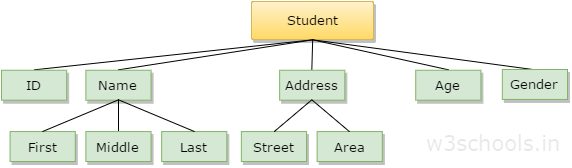
Data Structure Introduction - In computer terms, a data structure is a Specific way to store and organize data in a computer's memory so that these data can be used efficiently later. * What is Data Structure? * Linear Data Structure. * Nonlinear Data Structure.
 velvet plume
Hello!
Can someone please help me with this question - https://www.hackerrank.com/challenges/tree-huffman-decoding/problem?h_l=interview&playlist_slugs[]=interview-preparation-kit&playlist_slugs[]=trees
HackerRank
Given a Huffman tree and an encoded binary string, you have to print the original string.
I do not understand the question at all. If someone can run through a sample example with me...it'll be much appreciated
worn sun
noble vector
Hey guys is this website okay for learning data structures and algorithms?
https...
Looks like a decent start, but doesn't get very complex
worn sun
velvet plume
I do not understand the question at all. If someone can run through a sample exa...
Check out this video: https://www.youtube.com/watch?v=K2gLEnwW2ps It might help if you try to construct huffman encoding first and then do decoding
Huffman Coding Algorithm is a lossless data compression algorithm. In lossless data compression, the original data can be perfectly reconstructed from the compressed data.
This algorithm is developed by David A. Huffman in 1952 while he was a Ph.D. student at MIT. This algorithm is widely used in mainstream compression formats such as JPEG, PN...
fiery cosmos
does windows have a problem with really big input lists or is the problem how I'm implementing my mergesort because when I try to sort a list of 1000000 numbers it just freezes
hmmm I think it's just too much for my code to do relatively quickly nvm
fiery cosmos
if anyone wants to schedule a weekly voice chat to discuss data structures where we review several on stream each week to learn, ping me and i'll set it up
id like to discuss these topics specifically
 dim dune
Any pair programming channel in here or something like that?
I would like to have a coding buddy that also do python while doing wfh.
 rose shoal
dim dune
Any pair programming channel in here or something like that?
rose shoal
dim dune
Any pair programming channel in here or something like that?
I just started python
fiery cosmos
As I mentioned yesterday in the #data-science-and-ml channel, I'm having some issues using SciPy's solve_ivp function. I posted the question on Stack Overflow to hopefully get some help. https://stackoverflow.com/questions/65632575/scipy-solve-ivp-fails-to-converge-for-large-system-of-ordinary-differential-equa
Stack Overflow
I'm trying to use SciPy's solve_ivp function to solve a large system of coupled ODEs. The system of equations represent temperature, mass concentrations, and flows along a one-dimensional grid. The
 stable pecan
!remind 1d #algos-and-data-structs message
 halcyon plankBOT
Aye aye, cap'n!
Your reminder will arrive in 1 day!
ID: 1217, Due: 2021-01-09T17:10:37
stable pecan
i can try to look at it tomorrow
fiery cosmos
@stable pecan Thanks. Let me know if you have any questions or just ask them on the Stack Overflow post.
>>> import struct
>>>
>>> struct.pack('i i f 3s', 1, 2, 3.5, b'abc')
b'\x01\x00\x00\x00\x02\x00\x00\x00\x00\x00`@abc'
>>>
``` is that big endian ?No, that's little endian. The integer 1 was encoded to the bytes \x01\x00\x00\x00, which has the least significant bytes first
struct defaults to your machine's native endianness. If you want big endian, you need to ask for it by starting the format string with >
!e ```py
import struct
print("big", struct.pack('>i i f 3s', 1, 2, 3.5, b'abc'))
print("little", struct.pack('<i i f 3s', 1, 2, 3.5, b'abc'))
print("native", struct.pack('i i f 3s', 1, 2, 3.5, b'abc'))
@lean dome :white_check_mark: Your eval job has completed with return code 0.
001 | big b'\x00\x00\x00\x01\x00\x00\x00\x02@`\x00\x00abc'
002 | little b'\x01\x00\x00\x00\x02\x00\x00\x00\x00\x00`@abc'
003 | native b'\x01\x00\x00\x00\x02\x00\x00\x00\x00\x00`@abc'
How do I get the point of intersection between two rectangles?
lean dome
The intersection of 2 rectangles is a rectangle, not a point
It's the rectangle bounded on the top by the topmost point that's in both rectangles, on the bottom by the bottommost point that's in both, on the left by the leftmost point that's in both, and on the right by the rightmost point that's in both
 graceful cove
Hey, I'd like to change the args in a thread in "threading" package, change args during the course of the thread, before thread.start()
How do I do that ?
Actually it's just because I'd like to create my thread before, because it seems to take some time to create them all
And since my args are only there during runtime , id like to be able to change them then start them all !
lean dome
You have this backwards... Creating a threading.Thread without starting it is nearly free, it's calling start() that actually reaches out to the OS to do real work (create the OS thread) and is slow
On my machine, creating a Thread without starting it takes 0.0000057 seconds, according to the timeit module
That's 5.7 microseconds
quiet viper
any ideas boys?
eager hamlet
http://www.usaco.org/index.php?page=viewproblem2&cpid=282
this is just shortest path but really annoying right?
oblique panther
quiet viper
any ideas boys?
"meaningful" is probably the expected answer, but I think it's a bad question.
whether or not a decision made by an ai is "fair" depends on what one thinks of as fair.
kindred sinew
fiery cosmos
if anyone wants to schedule a weekly voice chat to discuss data structures where...
Yes! I am in
graceful cove
lean dome
You have this backwards... Creating a `threading.Thread` without starting it is ...
Okay thanks good to know!
 grand zenith
how to print character array using for loop in cpp
 mild cape
Which part of that are you struggling with? Can you show what you tried @grand zenith
grand zenith
this.. @mild cape
mild cape
#include <iostream>
#include <cstring>

int main(int argc, char **argv) {
    const char *msg = "Hello world!";
    for(const char *c = msg; *c != '\0'; c++) {
        std::cout << *c << '\n';
    }

    size_t msg_len = std::strlen(msg);
    for(int i = 0; i < msg_len; i++) {
        std::cout << msg[i] << '\n';
    }
}
Here are two ways you might consider doing it.
 pulsar imp
the index of the list
@fiery cosmos Have you ever worked with lists and indexes before?
It's rows
idk
I don't know how the module works
No problem
 devout forge
Hello, i am looking for a good course, book about data structures and algorithms. Peak Finding, merge Sort, rolling hashes etc.
so far i have found and doing atm https://www.youtube.com/watch?v=Zc54gFhdpLA&list=PLUl4u3cNGP61Oq3tWYp6V_F-5jb5L2iHb&index=2
MIT 6.006 Introduction to Algorithms, Fall 2011
View the complete course: http://ocw.mit.edu/6-006F11
Instructor: Erik Demaine
License: Creative Commons BY-NC-SA
More information at http://ocw.mit.edu/terms
More courses at http://ocw.mit.edu
Maybe something that complements these lectures
 mighty gorge
Hello friends, I am taking probability and statistics lessons. I need to write code in python. If someone knows can it help?
If someone knows can it help?
 amber heart
can anyone explain me how to implement graphs in python?
mighty gorge
Hello friends, I am taking probability and statistics lessons. I need to write code in python. If someone knows can it help?
worn sun
mighty gorge
Hello friends, I am taking probability and statistics lessons. I need to write c...
Python has a robust set of math libraries that I'm sure can do what you need
fiery cosmos
stable pecan
i can try to look at it tomorrow
I added a link to the GitHub repository as part of the Stack Overflow question.
oblique panther
mighty gorge
try opening a help session. Your question might be relevant to #data-science-and-ml though.
@mighty gorge the instructions are in #❓|how-to-get-help
bronze sail
how accurate are nearest search algos?
I got 2 plots, one saying green-ish good values, and red purple shadows of bad algo ouput,
and second plot, is that I beat pure matric multiplication over 11k elements
Plots are from my implementations more or less
halcyon plankBOT
@stable pecan
 It has arrived!
Here's your reminder: [#algos-and-data-structs message](/guild/267624335836053506/channel/650401909852864553/).
[Jump back to when you created the reminder](#algos-and-data-structs message)
halcyon plankBOT
:incoming_envelope: :ok_hand: applied mute to @agile compass until 2021-01-09 17:53 (9 minutes and 59 seconds) (reason: discord_emojis rule: sent 31 emojis in 10s).
agile sundial
nice
 fading grail
I want to learn more about data science and data structure, do you know of any place or book where you have all the topics, or the knowledge base on these subjects?
worn sun
fading grail
I want to learn more about data science and data structure, do you know of any p...
Data Science and Data Structures are typically pretty different subjects and very broad. Data Structures tends to be how data is stored, most often referring to things like arrays, lists, trees, sets, etc... Typically you learn about Data Structures alongside Algorithms. I like Algorithms by Robert Sedgewick and Kevin Wayne, though I wouldn't really suggest it as a great sit down and read book, I'd suggest taking one of Coursera algorithms courses/specializations instead. For Data Science, are you thinking more data analytics, machine learning, statistics...?
 gusty perch
Can I create a python program that detects whether the source code of another python program gets into an infinite loop
I want to make a dynamic debugger of sorts
mild cape
It's not possible to always be able to detect if there is an infinite loop.
trim fiber
@gusty perch Right, https://en.wikipedia.org/wiki/Halting_problem
In computability theory, the halting problem is the problem of determining, from a description of an arbitrary computer program and an input, whether the program will finish running, or continue to run forever. Alan Turing proved in 1936 that a general algorithm to solve the halting problem for all possible program-input pairs cannot exist.
For ...
 dire cipher
is there a way to sum all squared number rather than looping one by one?
1^2 +2 ^2 + 3^2 .... until >= given number
 atomic kraken
for n numbers, sum of 1^2 + 2^2 ... + n^2 is equal to [n * (n+1) * (2n+1)] / 6 iirc
dire cipher
no, i meant until the sum is equal or greater than the given number
 queen ruin
how do i play nice with the in keyword in a list of custom classes
class test:
   def __init__ (self,name):
      self.name = name
   #i need something here
x = [test('tom'),test('harry')]

print('tom' in x)
print('nottom' in x)
so i expect the output to be
True
False
(ping me pls)
 frank fossil
@queen ruin Using the in keyword requires one of these things to be implemented:
__iter__ - Checks if an element is in an iterable object
__contains__ - Checks if an object contains an element
https://docs.python.org/2/reference/datamodel.html#object.__contains__
queen ruin
tysm.. so ill need to override __contains__ to return true if the given str is self.name rit?
frank fossil
Yep
queen ruin
!e
class test:
    def __init__ (self,name):
        self.name = name
    def __contains__(self,item):
        return item == self.name

x = [test('tom'),test('harry')]
print('tom' in x)
print('nottom' in x)
You are not allowed to use that command here. Please use the #bot-commands channel instead.
frank fossil
Whoops I misread your question, take a look at this answer:
https://stackoverflow.com/questions/37034404/how-to-search-objects-in-python-list-using-contains-in-keyword
Stack Overflow
I would like to make a list of objects which I define, then use the in keyword (which calls contains) to determine if said object exists in the Python list.
Here is a minimal example with comme...
@queen ruin
queen ruin
ohh __eq__ worked perfectly...tysm
 atomic fractal
Hello guys,
im not sure if this is the right place to post this question, just tell me if im wrong here 🙂
I got an Json file and i want to read it as a pyspark dataframe. The Json is nested and im not sure what is the best practice to get the data our of the json.
this is the Schema
 |-- payment_phase: array (nullable = true)
 |    |-- element: struct (containsNull = true)
 |    |    |-- credit: double (nullable = true)
 |    |    |-- month_of_prime: long (nullable = true)
 |    |    |-- user_id: long (nullable = true)```

1. way would be to use the Flatten function then drop element and root ?
2. use Explode function
3. explicit to get data out of the json and write it in a new DFswrong chanel for this topic ?
gusty perch
trim fiber
<@!763604740483317790> Right, https://en.wikipedia.org/wiki/Halting_problem
frick bro, you think that it might not be true, like did turing fuck up on the proof maybe
trim fiber
gusty perch
frick bro, you think that it might not be true, like did turing fuck up on the p...
I think that more intelligent people like me proofed this theorem
graceful cove
what do you guys use / recommand as a python GUI lib ?
I need it to represent lots of different datas with historic etc etc to be clearer than on a console
trim fiber
graceful cove
what do you guys use / recommand as a python GUI lib ?
I need it to represent lo...
Check #user-interfaces for GUI help
graceful cove
ty !
 strange olive
 radiant ridge
 tawdry shard
hey, can someone check what is wrong in this code?
start, end = 2, 7
for num in range(start, end+1):
    if num % 2 != 0:
        print(num, end = " ")
 austere sparrow
!e
start, end = 2, 7
for num in range(start, end+1):
if num % 2 != 0:
print(num, end = " ")
@austere sparrow :white_check_mark: Your eval job has completed with return code 0.
3 5 7
Well, there's no runtime errors -- so unless you had a specific goal in mind, it's good
tawdry shard
i just tested it in e-olymp and it says it is wrong and counted it as 0%
lean dome
the code does something, and does it successfully
without knowing what it's supposed to do, we can't know why it isn't doing that and is instead doing what it does.
austere sparrow
tawdry shard
i just tested it in e-olymp and it says it is wrong and counted it as 0%
Well... we can't know what's wrong if we don't know the problem statement 🙂
Also, a help channel should be better for that. See #❓|how-to-get-help
 brittle spoke
hey
I want to learn python to analyze data on stocks. How do you guys think I should learn?
alr u can dm me ima gtb
trim fiber
brittle spoke
I want to learn python to analyze data on stocks. How do you guys think I should...
How about #data-science-and-ml channel?
fiery cosmos
aww yeah successful LDU factorization of any square matrix
the three matrices in the middle are factors of the matrix up top
 fluid palm
hello
is there anyway i can get an index from a random row from a csv file?
like, say i have a csv of ten rows and six columns, is there any way for me to take a number from randint and take index zero from row randint?
trim fiber
fluid palm
like, say i have a csv of ten rows and six columns, is there any way for me to t...
!e
from random import randint
print(randint(0, 5))
print(randint(0, 5))
print(randint(0, 5))
print(randint(0, 5))
You are not allowed to use that command here. Please use the #bot-commands channel instead.
trim fiber
Pff, randint(a, b) returns numbers in range [a; b] inclusive.
fluid palm
could i do this right after i call out csv.reader? or are there other prerequisites?
trim fiber
You can call randint whenever you want
fluid palm
then how about printing index 0 from the csv now that i have a line number from the randint?
fiery cosmos
!e
dynamic programming approach towards the solution
def canSum(target, numbers, memo = {}):
if(target in memo):
return memo[target]
if(target < 0):
return False
if(target == 0):
return True
for num in numbers:
    if(canSum(target-num, numbers, memo) == True):
        memo[target] = True
        return True
memo[target] = False
return False
here .... I have defined this thing in the jupyter... now I have impleameted multiple print statement executing the test cases.... instaed of the first one ... others are not working.... pls any one can help me?
halcyon plankBOT
You are not allowed to use that command here. Please use the #bot-commands channel instead.
fiery cosmos
!e
halcyon plankBOT
You are not allowed to use that command here. Please use the #bot-commands channel instead.
fiery cosmos
 charred drum
hi everyone, can u help me?
I need a list that performs an arithmetic expression inserted by input
former. 2 * 2- (4 + 5) (2 + 3)
sorry about my english, im italian
with former i mean the example
charred drum
take every element of the list and perform the operation
so we have: list=[element, operation, element, operation, operation, element....], something like this
how i can get a rapid solution to this? i knew by a function that solve the problem, but i cant use it
agile sundial
you could try parsing it using shunting yard
 steep wadi
charred drum
how i can get a rapid solution to this? i knew by a function that solve the prob...
steep wadi
charred drum
how i can get a rapid solution to this? i knew by a function that solve the prob...
Have you tried eval()? Join each element in the list into a string using join function and pass it to eval(). There might be some security issues but it works ig.
charred drum
steep wadi
Have you tried eval()? Join each element in the list into a string using join fu...
yeah i know about that, but is a school work and my prof tell us to not use it lol :(
 dim summit
is kadanes algorithm the same as sliding window technique?
 sudden phoenix
Hi!
Next week i have exam
is there any website where I can create Algos using blocks
and test them ?
agile sundial
blocks?
agile sundial
i don't know of any websites for that
there are definitely many websites where you can write code to solve algorithms questions
 hallow vortex
Hi - I have a question for python (python3).
I'm confused by the following issue
For matrix transpose, I used naive solution for it, when I use set list of list with multiplication of row_length and col_length, it does not assign properly. Could anyone help me with this? I don't understand it why
wispy hare
hallow vortex
For matrix transpose, I used naive solution for it, when I use set list of list ...
Never use * operator with a mutable element
and a list in Python is mutable
the problem is that all your rows have the same reference now, there is only one array in memory, this is why all of them have the same value
hallow vortex
Then when I use result=[[0,0,0],[0,0,0]] why does this works?
I'm not convinced that it is the same reference in this case.
brave oak
Then when I use result=[[0,0,0],[0,0,0]] why does this works?
@hallow vortex because then you have separate lists
fiery cosmos
I need some help with using SciPy ODE solvers. If anyone has experience, please see the #help-bread channel.
 quasi trellis
hallow vortex
Then when I use result=[[0,0,0],[0,0,0]] why does this works?
quasi trellis
hallow vortex
Then when I use result=[[0,0,0],[0,0,0]] why does this works?
use a list comprehension or generator expression if you don't want to create an array literal by hand
[[0 for i in range(3)] for i in range(3)]
 ancient rock
anyone can help me for opencv disparity mapping
I am trying to understand parameters of StereoSGBM_create function
https://stackoverflow.com/questions/62627109/how-do-you-use-opencvs-disparitywlsfilter-in-python
this parameters
Stack Overflow
I can compute a depth map with cv2.StereoSGBM that looks pretty good. Now I want to apply WLS filtering as described here.
This answer has some info, which I follow below, but I can't quite get to ...
fiery cosmos
given 2 string, i need to compute the number of transpositions between them. what algorithm should i use?
hallow vortex
brave oak
> Then when I use result=[[0,0,0],[0,0,0]] why does this works?
<@75081994562070...
@wispy hare @brave oak Thanks for answering. It makes sense now
hallow vortex
quasi trellis
use a list comprehension or generator expression if you don't want to create an ...
That works. I used copied one. [x[:] for x in [[0]*m]*n] This works
wispy hare
fiery cosmos
given 2 string, i need to compute the number of transpositions between them. wha...
can you give us more detail? what do you mean by number of transpositions?
fiery cosmos
wispy hare
can you give us more detail? what do you mean by number of transpositions?
never mind actually, I gave up on an idea i working on lol. So basically I was trying to implement jaro and jaro-winkler distance for measuring string similarity. but i quickly discovered it wasn't for my use case
wispy hare
oh okay
fiery cosmos
fiery cosmos
Do you have any pdfs on the same? Or any documentation?
my screenshot (#algos-and-data-structs message) is from the book Cracking the Coding Interview
 elfin shore
Hello is anyone here familiar with balanced Binary Search Trees, specifically the AVL tree
velvet plume
Hello!
Is anyone online here?
I am struggling with this question - https://www.hackerrank.com/challenges/tree-huffman-decoding/problem?h_l=interview&playlist_slugs[]=interview-preparation-kit&playlist_slugs[]=trees
HackerRank
Given a Huffman tree and an encoded binary string, you have to print the original string.
Here is my solution for it -
def decodeHuff(root, s):
string = []
position = root
for element in s:
if element==1 and position.right!= None:
position = position.right
elif element ==0 and position.left!= None:
position = position.left
else:
string.append(position.data)
position = root
print(string)
Please tell what am I doing wrong 😦
runic tinsel
you're not stepping, when you append
    string = []
    position = root
    for element in s:
        if element==1 and position.right!= None:
            position = position.right
        elif element ==0 and position.left!= None:
            position = position.left
        else:
            string.append(position.data)
            if element == 1:
                position = root.right
            else:
                position = root.left
    print(string)
```like this maybehttp://usaco.org/index.php?page=viewproblem2&cpid=225
so i'm doing this problem and my code is as follows: https://paste.ofcode.org/DSYMGR46ya2aXL8jXCwYSH
so how it works is it binary searches on the maximum prefix, and then it checks for contradictions within each sort of "component"
however, it fails for this test case: https://paste.ofcode.org/eceRRqyzfN2sp2Px8Xbi5J
it outputs 527 instead of 502 (the correct output)
any help? (ping 2 reply thx)
zenith pagoda
Hi, I'm trying to solve a bit manipulation problem. And the problem is
Given a positive integer, print the next smallest and the next largest number that have the same number of 1 bits in their binary representation .
The number given is 13948 which in binary 11 0110 0111 1100. The solution in the book gives that the next largest number is 13967 which in binary is 11 0110 1000 1111. My understanding is that the next largest number is 11 1111 1110 0000. Can someone help me to explain why the solution given by the book is different or if my understanding is wrong?
brave oak
zenith pagoda
Hi, I'm trying to solve a bit manipulation problem. And the problem is
> Given ...
...why do you think your solution is correct?
explain your reasoning please
zenith pagoda
brave oak
...why do you think your solution is correct?
Since when there are more 1s on the left than the right the higher the number. Example 1000 is higher than 0001 or to 0100. So turning the bits on to the left will result to higher numbers Is that correct?
brave oak
zenith pagoda
Since when there are more 1s on the left than the right the higher the number. E...
yes
zenith pagoda
So the book is wrong?
brave oak
no
the book is correct
your answer is wrong
I don't really see how what you said changes anything
half lotus
His answer would be correct if it wanted the largest possible number using the same number of bits
But the book seems to want to closest number to 13948 that is larger than it and uses same no of bits
brave oak
it says next largest though
brave oak
half lotus
His answer would be correct if it wanted the largest possible number using the s...
oh, okay
I didn't think of that
half lotus
"next largest" is kind of confusing terminology
zenith pagoda
half lotus
"next largest" is kind of confusing terminology
True
half lotus
It implies that the current number is already the "largest" of something to me
zenith pagoda
The solution given by the book is not the next largest, isn't?
brave oak
zenith pagoda
The solution given by the book is not the next largest, isn't?
it is because
runic tinsel
that really makes no sense
half lotus
I don't think it's idiomatic I just think it can be read in a wrong way that can also be justified as correct in some twisted way.
it lends itself to that
brave oak
half lotus
I don't think it's idiomatic I just think it can be read in a wrong way that can...
my immediate interpretation was the one expected by the book
which suggests to me it's a regional difference
brave oak
half lotus
His answer would be correct if it wanted the largest possible number using the s...
like this didn't even occur to me at all and I was mega confused
brave oak
zenith pagoda
The solution given by the book is not the next largest, isn't?
why do you think it's not the next largest?
zenith pagoda
If the book wants the next largest number, then 11 0110 1000 1111 (13967) should not be the right answer, right? Because there could be a larger number than that with the same number of 1s and 0s. Example 11 1110 1000 1110 (16 014), and it is still consider next? Am I wrong?
brave oak
zenith pagoda
If the book wants the next largest number, then `11 0110 1000 1111` (13967) shou...
nope, that's not what it means
okay, let's use smaller numbers
brave oak
say the given number is 4 (100). it has 1 1; imagine you list the numbers that come after it in binary...
5 - 101 (2 1s)
6 - 110 (2 1s)
7 - 111 (3 1s)
8 - 1000 (1 1)
in other words, if the input was 4, you'd expect 8
because it is the first number that is bigger than 4 and has the same number of 1s (1) in its binary representation
so "next largest", in this case, means "there is a sequence of integers with x 1s in their binary representation; what is the number immediately after 13967?"
zenith pagoda
brave oak
in other words, if the input was 4, you'd expect 8
Wait, but 100 has one 1 and two 0. However, 1000 has one 1 and 3 0?
brave oak
zenith pagoda
Wait, but `100` has one `1` and two `0`. However, `1000` has one `1` and 3 `0`?
yes, but the 0s don't matter
half lotus
I thought about it, it's confusing for 2 reasons
- When thinking about "largest", one tends to thing of a single value since its the superlative. There can only be one largest, and the rest are relatively smaller.
- If I gave you a sequence 1-5 and said 5 is the largest, then I could say 4 is the next largest i.e. the penultimate. In this case, "next largest" actually means a smaller number. This is what I mean when I said it implied the number is already the "largest" of something.
If it said "next larger" that would have been much clearer.
brave oak
"next largest" does indeed commonly mean "immediately preceding in magnitude"
zenith pagoda
brave oak
yes, but the 0s don't matter
Why 0 don't matter?
brave oak
zenith pagoda
Why `0` don't matter?
why do they matter?
half lotus
Well since they say both smallest and largest I guess they may have been using it in that sense, but it's confusing since it's flipped. Anyway, I need to stop derailing this.
brave oak
the question doesn't say "same number of bits"
it says "same number of 1 bits"
nothing about the 0s
zenith pagoda
brave oak
the question doesn't say "same number of bits"
Oh. Ok wait. Let's change the example. Let's say 1001 (9) ? What will be the next largest?
half lotus
The way to figure it out is to shift the right most 1 bit to the left
brave oak
zenith pagoda
Oh. Ok wait. Let's change the example. Let's say `1001` (9) ? What will be the n...
1010
brave oak
brave oak
say the given number is 4 (`100`). it has 1 `1`; imagine you list the numbers th...
go back to this
just think of listing the numbers after that in increasing order, counting the number of 1s in the binary representation, until you get the same vallue
zenith pagoda
brave oak
go back to this
Wait. How about 110 1101 (109)?
brave oak
1101110 (110)
zenith pagoda
Wait. I don't really understand. How about 11 0110 0111 1100 ?
brave oak
brave oak
say the given number is 4 (`100`). it has 1 `1`; imagine you list the numbers th...
@zenith pagoda do you understand this?
zenith pagoda
Quite a bit. But when the number gets bigger I can't apply it anymore.
brave oak
in the case of 11011001111100 it is the same thing
13948 - 11011001111100 (9)
13949 - 11011001111101 (10)
13950 - 11011001111110 (10)
13951 - 11011001111111 (11)
13952 - 11011010000000 (5)
so notice that at 13952 we carry the 1
and are left with 5 0s
zenith pagoda
Yes.
brave oak
now
the task is simple
we just need to replace 0s with 1s
as far on the right as possible
until we get 9 1s
because, as you said earlier
1s on the right are lower value than 1s on the left
so we just replace the rightmost 4 0s with 1s
that gives us 11011010001111 which is, of course, 13967
does that make sense @zenith pagoda?
zenith pagoda
Yes thanks.
brave oak
yw
zenith pagoda
Great
brave oak
same concept for going down
brave oak
no worries!
wispy hare
brave oak
in the case of `11011001111100` it is the same thing
yo I think that I got the solution
when converting n into bits, we have 3 cases:
fiery cosmos
Just started learning this area, had a friend give me the pointers to make these loops. How do you guys develop a brain for this stuff?
Also laugh at my spaghetti
wispy hare
if the string is full of ones, we just insert a 0 after the first 1
example: 11111 -> 101111
else if we can split the bits into a part of ones and a part of zeroes (e.g.: 1111000), then the next number is 1 + the part of zeroes + 0 + the part of ones except the first one
example 1111000 -> '1' + '000' + '0' + '111' -> 10000111
else, we just replace the last zero before the last one by 1, and we replace the last one by 0
example: 10011011000 -> 10011110000
def next_greater(n):
bits = '{0:b}'.format(n)
nb_ones = bits.count('1')
if nb_ones == len(bits):
return int('10'+bits[1:], 2)
elif re.fullmatch(r'[1]+[0]+', bits):
return int('1'+bits[bits.index('0'):]+'0'+bits[:bits.rindex('1')], 2)
else:
last_one = bits.rindex('1')
last_zero_before_last_one = bits.rindex('0', 0, last_one)
bits = list(bits)
bits[last_one] = '0'
bits[last_zero_before_last_one] = '1'
return int(''.join(bits), 2)``` stiff pewter
Hello everyone. I'd like to write a tree structure so I can traverse it using this program. My python is a bit rusty, can you help me out?
Like in all the other problems I can copy the solution and if the input is an array I can just do array = [] and run the thing. Now, the input is not an arary, it's a binary tree stored as an object
 twilit locust
anyone can help me with this error?
wispy hare
stiff pewter
Hello everyone. I'd like to write a tree structure so I can traverse it using t...
what do you want exactly?
 keen stump
@stiff pewter your code looks complete. Do you just want to make a function that sorts a list and stores the elements in the data dict in a valid tree?
stiff pewter
@wispy hare @keen stump My code is complete indeed. The functions are fine. The thing is that I want to test this code using this as
an input: ```js
{
"tree": {
"nodes": [
{"id": "10", "left": "5", "right": "15", "value": 10},
{"id": "15", "left": "13", "right": "22", "value": 15},
{"id": "22", "left": null, "right": null, "value": 22},
{"id": "13", "left": null, "right": "14", "value": 13},
{"id": "14", "left": null, "right": null, "value": 14},
{"id": "5", "left": "2", "right": "5-2", "value": 5},
{"id": "5-2", "left": null, "right": null, "value": 5},
{"id": "2", "left": "1", "right": null, "value": 2},
{"id": "1", "left": null, "right": null, "value": 1}
],
"root": "10"
}
}
My functions take a tree as an input, and that's the tree I want to execute the functions upon
If my functions were taking arrays as input for example I'd do: array = [1, ,4 6, 4, 2, 5,]. Now the input is not a function but a Binary search tree with this structure
wispy hare
stiff pewter
My functions take a tree as an input, and that's the tree I want to execute the ...
class Tree:
  def __init__(self, val=None, left=None, right=None):
    self.val = val
    self.left = left
    self.right = right

  def print_tree(self, indent=''):
    print(indent + str(self.val))
    if self.left:
      self.left.print_tree(indent + '----')
    else:
      print(indent + '---- None')
    if self.right:
      self.right.print_tree(indent + '----')
    else:
      print(indent + '---- None')

def by_id(dict, id):
  return [node for node in dict['tree']['nodes'] if node['id'] == id][0]

def dict_to_tree(dict, root_id=None):
  if root_id is None:
    root_id = dict['tree']['root']
  root = by_id(dict, root_id)
  left = dict_to_tree(dict, root['left']) if root['left'] is not None else None
  right = dict_to_tree(dict, root['right']) if root['right'] is not None else None
  return Tree(root['value'], left, right)

json_text = """{
  "tree": {
    "nodes": [
      {"id": "10", "left": "5", "right": "15", "value": 10},
      {"id": "15", "left": "13", "right": "22", "value": 15},
      {"id": "22", "left": null, "right": null, "value": 22},
      {"id": "13", "left": null, "right": "14", "value": 13},
      {"id": "14", "left": null, "right": null, "value": 14},
      {"id": "5", "left": "2", "right": "5-2", "value": 5},
      {"id": "5-2", "left": null, "right": null, "value": 5},
      {"id": "2", "left": "1", "right": null, "value": 2},
      {"id": "1", "left": null, "right": null, "value": 1}
    ],
    "root": "10"
  }
}"""

dict = json.loads(json_text)
dict_to_tree(dict).print_tree()```That's not really what I want to do. I' just looking for a way to always be able and simulate coding interview questions on my PC so I can run them in the debugger and get better info. It's not just a one time thing so writing a program each and every time won't work. How do I represent the strucutre I showed you in python and use it as an input? Is that even possible in python ?
wispy hare
stiff pewter
That's not really what I want to do. I' just looking for a way to always be abl...
Then you can write your input as an array then deserialize it
you need a function that transforms that array to a tree
wispy hare
you're welcome
 cursive sonnet
does anyone have a an explanation of jump point search for a*? all i can find are either people just using it, people explaining a* or very in depth code reviews
i'd like to know what happens and why q.q
keen stump
Anyone know any good algos/structs for sorting/searching posets? I made a sort of double linked list for posets with insert in O(n), but deletion is O(n^2) worst case and so is sort (which is just insertion sort). I am also searching for all the elements of the poset that are less than a certain value that is not in the poset, and my current search is worst case (and average I think) O(n)
 jolly trellis
keen stump
Anyone know any good algos/structs for sorting/searching posets? I made a sort o...
jolly trellis
keen stump
Anyone know any good algos/structs for sorting/searching posets? I made a sort o...
There a pretty well known white paper on this
https://www.stat.berkeley.edu/~mossel/publications/POSET_SODA09.pdf
https://core.ac.uk/download/pdf/132271822.pdf
You can also try this video on topological sorting a poset
https://www.showme.com/sh/?h=qovixPc

ProfessorZer
We construct a topological sorting of a poset, starting with the Hasse diagram of the poset. The example is inspired by what happens when you bake brownies.
 lean glade
twilit locust
anyone can help me with this error?
lean glade
twilit locust
anyone can help me with this error?
You're trying to get an item from an empty numpy array
twilit locust
lean glade
You're trying to get an item from an empty numpy array
it only happen when i want to display result on the tkinter gui,it is very weird to me
lean glade
I dont know what youre doing, the only thing I can tell you is that youre trying to access an empty array
eager hamlet
http://usaco.org/index.php?page=viewproblem2&cpid=225
so i'm doing this problem and my code is as follows: https://paste.ofcode.org/DSYMGR46ya2aXL8jXCwYSH
so how it works is it binary searches on the maximum prefix, and then it checks for contradictions within each sort of "component"
however, it fails for this test case: https://paste.ofcode.org/eceRRqyzfN2sp2Px8Xbi5J
it outputs 527 instead of 502 (the correct output)
any help? (ping 2 reply thx)
 sharp steeple
anyone know about a server where hashing like base64 or rot13 is talked about?
trim fiber
sharp steeple
anyone know about a server where hashing like base64 or rot13 is talked about?
Base64 and ROT13 are not hashing algorithms
sharp steeple
trim fiber
Base64 and ROT13 **are not** hashing algorithms
ok sry do u place where these thing r talked
trim fiber
sharp steeple
ok sry do u place where these thing r talked
I don't understand what are you asking for
sharp steeple
trim fiber
I don't understand what are you asking for
i want help in decoding this, can u suggest a server where i could get help
 median hazel
sharp steeple
anyone know about a server where hashing like base64 or rot13 is talked about?
median hazel
sharp steeple
anyone know about a server where hashing like base64 or rot13 is talked about?
What is there to talk about?
fiery cosmos
sharp steeple
i want help in decoding this, can u suggest a server where i could get help
CTF?
 cedar jacinth
@fiery cosmos well looks liek Steganography then
keen stump
@eager hamlet I didn’t look at your problem too much, but it sounds very similar to boolean satisfiability, which is a famous NP-complete problem
eager hamlet
uh ok...?
half lotus
wispy hare
if the string is full of ones, we just insert a 0 after the first 1
If you're curious, here's a more generalised algorithm that doesn't rely on string manipulation. It's what I was alluding to yesterday by saying the right-most set bit needs to be shifted left.
def next_greater(n):
    current_bit = n & -n  # get the right-most set bit
    right_most_unset = 1

    while True:
        n &= ~current_bit  # unset the right-most set bit
        current_bit <<= 1  # left shift to move on to the next bit

        # End the loop if the next right-most bit is not set
        if not n & current_bit:
            n |= current_bit  # Manually carry over the set bit
            break
        else:
            # A bit was unset, so it has to be set elsewhere to preserve the
            # same number of set bits.
            n |= right_most_unset  # set the right-most unset bit
            right_most_unset <<= 1  # left shift to move on to the next bit

    return n
I wouldn't be surprised if there's a way to do it without a loop. Bit manipulation can get crazy. This is just what makes sense to me.
 raw quest
Guys do you have any idea of basic problem which can be solve with genetic algorithm? Something like the tsp where you only have to deal with basic object as list
fiery cosmos
Hello everyone, is there any good sources you have for me to learn algorithms and data structures ?
and books or anything for me
raw quest

velvet plume
@fiery cosmos - If you are a complete begineer, I'd say look into some of the courses at Courseera or Udacity or Udemy
fiery cosmos
@velvet plume thank you I will be sure to check it out
fiery cosmos
half lotus
If you're curious, here's a more generalised algorithm that doesn't rely on stri...
what does this algorithm do? return the next greatest number?
half lotus
fiery cosmos
what does this algorithm do? return the next greatest number?
Returns the next number which is greater than n and has the same number of 1 bits set in its binary representation
 rustic valley
Hi guys some one help me please
I will write a python algorithm that circulates all its edges in an undetermined graph, which will return from U to V once from V to U.
if I change DFS, will anything come out?
what do you think I should add
 fickle crypt
Is it possible to save data in json from python to use later
agile sundial
yes
fickle crypt
import json

my_details = {
    'name': 'John Doe',
    'age': 29
}

with open('personal.json', 'w') as json_file:
    json.dump(my_details, json_file)
Traceback (most recent call last):
  File "c:/Users/Penny/Desktop/py/GravityAdventures/json_test.py", line 18, in <module>
    json.load(after_loaded)
  File "C:\Users\Penny\AppData\Local\Programs\Python\Python38\lib\json\__init__.py", line 293, in load
    return loads(fp.read(),
AttributeError: 'dict' object has no attribute 'read'
is that bug or error
gusty grove
Swap the Arguments
 brazen geyser
Having some problems with regular expressions using re and re.search. This seems to be my error message.
TypeError: cannot use a string pattern on a bytes-like object
ifconfig_result = subprocess.check_output(["ifconfig", options.interface])
print(ifconfig_result)

mac_address_search_results = re.search(r"\w\w:\w\w:\w\w:\w\w:\w\w:\w\w", ifconfig_result)

if mac_address_search_results:
    print(str(mac_address_search_results))
else:
print("no mac address.")```my expression is also trying to filter for mac address.
 fast salmon
What is the the type of ipconfig_result ? Can you cast it to a string /
 teal birch
subprocess.check_output returns byte strings. You need to decode that byte string before passing to re.search
Is there any way to manipulate(like append, remove chars) strings without creating a new object every time? LikeStringBuilderclass in java or string class in c++.
half lotus
teal birch
Is there any way to manipulate(like append, remove chars) strings without creati...
No. The string type is fundamentally immutable in Python.
StringBuilder in Java just creates a new string anyway. Internally it has a character array that only gets converted to a string once you request it.
In Python, I believe f-strings are the most efficient method by which to concatenate strings.
agile sundial
you could use a list to store the pieces then join them together
half lotus
Yeah it's reasonable to assume that would perform better than f-strings if one needs to incrementally build the string.
Though probably only with relatively large lists
I've been surprised by benchmarks before
fast salmon
f strings provide the easiest way for string interpolation
However, it's a general pattern to keep things immutable as much as possible for easier bug tracking
half lotus
The syntax can be cumbersome in certain situations, like when incrementally building a string.
+= is much more convenient in that case syntax-wise
fast salmon
only works if it's the same type
fiery cosmos
helo anyone familiar with hash functions got a ctf from one and the answer and am trying to understand it
its a collision
brazen geyser
utf worked! thanks guys
 green geode
teal birch
Is there any way to manipulate(like append, remove chars) strings without creati...
green geode
teal birch
Is there any way to manipulate(like append, remove chars) strings without creati...
In addition to the other approaches mentioned (f-strings, using .join), there's also io.StringIO (and io.cStringIO for some versions of Python).
 timid owl
Why is OOP in python so weird, i mean compare Python to javascript:
class Car extends Vehicle {
  constructor(args) {
    super(args);
  }
}

class Car (Vehicle):
  def __init__(self, args):
    super().__init__(args)
I mean the first one seems like the best and most beginner friendly way
north cosmos
uh no?
atomic kraken
Looks basically the same to me
eager hamlet
hey- i'm doing this problem here: https://paste.pythondiscord.com/gukaxefupu.txt
and my code is as follows: https://paste.pythondiscord.com/etekitulof.py
however, it seems to output the wrong asnwer for one of the hidden test cases
how it works is that it binary searches on the minimum, and then executes a bfs each time to see if such a max edge value is possiblle
i can't see what seems to be wrong with my code, so can anyone help?
eager hamlet
(ping 2 help thx)
fiery cosmos
I'm trying to find a Python implementation of Matlab's ode23tb solver. It is an implementation of the TR-BDF2 algorithm. SciPy doesn't offer a solver for this algorithm. Are there any other Python packages that have this type of solver? https://www.mathworks.com/help/matlab/ref/ode23tb.html
This MATLAB function, where tspan = [t0 tf], integrates the system of differential equations y'=f(t,y) from t0 to tf with initial conditions y0.
eager hamlet
(nvm i read the problem wrong lol)
wicked coyote
sooooooo
Need help on this problem, easy silver, basic graph theory
I get the problem all right, just not the solution
Any help would be much appreciated, been on this for hours 😦
eager hamlet
usaco gang!!!!
eager hamlet
wicked coyote
solution: http://www.usaco.org/current/data/sol_wormsort_silver_jan20.html
what don't you get about it?
(also imo this problem is easier with dsu instead of graph theory)
 wraith valve
@fiery cosmos does sci py have it?
i think julia or c/c++ libraries like sundials have significantly better integrators than scipy
fiery cosmos
@wraith valve No SciPy does not have an ode23tb (TR-BDF2) solver. Is there a Python version of Sundials?
wraith valve
@fiery cosmos i think they actually have a python wrapper
basically it python code but it calls c code in the background
wicked coyote
eager hamlet
usaco gang!!!!
ayyy but i'm pretty bad just got into silver
wicked coyote
eager hamlet
what don't you get about it?
so they binary search by finding the correct number of wormholes. The binary search takes log(n) time so i'm confused of how seeing if a certain number of wormholes will be enough take linear time. Sorry if this is a dumb question 😦
wicked coyote
eager hamlet
(also imo this problem is easier with dsu instead of graph theory)
what is dsu?
eager hamlet
wicked coyote
what is dsu?
disjoint set union
eager hamlet
wicked coyote
so they binary search by finding the correct number of wormholes. The binary sea...
you sure you're binsearching for the correct number?
wicked coyote
I think so? I am very confused on this problem, so if you could explain the gist of the process they used that would be very helpful. I think they are binsearching for the correct number of wormholes, but I could be wrong.
fiery cosmos
There are n applicants and m free apartments.
Your task is to distribute the apartments so that as many applicants as possible will get an apartment.
Each applicant has a desired apartment size,
and they will accept any apartment whose size is close enough to the desired size.
Input
The first input line has three integers n, m, and
k: the number of applicants, the number of apartments, and the maximum allowed difference.
The next line contains n integers a1,a2,…,an: the desired apartment size of each applicant.
If the desired size of an applicant is x,
he or she will accept any apartment whose size is between x−k and x+k.
The last line contains m integers b1,b2,…,bm: the size of each apartment.
4 3 5
60 45 80 60
30 60 75
Out: 2
n = int(input())
m = int(input())
k = int(input())


applicants = input().split()
applicants = [int(x) for x in applicants]
sizes = input().split()
sizes = [int(x) for x in sizes]

ans = 0

applicants = sorted(applicants)
sizes = sorted(sizes)

for applicant in applicants:
    if applicant in sizes:
        ans += 1
        sizes.pop(sizes.index(applicant))
    else:
        p1 = applicant - k
        p2 = applicant + k

        while p1 <= p2:
            if p1 in sizes:
                ans += 1
                sizes.pop(sizes.index(p1))
                break

            elif p2 in sizes:
                ans += 1
                sizes.pop(sizes.index(p2))
                break

            p1 += 1
            p2 -= 1

print(ans)
it gives me 1, why?
reef cliff
can someone send me a index/schedule like thing to learn dsa like in order
eg learn arrays, then something else that kinda thing
eager hamlet
fiery cosmos
it gives me 1, why?
shouldl be easy, just step through your code with a debugger
 fiery cosmos
reef cliff
can someone send me a index/schedule like thing to learn dsa like in order
fiery cosmos
reef cliff
can someone send me a index/schedule like thing to learn dsa like in order
sure
Bit Manipulation
Recursion
Arrays
Searching
Sorting
Matrix
Hashing
Strings
Linked List
Stack
Queue
Deque
Tree
Binary Search Tree
Heap
Graph
Greedy
Backtracking
Dynamic Programming
Trie
Segment and Binary Indexed Trees
Disjoint Set
But personally, if you are a beginner, just start with a course on Udemy or follow a book
eager hamlet
http://www.usaco.org/index.php?page=viewproblem2&cpid=744
so i'm doing this problem
an idea would be t go through all 1 mil colors
and see if they could be painted first
but that would involve
O(1) validation
so there's probably some preprocessing involved
any help? (ping 2 reply thx)
lean dome
eager hamlet
any help? (ping 2 reply thx)
You don't need to go through all 1 million possible colors, only the <= 1 million that actually appear on the final canvas. For each color that is on the canvas, if it does not form a contiguous rectangle, it must have been painted before any colors that interrupt that rectangle, so you can build up a list of which colors could not have been painted first: any color that falls between the top leftmost and bottom rightmost instance of another color can only have been painted after that other color, and therefore couldn't be first.
eager hamlet
well they could still give a test case where it's like 1000x1000, and then each color takes up 1 or 2 cells
lean dome
Actually, that's not quite right: any color X that occurs between the leftmost and rightmost column that another color Y occurs in, and that occurs between the topmost and bottommost row that Y occurs in, means X must have been painted after Y
eager hamlet
as long as it doesn't overlap anything, it could've been painted first, right?
lean dome
The only way for there to be 1 million distinct colors on the canvas is for each color to be in a single cell, which means none is interrupting any other and any one could have been painted first.
eager hamlet
lean dome
The only way for there to be 1 million distinct colors on the canvas is for each...
yeah but tbh implementing that special case seems like a pain
lean dome
Right, don't special case it.
One loop over the input array can find you what colors occur in the canvas, and what the topmost row, bottommost row, leftmost column, and rightmost column each occurs in is. A second loop over the canvas can find you which colors interrupt another color. Your answer is the number of colors that don't.
If you need something faster, the simplest optimization would be that you can completely drop and ignore any color that occurs in a 1x1 or 1x2 or 2x1 shape after the first loop over the array. They cannot be interrupted by anything, so you don't need to check whether they've been interrupted.
If you need something faster than that, there's a data structure optimized for locating overlapping ranges... It's called an interval tree. I'm betting that's overkill here, though
fiery cosmos
anyone who knows a good source for greedy, backtracking, dynamic programming problems for python?
Eventually without graphs, trees, stuff like that
and eventually not CSES
fiery cosmos
fiery cosmos
anyone who knows a good source for greedy, backtracking, dynamic programming pro...
https://www.youtube.com/watch?v=oBt53YbR9Kk&t=18s really good and long video on DP.

Learn how to use Dynamic Programming in this course for beginners. It can help you solve complex programming problems, such as those often seen in programming interview questions about data structures and algorithms.
This course was developed by Alvin Zablan from Coderbyte. Coderbyte is one of the top websites for technical interview prep and c...
fiery cosmos
fiery cosmos
Eventually without graphs, trees, stuff like that
^
fiery cosmos
fiery cosmos
^
The video is broken down into specific problem sections, you can skip any of the ones you want
wispy hare
fiery cosmos
```
Bit Manipulation
Recursion
Arrays
Searching
Sorting
Matrix
Hashing
Strings
L...
I'd put recursion just before tree
fiery cosmos
wispy hare
I'd put recursion just before tree
I wouldn't because you need recursion to solve lots of other problems besides trees like arrays, sorting, lined list etc.
wispy hare
fiery cosmos
I wouldn't because you need recursion to solve lots of other problems besides tr...
sure but I think that it can be intimidating for a beginner
agile sundial
dsa aren't a beginner topic in the first place, so i think it's fine
fiery cosmos
wispy hare
sure but I think that it can be intimidating for a beginner
bruh, don't doubt my algorithmic skills. even though i don't have any lol
fiery cosmos
fiery cosmos
The video is broken down into specific problem sections, you can skip any of the...
oh, it s the recursive functions represented as binary trees
okay it s cool i guess
wraith valve
i mean recursive functions can be written as non recursive
but then i would say that knowing what it is would help alot with tree structures and such
austere sparrow
yeah, sort of
if it's a tail-recursive function, you can refactor it to a simple while loop
and if it's a non-tail-recursive function, you can keep track of the call stack yourself
!e
For example, here's an atrociously slow and silly way of writing the recursive solution to fibonacci with a loop
import re


def f(match):
    n = int(match[1])
    if n <= 1:
        return f"{n} "
    else:
        return f"{n - 1} fib {n - 2} fib "

def fibonacci(n):
    s = f"{n} fib"
    while "fib" in s:
        s = re.sub(r"(\d+) fib", f, s)
    return sum(map(int, s.strip().split()))

for i in range(20):
    print(fibonacci(i), end=" ")
@austere sparrow :white_check_mark: Your eval job has completed with return code 0.
0 1 1 2 3 5 8 13 21 34 55 89 144 233 377 610 987 1597 2584 4181
It works like this:
5
4 fib 3 fib
3 fib 2 fib 2 fib 1 fib
2 fib 1 fib 1 fib 0 fib 1 fib 0 fib 1
1 fib 0 fib 1 1 0 1 0 1
1 0 1 1 0 1 0 1
#=> 5
recursive functions are actually slower than normal 😛
austere sparrow
In Python, yes, that's generally true
bronze sail
just in python?
austere sparrow
Well, other languages can introduce optimizations that make recursive and non-recursive functions indistinguishable.
bronze sail
as I remeber my bench, recursion was almost twice as slow 🤔
lean dome
if you have something that isn't tail recursive and you want to make an iterative version, you'd use a stack or a queue to track the intermediate results.
austere sparrow
...and in some languages, the only looping construct in recursion, so pretty hard to benchmark there
but those languages usually have those recursive optimizations
lean dome
C++ template metaprogramming falls into that category - no way to loop without recursion.
austere sparrow
austere sparrow
but those languages usually have those recursive optimizations
For example, if you compose two functions, product and make_list, where product finds the product of a list, and make_list creates some lazy linked list step by step, you can avoid creating an intermediate list.
lean dome
quicksort is a pretty good example of something that's usually faster when written recursively than iteratively. The extra work that you need to do in order to track the intermediate results is more than the extra cost of the recursive function calls.
austere sparrow
well, I guess it's just that the hardware stack is faster than a software stack 🙂
lean dome
the call stack isn't exactly implemented in hardware - but there are specific assembly instructions that are primarily designed for manipulating it, so that's fair.
austere sparrow
yeah, the stack is still in RAM
 fast flicker
lean dome
quicksort is a pretty good example of something that's usually faster when writt...
fast flicker
lean dome
quicksort is a pretty good example of something that's usually faster when writt...
Coincidentally, I just had my students writing their own recursive quicksort implementations for extra credit in my intro CS course.
eager hamlet
lean dome
You don't need to go through all 1 million possible colors, only the <= 1 millio...
any color that falls between the top leftmost and bottom rightmost instance of another color can only have been painted after that other color, and therefore couldn't be first.
wouldn't this be O(N^2), and thus too slow?
or is there a faster way?
lean dome
eager hamlet
> any color that falls between the top leftmost and bottom rightmost instance of...
You only need to look at colors that do appear on the canvas, and that don't appear as part of a 1x1, 1x2, or 2x1 rectangle. So it's not N^2, no. It's N*M, where M is strictly smaller than N
lean dome
M is the number of colors that appear on the canvas but not as a 1x1 or 2x1 or 1x2 rectangle
if N is 1000000, then M is 0.
the only way for every color to appear on the canvas is if every color is used only in a 1x1 cell, so there are no colors that are not a 1x1 or 2x1 or 1x2 rectangle
lean dome
the number of colors that a) appear on the canvas and b) do not only occur in a 1x1 or 2x1 or 1x2 configuration is strictly smaller than the number of colors that could appear on the canvas.
In the example the problem gives, M would be 4, while the total number of possible colors is 17 (including the 0 for "no paint")
eager hamlet
oh ok
fiery cosmos
Any dynamic programming lessons for Python?
 scarlet maple
fiery cosmos
Any dynamic programming lessons for Python?
scarlet maple
fiery cosmos
Any dynamic programming lessons for Python?
Learn how to use Dynamic Programming in this course for beginners. It can help you solve complex programming problems, such as those often seen in programming interview questions about data structures and algorithms.
This course was developed by Alvin Zablan from Coderbyte. Coderbyte is one of the top websites for technical interview prep and c...
oh wait you said python
it uses JS but the same concept applies
especially the visualization portion of problems
that part would be the same
 dreamy bay
Hi everybody, I'm new to Python so I'm not sure if a question relates to pathlib is suitable at this channel?
Somehow the output is not E:\test field\BAK\file
but I don't know why. Can anybody explain this to me? Thank you
from pathlib import Path

folderPath = Path("E:/test field")
fileList = folderPath.glob("*.tga")
for child in fileList:
    bakpath = folderPath / "BAK" / child
    print(bakpath)
Output:
E:\test field\T_M_M_Countess_Lace_2_Normal.TGA
E:\test field\T_M_M_Countess_Lace_2_OpacityMask.TGA```@dreamy bay i prefer using os.path.join to append paths together
dreamy bay
well, I'm studying the pathlib because there will be some situation that I need to run the app on both unix/window environment. So its path is better
wraith valve
yeah os.path.join
is os independent
it uses a delimiter based on ur os
quite sure
at least thats how i made my bot in a windows enviornment and deployed in a linux one @dreamy bay
dreamy bay
yeah, I already did it successfully with os.path
I just trying to replace it with pathlib 😄
wraith valve
oh
fiery cosmos
scarlet maple
https://www.youtube.com/watch?v=oBt53YbR9Kk&t=18s&ab_channel=freeCodeCamp.org
Thank you very much!
 wispy hare
wraith valve
i mean recursive functions can be written as non recursive
wispy hare
wraith valve
i mean recursive functions can be written as non recursive
sure but non-tail recursive functions require you to handle the call stack by yourself, which is not that easy
 livid moss
def extract_did(line): for x in line: x = re.findall(r'\d+', line) return [x for x in x if len(x) == 10]
``def extract_did(line):
for x in line:
x = re.findall(r'\d+', line)
    if (x for x in x if len(x)) == 10:
        return x
    else:
        return 0
    ``
hello in first function i was able to get the numbers with len of 10
i made the 2nd function to return 0 if there's no numbers with len of 10
the 2nd function return all the numbers instead
Kindly help me where and how my 2nd function got wrong .
Apologies if this is not the correct channel for my question .
fiery cosmos
Why not \d{10} ?
 tough stump
How can i code an random algorythm who create random math task like 11 + 4 or 6 + 9...?
dreamy bay
tough stump
How can i code an random algorythm who create random math task like 11 + 4 or 6 ...
you mean make 2 random integer value?
tough stump
Have you an examole?
livid moss
fiery cosmos
Why not \d{10} ?
thanks
tough stump
*example
wispy hare
tough stump
How can i code an random algorythm who create random math task like 11 + 4 or 6 ...
depends on what you mean by "math task", if it's just the addition of 2 integers then you can just use the random module to generate 2 random integers
dreamy bay
tough stump
Have you an examole?
yeah, as like syph said: you can use random module to generate 2 random integer or float numbers
import random

a = random.randint(0,100)
b = random.randint(0,100)

print("{}+{} = {}".format(a,b,a+b))```output
84+65 = 149
16+20 = 36``` stoic sluice
How can i code an random algorythm who create random math task like 11 + 4 or 6 + 9...?
Are you talking about 'how is random implemented' ?
If this is your question. the keyword you are looking for is 'PRNG', pseudo-random number generator
livid moss
livid moss
``def extract_did(line):
for x in line:
x = re.findall(r'\d+', line)...
solved, i was able to extract the integers to different column, not the most efficient way though.
``def extract_did(line):
for x in line:
x = re.findall(r'\d{10}', line)
x = list(dict.fromkeys(x))
x = ' '.join(map(str, x))
return (x)
df['dids']= df.apply(lambda row :extract_did(row['comments']),axis=1 )
df['did1']=df['dids'].str.split(' ',10,expand=True)[0]
df['did2']=df['dids'].str.split(' ',10,expand=True)[1]
df['did3']=df['dids'].str.split(' ',10,expand=True)[2] ``
rose shoal
Hey, any good resources for learning data structures, algorithms in python after learning python basics ???
 sage coral


 muted grove
Ill be using this channel one day, and ill understand this stuff... Not yet
 autumn path
SO about trie, can anyone provide me a good resource for the thing. I am not able to find a good one.
wispy hare
 quasi crystal
whats wrong in here
quasi crystal
whats wrong in here
The error answered you, you can't subtract a string from a string
quasi crystal
then how do i do the program
wispy hare
You first need to convert them to integers to be able to perform the subtraction
wispy hare
you're welcome
 winter solar
hey guys. what's the equivalent of heapq's heapify for queue.PriorityQueue? I have an array i want heapified. should I just stick to heapq?
 molten shale
Say I want to store words from dictionary to a tree and I want to show all words that starts with S, which tree should I store it to? AVL tree or BST?
eager hamlet
winter solar
hey guys. what's the equivalent of heapq's heapify for queue.PriorityQueue? I ha...
i think if you just insert elememts one at a time into the p queue it should be automatically sorted
winter solar
eager hamlet
i think if you just insert elememts one at a time into the p queue it should be ...
i know but in that case i'd get O(N*logN) performance for N elems instead of just O(N) like heapify
winter solar
it's for learning purposes. just doing some leetcode stuff
eager hamlet
oh ok
winter solar
thanks anyway 🙂
 rare prism
Is there a way I can exclude 0 in a random interger?
random.randint(-16, 16)```one approach would be to make a list of -16 to 16 without the 0
and do a random choice
rare prism
And kind of annoying if I expand the amount of numbers are all
wraith valve
yeah sth like range(-16,0) to generate the first part
and a range(1,17) for the second part
and add them together
eh its two parts and its longer than just randomint
it works i guess
rare prism
Okay
feral wadi
i have a doubt guys
def fib(n,memo = {}):
    if n in memo:
        return memo[n]
    if n<=2:
        return 1
    memo[n]= fib(n-1)+fib(n-2)
    return memo[n]
print(fib(100))```how does the memo stores the value ?
does it returns the value in recursion?
first the memo[n] = fib(n-1)+fib(n-2) works out and then it checks if n in memo and returns the value?
lean dome
feral wadi
```python
def fib(n,memo = {}):
if n in memo:
return memo[n]
if ...
This could be rewritten as:
def fib(n, memo):
    if n in memo:
        return memo[n]
    if n<=2:
        return 1
    memo[n]= fib(n-1, memo)+fib(n-2, memo)
    return memo[n]

default_memo = {}
print(fib(100), memo)
Does that make it any easier for you to understand?
feral wadi
i can understand it and where it really confuses me is the dictionairy part memo[n]=fib(n-1)+fib(n-2) how does the dict stores the value ?
like if dict[5] = 4 + 3
doesnt dict works like
{4:5}
like that format ???
lean dome
!e ```py
d = {}
d[5] = 4 + 3
print(d[5])
@lean dome :white_check_mark: Your eval job has completed with return code 0.
7
you can create a dict using d = {5: 7}, but you can update an existing dict using d[5] = 7
lean dome
right
lean dome
I'd rather you not ping me with questions - ask in a channel, and if I'm online and trying to help people I'm sure I'll notice it.
feral wadi
yeah thanks no worries
wispy hare
feral wadi
```python
def fib(n,memo = {}):
if n in memo:
return memo[n]
if ...
one more thing, avoid using an immutable element like a dict or a list as a default value for a parameter
feral wadi
so i can have an normal parameter?
`def fib(n, memo):
if n in memo:
return memo[n]
if n<=2:
return 1
memo[n]= fib(n-1, memo)+fib(n-2, memo)
return memo[n]
default_memo = {}
print(fib(100), memo)`
and implement code like this ?
wispy hare
feral wadi
and implement code like this ?
    def rec(n, memo):
        if n in memo:
            return memo[n]
        if n<=2:
            return 1
        memo[n]= fib(n-1, memo)+fib(n-2, memo)
        return memo[n]
    memo = {}
return rec(n, memo)```oh i get that now
wispy hare
this implementation doesn't require you to create a dict before calling fib()
austere sparrow
Or you can make a function that takes another function and caches its result: