#algos-and-data-structs
1 messages · Page 75 of 1
 fierce inlet
and maybe do this in a mutex so no one else tries to acquire the semaphore while it's being flushed.
but there might be a better way, that wont be so implementation dependent.
 royal kestrel
I mean sure
An Event is basically a Condition around a Lock and a flag
a semaphore is the same but instead of a flag it has a value
But you could definitely abstract around the value to only use 0 and 1 and broadcast events with it
fierce inlet
https://www.microsoft.com/en-us/research/wp-content/uploads/2004/12/ImplementingCVs.pdf
historically at least, it seems semaphores are used to implement condition variables, not the other way round.
An Event is basically a Condition around a Lock and a flag feels the other way round too. that a Condition variable would be an Event and a Lock.
 solid cloud
I mean, semaphore is the building block of a mutex
and mutex is the building block of thread-safe data structures that can tell you when new data arrives
so yes?
 cursive frigate
Hey guys, sorry if this isn't allowed but I'm doing a college project on cyber-crimes. If you could take 2 minutes to fill it in, it would be greatly appreciated.
Microsoft Forms

 acoustic fox
THIS IS NOT ALLOWED
HOW FUCKING DARE - One sec, ganna fil this out before I continue
 dawn eagle
@cursive frigate done. Some of the questions are a bit ambiguous. 'Have you been affected by...'. Well yes, there are bots hammering on ssh every few second; no, none have been successful. 'Do you use an anti-virus?' Well yes, Windows Defender is installed on all computers Windows 7 and up; no, I don't pay for shady garbage AV products.
Yes, I have received fraudulent emails; no I have not sent $2000 in Google Play cards to tech support scammers.
cursive frigate
Thanks guys, it's not that serious. It's just so I have some data to present. People reading it won't have a fucking clue what what's behind a prince of Nigeria email lol
 simple matrix
 fiery cosmos
Hey guys, I have known python as a Physics student for a while now, but recently I have
joined as a grad student in a CS department, and the people here are light years ahead of me in coding.
I feel I lack basic design principles and any understanding of OOP principles. I feel this is a gap which I cant fill just by programming
on my own, I need some technical guidance from a book with examples, which will let me design medium to large scale
software which are modular and neater. I really want to learn this in the most canonical-pythonic way possible.
Does anyone have any references ?
 scenic mason
@simple matrix take a look at ffmpeg
 gusty grove
@fiery cosmos unrelated, but have you done anything with gravitation in your physics classes?
acoustic fox
@fiery cosmos If you already mastered the fundemntals and know how to impliment classes, functions, basic control flow and whatever, go through "Fluent Python: Clear, Concise, and Effective Programming" (I am also a physics person going into CS) it's a great way to learn how to make hyper effective programs. I don't know if it gives you the complete structure of a program, but it's pretty f***ing good.
It wont teach you computer science principles with runtimes or advanced data structures like heaps, sorts, trees, linked lists, or graph structures, for that you should take MIT opencourseware into to algs 6.002? (fall 2011)
@gusty grove There are lots of ways you could be asking that question. You learn about basic gravity in your intro class. But that is without respect to relativistic gravity equations which is different from other stuff like how light deals with gravity or calculating tidal forces or how gravity waves interact with objects and give off momentum or whatever
gusty grove
Ok, specifically the n body problem
acoustic fox
Ah, I think you were on this a few days ago ?
acoustic fox
What about it
acoustic fox
So, in physics a big part of understanding the dynamic interactions between objects is the continuous /non-discrete sum of their behavior over time
acoustic fox
LOl
sorry Sagar
Now, @gusty grove There is a clear defined solution for the single body case where one object is completely stationary and the other object is moving
It's given by one equation
There are equations that satisfy the n <= 2 body problem
There are no equations that satisfy for the n>3 body problems
gusty grove
Yeah exactly
acoustic fox
That is what discrete means
But you could do iterative continuous functions as well
gusty grove
Ah
acoustic fox
For instance, iterative integrals/derivatives wouldn't be discrete
SO as a naive/simple approx for your approach is you would calculate the aprox gravitational pull between each N object which gives you N! different gravities to approx
Then you calculate the discrete time step of that interaction
Then update the velocity due to accel
and then rinse repeat
Unfortunately it gets too big to calculate with n >15? objects
gusty grove
im doing the calculations on the gpu so i can go up to a few hundred/thousand
acoustic fox
I don't think that matters
gusty grove
how should i handle collisions?
acoustic fox
GPU doesn't solve this because the number of objects interacting with oneanother grows factorially
the number of interactions at 80 is larger than the number of particles in the known universe
So typically you use approxs to handle that many particles, and other tricks to reduce the problem size dramatically
You could handle collisions as Inelastic collisions
and total mass is just m1 +m2
You could also make them act like billiard balls
gusty grove
ah ok
acoustic fox
That's a different equation
 hybrid crater
yo i'm doing a pretty Coding and Algorithms thing (my own implementation of the Wave Function Collapse thing) and i need someone who is good at the computers to help me figure out more efficient recursion stuff
if anyone likes this kind of stuff and has a minute to spare please ping me here and i'll send the details
hybrid crater
okay the chance is basically zero but have you heard of wave function collapse
(the 2016 algorithm not the quantum thing)
(it's named after quantum thing)
here's the github https://github.com/mxgmn/WaveFunctionCollapse

GitHub
Bitmap & tilemap generation from a single example with the help of ideas from quantum mechanics. - mxgmn/WaveFunctionCollapse
acoustic fox
I'm looking it up now btw
hybrid crater
anyway i'm working on a python remake myself cause i feel like it
here's a very very good explanation https://youtu.be/fnFj3dOKcIQ?t=304

This talk is from the 2019 Roguelike Celebration - find out more at https://roguelike.club/event2019.html
Brian is a developer at Freehold Games and has worked on Caves of Qud and Sproggiwood
from a very cool person
(starts at useful timestamp)
hybrid crater
so here's the highlights of how i'm doing it
(i'll get to the question bit dw)
make the 'cards' by chopping up the input
each card has a 'sphere of influence'
basically cards can affect things 2n-1 away
in both axis
so if we have 2x2 squares, i can affect things up to 1 away from the centre
3x3, affect things up to 2 away
does that follow
(like it works but does that explanation make sense)
acoustic fox
I am not sure why a 3x3 thing should effect things upto 2 spaces away
wait
from the center
Sure
hybrid crater
yeah
acoustic fox
That seems like a weird definition
hybrid crater
each 'card' is positioned so the top left is 0,0
hybrid crater
okay maybe that's my dumb thing
hybrid crater
yeah
hybrid crater
nah 2x2 can effect 8
cause whilst it overlaps on the bottom right, it also has to get covered top left
3x3 hits 24
sounds like (2n-1)^2 - 1 to me btw
acoustic fox
Yeah you're right
hybrid crater
okay so we can precalculate card overlaps
acoustic fox
It's 2n-1 because that's how squares work
hybrid crater
like if this card were to be here, what can the relative cell (2,2) away be
acoustic fox
1,4,9,16,25
1+3+ 5 +7 + 9 . . .
hybrid crater
each card has an id, and then it has a 2d list of the acceptable cards away from it
vewy efficient, vewy nice
so we've precalculated everything about each card
so we've precalculated everything about each card
acoustic fox
I'm following you
hybrid crater
i'm calculating entropy as just 'how many options are there'
not the entropy formula but since we're calculating only one relative to another then nbd
(unless it is a bd without me realising since maybe original algorithm does something like comparing sums of them? who knows)
(the original algorithm calculates entropy as nlogn)
hybrid crater
that
like this decision only matters for choosing which stack to collapse
i've seen another implementation that does it the naive way like me and it seems okay
acoustic fox
It's fine depending on what we are talking about
I would imagine you are trying to reduce the states with the lowest entropy
hybrid crater
yeah
acoustic fox
which then updates neighbors
hybrid crater
legit that just looks the prettiest apparently
hybrid crater
well the big deal is how we propogate the information
acoustic fox
It doesn't seem to be that big of a deal TBH
hybrid crater
so collapsing is obvious, choose a cell with the lowest entropy, and set all but one of its acceptable cards to false
acoustic fox
I am wondering for instance if it is possible to get into a state of contradiction
hybrid crater
true
well all the compute time for me is spent on propagating so i'll explain what i'm doing
acoustic fox
That seems like that wouldn't be that computationally intensive
It should be very easy
hybrid crater
you'd think
anyway the first thing i tried was basically
- try to update each cell in the sPhErE oF iNfLuEnCe (left to right, top to bottom)
- if an update needs to be made, then it could also affect other stuff, so run step 1 but from this new point as well
n=2 was kinda okay
but n=3 caused stack overflows
so much wasted shit
acoustic fox
Code ?
hybrid crater
so i switched to a queue thing
hybrid crater
mind if i put it on a hastebin
acoustic fox
It's whatevs
hybrid crater
well right now i just add everything to the queue, and instead of recursing the whole function i instead add stuff to the back of the queue
(if it's already there don't bother)
acoustic fox
My instinct is that everything can be done procedurally
hybrid crater
okay just for context
n=2 is a bit fast
n=3 takes like 11 seconds per collapse cycle
the original algorithm can do like 30 a second
so i can agree i'm doing something wrong
it's just the original was written like it was made in the 90s or some shit
acoustic fox
Do you know about graphs and relaxation ?
acoustic fox
It's okay. It's tangentially relevant, the same solution for shortest path will I think apply to this problem which essentially is a graph problem
I'm just going through your code at the moment
Lol
hybrid crater
just one quick insight thing: part of the problem that i've found is that you often have to update things multiple times
acoustic fox
That's fine
hybrid crater
cause its surroundings can change
I'M SORRY THE CODE HAS BEEN THROUGH A LOT OF CHANGES IT PROBABLY LOOKS VERY CURSED RN
weird commented lines everywhere as well
hybrid crater
like it SHOULD or it does?
acoustic fox
So what is happening is that you have an expanding boundary
and each pixel should only be on average be investigated 3 times
hybrid crater
did 3 come from a back of the napkin thing or is that hard maths
and does that apply to n=3 only or all n
hybrid crater
um
acoustic fox
If it is concave/convex it'll be more/less
hybrid crater
man that feels so correct but it feels wrong
also n=3 it would be affected from further away but like
okay here problem
acoustic fox
WAIT
hybrid crater
WAITING
hybrid crater
*quietly (so like, line a updates line b above it, which updates line c above that, but that may have ramifications for line a)
(that's the problem i'm having)
(n=4 is same problem +1)
hybrid crater
does that mean i'm dumb
acoustic fox
I am asking about the sphere of influence
That things can effect things from 3 lines out
acoustic fox
You are growing problem exponentially then yeah?
hybrid crater
yes!
that's why i'm so confused as to how other people get it right!
n=2 runs at an acceptable speed
okay should probably be a bit faster but like
yeah
output is a linear problem
acoustic fox
It's still not that bad
hybrid crater
if i double the size of the output, it takes about twice as long
acoustic fox
TBH
hybrid crater
basically what am i doing wrong
acoustic fox
So, whenever you settle a tile (collapse it)
hybrid crater
i've done the profiling btw, it spends like all its time on that one bit where it compares the two lists
acoustic fox
You immediately update all effected tiles
hybrid crater
aka do these tiles overlap okay
acoustic fox
So when you check to collapse a tile, you never ever check for upates
you just run whatever state it is at and collapse it with the probability distribution
then you update tiles based on it's updated value
So lets say n = 3
hybrid crater
sorry are you telling me what is happening or what should be happening here
also by collapse do you mean 'making an observation' in the quantum phrasing
hybrid crater
i don't
acoustic fox
SO in this case you are given a set of probabilities for a particular state
And you run the weighted probabilities and see what happens
acoustic fox
You take your weighted probabilities and run a random.randint + weighted prob or something
and see what it's collapsed state is
right ?
hybrid crater
yeah
like, different cards appear more or less often on the input
so i just have each card come with a count and do a weighted
hybrid crater
'cards' are a NxN
acoustic fox
Sure
hybrid crater
so yeah state
acoustic fox
For your program that is what that means
hybrid crater
yes
acoustic fox
But i think what I am saying is true for all cases
hybrid crater
so collapsing is easy, that bit's not a problem
acoustic fox
What's the problem ?
hybrid crater
propogating
acoustic fox
?
hybrid crater
like, updating everything else
yeah sorry this is why i was confuse about terminology
there's an initial collapse for each iteration
that's where it makes ONE DECISIVE DECISION
and does something random
but then everything else that follows isn't random
hybrid crater
i'm like pretty sure it's true
hybrid crater
yeah
hybrid crater
you choose randomly between the cells of lowest entropy
hybrid crater
collapse bit isn't the hard part
that's definitely random
but the idea is you then propogate that information so that all the cells then know what is and isn't available anymore
acoustic fox
That seems really easy
hybrid crater
cause collapsing removes options, so a bunch of overlaps aren't gonna work anymore
yeah it seems easy but don't forget i'm an idiot
hybrid crater
hell yeah
acoustic fox
and remember, two wrongs don't make a right
Wait
There is nothing to go from there 😦
hybrid crater
to go from where
acoustic fox
The screenshot
hybrid crater
yeah the phrasing is dumb
acoustic fox
your code requires an enigma machine
hybrid crater
my code is fine art
hybrid crater
fukin freudian keyboard there
acoustic fox
LOL
hybrid crater
it's also a mess cause i keep adding in logging elements
and all those globals need to go
cleanup comes after i figure out a better formula tho
my iteration thing right now is wack but i can't think of a better one
the queue thing seems alright in theory since it makes sure to deal with the priority stuff first
but like
it doesn't
i dunno how to figure out priority
cause everything affects everything
@acoustic fox i do warn you it's possible that i've just blinded you from seeing the really obvious explanation to the problem by explaining my solution
i do that a lot to people lmao
i was doing this question in physics about how long it takes the moon to orbit the earth and my teacher couldn't figure out what i was doing wrong cause i managed to convince her that it actually takes a year for that to happen
acoustic fox
hybrid crater
I KNOW I'M AMAZED I GOT IT WORKING AT ALL
this is like the first time i've done some proper sexy algorithmsss and not just fukin with the requests modules
 brave sandal

hybrid crater
@acoustic fox uhh it's like sleep oclock where i am
thank you so so so so so much for the help
acoustic fox
Take a look at this
LOL
Basically each cell has a dictionary of possible states through bools or weighted values.
You have a dic that has a set of rules for each state on how it affects its neighbors.
You go through a list of affected neighbors and you update their cells internal rules through the dictionary calls.
hybrid crater
yup
hybrid crater
wait
acoustic fox
what
hybrid crater
uhh
acoustic fox
UHH
hybrid crater
so you only go through each cell once?
acoustic fox
We collapse cell (1,2)
It updates each adjacent cell within its square of influence once
Then we add those adjacent cells that are updated into the priority queue of cells that need to be collapsed
hybrid crater
so far so same
acoustic fox
if 0,0 updates ((0,1),(1,1),(1,0) you update the priority queue and then you go through things one by one
hybrid crater
wait what
acoustic fox
what
hybrid crater
cells that need to be COLLAPSED?
acoustic fox
WAVE FUNCTIONS COLLAPSE
acoustic fox
Yeah it does
hybrid crater
you haven't updated the entire output yet
hybrid crater
like
okay
hang on
when you say collapse, do you mean choose one at random?
and make that the only option?
cause you can only do that when you KNOW the rest of the board is okay
acoustic fox
You choose cell 0,0
You collapse cell 0,0.
-> you update cells (0,1),(1,1),(1,0)
You add those cells into the priority queue of the next cells to be collapsed
[(0,1),(1,1),(1,0) ]
You update (0,1)
you update cells [(0,2,) (1,1),(1,2)]
You add them to the priority queue
[(0,1),(1,1),(1,0), (0,2,),(1,2)]
you sort by lowest entropy
[,(1,1),(0,1),(1,0), (0,2,),(1,2)]
You update (1,1)
Repeat
(This is if n = 1)
hybrid crater
i'm lost
acoustic fox
??
hybrid crater
n=1 is no overlap
hybrid crater
the size of the patterns you get from the input is NxN
hybrid crater
well yeah 1 reach n=2
acoustic fox
You can define things by their reach or their space from the center
In this example I have boundaries that you can't have negative numbers
starting from the top left of a square in this case
Just to make it simpler
hybrid crater
but i need to clear up
when you say collapse
do you mean choose something at random
acoustic fox
Collapse means you define the state of the celll
hybrid crater
or do you mean update the cell according to its neighbours
acoustic fox
By random, by probability, by discrete choice, it doesn't matter
if you collapse a cell, it becomes the state of 'sand'
and it isn't probabilistic/anything else anymore
It is fixed
And it should never change ever again
hybrid crater
but the algorithm doesn't work by just collapsing cell after cell, it has to update the whole board inbetween
acoustic fox
....
It does update the baord
board*
When you collapse a cell, it updates every other cell it can reach
Then you go onto the next cell
hybrid crater
but you can't just update 0,1 1,1 and 1,0, cause you also need to update the neighours of THOSE
acoustic fox
??
acoustic fox
You are saying a -> b - > c?
hybrid crater
where a b and c are ?
acoustic fox
cells
acoustic fox
What is the range of A?
hybrid crater
say a can only reach b
and b can only reach c
there's still a knock on
if n=3 then maybe a can reach c and then it gets even harder
acoustic fox
So
hybrid crater
but a change to one cell effects more than just its neighbours
acoustic fox
This is still fine
I mean
Computationally it's going to explode because you are getting into !n territory
hybrid crater
sorry how do you approximate whether patterns overlap
acoustic fox
because technically c -> b ->d ->c again
And you can use an integral / infinite series to get an analytical solution
but fuck that
In this case
hybrid crater
so what's the insight
hybrid crater
yeah you're starting to see the problem
acoustic fox
It's not really a problem
hybrid crater
the relationships are complex and everything needs to be updated from all angles
hence a recursive technique
ohh
ohhhh
wait no i very nearly had it
fuk i need to do sleep
or i'm gonna die
if you have any more magic thoughts on this please do send
also btw this algorithm is literal magic it has so many untapped possibilites
my favourite is that you can have one axis be time
no one has made game of life yet but i'm convinced it's possible
hybrid crater
someone get on it
who is better than me
okay gonna fukin slep
thank you so much for doing brain
whenever people of your culture sleep i hope it's really great
acoustic fox
Is a white paper describing the process
I think the way you are describing is just a particular way you value possible outcomes but is not endemic to the process as a whole
hybrid crater
FUK I SAW THAT PAPER AGES AGO BEFORE I'D FINISHED THE FIRST WORKING VERSION
THAT IS VERY HELPFUL
THANK YOU VERY MUCH
hybrid crater
okay that's my takeaway now i go die
hybrid crater
also go play caves of qud it's why i'm doing this in the first place
byeeeeeeeeeeeeeeeeeeeeeeeeeeeeeeeeeeeeeee
thank you :)))
 agile summit
New channel?
 last blaze
Yeah - been here a few weeks now https://discordapp.com/channels/267624335836053506/354619224620138496/650413660933586945
acoustic fox
You have me to thank! >:DDDD
First rule of computer science channel, don't talk about computer science channel
 tribal pendant
Hello, what's the best module to solve differential equations on python?
gusty grove
@acoustic fox ha! it works
Unfortunately it gets too big to calculate with n >15? object
as if! i can go up to n=10**5 easily with a dt of 1/1000
and well even smaller dt for smaller N
gpus really are amazing
im not handling collisions and just using a cutoff to avoid zero division so the system does lose energy on collisions
gonna have to fix that
gusty grove
Opengl yup
acoustic fox
How did you deal with the reflection issue ?
 stark bridge
@tribal pendant I don't know about "best", but I'd look at https://www.sympy.org/en/index.html
fiery cosmos
@acoustic fox Thanks alot. Went over the reviews and index so far , seems exactly the book I was looking for
gusty grove
@acoustic fox whats that?
acoustic fox
@gusty grove
Butt out
I help more people than just you
If I am not mistaken, I recommended http://shop.oreilly.com/product/0636920032519.do

Python’s simplicity lets you become productive quickly, but this often means you aren’t using everything it has to offer. With this hands-on guide, you’ll learn how to write effe...
♥️
fiery cosmos
@acoustic fox This book is fucking insane, chapter one is teaching me much more about all frameworks I have ever used than all frameworks i ever used did ! ;D
 outer lake
Fluent Python is my favourite Python book. There's a new edition coming out in a couple of months that updated to Python 3.8.
Still, the current version is still really relevant
Although the chapter about coroutines is in need of an update, since it uses pre-async def/await syntax (yield from and generator.send)
gusty grove
@acoustic fox well you haven't really helped me yet, why don't you Start? ;)
 sharp crest
Is there any good libraries to compare audio features between two files?
Like comparing 1s of one file to 1s of another or something like this
the task of first extracting the signal with FFT and then plotting it on a spectogram myself seem a bit daunting tbh
gusty grove
There are some great fft libs out there :)
And matplotlib is great for plotting
Numpys fft
acoustic fox
LOL
I drew you a pretty gravity picture, that counts.
more fluent python for me today.
tribal pendant
@stark bridge Ty, but I was more looking at a method to generate approximate functions rather than a tool that tries to "solve it" formally (because it's impossible to solve), but that's my fault I didn't specify enough my question 🙂 Ty anyway!
For those who are interested, I used scipy.integrate.odeint and I did the work.
 long sleet
Could someone explain me how is an audio file encoded on the PC? what does the PC read? the MHz on each point for different channels?
cuz as far as i know, it only sends pulses to the speaker
and the speaker moves according to them
so what are the different channels for?? to make the sum on each point and send that result?
 half lotus
Putting aside all the container formats and different compressions, look up PCM
Multiple channels is so different signals can be played simultaneously
long sleet
how is gonna a single speaker play different channels at once???
half lotus
You can't unless you have electronics to combine them together
It's useful when there are multiple speakers e.g.headphones
 spice ravine
usually you have two channels for two speakers i.e. left and right
acoustic fox
@long sleet So it's actually the case that you can approximate any signal through an infinite sum of sine waves
a FFT breaks down a signal into sine waves and transmits their coefficients (2? I think?) and that is what is what is stored on your computer. So once you have a format of coefeccients it is easy to reproduce the sound by reversing the FFT and recomposing the signal into AC and then driving a speaker
You can have a speaker play multiple 'channels' if you want
But then you move from having a dual/stereo system (where audio is coming from two sources) into a mono system. (Audio is coming from one source) It's very easy to take two signals and combine them
long sleet
okey, maybe my question was bad
acoustic fox
Encoding audio files is different/tricky because with a FFT you are dealing with infinite sums, some coefficients aren't that important so you discard them
long sleet
what is the difference between an song from nowadays and a 8-bit song?
what do those 8-bit represent?
cuz i know normally songs have 44100 points per second
iirc
spice ravine
ok, 8 bit usually means
not 8 bit literally in terms of sample size [though that does exist]
long sleet
ye ye xD i supossed that ahahah
spice ravine
but people say "8 bit" when they mean "the style typical of 8 bit game systems"
acoustic fox
8 Bit doesn't mean sample size I believe ?
spice ravine
yes it does, sample size is usually either 8 bit or 16 bit
acoustic fox
That ...doesn't actually make sense TBH
spice ravine
8 bit can be linear, µ-law, a-law, etc
acoustic fox
Medium
When it comes to 8-bit music, probably the first thought that comes to mind is the soundtrack of old videogame consoles. Currently, with a…
long sleet
does the 8bit has anything to do on the ammount of points stored?
or the maximun value they can have?
spice ravine
yes what i'm saying is there's also legitimate 8 bit sample size pcm
acoustic fox
8 bit sample at 200 hz is going to be 1 bit sample at 1600 hz
spice ravine
thats not how it works
long sleet
okey, my question came when ive listen an anime opening on 8-bit format xD
how is that made?
taking the original and reducing the quality
or recreating the original as if it was 8-bit?
acoustic fox
I don't know if 8 bit represents the total tonal output
long sleet
or that can be done in both ways?
acoustic fox
or the aplitude of the output , I think it is tonal frequencies ?
spice ravine
like i said the term "8 bit" has several different meanings
long sleet

"Subcribe" OOOOPS
Download: https://soundcloud.com/pip-pap/sword-art-online-opening-1-crossing-field-8-bit-nes-remix
This was a popular request, so here you go. Support The Musikage on Patreon for cool rewards: https://www.patreon.com/user?u=7552376 Support The Musikage on Pa...
how is that made?
spice ravine
@acoustic fox pcm doesn't encode frequencies directly at all, it just encodes the voltage sent to the speaker at each moment in time, the signal goes up and down to represent a frequency
long sleet
modifying the original or recreating it?
spice ravine
yeah that's something someone recreated
long sleet
and can u modify the original to get the same result?
btw i think the 8 bit is the tonal difference
acoustic fox
UHH
spice ravine
but anyway, that music is clearly in NES style specifically
acoustic fox
I was guessing that you could only output 255 frequencies ???
But that is probably not true
I'm thnking
spice ravine
the NES could generate two square wave instruments, one triangle wave, and one white noise signal
acoustic fox
@spice ravine 'Measuring voltage' You are still talking about sampling times
spice ravine
huh? i wasn't talking about sampling times before so idk what you mean
acoustic fox
50k HZ sample time at 8 bit is completely different than 10hz sample time 8 bit
spice ravine
ok but you were talking about sound frequencies, the sample time is fixed, so i don't know what you mean by "tonal frequencies"
acoustic fox
8 bit is the resolution of possible amplitudes of a given sample time
spice ravine
it's usually 16 bit on modern systems
acoustic fox
It just depends
acoustic fox
(I deal with microcontrollers and I see a lot of options,e ct)
(Neither here or there)
long sleet
so the bit are the samples?
acoustic fox
Yes
long sleet
ye
acoustic fox
So lets say your sine wave amplitude is 10
If 8 bit was a ruler, it would be only able to measure 255 levels of that 10 amplitude signal
So if you straight up record and output the signal without analysis, it would output in increiments of .04 *amplitude steps
spice ravine
ok but there is still some confusion
because the 8 bit you asked about, like, that sword art music you linked,
has nothing to do with 8 bit pcm samples
it's basically just emulating the style of the NES which is an 8 bit game system
acoustic fox
^ Random knows what they are talking about
8 bit modern is not constrained to the 8 bit systems that existed
8 bit is a style now which is not constrained
long sleet
sorry for the delay
so the NES was an 8 bit system
what does that have to do with the sound?
acoustic fox
Means that the NES has only 255 colors it can put on the screen I believe
long sleet
even if u dont understand anything from the vid (not ur language)

Vídeo de Zorman: https://youtu.be/Gvm_VpxvIVQ
Hay partes que no han sonado en el vídeo.
Escucha la Banda Sonora completa de PAX, Una Aventura Espacial
♫ Youtube: https://youtu.be/ni3gfpOtBh4
♫ Spotify: https://spoti.fi/2HuwsWY
♫ Otras plataformas: http://bit.ly/2HjB7...
go min 2.30
ff is 8-bit and zelda is 16-bit
i mean, there is clearly a difference between them
but i dont know exactly what
 pallid coral
http://forums.nesdev.com/viewtopic.php?t=19091 May be of use
long sleet
what i wanted to know is the difference between a final fantasy OST from now and from the one on 1990
pallid coral
Now: PCM encoded in music files
Then: 6502 instructions sent directly to sound generating chip in game system
 tender wedge
Small trolling: None just the composer plagiarizing himself over and over
long sleet
what ever. I just want to know the difference in terms of encoding uwu
 amber dagger
hey, not sure if this is any place to ask since it's just python, and feel free to chuck me a server if there's a better one for my question
I'm having trouble with an assignment on information systems & databases, questions include tech stacks, ERDs ect, and having a tough time understanding some questions
the question in particular:
Research the data model of an organisation by looking at their API documentation and any other sources of publicly available information and describe the organisational functions that are possible based on the API.
gusty grove
if you take n random steps in a grid world you will travel an average sqrt(n) right?
royal kestrel
running simulations it seems to be ~ 2.5 * sqrt(n)
gusty grove
are you allowing diagonal movement?
acoustic fox
UH
Is that true?
Wouldn't the total average be 0
I mean, you'll probably never hit the origin again in a 2d grid
But random walk in one direction about 0 is invariant to the random walk in another direction about 0
gusty grove
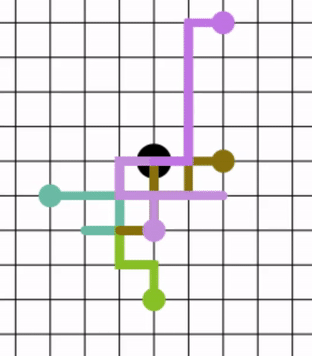
A random walk is a mathematical object, known as a stochastic or random process, that describes a path that consists of a succession of random steps on some mathematical space such as the integers. An elementary example of a random walk is the random walk on the integer numbe...
P(r) = (2r)/N*e^(-r^2/N)
step length N is 1 in my case
so P(r) = 2r*e^(-r^2)
acoustic fox
That's the probability distribution
acoustic fox
UH
royal kestrel
@gusty grove no diagonals
acoustic fox
The absolute average distance is different than that average displacement
I think
Maybe I am just wrong
But if you imagine walking around in a circle of some given radius
Your average displacement is the radius but your average position is 0
 trail light
 late scaffold
def functionjj(n):
  for i in range(n):
    if i == 0:
      for j in range(n):
        for k in range(10000):
          print("string")
What is the asymptotic time complexity of functionjj with respect to n?
half lotus
It's just n I think, assuming n > 0
if i == 0 means the for j in range only runs once in total
late scaffold
Write answers as a polynomial of variable n in the standard form (eg 10n + 5, 50n ^ 2 + 3n + 30, or n). Be sure not to use the * symbol.
half lotus
and the inner most loop is just a constant so that can be omitted
You can't just copy paste your homework questions here and expect help
You need to try them yourself first and ask specific questions
late scaffold
I've been dealing with it for hours, and I don't know anymore
late scaffold
with *
 devout helm
is O(log N)
half lotus
Did you miss the if i ==0?
late scaffold
brainfu*k
def function(n):
for i in range(n):
for j in range(n):
for k in range(10000):
print("output")
devout helm

Stack Overflow
What would the Big O notation be for the following nested loops?
 for (int i = n; i > 0; i = i / 2){
    for (int j = n; j > 0; j = j / 2){
       for (int k = n; k > 0; k = k...
the if
late scaffold
😭
devout helm
been a while since i've done that.
the second link should help
since your not aloud to use the *
gusty grove
@devout helm square both sides, subtract 50^2, divide by 30 and then take the square root
tribal pendant
it's absolutely not 20
nor 30
it's 20*square(10) ~ 63
>>> from math import sqrt
>>> sqrt(50**2+20**2*30)
120.41594578792295
>>> sqrt(50**2+30**2*30)
171.75564037317667
>>> sqrt(50**2+(20*sqrt(10))**2*30)
350.00000000000006
>>> sqrt(50**2+63**2*30)
348.66889737973474
@devout helm
gusty grove
well to be exact it has two solutions
one at +20*sqrt(10) and one at -20*sqrt(10)
the blue line is 350 and the purple one is your equation
pallid coral
350 = sqrt(50^2 + c^2(30))
350^2 = 50^2 + 30c^2
350^2 - 50^2 = 30 c^2
(350^2 - 50^2)/30 = c^2
+/-sqrt((350^2 - 50^2)/30) = c
-> ±20√10, or ±63.2456
 orchid blaze
350 = sqrt(50^2 + (30)c^2)
350^2 = 50^2 + (30)c^2
350^2 - 50^2 = (30)c^2

(350 - 50)(350 + 50) = (30)c^2     # Difference of squares
120000 / 30 = c^2

c = +/- sqrt(4000)
c = +/- (2 * sqrt(1000))
c = +/- 63.2455532034
Factorizing it makes it a lot easier to do in your head because in a lot of cases you wouldn't need the decimal answer, you can just use "+/- (2 * sqrt(1000))"
 desert cedar
 low palm
I don't think it was meant to be read as python code, just math. If it was python then 350 = sqrt(50^2 + (30)c^2) is an illegal assignment, and numerous other problems
 subtle agate
Who has the fastest pc?
gusty grove
At 148.600pflops "summit" is the fastest currently
Not really a surprise but it belongs to the usa
@subtle agate
subtle agate
Yes
gusty grove
Ok
subtle agate
Anybody with fastest gaming pc
gusty grove
Probably ask that in a ot channel
gusty grove
Ive taken my laptop on a plane
last blaze
My guess is the raspberry pis on the iss are faster
 warm marsh
Speed is relative anyway.
 granite monolith
hi!
gusty grove
Hi!
 heavy nimbus
Hey
stark bridge
🐱
 polar saddle
 trim apex
Imagine asking if people in a programming discord server know how to program
 eager hamlet
lol
 sly cove
what do u mean @trim apex I thought we're learning witchcraft
 tame citrus
Well fair question, some are still learning
 zinc birch
Anyone has an idea where to start learning about machine learning coding
?
I can find a source to learn from
I've heard about NEAT and Q-learning
but I can't find a course or something else to do it
and learn it
any help?
last blaze
#data-science-and-ml probably has some good links
just checked thee pins - looks like some good links
long sleet
Is this a channel to ask for maths?
gusty grove
sure
 tacit moss
so this is a dumb problem, but how do I compute (x * c**d) % y where c**d is way too big to fit in an integer (and I need the precision that I would lose using a float)
warm marsh
use the built-in pow function with its third parameter instead of ** and %
pow(x, y, z=None, /)
    Equivalent to x**y (with two arguments) or x**y % z (with three arguments)

    Some types, such as ints, are able to use a more efficient algorithm when
    invoked using the three argument form.
but can I simplify (x * c**d) % y to x * (c**d % y) % y?
warm marsh
I think yes, but let me check again
 brave oak
I believe ab % n === ((a % n)(b % n)) % n...?
spice ravine
that's how the algorithm works anyway
aiui it calculates the "exponent" by multiplying and taking the mod at each step so the intermediate result never gets big
warm marsh
right
spice ravine
[i.e. pow(x, y, z) itself is (((x%z)(x%z)%z)(x%z))%z etc]
 uneven root
@tacit moss
is way too big to fit in an integer
Just as an FYI, ints in Python are effectively without a limit, (unlike most languages) so this typically isn't a concern. It's not like C or Java where there's a fixed maximum.
tacit moss
you say that, but it seems to be chugging on -19204542550164141017840894367007800359160643584000000000000000**101741582076661
stark bridge
@tacit moss so I take it you don't want to use the built-in pow?
tacit moss
I did! It seems to work...when I raise things to 1 and 0 but my solution isn't working for higher numbers (although I don't have much of a reference). I'm not sure if it's a problem with my math though
stark bridge
@tacit moss spoiler alert: http://ix.io/25YC
 mossy shard
Could someone help me solve a problem in C?
 native jungle
Hello there, i don't know if this channel is the right one but i would have a question
I learned python and i love it but i would like to try some App development. I already know the Javascript basic(var, functions, objects and etc.) and a little c++
Could someone give me some Tipps and tell me what he/she thinks would be better to concentrate on?
acoustic fox
That might be better suited for data-science
 mossy briar
!paste
 halcyon plankBOT
Pasting large amounts of code
If your code is too long to fit in a codeblock in discord, you can paste your code here:
https://paste.pydis.com/
After pasting your code, save it by clicking the floppy disk icon in the top right, or by typing ctrl + S. After doing that, the URL should change. Copy the URL and post it here so others can see it.
 spiral swallow
@native jungle what kind of apps? web? mobile? desktop?
native jungle
Mobile
 balmy siren
Hey, i've a merge sort algorithm written in python
so i just want to check out the time complexity of merge_sort algo.
here's the code
def merge_hard(array):
    """ time complexity -> O(n+n+n) in worst case
    >>> merge_hard([3,4,5,2,1])
    [1, 2, 3, 4, 5]
    """
    center = len(array) // 2
    left_array = array[0:center]    # O(n)
    right_array = array[center::]   # O(n)
    i = j = k = 0

    # Find the smallest between these two sorted arrays
    sorted_la = sorted(left_array)  # O(n)
    sorted_ra = sorted(right_array) # O(n)
    # NEED TO BE CONFIGURE

    while (i < len(sorted_la) and j < len(sorted_ra)):
        if sorted_la[i] < sorted_ra[j]:
            array[k] = sorted_la[i]
            i += 1
        else:
            array[k] = sorted_ra[j]
            j += 1
        k += 1
    while (i < len(sorted_la)):
        array[k] = sorted_la[i]
        i += 1
        k += 1
    while (j < len(sorted_ra)):
        array[k] = sorted_ra[j]
        j += 1
        k += 1
    return array
is the time complexity of this function is O(n+n+n) ??
acoustic fox
I might be the only person up
so you'll need to wait a day to get an educated response
balmy siren
ohhokay .. but what are thought on this ?
acoustic fox
I'm looking
balmy siren
okay
acoustic fox
I could be wrong
balmy siren
for what?
acoustic fox
But I think you need to reinitialize the second and third while loop
I think ( i >= len(sorted_la)
when you enter the second while loop
You might need to reset i = 0
just as an FYI
the second while loop = 0(n/2) and the third while loop = 0(n/2)?
so the total order for those two while loops together would be 0(n) ?
balmy siren
ohh .. why i make a use of last two while loops is because ..
suppose, you have a list of 5 element and you break it into two parts. Now
a = [7, 9]; b = [3,2,1]
okay, so in the first while loop i'm comparing elements of both the list and overwrite the orignal list .. but what if, one of these two list (a and b) have done comparing with all elements of other list.
i mean,
1. 7 -> 3
2. 9 -> 2
now, our first while loop stop getting executed because i of first list is now equal to the length of a i.e., 2 and there's one element left in list b i.e., 1 which isn't compare by anyone else ..
so that's why i put these two loops after the main while loop
You understand it ?
@acoustic fox isn't is now O(n logn) ??
You might need to reset i = 0
No, no need to reset i = 0 because if we do this then we start from the 0th index of the list and let suppose, the element which isn't compare by anyone exist on 5th index and now we just directly overwrite the orignal list by that element without comparing..
so that's the reason of why not reset the i after the first while loop
balmy siren
no worries at all
 scenic iris
@balmy siren is that some kind of college assignment ?
if so, then you probably want to re-write you merge sort
sorted_la = sorted(left_array)  # O(n)
sorted_ra = sorted(right_array) # O(n)
1st it's wrong estimation since sorted function of python implements Timsort which is O(nlogn)
2nd typically if your challenge to implement merge sort you are expected to do a classic version of it, where you do it in recursive manner splitting your array until it's 1 element and start merging it back
balmy siren
@scenic iris no of course not
@scenic iris i also use Recursion to implement merge sort
Wait let me put it here
def merge_sort(array):
    if len(array) < 2:
        return array
    center = len(array) // 2
    left = array[0:center]
    right = array[center::]
    merge_sort(left)
    merge_sort(right)
    return merge(left, right, array)

def merge(left, right, array):
    i = j = k = 0
    while (i < len(left) and j < len(right)):
        if left[i] < right[j]:
            array[k] = left[i]
            i += 1
        else:
            array[k] = right[j]
            j += 1
        k += 1

    while i < len(left):
        array[k] =  left[i]
        i += 1
        k += 1
    while j < len(right):
        array[k] = right[j]
        j += 1
        k += 1
    return array
yeah, that looks better
balmy siren
but what if, i sort the first divided sub-lists then i don't need to further division of sub-lists .. but is it right to do so?
scenic iris
kinda again, if you want a classical implementation you divide until it's 1 element
e.g shell short has best sorting performance but only when it comes to data sets < 1000 elements
so you can do something like divide until array has len() <= 1000 elements then apply shellsort
 unborn gazelle
So ive only recently began learning to code. Ive learnt a little bit of python, but i am wondering what coding language is best suited for game creation? because after my python course is over i planned to learn C#
 feral shale
unborn gazelle
feral shale
unborn gazelle
@feral shale thankyou
 silent locust
hey, i have a basic math question. I am trying to write down |x-y| (where the difference is always positive), however, I do not remember how it is called in english -> can't properly look it up
warm marsh
absolute value?
 split robin
Ok so I have a problem with understanding Hoare's partitioning scheme for Quicksort. I made myself a small example list so I can play around with it and to understand it. The list is the following: 0 1 2 6 1 5 3 4 9 8 1 2 0. In the first iteration, the Pivot is at index 0 + (12 - 0) / 2 = 6, meaning its the 3. After applying the scheme, which pseudocode looks the following:
algorithm quicksort(A, lo, hi) is
    if lo < hi then
        p := partition(A, lo, hi)
        quicksort(A, lo, p)
        quicksort(A, p + 1, hi)

algorithm partition(A, lo, hi) is
    pivot := A[lo + (hi - lo) / 2]
    i := lo - 1
    j := hi + 1
    loop forever
        do
            i := i + 1
        while A[i] < pivot
        do
            j := j - 1
        while A[j] > pivot
        if i ≥ j then
            return j
        swap A[i] with A[j]
the partition function returns the index 7 and the list looks like this if I did nothing wrong: 0 1 2 0 1 2 1 3 9 8 4 5 6.
Now when doing the next iteration I encounter the following problem on the left list which looks like this: 0 1 2 0 1 2 1. Here the pivot is at index 0 + (6 - 0) / 2 = 3, meaning its the 0. Now my brain cant get this to work. Going by this scheme it should do the following:
Stop the i incrementing loop, as 0 < 0 is false. i = 0.
Stop the j decrementing loop, as 0 > 0 is false. j = 3.
Swap.
This basically changes nothing
Would I just let the algorithm check for <= or >= at some point?
not that it would change anything
nvm... Would I just let the algorithm check for == at some point is the question
in that case i could skip the entry and continue
or something
split robin
ah yes got it. I need to check if the items at these indices are equal when i >= j is false. If thats the case, I'd need to increment i or decrement j until I find a respective item for a swap
Sorry for walling this channel ^^
split robin
thinking about it further i forgot how incrementing works
at least I know that my question was lead by the misconception that i and j would be reset to lo and hi....
oof
 tacit nymph
Why are my odds of getting a good grip on the practical(coding) side of machine learning with very little experience with python?
stark bridge
if you have plenty of experience with other languages, probably fine.
If not, you're gonna have trouble
tacit nymph
My problem is practice.
Any website where I could practice. (I don't have a problem with theory)
Thx for your feedback
last blaze
Kaggle?
brave oak
@tacit nymph what kind of machine learning are you looking at?
tacit nymph
I'm following a book : Python Machine Learning by Sebastian Raschka and Vahid Mirjalili
But for now, I'm mostly reviewing concepts I saw 2 years ago in an udemy course
brave oak
no, I mean what methods
tacit nymph
Basic perceptrons
brave oak
do you want
okay
what I mean to ask is
do you want practice with the engineering part i.e. implementation of learning methods
or with the science part i.e. experimentation on how to solve a business problem using those implementations?
tacit nymph
Engineering part plz
 devout wedge
does anyone know about nmos and pmos transistors
 hazy geyser
yes
warm marsh
I guess that would be more fitting in #microcontrollers than here. Anyway, just ask your question, don't ask for people.
devout wedge
wait whattt
is AND when its within the same "line" and OR when its separated?
but im still confused actually
hazy geyser
IF and only IF
So that second left only has connection IF AND ONLY IF A and B are high
But the other, can have a connection when A and B are high, but also ANOTHER way of making the connection work
hazy geyser
Lol np I hope I'm right I havent done this shit in 2 years
devout wedge
i'm going to go with your answer as it makes logical sense
hazy geyser
🙂
 lunar pivot
Does anyone know where I can read something useful about encoding (utf-8, ascii etc.)?
Or its's not very useful and I should focus on learnign some other things?
acoustic fox
You should know what it is
Different encoding types will come up and you should be able to recognize which type you are dealing with which will give you a clue to how to solve some issue
Learning how to encode matters more with C level programming or whatever
stark bridge
@lunar pivot https://nedbatchelder.com/text/unipain.html
 torpid thicket
not sure if this is the right channel but. But say you have an equation to denote a propagation rule, A = X + Y, but change what Y means and you write a new rule A = X + Y
Should you change the variable name, or add a hat?
and what if you have another iteration, can't really add another hat
 hallow isle
Hey does anyone know a good C++ IDE that uses the Clang compiler?
royal kestrel
I think visual studio, CLion and QT Creator all have options to use the clang compiler
 wind idol
fiery cosmos
wind idol
fiery cosmos
I dont get it
half lotus
gonna try to elaborate in #tools-and-devops
hallow isle
Thanks
fiery cosmos
tips on how to reverse engineer my code into a flowchart?
ive never done it before bit lost
acoustic fox
Yeah
@fiery cosmos Flow charts are a mixture of design + engineering.
Engineering usually benefits from a top down approach where there are fuzzinesses around the edges when one engineering discipline intersects another or needs to make compromises around non discipline components of the project
Design is a vastly different approach where you make progress through (rapid) iteration. There are many ways to skin a cat and what you do is try a few different ways, figure out which approach is best, take the case which is the best, repeat until you get to a solution that is 'good' for your use case
In this example, use paper or a white board, start taking functions/whatever you are trying to flow and just draw it out and try to make it complete as possible. You will come up with an absolute mess.
You'll then need to reorganize and after you understand a bit about the underlying structure, you take your shit and do it all again. This time you are probably 80-85% there
You will notice mistakes and it's probably good to write down all the mistakes in a 'bug fix' list and then when you do the next update, you address each mistake.
Occasionally you'll find through this process that some pieces just don't makes sense together and you'll have to wonder why things work out the way it does.
--
flow charts are only as useful as their function of doing something. Making something pretty for nontechnical people to show you are doing work is going to yield a different flow chart than clearly explaining lets say the data flow through a program
--
Sumory -> Rough sketch -> organize -> refined sketch -> reorganize. ->repeat
fiery cosmos
okay thanks
 bronze gazelle
@fiery cosmos are you ok?
 unique jasper
Hey all, wanted to share this here (CS is the most general channel for this) on how I developed a reddit video generator 🙂 https://medium.com/@liamsorta/millions-are-watching-software-generated-youtubers-a6fde7968472
Happy to answer any questions about using the APIs / parsing the json

Medium
If you’ve visited YouTube in the past year, you’ve likely seen a video with a thumbnail that looks like this:
scenic mason
Can we get some code?
 jovial creek
class Neural_Network():
    def __init__ (self):
        self.inputSize = 3
        self.outputSize = 1
        self.hiddenSize = 2

        self.W1 = np.random.randn(self.inputSize,self.hiddenSize)/2
        self.W2 = np.random.randn(self.hiddenSize,self.outputSize)/2

    def forward(self,x):
        self.z = np.dot(x,self.W1)
        self.z2 = self.sigmoid (self.z)
        self.z3 = np.dot(self.z2, self.W2)
        o = self.sigmoid(self.z3)
        return o

    def backwards(self,x,y,o):
        self.o_error = y - o
        self.o_delta = self.o_error*self.sigmoidPrime(o)

        self.z2_error = self.o_delta.dot(self.W2.T)
        self.z2_delta = self.z2_error*self.sigmoidPrime(self.z2)

        self.W1 += x.T.dot(self.z2_delta)
        self.W2 += self.z2.T.dot(self.o_delta)

    def train(self,x,y):
        o = self.forward(x)
        self.backwards(x,y,o)

    def sigmoid(self,x):
        return 1/(1+np.exp(-x))

    def sigmoidPrime(self,x):
        return self.sigmoid(x)*self.sigmoid(1-x)```

When running this code to get a better understanding of neural networking, I ran into an issue that when feeding

```python
x = np.array(([0,0,0],
              [1,1,1],
              [1,1,0],
              [1,0,1],
              [1,0,0],
              [0,1,1],
              [0,1,0],
              [0,0,1],
              ),dtype=float)
y = np.array(([0],
              [1],
              [1],
              [1],
              [0],
              [1],
              [0],
              [1],), dtype = float)```

this information into the AI, it was preforming better when I left out the instance of [1,1,1] giving [1]. I was wondering if someone could explain why? When [1,1,1] [1] was left in, I was getting false positives for [0,1,0] and [1,0,0].

This goal was ment to predict a binary search tree of : A * B + Cfeel free to ping me
 somber bloom
Hi, is there ways to improve the registry searching using winreg?
 analog flare
@unique jasper awesome project 👍 and nice blog
unique jasper
Thanks @analog flare !
 brave mortar
Guys anyone ever worked on a self driving RC car project? Let me know. I need some help.
 minor linden
Hey guys ✌🏼
Currently I am dealing with the topic online courses for coders.
I'm trying to find out how to make it easier for people to learn and would love to hear how you learn and stay up to date right now.
If someone has a few minutes for a quick chat it would be a great help for me.
Would be awesome if you just DM me 😊
jovial creek
Just bumping this
class Neural_Network():
    def __init__ (self):
        self.inputSize = 3
        self.outputSize = 1
        self.hiddenSize = 2

        self.W1 = np.random.randn(self.inputSize,self.hiddenSize)/2
        self.W2 = np.random.randn(self.hiddenSize,self.outputSize)/2

    def forward(self,x):
        self.z = np.dot(x,self.W1)
        self.z2 = self.sigmoid (self.z)
        self.z3 = np.dot(self.z2, self.W2)
        o = self.sigmoid(self.z3)
        return o

    def backwards(self,x,y,o):
        self.o_error = y - o
        self.o_delta = self.o_error*self.sigmoidPrime(o)

        self.z2_error = self.o_delta.dot(self.W2.T)
        self.z2_delta = self.z2_error*self.sigmoidPrime(self.z2)

        self.W1 += x.T.dot(self.z2_delta)
        self.W2 += self.z2.T.dot(self.o_delta)

    def train(self,x,y):
        o = self.forward(x)
        self.backwards(x,y,o)

    def sigmoid(self,x):
        return 1/(1+np.exp(-x))

    def sigmoidPrime(self,x):
        return self.sigmoid(x)*self.sigmoid(1-x)```

When running this code to get a better understanding of neural networking, I ran into an issue that when feeding

```python
x = np.array(([0,0,0],
              [1,1,1],
              [1,1,0],
              [1,0,1],
              [1,0,0],
              [0,1,1],
              [0,1,0],
              [0,0,1],
              ),dtype=float)
y = np.array(([0],
              [1],
              [1],
              [1],
              [0],
              [1],
              [0],
              [1],), dtype = float)```

this information into the AI, it was preforming better when I left out the instance of [1,1,1] giving [1]. I was wondering if someone could explain why? When [1,1,1] [1] was left in, I was getting false positives for [0,1,0] and [1,0,0].

This goal was ment to predict a binary search tree of : A * B + Cidk if this is the right place but... How can i transform an ogg file into m4a?
i mean... I want some tags ogg files dont have
{'language': ['eng'], 'encoder': ['Lavf58.18.104']}
those are the tags i can find on an ogg file so far
stark bridge
Ubuntu I think
that triangle logo in the upper left
Ubuntu brand, app and web guidelines that help you create professional materials, software, sites, apps that build the Ubuntu brand.
fiery cosmos
Hi! I have a more theoretical based question. I have polygons and I'm trying to find gaps between points.
The polygons can be simple or complex. What would be the best approach to it?
Here some examples


What I did so far: I'm using shapely to get the convex hull of the polygon. Doing so I have the concavities, but I'm clueless what to do next
royal kestrel
it looks like you're trying to find the boundary of the shape within a specific region
acoustic fox
I don't know for sure
but I bet if you parameterize it in polar coordinates and take the derivative you'll be able to do this rather easily
jovial creek
Just bumping this
class Neural_Network():
    def __init__ (self):
        self.inputSize = 3
        self.outputSize = 1
        self.hiddenSize = 2

        self.W1 = np.random.randn(self.inputSize,self.hiddenSize)/2
        self.W2 = np.random.randn(self.hiddenSize,self.outputSize)/2

    def forward(self,x):
        self.z = np.dot(x,self.W1)
        self.z2 = self.sigmoid (self.z)
        self.z3 = np.dot(self.z2, self.W2)
        o = self.sigmoid(self.z3)
        return o

    def backwards(self,x,y,o):
        self.o_error = y - o
        self.o_delta = self.o_error*self.sigmoidPrime(o)

        self.z2_error = self.o_delta.dot(self.W2.T)
        self.z2_delta = self.z2_error*self.sigmoidPrime(self.z2)

        self.W1 += x.T.dot(self.z2_delta)
        self.W2 += self.z2.T.dot(self.o_delta)

    def train(self,x,y):
        o = self.forward(x)
        self.backwards(x,y,o)

    def sigmoid(self,x):
        return 1/(1+np.exp(-x))

    def sigmoidPrime(self,x):
        return self.sigmoid(x)*self.sigmoid(1-x)```

When running this code to get a better understanding of neural networking, I ran into an issue that when feeding

```python
x = np.array(([0,0,0],
              [1,1,1],
              [1,1,0],
              [1,0,1],
              [1,0,0],
              [0,1,1],
              [0,1,0],
              [0,0,1],
              ),dtype=float)
y = np.array(([0],
              [1],
              [1],
              [1],
              [0],
              [1],
              [0],
              [1],), dtype = float)```

this information into the AI, it was preforming better when I left out the instance of [1,1,1] giving [1]. I was wondering if someone could explain why? When [1,1,1] [1] was left in, I was getting false positives for [0,1,0] and [1,0,0].

This goal was ment to predict a binary search tree of : A * B + C@fiery cosmos So what you are doing is relaxing edges of a certain length, because technically
Are also gaps
You can apply a recursive smoothing algorithm that deals with weighted averages and a decay factor
If you are only looking for convex/concave you would track the curvature in either x, y coordinate..
You can find all inflection points that share positive slopes in both directions
Where you then say "This boundary is the largest closed surface once the tangent line to both slopes is = 180 degrees
jovial creek
Just bumping this
class Neural_Network():
    def __init__ (self):
        self.inputSize = 3
        self.outputSize = 1
        self.hiddenSize = 2

        self.W1 = np.random.randn(self.inputSize,self.hiddenSize)/2
        self.W2 = np.random.randn(self.hiddenSize,self.outputSize)/2

    def forward(self,x):
        self.z = np.dot(x,self.W1)
        self.z2 = self.sigmoid (self.z)
        self.z3 = np.dot(self.z2, self.W2)
        o = self.sigmoid(self.z3)
        return o

    def backwards(self,x,y,o):
        self.o_error = y - o
        self.o_delta = self.o_error*self.sigmoidPrime(o)

        self.z2_error = self.o_delta.dot(self.W2.T)
        self.z2_delta = self.z2_error*self.sigmoidPrime(self.z2)

        self.W1 += x.T.dot(self.z2_delta)
        self.W2 += self.z2.T.dot(self.o_delta)

    def train(self,x,y):
        o = self.forward(x)
        self.backwards(x,y,o)

    def sigmoid(self,x):
        return 1/(1+np.exp(-x))

    def sigmoidPrime(self,x):
        return self.sigmoid(x)*self.sigmoid(1-x)```

When running this code to get a better understanding of neural networking, I ran into an issue that when feeding

```python
x = np.array(([0,0,0],
              [1,1,1],
              [1,1,0],
              [1,0,1],
              [1,0,0],
              [0,1,1],
              [0,1,0],
              [0,0,1],
              ),dtype=float)
y = np.array(([0],
              [1],
              [1],
              [1],
              [0],
              [1],
              [0],
              [1],), dtype = float)```

this information into the AI, it was preforming better when I left out the instance of [1,1,1] giving [1]. I was wondering if someone could explain why? When [1,1,1] [1] was left in, I was getting false positives for [0,1,0] and [1,0,0].

This goal was ment to predict a binary search tree of : A * B + Cthis is your 3rd time posting it here
 frank nest
haha
scenic mason
i think you might head over to #data-science-and-ml , they do things such as numpy
 sick arrow
Where can I learn the equivalent of a college level intro to discrete structures course online or via books?
I'm gonna take it in the summer and want to prepare in advance
last blaze
Mit open course ware probably has something
 strong bough
may i ask at what point is it considered plagiarism when it comes to code?
 topaz monolith
when you put your name on it
strong bough
if you take an algorithm on github and modify to complete your task
is that still ?
topaz monolith
if you say it's yours
and put your name on it
and don't include that you used anothers code
but you have to check with the original owner whether they allow reuse, reuse with modification, reuse with attrib. ....
last blaze
I don't know if theres a clear way to identify the point at which it becomes plagiarism if you're just opying relatively small snippets like that. For larger projects, they should have a licence dictating how you can reuse the code
strong bough
it's only 3 lines, but i guess i'll try to find another approach. thanks guys
last blaze
If its 3 lines, it's almost certainly OK
Just make sure you change its style to fit the rest of your code
jovial creek
Just bumping this
class Neural_Network():
    def __init__ (self):
        self.inputSize = 3
        self.outputSize = 1
        self.hiddenSize = 2

        self.W1 = np.random.randn(self.inputSize,self.hiddenSize)/2
        self.W2 = np.random.randn(self.hiddenSize,self.outputSize)/2

    def forward(self,x):
        self.z = np.dot(x,self.W1)
        self.z2 = self.sigmoid (self.z)
        self.z3 = np.dot(self.z2, self.W2)
        o = self.sigmoid(self.z3)
        return o

    def backwards(self,x,y,o):
        self.o_error = y - o
        self.o_delta = self.o_error*self.sigmoidPrime(o)

        self.z2_error = self.o_delta.dot(self.W2.T)
        self.z2_delta = self.z2_error*self.sigmoidPrime(self.z2)

        self.W1 += x.T.dot(self.z2_delta)
        self.W2 += self.z2.T.dot(self.o_delta)

    def train(self,x,y):
        o = self.forward(x)
        self.backwards(x,y,o)

    def sigmoid(self,x):
        return 1/(1+np.exp(-x))

    def sigmoidPrime(self,x):
        return self.sigmoid(x)*self.sigmoid(1-x)```

When running this code to get a better understanding of neural networking, I ran into an issue that when feeding

```python
x = np.array(([0,0,0],
              [1,1,1],
              [1,1,0],
              [1,0,1],
              [1,0,0],
              [0,1,1],
              [0,1,0],
              [0,0,1],
              ),dtype=float)
y = np.array(([0],
              [1],
              [1],
              [1],
              [0],
              [1],
              [0],
              [1],), dtype = float)```

this information into the AI, it was preforming better when I left out the instance of [1,1,1] giving [1]. I was wondering if someone could explain why? When [1,1,1] [1] was left in, I was getting false positives for [0,1,0] and [1,0,0].

This goal was ment to predict a binary search tree of : A * B + C@jovial creek If no one can answer, that’s it, why do you continue reposting over and over.
fiery cosmos
@acoustic fox thank you very much I'll have a look!
bronze gazelle
@frank nest if you have nothing constructive to contribute then try not responding at all
frank nest
@bronze gazelle Alright, sorry. I am just a bit getting mad at those types of people.
bronze gazelle
“These types of people” being people who want help?
In case you haven’t been paying attention, that’s what this server is for
frank nest
no, these types of people who continuously repost their question in different channels for several days
bronze gazelle
How else do you expect them to get an answer?
What is your proposed alternative?
Because telling them to go away isn't it
frank nest
I didn’t say them to go away, I just told that if no one is responding, reposting won’t work.
bronze gazelle
I’m sure lots of people are just scrolling through channel histories looking for questions to answer
If you’re frustrated, keep it to yourself
frank nest

 pulsar vapor
hi am a new member of this python community is there anyone who is also trying to pass IGCES for computer science I'm asking this because I really need help with my mock exam assignment and was wandering if any else doing the same thing I am.
 sudden sinew
What exam board are you on? @pulsar vapor
pulsar vapor
IGCSE year 11
its real easy but lmao i haven't done any python in 6 months and its all gone
 lunar depot
so I have a problem and im not sure what hardware I would use to begin to seolve it. I need to track the motion of a helmet so that turning your head turns a camera that you are viewing through, problem is, I don't know if I should use an accelerometer or some sort fo two piece device that tracks helmet position realative to your shulders or something, or if I should go fro a different control method entirely.
jovial creek
working on some webscrapping tools but not understanding this HTML, can someone help me interoperate what its saying? feel free to ping
<p><b>Note: </b><i><script>var bb = document.getElementsByTagName("b");bb[bb.length-1].style.display="none"</script><input type="hidden" name="_status" value="277272282B2D2627" /><P><input type="submit" name="submitAnswers" value="Get a new version of this problem" onclick="document.getElementById('_reseed').value=25707" /><br/><style>.problemHeader {display:none}</style><input type="hidden" name="_reseed" id="_reseed" value="0" /></i></p>
cause I assume its calling a JS function to compare my answer with the new answer
<input id="previewAnswers_id" name="previewAnswers" onclick="this.form.target='_self'" type="submit" value="Preview My Answers" /><input id="submitAnswers_id" name="submitAnswers" onclick="this.form.target='_self'" type="submit" value="Submit Answers" />
the last one I believe is the submit answers the :
<input id="submitAnswers_id" name="submitAnswers" onclick="this.form.target='_self'" type="submit" value="Submit Answers" />```ijust have no clue what its doing
 haughty sleet
how do I calculate how many bits a long int variable is without using things like sizeof in C
warm marsh
real byte size of the Python object representing it in memory, or just how many bits would be needed in theory to represent a number?
haughty sleet
in memory
 unborn hawk
So I know that the Reduce function applies an operation over all the elements of a list and returns just the final result. What's the official term for a function that returns a list showing the in-between results of each operation in addition to the final one?
would be easy to write but I'm sure there's a name for it already