#algos-and-data-structs
1 messages · Page 25 of 1
 floral pumice
base 2: 1 bit
base 4: 2 bits
base 8: 3 bits
base 16: 4 bits
etc
so each digit in that
needs that many bits and must be padded with zeros
Let's convert an example octal number
base 8
167
as you know
1 = 1 binary
6 = 110 in binary
7 = 111 in binary
so we combine those
to form the number in binary
1 + 110 + 111 = 1110111
which is correct
however
this misses
a step that is important, but might not be necessary for all numbers
Let's convert 111 instead
1 = 1
1 = 1
1 = 1
but 111 is not the correct answer
that's 7!
we need to pad it to be 3 bits each
 dusk comet
oh damn I get that now
floral pumice
because 2 ^ 3 = 8 which is octal
so the number must be
001001001
which if we convert it
equals 111
- in octal
dusk comet
what if the number were to be like 16+
floral pumice
like base 32?
dusk comet
but it is in base 8
so assuming it can only fit into xxxx
casue together it only can equal 15
if you were to do 1111
dusk comet
i meant the number 16
dusk comet
or we can do like 18 in base 8
dusk comet
gotcha so that would be like invalid ?
floral pumice
recall that hex's range is 0123456789ABCDEF
so doing G
would be 17 in decimal
which is outside the limit
which rolls over to
10 in hex
just like 9 + 1 = 10, F + 1 = 10
dusk comet
intresting
dusk comet
theirs also this question on my homework which the professor went over in class but idk if theese rules apply
Further exploration:
Suppose a computer uses one byte (8 bits) to represent each (unsigned) integer.
What happens if you add 91 to 167?
so would the 8 bits be like in the same xxxx
and if so does that make it invalid ?
floral pumice
So what he's trying to show
is an integer overflow I think
Yeah
So remember
that the max number
that can be stored
in n bytes
is also 2 ^ n
just like that base
and those two are actually closely correlated but it's not important for now
so in decimal 91 + 167 = 258
BUT
the max number
is 2 ^ 8 = 256
so
258 > 256 and it cannot store that number
what ends up happening typically is a wrap-around
so that would equal 2 in the end
in decimal
11111111 in binary equals 256 decimal
and if you only have 8 bits
you cannot store more than that
what ends up happening
is
=11111111
+00000001
goes through the process:
11111111
1 + 1 = roll over and go up one
11111110
1 + 1 = roll over and go up one
11111100
1 + 1 = roll over and go up one
11111000
1 + 1 = roll over and go up one
11110000
1 + 1 = roll over and go up one
11100000
1 + 1 = roll over and go up one
11000000
1 + 1 = roll over and go up one
10000000
1 + 1 = roll over and go up one
00000000
we have 1 left over but no more bits! So the computer just rolls over to
00000001
next we +1
1 + 1 = roll over and go up one
00000010
done:
=00000010
it rolls over a bunch of times
until it runs out of bits
and then goes back to the first bit
it's very similar to
carrying numbers up while adding in base 10
 dusk comet
so that causes a overflow then
floral pumice
Like that left over 10
floral pumice
dusk comet
so that causes a overflow then
yeah
when it overflows it just wraps around
dusk comet
gotcha
floral pumice
So it ends up equaling n % 256
(the remainder when dividing n by 256)
!e example ```py
print((91 + 167) % 256)
 halcyon plankBOT
@floral pumice :white_check_mark: Your 3.11 eval job has completed with return code 0.
2
not really that helps out plenty tho thank you for your time
floral pumice
no problem
dusk comet
I was just super confused XD
floral pumice
yeah it can be a little complicated

 sour coral
Where can i start learning dsa as a beginner
 median escarp
sour coral
Where can i start learning dsa as a beginner
median escarp
sour coral
Where can i start learning dsa as a beginner
Just pick a language of your choice and you are good to go
People usually choose C++/Java/Python
The language doesn't matter at all but the concepts and logic do
 fleet portal
Guys, I have a question about @dataclass. Example:
Here is the type class:
class CarType(Enum):
    bike = 0
    van = 1
    truck = 2
Than I have basic class, where are all the attributes that are common for all cars:
@dataclass
class CarBaseData:
    car_type: CarType
    consumption: float
    color: str
And now, I have car subclasses, with attributes specific for each car:
@dataclass
class BikeCar(CarBaseData):
    car_type = CarType.bike

@dataclass
class VanCar(CarBaseData):
    car_type = CarType.van
    doors: int
    seats: int

@dataclass
class TruckCar(CarBaseData):
    car_type = CarType.truck
    load: float
    equipement: list
Now, my question is, how do I make car_type attribute static for each sublass. I want it to be set on class instance creation, that can be done by giving it default value: car_type: CarType = CarType.bike, but how do I make it not changeable? So once it is set (on init), it cannot be changed.
I can make getter / setter methods into each subclass like:
    @property
    def car_type(self):
        return self.car_type

    @car_type.setter
    def car_type(self, value):
        raise Exception('car_type cannot be changed!')
But that is nightmare once the number of subclasses get high and I need to modify these.
I have been trying to put getter / setter into CarBaseData class, but that does not work. It raises exception, CarBaseData does not know about attributes in subclasses (which is logical).
 tiny jay
fleet portal
Guys, I have a question about `@dataclass`. Example:
Here is the type class:
``...
tiny jay
fleet portal
Guys, I have a question about `@dataclass`. Example:
Here is the type class:
``...
@dataclass
class CarBaseData:
    car_type = CarType
I don't get this part, should be car_type: CarType or car_type: ClassVar[CarType]
why would you store the enum itself as an attribute
reading again, I believe it is the second one you're after: car_type: ClassVar[CarType]
fleet portal
tiny jay
why would you store the enum itself as an attribute
because I need it later, when storing data into DB
tiny jay
fleet portal
because I need it later, when storing data into DB
That's not a reason to store the enum type itself as an attribute
fleet portal
BTW, yes, you are right, it should be car_type: CarType, I have fixed it in original mesage
tiny jay
ah
fleet portal
tiny jay
That's not a reason to store the enum type itself as an attribute
well, it does not matter much in my opinion, the point is, I want to set it once, one init and than not able to be changed, could be int or str does not change the issue I have
tiny jay
that makes sense
tiny jay
fleet portal
well, it does not matter much in my opinion, the point is, I want to set it once...
no, car_type: CarType fixes it
my issue was with car_type = CarType, which would store the type itself
fleet portal
oh, okay
tiny jay
making it car_type: Type[CarType] which is just Enum's metaclass
fleet portal
I have been trying it like this:
@dataclass(kw_only=True)
class CarBaseData:
    __car_type: CarType
    consumption: float
    color: CarColor

    def __post_init__(self):
        """
        car_type is created and SET in subclasses. Here we are checking, if its present and correctly filled
        """
        if isinstance(self, BikeCar) and self.car_type == CarType.bike:
            return
        elif isinstance(self, VanCar) and self.car_type == CarType.van:
            return
        else:
            raise AttributeError(f'car_type does NOT match instance class: {self.__class__.__name__}!')

    @property
    def car_type(self):
        return self.__car_type


@dataclass(kw_only=True)
class BikeCar(CarBaseData):
    __car_type: CarType = CarType.bike


@dataclass(kw_only=True)
class VanCar(CarBaseData):
    doors: int
    seats: int
    __car_type: CarType = CarType.van


# Test run it
# car_object = BikeCar(car_type=CarType.van, consumption=1.23, color=CarColor.red)  # This will raise exception
car_object = BikeCar(consumption=1.23, color=CarColor.red)
print(car_object)
car_object.color = CarColor.blue  # Test that other attribute can be changed
print(car_object)
car_object.car_type = CarType.truck  # This should fail!
print(car_object)
But it failed:
/TEST_APP # python3 class_unchangeable_test.py
Traceback (most recent call last):
  File "/TEST_APP/class_unchangeable_test.py", line 60, in <module>
    car_object = BikeCar(consumption=1.23, color=CarColor.red)
TypeError: BikeCar.__init__() missing 1 required keyword-only argument: '_CarBaseData__car_type'
/TEST_APP #
This version works:
@dataclass(kw_only=True)
class CarBaseData:
    _car_type: CarType
    consumption: float
    color: CarColor

    def __post_init__(self):
        """
        car_type is created and SET in subclasses. Here we are checking, if its present and correctly filled
        """
        if isinstance(self, BikeCar) and self.car_type == CarType.bike:
            return
        elif isinstance(self, VanCar) and self.car_type == CarType.van:
            return
        else:
            raise AttributeError(f'car_type does NOT match instance class: {self.__class__.__name__}!')

    @property
    def car_type(self):
        return self._car_type


@dataclass(kw_only=True)
class BikeCar(CarBaseData):
    _car_type: CarType = CarType.bike


@dataclass(kw_only=True)
class VanCar(CarBaseData):
    doors: int
    seats: int
    _car_type: CarType = CarType.van


# Test run it
# car_object = BikeCar(car_type=CarType.van, consumption=1.23, color=CarColor.red)  # This will raise exception
car_object = BikeCar(consumption=1.23, color=CarColor.red)
print(car_object)
car_object.color = CarColor.blue  # Test that other attribute can be changed
print(car_object)
car_object.car_type = CarType.truck  # This should fail!
print(car_object)
/TEST_APP # python3 class_unchangeable_test.py
BikeCar(_car_type=<CarType.bike: 0>, consumption=1.23, color=<CarColor.red: 'red'>)
BikeCar(_car_type=<CarType.bike: 0>, consumption=1.23, color=<CarColor.blue: 'blue'>)
Traceback (most recent call last):
  File "/TEST_APP/class_unchangeable_test.py", line 64, in <module>
    car_object.car_type = CarType.truck  # This should fail!
AttributeError: can't set attribute 'car_type'
/TEST_APP #
but the attribute there is "only" protected, not private.
tiny jay
fleet portal
This version works:
```py
@dataclass(kw_only=True)
class CarBaseData:
_car...
a single underscore is how you make private attribute in python
two underscores invokes name mangling, not what you want
 keen pond
Hi, i'm searching information about some search algorithms for 2D arrays (Matrix's)
 fluid sand
you can do linear search and binary search
 haughty mountain
binary search in a matrix is pretty iffy
unless it has a very specific structure
fluid sand
yeah dfs and bfs are better than binary search
 slender glacier
when doing a calculation for pagerank how do we deal with special cases such as nodes that have no backlinks, nodes that do not have outward links and nodes that don't have either?
haughty mountain
it's not necessarily about averages
you can talk about best case and worst case complexities as well
 manic kite
I'm reading Fluent Python and the author explains why array is more compact than tuples or lists, which makes sense, but the results are confusing when i try to get their memory size
!e
from sys import getsizeof
from array import array

x = [1, 2, 3]
y = array('i', [1, 2, 3])
print(getsizeof(x), getsizeof(y))
@manic kite :white_check_mark: Your 3.11 eval job has completed with return code 0.
88 92
apparently array has a bunch of overhead for small sizes
for some reason, idk why
!e
from sys import getsizeof
from array import array

x = list(range(100))
y = array('i', range(100))
print(getsizeof(x), getsizeof(y))
@haughty mountain :white_check_mark: Your 3.11 eval job has completed with return code 0.
856 488
yeah looking at the source it contains a ton of runtime type info which really shouldn't be needed
if you had C++ templates rather than working in C you could make most of it go away
manic kite
Why do we need type info? Isn't that the purpose of passing 'i' ?!
 lean walrus
manic kite
!e
```
from sys import getsizeof
from array import array
x = [1, 2, 3]
y = arra...
lean walrus
manic kite
!e
```
from sys import getsizeof
from array import array
x = [1, 2, 3]
y = arra...
getsizeof is not calculating size of elements
!e
from sys import getsizeof
from array import array

x = list(range(100))
y = array('i', range(100))
print('list:', getsizeof(x) + sum(map(getsizeof, x)))
print('array:', getsizeof(y))
@lean walrus :white_check_mark: Your 3.11 eval job has completed with return code 0.
001 | list: 3652
002 | array: 488
list of integers uses 7 times more memory than array
manic kite
I actually tried it with pympler asizeof's (don't know how accurate it is). The results were bigger than those of getsizeof, but still the list size was smaller than the array's, at least for my small example of 1,2,3
haughty mountain
oh right, getsizeof isn't recursive
manic kite
I am so confused
!e
from sys import getsizeof
from array import array

x = [1, 2, 3]
print(getsizeof(x[0]), getsizeof(1))
y = array('i', [1, 2, 3])
print(getsizeof(y[0]))
Unless python is evaluating y[0] and then returning its size
haughty mountain
so the ~2x difference is that the list itself is because the list holds 8 byte pointers
and the array holds 4 byte ints
that makes a lot of sense
manic kite
How does it make sense? Even if we don't count recursively, 3 * 8 should be greater than 3 * 4
haughty mountain
halcyon plank
<@133944101929222144> :white_check_mark: Your 3.11 eval job has completed with r...
@manic kite when you get to larger sizes list is ~2x larger, see 
!e and for small sizes arrays keep a bunch of extra metadata around (for questionable reasons)
from sys import getsizeof
from array import array

x = list(range(0))
y = array('i', range(0))
print(getsizeof(x), getsizeof(y))
@haughty mountain :white_check_mark: Your 3.11 eval job has completed with return code 0.
56 80
And apparently when done recursively it can even be 7× larger
haughty mountain
right
the size of the python ints aren't included otherwise
but just the size of the list itself
in the array case you get the actual size of the whole structure
since it stores the values inside it, rather than pointers to values like list does
 astral wasp
Does anyone know any algorithm to calculate the inverse function value?
Like I have the function f(x) = k and I want to know the value of its inverse f^-1(x)
haughty mountain
astral wasp
Does anyone know any algorithm to calculate the inverse function value?
Like I ...
very much depends on f
a lot of the time a function f^-1 doesn't exist
if you have the function f symbolically you're better off just doing some math
astral wasp
I can not generalize this?
haughty mountain
I think the question is ill-posed unless f has some specific properties. And it makes a huge difference if f is known or if f is a black box
if f is invertible and a black box you could binary search
if f is invertible and not a black box then throwing math at it is a better idea
if f is not invertible you're kinda screwed
tiny jay
haughty mountain
but just the size of the list itself
getsizeof() calls obj.__sizeof__ which lists implement
if the object doesn't implement obj.__sizeof__, then only the size of the reference is returned
haughty mountain
!e
import sys

a = 10**1000000
b = [a]

print(sys.getsizeof(a))
print(sys.getsizeof(b))
@haughty mountain :white_check_mark: Your 3.11 eval job has completed with return code 0.
001 | 442948
002 | 64
the point was just that the size of the elements aren't included
tiny jay
that's because list.__sizeof__ is not recursively calling its elements __sizeof__ methods
haughty mountain
yes, that was the point being made? 
tiny jay
to me it was left under the impression that recursively calculating the size would be the default, but in fact very few objects are implemented that way
haughty mountain
The discussion was:
"And apparently when done
recursively it can even be 7× larger"
"right, the size of the python ints aren't included otherwise" (i.e. if you don't do it recursively)
and then I say stuff about why the array case is different
I guess the formulation might have been a bit awkward
tiny jay
doing it recursively has other implications like circular references
 alpine basin
What app do you use to check this?
 bright geyser
alpine basin
What app do you use to check this?
bright geyser
alpine basin
What app do you use to check this?
It's all LeetCode
astral wasp
haughty mountain
if f is invertible and a black box you could binary search
Ok. I will try it
Thanks
 tender holly
Hard to say without seeing the alternative code. In your post, the fact that it uses the Python data structure of set means that it's using very efficient standard code. Using Set means that it's using a bunch of code "hidden" away in a library. So by using a library data structure, the author can abstract away all the functionality. It's still there though, under the hood.
TLDR; using the Set object compartmentalizes functionality.
tender holly
tender holly
Hard to say without seeing the alternative code. In your post, the fact that it ...
Ah, I see, there's two jpgs. Yeah, hashmap can be faster than a set because a set uses a dictionary nlog(n) time, while a hashmap works in linear time.
bright geyser
tender holly
Hard to say without seeing the alternative code. In your post, the fact that it ...
right here is my alternative soln
 bright geyser
tender holly
Ah, I see, there's two jpgs. Yeah, hashmap can be faster than a set because a se...
bright geyser
tender holly
Ah, I see, there's two jpgs. Yeah, hashmap can be faster than a set because a se...
oh I dind't take htat into consideration
tender holly
The hashmap is faster right?
bright geyser
hashmap searching is linera time
so I believe it is faster yea
I believe insertion and deletion is also linear time?
and those are the only operations im using for the hashmap
tender holly
Yeah, hasmap can be faster, provided that you don't have too much key collision. So ideally, the programmer would tweak the amount of keyspace according to his needs.
bright geyser
but my for loop also dependso n the length of the array, so the time complexity of the whole algo would be O(n) right?
tender holly
Yes. Insertion and deletion is in linear time, provided no key collisions.
The computer hashes the key, and that hash process is in linear time. Then it just puts that value in there.
bright geyser
yeaa
tender holly
Hashmap can be wasteful in terms of RAM usage, but that's fine because as my computer science teacher taught me, "Memory is cheap."
bright geyser
oh as in its space complexity is sorta high?
tender holly
Precisely.
tender holly
I say "as long as no key collisions" because in the case that it does happen, all the values that share the same key go inside a dictionary for the value.
 potent bolt
can someone tell me what is the time complexity of this solution? https://www.youtube.com/watch?v=riBWq1DvVb8
Specifically, writer claims that it is an O(n) solution but if right[ : : -1] itself takes O(n) then I feel like the solution should be O(n^2). Please help to understand. Thanks!

Don't leave your software engineering career path to chance. Make sure you're interview-ready with Exponent's software developer interview prep course: https://bit.ly/3AX0DmM
Want interview coaching for FAANG companies like Google? Browse our mock interview coaches: https://www.tryexponent.com/coaching?role=swe
In this video, a Google Software...
tender holly
So potentially, you can have like, linear times n*log(n) for the dictionary, so like, theoretically, it'll be back to nlogn.
tender holly
potent bolt
can someone tell me what is the time complexity of this solution? https://www.yo...
Oh that's interesting. Yeah, I'm surprised to hear that there's something better than n^2.
Hahaha. I think I figured it out.
You just multiply ALL the numbers one time. Then just divide the product by the ith element.
LINEAR TIME! TADA!
potent bolt
tender holly
You just multiply ALL the numbers one time. Then just divide the product by the ...
haha. i am sorry. but we cannot do that. because input elements can contain 0 and negative values. so 0 will be trouble for that i guess.
tender holly
So check for zero. 🤷♂️
potent bolt
because we will not get the answer at the index where 0 is placed
potent bolt
tender holly
So check for zero. 🤷♂️
lol. that is another thought. great.
tender holly
Strictly, if there are two zeros, than all elements would be zero.
tender holly
So therefore there's three cases, And we can code all three.
potent bolt
so basically, if there are 2 or more 0s then eventually, the whole answer would be [0]*N; where N is the number of elements.
tender holly
Yes, that's that case.
And for the case of one zero, you ignore it when you're doing your rolling product and use that value for that element that is zero.
and for all other elements, you put zero.
Still linear time.
potent bolt
I guess I didn't get you. "use that value for that element that is zero."? But now I understood the three cases you mentioned. and definitely we get O(n) solution.
Oh got it.
in the case of one zero. we will need to just calculate one place for whole result after getting the rolling product.
I understood. Thank you.
I am just surprised that the interviewer didn't catch this LOL.
 fiery cosmos
Hello everyone
Is there a good video or guide that explains all the different programming paradigms in a simple to understand way?
 dusky trellis
fiery cosmos
Is there a good video or guide that explains all the different programming parad...
fiery cosmos
dusky trellis
fiery cosmos
Is there a good video or guide that explains all the different programming parad...
fiery cosmos
thank you @dusky trellis , i will check this out
dusky trellis
here's an examination from a different perspective (features instead of language taxonomy) => https://ars.els-cdn.com/content/image/1-s2.0-S0167642314000501-gr011.jpg

 agile sundial
bright geyser
hashmap searching is linera time
agile sundial
bright geyser
hashmap searching is linera time
linear in terms of the key size, but not in terms of the hashmap size
agile sundial
tender holly
Yes. Insertion and deletion is in linear time, provided no key collisions.
it's linear if there are collisions, but the other way around
agile sundial
tender holly
Ah, I see, there's two jpgs. Yeah, hashmap can be faster than a set because a se...
python sets use a hashmap
bright geyser
mb mb I meant hashmap searching is constnat time
haughty mountain
either the latter, or maybe better actually do a few practice contests which will start out easier and get progressively harder
 raw wharf
Hi i got an issue, i wanted to install 'ccxt' package for crypto trading but i made a mistake and i downloaded 'ccTX'... I immediately uninstall this fake package of ccxt but i am scared that this package install dependencies
*i used pip command
haughty mountain
why do people not read the channel name and realize the thing they are asking has no relation to this channel?
agile sundial
haughty mountain
why do people not read the channel name and realize the thing they are asking ha...
reading
haughty mountain
y'know, maybe we should put a dummy channel at the top of topical help
so that this channel isn't on top
 sick oar
haughty mountain
so that this channel isn't on top
sick oar
haughty mountain
so that this channel isn't on top
Rename to data-structure-and-algo so that async will be on top instead?
 naive oak
make the python bot pick a random permutation of the channels everyday
 quiet mural
hey, new on python and i wonder if i can do somthing like that..
int *ptr; Person* p = *(Person**)(&ptr);
 robust dagger
No, not really.
You can usually reassign __class__, which seems to be close to what you're describing.
Also you can do all kinds of dangerous things with the ctypes module.
quiet mural
i can do some like that with ctypes?
*p = &m
lets say somthing like that more simple
robust dagger
Keep in mind that you almost never will want to do this.
If you need to interface with C code, you should probably use https://cffi.readthedocs.io/en/latest/
And if you need to interface with C++, you should look at https://pybind11.readthedocs.io/en/stable/
quiet mural
ty ill read about that
just to verify, its mean ill write in c++ program with syntax of python?
cause i dont want it.
robust dagger
No, you'll write a C++ library and call it from Python.
You write the C++ as usual. Then you write an additional C++ part that is the Python interface, and you rely on pybind11 to turn that additional part into something you can call from Python.
quiet mural
got you. ok ill read about that ty very much!
 unborn sundial
haughty mountain
y'know, maybe we should put a dummy channel at the top of topical help
unborn sundial
haughty mountain
y'know, maybe we should put a dummy channel at the top of topical help
I suggest to sacrifice #esoteric-python as being top channel. Pretty much flood channel anyway
haughty mountain
unborn sundial
I suggest to sacrifice <#470884583684964352> as being top channel. Pretty much f...
and esoteric python people get to mess with people by giving esoteric code as responses to people not reading the names
it's...not a bad idea
 old heath
Guys i did a good leedcode problem but with O(Log N) time complexity passed all tests but one says Stack Over Flow, is there a technique to counter stack over flow or do i need to understand well how it works first, for instance do i need to make like a recursive function inside another recursive function to counter it some how?
 harsh stirrup
How do I get a stable hash from a frozen dataclass?
raw wharf
Hi, i use NEAT to create AI that can play games i created with pygame, but i am looking to "draw" the neurol network of my genome like on the left of this photo

Do you know if this is draw just for the video or is there any module that can draw that for me ?
harsh stirrup
harsh stirrup
How do I get a stable hash from a frozen dataclass?
I tried to spin my own... any comments already?
def stable_hash(d):
    t = bytes(type(d).__name__, 'utf-8')
    t += bytes([2])
    if isinstance(d, str):
        t += bytes(d, 'utf-8')
    elif isinstance(d, float):
        t += bytes(d.hex(), 'ascii')
    elif isinstance(d, list) or isinstance(d, tuple):
        t += b''.join(map(stable_hash, d))
    elif isinstance(d, set) or isinstance(d, frozenset):
        t += b''.join(sorted(map(stable_hash, d)))
    elif isinstance(d, dict):
        for k, v in d.items():
            t += stable_hash(k)
            t += bytes([1])
            t += stable_hash(v)
    elif is_dataclass(d):
        for f in fields(d):
            t += bytes(f.name, 'utf-8')
            t += bytes([1])
            t += stable_hash(getattr(d, f.name))
    else: t += bytes(d)
    return hashlib.md5(t, usedforsecurity=False).digest()
LeetCode gave me these diagnostics
 winter umbra
Found the answer in the history, thanks anyway!
 winter frigate
Lines of code has nothing to do with time. Time complexity doesn't mean time to run, it means how fast the time to run increases as you increase the size of the input. Sets and dicts are known to have very similar performance since they are both based on an underlying hash table. The memory usage difference is trivial, totally indistinguishable. I believe the second algorithm is faster because it may early return at any time, which means assuming each list has a duplicate somewhere, the runtime should be half on average, since the average index to return at would be half the list size. Since they probably don't all have duplicates, it makes sense that the second algorithm isn't twice as fast. In general, early return that is going to happen at one point going through a list that is randomly distributed will cut your runtime in half.
Think about it like this, in case 1, you're always building a set of all of the elements, in case 2, you're rarely putting ever value into the dict, you're often returning before it is finished.
bright geyser
winter frigate
Lines of code has nothing to do with time. Time complexity doesn't mean time to...
Oh that makes a lot of sense, thanks!
harsh stirrup
harsh stirrup
I tried to spin my own... any comments already?
```python
def stable_hash(d):
...
Updated to be a bit more general.
 mighty swan
Are Arrays from Numpy the same as Data Structure Arrays? From the following list.
Lists
Tuples
Dictionaries
Sets
Strings
Arrays
Queues
Stacks
Linked Lists
Trees (Binary Trees, AVL Trees, Binary Search Trees)
Graphs
Hash Tables
Heaps
agile sundial
define "data structure arrays"
 vocal gorge
this is a weird-ass list tbh. it has "lists" but also "arrays" and "linked lists" - even though list is an abstract data structure that can be implemented as an array, a linked list, or perhaps other ways.
mighty swan
vocal gorge
this is a weird-ass list tbh. it has "lists" but also "arrays" and "linked lists...
It's from ChatGPT that's why I guess
mighty swan
agile sundial
define "data structure arrays"
I don't know? All the lists of dsa have Arrays. So I am asking if they are the same
vocal gorge
well, they have about the same semantics as what people usually think of when they say "array", sure
agile sundial
mighty swan
It's from ChatGPT that's why I guess
now there's your problem
 opal oriole
mighty swan
Are Arrays from Numpy the same as Data Structure Arrays? From the following list...
opal oriole
mighty swan
Are Arrays from Numpy the same as Data Structure Arrays? From the following list...
They are of type "ndarray." They are multidimensional arrays (n-dimensional (nd)) of homogeneous items. Internally they store those items in an array, but they contain some additional information that is used to access those items in a certain way making them a different data structure.
 austere sparrow
haughty mountain
y'know, maybe we should put a dummy channel at the top of topical help
austere sparrow
haughty mountain
y'know, maybe we should put a dummy channel at the top of topical help
inb4 this is the real dummy channel  you just decided to chat in it!
 buoyant goblet
Morning gentlemen/gentlelady
I'd like your opinion here.
I am trying to figure out what could be the best approach to temporarily store in-memory data for further computation.
In principle, I have the following data:
- set of URLs
- set of metric like visit, exist and so on
What I want is to group these data by URL patterns, providing metrics accordingly,
I can see two options:
- create a dictionary whose key is a "part" of the URL, and the relevant metrics. The URL part will be processed, therefore for a URL like /folder1/folder2/page-name I will be having three entries, all of them with the metrics attached
- create a nested list in a list, with one of these nesting being all the possible permutations a given complete URL could lead me to
Which do you think it could be more efficient on paper?
tiny jay
buoyant goblet
Morning gentlemen/gentlelady
I'd like your opinion here.
I am trying to figure ...
dict
flat is better than nested
 trim rover
how could this be?
 fiery cosmos
@wraith nymph
haughty mountain
trim rover
how could this be?
report_dict doesn't have a 'data' key
robust dagger
buoyant goblet
Morning gentlemen/gentlelady
I'd like your opinion here.
I am trying to figure ...
I think we need more information to answer your question. You don't say what kind of further computation you want to do, just that it involves grouping by patterns and providing metrics. But are you concerned with time efficiency or memory efficiency? How do you need to group the URLs (by matching regexes? matching prefixes?), and what kinds of metrics do you need to compute?
buoyant goblet
@robust dagger metrics will be visit at the time the URL was retrieved, the same for the exit rate.
The computation is likely to be an average across all patterns matching.
E.g.
Assume the following
/Path1/path2/page1
/Path1/path2/page2
/Path1/path2
/Path1/path1/page1
Assuming the flat file representation as we said before, if I'll check for /Path1/path2 metrics I'll average the three URLs.
But if I'll be asking /path1 it will be four of them.
Concerns are in execution time as these computations have to be done real time
haughty mountain
do you have any strong reasons to do IDS over just doing a BFS?
ok, then just do the DFS over and over for increasing depths
queues are not what you want for DFS
DFS would use a stack
 radiant quarry
This Hamming Example doesn't make sense. Because atleast how I think, hamming doesn't require a specific amount of bits right?
0110
0001
0110
0010
0110
0100
If you do the logic, you will see the error must be on index 15, but on the last parity bit you also find out an oddness in the last two lines
robust dagger
buoyant goblet
<@710929945526009897> metrics will be visit at the time the URL was retrieved, t...
My suggestion would be a tree of dataclasses. Each instance would represent the prefix of a URL and would have a dictionary of children representing all ways you can follow the current prefix. For example, the root of the tree would represent the URL /, there would be a child for Path1, that child would have two children path2 and path1, and the path2 child would have children page1 and page2. Each instance would have attributes that record the metrics you need for itself and all descendent URLs. For example, there could be a descendent_visits attribute; the node for / would store the number of visits to all URLs in descendent_visits, the node for Path1 would store the number of visits to URLs under /Path1, and so on. To update, you split the URL on slashes and walk the tree. At each step, you update whatever counters you're tracking. You may need to create new nodes (e.g., if /Path1/path3 has never been seen before, you need a new child of Path1). If you need to update some display in real-time (e.g., a dashboard), then you can add callbacks.
 snow ledge
vocal gorge
snow ledge
vocal gorge
there's some courses in pins
buoyant goblet
robust dagger
My suggestion would be a tree of dataclasses. Each instance would represent the ...
Thanks, sounds like an interesting approach.
Would you nest objects in a parent child relationship to traverse and find the things, or leave them still flat?
 calm zinc
hey guys, simple question. When I execute my code the .read_excel() function execute ans i can't do anything after, I'd like to : .head(), remove lines ... but i can't because the program stop directly after. thx

 robust dagger
buoyant goblet
Thanks, sounds like an interesting approach.
Would you nest objects in a parent...
robust dagger
buoyant goblet
Thanks, sounds like an interesting approach.
Would you nest objects in a parent...
Yes, I would nest everything. For the example you gave, I'm imagining that the tree of dataclass instances would be:
Path1 -+-> path1 ---> page1
       |
       +-> path2 -+-> page1
                  |
                  +-> page2
 digital rivet
Here is cool GitHub repo about algo. https://github.com/hemangjoshi37a/hjAlgos_notebooks

GitHub
Algorithmic trading NSE and BSE stocks using Zerodha's kite-connect API. - GitHub - hemangjoshi37a/hjAlgos_notebooks: Algorithmic trading NSE and BSE stocks using Zerodha's kite-connect API.
 tired hound
Hey guys im new to python and was having trouble with one of my tic tac toe programs, I was wondering if I could get some help, that would be amazing!
buoyant goblet
robust dagger
Yes, I would nest everything. For the example you gave, I'm imagining that the t...
I see. So the class will contain an ancestor property containing a pointer to its parent class.
Wouldn't traversing all these objects be slower?
Consider, I'll have users (me), asking for patterns relatively faster
Or when you said "at each step you update the counter" you meant to consolidate the data for each node to avoid reprocessing in realtime?
Yes a dashboard will be there, but here I lost you when you mentioned the callback. What will that be useful for?
robust dagger
I wasn't imagining ancestor pointers. I was only imagining lists of children.
It might be (depending on what you want to do) that ancestor pointers are useful. It depends.
Yes, by "at each step you update the counter," I did mean that you would consolidate the data for each node. So the node for path2, for example, would have the count for itself and all URLs underneath it.
The reason for mentioning the callback is that you might want some way to update the dashboard without traversing the tree again. Whether or not this is a good idea depends on a lot of factors, but if it is, then one way to do it is to update the dashboard as you walk the tree. This could be done using a series of callbacks. Each time you visit a tree node, you can call back into the dashboard and update it.
An alternative to callbacks (which for some uses cases might be better) is that, as you walk the tree, you create a list of what needs to be updated on the dashboard. When you're done walking the tree, you give the list to your dashboard object, and it uses the list to update the dashboard.
 forest tundra
@oblique panther about our conversation yesterday, i made this and it works and doesn't feel like cheating. I have to do it for each method but it's much better than actually rewriting it or copying it, which idk how i'd go about doing, because they're in C ```py
import pygame
class Hitbox:
def init(self, mask: pygame.mask.Mask):
self.mask = mask
    # store the mask surface, set its colorkey and transparency
    self.image = self.mask.to_surface()
    self.image.set_alpha(136)
    self.image.set_colorkey(0)

    # store the center y, useful for Ysort
    self.center = Hitbox.get_center(self.mask)

def overlap(self, hitbox, offset):
    return self.mask.overlap(hitbox.mask, offset)

@classmethod
def from_file(cls, name):
    # load the hitbox image and set the colorkey for the mask
    try:
        hb_image = pygame.image.load(f"../gamedata/hitbox/{name}").convert_alpha()
    except FileNotFoundError:
        try:
            hb_image = pygame.image.load(f"../poke_assets/sprites/{name}").convert_alpha()
        except FileNotFoundError:
            hb_image = pygame.image.load(f"../poke_assets/search/{name}").convert_alpha()
    hb_image.set_colorkey(-1)
    mask = pygame.mask.from_surface(hb_image)

    return Hitbox(mask)

@classmethod
def get_center(cls, mask):
    start = -1
    end = 0
    for x in range(mask.get_size()[0]):
        for y in range(mask.get_size()[1]):
            if mask.get_at((x, y)) == 1:
                if start == -1:
                    start = y
                else:
                    end = y
                break
    return (start + end) / 2
mesk = pygame.mask.Mask((10, 10), True)
musk = pygame.mask.Mask((5, 5), False)
hbx1 = Hitbox(mesk)
hbx2 = Hitbox(musk)
if hbx1.overlap(hbx2, (0, 0)):
print("OL")
else:
print("NOL")
i get to use the overlap method between hitbox objects as if they were mask objects
and any other method i might need can be added easily
 brazen python
How would I go about converting a tree-dictionary to a list of lists (that each contains the path to its given node)?
i.e. this:
d = {
    'a': {
        'b': {
            'b1': {},
            'b2': {}
        },
        'c': {
            'c1': {}
        }
    }
}
to this:
x = [
    ['a'],
    ['a', 'b'],
    ['a', 'b', 'b1'],
    ['a', 'b', 'b2'],
    ['a', 'c'],
    ['a', 'c', 'c1'],
]
do a dfs traversal, yield paths as you go
!e let's see if I write ok code first second third try
d = {
    'a': {
        'b': {
            'b1': {},
            'b2': {}
        },
        'c': {
            'c1': {}
        }
    }
}

def paths(cur, path=[]):
  for child, dct in cur.items():
    path.append(child)
    yield path[:]
    yield from paths(dct, path)
    path.pop()

for path in paths(d):
  print(path)
@haughty mountain :x: Your 3.11 eval job has completed with return code 1.
001 | ['a']
002 | ['a', 'b']
003 | ['a', 'b', 'b1']
004 | Traceback (most recent call last):
005 |   File "<string>", line 20, in <module>
006 |   File "<string>", line 17, in paths
007 |   File "<string>", line 17, in paths
008 |   File "<string>", line 18, in paths
009 | TypeError: 'str' object cannot be interpreted as an integer
let me re-run :/
!e
d = {
    'a': {
        'b': {
            'b1': {},
            'b2': {}
        },
        'c': {
            'c1': {}
        }
    }
}

def paths(cur, path=[]):
  for child, dct in cur.items():
    path.append(child)
    yield path[:]
    yield from paths(dct, path)
    path.pop()

for path in paths(d):
  print(path)
@haughty mountain :white_check_mark: Your 3.11 eval job has completed with return code 0.
001 | ['a']
002 | ['a', 'b']
003 | ['a', 'b', 'b1']
004 | ['a', 'b', 'b2']
005 | ['a', 'c']
006 | ['a', 'c', 'c1']
there we go
brazen python
haughty mountain
there we go
this is pretty cool thanks
out of curiosity, why do you use 2 spaces for indentation?
agile sundial
discord does by default lol
haughty mountain
agile sundial
discord does by default lol
does it?
I'm typing code on my phone and can't use tab to indent, so doing 4 spaces manually would be annoying 😛
(and I'm used to 2 spaces for most code at work)
agile sundial
haughty mountain
does it?
on PC yeah. it's kinda bad
agile sundial
haughty mountain
(and I'm used to 2 spaces for most code at work)
😬
 west kiln
hello guys
 uncut prism
@median dawn For the lulz, its turns out to be a generalisation of an NP-Complete problem called the Closest String problem - I think linear is currently state of the art when it comes to this stuff, I got trolled 
 median dawn
Sometimes throwing an "unsolvable" problem at some unsuspecting undergrad produces surprising results - that it's not in fact unsolvable
haughty mountain
median dawn
Sometimes throwing an "unsolvable" problem at some unsuspecting undergrad produc...
well, if the problem boils down to whether P=NP then I feel very sorry for undergrads
median dawn
Some problems are only assumed to be NP-complete, iirc... ;)
uncut prism
Yeah, the log time algorithm speculation comes from a beard scratching from someone else, hardly what I call an authority on the subject
Either way, why it's importance arises elsewhere, I can try and explain in #data-science-and-ml since that's where the story starts.
haughty mountain
median dawn
Some problems are only assumed to be NP-complete, iirc... ;)
I would hope people would actually do the reduction before stating that something is NP-complete
buoyant goblet
robust dagger
An alternative to callbacks (which for some uses cases might be better) is that,...
I can picture the idea of the callback, which might make the anchestor redundant, but I can't think to lines of code as of now.
Do you mind sharing a prototype?
 quick path
Anyone have recommendations on some good resources to learn data structures and algorithms for coding interviews?
So far, I’ve read Cracking the Coding Interview, almost finished Grokking the Coding Interview, and am solving Leetcode problems
 obsidian jetty
so im going thru a list using for item in data and removing all the items that dont meet certain criteria but it only works properly if i run it over multiple times
can someone explain why it doesnt work the first time and how i could do it efficently
can give example if needed
agile sundial
if you remove an item from the list, the elements to the right shift to the left one spot. then when you go to the next iteration, you skip an item
robust dagger
buoyant goblet
I can picture the idea of the callback, which might make the anchestor redundant...
Sure, this was kinda fun.
from __future__ import annotations

from collections import deque
from dataclasses import dataclass
from typing import Callable, Optional


@dataclass
class PathTree:
    path: str
    part: str
    count: int
    children: dict[str, PathTree]

    @classmethod
    def create_root(cls) -> PathTree:   # Not gonna bother with subclass types
        return cls('', '', 0, {})

    def _add_to_count(
        self,
        parts_queue: deque[str],
        paths_to_update: list[tuple[str, int]],
        pre_callback: Optional[Callable[[PathTree], None]],
        post_callback: Optional[Callable[[PathTree], None]],
    ) -> None:
        self.count += 1
        paths_to_update.append((self.path, self.count))

        if pre_callback:
            pre_callback(self)

        if parts_queue:
            next_part = parts_queue.popleft()
            next_node = self.children.get(next_part)
            if not next_node:
                next_path = f'{self.path}/{next_part}'
                next_node = PathTree(next_path, next_part, 0, {})
                self.children[next_part] = next_node
            next_node._add_to_count(
                parts_queue, paths_to_update, pre_callback, post_callback
            )

        if post_callback:
            post_callback(self)

    def visit(
        self,
        path: str,
        pre_callback: Optional[Callable[[PathTree], None]] = None,
        post_callback: Optional[Callable[[PathTree], None]] = None,
    ) -> list[tuple[str, int]]:
        # Ignore leading slash
        if path and path[0] == '/':
            path = path[1:]
        parts_queue = deque(path.split('/'))

        paths_to_update: list[tuple[str, int]] = []
        self._add_to_count(
            parts_queue, paths_to_update, pre_callback, post_callback
        )
        return paths_to_update


root = PathTree.create_root()

print(root.visit('/ham'))
print(root.visit('/ham/eggs'))
print(root.visit('/ham/spam'))
print(root.visit('/ham/eggs/spam', pre_callback=print))
print(root.visit('/ham/spam/spam'))
print(root.visit('/ham/spam/spam/spam', post_callback=print))
print(root.visit('/spanish_inquisition'))

stack = [root]
while stack:
    node = stack.pop()
    print(f"{node.count:2}  {node.path}")
    stack.extend(node.children.values())
Generally the right idiom is to use filter.
agile sundial
or list comp
robust dagger
Yeah, that too.
robust dagger
It's a builtin function.
obsidian jetty
alr
 urban kiln
can i be sure that there is no hamiltonian path if ore's and dirac's theorem dont return true?
naive oak
I don't think those are necessary conditions
haughty mountain
they are not
there for sure are hamiltonian paths where neither is true
both of the theorems are "in these special conditions such a path exists"
a counterexample for both is a boring line graph
A - B - C
every degree isn't >=n/2
the sum of degrees of non-adjacent vertices isn't >=n (A and C is 2 < 3)
halcyon plankBOT
Hey @crude granite!
It looks like you tried to attach file type(s) that we do not allow (.rtf). We currently allow the following file types: .gif, .jpg, .jpeg, .mov, .mp4, .mpg, .png, .mp3, .wav, .ogg, .webm, .webp, .flac, .m4a, .csv, .json.
Feel free to ask in #community-meta if you think this is a mistake.
 acoustic raft
Hey, could someone help me with Path of rook ? Breadth first search algorithm
On a chessboard of 8 x 8 squares, a rook is positioned on a certain square and needs to move to a certain position without crossing any occupied square. Determine the minimum number of moves necessary for the rook to reach its destination position.
Standard input will contain a description of the chessboard in the form of 8 lines, each containing 8 symbols. Each symbol represents one chessboard square:
'.' - a free square
'x' - an occupied square
'v' - the starting position of the rook
'c' - the ending position of the rook
The program should write a single integer to standard output - the minimum number of moves the rook must make to reach the destination square. If the rook cannot reach its destination, write the number -1.
Sample input:
........
...xx...
..vx....
...xc...
...x....
...xx...
........
....x.x.
Output:
4
raw wharf
Hi, I have this structure
if a > 5:
  break
else :
pass```How can I do it in one line of code ?
median dawn
That'll error without a surrounding loop, so I assume there's a loop, too. py if a > 5: break is all you need, then. You can put that on one line, although it's still technically two either way
 stable skiff
https://www.cs.ubc.ca/~rbridson/docs/bridson-siggraph07-poissondisk.pdf so i have a grid 1000x1000 any ideas how to implement step 2, too much spam in mainchannel
so i have a grid lets say 1000x1000 and random points gets chosen. and from the grid ( at the random point and random pii2 to another point. need to calculate what point is closest to apex of vector.
using with noise and maybe alone to generate some intresting landscapes lol and for fun,
so i have a point in 300,200 in grid it gets modified to 0 and randomly makes vector lets say 62 degrees. lenght is randomly calculated between min and max x and y. whats the closest variable it hits.
give every point a lenght of one ? then somekidn of sopichaceted calculation whats closest one number or something ? im lost here am i even in right track lol
robust dagger
@stable skiff The idea is as follows. Say your grid is 1000⨉1000. First pick a random point and call it (x, y). It does not have to be a grid point, so it could be (158.29, 773.56). Now pick a random point that's near but not too near. This requires picking a random angle and a random radius. You want to do this so that you end up uniform in the annulus of inner radius R and outer radius 2R. When you change from rectangular to polar coordinates, your density element changes from dx dy to r dr d𝜃; so you should pick the angle uniformly between 0 and 2𝜋, but because of the factor of r, you should not pick the radius uniformly. Instead, you should pick a uniform random s between ½R² and 2R², and you should set r = √(2s); this is equivalent to ½r² = s, i.e., r dr = ds, so picking uniformly in s gets you the right distribution for the radius. When you've done this, you get a new point, (xʹ, yʹ). This point lands in one of the grid boxes. You need to test whether it's too close to one of the other points. To do this, you test whether the grid box it lands in contains a point and whether any nearby grid boxes contain a point. If so, then this new point is too close. If not, then you just found a new point.
You should also keep in mind that the paper is slightly wrong. Without a lower bound on the cell size, you may use superlinear work when searching for nearby points. Also, the paper does not make any claim about the dependence of the complexity on the dimension; in fact the complexity is exponential. (Of course, exponential dependence on the dimension is no problem if the dimension is only two!)
obsidian jetty
yo stupid question, how do i convert a string such as "-14" to an int without actually making a function?
 covert thorn
int("-14")
obsidian jetty
wait what i swear that didnt work like 5 minutes ago, ty
 gilded dome
Can someone provide me DS with Python resource ?
 wispy kindle
Hi. I hope you are doing well. Are python lists and dictionaries abstract data structures?
vocal gorge
I'd say they are very concrete data structures, since they are actual implementations.
But python lists are an implementation of the List abstract DS, and dicts are an implementation of the Map abstract DS, if that's what you mean.
wispy kindle
Thank you so much
 late berry
i would like help with this question, it seems to me that its 64n
 naive oak
i think it's n+6
late berry
why ?
covert thorn
this is a semi-okay explanation i think:
t/64 = 3 * 2^n
t = 3 * 2^n * 64
t = 3 * 2^n + 2^6
t = 3 * 2^(n+6)
okay
that makes sense
covert thorn
there's a few (5?) more of the same style of problem here: https://opendsa-server.cs.vt.edu/embed/FasterCorASumm
late berry
ty
 dull geode
Do you guys know any way of predicting deriv smart trader next values? My hope is to use machine learning to predict new numbers
fiery cosmos
hey
 hazy iris
problem : https://leetcode.com/problems/merge-two-sorted-lists/description/
my solution :
# Definition for singly-linked list.
# class ListNode:
#     def __init__(self, val=0, next=None):
#         self.val = val
#         self.next = next
class Solution:
    def mergeTwoLists(self, list1: Optional[ListNode], list2: Optional[ListNode]) -> Optional[ListNode]:
         head_1 = list1
         head_2 = list2
         prev_1 = head_1
         if list1.val < list2.val:
             x = list1.val
         else:
             x = list2.val
         while head_1 or head_2:
             if head_1.val < head_2.val:
                 prev_li.next = head_2
                 temp = head_2.next
                 head_2.next = head_1
                 prev_1 = head_2
                 head_2 = temp

             else:
                 prev_1 = head_1
                 head_1 = head_1.next
         return x
my code doesnt even submit i checked the logic its well quite correct
error : AttributeError: 'NoneType' object has no attribute 'val'
if head_1.val < head_2.val:
Line 16 in mergeTwoLists (Solution.py)
ret = Solution().mergeTwoLists(param_1, param_2)
Line 50 in _driver (Solution.py)
_driver()
Line 61 in <module> (Solution.py)
please tell me what is wrong and how it can be fixed

LeetCode
Merge Two Sorted Lists - You are given the heads of two sorted linked lists list1 and list2.
Merge the two lists in a one sorted list. The list should be made by splicing together the nodes of the first two lists.
Return the head of the merged linked list.
Example 1:
[https://assets.leetcode.com/uploads/2020/10/03/merge_ex1.jpg]
Input: ...
floral pumice
You are only setting x at the top and are never returning anything other than x. X can be None which is the problem and this also means that the code is incorrect also
You probably meant to return something other than x
 signal saddle
Anyone here proficient in pandas?
agile sundial
signal saddle
Anyone here proficient in **pandas?**
#data-science-and-ml. also, it's more useful to ask your question than asking if people know how to answer
 limpid smelt
Hey, anyone know if I can print multidimensional lists with the * operator? I don't wanna use loops. I could use joins but its an integer array and I dont wanna have that extra processing. Thanks!
This is what I have for now```
print(*[' '.join(map(str, x)) for x in arr], sep='\n')
But if I go beyond 2D lists, I would have to keep adding more joins and maps etc.
vocal gorge
Yeah, in general you'd need a recursive function formatting it in whatever format you want.
I dont wanna have that extra processing
whatever you do, it takes processing to turn list of integers into a string :p
vocal gorge
print just stringifies the arguments for you, but it's not really much faster than doing it yourself.
 lament totem
limpid smelt
Hey, anyone know if I can print multidimensional lists with the * operator? I do...
lament totem
limpid smelt
Hey, anyone know if I can print multidimensional lists with the * operator? I do...
Can cast to numpy array and print that
But after 2d it becomes messy (because how do you print a 3d array, or even 4d)
agile sundial
numpy does it just fine
haughty mountain
limpid smelt
Hey, anyone know if I can print multidimensional lists with the * operator? I do...
why do you not want to use a loop?
for thing in things:
print(*thing)
```is short and simple simple abyss
I've learned that there are different runtimes depending on if it's a quadratic or cubic runtime algorithm. That sense but why wouldn't you want to always just always use the fastest algorithm? Time complexity?
lament totem
simple abyss
I've learned that there are different runtimes depending on if it's a quadratic ...
Well yeah, you wanted the lowest (quickest) runtime.
But lower time complexity (with the big-O notation) is not always faster in practice. If you have to choose between 10,000,000*N operations or 5*N^2, then for small N the quadratic time complexity one would be quicker.
agile sundial
simple abyss
I've learned that there are different runtimes depending on if it's a quadratic ...
That sense but why wouldn't you want to always just always use the fastest algorithm?
well yeah, but it's usually harder to come up with better algorithms
 shut breach
there are also hard lower limits depending on the class of problem you're solving, e.g. you can't do standard sorting in less than nlog(n)
austere sparrow
simple abyss
I've learned that there are different runtimes depending on if it's a quadratic ...
to illustrate PcCamel's answer: Fuhrer's multiplication algorithm.
https://en.wikipedia.org/wiki/Multiplication_algorithm#Further_improvements
it has a better asymptotic complexity, but in practice is only faster for unreasonably large numbers
limpid smelt
haughty mountain
why do you not want to use a loop?
```py
for thing in things:
print(*thing)
``...
I could but again if the dimensionality increases I would have to keep adding more for loops.
limpid smelt
lament totem
Can cast to numpy array and print that
Yeah I tried NumPy and itertools too, but the same question about greater than 2 dimensionality stumped me
naive oak
how do you want a 3d array to be printed?
lament totem
Well printing more than 2 dimensions is most of the time not necessary/a good idea anyways
3d can be done by printing every slice/matrix
But after that it's just messy..
naive oak
i believe numpy just keeps stacking
!e
import numpy as np
print(np.arange(32).reshape(2, 2, 2, 2, 2))
@naive oak :white_check_mark: Your 3.11 eval job has completed with return code 0.
001 | [[[[[ 0  1]
002 |     [ 2  3]]
003 |
004 |    [[ 4  5]
005 |     [ 6  7]]]
006 |
007 |
008 |   [[[ 8  9]
009 |     [10 11]]
010 |
011 |    [[12 13]
... (truncated - too many lines)
Full output: https://paste.pythondiscord.com/ihuxumiyut.txt?noredirect
naive oak
yep just keeps stacking and adding more spaces
haughty mountain
austere sparrow
to illustrate PcCamel's answer: Fuhrer's multiplication algorithm.
<https://en.w...
van der Hoeven's one is also fun
totally unusable
but O(n log n)
austere sparrow
haughty mountain
totally unusable
I know, right? Ho even thought it was a good idea?!
haughty mountain
it's funny, when I saw the article I recognized the guy's name because he wrote software I used
texmacs
austere sparrow
austere sparrow
I know, right? Ho even thought it was a good idea?!
(i am genuinely sorry for the F-tier pun)
haughty mountain
austere sparrow
like... hoeven = who even
haughty mountain
in any case it's interesting that O(n log n) is actually possible, it was conjectured for a long time
it's likely it's optimal, but we don't know
it's hard to find a lower bound better than Ω(n)
 digital moat
Hey, I want to store grocery items I bought to get an overview in the future. Just a small project for myself.
Thinking how I should build my data structure, probably a data class? For example
@dataclass
class item
  name: str
  price: float
  store: str
  date: str #better option?
  category: str
Would something like this be useful to later filter stuff?
Also how would I best store the data? I could write to excel, .txt, .json (?)
haughty mountain
austere sparrow
like... hoeven = who even
I suspect knowing the rough pronunciation blinded me to it 😅
 rose juniper
studying data structure, is it safe to assume simple single for loop iteration is always O(n), and nested for loops are always O(n^2)?
assuming both loops have very simple mathematic function like count+=1
agile sundial
no
haughty mountain
rose juniper
studying data structure, is it safe to assume simple single for loop iteration i...
e.g. this is n log n
for i in range(1, n):
  for j in range(0, n, i):
    ...
thanks
fiery cosmos
thats a great example
dusky trellis
yar
 west meteor
Hello,
short qustion. I have 180. 000 dicts. Would it be better to store them in one dict (dict of dict) or in one list (list of dicts). Dict of dict would be json format or am i wrong? What should i prefer ? Thanks 🙂
haughty mountain
west meteor
Hello,
short qustion. I have 180. 000 dicts. Would it be better to store them i...
depends on your needs
if you just want a sequence of dicts use a list
if you have a mapping from something to the dicts, use a dict
west meteor
haughty mountain
depends on your needs
I need to write it to a csv and modify the data from the dicts later.
But yes, I know what you mean
haughty mountain
if you have the same keys everywhere then you can use DictWriter/DictReader
!d csv.DictWriter
halcyon plankBOT
class csv.DictWriter(f, fieldnames, restval='', extrasaction='raise', dialect='excel', *args, **kwds)```why isn't it showing any of the summary?
west meteor
Propably not, because I have nested dicts and they are different size
 worthy wadi
What is the time complexity of pow and is that included in the overall time complexity of an algorithm?
shut breach
idk and yes the time complexity of any algorithm can be thought of as a composition of its parts
haughty mountain
basically it depends
pow with two floats will be O(1)
pow with two ints pow(something, n) will be O(log n) if we can assume integer multiplication is O(1)
which isn't generally the case in python because big ints
 outer rain
For large integers all the multiplications except the last one are negligible (in big-O sense) which means n ** k works in something like O((k * log n) ** log2(3)), at least in CPython. log(7) log2(3) is a power from Karatsuba multiplication algorithm.
vocal gorge
isn't the power from the Karatsuba algorithm log2(3)?
outer rain
vocal gorge
isn't the power from the Karatsuba algorithm log2(3)?
yes it is... (facepalm)
haughty mountain
log2(7) appears in Strassen's matmult algo
so you probably remember it from there
 half ore
hey guys I was trying to solve this leap year problem and this is my code:
def is_leap(year):
    leap = False
    if not year % 100 == 0 and year % 4 == 0 and year % 400 == 0:
        leap = True

    return leap

year = int(input())
print(is_leap(year))
the task or the problem is this:
In the Gregorian calendar, three conditions are used to identify leap years:
The year can be evenly divided by 4, is a leap year, unless:
The year can be evenly divided by 100, it is NOT a leap year, unless:
The year is also evenly divisible by 400. Then it is a leap year.
but I mean.. Is this a leap year or not?

 haughty mountain
half ore
hey guys I was trying to solve this leap year problem and this is my code:
```py...
haughty mountain
half ore
hey guys I was trying to solve this leap year problem and this is my code:
```py...
your logic is wrong
you require all criteria at the same time, so e.g. both divisible by 4 and 400
half ore
?
half ore
haughty mountain
you require all criteria at the same time, so e.g. both divisible by 4 and 400
Oh so I have to use or instead of and?
haughty mountain
I would probably write it as some nested if statements
actually you could avoid nesting
if n%4 != 0:
    return False
if n%100 == 0 and n % 400 != 0:
    return False
return True
you could squeeze this into one expression, but it wouldn't be that readable
not (n%4 != 0 or (n%100 == 0 and n % 400 != 0))
```or applying De Morgan's laws a bit
```py
n%4 == 0 and (n%100 != 0 or n % 400 == 0)
how about this?
def is_leap(year):
    leap = False
    if year % 4 == 0 or year % 400 == 0 and year % 100 != 0:
        leap = True

    return leap

year = int(input())
print(is_leap(year))
it worked(for some) except the year 2100
haughty mountain
half ore
how about this?
```py
def is_leap(year):
leap = False
if year % 4 == 0 o...
still wrong
what you wrote is this
year % 4 == 0 or (year % 400 == 0 and year % 100 != 0)
which is true whenever year % 4 == 0
which is wrong
half ore
haughty mountain
which is true whenever year % 4 == 0
But that means it can divide evenly?
haughty mountain
haughty mountain
```py
not (n%4 != 0 or (n%100 == 0 and n % 400 != 0))
```or applying De Morgan's...
the correct expression if you want it is the bottom one here
haughty mountain
half ore
But that means it can divide evenly?
1900 is not a leap year since it's divisible by 4 and 100 (but not 400)
half ore
def is_leap(year: int) -> bool:
leap = False
if (year % 4 == 0 or year % 400 == 0) and year % 100 != 0:
leap = True
return leap
year = int(input())
haughty mountain
that breaks as well
that would say 2000 is not a leap year
as I said, try writing it not as a single expression, it makes things easier to reason about
e.g. if year % 4 != 0 it's for sure not a leap year
and then there is the second case where it's not a leap year
all other cases are leap years
half ore
This is getting difficult
def is_leap(year:  int) -> bool:
    leap = False
    if (year % 4 == 0 or year % 400 == 0) and year % 100 != 0:
        leap = True
    elif year % 4 == 0 and year % 100 == 0:
        leap = True

    return leap

year = int(input())
the dumbest translation of the requirements in the task is
if n%4 == 0:
  if n%100 == 0:
    if n%400 == 0:
      return True
    else:
      return False
  else:
    return True
else:
  return False
but it's neater if you instead try to consider when there isn't a leap year
it allows you to exit early
i.e.
if n%4 != 0:
  return False
if n%100 == 0 and n%400 != 0:
  return False
return True
this?
def is_leap(year:  int) -> bool:
    leap = True
    if year % 4 != 0 and year % 100 == 0:
        leap = False
    elif year % 400  != 0 and year % 100 == 0:
        leap = False

    return leap

year = int(input())
print(is_leap(year))
read the code I posted
 solar orbit
i have a question about huffman trees
how do i encode(?) the huffman tree into a sort of header to put in the file im compressing (since it'll be used to decompress it)
i looked it up but i could not find single easy to understand solution
fiery cosmos
A fuzzy match is performed to determine matching street instances, [LFA1_Street] -> [EA_Street and House Number (emp)], with a 90% threshold to produce a table with 2 columns, [Test3_RecordID] with their corresponding matching [Test3_RecordID2] called FM
how can this be done using pandas?
 thorn oriole
sorry for the long question
 somber bluff
 prisma bloom
Can anyone please help me with this task I have over here. I have been stuck on it for a while now and im not sure what to do.
 west meteor
Hello,
short question about recursion.
I have those two methods for my example. If my check_valid_data method returns main() because the data is invalid, than the body in e.g register where the function was called is still execuded completely. How can i avoid that ?

 willow vale
Is a quick sort system the best way of finding out the top percentile of objects with a speculative/undefined value? I have a set of 30,000 pictures that I want to wittle down to about 1,000. I was thinking of doing something similar to quicksort, where a user chooses between individual artworks from a set on the right and a "sample" or "control" artwork on the left. After that, either the chosen or unchosen pictures repeat the process depending on if the ratio is under or over 97/3. Would that be the most efficient way to do this?
robust dagger
willow vale
Is a quick sort system the best way of finding out the top percentile of objects...
It's not exactly clear to me what you mean by "speculative/undefined value". If the values are known, but you do not know the threshold which cuts 30,000 pictures down to 1,000, then you can use a priority queue (see the heapq module) to find the top 1,000 pictures. If you mean that each picture has a value, but those values are unknown, then you have a statistical problem which has been studied a lot but has no definitive answer. You could try something like a https://en.wikipedia.org/wiki/Bradley–Terry_model or the https://en.wikipedia.org/wiki/Elo_rating_system.
 summer fossil

 reef herald
Hi all,
I need your help.
I would like to replace '2019'/'12'/'25' in this function by a column "DATE" of my dataframe :
JoursFeries.is_bank_holiday(datetime.date(2019, 12, 25), zone="Métropole")
I tried :
JoursFeries.is_bank_holiday(datetime.date(pd.to_datetime(data_modif['DATE'])),zone="Métropole")
But I have the following error:
TypeError: cannot convert the series to <class 'int'>
I also tried with my others 3 columns YEAR/MONTH/DAY: same error.
Could you please explain what is the problem ? Many thanks.
reef herald
Just found the problem. Sorry. 🙂
haughty mountain
summer fossil
I mean, it's true. Practice and read up on topics you don't know as you encounter them
haughty mountain
yeah, I've been in AC basically from the start of it
I didn't realize purgatory saw the ioi channel
I should fix that
lol
just get CM and you can see the whole thing 😛
 round valley
half ore
hey guys I was trying to solve this leap year problem and this is my code:
```py...
round valley
half ore
hey guys I was trying to solve this leap year problem and this is my code:
```py...
Python includes a standard function that solves this for you. It is defined like this:
def isleap(year):
    'Return True for leap years, False for non-leap years.'
    return year % 4 == 0 and (year % 100 != 0 or year % 400 == 0)
 limpid rapids
Hi
urban kiln
haughty mountain
just get CM and you can see the whole thing 😛
🙏soon
agile sundial
round valley
Python includes a standard function that solves this for you. It is defined lik...
where is that defined
vocal gorge
agile sundial
where is that defined
i thought it's chatgpt-brand bullshit, but apparently the snippet's real and from calendar
https://github.com/python/cpython/blob/3.11/Lib/calendar.py#L102-L104
halcyon plankBOT
Lib/calendar.py lines 102 to 104
def isleap(year):
    """Return True for leap years, False for non-leap years."""
return year % 4 == 0 and (year % 100 != 0 or year % 400 == 0)```though this function has never had a non-triple-quoted docstring, even 23 years ago when it first got a docstring. so chatgpt involvement is probable.
thorn oriole
Hey guys hope you are okay 🙂
I've a question, I've lots of tuples, each tuple has the same length. Now each tuple has a linked value.
So for example my database is like this:
Tuple      | Value
(1, 2, 3)  | 5
(2, 1, 3)  | 2.5
(3, 3, 2)  | 9
(1, 1, 10) | 8
and so on  | and so on
For me, a "good" tuple is the one that has the highest number for the column value.
So yeah it's easy to find the best tuple, you just sort the values. But my goal is to see which number repeats the most in certain index and links to a high value. So to avoid coding the part that links to a high value, I can just delete negatives for example, but still I would need to find an algorithm (I don't really want to code it because it'll take me a lot of time) that tells me which number is repeated the most in certain index. So for example with the table I gave above, the algo would tell me that in index two, 3 repeats twice. And another thing I'd like to have is something that tells me based on the numbers that are repeated the most (for each index), a range. Not pretty clear, I know, but I'll give an example, in index 2, the range is (3-2). Why not 10? Well 10 is really far away from 2 or 3. Not how the difference between 2 and 3 is 1 and 3 and 10 is 7. Sorry for the poor vocabulary I did my best. I'll reformulate whatever you guys don't understand. Thanks 🙂
robust dagger
thorn oriole
Hey guys hope you are okay 🙂
I've a question, I've lots of tuples, each tuple ...
You can count repetitions in an index using collections.Counter. For example,
from collections import Counter
from operator import itemgetter
c = Counter(map(itemgetter(2), data))
Then c.most_common will let you find the most common values.
Finding the range is a more subtle statistical question. It sounds like you're asking for some kind of outlier detection. There is no simple answer to this that works in all cases.
vocal gorge
thorn oriole
Hey guys hope you are okay 🙂
I've a question, I've lots of tuples, each tuple ...
It seems to me that what you actually want to do is, like:
- explode that column of tuples into 3 integer columns
- look at the value_counts of each column
- look at the mean and standard deviation of each column - that seems to me to be the closest coherent idea to the "range" thing you're describing. Or, say, 10th and 90th percentiles of each column.
robust dagger
For range-type questions, I generally recommend looking at quantiles. For example, look at the 1% and 99% percentiles of the data.
(You can do this quickly with numpy.percentile.)
The reason for doing this instead of looking at mean and standard deviation is because those are extremely sensitive to outliers.
For example, suppose your data comes from some kind of sensor. Most of the time it gives reasonable results, but sometimes it goes nuts and gives you weird giant values. Statistics like the median and percentiles don't care! As long as you collected enough good data, they're completely unchanged by corrupt data.
Whereas the mean and standard deviation can both be changed arbitrarily far by a single corrupt measurement.
(This can be understood precisely in terms of the influence function of an estimator.)
There are plenty of times where the mean and standard deviation are appropriate. If they work for your data, that's fine. But there are also times when they'll be wildly wrong. The median and interquartile range are good in different situations and for different reasons; but at least they don't have the problem of being corruptible by a single measurement.
thorn oriole
let me read this, too much text 😄 thanks btw 💙
thorn oriole
robust dagger
Finding the range is a more subtle statistical question. It sounds like you're a...
fair
thorn oriole
robust dagger
You can count repetitions in an index using `collections.Counter`. For example,
...
data has to be a list? a tuple? what exactly?
thorn oriole
vocal gorge
It seems to me that what you actually want to do is, like:
- explode that column...
thats also a good one I'll look into that, stdev can be interesting. thanks !
agile sundial
vocal gorge
though this function has never had a non-triple-quoted docstring, even 23 years ...
that's definitely chatgpt imo. no human would just copy the source instead of the doc link or just the name of the function lol
vocal gorge
i was thinking that no human would edit the source in such a way when doing so
agile sundial
that too
 floral night
can someone help me understand what Big O notation is in layman terms? Thanks!
agile sundial
floral night
can someone help me understand what Big O notation is in layman terms? Thanks!
"how much slower will my code be when my input size gets bigger"
robust dagger
thorn oriole
data has to be a list? a tuple? what exactly?
For collections.Counter, it just needs to be an iterable. So it can be lots of things: list, tuple, array.array, NumPy array, custom class with __iter__, etc.
thorn oriole
robust dagger
For `collections.Counter`, it just needs to be an iterable. So it can be lots of...
amazing!!! thanks a lot you solved my question!
worthy wadi
def is_prime(n):
    m = int(n**0.5)
    if n % 2 == 0 or n == 1:
        return False
    if any(n % i == 0 for i in range(3, m+1, 2)):
        return False
    return True
What would the time complexity of this be?
Its iterating through every odd number up to n**0.5
Would that be O(n**0.5/2) which just simplifies to O(n**0.5)?
fiery cosmos
whatever the time complexity of n**0.5 is or O(sqrt(n)), probably the latter
worthy wadi
fiery cosmos
whatever the time complexity of n**0.5 is or O(sqrt(n)), probably the latter
Oh right yeah, thanks
round valley
agile sundial
where is that defined
It's defined in the standard module "calendar".
round valley
vocal gorge
though this function has never had a non-triple-quoted docstring, even 23 years ...
Python is open source. Look up the code on GitHub.
urban kiln
!e
from math import factorial
n=10
print(factorial(n)*n**2)
@urban kiln :white_check_mark: Your 3.11 eval job has completed with return code 0.
362880000
that's...what he did
 wanton vine
anyone know how to fix this?

 austere sparrow
wanton vine
anyone know how to fix this?
austere sparrow
wanton vine
anyone know how to fix this?
What is plot_accuracy?
vocal gorge
round valley
Python is open source. Look up the code on GitHub.
That's how I know the source never looked exactly like your message, yes.
urban kiln
is it still O(n log(n)) if I sort a sorted array to check if it is sorted
like
if arr == sorted(arr): ...
and the arr is sorted
or should I just iterate through the array and do
arr = [...]
def is_sorted():
  for index, i in enumerate(arr[:-1]):
    if i > arr[index+1]:
      return False
  return True
in python it should be linear
urban kiln
ok
but to just check, sorting would be bad right?
if the array isnt sorted
and i want to check if it is sorted
agile sundial
yes that would be not the best
urban kiln
urban kiln
```py
arr = [...]
def is_sorted():
for index, i in enumerate(arr[:-1]):
if...
doing this would be better right?
agile sundial
that would be a way. a bit clunky but yeah it works
 mint tartan
Can anyone tell me the approach for vertical order traversal in binary tree
round valley
vocal gorge
That's how I know the source never looked exactly like your message, yes.
Only answering the question that was directly asked of me.
fiery cosmos
urban kiln
doing this would be better right?
It works but you're not providing an optimal space complexity
Python produces a new, reversed version of the previous list when you do [::-1]
Enumerate seems fine because it produces more of a stream, but I'm not sure
Your solution's space complexity is O(N) when it should be O(1) (if you didn't reverse)
If you were to sort the array it would result in a time complexity of O(nlogn) when checking if an array is sorted should only result in a time complexity of O(N)
vocal gorge
to avoid the O(n) space complexity due to slicing, one can use itertools.islice instead.
fiery cosmos
vocal gorge
to avoid the O(n) space complexity due to slicing, one can use itertools.islice ...
good to know, but he/she shouldn't be slicing in this case at all
I was going to say that, you could instead use a function that translates the indexes to the reverse, or set up an iterable, but that's not necessary here
vocal gorge
Why not? Skipping the first last element is a very common use for slicing/islice.
fiery cosmos
there is no need to skip the first element
vocal gorge
fiery cosmos
I was going to say that, you could instead use a function that translates the in...
I think you might have misread - it's arr[:-1], not arr[::-1]. Or we're looking at different code.
vocal gorge
the last one (I also can't read)
because if they don't, they'll get an indexerror on the last index
fiery cosmos
oh yeah
urban kiln
vocal gorge
to avoid the O(n) space complexity due to slicing, one can use itertools.islice ...
could i just do an if condition which breaks the loop when the index is the last to avoid an error
like
if index == len(arr)-1: break
fiery cosmos
urban kiln
could i just do an if condition which breaks the loop when the index is the last...
the slice is better imo if you use itertools
vocal gorge
tbh the way I'd write it is
def is_sorted(arr):
    # use islice instead of slicing if you care about space complexity
    return all(a<=b for a,b in zip(arr, arr[1:]))
I think all might have some space complexity issues
because it evaluates a list of booleans
vocal gorge
it doesn't
fiery cosmos
oh fair
vocal gorge
it consumes any iterable, and here I'm passing it a generator expression
urban kiln
vocal gorge
tbh the way I'd write it is
```py
def is_sorted(arr):
# use islice instead o...
oh ok
vocal gorge
arr[1:] does have O(n) space complexity, but can be replaced by islice(arr, 1, None) if it matters.
urban kiln
is it making a copy of the array
isnt it similar to just popping the element
oh nvm
bruh
vocal gorge
urban kiln
is it making a copy of the array
yes
funnily enough, in numpy it's O(1), because numpy has the concept of views.
urban kiln
are numpy arrays better than normal arrays when only having nums in your array?
vocal gorge
depends on what you mean by "better"
urban kiln
faster
is the speed increase big?
or is the reason why people use numpy something else
like numerical operations
vocal gorge
speed increase of what? 😛 indexing a numpy array is actually slower than a list afaik. It's vectorized operations that are orders of magnitudes faster.
they are also more compact - a python int/float is around 24 bytes at least, whereas numpy's are, well, primitive types. So several times less memory usage when the number of elements is large.
but speed comparisons are somewhat hard to do because you simply don't work with numpy arrays the same way as lists.
fiery cosmos
In js maybe...
const is_sorted = arr => arr.every((x, i, a) => i < a.length - 1 ? x <= a[i+1] : true);
somewhat hacky to do the check every time
urban kiln
vocal gorge
but speed comparisons are somewhat hard to do because you simply don't work with...
oh ok
ill probably just use lists
vocal gorge
fiery cosmos
In js maybe...
```js
const is_sorted = arr => arr.every((x, i, a) => i < a.lengt...
meanwhile in Rust: https://doc.rust-lang.org/std/vec/struct.Vec.html#method.is_sorted
fiery cosmos
Js just doesn't have a ton of built in functions methods or data structures
for instance no heap
vocal gorge
oh yeah, its std is horrible
fiery cosmos
I wouldn't say horrible because it ends up being more paradigm agnostic
vocal gorge
you need to import, like, lodash, to get stuff I'm used to having in python like map on generators, etc.
fiery cosmos
the issue with python imo is that they gatekeep some FP stuff like reduce into functools
Not having iterable interfaces is the biggest issue
vocal gorge
not sure why it's there but it's still standard library
vocal gorge
fiery cosmos
Not having iterable interfaces is the biggest issue
oh yeah, true
fiery cosmos
and so the not having reduce outside functools has lead to a lot of people having a preference for mutation
which is
like for the level that python operates at not acceptable imo
vocal gorge
it's super annoying I can't chain iterator methods like lst.iter().map(...).sum() in Python like I can in Rust. In python's standard library, that is.
fiery cosmos
chaining like that is bad
it's better to use functions like lisp
using instance level methods is actually less composable
so python does that better with map/filter/reduce
but the lambda syntax in js is leagues better
outer rain
list comprehension chaining
fiery cosmos
list comprehensions are non-composable
which is part of why it's bad
list comprehensions aren't first class functions I mean
vocal gorge
I dislike the lisp-like way because:
- you have to read them right to left to understand what happens.
sum(map(filter(chain(...))))- that'schain().filter().map().sum()in fluent syntax, way clearer IMO. - so many nested parentheses, oh my god
fiery cosmos
right
however it's more composable
if you want to make a pipe function then pipe the list transformations
at my job we actually have a weird stack based language that you might like then
because
{5,6,3}@+*2@Print // 28
it ends up looking like that
the previous value is passed implicitly to the next thing
stack based language
outer rain
A lot of non-purely functional languages struggle because of the lack of composition operator, I believe
fiery cosmos
It's minor because most people refuse to learn FP anyway but I feel like list comprehensions are just not intelligent language design
outer rain
I feel like all the composition and syntax problems are solved with dot: fold sum filter ... . \x x * x . $ {1, 2, 3}...
fiery cosmos
you trade composability and simpler syntax for something that's slightly easier to write
yeah
outer rain
fiery cosmos
It's minor because most people refuse to learn FP anyway but I feel like list co...
they are nice, but there are better alternatives
agile sundial
fiery cosmos
It's minor because most people refuse to learn FP anyway but I feel like list co...
what's wrong with list comps
fiery cosmos
list comprehensions are not composable unlike map filter reduce
they are not a function
so you can't manipulate the way a list comprehension creates a new list as data itself
outer rain
each list comprehension might be map, filter, or reduce, but chaining them together you end up using extra variables and a lot of memory
fiery cosmos
so you can't use pipe with it or the theoretical dot operator
agile sundial
fiery cosmos
list comprehensions are not composable unlike map filter reduce
because it's a list comprehension
agile sundial
fiery cosmos
so you can't use pipe with it or the theoretical dot operator
🤔 you can pass it to other functions no problem
agile sundial
well, yes, what else would you do
fiery cosmos
you can't pass the process the list comprehension uses to produce the list to other functions
agile sundial
why would you?
agile sundial
fiery cosmos
composability and pipes
why do you need the process the list comprehension uses to produce the list for composability?
outer rain
tbh if python lambda syntax is so verbose to a degree that it requires 6 extra characters, simple composability won't help...
fiery cosmos
python lambda syntax is also terrible
fiery cosmos
agile sundial
why do you need the process the list comprehension uses to produce the list for ...
say you want to process like 100 lists at a time which is common in CRUD
map the json to a list or dictionary, map the dictionaries to a scalar, format the scalars, output the scalars
you can create a pipe function
const pipe = (...fs) => arg => fs.reduce((a,x) => x(a), arg);
const processJSON = pipe(jsonToDict, dictToScalar, formatScalar, outputScalar);
then define those 4 functions separately, and have tests for them
robust dagger
fiery cosmos
you can't pass the process the list comprehension uses to produce the list to ot...
How is that not a generator expression?
agile sundial
¯_(ツ)_/¯
agile sundial
fiery cosmos
map the json to a list or dictionary, map the dictionaries to a scalar, format t...
what json? in any case, if you don't want a list, you can just make an iterator with a generator expression
i don't see why that makes list comps a bad idea. if you don't want a list as a result, don't use them?
fiery cosmos
because map/filter do the same thing without introducing new syntax and can be used for more things
list comprehensions are a bandaid on bad lambda syntax
agile sundial
that's an interesting take
fiery cosmos
I realize this doesn't matter a ton irl it's just the principle
agile sundial
idk about the "can be used for more things", though. as i've said before, you can just use genexps if you want to pipe them
fiery cosmos
of creating your own new syntax which is worse than what languages from the 1960s use
robust dagger
outer rain
tbh if python lambda syntax is so verbose to a degree that it requires 6 extra c...
If the six characters makes a difference, you should use def instead.
robust dagger
fiery cosmos
of creating your own new syntax which is worse than what languages from the 1960...
Do you object to Python's use of whitespace, too?
That's a serious question.
agile sundial
pretty much everything has better lambda syntax
fiery cosmos
yes
vocal gorge
fiery cosmos
of creating your own new syntax which is worse than what languages from the 1960...
but... python's listcomps are based on haskell's, which is, well, the functional language.
agile sundial
^
fiery cosmos
I'm only familiar with lisp but
It's the principle of giving up composability in exchange for slightly more terse syntax
agile sundial
you say you give up composability, but you can literally just use a genexp if you want an iterator
robust dagger
You seem very keen on composability. And that's a great property, but it's not everything. How would you implement an FFT by composition? I think that the result is likely to be illegible.
fiery cosmos
Right, it's not always the answer
But the thing is you lose nothing by using map/filter instead of a list comp
outer rain
agile sundial
you say you give up composability, but you can literally just use a genexp if yo...
But if you want to use that genexpr you need to give it a NAME
fiery cosmos
you do lose something when you use a list comp instead of map/filter
but the thing is python language devs seem to not really care
because reduce is in functools and lambda syntax is bad
agile sundial
outer rain
But if you want to use that genexpr you need to give it a NAME
no? you can literally just replace the [] on a list comp with ()
fiery cosmos
functools jail
agile sundial
fiery cosmos
you do lose something when you use a list comp instead of map/filter
still the same thing. you can use () instead of [] and boom, you have an iterator
robust dagger
fiery cosmos
because reduce is in functools and lambda syntax is bad
from functools import reduce
outer rain
fiery cosmos
but the thing is python language devs seem to not really care
Actually I think they cared, but the programming was not mature enough to understand that
outer rain
^
fiery cosmos
and as a result of functools gulag holding reduce we see accumulator loops everywhere mutating willy nilly for no reason
agile sundial
it's an imperative language, get over it
fiery cosmos
don't get me wrong I will write mutating code when it makes sense
vocal gorge
people write accumulator loops because they aren't used to FP, not because it's hidden in functools
fiery cosmos
because all of the docs don't show it either
outer rain
agile sundial
it's an imperative language, get over it
It's is imperative, but you can do better. And that bothers
fiery cosmos
js is imperative too
vocal gorge
tbh I also very rarely use reduce, because, like, sum and math.prod exist, so you only need it for reducing other operators on custom objects
fiery cosmos
js #freedthereduce
haughty mountain
agile sundial
pretty much everything has better lambda syntax
(let me introduce you to C++ lambdas...)
outer rain
vocal gorge
tbh I also very rarely use reduce, because, like, `sum` and `math.prod` exist, s...
I agree on that, to use reduce normally you need a a lot of other functions to not die while typing "reduce"
outer rain
haughty mountain
(let me introduce you to C++ lambdas...)
I just macrosed it 😉
#define $(...) {return __VA_ARGS__;}
#define $_(...) [&]<class _ = void, class _1 = void, class _2 = void, class _3 = void, class _4 = void>(__VA_ARGS__)
if you want reduce outside functools so badly, switch to python 2 :^)
robust dagger
outer rain
I just macrosed it 😉
```c++
#define $(...) {return __VA_ARGS__;}
#define $_(......
Really? It reminds of the time I once saw C code with the macros
#define BEGIN {
#define END }
If you're going to use C++, at least use standard C++ syntax.
outer rain
robust dagger
Really? It reminds of the time I once saw C code with the macros
```C
#define BE...
But it's better: $_(x) $(x * x)
robust dagger
No, it really isn't.
outer rain
I would never use it outside of CP, of course
outer rain
robust dagger
No, it really isn't.
So you prefer [&](auto x) {return x * x;} ???
robust dagger
Yes, because then people who aren't me can read it.
haughty mountain
(no need for the &)
outer rain
robust dagger
Yes, because then people who aren't me can read it.
But if you were to design a language, and you had to choose between current C++ syntax and that, would you choose C++ one?
haughty mountain
tbf, no-one would design C++ in its current state, but you can't fix syntax without breaking every code ever
robust dagger
outer rain
But if you were to design a language, and you had to choose between current C++ ...
Actually, I think I might. Parentheses aren't used for introducing block statements in C-like languages. You should use braces. And since you may need to specify types, you're kinda stuck. C++ is stuck with a lot of historical design decisions; I think the syntax they adopted is about as good as they could do, even though it's not very good.
outer rain
robust dagger
Actually, I think I might. Parentheses aren't used for introducing block stateme...
alright, fair
fiery cosmos
actually now that I think about it, it would be nice if reduce had support for operators, i.e.
functools.reduce(+, lis)
The operator module.
outer rain
fiery cosmos
actually now that I think about it, it would be nice if reduce had support for o...
oh I wish operators where just functions...
outer rain
That would be a lot of parsing issues, of course
robust dagger
I think the parsing issues are why it's not possible. You need very different syntax to accommodate that.
fiery cosmos
Idk what the exact implications would be though
outer rain
haskel's (+)
fiery cosmos
Also in some other languages most operators are not binary but any_ary
haughty mountain
fiery cosmos
operators should just map directly to a function
which + is +? unary or binary?
robust dagger
You need both. Unary + is not always a no-op.
outer rain
But you can figure out ary-ty from type system, if there was one
robust dagger
And you run into the same issue with unary versus binary -.
fiery cosmos
why not just have a single any_ary + and the reduce calls it with two args then rename the unary +
well I guess you'd have to remove operators entirely and treat everything as a function call
which wouldn't be so bad
but I don't think the world is ready for that level of based
outer rain
Sounds like every functional language ever
fiery cosmos
in a mainstream lang
robust dagger
fiery cosmos
why not just have a single any_ary + and the reduce calls it with two args then ...
Floating-point + cannot be made any-arity.
It's non-associative.
You need the parentheses.
outer rain
It's fine, world is slowly embracing functional
vocal gorge
~~just don't use floating-point numbers, roll your own software ones ~~
fiery cosmos
I think on a lot of cool projects functional isn't the way to go but at my crud job I rarely see a reason to mutate anything
agile sundial
nah. world is slowly leaching more and more functional features into imperative langs
haughty mountain
purely functional programming feels overly constrained to me, but I'm fine with stealing the good parts 😛
outer rain
agile sundial
nah. world is slowly leaching more and more functional features into imperative ...
well no one said that your lang must be purely-purely functional
fiery cosmos
haughty mountain
purely functional programming feels overly constrained to me, but I'm fine with ...
the guarantees result in speed/space bonuses
and ease of testing
outer rain
you can have mutables in funcational, just in a local scope
fiery cosmos
like you can't have the benefit of trees that store transformations of a data structure that cost less than a clone if you actually mutate
but I agree at some point it becomes annoying
outer rain
fiery cosmos
like you can't have the benefit of trees that store transformations of a data st...
but you can have a vector which has unsafe code underneath it, and then use it as functional
I think if you don't go too deep and don't replace every semicolon with monad, while keeping other good principles of functional, it's still functional
fiery cosmos
for instance if we're in an FP context we can lazy eval
map(lambda x: x + 1, [5,2,3])
we don't need to actually evaluate the result
we can just store it as a transformation on that array
agile sundial
python does that 😔
outer rain
that's why rust borrow checker exists
fiery cosmos
so we have to immediately allocate a new arr with the result
rust does sound cool I haven't checked it out
outer rain
you totally should
fiery cosmos
I like langs where mutating functions/methods are clearly defined by a character
I forgot which lang it was maybe ada?
outer rain
it's a good enough compromise between functional and imperative, mostly still imperative
fiery cosmos
like any mutating function is prefixed by !
I think that's beneficial in any paradigm
outer rain
in rust it's mut keyword
outer rain
fiery cosmos
I think that's beneficial in any paradigm
true'
fiery cosmos
in python they already started adding the evil
walrus operator
aka I'm gonna be an expression and a side effect because
why not
agile sundial
why is the walrus operator unique? literally any function could have a side effect in python
fiery cosmos
which is the problem
agile sundial
it's a problem if you can only cope with pure functions
fiery cosmos
it would be nice to know which ones do and which ones don't via a mandatory character prefix to the function name
robust dagger
It sounds to me like you just have different language preferences from the rest of us.
fiery cosmos
like you could force a ! prefix on any function that has a side effect and void return value, and a # prefix to any function with a return value and side effect
yeah
fiery cosmos
agile sundial
it's a problem if you can only cope with pure functions
well you can have impure functions
outer rain
fiery cosmos
it would be nice to know which ones do and which ones don't via a mandatory char...
in rust some functions don't implement traits like Fn and it marks that the function is not referentially transparent. Bot quite the prefix though. Prefixes are too intrusive IMO.
fiery cosmos
the only things I've said is we get certain guarantees that result in better time/space complexities and deferred evaluation, and if we label them correctly it would help programmers
I didn't say go full functional
at some point you can still stop using that immutable structure and step out back into imperative land
It's more so when reduce is in functools gulag and that indicates an overall disdain for even the most minor aspects of fp
robust dagger
fiery cosmos
It's more so when reduce is in functools gulag and that indicates an overall dis...
Every time you say this, you make me think you're a troll.
fiery cosmos
I am about 60% sure that reduce being in functools leads to people using it less along with the docs not showing it
outer rain
There is a programming language called typst (which is actually a typesetting software which has a programming language inside) and all functions must be pure, all arguments are passed by value, but mutability inside of function's body is allowed. I find that compromise quite nice.
fiery cosmos
Like if I have to type functools.reduce vs reduce I think it does actually result in people using reduce less
robust dagger
fiery cosmos
I am about 60% sure that reduce being in functools leads to people using it less...
You can write examples for the documentation, if you really think that would help.
fiery cosmos
outer rain
There is a programming language called typst (which is actually a typesetting so...
yeah that's how I write a lot of things
I just avoid it where possible
I don't think it's inherently bad there's just a lot of work where the user of a high level lang doesn't need to interact with mutation
Where as on more interesting projects with higher throughput, lower level, more time intensive whatever it becomes a necessity obviously
That's just not the majority of what people tend to be doing I feel
outer rain
And even there immutability helps because data-oriented
fiery cosmos
yeah
and even then I will say I don't think teaching FP immediately is necessarily the right call
Because people don't get a good math education
and the other thing is people tend to not understand what FP is doing under the hood if they learn it first
I just think at some point you should start picking aspects of it up
and most people are just happy to be imperative out of complacency and normalcy
outer rain
I would let people suffer from OOP, then slowly introduce FP concepts, and then let them decide which FP concepts they will employ in, hopefully, imperative langs
fiery cosmos
well when we say OOP we mean imperative OOP but yeah
fiery cosmos
outer rain
I would let people suffer from OOP, then slowly introduce FP concepts, and then ...
I find it really strange most people don't learn FP because it's required in most of the unis I've seen
and usually it's haskell or ocaml or something
Maybe it's a generational thing
10 years ago maybe there was no FP class at a lot of state unis? Now they all have one at least, and back in the 70s/80s they did too
maybe java killed it for a bit, not sure
outer rain
Not all people in the industry have a degree, and it's cheaper to hire a bunch of java programmers to ruin the whole project codebase... Those who have a degree are paid a lot to suffer, those who don't are paid a little but work.
fiery cosmos
outer rain
Not all people in the industry have a degree, and it's cheaper to hire a bunch o...
wdym by the second sentence
I don't have a degree actually, but I was pursuing a CS degree and had friends who had taken FP courses
I stopped after dsa, machine arch, calc 3,
outer rain
A lot of people I know have a degree, have taken FP courses, but write in C++ in a well-paid job because the market is bigger. It's a self-sustaining paradox, kind of
fiery cosmos
Right yeah
I've met a lot of older people at my job like that
and it's a bit rude to expect them to totally retool 20 years of knowledge
which would probably result in some attrition
I'd rather write a loop statement than get someone fired because they didn't learn FP fast enough
dusky trellis
it's no paradox. FP paradigms are not, IMO, well suited for programming larger, complex systems. once you get beyond a certain size, the work of software development is dominated by managing architectural complexity. FP is not well suited for that, IMO, because it lacks tools to structure code hierarchically.
outer rain
dusky trellis
it's no paradox. FP paradigms are not, IMO, well suited for programming larger,...
I believe code structuring is done with different mechanisms independent of a core language paradigm. You can have modules and libraries with nice encapsulation in both FP and imperative. But to have modules, library management systems, build systems, static analyzers capable of working with a large system, incremental compilation, and other structural utilities you first have to prove that the language is worth implementing all of it, which is always difficult. The imperative won the battle at the time because it way more versatile, and because the complexity of the projects at the time was not as insane as it is now. The linux kernel is the clearest example of that. But now we see that functional languages often provide better solutions for complexity. The most obvious example of that is elixir IMO.
Just to be clear: I don't think functional is a total replacement of imperative, but I believe there are way too many applications where functional would be a better option, but it's not used because the languages and current programming cultures are not mature enough.
dusky trellis
the best sauce, IMO, is a rich imperative language with first class support for common functional features
vocal gorge
A thought that came to me... there exist ways to estimate the value of numerical integrals over infinite intervals - scipy.integrate.quad does it automatically, say. But is there simular routines for estimating the value of infinite sums? I'm guessing you can convert the sum into an integral manually and then integrate that, but are there automatic methods?
outer rain
vocal gorge
A thought that came to me... there exist ways to estimate the value of numerical...
Depends on the function, obviously. It's generally more difficult to evaluate the sum than the integral for a lot of "simple" functions. But I know there is an insanely op method for calculating the exact (!) parametric (!!) value of a finite (!!!) sum. There was a book about that, I believe it's called A=B or something.
vocal gorge
this looks interesting, maybe if I read that book I'll understand how the hell wolfram mathematica proved one of the identities in my bachelor's thesis 🥴
naive oak
there's wilf-zeilberger and gosper's alg i guess
robust dagger
vocal gorge
A thought that came to me... there exist ways to estimate the value of numerical...
The basic tool is to just accumulate terms. This works pretty well in a lot of circumstances. When it doesn't work well, you can use a variety of https://en.wikipedia.org/wiki/Series_acceleration techniques. A common theme in these methods is to interpret the original series as the value of a function (for example, Euler's transform uses the terms as the coefficients of a formal power series), and transforming this function gives you a different series which nevertheless has the same value.
fiery cosmos
what is total cost and big O cost?
count = 0
for p = 0 to p = n
    for w = 0 to w = p^2
If each inner loop iteration is O(1), it works in O(1^2 + 2^2 + 3^2 + ... + n^2) = O(n^3).
Just so you know, the total cost is 1^2 + 2^2 + 3^2 + ... + n^2 = n * (n + 1) * (2n + 1) / 6. The exact value is rarely used though, it only worth remembering that 1^2 + 2^2 + 3^2 + ... + n^2 = n^3 / 3 + O(n^2)
The sum 1^k + 2^k + 3^k + ... + n^k is always equal to O(n^(k + 1)) by the way. More over, 1^k + 2^k + 3^k + ... + n^k = n^(k + 1) / (k + 1) + O(n^k).
Numbers like these (1^2 + 2^2 + ... + n^2) are called square pyramidal numbers (https://oeis.org/A000330).
fiery cosmos
I think I see it now. if the inner loop were instead running to w = p, the entire doubly nested thing would be closer to n^2, however, because w must run to p^2, the inner loop itself is n^2? and then you multiply by the outer loop to get n^3?
outer rain
fiery cosmos
I think I see it now. if the inner loop were instead running to w = p, the entir...
Kinda. But your approach shows that that is the upper bound only. For example
for i in range(1, n):
  for j in range(1, n, i):  # stepping by i
     ...
The inner loop does at most n iterations, the outer always does n - 1. If you multiply you get the upper bound - O(n^2). Technically, this is the big-O of the time complexity - the upper bound. But you can improve the estimate by knowing that n + n / 2 + n / 3 + ... + n / n = O(n * log n). During the first iteration of the outer loop, the inner loop does n steps, during the second n / 2, and so on. Summing up, we get n * log n because... math. This is called harmonic series, there are a lot of explanations why it's O(n log n), you can read about them yourself.
When analyzing time complexity you usually only need the upper bound, but how precise it is depends on your use case. You can say that this:
for i in range(n): ...
Is O(n^2). I mean, why not? Big O is just an upper bound.
What a lot of times meant as big-O is an exact time complexity, or at least good enough to mean something (O(n log n) is the first example, O(n) in the second). And to compute it you have to do some actual analysis. Usually it's very simple. In your example the obvious upper bound is also the exact bound. You can read more about why the formula is as above here: https://en.wikipedia.org/wiki/Square_pyramidal_number. And since the fastest growing term has big-O of O(n^3), the entire sum is also O(n^3).
old heath
Guys what is the use of using for instance LinkedLists , Arrays, Sets in Python or javascript
fiery cosmos
Does anyone have a good source for explaining complexity and do/don'ts in regards to this?
 peak matrix
I am building a python turtle application as a personal project, It can take in a map as a grid and use the left hand rule or a* to walk the turtle from a start point to an end point. Do you have any ideas for extra features i should implement to make it more unique?
tiny jay
peak matrix
I am building a python turtle application as a personal project, It can take in ...
add support for saving/loading maps, add animations, add more pathfinding algorithms, maybe make a race where each turtle uses a different algorithm, 3d grid
west meteor
Hello,
short question about dataclasses in Python. I have a dataclass e.g. Player with attribute cards and names. I call that Player in an other class. If I want to change the value of cards, I can do it like this: Player.cards = new_value. Considererd of OOP do I have to implement an method e.g. addCard to Player? Or is it pythonic to do it like before (Player.cards = new_value) ? Thanks 🙂
robust dagger
west meteor
Hello,
short question about dataclasses in Python. I have a dataclass e.g. Play...
This depends on the language. In Python, it is generally considered idiomatic to set attributes directly. If, when this happens, the instance needs to execute some code to update its internal state, then it can use a property. On the other hand, in C++, it is idiomatic to use getters and setters for everything.
tiny jay
west meteor
Hello,
short question about dataclasses in Python. I have a dataclass e.g. Play...
it seems you're modifying the class directly instead of creating an instance?
west meteor
I am creating an object from that class player = Player() and later on I do the following player.card = 10.
Now I am not sure, if this i pythonic or if i should do something like this player.set_card_value() So I would define a method in the dataclass to change the card value an call it with the instance/object
Note: I am using a dataclass / not a normal class
west meteor
robust dagger
This depends on the language. In Python, it is generally considered idiomatic to...
So, I should use a method to update the value from a Dataclass / Class in Python ?
tiny jay
west meteor
I am creating an object from that class ``` player = Player()``` and later on I ...
that seems reasonable then
if you don't need a method, there's no reason to define one that will just set the attribute
haughty mountain
methods are useful if you have a class invariant to maintain
agile sundial
property is useful, too
west meteor
agile sundial
property is useful, too
yes but why should I use a property when i can access it easily like this player.card = 10
haughty mountain
west meteor
yes but why should I use a property when i can access it easily like this ``` pl...
again, maintaining class invariants
is one reason
as in, you might have members that are related and must be updated together
hiding things behind a function means you can enforce that the state of the class remains valid
if you let the user interact with the members directly they can create invalid states
fwiw, this is a case for properties/functions over direct access in general
with direct access you expose users directly to your implementation
if you operate through a function call you could do whatever inside, so you're not exposing your implementation through your api
agile sundial
west meteor
yes but why should I use a property when i can access it easily like this ``` pl...
that literally could be a property
 mighty belfry
Do you guys prefer lists or classes to implement segment trees?
signal saddle
Someone who knows pandas well - please, please help: https://discord.com/channels/267624335836053506/1070542237227823174
outer rain
mighty belfry
Do you guys prefer lists or classes to implement segment trees?
I almost always wrap data structures in a class. It's kind of a time/convenience trade off, and I choose convenience. You can spend some time to make interface look more natural, or just make functions which take an array and mutate it, or you can just inline all the operations right in the logic (with bottom-up segment trees only, of course, you would need recursion otherwise), the choice is yours. But if you are planning to reuse or generalize your tree to different operations, I highly suggest creating a wrapper. It won't take too much time and you will find it easier to remember what the structure does, and how to modify it to your needs. I've recently for the first time wrapped treap into a set-like structure and it is way more elegant than just plain split and merge functions.
 toxic pasture
👋 Hello all! I have a program I am trying to write - to convert my many notes on movies on my phone into reviews on letterboxd.com
It involves writing to a csv - if anyone wants to help, I'd really appreciate it 😄 check out #1070706066523951156 cheers! 👍
 jaunty barn
Anyone have dsa python all notes?
 low steppe
Is it posible to run google teams script on your own pc?
 white river
guys i need some help, i think almost every one here that one day work with maps wonder how to make a circle that's fit in the screen boundaries
so we have this formula right, the "Haversine" formula to calculate the great-circle distance between two points
u set lat 1 as your current location(center) and the lat 2 as the boundaries from your screen u get from the Maps API
a = sin²(Δφ/2) + cos φ1 ⋅ cos φ2 ⋅ sin²(Δλ/2)
c = 2 ⋅ atan2( √a, √(1−a) )
d = R ⋅ c
where φ is latitude, λ is longitude, R is earth’s radius
and it's work fine, but have a catch, when u start to rotate the maps this formula do not work right anymore, the rotation is called bearing
i need to find some formula to apply the bearing to the calculation so the circle still fitting in the screen
 cosmic nexus
Hello gents, I'm trying to understand whether I'm doing the correct thing implementing a iterator for a custom class. I want to take advantage of generators to implement the iterator to keep code simple.
`
class Iterator:
def init(self, data):
self._data = data
self._generator = generate()
def generate(self):
    for i in data:
        yield i

def __next__(self):
    return next(self._generator)
class A:
def init(self):
self._data = []
def __iter__(self):
    return Iterator(self._data)
`
Is this the correct pattern to use? I don't want to keep track of indexes in my Iterator class and feel that the generator(yield) pattern fits, but I'm not sure(newbie).
haughty mountain
cosmic nexus
Hello gents, I'm trying to understand whether I'm doing the correct thing implem...
why not just return iter(self._data)?
cosmic nexus
haughty mountain
why not just return `iter(self._data)`?
the internal structure is more complicated than a list
haughty mountain
could you give a more specific example then?
cosmic nexus
haughty mountain
could you give a more specific example then?
a list objects containing lists
haughty mountain
you could make a generator function inside __iter__
that way you don't need the Iterator class
cosmic nexus
would that work if someone writes
for i in object: for j in object: ?
cosmic nexus
how would that look like? When I made iter a generator(yielded from it), the objects iterated over in the for loop are not A::_data items anymore, but generator objects. This is where I`m a bit confused
haughty mountain
this kind of thing, but probably with less trivial logic
def __iter__(self):
  for x in self._data:
    yield x
indeed that is simpler. I think using an Iterator class somehow made it more complicated. Still need to understand how. @haughty mountain thanks for the help
rose juniper
is just using dict and set plenty for most cases instead of importing and creating custom data structure like binary search tree or binary heap?
Which 3rd party library did you find most helpful for using additional data structure such as tree, graphs, etc?
vocal gorge
hmm, to be honest yeah, I almost never had to use a non-builtin DS in python
in Rust I sometimes play with DSes for better performance, e.g. a BTreeMap instead of a HashMap (the latter is basically a python dict). But in python, it's likely a microoptimization anyway.
The only time I can recall I had to use a library for a data structure is when I needed a trie (prefix tree), for which I used marisa-trie and it was of course much faster than a manual implementation (since marisa-trie binds to a C library).
agile sundial
the only data structure python is missing that is somewhat common is a bbst
 visual forge
Hi
brazen python
hey guys I wanted to get your opinion on this function, anything I can improve?
def get_all_char_positions(char: str, up_to_idx: int, string: str) -> list[int]:
    start_idx = 0
    indexes: list[int] = []
    while (idx := string.find(char, start_idx)) != -1 and idx < up_to_idx:
        start_idx = idx + 1
        indexes.append(idx)
    return indexes

string = 'hey. how are you. im going for a coffee.'
>>> get_all_char_positions(char='.', up_to_idx=50, string=string)
[3, 16, 39]
>>> get_all_char_positions(char='.', up_to_idx=35, string=string)
[3, 16]


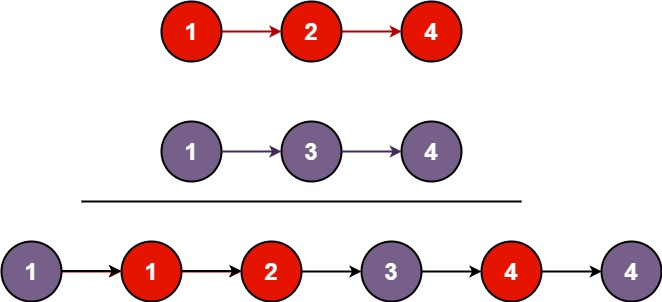 agile sundial
depends how you implement it, it's not unique
 brittle moat
I think the algo always prints the child elements first
you're saying depending on the order of the child elements?
agile sundial
yes
brittle moat
so if it were implemented as R, 1, 2, 3, it should print out (z, y, 1, x, 2, 3, r), or (z, y, x, 1, 2, 3, r)
agile sundial
oh, no it visits the current node before the children
haughty mountain
agile sundial
oh, no it visits the current node before the children
depends
post-order, pre-order, ...
 sly thistle
Best book for DSA in Python??
 oblique panther
sly thistle
Best book for DSA in Python??
oblique panther
sly thistle
Best book for DSA in Python??
Not sure about "in python", but I've taken both undergraduate and graduate algos courses, and they both used the same textbook, namely Introduction to Algorithms from MIT
There's a git repo on our resources page with idiomatic python implementations of tons of DSAs, if you want to refer to that as well.
If you want unpythonic implementations that suck, there's also geeks4geeks
 chilly parrot
oblique panther
Not sure about "in python", but I've taken both undergraduate and graduate algos...
chilly parrot
oblique panther
Not sure about "in python", but I've taken both undergraduate and graduate algos...
Do you need to know 6.042J for this course? Or can I directly go for 6.006
naive oak
oblique panther
If you want unpythonic implementations that suck, there's also geeks4geeks
speaking of this, I recently had to learn what digit dp was for a problem, and I spent ages trying to understand what the geeks4geeks code was doing
eventually I understood it, but it was a pretty bad implementation with confusing stuff that you really don't want when you're already struggling to understand a concept
a codeforces post gave a much better explanation
outer rain
I once found an absolutely incorrect solution to a problem there (https://www.geeksforgeeks.org/check-if-a-string-can-be-split-into-even-length-palindromic-substrings/). There are also a lot of weird articles about very specific "simple" algorithms or topics which require very complex background theory out of nowhere. I faced that a lot when researching formal grammars.
haughty mountain
naive oak
a codeforces post gave a much better explanation
big surprise
 silver lotus
Hey all, I have a question, given a grid like this; grid = [
[0, 0, 0, 0, 0, 0, 0, 0, 0, 0, 0, 0],
[0, 1, 1, 1, 0, 1, 1, 0, 1, 1, 4, 0],
[0, 1, 0, 1, 1, 1, 1, 0, 1, 0, 0, 0],
[0, 1, 1, 0, 1, 0, 1, 0, 1, 0, 1, 0],
[0, 0, 1, 0, 0, 0, 1, 0, 1, 1, 1, 0],
[0, 1, 1, 1, 1, 1, 1, 1, 1, 0, 1, 0],
[0, 3, 0, 0, 1, 1, 1, 0, 1, 1, 1, 0],
[1, 0, 0, 0, 0, 0, 0, 0, 0, 0, 0, 0]
]
How would i go about finding every single shortest path from the start point 3 to end point 4? (1 indicates open path, 0 indicates closed path)
sly thistle
How can I learn data structures and algorithms
outer rain
silver lotus
Hey all, I have a question, given a grid like this; grid = [
[0, 0, 0, 0, 0,...
Build a graph on that grid. Perform BFS, but instead of just storing the shortest path also store a list of all vertices which are one edge closer to starting point. Call them parents. Now if you imagine that nodes of the graph are connected only by those "parent-edges" (in the direction of decreased depth) then the formed graph is a DAG. And every path from end point to start point in it corresponds to a reversed path in an original graph. So just walk that DAG, every path you find is the answer. This works in O(max(n, ans)). Where n is an amount of vertices (area of the grid), ans is the total length of paths in the answer. In case of grid graphs I believe the ans is always not greater than n^2, but I might be wrong.
If you are confused google "grid bfs" and "bfs find all paths". This will help :).
 paper stratus
sly thistle
How can I learn data structures and algorithms
paper stratus
sly thistle
How can I learn data structures and algorithms
you can do courses like coursera or EdX or just simply start coding with various data structures and algorithms to compare your solutions with other ones
fiery cosmos
is DPV good enough book to learn enough about algorithms for a data science career? or is it too much / too little (requiring more graduate stuff)? I'm asking because I already have some basic knowledge about DP and graphs but looking at something like DPV with a lot of exercises feels like a lot of work that maybe I'd rather spend studying data science instead
I already have somewhat decent knowledge within Python, but in desparate need of doing some data science projects. but I wonder if it is worth it to take a break to study algorithms before fully commiting to data science or is the knowledge I have enough
 long plume
Hello, this is the worst-case for insertion sort:

If for example, an array has 7 integers, would the worst case be 7(6)/2 = 21 comparisons or 7^2 = 49 comparisons?
And why?
I did read that it should be 7(6)/2, but I can't find any source that mentions why we can't use the one with the notation
naive oak
long plume
And why?
how many comparisons would be needed if the array was in reverse sorted order at the start?
long plume
naive oak
how many comparisons would be needed if the array was in reverse sorted order at...
Um, is it n^2?
long plume
Oh
So that n^2 is just the representation since it's the dominant term?
And the rest wouldn't matter since they won't cause the growth to vary much?
long plume
naive oak
no
And does that mean the number of comparisons for worst case is n(n-1)/2?
naive oak
yes
long plume
naive oak
yes
The above reasoning is also correct?
naive oak
which above reasoning
long plume
long plume
So that n^2 is just the representation since it's the dominant term?
^
And the one after that
naive oak
kinda
big o notation has a more formal definition but you can think of it that way sure
long plume
naive oak
big o notation has a more formal definition but you can think of it that way sur...
Why is it done differently for merge sort?

Is it due to the presence of recursion?