#algos-and-data-structs
1 messages · Page 12 of 1
 elfin sundial
or in larger value appends
what's a good complexity value for this senario, or like what should be the time complexity
 jolly mortar
O(1) is the best complexity you can achieve for any task
elfin sundial
so what's my operation's time complexity
jolly mortar
n^2
elfin sundial
jesus
jolly mortar
after second append, you copy 1 item
after 3rd, 2 more copies
after 4, 3 more copies
after nth, total copy operations is 1+2+3+...(n-1)= n(n-1)/2 = O(n^2)
elfin sundial
what if you have an oscillating increment, first append increments array lenght by the current lenght itself x3 and then 2nd increment is increased by 2x and 3rd is incremented by 1. 4th would increment by 3x again.
in that logic, would the amount of times you'd increment or run the array increase operation decrease?
elfin sundial
jolly mortar
the nth append on its own is O(n)
right cos im not over allocating with a static amount, its just +1 length
jolly mortar
elfin sundial
what if you have an oscillating increment, first append increments array lenght ...
not sure
will need some math
 cinder nebula
elfin sundial
what if you have an oscillating increment, first append increments array lenght ...
cinder nebula
elfin sundial
what if you have an oscillating increment, first append increments array lenght ...
i suppose you could approximately say its O(N), since in other words, every time you increase N by 3, it appends 6 times, which is close enough to being linear once N starts getting larger
big-O notation is about how a program's time/space complexity increases as N approaches infinity, which overall seems to increase if the function cycles between appending one, twice, and 3 times over and over N times

i wrote a quick thing to plot input N against the length of the list when appending this way, and it looks like it becomes roughly linear
 fiery cosmos
Heey heey everyone, is this the chat to discuss generetic algos??
 storm wave
Hi there everyone is there a library to measure time complexity of a solution, algorithn
cinder nebula
you can measure how long it takes for an algorithm to run given a certain input, but that's different to measuring time complexity, which is more something that you do by manually analysing the code
storm wave
I have always done it manually but when I think about it I think it can be implemented into a library, no?
 gaunt bobcat
hello, has anyone here ever used SimPy?
 hexed tiger
Guys, I want to convert my python program into an exe. But, my command prompt shows me that problem of the system. Pls could you tell me how to fix it?
 jolly mortar
Mapping is in collections.abc now not collections
 peak jungle
Hey,... Anyone here willing to help me understand why my code is running with turtle speed...? 🙂
 thick echo
peak jungle
Hey,... Anyone here willing to help me understand why my code is running with tu...
thick echo
peak jungle
Hey,... Anyone here willing to help me understand why my code is running with tu...
Did you post the stack trace in a channel?
And the code?
thick echo
storm wave
Hi there everyone is there a library to measure time complexity of a solution, a...
The idea is you want to be able to learn how to do it by eyeball.
Some things in software we outsource to tools. Visual debuggers, diff tools, etc.
Some things you need to do yourself, in your head.
Big O is one.
 haughty mountain
thick echo
Big O is one.
haughty mountain
thick echo
Big O is one.
you can experimentally try to verify some stuff, e.g. there are cases where in the analysis you simplify something that you think doesn't matter and arrive at some O (an upper bound on the complexity) while in reality the proper bound is lower
thick echo
Amortized constant time is definitely a thing.
The idea is you need to understand Big O well enough that you don't need an external tool to estimate the Big O of a block of code.
haughty mountain
thick echo
The idea is you need to understand Big O well enough that you don't need an exte...
yeah, there are cases where it's nice to verify things though
could be for the sake of "is my implementation correct complexity-wise"
e.g. I implemented Strassen's matrix mult algo, and it's hard to tell if I didn't slip up when implementing and added some inefficiency
plotting some times allows some level of verification
thick echo
Well yes.
So the thing is.
Software Engineering is a process done by heuristic.
Formal verification means we formally prove all the functions in our program.
Are logically true.
I'll let other people talk about TLA+...
The idea with engineering is to get very very good at writing code intuitively.
Hence... intuition.
Hence... we need an intuition for Big O.
haughty mountain
yeah, intuition about time complexity and estimating actual runtimes is very helpful
e.g. what's a ballpark runtime for a quadratic algo for n = 10^5
to which a reasonable estimate is tens of seconds to a couple of minutes for cheap operations in a compiled language
scale some depending on the kind of work the code does
(10^5)^2 operations / (10^9 operations per second) gives a quite optimistic estimate of 10s
 austere sparrow
peak jungle
Hey,... Anyone here willing to help me understand why my code is running with tu...
austere sparrow
peak jungle
Hey,... Anyone here willing to help me understand why my code is running with tu...
import turtle
``` 🙂How does this work guys

How do we get mapping of index from hash code
Like for first one 4 mod 11 is 4. But how do I get which index is the value 4 stored in?
cinder nebula
well, from the sounds of things, the hash table stores values into the index of whatever the hash function returns, so in this case 4 goes into the table index 4, no?
 simple pier
fiery cosmos
Like for first one 4 mod 11 is 4. But how do I get which index is the value 4 st...
simple pier
fiery cosmos
Like for first one 4 mod 11 is 4. But how do I get which index is the value 4 st...
i think u can think ur hash table as having position 0 to 10 since it’s mod 11 it will never be >= 11
fiery cosmos
cinder nebula
well, from the sounds of things, the hash table stores values into the index of ...
That seems to be a bit contradictory with next question
Wait

So for index 1 there's no element
simple pier
this is linear probing
fiery cosmos
Oh fuck
simple pier
it’s different from the above which is chaining

 frozen ridge
hello everyone, I'm taking the course data structures/algorithms. can someone help me with Lists, Stacks and Queues?
 agile sundial
sure
frozen ridge
do you know how to create a function that reverses the list recursively?
agile sundial
a linked list? probably
 halcyon plankBOT
Hey @fiery cosmos!
It looks like you tried to attach file type(s) that we do not allow (.pdf). We currently allow the following file types: .gif, .jpg, .jpeg, .mov, .mp4, .mpg, .png, .mp3, .wav, .ogg, .webm, .webp, .flac, .m4a, .csv, .json.
Feel free to ask in #community-meta if you think this is a mistake.
fiery cosmos
I need to design an algorithm which checks consistency between 2 similar lists. Using hash functions. How can hash functions make things efficient
Other than the fact that it's easier to transfer hash compared to the element itself for comparing
agile sundial
you're checking if they're equal? wdym by consistency
fiery cosmos
The lists are stored in 2 separate databases. And my goal is to minimise the transfer between the 2
As in a[1]=b[1]
Or not.
For all indexes
Oh
I think I have an idea
Nice
fiery cosmos
frozen ridge
do you know how to create a function that reverses the list recursively?
Can someone explain what does reversing a list recursively mean
As in an algorithm that works recursively?
frozen ridge
in my case i just need to create a recursive function and not an algorithm
fiery cosmos
hey all,
how can i build an optimum binary search tree given a set of key probabilities p_i and probabilities that a given search corresponds to a dummy key, q_i
Could someone recommend a good book?
pretty much every algos course uses introduction to algorithms 3rd or 4th edition, though i wouldnt call it "good"
Okay
i mean, i suppose its good if you have CS or mathematics background
 hollow plinth
o
fiery cosmos
brutal for non traditional types
 static sigil
Hello I am currently learning genetic algorithms and I would like to ask a couple question if there is anyone with knowledge here?
As new generitions can be created for ever. But that might not result algorithm getting better. So there are reasons to stop the code from working
according to the wikipedia theese are:
A solution is found that satisfies minimum criteria
Fixed number of generations reached
Allocated budget (computation time/money) reached
The highest ranking solution's fitness is reaching or has reached a plateau such that successive iterations no longer produce better results
Manual inspection
Combinations of the above
I couldnt understand what "Fixed number of generations reached" means
Is it possible for someone to explain?
fiery cosmos
you run it for n= fixed number of generations of the choosing of the user
static sigil
oh
fiery cosmos
say, it reaches 50, the number of generations you told it to run for
static sigil
okay thank you that was simpler than I thought
lol
Do you use python for this subject?
fiery cosmos
for writing algorithms? yes. im actually studying bioinformatics MS right now but haven't gotten very far yet. my answer to your question was just my interpretation of what it is taken to mean given the context
static sigil
Ok thank you for your time
fiery cosmos
np
static sigil
Bye have a good day
fiery cosmos
👋
 dark sentinel
i made my first project today
which was a simple quiz game with a point score
even added a bonus round to the quiz
dark sentinel
static sigil
did you publish it anywhere?
no sadly i deleted it by accident
static sigil
:(
dark sentinel
but it was so simple i can replicate it easily
fiery cosmos
fiery cosmos
hey all,
how can i build an optimum binary search tree given a set of key proba...
!\
dark sentinel
it was a little pokémon quiz
static sigil
okay good luck on your project
 copper holly
Hello
I have been playing around with implementing floodfill
Two approaches I did were recursive and iterative
It was surprising to me that the recursion is generally faster (ofc when under recursion limit)
!e
from timeit import timeit
from random import randint

grid = [[randint(0, 2) for _ in range(1000)] for _ in range(1000)]

def find_connections1(i, j, results=None):
    curr = grid[i][j]
    if results is None:
        results = []
    if not curr:
        return results
    results.append((i, j))
    rows, cols = len(grid), len(grid[0])
    neighbours = ((i-1, j), (i+1, j), (i, j-1), (i, j+1))
    for next_i, next_j in neighbours:
        if (0 <= next_i < rows and
            0 <= next_j < cols and
            grid[next_i][next_j] == curr and
            (next_i, next_j) not in results):
            results = find_connections1(next_i, next_j, results)
    return results


def find_connections2(i, j):
    curr = grid[i][j]
    results = set()
    if not curr:
        return results
    rows, cols = len(grid), len(grid[0])
    to_check = {(i-1, j), (i+1, j), (i, j-1), (i, j+1)}
    checked = set()
    while to_check:
        next_i, next_j = to_check.pop()
        if (0 <= next_i < rows and
            0 <= next_j < cols and
            (next_i, next_j) not in results and
            grid[next_i][next_j] == curr):
            results.add((next_i, next_j))
            temp = (next_i-1, next_j)
            if temp not in to_check and temp not in checked:
                to_check.add(temp)
            temp = (next_i+1, next_j)
            if temp not in to_check and temp not in checked:
                to_check.add(temp)
            temp = (next_i, next_j-1)
            if temp not in to_check and temp not in checked:
                to_check.add(temp)
            temp = (next_i, next_j+1)
            if temp not in to_check and temp not in checked:
                to_check.add(temp)
        checked.add((next_i, next_j))
    return list(results)

for f in (find_connections1, find_connections2):
    print(timeit("find_connections(len(grid)//2, len(grid)//2)",
                 number=1000,
globals={"find_connections": f, "grid": grid})/1000)```@copper holly :white_check_mark: Your 3.11 eval job has completed with return code 0.
001 | 1.0831206105649471e-05
002 | 1.5149835497140885e-05
what is floodfill
agile sundial
an algorithm
fiery cosmos
lol well i figured that
i can google
was just curious for "an algorithm to achieve x by taking as input y"
still trying to figure out how to build an optimal binary search tree

This problem is a partial, considering only successful search.
What is Binary Search Tree?
What is Optimal Binary Search Tree?
How to create Optimal Binary Search Tree by applying Dynamic Programming
PATREON : https://www.patreon.com/bePatron?u=20475192
Courses on Udemy
Java Programming
https://www.udemy.com/course/java-se-pr...
haughty mountain
fiery cosmos
what is floodfill
you know paint bucket tool in image editors? that
fiery cosmos
interesting. yes i am very well familiar, i've spent many a day playing around in MS paint
fiery cosmos
fiery cosmos
hey all,
how can i build an optimum binary search tree given a set of key proba...
any guidance on this
haughty mountain
this is probably what you want https://en.wikipedia.org/wiki/Optimal_binary_search_tree#Knuth's_dynamic_programming_algorithm
In computer science, an optimal binary search tree (Optimal BST), sometimes called a weight-balanced binary tree, is a binary search tree which provides the smallest possible search time (or expected search time) for a given sequence of accesses (or access probabilities). Optimal BSTs are generally divided into two types: static and dynamic.
In...
fiery cosmos
so im running it on paper and its actually a neat problem
im starting with the two smallest probabilities and adding them as the deepest layer
then working upward, but right now i can either place my largest probability key at the root and make everything +1 in depth, or i could add it to lvl 2, which would 2x the cost
very curious
dude Knuth is everywhere
he was a math wizard
 haughty mountain
lol, Knuth is one of those living legends yeah
fiery cosmos
is he still around?

Donald Knuth is a computer scientist, Turing Award winner, father of algorithm analysis, author of The Art of Computer Programming, and creator of TeX. Please support this podcast by checking out our sponsors:
- Coinbase: https://coinbase.com/lex to get $5 in free Bitcoin
- InsideTracker: https://insidetracker.com/lex and use code Lex25 to get 2...
yep
fiery cosmos
oof.. trying to run the optimal-bst on pg 402.. yeah no
what is the code for the root of a huffman tree
for example, the left child of the root would have code 0
and right with 1
fiery cosmos
is that optional or part of every match
dark sentinel
i finished my project and made it a bit more fun
now how do i upload it
or where in particular
 rigid turret
Hey All, I'm wondering if I got these correct or no?

 haughty mountain
first one seems fine
agile sundial
kinda funny they said "f2 is an anonymous function"
f2 = lambda ... 😔
haughty mountain
for the second I think no option is great
agile sundial
^ doesn't it error if the file isn't there, because there's no file to close
that'd only work if you got an error while reading, which could happen, ig
agile sundial
agile sundial
^ doesn't it error if the file isn't there, because there's no `file` to close
ig technically that makes the 4th option correct lol
haughty mountain
agile sundial
^ doesn't it error if the file isn't there, because there's no `file` to close
I guess that's a thing yes
but idk if I would call that the error being suppressed
that feels more like except
agile sundial
ig 🤔. you don't get that error though, which i think is what they're going for
haughty mountain
I guess it's more that the exception in the finally preempts the exception in the try
agile sundial
agile sundial
ig 🤔. you don't get that error though, which i think is what they're going for
oh, you do actually, it shows "during handling of the above exception ... "
haughty mountain
finally in general has weird implications, but that's another story
e.g.
while True:
  try:
    return
  finally:
    continue
yeah that q is pretty bad, lol. none of the choices work
agile sundial
haughty mountain
e.g.
```py
while True:
try:
return
finally:
continue
```
and also,
def f():
  try:
    return 1
  finally:
    return 2
I think the continue one is weirder, since the return just doesn't happen, rather than the return happening but with a different value
agile sundial
you could probably combine the two examples tbh
haughty mountain
i.e. returns are not guaranteed to return
agile sundial
yeah, although i think you get this in java as well ¯_(ツ)_/¯
haughty mountain
yes, it's just interesting behavior, cancelling control flow
agile sundial
at least we have this lint 😩
 haughty mountain
C++ doesn't even have finally iirc
agile sundial
you have RAII though, which achieves the same thing
agile sundial
yeah, you have 1 drop impl instead of doing cleanup code everywhere you need to cleanup
haughty mountain
context managers in python are basically discount raii
austere sparrow
haughty mountain
C++ doesn't even have finally iirc
I think Alexandrescu had some macro set which lets you implement finally, sorta
 pallid girder
I started dsa and covered basics like arrays, strings, searching, now I want to start to hashing but i dont know what should I cover in hashing ?
which video to watch?
What topics do I need to cover to master hashing in python?
Please can anybody tell me where to start to and where to end in hashing
austere sparrow
pallid girder
I started dsa and covered basics like arrays, strings, searching, now I want to...
PyCon 2010: The Mighty Dictionary https://www.youtube.com/watch?v=C4Kc8xzcA68
Brandon Rhodes - The Dictionary Even Mightier - PyCon 2017 https://www.youtube.com/watch?v=66P5FMkWoVU
pallid girder
So basically I should master dictionary in python?
fiery cosmos
and functions
maybe linked lists
depending on what sort of hash table you want to build and specifics eg, which collision resolution, will it be open addressed, probing scheme..
 quartz tinsel
Hi guys anyone knows what is the regex in python to check a word that starts and ends with different letters. Note that spaces and single letter words are not part of the regex matching words
haughty mountain
pallid girder
So basically I should master dictionary in python?
well, understanding how hashing makes hash tables possible is a good idea
hashing and the applications of hashing are two kinda different subjects though
pallid girder
Oh okay thank u so much so I should be covering
Hash table
Hash function
Collision resolution
Practice questions on hashing
Should I add anything else
fiery cosmos
open addressing and probe sequence
austere sparrow
quartz tinsel
Hi guys anyone knows what is the regex in python to check a word that starts and...
Why do you need regex for that?
fiery cosmos
A biologist on a detailed study of flower petals identified that the number of petals consistently follows a number sequence. Each element is obtained by adding two preceding elements, and the sequence starts with 0 and 1. Sequence is defined as, F0 = 0 and F1 = 1 and Fn = Fn-1 + Fn-2. Write a python program and help the biologist to print the number of petals in sequence. ANYONE SOLUTION?
so.. the fibonacci sequence
YEAHH
so find some fibonacci sequence python code and repurpose it
Amazon has got ‘n’ bedsheets of a particular brand. Customers shop online and purchase ‘t’ bedsheets. Orders will be taken until the availability of stock of the brand. Suppose if a customer asks for number of bedsheets ‘t’ more than in stock ‘m’ then amazon only accepts ‘m’ items. Given a value ‘n,’ write a python code to deliver the order of bedsheets until the stock gets over and print the average number of items distributed. Print only 2 decimal places of average.
fiery cosmos
fiery cosmos
so find some fibonacci sequence python code and repurpose it
hey the other one?
sorry i've got my own problems to solve rn
quartz tinsel
austere sparrow
Why do you need regex for that?
I cannot anything else there but regex
fiery cosmos
hey is a 2D array in C++ in the form arr[][] the same as an array of arrays in python eg arr = [[]]
quartz tinsel
fiery cosmos
hey is a 2D array in C++ in the form `arr[][]` the same as an array of arrays in...
yes
fiery cosmos
ty
fiery cosmos
dang this bitonic euclidian travelling salesman tour is really tough
been stuck for a few days
i guess the bitonic version is easier than the standard version
 hybrid epoch
fiery cosmos
Amazon has got ‘n’ bedsheets of a particular brand. Customers shop online and pu...
hybrid epoch
fiery cosmos
Amazon has got ‘n’ bedsheets of a particular brand. Customers shop online and pu...
Inputs and outputs needs to be clarified. This can be solved with OOP. Save the state of distributed items as a class variable. Define a method to calculate the average every time there is a distribution. Then for printing two decimal places, use format codes, e.g: f"{math.pi:.2f}" prints pi to two decimal places.
fiery cosmos
me confused


can someone help me understand this
is N[i,j] supposed to be indices into the 2D array such that in python it'd be N[i][j]? furthermore, how should i be handling the length l here that is being computed
i think in the tour array, one only stores the point k which minimizes the tour distance, where k < j
i get line 7
we're inputting into our matrix where we store the adjacent nodes with the shortest path to the current node, that the node i is the adjacent node with the shortest path to j (in this case, the trivial case) because there is only one adjacent node, namely i, and j for i=1 and j=2
i don't know where we're storing the distance we are computing
 round glacier
https://stackabuse.com/courses/graphs-in-python-theory-and-implementation/lessons/dijkstras-algorithm/
https://www.udacity.com/blog/2021/10/implementing-dijkstras-algorithm-in-python.html
Does anyone know any website where it implements dijkstra's with type hints? None of the tutorials I find have type hinting, and the type hints help me to figure stuff out more.
round glacier
agile sundial
can't you just implement one with type hinting?
if i understood it, yes. but im trying to learn it
fiery cosmos
akdljf[029q-[0cx293r92i.,3rx[092ir,
round glacier
@agile sundialalso none of these have good variable names
"v" and "j" and "i" are not condusive for learning how the code works
            if dist[u] + l < dist[v]:
dist[v] = dist[u] + l```like how is this helpful?
agile sundial
fair enough. those are probably nodes
well, v is probably a node, l is probably the current distance to v
fiery cosmos
 round glacier
agile sundial
fair enough. those are probably nodes
round glacier
agile sundial
fair enough. those are probably nodes
Do you know any tutorials where dijkstra's is implemented with valid variable names and type hinting that is simple and easy tounderstand?
I feel like all of the tutorials i read are confusing because the naming is awful.
I want to be able to just read the code, easily.
I don't want to have to sit here and try to figure out what's going on (because the names are bad).
fiery cosmos
typically if you have like a vertex v, it follows that other vertices are w, x, y etc
agile sundial
round glacier
Do you know any tutorials where dijkstra's is implemented with valid variable na...
CLRS
fiery cosmos
for u to imply a preceeding vertex
agile sundial
usually it's u and v, yeah
round glacier
its honestly amazing how godly awful mathmeticians are at variable naming conventions
@agile sundial
lol
agile sundial
¯_(ツ)_/¯
yeah, but is node1 node2 really much better
like, ig you could say like, compare_against or something
round glacier
i mean you know the reason why math is so hard for many people to learn?
its because its taught in such abstract terminology
lol
agile sundial
variable names is not why lmfao
agile sundial
round glacier
its because its taught in such abstract terminology
because it's abstract
you can't really get away from that
agile sundial
that usually makes it much harder, though
anyways, i disagree that the reason it's hard is because of bad teaching. it's just hard
agile sundial
agile sundial
CLRS
in the third edition, it's chap 24.3
also, are you just looking at code without explanations?
round glacier
agile sundial
in the third edition, it's chap 24.3
i think ive read that, its still using u, v, i, j, k, a, b ,c
lol
agile sundial
are you just looking at code without reading the explanations?
agile sundial
round glacier
i think ive read that, its still using u, v, i, j, k, a, b ,c
it is, but it also explains what all of the variables mean and why
round glacier
agile sundial
it is, but it also explains what all of the variables mean and why
i stil find it confusing 😄
fiery cosmos
i appreciate the terminology used until there are too many subscripts
or like, when they say given a set of matrices A_1, A_2, A_3, just use A, B, C
agile sundial
there's usually a reason for that, though. by naming them all A, you can do something like..
.latex $$\sum_{i=1}^{3} A_i$$ or something
 grand havenBOT
 agile sundial
ok it's missing the subscript, but you get the point though. you can parameterize it
obviously, naming everything the same variable without a use is...useless
fiery cosmos
right great point
haughty mountain
fiery cosmos
this thing would be a lot more readable if the else if didn't get extra indentation
fiery cosmos
lol did you see the meme
public are you spooky now on account of October
woah what just happened
spooky
spooky
awesome
agile sundial
fiery cosmos
public are you spooky now on account of October
indeed
haughty mountain
haughty mountain
this thing would be a lot more readable if the `else if` didn't get extra indent...
to prove the point compare these two


wait
my indentation is wrong...
fiery cosmos
btw this is from here:
https://www.cs.huji.ac.il/course/2004/algo/Solutions/bitonic.pdf
haughty mountain
there
 fiery cosmos

here is the recurrence relation
l is length, l(i,j) is the length of the edge between nodes i and j
dist is euclidian distance, which is simple to calculate
haughty mountain
fiery cosmos
`l` is length, `l(i,j)` is the length of the edge between nodes `i` and `j`
l(i,j)is the length of the edge between nodesiandj
you sure? that sounds likedist(p_i, p_j)
fiery cosmos
i'm pretty good with the various conditions and what all the variables mean, but implementing it is another thing. i haven't figured out how to handle the recursion and how to break it into different functions. rn i have one function to compute the euclidian distance, i have a main function, etc. i don't understand how/where we are storing the edge lengths. maybe we aren't
yeah you're right. i was describing the first recursive case
haughty mountain
surely l is some minimal distance up to some point
fiery cosmos
so the thing of it is, it seems as if in their scheme they are only storing the adjacent node of j, that is, node the which gave rise to the minimum distance on the way there. that could be i, it could be j-1st node, etc
in their dp table
so idk what to do with this distance i am coimputing
computing
fiery cosmos
fiery cosmos
i hope you saw this, it made me laugh
i need to go pick up medicine for my cat, i will be back
haughty mountain
so if I understand correctly the algorithm would still be correct if you ignore case 2 here and just do case 3 instead

it would just be slow
as a consequence of some of the observations, if i < j-1 then they know k must be j-1
wait, maybe not
maybe they don't reduce to the same case actually
the last case probably assumes that p_i and p_j are adjacent

it still feels like case 2 is just an optimization
I just need to get my head around the idea of case 3
oh, l(i, j) is the length of the shortest bitonic paths with endpoints i and j
not tours
ah, right in case 3 we consider all possible shortest bitonic paths that only consider nodes < j
and we try to find the one that is least expensive to attach to
fiery cosmos
haughty mountain
the last case probably assumes that p_i and p_j are adjacent
thats how i've understood it
haughty mountain
tbh, it might be helpful to substitute i=j-1 in the case 3 expression
fiery cosmos
i don't think you need the j>2 bit, correct
i'm just not getting where we are archiving the lengths
here is another resource:
haughty mountain
.latex $$\min_{1 \leq k < j - 1} (\ell (k, j - 1) + \tmop{dist} (p_k, p_j))$$
fiery cosmos

GeeksforGeeks
A Computer Science portal for geeks. It contains well written, well thought and well explained computer science and programming articles, quizzes and practice/competitive programming/company interview Questions.
haughty mountain
welp
.latex $$\min_{1 \leq k < j - 1} (\ell (k, j - 1) + \textrm{dist} (p_k, p_j))$$
grand havenBOT
 haughty mountain
fiery cosmos
i'm just not getting where we are archiving the lengths
haughty mountain
fiery cosmos
i'm just not getting where we are archiving the lengths
wdym where we are archiving the lengths?
fiery cosmos
like when i set out to write this code, i know in each one of the recursive cases, how to compute the length of the path. ok great, then what?
sidebar: we have an assignment of i into the 2D array to indicate that the node prior to j that gave rise to the shortest path is i, trivial case, line 7. so we can say array[1][2] = i in the case that i = 1 and j = 2. similarly we see other assignments to the dp table or 2D array or whatever you want to call it
but im not seeing the lengths stored anywhere, if i had to guess the recursive call will return said length
haughty mountain
l will be a n x n array in the code
fiery cosmos
right which i figured how to create with a list comp
wait so you are calling l = dp = 2D array
most people call it a dp table
geeksforgeeks calls it a 2D array
haughty mountain
I mean, it is a dp table
haughty mountain
but they call it l for length
the code iterates in an order so that it only depends on values of l that have already been computed
bottom-up dp, I guess
fiery cosmos
ok i definitely missed that bit
haughty mountain
no actual recursion going on
fiery cosmos
wait soo if l is the dp table, what is N
Compute l(i, j) and N (i, j), for all 1 ≤ i < j < n.
haughty mountain
book-keeping to be able to reconstruct stuff later
if you only wanted the length and not the actual path you could completely ignore N
fiery cosmos
so just another n*n array
haughty mountain
yes
fiery cosmos
yeah the way it reads in CLRS its not really clear. they say give an algo for determining an optimal tour. in their example they only give the length of the shortest said tour, but i read that as we need to return the path as well
fiery cosmos
haughty mountain
yes
dang! i had that feeling earlier, i should have just tried to implement and seen that that was the proper interpretation
haughty mountain
fiery cosmos
yeah the way it reads in CLRS its not really clear. they say give an algo for de...
I'm interpreting that as they want the tour
not just the length of it
 haughty mountain
yes, N(i, j) is book-keeping to remember what choice created the minimum l(i, j)
 opal oriole
DP notation can get very confusing because there are two ways to implement solutions which are the direct method, and successive approximations, and then also they could want either the value solution of the recurrence relation or the "path" in getting that value as a structure.
fiery cosmos
not for me bra. its big brain time
opal oriole
(Which requires the extra book keeping)
haughty mountain
idk if successive approximations is the right term
fiery cosmos
🧠
opal oriole
I took the terms from a paper on DP perspective on various problems, not sure if it's the best.
/ what DP actually means / when a problem is DP or not.
fiery cosmos
DP can be used to get an approximation, or solve the problem outright, depends on the DP method / implementation / approach and the problem
if i understand correctly
haughty mountain
DP is a terrible name for what it is 😛
opal oriole
DP is a terrible name on purpose.
fiery cosmos
well yeah i mean w the word programming right in there
which does not mean computer programming
fiery cosmos
opal oriole
DP is a terrible name on purpose.
this
opal oriole
I spent the Fall quarter (of 1950) at RAND. My first task was to find a name for multistage decision processes. An interesting question is, "Where did the name, dynamic programming, come from?" The 1950s were not good years for mathematical research. We had a very interesting gentleman in Washington named Wilson. He was Secretary of Defense, and he actually had a pathological fear and hatred of the word "research". I’m not using the term lightly; I’m using it precisely. His face would suffuse, he would turn red, and he would get violent if people used the term research in his presence. You can imagine how he felt, then, about the term mathematical. ```What title, what name, could I choose? In the first place I was interested in planning, in decision making, in thinking. But planning, is not a good word for various reasons. I decided therefore to use the word "programming". I wanted to get across the idea that this was dynamic, this was multistage, this was time-varying. I thought, let's kill two birds with one stone. Let's take a word that has an absolutely precise meaning, namely dynamic, in the classical physical sense```It was to avoid his research getting blocked.
— Richard Bellman, Eye of the Hurricane: An Autobiography (1984, page 159)
agile sundial
🤔 this seems like a good read lol
fiery cosmos
oh, it is actually a terrible name on purpose. i thought you were being cynical
opal oriole
No, I meant it was on purpose.
fiery cosmos
i see that now
haughty mountain
the essence of DP is exploiting optimal substructure, sadly this simplicity is hidden behind a cryptic name
opal oriole
Thus, I thought dynamic programming was a good name. It was something not even a Congressman could object to. So I used it as an umbrella for my activities.
fiery cosmos
pathological fear and hatred
opal oriole
Yeah, and it's why the paper I was reading was trying to categorize the implementations into direct and successive approximations (e.g. Q-learning in reinforcement learning).
haughty mountain
sad that someone so influential as Bellman needed to do this
fiery cosmos
exploiting optimal substructure by not constantly re-solving the same problems
haughty mountain
successive approximation would be stuff like relaxation?
opal oriole
DA is the successive approximations as well form DP POV.
(And BFS is a special case of that)
The successive approximations approach is also linked to fixed point iteration methods.
fiery cosmos
have y'all seen the self organizing maps solution to travelling salesman?
opal oriole
Yes, I work with self organizing maps every day.
They can solve a lot of things you would not expect.
haughty mountain
I've done some self-organizing maps, but not for TSP specifically
fiery cosmos
i haven't dug into the code or anything, i saw a gif online by chance and thought it was really cool
haughty mountain
it's for approximation, right?
opal oriole
They come from neuroscience, many neural networks do something like a self-organizing map or pretty much exactly, and it's especially used by small(er) networks (e.g. in bees).
Yes it's approximate.
haughty mountain
I did self-organizing maps in my intro to neural networks
fiery cosmos
self organizing how
opal oriole
Other biological approximations include things like ant simulations (also fun to implement).
haughty mountain
which went through the fundamental stuff from ages ago
fiery cosmos
like in what way would cells organize by what metric
haughty mountain
organize to minimize something, typically
in physics it might be minimizing energy that gives rise to structures
opal oriole
The key to SOMs is that they preserve topological structure of the data.
fiery cosmos
cells typically organize and communicate by tissue type and physical locality or gene expression, i wonder how a given subsection of the brain would do that or how one might even measure that
its really hard to do in vivo stuff
haughty mountain
let me find the relevant problem set report...
fiery cosmos
its ok i need to go implement the bitonic thing and quick screwing around
happy spooktober
haughty mountain

I know the, as Kohonen networks, but I guess the usual term now is self-organizing map
fiery cosmos
uhhh why are they setting shit equal to + infinity in this pseudocode
 cerulean river
hey guys quick question. So I am solving a question that is asking me to define the class structure of a MinStack which is a regular stack but is also able to output the minimum value in the stack in O(1). So obviously the class the will use a python list to be the stack. my question is since this list used in every method where do I declare it?
class MinStack(self):
stack = []

def __init__(self)
or should the declaration go under the __init__?
haughty mountain
fiery cosmos
uhhh why are they setting shit equal to + infinity in this pseudocode
because they are computing a minimum, so they default to a large value
you can write this neater with python's min and a generator expression
actually...you probably want some kind of argmin since you care about what caused the min
fiery cosmos
is it in the python literature
haughty mountain
no
fiery cosmos
ok
haughty mountain
like, you can do stuff like
min((function_to_minimize(arg), arg) for arg in arguments)
which will give you both the value and the argument
fiery cosmos
ok i've jotted this down. we saw we'd need a for loop to compute the min, my idea was just append each min to an empty list and then get min of the list at the end
haughty mountain
!e
value, arg = min((x**2 - 9*x + 51, x) for x in range(-10, 11))
print(f'min value {value} at x={arg}')
err, not the value I intended
but whatever
halcyon plankBOT
@haughty mountain :white_check_mark: Your 3.10 eval job has completed with return code 0.
min value 31 at x=4
this takes 68 steps to execute in pythontutor
amazing so much can be instructed with such little input
haughty mountain
!e
value, arg = min((x**2 - 6*x + 51, x) for x in range(-10, 11))
print(f'min value {value} at x={arg}')
@haughty mountain :white_check_mark: Your 3.11 eval job has completed with return code 0.
min value 42 at x=3
there we go, apparently expanding a quadratic correctly is hard
if I were to write this without min I would do something like default to infinity
!e
min_value = 10**9  # some big value
min_x = None
for x in range(-10, 11):
  value = x**2 - 6*x + 51
  if value < min_value:
    min_value = value
    min_x = x
print(f'min value {min_value} at x={min_x}')
@haughty mountain :white_check_mark: Your 3.11 eval job has completed with return code 0.
min value 42 at x=3
Self-organizing map is the generalized term.
But either can be used.
fiery cosmos
haughty mountain
!e
```py
value, arg = min((x**2 - 6*x + 51, x) for x in range(-10, 11))
print(f'...
this could be repurposed and replace lines 12-15
er
12-14
haughty mountain
fiery cosmos
this could be repurposed and replace lines 12-15
what I wrote there is the same structure they use in their pseudocode yes
you end up writing that kind of code a lot
fiery cosmos
🤔
haughty mountain
computing a minimum or an argmin (or both)
C++ has std::min_element that is basically argmin on iterators
python can do
min((arg for arg in args), key=some_function_to_minimize)
You can think of min of a list giving you the min value in the list, while argmin gives you the index of that min value in the list.
If you think of a list as having an index as an argument passed to it, and it gives back a value.
haughty mountain
the name kinda explains itself
min is the minimum
argmin is the argument that causes the minimum
fiery cosmos
alright im going to translate that and you tell me how incorrect it is
haughty mountain
in math speech

though I guess this is the definition that gives the set of arguments
not just one of them
fiery cosmos
q = min((k for k in range(1,i-1)), key = l[k][i]+euc(points_array[k],points_array[j]))
euc here being a function that takes two points as input and returns the euclidian distance
haughty mountain
that doesn't compute q in their code
(and the range is one off)
range(0, i-1) if you zero index
fiery cosmos
hmm good point. i hadn't noted the 1 based indexing
so this should all be for i in range(0,j) instead of for i in range(1,j-1)
haughty mountain
and you need a lambda for the key
haughty mountain
fiery cosmos
so this should all be `for i in range(0,j)` instead of `for i in range(1,j-1)`
range(0, j-1) I'm pretty sure
I think their notation is inclusive-inclusive while python does inclusive-exclusive
fiery cosmos
perfect, that won't make things confusing at all
haughty mountain
well, welcome to translating math indexing to programming
it happens a lot
[1, i-1]
[0, i-2]   # shift down one for zero indexing
[0, i-1)   # exclusive right side
(-1, -0), because the right is already -1 from being exclusive then.
(minus ones due to the start being at 1 instead of 0)
haughty mountain
right, the end effect is just subtracting one from the left hand side
N[i][j] = min(
  (k for k in range(0,i-1)),
  key=lambda k: l[k][i]+euc(points_array[k],points_array[j])
)
[0, i-1) this excludes or includes final index element
haughty mountain
excludes
the typical range notation in math is [] brackets for inclusive and () for exclusive
(there is another notation, but it's terrible)
[0, i-1[
I hate it
haughty mountain
unbalanced bracket hate
opal oriole

Green is start, from book inclusive, inclusive, start at 1.
Red is -1 to the range ends.
haughty mountain
(reminds me of Khan academy drawings)
opal oriole
Then make the end exclusive (add 1 back (or just don't subtract 1 from it)).
(closed inclusive, open exclusive)
haughty mountain
for clarity red is shifted by 1
it's not like it starts at -1
shouldn't the magenta be longer?
ending at 5
opal oriole
Uh yeah.
At 5.

So the magenta would have grown the range by 1 if the end was inclusive, but it's exclusive.
(I should change my red color maybe)
[1, n] -> range(0, n)
fiery cosmos
haughty mountain
(reminds me of Khan academy drawings)
same
opal oriole
I like silly colorful math drawing.
haughty mountain
opal oriole
(I should change my red color maybe)
because red-green color blindness? I checked and the contrast seems good enough anyway
opal oriole
haughty mountain
because red-green color blindness? I checked and the contrast seems good enough ...
Yeah, but it may also be a bit too dark.
And not consistent with the neon style.
fiery cosmos
it'd be cool to do this and write in the notation just next to it
im sure a lot of people would find it super helpful
in the same color
let me try
haughty mountain
haughty mountain
```
[1, i-1]
[0, i-2] # shift down one for zero indexing
[0, i-1) # exclusiv...
so this
 haughty mountain
that or actually insert the value yeah
though use filled and hollow circles for the end-points
that's the usual way to indicate inclusive/exclusive in plots
like in Squiggle's plot
 fiery cosmos
 opal oriole
(pro tip, never use full black or full white (in digital), if you need really dark, try dark purple)
fiery cosmos
ok
haughty mountain
I don't mind full black tbh as long as the contrast is reasonable
fiery cosmos
alg what is this key = lambda business
haughty mountain
fiery cosmos
alg what is this `key = lambda` business
you need to provide a function as the key argument
fiery cosmos
haughty mountain
```py
N[i][j] = min(
(k for k in range(0,i-1)),
key=lambda k: l[k][i]+euc(po...
so this is simply another way of writing that for loop where we seek the min among all the q's
haughty mountain
fiery cosmos
so this is simply another way of writing that for loop where we seek the min amo...
except this doesn't give you the min value
just the argument
fiery cosmos
hm
haughty mountain
haughty mountain
!e
```py
value, arg = min((x**2 - 6*x + 51, x) for x in range(-10, 11))
print(f'...
this is something that would give both
fiery cosmos
haughty mountain
just the argument
this returns the argument which gave rise to the min?
haughty mountain
(though in practice I would probably end up writing the loop as soon as the logic to check is non-trivial)
haughty mountain
fiery cosmos
this returns the argument which gave rise to the min?
yes, the k for which the key is minimum
that's what the statement is saying
fiery cosmos
ok cool
opal oriole

The min of f will give you the min y value, the argmin will give you the x that gives that min value (when plugged into f).
fiery cosmos
oof ok. i guess i need to develop this math <--> CS intuition
opal oriole
So you could imagine different ways to finding the argmin, like trying different values of x and see which gives the smallest f(x).
What argmin exactly means in code depends what you are getting the argmin of and it may be easy or hard.
fiery cosmos
i'm not understanding the tail bit of this pseudocode
ok i have a python script and i have no idea what its doing, i can't run in pythontutor as they don't allow import statements
haughty mountain
you need imports?
fiery cosmos
well yeah im using import math for sqrt
haughty mountain
you could do **0.5
fiery cosmos
ok thanks
313 steps
ahh i already found a mistake
yeah so it only ever inputs a single value into one of the array locations
 fervent saddle
why is this Time Limit Exceeded on leetcode? Isn't it O(n)?
class Solution:
    def longestConsecutive(self, nums: List[int]) -> int:
        numset = set(nums)
        seen = set()
        longest = 0

        for n in nums:
            if n not in seen:
                length = 1
                seen.add(n)
                while n + 1 in numset:
                    length += 1
                    n += 1
                    seen.add(n)
                if length > longest:
                    longest = length

        return longest
https://leetcode.com/problems/longest-consecutive-sequence/submissions/

Level up your coding skills and quickly land a job. This is the best place to expand your knowledge and get prepared for your next interview.
fervent saddle
It just accepted the sorting solution
so lol, they didn't account for the overhead of hashing making the O(n) solution slower for their data sizes nvm
agile sundial
fervent saddle
why is this Time Limit Exceeded on leetcode? Isn't it O(n)?
```py
class Solution...
i think you technically have O(n^2) if the input is something like [1, 2, 3, 4, ...]
oh, nevermind i missed if n not in seen
yeah, possibly 🤔, but hashing ints is just an identity function, so it can't be that
fervent saddle
their own O(n) solution works:
class Solution:
    def longestConsecutive(self, nums):
        longest_streak = 0
        num_set = set(nums)

        for num in num_set:
            if num - 1 not in num_set:
                current_num = num
                current_streak = 1

                while current_num + 1 in num_set:
                    current_num += 1
                    current_streak += 1

                longest_streak = max(longest_streak, current_streak)

        return longest_streak
but not mine
haughty mountain
fervent saddle
why is this Time Limit Exceeded on leetcode? Isn't it O(n)?
```py
class Solution...
try list(reversed(range(...))) as input
fervent saddle
that's the one it fails on
haughty mountain
yes
haughty mountain
it will make your code quadratic
fervent saddle
wait, I think I see why now
haughty mountain
your seen check doesn't save you
fervent saddle
yeah
haughty mountain
they only try finding the length when they know it's the first in a sequence
i.e. if n-1 doesn't exist in the set of numbers
agile sundial
ah, i was almost right
fervent saddle
got it!
class Solution:
    def longestConsecutive(self, nums: List[int]) -> int:
        numset = set(nums)
        seen = {}
        longest = 0
        start_number = None

        for n in numset:
            if n not in seen:
                start_number = n
                length = 1
                while n + 1 in numset:
                    n += 1
                    if n in seen:
                        length += seen[n]
                        break
                    length += 1
                    seen[n] = None
                if length > longest:
                    longest = length
                seen[start_number] = length

        return longest
I know theirs uses less memory, and it's probably faster. But still, I got it.
I can't ever think of the optimized stuff that they come up with. Like with the longest palindrome one, I didn't think to expand around the center to get O(1) space instead of O(n)
 thick hazel
hi all, i need help with an algorithms question
Question: Given an input string of digits and a text file containing a list of all valid words, your goal is to produce a vector of possible, valid words in alphabetical order for the given string of digits.```ive been stuck on this for 5 fucking days
what i tried to do was like
do it recursively
but that went over like a pile of bricks !
haughty mountain
why would you recurse?
you can convert words to digits easily
at that point solving should be easy
 shut hazel
thick hazel
```Problem: On some old cellphones, there was not enough room for a complete key...
shut hazel
thick hazel
```Problem: On some old cellphones, there was not enough room for a complete key...
Actually on older cellphones to type cat you would have to pres
222 [c] 2 [a] 8 [t]
thick hazel
i know lol tell the person who made this GOD AWFUL PROBLEM that
shut hazel
I just saw your message and I'm trying to figure out why is anyone trying to reinvent the wheel when right now we are at prediction texts and all
thick hazel
haughty mountain
you can convert words to digits easily
but then id have to go thru the entire list of 200,000 words
haughty mountain
thick hazel
but then id have to go thru the entire list of 200,000 words
yes, but only once
shut hazel
You guys want to help build something useful that can generate a $ glitch?
It has to do with the stock market
And I mean real life gta up down x x square square l1 l2 r1 $ glitch but it's actually real $
haughty mountain
!rule 9
shut hazel
It's not asking for paid work
It's helping build an algorithm trader
But no problem 😇
haughty mountain
thick hazel
but then id have to go thru the entire list of 200,000 words
you have to read the file anyway, so you can't avoid working through the whole data at least once
thick hazel
haughty mountain
you have to read the file anyway, so you can't avoid working through the whole d...
but why? lets say we are given "228"
then we know all the possible words will be between a-c, so we dont have to search the entire data
(list is alphabetically ordered)
haughty mountain
it's a file, no?
thick hazel
yea but the problem gives u the file as a vector of strings
u dont have to implement that
haughty mountain
ok, that's wildly unhelpful in the description then
if you only have one sequence of digits you can binary search for the range of words with valid first letters
but then you just have to check all those words
note that this can't be done if this was actually a file and you have different length words
thick hazel
different length words are in the vector yea
haughty mountain
so the problem statement is terrible
thick hazel
yep kinda haha
heres what i tried
we know the problem can be solved recursively because lets say we have string "228" as input
then if we take the list of letters from a-c, that gives us a new list of valid words and the "new input" would be just "28"
now if we remove the firsst letter from the new list of valid words, we will ahve 3 sorted lists bc thats how alphabetical ordering works
so now we ujst loop thru the list of words that start with "a", "b", and "c" and see what list of valid words we can pull out using the string "28"
that...did not work
it gave me an error called "DEADLYSIGNAL" and at that point i just gave up
(please help me)
(im in pain)
haughty mountain
oh, I guess you can just recurse per letter yeah
thick hazel
but then why DOES THAT NOT WORK 😭 😭 😭 😭 😭
haughty mountain
what is this problem even?
thick hazel
haughty mountain
oh, I guess you can just recurse per letter yeah
this simply isnt working and i feel like its the wrong approach
too complicated
haughty mountain
!e
words = [
    'asa',
    'asd',
    'ast',
    'rad',
    'red',
    'sad',
    'sadd',
    'sb',
    'ssa',
    'sss',
    'zyx',
]

letters = {
    '2': 'abc',
    '3': 'def',
    '4': 'ghi',
    '5': 'jkl',
    '6': 'mno',
    '7': 'pqrs',
    '8': 'tuv',
    '9': 'wxyz',
}

def bs(l, r, pred):
  # Find first integer in [l, r) where pred is True.
  l -= 1
  while r - l > 1:
    mid = (r + l) // 2
    if pred(mid):
      r = mid
    else:
      l = mid
  return r

def f(i, digits, l, r):
  if i == len(digits):
    for i in range(l, r):
      if len(words[i]) == len(digits):
        yield words[i]
    return

  for letter in letters[digits[i]]:
    lower = bs(l, r, lambda x: words[x][i:i+1] >= letter)
    upper = bs(l, r, lambda x: words[x][i:i+1] > letter)
    if lower < upper:
      yield from f(i+1, digits, lower, upper)

print(list(f(0, '723', 0, len(words))))
@haughty mountain :white_check_mark: Your 3.11 eval job has completed with return code 0.
['rad', 'sad']
@thick hazel
austere sparrow
That's even better than "it's for educational purposes"
 summer fossil
class Solution:
def setZeroes(self, matrix: List[List[int]]) -> None:
"""
Do not return anything, modify matrix in-place instead.
"""
# Step1:
m = len(matrix) #no. of rows
n = len(matrix[0]) #no.of columns
    # Step2: rows = False
    first_row_has_zero = False
    first_col_has_zero = False

    # Step3:
    for row in range(m):
        for col in range(n):
            if matrix[row][col]==0:
                if row == 0:
                    first_row_has_zero = True
                if col == 0:
                    first_col_has_zero = True
                matrix[row][0] = matrix[0][col] = 0


    # Step4:
    for row in range(1,m):
        for col in range(1,n):
            if matrix[0][col] == 0 or matrix[row][0] == 0:
                matrix[row][col]=0
            else:
                matrix[row][col]


    # Step5:
    if first_row_has_zero:
        for col in range(n):
            matrix[0][col] = 0

    if first_col_has_zero:
        for row in range(m):
            matrix[row][0] = 0
Can u plz explain me what is the diff. b/w step 4 and step 5
 agile sundial
hashing requires you to look at all the elements anyways, so it's a waste of time
unless you don't anticipate changing the lists often, then you should store the hashes with the list, not compute it again
fiery cosmos
agile sundial
hashing requires you to look at all the elements anyways, so it's a waste of tim...
really?
A cryptographic hash function h(·) takes as input any piece of
data x of any size and returns a fixed-size string h(x) (e.g., h(x) is of size 256 bits for
SHA-256).
This is the definition I have been given
in specification
agile sundial
that is a correct definition
agile sundial
fiery cosmos
really?
yes
well, it should. it would make for a pretty bad cryptographic hash function if it didn't
and if you're not doing cryptography you can probably get away with a faster, less robust hash function, if you need it like the case i said before
haughty mountain
fiery cosmos
how's this for pseudocode
what does h(x) -> h(y) mean?
fiery cosmos
 haughty mountain
maybe dumb question, but what does transfer mean here?
haughty mountain
ah, gotcha
is the hash check actually correct? or do you willingly ignore very rare false positives?
hashes are great for verifying things are different quickly, for verifying things are the same hashes aren't great unless you're fine with some rare false positives
fiery cosmos
algmyr are you around today? i'd love to get this bitonic TSP script solving the problem
 robust obsidian
how is the value selected in a knn regressor, I understood how its done for a classifier, you take the k nearest points and choose the most common label, but just averaging in case of a regressor wouldnt really be accurate ?
is it done thru some form of extrapolation ?
 royal trout
Hello guys can someone help me with some video tutorial or smth like that.For algorithms in pyton for absolutely beginner :))
robust obsidian
robust obsidian
how is the value selected in a knn regressor, I understood how its done for a cl...
wrong channel my bad (didnt see the name at the top)
fiery cosmos
royal trout
Hello guys can someone help me with some video tutorial or smth like that.For al...

YouTube
I have started this channel to help Students Community to learn difficult topics, from computer science, with a simple and detailed explanation.
I have been teaching some computer science subjects and Programming Languages for a long time and also been working as a freelancer and providing software solutions.
My experience and understanding of...
royal trout
fiery cosmos
https://www.youtube.com/channel/UCZCFT11CWBi3MHNlGf019nw
Thank you so much man
fervent saddle
This is how I'm trying to solve Sliding Window Maximum on leetcode:
from itertools import islice
from collections import Counter

class Solution:
    def maxSlidingWindow(self, nums: List[int], k: int) -> List[int]:
        if k == 1:
            return nums.copy()

        tree = RBTree()
        iter_nums = iter(nums)
        counts = Counter(-n for n in islice(iter_nums, k))
        for k in counts:
            tree.insertNode(k)
        minimum = min(counts)
        answer = [-minimum]

        for left, right in zip(nums, iter_nums):
            if left == right:
                answer.append(-minimum)
                continue

            right, left = -right, -left
            if right in counts:
                counts[right] += 1
            else:
                counts[right] = 1
                tree.insertNode(right)
                if right < minimum:
                    minimum = right
            if counts[left] == 1:
                del counts[left]
                tree.delete_node(left)
                if left == minimum:
                    minimum = tree.minimum(tree.root).val
            else:
                counts[left] -= 1
            answer.append(-minimum)

        return answer
and I'm using this tree: https://favtutor.com/blogs/red-black-tree-python
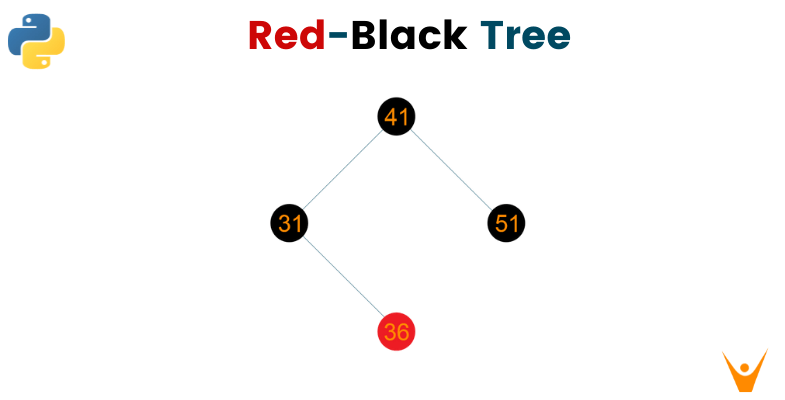
FavTutor
Understand red-black tree with rotation and insertion-deletion operations along with python code. Also, study advantages, disadvantages, and applications of it.
and this is the error I'm getting:
AttributeError: 'NoneType' object has no attribute 'color'
    if s.left.color == 0 and s.right.color == 0 :
Line 146 in fixDelete (Solution.py)
    self.fixDelete ( x )
Line 238 in delete_node_helper (Solution.py)
    self.delete_node_helper ( self.root , val )         # Call for deletion
Line 243 in delete_node (Solution.py)
    tree.delete_node(left)
Line 295 in maxSlidingWindow (Solution.py)
    ret = Solution().maxSlidingWindow(param_1, param_2)
Line 342 in _driver (Solution.py)
    _driver()
Line 353 in <module> (Solution.py)
with this data:
halcyon plankBOT
Hey @fervent saddle!
You either uploaded a .txt file or entered a message that was too long. Please use our paste bin instead.
fervent saddle
why?
This is the leetcode problem: https://leetcode.com/problems/sliding-window-maximum/
Level up your coding skills and quickly land a job. This is the best place to expand your knowledge and get prepared for your next interview.
fiery cosmos
royal trout
Thank you so much man
thank abdul, he's the 🐐
 severe ravine
!e
halcyon plankBOT
Missing required argument
code
 Command Help
!eval [python_version] <code, ...>
Can also use: e
Run Python code and get the results.
This command supports multiple lines of code, including code wrapped inside a formatted code block. Code can be re-evaluated by editing the original message within 10 seconds and clicking the reaction that subsequently appears.
If multiple codeblocks are in a message, all of them will be joined and evaluated, ignoring the text outside of them.
By default your code is run on Python's 3.11 beta release, to assist with testing. If you run into issues related to this Python version, you can request the bot to use Python 3.10 by specifying the python_version arg and setting it to 3.10.
We've done our best to make this sandboxed, but do let us know if you manage to find an issue with it!
cerulean river
Hi I am solving a problem that asks to implement the class, objects and methods for a stack that will be able to output the min and max values in the stack in O(1) time this is my solution:
# Feel free to add new properties and methods to the class.
class MinMaxStack:

    def __init__(self):
        self.minMaxStack = []
        self.stack = []

    def peek(self):
        # Write your code here.
        if self.stack:
          return self.stack[-1]
        return

    def pop(self):
        # Write your code here.

        if self.stack[0]
          self.minMaxStack.pop()
          return self.stack.pop()

        return

    def push(self, number):
        # Write your code here.

        if not self.stack[0]:
          self.minMaxStack.append([number,number])

        elif number < self.minMaxStack[-1][0]:
          currMax = self.minMaxStack[-1][1]
          self.minMaxStack.append([number,currMax])

        elif self.minMaxStack[-1][1] < number:
          currMin = self.minMaxStack[-1][0]
          self.minMaxStack.append([currMin,number])

        self.stack.append(number)
        return

    def getMin(self):
        # Write your code here.
        if self.stack[0]:
          return self.minMaxStack[-1][0]
        return

    def getMax(self):
        # Write your code here.
        if self.stack[0]:
          return self.minMaxStack[-1][1]
        return
the first if statement for the push method seems to be throwing an IndexError: list index out of range . since I am initializing self.stack would it not make sense to check if values have not been pushed already? I have to to maintain my second that which will keep track of the min and max values in O(1) time and space.
fiery cosmos
hi! can anyone help me find an O-bound for the running time by using the recursion tree method?
T(n) = 4T(n/2) + O(n log n)
if i've understood it correctly there will be 4 (n/2) from n log n?
 vital scaffold
In case of 1 2 & 3 i understand the use of self since we are modifying the actual object, but why we need to use self for 4 th ?


 dark aurora
Does anyone know hot to solve this problem

Codeforces
I solved it and I don't know why I get wrong answer
fiery cosmos
do we use deque for stack implementation in python?
agile sundial
you could. a list works too
fiery cosmos
oh. forget this stack nonsense then. and just do pop and append?
wait i wouldnt use append
that goes to the end, i think
so maybe pop and.. ?
fiery cosmos
oh. bet ok great
hmm
ok i have 2 stacks and i have to be able to do a push operation to one or another based on a variable, in the pseudocode its like stack[k]. how could i implement this for my two stack1 = [] and stack2 = []
my gut says i'll need a class or deque? is it possible without this
yeah i feel like i'll need a class attribute
will a != None check against a list allow a while loop to continue if the list is non-empty?
haughty mountain
fiery cosmos
ok i have 2 stacks and i have to be able to do a push operation to one or anothe...
stacks = [[], []]
stacks[0].append(...)
stacks[1].append(...)
🤔
good point
hmm
i must be reading this wrong
heres what i'm trying to implement:
here's my code so far:
stacks = [[],[]]
    k=0
    i=n-2
    j=n-1
    while j>0:
        stacks[k].append(j)
        j=N[i][j]
        if j < i:
            i,j = j,i
            k = 2-k
    stacks[1].append[0]
    while stacks[2]:
        stacks[1].append(stacks[2].pop())
    T=[[0]*n for _ in range(n)]
 haughty mountain
fiery cosmos
```py
stacks = [[],[]]
k=0
i=n-2
j=n-1
while j>0:
stack...
haughty mountain
fiery cosmos
```py
stacks = [[],[]]
k=0
i=n-2
j=n-1
while j>0:
stack...
k=2-k is wrong
and stacks[1].append[0] is an error
haughty mountain
think through the operation
fiery cosmos
ok ok
fiery cosmos
well the n stuff won't work as it is from higher up in the script where n=len of input array
haughty mountain
execute the one line in your head, dammit
k=0
k = 2-k
what is k?
what should it be?
fiery cosmos
ah it cannot oscillate now
haughty mountain
it will oscillate
fiery cosmos
2-0 = 2
haughty mountain
what do you want the value of k to jump between?
 forest oxide
hello someone help me to make a menu in pydroid 3?
fiery cosmos
0 and 1
haughty mountain
fiery cosmos
0 and 1
and what expression would make that happen?
x = ??? - x
||x = 1 - x||
in general to swap between a and b you can do ||x = a + b - x||
 static zenith
Hello my name is Sami, im french and i have a homework with python but i have a probleme. Someone can help me please ?

i dont know why i dont have result
 lean walrus
static zenith
i dont know why i dont have result
lean walrus
static zenith
i dont know why i dont have result
You cant return value from global scope. You should use print(vn)
static zenith
lean walrus
You cant return value from global scope. You should use print(vn)
Thank you very mutch

but now he tell me no module is named matplotlib and that's false
I tried also : import matplotlib.pyplot as plt
and this is doesn't work
static zenith
I tried with another software
 hybrid epoch
pip install matplotlib
fiery cosmos
what would a proof to prove the correctness of a graph traversal algorithm look like? for example, with sorting algorithms, we can do an inductive proof to prove correctness on arbitrarily large input with showing the math works out on the runtime complexity expression for the n and n+1 forms, hence proving true for all n. however, what would a proof look like to prove correctness of a graph traversal algorithm? it outputs both a path and a distance. i know the recurrence relations that characterize the algorithm's runtime (their mathematical expressions).
it takes as input a series of points in the euclidian plane
 reef trout
Does data and algos make us problem solving much better
 gusty rock
I still don't get the concept of yield keyword. Can anyone help me with this
hybrid epoch
gusty rock
I still don't get the concept of yield keyword. Can anyone help me with this
Tldr; yield creates generators. Supposed you have a list a of 10e9 elements. Without yield, Python will copy all 10e9 elements to memory and do operations on it. With yield, only the elements up to the current index i are copied into memory
fiery cosmos
I'm unable to solve a question in python
I come from rust
It is a decoding question
Given a string, you have to decode it.
it is already encoded this way:
college -> ceoglel
sequence:
first char, last char, second char, second last char....
Input:
ceoglel
output:
college
haughty mountain
fiery cosmos
it is already encoded this way:
`college` -> `ceoglel`
sequence:
first char, las...
ok, try following where the characters end up in the output
or better, start with a sequence like
[0, 1, 2, 3, 4, 5, 6]
and see what happens
it becomes: ||[0, 6, 1, 5, 2, 4, 3]||
hint ||consider odd/even indices separately||
fiery cosmos
fiery cosmos
it is already encoded this way:
`college` -> `ceoglel`
sequence:
first char, las...
in python you can also do -1, -2 as last and second last indexes. That might be helpful for you too
fiery cosmos
hybrid epoch
Tldr; yield creates generators. Supposed you have a list a of 10e9 elements. Wit...
wow that was helpful thanks
 vale smelt
could anyone help me determine the time complexity of my code?
agile sundial
what code?
 bronze sail
Should I use deque with pop append, or list to modify params? Trying to optimize loops
from collection import deque

"Prepare 1"
stack = deque(maxlen=1000)
stack.append(("Key1", 0))
"Solution 1"
k,_ = stack.pop()
stack.append((k, 2)) # adding new number


"Prepare 1"
stack = deque(maxlen=1000)
stack.append(["Key1", 0])
"Solution 1"
stack[-1][1] = 1
modifying will probably be faster. why not measure it?
bronze sail
agile sundial
modifying will probably be faster. why not measure it?
ye I did
!e
from collections import deque
import time


def measure_time_decorator(func):
    """ Function times measured with `perf_counter`. Wraps used."""

    def wrapper(*a, **kw):
        time_start = time.perf_counter()
        out = func(*a, **kw)
        duration = time.perf_counter() - time_start

        if duration < 1e-3:
            txt = f"{duration * 1000000:>4.2f} us"
        elif duration < 1:
            txt = f"{duration * 1000:>4.2f} ms"
        else:
            txt = f"{duration:4.2f} s"

        print(f"{func.__name__} elapsed in: {txt}")

        return out

    return wrapper


@measure_time_decorator
def test1(N):
    stack = deque(maxlen=20)
    stack.append(("key", 0))
    for i in range(N):
        stack.append(("key", i))


@measure_time_decorator
def test2(N):
    stack = deque(maxlen=20)
    stack.append(("key", 0))
    for i in range(N):
        stack[-1] = ("key", i)


@measure_time_decorator
def test3(N):
    stack = deque(maxlen=20)
    stack.append(["key", 0])
    for i in range(N):
        stack[-1][1] = i


if __name__ == "__main__":
    N = int(1000_000)
    test1(N)
    test2(N)
    test3(N)
@bronze sail :white_check_mark: Your 3.11 eval job has completed with return code 0.
001 | test1 elapsed in: 126.08 ms
002 | test2 elapsed in: 118.59 ms
003 | test3 elapsed in: 70.81 ms
depends on how long the deque is
internally, it's a linked list of small (64-long) arrays
so if your deque is 64 or smaller, it's going to behave like a list
fiery cosmos
hi, how do i do a recursion tree with O(n log n)?
 lunar jacinth
def getMinMax(low, high, arr):
    arr_max = arr[low]
    arr_min = arr[low]

    # If there is only one element
    if low == high:
        arr_max = arr[low]
        arr_min = arr[low]
        return (arr_max, arr_min)

    # If there is only two element
    elif high == low + 1:
        if arr[low] > arr[high]:
            arr_max = arr[low]
            arr_min = arr[high]
        else:
            arr_max = arr[high]
            arr_min = arr[low]
        return (arr_max, arr_min)
    else:

        # If there are more than 2 elements
        mid = int((low + high) / 2)
        arr_max1, arr_min1 = getMinMax(low, mid, arr)
        arr_max2, arr_min2 = getMinMax(mid + 1, high, arr)

    return (max(arr_max1, arr_max2), min(arr_min1, arr_min2))


# Driver code
arr = [1000, 11, 445, 1, 330, 3000]
high = len(arr) - 1
low = 0
arr_max, arr_min = getMinMax(low, high, arr)
print('Minimum element is ', arr_min)
print('nMaximum element is ', arr_max)
How is this 3n/2- 2?
 gleaming tapir
Hello everyone,
I'm working on simple Towers of Hanoi problem.
I've solved it simply using strings:
steps = 0

def print_transaction(n, source, target):
  global steps
  steps += 1
  print(f"{steps}. Moving {n} from {source} to {target}")

def tower_of_hanoi(n, source, auxiliary, target):
  # print_current_state(source, auxiliary, target)
  if n == 1:
    print_transaction(n, source, target)
    return

  tower_of_hanoi(n-1, source, target, auxiliary)
  print_transaction(n, source, target)
  tower_of_hanoi(n-1, auxiliary, source, target)

tower_of_hanoi(3, "A", "B", "C")
Now I want to solve it using stacks (using lists actually) but it's not working as intended. Can you give me any directions based on my code:
class Tower:

  def __init__(self, number_of_disks = None):
    self.a_rod = self.fill_the_rod(number_of_disks)
    self.b_rod = list()
    self.c_rod = list()


  def fill_the_rod(self, input_size_of_pile = None):
    if input_size_of_pile is None:
      input_size_of_pile = int(input("Enter the number of disks: "))
    return list(range(1, input_size_of_pile + 1 ))

  def sort(self, source, auxiliary, target):
    disk = source.pop()
    if disk == 1:
      target.append(disk)
      self.print_current_state()
      return

    self.sort(source, target, auxiliary)
    target.append(disk)
    self.print_current_state()
    self.sort(auxiliary, source, target)

  def print_current_state(self):
      print("_______________________________")
      print(f"A Rod: {self.a_rod}")
      print(f"B Rod: {self.b_rod}")
      print(f"C Rod: {self.c_rod}")


tower = Tower(num_of_disks)
tower.print_current_state()
tower.sort(tower.a_rod, tower.b_rod, tower.c_rod)
thats some efficency scam!
agile sundial
probably faster even, because no resizing
 ivory yacht
austere sparrow
so if your deque is 64 or smaller, it's going to behave like a `list`
ivory yacht
austere sparrow
so if your deque is 64 or smaller, it's going to behave like a `list`
It's slightly cleverer than that actually. They are allocated in 64-item blocks, but unlike lists the first block can have unused slots at the start. Popping from the left will simply increment an offset value, until that block is completely empty and we can move to the next. If you're pushing on one end and popping on the other, it'll reallocate the block every 64 items.
gleaming tapir
gleaming tapir
Hello everyone,
I'm working on simple Towers of Hanoi problem.
I've solved it ...
Anyone?
 glossy mulch
can't you just check if front-rear == -1 or something?
glossy mulch
gleaming tapir
Hello everyone,
I'm working on simple Towers of Hanoi problem.
I've solved it ...
your problem is that target.append(disk) belongs BEFORE the first self.sort
you need to obey hanoi's rules- you can't pop from ANY source until you've appended the piece you took off back on.
so
quick question
how efficient is deque reversal?
i want the most efficient object for stack-like behavior (list insert(-n)/pop(-n) for small n) with the most efficient full reversal (.reverse())
nvm i finally found the docs
deque access is approximately O(1) on the edges and O(n) in the middle which is a general slowdown over lists for my usage
gleaming tapir
@glossy mulch thanks for the feedback. I'll try to fix it.
But... if I put it before the first sort then it will just take that item from the list and add back all the time
and that's what I get:
_______________________________
A Rod: [1, 2, 3]
B Rod: []
C Rod: []
_______________________________
A Rod: []
B Rod: [2]
C Rod: [3, 1]
_______________________________
A Rod: []
B Rod: [2]
C Rod: [3, 1]
_______________________________
A Rod: []
B Rod: [2, 1]
C Rod: [3]
_______________________________
A Rod: []
B Rod: [2, 1]
C Rod: [3]
_______________________________
A Rod: []
B Rod: [2]
C Rod: [3, 1]
 midnight sorrel
Hey, I have a logical assessment, and I'm unsure how to do it.
Let's say you are in a high-rise building and at the bottom there are 27 wires and 27 wires at the top
each of these wires are paired bottom-top.
You can connect wires as you like and make as many groups as you want
You have a multi-meter which will light up if you connect 2 wires and they are connected on the other end as well.

You have to find these pairs and label them with least trips from bottom to top and from top to bottom.
How do you do it and what's the final trip count?
The answer should be 2 trips, but I really don't know how.
Could you help me please?
glossy mulch
gleaming tapir
But... if I put it before the first sort then it will just take that item from t...
not quite since you're using the stacks in a different order
assume an initial sort call with:
s, a, t = [3,2,1], [], []
a proper hanoi game advances...
s, a, t = [3,2], [], [1]
call (s, t, a)
s1, a1, t1 = [3,2], [1], []
s1, a1, t1 = [3], [1], [2]
call (s1,t1,a1)
s2,a2,t2 = [3], [2], [1]
s2,a2,t2 = [], [2], [1,3]
wrong
which means the entire sort paradigm is wrong
instead what you'll want is an additional target parameter that tells it which term in the list it wants to move from source to target.
i, s, a, t = 3, [3,2,1], [], []
with this initial state, observe the action sequence
i, s, a, t = 3, [3,2,1], [], [] : s does not begin with 3. delegate with item=s[s.index(3)+1], swapping a & t
i,s,a,t = 2,[3,2,1],[],[] : likewise.
i,s,a,t = 1,[3,2,1],[],[] : pop item and send to target.
i,s,a,t = 1,[3,2],[],[1] return
i,s,a,t = 2,[3,2],[1],[] : pop item and send to target.
i,s,a,t = 2,[3],[1],[2] : pull items from a to t, to clean up. do this by calling with target = a[0]
i,s,a,t = 1,[1],[3],[2]
i,s,a,t = 1,[],[3],[2,1] return
i,s,a,t = 2,[3],[],[2,1] return
i,s,a,t = 3,[3],[2,1],[] pop item and send to target.
from here, you get the idea
which is to say, your idea is really close already, but you need an additional target parameter so that your code can know what you're even trying to do
gleaming tapir
glossy mulch
which is to say, your idea is really close already, but you need an additional *...
yeah I was thinking about it. Thank you so much. I'm gonna try it.
thick hazel
haughty mountain
!e
```py
words = [
'asa',
'asd',
'ast',
'rad',
'red',
's...
hey man sorry for the lat response
but a) thank you
b) can u explain the code? still a bit confused
haughty mountain
thick hazel
b) can u explain the code? still a bit confused
binary search to find the valid intervals for each possible letter, then recurse for the next letter
haughty mountain
try for some low n 😛
fiery cosmos
good look
haughty mountain
n=2 -> 0
n=3 -> 1
n=4 -> 3
n=5 -> 6
thick hazel
so find first integver in which pred is true means l = lower, r = upper, pred = letter that u want?
haughty mountain
thick hazel
so find first integver in which pred is true means l = lower, r = upper, pred = ...
so I have an array where my predicate value goes
[False, False, False, ..., False, True, True, ..., True]
I want to find that transition point
thick hazel
ahhh okok
haughty mountain
to find what the first/last element in my range is
(and I define my range in the python sense with the right index being one larger)
because that's nicer to work with
thick hazel
Ahhh okok
thick hazel
haughty mountain
to find what the first/last element in my range is
Can u explain the lambda statements?
haughty mountain
re-posting code so I don't have to scroll up
words = [
    'asa',
    'asd',
    'ast',
    'rad',
    'red',
    'sad',
    'sadd',
    'sb',
    'ssa',
    'sss',
    'zyx',
]

letters = {
    '2': 'abc',
    '3': 'def',
    '4': 'ghi',
    '5': 'jkl',
    '6': 'mno',
    '7': 'pqrs',
    '8': 'tuv',
    '9': 'wxyz',
}

def bs(l, r, pred):
  # Find first integer in [l, r) where pred is True.
  l -= 1
  while r - l > 1:
    mid = (r + l) // 2
    if pred(mid):
      r = mid
    else:
      l = mid
  return r

def f(i, digits, l, r):
  if i == len(digits):
    for i in range(l, r):
      if len(words[i]) == len(digits):
        yield words[i]
    return

  for letter in letters[digits[i]]:
    lower = bs(l, r, lambda x: words[x][i:i+1] >= letter)
    upper = bs(l, r, lambda x: words[x][i:i+1] > letter)
    if lower < upper:
      yield from f(i+1, digits, lower, upper)

print(list(f(0, '723', 0, len(words))))
so what I want to do is to look at the ith letter and find the first/last word that has the letter I'm looking for
the [i:i+1] slicing is there so I don't have to worry about words ending early, e.g.
s = "asd"
s[1:2]  # "s"
s[1]    # "s"
s[3:4]  # ""
s[3]    # Error
other than that, I'm looking for the first time a particular letter appears, and the first time something greater than it appears
for the first part I'm looking for the first time something it >= letter for the second part the first thing > letter
 burnt wind
hey) I hope this link help u https://stackoverflow.com/questions/3344115/how-to-obfuscate-python-code-effectively 🙂

Stack Overflow
I am looking for how to hide my Python source code.
print "Hello World!"
How can I encode this example so that it isn't human-readable? I've been told to use base64 but I'm not sure how.
haughty mountain
as an example, looking for letter = 's' for i=0 (the first letter in the words) I will find
words = [
    'asa',
    'asd',
    'ast',
    'rad',
    'red',
    'sad',  # <- lower = 5
    'sadd',
    'sb',
    'ssa',
    'sss',
    'zyx',  # <- upper = 10
]
everything in range(5, 10) starts with an "s"
now I can focus in on that range and look at the second letter (that's the recursion)
thick hazel
ahhhhhhhhhhh
okokok
yea so ur basically doing what i did but i see why i had an issue now
thick hazel
haughty mountain
the [i:i+1] slicing is there so I don't have to worry about words ending early, ...
cause of this
i didnt think of the lambda or sliving thing
recursion so hard to debug on god 😩
haughty mountain
the lambda is just so I can re-use my binary search code
so I don't have to write it twice
and you can totally do this without the slicing, it's just an annoying edge case to deal with
thick hazel
oh u do the binary search non recursively
bronze sail
haughty mountain
re-posting code so I don't have to scroll up
```py
words = [
'asa',
'asd...
Can you use regex?
haughty mountain
bronze sail
Can you use regex?
for this task regex wouldn't be a good idea, the point is to not try to check all words
thick hazel
@haughty mountain i feel like im missing smthng crucial...doesnt the lambda function go thru each element in the words list?
haughty mountain
thick hazel
<@133944101929222144> i feel like im missing smthng crucial...doesnt the lambda ...
no, why would it?
the lambda is just the function that the binary search uses to check "is the condition true for the thing at position x?"
thick hazel
i didnt know that, ty
haughty mountain
the binary search for sure will not look at every element
bronze sail
haughty mountain
for this task regex wouldn't be a good idea, the point is to not try to check al...
ye I don't quite understand the problem
also regex can work on lines
🤔 but then not sure if you could scrap line number from it
why letters are dict ?
haughty mountain
bronze sail
ye I don't quite understand the problem
so you have a sequence of digits 1-9, on old phones every digit corresponds to a few letters, so we're curious what words in the list would match such a sequence
the word list is given as a list of strings in sorted order
and yes, you can do better than just going through all the words in the list and applying a regex to each word
bronze sail
you read words or numbers?
you want to get number sequence in return?
maybe reversed dict?
!e
words = [
    'asa',
    'asd',
    'ast',
    'rad',
    'red',
    'sad',
    'sadd',
    'sb',
    'ssa',
    'sss',
    'zyx',
]
letters = {
    '2': 'abc',
    '3': 'def',
    '4': 'ghi',
    '5': 'jkl',
    '6': 'mno',
    '7': 'pqrs',
    '8': 'tuv',
    '9': 'wxyz',
}
letters_back_dict = {sub_let : key for key,val in letters.items() for sub_let in val}

print(letters_back_dict)
for word in words:
  pattern = [letters_back_dict[let] for let in word]
  print(word, pattern)
@bronze sail :white_check_mark: Your 3.11 eval job has completed with return code 0.
001 | {'a': '2', 'b': '2', 'c': '2', 'd': '3', 'e': '3', 'f': '3', 'g': '4', 'h': '4', 'i': '4', 'j': '5', 'k': '5', 'l': '5', 'm': '6', 'n': '6', 'o': '6', 'p': '7', 'q': '7', 'r': '7', 's': '7', 't': '8', 'u': '8', 'v': '8', 'w': '9', 'x': '9', 'y': '9', 'z': '9'}
002 | asa ['2', '7', '2']
003 | asd ['2', '7', '3']
004 | ast ['2', '7', '8']
005 | rad ['7', '2', '3']
006 | red ['7', '3', '3']
007 | sad ['7', '2', '3']
008 | sadd ['7', '2', '3', '3']
009 | sb ['7', '2']
010 | ssa ['7', '7', '2']
011 | sss ['7', '7', '7']
... (truncated - too many lines)
Full output: https://paste.pythondiscord.com/tasewujihe.txt?noredirect
bronze sail
and then you can check sequences
just store patterns in set for fast checking during in
haughty mountain
bronze sail
!e
```py
words = [
'asa',
'asd',
'ast',
'rad',
'red',
's...
you are looping through all the words
that could be expensive
consider if you had a huge list of words
you only care for a very small handful
the point is that you can solve this without looping through all the words, making use of the fact that the strings are sorted
as a silly simplified example, if I have a big sorted wordlist and I'm curious if a word is in it, looping through all the words would be a waste
you can binary search for it
which is in the end what you do in the more complicated version with the digits
bronze sail
i though you got more sequences
 oak lintel
rq how would i print this https://paste.pythondiscord.com/nakicuhisi
oak lintel
the error im getting is node is not defined\
bronze sail
oak lintel
the error im getting is node is not defined\
init has double lines __init__
also errors are pretty accurate, just read them from bottom to top
dont do ==None do is None
this code confuses me, it looks like you mixed linked list methods that should be in node
im talking abotu insert_after you assign same node both to head and tail which is baaad...
this too oop this problem could be solved with 2 dicts I think
class LinkedList:
  def __init__(self):
     self.links = {}
  def add_edge(parent_id, child_id):
    if parent_id not in self.links:
      self.links[parent_id] = set() # or list but sets are hashable
    self.links[parent_id].add(child_id)
    "You could do also operation for storing reverse links in separated dict"

num_list = LinkedList()

num_list.add_edge(50, 60)
        queue = deque([(target, 0)])
        seen = {target}
        while queue:
            if queue[0][1] == k:
                return [node.val for node, d in queue]
            node, d = queue.popleft()
            for nei in (node.left, node.right, node.parent):
                if nei and nei not in seen:
                    seen.add(nei)
                    queue.append((nei, d + 1))
what do you think nei is short for?
 hybrid epoch
fiery cosmos
```py
queue = deque([(target, 0)])
seen = {target}
while...
hybrid epoch
fiery cosmos
```py
queue = deque([(target, 0)])
seen = {target}
while...
Neighbor
fiery cosmos
OF COURSE ty
 tight parcel

Does anyone know how I can get all the possible combinations of this problem?
Its the staircase problem where I can only do 1 - 2 steps to get to the top of the staircase with the size of n

I know how to get the total combinations...
I just dont know how to make the loop to print out all the possible combinations
tight parcel
haughty mountain
you don't want to print all combinations
No like the photo I sent is from leetcode
and its asking for the total amount of unique combinations
in my case... for one of my assignments
I want to have a loop that prints all of them out
I just dont know how to 😭
and ive been trying for the past 2 hours
haughty mountain
that's kinda ridiculous since the number of solutions grows exponentially with n
tight parcel
tight parcel
Do you know how I can read up the tree?

So in this image... I just need to print out the path of the green circles (where its equal to 5)
and go up the tree to where its zero
so for instance the very left... to get from 5 --> 0 it is...
+1 + 1 +1 +1 +1
And then the next green circle to the right would be...
+2 +1 +1 +1
and the third one from the left would be...
+1 +2 +1 +1
and so on
😭
haughty mountain
just do it recursively?
tight parcel
Do you know how it would look?
Sorry im new to all of this in general 😭
Is there like an external resource guide I can use? cause tbh idk what to enter in google
to search
haughty mountain
the recursion is basically just trying to take 1 step (one recursive call) or 2 steps (another recursive call)
 zinc storm
How can I sort a list with string values as elements?
agile sundial
the same way you sort any other list. sorted, .sort
zinc storm
Can you tell me a way of doing it without these built in functions?
I need sort a list in alphabetical order
agile sundial
implement your own, then
agile sundial
zinc storm
I need sort a list in alphabetical order
the builtins can do that
hybrid epoch
zinc storm
Can you tell me a way of doing it without these built in functions?
Lexicographically or alphabetically? Either way, implement quick sort. Do a comparison like:
ord(arr[i]) < ord(pivot)
In the partition function. If you can't use the built-in ord function, then create a dictionary where you assign increasing numeric values to each letter in the alphabet and use that instead
fiery cosmos
how do y'all interpret this pseudocode:

its just an array of arrays of the same 1 .. m values yeah
fiery cosmos
can someone help me understand dp tables better
opal oriole
fiery cosmos
can someone help me understand dp tables better

Consider computing the first 20.
You can make a table with length 20, and fill in the first two values with 0 and 1.
Then go left to right.
You are building up values from previous sub-problem values. Starting at the bottom and going up (bottom-up).
Tracking values of the recurrence relation of the problem.
fiery cosmos
right right bc then rather than recomputing each time you are simply looking up what the F_i-1 and F_i-2 values are
most of the dp tables i've come across are like n*n, what is the reason for this
opal oriole
If you look at the recurrence you will see why.
fiery cosmos
hmm ok. i'm trying to solve a string-cutting problem rn
given a string s of len(s), determine the minimum cost to cut it at prespecified places. the cost may be different if you cut from right to left, left to right, or some combination. this is bc for each cut you must copy the existing length string over again
opal oriole
I gtg. I recommend trying these steps:
In this video, we go over five steps that you can use as a framework to solve dynamic programming problems. You will see how these steps are applied to two specific dynamic programming problems: the longest increasing subsequence problem and optimal box stacking. The five steps in order are as follows:
- Visualize examples
- Find an appropria...
fiery cosmos
ok thank you
opal oriole
DP has a way of being nicely formulaic to solve.
When you get used to it.
(Identifying that the problem has a DP solution can be hard)
fiery cosmos
the directed acyclic graphs in the video make for nice visualizations of a given solution
haughty mountain
opal oriole
(Identifying that the problem has a DP solution can be hard)
identifying how to twist the problem into being a nice dp formulation is hard, yeah
fiery cosmos
i think whats tripping me up is like string index shifting. maybe i don't need that.
maybe i don't need the indices i mean
i don't think i do
gonna try writing cut left and cut right functions
just gotta understand the table
clearly its going to be some sort of lookup previous cost of cuts approach
fiery cosmos
i don't understand this problem at all. they don't specify which bit of the string you are doing away with
found this:
 fiery cosmos
also:
 fiery cosmos
i think im not understanding the table
fiery cosmos
how can i use these statements above to design a dp algo
its the string cutting problem
is it the same or different than the rod cutting problem?
looks like there is a leetcode version of the problem as well
fiery cosmos
ok i have a working version of the algo i just need someone to walk through it w me in python tutor
thick hazel
haughty mountain
the lambda is just the function that the binary search uses to check "is the con...
out of curiosity, how would u implement this without lambda function?
like now im just wondering what would happen if i tried to code the same thing but in, say, c++
 keen ibex
Got a question for anyone who can help:
Can I reverse engineer a structure? Meaning if I have a structure with a data type, and a reference to the data type, can I use the reference to the data type to return the structure?
haughty mountain
thick hazel
like now im just wondering what would happen if i tried to code the same thing b...
C++ has basically this function already, it's called std::partition_point and takes a lambda
haughty mountain
thick hazel
out of curiosity, how would u implement this without lambda function?
obviously you could just inline the logic in the lambda, so you write the same while loop with a slightly different check inside
the point of passing a lambda/function is that I don't have to repeat the same binary search structure multiple times
 vocal gorge
i wonder if c++ inlines the lambda into the function when compiling
opal oriole
vocal gorge
i wonder if c++ inlines the lambda into the function when compiling
Sometimes (often, also depends on optimization settings/flags).
haughty mountain
vocal gorge
i wonder if c++ inlines the lambda into the function when compiling
often yes
or rather, it inlines the function which allows inlining the lambda
 azure osprey
How do I make a list slice modify the original list?
a = [0, 1, 2, 3, 4, 5, 6, 7, 8]
slice_of_a = a[1:4]
slice_of_a[1] = 9    # This should modify a[2] somehow
assert a == [0, 1, 9, 3, 4, 5, 6, 7, 8]
List elements in my case are mutable, but how can I do something like appending to the slice and it changes the original list?
Came across https://stackoverflow.com/a/31443874, any better solution?
 wanton dawn
guys
im doing my masters and need to start preparing data structures and stuff , do you recommend learning basics from leetcode/algoexpert/educative .. and also im looking for a study partner if anyone interested
haughty mountain
azure osprey
How do I make a list slice modify the original list?
```py
a = [0, 1, 2, 3, 4, 5...
you could make your own list slice type, but that's probably more work than you would want to do
azure osprey
haughty mountain
you could make your own list slice type, but that's probably more work than you ...
quite a discussion there
fiery cosmos
wanton dawn
im doing my masters and need to start preparing data structures and stuff , do y...
masters in what
fiery cosmos
wanton dawn
im doing my masters and need to start preparing data structures and stuff , do y...
see channel pins for MIT course
hey all,
i have two different DP algos to solve the same problem, they print the same solution for one case but not another. how can i solve which one is the proper algo??
that is, which one gives the true answer in all cases
i'm also trying to understand all the variables in each case if anyone has some time
haughty mountain
if the case is small you could solve it by hand or write a brute force solver