#algos-and-data-structs
1 messages · Page 3 of 1
 dark aurora
for i in range(1, m) :
    for j in range(1, n) :
        dp[i] [j] = min(dp[i] [j-1]+1, dp[i] [j-1]+1, dp[i-1] [j-1]+(str1[j-1]==str2[i-1]
why does it still work on most cases if i put n+1 and m+1 instead of n, m shoulsn't I get an error
and why does it not work in this case in particular
 trim rover
problem is, how do I even create the tuple without making either a very long line e.g. tup = (1,2,3,4,5,6,7,etc) or adding a bunch of separate lines e.g. category = 123 tup += category or make my code more confusing by not naming these parameters and going straight to storing them in the tuple/list e.g. tup += 123?
 halcyon plankBOT
Hey @dark aurora!
You either uploaded a .txt file or entered a message that was too long. Please use our paste bin instead.
trim rover
I wish there was a way to use a dictionary for inserting to mysql. That would solve my problem most elegantly. But there does not seem to be command that turns {"category": 123, "url": 456} into (123, 456) Or is there?
EDIT: may have found answer in https://stackoverflow.com/questions/9336270/using-a-python-dict-for-a-sql-insert-statement

Stack Overflow
I am trying to use a dict to do a SQL INSERT. The logic would basically be:
INSERT INTO table (dict.keys()) VALUES dict.values()
However, I am having a tough time figuring out the correct syntax ...
 haughty mountain
so I imagined rewriting the functions to return a namedtuple and accept a namedtuple as argument in this code
haughty mountain
trim rover
I wish there was a way to use a dictionary for inserting to mysql. That would so...
.values(), though relying on dict ordering always feels a bit iffy
namedtuple is a better fit for this imo
e.g. my_tuple(category=123, url=567)
trim rover
haughty mountain
so I imagined rewriting the functions to return a namedtuple and accept a namedt...
assuming the function where the variables are set goes like this:
url = 567```
how do I turn this into a named tuple?wait, what is a namedtuple? I thought you were talking about a tuple with a name lol
let me google one sec
haughty mountain
my_tuple = namedtuple('my_tuple', ['category', 'url'])
it's a tuple but with named fields
so you can write
my_tuple(category=123, url=567)
```to create a tuple or
```py
existing_tuple = (123, 567)
my_tuple(*existing_tuple)
```to create from an existing tuplecan i break it down to chunks? otherwise it would still create a very long line, I think
haughty mountain
trim rover
can i break it down to chunks? otherwise it would still create a very long line,...
I mean, you can always add newlines to make things more readable, e.g.
my_tuple(
  category=123,
  url=567
)
nice!
haughty mountain
dark aurora
```Python
for i in range(1, m) :
for j in range(1, n) :
dp[i] [j] = ...
share the full code?
 loud path
who knows how to solve a rubik's cube
 plain fiber
can anyone help me kadane algo?
 tame whale
how can i calculate/code, given m and n, the amount of longest path (except in cases like 2x2, essentially all positions must be visited) solutions to traverse from the top left to the bottom right of that grid with dimensions m x n?
haughty mountain
tame whale
how can i calculate/code, given m and n, the amount of **longest** path (except ...
seems like this but on a general grid and not a square grid http://oeis.org/A121788
tame whale
i don’t really understand what that means
 fiery cosmos
can y'all read the problems in CLRS and start dreaming up solutions? i feel like most of them i read and I'm completely in the dark on even where to begin. is this normal?
plain fiber
what is CLRS
fiery cosmos
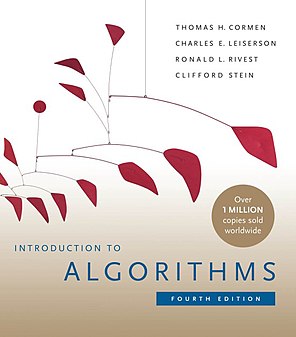
Introduction to Algorithms is a book on computer programming by Thomas H. Cormen, Charles E. Leiserson, Ronald L. Rivest, and Clifford Stein. The book has been widely used as the textbook for algorithms courses at many universities and is commonly cited as a reference for algorithms in published papers, with over 10,000 citations documented on C...
 fluid gate
can someone tell me why solution A results in 40 but solution B results in 59 for [4,-2,-3,4,1]. It's driving me crazy because they are functionally IDENTICAL!! Question here https://leetcode.com/problems/sum-of-subarray-ranges/
Solution A
        sum = 0
        for i in range(len(nums)):
            for j in range(i, len(nums)):
                sum += (max(nums[i], nums[j]) - min(nums[i], nums[j]))

        return sum
Solution B
        res = 0
        for i in range(len(nums)):
            minVal = nums[i]
            maxVal = nums[i]
            for j in range(i, len(nums)):
                minVal = min(minVal, nums[j])
                maxVal = max(maxVal, nums[j])
                res += maxVal - minVal
        return res

Level up your coding skills and quickly land a job. This is the best place to expand your knowledge and get prepared for your next interview.
fiery cosmos
basically like the bible for algorithms
plain fiber
god a book
fiery cosmos
its over 1200 pages
fiery cosmos
still dont know what to make of this line in the pseudocode
 tacit nova
https://leetcode.com/problems/rotate-image/
this is the ENTIRE solution, i want to ask what is that A[:] doing ?
class Solution:
    def rotate(self, A):
        A[:] = zip(*A[::-1])
if you reverse the rows and transpose, it ends up being a 90 degree rotation, A[::-1] reverses, the zip is a transpose
the assignment to A[:] is to replace the entire slice of A
to assign A in-place
haughty mountain
fluid gate
can someone tell me why solution A results in 40 but solution B results in 59 fo...
they aren't identical, B keeps track of the prefix maximum/minimum as it goes, A does the max/min of adjacent values
this change should make them identical, though this is a lot slower
        sum = 0
        for i in range(len(nums)):
            for j in range(i, len(nums)):
                sum += max(nums[i:j+1]) - min(nums[i:j+1])

        return sum
i see they are in-place with A[:], thank you
 haughty mountain
fiery cosmos
still dont know what to make of this line in the pseudocode
haughty mountain
fiery cosmos
still dont know what to make of this line in the pseudocode
it's just a set union, python has a built in set you can use
in fact return {a[m]} | recursivecall(...) is valid python
(although not optimal performance-wise)
this is a better option for performance
s = recursivecall(...)
s.add(a[m])
return s
dicts and sets are very similar
one gotcha is that the empty set is set()
because {} is a dict
fiery cosmos
is time complexity synonymous with lines of code executed
or rather is it approximately equal to
this question comes from the cover files of a given script and my exercise yesterday where i added up all the lines executed by randomized quicksort to see how it runs compared with the expected running time
and it was more than expected for a given input, but as another user pointed out, thats bc i neglected to take into account the constant in the theta notation
and some small constant like 5 could easily upper bound the lines executed for the given input of one input array of n=1000 elements
i think im understanding it correctly unless there is some deeper layer of like computations that the code is doing that i cannot see with a cover file, and that those computations are what is meant by time complexity
haughty mountain
fiery cosmos
is time complexity synonymous with lines of code executed
in reality different cpu instructions take different amount of time
fluid gate
haughty mountain
they aren't identical, B keeps track of the prefix maximum/minimum as it goes, A...
Omg thank you so much
haughty mountain
fiery cosmos
is time complexity synonymous with lines of code executed
when analyzing algorithms you assume that there is some set of operations that take constant time, and work from there
fiery cosmos
so would it be in error for me to work from the cover file and show that the expected runtime is consistent with the number of lines executed for a given input n?
like for example, randomized quicksort is O(nlgn). my version ran and executed 43k lines. for my given input of an array of n=1000 integers, 1000*lg(1000) = 9,965. so while it took more lines (computations?) than expected, this is easily upper bounded by say, c of 5, and so it is indeed true that randomized quicksort if O(nlgn)
this is a legitimate analysis i think unless i'm completely off base
haughty mountain
fiery cosmos
so would it be in error for me to work from the cover file and show that the exp...
trying to say anything from a single data point is going to be iffy
you could run for some different n and plot the results
but if you do that, why not just plot the time taken for different n instead?
the number of operations is used as a proxy for time, when possible measuring the real deal will be more useful
fiery cosmos
so let say i wanted to analyze the same algorithm but with arrays of n=1000, n=10k, n=50k, n=100k. what would a rudimentary analysis be comprised of
furthermore if i were to plot the number of lines executed (after adding up all the lines from each cover file) for each, would it be helpful to ask excel to plot an equation of that line?
 opal oriole
fiery cosmos
so let say i wanted to analyze the same algorithm but with arrays of n=1000, n=1...
opal oriole
fiery cosmos
so let say i wanted to analyze the same algorithm but with arrays of n=1000, n=1...
Plotting the n and time taken for each. Trying to create a function that matches/fits that curve / guessing the complexity. Using that guess as the goal in a proof to show that it is actually that runtime.
fiery cosmos
hmm makes sense ok
opal oriole
(You can just use whatever plotting program, desmos is fine)
Also you want multiple runs averaged.
fiery cosmos
so you mean multiple runs at n=1k, multiple at 10k, etc
opal oriole
If you run your program and it takes 10 time units the first run, 20 the second, 13 the third, etc. You just average them and plot those.
Just to deal with the randomness.
Like maybe your PC happened to be running something in the background.
fiery cosmos
i'm not looking at time units but the cover file and adding up all the lines executed
which i suppose could be my "time units"
opal oriole
Yeah ticks / time units / steps.
fiery cosmos
ok
im going to also track time elapsed within python, but that is secondary to the steps
./ not as important
opal oriole
Even real time will be fine if you just average the runs.
fiery cosmos
eh thats a no-no for my course
opal oriole
It's just to get a guess for the proof.
haughty mountain
fiery cosmos
i'm not looking at time units but the cover file and adding up all the lines exe...
as said, number of operations is a proxy for time, so if you can measure time why not do it directly?
opal oriole
fiery cosmos
no-no for formal analysis
The proof is the formal part. Real time is what ends up mattering in engineering / real programming (because it's the reality of how long it runs).
But whatever, courses have their ways.
fiery cosmos
haughty mountain
as said, number of operations is a proxy for time, so if you can measure time wh...
i am measuring time directly using pythons time function but the prof said that takes backseat to operations performed / steps
haughty mountain
opal oriole
The proof is the formal part. Real time is what ends up mattering in engineering...
time complexity for expected growth, real time to have a baseline
real time measurements, especially in lower level languages, is quite fun
fiery cosmos
i've sort of lost my way in CLRS, need to get back to reading chapters. i am all over the place
opal oriole
haughty mountain
real time measurements, especially in lower level languages, is quite fun
Reality + prediction for further because you probably don't want to test all possible N (good luck with that :))
haughty mountain
you can often see where you start missing cache, because the slope for the time taken can change dramatically
opal oriole
fiery cosmos
i am measuring time directly using pythons time function but the prof said that ...
In software engineer, I don't ever count steps. Just real time and proof of runtime complexity for prediction for large N.
Steps can be seen by just looking at the code, no need to actually count it with a program.
(Although it can be nice, just don't really need it in practice (except maybe some rare cases))
fiery cosmos
good to know
i was gonna ask whether y'all build heaps out of classes or arrays but then i remembered python has a built in heap function, so nvm
clrs seems to imply you can implement them as arrays
opal oriole
fiery cosmos
i was gonna ask whether y'all build heaps out of classes or arrays but then i re...
Arrays.
(Not in Python)
(This gets into more details about how modern machines work so I would not worry about it)
fiery cosmos
if y'all wanna ask me anything you think i should know going into a grad lvl algos course, i am all ears
haughty mountain
e.g. in a loop like
for i in range(n):
  for j in range(i+1, n):
    thing
```I know the `thing` will run like n(n-1)/2 times because math, I don't really need to countim going to try to write this in summation form as practice
opal oriole
(You counted in the math sense of counting (combinatorics), but not by program or manually by hand)
haughty mountain
heapq uses lists for the heap
haughty mountain
opal oriole
(You counted in the math sense of counting (combinatorics), but not by program o...
lazy counting :P
opal oriole
haughty mountain
lazy counting :P
Yeah efficient / more advanced counting. In math it's the branch of "counting". Which includes stuff like counting how many combinations a Rubick's cube has (without just counting each one by one manually).
(And also how many times steps in an algorithm run)
haughty mountain
just put the question/code here, someone might look at it
fiery cosmos
haughty mountain
e.g. in a loop like
```py
for i in range(n):
for j in range(i+1, n):
thing...
is this described in one summation or two
haughty mountain
fiery cosmos
is this described in one summation or two
either really, it's a nested summation of ones, or a single summation n-1 + n-2 + ...
easy enough to check with a print, no?
fiery cosmos
opal oriole
Arrays.
why not classes?
haughty mountain
fiery cosmos
why not classes?
you mean defining a node class and whatever? it's generally slower
fiery cosmos
hmm ok
haughty mountain
having stuff nearby in memory is important for performance, so storing the data in an array rather than a node based structure is better
fiery cosmos
i guess my binary trees will be slow then
haughty mountain
I mean, it depends. If you're doing recursion in python you'll have a fun time in general
fiery cosmos
for i in range(n):
i+=1```(python is at the kind of slowness where I'm not scared about cache misses)
 opal oriole
fiery cosmos
why not classes?
opal oriole
fiery cosmos
why not classes?
Just to clarify and make sure we are on the same page, what do you mean by classes? I kind of made an assumption, but could you write it out?
fiery cosmos
class = Node:
  __init__(self, somestuff)

class = BinTree:
__init__```And each node has a left, right?
fiery cosmos
yes each node will have properties like left, right, maybe a color in the case of red black trees
opal oriole
Yeah, so, when you create an object in Python, it allocates memory for it. And it does so on a heap.
(Or if you did it in another language this way you would probably also have it on a heap)
fiery cosmos
do you mean the heaps as in CLRS heapsort algorithm?
the heap data structure?
im getting a feeling thats a different heap than the data structure
opal oriole
Memory pool would probably be a better term.
What matters here is that when it allocates those objects, they may not be next to each other in memory, they can be scattered all about.
haughty mountain
fiery cosmos
not really. besides, the loop you wrote is weird, it doesn't compute a sum, it increments the index which will be overwritten on the next iteration anyway
opal oriole
Yeah arrays are often contiguous chunks of memory.
fiery cosmos
haughty mountain
not really. besides, the loop you wrote is weird, it doesn't compute a sum, it i...
is this correct:
i=0
for i in range(11):
    i+=1

print(i)
And the reason that matters is because of how you need to get data / memory from devices such as RAM to the CPU so it can perform work on it.
haughty mountain
list in python is a contiguous array of pointers, though the actual objects are stored elsewhere
opal oriole
If you get the first element of an array, the CPU won't get just that one element, one-by-one, because now it's bottlenecked by having to wait on each of them. By the time a single element from the array arrives at the CPU, the CPU could have sorted a small array.
(CPUs are that fast (ridiculous))
haughty mountain
fiery cosmos
is this correct:
```py
i=0
for i in range(11):
i+=1
print(i)
```
you mean to write this, right?
s=0
for i in range(11):
    s+=1
So to help solve this issue, the CPU will fetch memory in chunks. And if you have a nice contiguous array, and it sees that you are just looping over that, it can predict what it will need next and fetch a whole bunch all at once.
If your nodes are randomly located in memory, it will have a very hard time.
haughty mountain
no, seems like a very greedy problem
fiery cosmos
haughty mountain
you mean to write this, right?
```py
s=0
for i in range(11):
s+=1
```
it works the way i wrote it as well, but yes perhaps for clarity's sake that is better. so might i describe this loop as:
 opal oriole
(It's jumping around)
fiery cosmos
opal oriole
(It's jumping around)
ok i'm with you. the reason i implemented my binary trees as classes is bc i think thats how the pseudocode was written, in other words i don't think the pseudocode would work on a binary tree built based on an array. that or i couldn't figure out how to build one from an array
haughty mountain
fiery cosmos
it works the way i wrote it as well, but yes perhaps for clarity's sake that is ...
no that's not how you write sums, my loop is s = \sum_{i=0}^{10} 1
is there a LaTeX bot here?
 haughty mountain
.latex $\sum_{i=0}^{10} 1$
opal oriole
fiery cosmos
ok i'm with you. the reason i implemented my binary trees as classes is bc i thi...
Implementing them as arrays is an optimization, and does not matter as much in Python because Python is already slow. Use what you think makes it easier to understand until it becomes a problem (slowing down your program when profiling).
haughty mountain
haughty mountain
.latex $\sum_{i=0}^{10} 1$
I should petition enabling the latex thing here...
opal oriole
(For these kinds of things it's best to do the simple to understand solution until it's actually a problem)
fiery cosmos
haughty mountain
I should petition enabling the latex thing here...
i can paste this in the math server and copy here
 opal oriole
(For a non-garbage-collected programming language it can be easier to just use the array approach (so faster and more simple to work with))
(And technically freeing your heap is now O(1) instead of O(n) (the entire heap, if you want it all gone))
haughty mountain
fiery cosmos
but yeah, that's
s = sum(1 for i in range(11))

or

s = 0
for i in range(11):
  s += 1
 fiery cosmos
fiery cosmos
fiery cosmos
i'm feeling pretty good about starting class this month until i see stuff like this
the exercises on mergesort with insertionsort once the subproblems get small enough were suprisingly intuitive
opal oriole
Depends on what you want to do. Many programmer have probably not made a data structure in years other than for interviews.
fiery cosmos
i've been practicing using substitution and master's theorem yeah
this is what i should practice up on now tbh
opal oriole
If you want to make new things, and not just reuse code / libraries, etc, you will probably need to be able to do it from scratch.
Then you need both the memorization and from scratch practice.
fiery cosmos
haughty mountain
but yeah, that's
```py
s = sum(1 for i in range(11))
or
s = 0
for i in range(1...
so what would you example then be, the n(n-1)/2 one in math notation? i'll repaste
for i in range(n):
  for j in range(i+1, n):
    thing
if you write the notation i can convert to latex
you don't need the latex command
opal oriole
You want both the fast pattern matching based on what you have memorized and the slower from scratch analytical ability.
It helps to write it out by hand. Play around with simple cases (base cases and near base cases) and then see how those cases relate to each other (it may be a recursive / DP thing).
haughty mountain
fiery cosmos
if you write the notation i can convert to latex
meh, I'm used enough to writing LaTeX, though this should really be in some equation environment
  \sum_{i=0}^{n-1} \sum_{j=i+1}^{n-1} 1
= \sum_{i=0}^{n-1} n - (i+1)
= \frac{n (n-1)} 2
sorry i meant if you write the latex i can put it through and get the output
haughty mountain
I don't have a LaTeX environment readily available on my phone, sadly :P
 haughty mountain
I made a request to activate it here
opal oriole
You would expect this channel of all channels to support latex.
haughty mountain
it should be fixed soon enough
haughty mountain
fiery cosmos
but yeah, that
fiery cosmos
ok perfect thank you
haughty mountain
for better or worse I've written enough LaTeX to read the source code as math pretty fluently
fiery cosmos
its certainly better for your wallet/career
haughty mountain
if you're not writing even things like shopping lists in LaTeX, what are you even doing? 
fiery cosmos
im just happy i read something about a heap and knew the min or max elements would be something in the realm of 2^h nodes where h is the height of the heap
i still can't read that summation notation 🙄
maybe it doesn't matter. i just need my B
haughty mountain
\section{To buy}
\begin{itemize}
  \item bananas \\
  \item chocolate \\
  \item milk
\end{itemize}
 haughty mountain
shopping list with class
haughty mountain
fiery cosmos
i still can't read that summation notation 🙄
the Σ notation overall? it's not so weird
this is all there is to it
\sum_{i=a}^b f(i) = f(a) + f(a+1) + \ldots + f(b-1) + f(b)
 haughty mountain
it's just a shorthand to write such a long sum
 covert thorn
i thought that \sum is the inline text style, and that \Sum was the normal style, but i guess that's not the case. apparently inline depends on context, and may or may not require \displaystyle to say otherwise
haughty mountain
depends if it's inline or display math, yeah
fiery cosmos
I’m not understanding in CLRS when they talk about an array having the aspect heapsize. I can call len(array) in Python, does there exist a similar heap(array) function?
 fiery cosmos
How would I add a parent attribute to my binary tree based on node classes
In an array based approach I think it’d be tied to the indices
I’ll have to take a look at my code, I’m just in the book rn
haughty mountain
fiery cosmos
I’m not understanding in CLRS when they talk about an array having the aspect he...
in python you let the storage be dynamic size, so len == heap-size if you use heapq
haughty mountain
fiery cosmos
How would I add a parent attribute to my binary tree based on node classes
you just store the parent, much like you would the children?
fiery cosmos
haughty mountain
you just store the parent, much like you would the children?
class Node:
    def __init__(self, key):
        self.key = key
        self.left = None
        self.right = None

    def __repr__(self):
        return str(self.key)

class BinaryTree:
    def __init__(self, root):
        self.root = Node(root)

tree = BinaryTree(7)

def tree_insert(root, key):
    if key <= root.key:
        if root.left is not None:
            tree_insert(root.left, key)
        else:
            root.left = Node(key)
    else:
        if root.right is not None:
            tree_insert(root.right, key)
        else:
            root.right = Node(key)
looks like i'll need to add parent and child attributes to class Node


 lament totem
lg(2^k) becomes k
fiery cosmos
that's the most i know 😂
 pseudo gust
Hello here , hope you feel good, I'm here to learn more to create apps or tools other than CRUD applications. I think about how advanced developer implement protocols in a langage for exemple ? or systems... Something different, I'm beginner and all your help or advice will be usefull
lament totem
Because you are just multiplying by 2 one more time than k
fiery cosmos
right i guess the parentheses confuse me. but we can also see that with the rule a^b * a^c = a^(b+c)
ty @lament totem one last thing
 fiery cosmos
wow i just realized the CLRS publishers literally posted python implementations of every algorithm on their website 🤦♂️
probably better i didn't know that while i was learning
i wonder if we should pin that here or if it'd be detrimental to learning purposes
fiery cosmos
i'm still not printing my entire sorted arrays with my return statements, if anyone may know what thats about
haughty mountain
fiery cosmos
i'm still not printing my entire sorted arrays with my return statements, if any...
what code?
fiery cosmos
Anything I run where the array is too large, just gets lopped off at the end of the print statement there must be a max character return in the print function
fiery cosmos
Maybe it’s a vscode thing. I can share code when I’m back at my pc but it’s happening code agnostic
haughty mountain
quick googling gave me https://stackoverflow.com/questions/57764639/how-to-stop-vs-code-from-truncating-python-data-in-the-console#58203545
Stack Overflow
I'm opening a csv file in VS Code with Python. Your basic csv import. I know the complete csv data is reading properly because it's printing to macOS Terminal via Anaconda iPython as expected.
How...
I wouldn't know these issues, I just work in a terminal 😛
fiery cosmos
hmm i'm not seeing the Data Science setting of the python extension. i'll keep looking. thanks for this
i forget why i migrated from the default IDE that ships with python but at some point i did for some reason

hmmmm
fiery cosmos
just realized in the beginning of CLRS they put:
(x number of instructions) / (y number of instructions/second) to get computational time. that's the formula i will follow once i get the number of instructions per second of my processor
can i look up the instructions per second for my cpu or must it be calculated
haughty mountain
fiery cosmos
can i look up the instructions per second for my cpu or must it be calculated
it depends on the instruction
fiery cosmos
wiki says i can do it in this manner:
 fiery cosmos
i will be doing that as well
this seems to be what i want given what i was trying to calculate before
haughty mountain
as always, counting instructions will at best be a bad approximation of time taken
especially if you count lines in python
if you look at individual instructions you can start to count the number of cycles needed for a sequence of operations, but it gets very complicated very quickly
opal oriole
IPS is a pretty bad measure of processor speed on modern machines.
fiery cosmos
i guess that makes sense given clrs was written 30 years ago
ok. i'm just trying to figure out how to use those lines executed in my analyses
beyond "we can see the bulk of the work is here"
finally recognized that k+1 = lg(2^(k+1)) 😂
this has been a wild ride coming from the RNA sequencing and biochem world
there are some cool dimensional analyses we do
 cobalt temple
Hey is there a library in python that could decode iso646
fiery cosmos
can someone help me understand this runtime:

looks like the first summation runs from i=1 to n-1, so i understand what's written above and below, but why is it n-i
 slender sandal
It seems both loops run nopen-1 times
fiery cosmos
so here they have split out the summation into the summation of n being n*(n-1) and are subtracting the i summation is it?
 haughty mountain
fiery cosmos
i guess that makes sense given clrs was written 30 years ago
haughty mountain
fiery cosmos
i guess that makes sense given clrs was written 30 years ago
it's a decent proxy for ballpark time estimates, 10^9 cheap operations in a compiled language might be ~1s
in python...a lot fewer operations in 1s
like 100x less
fiery cosmos
i'm sorry that i keep asking about this btw
haughty mountain
fiery cosmos
finally recognized that k+1 = lg(2^(k+1)) 😂
again, parentheses matter, I'll complain until you do it right :P
fiery cosmos
i know its frustrating, the summations just haven't clicked yet
haughty mountain
fiery cosmos
yeah, you can split a (finite) sum
Σ(a + b) = Σa + Σb
can anyone hop in voice? i'd love to talk through the bottom line and say "this is how i interpret this" and see if i'm comprehending things properly
opal oriole
fiery cosmos
looks like the first summation runs from i=1 to n-1, so i understand what's writ...
The outer loop runs n-1 times. The inner runs starting from i+1 to n. So if i is 1 then it's 2 to n and if it's 2 then 3 to n. So if say it was starting at i rather than i+1 and i started at 0 rather than 1, then at most it's 0 to n, which is n. And every time i increases it's n - i.
n - 1, n - 2, n - 3, ...
(Because the range gets smaller by i going up)
(The reason I let i start at 0 is because it makes it more obvious (IMO), but it still applies when you do the i = 1 to start and all that they are doing)
When you have a summation in math, the summation not only adds stuff up, but the index (i in this case) can be used to know which iteration you are currently in, and that is important in this case because which iteration you are in affects how many iterations the inner loop does.
fiery cosmos
so they're capturing the entire complexity of the algo with a single summation and not mentioning the variable j used in the internal loop?
how would the summation change if the internal loop weren't present
just summation(i)?
opal oriole
Then it would be constant time. If no inner loop.
So sum over a constant term.
(Unless there is recursion or something)
haughty mountain
fiery cosmos
so they're capturing the entire complexity of the algo with a single summation a...
you could write a nested sum, but it's a boring sum over ones
opal oriole
Like it's it just did foo += 1 inside the loop instead of another loop or calling another function or something.
So if you had the sum from i = 1 to N for the outer loop, and inside there was no inner loop, just a single instruction, it would be the sum from i = 1 to N of 1. Or just N, because it's doing 1+1+1+... N times, which is how multiplication works (1 * N).
fiery cosmos
ok so it looks as if the n summation is just equal to n(n-1) and the i summation becomes equal to (n^2 - n)/2?
opal oriole
In this case, the inner loop is the one being replace by N, except not exactly N, because of how i starts further and further.
haughty mountain
and yeah, the i sum should be familiar by now
fiery cosmos
i guess what's tripping me up is we aren't summing an integer or something, we're using it to mean the summation of all the lines executed, which is more abstract
haughty mountain
we are summing integers
opal oriole
You can think of it as counting the number of times the inner most lines are being executed that are O(1).
fiery cosmos
opal oriole
You can think of it as counting the number of times the inner most lines are bei...
lines 3-7 should be O(n)?
opal oriole
fiery cosmos
lines 3-7 should be O(n)?
On their own in isolation can't say, because don't know what i is.
If we assume that i = 1 or 0 (such that it's the maximum, it would be N times).
haughty mountain
fiery cosmos
lines 3-7 should be O(n)?
technically true, because O is an upper bound, but it's not Θ(n)
fiery cosmos
can someone give me a bit of code and i'll try to write the equivalent summation which describes the loop and/or loops?
 jolly mortar
haughty mountain
aww, not added yet
jolly mortar
haughty mountain
aww, not added yet
if youd like to pr its just adding this channel id to https://github.com/python-discord/sir-lancebot/blob/main/bot/constants.py#L109 and https://github.com/python-discord/sir-lancebot/blob/main/bot/exts/fun/latex.py#L36 👀
although not sure if an admin/coredev already approved yet
haughty mountain
it's just doing Dijkstra, isn't it?
modified?
you just need Dijkstra afaict
that doesn't really change much
fiery cosmos
opal oriole
```py
for i in range(n):
  for j in range(n):
    foo
```
?
 opal oriole
fiery cosmos
?
opal oriole
fiery cosmos
?
Remember you are counting how many times foo is executed. And foo is a single instruction (counts as 1).
How about first try this: ```py
for i in range(n):
bar
e.g. a grid like this corresponds to the graph below
1 2
3 7

o--1--o
|     |
2     5
|     |
o--4--o
 haughty mountain
idk, sounds more annoying than it's worth
 opal oriole
fiery cosmos
opal oriole
fiery cosmos
And if bar counts as 1 operation?
haughty mountain
you binary search for the smallest distance for which the dfs reaches the goal
fiery cosmos
?
 haughty mountain
though idk how that dfs would even be written, you kinda need dijkstra to get the right ordering
opal oriole
fiery cosmos
?
Yes, but finally, note that in math summations it's [,], not [,). So if you are starting at index 0, your max index is?
fiery cosmos
n-1
haughty mountain
wow, one of the first solutions I see in the discussions say "BFS(Dijkstra)" 🤢
BFS is not Dijkstra, different things
fiery cosmos
opal oriole
Like how you had 1+2+3+...
 opal oriole
fiery cosmos
opal oriole
fiery cosmos
There is no n-1 at the end, it's always 1 inside the sum, just a bunch of 1s added together.
opal oriole
fiery cosmos
Try a concrete value for n, like 10. What does the sum expand to?
opal oriole
Yeah.
haughty mountain
they do, but writing it like that give me like 0 confidence in the author
fiery cosmos
10
opal oriole
And how did you compute that?
fiery cosmos
opal oriole
And how did you compute that?
i thought of a loop adding +1 to a variable 10 times beginning at var = 0
opal oriole
fiery cosmos
i thought of a loop adding +1 to a variable 10 times beginning at var = 0
Which looks like: 1+1+1+1+1+1+1+1+1+1.
So sum from i = 1 to 10 is: 1+1+1+1+1+1+1+1+1+1.
But repeated addition is just multiplication.
haughty mountain
I'm suspect of the dfs+binary search one, I'm not convinced it works
 opal oriole
fiery cosmos
opal oriole
fiery cosmos
Yes.
fiery cosmos
opal oriole
Yes.
idk what it is but summations are so nonintuitive to me
haughty mountain
haughty mountain
I'm suspect of the dfs+binary search one, I'm not convinced it works
why wouldn't the dfs just go down in this case and get the wrong distance to the goal?
1 1 9
9 1 9
1 1 9
1 9 9
1 1 1
like having "the summation one" just adds so much unnecessary ambiguity
are we adding one? to what? are we beginning at one? is it both?
opal oriole
fiery cosmos
like having "the summation one" just adds so much unnecessary ambiguity
In the same way you do 1+5+3. What is it adding to? Nothing, it's just there.
You can combine them all into 1 value.
And the summation notation denotes that combined thing.
fiery cosmos
opal oriole
In the same way you do `1+5+3`. What is it adding to? Nothing, it's just there.
here we are beginning with a single term 1, and adding 2 terms 5 and 3 to it. the order could be any different which way and it wouldn't change things, but its the same basic operations
haughty mountain
fiery cosmos
idk what it is but summations are so nonintuitive to me
why? it's literally just a short form
\sum_{i=a}^b f(i) = f(a) + f(a+1) + ... + f(b-1) + f(b)
for whatever function f
opal oriole
fiery cosmos
here we are beginning with a single term 1, and adding 2 terms 5 and 3 to it. th...
Yea, but let's say we have 1+2+3+4+5+...+984357893763979865. Would you want to write that all out?
fiery cosmos
 opal oriole
Instead we can just say sum from i = 1 to 984357893763979865. Basically when there is a pattern, you can compress things, symbolically, etc. And that notation lets us do that.
 fiery cosmos
haughty mountain
why? it's literally just a short form
```
\sum_{i=a}^b f(i) = f(a) + f(a+1) + ....
fiery cosmos
haughty mountain
why? it's literally just a short form
```
\sum_{i=a}^b f(i) = f(a) + f(a+1) + ....
i guess my brain just doesn't work that way idk
haughty mountain
the dfs doesn't go in a specific direction, it just goes while the distance is less than some limit
fiery cosmos
fiery cosmos
and how would you do this mathematically
opal oriole
fiery cosmos
I add twos, n plus one times.
opal oriole
fiery cosmos
and how would you do this mathematically
2+2+2+2+...+2 (n+1 times)
(There are n+1 twos)
opal oriole
Because you started at i = 0 rather than 1.
Try n = 3: Then i is [0, 1, 2, 3].
(4 things)
fiery cosmos
alright i'll change my index to begin at 1 but in python i think it'd be zero
opal oriole
Yeah, you can just make the end n-1.
To make up for the +1 from starting at 0.
Which is what Python does. The index is never equal to n, it's as most n-1.
When you do for i in range(5), i is [0, 1, 2, 3, 4]. (5 total iterations)
fiery cosmos
 opal oriole
fiery cosmos
opal oriole
fiery cosmos
The last one is n+1.
fiery cosmos
dang!! ok lol
opal oriole
(When i = n)
fiery cosmos
 opal oriole
Summation notation starts on the start value and ends on the end value.
fiery cosmos
like ) or ]
opal oriole
[]
fiery cosmos
so including
fiery cosmos
ok. i'm starting to get it although the idea of describing two loops with a single summation still has me 😵💫 🥴
opal oriole
fiery cosmos
ok. i'm starting to get it although the idea of describing two loops with a sing...
We will get to that, first do you understand why the last is n+1?
fiery cosmos
bc we started at i=1 not i=0
haughty mountain
wait, I read the problem wrong :/
opal oriole
fiery cosmos
bc we started at i=1 not i=0
Nope.
haughty mountain
it's the max along the path, not sum
opal oriole
What is the start i value and what is the end value?
 opal oriole
fiery cosmos
for this?
opal oriole
fiery cosmos
for this?
Yes.
fiery cosmos
i begins a 1 and ends at n
opal oriole
And what is the value inside the sum at 1 and at n?
haughty mountain
fiery cosmos
ok. i'm starting to get it although the idea of describing two loops with a sing...
you can write it with two sums if you want to
\sum_{i=1}^{n-1} \sum{j=i+1}^n 1
err, I'm missing an _
after the 2nd \sum
if you add that it should work properly
fiery cosmos
opal oriole
And what is the value inside the sum at 1 and at n?
when i=1 its 1+1 = 2 and when i=n its 2+3+4...+n+1
opal oriole
fiery cosmos
when i=1 its 1+1 = 2 and when i=n its 2+3+4...+n+1
I meant the specific part of the sum at n, not up to n.
haughty mountain
fixed```
\sum_{i=1}^{n-1} \sum_{j=i+1}^n 1
 fiery cosmos
opal oriole
I meant the specific part of the sum at n, not up to n.
fiery cosmos
opal oriole
I meant the specific part of the sum at n, not up to n.
n+1
fiery cosmos
fiery cosmos
@haughty mountain what code is this describing
opal oriole
fiery cosmos
n+1
Yeah so, do you see why it's 2+3+4+5+...+(n+1) and not 2+3+4+5+...+n?
haughty mountain
fiery cosmos
<@133944101929222144> what code is this describing
the selection sort you posted
fiery cosmos
no i only said it was n+1 bc of the expression in the summation e.g. (i+1)
opal oriole
fiery cosmos
no i only said it was n+1 bc of the expression in the summation e.g. (i+1)
Well, if i = 1 gives you the first value in the sum (2), and i = n gives you the last value in the sum, then the last value is not n, it's n+1.
    2 + 3 + 4 + 5 + ... + (n+1)
i = 1   2   3   4   ...     n
(The summation is doing i+1 for each term)
fiery cosmos
i think we're confusing the expression with the maximum range
haughty mountain
maybe it would be worth practicing some sums? e.g. what is this sum in the sigma notation?
4 + 9 + 16 + ... + 64 + 81
fiery cosmos
haughty mountain
maybe it would be worth practicing some sums? e.g. what is this sum in the sigma...
 haughty mountain
cool, so you get how that one fits together 
opal oriole
fiery cosmos
How about 4 + 9 + 16 + ... + n^2?
fiery cosmos
yeah like i said it makes sense when its integers, not theoretical lines of code run
fiery cosmos
opal oriole
How about `4 + 9 + 16 + ... + n^2`?
lms
fiery cosmos
opal oriole
How about `4 + 9 + 16 + ... + n^2`?
 haughty mountain
fiery cosmos
yeah like i said it makes sense when its integers, not theoretical lines of code...
haughty mountain
fiery cosmos
yeah like i said it makes sense when its integers, not theoretical lines of code...
we are just counting how many times the interior of the inner loops run, it's all integers
opal oriole
fiery cosmos
What happens when i = n^2?
haughty mountain
fiery cosmos
well, the upper limit isn't quite right
fiery cosmos
opal oriole
What happens when i = n^2?
idk what happens
fiery cosmos
wat
opal oriole
(n^2)^2
fiery cosmos
wat??? it should just be up until i = n^2???
opal oriole
It is up until i = n^2.
opal oriole
If you substitute you get i^2 = (n^2)^2.
haughty mountain
fiery cosmos
this confusin as hell
the thing in your sum is i²
if you put i=n² in there you get...badness
i.e. n⁴
opal oriole
The i^2 inside the sum is the value of each term in the sum.
haughty mountain
much like your upper limit before was sqrt(81) = 9, the new limit is sqrt(n²) = n
fiery cosmos
right..
opal oriole
When i = 1, you get 1^2, when i = n^2, you get (n^2)^2.
fiery cosmos
no i'm lost
haughty mountain
fiery cosmos
no i'm lost
like, how did you figure out the limits in the sum 4 + ... + 81?
fiery cosmos
you just go up until i=9
haughty mountain
fiery cosmos
you just go up until i=9
why i=9?
(it's correct, I just want to see why you arrived at it)
fiery cosmos
opal oriole
Expand it out.
working on it
fiery cosmos
haughty mountain
why i=9?
bc that captures the final term in your sequence
i^2 = 81
haughty mountain
fiery cosmos
bc that captures the final term in your sequence
because 9² = 81, right
what about when the last term is n^2?
you can apply the same logic
fiery cosmos
opal oriole
Expand it out.
i can't evaluate this bc i don't know when i=n^2
ugh this is so frustrating. i can tell that y'all want me to change the upper bound to n instead of n^2 but i have no idea why
opal oriole
Goal (n = 3):
1^2 + 2^2 + 3^2

Using your summation (n = 3 also):
        1^2 + 2^2 + 3^2 + 4^2 + 5^2 + 6^2 + 7^2 + 8^2 + 9^2
i =     1     2     3     4     5     6     7     8     9

Because n^2 = 9, and your summation ends on n^2.
or like, i can't see how the expression would change the upper bound in such a manner
haughty mountain
fiery cosmos
ugh this is so frustrating. i can tell that y'all want me to change the upper bo...
i^2 = 81  -> i = 9
i^2 = n^2 -> i = ???
right ok
haughty mountain
you can do operations with variables just like you can do with regular numbers
i.e. the logic for the limit remained the same
sqrt(81) = 9
sqrt(n²) = n
opal oriole
opal oriole
```
Goal (n = 3):
1^2 + 2^2 + 3^2
Using your summation (n = 3 also):
1^...
If you summation ends on n: ```
(n = 3 again):
1^2 + 2^2 + 3^2
i = 1 2 3
i think all the variables get me or the math part of my brain is.. limited..
opal oriole
opal oriole
If you summation ends on n: ```
(n = 3 again):
1^2 + 2^2 + 3^2
i = 1 2 ...
Now instead of n = 3, what if n = n?
(Not a specific value)
fiery cosmos
for this one:
?
 haughty mountain
variables are basically just placeholders for some number, you don't know the number yet, but you can still do operations on it
e.g. x+x = 2x
x*x = x²
sqrt(x²) = x
and whatnot
in the end, here it's just some integer
it behaves just like an integer would
fiery cosmos
i guess variables are variable eg x and constants are fixed eg k
opal oriole
If variables are placeholders, then think of 1+4+9+16+...+n^2 as another placeholder. The entire thing waits for some value of n.
But you can still do operations on it until then.
fiery cosmos
i thought it 'waits' on a certain value i, eg when i =n^2
opal oriole
You can think of it generating the entire thing up until the end value which depends on what n is.
And to generate it step by step, it uses i.
As a result n also determines how many generation steps are needed.
fiery cosmos
but to be clear it terminates when the index of summation i is equal to n (or n^2)
opal oriole
When it's equal to whatever the end is.
In this case it would be n.
Because each term is i^2.
We generate each term by i^2.
And we want the last generated term to be equal to n^2.
So we must choose the correct end value for the summation, which in this case is n.
Because (n)^2 when you replace i with n.
fiery cosmos
wdym replace i with n
opal oriole
It needs the match the 1+4+9+16+...+n^2 pattern.
fiery cosmos
i thought its when i = n
fiery cosmos
sorry when do you 'replace' the upper bound with i??
opal oriole
Other way around.
i with the upper bound, is the last term.
i gets set to the upper bound.
i := n
(i becomes n)
At first i becomes 1, then i becomes 2, then i becomes 3, etc until i becomes n.
That would match 1+2+3+4+...+n on its own (sum of i from i = 1 to n).
To get it to match 1+4+9+16+...+n^2. we just square i.
fiery cosmos
ohhhh
i think something just clicked
with "the max value is i^2, but the max i is n"
haughty mountain
fiery cosmos
but to be clear it terminates when the index of summation i is equal to n (or n^...
in \sum_a^b i sweeps from a up to b, and you get one term for every step
i=a, i=a+1, ..., i=b-1, i=b
and you evaluate what's in the sum for every of those values for i and sum the results
fiery cosmos
haughty mountain
in `\sum_a^b` i sweeps from a up to b, and you get one term for every step
i=a,...
 opal oriole
The index is used to generate the value.
The index max is not the same as the value max.
opal oriole
(Unless the value is just i)

 agile sundial
you need _ and ^ for start and end
haughty mountain
dammit, forgot the _ again 😭
fiery cosmos
 opal oriole
fiery cosmos
opal oriole
fiery cosmos
This will give you the indices. But now you need to choose what your values will be, which can be based on the indices.
haughty mountain
jolly mortar
if youd like to pr its just adding this channel id to <https://github.com/python...
is it not possible to fork from the mobile website or am I blind?
haughty mountain
opal oriole
This will give you the indices. But now you need to choose what your values will...
hence why I write
\sum_{i=a}^b f(i) = f(a) + ... + f(b)
the thing you sum is some expression in terms of i
i.e. some function of i
fiery cosmos
 jolly mortar
haughty mountain
is it not possible to fork from the mobile website or am I blind?
jolly mortar
haughty mountain
is it not possible to fork from the mobile website or am I blind?
not sure im on phone too but im not signed in
fiery cosmos
alright i need to look at the selectionsort and the two loops and see if its clicking
haughty mountain
jolly mortar
not sure im on phone too but im not signed in
searching around all I see is "switch to desktop mode", which is just sad
opal oriole
fiery cosmos
What is 1+4+9+16+...+n^2 though now? With that notation.
(Can you get the right side to match / align?)
(What is f(i) = ?)
 opal oriole
fiery cosmos
opal oriole
fiery cosmos
That is correct.
fiery cosmos
its correct that the notation is needlessly confusing
opal oriole
f(i) = i^2, f(a) = 1, f(b) = n^2.
(It matches the 1+4+9+16+...+n^2, you can tell by checking the ends)
fiery cosmos
i really don't see how n has anything to do with getting squared, its just when you stop your computations, when i = n
i guess its when i = n you could think of it as n^2, but its really just end on i when i equals n and square i as the last term
anyway, thanks for all your help today y'all
some day i will write out the neat conversion i used to do in the lab btwn ng/uL DNA and [nM]
if anyone is interested
the neat thing of it is that the [nM] concentration is based on the size of the DNA fragments, so you have to measure that, get an average, and then use the average DNA molecule length in your calculation
bc the instruments wanted to be loaded at a certain pM concentration, not pg/uL
that is, for optimum loading they wanted trillionths of one mole per liter
say like 20 trillionths of one mole or similar
IIRC
haughty mountain
jolly mortar
if youd like to pr its just adding this channel id to <https://github.com/python...
welp, let's see what happens https://github.com/python-discord/sir-lancebot/pull/1083

GitHub
Relevant Issues
Description
Added the ds&a channel to the whitelisted channels for the latex command.
D...
haughty mountain
fiery cosmos
i really don't see how n has anything to do with getting squared, its just when ...
n^2 has to do with getting squared though :P
opal oriole
fiery cosmos
i guess its when i = n you could think of it as n^2, but its really just end on ...
Yeah i = n, theni^2 = n^2. Last index n, last value n^2.
haughty mountain
haughty mountain
welp, let's see what happens https://github.com/python-discord/sir-lancebot/pull...
woot, merged
fiery cosmos
$\sum{i=a}^b$
haughty mountain
.latex $\int_{-\infty}^\infty \mathrm{e}^{-x^2} \mathrm{d}x = \sqrt{\pi}$
 grand havenBOT
 fiery cosmos
.latex $\sum{i=a}^b$
agile sundial
ew inline
grand havenBOT
 haughty mountain
does $$...$$ work for display math?
agile sundial
¯_(ツ)_/¯
opal oriole
.latex $$\sum_{i=1}^{n}{i^2}$$
grand havenBOT
 opal oriole
Finally no more hand-waving for this stuff.
haughty mountain
yeah, this will be useful for a bunch of the math flying around
opal oriole
.latex $$\sum_{i=1}^{n}{\color{red}i^2}$$
opal oriole
Aw.
haughty mountain
color needs a package I think
opal oriole
.latex $$\sum_{i=1}^{n}{\color{red}{i^2}}$$
opal oriole
Which one?
haughty mountain
xcolor, I think
opal oriole
.latex \usepackage{xcolor} $$\sum_{i=1}^{n}{\color{red}{i^2}}$$
haughty mountain
.help latex
 stone sorrel
Haha that’s unfortunate
opal oriole
.latex \usepackage{xcolor} $$\sum_{i=1}^{n}{\color{red}{i^2}}$$
opal oriole
Nope.
stone sorrel
I don’t entirely understand latex, but we use an external API for it
I believe they document what they support
haughty mountain
opal oriole
.latex \usepackage{xcolor} $$\sum_{i=1}^{n}{\color{red}{i^2}}$$
package includes need to be before \begin{document} iirc, so I don't think this will work sadly
fiery cosmos
hey y'all were helping me with my recursive mergesort before but i guess i never got it working? anyone remember what was wrong? i'll paste the code
import time
import math
import random

def merge(array,p,q,r):

    n1 = q-p
    n2 = r-q

    left = [0 for x in range(n1)]
    right = [0 for x in range(n2)]

    for i in range(n1):
        left[i] = array[p+i]
    for j in range(n2):
        right[j] = array[q+j]

    left.append(math.inf)
    right.append(math.inf)

    i = 0
    j = 0

    for k in range(p,r):
        if left[i]<=right[j]:
            array[k]=left[i]
            i+=1
        else:
            array[k] = right[j]
            j+=1


def mergesort(array,p,r):
    if p < r:
        q=(p+r)//2
        mergesort(array,p,q)
        mergesort(array,q+1,r)
        merge(array,p,q,r)


a = []
for x in range(100):
    a.append(random.randint(1,1000))

print('the array before sorting is: ' + (str(a)) + '\n')

start=time.time()

mergesort(a,0,(len(a)))

print('the array after sorting is: ' + str(a))

start=time.time()
you could send a PR to add it to the template the bot uses https://github.com/python-discord/sir-lancebot/blob/main/bot/resources/fun/latex_template.txt

GitHub
A Discord bot started as a community project for Hacktoberfest 2018, later evolved to an introductory project for aspiring new developers starting out with open source development. - sir-lancebot/l...
haughty mountain
fiery cosmos
```py
import time
import math
import random
def merge(array,p,q,r):
n1...
you're mixing indexing standards
e.g. the q+1 should just be q in mergesort
that's the obvious thing I see at least
I suspect CLRS uses dumb indexing, and you've half-converted to the saner one
haughty mountain
fiery cosmos
I think removing that q+1 gives me a recursion error
def mergesort(array,p,r):
  if r - p > 1:
    q=(p+r)//2
    mergesort(array,p,q)
    mergesort(array,q,r)
    merge(array,p,q,r)
the if check is also slightly different with [p, r) indexing
in short, if there are 2 or more elements, use merge sort to sort the halves
maybe r - p >= 2 is nicer, but whatever
fiery cosmos
@haughty mountain you are a wizard
why would they have py if p < r: in the pseudocode
haughty mountain
fiery cosmos
<@133944101929222144> you are a wizard
lol, it was easy enough to find the other fix needed after actually running the code and seeing the error
haughty mountain
fiery cosmos
why would they have ```py
if p < r:``` in the pseudocode
they use different indexing, they use inclusive-inclusive, i.e. [p, r] rather than [p, r)
[p, r) is a much nicer way of indexing, it removes a lot of +1s all over the place
like, the halves are [p, q) [q, r)
fiery cosmos
haughty mountain
like, the halves are [p, q) [q, r)
yeah i think it was squiggle that helped me work this out
or yourself
either way i'm familiar with the "up to but not including" aspect of pythonic ranges now
haughty mountain
it's just a nicer standard in general imo
e.g. the length of [p, r) is just r-p
fiery cosmos
right. and it works with my initial call bc the upper bound is len(array), which conveniently terminates at and including the array's highest index
wow mergesort is fast!
0.11s on average to sort an array of 10k randomly generated integers btwn 1-10k
haughty mountain
yeah, it's quite good
it has some disadvantages, but it's a very solid sorting algo
fiery cosmos
lets try an array of 100k 🙂
will it scale linearly? i guess not if its nlgn runtime
haughty mountain
n lg n, yeah
fiery cosmos
eg we'd expect it to do 1.1s if it scaled linearly
but i guess it doesn't bc its n * lg(n)
lets see
i don't want to fry my cpu, i should pull up some diagnostics
eh it is almost linear, its taking like 1.2s for array of 100k. that's, insane
everything is default its not even overclocked or anything
i could overclock up to 4.3GHz ish
still not returning the entire arrays on output, super annoying. i'll have to get that worked out
array size of n=1m ints btwn 1-100k takes 13.5s
haughty mountain
looks not quite linear, these are avg runtime for a bunch of samples
     1: 5.502268240088597e-07s
    10: 4.7196618240559475e-05s
   100: 0.0005869835479999893s
  1000: 0.007533813875983469s
 10000: 0.09336091971956194s
100000: 1.115556204796303s
i.e. slightly superlinear
smells like a log factor
opal oriole
fiery cosmos
wow mergesort is fast!
Want to make your implementation faster?
fiery cosmos
sure. one sec i am in a call
fiery cosmos
@opal oriole i don't think i'll get time tonight i have office hrs in 15m
 stone magnet
Apparently deques as recommended to use over lists. What about versus Numpy arrays?
agile sundial
deques aren't recommended over lists in general, only in certain situations
same with numpy arrays. all 3 are used because all have different things they're good at
agile sundial
stone magnet
Apparently deques as recommended to use over lists. What about versus Numpy arra...
deques are good when you need to append/pop a lot at both ends
 compact hill
hello, does somebody know how to print a graphic of this "df_boston.plot(kind='scatter', x= 'Rooms', y= 'Value')" with the library statsmodels, the guy of the tutorial is using jupyter and he just entered and that's it, but am using vscode and it doesn't work
 vestal citrus
compact hill
hello, does somebody know how to print a graphic of this "df_boston.plot(kind='s...
vestal citrus
compact hill
hello, does somebody know how to print a graphic of this "df_boston.plot(kind='s...
#data-science-and-ml might be better-suited for your question. Jupyter is an interactive notebook and DataFrame.plot() simply displays in the notebook. In VSCode, you’ll have to do import matplotlib.pyplot as plt and plt.show() iirc
compact hill
Oh okay, yeah thanks dude, i'll do it with matplot then
 twin vapor
 frigid zealot
Is it necessary to master data structures and algorithms for a data scientist?
 finite rose
Where I can learn python easily?
haughty mountain
!resources
halcyon plankBOT
Resources
The Resources page on our website contains a list of hand-selected learning resources that we regularly recommend to both beginners and experts.
haughty mountain
also, #python-discussion is a better channel to ask that
stone magnet
agile sundial
deques are good when you need to append/pop a lot at both ends
Is that the specific use case of deques? Just popping and appending?
agile sundial
yes
stone magnet
Interesting, I mean I've had to pop or append a few times but never like more than once
I wonder what deques would be best applied to
 shut breach
they're used for queues
lament totem
stone magnet
I wonder what deques would be best applied to
They're nice when you want a rolling window over some bigger data for example
That way you can append to the right, and pop from the left
stone magnet
lament totem
They're nice when you want a rolling window over some bigger data for example
Oh yeah that makes sense, I can see how deques can be very useful for that

 fiery cosmos
just found this resource:
https://pimbook.org/
A Programmer's Introduction to Mathematics
 glad gyro
fiery cosmos
also
glad gyro
fiery cosmos
also
my braincells are getting fried
fiery cosmos
yeah tell me about it. i'm focusing on this stuff and proofs bc its the most difficult material for me
 vocal gorge
fiery cosmos
just learned new logarithm property:
vocal gorge
fiery cosmos
just learned new logarithm property:
it's a consequence of the property that log_b(a) = log_c(a)/log_c(b), where c is an arbitrary third base.
glad gyro
fiery cosmos
yeah tell me about it. i'm focusing on this stuff and proofs bc its the most dif...
meanwhile im stuck on doing college physics questions compared the logrimithics are big diff but i do code for fun or macros
fiery cosmos
i did two college physics courses but they were the dumbdumb ones, algebra based not calc based
which really doesn't make sense
agile sundial
actually in some situations, avoiding calc makes things very very annoying
fiery cosmos
yeah i could see that. i don't recall how bad it was, only at one point i thought i had an epiphany about reversing the concept of an electric generator and instead using the magnetism to drive the rotation of an axel, i talked to the prof about it and he said "you just described an electric motor" so i guess i sort of found my way to that concept which made me happy
i took brief calc but that was brutal bc i was also in organic chem and micro and stuff
i'd love to go back and relearn it
hmm i just thought of something,
for i in range(10)``` goes up to and does not include 10, (pythonic range function is [x,y), but how about when you are stepping by ```-1```eg for i in range(mid,low,-1):
i suppose a simple reversal would indicate that it begins at mid, and goes down to and includes low
actually, this would seem that it goes down to and does not include low
bc of the [mid,low) nature of the function
glad gyro
fiery cosmos
i did two college physics courses but they were the dumbdumb ones, algebra based...
i hate algebra but like its non making sense of sht
like how did the x get converted into the answer
basiclly that but in advance lv
fiery cosmos
lets keep this focused on algos and data structures, feel free to PM me
haughty mountain
fiery cosmos
actually, this would seem that it goes down to and *does not* include low
right, that's why I much prefer to do reversed(range(...)) instead
fiery cosmos
right i recall you mentioning that before, i wonder if reimplementing that in my code would solve my recursion error
so if range(1,10) begins at and includes 1 and goes up to and does not include 10, then reversed(range(1,10)), begins at and includes? 10 and goes down to and does not include 1?
could you clarify? alternatively i will search for the answer
i can just print these things
or not
keep getting range_iterator object
agile sundial
use list on it to get a list
fiery cosmos
agile sundial
use `list` on it to get a list
ty
ok so looks like it begins at and does not include 10, just as we might expect of the reversed range
x = range(1,10)
x = reversed(x)
print(str(list(x)))
prints:
[9, 8, 7, 6, 5, 4, 3, 2, 1]```omg i'm doing my python certs all over again 🤦♂️
well you know what they say, you don't use it you lose it
do we have a python runtime environment in here
where we can run code within discord
agile sundial
!e
halcyon plankBOT
Missing required argument
code
 Command Help
!eval [python_version] <code, ...>
Can also use: e
*Run Python code and get the results.
This command supports multiple lines of code, including code wrapped inside a formatted code block. Code can be re-evaluated by editing the original message within 10 seconds and clicking the reaction that subsequently appears.
If multiple codeblocks are in a message, all of them will be joined and evaluated, ignoring the text outside of them.
By default your code is run on Python's 3.11 beta release, to assist with testing. If you run into issues related to this Python version, you can request the bot to use Python 3.10 by specifying the python_version arg and setting it to 3.10.
We've done our best to make this sandboxed, but do let us know if you manage to find an issue with it!*
fiery cosmos
!e x = range(1,10)
x = reversed(x)
print(str(list(x)))
halcyon plankBOT
@fiery cosmos :white_check_mark: Your 3.11 eval job has completed with return code 0.
[9, 8, 7, 6, 5, 4, 3, 2, 1]
@fiery cosmos :white_check_mark: Your 3.11 eval job has completed with return code 0.
Hello World!
!e
import math
from math import floor

def findmaxcrossingsubarray(a,low,mid,high):
    left_sum = -math.inf
    sum = 0
    for i in reversed(range(low,mid)):
        sum = sum+a[i]
        if sum > left_sum:
            left_sum = sum
            max_left=i

    right_sum = -math.inf
    sum = 0
    for j in range(mid,high):
        sum = sum+a[j]
        if sum>right_sum:
            right_sum = sum
            max_right = j

    return(max_left,max_right,left_sum+right_sum)


def findmaxsubarray(a,low,high):
    if high == low:
        return(low,high,a[low])
    else:
        mid = floor((low+high)/2)
        (left_low,left_high,left_sum) = findmaxsubarray(a,low,mid)
        (right_low,right_high,right_sum) = findmaxsubarray(a,mid,high)
        (cross_low,cross_high,cross_sum) = findmaxcrossingsubarray(a,low,mid,high)
        if left_sum>=right_sum and left_sum>=cross_sum:
            return (left_low,left_high,left_sum)
        elif right_sum >= left_sum and right_sum >= cross_sum:
            return (right_low,right_high,right_sum)
        else:
            return(cross_low,cross_high,cross_sum)

a = [10,-12,2,-6,8,5,-3,4,7,-13,25,-22,89,71]

# print(findmaxcrossingsubarray(a,0,((floor(len(a)/2))),len(a)))

print(findmaxsubarray(a,0,len(a)))
@fiery cosmos :x: Your 3.11 eval job has completed with return code 1.
001 | Traceback (most recent call last):
002 |   File "<string>", line 43, in <module>
003 |   File "<string>", line 29, in findmaxsubarray
004 |   File "<string>", line 29, in findmaxsubarray
005 |   File "<string>", line 29, in findmaxsubarray
006 |   File "<string>", line 30, in findmaxsubarray
007 |   File "<string>", line 30, in findmaxsubarray
008 |   File "<string>", line 30, in findmaxsubarray
009 |   [Previous line repeated 992 more times]
010 |   File "<string>", line 28, in findmaxsubarray
011 | RecursionError: maximum recursion depth exceeded while calling a Python object
I mean, it's just the same range, just in reverse order
fiery cosmos
right i was musing about how the list would change if the inclusions were also reversed, but clearly that does not happen
eg [1,10) --> (1,10]. but no, that was incorrect way of thinking about it
ok so i'm trying to solve the recurrence T(n) = 2T(floor(n/2) + 17) + n
via substitution
and in an exemplary problem i learned to solve a similar recurrence (which did not include the 17), and substitute in m = n/2 into my guess of O(nlgn), getting the form T(n) < c(n/2)lg(n/2), and then substituting in this guess into the recurrence. my question is, how do i handle this problem given the 17 there. must i use m = (n/2)+17?
i get that T(n) <= (cn+17)(lg(n+34)-1+n == O(cnlgn)
did anyone else solve?
i also have a question regarding recursion trees
haughty mountain
I can't be bothered to do the details with the constants, but slightly sloppy
T(n) = 2T(floor(n/2) + 17) + n

Guess T(n) = a * n log n

T(n) = 2(a (floor(n/2) + 17) log(floor(n/2) + 17)) + n
    <= 2 a (n/2 + 17) log(n/2 + 17) + n
     = 2 a n/2 log(n/2 + 17) + O(n)
    <= a n log(n) + O(n)  # for n >= 17
ok thanks @haughty mountain
anyone have good resources for where to practice proofs by substitution?
 inland stirrup
Would anyone be able to help me out with the problem I've listed below? I've tried to solve it using the simplex method but I can't figure out how to do it. I've come up with a solution I think is in polynomial time which would be to draw lines between each colored pair point until a valid line is found that would divide up the points but I'm not sure if that approach is actually valid.
 fiery cosmos
would someone pls point out flaws in my logic / where i have gone wrong, thank you:
 haughty mountain
fiery cosmos
would someone pls point out flaws in my logic / where i have gone wrong, thank y...
haughty mountain
fiery cosmos
would someone pls point out flaws in my logic / where i have gone wrong, thank y...
this part isn't given, it's what you want to show

or wait
let me re-read
fiery cosmos
no you're right i sort of did it backwards. i'm supposed to first derive this:

and plug this into the c n lgn expression
haughty mountain
so you want to show that this is bounded by c n lg n
.latex $$T(2^{k+1}) = 2 T(2^k) + n$$
grand havenBOT
 haughty mountain
yeah, what you wrote
opal oriole
The question is asking to show that T(n) = nlgn right?
fiery cosmos
i'm doing it the longhanded algebraic way rn
fiery cosmos
opal oriole
The question is asking to show that T(n) = nlgn right?
correct
opal oriole
No big O involved.
opal oriole
Not really even a CS question, just induction to get a closed form.
fiery cosmos
yea i should be posting in the math server
opal oriole
It shows up in CS, but it's more generic than that technically. Just as most induction goes with recurrence.
fiery cosmos
lol what is algmyy typing
haughty mountain
so, something like this
assume T(n) = n lg n
T(2n)
 = 2T(n) + 2n
 = 2n lg n + 2n
 = 2n lg n + 2n lg 2
 = 2n lg(2n)
I should probably derive my expressions in a text editor and then copy it over rather than type for forever here :P
fiery cosmos
thats what i do
haughty mountain
wait
that's not what we wanted to show...
we wanted to show =
err...
oh
I lost a 2
fixed it
fiery cosmos
we wanted to show that when n=2^k for k>1, the solution to the recurrence T(n) = 2T(n/2)+2 = nlgn
fiery cosmos
oh. can you do it that way and avoid all the specifics?
 haughty mountain
oh, having it in form 2^k isn't too helpful it turns out
haughty mountain
fiery cosmos
your last line should be 2n lg(2n)
fiery cosmos
oh i didn't write this, i've just been spending a lot of time to understand what they did algebraically
which i now get by some miracle
opal oriole
T(n) = 2T(n/2) + n = nlg(n)

T(2n) = 2T(n) + 2n

(by induction hypothesis)
T(2n) = 2(nlg(n)) + 2n
T(2n) = 2nlg(n) + 2n
T(2n) = 2nlg(n) + 2nlg(2)
T(2n) = 2n(lg(n) + lg(2))
T(2n) = 2nlg(2n)
(lg(2) = 1)
(Can also go the 2^k route)
haughty mountain
you can totally do it in the world of k rather than n if you want to
we want to show that T(2^k) = 2^k lg 2^k = k 2^k
assume T(2^k) = k 2^k

T(2^(k+1))
 = 2T(2^k) + 2^(k+1)
 = 2 k 2^k + 2^(k+1)
 = k 2^(k+1) + 2^(k+1)
 = (k+1) 2^(k+1)
(Same thing but working in exponents rather than logs, I prefer logs for less parens here (not a problem with actual work on paper))
haughty mountain
fiery cosmos
it's a bit awkward to jump back and forth between n and k here imo, I would either work in n, or translate the whole problem to use k
opal oriole
2^(k+1) would be 2n.
(not n on your final step)
(although you could argue trivial change in variables, but depends on your grader / teacher (you can reuse variable letters but I would avoid this unless you have more experience with how algebras and proofs work in more detail))
haughty mountain
opal oriole
2^(k+1) would be 2n.
oh yeah, I pointer that out earlier
haughty mountain
opal oriole
(although you could argue trivial change in variables, but depends on your grade...
using n to mean something different later is certainly an error
opal oriole
haughty mountain
using n to mean something different later is certainly an error
Technically you can, but I would not recommend. I really dislike it when it's done.
(It's something I see when a mathematician is trying to impress / skip steps)
haughty mountain
I can see three paths
- work with n the whole time
- translate expression to k and translate back later
- translate the whole problem to k and solve it
opal oriole
haughty mountain
I can see three paths
1. work with n the whole time
2. translate expression to k...
These are the ways yeah.
fiery cosmos
@opal oriole it looks like in this line:
T(2n) = 2nlg(n) + 2nlg(2)
you multiplied by 1 in the form of lg(2) so that you could combine terms
opal oriole
(You could do ridiculous things for fun, but they are not practical (like put in some calc for no reason))
haughty mountain
opal oriole
Technically you can, but I would not recommend. I really dislike it when it's do...
I would still call it a clear error as written. Adding "where n = 2n" wouldn't really help either :P
opal oriole
fiery cosmos
<@119925597395877889> it looks like in this line:
```T(2n) = 2nlg(n) + 2nlg(2)``...
Multiply by fancy form of 1 yeah.
haughty mountain
fiery cosmos
<@119925597395877889> it looks like in this line:
```T(2n) = 2nlg(n) + 2nlg(2)``...
yes, remember the deadly weapons
adding 0
multiplying by 1
opal oriole
(log edition this time)
fiery cosmos
opal oriole
(You could do ridiculous things for fun, but they are not practical (like put in...
it actually has been practical in this situation bc i've been forced to learn the algebra and logarithm rules
but yeah i get what youre saying
haughty mountain
I think there is a third one, but I can't remember :/
opal oriole
There are a few for more advanced stuff like intergal of the derivative, e^log(x), etc.
haughty mountain
the deadly tricks were a sayings from a lecturer at my university before my time there, stories that's been passed down between generations of students
opal oriole
(basically f^-1(f(x)))
fiery cosmos
opal oriole
```
T(n) = 2T(n/2) + n = nlg(n)
T(2n) = 2T(n) + 2n
(by induction hypothesis)
T...
this tells me if you have two terms with logs of the same base and are adding them, you can instead take lg(term1*term2)
opal oriole
fiery cosmos
this tells me if you have two terms with logs of the same base and are adding th...
Yes, log sum rule.
(Or product rule depends on where you start)
haughty mountain
fwiw these are the same rule in different forms
lg(a)+lg(b) = lg(a b)

2^a 2^b = 2^(a+b)
addition being multiplication in the log world has fun applications
e.g. slide rules
 opal oriole
(And log probabilities for summations instead of products)
haughty mountain
yeah, log probabilities are nice
fiery cosmos
can y'all think of a recursion i could try as practice
practicing solving using a substitution proof?
opal oriole
Pick some pattern sequence.
(For which you know the recurrence)
(Or try to figure it out first (extra credit))
fiery cosmos
i was doing that before but i want to stick with recurrences. i guess i could try to prove the fibonacci numbers but that seems too complicated
haughty mountain
I can give you a boring one that you've probably solved before
T(n) = T(n/2) + 1
what is an algo with this recurrence?
fiery cosmos
is there more randomness in the first or last five digits of pythons hash?
haughty mountain
what even is python's hash algo?
fiery cosmos
python has an inbuilt hash function?
haughty mountain
it does
fiery cosmos
based on what it could be anything
opal oriole
Depends on what type given.
haughty mountain
the python hash for integers is...bad
agile sundial
fast though
fiery cosmos
no i mean how did they pick one, it could be any function that someone thought was appropriate
CLRS gets into hashing functions a bit
something something prime number that splits not quite evenly
agile sundial
trial and error, basically, based on a good guess
fiery cosmos
knuth has written about this
haughty mountain
well, some proofs of properties as well
opal oriole
fiery cosmos
no i mean how did they pick one, it could be any function that someone thought w...
A lot of hash functions in programming have been picked by trial and error and some are wide spread but undocumented, nobody even knows the authors.
Others are more seriously analyzed.
fiery cosmos
hm
haughty mountain
the int hash is so silly, it's basically
def int_hash(n):
  if x != -1:
    return x
  return -2
because python uses -1 to signal "the operation failed"
because fun
opal oriole
Nothing beats the speed of doing nothing.
haughty mountain
nothing except in one case
so you always have a branch
unless you can write it branchless, idk
opal oriole
return -2 * (x == -1) + x * (x != -1) (The (x == -1) can be reused, compilers will optimize this for you (including making it branchelss, not sure if CPython does in its bytecode))
haughty mountain
it's still amusing that -1 is an illegal hash value
opal oriole
Branchless is often just multiplying by the boolean checks.
haughty mountain
because sketchy error handling
opal oriole
(Although on actual machine code, there is a specific instruction to make things branchless (often, depends on ISA))
fiery cosmos
hey i'm gonna ask a really dumb question
when evaluating T(n) = T(n/2) + 1, let's say i input 2, I get T(2) = T(1) + 1, so i must therefore have to go and lookup/calculate T(1) to get the answer yeah?
haughty mountain
assume T(1) = 1, so you have a base case
opal oriole
You just declare what T(1) is. Like how in the problem you gave they had a piecewise function.
(But it's just a detail that is not super important for this practice)
haughty mountain
T(4) = T(2) + 1 = T(1) + 1 + 1 = 1 + 1 + 1
fiery cosmos
haughty mountain
assume T(1) = 1, so you have a base case
so its T(1) = 1, and T(n/2) + 1 otherwise (when n>1)
haughty mountain
n>1 at least
opal oriole
(=/= could include negatives and zero)
haughty mountain
n<1 feels like badness
for n not a power of two you would need to add a floor/ceil, but that's not so interesting
fiery cosmos
how would you eval T(3)
haughty mountain
as said, you would need to have T(ceil(n/2)) or similar
or just assume n = 2^k
it doesn't matter for the result
fiery cosmos
i think i have the core of whats required but its so scatterbrained i don't make the point and/or its circular logic:

i think im just memorizing a pattern and not really understanding. i think i would have come to the same conclusion even if i guessed the wrong answer
like i would have shown that lgn of the equation is lgn whether n=2^k or some other form
i guess the base case of T(2) = 2 = nlgn makes it hold
opal oriole
haughty mountain
what is an algo with this recurrence?
The question was what is an example of an algorithm with that recurrence.
@fiery cosmos
haughty mountain
well, the solution as well
identifying an algo with that recurrence is more of an extra
haughty mountain
fiery cosmos
i guess the base case of T(2) = 2 = nlgn makes it hold
the answer is not n lg n
fiery cosmos
i was thats how i wound up at T(3)
haughty mountain
or T(16)
as for what an algo like this is, I read
T(n) = T(n/2) + 1
```as: do some constant amount of work and then consider only one half of the datae.g. ||binary search||
fiery cosmos
binary search is lgn?
 edgy gazelle
try: ||log_2 n||
haughty mountain
fiery cosmos
binary search is lgn?
yep
fiery cosmos
edgy gazelle
try: ||log_2 n||
we use lg to mean log_2
edgy gazelle
oh lmaooo my bad
haughty mountain
the recurrence basically counts how many times you can divide the data in half
edgy gazelle
(sol) ||T(n/2)+1= lg(n/2)+lg(2)=lg(n)||
fiery cosmos
ok
haughty mountain
log_2(n) + 1
edgy gazelle
what does sltn mean 😭
fiery cosmos
solution
haughty mountain
fiery cosmos
you're saying the sltn is lgn+1?
maybe with a parenthesis to not confuse with lg(n+1), but yes
fiery cosmos
i knew it was off bc i was putting in T(16) and getting 32
anyway lets get back to basics
are you changing the sltn or the base case
if we change the base itll work
no need to make it lgn+1
btwn in the book they explicitly state, lgxny = lg(x)ny
they say the lg only applies to the immediately proceeding term
and no others
haughty mountain
T(8) = T(4) + 1 = T(2) + 1 + 1
= T(1) + 1 + 1 + 1 = 1 + 1 + 1 + 1 = 4
lg(8) + 1 = 4
yes, my base case was a bit off if I wanted to have the answer be exactly lg n
fiery cosmos
but you need to change one or the other not both
haughty mountain
as I stated it initially the exact solution (for n = 2^k) is lg(n) + 1
fiery cosmos
with T(1) = ?
haughty mountain
if T(1) = 1
fiery cosmos
ok
edgy gazelle
general sol is lgn+T(1) if interested btw
haughty mountain
right
edgy gazelle
which is reasonable bc u can just subtract both sides by T(1)
fiery cosmos
alright im gonna make my base case T(2) = T(1)+1 = lg(2)+1 = 2
now i'll get a form for T(n), assume it to be true, then prove that the n+1 form will take the same form, namely lg(n)+1
haughty mountain
T(1) = 1 is already a fine base case, no?
haughty mountain
fiery cosmos
now i'll get a form for T(n), assume it to be true, then prove that the n+1 form...
2n form in this case
fiery cosmos
oh yeah bc you could do lg(1)+1
haughty mountain
haughty mountain
2n form in this case
the next higher step
haughty mountain
it's the same trick as last one
T(2n)
 = T(n) + 1
 = lg(n) + 1 + 1
 = lg(n) + lg(2) + 1
 = lg(2n) + 1
it's more that you show that the guess you make works for 2n if it works for n
i.e. you can jump one step up
fiery cosmos
and we're doing that to get rid of the T(n/2) in the recurrence to make the math easier
haughty mountain
right, you make a guess to get something you can more easily solve
fiery cosmos
haughty mountain
i.e. you can jump one step up
one step up the recurrence invocation 🧠
alright i guess that's all for me today, gonna take a break my brain is frazzled. hopefully this will all sink in
it feels like ive been stuck on the same stuff for a month
 fervent canyon
please teach how to keras
is there shame in making a python gui for nmap and put it on my repository to show off to potential employers
 woeful hinge
i have a question like ,i was solving exercise question from a textbook ,there i got a question where it asked me to do a factorial there are soo many ways to do it when i searched in the net and i got confused ,so my question is as a beginner where do i draw the line this is enough for now or else i would be looking at different answers for whole day ,i don't want to waste my time
edgy gazelle
woeful hinge
i have a question like ,i was solving exercise question from a textbook ,there ...
study as much as you need or are interested;
every algorithm problem you will ever run into will have multiple solutions; different ones will run more efficiently than other ones depending on the situation;
other constraints such as space may pose additional constraints
generally reading from good (modern) textbooks ensure you that you are at least exposed to the most useful algorithms, and if a specific problem needs further optimization, you can do your own additional research from there on
algorithm complexity/efficiency may give you more insight into these things
 quartz stone
Does anyone know if Elements of Programming Interview book is suitable for beginner who has never taken Data Structure and Algorithm before?
Are there any courses on DSA in python?
I want to study DSA first then start doing leetcode. I don't have a CS background
woeful hinge
edgy gazelle
study as much as you need or are interested;
every algorithm problem you will ev...
thank you sm for that detailed explanation
edgy gazelle
quartz stone
I want to study DSA first then start doing leetcode. I don't have a CS backgroun...
- I haven't read the book, sorry.
- Most DSA courses will unfortunately be in Java, as it was widely popular and is simpler than C++, more common among competitive programmers due it to its general faster speed. Python is extremely slow in comparison, so you likely won't see many rip. https://usaco.guide/ is a great free resource that has many Python examples and offers a roadmap-styled resource. Bronze/silver should be good enough for most Leetcode problems imo. [MIT 6.006 has many Python examples and is pinned in this channel.]
 coral sigil

 quartz stone
edgy gazelle
2. Most DSA courses will unfortunately be in Java, as it was widely popular and ...
quartz stone
edgy gazelle
2. Most DSA courses will unfortunately be in Java, as it was widely popular and ...
Thanks for this. The link looks great.
quartz stone
edgy gazelle
2. Most DSA courses will unfortunately be in Java, as it was widely popular and ...
Would you still recommend using python to study DSA and leetcode with the ultimate goal of getting a job at one of the companies that do leetcode style questions?
or would it be better to learn java and practise it using java?
 fiery cosmos
plain fiber
how to create the CONCAT list
fiery cosmos
plain fiber
how to create the CONCAT list
You shouldn’t need a double loop to do this
plain fiber
alternate approach?
fiery cosmos
Let me hop on my pc
agile sundial
just do ARR * K
fiery cosmos
concatedarray = []
array = [0,-1,2]
k=3
for x in range(3):
        concatedarray = array*k

print(concatedarray)
just ditch the loop
fiery cosmos
you could also write it like a function that takes as input the array and the integer k and returns the new array
fiery cosmos
right
fiery cosmos
i wonder what the searching algorithm is in the upper right hand corner
haughty mountain
fiery cosmos
i wonder what the searching algorithm is in the upper right hand corner
the discord one? whatever it is it's pretty terrible
very hard to find exact matches
fiery cosmos
like, does it just go through line by line and search every x word combination for the phrase
haughty mountain
speaking of bad search stuff, github is also really terrible. phrases I know exist don't show up in searches
fiery cosmos
i would think github would be among the best, what with all the knowledge there on the subject
haughty mountain
fiery cosmos
like, does it just go through line by line and search every x word combination f...
you can do smart precomputations, e.g. precompute what posts contain certain ngrams (sequences of n characters)
Trigram search is a method of searching for text when the exact syntax or spelling of the target object is not precisely known or when queries may be regular expressions. It finds objects which match the maximum number of three consecutive character strings (i.e. trigrams) in the entered search terms, which are generally near matches. Two string...
fiery cosmos
i'm going to start a career discussion in the other chan
haughty mountain
issues probably get fixed over time, but I've found github search very unreliable
 fiery cosmos
lol the deepfried memoji
 tepid bolt
int[] ans = new int[m*n] how to write the same in python?
lament totem
probably just ans = [0] * (m * n)
It's an array of integers right?
@tepid bolt
if you use numpy, you can also do ans = np.array(shape=(m * n))
vocal gorge
zeros. array converts an array-like input to an array.