#cybersecurity
7 messages · Page 46 of 1
 fair trail
BTW I watched a short HAMC explainer on youtube and yes this is pretty much what I was thinking.
 sinful cliff
fair trail
I will use SHA256 so 64 characters. I'm not terribly concerned about collisions ...
sinful cliff
fair trail
I will use SHA256 so 64 characters. I'm not terribly concerned about collisions ...
64 characters for 256 bit, i guess you are going with hex encoding then
sinful cliff
fair trail
BTW I watched a short HAMC explainer on youtube and yes this is pretty much what...
just generate a 256 bit key of sufficiently good [pseudo] randomness quality for each user then
you could store the key directly as 32 bytes if the storage can store 8 bit data per byte without doing anything fancy with it or you could hex encode it and store it as a 64 character string
 summer mason
does anyone know if there is a bypass for this regex : /["'&<>]/ to filter the xss?
sinful cliff
summer mason
does anyone know if there is a bypass for this regex : `/["'&<>]/` to filter the...
to little context, and it depends on what how the data will be used by the application
it's generally more dangerous to try to filter out bad things than just filter specifying what you allow
summer mason
sinful cliff
to little context, and it depends on what how the data will be used by the appli...
uhuh, but my question in general was is there a way to generate the strings that doesnt match this regex but includes the character <>" '?
ig not?
sinful cliff
summer mason
uhuh, but my question in general was is there a way to generate the strings that...
your regex will match any of those characters once, and that's it, you don't give any example of how you are using the regex or how the data is used after that
what if you after filtering try to decode strings in one way of the other, or you send those strings to the client which might do url decoding of the string #26 which is a &
summer mason
sinful cliff
your regex will match any of those characters once, and that's it, you don't giv...
im using it something like this:
const matchHtmlRegExp = /["'&<>]/;

function escape(string) {
  const str = '' + string;
  const match = matchHtmlRegExp.exec(str);

  if (!match) {
    return str;
  }
.... do other filterings
and its like taking input from the client and directly showing it on the website
sinful cliff
summer mason
im using it something like this:
```js
const matchHtmlRegExp = /["'&<>]/;
funct...
that looks like javascript, i'm not that good with javascript but i think i understand what your trying to do there
even if you filter client side you should be filtering server side as well
summer mason
ah yes good point
sinful cliff
summer mason
ah yes good point
client side filtering is just a way to give quick feedback to the user, but they can always circumvent that and send what ever they want to the server, hence the filtering on the server side is what really matters
 wise pecan
Never trust the client, always validate server sid
You don't control the client after it's distributed
 thorn obsidian
"Never trust user input"
Golden rule
sinful cliff
yeah, or even, never trust users 😉

 past starBOT
Hey @gray narwhal!
You either uploaded a .txt file or entered a message that was too long. Please use our paste bin instead.
 gray narwhal
thorn obsidian
gray narwhal
gray narwhal
thorn obsidian
gray narwhal
That’s tab error
thorn obsidian
gray narwhal
how to fix it?

Stack Overflow
I have some Python code that have inconsistent indentation. There is a lot of mixture of tabs and spaces to make the matter even worse, and even space indentation is not preserved.
The code works as
U should use a editor that converts tabs to spaces
wise pecan
Might be a better topic for another channel
As I look for an appropriate channel though I don't really see one like "learn python"
Probably #python-discussion tho
thorn obsidian
Yes but as u see he’s new so that’s ok
wise pecan
Yeah it's okay he just may get more help somewhere else
thorn obsidian
And it wasn’t a big topic
wise pecan
@gray narwhal probably first thing to do is turn on whitespace rend[er]ing in whatever editor you have too. Will help you spot this, but converting tabs to spaces is probably the best advice
gray narwhal
wise pecan
<@481916987774074921> probably first thing to do is turn on whitespace rend[er]i...
well now i try to fix code and get this error
 past starBOT
Hey @gray narwhal!
You either uploaded a .txt file or entered a message that was too long. Please use our paste bin instead.
gray narwhal
wise pecan
Alright, well a big part of learning to write code, (and I'm kind of assuming this is your first language) is reading the errors from compilers and interrupters and fixing things. This is telling you there's an issue on line 31, you think config is a dictionary, but its null / none
So you need to trace the how your code executes and find out why that is
gray narwhal
wise pecan
So you need to trace the how your code executes and find out why that is
it's not my code , it's from github
wise pecan
Same difference
wise pecan
gray narwhal
somehow code is 8 year old and it's broken
Given it's quality that's not surprising
gray narwhal
well i try to convert a51tables with kraken

GitHub
Kraken A5/1 Cracking Project Fork. Contribute to joswr1ght/kraken development by creating an account on GitHub.
wise pecan
Oh that's why you're in security
gray narwhal
yes
wise pecan
Yeah, so if this code ever worked it seems like it might be an issue with how you invoked it.
potentially
gray narwhal
well i download kraken and i try to run ./Behemoth.py /root/a51tables and get error
wise pecan
Alright, well I'm not going to go through and review some rando's fork of a package I've never heard of. Ill say this looks like someone playing around on an afternoon and you might want to look for something else to use
gray narwhal
well there is second option with phone connected to rpi but if i connect phone minicom somehow won't connect phone with minicom interface
wise pecan
Hmm I get the sense you're doing something I may not want to help with
Don't crack your GF's phone, they always find out ;)
(wild speculation based on personal experience, don't take it as an accusation)
Oh, I see its WPA GSM cracking
gray narwhal
WPA not WPA
GSM
only for personal use
i have 40 = 1.6TB rainbow tables
i follow crazy danish hacker tutorial
wise pecan
I think this might be a place for talking about how to secure code, vs cracking/hacking.
Or, Ill say even if it isn't I don't know you and won't give you help with the latter
gray narwhal
😦
wise pecan
I work for a sec company I need to keep my nose clean
gray narwhal
oh ok
 austere lodge
do they teach the Linux command line in Cybersecurity classes?
 surreal glen
austere lodge
do they teach the Linux command line in Cybersecurity classes?
surreal glen
austere lodge
do they teach the Linux command line in Cybersecurity classes?
some do
not a whole lot
austere lodge
so do I have to learn it before I enter CyberSec
 zinc field
austere lodge
do they teach the Linux command line in Cybersecurity classes?
zinc field
austere lodge
do they teach the Linux command line in Cybersecurity classes?
depends on course, but they'll likely cover it a bit. like how to use: man, cd, maybe setuid and chown, etc. nothing in depth, though, like bash scripting
zinc field
austere lodge
so do I have to learn it before I enter CyberSec
if there's no linux-y course listed as a prereq, than linux-y stuff required in the course will likely be taught as well. can always ask instructor for details of expected knowledge
austere lodge
zinc field
if there's no linux-y course listed as a prereq, than linux-y stuff required in ...
Alright thanks man
 smoky turtle
austere lodge
Alright thanks man
smoky turtle
austere lodge
Alright thanks man
I have the opinion learning linux is extremely extremely important for cybersecurity. Your question would be like asking is physical fitness a pre requisite for playing sports at the high level. Good news is that using a gnu/linux operating system isnt hard at all.
 raven frost
smoky turtle
I have the opinion learning linux is extremely extremely important for cybersecu...
raven frost
smoky turtle
I have the opinion learning linux is extremely extremely important for cybersecu...
Eh it can be hard, it’s just not always hard 🙂
raven frost
Also some things you should just learn on your own. I mean I don’t know about you but I was interested in computing because I was interested in computing, not because it was on some syllabus. Eventually in your career you will need to do something that you were never formally taught, so knowing how to learn independently is important.
Some of the best engineers I’ve known just tinker a lot. They don’t just wait around for some course.
 dire osprey
Whats the prerequisites for cyber security and how do I get started with it?
thorn obsidian
The link I usually give to start is https://github.com/DFIRmadness/5pillars/blob/master/5-Pillars.md
dire osprey
thorn obsidian
The link I usually give to start is <https://github.com/DFIRmadness/5pillars/blo...
What does general computing mean?
thorn obsidian
If you take the time to read the file, you can see it's listed below.
 pale briar
dire osprey
Whats the prerequisites for cyber security and how do I get started with it?
pale briar
dire osprey
Whats the prerequisites for cyber security and how do I get started with it?
that depends i think
cybersecurity is really a broad term for a range of jobs
like are you trying to be a cybersecurity analyst? ethical hacker? pentester? cybersecurity engineer?
wise pecan
dire osprey
Whats the prerequisites for cyber security and how do I get started with it?
You need to learn a lot about computing in general, but especially networking IMO and these days ... cloud infrastructure (AWS / Azure / Google Cloud)
I would say people with strong networking backgrounds have a leg up, but specifically application testing doesn't require it as much. Ill say the last line of defense for most compromised entities are well segmented networks
pale briar
a little bit of programming
wise pecan
Yeah
Especially for specific app testing, instead of like ... 'holistic" security
But you don't have to be a Staff Engineer or anything :D
Also I gave you info for the jobs that pay a lot $$$, so its geared towards corporate america. Consumer grade still is kind of a different beast
IE phones, consumer grade net gear, etc. I have a few freinds that go nutz and segment their networks at home, don't use wifi, have wire racks and shielded CAT in their house, but I have ... strange friends.
pale briar
wise pecan
IE phones, consumer grade net gear, etc. I have a few freinds that go nutz and ...
my friend be like that
wise pecan
So it depends on which area you're interested in and want to specialize in.
wise pecan
pale briar
my friend be like that
Well we are in a sec channel, haha I hope it would occur with higher incidence here
pale briar
yeeeh my friend is in college for sec i think??
he already has a good starting point though
he's certified in python, C++, and java
not certified in ethical hacking but im 99% sure when he gets certified he will be able to get that certificate
but he wants to get his degree first
wise pecan
I went into software eng and then just happened to know a guy who ended up working for one of the big 3 "vulnerability management" software providers
I'm not much of like hacker/cracker guy, I can fsk about but he's the real deal
His first job he asked an ecom store if he could pen test their site for free then emailed them a list of all their customers CCs
lolol
wise pecan
Yeah I worked for them too for a bit after school, it wasn't like amazon, this was a "mom and pop" store, though it was doing mulitimillion $$ business online
Their code was a shit show
pale briar
i feel a lot of smaller companies either don't want to pay the money for cybersecurity or they think they have good enough code to protect themselves because nothing bad has happened to them yet... until something happens
in the upcoming years more and more companies will want more protective measures
as technology advances and hackers get smarter
wise pecan
I mean log4shell was pretty bad
only thing worse was maybe heartbleed, shellshock really sucked
I was at this sec company for all of those
and back then I was one of the guys who wrote checks for this stuff
Got assigned to do shellshock for smtp servers, and I'd only been on the job for like 6 mo at that point
thorn obsidian
wise pecan
only thing worse was maybe heartbleed, shellshock really sucked
You probably need to define "worse".
Eternal Blue was way worse in some terms/points compared to the ones you've listed, as of today's data.
Same for Kaminsky
wise pecan
Those are weapons grade things, yeah its not good but these [the three I listed] were just, dumb as shit, easy to exploit and ubiquitous
That's what I mean
And the things you mentioned use like a constellation of exploits IIRC , yeah the NSA made them push button, but they're not the same, where as a script kiddie could go fuz 1000s of IPs for log4shell
Oh sorry you mentioned Kaminsky, yeah that sucks but that was before my time in the industry
pale briar
wise pecan
And the things you mentioned use like a constellation of exploits IIRC , yeah th...
shit was heaven for script kiddies
wise pecan
I mean the GD thing turned up on fucking MC servers first
well first rep'd
I lawld
"hacking java for budder and ice in MC"
pale briar
ngl my friend told me the best way to get into ethical hacking/pentesting is to start off as a script kiddie but analyze how scripts are made until you learn how to make your own scripts
that's what he did apparently
thorn obsidian
It's not a bad thing, just like for coding, you just need to at least have some fundamentals.
pale briar
and don't take other mfs scripts and call yourself a master hacker
bc you know how to launch the scripts and use them
thorn obsidian
And even as a professional pentester you use pre-made scripts and tools. So it's not a drama to use them.
thorn obsidian
Not really no
thorn obsidian
You won't remake Burpsuite just because you don't want to be a script kiddie.
pale briar
true
thorn obsidian
How you conduct your tests is irrelevant for the companies. As long as you have a professional and full result they're fine with it.
thorn obsidian
In your results however, you will have to explain steps to how you got to that result. Which will then give a score of how dangerous the vulnerability is.
If you ran a simple command like anyone could do in 2 seconds, it will be easy for anyone to remake, hence it will be marked as very important.
Sometimes it's not even that bad to run basic tools everyone knows on the targets you're given.
pale briar
and the harder it was for you to exploit the vulnerability the less dangerous it is
?
thorn obsidian
Not really
How easily doable it is, is one factor
There are other factors to take in consideration
A pentesting report is really long and detailed
wise pecan
Yeah if you need a bank of super computers to crack weak encryption that is not the same as an RCE on a network service
But nationstates are all out there being shitters, and can throw some serious hardware and brain power at stuff now, so "dangerous" might be relative to the client and their likely exposure to that kind of attack
pale briar
thorn obsidian
A pentesting report is *really* long and detailed
wait i thought pentesters didn't have to write as long reports as ethical hackers?
thorn obsidian
What is the difference for you.
pale briar
what ive learned is pentesters usually are exploiting a specific thing the company is asking for while ethical hackers have access to everything
thorn obsidian
Not really no
Pentesters are nothing but a subset of all ethical hacking techniques
Mainly focused on system weaknesses
pale briar
oh i see
thorn obsidian
Pentesters still have to write reports
pale briar
so ethical hackers do other things such as trying to socially engineer employees to give critical data?
that's just what i've read online
 thorn obsidian
any attack vector
I don't really like this
When you're given a pentest you have a meeting with people in the company which then also defines your scope and/or targets.
Social engineering is typically directly removed from the techniques allowed to be used in a pentest
pale briar
oh i see
some websites say sometimes ethical hackers are sometimes required to socially engineer employees
this is also another thing i found

and thanks for having patience with me because im inexperienced with this
thorn obsidian
Yeah well, you can't really specifically say which technique is (not) allowed to be used.
Everything is clarified during the meeting, along with the authorized targets.
thorn obsidian
pale briar
and thanks for having patience with me because im inexperienced with this
Yeah no worries, everyone needs to start somewhere :)
thorn obsidian
pale briar
this is also another thing i found
Based on that definition a pentester and ethical hacker are the same ubtil the first meeting
You might be allowed to conduct tests on everything you want using anything you want, or not
Who here is into pentesting?
 cedar junco
Yo guys
What tool should i learn after nmap ?
@thorn obsidian
@pale briar
@wise pecan
i am very confused right now
some people tells to learn metasploit, others aircrack-ng, and others tells me to learn a programmming language such py or c
wise pecan
I'd vote Metasploit but you should learn to program
thorn obsidian
You don't really need to learn any tool specifically. Knowing how to interact with it is sufficient.
wise pecan
And if you learn to program but only as a skill vehicle for sec, scripting is best, and say python to boot
thorn obsidian
I would definitely learn programming first, lots of people use C or Python yet it's a personal choice at the end.
thorn obsidian
And of course learn the fundamentals first, this will be 90% theory. But it is needed theory to know.
cedar junco
thorn obsidian
And of course learn the fundamentals first, this will be 90% theory. But it is n...
Fundamentals like what ?
thorn obsidian
https://github.com/DFIRmadness/5pillars/blob/master/5-Pillars.md
Like these 5 pillars
You mostly will see what you should start to learn and focus on, before "learning" a tool.
Just knowing how to use tools basically makes you a script kiddie. Same if you only know the theory but can't understand it correctly and still learn the tools one by one, try to learn the theory and make, for example, nmap by yourself to see how you would do it.
thorn obsidian
Kind of, yeah
Having these 5 pillars of knowledge will help you increase your knowledge and get yourself more involved
cedar junco
Are you an expert in hacking ?
@thorn obsidian
Anyways would you tell the sources to learn the fundementals
thorn obsidian
Lots of them are listed here https://github.com/DFIRmadness/5pillars/blob/master/5-Pillars.md
Remember that cyber security is not running around tools or scripts only. There is a lot of theory you need to know.
cedar junco
Thanks a lot @thorn obsidian
thorn obsidian
No problem 
cedar junco
I will message you when i need
thorn obsidian
Sure thing
thorn obsidian
cedar junco
Are you an expert in hacking ?
Forgot to reply to that.
I personally don't consider myself an expert in case you're still wondering
cedar junco
I tooked a look about the 5 pillars and i found what i was searching about
@thorn obsidian
thorn obsidian
Nice nice
cedar junco
now i'm wondering if i should learn them in oprder or what
thorn obsidian
I'd personally follow them
cedar junco
thorn obsidian
I'd personally follow them
in order ?
thorn obsidian
Yeah
cedar junco
How long you've been in this field
thorn obsidian
Quite some time 😅
cedar junco
xD
thorn obsidian
I'd guess around 5-6 years?
At the beginning of course not that much active as nowadays
cedar junco
thorn obsidian
I'd guess around 5-6 years?
How old are you then ?
cedar junco
And if i may ask where are you from ?
thorn obsidian
Switzerland
cedar junco
Ohh, beautiful country you have there
thorn obsidian
Yup, and you?
thorn obsidian
Nice nice, also starting early :D
thorn obsidian
Yep
cedar junco
It seemes that learning gonna take a while
thorn obsidian
It does, it's a long time
cedar junco
I'm ready for the journey
thorn obsidian
Then that's good, motivation is the key
dire osprey
pale briar
he's certified in python, C++, and java
Wdym certified? Are there industry standards for programming?
raven frost
thorn obsidian
Started early, same for coding (11 years old)
Nice I’m in my 30s and I also started at that age. I didn’t do it the entire time but it does come back to you when you start that early pretty much forever
thorn obsidian
Yep, it's also basically one of my only way to spend my time on things - along with cyber security
dire osprey
wise pecan
And if you learn to program but only as a skill vehicle for sec, scripting is be...
How would you go about using Python for ethical hacking? Are there certain useful modules or how does one use it
thorn obsidian
Yes there are, depending on what you need Python can help you automate some small things and exploits
dire osprey
Such as?
thorn obsidian
That would go against the channel topic.
thorn obsidian
Securing code against hacking through techniques such as data sanitization and encryption, and protecting yourself and your devices.
It's about securing, not really about a tutorial on how to exploit or use a library to do so
I'm sure you can find enough resources on the Internet about the libraries often used
dire osprey
Does one not need to learn the exploits to be able to defend against them?
thorn obsidian
That is your job to do
wise pecan
Yeah Im not going to get into it for the same reason I didn't help that person looking at GSM hacking yesterday
I dunno you and this aint the channel for it
thorn obsidian
We won't teach you how to exploit something
dire osprey
Ah I see, ty anyways :)
raven frost
@dire osprey go get books like black hat Python and gray hat Python but otherwise that’s off topic here
Man I think I see more people asking about how to hack in here than how to secure. That right there shows you the world is doomed lmao 🤣
thorn obsidian
The thing is that this channel is technically not even about general security knowledge, which is sad, it's just oriented to securing your Python code.
wise pecan
nawh TV just made it seem mysterious and dangerous like being a gangster but as with most things like that the truth is a lot more mundane and weeds people out
thorn obsidian
TPH has a 'kind of' a better channel for that
raven frost
On a more serious note though, people come into this thinking hacking is this flashy sexy thing and in reality it’s not - it’s extremely difficult and requires tens, hundreds, or thousands of hours of failing over and over and trying to find weaknesses.
thorn obsidian
Just throw them some assembly 
wise pecan
lololol
raven frost
I remember one time I was working trying to reproduce an exploit. Across the street were some roofers. They finished the entire roof before I got it working. That’s hacking
wise pecan
"you must know ASM or GTFO, what do you mean you dont have a copy of IDA!?!?"
dire osprey
thorn obsidian
The thing is that this channel is technically not even about general security kn...
Wdym secure python code? I thought python made sure you cant overflow memory and cause undefined behavior?
raven frost
dire osprey
Wdym secure python code? I thought python made sure you cant overflow memory and...
That’s just barely scratching the surface man
That’s only one type of vuln - memory vulns
There are many others. Logic bugs, input sanitization, path traversal
thorn obsidian
Might want to take a look at web vulnerabilities - for example in Flask code
raven frost
Even still, Cpython is implemented in C which IS subject to memory vulns, so it’s possible to write a script which exploits a memory vuln in the Python interpreter anyway
I’ve had to analyze those type of vulns before at work
dire osprey
thorn obsidian
Might want to take a look at web vulnerabilities - for example in Flask code
Yeah there alot I wanna do. I'm trying to learn as much as possible to be able to test into a cybersoldier course
thorn obsidian
wise pecan
"you must know ASM or GTFO, what do you mean you dont have a copy of IDA!?!?"
GTFO is a game right? 
thorn obsidian
dire osprey
Yeah there alot I wanna do. I'm trying to learn as much as possible to be able t...
That's nice
dire osprey
thorn obsidian
That's nice
Yeah atleast I'm hoping to get in
thorn obsidian
Best of luck
dire osprey
Ty
wise pecan
raven frost
On a more serious note though, people come into this thinking hacking is this fl...
of hours of failing over and over
General tip for your younger channel members, this is also life, it's learned fault tolerance, you're going to fail a lot at a lot of things
thorn obsidian
Learning from failing
thorn obsidian
I can relate that
When I started to solve CTF challenges at first it’s was hard but I learned new stuffs there and I move on
And I have to say still tonnes of things to learn
thorn obsidian
Yeah, CTFs you just got to play more and more
raven frost
Yeah it’s annoying that a lot of those type of competitions get this stigma that they are measurement of pure intelligence and those who are good are just “smarter” and while intelligence helps a ton of it is just domain specific knowledge, experience and practice just like anything else. It’s like who do you think will ace the binary search tree interview? Someone who writes them every day for fun who has a normal programmers IQ or someone who has one of the highest IQs but has never written anything like that? I bet on the former.
 cold plaza
thorn obsidian
cold plaza
thorn obsidian
For us to help you we need the script and the issue you're facing. Otherwise nobody will be able to help you.
wise pecan
Okay, so what do you think about the advice about "setting up a lab" I just gave that to someone. Basically you've got your main PC you can do research, and if you can swing it setup a second one to run VMs / software on to tinker and toy with. Screw up the lab? no problem just jump on your main and research how to fix this
But this how I learned Linux OSes, networking and info sec in general like 15 years ago now
(I also STILL do this but work is pretty satisfying for this now)
I dunno if someone would give different advice now
Actually the whole set it up -> break it on accident -> research the fix, rinse repeat was basically how I learned everything, and also similar to how I write software (write -> test -> tweak -> repeat)
raven frost
I think that’s an effective way to learn. If I break a VM and I don’t have time to try to fix it I just restore a snapshot though 😆 but yeah if I were new it would be more valuable to try and fix it
pale briar
dire osprey
Wdym certified? Are there industry standards for programming?
yeah
there's industry standards for everything in computers
certifications matter more than college degrees
raven frost
pale briar
certifications matter more than college degrees
That’s definitely not a hard rule by any means and it varies vastly
raven frost
pale briar
there's industry standards for everything in computers
Ha I wish. There’s a lot of stuff in security space where there aren’t really any industry standards but it’s been getting better, especially since Biden’s executive order.
wise pecan
Anyone hearing chatter about DDOS going on right now
Eh nothing probably my provider, just some goofy shit going on with my cnx over here
and a few other people in my area
pale briar
raven frost
That’s definitely not a hard rule by any means and it varies vastly
oh i didn't know that's just what ive been told
wise pecan
raven frost
I think that’s an effective way to learn. If I break a VM and I don’t have time ...
Heh 15 years ago it was a bit harder to get VM software for free
raven frost
wise pecan
Heh 15 years ago it was a bit harder to get VM software for free
I bet it wasn’t as nice of software either. I vaguely remember getting more VM crashes (due to the VM itself) years ago
wise pecan
raven frost
I bet it wasn’t as nice of software either. I vaguely remember getting more VM c...
Yup
I ran everything right on the metal when I started out, madness!
 naive bridge
hi
i hope everyone okay
i have been Learning OSINT for the past 2 years
been applying for some remote jobs and they mentioend about programming skills to automate tasks
im new to programming too
didnt know how to get started to automate OSINT with python
any suggestion related to this will help alot
raven frost
naive bridge
didnt know how to get started to automate OSINT with python
Figure out some tasks you need to do in OSINT that are boring or repetitive or don’t scale well, then write a script to do it.
There isn’t like a OSINT.do() method, it’s a bunch of different things that can be automated to various degrees probably using beautiful soup, and various web APIs
 near abyss
lmao
cedar junco
Is A+ course enough to teach me general comouting which is the first pillar ?
@thorn obsidian
thorn obsidian
Good question, what exactly do you mean with "A+"?
thorn obsidian
In order to start in security area, do you guys have any advice or docs for me?
I mean, to get started
thorn obsidian
thorn obsidian
In order to start in security area, do you guys have any advice or docs for me?
Yep, that's a link I give to everyone new https://github.com/DFIRmadness/5pillars/blob/master/5-Pillars.md
Thank you. I aprecciate that

cedar junco
thorn obsidian
Good question, what exactly do you mean with "A+"?
The first pillar " General Computing " is related with the A+ course
I mean is A+ enough for "**General Computing **"
 grave glade
I have auth that begins with "Basic".
I was able to decode it using base64 decoder to see what the username and password is.
I have another auth which begins with "Espresso".
Wondering what decoder I can use to decode this "Espresso" auth?
 fallen zenith
can someone help me
sinful cliff
grave glade
I have auth that begins with "Basic".
I was able to decode it using base64 decod...
never heard of it and i don't think it's something that the general web browser will know about it either:
https://developer.mozilla.org/en-US/docs/Web/HTTP/Authentication
https://www.iana.org/assignments/http-authschemes/http-authschemes.xhtml
sinful cliff
fallen zenith
can someone help me
not unless you ask your question as well as you can
grave glade
sinful cliff
never heard of it and i don't think it's something that the general web browser ...
So is basic/base64 the only type of authentication then?
Yeah, I didnt find anything on Espresso either when I searched for it online.
sinful cliff
grave glade
So is basic/base64 the only type of authentication then?
Yeah, I didnt find any...
if you read the links you'll see there are more then just basic, but never seen one named espresso
grave glade
Oh that was my bad, when I saw Bearer and Digest earlier I thought it was steps for authentication/hashing.
But all those are different authentication methods
 sinful cliff
grave glade
Oh that was my bad, when I saw `Bearer` and `Digest` earlier I thought it was st...
sinful cliff
grave glade
Oh that was my bad, when I saw `Bearer` and `Digest` earlier I thought it was st...
correct
thorn obsidian
cedar junco
The first pillar " **General Computing** " is related with the A+ course
I'd personally not put a limit to how much you want to learn. Stopping at, for example, A+ because you think it's enough is not a good idea and not a way to learn I personally like. It's never enough when it comes to learning, you will never know too much or everything. And you shouldn't try to learn the least possible by thinking something like "Yeah A+ is enough for that".
 snow sedge
thorn obsidian
Yep, that's a link I give to everyone new <https://github.com/DFIRmadness/5pilla...
snow sedge
thorn obsidian
Yep, that's a link I give to everyone new <https://github.com/DFIRmadness/5pilla...
interesting, is this 5 pillars thing common?
thorn obsidian
Pretty much, yeah
 dark socket
Certifications are a necessity in this industry. They are far more valuable than a college degree.
ehhhhh
thorn obsidian

wise pecan
dark socket
> Certifications are a necessity in this industry. They are far more valuable th...
I make employers pay for them if they want them
(None of mine have lol)
 outer copper
thorn obsidian
outer copper
thorn obsidian
What exactly do you mean?
 rustic peak
Does anyone know how I can protect my website and secure it like a cybersecurity tutorial?
 rancid kiln
never trust input from the user
 scarlet shore
does anyone know good reference material for the cissp certification?
austere lodge
How do I start learning how to bypass firewalls for example?
zinc field
austere lodge
How do I start learning how to bypass firewalls for example?
!rule 5 we don't discuss such things here
past starBOT
5. Do not provide or request help on projects that may break laws, breach terms of services, or are malicious or inappropriate.
austere lodge
my bad
austere lodge
zinc field
!rule 5 we don't discuss such things here
But isn’t that a part of security
thorn obsidian
austere lodge
How do I start learning how to bypass firewalls for example?
U should start learning the basics and understand the theory after having knowledge u will understand how u can bypass a firewall
Like networking, headers, etc
austere lodge
thorn obsidian
U should start learning the basics and understand the theory after having knowle...
I used firewall as an example so u guys can understand
But is there a way to just learn how to bypass almost anything
austere lodge
Alright
austere lodge
thorn obsidian
there isn’t one way to learn and do it
Thanks
Do u have any websites that I can learn
thorn obsidian
learning firewall bypass,
austere lodge
yeah
thorn obsidian
I don’t know any website related to this topic
sinful cliff
austere lodge
Do u have any websites that I can learn
it's not like in the movies, you can't just hack your way through a firewall which has a very strict firewall policy and correctly configured
thorn obsidian
austere lodge
But isn’t that a part of security
The way you asked the question does not really show it's for a good cause. Therefore we don't provide help for that as per rule 5.
thorn obsidian
austere lodge
Do u have any websites that I can learn
You don't learn how to bypass anything. You learn multiple parts and put them together.
As said above, don't expect it to be like in movies where they bypass something within a few seconds. That is just totally unrealistic, or the firewall is completely wrongfully set-up.
 onyx phoenix
I'm working on a web app using flask. I was wondering if this login system is considered secure, or shall I employ another strategy?
@app.route("/login", methods=["POST"])
def login():
    # already logged in
    if "key" in session and session["key"] in app.sessions:
        return redirect(url_for("index"))
    else:
        user = get_user_info(request.form["username"])
        if user is None:
            return render_template("login.html", failed=True)
        else:
            if user["password"] == hasher(request.form["password"], user["username"]):
                session["key"] = secrets.token_hex()
                app.sessions[session["key"]] = datetime.utcnow()
                return redirect(url_for("index"))
            else:
                return render_template("login.html", failed=True)
get_user_info will fetch the user profile from the database, this is username, email and salted + hashed password (plus a few unrelated bits and pieces)
hasher is this simple helper function:
def hasher(pw: str, salt: str) -> str:
    return hashlib.sha512((pw + salt).encode("utf-8")).hexdigest()
feel free to @ me if you reply
thorn obsidian
Not related to your question but usually you go for stateless nowadays
sinful cliff
thorn obsidian
Not related to your question but usually you go for stateless nowadays
I would say that depends om the systems security requirements and how important it is that a user is immediately fully logged out when they request a logout
but generally it's more and more stateless like jwt:s and the like, might even be short lived that are renewed ever so often during the lifetime of the session
 faint dune
def login():
    username = input('Enter username: \n')
    cur.execute(f"SELECT * FROM users WHERE username = '{username}'")

    if not cur.fetchone():
        print('Username does not exists')
        login()

    user = cur.execute(f"SELECT * FROM users WHERE username = '{username}'").fetchall()

    entered_password = input('Enter password: \n')

    d = check_password_hash(entered_password, user[0][2])
why this always return false even if the passwords are the same?
sinful cliff
faint dune
```py
def login():
username = input('Enter username: \n')
cur.execute(f"...
don't do it like that, you will eventually get"hacked" if you do it like you showed in your code, use sql placeholders/bind variables instead, never ever use user input in that way in your sql statements
sinful cliff
faint dune
```py
def login():
username = input('Enter username: \n')
cur.execute(f"...
i also often advise against using select *, it's better to specify the columns that you want and in which order, which is even more important when you access the columns by array index instead of column names (dict or attributes)
faint dune
sinful cliff
don't do it like that, you will eventually get"hacked" if you do it like you sho...
can you explain?
sinful cliff
faint dune
can you explain?
if you include strings that a user can control directly into the query in one way or another (with interpolation like you are, or with any of the format methods), the user can launch what is called a sql injection attack
i will not go in to how one does that, but that is very easy to find online, just know that you will be vulnerable if any of your sql statements look even remotely like what you showed from your code
faint dune
sinful cliff
if you include strings that a user can control directly into the query in one wa...
so what would you suggest I should do?
sinful cliff
faint dune
can you explain?
to avoid sql injection vulnerabilities you should always use sql placeholders, for most database connectors/drivers you do it like this:
def login():
    username = input('Enter username: \n')
    user = cur.execute('SELECT password FROM users WHERE username = ?', (username, )).fetchone()

    if not user:
        print('Username does not exists')
        login()

    entered_password = input('Enter password: \n')

    d = check_password_hash(entered_password, user[0])
now, i have quite a few issues with the code beside that, but i only went in and fixed the database related stuff
for example, i wouldn't tell the user that the username does not exist, i would let them enter both username and password, then check them both (even if i don't have a password to match against i would hash the input password to avoid side-channel timing attacks), and if anything went wrong i would just report back to the user that the login failed without revealing anything more than that
the side-channel timing attack is a more advanced topic and might be overkill for your purposes
for me it's more a force of habit to try to include protections to whatever i can
 timber patio
sinful cliff
don't do it like that, you will eventually get"hacked" if you do it like you sho...
timber patio
sinful cliff
don't do it like that, you will eventually get"hacked" if you do it like you sho...
Sanitize the input 😄
To prevent them escaping the statement to the file's code or executing something in the database if you give the raw input to the db
thorn obsidian
Yeah that's actually 1 to 1 exactly what they explained above just paraphrased..
timber patio
lol
sinful cliff
timber patio
Sanitize the input 😄
something could slip trough if you just rely on sanitizing of input when there are better techniques available such as sql placeholders in this case
but yes, one should never ever trust user input/data and always sanitize it as thoroughly as one can
faint dune
sinful cliff
to avoid sql injection vulnerabilities you should always use sql placeholders, f...
well thank you so match, btw what are the other problems?
sinful cliff
faint dune
well thank you so match, btw what are the other problems?
i would also prefer to close the cursor, but i don't know how the rest of your code looks like and i would use something strong like argon2id probably through passlib or similar for the password "hashing" instead of a simple hash (but now i'm just assuming that is a simple hash because of the function name) and would use a salt for the password as well
thorn obsidian
Well, I don't know where you plan to use this but input() seems like a locally executed script.
Which then contains the database credentials, just don't distribute the files randomly
sinful cliff
yeah, why try to crack the user password when you can just read the whole database locally 😉
have not seen the connection string so don't know if it is a local database, i was just assuming it was, like sqlite3 or something
probably just a toy project to start to learn python and databases i'm guessing
thorn obsidian
Most likely, hence my warning to not distribute files
faint dune
sinful cliff
yeah, why try to crack the user password when you can just read the whole databa...
it is sqlite3
I'm just doing a password manager, nothing crazy
its not the most secure app ever created but I'm trying to make it somewhat secure
sinful cliff
faint dune
I'm just doing a password manager, nothing crazy
its not the most secure app eve...
if it's a password manager that you are actually going to use you really should consider one that has been built with security in mind from the start by experts, as your passwords are important and should be kept secure
but if it's just a toy project to learn thing, go right ahead, but i wouldn't trust it with anything important when it comes to security
faint dune
sinful cliff
if it's a password manager that you are actually going to use you really should ...
should be toy project for no
I would make it secure later
 sinful cliff
 carmine sparrow
!rule 8
past starBOT
8. Do not help with ongoing exams. When helping with homework, help people learn how to do the assignment without doing it for them.
thorn obsidian
For anybody seriously vested in security, has learning and becoming proficient in python been an irrevocable benefit?
carmine sparrow
sinful cliff
!rule 8
My exams are in person this is actually practice problems
sinful cliff
thorn obsidian
For anybody seriously vested in security, has learning and becoming proficient i...
it depends on what you are going to do within security
for technical positions it really helps knowing one or even a few programming languages
just like having a deep understanding of how computers actually work and the same goes for network protocols
 lethal shell
thorn obsidian
For anybody seriously vested in security, has learning and becoming proficient i...
lethal shell
thorn obsidian
For anybody seriously vested in security, has learning and becoming proficient i...
Cyber Security is one of those fields where the more you know the better you're prepared for a given challenge. Programming and Python in particular are not requirements for the vast majority of the jobs in InfoSec, however it may benefit you anywhere from a small amount to being the difference between being successful in an engagement or not.
That said, knowing how programs work because you know how they might be programming is a tremendous help when trying to evaluate the security (or lack thereof) in a program or system of programs.
For most position I would say that knowing programming well is a nice bonus, but not what separates a good <title here> from a mediocre one.
(Source: I've worked as a security consultant and am a certified penetration tester, but also biased towards my own personal experience from work, training and my own conversations with my peers and friends.)
 cerulean sphinx
Can someone tell me what modifications look suspicious using RPM how do I know whats good or bad what am I looking for???
It shows several changes made but I dont know what is okay and what is not
thorn obsidian
lethal shell
(Source: I've worked as a security consultant and am a certified penetration tes...
Thanks for the well constructed reply. Really tied it all together phenomenally
From my experience I wouldn't say it was an irrevocable benefit.
we all make mistakes

?
My point was that learning Python was a benefit but not a super duper mega benefit.
ahh, thought you were taking aim as to it not being the proper word to use in the context lol. Sorry I tend to over analyze.
Ah no not at all
over analyze == be dumb
lol
Put in italic to show that it wasn't that much of a benefit but still somewhat useful
Yeah, slight misunderstanding. I have to work on putting things in the best light possible first before jumping the gun. I'm a good portion into a course a this point. Seems easy enough. Readability wise.
All good
cerulean sphinx
thorn obsidian
Put in italic to show that it wasn't that much of a benefit but still somewhat u...
Honestly learning how to program is the difference between the best cyber guys and the basic dudes in a way like you can be good without knowing programming but its easier to be pretty good with it
thorn obsidian
What is for you a "best cyber guy"
cerulean sphinx
the ability to modify and create your own material for security without using someone elses stuff
thorn obsidian
Interesting definition
Some sets of people would then be excluded, such as myself, from your definition. I don't consider myself a "best cyber guy" but you get my point
And do note that the original question was about Python, not programming overall
Can penetration tests be efficiently conducted with an automated program? I believe PTaaS companies promote this but it's kind of hard to believe unless they use it as a baseline of assessment
lethal shell
thorn obsidian
Thanks for the well constructed reply. Really tied it all together phenomenally
Anytime 🙂
@thorn obsidian you doing the cyber apocalypse ctf? 👀
lethal shell
same lol
cerulean sphinx
thorn obsidian
Can penetration tests be efficiently conducted with an automated program? I beli...
Yes you can automate just about all processes if you know what your looking for and you can even create your own programs to run all your needs effectively that’s the benefit it gives you but it is also hard to get to that point another benefit is the ability to change and modify already existing programs that already do that and you can change it to work more for you then everyone if that makes sense
thorn obsidian
Yeah, perfectly. I find all of this so d@mn interesting. Hopefully in time I'll gain the knowledge to give back to this server what you helpful people have given me :)
lethal shell
thorn obsidian
Can penetration tests be efficiently conducted with an automated program? I beli...
CC @cerulean sphinx
You can automate only to the point that you're working with something standardised
You can automate testing for SQL Injections for example, but you can't (easily) automate performing a pentest on, say, Microsoft Word or Our New Game Client.exe
lethal shell
thorn obsidian
Yeah, perfectly. I find all of this so d@mn interesting. Hopefully in time I'll ...
I see you're already on Try Hack Me - it's a nice platform for complete beginners (it's helpful and provides a fair bit of tips, nudges and even help sometimes). Not a bad pick for starting out
cerulean sphinx
lethal shell
CC <@307534762724032512>
You can automate only to the point that you're working...
Yes I understood the question as it would be on a company network you are working for you
lethal shell
A Nesus report is not a pentest
cerulean sphinx
lethal shell
A Nesus report is not a pentest
Mk I would also like to point out programming your own pen testing software is op
 severe cipher
I wanna a virus file... so send me it asap
Hey anyone alive?
I want to test it on my VM
thorn obsidian
We will not send viruses to other people as it breaches the Terms of Service of Discord and can get our account terminated.
If you need virus samples you can find a ton on the Internet by searching, but we will not give you any.
 restive lotus
!rules
past starBOT
The rules and guidelines that apply to this community can be found on our rules page. We expect all members of the community to have read and understood these.
cerulean sphinx
thorn obsidian
We will not send viruses to other people as it breaches the Terms of Service of ...
In your opinion do you think finding viruses easy online just curious?
thorn obsidian
Yes.
scarlet shore
What are some good material for studying the cissp certification?
 analog fox
sa
scarlet shore
Thank you!
cedar junco
Can anyone explaines to me the " sudo " command?
sinful cliff
cedar junco
Can anyone explaines to me the " sudo " command?
it gives a user with sudo rights possibly restricted temporary root privileges
sinful cliff
cedar junco
All the root privileges ?
that depends on how you configure sudo, but many distributions default sudo configurations allow full root privileges to any user that is a member of the wheel user group, but this can be changed and be much more restricted with reconfiguration of sudo
thorn obsidian
Can someone explain me how can I wrie AES 128 from scratch in python, I watched some videos and some documents from our good old fellow, google, but I couldn't find anything useful...
Note: I'm a begginer in python
thorn obsidian
You definitely don't want to make your own implementation of AES 128 as a Python beginner.
sinful cliff
other then for learning about cryptography, but don't use it for anything else than that, it will be inherently insecure and with very bad performance as it will not utilize hardware offloading available in the cpu
thorn obsidian
thorn obsidian
You definitely don't want to make your own implementation of AES 128 as a Python...
Well I have to. My teacher assigned me this project and if I don't get it done, he'll failed me.
What should i do 😑?
Tell him it's not normal to have to make an AES implementation in a language you are a beginner in
sinful cliff
thorn obsidian
Well I have to. My teacher assigned me this project and if I don't get it done, ...
exactly what was the wording of the assignment?
wondering if it's to actually implement the algorithm from scratch or if it is to implement something that uses the algorithm
sinful cliff
thorn obsidian
What should i do 😑?
if it in fact is to implement the algorithm from scratch; sure, do the assignment, but at the same time it's not an implementation that should be used for anything else then just completing the assignment, never ever use it in the real world
thorn obsidian
I wouldn't even understand why a teacher asks someone who is a beginner in a language to make their implementation of AES 128
That doesn't help you learn the language or anything, it will just make you confused and demotivated
sinful cliff
maybe the class is more about cryptography then programming and python is just chosen because it's one of the easier programming languages to learn 🤷
thorn obsidian
sinful cliff
maybe the class is more about cryptography then programming and python is just c...
nah, it's not about cryptography or anything like that. my teacher just told us to make an implementation of aes and that's it. https://www.youtube.com/watch?v=NHuibtoL_qk i watched this and kinda understood how the thing works on paper, but i have no idea how to write the thing, I also checked this https://github.com/Joshua-Riek/AES-128bit and i just cant understand it. :|
also, he told us about toy cipher or smth like that, which we can make instead of AES. what's that then, I thought they were the same thing @sinful cliff
thorn obsidian
Toy ciphers are "much" easier to make compared to AES, same for the CTC cipher
But what kind of teacher asks you to do that if it's not a cryptography class and you have a beginner level of Python
Makes no sense at all
I have bad teachers but never someone like that
thorn obsidian
thorn obsidian
I have bad teachers but never someone like that
He's crazy man
sinful cliff
thorn obsidian
also, he told us about toy cipher or smth like that, which we can make instead o...
encryption and decryption with a toy substitution ciphers like rot13 https://en.wikipedia.org/wiki/ROT13 will be much much simpler to implement than AES
there is even something easier that that which just happens to be the most secure cipher in the world
the one-time pad which is basically just a bitwise xor operation, but it's only secure if it's handled correctly and it's unfeasible to use most of the time https://en.wikipedia.org/wiki/One-time_pad
thorn obsidian
sinful cliff
encryption and decryption with a toy substitution ciphers like rot13 https://en....
The teacher eventually meant the CTC cipher, not a toy cipher.
For the one-time pad, just make sure you use it correctly to not make it vulnerable to very basic attacks. I wouldn't call them "the most secure cipher in the world" because of multiple attacks that can be done if used incorrectly, which must be taken in consideration.
sinful cliff
thorn obsidian
The teacher eventually meant the CTC cipher, not a toy cipher.
For the one-time ...
oh, CTC is certainly more specific and more involved then just any toy cipher such as rot13
i didn't have time to go into length about using true random as the key and never ever reuse the key stream as well as the problem with secure key distribution and exchange with such keys
but given that you can handlel those challenges it is the only cipher known to be totally unbreakable (mathematically proven) given even huge amounts of only cipher text and endless computational power and time and even future developments in cipher analysis or new technologies such as quantum computers
that's why I stand by the statement that it is the most secure cipher in the world, but I agree that it isn't without its challenges
sinful cliff
it should probably be added that by it self it only provides confidentiality, nothing more, which of course can be seen as a drawback and something other algorithms addresses
cedar junco
Guys i need an explainig of the application layer in OSI model ?
I'm facing some problems to understand the term end-user
thorn obsidian
It’s just the application ur using like http,ftp,ssh anything interaction
past starBOT
Hey @thorn obsidian!
It looks like you tried to attach file type(s) that we do not allow (.log). We currently allow the following file types: .gif, .jpg, .jpeg, .mov, .mp4, .mpg, .png, .mp3, .wav, .ogg, .webm, .webp, .flac, .m4a, .csv, .json.
Feel free to ask in #community-meta if you think this is a mistake.
cerulean sphinx
Hey random question what would be the benefit to double encrypting something like you write code to encrypt then just do the same thing again or even put it on a while loop?
 runic bloom
Do ethical hacker use python?
 thin peak
Depends
thorn obsidian
cerulean sphinx
Hey random question what would be the benefit to double encrypting something lik...
Depends
If you take the same algorithm and the same key it won't change a lot, it will in fact just make it slower during bruteforce.
Encrypting multiple times is also pretty much useless, if you have heard of Kerckhoff.
The security of a message does not rely on how strong the algorithm is, but the key.
A very basic example would be a Caesar cipher, you can encrypt the message as many times as you want, in the end 1 out of 25 keys will be valid.
In some algorithms, such as Caesar or RSA, if you encrypt with key A and then with key B, the result will be just like encrypting with key C.
If you plan to do that for passwords or similar think about the following:
Encrypting a second time makes the password two times harder to bruteforce it.
Adding one character to the password makes it around 50-60 times harder to bruteforce it.
cerulean sphinx
thank you that was a pretty good explanation
thorn obsidian
are there any good obsfucators
thorn obsidian
Yes, if you use the correct settings
Just Python is not really made to be obfuscated
It's just like JavaScript
Can be reverted to semi readable code easily
raven frost
@thorn obsidian if you still need a hand, https://www.youtube.com/playlist?list=PLKK11LigqitiRH57AbtyJyzsfbNfA8nb-

YouTube
he goes over implementation too. It is in C++ but it'll be easy to port that to Python.
sinful cliff
cerulean sphinx
Hey random question what would be the benefit to double encrypting something lik...
what was said about the time for a brute-force attack was very simplified but true under the assumption that the same key is used for the iterations
using the same algorithm a number of times will only make the brute-force attack take that many times longer, just like the encryption and decryption will also that an equal amount of times longer
regarding kerckhoff, that is not at all what it's about
what kerckhoff said is that one should never rely on the secrecy of the algorithm to keep a crypto system secure
one should assume that an adversary will learn about the algorithms and the methods used
the only part of the crypto system that should be required to be kept secret is the key
different algorithms are of different strengths
using more than one algorithms for different passes will add protection if someone found a flaw or shortcut in one of the algorithms as they would need to find similar flaws in the other(s) as well, but only if used with separate keys
raven frost
@thorn obsidian Christof Paar is great but as you stated it's mostly the "on paper"/academic/design stuff
the videos are also indexed now, so you can easily skip around
thorn obsidian
sinful cliff
what was said about the time for a brute-force attack was very simplified but tr...
And that's exactly the point of kerckhoff, if the algorithm gets public it shouldn't be that much of a big deal as it's not what makes the algorithm secure, but the key itself. It doesn't matter how strong the algorithm is, what matters is the key - so the secrecy of the algorithm must not be an issue if once made public.
If you didn't managed to understand that, in that case copy pasting what he said won't change anything
What he said is exactly
The security of a message does not rely on how strong the algorithm is, but the key.
formulated with the secrecy, hence the strength and security of the algorithm
So yes, if you blindly read and learn, or search, words by words what he said you won't come to that. That goes into the blindly learning by heart category.
sinful cliff
thorn obsidian
And that's exactly the point of kerckhoff, if the algorithm gets public it shoul...
i'm a 100% with you on:
if the algorithm gets public it shouldn't be that much of a big deal as it's not what makes the algorithm secure, but the key itself.
as well as:
so the secrecy of the algorithm must not be an issue if once made public
the part i don't agree with is when you say:
It doesn't matter how strong the algorithm is
he never says that the strength of the algorithm doesn't matter, but that the security of the algorithm should/must not require the algorithm to be secret
otherwise we would all be fine with using ciphers now deemed insecure as long as we are using a secret key, which we aren't
of course the security (not secrecy) and strength of the cipher matters, the algorithm must be able to withstand basic crypto analysis such as frequency analysis and so on
i'm a strong advocate of only using publicly known and well studied algorithms, which from what i've seen in this channel, you are too
thorn obsidian
@sinful cliff @thorn obsidian hi again
I changed my assignment and this time my T told me to make my custom encryption algorithm with the help of s-box or something like this. so i did some research and made this. i guess it's ok for a beginner however i kinda feel it's become somehow messy. anyway here is my code https://gist.github.com/IamYousef/e550192e0a5142ec2a2b761246cd012f
also, i know how my encryption system works but i just can figure out how to make a decryption algorithm. can u help?
my T told me to make my custom encryption algorithm
Here we go again
thorn obsidian
thorn obsidian
> my T told me to make my custom encryption algorithm
Here we go again
 yeah
yeah
cerulean sphinx
sinful cliff
what was said about the time for a brute-force attack was very simplified but tr...
Okay so what if you generate a new key upon every time you encrypt the data and do that multiple times so instead of encrypting with the same key you are created another layer to make a new encryption per say would that make it harder still or the same as before where it really does not change and it is bases on the algorithm?
@thorn obsidian This is for you too if you want to answer?
cerulean sphinx
thorn obsidian
<@936769916072259654> <@456226577798135808> hi again
I changed my assignment an...
literally undo what ever you did?
thorn obsidian
Well that comes under one of my points
In some algorithms, such as Caesar or RSA, if you encrypt with key A and then with key B, the result will be just like encrypting with key C.
So depending on the algorithm you use, you can encrypt 100 times with a different key, it won't be any harder to bruteforce
cerulean sphinx
okay okay that makes plenty of sense I understand fully
thorn obsidian
thorn obsidian
<@936769916072259654> <@456226577798135808> hi again
I changed my assignment an...
Can't really take a look at that sorry, got to learn for my exams 😄
sinful cliff
cerulean sphinx
Okay so what if you generate a new key upon every time you encrypt the data and ...
it depends on the algorithm used, just like @thorn obsidian has already pointed out to you, for quite a few algorithms key A + B will be the same as using the unknown key C, for those algorithms brute-forcing two perfectly random keys will be the same as brute-forcing another unknown random key
thorn obsidian
Can make a very basic example, if you encrypt "Hello world" 2 times with the Caesar cipher, once with shift 4 (key A) and once with shift 6 (key B) it will result to "Rovvy gybvn". Now if you were to bruteforce the last string
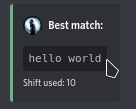
It's just like using key C, so 10 (6+4)
cerulean sphinx
Yes thank you using more then one key is just making 1 new key thank you
thorn obsidian
Not always, depends on the algorithm used
cerulean sphinx
Yeah I got that thanks although Im not familiar with a lot of the different popular used algorithms It makes sense
sinful cliff
cerulean sphinx
Yes thank you using more then one key is just making 1 new key thank you
3DES (encrypt-decrypt-encrypt or decrypt-encrypt-decrypt using three different keys for the operations) which is not recommended anymore, it's not a very secure algorithm in today's world), is still quite a bit stronger then just using DES, so doesn't hold true for all ciphers
in that example, decrypting with a wrong key is more or less another round of encryption as it mutates the data
and it's using one 168 bit key that is cut up in 56 bit slices where one is used for each pass
cerulean sphinx
Okay so I guess in the realm of safety in encryption I would think symmetric encryption methods are the best way to achieve that and just depends on the algorithm you use however not practical in some situations
sinful cliff
while normal single DES is just using one 56 bit key
cerulean sphinx
and just going with the best method on the first go around is the best way about going about it
sinful cliff
but due to vulnerabilities in the DES algorithm you will not get even close to 56 bits of security per pass
cerulean sphinx
Okay so going back to the method you would use one that would support more bits per pass or once again just using a symmetric encryption?
sinful cliff
thorn obsidian
Can't really take a look at that sorry, got to learn for my exams 😄
but still 3DES is significantly stronger then DES even if they are the same algorithm, so here is an example where multiple passed if done right will help with better security
i would say longer keys for one pass is better then two passes with half the key length per pass
cerulean sphinx
Okay and I think DES is only considered good if 3 different keys are used per pass but still once again its smaller keys
sinful cliff
one pass of Rijndael 256 is probably better then two passes of Rijndael 128 even with two different keys (Rijndael is the original name of the cipher we all now know as AES, because it was the winner of the AES competition)
cerulean sphinx
okay thats fair but what if you used DES on an AES encrypted file could you double stack encryptions like that?
sinful cliff
sure, but never reuse the same key
because DES is much weaker then AES, if one was to break the key for the outer weaker layer DES one would have compromised the key or at least part of the key that was reused and the next layer will be easier to brute-force
and i would never encourage anyone to use DES or even 3DES today
cerulean sphinx
Okay thats pretty cool thank you
sinful cliff
cerulean sphinx
Okay thats pretty cool thank you
something which is crucial to the strength of the encryption is the mode of operations that you use
cerulean sphinx
sinful cliff
something which is crucial to the strength of the encryption is the mode of oper...
Mode of operation?
sinful cliff
cerulean sphinx
Mode of operation?
i'm talking about https://en.wikipedia.org/wiki/Block_cipher_mode_of_operation
and that page also mention initialization vectors and padding which is also crucial to the security of the cipher
 forest wind
Any interesting blog or feed people follow when it comes to sast or dast?
raven frost
@thorn obsidian @thorn obsidian I think the idea is to just get you thinking. I doubt the teacher expects any real scheme or anything perfect by any means.
sinful cliff
cerulean sphinx
Mode of operation?
old versions of SSL/TLS has had vulnerabilities just by getting the padding wrong for example, among other problems
raven frost
I think it's a case of "its about the journey, not the destination"
sinful cliff
raven frost
I think it's a case of "its about the journey, not the destination"
most probably, yes
raven frost
That being said, is it a brutal thing to ask a python beginner to start with encryption? yes. But hey, we live in a brutal world.
🙂
cerulean sphinx
sinful cliff
old versions of SSL/TLS has had vulnerabilities just by getting the padding wron...
okay after reading that yes it is very important to the situation but I think that would be something for someone making a cipher but yes I guess the padding is like salting a hash but just everywhere
sinful cliff
or you learn the hard way why you shouldn't attempt to implement ciphers or crypto systems your self 😉
raven frost
Sometimes pain is the best teacher
this teacher is probably a genius actually
hes showing his students by example why they probably never want to write their own crypto again lol
and if they do, they can go on to be cryptographers lol
sinful cliff
raven frost
Sometimes pain is the best teacher
pain it's a very special case of first hand experience
raven frost
I consider myself pretty decent with physics, but I got a whole lot better after flying over the handlebars of my bike a few times. 🙂
sinful cliff
cerulean sphinx
okay after reading that yes it is very important to the situation but I think th...
kind of but not really like salting, this is way worse
and IV and the chosen mode of operations are even more important
cerulean sphinx
okay
thorn obsidian
Hey, how do call a password that is true/legit/that matches the username?
cerulean sphinx
thorn obsidian
Hey, how do call a password that is true/legit/that matches the username?
Assuming you have already verified the password is true and legit when you make the user name and password it should be stored in a table to be called upon later and you can match to see if the username was with the password
sinful cliff
thorn obsidian
Hey, how do call a password that is true/legit/that matches the username?
more context please, if you can describe what you want/trying to do with more words that would be helpful
thorn obsidian
cerulean sphinx
Assuming you have already verified the password is true and legit when you make ...
I was looking for a specific word. Like "calling" a word. The word i was looking for was "valid". But thank you for trying to answer my nonsense question 
 modern bronze
 thorn obsidian
As said above, either use a hashing algorithm that is strong enough or a salt.
Saving them in a separate table is simply useless.
I don't really get by "encrypting the vps" - you can't just encrypt whatever you want as you wish. But yes, you might want to secure your VPS.
thorn obsidian
Lets say I have a website
And I have an SSL cert
And someone can be connected through a proxy
So an MITM attack can happen
So the attacker can give the client a fake SSL cert and decrypt the traffic then encrypt it again with the actual SSL cert
How would I prevent that?
If possible?
sinful cliff
i would recommend using both salting and a strong one-way function such as Argon2id for the passwords, i believe pythons passlib has support that
secure programming practices are also very important, for example be vigilant about not using any user provided input for sql queries unless using placeholders and bind variables to avoid sql injection attacks that could easily extract the full content of your database
sinful cliff
thorn obsidian
How would I prevent that?
not using self signed certificates for the website and using HSTS is a good start and will mitigate quite a few such attempts as long as the client has visited the site previously before the MITM attempt and it wasn't far in the past so that the HSTS has expired
mutual TLS (mTLS) is also an option (even if a very advanced and cumbersome one), where you would require the client to use client certificates that you can trust that only the user can get hold of and not an adversary, which will be quite a bar to entry for anyone wanting to use the service and also presents problems with certificate enrollment for the users as well as the one running the service/server
however, even without such measures the client will be made aware of the fact that they are not connecting to the real site as the adversary will most probably not present a certificate issued by a valid certificate authority for that domain, but the user may ignore those warnings and click through them and access the site anyways, it will depend on the vigilance of the user (which isn't reliable)
thorn obsidian
sinful cliff
not using self signed certificates for the website and using HSTS is a good star...
Alright thanks! Really appreciate it.
thorn obsidian
How should I start learning about cryptography?😑
sinful cliff
thorn obsidian
How should I start learning about cryptography?😑
if you really want to dive in to the subject i would say the number one text book is: https://www.wiley.com/en-us/Applied+Cryptography%3A+Protocols%2C+Algorithms+and+Source+Code+in+C%2C+20th+Anniversary+Edition-p-9781119096726
if you want to start with a lighter read with some historic perspective the following might be a better candidate: https://simonsingh.net/books/the-code-book/the-book/
thorn obsidian
sinful cliff
if you really want to dive in to the subject i would say the number one text boo...
should i really pay $42 for a book?
sinful cliff
thorn obsidian
should i really pay $42 for a book?
they are both really good books in their own right, i think it's only fair to support creators for their time if one consume their product, but you do you
i think there are free samples like the first few chapters that you can read online to form an opinion of what you think of the book before you buy
there might be used books to buy cheaper or electronic versions which might be cheaper
these books should also be available in libraries if you want to lend them for a while to read
raven frost
@thorn obsidian didnt you say you saw Christof Paar's course?
Thats honestly a great way to start, its comprehensive. The entire university lessons are online
Also get: https://www.amazon.com/Understanding-Cryptography-Textbook-Students-Practitioners/dp/3642446493 it goes with the course itself and it's ~$30. I own it and have read it, its a great book

Understanding Cryptography: A Textbook for Students and Practitioners
Thats (applied crypto, that course, your python experiments) really it, the rest is up to you reading and having patience/persistence.
When learning that stuff, you will hear about certain types of math such as Galois fields for example, and probably want to go and learn about those too, you can always look them up, find out about literature about that type of math, etc...
I also own and have used the book Serious Cryptography. It's a great book written by an expert but it's more hands-on and less background/theory

Serious Cryptography: A Practical Introduction to Modern Encryption
 worldly stone
It really depends what you want to know about cryptography, you don't need to know exactly how it works to use it.
raven frost
yes, bestMiguel serious crypto is a better book for that, whereas those other books are for people who want to be cryptographers or just understand the math behind it more
I do agree that it's probably not a good idea to take Christof Paar's course unless you really want to learn crypto. If you just want to know a few things about how to use Python lib or something, thats way overkill.
carmine sparrow
Anyone good at cryptography in python here?
sinful cliff
carmine sparrow
Anyone good at cryptography in python here?
ask your question and see if anyone might be able to help you
carmine sparrow
I want to be able to encrypt binary files but I don’t know how to change my code to allow for this to happen. The files that get encrypted from the terminal with the -e flag it turns into an automatic metadata file that includes the salt validator Mac and searchterms but the searchterms should not produce the hashes for binary files
This is what I have so far
sinful cliff
carmine sparrow
This is what I have so far
sorry, i don't have the time to go through that amount of code right now
just skimming through it a bit i think ECB mode sticks out like a sore thumb, wouldn't you like to use one of the AEAD modes instead?
and their are better algorithms available today then pbkdf2
also, i still don't understand exactly the problem that you are having and was trying to describe
carmine sparrow
I tried to make a function to ensure if the file is in bytes or not like this and then later on i used the function and said if its binary to not do the search terms list when encrypting and when it is not to put inputs inside the search terms
def is_binary(file):
try:
with open(file, 'tr') as check_file:
check_file.read()
return False
except:
return True
yeah my ctr mode is also not encrypting big files
def one_ctr_block(key, nonce_plus_ctr):
ctx = AES.new(key, mode=AES.MODE_ECB)
return ctx.encrypt(nonce_plus_ctr)
maybe i should change to AES instad
carmine sparrow
anyone can help take a look at my cryptography code in python?
thorn obsidian
If you don't share it, nobody will
sinful cliff
you can't salt it after, salting is a part of the hashing operation, unless of course you hash the password again, but then the result of the first round of hashing that is done on the client side essentially becomes the password from the view of the server side code
 sharp marsh
s
cerulean sphinx
carmine sparrow
I tried to make a function to ensure if the file is in bytes or not like this an...
I'm not sure if this is for a school project but I think if you use Fernet encryption its far easier to use and understand as well as it is pretty good and I could help show you how to use fernet but I am not familiar with using AES
 serene radish
thorn obsidian
If you don't share it, nobody will
serene radish
thorn obsidian
If you don't share it, nobody will
Lololololol
sinful cliff
thorn obsidian
If you don't share it, nobody will
if you where responding to @carmine sparrow question just above your own, @carmine sparrow actually did share the code just a handful of messages above: #cybersecurity message
i have not had time to look in to it and don't think i will have time for quite a few days, at the earliest
thorn obsidian
Didn't see as it wasn't using code blocks 
Also can't help or inform anything for the next 3 weeks
sinful cliff
thorn obsidian
Didn't see as it wasn't using code blocks <:kek:843763261609607219>
Also can't ...
it's because of your exam right?
thorn obsidian
does anyone here use vmware
thorn obsidian
sinful cliff
it's because of your exam right?
Yup
sinful cliff
thorn obsidian
Yup
what is the subject of your exam?
sinful cliff
thorn obsidian
Like Math, Physics, Chemistry, etc.
oh, sounds like a lot, best of luck (well, luck doesn't actually have that much to do with it, it's mostly a lot of work and effort, but you know what i mean)
thorn obsidian
Yeah it's quite painful, thanks a lot :D
I always feel like I know nothing before these exams
raven frost
thorn obsidian
does anyone here use vmware
yes
 onyx cedar
raven frost
onyx cedar
raven frost
@thorn obsidian heres another great resource for ya: https://www.crypto101.io/
@carmine sparrow Why are you using ECB?? Its not super clear from what you stated above. Because "CTR mode isn't encrypting big files?" Also, what do you mean "maybe I should change to AES instead?" This is AES.
In that code above that sentence, you are literally using AES already.
ANother question - what type of salt are you providing? I see it comes from a file... Is it a constant salt? How is it created? Whats the length etc
This is a sorta random nitpick too but, what is the purpose of this:
def createmasterkey(password, salt):
    pw = password # <--------
    salt = salt # <------
    key = pbkdf2_hmac('sha256', pw, salt, iterations=250000)
    return key
That just seems like a waste of space with no added value to me.
thats all I got time for right now, will check back later
thorn obsidian
raven frost
<@456226577798135808> heres another great resource for ya: https://www.crypto101...
Thanks man
raven frost
Also ppl wanting their crypto checked, you can do some self checking if you go to https://cwe.mitre.org/data/definitions/699.html and open the “cryptographic issues” area and then you can learn about all the issues with examples of how to audit
Common Weakness Enumeration (CWE) is a list of software and hardware weaknesses.
austere lodge
what are some good books to read to get better at the Linux command like system?
thin peak
austere lodge
what are some good books to read to get better at the Linux command like system?
Linux Basics for Hackers by OccupyTheWeb is a really good one to start. It helped me a ton!
https://nostarch.com/linuxbasicsforhackers

Linux Basics for Hackers uses the Kali Linux distribution to explain core Linux topics like filesystems, networking, package management, and BASH.
raven frost
Yeah there’s another no starch one called “the Linux command line” or something like this from same publisher as that one. Maybe look at the TOC of both
Basically the command line is nothing more than a bunch of small independent programs that you can work together in a system
Those books cover a great handful of them
austere lodge
alright thanks guys
thin peak
You're welcome!
cedar junco
Hello guys
Im in the moderate level in python, can i jump to bash script or complete python untill getting pro in it ?
sinful cliff
cedar junco
Im in the moderate level in python, can i jump to bash script or complete python...
what do you mean with "complete python"?
sinful cliff
cedar junco
Becoming a professional python programmer in term of security ofc
okay, but I still don't understand the question "can i jump to bash script or complete python..."
cedar junco
nvm
sinful cliff
cedar junco
nvm
if the question is what you can write software in for sec stuff, i would say that you can use any programming or scripting language that you like as with any programming, just that some languages are better suited for different situations
cedar junco
Guys i converted a py file to an exe file and the process went good, but the problem is when the program is finishd the cmd disapears immediatly without i can see the output!
raven frost
cedar junco
Guys i converted a py file to an exe file and the process went good, but the pro...
Yeah you would have to hold it open (get user input) most likely
For example if you call the input() function it’ll probably hold the CLI open until you hit enter. Thats what I used to do in my c programs sometimes. But since I run Linux I never have this issue now since the terminal didn’t just close when stuff is done. If you’re on windows you could also try to run the program in powershell.
However I just realized that the above isn’t a #cybersecurity matter so maybe try one of the help channels or #python-discussion if you need more assistance @cedar junco
cedar junco
Okay, thanks for helping
 slate fulcrum
any1 know anything abt reversing apks?
(not sure if the channel is meant for python side of cybersecurity)
lethal shell
slate fulcrum
any1 know anything abt reversing apks?
it's an archive just like jar files
the process is very similar
slate fulcrum
Yeah, but my problem is handling a bundled apk
I pulled the folder from /data/app/ and it contains base.apk and other apks like split_config.apk, I'm not sure how to handle that
do I just decompile the base.apk and sign it or do I need to build one apk containing all others and signing that
sinful cliff
slate fulcrum
do I just decompile the base.apk and sign it or do I need to build one apk conta...
your both talking about "revers" apks and "decompiling" stuff and at the same time you are talking about the opposite when you mention package them up to one single file and singing stuff
an apk file can be opened just like a zip file
if you instead want to bundle them up in to one you can use a the google bundletool from the android development kit
but this doesn't sound like it's about#cybersecurity or even python really
slate fulcrum
actually I just want to know what kind of http requests the app sends but I did not succeed at using a proxy to find it out so I figured I could decompile the app and inject bytecode to log the request data, so I figured it would go to security
thorn obsidian
That indeed does kind of fit to security, but not really to the channel topic
 umbral finch
if you use asymmetric public-private key encryption, is it possible to deduce the private key if you have the encrypted message and you know the message content
nevermind, ofc it isnt. stupid question lol
if it were possible then anyone who knew the public key could deduce the private key 🤦
raven frost
umbral finch
if you use asymmetric public-private key encryption, is it possible to deduce th...
Not in any production crypto system. Maybe in a high school project one 🙂
umbral finch
well by design asymmetric public-private key encryption doesnt allow this, i dont know why i asked this in the first place lol, i could have realised the answer if i gave any ounce of thought
sinful cliff
umbral finch
if you use asymmetric public-private key encryption, is it possible to deduce th...
that is not true at all, in that case all our private keys for our TLS certificates would be compromised
sinful cliff
slate fulcrum
actually I just want to know what kind of http requests the app sends but I did ...
oh, now i see what your end goal was 💡
dire osprey
Is hackthebox academy a good source to learn from?'
thorn obsidian
Never used it, so can't say it's good or bad
thin peak
dire osprey
Is hackthebox academy a good source to learn from?'
I've looked at a little of it and it seems really good.
raven frost
So interestingly I've been happening upon this common theme of security being an especially difficult area of software development because it is "impossible to thoroughly test" since it relies on an infinite possibilities of things not happening, rathert than a finite list of things happening. I suppose this also depends on one's definition of "security." I feel that as subcomponents of security become more defined, requirements are more easily met.
One thing that security defense has as an advantage too is for a vulnerability to be actively damaging, it also must be found and exploited. Of course in the field we assume that this will happen with every vuln but in actuality, it probably won't.
Sometimes I wonder if security is actually that bad or if every subdiscipline/group of software developers see all of the hardest parts of whatever they are working on, and inherently claim it to be harder than others, or at least hard. I'm sure there is some name for this type of bias.
raven frost
Perhaps what people mean is that “the consequences of bad security can be higher than the consequences of bad other areas of software” which seems more realistic if you’re talking about say a mass data breach. But even still, has anyone actually compared the monetary implications behind that with say they cost of a huge spaghetti codebase over time?
sinful cliff
raven frost
Perhaps what people mean is that “the consequences of bad security can be higher...
depending on your business a breach could mean the company loss their license to operate and hence all of their business in one blow, just like a catastrophic failure in any critical area of compliance
a spaghetti codebase can lead to increased costs and stagnated development of the business and even lost of some of the customers or contracts as a consequence of that stagnation, but i have a hard time seeing that it would have the same ultimate and immediate consequences
raven frost
sinful cliff
depending on your business a breach could mean the company loss their license to...
I agree in concept, but do you know of any well-known businesses in which the former occurred? I am less educated than I’d like to be in this way mostly because the industry analysis provided by eg Forrester and such are above my pay grade and I usually just focus on the technical “in the trenches” stuff
Also note they often have insurance, not saying there isn’t a cost though
Former being large company actually loses their license or is shut down etc
sinful cliff
raven frost
I agree in concept, but do you know of any well-known businesses in which the fo...
I haven't seen it first hand but know of businesses in the financial sector that has lost their license to operate due to compliance issues and all of their assets has been sold on executive auction to a [former] competitor, i highly doubt any insurance will cover such an eventuality and it doesn't help most people in the company other then maybe the majority owners
 knotty citrus
Anyone know what lang they couldve used for this? Its old 2005-2007.
 thorn obsidian
Analyze the file. A random guess would be Winforms w/ C#
lethal shell
knotty citrus
Anyone know what lang they couldve used for this? Its old 2005-2007.
With the exception of Rust, nearly all popular programming languages were around back in 2005-2007, so it could have been anything
 smoky moat
knotty citrus
Anyone know what lang they couldve used for this? Its old 2005-2007.
smoky moat
knotty citrus
Anyone know what lang they couldve used for this? Its old 2005-2007.
do you have the binary
 tardy forge
I’m gonna be bold here and say probably not python, possibly java but still unlikely, or some language under C, C#, C++, or a windows centralized language
It most definitely is not JavaScript, HTML, CSS, Golang, Rust, Bash/Batch/ZSH/Shell, Haskell. I don’t know about Ruby, Visual Basic, Elixir, etc
cedar junco
Is there any difference between **Ssh **and Openssh?
smoky moat
yes
@visual oriole SSH is a networking protocol
wrong person
@cedar junco
OpenSSH is an application level implantation of that protocol
so you use OpenSSH to which uses SSH protocol
sinful cliff
cedar junco
Is there any difference between **Ssh **and **Openssh**?
and the openssh client application/command is named ssh just like some other alternative client implementations
 final vapor
Hello, I am building an application which will make users able to write their own extensions in Python, the problem is some of that code should get executed on client's PC directly, this of course means I need to sandbox the app so that it can't access any of the stuff on the computer.
I know about PyPy sandbox but as I read it's only secure for Python 2, other stuff I read about was using AppArmor, the problem is that I need it to work on Windows and without user having to do anything.
The implementation doesn't need to be written in Python, I can also use C++ or C, but it has to be invokable from a code. Also I need the code being ran to use one lib I wrote. So that it can access the interface of the application it should extend.
I have no idea if it's even possible or if I want too much. I also thought about stuff like using the sys audit hooks but I don't think that would be 100% secure.
Thanks for any answer.
thorn obsidian
@solid hinge
 solid hinge
hi
solid hinge
so what first happened that made you suspect you had a virus @deep rapids ?
thorn obsidian
Have any sussy things been happening on your pc?
 deep rapids
resetting the passwords atm, brb
solid hinge
kk
solid hinge
yeah
solid hinge
indeed i do
thorn obsidian
I would take it to law enforcement
solid hinge
but i dont have any evidence to back up my claim
solid hinge
indeed
thorn obsidian
Check if it's a tor node
try typing "wmic startup get caption,command"
in cmd
Them tor nodes be doing sussy things
solid hinge
we need more information though
thorn obsidian
or "get-service | foreach-object{ if ($.status -eq "stopped") {write-host -f red $.name $.status}` else{ write-host -f green $.name $_.status}} "
for services
solid hinge
it could not be a spear phishing
thorn obsidian
solid hinge
we need more information though
^
Thing is
Malware might have spread over their pc
So resetting passworss
Passwords
solid hinge
wont work
thorn obsidian
Might not be helpful
deep rapids
thorn obsidian
Have any sussy things been happening on your pc?
well most of important passwords are now done, and nothing sussy really been going on afaik
thorn obsidian
Check task manager
if its spear phishing they wont take browser creds
they enumerate first
then log admin creds
solid hinge
kk
deep rapids
solid hinge
so what first happened that made you suspect you had a virus <@53473804400433562...
I didn't suspect one until a few minutes ago in general after someone told me what the "BEEFHOOK" cookie thing is
thorn obsidian
Check task manager for powershell or cmd
solid hinge
and maybe
solid hinge
deep rapids
I didn't suspect one until a few minutes ago in general after someone told me wh...
maybe you have the everCookie as well
its a cookie that dosent get deleted
invented by some dude in a basement now the NSA uses it
deep rapids
thorn obsidian
Check task manager for powershell or cmd
seems clean
solid hinge
check background processes
solid hinge
also check your performance
deep rapids
thorn obsidian
RemoteDesk.exe?
nope
past starBOT
Hey @thorn obsidian!
You either uploaded a .txt file or entered a message that was too long. Please use our paste bin instead.
thorn obsidian
Check startup
deep rapids
clean as well
thorn obsidian
What's that txt file
thorn obsidian
thorn obsidian
What's that txt file
it was how a targeted cyber attack would work step by step taken from the conti hacker training of the initial actions u should watch out for
solid hinge
and see if anything is running on a sussy username
thorn obsidian
I see
deep rapids
thorn obsidian
`netstat -b`
don't see anything sus
thorn obsidian
here it is
Check for XXHackerLOLKidXX ig in the usernames
Check for any sussy usernames
thorn obsidian
Alright
solid hinge
NETWORKING
thorn obsidian
PROCESS?
solid hinge
i have UMFD
thorn obsidian
I remember that being a thing
solid hinge
is that sussy?
deep rapids
well I assume there's nothing sus going on the laptop, thx!
thorn obsidian
nw
solid hinge
deep rapids
well I assume there's nothing sus going on the laptop, thx!
dont put any personal credentials on your laptop anyways
atleast not for a month or so
thorn obsidian
^
solid hinge
until you know its clean
thorn obsidian
Also
I would say use the cloud incase of ransomeare
Ransomware
Anyways
Anything happens ping me
solid hinge
same
deep rapids
there's very minimal personal info on this laptop, I have a personal one with secured stuff
solid hinge
because im prob always here
solid hinge
deep rapids
there's very minimal personal info on this laptop, I have a personal one with se...
get rid of it maybe
thorn obsidian
I have exams atm so might not be very active
deep rapids
solid hinge
get rid of it maybe
this is school laptop ;-;
solid hinge
deep rapids
this is school laptop ;-;
oh then let the school handle it
thorn obsidian
thorn obsidian
I have exams atm so might not be very active
2 days to go
deep rapids
congrats
solid hinge
thanks
thorn obsidian
Congrats
thorn obsidian
congrats
thorn obsidian
Alr
 torn gazelle
Hello, I'm trying to create a secure socket using SSL/TLS. I'm using self-signed certificates but I got this error :
ssl.SSLCertVerificationError: [SSL: CERTIFICATE_VERIFY_FAILED] certificate verify failed: self signed certificate (_ssl.c:1129)
When I generate self-signed certificate with openssl req -x509 ... I don't have this issue. I got this problem when I use self-signed certificates generated with PyOpenSSL.
Does someone know how am I supposed to verify my self-signed certs with load_verify_locations and load_cert_chain ?
Thank you in advance.
sinful cliff
torn gazelle
Hello, I'm trying to create a secure socket using SSL/TLS. I'm using self-signed...
no matter how or with what piece of software you generate your self signed certificate you would get the same kind of problem unless you use also validate against that certificate specifically as it has signed it self
sinful cliff
torn gazelle
Hello, I'm trying to create a secure socket using SSL/TLS. I'm using self-signed...
you won't get any errors such errors when you generate the certificate, it's when the client tries to verify the certificate that problem would appear, just like you are experiencing, it's normal
there are examples of how to use load_verify_location and load_cert_chain at https://docs.python.org/3/library/ssl.html#functions-constants-and-exceptions, example 2 and 3
for path/to/cabundle.pem and /path/to/certchain.pem in those examples you would instead put the your certificate that you just generated
and /path/to/private.key would be the private key that belongs to that certificate
torn gazelle
sinful cliff
you won't get any errors such errors when you generate the certificate, it's whe...
Thank you very much !
torn gazelle
In fact, I just realized that it still works for one of my sockets.
I have re-tested by regenerating self-signed and for one of my three TLS sockets, I can verify the certificates. Now that I understand why I can't do it. I don't understand why it works for one of my sockets...
sinful cliff
torn gazelle
In fact, I just realized that it still works for one of my sockets.
I have re-t...
i can't understand either why it would have worked for one of your sockets if it was using that certificate and key on the server but not using that certificate on the client to verify the server certificate
torn gazelle
sinful cliff
i can't understand either why it would have worked for one of your sockets if it...
I'm doing load_cert_chain on the server and load_verify_location on the client
sinful cliff
torn gazelle
I'm doing `load_cert_chain` on the server and `load_verify_location` on the clie...
pointing to the same file (or an exact copy of it) in both, right?
torn gazelle
sinful cliff
pointing to the same file (or an exact copy of it) in both, right?
Exactly
sinful cliff
torn gazelle
Exactly
and it's working as expected now?
torn gazelle
sinful cliff
and it's working as expected now?
No, it's not working. It's only working for one of the three sockets I'me doing SSL
sinful cliff
torn gazelle
No, it's not working. It's only working for one of the three sockets I'me doing ...
how does the server side and client side code look like for the three sockets?
torn gazelle
sinful cliff
how does the server side and client side code look like for the three sockets?
Working Server-side Socket 2 :
def __init__(self, cert="certs/server-cert.pem", priv="certs/server-priv.pem") -> None:
        self.context = ssl.SSLContext(ssl.PROTOCOL_TLS_SERVER)
        self.context.set_ciphers('ECDHE-RSA-AES256-GCM-SHA384')
        self.context.load_cert_chain(cert, priv)
Not Working Server-side Socket 2 :
      cert_path = f"certs/{self.username}-cert.pem"
      priv_path = f"certs/{self.username}-priv.pem"
      context_recv = ssl.SSLContext(ssl.PROTOCOL_TLS_SERVER)
      context_recv.set_ciphers('ECDHE-RSA-AES256-GCM-SHA384')
      context_recv.load_cert_chain(cert_path, priv_path)
Dude, I just found my mistake
sinful cliff
torn gazelle
```
Working Server-side Socket 2 :
def __init__(self, cert="certs/server-cert.pe...
and if you print cert_path and priv_path, do they contain what you expect them to contain?
torn gazelle
I'm so sorry for the inconvenience
sinful cliff
torn gazelle
I'm so sorry for the inconvenience
no worries 🙂
torn gazelle
I made a mistake about the ports, I was connecting twice on the same port. So, the second certificate didn't match with the first one
sinful cliff
torn gazelle
I made a mistake about the ports, I was connecting twice on the same port. So, t...
i see, good catch 👍 🙂
and as you didn't post that part of the code it would have been hard for me to find 😉
torn gazelle
sinful cliff
i see, good catch 👍 🙂
and as you didn't post that part of the code it would h...
Of course. But a big thank you anyway for the help. 😄
sinful cliff
torn gazelle
Of course. But a big thank you anyway for the help. 😄
you're welcome 🙂
 final carbon
Has anyone brought this up: https://www.securityweek.com/pypi-served-malicious-version-popular-ctx-python-package ? Is this affecting discord bots?
The popular 'Ctx' Python package has been replaced on PyPI with a malicious version designed to steal AWS credentials.
 stray crypt
I don't think any discord bot library uses the ctx package lol
 graceful aurora
https://github.com/advisories/GHSA-ffqj-6fqr-9h24
suggested upgrade for affected repositories to v2.4.0.

GitHub
Key confusion through non-blocklisted public key formats
graceful aurora
I am reviewing this encryption example, does anyone know what the \033[1;32m --- \033[0m is for?
plaintext = b'this is the correct plaintext!'
print(f'plaintext: \033[1;33m{utf8(plaintext)}\033[0m')
encrypted = base64.b64encode(public_key.encrypt(
    plaintext,
    padding.OAEP(
        mgf=padding.MGF1(algorithm=hashes.SHA256()),
        algorithm=hashes.SHA256(),
        label=None
    )
))
print(f'encrypted: \033[1;32m{utf8(encrypted)}\033[0m')
from what I can tell it seems they relate to color code outputs, what is their purpose in an encryption sequence??
thorn obsidian
final carbon
Has anyone brought this up: https://www.securityweek.com/pypi-served-malicious-v...
No Discord bot library uses such a package, if your bot is affected then you have added it for your usage on top of the library. The Ctx library is not the same at all as the ctx variable you often see in commands, it's just a variable name.
graceful aurora
thorn obsidian
Absolutely nothing
That was my first thought, my second thought was that it was a color wrap encryption that could be used to identify categorical data based on a paired color class object (pre-decrypt).
thorn obsidian
Don't really think so, the colors aren't really chosen in a good way. But can be possible
smoky moat
graceful aurora
I am reviewing this encryption example, does anyone know what the \033[1;32m ---...
that is known as an ANSI escape code.
ANSI escape sequences are a standard for in-band signaling to control cursor location, color, font styling, and other options on video text terminals and terminal emulators. Certain sequences of bytes, most starting with an ASCII escape character and a bracket character, are embedded into text. The terminal interprets these sequences as command...
thorn obsidian
Yeah they know that, see at the bottom of the message
smoky moat
Ah I see
 lunar ginkgo
Hi, im starting Security, what do you guys recommend?
thorn obsidian
Process process = new Process();
ProcessStartInfo startInfo = new ProcessStartInfo();
startInfo.FileName = "nmap.exe";
startInfo.Arguments = "-p " + port + " --script http-sql-injection " + address;
I can run nmap like this using C#, how can I do the same in python?
thorn obsidian
lunar ginkgo
Hi, im starting Security, what do you guys recommend?
That's a link I give to everyone new https://github.com/DFIRmadness/5pillars/blob/master/5-Pillars.md
thorn obsidian
thorn obsidian
Process process = new Process();
ProcessStartInfo startInfo = ne...
Can try the python-nmap library, or use subprocess
lethal shell
lunar ginkgo
Hi, im starting Security, what do you guys recommend?
Online platforms like Try Hack Me (more approachable for complete beginners) or Hack The Box (has beginner content but is best enjoyed with a little bit of experience)
thorn obsidian
Hi, does anyone got source for process hollowing / run pe file in memory without any write to the disk for 64 / 32 bit payload ? thx
I don't believe that fits the channel's purpose at all. Therefore I don't recommend asking that, and didn't recommend anyone to respond.
sinful cliff
thorn obsidian
Hi, does anyone got source for process hollowing / run pe file in memory without...
!rule 5 sounds like it would be very applicable here
past starBOT
5. Do not provide or request help on projects that may break laws, breach terms of services, or are malicious or inappropriate.
thorn obsidian
sinful cliff
!rule 5 sounds like it would be very applicable here
i dont plane to use that for malicious activities just for learning
sinful cliff
thorn obsidian
i dont plane to use that for malicious activities just for learning
the rules of the server still applies and we can't have any real guaranties for what you say is true
besides, this channel as the topic suggests is about securing your python code in different ways
thorn obsidian
smoky moat
https://en.wikipedia.org/wiki/ANSI_escape_code
Htop 😛
 ornate prism
Hello folks, I am looking for some help with pip install.

reddit
0 votes and 0 comments so far on Reddit
sinful cliff
ornate prism
Hello folks, I am looking for some help with pip install.
is this at all #cybersecurity related?
sound like it might belong to #python-discussion or a #❓|how-to-get-help channel
ornate prism
Well, such behavior is often exhibited by malicious packages. So, I thought people here might have come across the same issue.
sinful cliff
ornate prism
Well, such behavior is often exhibited by malicious packages. So, I thought peop...
ah, now i read the post too
i think the pip option --timeout only controls the sockets that pip use to fetch packages for installation, nothing more
i would be lazy and just wrap it up with a timeout command with enough of a timeout for all the installation steps
raven frost
thorn obsidian
i dont plane to use that for malicious activities just for learning
Said no nefarious person ever 🤣
thorn obsidian
is there any way I can detect if a specific driver is loaded?
dark socket
gonna need way more context. what OS are you on, for one?
thorn obsidian
dark socket
gonna need way more context. what OS are you on, for one?
windows
https://www.nirsoft.net/utils/driverview.html
I would like to make something similar to this, finding loaded drivers on windows
raven frost
thorn obsidian
https://www.nirsoft.net/utils/driverview.html
I would like to make something si...
I don’t know if Python would be my first choice for kernel programming lol
thorn obsidian
raven frost
I don’t know if Python would be my first choice for kernel programming lol
C or c++ is better ofc
I would just like to find a way to do it in python
raven frost
Yeah it’s less about preference and more about being able to interact with the OS/kernel the way you need to. I know there are also c bindings for Python too though
 echo flower
why not just query wmi?
thorn obsidian
Does vscode track user data and send them to MS?
thorn obsidian
thorn obsidian
Does vscode track user data and send them to MS?

Learn about Visual Studio Code collected telemetry and how to opt out.
sinful cliff
thorn obsidian
Does vscode track user data and send them to MS?
unless you turn it off, but it's trivial to turn off
thorn obsidian
sinful cliff
unless you turn it off, but it's trivial to turn off
The what should I do, Should stop using vscode?
sinful cliff
thorn obsidian
The what should I do, Should stop using vscode?
no, just turn off telemetry in the settings, it's really easy to do
just bring up the settings with ctrl + , and type telemetry in the search box at the top of the settings page and then set it to off
thorn obsidian
The link explains how to disable it..
thorn obsidian
thorn obsidian
Does vscode track user data and send them to MS?
Prob
thorn obsidian
echo flower
why not just query wmi?
How exactly could i do this
past starBOT
Hey @solid mica!
It looks like you tried to attach a Python file - please use a code-pasting service such as https://paste.pythondiscord.com
past starBOT
5. Do not provide or request help on projects that may break laws, breach terms of services, or are malicious or inappropriate.
thorn obsidian
And you probably don't want to share your Gmail username and password with everyone :)
Making a key logger but leaking their own credentials, what a pro move @solid mica
 solid mica
lol
Obviously its just a empty email for testing
You proud and think ure smart for that :/
Jeez people these days
thorn obsidian
Mad 
thin peak
solid mica
You proud and think ure smart for that :/
!rule 1
past starBOT
2. Follow the Discord Community Guidelines and Terms Of Service.
thorn obsidian
I think we should change the channel name
to secure-code or Security-Information
Not really no
thorn obsidian
Lol
raven frost
thorn obsidian
to secure-code or Security-Information
Definitely not to security-information as the information is basically a useless word there. Secure-code makes more sense but still a bit weak imo. Maybe “securing-your-code” which may sound elementary but yeah every few hrs we keep getting hack requests, and other off topic content so i see why you asked.
“Security” is too broad of a term and I can go into detail as to why as a security professional. But I think the creators felt it was implied “Python code security” as it’s in the Python server. However we get a lot of pentesting and other such requests and questions
thorn obsidian
@raven frost do you know much about software fingerprinting
if so could you explain a bit about what it is and what its used for
thorn obsidian
Honestly the Wikipedia article explains it quite good https://en.wikipedia.org/wiki/Fingerprint_(computing)

In computer science, a fingerprinting algorithm is a procedure that maps an arbitrarily large data item (such as a computer file) to a much shorter bit string, its fingerprint, that uniquely identifies the original data for all practical purposes just as human fingerprints uniquely identify people for practical purposes. This fingerprint may be ...
thorn obsidian
thorn obsidian
*Making a key logger but leaking their own credentials, what a pro move* <@53165...
lmao bruh
 fathom flare
Does anyone have a roadmap for a beginner to programming? I’m interested in cyber security.
sinful cliff
fathom flare
Does anyone have a roadmap for a beginner to programming? I’m interested in cybe...
would you say you are good at computers and understand how they work on a low level and do you know any programming already?
fathom flare
sinful cliff
would you say you are good at computers and understand how they work on a low le...
I'd say I understand them at a medium level, and as far as programming goes, I'm just now getting started with it.
sinful cliff
fathom flare
I'd say I understand them at a medium level, and as far as programming goes, I'm...
i know @thorn obsidian in here usually give out this link which is a very good start for anything in cyber security: https://github.com/DFIRmadness/5pillars/blob/master/5-Pillars.md
for programming, anything that teach you programming will help you on your way, it's mostly just general programming
learning and understanding networking and protocols will probably also help you on your way
fathom flare
Understood, thank you very much for this! Papa bless.
Skimmed through as it’s late right now but I’ll give it a thorough read tomorrow - seems like an excellent source.
 bronze gust
Excuse me, what thing that we must have to learn about cyber security?
 carmine merlin
I want to make my code store login credentials in a file, securely. I've looked into modules such as cryptography, just curious nonetheless if not the cryptography module, what is the most secure way of storing data in a file and encrypting it, then easily accessing the very same data?
sinful cliff
bronze gust
Excuse me, what thing that we must have to learn about cyber security?
my last message just above to @fathom flare applies to you too
sinful cliff
carmine merlin
I want to make my code store login credentials in a file, securely. I've looked ...
if this is credentials you are going to use to authenticate with (and not against) this is very hard to do securely without user interaction each time and depends on your requirements, environment and threat model
if you want to encrypt a file you need an encryption key, which in turn must either be input manually each time or be stored somewhere/somehow
if you are just going to authenticate against the data in the file you don't really need to store the credentials in a form that can be decrypted again, this is much easier to do with a salt, an optional pepper and some kind of one-way function such as Argon2id
bronze gust
sinful cliff
my last message just above to <@980573935412342834> applies to you too
okay thankyou and god bless you
carmine merlin
sinful cliff
if this is credentials you are going to use to authenticate with (and not agains...
I am familiar with the concept of salt and pepper and will use that then. Thank you very much!
sinful cliff
carmine merlin
I am familiar with the concept of salt and pepper and will use that then. Thank ...
pythons passlib has support for Argon2id which is the algorithm i would recommend the most https://passlib.readthedocs.io/en/stable/lib/passlib.hash.argon2.html
other options or alternatives (in falling order of [my] preference) could be yescrypt (not currently supported by passlib) or scrypt or maybe bcrypt (which are both supported by passlib)
carmine merlin
sinful cliff
pythons `passlib` has support for `Argon2id` which is the algorithm i would reco...
thank you very much!
 hoary hinge
Can I learn cybersecurity with python
sinful cliff
hoary hinge
Can I learn cybersecurity with python
cyber security is a huge subject with many branches and you'll need a firm and broad grasp of many general computer science subjects for a lot of roles
if you want to learn programming as well that will for many technical roles be an advantage
you can use python to create your own tools later on
hoary hinge
sinful cliff
cyber security is a huge subject with many branches and you'll need a firm and b...
ty
sinful cliff
hoary hinge
ty
i'll point you too to: #cybersecurity message
hoary hinge
sinful cliff
i know <@456226577798135808> in here usually give out this link which is a very ...
yessir
 inland hazel
My PC is getting corrupt every 3 days. I have to reboot it again. Any possible solutions?
raven frost
inland hazel
My PC is getting corrupt every 3 days. I have to reboot it again. Any possible s...
What? Explain exactly what is happening. “PC getting corrupt” is way too vague.
inland hazel
raven frost
What? Explain exactly what is happening. “PC getting corrupt” is way too vague.
I don't know the exact reason too, the computer said it can't detect battery, I checked the battery, it's gone and after 3 days, the PC corrupted. I rebooted it, and after 3 days, it corrupted again. This happened to my for the third time. What to do now?
thorn obsidian
You still haven't explained what corrupted means in your case. Lots of things can get corrupted.
inland hazel
thorn obsidian
You still haven't explained what corrupted means in your case. Lots of things ca...
Blue screen of Death
thorn obsidian
Yet again, a BSoD can be the cause of many things, you might want to share the error code you get.
inland hazel
thorn obsidian
Yet again, a BSoD can be the cause of many things, you might want to share the e...
It's not even showing an error code:(
thorn obsidian
inland hazel
It's not even showing an error code:(
I think it is the hard drive and ram rarely makes this mistakes when it’s comes to file corruption.
U must check if all the system file is perfect.
In my situation I wiped the whole hard drive
raven frost
inland hazel
I don't know the exact reason too, the computer said it can't detect battery, I ...
Ok, still trying to understand that... Are you saying that the computer shuts down due to no battery power, which causes the drive to become corrupted, which is resulting in you having a BSOD?
What happens if you don't rely on the battery? If the computer is plugged into the wall, does this stuff occur or only when on battery power?
I don't know what you mean when you say "I checked the battery, it's gone and after 3 days". Does this mean that the battery has no charge, and after 3 days the computer crashes? Or are you saying the battery is physically not installed? Or are you saying that the battery dies after 3 days, but is physically installed properly?
^ These are all details that one needs to know to troubleshoot these type of issues. There is no way to help when we don't understand what is going on. Furthermore, I'm afraid this isn't the correct channel, because this is actually an IT support issue, but I wanted to give you something because actually the thought processes behind solving this issue is similar to debugging code. "help, my program isn't working" is not enough detail to debug a program either.
inland hazel
raven frost
Ok, still trying to understand that... Are you saying that the computer shuts do...
Nope, I'm running on power, not on battery. The laptop is 9 years old. Also, the recovery doesn't work either. Tried to reset and stuff, didn't work
inland hazel
thorn obsidian
I think it is the hard drive and ram rarely makes this mistakes when it’s comes ...
Oh, so it must be hard drive. How do it check it?
thorn obsidian
Use SFC software @inland hazel
inland hazel
raven frost
I don't know what you mean when you say "I checked the battery, it's gone and af...
A week back,The computer said that it can't identify the battery. And asked us to press F1 on the keyboard. I thought it was battery problem or something. So I continue to you use it on power. And the battery symbol on the taskbar, it changed to "0%, charging".
I continued to use it thinking it was a small problem and then after 3 days, (used laptop 5 times in that span), the PC took forever to open. And suddenly it restarted. This time, it came up with a message that it's diagnosing my PC.
Yeah I thought it was doing something, and continued for 10 minutes. After that it showed us recovery options, I tried all of them but no luck. Even tried using the system restore.
This time, things went smoothly but after 5 minutes of turning on the laptop, it just automatically restarted. So the same problem came back again, diagnosing... Recovery options...
This time I booted my PC with windows 10 and yeah it worked. But not for so long, just lasted for about 5 restarts. So the next thing I did was I booted it again. It again lasted for another 5 restarts, and now we got blue screen of death. I don't know what to do now... Should I just keep on booting everytime it crashes or is there anything I can do something about it?
inland hazel
thorn obsidian
Use SFC software <@662279227780890624>
SFC? Sure thanks
I'll try it out and tell you how it goes
thorn obsidian
2 questions how old is your computer and what os?
inland hazel
thorn obsidian
2 questions how old is your computer and what os?
The computer is 9 years old, it came with a windows 8, I changed it to windows 10 four years ago.
inland hazel
raven frost
^ These are all details that one needs to know to troubleshoot these type of iss...
The computer is running on power now. It just turns off when I turn off the switch or remove the plug.
thorn obsidian
I see old computer has trouble to run Windows 10
inland hazel
thorn obsidian
I see old computer has trouble to run Windows 10
But, it did run smoothly for 4 years
thorn obsidian
My laptop is very old that u can’t even play Minecraft on it (smoothly)
inland hazel
thorn obsidian
My laptop is very old that u can’t even play Minecraft on it (smoothly)
Oh, but mine doesn't even turn on 😭
raven frost
@inland hazel have you completely re-installed the operating system?
inland hazel
The battery was changed 5 years ago, due to similar issues but back then, but it never crashed or corrupted
inland hazel
raven frost
<@662279227780890624> have you completely re-installed the operating system?
Yes, I did
inland hazel
thorn obsidian
I suggest u to format ur disk and install win7
I have formatted my C drive twice...
raven frost
try to get a new battery, take the laptop to repair shop, or just get a new one. You can get laptops better than that one for VERY CHEAP now
thorn obsidian
inland hazel
I have formatted my C drive twice...
U have change os
raven frost
thats what I would do having those issues
inland hazel
raven frost
try to get a new battery, take the laptop to repair shop, or just get a new one....
Sure, thank you so much, I'll try to change OS and battery, see if it works else go to the customer care.
thorn obsidian
U r pc is very old to handle win10
inland hazel
Thank you so much @thorn obsidian @raven frost
inland hazel
thorn obsidian
U r pc is very old to handle win10
Do you think it has something to do with the OS... 🤔
thorn obsidian
Ur pc is old ...
inland hazel
I'll try win 7
thorn obsidian
To run win10
inland hazel
Oh yes, but it was running smoothly for 4 years
raven frost
Generally speaking, 9+ years is getting "too old" for PCs. This isnt really 100% true, but at your skill level it is lol
like if I knew you and we lived close, I would come over and try to salvage it, or I would show you how to put Linux on it to make it super fast
but I dont
thorn obsidian
@inland hazel I had some issues like u so that’s my suggestion
And battery has nothing to do with file corruption
raven frost
thorn obsidian
And battery has nothing to do with file corruption
except for that the battery dying could cause file corruption in some circumstances, but its very rare for Win 10 for that to occur.
inland hazel
raven frost
like if I knew you and we lived close, I would come over and try to salvage it, ...
Sure, I really appreciate it. Really means a lot!
raven frost
I had file corruption due to power loss 2 years ago on Ubuntu
thorn obsidian
Battery just gives power to run
inland hazel
raven frost
except for that the battery dying could cause file corruption in some circumstan...
Oh yeah, I'll take it to the customer care I'll check and notify what they do. Thank you so much!
Really means a lot for taking your time and helping me. I'll let you know how it goes.