#cybersecurity
7 messages · Page 26 of 1
 thorn obsidian
guys is anyone here interested in participating in CTF with us??
 dusty tartan
what skills will you need?
 past starBOT
Asking good questions will yield a much higher chance of a quick response:
• Don't ask to ask your question, just go ahead and tell us your problem.
• Don't ask if anyone is knowledgeable in some area, filtering serves no purpose.
• Try to solve the problem on your own first, we're not going to write code for you.
• Show us the code you've tried and any errors or unexpected results it's giving.
• Be patient while we're helping you.
You can find a much more detailed explanation on our website.
thorn obsidian
nah i'm on windows, someone helped me tho, thank youuuu!!!!
 leaden void

 lusty flare

Lawmakers will attempt to bend the laws of mathematics to their will
uh oh, they're at it again.
i think one of the funniest parts of the bill is how it says the party drafted in to crack their own encryption will be given compensation "for reasonable expenses directly incurred in complying with the order"
but that maxes out at $300
 noble imp
Hello. I've been getting the nmap.nmap.PortScannerError: 'nmap program was not found in path. PATH is : error when trying to use var= nmap.PortScanner() in PyCharm. I have installed it and verified it because it shows up in the project interpreters but it continues to get an error. Little help?
lusty flare
windows?
noble imp
yes
lusty flare
you probably need to specify the location of nmap in your system environment variables.
if you get to the "System Information" window, go to "Advanced settings" there should be an "Environment Variables" tab / button / whatever
noble imp
I just checked my paths. It's there
lusty flare
is it installed for administrator only use?
noble imp
hmm I didn't set that. I'll try opening Pycharm as an admin
alright, thank you
that worked
lusty flare
np.
nmap requires admin privileges. :)
on windows i believe it's the winpcap stuff
 versed jetty
How will that little thing handle all the tasks
 maiden jay
did anyone here ever get this virus called .moba
 merry bough
No
 brisk crystal
was her name mobany
 vital gyro
trying to be an ethical hacker as a 9th grade
 south coral
Is there any possible way for a beginner to be able to image a Android and are there any free softwares that can help me
thorn obsidian
Which version of Android?
Is there any possible way for a beginner to be able to image a Android and are there any free softwares that can help me
@south coral hard
@thorn obsidian How so?
TWRP imaging a device is rather simple.
I thought he meant creating an image
So like
Creating an OS
I think he means FLASHING an OS
Considering they're not online, we won't know immediately.
Welp @south coral if you r trying to flash an image
Then yes just use TWRP
south coral
So sorry I was busy I will try Twrp
Although I am curious if the img of this model available or not
 brazen epoch
I would need help with this programme :
import pynput

from pynput.keyboard import Key, Listener
from cryptography.fernet import Fernet
import os

key = input('key >>> ')
encoded_text = input('encoded_text >>> ')
cipher_suite = Fernet(key)
decoded_text = cipher_suite.decrypt(b""+encoded_text)
print(decoded_text)```
C:\Users\Famille\Desktop>py generatefakedll.py
key >>> b'kss14fV20qNOw_sp0bqDJis_w7O40yVXMkFxfWWzMAU='
encoded_text >>> b'gAAAAABe9QAyIxHsDK1ETmM1GOJayREQhZa4EX2VhlU8-QGK6zB6yKjsnwZKL4pBt53dUGyWU1LF92lGz1nas5TWU-9cnzed8g=='
Traceback (most recent call last):
File "generatefakedll.py", line 9, in <module>
cipher_suite = Fernet(key)
File "C:\Users\Famille\AppData\Local\Programs\Python\Python37\lib\site-packages\cryptography\fernet.py", line 38, in __init__
"Fernet key must be 32 url-safe base64-encoded bytes."
ValueError: Fernet key must be 32 url-safe base64-encoded bytes.``` woven gazelle
you don't need the b' in your input
python will just interpret it as "b'kss14fV20qNOw_sp0bqDJis_w7O40yVXMkFxfWWzMAU='"
not a bytestring
 willow coral
b""+ is an absolute hack
>>> "this is a string"
'this is a string'
>>> _.encode("utf-8")
b'this is a string'
i know
thorn obsidian
@brazen epoch What is this project? ( I ask because the name py generatefakedll.py )
 hollow karma
😄
past starBOT
5. Do not provide or request help on projects that may break laws, breach terms of services, be considered malicious/inappropriate or be for graded coursework/exams.
 crystal herald
Evening, Does anyone know the best way to encode an ecdsa r,s to derString value ? like Ruby's "ECDSA::Format::SignatureDerString" ?
sorry the signaure to DER string.
 sonic drum
Are there any good keywords in Python to help encrypt a string
or builtin modules
no third party ones
just builtins
woven gazelle
yeah an external library really is your best shot assuming you want some standard encryption
not just implementing your own
crystal herald
gotcha. thanks.
woven gazelle
oops sorry that was actually meant to be a response to somedude but i guess it's still applicable
sonic drum
What is the most secure encryption algorithm
 olive lark
one-time pad
unbreakable.
also so hard to use that it's almost never used.
Still, it's pretty strong!
 radiant barn
Guys i just learned the fundamentals of python. Shall I start learning SQL or Linux or Networking? Also can you recommend me some resources?
woven gazelle
what are you trying to accomplish in the end
i.e. is this for pentesting type stuff since you're in #cybersecurity ?
sonic drum
What is a good way to test your own encryption?
Not that I'll use it for serious purposes
because that isn't safe lol
woven gazelle
ask someone to try to break it
having given them the encrypted text and the algorithm
crystal herald
Does this look logical ? ecdsa signature -> DER bitstring -> binary encoded asn1 ?? Or is this wrong ? looks like the output is good.
   """ convert bytes to der -- """
   der_bytes = der.encode_bitstring(sig)
   der_byte_string = DerBitString(der_bytes)
   print(hexlify(der_byte_string.encode()))
return der_byte_string ```Like give them the encrypted text and script?
what about the key
and can the code be extremely obfuscated
past starBOT
Hey @fast crystal!
It looks like you tried to attach a Python file - please use a code-pasting service such as https://paste.pythondiscord.com
 fast crystal
Looks like some basics for Symmetric Encryption - https://paste.pythondiscord.com/orusahujow.makefile
thorn obsidian
I stumbled upon this article about priv escalation using sudoer rights on pip, but it ends up really just being a primer on what pip is for people who want to learn hacking i guess and dont know what pip is.
Anyway, at the end of the article writer drops this without explanation
And my only question is, "what the f is os.excel?"
 tall haven
It's a syscall to execute a program
thorn obsidian
ohh, I didnt have my glasses on
its not "excel"
lol
thanks
I was looking around the web for what that means
tall haven
Np
thorn obsidian
It would help if people would stop trying to communicate code via graphics.
a topic for another channel i suppose
crystal herald
@sonic drum I didnt need the function. I completed the ECDSA CTF finally. #227 ! 😉 Done. That hurt. On pentesterlabs.com
woven gazelle
@sonic drum and yes give them encrypted text + the encryption/decryption algorithm
not obfuscated
if your encryption relies on no one knowing how to use your cipher it's not secure
sonic drum
okay thanks
 green ember
[germany]
I was wondering if my ISP is able/allowed to store the websites I have visited. The provider is Vodafone if that matters. No, I am not planning to do something illegal, just curious how much of the stuff NordVPN and other VPN Services are advertising with is true
please @ me
thorn obsidian
deashlane says that "Your Dashlane account can only be unlocked with your Master Password and only one person knows it: you. We don’t save your Master Password in any form."
i dont know very much about encryptions but wanted to ask if the hash function can be reversed to get the password from the hashed one
green ember
@thorn obsidian Databases only store the hashed value. Meaning: If you enter your password "Toast", by using a formula it gets converted into some jibberish text, lets say "b7ZfnAj4SmWpPmduuRfrpNy".
The formula used for that is basically 1-way.
For example - it is pretty easy to calculate the power of a value. 5^2 = 25. But finding the root is basically trying out some numbers until you have the right value. root(25) = 5 - okay, thats easy. But root(24) = ?.
The used formulas are more complex of course, but you get the idea.
We now have a problem tho. Toast is an often used password. If you enter Toast into the formula, you always get b7ZfnAj4SmWpPmduuRfrpNy. This means, that if some hacker knows the solution is b7ZfnAj4SmWpPmduuRfrpNy, he knows your password is Toast. This is called a dictionary attack. It used so called rainbow-tables, tables that contain the key the database stores and the corresponding password. Rainbow tables can be Terabytes big.
To circumvent dictionary attacks, a so called salt is used. This value is added to your Password to decrease the chances of a hacker being able to crack it with a dictionary attack.
Lets say the Salt for your password is xyzzy. Instead of using the Formula with Toast, it now uses the formula with Toastxyzzy - a value the hacker might not have.
A MD5 rainbow table with up to 8 chars alphanumeric is 127GB big. 1 char more and it is 690GB big. You see a trend here - the more letters a password has, the more secure it is. And a salt adds random characters.
There are some - not longer used - formulas that got cracked after years or decades. But until then, consider your password to be secure. But dont use often used Passwords and use a unique password - especially as it is your master password.
(A problem MD5 has - it is vulnerable to collision attacks, meaning you can enter a different password with the same result of the formula)
Please correct things that are wrong, I have 0 ITsec experience
thorn obsidian
@green ember thank you, very helpful
 weary root
hey idk where to ask this but im getting this error when trying to authenticate with Google BigQuery
BadRequest: 400 POST https://bigquery.googleapis.com/bigquery/v2/projects/my-project/datasets/mydatatable/tables: Invalid JSON payload received. Unknown name "name" at 'table.schema.fields[0]': Proto field is not repeating, cannot start list. Invalid JSON payload received. Unknown name "name" at 'table.schema.fields[1]': Proto field is not repeating, cannot start list.
green ember
@weary root check your json payload ^^ - I think this is more suited the web dev channel
weary root
what does json payload even mean lol
green ember
JSON is a data format. Look it up, pretty sure it will make sense then.
You wanted to authenticate with BigQuery - that means you used an API. You sent a package to that API to authenticate - perhaps a user name and some meta data. This is the JSON payload and it was faulty.
@weary root
green ember
Some websites use so called tokens that authenticate you for some time, like 30 mins - meaning if you dont use the website for 30 mins, you would need to log in again.
Perhaps the site uses something similar
So just restart all again and hope for the best
"have you tried turning it off and on again"
if that doesnt work, good luck 😛
 opal copper
does anyone know a simple obfuscator for python?
thorn obsidian

GitHub
A tool used to obfuscate python scripts, bind obfuscated scripts to fixed machine or expire obfuscated scripts. - dashingsoft/pyarmor
 final pecan
has anyone worked on auth via azure AD before?
 keen umbra
I stumbled upon this article about priv escalation using sudoer rights on pip, but it ends up really just being a primer on what pip is for people who want to learn hacking i guess and dont know what pip is.
Anyway, at the end of the article writer drops this without explanation
And my only question is, "what the f is
os.excel?"
@thorn obsidian It's the way PIP was deisgned, hence why pip install --user exists i guess

 gloomy zinc
I am trying to write to specific memory values in a game's memory. I used Cheat Engine to find these, but now I don't know how to find them with python. I assume I first need to find the base address of the process, but all the resources I have found have not been helpful. pymem seems to have changed since the answers were posted and win32api and win32process give ImportError: DLL load failed: %1 is not a valid Win32 application.
https://stackoverflow.com/questions/14027459/finding-the-baseaddress-of-a-running-process
https://stackoverflow.com/questions/13045864/python-how-to-get-the-start-base-address-of-a-process/13050919#13050919
I am using 64bit windows, python 3.7
(I am not sure whether this is the right channel for this question)
 tepid rover
i can give you examples in py2
gloomy zinc
it might help
tepid rover
something like this should work with a working memorpy library
mem = MemWorker(name=PROCESS_NAME)
modules = mem.process.list_modules()
ptr = modules[PROCESS_NAME] # or any other module
print(mem.Address(ptr).read())
so for this you'd need to activate your py2 virtual environment
and install a " working memorpy library", my slightly modified and working version can be installed like
pip install https://github.com/hrt/memorpy/archive/master.zip
actually I see I have put up some example uses here https://github.com/hrt/memorpy

GitHub
Python library using ctypes to search/edit windows / linux / macOS / SunOS programs memory - hrt/memorpy
tepid rover
c/c++ is the obvious one to look at, but, at the same time you can call the same C windows functions in python
lusty flare
so the Encrochat bust is pretty interesting
by the sounds of it the French authorities managed to gain access to EncroChat's servers in France and deploy something sneaky
but as far as i understood how EncroChat worked i though that'd mean they've have to get some malware onto the handsets.
oh that was the case. nevermind.
 tepid tundra
wow memorpy looks awesome 🙂
 old ice
Hi! I am trying to connect to Ceridian Dayforce using python 3.6 (no django/flask) and using the python-dayforce library. My company uses a SSO to login to Dayforce, I tried in the authentication phase of connecting to use my AD username/PW, and my domain\username and PW, neither worked. I dug further and found that the SSO is a SAML SSO (not sure if it's relevant for my question). My main issue is I'm not able to actually connect to Dayforce using python-dayforce or using regular requests, I assume because of the SSO. Can someone point me in the right direction of what I need to do? All of my googling has led me down a rabbit hole of Django and Flask, neither of which I'm familiar with or am currently using.
thorn obsidian
how can i get the number of a user without knowing what it is.
I am planning to create a form that get's a person's number and name and send data to them depending on their area code.
thorn obsidian
i... what?
I'm not sure I follow
you want to somehow get an user's number without them giving it to you?
how would you propose that would legally work?
thorn obsidian
You don't get it
@thorn obsidian
Just like someone signups with google and enters their password an email
You know
i just want to make a simple webpage
that someone can go to
and enter their phone number
register their phone number so that i can send something to them
and store their phone number in a database.
 onyx wharf
So you want to enable user profile registration via phone number?
You phrased it in an odd way, still not sure what youre trying to do, and how it relates to security
thorn obsidian
just wondering
if you have a use register
and store the info in a database
can't you access it in the database?
thorn obsidian
Are you trying to verify a number or something?
Because you can use Twilio to send a text/call to someone, and have them input the code they get ( normally 6-8~ numbers ) into whatever you're doing.
But that's normally not used for login outside of 2FA - and even then, it's a weak way of doing 2FA, considering TOTP is much better. Also, if someone is a victim of SIM-jacking or an SS7 attack, you can get any/all texts/calls of theirs, no problem.
thorn obsidian
thorn obsidian
Scott u well versed in SS7 attacks?
@thorn obsidian (just realised he sent that like a day ago)
thorn obsidian
well versed as in, I know of them? Yes. That's about it
thorn obsidian
I was bored so I made my own encrypter
la0olalalalalalalalala0olalalalalalalalala0olAlAlAlAlAlAlA0oL70olalalala0olalalalalalalalala0olAlAlAlAlA0oL70olAlAlAlAlAlA0okekeke0olAlAlAlA0olAlAlAlAlAlA0olalalalala0olalala0olalalalalalalala0ola
Try crack that
thorn obsidian
so
when you are using your cell phone data
and u arent connected to a network
what ip address is logged when u access a website?
thorn obsidian
your phone service provider's IP?
it is commonly shared with other devices
giving each device their own IP would be very wasteful
 ocean tusk
Try cracking this:
566e59574e7a645731674a4856696332566a6343566f5a4841673d3d0a
 haughty iron
7616746148444871798887167618871116877168766
lusty flare
[21:18] xx: your phone service provider's IP?
[21:19] xx: it is commonly shared with other devices
[21:19] xx: giving each device their own IP would be very wasteful
day late
but this is called Carrier Grade NAT.
it's where you've got a buttload of devices accessing the internet from 1 public IP address.
it's mostly used in mobile phone networks to prevent exhausting the IPv4 range.
sometimes entire countries do this.
countries that don't like privacy or freedom.
i think at one point Bahrain only had 1 public IP address in use
thorn obsidian
Lmao 😂 so one discord user getting banned could’ve got the whole country banned from a server?
guvfjnfwhfggbjnfgrlbhegvzrqhzo
and
jxyimqizkijjemqijuoekhjycutkcr
mean the same thing
fun quiz - find out what it is?
lusty flare
@thorn obsidian, yes.
but also discord would probably be illegal in those countries and external internet access restricted
they run in their own little ringed fenced intranet
thorn obsidian
Lol sucks to be them then
 gritty wedge
there is any forums that posts recent malwares
 dense locust
past starBOT
dense locust
past starBOT
5. Do not provide or request help on projects that may break laws, breach terms of services, be considered malicious/inappropriate or be for graded coursework/exams.
 unkempt marsh
Hi I don’t think this is too related to this channel but I couldn’t find a more suitable one. https://youtu.be/PFS9KQcQT-s I make videos on machine learning security, I’m a researcher in this topic and this particular one has a look at some neat tensorflow code
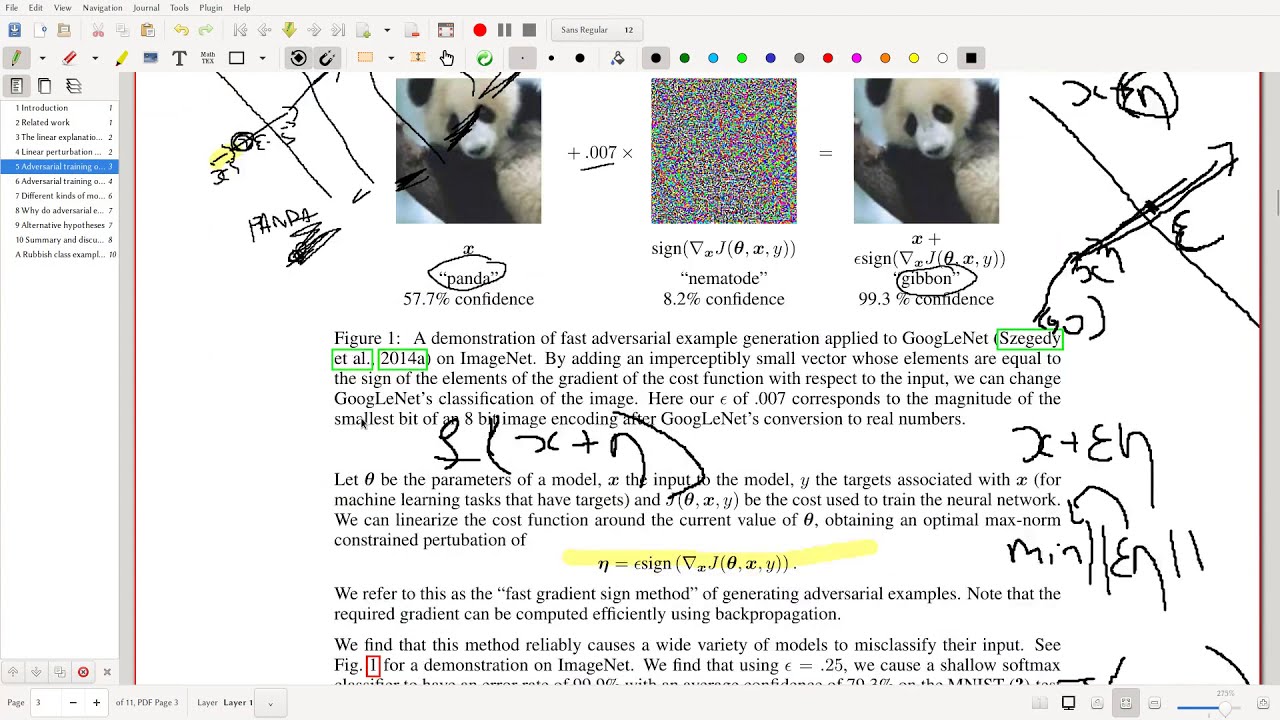
Today I go over the Fast Gradient Sign Method with the help of the Tensorflow notebook.
Explaining and Harnessing Adversarial Examples video: https://www.youtube.com/watch?v=_0q-zVOn25g
Notebook: https://www.tensorflow.org/tutorials/generative/adversarial_fgsm
Paper:...
 viral shadow
Can a single TOTP secret be used across multiple TOTP generating programs?
I've been using KeePass for half a decade and Authy for the last year. I just found out about a plugin for KeePass that lets you generate TOTP codes within KeePass. However, since it is a third-party plugin and is therefore at risk of losing development and breaking, I wanted to know if the secret could be re-used later should that happen. The secret is easily accessible within KeePass so that wouldn't be an issue.
 serene zinc
@viral shadow you could scan the same QR code by two apps, that shouldn't be an issue.
thorn obsidian
there is any forums that posts recent malwares
@gritty wedge What legitimate reason would you need this for?
 woven condor
Hey is it possible to create a python program that counters a ddos attack
thorn obsidian
You wouldn't do it through Python, that's more the networking equipment's job.
 analog jacinth
CVEs are public
thorn obsidian
@analog jacinth ... Yes? Was there a question there?
 thorn obsidian
Always nice to see implementations tho
A while back there was a cve concerning ebpfs, and that feature is so obscure, like I couldn’t even figure out how to use them, let alone write malware using it 😂
woven condor
You wouldn't do it through Python, that's more the networking equipment's job.
@thorn obsidian sooo how would I get this kind of thing done
Would I contact my ISP?
thorn obsidian
ISP? Are you dealing with a DDoS on your residential connection?
thorn obsidian
How are you sure it's a denial of service attack and not faulty hardware?
woven condor
I’m not. I want to prevent it from happening in the future
- there’s applications such as Wireshark that detect ddos attacks
thorn obsidian
There's a lot of questions to ask, but I have to be AFK for a bit.
I'll try and answer here shortly, and if I don't, ping me tomorrow
Use a proxy?
viral shadow
Anyone got a recommendation for a software that password protects directories and encrypts their contents? (Windows, preferably portable/open-source but not a deal-breaker)
I have a bunch of tax-records/legal stuff that are just sitting in a regular directory. Would like to secure them.
Looking for something like KeePass, but for directories/files. No backdoor.
thorn obsidian
@viral shadow 7zip
gritty wedge
@gritty wedge What legitimate reason would you need this for?
an antivirus
thorn obsidian
@gritty wedge dm me, i seed malware samples
got currently almost 100 gb
adding daily
lusty flare
[04:17] @woven condor : + there’s applications such as Wireshark that detect ddos attacks
your home computer would be on the wrong side of the network to detect that
and wireshark is a packet analyzer, pure and simple
there are a number of methods to DDoS mitigation, nearly all of them require having a decent router.
heck, something with iptables and a few decent rulesets could do the trick
or you could go the full whack and buy an appliance that detects abnormal traffic flows.
you could easily block a synflood by setting limits on how many syn packets a host could send at you in x time period
lusty flare
so i was just reading a UK government report about Huawei's kit and potential security impact on it and found this interesting bit
In the first version of the software, there were 70 full copies of 4 different OpenSSL versions, ranging from 0.9.8 to 1.0.2k (including one from a vendor SDK) with partial copies of 14 versions, ranging from 0.9.7d to 1.0.2k, those partial copies numbering 304. Fragments of 10 versions, ranging from 0.9.6 to 1.0.2k, were also found across the codebase, with these normally being small sets of files that had been copied to import some particular functionality.
seems like the report suggests that the biggest security failure in Huawei kit is them doing a shit job at building systems in general.
Analysis of relevant source code worryingly identified a number pre-processor directives of the form "
#define SAFE_LIBRARY_memcpy(dest, destMax, src, count) memcpy(dest, src, count)", which redefine a safe function to an unsafe one, effectively removing any benefit of the work done to remove the unsafe functions.
lusty flare

You've got less than 42 hours to regenerate your certs
womp womp
as if EV certs are a thing anyone should still be buying.
 spice stream
where did the unix channel go?
tepid tundra
In the first version of the software, there were 70 full copies of 4 different OpenSSL versions
how tf did they get this to compile/link/work?
i can barely get 1 to work
analog jacinth
@woven condor yes, contact your ISP, say you are experiencing periodic outages.
analog jacinth
Hopefully troubleshoot the issue
If it's a ddos then they will give you a new IP probably, or mitigate it
If it's something else, which is almost always way more likely, then they will hopefully be able to fix it
 iron nova
not python specifically, but what's the proper term for attacks that involve a large amount of fake accounts that try to achieve something maliciously? fake reviews/fake publicity/influencing things in one way?
thorn obsidian
Hey anyone interested in working on a project regarding dark web. I’m trying to write a extendable python tool which can monitor, crawl and index hidden sites on darkweb and index collected information to elasticsearch?
 mortal perch
i think the channel you want is #680716760134975491
 slate fulcrum
since I haven't found an answer yet, this channel seemed to be the closest one to the topic: If I use fiddler to find apis that websites or browser extensions use, am I allowed to use those APIs?
 outer gazelle
okay;
I have a program that I'd like to provide a free version, and a pro version.
it's python compiled to an exe, but I'm wondering if the following method I have in mind will be safe to use:
Have a variable defined at the start of the program, which is either True or False, indicating whether the program is Pro or Free. and if it's running the free version, it'll disable certain features. So I'll set the variable to True, compile the python code, and save that as the Pro version, then change the variable to False, compile it, and save that one as the Free version. Is there any chance users might be able to open the exe file and manage to change the variable?
Obviously I want something secure, but I also don't want to have to write two separate programs; one being the Pro version & the other being the Free version...
@ me if you can help, thanks! :)
tall haven
Yes, it'd be trivial to patch the code to always be True.
This kind of question is brought up relatively often, and the response I've always seen is that Python is not the appropriate language for preventing these sorts of things.
 spiral pivot
yeah just make the program get the content from a server where it sends some key pair to identify itself, if it is registred as pro on serverside, send content that is for the pro version and vice versa
anything clientside can never be trusted
doesnt matter which language
analog jacinth
Really any language is vulnerable to tampering like that
spiral pivot
yeah and obfuscation doesn't help
tall haven
I suppose when that is said, it is meant that it is more difficult to obfuscate things in Python.
spiral pivot
well not necesserily, just that obfuscation always is reversible
if the logic is serverside, then there is nothing for the user to do
especially if cryptographic secure ciphers are used for authentication
 torpid coral
he does not want to write two different programs
lusty flare
and besides he's still compiling python so it still has the same problem
analog jacinth
saas is an option if you really care
but if the client has your source then they can mess with it
spiral pivot
or write their own
but if you have some sort of login system and you are not using md5 (lol) it should be pretty safe
 shy spire
thorn obsidian
shy spire
thorn obsidian
@shy spire If you setup SSH properly, it's reasonably secure, yes.
I'm not sure why you brought up Python version, as that has nothing to do with SSH.
thorn obsidian
Things, yes. SSH? Not so much
In no specific order:
- Setup SSH to use only ed25519 keys.
- Require SSH keys, at a minimum. Add passwords and/or TOTP if you want.
- Disable root SSH.
- Setup an account which is designed just for SSH access, and then jump from that account to any other account to do work.
- Setup Fail2Ban for SSH so any bots that attempt to access your server get banned.
 dusky fern
@spiral pivot is that the 🕋 ?
spiral pivot
this is so sad 🕋 🙏
dusky fern
indeed 🕋 🧎♀️ 😞
thorn obsidian
@spiral pivot @dusky fern How is this related to security?
 elfin tiger
so
with digital signatures
we encrypt the hash instead of document, so that we can establish data integrity right?
but if we didn't encrypt the has but only the document
we would only know who it came from
but not whether the document was changed or not, right?
for reference, I am talking about this
spiral pivot
there is nothing about ctypes opening up for rce/bof/uaf etc on the docs https://docs.python.org/3/library/ctypes.html might be worth mentioning?
actually, is ctypes allowing rather trivial rce intended?
lusty flare

Plus: Kazakh man charged with corporate mega-hack, and more
don't use EOL operating systems.
spiral pivot
hahaha nice title
 quiet karma
Hi , i'm looking for a library for symmetric encryption like AES that works well on both linux and windows , what library you suggest ?
thorn obsidian
@quiet karma either PyCryptodome or Cryptography
quiet karma
@thorn obsidian Thank you
thorn obsidian
No problem
Hello,
I've been wanting to secure my python application, and I was wondering if I could get any advice.
I've recently finished a program and been re-searching for tools that I could use to secure my program.
My current plan is using a paid pyarmor obfuscating, and then using nuitka and mingw to convert the code to C and then onto an EXE.
Then on top of that using VMProtect Ultimate.
The only thing I'm afraid of is the server link and it's API token. Since those are required on the client's application to connect.
And I would think hiding such a token would be a pain, and quite impossible since anyone could dump the application and grab the link and token.
Everything/All of my functions are on a AWS server, so everything is server-sided.
Leaking the functionality or anything like that would be quite impossible I guess.
But I just wanted to know that if these programs are enough to keep a program at least secure.
I know nothing is uncrackable, but would you think this would at least make it hard enough?
Also, if you have any advice, that would be greatly appreciated.
Thank you.
"secure" against what
what is your threat model
@thorn obsidian
@thorn obsidian secure against hackers. I already know some people are attempting to crack the application I'm developing.
very vague
and "hacking" and "cracking" are entirely different and even somewhat unrelated terms
again, what is your threat model
what threats specifically are you trying to protect against
there isn't a "one gun kills all" kind of solution
Well, do harm to the application.
They want to "crack" the application, since it's a paid application.
Make it free and hurt the sales.
each specific attack requires an equally specific defense
are you attempting to stop piracy? because that has nearly nothing to do with hacking
Well yes, stopping piracy.
I see.
I guess I've felt confident by obfuscating the code with pyarmor, and compiling into a C program as an exe with VMProtect Ultimate was a good solution.
@thorn obsidian Thank you.
not sure I helped much, but sure
thorn obsidian
Storing any kind of token and then trying to hide it away is a guaranteed way that someone will come along, break it open, and find your token.
So you more or less want to be upfront with your users.
Have them setup an account and grab an API key from their account.
That way every account has a unique API key.
You also want to store as much as you can on a remote server.
That way they don't have the option of getting that information from your client.
Now, if you're using an API, that doesn't prevent them from reversing your API.. 😄
vital gyro
what is kali distro
thorn obsidian
What?
thorn obsidian
 thorn obsidian
can I see your codes,?
thorn obsidian
@thorn obsidian
can I see your codes,?
codes?
thorn obsidian
@thorn obsidian I mean Like sample of your securities codes
slate fulcrum
I'm using fiddler to monitor traffic from my phone but I'm getting only useless information like this
I want FTP requests
slate fulcrum
nvm HTTPS is what I wanted
slate fulcrum
yeah
 next junco
I just installed the kali linux OS, now do i need to install metasploitable2 vmware inside the OS or is there any other way around?
What about the metasploit framework,i m not getting a clear view,will be glad if anyone can help me out
thorn obsidian
i already did pip install pyarmor so what should i do?
 jovial heart
I just installed the kali linux OS, now do i need to install metasploitable2 vmware inside the OS or is there any other way around?
@next junco bro metasploitable is just a pentesting O.S that is full of vulnarabilties
I just installed the kali linux OS, now do i need to install metasploitable2 vmware inside the OS or is there any other way around?
@next junco you first have to try into some other devices like windows and android I highly recommend to do it with your's only or using a VM version of them and then you can try metasploitable2 as it is just cli based so for begginers it is a bit difficult to use and deply trojans and backdoors you create
What about the metasploit framework,i m not getting a clear view,will be glad if anyone can help me out
@next junco metasploit is pre installed in the kali linux
as it is the most important and basic tool for pentensting and other hacking you want to do most of the programs use that for making scripts so it will be really good if you get a good knowledge about it
i already did pip install pyarmor so what should i do?
@thorn obsidian I think first you should start python by writing python in the cmd
 fast shore
!tempmute 696644016896475146 7d You have been clearly told before that discussing creation of malicious software is not something you should be discussing on this server, yet you have refused to listen. Take this time off to read our rules and code of conduct.
past starBOT
:incoming_envelope: :ok_hand: applied mute to @jovial heart until 2020-07-22 11:06 (6 days and 23 hours).
fast shore
@next junco We don't allow discussion about malicious software on this server as per rule 5
!rule 5
past starBOT
5. Do not provide or request help on projects that may break laws, breach terms of services, be considered malicious/inappropriate or be for graded coursework/exams.
next junco
@jovial heartThanks alot for the help!
@fast shore Sorry for that, Won't be asking again.Then what are the kinds of question to be considered in the security section?
fast shore
It should fit under the topic, Securing code against hacking, data sanitization, encryption, and protecting yourself and your devices.. I know you probably weren't doing anything malicious but we do tend to err on the side of caution.
 echo herald
not trying to inject myself into debate, but it looks like metasploit and metasploitable2 are open source software made by a big company for the purpose of security research and testing https://metasploit.help.rapid7.com/docs/metasploitable-2
Metasploitable 2
A test environment provides a secure place to perform penetration testing and security research. For your test environment, you need a Metasploit instance that can access a vulnerable target. The following sections describe the requirements and instructions for setting up a vulnerable target.
Metasploit
A test environment provides a secure place to perform penetration testing and security research. For your test environment, you need a Metasploit instance that can access a vulnerable target. The following sections describe the requirements and instructions for setting up a vu...
seems on topic to me, granted I haven't been on this server too long and don't have examples of malware dev discussion I can recall
next junco
@fast shoreok will take care of that.Sorry for the trouble.
thorn obsidian
@echo herald Metasploit is useful, but it falls on the opposite side of protecting yourself and your devices
echo herald
I'm confused as to why, though. If I have an application server, I would much rather do pentesting and other security tests on this VM than I would on my own server. Is it because it could be used to help develop malware?
lusty flare
because the discussion wasn't "i discovered my application server is vulnerable to X, how do i stop this?"
it was "how do i use metasploit?"
we can't know the intention of someone using metasploit, even if they say it is to test their application server
south coral
Is there any tool available on play store to check my mobiles outgoing traffic
echo herald
so should everybody clarify their intentions before posting asking for help or suggesting solutions?
lusty flare
no, because that could be a lie.
south coral
Like every ping it makes
echo herald
to be honest, I read the reply and thought it was reasonable and on topic. My biggest concern is that one day I'll post a response that I think is reasonable and on topic and get muted/banned for it. I'm really just trying to get some clarity so I don't have to worry about that
lusty flare
anything "that may break laws, breach ToS, etc"
echo herald
there's a lot of tools that fall under that umbrella, though, and this one is specifically a testing environment for research
lusty flare
if people want help with pentesting / security, advise them on where they can seek that help
rather than helping them here.
there are pentesting / security discords, blogs, etc, etc
thorn obsidian
@south coral Depends if you have root or not on the device
south coral
Non rooted
thorn obsidian
Ah, alright. One sec
south coral
Got a freaking xhelper so no root
lusty flare
a non-detailed answer that points someone in the right direction i imagine is okay.
depending on the question
but i wouldn't touch a question on metasploit because, well, despite being a tool
its main purpose is exploit systems
regardless of if you own them or not
echo herald
even though the responder was pretty clear that the intent was for the purpose of securing/testing against their own devices?
you first have to try into some other devices like windows and android I highly recommend to do it with your's only or using a VM version of them and then you can try metasploitable2 as it is just cli based so for begginers it is a bit difficult to use and deply trojans and backdoors you create
what would've been the appropriate response? suggesting they take the conversation elsewhere? even though this is supposed to be a place where people can ask for help, you suggest that no response at all would've been the best course of action
fast shore
@echo herald I do understand your point, and that is why why always try to warn users first and make the rules clear before dealing out infractions. Talking about deploying trojans and backdoors you create starts to take it into malicious territory which is not what we want.
echo herald
ok so it was primarily:
it is a bit difficult to use and deply trojans and backdoors you create
that pushed it over the edge then?
fast shore
Partly the problem is that it is hard to moderate as it impossible to know real intentions, so as I said earlier we try and err on the side of caution, although we try and make that clear to users first
lusty flare
quark had previously asked about creating a backdoor (listener) as well.
 leaden blaze
It's not really about the intentions of the user that's asking. We're a very open community and messages stay visible in the chat history as well. Our moderation line is that we don't allow the discussion of code that's exploitable and/or usable in a malicious way. This also means that things used for pentesting often fall under this umbrella, as it can be used for both purposes.
There are communities out there that are specifically aimed at security, pentesting, and ethical hacking, though.
echo herald
totally understand, I'm just imagining a conversation where I help somebody with a tool like locust and they go "welp, thanks for your help creating distributed load testing infrastructure, now to point this thing at mycompetitor.com and cause a DDOS, thanks again @echo herald !"
even though the tool's purpose is load testing your own servers, it can be used maliciously, and since I've had experience with it, I could be at risk just by trying to help
thorn obsidian
The best way to approach it, is, be under the impression someone malicious is listening to the conversation. Can they take what you're saying, and with the information you've given, construct something highly malicious?
That's why the stance for Metasploit and others like it exist. You're not exactly going to see a legitimate reason for someone to use a USB Hacksaw/Switchblade in 2020 for example.
( USB Hacksaw/Switchblade was a neat trick in regards to U3 drives. U3 drives were flash drives that had two partitions. One appeared to the computer as a CDROM, and the other was typical USB removable storage. Autorun also hasn't been a thing since XP, so.. 😄 )
But that's the thing, I can casually bring up and chat about U3 drives, even though they're completely malicious in nature, considering it boils down to don't stick random flash drives into your computer, and less of a "Hey, autorun doesn't exist anymore!"
Which is a great way to protect yourself. Don't go to thrift stores and buy used flash drives!
lusty flare
or take them from conventions
lusty flare
did you see the embedded business card that runs linux?
thorn obsidian
That sounds highly impressive and terrifying at the same time
lusty flare
In which I build a Linux computer cheap enough to give away
thorn obsidian
I feel like anyone I spoke to would be sketched out if I discussed a bunch of security stuff, and then handed them that
"So yeah, by the way, USB devices aren't really all that secure. They can masquerade as HID devices like a mouse, a keyboard, and the vendor/product ids can be easily spoofed considering firmware signing isn't a thing in most products. Even if it was, I can just find out your vendor/product ids and spoof those on a separate device. Oh yeah, do you want this business card that runs Linux? You plug it in via USB. It's not sketchy, trust me."
lusty flare
quite :D
thorn obsidian
The slow step back of just "Uuuuuhhhhhhhhhh........ Yeeeeeeaaaaaaahhhhhhh... I gotta go..."
lusty flare
back to the rules thing, i think that's a good way to view it scott.
it's not "is this person going to use this maliciously" but "am i giving away enough information that someone can then do something malicious"
it's like when people come in asking about how to get into pentesting / ethical hacking all you can really do is point them in the right direction
thorn obsidian
Yep, that's about it
lusty flare
it's kind of vague and handwavy, but there are plenty of resources out there that aren't this discord to get this information
echo herald
ok, I feel pretty good about that explanation, it leaves me a little more hesitant to help other users in some ways but I guess I'll rely on the judgement of the moderators to know that I haven't previously accidentally given away help that can be used maliciously
thorn obsidian
So here's a good question. Let's say someone uploads an image with some JavaScript in it, such as with https://www.secjuice.com/hiding-javascript-in-png-csp-bypass/. How do you defend against this? Outside of not having "unsafe-inline" and "unsafe-eval" enabled within your Content-Security-Policy, of course 😄
More curious of how to sanitize an image like this, and detect these kind of things
thorn obsidian
``>>> pyarmor
Traceback (most recent call last):
File "<stdin>", line 1, in <module>
NameError: name 'pyarmor' is not defined
`` ( I already installed python and pyarmor )
analog jacinth
 fervent lake
anyone got any good ways to encrypt files with python
analog jacinth
fervent lake
thank you @analog jacinth
thorn obsidian
https://thedailychain.com/largescale-twitter-hack-live/ this doesn't look good at all

A massive attack on crypto twitter occurred in the early afternoon. This Twitter hack is unprecedented in the...
thorn obsidian
yeah what kind of hacker has golden coins
 runic birch
and u puts them on the track pad
lusty flare
@thorn obsidian
seems like a social engineering breach
paid some insider to either give access to the tools or flip specific account email addresses so they could take control.
big oof.
slate fulcrum
there aren't any android capturing tools? I couldn't get fiddler to work yesterday 
android app would be ez
lusty flare
there probably are, i'm just not aware of them.
i mean you'd probably need a rooted device
slate fulcrum
I have one
thorn obsidian
@lusty flare Sounds like someone's about to have the weight of the legal system on them soon enough
lusty flare
could be a GDPR problem too
thorn obsidian
I'm not a lawyer, but fairly certain this is breaching CFAA, which constitutes multiple felonies.
( https://en.wikipedia.org/wiki/Computer_Fraud_and_Abuse_Act for those unaware )
lusty flare
yeah, i was thinking more about how it's exposed how much data twitter employees have access to
thorn obsidian
I haven't seen what's been released in regards to it, but I imagine it's about what's to be expected.
lusty flare
it could be..... problematic
but yeah, the twitter employee is gonna get fuuuuuukkktttt
if it wasn't a pay-for-play type job and they were socially engineered
i'm not sure if that'd be more or less damning
thorn obsidian
when using rsa or public key encryption how do you verify that the person you are talking to is really who want to be talking to
slate fulcrum
or csrf_token
 subtle forum
This could be more of a long shot, but figured I'd ask. Anyone have experience working with e-mail servers?
analog jacinth
@thorn obsidian You encrypt your message with their public key, so it can only be decrypted with their private key
The other person can also sign their message with their private key, and you can decrypt it with their public key to confirm they signed it
 woven pendant
Hi everyone. I am very into Python and cybersecurity. This is my first time using Discord. I hope I can learn a lot with the community.
thorn obsidian
@thorn obsidian
when using rsa or public key encryption how do you verify that the person you are talking to is really who want to be talking to
In regards to e-mail, do you mean the address you meant to send it to, or the person behind that address?
thorn obsidian
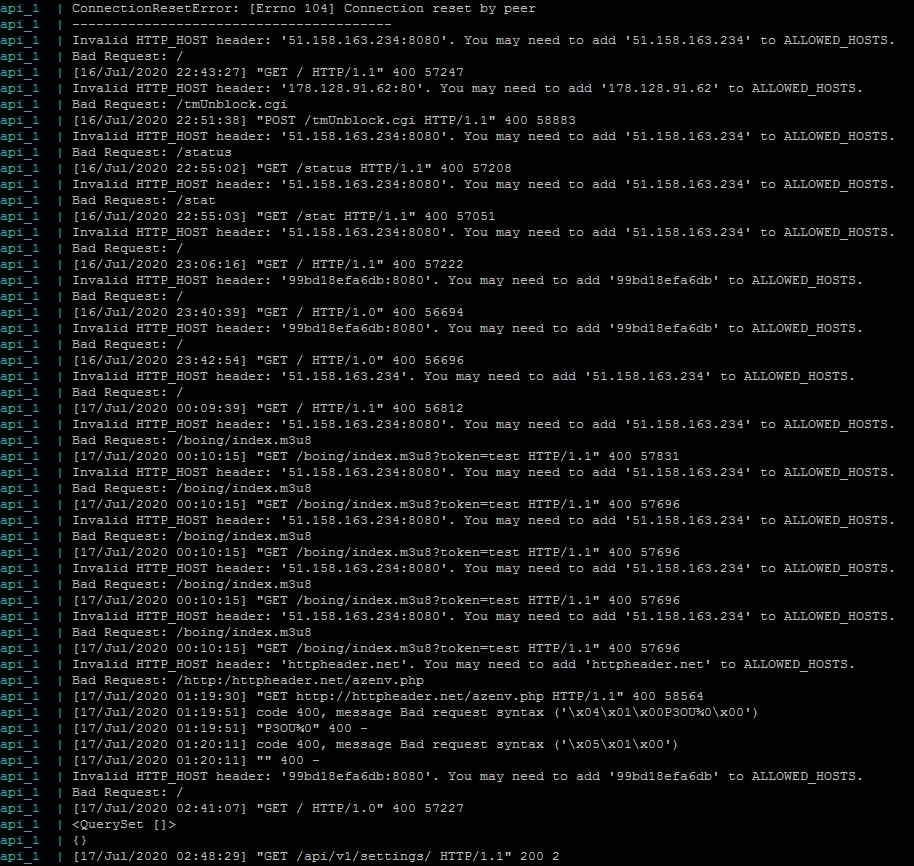
Some suspicious activity in the logs. Someone tried to hack my django rest api, it seems, but I don't have anything valuable on that server, I use it for learning. I know I should turn off the debug in django, but what else can I do to make it safer? They managed to use the single allowed host to make a succesfull request
At this point I just need to shield it from any requests coming from outside of the server
https://i.imgur.com/3TCCy9e.jpg
 lusty flare
don't have it listen on the public address?
maybe use something like nginx as a front end and block access to specific end points?
require authorisation to access the api?
thorn obsidian
Yeah, I'll fiddle with nginx. Found this article
https://testdriven.io/blog/dockerizing-django-with-postgres-gunicorn-and-nginx/
 lusty flare
btw in case you missed it
A remote code execution vulnerability exists in Windows Domain Name System servers when they fail to properly handle requests. An attacker who successfully exploited the vulnerability could run arbitrary code in the context of the Local System Account. Windows servers that are configured as DNS servers are at risk from this vulnerability.
To exploit the vulnerability, an unauthenticated attacker could send malicious requests to a Windows DNS server.
thorn obsidian
I use centos
slate fulcrum
how could I get cookies for web scraping when there's an OAuth2 login on the site?
thorn obsidian
@slate fulcrum This sounds like an XY problem - https://xyproblem.netlify.app
Asking about your attempted solution rather than your actual problem
 fluid scarab
How can I set up some encryption using the ssl module when sending TCP packets via socket? Is this encryption good enough for basic usage or what would be recommended? I want to use some existing library as im not interested in re-inventing and re coding stuff that has already been made..
slate fulcrum
@thorn obsidian but do I normally use requests with oauth2 as well? I don't think I can get everything I need
 long crow
The concepts you take away are useful
 knotty thunder
do I have to learn other languages
long crow
But, I'm not sure about it helping you with every part of the job
long crow
No, definitely not
analog jacinth
Most of cyber security has nothing to do with coding
You can use python to find vulnerabilities, but it isn't part of cyber security
 wicked fulcrum
Hey is there anyone here that is into running their own dedi/vps.... can talk ssh, ciphers,ssl,nginx,bind9......
 icy saffron
yes
 primal ibex
Also yes ^^
 daring sedge
https://blog.twitter.com/en_us/topics/company/2020/an-update-on-our-security-incident.html
Twitter posted an official blog about what exactly happened

An update on our security incident and what we know so far.
lusty flare
cool
so they actually do have 2FA on their internal tools.
For up to eight of the Twitter accounts involved, the attackers took the additional step of downloading the account’s information through our “Your Twitter Data” tool.
uh oh.
None of the eight were verified accounts.
oh that's alright then
interesting.
so i guess the worst case didn't happen
siphoning off user dm data
daring sedge
We are continuing our forensic review of all of the accounts to confirm all actions that may have been taken.
Seems to me there's still a chance that might have happened, just not through the specificYour Twitter DataGDPR tool
lusty flare
true
although it seems really dumb that they tried to sell accounts
something just seems "off" about the attack tbh
i can't help but think there's an ulterior motive
why would you break into twitter and just try to sell accounts or post a scam?
daring sedge
I think it's possible some 16yo stumbled across some Twitter employees and thought of a cool way to try and get access to their shit - then just did the first things he could think of. None of it seems that well thought out
lusty flare
yeah, it seems like a shit plan
trying to take control of and sell single / double character accounts?
that's... that's not going to work.
thorn obsidian
@slate fulcrum I have no idea what you're doing, but it sounds off, like we're not getting the full picture.
slate fulcrum
this page as OAuth login (facebook) and I want to scrape the page but I need to be logged in
@thorn obsidian
 strong mountain
Hey is there anyone here that is into running their own dedi/vps.... can talk ssh, ciphers,ssl,nginx,bind9......
@wicked fulcrum
yaz
thorn obsidian
@slate fulcrum Facebook has an API. Not using it is breaking ToS, which is something we can't help with
!rule 5
past starBOT
5. Do not provide or request help on projects that may break laws, breach terms of services, be considered malicious/inappropriate or be for graded coursework/exams.
fluid scarab
How can I set up some encryption using the
sslmodule when sending TCP packets via socket? Is this encryption good enough for basic usage or what would be recommended? I want to use some existing library as im not interested in re-inventing and re coding stuff that has already been made..
if anyone could help, would be great
thorn obsidian
So yes, you want HTTPS?
thorn obsidian
I imagine this is a Python application, since you're using the ssl package
thorn obsidian
Are you using Apache or Nginx?
fluid scarab
currently none as i'm just testing on localhost
thorn obsidian
Use one of those, and set your application behind it
fluid scarab
I will in the future
thorn obsidian
Then you can use Gunicorn or uwsgi to connect Apache/Nginx with your application
fluid scarab
I see. Out of curiosity - what is the ssl package for then?
heard you use it to gain security for tcp
thorn obsidian
I use it for sending mail with smtplib, for example.
But anything server-wise, you're a lot better off using Apache/Nginx and then putting your application behind that and having Apache/Nginx handle that kind of stuff.
Does that make sense?
fluid scarab
yes, you dont want to mess up on such a critical part of your application so its better to use some third party software
fluid scarab
true, think I'll stick with Apache so I can try with Cassandra db aswell
thorn obsidian
Depending on what you're making, Flask/Django could be a huge help
I have no idea outside of you wanting to use ssl, so I don't have much to go off of
fluid scarab
Dont think i'll use Flask or django. I'm working on some project just for fun and I am in need for transfering data such as audio or text messages from one client to another, so I need to stick with sockets. Unless I create some API which I really don't want.
and obviously I need to encrypt that data
thorn obsidian
Have you looked into https://github.com/signalapp and their libsignal?

They don't have Python versions, but something like https://github.com/signalapp/libsignal-service-java might be what you want

GitHub
A Java/Android library for communicating with the Signal messaging service. - signalapp/libsignal-service-java
or, Signal in general might be what you want if you're sending audio or texts
fluid scarab
Hmm, i'll take a look, thanks
thorn obsidian
👍
 rotund yarrow

the Guardian
The anonymity software has sparked controversy but who built it, what is it used for, what browser does it use – and why is the NSA so worried by it? By Stuart Dredge
analog jacinth
no tor and vpns are very different
thorn obsidian
Coming back to my previous messages #cybersecurity message
It seems I could just change ports to expose in my docker-compose.yml to make the port open only to the other docker containers and not anyone else on the internet
slate fulcrum
what is a "_rtoken"
I saw it in a request on a site but I can't find anything about it
thorn obsidian
Are you still trying to scrape Facebook?
@slate fulcrum If it's Facebook, we still can't assist with it.
 long orchid
python is also about security
thorn obsidian
@long orchid ?
 lament marlin
Does anyone here know about Tails,and its security flaws.I heard it has many but i wonna hear a second opinion
no tor and vpns are very different
@analog jacinth I agree they work on a completely diffrent data transportation method
slate fulcrum
@thorn obsidian nah not that anymore
slate fulcrum
also how do I figure out what this is:
thorn obsidian
Scale it down 4 times
 latent kelp
@thorn obsidian how secure is piping from curl straight to the shell?
latent kelp
yea, made me wonder haha
thorn obsidian
in this case, the site is trustworthy
but it's always safer to wget the file first, visually inspect it, and then execute it
especially if you need to run it as root
latent kelp
righto
 mellow steeple
is there anyway to capture ssh password hashes remotely?
like in 4 way hand shakes ?
onyx wharf
why do you need this info @mellow steeple 😄
onyx wharf
check out common ssh vulnarabilities 🤷♂️
mellow steeple
👍
actually i have only completed cisco introduction to networking course
where can i find them?
onyx wharf
just google around
ssh is a preety secure, established protocol
i wouldn't really know
primal ibex
The easiest approach to this would be a MITM
Of course, known_hosts exists, so good luck with that
onyx wharf
^
 bitter frigate
anyone here knows if its possible to technically code captcha bypass with python?
primal ibex
Bypass, no, solve, yes.
 hushed spear
I'm working with an API that handles the release of bitcoin to customers. The HMAC key has a permission, "money_pin" which authorizes the release bitcoins to customers. The money pin is a 4 digit static pin that's set on the website that's required to be passed with certain release/money handling calls.
The API docs state the following: "Security concern: To improve security, do not save the PIN code longer than the users session, a few minutes at most"
Are they expecting me to pass this same pin every call? Is there a safer way I should look into doing this? It seems so strange to me that I'd need to enter the same pin over and over manually every api call
 light pagoda
From what I can make of it, it'll be fine if you store the PIN in the session object
Like, the guideline basically means you shouldn't save the PIN for longer than the user session. And anything stored in the session object is cleared once the session (browser/tab) is closed, unless set to persist.
hushed spear
I've built this application to handle all aspects of my business except the security/money release part since I'm worried if I mess up it will cost large.
I guess each transaction could be set up as individual sessions
light pagoda
that's viable too but again, pin for each call
test it with tiny amounts? it is always a good idea to test the implementations first
hushed spear
I have been, theres a HMAC permission that doesn't require the money_pin at all
but to me that seems even riskier, if my server is breached someone could run the program and empty my wallet
light pagoda
steer clear of that permission, PINs exist for a reason
hushed spear
I was thinking of implementing some form of 2fa to be required alongside the PIN, or would that be pointless? Sorry my experience with programming is just basic programs/time saving scripts nothing to do with securing an application or encryption at all
light pagoda
2fa is good to have when dealing with stuff like this
hushed spear
Like I was thinking to store the pin somewhere that requires 2fa to have the pin returned in a secure way for the api call to use
but that still doesn't seem like the right solution, the API call requires the pin to be a 4 digit int, so it can't be passed to the service encrypted or anything
light pagoda
you'll have to decrypt it in that case first
hushed spear
but having my program decrypt it would put me in the same position, if server is breached the pin could be captured, i think?
light pagoda
what if you store the decryption key remotely and fetch it after 2fa only (i'm not an expert on security)
hushed spear
True
hushed spear
thanks for the info @light pagoda
light pagoda
you're welcome
thorn obsidian
@mellow steeple That wouldn't be something we could assist with, considering rule 5:
!rule 5
past starBOT
5. Do not provide or request help on projects that may break laws, breach terms of services, be considered malicious/inappropriate or be for graded coursework/exams.
mellow steeple
ok .. hope that can stop all the cybercrimes in world
latent kelp
Regardless, that is not something we can help with here in the server.
primal ibex
Sounds pretty neat
thorn obsidian
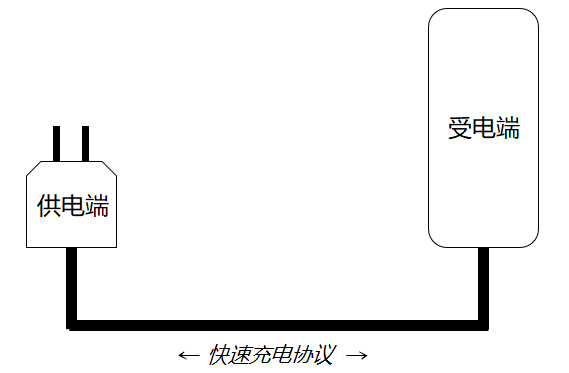
New Hack Can Trick Power Bricks into Starting Fires
https://xlab.tencent.com/cn/2020/07/16/badpower/ Oh no
English version: https://gizmodo.com/new-hack-can-trick-power-bricks-into-starting-fires-1844441247
腾讯安全玄武实验室
问题简介腾讯安全玄武实验室在部分快速充电(以下简称快充)产品中发现了一种新型安全问题,并将其命名为“BadPower”。 利用BadPower,攻击者可入侵支持快充技术的充电器等设备,使被入侵的设备在对外供电时输出过高电压,从而导致受电设备的元器件击穿、烧毁, 甚至可能进一步对受电设备所在物理环境产生安全隐患。

Gizmodo
Your phone’s power brick is typically a relatively innocuous piece of tech, but recently, researchers at a Chinese security firm discovered a way to hack a fast charge power adapter so that when connected to a phone, the power brick can melt the phone or even start a fire.
 coarse bobcat
Hello everyone,
in my Python Code I´m connecting to a mySQL-Database.
The password of the mySQL-Database is clearly in my Code.
How can I change this?
thorn obsidian
Store it externally and access it at runtime. An example would be a config file or an environment variable
@thorn obsidian
That's pretty much what I was gonna say.
+1
I’m jealous you get to react to my comment
How come? 😄
coarse bobcat
I would like to give my friend the programm...
thorn obsidian
@coarse bobcat Would it use a local MySQL DB on their computer, or would this be a client and you'd have a server somewhere else?
It’s a very succinct way of agreeing with people 🙂
coarse bobcat
@coarse bobcat Would it use a local MySQL DB on their computer, or would this be a client and you'd have a server somewhere else?
@thorn obsidian It must be a Server
sry for bad english btw
thorn obsidian
Oh, then you wouldn't give them that exact program. You'd make a client program, and they'd use that client to connect to your server
coarse bobcat
I didn´t understood... Can you give me an example?
thorn obsidian
You'd have a server ( Flask/Django/whatever ) with a DB ( PostgreSQL, MySQL, whatever ), and it would do the heavy lifting. Whereas, the client would send/receive things from the server.
Not sure what your server does, so can't give any more detailed info than that.
coarse bobcat
So, my programm is a Chat. And i write the messages in the Database.
thorn obsidian
Ah, I have a multitude of questions then
How are messages encrypted?
I'll be AFK for a bit, but with it being chat, there's a lot of things you need to think about.
lament marlin
samsung galaxy note 7 nah fam,samsung galaxy c 4
jovial heart
So, my programm is a Chat. And i write the messages in the Database.
@coarse bobcat try using flask
get some info about it it is helpful for these kinda things
 old trail
hello peeps of insecurity
so what does security updates mean in the context of python?
i know like theres security updates for OS etc
but if say i made a calculator.py then what would the security updates for this py file mean?
ping me plz ty
spiral pivot
@old trail if the script worked before it should work afterwards aswell. Just that a internal vulnerability was fixed. Like for example if some module wasn't checking some obscure scenario
old trail
can you give an example
i honestly couldnt think of a vulnerability in a calculator.py
lets say the calculator.py has only python print(int(input("x"))+int(input("y")))
what would be a possible security update for this code?
@spiral pivot
spiral pivot
input() could do a buffer overflow internally in python in some cases where it does strlen(n) and misscalculates the reallocation for the buffer, so it results in the return address being overwritten internally in python which leads to RCE
old trail
i dont even understand what you just said except the internally overwritten buffer part
spiral pivot
but now input doesnt buffer overflow, but if it were to do that, a patch would be made for all supported python versions
old trail
so im pretty much fked if i just publish my code on github?
spiral pivot
no you dont need to do anything as a user
old trail
but github has the security section where it wants me to update security patches
spiral pivot
oh
old trail
i just found it today hence the question lol
spiral pivot
is it python2?
old trail
its jupyter notebook
spiral pivot
eh be more specific please, send the github repo
old trail
so i just leave it ye?
spiral pivot
yes
old trail
this sounds way too advanced for me so ima just yolo push
spiral pivot
yep
old trail
you too my peep yeet
lusty flare
huh, interesting @thorn obsidian
the powerbrick firmware hack
never considered that you could fuck with the power negotiation
thorn obsidian
@lusty flare Like I said before, TEMPEST is back, baby!
 modern smelt
someone reversed engineered texas instruments and blew up a battery
lusty flare
oh my god not the giant black block
thorn obsidian
You mean... the entire company was reverse engineered?
woven gazelle
and someone exploded an intensive farming unit
thorn obsidian
Huh. Thunderbird leaks your internal IP address.
http://forums.mozillazine.org/viewtopic.php?p=3005353#p3005353 is a nice fix for that 👍
https://bash.ws/email-leak-test can be used to test this is working how you expect
I set mine as "localhost", same as K9
woven gazelle
yeah
 modest mango
hii
woven gazelle
hello
thorn obsidian
If anyone ever had any doubts that SS7 attacks were real:
https://thehackernews.com/2017/05/ss7-vulnerability-bank-hacking.html

The Hacker News
Here's the real-world evidence that cyber-criminals are using long-known SS7 vulnerability to drain Bank accounts.
 sage stream
So 2FA via SMS is flawed and insecure then
echo herald
I read it as broken auth + 2FA via SMS is flawed
 neon cobalt
@thorn obsidian , with python script?
thorn obsidian
@sage stream SMS should never be considered a secure second factor
@old trail python is considered a memory safe language. i'd be more concerned with input(), if you're using python2
old trail
i see
thorn obsidian
improper usage of input() can cause great issues, especially if it's used for anything AuthN/AuthZ related
input() will evaluate string literals. can lead to a lot of bad things
in your example you're casting it to an int though, which wont be an issue
lusty flare

Insurer is first biz to be charged in New York for data security negligence after exposing millions of records to the web
womp womp.
850 million records of non-public info publicly available for 4 years
knew about it for 6 months and failed to fix it
that's a spicy meatball
the reason is so fucking dumb as well
documents were displayed through a URL and a DocumentID parameter
you could just iterate over the DocumentID number and get other people's data with no authorisation checks
and they were indexed on search engines
you could literally type the correct search terms into google and get someone's mortgage paperwork. nice.
willow coral
isn't this what weev did a few years ago?
lusty flare
you mean the AT&T breach?
that's slightly different
that was an un-index URL that was still publicly accessible
also re-reading up on it
looks like weev discovered it and then wrote something to exploit it rather than reporting it
also disclosed it to the press before alerting AT&T
went a bit too far i think...
thorn obsidian
@neon cobalt
with python script?
What? Not sure what you're referring to
lusty flare
i think he's asking if it was done with python
but obviously implementation method doesn't matter
thorn obsidian
Ah, yeah, it wasn't done with Python as far as I know.
neon cobalt
Yeah
thorn obsidian
After spending more than three years examining new approaches to encryption and data protection that could defeat an assault from a quantum computer, the National Institute of Standards and Technology (NIST) has winnowed the 69 submissions it initially received down to a final group of 15. NIST has now begun the third round of public review. This “selection round” will help the agency decide on the small subset of these algorithms that will form the core of the first post-quantum cryptography standard.

Woo!
lusty flare
oh sweet
now we just need people to follow NIST recommendations.
which has never been an issue.
thorn obsidian
Ha
 slate prism
@thorn obsidian Can I ask you about 2FA, password managers. or the Killer project?
xD
analog jacinth
just ask
thorn obsidian
@jovial heart Not security related
@slate prism Any specifics? You can PM me if you'd like
sage stream
Is python popular for anti-virus software, or what kind of security software does python come in handy for?
sage stream
Are there any good reads or research papers that compare the security of the latest version of iOS and Android?
tepid tundra
https://support.apple.com/en-gb/guide/security/welcome/web apple has this
https://source.android.com/security/features android has this
not quite sure how you'd compare them, or if anyone has
I think antivirus software generally gets written in lower level languages that are compiled to executables (python relies on python being installed, and thus depends on the host system), but that's just a guess
analog jacinth
Anti-virus software today usually involves a lot of memory scanning, not sure if that is even possible in python
thorn obsidian
It is
thorn obsidian
I'm sure it is
thorn obsidian
Chat here dead
@thorn obsidian
Chat here dead
Have you checked the topic?
Just did
And that's why it's dead
Lmao
Did you have a question?
sage stream
Are there any good reads or research papers that compare the security of the latest version of iOS and Android?
@thorn obsidian Hi i was wondering if you know or have any good resources which compare the security of these two?
sage stream
Ah yeah sorry. I’m referring mainly to the out of the box system security itself. So things like app sandboxing, or the encryption/biometrics used by both systems. Or also how hard it is for an attacker to get in.
thorn obsidian
also how hard it is for an attacker to get in.
Remotely or with physical access?
Since remotely mostly boils down to things like the web browser, messengers, etc, and that's something I'd point you to the CVEs of
Also, Android isn't the same across all devices. You need to think of security patch levels and the additional software for each brand
sage stream
I would say remotely.
thorn obsidian
Since, hopefully, you're not buying any tablets from Barnes & Nobel for example 😄
( The joke being there is that if you ever check their security patch levels, they're easily 2+ years out of date, every time. )
sage stream
Yeah well that was one of the reasons I left Android, but I think many manufacturers have improved now with the patches. I only had experience with Samsung and few others back then.
thorn obsidian
Well, that's the issue. You'd need to focus on devices that are actively supported.
sage stream
But now I was considering getting the one plus the new one. I’m currently on iOS, and wanted to see what the state of security is like on Android.
thorn obsidian
Which, OnePlus does fairly well at keeping their devices supported. LineageOS and XDA-Devs are two good places to check out for up-to-date devices
I've got a OnePlus device, so ¯_(ツ)_/¯
Wasn't a fan of them years ago, when a debug application was found that essentially gave root.
But that seems to have been a one-off
sage stream
Yeah I read about that.
thorn obsidian
I can't think of any other device manufacturer that keeps their devices as up-to-date as OP does
sage stream
Well that’s good to hear. Although I probably don’t have anyone in my threat model, would you trust most Android phones to be safe from backdoors? Or is this is not a thing.
thorn obsidian
From backdoors? That's a tricky question, considering some believe Google Play Services is a backdoor 😄
sage stream
Oof
Yeah I guess you are right. Same applies with iOS too then 
Just a matter of trust
thorn obsidian
Well, you can de-google an Android device a pretty decent amount
sage stream
Yeah I have seen this with stuff like f droid but is it the same experience in terms of UX and convenience, that was my only concern.
thorn obsidian
You can install extra services for F-Droid and other repos to auto install program updates for you
 sage stream
But generally speaking Android encryption is good right, for one plus? And are things like biometrics stored on device, like iOS have with the Secure Enclave?
thorn obsidian
Yeah, they're pretty much the same
As long as you have a password/pin/etc on your device, it'll use File-Based Encryption
sage stream
I see, well sounds good.
thorn obsidian
https://source.android.com/security/encryption/file-based explains how that works
 dreamy briar
hello scott
thorn obsidian
@dreamy briar Hello
sage stream
Ok thanks. I’ll have a read if the security section on it.
dreamy briar
you know this much about security, is it bc you work with it?
thorn obsidian
@sage stream If you have any additional questions, don't hesitate to ping me
@dreamy briar You could say that
sage stream
Cool thanks.
dreamy briar
that's actually very cool
sage stream
Actually I did have a question I asked yesterday here. #cybersecurity message
dreamy briar
are you that guy who tries to breach into sites to find weak spots and stuff?
thorn obsidian
@sage stream Anti-virus isn't normally done with Python. There's a whole slew of things Python does do, though. I'd suggest checking out things from https://reddit.com/r/netsec and https://reddit.com/r/blueteamsec and searching python and seeing what comes up
reddit

reddit
sage stream
Alright cool, and thanks
thorn obsidian
@dreamy briar Ha, it's not as glamorous as you think. There are quite a few people around that do just that, and it's mostly paperwork.
dreamy briar
ik, but i'm not saying that u get in front of three screens writing matrix shit down and wearing a black whoodie
i still think it's cool as a job
and i'm studying to get there
 quasi turtle
I have a security question, though not really to do with code. Currently, I'm get 2FA verification code SMSs from services I don't realise. One on Monday and two just now. I'm thinking I shouldn't be concerned about it if it's not for services I recognise, but I'm wondering if that's the correct assumption. Any thoughts?
thorn obsidian
@quasi turtle Depends on the service
If it's coded properly, those are verification codes that they need to input into whatever account they're making
But, if it's not, someone else could put your number in their account and it wouldn't ask
Also, SMS is a horrible 2FA method
quasi turtle
Agreed on that last point, which is why I try not to use SMS anywhere.
thorn obsidian
Using someone else's number seems to be a bigger thing recently
quasi turtle
But yeah, its for services I've never heard of in my life, and for which Googling kinda brings up dodgy websites
quasi turtle
So I just have the service name so I have to guess at the site
quasi turtle
Sure
thorn obsidian
That way potentially sketchy sites aren't posted here
quasi turtle
do you have DMs blocked?
thorn obsidian
I do not
quasi turtle
Never mind, it's me haha
 high dock
@everyone im a computer genuis please respect me
thorn obsidian
please keep conversation on topic @high dock
fluid scarab
I've asked before but I'm still confused on how to encrypt my packets using the ssl module. I basically have two pcs which communicate via a server and I want to establish a secure, encrypted connection between theese two devices. I'm using TCP. There are not many resources available regarding this. The docs are confusing and when I try to use a self signed cert it gives me errors even though I'm just on localhost and I will forever be on localhost as this is just for educational purposes. I tried implementing AES but that's even more confusing when I will in the future add more devices, I just don't understand how. I want to learn from this so if anyone has any resources it would be appreciated.
I want to do accomplish this without using any additional library other than the ones available in the standard library such as sockets, ssl and such.
Dont rly know where to start
People have mentioned https but im not dealing with web applications
high dock
@thorn obsidian who df are you
thorn obsidian
you are not very kind, are you?
thorn obsidian

 runic granite
 violet notch
just ping them
 spice plover
yeah, please calm down @high dock
spice plover
that's your last words, huh
!tempban 361264321835040783 7d On further inspection of your message history, it looks like you're only here to troll and mess around. Your first few messages here are "sup nerds. i just got back from banging your girlfriends". Not very appropriate here.. Then, you try to @everyone and say "im a computer genuis please respect me" for no reason. The low effort trolling is not appreciated here. Please reread our rules and CoC if you decide to come back.
past starBOT
:incoming_envelope: :ok_hand: applied ban to @high dock until 2020-08-02 00:15 (6 days and 23 hours).
 rare raven
Does anyone know where I can find (if there exists) benchmark times for calculating hashes with Python? I'm taking about how long to calculate n hashes of SHA256 for example using Python.
violet notch
it really varies depending on the length of the password salting/peppering wordlists etc
thorn obsidian
If i want to make security programs is there a specific module for that?
And is there a feature in python that can search for files in the pc?
I'm learning cyber security and i need help with this
thorn obsidian
@thorn obsidian make security programs? What defines security programs?
For example a basic security program that checks for new files that have been added and a delete files feature
for personal use ;-;
@fluid scarab We discussed this, and your best bet is to use something like Flask/Django. If you really want to go the route of sockets/ssl, you'll need to know a whole bunch of edgecases.
@thorn obsidian So something like Tripwire?
umm
one sec lemme see what that is
Yes i think
I'd look into Intrusion Detection Systems ( IDS ) and Intrusion Prevention Systems ( IPS )
Ok
why did you do that ion thing?
;-;
anyways
thanks for the help :3
@thorn obsidian Because my initial post was Detect, and my bolded text indicated an edit
Oh ok
thanks for the help tho
No problem, hope that helped
👋
fluid scarab
@thorn obsidian I'm confused, isn't flask and Django for web frameworks? I'm working on something low level so I'm only dealing with tcp
Direct communication between two devices
thorn obsidian
Yeah, this is the chat program or some such?
fluid scarab
I have two devices over lan which I want to establish a secure connection
Which means that when im sending packets to one another I need them encrypted
thorn obsidian
If it's over LAN, that's different.
fluid scarab
I wouldn't do this over wan, yet
thorn obsidian
You don't really have the ability to properly do certificates if it's over LAN
fluid scarab
Yeah I got some certificate errors yesterday it was something about localhost stuff
thorn obsidian
Have you looked into Briar? https://f-droid.org/en/packages/org.briarproject.briar.android/
It looks to fit what you need. Though, not sure on it's audit/safety/security status
fluid scarab
Haven't heard of that before. Would it be hard to implementing something like aes yourself using some of pythons crypto libraries?
thorn obsidian
You can do that, but it's not something I'd suggest. Signal/Briar seem to solve any messaging issues I have when it comes to that kind of stuff.
Mind you, there are things like https://cryptography.io that exist to help you through that
It's just when you start dealing with cryptography and everything, it's a good idea to find something that already exists and has been vetted
fluid scarab
I see. How can I generate the same key on both clients? Do I need to implement some diffe helman stuff or are there 'easier' ways to get same keys?
I will use the library you posted above
fluid scarab
The key used to encrypt so I can actually decrypt the message when it's sent
An aes key yes
thorn obsidian
You wouldn't normally use symmetric encryption for stuff like that
violet notch
@fluid scarab this article seems to do exaxtly what you want to do just write it in py3
thorn obsidian
Except lazyme has 9 stars, and I've never heard of it before: https://pypi.org/project/lazyme/
For something like that, you'd use Colorama
 worthy moss
DHKE + AES GCM?
 teal bone
is anyone proficient in python / Django in order to make a partnership to build a fuzz manager?
thorn obsidian
fuzz manager?
teal bone
fuzz manger (master > slave , and adding many child nodes) it's basically a botnet applied for vulnerability research (crashes and security issuses related on the app which is being tested)
past starBOT
5. Do not provide or request help on projects that may break laws, breach terms of services, be considered malicious/inappropriate or be for graded coursework/exams.
teal bone
it's not malicious . it just up to you . by the way the project will be used only as a collector in order to classify errors
thorn obsidian
@teal bone
If it has botnet capabilities, it can be used for someone with malicious intent to create something questionable. Which is all the reason to not assist.
teal bone
botnet cabaility I mean . you have a master bot collecting the information from slaves (log information) . so no ddos or something like that . if you can take an example would be like a syslog or rsyslog
thorn obsidian
While you or I may not have malicious intent for something like that, can you say that about the other 70,000+ users here?
That's why it's best to err on the side of caution with these kinds of things
teal bone
I see double edge-sword
thorn obsidian
Oh sure, no doubt. But it's best to be careful.
teal bone
oh well. sorry then.
thorn obsidian
No need to be sorry, lots of folks come in asking for assistance with things.
teal bone
I work as a red teamer , and I know people will only want to cause harm to others
 willow heron
 thorn obsidian
My favorite is bisk
lusty flare
the best user 2020
mellow steeple
anyone know any cli program like fiddler ? ( to capture web traffic from chrome )
primal ibex
CLI, so tcpdump
mellow steeple
can i use it to listen for http traffic?
lusty flare
yeah, you'd have to do some filtering
tcpdump is just straight up a dump of TCP data
mellow steeple
thnx
analog jacinth
Tshark also
 fading basalt
Hey all just wanted to introduce myself! My name is Chris and I'm just getting into IT now, but I definitely want to eventually get into Cyber Security. Not sure what specifically, but I'm excited to continue working through Black Hat Python by Seitz, check out overthewire, hackerrank, bugcrowd, tryhackme, etc.
primal ibex
Welcome to it.
analog jacinth
check out https://www.vulnhub.com/ too

VulnHub provides materials allowing anyone to gain practical hands-on experience with digital security, computer applications and network administration tasks.
fading basalt
Will do, thanks!!
lusty flare
@fading basalt you might want to look into bluehat stuff
how to setup / secure servers and environments (windows / linux)
think of it as recon on a target
fading basalt
@lusty flare hmm ok. Thanks I'll check it out.
 celest tinsel
Anyone experienced with Setenv & htaccess? I'm working on a website, got some credentials in a .env file but my PHP doesn't succeed on obtaining those variables through $_ENV nor getenv(). I looked it up, I'm on shared hosting so I can't change php.ini, on forums they say I could only try to write something in .htaccess to add a rule to the ini file. I don't know what to write and I'm kinda stuck
And if there are, are there any other options for securing credentials without hash (to make api requests etc. maybe .conf file? Idk, I'm not really experienced with securing creds)
spiral pivot
I'm reading some python source code and i came across this very confusing thing
It looks like it is used incorrectly aswell in StructUnionType_new but idk
thorn obsidian
@spiral pivot You sure this is Python?
spiral pivot
https://github.com/python/cpython/blob/c82dda1e08c4b74ca24f88d6a549d93108c319cf/Modules/_ctypes/stgdict.c#L67
https://github.com/python/cpython/blob/c82dda1e08c4b74ca24f88d6a549d93108c319cf/Modules/_ctypes/ctypes.h#L266

GitHub
The Python programming language. Contribute to python/cpython development by creating an account on GitHub.
GitHub
The Python programming language. Contribute to python/cpython development by creating an account on GitHub.
assuming ctypes counts as python
thorn obsidian
Oh, you're talking about the language itself
spiral pivot
hahah yeah
thorn obsidian
Thought you were referring to .py files
thorn obsidian
That'd be more for #internals-and-peps
spiral pivot
alright i'll go ask there, thanks
thorn obsidian
👍
 main sequoia
Any input on what's safer out of apache with django socket vs running django directly?
main sequoia
I did something like that before with a socket.
But Nginx over running directly in your opinion?
thorn obsidian
I'd never directly run Django or Flask. Always on top of Nginx.
Unless it was testing or some such
onyx wharf
i mean, you don't necesarily need nginx, but hope you mean you're still usinga production grade server
main sequoia
Alright, at least somewhere to start. I'm slightly afraid of how it'll work out.
It will be my running server, I'm already online
onyx wharf
with gunicorn?
main sequoia
Just an empty apache as of now, and cockpit panel for virtual machine
But yeah I think the socket thing was gunicorn
thorn obsidian
looking for some people to help write plugins for this tool https://github.com/backslash/AngstStealer/

GitHub
A fully fledged stealer which utilizes discord as a cnc and sends valuable information such as chrome passwords, filezilla logs, discord tokens, and more. - backslash/AngstStealer