#cybersecurity
7 messages · Page 25 of 1
 ripe thunder
 thorn obsidian
Alice uses her private key to generate a signature for a message. Bob receives the message and the signature, and uses Alice's public key to verify that the signature does indeed match the message - proving that it was signed with Alice's private key.

Signal Messenger
At Signal, our goal is to build a reliable, secure, and private communication experience that is broadly accessible and simple to use. From the beginning, we’ve designed Signal so that your information is in your hands rather than ours.
Also neat that they're doing:
As we move to support additional features the Signal community has asked for – like addressing that isn’t based on phone numbers and chatting with contacts that aren’t saved in an address book
wait... you weren't able to do that before? that's... an odd design choice for an IM app tailored towards the privacy-conscious
thorn obsidian
Hey I know this would be a wrong topic and there is gamedev topic, but I'm looking for someone who is good with python servers, so I think in that channel should be only specialists 😉 What is it about? I'm making fully powered by python mmorpg, using socket thread and pickle I make a simple server, but I'm struggling in working with that, so if there will be someone interested in it you can contact me, and get look at github:https://github.com/SylwesterEjkszto/Affiliation-First-Python-MMORPG

GitHub
Affiliation it will be fully powered by python 2D MMORPG, In the beginning program will be able to give fun for 8 players,at the time system will improve to give access for a lot of player. Every ...
@thorn obsidian Yeah, this isn't the right channel for that. Did you mean #game-development instead?
Yeah, you're right, this isn't the right place for this.
You say you're "struggling" - if you have any specific issues you can detail, you'll be able to get help from one of the help channels: #❓|how-to-get-help.
As a sidenote: this is a pretty ambitious project, even for a small team. Maybe you should take a step back first and figure out the puzzle pieces first, it'll be much harder to rewrite a completed project rather than getting it right on the first try.
@thorn obsidian hmm probably you're right, but this isn't commercial project and every little improvment in that code make me happier so I'll probably stick with it for a while 🙂
 civic widget
Im aware this could quite possibly belong in #databases but i think its security given it is sql injection. I am currently in a ctf (Nz csc) and one of the challenges is sql injection of which I am not very familiar with syntax etc. More of a no-sql type of guy, however in saying that I have gotten 1 statement to work but I need to modify it to see other tables and thats where I am tripping up? Any help is much appreciated:
Current working query: ' OR 1 = 1 -- ' ]
Link for proofs and help: https://nzcsc.org.nz/challenge7/
Here is the page: https://gyazo.com/b16b3a263b484fa0287fe0b2ecea26ed

The flag in question we are looking for is in the following format
flag:(12 character alpha numeric string)
thorn obsidian
isn't that just the Phone?
However, their main goal is to find the flag which will be a vital clue for them to identify the suspect.
seems to match that
civic widget
I mean ill go test them all but that seems way to easy given how every other 'simplier (worth less) question has been
Besides, it should be in the format flag:((12 character alpha numeric string)
thorn obsidian
as in it actually has the prefix flag:?
civic widget
yes
thorn obsidian
ah, ok then
civic widget
heres two other flags
flag:a37666fc86de
flag:ee1e88cc549f
thorn obsidian
yeah, it's probably not phone then
civic widget
yea nah
thorn obsidian
question if someone connects to your mobile hotspot and they go on reddit or something, would you be able to see an encrypted packet of that if u had an http sniffer on your phone
 olive lark
yep
dunno what you'd run on your phone, but on a regular computer "wireshark" will show you
thorn obsidian
if u somehow got a cert of that http sniffer installed on their phone
could u decrypt it
olive lark
you wouldn't want the cert, you'd want the site's private key.
if the site is at all competent, they won't let you have it 🙂
all you can do with a cert is see if a request came from where it says it came from
thorn obsidian
wait im confused, I know charles and fiddler only decrypt the packets if you install a charles root certificate and put it into your trusted cert store
where does the private key come in
when I use those apps
 mossy junco
I'm not sure this is the kind of conversation we want to be having here. This is a security channel but we are more trying to protect security here, we're not trying to talk about exploitation or interception.
thorn obsidian
?
 wind crescent
@mossy junco That's how security works. You talk about how to break it in order to protect against attack.
mossy junco
Talking about putting interception certificates on client devices and decrypting their data does not sound okay
thorn obsidian
how do you protect security if u dont understand the vulnerabilities
mossy junco
@wind crescent I appreciate that, but we have harsh rules against this kind of discussion, not because we assume people talking about it are malicious but others can use it for malice
wind crescent
@mossy junco Then your rules are dumb
mossy junco
I think there's a difference between talking about ensuring client security and "decrypting" packets from "someone" connected to a "mobile hotspot".
wind crescent
No, not really
mossy junco
@wind crescent If you have any feedback I'd like to hear it in #community-meta, please revise the rules document at https://pythondiscord.com/pages/rules
We're a large, friendly community focused around the Python programming language. Our community is open to those who wish to learn the language, as well as those looking to help others.
MITM attacks are not typically things we facilitate.
thorn obsidian
this is a thing that happens tho? like I know sketchy VPNs will install their certs onto ppl's machines without consent, and http sniffers are essentially man in the middle attacks but u agree to it
Charles can be used as a man-in-the-middle HTTPS proxy, enabling you to view in plain text the communication between web browser and SSL web server.
Charles Web Debugging Proxy - Official Site
mossy junco
for sure, I get that, the wording you used in the question just put me on edge because it appeared like it was being used maliciously
thorn obsidian
my bad
mossy junco
I'm okay with talking about MITM
I'll draft up a quick flowchart on how those proxies work if that is what you are asking @thorn obsidian?
thorn obsidian
that would be awesome
olive lark
there's a project called mitmproxy which seems quite legit and non-evil
mossy junco
yeah, mitmproxy is fantastic stuff
thorn obsidian
oh I trust charles
wind crescent
@mossy junco Walking someone through how to do a real-world attack is very different than what was being asked. I'm not interested in rules lawyering.
thorn obsidian
fun fact, the guy who made it cofounded letterboxd
olive lark
aldo cortesi iirc
mossy junco
@wind crescent as I've just stated, discussion on MITM, how to fix and so on is okay. what we try prevent is where questions are posed which provide specifics on how to exploit things. MITM is fine and I have shifted this to a focus which is more appropriate for this community
@thorn obsidian
as the name suggests, when you make a request to a site through a tool like MITM proxy, you just make a request to the proxy
wind crescent
@mossy junco Sounds like security through ignorance. Not knowing how things are exploited is exactly how things get exploited.
mossy junco
once the proxy receives a response it decrypts it and then re-signs it with the certificate that you have installed on your device
a self-signed certificate
This gives applications the feeling they are still talking to a real HTTPS connection and that it was the same request and all those things
and then the MITM proxy in the middle presents that data
so we could add that step in like so
@wind crescent I don't think it is security through ignorance, it's just the difference of asking "how do I do this malicious thing?" to "how do I protect my users from having this done to them?"
we're still getting the correct answer across
@thorn obsidian that flow chart should help show how a MITM proxy works
and the same technology applies in like MITM firewalls and stuff where content of the HTTPs request is inspected so that offending websites can be blocked (and that's the reason you sometimes have to install a certificate while using an enterprise network)
wind crescent
@mossy junco Except those are distinct. You often need to know how a malicious thing is done, and even want to try it yourself, in order to protect against it. This is common at every level of computer security education. If you take a security class and don't exploit anything, it's not a good class.
mossy junco
the "How mitmproxy works?" document is pretty sweet at explaining all https://docs.mitmproxy.org/stable/concepts-howmitmproxyworks/
@wind crescent I'm afraid that isn't one of the tasks we facilitate for (and I do agree with you that exploitation is a great learning technique, I've done a GIAC GPEN where we did all sorts of exploitation). We adopt these policies because it prevents us from accidentally informing malicious actors on how to perform a certain illegal task (which is also mentioned in the Discord Guidelines, and so therefore we adhere to closely https://discord.com/guidelines). There are many great communities which will teach you the specifics of hacking, techniques, exploits, etc. but we take things carefully here to prevent malice, something which other communities may not.
Again, should you want to bring it up further we are always open to criticism of our policies either through the #community-meta channel or through an issue on our meta repository at https://github.com/python-discord/meta/issues

GitHub
Issue tracker for suggestions and other questions relating to our community - python-discord/meta
thorn obsidian
thank you
wind crescent
@mossy junco The question was entirely hypothetical and it's extremely easy to see how it might be asked to protect yourself while using mobile hotspots, even if phrased from the perspective of an attacker. No actual exploitation tools were requested nor provided. Security is a positive-sum game. The more people who understand it and practice it, the better for everyone, and thus should be encouraged. I don't mean to be a pain in your butt about complying with guidelines, but that can be done with, "Hey, remember, we have to comply with guideline X, so please Y."
mossy junco
That's exactly what I did, I shifted the focus from exploiting a mobile hotspot with a MITM proxy to the workings of a MITM proxy, which answered the question posed.
At the end of the discussion we still had a discussion about the workings of MITM proxies, which I think answered the question
wind crescent
I'm not sure this is the kind of conversation we want to be having here. This is a security channel but we are more trying to protect security here, we're not trying to talk about exploitation or interception.
@mossy junco It is the kind of conversation you'd want to be having here. You do want to talk about exploitation and interception. If there is some specific guideline that would become a concern for the channel, my suggestion would be to cite it so we can understand what the concern is.
mossy junco
As I said, the guideline is section 14 of the Discord Community Guidelines: https://discord.com/guidelines
In general, you should not promote, encourage or engage in any illegal behavior. This is very likely to get you kicked off Discord, and may get you reported to law enforcement.
Maybe my wording was off in that initial response
We are definitely okay talking theoretical, we are okay talking technical, it's just a preemptive response from the moderation staff here to try shift questions which pose even a hypothetical to a more theoretical (because hypothetical can apply to real life, and malicious actors have demonstrated this prior).
Of course our top priority is ensuring security when users are building applications and we do try do everything we can to ensure that we can assist with that, though on occasion we have to moderate questions to ensure we fall in the right side ethically. Our demographic is primarily teenagers with time on their hands and we have seen in prior instances people using content from this channel for malicious purposes.
We'd rather not cite anything because we also don't want to preemptively scare people from posting, we'd rather have people post and then let the moderation staff tame the question to something which is appropriate for Python Discord. because we'd much rather try answer a question to the best of our ability than have it not be asked at all.
wind crescent
That was actually my underlying concern... scaring people off from asking exactly the sorts of questions they ought to ask in a security channel. In any case, all section 14 seems to care about is the legality so all you'd have to do is ensure the discussion isn't about committing a crime. Security research itself isn't a crime.
mossy junco
Agreed, that's why we don't cite things in the topic. If a staff member sees things and becomes alert to something that is borderline they can call in mods where we try to shift the discussion, we never try to end it unless it is blatant. In this case our legality alarm bells started ringing because the original question was about a mobile hotspot, reddit (a website the user likely does not control) and packet sniffing. These 3 things were all we had to go off so we came here to just nudge the discussion into a more theoretical territory. I'm aware security research is not a crime, but if not moderated security research can be used for a crime.
My wording in the original redirect probably triggered this discussion, and I'll admit I wasn't the clearest (it is early morning here and I'm rather tired). My intention was not to close down the discussion, just to try make it more educational, less hypothetical and more theoretical.
 brisk dew
does anyone have any good encryption software name which will be very difficult to crack?
as i want to increase the security on my device
mossy junco
AES is the one to go for
PyCryptodome is the library for you if you are looking to do it in Python as well
mossy junco
that looks good to me, AES 256 is pretty secure.
wind crescent
@mossy junco Not trying to be a pain in your butt, but to my eyes it was a very benign discussion even compared to information disseminated in plain view in many public security channels, including on reddit.
mossy junco
Don't worry about it, I'd rather speak about these things. Policies differ platform to platform, community to community, and that is just the policy we've adopted here. We are first and foremost a community dedicated to beginners learning Python, intense discussion on security exploitation is not a critical feature of the community. It's a mix of our policy and Discord policy and we've settled on the current bar for what we deem unacceptable. It's less about how benign the discussion was, we're not trying to end it there, it was just ensuring that further discussion didn't reach into territories which were risky to indulge. As the user clarified at a later point what they were seeking was less of a guide to exploitation and more just an explanation of MITM proxies, which is the kind of thing we can and will help with. Overall the policies differ case to case, no one is ever infracted for starting discussions unless they have very very visible bad intent (which obviously was not the case here, hence I just left a brief message), I've already explained how we don't aim to seize discussion, it is purely an action to try shift focus to a topic where we can provide more help, at the end of the day it's not just a policy to protect us, it's a policy we've adopted so we can be the best resource that we can be with the rule set enforced on us to the users asking questions.
We don't just do this to cover our butts, we redirect conversations to new topics to ensure that we can give higher quality, vaster help.
I think I'm going to have to call time on this discussion now, not sure I can continue at this hour of the day. I do appreciate hearing your concerns and I'll for sure bring things up with the staff team. If you have anything else do feel free to contact me in DMs at any point and I'd be happy to talk about things, but for now I think we should relinquish this channel to other people seeking answers.
wind crescent
I was just deciding how to say... Given the concern for resource optimization, I think we've already spent too many words on it.
mossy junco
Hah yep, good chatting though, always willing to take feedback on our policies
 slate osprey
guys, is this correct for an User class on web application?
    def __init__(self, email, password):
        self.email = email
        self.password = self.set_pw(password)

    def set_pw(self, pw):
        hashed = bcrypt.hashpw(bytes(pw), bcrypt.gensalt())
        return hashed
to store hashed password?
mossy junco
seems correct, yes
slate osprey
oh, thanks, first time using hash
mossy junco
you may need to check types and ensure your hashing function returns the correct type (bytes vs. string) but that looks right
slate osprey
a
test = b'string'
is bytes, right?
i'm thinking in something like this :
@site.route('/login', methods=['GET', 'POST'])
def login():
    if current_user.is_authenticated and current_user.is_admin():
        return redirect(url_for('index'))
    form = LoginForm()
    if form.validate_on_submit():
        user = User.query.filter_by(username=form.username.data).first()
        if user is None or not bcrypt.checkpw(bytes(form.password.data), user.password):
            flash('Invalid username or password')
            return redirect(url_for('login'))
        login_user(user, remember=form.remember_me.data)
i had an error on encoding
i changed some on the User class,
    def __init__(self, email, password):
        self.email = email
        self.password = self.set_pw(password)

    def set_pw(self, pw):
        hashed = bcrypt.hashpw(bytes(pw, "utf-8"), bcrypt.gensalt())
        return hashed
added utf-8 encoding
and at this point:
if user is None or not bcrypt.checkpw(bytes(form.password.data), user.password):
            flash('Invalid username or password')
            return redirect(url_for('login'))
        login_user(user, remember=form.remember_me.data)
had to add ", 'utf-8'" at the first line, after the form.password.data
does it affect security in any manner?
thorn obsidian
@slate osprey I would use Argon2, personally
Then you don't need to worry about generation of salts and the like yourself
slate osprey
oh, sure, i'll change to argon 2
i was able to log in before
idk what happened, now i'm stuck in the login screen
can you help me finding the problem?
in my User model i created boolean fields
thorn obsidian
https://blog.miguelgrinberg.com/post/the-flask-mega-tutorial-part-v-user-logins might be able to assist here

This is the fifth installment of the Flask Mega-Tutorial series, in which I'm going to tell you how to create a user login subsystem.For your reference, below is a list of the articles in this…
slate osprey
yes, i got part of my code in this tuto
but the problem is : it was working, suddenly is not working anymore hahah
 form = DEBUG_LoginForm()

    if form.validate_on_submit():
        user = User.query.filter_by(email=form.username.data).first()
        if user is None or not bcrypt.checkpw(bytes(form.password.data, 'utf-8'), user.password):
            return redirect('/login')
        login_user(user, remember=form.remember_me.data)

        if current_user.is_authenticated and current_user.admin:
            return redirect('/Olympo/interface')
        elif current_user.is_authenticated and current_user.customer:
            return redirect('/Athens/interface')
        elif current_user.is_authenticated and current_user.salesman:
            return redirect('/Olympo/crm')
        elif current_user.is_authenticated and current_user.operations:
            return redirect('/Olympo/operations')

    return render_template('login.html', form=form)
if user is None or not bcrypt.checkpw(bytes(form.password.data, 'utf-8'), user.password):
``` looks wrong to meHow are you doing the roles currently?
slate osprey
yeah
right in the middle
if user is None or not bcrypt.checkpw(bytes(form.password.data, 'utf-8'), user.password):
``` looks wrong to me
@thorn obsidian i erased that "bytes" part
and it worked
slate osprey
about the roles
its really bad
hhahahahahaha
# the USER class
class User(db.Model):
    """
    An admin user capable of viewing reports.

    :param str email: email address of user
    :param str password: encrypted password for the user

    """
    email = db.Column(db.String, primary_key=True)
    name = db.Column(db.String(30), nullable=False)
    password = db.Column(db.String, nullable=False)
    customer = db.Column(db.Boolean, default=True)
    salesman = db.Column(db.Boolean, default=False)
    admin = db.Column(db.Boolean, default=False)
    operations = db.Column(db.Boolean, default=False)
    active = db.Column(db.Boolean, default=True)
    authenticated = db.Column(db.Boolean, default=False)

    def __init__(self, email, password, name):
        self.email = email
        self.name = name
        self.password = self.set_pw(password)

    def set_pw(self, pw):
        hashed = bcrypt.hashpw(bytes(pw, "utf-8"), bcrypt.gensalt())
        return hashed

    def is_active(self):
        return self.active

    def get_id(self):
        return self.email

    def is_authenticated(self):
        return self.authenticated

    def is_anonymous(self):
        return False
check this out
the columns
customer = db.Column(db.Boolean, default=True)
salesman = db.Column(db.Boolean, default=False)
admin = db.Column(db.Boolean, default=False)
operations = db.Column(db.Boolean, default=False)
i think it's better one column like db.Column(db.Integer, default=1)
and use that "system" of
1 - user
2 - account manager
4 - operations
8 - admin
thorn obsidian
Have you seen https://github.com/lingthio/Flask-User ?

GitHub
Customizable User Authorization & User Management: Register, Confirm, Login, Change username/password, Forgot password and more. - lingthio/Flask-User
slate osprey
jesus
spent my day trying to create this login
hahaha
and it stopped working again
i don't understand
Have you seen https://github.com/lingthio/Flask-User ?
@thorn obsidian i guess i'll stick to flask-login for a while
GitHub
Customizable User Authorization & User Management: Register, Confirm, Login, Change username/password, Forgot password and more. - lingthio/Flask-User
at least for trying to make this work
i'll change bcrypt for argon2
this one?
slate osprey
solved
 carmine wraith
Can I write prepared statements without choosing a database?
carmine wraith
um.. I'm using sqlite atm. Should i just prepare statements for sqlite?
thorn obsidian
prepared statements are an SQL standard thing, and (generally) don't change much between engines
the statement is prepared "inside" the engine itself
carmine wraith
Thanks for info xx.
 woven copper
 crisp belfry
Is there anyway to protect mongodb database? Like in the script you can see the url with password and login
Already obfuscated the file^
But i want to know if it possible to secure the database url and password better
 lilac widget
@woven copper Mailgun does fine for me on some projects.
But i want to know if it possible to secure the database url and password better
@crisp belfry
Never put the user and pass in the file. And obfuscating doesn’t count.
You want to use a key vault of some sort and of course load them via environmental variables on the target environment if possible. The closer you get to following the 12 factor app pattern the happier you’ll be.
 signal kayak
Hi
thorn obsidian
Hi
signal kayak
This is Roblox
signal kayak
Roblox uses Python
thorn obsidian
please try to keep the discussion on topic @signal kayak
 vivid fog
\
thorn obsidian
@vivid fog Did you need help?
 thorn obsidian
I am thinking of developing a very basic ERP system for my company (50 employees and just a handful in the office working with the system) because their current sucks. Now.. security is of course something very important, but I have the feeling that their not-up-to-date SAP software is a greater risk than a web application?
@thorn obsidian I'm not sure what the question was in that
Sorry... haha Is a software such as SAP (which is connected to the Internet) on a laptop inherently more secure than a web application?
 lusty flare
SAP's got a lot of built in security protections already
while SAP is quite a beast it's sort of widely used for a reason
thorn obsidian
No doubt! I think there is definitely . a reason for SAP to be where it is, nonetheless, its more of a "beast" for bigger corp. as the price is very hefty. Thats why I thought a Django Web App. with some good security practices in place might be a viable alternative
Oh, so the question is more "Can a web application be as secure as x?"
lusty flare
i see no reason why you couldn't home roll something as an alternative
thorn obsidian
@thorn obsidian exactly.
There's a decent amount you'd have to work with security-wise, but I imagine you've thought of that already?
A small list of things from the top of my head would be:
- Security headers: https://securityheaders.io
- Server hardening: which entails SELinux, etc
- Apache/Nginx hardening: which entails setting size limits, WAFs, etc
- XSS, SQLi, etc
There's also https://cheatsheetseries.owasp.org/
lusty flare
MFA for user accounts, since you're storing i assume data about clients?
and some method of encrypting that data
thorn obsidian
@thorn obsidian Thanks for the resources! Yes, I have already thought about a couple of things that have to be done. I even thought about making the web access only through a VPN
https://github.com/pyauth/pyotp for 2fa as well
I've seen that one before, cheers!
But in a more abstract way of thinking (as in, without going into examples and/or details) is a website generally more vulnerable as an installed software?
That greatly depends on the software/website
I've seen pieces of software ( Zoom, with their malware-style install tactics on Mac ) that have done some fairly questionable things. Likewise for websites that want access to your camera/microphone/location/etc.
lusty flare
i mean if it's an internal tool just for use by staff then your exposure is pretty limited
thorn obsidian
That's true as well
lusty flare
i've got a couple of small flask services out there for customers that are just protected by a simple login form
but access is restricted to their business IP address
thorn obsidian
@lusty flare yes! That sounds awesome
@lusty flare Hopefully you're using something like https://werkzeug.palletsprojects.com/en/1.0.x/middleware/proxy_fix/?highlight=proxyfix#werkzeug.middleware.proxy_fix.ProxyFix so people can't spoof that IP 😄
thorn obsidian

This might be a stupid question, out of interest.. with the Covid 19 they might have to do home office. This means that x employees now need access from many different IP addresses. How did you/would you deal with this?
Did you whitelist every single IP address?
Connection via a VPN
ok, this sounds exactly what I would like to do with my ERP-System
A VPN would work best if it's for your work, but that approach wouldn't really work for clients and the like.
Why wouldn't it, if I may ask?
I imagine the employees have devices managed by IT, which you can add/manipulate VPNs and whatever else you wanted on them. It's not the same approach for clients.
Anyway, it's late. I'm going to head off 👋
thanks Scott! Have a nice day!
I don't see why you can't have VPN profiles for clients
We do this every day when pentesting something... a company gives us access to their testing environment via a VPN
for tonnes of different companies
just counted, I have VPN profiles for 27 different companies
lusty flare
depends on the clients you'd be getting
i have just had to tell someone to connect to their wifi before the vpn
"but my phone works"
4g, innit.
thorn obsidian
this is what Greg from IT is for
hahah - yeah, I think that really depends on the capabilities of the IT department. Ours... suck. hard.

 solar rune
*A question about networking*
If I'm developing a protocol say finger
It runs on TCP port 79
When I run it, Should I use the default port of it or pick a custom port that's higher than 1500 I assume
~I've heard alot that I should stay away from the known/taken ports, Why do they exist if most of them aren't open when I check the open ports?~
thorn obsidian
Yeah, that's mostly what I was getting at - is the capabilities of IT. I haven't seen many that have separate VPNs for clients as opposed to employees.
solar rune
@thorn obsidian I don't get what you mean to be honest, And you haven't answered my questions yet >.<
thorn obsidian
I was responding to the message up above about VPNs
solar rune
I see
thorn obsidian
Also, when you say finger, are you talking about using it through IRC or some such?
solar rune
I've mentioned it as a general example of picking the right port for a known TCP protocol
We can take QOTD as another example if that will make a confuse
thorn obsidian
You normally don't want to change the default port for something. It won't make a difference security-wise
If you're using a port higher than 1024, user's other than root can use that port.
solar rune
Oh wow
So if I want a protocol to be accessable by any user I can choose a port higher than 1023 ?
solar rune
And why are there " default known ports " ?
To remove the confusion from users ?
thorn obsidian
The Internet Assigned Numbers Authority (IANA) is responsible for maintaining the official assignments of port numbers for specific uses.
Does that answer your question?
solar rune
Nope
Or I don't know maybe it's the answer but I don't see it as one
Well
I can open a custom port which is higher than 1023 for a finger protocol and the client won't notice a thing
Why should I pick a specific port ?
I know I'm not forced to but there must be a reason for specifing ports for specific protocols
thorn obsidian
You mean, 80 for HTTP?
thorn obsidian
I'm talking in general. Are you referring to 80 for HTTP? 443 for HTTPS? etc?
solar rune
Yeah
thorn obsidian
The IANA set those
solar rune
I'm free to pick any port I want that's higher than 1023, Right ?
 viscid peak
Hi guys! Can someone explain me how to use raw sockets in python and what are they?
solar rune
Won't make a big deal ?
thorn obsidian
You could, sure. But any non-root user would also be able to use ports 1024+
solar rune
What's the problem with that ?
@viscid peak https://www.tldp.org/LDP/khg/HyperNews/get/khg/18/1.html >.<
Last Updated On : 11th October 2012
@thorn obsidian Btw, What do you mean by "Accessing it?", Just to make sure I'm not misunderstanding
viscid peak
Are there big changes behind linux and windows rqw sockets programing?
solar rune
Oh, I mean use it xD
thorn obsidian
I mean that ports 1024+ can be used by any user
viscid peak
*beetwen
thorn obsidian
Unlike 0-1023 that are tied to just root
solar rune
When making a client interface let's say IRC that uses finger ?
Should I use ports 1023+ so anybody can access them ?
@viscid peak No clue to be honest, I'm almost done with questioning, You can leave your questions again after me <3
thorn obsidian
Are there big changes behind linux and windows rqw sockets programing?
@viscid peak setting up and closing sockets differ
everything in between is more or less the same
 daring sedge
What's the right way to deal with Cookie consent for small businesses? Osana seems like the best option, but is pretty damn expensive for what it is - I feel like I could roll my own solution pretty easily, but it also seems like the kind of area where you don't want to be doing it yourself.
The problem is tracking the consent, it seems like it should be fairly easy, but given that all the paid solutions are pretty expensive, I'm wondering if there's something I'm missing
thorn obsidian
Does anyone know if it's possible to deobfuscate a program that was obfsucated using pyarmor?
 brazen epoch
import os
import time
from imgurpython import ImgurClient
from helpers import get_input, get_config
import tkinter

def authenticate():
    # Get client ID and secret from auth.ini
    config = get_config()
    config.read('auth.ini')
    client_id = config.get('credentials', 'client_id')
    client_secret = config.get('credentials', 'client_secret')

    client = ImgurClient(client_id, client_secret)

    # Authorization flow, pin example (see docs for other auth types)
    authorization_url = client.get_auth_url('pin')
    import webbrowser
    webbrowser.open_new(authorization_url)

    print("Go to the following URL: {0}".format(authorization_url))
    write(client)
    return client

def write(text):
    file=open("client.txt", "w")
    file.write(text)
    file.close()
    # Read in the pin, handle Python 2 or 3 here.
    #   pin = get_input("Enter pin code: ")

    # ... redirect user to `authorization_url`, obtain pin (or code or token) ...
def connecte_auth(client, pin):
    credentials = client.authorize(pin, 'pin')
    client.set_user_auth(credentials['access_token'], credentials['refresh_token'])

    print("Authentication successful! Here are the details:")
    print("   Access token:  {0}".format(credentials['access_token']))
    print("   Refresh token: {0}".format(credentials['refresh_token']))
    print(client)
    return client```
why ?
```bat
C:\Users\Famille\Desktop\imgur\def used>py tk.py
Traceback (most recent call last):
  File "tk.py", line 3, in <module>
    from auth2 import authenticate
  File "C:\Users\Famille\Desktop\imgur\def used\auth2.py", line 27
    file.write(text)
                    ^
IndentationError: unindent does not match any outer indentation level```#❓|how-to-get-help, also that project is deprecated and hasn't seen a commit in 2.5 years ( https://github.com/Imgur/imgurpython )
 rich furnace
im not sure is it right place but
when i scan a qr code
program ask a permision to send me to the link
is it a part of a qr code or scanner program?
thorn obsidian
qr codes only contain information
your qr scanner might direct you directly to a link if that's what the qr code contains
which is pretty bad practice tbh, it shouldn't do that automatically
thorn obsidian
seems yes. random links to downloads are also shady af
gonna ping a <@&267629731250176001> for this one
mossy junco
yeah @tulip dagger we're not going to allow that one. please refer to rule 5.
thorn obsidian
not related to #cybersecurity, but https://regex101.com/ is good for explaining regex patterns
Regex101 allows you to create, debug, test and have your expressions explained for PHP, PCRE, Python, Golang and JavaScript. The website also features a community where you can share useful expressions.
enter your query and look for the explanations on the right
@summer aspen
 summer aspen
thank you !
 pure kelp
What license should I use for a Ren'py game? I want to be able to keep rights of all of the pictures and backgrounds and code, but I also want to allow people to let say, upload a video on youtube showcasing the game
 limber flicker
Was someone adding 2FA for the web app? Any suggestions for the provider? (in Django btw)
thorn obsidian
@limber flicker Yes, actually. https://pyotp.readthedocs.io/en/latest/
I'd suggest checking the README for recommendations they give too
ripe thunder
@lusty flare, heya bisk , just wanted to thank you again for helping out that other time got a solid 100%
lusty flare
cool! nice work.
ripe thunder
hai hai
carmine wraith
What are JavaScript data values? talked about here: https://cheatsheetseries.owasp.org/cheatsheets/Cross_Site_Scripting_Prevention_Cheat_Sheet.html
limber flicker
@thorn obsidian Thanks for answer! I found two other libs, https://github.com/django-otp/django-otp and https://github.com/Bouke/django-two-factor-auth, even easier to implement I guess... I am not sure about all the pros/cons of dealing with it on my side or to use any third-party 2fa provider, still reading about it.
thorn obsidian
@limber flicker PyOTP has the most stars, so probably more people have seen it
Mind you, that probably might mean nothing, but it's the one I'd go with
limber flicker
@thorn obsidianIt is a good point. Now I am thinking, relying on third-party providers can be overkill if I don't really need all cool ways of auth.
Thank you again!
thorn obsidian
PyOTP sounds like what you want, considering it's fairly easy to implement

GitHub
Python One-Time Password Library. Contribute to pyauth/pyotp development by creating an account on GitHub.
thorn obsidian
the only way to seriously obfuscate your python code is to compile it into another form
@lusty flare how do you put a wrapper
 ornate loom
The thing is, a lot of decompilers can decompile it, and retain some of the source code.
thorn obsidian
You can't make a program that can't be decompiled by someone, considering the system needs to know how to decompile it in order to run it.
ornate loom
Damn, i gotta find out how to do that.
 safe bear
If you want to make it non-trivial to turn your code back into clean source, then compiling the Python code into C using Nuitka then compiling the C-code can work: https://nuitka.net/pages/overview.html
Nuitka Home
The TL;DR ...
Nuitka is a Python compiler written in Python.
It's fully compatible with Python2 (2.6, 2.7) and Python3 (3.3 .. 3.8).
You feed it your Python app, it does a lot of clever things, and sp
It's not perfect but it'll stop most casuals trying to look at your code
ornate loom
Thank you!!
thorn obsidian
https://www.xudongz.com/blog/2017/idn-phishing/
To prevent this in Firefox, go to
about:config
and set
network.IDN_show_punycode
totrue
👍
Vulnerability in Chrome, Firefox, and Opera makes users susceptible to phishing with Unicode domains
thorn obsidian
For anyone thinking that Zoom is actually any level of good:
https://www.bloomberg.com/news/articles/2020-06-02/zoom-transforms-hype-into-huge-jump-in-sales-customers
Corporate clients will get access to Zoom’s end-to-end encryption service now being developed, but Yuan said free users won’t enjoy that level of privacy, which makes it impossible for third parties to decipher communications.
“Free users for sure we don’t want to give that because we also want to work together with FBI, with local law enforcement in case some people use Zoom for a bad purpose,” Yuan said on the call.
( Emphasis mine )
lusty flare
yeah saw that
literally the quickest way to undo any sort of trust they'd been gaining
thorn obsidian
Jitsi is far better anyway ( and free! )
 prisma geode
can i ask in this topic a question about selenium ? or wrong topic?
 cobalt elk
ooooh this cahnnel is interesting
i always wanted to learn exploiting and how to find vulnerabilities...
And how to write exploits which using the vulnerability
lusty flare
a lot of the talk in here tends to not go too deep in the specifics of how to do that
carmine wraith
https://cheatsheetseries.owasp.org/cheatsheets/Cross_Site_Scripting_Prevention_Cheat_Sheet.html#rule-5-url-escape-before-inserting-untrusted-data-into-html-url-parameter-values
I'm confused about rule5. It starts off by saying to encode using %HH format. But then, in the warning message, it says to do something different. Is that warning just for when user input is a whole url, rather than just a parameter like a name?
thorn obsidian
I think the distinction here is whether the URL is constructed using a base URL + user data in a parameter value, or if the base URL consists or includes user data. In case it is the latter, the warning specifically states that you should validate whether an user-supplied URL is valid before using a context-specific encoder
ie, not URL encoding
because that would break stuff (as an example, https:// would be broken via URL encoding)
carmine wraith
Oooh! Thanks very much xx.
 silent pier
What is the standard for generating salts for hashing?
nvm
To make it impossible for an attacker to create a lookup table for every possible salt, the salt must be long. A good rule of thumb is to use a salt that is the same size as the output of the hash function. For example, the output of SHA256 is 256 bits (32 bytes), so the salt should be at least 32 random bytes.
thorn obsidian
@silent pier https://passlib.readthedocs.io/en/stable/lib/passlib.hash.argon2.html handles that for you
https://cheatsheetseries.owasp.org/cheatsheets/Password_Storage_Cheat_Sheet.html is also great to read
Website with the collection of all the cheat sheets of the project.
Website with the collection of all the cheat sheets of the project.
silent pier
I'm not using python, or storing passwords. I'm just hashing a few values in our big data collection to avoid it being identifyable
thorn obsidian
Decent Security
thorn obsidian

GitHub
How I'm learning to build secure systems. Contribute to veeral-patel/learn-security-engineering development by creating an account on GitHub.
thorn obsidian
In the U.S. ( possibly other places, but I'm only aware of the U.S. ), you can copy/paste a spam SMS message that you've received and send it to 7726 ( S-P-A-M ) and it'll be sent to your provider and reported for spam.
 tepid venture
Are there ways of decompiling or injecting code or even hooking i guess into compiled exe's from PyInstaller or py2exe?
thorn obsidian
i need a brute force scriprt to test my website login page
thorn obsidian
i need a brute force scriprt to test my website login page
@thorn obsidian
!rule 5
 past starBOT
5. Do not provide or request help on projects that may break laws, breach terms of services, be considered malicious/inappropriate or be for graded coursework/exams.
thorn obsidian
@tepid venture sure
py2exe doesn't employ any anti-debugging functionality
you can hook via a regular debugger and do whatever
 thorn obsidian
ok?
thorn obsidian
@ionic ledge Did you need some help with something?
 ionic ledge
no
tepid venture
@thorn obsidian any specific debugger you recommend? also what about injecting
 tepid tundra
Kinda depends on what you want to “hack”?
Like if u wanna reverse engineer stuff, can I suggest https://frida.re and binary ninja decompiler (unless u wanna bother learning radare2 or get a cracked version of IDA pro)
Both those have python bindings, so look up tutorials for those
past starBOT
5. Do not provide or request help on projects that may break laws, breach terms of services, be considered malicious/inappropriate or be for graded coursework/exams.
thorn obsidian
I think by "hacking", they mean "ethical hacking", not "Hollywood spy movie hacking". 😅
"I'm in!" Opens StackOverflow page
!rule 5
@thorn obsidian dude it's a joke
i know you can get in jail for it so.
"I'm in!" Opens StackOverflow page
@thorn obsidian 😂 🤣
do you guys know the grey hat Python book?
what is it about did any of you read it?
unfortunately, we don't really know if people are joking or not. A lot of people what you said with 100% seriousness
ghmph
you got a point
but i don't want to be a criminal.
Ever read the book from no starch press, GreyHat Python and BlackHat Python? would your recommend it?
tepid tundra
I was legitimately gonna answer your WiFi question before reading it was a joke 😂
thorn obsidian
the easiest way to crack your neighbors wifi password is by kicking their door in and beating them with a wrench until they give you the password
tepid tundra
What kind of neighbours do you have? 😂 just invite them for dinner, they’ll return the favour, and you can ask them their WiFi password as a guest
thorn obsidian
haha lol
think it's more a reflection of me and not my neighbors
my neighbors are not very forgiving
hehe
thorn obsidian
Is violent python a good book
brazen epoch
anyone knows how to disable windows defender (smartscreen) for python files ?
Please ping me if u know
thorn obsidian
@brazen epoch Which Python file is it triggering on?
@brazen epoch why do you need to do this? What is your script doing that it's triggering AV?
 quick oracle
Do digital signatures and digital certificates have anything to do with each other?
it seems they are different things, but teacher wants me to sign a pdf using a certificate (???)
a certificate created with pyopenssl
which I still don't know how to do
brazen epoch
@thorn obsidian @thorn obsidian it's a keylogger...
thorn obsidian
!rule 5 @brazen epoch
past starBOT
5. Do not provide or request help on projects that may break laws, breach terms of services, be considered malicious/inappropriate or be for graded coursework/exams.
thorn obsidian
@quick oracle a certificate lists a trusted public key. The corresponding private key can be used to sign stuff, which can later be checked against the certificate to see whether the signature matches the public key (thus proving or disproving the legitimacy of the signature)
anyone know to make a vpn?
quick oracle
Do I need to create a public-private key pair in order to create a self signed certificate?
The corresponding private key can be used to sign stuff
So, that means we sign stuff with a private key instead of a certificate?
@thorn obsidian
If it "signs stuff" by encrypting it with the private key, how do we check it against the certificate? Decrypt it using the public key?
And how do we know that public key is really from the entity we think it is?
thorn obsidian
Think of a certificate as a container of sorts. There's different things inside the container - what the certificate is valid for, who the certificate belongs to, signatures if it has been trusted (signed) by another certificate, and most notably the certificate's public key @quick oracle
A signature has nothing to do with encryption. The private key is used to simply create a signature of some data. That signature is usually appended to the data as a footer. Anyone can then use the public key to check whether the signature matches the data provided.
lusty flare
seriously the best way to jack someone's wifi is to get near the box and use the WPS button
i've done that in business places / other people's houses
just a quick boop, and i'm in.
 stone kelp
is there anything wrong with allowing this?
its being processed in a multiprocessing.Process
and is sent via a multiprocessing.Pipe
 grizzled lake
does that make basic stuff like min and max unavailable?
also does that still allow me to import os and os.unlink things?
thorn obsidian
@brazen epoch You're making a keylogger and you expect it not to be tripped up by Defender? That's not going to hapen, and not something I'll assist in.
thorn obsidian
I can't know whether it was a joke or not. Also, I have a script that does e-mail and it works just fine.
brazen epoch
Yeah but windows defender blocks it
thorn obsidian
Can you provide a minimum chunk of code that triggers Defender?
thorn obsidian
Because my LockMsg script does e-mail, and it works just fine and I haven't heard of it triggering any kind of AV - https://github.com/Lvl4Sword/LockMsg/blob/master/LockMsg.py#L249
 dense locust
what is document.domain in javascript
?
apparently by changing it u can loosent the control SOP has on your communications
idk js thats y im asking
thorn obsidian
Anyone have any experience with OSQuery?
im having problems with TLS stuff. Trying to make it connect to a Flask backend
I made a self signed cert for my dev flask server like this
openssl req -x509 -newkey rsa:4096 -nodes -out cert.pem -keyout key.pem -days 365
Made sure to run my Flask app like this
app.run(debug=True, ssl_context=('cert.pem', 'key.pem'))
And when i issue this command in osqueryd
sudo osqueryd --tls_hostname localhost:5000 --tls_client_cert=cert.pem --enroll_secret_env c2e8f53d-63b9-4836 --config_plugin=tls
it just spits this back
W0608 15:41:16.282819 118845 tls_enroll.cpp:76] Failed enrollment request to https://127.0.0.1:5000 (Request error: certificate verify failed) retrying...
W0608 15:41:20.379410 118845 tls_enroll.cpp:76] Failed enrollment request to https://127.0.0.1:5000 (Request error: certificate verify failed) retrying...
I'm not sure how to further debug this, i looked in a few /var/log folders but couldnt find any logs htat seemed relevant
my flask terminal didnt show anything pop up. I was able to connect with SSL in the command line to the server to see its response and it seemed ok besides "verification failed: self signed cert"
but supposedly you can use self signed certs with osquery
thorn obsidian
Can anyone suggest me books like violent python but for python 3?
lusty flare
you could run flask behind something like an nginx-reverse proxy that acts as a TLS terminator
@thorn obsidian
thorn obsidian
I think i might've figured it out
i think it had to do with how the key was being generated
I was getting wrong version when i enabled verbose mode ocasionally, which made me think something was wrong there
i cant get it to work with the client cert, but if i specify --tls_server_certs param it works
which for local dev work is good enough for me
nginx-proxy would be good logging middle ground though
i also found out osquery has a slack channel 😄
lusty flare
in this day and age i just use nginx as a reverse proxy for all the sites i host at work
thorn obsidian
nginx is nice for sure, never been this easy to spin up a webserver
apache is a configuration nightmare compared to nginx
thorn obsidian
Does anyone know how to have encryption with sqlite databases in python(ofcourse)?
 tall kite
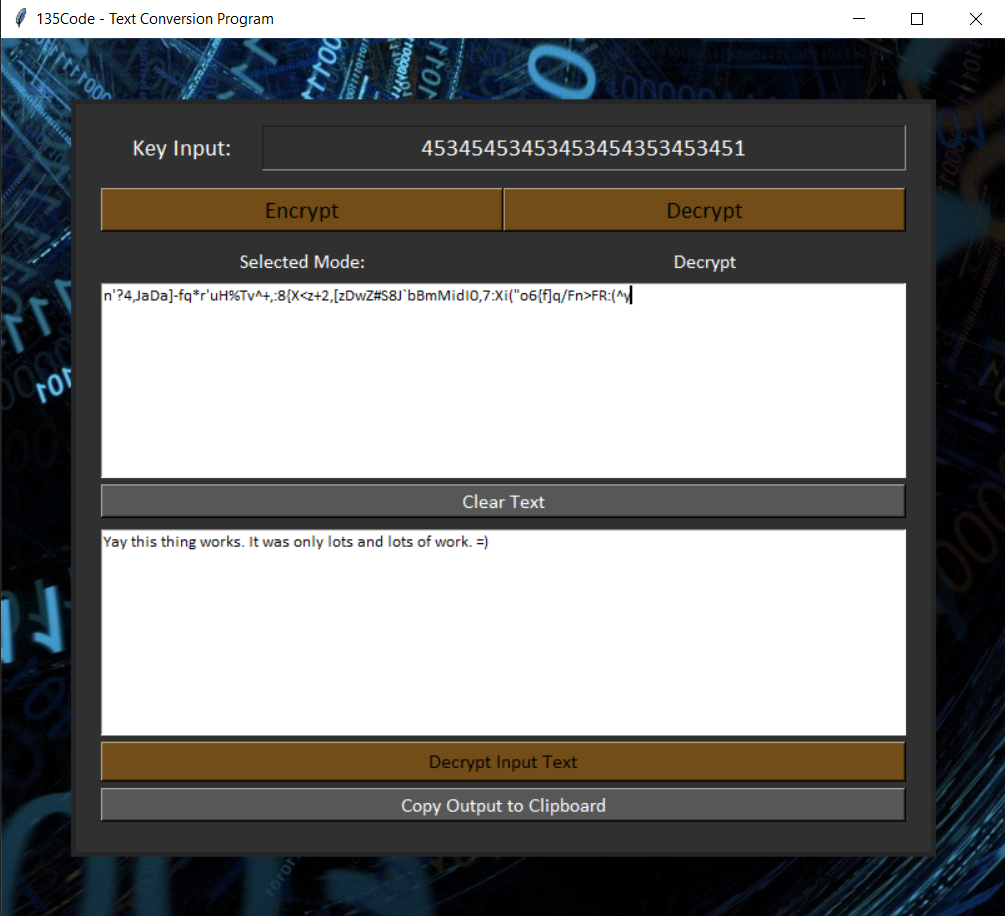
I got my encryption algorithm working at last! =)
https://prnt.sc/swyjna
 thorn obsidian
@thorn obsidian Encryption of what? The entire database? passwords? usernames?
thorn obsidian
@thorn obsidian yh the entire database(database isn't big), as such the databases cannot be accessed without a key or before being decrypted.
 green ember
Sooo, I got myself a NAS now. How can I set it up so that a crypto-troyan that got accesss to my PC cant cipher the data on my NAS? (synology ds220j)
 woven gazelle
if it was going to access it, it already would have
and the issue is that any authentication method is going to ask for a password, then let your computer have access
which means the virus has access
short answer: don't have a virus
thorn obsidian
@thorn obsidian https://stackoverflow.com/questions/5669905/sqlite-with-encryption-password-protection has a decent amount of answers for that
thorn obsidian
short answer: don't have a virus
@woven gazelle
thorn obsidian
arXiv.org
The high energy costs of neural network training and inference led to the use
of acceleration hardware such as GPUs and TPUs. While this enabled us to train
large-scale neural networks in...
thorn obsidian

Gizmodo
Facebook security personnel and engineers helped the FBI track down a notorious child predator by helping a third-party company develop an exploit in a security-focused version of the Linux operating system, Tails, per a Wednesday report by Vice. But they did so quietly and wi...
 celest breach
https://gizmodo.com/report-facebook-helped-the-fbi-exploit-vulnerability-i-1843988377
@thorn obsidian ofc they did, not even surprising
Gizmodo
Facebook security personnel and engineers helped the FBI track down a notorious child predator by helping a third-party company develop an exploit in a security-focused version of the Linux operating system, Tails, per a Wednesday report by Vice. But they did so quietly and wi...
 narrow fog
Anyone here good with wireshark? I could use a hand if so.
thorn obsidian
@narrow fog what do you need?
narrow fog
@thorn obsidian So, basically I'm doing this lab for my class, and I'm really new to this sort of thing: It's basically asking:
Q: Which Interface is connected to a local network (Ethernet)?
Q: How many packets have passed through the interface? Note: The total incoming packets, for each interface, are displayed in the column to the left of the Start buttons.
lusty flare
eth0 and how ever many you count?
feels like we're missing part of the question here
narrow fog
Packet Capture & Traffic Analysis with Wireshark (Lab
created by Rich Macfarlane. That’s what I’m doing.
I’d link, but you know
@lusty flare
lusty flare
hmm

 crystal herald
morning all. Could someone tell me what the equiv of ( in ruby ) "ECDSA::Format::SignatureDerString.encode" is in Python ? Is it util.der.encode_bitstring(s) ?
thorn obsidian
@thorn obsidian This may interest you
https://news.err.ee/113357/computer-hack-suggests-estonian-government-agencies-use-checkered-surveillance-program

ERR
A leak of corporate correspondence to a hacker hinted that a suite of powerful surveillance software program linked to use in repressive regimes is also widely used in Estonia.
https://www.eff.org/deeplinks/2014/09/statement-use-finfisher-members-freedom-online-coalition as well

Electronic Frontier Foundation
Documents recently released by WikiLeaks have brought new evidence to the public eye that the intrusive surveillance spyware FinFisher may be in use by several members of the Freedom Online Coalition, including Mongolia, Netherlands, and Estonia.[fn]https://wikileaks.org/spyfi...
@thorn obsidian This may interest you
https://news.err.ee/113357/computer-hack-suggests-estonian-government-agencies-use-checkered-surveillance-program
@thorn obsidian know for a certain fact that this is untrue
surprised ERR would publish this without checking with us first
How do you know it's untrue? Curious of sources myself.
NDA, but let's just put it like this
if this were true, I would know about it
100%
I've got doubts, to be honest.
thorn obsidian
hii!! uh i just had a question, i'm like really interested in cybersecurity and ethical hacking, i've been searching for days for like sources to learn from but i've come up empty, is there like a free e-book/courses i could look up? thank you!!!
 faint gale
@thorn obsidian In the free category, this comes to mind: https://www.youtube.com/watch?v=3Kq1MIfTWCE
Learn network penetration testing / ethical hacking in this full tutorial course for beginners. This course teaches everything you need to know to get started with ethical hacking and penetration testing. You will learn the practical skills necessary to work in the field. Thro...
thorn obsidian
thank you so much!!!!
thorn obsidian
hii, im really sorry to bother, i just have exactly this issue https://superuser.com/questions/998491/could-not-detect-the-operating-system-in-disc-image-of-kali-linux and i don't understand the response/what i should do

Super User
I am trying to create a virtual machine using VMware Workstation 12. When i am choosing iso image during installation it do not detect the operating system.
 royal latch
@thorn obsidian I think you can just click nexted and then tell vmware kali is debian
(also screen shot of the error pls? <3)
royal latch
yeah
uh wait 7 or 9
one sec
(still want that screenshot)
its close enough to 7/8
thorn obsidian
thorn obsidian
yeah
royal latch
hit it
thorn obsidian
it gives me the version choice, so debian x 64 bit?
thorn obsidian
it's 64
thorn obsidian
do i need to like change the uh name? idk (virtual machine name)
royal latch
optional - give it a good name
thorn obsidian
oh oki lol, thank you man, you're a life saver ahdkdj
royal latch
no worries man
if you dont mind me asking
whats your goal with using kali?
learning about security?
thorn obsidian
idk, the cybersecurity stuff is just really interesting to me, and i wanna know more but i can't do much lol being like 14
yeah exactly
royal latch
hahah
nah man
you gucci
oh! and if you are in the US. there is a great thing called cyber patriots
its a red vs blue competition for Highschoolers
I only ever did the college level one myself but you learn a lot!
royal latch
no worries man
i'm gonna try to make more of an effort to hang out in this channel
feel free to ask
!!! oh !!
one thing
Make sure with the kali install
WRITE. THE. CHANGES.
you can hit enter most of the install
but if you dont change the option at the end to write the changes.. it wont properly install
thorn obsidian
awh ty!! okay, i will, thanks man
quick oracle
How to create a digital certificate file (.crt, like this image) with PyOpenSSL?
thorn obsidian
yes, kali is based is based on debian
thorn obsidian
yes, kali is based is based on debian
@thorn obsidian Is also Parrot os?
 ionic flame
Hello everybody, i am writing a small encryption program using the RSA encryption algorithm, but when i input a message i only get one number (Which isn't supposed to happen.) The code: ```python
message = input("Message> ")
publickey = input("public key> ")
privatekey = input("Private key> ")
import math
def RSAencrypt(pkey, prkey, mes):
for x in range(len(mes)):
ciphertext = ""
currentchar = mes[x]
charascii = ord(currentchar)
charciphernum = int(math.fmod(math.pow(charascii, pkey), prkey))
charcipher = charciphernum
ciphertext = ciphertext + str(charcipher) + " "
return ciphertext
print(RSAencrypt(int(publickey), int(privatekey), str(message)))
Hope someone can help.Nevermind, i fixed the problem.
 sinful cliff
Hi guys! Can you get me a quick beginner question?
olive lark
sure, just ask
no guarantee that we can answer, but then you're not paying us, so ... 🙂
sinful cliff
Hahaha, I recently started cybersecurity and would like to know if the sql injection method is still worth doing.
woven gazelle
definitely worth learning and being familiar with
it's as valid a techinque as it has ever been
and while languages like python by their nature make it slightly less likely to be a vulnerability it's still one of the most common issues
also, not just SQL - 'command injection' in general is the same thing but with terminal commands, other scripting language injections etc.
correction: python tends to make command injection slightly less common but it makes it easier to write shitty db applications so may make sql injections MORE likely
thorn obsidian
it is still extremely prevalent today - coming from someone who does as a profession
lusty flare
it's the "low hanging fruit"
woven gazelle
it's also the foundation for a lot of other exploits
it's not just a case of memorizing an a4 cheat sheet
lusty flare
"webpage has loads of form fields? lets just test some escape sequences and see what happens!"
sinful cliff
i know what it sql injection,
but I have noticed that a large part of the databases of some sites immediately block the attempted attack.
lusty flare
"oh hey look, i just dumped the entire user database."
woven gazelle
it's a bug when it works
lusty flare
it's input sanitisation
woven gazelle
no website should be vulnerable
if you weren't aware of that
so if they do things properly it won't be an issue
but a lot of people don't do it properly
lusty flare
when it works it's because someone didn't properly sanitise a user input field properly
sinful cliff
yeah that's what im saying
woven gazelle
but short answer yes absolutely
sinful cliff
ok thx
lusty flare
the database will take commands given to it, it's the intermediary layer that's usually at fault
sinful cliff
all i know is that i tried to sql injection to a company whose owner i know and it didn't work: /
lusty flare
String query = "SELECT * FROM products WHERE category = '"+ input + "'";

Statement statement = connection.createStatement();

ResultSet resultSet = statement.executeQuery(query);```this would be SQLi vulnerable
since you're just smashing user input straight into the SQL query
we could then make that user input additional SQL statements
and it'd run those additionals
then feed us the results
PreparedStatement statement = connection.prepareStatement("SELECT * FROM products WHERE category = ?");

statement.setString(1, input);

ResultSet resultSet = statement.executeQuery();```would be an example that isn't vulnerable
i googled these, i did not write them.
something something value substitutions or w/e
sinful cliff
I also tried to do sql injection on a website that I found searching for "inurl: index.php? id =" but it still didn't work xD
thorn obsidian
results = sqlconn.execute(f"SELECT * FROM products WHERE category = {input}")
example vulnerable python line
I also tried to do sql injection on a website that I found searching for "inurl: index.php? id =" but it still didn't work xD
@sinful cliff Please don't test sites you don't have explicit permission to test.
Unless you like prison
!rule 5
past starBOT
5. Do not provide or request help on projects that may break laws, breach terms of services, be considered malicious/inappropriate or be for graded coursework/exams.
sinful cliff
yes i know that, i've used a vpn and it was just for testing
lusty flare
yes but you did not have permission to attack the site
or "test" it
in the UK that'd be a violation of the Computer Misuse Act
sinful cliff
even if it worked, I wouldn't damage the site. He simply contacted the owners of the site and reported their vulnerability.
thorn obsidian
VPN providers will hand your data over to law enforcement if supplied with a warrant
It doesn't matter what your intentions were
Testing a site without permission is illegal
lusty flare
people have gone through very long and drawn out lawsuits doing exactly what you did
for "learning" or "fun" tested someone website
informed them of a breach
got arrested and charged
extradited to the US
all sorts of fucking crazy shit
sinful cliff
But if I don't tamper with anything on the site and just contact the site to explain the vulnerability, can it be considered a crime?
sinful cliff
oh i didnt know that, thx for the warn
lusty flare
there are grey areas, for example port scanning, but actively trying to exploit something is definitely a black/white issue
successful or not
mate of mine who was into sec broke into lockheed martin's email server for contractors
hey was grey hatting, reported that shit on the download using TOR
then went through a paranoid hell for a few years
he didn't get caught but it didn't get patched either (this was ~6 years ago or so)
sinful cliff
I never heard any case of someone who was arrested for attempting to inject sql. I thought attempts were not used in crime.
lusty flare
at least in the UK, you're "using" the system by attempting the SQLi
and you're using it in an unauthoirsed manner
woven gazelle
yep cma is quite clear on that
it's like popping open a window on a house
you can say you were just testing to tell the owner if there's a problem bhut
thorn obsidian
But if I don't tamper with anything on the site and just contact the site to explain the vulnerability, can it be considered a crime?
@sinful cliff if you go testing your lockpicks on random houses in your neighborhood, is that a crime?
woven gazelle
looks mighty suspicious
woven gazelle
eh
you have to open the window in this case to see if it opens
although i have reported injection vulnerabilities without testing before
since it's safer that way
(on open source projects lol)
sinful cliff
In the country where I live (Portugal) I think that attempts are not a crime, but it is better not to try to do any shit that I don't know
lusty flare
i think the lockpick example is probably a better one
woven gazelle
@sinful cliff there are plenty of places to learn and test this stuff as wlel
lusty flare
sometimes you might find the door isn't even locked
sometimes it's got a crap lock
but just trying the lock is potentially a crime
sinful cliff
@thorn obsidian well yes
lusty flare
that's pretty much what you're doing
but digitally
plus, since this is a world made of nations
different nations have different laws on certain things
Germany pretty much made network security tools illegal at one point (maybe still are?)
stuff used day to day by security and network professionals
sinful cliff
then any user using any vpn is not 100% secure because in case of confusion the company responsible for the vpn discloses the user's ip
so in germany is it "forbidden" to be a cybersecurity professional ?!
lusty flare
no, the law is unworkable, but it's the law.
we have lockpick laws in the UK that say if you're caught in public with them you have to provide a pretty good reason for having them
and VPN's aren't 100% secure because the VPN provider knows who you are already? o_O
¯_(ツ)_/¯
sinful cliff
and say that security professional is not enough? Type shows the curriculum and the place where he works
lusty flare
my point is laws are broad and differ between nations, sure, but some things are pretty concrete
sinful cliff
@lusty flare Because in principle yes, he identifies you by the ip and knows your location¯_(ツ)_/¯
lusty flare
yeah, i wasn't sure what your point was really.
but going to sites and testing them for SQLi without permission is very much something naughty
sinful cliff
I think that there should be a law that was enforced worldwide, in which sql injection was allowed on the sites but if they discovered any vulnerability they were obliged to report it, otherwise they were punished. Simple
attention I went to sites that were allowed. The database had no protection at all.
I saw on the internet that those sites that are allowed to make attacks were searched that way. But there were some who couldn't do sql injection
 viscid plank
Can you guys suggest a good book for developing python security tools except "The Gray Hat Python" And "The Black Hat Python" ?
 gilded kayak
@viscid plank Violent Python...
viscid plank
Great! thx
 quasi steppe
What is a "must know" programming language in Cyber security? Is it necessary to know a lower language like C/C++? Or could you do just fine with knowing a higher level language like Python? I'm debating about whether to learn C/C++ or Golang. I heard Golang is fast and has C-syntax but at the same time it's not a low level language. I already know Python and some intermediate concepts in C++ and JavaScript. And theese days you have a python library for almost everything, so why should you learn another language (other than the obvious reason, speed?). Or is it more about a "personal preference"? If this is not related to this channel/server, let me know.
viscid plank
I think it depends on what exactly the task you want to do with the language, I usually use python in CTF and Web Application Exploitation but I am not working on binary exploitation or something that depends on the low level so I don't use another language ( I also don't know if this is related to this channel )
woven gazelle
What is the length of the actually required data in an RSA 2048 public and private key respectively
i.e. if you don't need to worry about optimising decryption times how short can a public or private key be
 sacred pollen
how do you hide keys in python like your api keys for a cloud server?
thorn obsidian
"hide" from whom?
you shouldn't keep them in code
instead, they should be kept as environment variables
sacred pollen
sorry for the late reply. how do I keep them as environment variables?
"hide" from whom?
from other users, just in case
thorn obsidian
users of what?
sacred pollen
I am kinda building an app for raspberry pi which throws sensor data to cloud database, since I am leaving it in their location I just wanted to ensure that they could not get the possible keys for the cloud database
just asking on how I could prevent that kind of situation
thorn obsidian
well, that's impossible
if they have physical access to the device, they can do whatever; as long as the Pi needs API keys itself, they can extract them from the device
sacred pollen
is there any workaround in that?
like kinda locking the rpi but it can still run the application in the background?
thorn obsidian
no, not really
Multi-billion dollar companies like Sony or Nintendo spend fortunes to lock down much more specialised hardware, yet people can still hack their consoles, since there's only so much they can do. Physical access = game over
Much more easier on a pi where you can simply pop the SD card out and read the keys directly.
or implant a script to echo those keys if they're obtained elsewhere, like through a trusted server
 slate fulcrum
Goal: salt like this: "2c2d9fa7bf4b037640067f102c0c8707"
What I have:          "9DeCO9hfAyqoC+KkSCUd30YSG5FIbsmKGfnW/GmlCrA="
What I tried:python _salt = os.urandom(32) print(b64encode(_salt).decode('utf-8').encode('utf-8'))
past starBOT
5. Do not provide or request help on projects that may break laws, breach terms of services, be considered malicious/inappropriate or be for graded coursework/exams.
thorn obsidian
@slate fulcrum What's the salt for?
slate fulcrum
@thorn obsidian I got it working but I'm still not 100% sure its secure, its for provably fair thing so I can proof that the generated numbers are random and generated before users set bets
I haven't done the random thing yet tho
thorn obsidian
bets? What kind of bets?
thorn obsidian
That's not something I'm comfortable assisting with
thorn obsidian
If it's something you need help with, the help channels #❓|how-to-get-help
slate fulcrum
but yeah, I'm using os.urandom(16) to get the salt, then add the random number in the end and hash with SHA256, if I give the client the hash, it should be secure?
sinful cliff
ok sorry, im new at cybersecurity and i was just testing
 limpid junco
I have a cipher based encryption code, it is a variant of a homophonic substitution cipher where a key is generated randomly for each letter of the alphabet and for each instance of the letter a random choice of key is used. My encryption works fine but when I decrypt it it mostly works bit there are multiple posisblities for the actual decrypted code, based on the position of th echoice.
My encryption returns the choices made, the keys and the code but as there are sometimes multiple instances where the code letter is valid it can return the wrong value for decrypted code
Does anyone have any ideas on another way to find out the letter from these variables?
Here s some of my code:
limpid junco
any help would be appreciated 🙂
 long tundra
Hey y’all! I’m new cyber security and coding as well but would like some advice on where to start. All help is appreciated
thorn obsidian
heyy!! im new too but i'm following this video which someone here recommended, its rlly helpful, u should maybe check it out!! https://youtu.be/3Kq1MIfTWCE
Learn network penetration testing / ethical hacking in this full tutorial course for beginners. This course teaches everything you need to know to get started with ethical hacking and penetration testing. You will learn the practical skills necessary to work in the field. Thro...
quick oracle
Message Authentication Code (MAC) vs Digital Signature?
Isn't it the same thing?
H=Hash
E=Encrypt
PR=Private Key
Where it says MAC it could also say Digital Signature, correct?
And Message-MAC is a signed document/message
thorn obsidian
no, they work on a fundamentally different basis
thorn obsidian
@quasi steppe
What is a "must know" programming language in Cyber security? Is it necessary to know a lower language like C/C++? Or could you do just fine with knowing a higher level language like Python? I'm debating about whether to learn C/C++ or Golang. I heard Golang is fast and has C-syntax but at the same time it's not a low level language. I already know Python and some intermediate concepts in C++ and JavaScript. And theese days you have a python library for almost everything, so why should you learn another language (other than the obvious reason, speed?). Or is it more about a "personal preference"? If this is not related to this channel/server, let me know.
Golang is becoming used a lot for speed-dependent attacks such a bruteforcing and stuff like asset enumeration. Ideally, you want to be familiar with all languages, as they all tend to have native vulnerabilities. If you only know memory safe languages, you may be totally unfamiliar with low level memory corruption vulns and such. If you only know C, you might not know how insecure deserialization and polymorphic type handling works in OO languages. Maybe you don't know PHP, so you're oblivious of the existence of type juggling/loose comparison vulns. For building simple POCs/exploits, obviously a high level scripting language is best, at least if it's a remote exploit. Nobody wants to write a remote exploit in C/C++. That's where something like Python or Go comes in. It really depends a lot on what you want to do. There are many routes you can take in cybersecurity. If we're talking like pentesting, webapp/network, then you're also going to need the know the basics of HTML, JS, etc.. There really is no "must known" language, but you should at least know CS basics.
carmine wraith
“Uploading a file multiple times at the same time.” - https://owasp.org/www-community/vulnerabilities/Unrestricted_File_Upload What do they mean by this?
woven gazelle
this?
like maybe if you upload a large video file twice to the same server it might generate back an interesting error
as in the same filename simultaneously
quick oracle
@thorn obsidian so is the picture a MAC or a digital signature?
it really seems to me it is a digital signature
thorn obsidian
It is not.
quick oracle
this video agrees with me https://youtu.be/MaOyDcVMnXU?t=89

This lesson will help CISSP candidates (and hopefully everyone else) to fully understand what a digital signature is, and how it works from a lay person’s perspective. For students, this is part of the CBK Domain 3, Security Architecture and Engineering.
thorn obsidian
A digital signature can be verified using just a public key
No preshared exchange of secrets needs to be done
quick oracle
it can be verified using just the public key
thorn obsidian
Whereas with a MAC, it is calculated using a secret key. That same secret key is also used to verify the authenticity of the message
So the secret key must be somehow exchanged beforehand in a secure manner, as if anyone gets a hold of it, they can forge messages
quick oracle
so MAC uses symmetric key?
thorn obsidian
It is a fundamentally different concept from digital signatures - the only thing they really have in common is that they seek to provide authenticity and integrity of a message
quick oracle
so this #cybersecurity message is a digital signature and not a MAC?
it's part of a picture, maybe I should get the full one
D=Decrypt
PU=Public Key
 quick oracle
it seems this MAC Algorithm could be a kind of hash + encryption, and that makes it very similar to the digital signature, except it uses the same (symmetric) key, while digital signatures use different (asymmetric) keys
correct?
 random ether
Is keyring the best library for storing passwords for python scripts?
quasi steppe
I appreciate the answer @thorn obsidian . I will continue to look over which route specifically I might want to follow, then consider what languages would be necessary from there.
thorn obsidian
Np @quasi steppe I’m a security engineer for FAANG. I do a lot of white box penetration testing, so a lot of static code analysis. I see all kinds of languages. It’s impossible to know them all, but the concepts are similar
carmine wraith
Oh ^^. Thanks talk less.
past starBOT
You are not allowed to use that command here. Please use the #bot-commands channel instead.
 shell pagoda
Anyone know what does “scapy contextmanagersubprocess” do? And can anyone explain it to me?
thorn obsidian
hiii, just wanted to ask if there's any ethical hacking / cybersecurity reliable certificates that could be taken for a person under 18 years old? like the ceh requires over 18, etc?
carmine wraith
Is the only way to prevent ‘DoS attacks via SQL wildcards’, to remove those characters(e.g. % or _) from the user input?
lusty flare
use parametrised queries
this seems like a reasonable source of information
i think i read it before, even if it is php focused
carmine wraith
Thanks bisk.
lusty flare
np
woven gazelle
and please please don't not use it and do something else
so many people just go 'ah i can't get it to work' and give up
doing that will make your system vulnerable
in almost every case
lusty flare
always assume user input is malicious
because even if a user doesn't intend to be malicious
they're dangerous through their obliviousness
 solemn arch
If you have a dynamic IP address, does the former IP address you had still contain your geographic location?
thorn obsidian
@thorn obsidian https://www.offensive-security.com/courses-and-certifications/


Hey I have a quick question some old friend I haven't spoke to since 2016 sent this link to me on instagram https://followthankhod.me/ipp.html I clicked it a few times dunno what happens, it just shows a blank page. Anyways, if any of you know what it it means please tell me. It's probably some IP Grabber dunno.
33.9m Followers, 5 Following, 8 Posts - Today's Lucky Pick Is...
@carmine wraith Rule of thumb when it comes to DOS, a single request from a user shouldn't be able to force the system exhaust excessive resources by returning the dataset. As someone said earlier, wildcards (without restriction) shouldn't be permitted via user-input, or any metacharacters.
thank u sm, talk less
thorn obsidian
Security Connects with hacking right?
carmine wraith
Thanks seagull and talk less.
I think SQLAlchemy did a prepared statement for me:
name = '%'
User.query.filter(User.username.like(name + "%")).all()
SQLAlchemy echos: WHERE user.username LIKE ? and then ('%%',) as the parameter.
That returned all usernames, instead of usernames starting with '%'.
What am I doing wrong?
lusty flare
% is a like operator
when you're name + "%" i assume it's joined them as strings to create %%
so when it process it it's like
"oh, find a username with the username of any number of characters / symbols?"
carmine wraith
yeah 😦
lusty flare
you need to escape the %
in name, i mean.
you probably would've gotten a better response from a help channel or databases rather than security though :)
carmine wraith
Thanks again bisk, very kind.
 dusty tartan
Hey I have a quick question some old friend I haven't spoke to since 2016 sent this link to me on instagram https://followthankhod.me/ipp.html I clicked it a few times dunno what happens, it just shows a blank page. Anyways, if any of you know what it it means please tell me. It's probably some IP Grabber dunno.
@thorn obsidian Yeah it's an IP grabber
You can open these links using a vpn
lusty flare
whenever you access any website that server knows your IP address
that's how the internet works.
dusty tartan
Does anyone know any good pentest tools ?
whenever you access any website that server knows your IP address
@lusty flare ohh ok
dusty tartan
hahaha
I'm trying to get started with ethical hacking. But almost all the tools are for kali, I want for windows
lusty flare
most of the tools are opensource so can be compiled for windows.
 signal kernel
you could use kali in a vm
dusty tartan
can you recomend some
lusty flare
i mean... tools are tools.
you say "i want to build something, what tools do i need?"
i can't answer that. :3
dusty tartan
ok
lusty flare
nmap / wireshark are some fundamentals for networking
gdb for debugging executables
aircrack, airplay, etc, etc, etc
dusty tartan
Thanks
lusty flare
i'm just saying you'd probably want to know how to use a chainsaw before starting one up.
theory before practical. :)
you might want to google for a recommended list of security blogs or something that have some intro articles.
thorn obsidian
I'm trying to get started with ethical hacking. But almost all the tools are for kali, I want for windows
@dusty tartan actual hacker here: none of the tools I use require kali
just usually a regular linux install
dusty tartan
ok
lusty flare
and what tools to use is situational
thorn obsidian
Hello, I am a beginner in ethical hacking. I am in Europe and I would like to learn the different laws in cybersecurity and different reasons why something could turn wrong...
lusty flare
i'd recommend looking up the laws of your country in regards to Computer Misuse / Abuse and their implication in ethical hacking.
in general if you're doing things properly you shouldn't run into any legal problems because you'll have a document signed by people the saying "i let them do this because security".
thorn obsidian
And if I'm learning on my own?
lusty flare
the computer security institute came up with a "ten commandments" type thing that's pretty good.
thorn obsidian
Thanks!
lusty flare
if you're learning on your own you can run virtual machines to practice methods
thorn obsidian
only test on machines/services that either you're hosting or who have put out bug bounties
lusty flare
^
don't go sticking your nose into other people's stuff without permission is a key step
thorn obsidian
and in the case for bug bounties, triple check what things (and attacks) are in scope
EXPLICIT permission is the keyword here
lusty flare
big ol paper document
thorn obsidian
never think permission is implied
lusty flare
that says "yes, i, the very important man, said this person, this person, can do X to this computer system."
thorn obsidian
but also check out things like overthewire or hackthebox
lusty flare
otw is fun.
thorn obsidian
who host different challenges/machines designed for people like you to learn and test their skills
picoctf also comes to mind
Thank you so much!
but also, bear in mind, we ANAL
lusty flare
and as i recommended to apram above, it's probably worth googling around for some security blogs
there are some good ones out there on both actual methods and legal compliance
lusty flare
man, i looked up that CSI ten commandments thing and it's actually uhh... heh
Thou shalt not use a computer to harm other people.
Thou shalt not interfere with other people’s computer work.
Thou shalt not snoop around in other people’s computer files.
Thou shalt not use a computer to steal.
Thou shalt not use a computer to bear false witness.
Thou shalt not copy or use proprietary software for which you have not paid.
Thou shalt not use other people’s computer resources without authorization or proper compensation.
Thou shalt not appropriate other people’s intellectual output.
Thou shalt think about the social consequences of the program you are writing or the system you are designing.
Thou shalt always use a computer in ways that insure consideration and respect for your fellow humans.```i guess that's a start
they tried real hard to cram it into ten
lusty flare
i'm going to go with the stone tablet on this one
thorn obsidian
Quick question: facebook has a 10 photo limitation on marketplace to display. Will one be able to perhaps bypass this limit and if so, wouldnt that trigger a security mechanism that alerts for an ad with invalid number of photos and remove it ?
lusty flare
if they put a limit there, respect it.
thorn obsidian
I received this question and just wanted to imagine how does a check up like that work technically
 exotic sundial
How come I can easily decrypt this GZIP encoded text H4sIAAAAAAAAC62Qyw3DIBBEG9pIO8vHtnJKDSlgCnALKT7AIuUARJaSy47nYR425zPsAkalEZYYaCkR8DAPh5E3MBOqyo0gUh07lTvxAptC7ZoCvyuOqaK-4xsuSYx1_x9EaSmq12qlXdLkhUbOB4JojeSRPaKU6c-bkx57jWc4WrM2XdAWHrFNX4V6QPQOgZiUQ0IZvUVvYqWqxk63KYXOcfiC4xxvC4kueFjwPPC84Mecm33lw7mdD9_pfPgtx8MldMsHvwGcxC66rAMAAA== in an online tool, but when I try to do it in python it doesn't work?
def _gzip(data):
    return gzip.decompress(bytes(data.strip(), 'utf-8'))
    #return zlib.decompress(bytes(data.strip(), 'utf-8'), 0)
zlib:
zlib.error: Error -3 while decompressing data: incorrect header check

gzip:
OSError: Not a gzipped file (b'H4')
i did
oh wait
let me try that
alright seems like that solved the issue, thank you
olive lark
funny I tried it and got zlib.error: Error -3 while decompressing data: invalid distance too far back
exotic sundial
Well i had a file that was all encoded in base 64 so i decoded it with this function
def base_64(data):
    return zlib.decompress(base64.b64decode(data.replace('-','+').replace('_','/').encode())[10:],-zlib.MAX_WBITS)
which then produced an xml file that had some text that was encoded in gzip
So i used this function again on that text and it worked like a charm
olive lark
yikes, glad it worked
thorn obsidian
How come I can easily decrypt this GZIP encoded text
@exotic sundial the pedantic in me points out that gzip is not encryption, but compression
an important distinction
exotic sundial
Thank you
cobalt elk
Hello guys i found an example to send massages in python to facebook but it needs the username and pass. It uses the getpass library to get the pass. is it safe to use lik this?:
import fbchat
from getpass import getpass
username = str(raw_input("Username: "))
client = fbchat.Client(username, getpass())
no_of_friends = int(raw_input("Number of friends: "))
for i in xrange(no_of_friends):
    name = str(raw_input("Name: "))
    friends = client.getUsers(name) # return a list of names
    friend = friends[0]
    msg = str(raw_input("Message: "))
    sent = client.send(friend.uid, msg)
    if sent:
        print("Message sent successfully!")
So it kinda worked i found accounts logging in as mac computer and i found this in doc could it be the reason for mac logins? :
fbchat.utils.USER_AGENTS = ['Mozilla/5.0 (Macintosh; Intel Mac OS X 10_10_2) AppleWebKit/537.36 (KHTML, like Gecko) Chrome/42.0.2311.90 Safari/537.36', 'Mozilla/5.0 (Macintosh; Intel Mac OS X 10_10_3) AppleWebKit/601.1.10 (KHTML, like Gecko) Version/8.0.5 Safari/601.1.10', 'Mozilla/5.0 (Windows NT 6.3; WOW64; ; NCT50_AAP285C84A1328) AppleWebKit/537.36 (KHTML, like Gecko) Chrome/42.0.2311.90 Safari/537.36', 'Mozilla/5.0 (Windows NT 6.1; WOW64) AppleWebKit/537.1 (KHTML, like Gecko) Chrome/22.0.1207.1 Safari/537.1', 'Mozilla/5.0 (X11; CrOS i686 2268.111.0) AppleWebKit/536.11 (KHTML, like Gecko) Chrome/20.0.1132.57 Safari/536.11', 'Mozilla/5.0 (Windows NT 6.1; WOW64) AppleWebKit/536.6 (KHTML, like Gecko) Chrome/20.0.1092.0 Safari/536.6']
Default list of user agents
I got prompted by face by suspicious activity ik 2 pass change and lot of login from mac. It was me so i dont think there is problem but now i have to use another pass 😦 .
What do you guys think? there is security risk in this?
But do you think there are security risks?
 icy perch
Do any of you guys know any good programs to learn ethical hacking?
 stable rover
Do any of you guys know any good programs to learn ethical hacking?
@icy perch Wireshark
icy perch
@stable rover ok thanks I'll look into it
stable rover
Yw!
Does anybody know how to get into a snapchat account without knowing the password?
royal latch
Does anybody know how to get into a snapchat account without knowing the password?
@stable rover you can request a password reset, otherwise not possible and also without consent of the user thats unethical
stable rover
@stable rover you can request a password reset, otherwise not possible and also without consent of the user thats unethical
@royal latch Thanks i want to recover my old account but i didnt use a right email to sign up on my old account. Can i still request a password reset with my current mail?
thorn obsidian
anyone know how to send data like this
with python requests
the application type is multipart/form-data
thorn obsidian
yea
check out w3w3w3 on YT
headers = {
  'Content-Disposition': 'blah blah',
  'Content-Transfer-Encoding': 'blah blah',
  ....
  ....
  ....
}
r = requests.post(url, headers=headers)
hey, i want to study using udemy or coursera cybersecurity, does anyone have any recommendations for certain courses for beginners that go in depth? thank you!!
thorn obsidian
oh shit
thorn obsidian
@thorn obsidian check out https://youtube.com/w3w3w3

YouTube
The number 1 fastest growing info-sec channel in the UK. "If you want to find the secrets of the Universe, think in terms of energy, frequency, and vibration...
dusty tartan
hey, i want to study using udemy or coursera cybersecurity, does anyone have any recommendations for certain courses for beginners that go in depth? thank you!!
@thorn obsidian I did the Introduction to Cybersecurity by NYU on Coursera recently. It covers all of the basic knowledge required for cybersecurity(not hacking).
past starBOT
6. No spamming or unapproved advertising, including requests for paid work. Open-source projects can be showcased in #show-your-projects.
lusty flare
hmmmm yes. i got a DM linking to the channel too.
thorn obsidian
maybe escalate that to modmail
that ain't cool
yea sorry @thorn obsidian won't do it again, did not realise the rules. I also had seen a number of people commenting on learning "Hacking/Security/Python" and thought they may get some inspiration or ideas from one of my videos. That was all. 🙏
lusty flare
that's fine, you know now. :)
thorn obsidian
@dusty tartan oh okay, thank youu!!!
@thorn obsidian thanks!
@thorn obsidian np 🙂
tepid venture
How would you inject code into a compiled pyinstaller or py2exe?
thorn obsidian
well buffer overflow lol
many ways to inject code into any binary file/app does not have to be a pyexe lol
 tough mountain
Would hashlib be a good idea to use for a actual secure password and user system or should i use a external system
 south seal
@tough mountain are you considering saving the password?
Safest option is this: create a frontend random hash which takes in a private key from the server, take user input, hash the password with that random hash function and then send it to the server, save it in a db, then for the user to login you will rehash their password and compare the two different hashed passwords, if they match then password is ok if not then password is wrong
tough mountain
Yeah ik, Im just asking more if hashlib is actually good enough to be used with that system
or whether using a external lib will be better for it
south seal
Hashlib is the best imo
royal latch
Would hashlib be a good idea to use for a actual secure password and user system or should i use a external system
@tough mountain Oh boy. The moment you start trying to make an authentication system you better be in for a ride. Personally my rule is look for a tutorial that is no older than 6th months. Dont try to write one from scratch as it'll probably suck
With just a quick google https://developer.mozilla.org/en-US/docs/Learn/Server-side/Django/Authentication this comes up and looks pretty good

MDN Web Docs
Excellent work — you've now created a website that library members can log in into and view their own content and that librarians (with the correct permission) can use to view all loaned books and their borrowers. At the moment we're still just viewing content, but the same pr...
I dont know if that meets your usecase
tough mountain
Hmm, That seems to be based with Django and it's system which does alot for you
the long ride begins xD
For the basic principle i think working it with / like Oauth2 is going to be the way to go
thorn obsidian
@tough mountain Really depends on what you're storing. Passwords? I'd use Passlib - https://passlib.readthedocs.io/en/stable/lib/passlib.hash.argon2.html
tough mountain
oh does this work like pbkdf2?
thorn obsidian
What do you mean?
tough mountain
Salt and hash method
thorn obsidian
That's not specific to pbkdf2, that should be most hashing algorithms today
thorn obsidian
You're welcome 👍
south seal
@thorn obsidian what do u think is the best jwt library atm?
thorn obsidian
@south seal Depends on what you need. I'd suggest checking out https://jwt.io/#libraries-io
JSON Web Tokens are an open, industry standard RFC 7519 method for representing claims securely between two parties.
south seal
I am using jwt to create user sessions instead of using sessions
That is my module of choice
@thorn obsidian
thorn obsidian
Sounds like you've got what you need?
thorn obsidian
👍
No need to @ me btw, feel free to just post a question. I wasn't around for a bit.
thorn obsidian
hii, i have a question. i use kali linux right, and like im learning more, but there was a tutorial that i saw where the person like used the computers terminal to like give commands while downloading kali at the same time? idek what they were but when i tried doing that, it wouldn't work, even when i copied the code. is it because i'm a second user on the laptop? but i'm also an administrator?
will i like not be able to use the terminal and like idk?
thorn obsidian
@thorn obsidian i have no idea what you said or what you're asking
are you asking how to use a terminal..?
no
there were certain commands that a person wrote in their terminal, i know how to open a terminal and stuff lol, but when i do it, it just doesn't work. it gave me some type of response a couple days back
my question is like, whether that's bc there is more than one user on the laptop, using the terminal doesn't work
does that make sense?
no
and yeah using vm does work, im just talking ab the terminal like with the pc
what do you mean "it doesn't work"?
im not using my laptop rn, but i'll get a photo when i do later today, it just doesn't give out the same result yk?
what command are you running specifically
it was relating to downloading kali linux, the person was writing commands at the same time to download it. but i already had it downloaded
could that be the reason?😳
I'm sorry, I really don't know what you mean by that
the actual command you're trying to run would help the most
 mild linden
Is the download done in background job?
thorn obsidian
it was this command, i don't remember the result that came up for me tho
i mean thatäs just uname
it should work fine and has nothing to do with downloading kali
am i supposed to set up the command prompt in like a certain way before? because like it says windows/system 32
these are linux commands
you need a linux machine to run these
not windows
ohhh okay, so windows has different commands? i thought that in the video windows was used
yes, windows and linux are very different and use different commands
ah okayy, thank you so much man
@thorn obsidian don't take this the wrong way, but you should get familiar with Linux first as an OS before trying to use kali linux to hack things
a lot of it requires you to already have a preexisting knowledge of linux on an intermediate (if not advanced) level
woven gazelle
did they not actually ever install linux
thorn obsidian
i'm not lol!! i thought the person was using it while downloading linux for some reason, i am trying to get familiar with it first, thank you tho :)) @thorn obsidian
kali linux is not a good first distro
idk if you're talking ab me lol, but if it is, i did
really? what should i get started with then?
most videos i saw said that ://
I don't recommend Kali as a distro at all, even for hackers
it's mostly only used by people who think they instantly become godlike hackers by downloading and installing kali
for getting started with Linux, I recommend something like Mint or Kubuntu
rlly? oof gosh lol😳😳
ohh okay, i'll check those two out, thank you so much again!! :))
 storm kraken
it's mostly only used by people who think they instantly become godlike hackers by downloading and installing kali
@thorn obsidian 100% True if you want to hack you need to know what in the background going on ,
and Kali gives you the right lab for hacking but it dos't make you a hacker
thorn obsidian
How do you feel about parrot? @thorn obsidian TBH, I don't have a reason to use 90% of the tools packaged out with those distros, but I liked parrot. As far as I can tell, the reason that kali exists is because when you get a classroom full of students to teach them pentesting, its just easier than helping them individually set up an environment to learn on figuring that probably more than a few of them will ahve very little basic knowledge.
So they're just like, "Fuck it, install this on a VM"
that's about the only scenario where i'd find it somewhat useful
 shrewd roost
well, I'm trying to parse a windows command output for a friend's task, so unix probably wont fit
thorn obsidian
Hi, is some of you familiar with the rules tab in firebase?