#web-development
2 messages · Page 162 of 1
 shadow belfry
import cgi, os
import cgitb; cgitb.enable(display=0, logdir="/log")

try: # Windows needs stdio set for binary mode.
    import msvcrt
    msvcrt.setmode (0, os.O_BINARY) # stdin  = 0
    msvcrt.setmode (1, os.O_BINARY) # stdout = 1
except ImportError:
    pass

form = cgi.FieldStorage()
# Get filename here.
fileitem = form['filename']
# Test if the file was uploaded
if fileitem.filename:
    fn = os.path.basename(fileitem.filename)
    open('upload/' + fn, 'wb').write(fileitem.file.read())
    message = 'The file "' + fn + '" was uploaded successfully'
else:
    message = 'No file was uploaded'

print("""
Content-Type: text/html
<p>%s</p>
""" % (message,))
I store the file send by form in upload folder and I can use the file but for the audio file I don't have the full audio send
 compact surge
Why you dont close the file after opening?
shadow belfry
I can try to close it to see if something change
compact surge
shadow belfry
I can try to close it to see if something change
Okey
 karmic maple
from flask import Flask
from flask_cors import CORS

app = Flask(__name__)
CORS(app)

@app.route('/')
def home():
  return "Hello"

if __name__ == '__main__':
    app.run(debug=True)
```What's wrong with cors here, it isn't working.Whats your browser wrote to you?
karmic maple
Access to fetch at '<url>' from origin 'null' has been blocked by CORS policy: No 'Access-Control-Allow-Origin' header is present on the requested resource. If an opaque response serves your needs, set the request's mode to 'no-cors' to fetch the resource with CORS disabled.
I try this but nothing change : ```py
file_data = open('upload/' + fn, 'wb')
file_data.write(fileitem.file.read())
file_data.close()
Why you dont use Django, Flask?
Why you use cgi?
I use Flask for making the word generator
I think the problem with cgi
And my file also uploading from html form
shadow belfry
Ok ok I will try flask
 rugged scarab
Nvm got it, the problem I was using Chromes driver and using edge to check stuff out. Thanks btw
 native tide
Hi! Does anyone can recommend a good Django 3 course?
 ivory bolt
rugged scarab
Nvm got it, the problem I was using Chromes driver and using edge to check stuff...
ivory bolt
rugged scarab
Nvm got it, the problem I was using Chromes driver and using edge to check stuff...
oh lol no problem
ivory bolt
native tide
Hi! Does anyone can recommend a good Django 3 course?
How much experience do you have with django
and what specifically do you want to learn
 north oasis
native tide
Hi! Does anyone can recommend a good Django 3 course?
north oasis
native tide
Hi! Does anyone can recommend a good Django 3 course?
check out Corey Schafer on YT. He has got an awesome django basic tutorial .. ❤️
native tide
ivory bolt
How much experience do you have with django
I have no experience with Django but I am a Python junior
I have some experience with modular systems such as Odoo
also i've some experience with PyTorch
native tide
north oasis
check out Corey Schafer on YT. He has got an awesome django basic tutorial .. ❤️
Yes but he use Django's older version
😦
I'm searching for Django3 tutorial
north oasis
native tide
Yes but he use Django's older version
Not much of a difference .. If you are looking to start somewhere that's the right place. You can further go through change documentation later.
 cerulean mortar
Hi I am having an issue with new url patterns. for some reason Django cant find my new url patterns and is displaying my old home page http response instead of my new one. here are some code snippets. any help greatly appreciated!


 short venture
Hello all. I've a question about Django's ORM.
Say, I have an object named UpgradeRequest. Whenever a product's higher version is requested, this UpgradeRequest object is being created automatically. Currently, it has 3 statuses. 1-) Approved, 2-) Rejected, 3-) Cancelled.
without_upgrade_request = UpgradeRequest.objects.filter(
user_profile=OuterRef("user_profile__pk"),
status__in=[2, 3],  # Rejected and canceled won't be shown.
)

Product.objects.filter(user_profile__user=self.request.user)
.annotate(without_upgrade_request=Exists(without_upgrade_request))
.filter(without_upgrade_request=False)
I'm currently checking if a user has requested to upgrade a product or not. But since one product can have more than one statuses in past, if that object has an UpgradeRequest object with status cancelled or rejected won't be shown even if it has an UpgradeObject with approved status currently.
How can I exclude the past statuses (rejected and canceled) if that object has a UpgradeRequest object with approved status?
cerulean mortar
the products and customer urls return a 404 😦
 obsidian steeple
cerulean mortar
obsidian steeple
cerulean mortar
interesting 
cerulean mortar
obsidian steeple
interesting <:pithink:652247559909277706>
this is what the httpresponse for the landing page

idk why it is that though as my httpresponse is just set to 'home'
native tide
how to do smth like this ```js
(function () {
const second = 1000,
minute = second * 60,
hour = minute * 60,
day = hour * 24;
let birthday = "Jun 8, 2021 16:54:00",
countDown = new Date(birthday).getTime(),
x = setInterval(function() {
    let now = new Date().getTime(),
        distance = countDown - now;

    document.getElementById("days").innerText = Math.floor(distance / (day)),
      document.getElementById("hours").innerText = Math.floor((distance % (day)) / (hour)),
      document.getElementById("minutes").innerText = Math.floor((distance % (hour)) / (minute)),
      document.getElementById("seconds").innerText = Math.floor((distance % (minute)) / second);

    //do something later when date is reached
    if (distance < 0) {
      let headline = document.getElementById("headline"),
          countdown = document.getElementById("countdown"),
          content = document.getElementById("content");

      headline.innerText = "Ended!";
      countdown.style.display = "none";
      content.style.display = "block";

      clearInterval(x);
    }
    //seconds
  }, 0)
}());
 versed python
cerulean mortar
this is what the httpresponse for the landing page
versed python
cerulean mortar
this is what the httpresponse for the landing page
Try force reloading. Ctrl shift r on chrome.
ivory bolt
native tide
😦
it's really mostly the same
really a few things here and there with authentication
corey shafer is good but you can also check out coding entrepreneurs
I believe coding entrepreneurs has a structured course
and then when you want to get into specifics, you can check out corey shafer, Denis Ivy
I also feel that the django documentation is supremely good! After a certain level, you'll find yourself relying less and less on tutorials
I myself use django 3.2
ivory bolt
cerulean mortar
check out your httpresponse parameter first and SAVE everything
happens a lot
ivory bolt
cerulean mortar
also probably try namespacing?
ivory bolt
cerulean mortar
so change it to
from django.urls import path, include
 cerulean badge
no it didn't work bro
 modern dock
Hey! I'm working in an API for manage an OLT (Optical Line Terminal) for my company.
It uses telnet protocol to send/receive commands and data. Could someone give a feedback about
my code, Django Rest structure, etc?
https://github.com/giacomoquinalia/olt-management
Thanks!
GitHub
Django API to manage an OLT (Optical Line Terminal) - giacomoquinalia/olt-management
 subtle otter
Hello , so i got a website where i'm trying to use a python script in , the script takes the uploaded files and removes duplicates and sorts them into new folders depending on their extension . how i want this to happen is first of all the user uploads the file then chooses the type after that he clicks on . than he gets the interface that i'm gonna send in screenshot next where he runs the python script (this interface is in the same page just done some js to hide the other one and display this one).
What i want to do is the post request doesn't refresh that page so the js code works

this is the new interface

 glad creek
ok so I git cloned a project, did flask run than closed the terminal
now am doing a different flask project and when I do flask run it displays the previous flask project? how do I fix it, I have no clue
 proud lintel
Can anyone tell me is fastapi can be used for heavy load application?
 fiery stirrup
hey guys, what is the data attribute of "Visit W3Schools.com!" in -
<a href="https://www.w3schools.com">Visit W3Schools.com!</a>
native tide
north oasis
Not much of a difference .. If you are looking to start somewhere that's the rig...
thanks
ivory bolt
ivory bolt
so change it to
```
from django.urls import path, include
```
@opaque rivet did it work?
ivory bolt
subtle otter
Hello , so i got a website where i'm trying to use a python script in , the scri...
can you show me your views.py logic
assuming you're using django
subtle otter
lemme upload it to code pen one sec
ivory bolt
alright
ivory bolt
checking it out rn
so @subtle otter you are returning users to an index.html template after a successful upload with the valid file validations correct?
subtle otter
yea but i don't want that to happen
i want it to upload the file and don't refresh the page
ivory bolt
wait, you don't want it to refresh the page?
subtle otter
yea
ivory bolt
so you want it to happen asynchronously?
subtle otter
subtle otter
this is the new interface
uploads the files and after the upload is done the js code where it hides the first interface and brings this one happens
ivory bolt
I'm not a 100% sure here but the way to do that must be via some sort of use of websockets
ohh
so is it one form after the other?
Basically
subtle otter
i read that ajax could be used but limited knowledge with that too
ivory bolt
I get that
subtle otter
yea the first one for the upload the second one it calls a python script to start working
ivory bolt
wait a minute -- is the python script in any way dependent on the file upload?
cuz otherwise you just first validate the form and then move onto the second form before processing the post request
which means that
write the same POST logic for both
subtle otter
yea it takes the uploaded file and do some work on them
subtle otter
yea how could i do that pls?
ivory bolt
well…I'd need to check out the docs
can you tell me what exactly the script is doing and where it's running?
subtle otter
https://codepen.io/ya-hia/pen/vYxagMq this is the full python script with flask too
what it does is take a folder with webshell files sorted by their extensions then hash them using md5 then checks for duplicates using their md5 , when the duplicates gets removed it adds them to a new folder that is structured the same as the one they were in
ivory bolt
NGL that's a pretty good level of security
wait a bit
is there anyway to get this script running client-side instead of server-side
subtle otter
it's been sent to me by a teacher and he told me to work with it without chaning anything , so i don't think i could or know how to xD
ivory bolt
I hear that xD
k so check this out
their upload section of the code
you just write data
flask is supposed to work asynchronously
but your logic is kinda messed up
k so it's pretty similar to django so I'll write something that should be pretty similar to what you want to do
ivory bolt
subtle otter
this is the new interface
deduplication -- are you building your own cloud storage?
@subtle otter can I get back to you tomorrow?
subtle otter
@ivory bolt for sure for sure man , imma add u and just lemme know when ur on
Thanks a lot m8
ivory bolt
subtle otter
Thanks a lot m8
Don't mention it (😅 getting more familiar with flask atm)
 lethal kite
Hello everyone, can someone help me with a question with django?
 late gale
lethal kite
Hello everyone, can someone help me with a question with django?
late gale
lethal kite
Hello everyone, can someone help me with a question with django?
go ahead
just ask
lethal kite
late gale
go ahead
Can I edit a form from my ListView, I mean, I want to edit a specific field of my model in my ListView and update only that field in my view,I was thinking use patch method but i'm not sure how to do this, so how can I do this?
Idk if u see my code u get a better idea that i'm trying
late gale
lethal kite
Can I edit a form from my ListView, I mean, I want to edit a specific field of m...
u only want a field from your form and add it to your ListView ?
lethal kite
yeah and update or delete it, only that field
lethal kite
late gale
u only want a field from your form and add it to your ListView ?
well delete no, only update that field of my model form
late gale
and use FormMixin
lethal kite
let me share with u my code
late gale
late gale
lethal kite
let me share with u my code
k
lethal kite
from django.db import models


class RequestContract(models.Model):
    PENDIENT = "Pendiente"
    APPROVED = 'Aprobado'
    REJECTED = 'Rechazado'
    CANCELLED = 'Cancelado'

    STATUS = (
            (PENDIENT, 'Pendiente'),
            (APPROVED, 'Aprobado'),
            (REJECTED, 'Rechazado'),
            (CANCELLED, 'Cancelado'),
    )

    objective = models.TextField(
        verbose_name='Objeto',
        blank=False
    )

    request_date = models.DateTimeField(
        verbose_name='Fecha de solicitud',
        null=True,
        blank=False
    )

    status = models.CharField(
        verbose_name='Estado',
        max_length=30,
        choices=STATUS,
        default='Pendiente'
    )

    def __str__(self):
        return self.objective
class RequestContractForm(forms.ModelForm):
    class Meta:
        model = RequestContract
        fields = ('__all__')
class RequestContractList(ListView):
    model = RequestContract
    template_name = "contratacion/contratacion_list.html"
    paginate_by=5

    def get_context_data(self, **kwargs):
        context = super().get_context_data(**kwargs)
        context['action_new_url'] = '/requestscontracts_create/'
        context['form'] =  RequestContractForm()
        return context
try this
class RequestContractForm(forms.ModelForm):
    class Meta:
        model = RequestContract
        fields = ('your_wanted_field')
Yeah i know that let me show, my html and u will understand what i'm trying to do
{% block table %}
    {% block table_head  %}
        <div class="table-responsive">
            <table class="table table-striped table-bordered table-hover dataTables-example text-center">
                <thead >
                    <tr class=>
                        <th class="text-center">Objecto</th>
                        <th class="text-center">Valor Total</th>
                        <th class="text-center">Valor Periodico</th>
                        <th class="text-center">Fecha de Solicitud</th>
                        <th class="text-center">Estado</th>
                        <th class="text-center">Acciones</th>
                    </tr>
                </thead>
    {% endblock table_head  %}
    {% block table_body%}
                <tbody>
                    {% for contratacion in object_list %}
                    <tr>
                        <td>{{ contratacion.objective }}</td>
                        <td>${{ contratacion.total_value}}</td>
                        <td>${{ contratacion.periodic_value}}</td>
                        <td>{{ contratacion.request_date}}</td>
                        <td class="status">{{contratacion.status}}</td>
                        {% block actions%}
                        <td><div class="ml-5">
                        <a href= "{% url 'contratacion:contrato_update' contratacion.id  %}" class="btn btn-primary btn-sm"> <i class="fa fa-pencil-square-o fa-lg"> </i></a>
                        <button class="btn btn-danger btn-sm" data-toggle="modal" data-target="#myModal6"> <i class="fa fa-times-circle-o fa-lg"></i></button>
                        {{form.status}}
                        {% endblock actions%}
                    </tr>
                    {% endfor %}
                </tbody>
                   {% endblock table_body %}
            </table>
well this is basically the problem
My listview shows me, all the content of my database using object_list
late gale
that's why it's listview
lethal kite
yeah
lethal kite
lethal kite
```py
class RequestContractList(ListView):
model = RequestContract
templ...
but i use get_context_data method, to render my form in my listview
late gale
Add formMixin
before ListView
don't forget to import it
class RequestContractList(FormMixin,ListView):
...
from django.views.generic.edit import FormMixin
lethal kite
If I add, formMixin to my list view, I can render my form in my view and update the specific field that I want to?
late gale
lethal kite
If I add, formMixin to my list view, I can render my form in my view and update ...
yup u need to add FormMixin in any class view that u want to display your form
unlike function views
try it and tell me if it works
and also read that doc
cause FormMixin also needs some functions with it
like form_valid()
lethal kite
ok, i'll try
I have a question this is the only mode that i can do this or i can use override the patch method and do the same?
can overide*
late gale
before adding FormMixin
waait
class RequestContractList(ListView):
    model = RequestContract
    template_name = "contratacion/contratacion_list.html"
    paginate_by=5

    def get_context_data(self, **kwargs):
        context = super(RequestContractList,self).get_context_data(**kwargs)
        context['action_new_url'] = '/requestscontracts_create/'
        context['form'] =  RequestContractForm()
        return context
try this
context['action_new_url'] = '/requestscontracts_create/' is this url right-written ?
lethal kite
late gale
` context['action_new_url'] = '/requestscontracts_create/'` is this url r...
yepp don't worry about it
late gale
u can add action to form like
<form action'{% url 'URLNAME' %}'>
..
</form>
without adding it to context
lethal kite
late gale
u can add action to form like
```html
<form action'{% url 'URLNAME' %}'>
..
</f...
in this case, this url does not take the data of my form simply, it passed said url to a button in my html and it redirects me to another page
I can delete it and will not affect anything
late gale
lethal kite
in this case, this url does not take the data of my form simply, it passed said ...
dunno , it always works with me
late gale
lethal kite
I can delete it and will not affect anything
yea its nothing
just tell me when form is displayed
btw
to add a form u need to do it like this
<form>
{% csrf_token %}
{{form}}
</form>
u cant add it like u add it in html
it should be between form tags
and dont forget the token
lethal kite
late gale
```py
class RequestContractList(ListView):
model = RequestContract
templ...
let me show u the result

This is basically the result
late gale
where's the form
lethal kite
late gale
```py
class RequestContractList(ListView):
model = RequestContract
templ...
using this code that I wrote, I can see all my form, but I used {{form.status}} to see only that field, the question is, can I send information of my field to my database in this case(status).
lethal kite
lethal kite
```py
from django.db import models
class RequestContract(models.Model):
P...
The form is the dropbox it says "Pendiente" by default. I mean I know how to show the form correctly but how can I update only my status field and show the result in my table of course my field going to updated the column "Estado"
late gale
lethal kite
using this code that I wrote, I can see all my form, but I used {{form.status}} ...
and save it to ur existing form ? Yes
 terse timber
Hello guys, I'm not sure if this is the right channel to ask this, but I'm having trouble understanding how I'm supposed to get different strings from a text file in the requests module.
To be more specific, this is my code so far:
db = file.read().splitlines()
lineByLine.append(db)
for line in lineByLine:
response = requests.post(url, headers=hd, data=db[0], db[1], db[2])```
The issue is in `response = requests.post(url, headers=hd, data=db[0], db[1], db[2])`, where I don't seem to find a way to send different items through the `data` bit since I can't use commas to separate the index. deep tinsel
Try setting data as a list e.g. response = requests.post(url, headers=hd, data=[db[0], db[1], db[2]])
terse timber
I've tried that before, but I'm getting ValueError: too many values to unpack (expected 2)
I also want to mention that the text file contains different JSON payloads in each line, which might be what's causing the issue in the first place
deep tinsel
That's right then. The format is busted
You may need to do something like this: response = requests.post(url, headers=hd, data=[json.loads(db[0]), json.loads(db[1]0, json.loads(db[2]]))
terse timber
still the same thing 
I've also tried setting up a different variable so that I can then update it with information from each index, but I can't get rid of the "too many values" error message
deep tinsel
provide the raw value of db after the file is read so we can see the format of the data
native tide
response = requests.post(url, headers=hd, data=[Json.loads(db)[0], Json.loads(db)[1], Json.loads(db)[2]])```here's what the text file contains:
{"profile": {"firstName": "Test2", "lastName": "User2","email": "test.user2@liviu.com","login": "test.user2@liviu.com"}}
{"profile": {"firstName": "Test3", "lastName": "User3","email": "test.user3@liviu.com","login": "test.user3@liviu.com"}}```

The way I took the info out of it was by using

```with open('users.json', 'r') as file:
    db = file.read().splitlines()
list.append(db)```Looks like valid JSON per-line
terse timber
native tide
```python
response = requests.post(url, headers=hd, data=[Json.loads(db)[0], Jso...
This wouldn't work because it required the data to be a string
terse timber
deep tinsel
Looks like valid JSON per-line
Well yeah, working with only 1 index works just as fine, but not with all of them separately
deep tinsel
Try something like this:
json_db = [json.loads(item) for item in db]
response = requests.post(url, headers=hd, data=json_db)
Nope, not it's giving me
ValueError: not enough values to unpack (expected 2, got 1) xD
I don't understand how I can't manage to work around these errors while everything is perfectly okay both in the file and in the variables
native tide
print(db[0], db[1]) and send what you get.
If you still get the same error try print(db[0])
terse timber
every time I print everything it shows the correct output. Here's the output for the above
{"profile": {"firstName": "Test1", "lastName": "User1","email": "test.user1@liviu.com","login": "test.user1@liviu.com"}} {"profile": {"firstName": "Test2", "lastName": "User2","email": "test.user2@liviu.com","login": "test.user2@liviu.com"}}```try print(db[2]) only. I think this will cause the error.
terse timber
Nope
It gives the correct output
{"profile": {"firstName": "Test3", "lastName": "User3","email": "test.user3@liviu.com","login": "test.user3@liviu.com"}}```Where does the error "Too many values" point to? Send the whole error if you can.
terse timber
Here's the entire error:
    response = requests.post(url, headers=hd, data=json_db)
  File "C:\Users\Administrator\AppData\Local\Programs\Python\Python38-32\lib\site-packages\requests\api.py", line 119, in post
    return request('post', url, data=data, json=json, **kwargs)
  File "C:\Users\Administrator\AppData\Local\Programs\Python\Python38-32\lib\site-packages\requests\api.py", line 61, in request
    return session.request(method=method, url=url, **kwargs)
  File "C:\Users\Administrator\AppData\Local\Programs\Python\Python38-32\lib\site-packages\requests\sessions.py", line 528, in request
    prep = self.prepare_request(req)
  File "C:\Users\Administrator\AppData\Local\Programs\Python\Python38-32\lib\site-packages\requests\sessions.py", line 456, in prepare_request
    p.prepare(
  File "C:\Users\Administrator\AppData\Local\Programs\Python\Python38-32\lib\site-packages\requests\models.py", line 319, in prepare
    self.prepare_body(data, files, json)
  File "C:\Users\Administrator\AppData\Local\Programs\Python\Python38-32\lib\site-packages\requests\models.py", line 510, in prepare_body
    body = self._encode_params(data)
  File "C:\Users\Administrator\AppData\Local\Programs\Python\Python38-32\lib\site-packages\requests\models.py", line 97, in _encode_params
    for k, vs in to_key_val_list(data):
ValueError: not enough values to unpack (expected 2, got 1)```can try response = requests.post(url, headers=hd, json=json_db)
terse timber
that actually worked :0 The only thing that I need to fix now is the way the script sees the body since I'm getting an error message from my company that the body is not well formed
It usually is because of the double quotes in it and I have to add just some normal quotes
thanks a lot guys!
deep tinsel

native tide
deep tinsel
can try `response = requests.post(url, headers=hd, json=json_db)`
How does it work this time?
deep tinsel
json instead of data parameter
native tide
deep tinsel
Try something like this:
```python
json_db = [json.loads(item) for item in db]
r...
But didn't work here.
deep tinsel
Docs don't make it clean, but I think data needs to be plaintext maybe
native tide
Ohh
I think another solution is
response = requests.post(url, headers=hd, data=json.dumps(json_db))```welp, the problem now seems to be that json_db is an array and is not taking each value individually 
terse timber
native tide
I think another solution is
```py
response = requests.post(url, headers=hd, dat...
but I can confirm that this does work as well
native tide
terse timber
welp, the problem now seems to be that `json_db` is an array and is not taking e...
Wdym by "not taking each value individually"?
terse timber
as in indexing every JSON body
native tide
deep tinsel
Try something like this:
```python
json_db = [json.loads(item) for item in db]
r...
Like this?
terse timber
well yeah, but it still gives the entire file's data instead of iterating through each one of the lines
 stone parcel
I have used python before for coding. However I have never used python for web development. I have a course project that requires me to develop my web application using Django. Any recommendations for online tutorials or where to start??
native tide
terse timber
well yeah, but it still gives the entire file's data instead of iterating throug...
The data it sends is a list of data separated line by line. so first index is the first line in the file.
terse timber
I know that 😄 My original question was how I can iterate through each line when using the data parameter, unless I'm not uderstanding what you're trying to say
 tight lake
hello
native tide
for line in json_db:
    print(line)```
Like this?i need some help about django
terse timber
native tide
```python
for line in json_db:
print(line)```
Like this?
How could I have been so blind? 
tight lake
i have some problems with django.contrib.auth.models.Group, can anyone help me please?
terse timber
sure, what's the problem?
 rose basalt
Hey I'm trying to set up a secure websocket server
however whenever I try and secure it i get errors [it works if I don't have SSL enabled]
atm the client says ssl.SSLError: [SSL] called a function you should not call (_ssl.c:1129)
Heres the code:
Server: ```py
import websockets, asyncio, ssl
async def hello(websocket, path):
name = await websocket.recv()
print(f"< {name}")
greeting = f"Hello {name}!"
await websocket.send(greeting)
print(f"> {greeting}")
ssl_context = ssl.SSLContext(ssl.PROTOCOL_TLS_SERVER)
ssl_context.load_cert_chain('origin.pem', 'private.pem')
start_server = websockets.serve(hello, "0.0.0.0", 87, ssl = ssl_context)
asyncio.get_event_loop().run_until_complete(start_server)
asyncio.get_event_loop().run_forever()
Client: ```py
import asyncio
import pathlib
import ssl
import websockets
ssl_context = ssl.SSLContext(ssl.PROTOCOL_TLS_SERVER)
ssl_context.load_cert_chain('origin.pem', 'private.pem')
async def hello():
    uri = "wss://socket.ganer.xyz/gsdgsdfg"
    async with websockets.connect(uri, ssl = ssl_context) as websocket:
        name = input("What's your name? ")
        await websocket.send(name)
        print(f"> {name}")
        greeting = await websocket.recv()
        print(f"< {greeting}")
asyncio.get_event_loop().run_until_complete(hello())```

heres the cloudflare worker: https://ganer.xyz/s/QLML1Y

heres the certs [these work for my main website] https://ganer.xyz/s/iqmjim

pls ive gone through two help channels and no replies
tight lake
terse timber
sure, what's the problem?
Django supports backend_user_groups table as image below, but i want to add more columns to this table, as user A has group Admin on organization B. How should i do?

 balmy lintel
rose basalt
pls ive gone through two help channels and no replies
balmy lintel
rose basalt
pls ive gone through two help channels and no replies
If it works with http and not https it might be a port issue since http and https use different port numbers.
terse timber
tight lake
Django supports backend_user_groups table as image below, but i want to add more...
I guess you could do this
from django.db.models.signals import class_prepared

def add_field(sender, **kwargs):
    if sender.__name__ == "MyModel":
        field = CharField("New field", max_length=100)
        field.contribute_to_class(sender, "new_field")

class_prepared.connect(add_field)```its a websocket not a webpage
tight lake
terse timber
I guess you could do this
```from django.db.models import CharField
from django...
backend_user_groups is default table of django, how can i import it from my code?
tight lake
terse timber
I guess you could do this
```from django.db.models import CharField
from django...
to get the name of model like this: "sender.name == "MyModel""
 dense slate
Hey all, quick question about JWTs. I am able to login and obtain a token in a React+Django app but I'm confused on how verifiy/refresh are intended to work. If I hard-refresh the page, my logged in state is lost, and so is this where verify comes in to reset that state?
 mighty meadow
save your JWToken in any form you like(e.g localStorage)
and bring it in every request
dense slate
can you elaborate on what you mean by bring it in every request?
 inland oak
dense slate
can you elaborate on what you mean by bring it in every request?
inland oak
dense slate
can you elaborate on what you mean by bring it in every request?
when you make any request from React to Django
JWT would be verified for being still correct(if you setup it correctly), if not it should return some error... 403?
dense slate
I have it setup in react that an auth context wraps my app, and basically runs a check each time. My problem is that on a hard refresh, the token is nullified in state and so I'm "logged out".
inland oak
keep it more persistent in react
dense slate
i have it set in localstorage as well as a JWT
inland oak
nulify only if token verification returned 403
dense slate
So here's the thing, if I delete my JWT in client, my verification still succeeds.
inland oak
it should not be possible
mighty meadow
ok.. this may depends on how your framework wrapper works
dense slate
Ok, so that's what I thought, but it does, both in the app and in the graphql client.
inland oak
something is wrong somewhere
native tide
hey all
dense slate
To get around the refresh problem, I've been saving the token in localstorage, and then I run verifyToken mutation to compare whether the localStorage matches the JWT.
However, that mutation still works if I delete the JWT.
So I thought maybe I don't understand something about how this works.
I'm in the bread help channel if we don't want to clog this one.
inland oak
make unit test on django part
that after passing no token/incorrect token, you would get 403 error
after you will correct django accordingly to this test
dense slate
I'm embarrased to say that I don't have much experience with unit testing.
inland oak
it would mean the error is left on react part with quite high chance
inland oak
dense slate
I'm embarrased to say that I don't have much experience with unit testing.
https://www.amazon.com/Unit-Testing-Principles-Practices-Patterns/dp/1617296279
this book is quite awesome explainer for that.
Unit Testing Principles, Practices, and Patterns: Effective testing styles, patterns, and reliable automation for unit testing, mocking, and integration testing with examples in C# [Khorikov, Vladimir] on Amazon.com. FREE shipping on qualifying offers. Unit Testing Principles, Practices, and Patterns: Effective testing styles, patterns, and re...
dense slate
Awesome, I'll take a look when I have a free moment
But I don't think it's necessary to debug this, yea?
inland oak
dense slate
But I don't think it's necessary to debug this, yea?
once you are sure that the error in React part
you can probably get more advices how to fix that here
https://discord.gg/HUAuB5bsHs
React community
dense slate
Ok thanks. So at least I know I'm not crazy and something is wrong here.
inland oak
our junior front end person experienced same problem I remember
I guess it is common problem
we have React + Django too
dense slate
I'm using django-graphql-jwt so I didn't code any of the verification bit. I assume that is all working as intended.
What was the solution?
inland oak
mm, I am responsible only for Django part of the deal.
I just pointed him to specific API request which does nothing, except gets information about user. At the same time it verifives token for still being correct in order to retrieve the information.
he uses it somewhere among his page movements to verify user being still logged in
dense slate
Precisely my issue.
inland oak
on my part I wrote good tests
to ensure that any incorrect token will not work)
made them in pytest
rose basalt
Hey I'm trying to set up a secure websocket server.
However, whenever I try and secure it using SSL i get errors [it works if I don't have SSL enabled, assuming i change wss to ws in the worker]
With this code the client says [SSL] called a function you should not call (_ssl.c:1129)
Server: ```py
import websockets, asyncio, ssl
async def hello(s, path):
data = await s.recv()
await s.send(data)
print("Got data:", data)
ssl_context = ssl.SSLContext(ssl.PROTOCOL_TLS_SERVER)
ssl_context.load_cert_chain('origin.pem', 'private.pem')
start_server = websockets.serve(hello, "0.0.0.0", 87, ssl = ssl_context)
asyncio.get_event_loop().run_until_complete(start_server)
asyncio.get_event_loop().run_forever()Client:py
import websockets, asyncio, ssl
ssl_context = ssl.SSLContext(ssl.PROTOCOL_TLS_SERVER)
ssl_context.load_cert_chain('origin.pem', 'private.pem')
async def hello():
async with websockets.connect("wss://socket.ganer.xyz/gsdgsdfg", ssl = ssl_context) as s:
await s.send("Test")
print("Got data:", await s.recv())
asyncio.get_event_loop().run_until_complete(hello())```
Cloudflare Worker: https://ganer.xyz/s/yQKyhz
Cloudflare Certs [these work for my main website]: https://ganer.xyz/s/iqmjim
Nginx VPS Config: https://ganer.xyz/s/FiGzaK

 dense slate
@rose basalt I had to update the nginx to accommodate SSL to get websockets working.
rose basalt
whats the yum command to do that?
dense slate
something along these lines:
location /wsapp/ {
   proxy_pass http://wsbackend;
   proxy_http_version 1.1;
   proxy_set_header Upgrade $http_upgrade;
   proxy_set_header Connection "upgrade";
}
do you think we could hop in a call
because im terrible at nginx
dense slate
Sorry man, I can't now.
Just google nginx websocket upgrade ssl. It's pretty straight forward.
rose basalt
i DM'd my config
inland oak
anyway. Just check expected behaviour in a test
that once you login, you can make data retriaval with this token
and if you pass incorrect token, data retrival will not work
inland oak
dense slate
Precisely my issue.
that would be enough for your case to start
(in a django)
dense slate
Is that the correct usage? If my token used to check if the user is signed in is missing, then get the localStorage token and run the mutation to compare it to the JWT, right?
inland oak
umm. it sounds wrong
dense slate
Then what does the verify mutation actually accomplish?
inland oak
dense slate
Is that the correct usage? If my token used to check if the user is signed in is...
if your token used for login is missing = user sign in should be gone.
dense slate
when the user signs in, I setToken (boolean to say yes or no someone is signed in) in react. But this resets to null on a hard-refresh.
inland oak
dense slate
Then what does the verify mutation actually accomplish?
if user returned from some another page, or he was gone for a long time
but he still has his token stored on his side
he passes it to your django API.
django API tries to decode the token and get dictionary from it.
if it fails to decode (may be some precise error received for that from JWT library), you answer in API as forbidden, 403
and client side of user gets nulified his sign in, asked for relogin
if decoding succeeds, his sign in persists
dense slate
That's right. token is still stored on the client, but it is cleared from the state in the app.
so I need to basically re-establish him as logged in automatically from his token
inland oak
if you have token still stored, you can verify if he is still sign in or not
if you have no token left... then his is not sign in for sure. ask for relogin
inland oak
but it is cleared from the state in the app. I don't get the meaning behind this
I did not work with React closely yet.
I just got myself familiar how to deploy it)
dense slate
I'm not sure it will be too helpful if you don't know how state works in react.
Basically on login, I set the state of the user as logged in.
But it's in memory, so a hard refresh clears it and rerenders the code.
inland oak
mm, but token is still stored?
dense slate
On the client, but not in the app state.
inland oak
what's the difference between client and app state
dense slate
So I have to grab the token from the client, and sort of quickly remind the app that they are logged in.
client is your browser
inland oak
I thought react exists for user only on client side, there is no server side
dense slate
in this case
inland oak
isn't all your server side only django?
dense slate
Yes.
inland oak
so...
I don't get what's the difference between
On the client, but not in the app state.
react exists only on the client
dense slate
I don't know if I can explain the difference.
inland oak
if for some reason app state is not matching something
but you still have token
you can just use this token to verify from django API and extract info again
dense slate
That's what I'm asking. Is the verification mutation used to do that.
inland oak
and return your app state to correct state, is it not possible?
inland oak
dense slate
That's what I'm asking. Is the verification mutation used to do that.
mutation... you are talking in terms of GraphQL I guess
I worked only in REST/CRUD way
dense slate
Sorry, yes. Is the verifyToken API used to compare two tokens whether they match and basically return a payload if true?
inland oak
dense slate
Sorry, yes. Is the verifyToken API used to compare two tokens whether they match...
there should be no two tokens
one token is enough to verify itself
when API recieves the token, it tries to decode it with your salt
if it decodes... it is verified (return True if you wish)
if not, then False
dense slate
Oh, yes, right. Sorry I misspoke.
Here's the state issue... if i log in and navigate, i'm fine. But when you refresh the page, React rerenders the code, and therefore everything is sort of reset. As far as I can understand it, I need to take the token from the browser after the refresh and verify it. After I verfiy it, I set the state of "being logged in" back to true.
inland oak
in order to create token your API uses SECRET_KEY to encode it
same SECRET_KEY must be used to decode it back)
if your SECRET_KEY got changed, token decoding will fail.
dense slate
I don't have a problem with decoding.
inland oak
dense slate
Here's the state issue... if i log in and navigate, i'm fine. But when you refre...
hmm, I get the meaning I guess
dense slate
Problem is, I can successfully verify without a JWT in my browser.
inland oak
how do you make verification
dense slate
Oh i know why...
christ.
I store the token in localStorage, get it on refresh, and then send that token to the API. That's why it works.
inland oak
so basically you area already doing that
dense slate
This is how I read to do it on SO.
Right
But they said that I need to do that, and then make sure it matches to the JWT in the browser - which I thought was what the verifyToken API call was doing.
But apparently not.
rose basalt
dense slate
But apparently not.
could i paypal u to help with this ive been struggling on it all day
inland oak
mm I think I know why they mean
but I also think it is a wrong approach if they wished to do that
when you then send that token to the API
you retrieve all user information, including you could get another token to compare them
it would be wrong
because generated token change due to time of expiration
but...
if you store last token your generated for login
you can compare with it!
which I actually do too
or may be I don't. I don't remember 🤔
those are just different ways to enforce more strictly
that token is still valid
dense slate
Hmm interesting.
inland oak
if we will verify our token
with last one used for login
we verify that his last login was made from the same browser
and other browhers where he was logged, would get automatically denied
basically this is not needed for basic functionality, but could be useful for a more complex checking when token should work
dense slate
and what happens if the token expires in 2 minutes, and the user refreshes the page - it also would not work.
dense slate
So this is where the refresh token comes into play?
inland oak
you need to get refreshed token on every API request
but those are just two approaches in my opinion
you can go with more long living token (more than 2 minutes)
to not bother with it
inland oak
hmm... shrugs
it would be more secure to use short lived one
I would be afraid that...
if user makes several operations at once
that his sign in would not fail during that time if tokens are that often refreshed
dense slate
If someone logs in on a public computer, then that access token won't expire for a long time.
inland oak
I heard there is combination of long and short lived tokens used somehow together. probably it can be investigated.
dense slate
Yes, access and then the refresh token.
But this helped me understand a bit better. Thank you!
inland oak
dense slate
But this helped me understand a bit better. Thank you!
I think it helped me too
so... after login I would generate only refresh token
and react would use it to generate very short expiring access tokens
huh.
dense slate
I think the access token (short, 5min) is create on login, and a refresh token (long, 7 days ,30 days,etc.) is stored in the DB.
Then it is used to create new access tokens when needed.
inland oak
I'll probably find some tutorial about it
dense slate
Oh for sure.
inland oak
dense slate
I think the access token (short, 5min) is create on login, and a refresh token ...
how would they communicate then
dense slate
So far I have just used access and verify. I don't quite understand implementing the refresh part yet.
tight lake
terse timber
I think you might be referring to inspectdb
i tried but it does not work, it can not find User_groups model, This model seems hard to custom
inland oak
dense slate
So far I have just used access and verify. I don't quite understand implementing...
https://auth0.com/blog/refresh-tokens-what-are-they-and-when-to-use-them/
I think I get the meaning behind refersh part

Auth0 - Blog
Learn about refresh tokens and how they fit in the modern web. Get a working sample of how to implement it with NodeJS
main separation to refresh and access tokens for situations
when Auth server and Resource server are separated servers I guess
if we have Auth and Resource server being the same one...
the meaning for Refresh+Access combintation would be much less.
the only meaning would be left for it, since in this way Refresh token would be used less often that short lived Access tokens
dense slate
Right
inland oak
plus
we can make sliding sessions... but hmm, wait a moment scrolling through my head.
if we would go with Refresh + Access tokens
we can for example change our Access tokens on every request
making our traffic more or less protected since every access token is very short lived one (it lives for one request only!!!)
while having refresh token used only if our access token got for some reason expired
dense slate
That's true.
inland oak
it would be I guess useful, if traffic sniffing is a concern
dense slate
I mean you can set how long the access lives for.
inland oak
it will heavily decrease how often sensetive token is exposed to traffic
dense slate
so is verify what is used to send with each request to the api to make sure the access token is still valid? and if not, use a refresh token to create a new one?
inland oak
dense slate
so is verify what is used to send with each request to the api to make sure the ...
Well, basically yeah.
dense slate
ahhh
inland oak
this scheme would be more usefully working though, if you used more microservices
when Auth microservice is the only one having User database and capable to generate and verify refresh tokens
while other microservices verified only with access token
the meaning behind this to decrease load/traffic to Auth Server
dense slate
right
inland oak
splitting the load between more micrservices
but at least we get small security improvement with Refresh+Access tokens I guess
dense slate
inland oak
even if we aren't having our services properly microserviced
dense slate
This describes using localStorage with JWT to fix refresh issue.
inland oak
I need to read a book about microservices%
already bought one, but the queue... I have a lot of books to go through before reaching that one
inland oak
dense slate
right
brilliant
I just realized how to apply all of this too all my microservices
it will finally make the access to them secure
or at least more secure than it was
rose basalt
alright asking this again
Hey I'm trying to set up a secure websocket server.
However, whenever I try and secure it using SSL i get errors [it works if I don't have SSL enabled, assuming i change wss to ws in the worker]
With this code the client says [SSL] called a function you should not call (_ssl.c:1129)
Server: ```py
import websockets, asyncio, ssl
async def hello(s, path):
data = await s.recv()
await s.send(data)
print("Got data:", data)
ssl_context = ssl.SSLContext(ssl.PROTOCOL_TLS_SERVER)
ssl_context.load_cert_chain('origin.pem', 'private.pem')
start_server = websockets.serve(hello, "0.0.0.0", 87, ssl = ssl_context)
asyncio.get_event_loop().run_until_complete(start_server)
asyncio.get_event_loop().run_forever()Client:py
import websockets, asyncio, ssl
ssl_context = ssl.SSLContext(ssl.PROTOCOL_TLS_SERVER)
ssl_context.load_cert_chain('origin.pem', 'private.pem')
async def hello():
async with websockets.connect("wss://socket.ganer.xyz/gsdgsdfg", ssl = ssl_context) as s:
await s.send("Test")
print("Got data:", await s.recv())
asyncio.get_event_loop().run_until_complete(hello())```
Cloudflare Worker: https://ganer.xyz/s/yQKyhz
Cloudflare Certs [these work for my main website]: https://ganer.xyz/s/iqmjim
Nginx VPS Config: https://ganer.xyz/s/FiGzaK
dense slate
inland oak
I just realized how to apply all of this too all my microservices
Glad I could help. 😄
inland oak
dense slate
Glad I could help. 😄
thanks ❤️
 wooden ruin
what do i need to know in order to consider myself as a "full stack web developer"?
it's kind of a vague question now that i think of it but i wanna know the concepts i should know/experience i should have beforehand
inland oak
wooden ruin
it's kind of a vague question now that i think of it but i wanna know the concep...
https://github.com/kamranahmedse/developer-roadmap
there are map of skills to know for front end and for back end person (and even for devops 😉 )
GitHub
Roadmap to becoming a web developer in 2021. Contribute to kamranahmedse/developer-roadmap development by creating an account on GitHub.
obviously full-stack should know both paths in sufficient manner 😉
to reach production state of the product
which good code quality, testing, security, scalability and e.t.c.
the job of a backend person is quite often touching devops path too though
so... full stack I guess should posses skills form all three paths 😉
not all of them of course.
having good grasp of at least one backend framework (Django, FastAPI and e.t.c.) and one frontend framework (React, Angular, Vue.js) should be enough I think
 vestal hound
wooden ruin
what do i need to know in order to consider myself as a "full stack web develope...
vestal hound
wooden ruin
what do i need to know in order to consider myself as a "full stack web develope...
minimally? be able to write a frontend and backend.
devops, UI/UX, and product management are desirable peripheral skills
wooden ruin
inland oak
https://github.com/kamranahmedse/developer-roadmap
there are map of skills to kn...
thanks for your answer! there are definitely a few areas I might have to brush up on but at least I know where to start learning more :)
wooden ruin
vestal hound
devops, UI/UX, and product management are desirable peripheral skills
yea i feel like devops is something i should probably go into more as i feel like quite a few of the concepts are 'taken care of' so-to-speak by frameworks
inland oak
never felt like that
vestal hound
wooden ruin
yea i feel like devops is something i should probably go into more as i feel lik...
what concepts are you thinking of? what do you understand by devops?
wooden ruin
vestal hound
what concepts are you thinking of? what do you understand by devops?
not much to be fair. i feel like proxies, containerization, and load balancing are things from the roadmap that i've heard of only a few times lol
vestal hound
wooden ruin
not much to be fair. i feel like proxies, containerization, and load balancing a...
basically devops is the path from “code” to “software” to “product”
cerulean badge
can i use uploaded file in a form with FileField with DictReader from csv module ? (context django)
 junior spruce
Is there a way to make optional str url?
https://prnt.sc/14uvabw
Never mind i just duplicated path()
 proper current
in flask, how do i catch requests going to the "root"? e.g. when i do
@app.route('/', methods=['GET'])
def getCode():
    print(request)
it does not catch when i send a request to http://localhost:8000/ - how can i catch requests that go to the "root" of the webserver?
ivory bolt
I mean it should
doesn't the server automatically log every request going to the server
ivory bolt
proper current
in flask, how do i catch requests going to the "root"? e.g. when i do
```py
@app...
are you by chance using a POST request
anywhere on the page do you have a form
that doesn't work
mighty meadow
proper current
in flask, how do i catch requests going to the "root"? e.g. when i do
```py
@app...
what you actually get when you visit http://localhost:8000/?
 frail tapir
i have a issue when run server in django project . i don't know what is the issue of that . how to solve that . because i am noob in django . then issue is the localhost is not running . instead of that the terminal shows to me a error ,
  File "/home/abc/.local/lib/python3.8/site-packages/django/urls/resolvers.py", line 600, in url_patterns
    iter(patterns)
TypeError: 'module' object is not iterable

The above exception was the direct cause of the following exception:

Traceback (most recent call last):                                   (also lot of file "" blah blah blah )  ```


                                                                                                                                                                          my app view.py is
from django.shortcuts import render
from django.http import HttpResponse
Create your views here.
def index(request):
return HttpResponse('this works') ```
my app > urls.py
from . import views

url_patterns =[
   path("january", views.index)
] my project > urls.py from django.contrib import admin
from django.urls import path ,include

urlpatterns = [
   path('admin/', admin.site.urls),
   path('challenges/',include('challenges.urls'))

] ```

#in this code if i comment the path('challenges'.....) it's work properlyI think this is simple issue ,.
Also this question is too long .
I don't know how to ask a django doubts ..
Which file should be considered ,😂
Thanks
proper current
ivory bolt
are you by chance using a POST request
nope, just opening the site in a browser
proper current
mighty meadow
what you actually get when you visit `http://localhost:8000/`?
in the console? just what you would expect - 127.0.0.1 - - [09/Jun/2021 12:01:26] "GET / HTTP/1.1" 200 -
ivory bolt
I don't see the problem -- you're visiting the root, the request gets logged
mighty meadow
proper current
in the console? just what you would expect - `127.0.0.1 - - [09/Jun/2021 12:01:2...
in your browser
of course the content in terminal also helps.
ivory bolt
oh you want to show the request on the page
proper current
yes, but how do i actually get the request into the code. because like i said, print(request) does nothing, while it works for other app routes that arent /
ivory bolt
gimme a sec
frail tapir
frail tapir
i have a issue when run server in django project . i don't know what is the issu...
... hello brothers pls help me ..
 limpid pivot
Can any one help me with celery i am stuck in problem of aynchronous task.
I had a problem of timeout error because of taking excessive time by request.(i.e to scrape the site). So I tried with celery to do the scraping task after getting request in views of Django app. This also taking excessive time now. The page is reloading and taking excessive time to run the task. Help me

 manic frost
Does anybody know why starlette treats functions/methods as (request -> response) functions, and classes like ASGI apps? That seems so arbitrary, why can't a function be an ASGI app?

I mean, I can solve this with something like
class sigh:
    def __init__(self, function):
        self.function = function

    def __call__(self, scope, receive, send):
        return self.function(scope, receive, send)
``` but why?guys
if i local host my server, the url will be http://<my_ip>:8080/. Can i change it to smth custom? Atleast "erase" the ip
balmy lintel
You can customize how it shows up in a browser or client by replacing your ip address with your hostname.
What is your goal?
ivory bolt
manic frost
I mean, I can solve this with something like
```py
class sigh:
def __init__(...
it's not a bid deal but shouldn't you capatalise your class
class Sigh:
ivory bolt
limpid pivot
Can any one help me with celery i am stuck in problem of aynchronous task.
I h...
why did you add delay again
instead why don't you just use selenium and say wait for element till clickable or something
you can do that in selenium
manic frost
ivory bolt
it's not a bid deal but shouldn't you capatalise your class
Tell that to int, float, str, list, dict, set, frozenset, tuple, filter, map, range, type, object, functools.partial and all the others 
 opaque rivet
😂
ivory bolt
manic frost
Tell that to `int`, `float`, `str`, `list`, `dict`, `set`, `frozenset`, `tuple`,...
XDDDDD
u got me good
manic frost
well, yes, the convention is generally to make them in PascalCase
ivory bolt
manic frost
Does anybody know why starlette treats functions/methods as (request -> response...
I'm not entirely sure but I guess it's because a class can store multiple methods right
 dusk portal
wht im so noob
manic frost
ivory bolt
I'm not entirely sure but I guess it's because a class can store multiple method...
hm?
dusk portal
@wooden ruin hey how r u
ivory bolt
so if a class has multiple functions that basically work on request --> response logic, then isn't it better to be clled an app
ivory bolt
manic frost
hm?
like in django, I can have a class based view showing different views based on different requests right
so let's say you have a complex app
so you can manage CRUD operations in different classes
maybe maybe not
but this is what I think
dusk portal
def index(request):
    latest_question_list = Question.objects.order_by('-pub_date')[:5]
return render(request,'app5/index.html',{'latest_question_list':latest_question_list})``` views.py why cant i access my this page but i can access the other one Lmao in this its showing my olf HttpResponse and have done ctrl+ s 10000 times path('',views.index,name='index'),``` urls.pyIf you're not familiar with ASGI, my question probably doesn't make much sense. https://asgi.readthedocs.io/en/latest/
An ASGI applicatoin is a callable object that accepts three arguments: scope, receive, send.
ASGI is a protocol similar WSGI, but asynchronous.
dusk portal
;-;
ivory bolt
manic frost
ASGI is a protocol similar WSGI, but asynchronous.
I'm aware of that
manic frost
I think you're confusing ASGI apps with class-based views
My issues is that Starlette does this when it sees a callable:
- if it's a function or a (bound) method, it treats it as a
request -> responsefunction, not an ASGI app - otherwise, it treats it as an ASGI app
so I'm asking if there's any particular reason for that, since a function can be an ASGI app as well
opaque rivet
dusk portal
```py
def index(request):
latest_question_list = Question.objects.order_by('...
CTRL + F5 in the browser if the HTML design isn't updating. It might be cached.
dusk portal
oh
btw r good at django
have a problem 1 more that many ppl tried but noone can help waana try @opaque rivet
opaque rivet
sure
dusk portal
so i have 3 object
and i have fetched them in my home page
localhost/detail/1,2,3
so as if i wrote there localhost/detail/4
it would show an error
and i wanted to show it by try expect (method)
ivory bolt
I'm pretty sure you can only take one url parameter at a time no
dusk portal
def detail(request,question_id):
    question = get_object_or_404(Question, pk=question_id)
return render(request,'app5/detail.html',{'question':question})```show me your url
dusk portal
dusk portal
```py
def detail(request,question_id):
question = get_object_or_404(Question...
so the thing is if i wrote localhost/4 it shows default error but it should show customized error cez of this
 edgy kite
Can somebody send me a link to the official HTML discord if it exists
dusk portal
if u dont mind can i stream it to u @ivory bolt
opaque rivet
dusk portal
so as if i wrote there localhost/detail/4
because you have no object with id 4. You can check if it exists before rendering the page:
if Question.objects.filter(pk=question_id).exists():
  # Question exists
else:
  # Render something else, the question doesn't exist.
yep
dusk portal
opaque rivet
because you have no object with id `4`. You can check if it exists before render...
ik that
ivory bolt
opaque rivet
because you have no object with id `4`. You can check if it exists before render...
yep that makes sense
after all it's get_object_or_404
dusk portal
but thats why i use this line
opaque rivet
So how do you want to handle that error then?
dusk portal
question = get_object_or_404(Question, pk=question_id)
ofc there is no pk line question id too
:lmao:
ivory bolt
how do you wanna handle the detailview then
opaque rivet
Ok, well that will just raise a Http404 exception.
get_object_or_404(Question, pk=question_id)get_object_or_404(Question, pk=question_id) does not actually handle your error, it just raises an exception
ivory bolt
try, except Http404
opaque rivet
dusk portal
wait a sec
def detail(request,question_id):
  try:
      question = get_object_or_404(Question, pk=question_id)
      return render(request,'app5/detail.html',{'question':question})
  except Http404:
      # handle Http404 exception
def detail(request,question_id):
    try:
        question=Question.objects.get(pk=question_id)
    except Question.DoesNotExist:
        raise Http404("NO SUCH OBJECT")
return render(request,'app5/detail.html',{'question':question})``` now ok?then too
its 3 rd day
and i code whole day
i dont wanna give up
but this thing will make me ig
opaque rivet
well, that's always gonna render the page even if exceptions are raised, or an error
opaque rivet
is it rendering the debug error page?
dusk portal
yes
and if i off debug mode
it shows error 500
internal server error
😢
Page not found (404)
Request Method:    GET
Request URL:    http://127.0.0.1:8000/detail/5/
Raised by:    app_5.views.detail
Using the URLconf defined in mysite.urls, Django tried these URL patterns, in this order:

admin/
[name='index']
about/ [name='about']
contact/ [name='contact']
posts/ [name='posts']
[name='index']
detail/<int:question_id>/ [name='detail']
The current path, detail/5/, matched the last one.

You’re seeing this error because you have DEBUG = True in your Django settings file. Change that to False, and Django will display a standard 404 page.``` with debugDEBUG = False
ALLOWED_HOSTS = ['*']``` debug off ok?Not Found
The requested resource was not found on this server.```😢
@opaque rivet @ivory bolt 😢
opaque rivet
dusk portal
```py
Not Found
The requested resource was not found on this server.```
this looks like a 404 error to me.
dusk portal
bro u god yes u r here ig u can help @wooden ruin
wooden ruin
dusk portal
```py
Page not found (404)
Request Method: GET
Request URL: http://127.0.0...
You are getting that error because there is no question with an id of 5 in your db
wooden ruin
I know
You returned the 404 error in your views.py
The code is working as expected
opaque rivet
Yeah - where's the 500 error at?
Not Found
The requested resource was not found on this server.
This is a 404 error
wooden ruin
Everything looks fine
wooden ruin
Have you created any questions?
opaque rivet
Yes
opaque rivet
It's working correctly
opaque rivet
If you want it to render a 404 page, you have to make a 404.html page in your templates directory
otherwise the 404 exception will return the 404 error message "Not Found". Not sure why you said that was a 500 error.
dusk portal
def index(request):
    latest_question_list = Question.objects.order_by('-pub_date')[:5]
    return render(request,'app5/index.html',{'latest_question_list':latest_question_list})```views.py ```py
urlpatterns = [
path('',views.index,name='index'),```urls.pywhat's your templates dir look like? (assuming you didn't change where django looks for templates by default)
dusk portal
opaque rivet
what's your `templates` dir look like? (assuming you didn't change where django ...
i changed yay
dusk portal
opaque rivet
what's your `templates` dir look like? (assuming you didn't change where django ...
{% if latest_question_list %}
<ul>
    {% for question  in latest_question_list %}
    <li><a href="/details{{questiom.id}}"></a></li>
    {% endfor %}
</ul>
    {% else %}
    <p>No Questions Found.</p>
    {% endif %}
{% endif %}```..
opaque rivet
? So what's your error, the html page is not found?
"my home page still not loading Lmao" needs to be a bit more specific
wooden ruin
Let me see your file structure and settings.py @dusk portal u gotta be more specific
dusk portal
wooden ruin
Let me see your file structure and settings.py <@446207619837984777> u gotta be...
screen share or vc?
wooden ruin
dusk portal
screen share or vc?
Just upload screenshots or copypaste


 opaque rivet
dusk portal
```
{% if latest_question_list %}
<ul>
{% for question in latest_question_l...
opaque rivet
dusk portal
```
{% if latest_question_list %}
<ul>
{% for question in latest_question_l...
What actually is the error?
Firstly, you misspelled question.id as questiom.id here, and them jinja2 expressions are incorrect.
wooden ruin
You also are rendering an incomplete html page
What about the headers, html and body tags?
 molten glen
is there anyway to work around the error to return none in flask?
is it possible to just return an empty variable?
dusk portal
not working still
manic frost
molten glen
is there anyway to work around the error to return none in flask?
is it possible...
Why do you want to return something empty? What would that mean?
If you get an HTTP request, you must provide some response. That's just how HTTP works.
molten glen
manic frost
Why do you want to return something empty? What would that mean?
i literally just want to process the user data
dusk portal
same lfmao
molten glen
then i want to call the files in my html code
molten glen
dusk portal
same lfmao
i've been working on an auto analytics solution for the past hour
dusk portal
molten glen
i've been working on an auto analytics solution for the past hour
what happended bruh
manic frost
molten glen
then i want to call the files in my html code
What do you mean by that?
opaque rivet
You can just return a status code if you don't want to return data
manic frost
Whatever you want to do, your handler must return a response. If you want an "empty" response, you can return a 200 OK
wooden ruin
You must always provide some sort of response. If the client doesn't expect anything, you can return 200
molten glen
oh wait i got an idea
molten glen
i'll just render template my html code
opaque rivet
no
dusk portal
xD
molten glen
and not call the variables
opaque rivet
🤦♂️ yikes
dusk portal
wait r u doing flask (my past ) im in django from 2 weeks before that i was doing flask @molten glen
wooden ruin
Typically I just return json saying success or failure if all the front-end wants is to send a request and forget about it
molten glen
dusk portal
wait r u doing flask (my past ) im in django from 2 weeks before that i was doin...
yea im doing flask
wooden ruin
Typically the front-end should always follow up on the request
molten glen
its mainly for the render templates and python processing of user data
i can successfully process user data and return a prediction for data science
*score
im working on my next features
auto analytics
wooden ruin
dusk portal
i always write render template
We redirect for the sake of organization and writing clean code
molten glen
im feeling so dumb rn
dusk portal
molten glen
im feeling so dumb rn
+1 me too Lfmao
but im proud of myself
i have done flask with so projects + many efforts
molten glen
yep
my neck is practically broken
im looking so closely at the flask code
thinking the hell is wrong with it
dusk portal
i mean
molten glen
i think i've solved the issue
dusk portal
molten glen
i think i've solved the issue
nice what was the issue
dusk portal
good luck bro
ik u will do it
and as soon u do it try 1 more project and then django @molten glen
 hollow apex
Hey guys so, im learning Flask and

this is the tab
I want this input field to move to the center
could u tell me a way

 toxic forge
Why I switched to Django over any other framework?
☞ https://morioh.com/p/efc590019d23?f=60a38d37a419517fcdea1e23
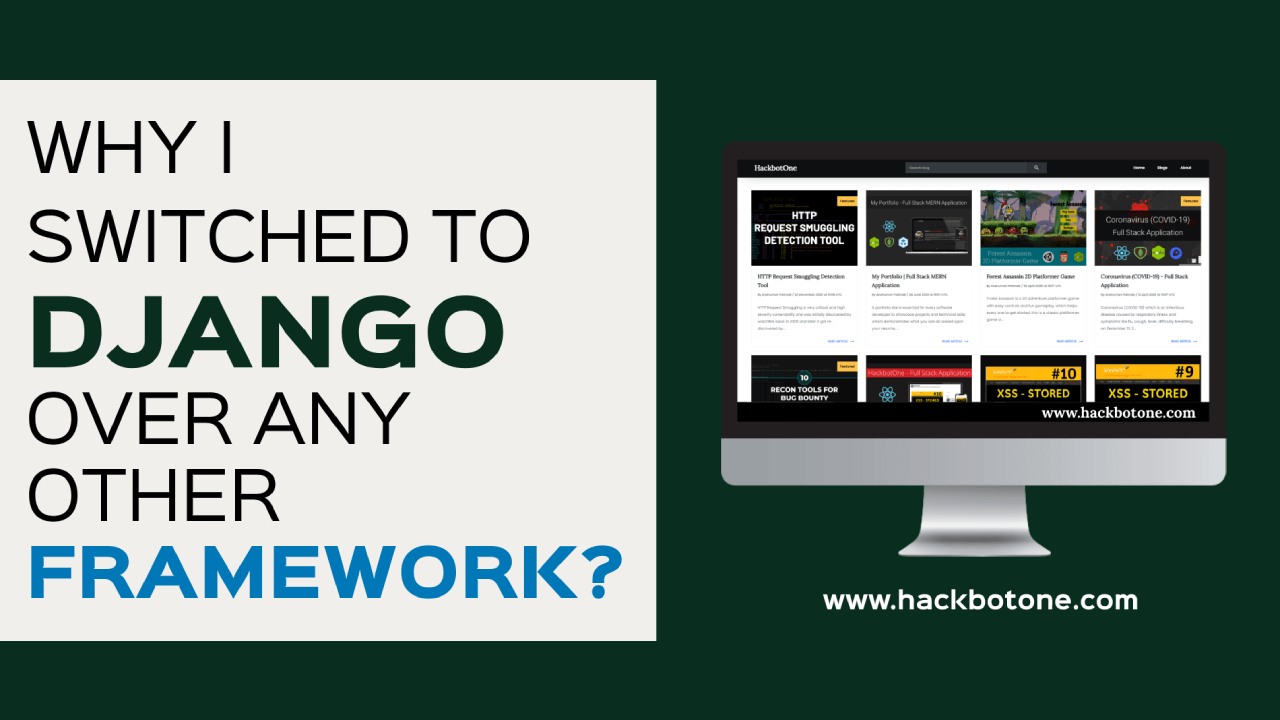
Morioh
In this article, I'll discuss my recent web development using Django, that how Django can be helpful, developing web application projects in terms of (raid development, clean design & high security).
hollow apex
I said im a newbie to web okay? I am well formed that Flask is the best point to start from, so, either you help me or pass it
molten glen
dusk portal
ik u will do it
thx
molten glen
dusk portal
and as soon u do it try 1 more project and then django <@!776241730684059699>
i have to spend another hour debugging the error 🙂
dusk portal
toxic forge
Why I switched to Django over any other framework?
☞ https://morioh.com/p/efc590...
@molten glen
dusk portal
molten glen
i have to spend another hour debugging the error 🙂
Show me
dusk portal
Oh
molten glen
i did it on monday
dusk portal
U leaning from which resource
molten glen
anything there is
 barren sable
I am working with django on a mysql legacy database. I have integrated everything but passwords. The legacy database is storing the passwords this way
$2a$10$Pdg3h8AVZ6Vl3X1mMKgQDuMriv8iysnValEa5YZO3j9pEboLrOBUK and django reads only if the same hash has the bcrypt$ prefix bcrypt$$2a$10$Pdg3h8AVZ6Vl3X1mMKgQDuMriv8iysnValEa5YZO3j9pEboLrOBUK . How do I make django authenticate users by reading first example hash?
PASSWORD_HASHERS = [
    'django.contrib.auth.hashers.BCryptPasswordHasher',
]
using this setting now
should I create my own password hasher?
 twin hamlet
Anyone knows about Django here ?
barren sable
twin hamlet
Anyone knows about Django here ?
i know a little)
twin hamlet
barren sable
i know a little)
Ok
 ripe lodge
yo quick question, should i learn sql basics before i learn to use sqlalchemy?
 empty brook
Hi, is someone familiar with fastapi here ?
opaque rivet
@ripe lodge I would recommend that. I learnt the ORM before learning SQL and I didn't understand the raw SQL behind the abstraction of the ORM.
ripe lodge
thanks! also having a difficult time with that
 gritty cloud
hollow apex
I want this input field to move to the center
gritty cloud
hollow apex
I want this input field to move to the center
use flexbox and align your items center and justify your content center
input {
  display: flex;
  align-items: center;
  justify-content: center;
}
this is the easiest way
 outer apex
Why do you think you have to use JS for scraping a website?
gritty cloud
outer apex
Why do you think you have to use JS for scraping a website?
actually
there are plenty of things to use for scraping
!pypi scrapy
 lavish prismBOT

A high-level Web Crawling and Web Scraping framework
gritty cloud
!pypi selenium
lavish prismBOT
Python bindings for Selenium
lavish prismBOT
Dummy package for Beautiful Soup
ivory bolt
barren sable
should I create my own password hasher?
no why
the whole idea of django is to use existing libraries
@barren sable check out some other password_hashers that you can import with django if there are any
otherwise yes you may have to come up with your own
bs4 is particularly good for getting data, selenium for interacting with the web pages and testing
while flask might be one of the fastest ways to setup everything
I suggest you move onto django after you're comfortable with it
it's a much more comprehensive framework
 languid beacon
do anybody know how to create a js file in intelliji ultimate?
 ionic raft
Thanks for the feedback on text readability. I was contemplating removing the signup link. It's ahead of its time. 🙂
 vivid canopy
who can help me with django?
ivory bolt
I'm here!
ivory bolt
vivid canopy
who can help me with django?
where are you stuck
vivid canopy
i mb solve but i add u in friends i if i will have provlem i will write
ivory bolt
sure! I've sent you a friend request
 static vault
http://www.who-is-hotter.com/ My friend made this website to help make a data set for an ai, it would be pretty cool if people could help out. It's pretty straightforward.
ivory bolt
the ui needs some touch up but it was pretty interesting
I assume this is just basic training data
nice!
static vault
ivory bolt
I assume this is just basic training data
Yes, it is
static vault
ivory bolt
the ui needs some touch up but it was pretty interesting
Lol I agree but I don't think he wanted to spend too much time on it
ivory bolt
Though you may want to tread carefully, even if you're trying to train your model
well, your domain is…it could give the wrong idea to the purpose of the site
or not
you can forget about this
native tide
is there any way to send a file from a client to a server in flask?
by posting a request
like
can you send it in the request
please ping me when you respond
ivory bolt
there is
what you're talking about is a basic forn
so you send data via a post request
I'll let you know how specifically to do that in a sec
ivory bolt
proper current
yes, but how do i actually get the request into the code. because like i said, `...
first of all, please import request from flask
can you not store request as an instance
so, if I have request, I can store it as the following:
home_request = request
or something like that
 thorn igloo
man, you could've just posted your question
limpid pivot
ivory bolt
you can do that in selenium
can I do that in selenium? how? It says request time out when i put the selenium task in views
ivory bolt
vivid canopy
<@!705417323443650600> can u help?
I can help! just post your question!!
ivory bolt
limpid pivot
can I do that in selenium? how? It says request time out when i put the selenium...
alright I want to understand exactly what you want to do
cerulean badge
in what unit do i need to pass the file size in multiple_chunks method of the File objects (context django)
bytes?
 coral raven
read the docs
Does extending the User model affect the PasswordChangeView, PasswordResetView in anyway. If yes, what changes should be done?
 scenic dove
cerulean badge
no it didn't work bro
scenic dove
cerulean badge
no it didn't work bro
Check the stack overflow question i sent after
this


 dusk portal
vivid canopy
how i can redirect login page into home page
dusk portal
vivid canopy
how i can redirect login page into home page
make a button that redirects to login page simple html
a href op
 dusk totem
vivid canopy
how i can redirect login page into home page
dusk totem
vivid canopy
how i can redirect login page into home page
What does your views.py look like?
vivid canopy
 dusk totem
... you don't check if the credentials are correct?
vivid canopy
ca u write a code how it's must look
coral raven
LOGIN_REDIRECT_URL = 'blog-home' redirect to the name attribute you added in the views.py file to your home view
vivid canopy
coral raven
`LOGIN_REDIRECT_URL = 'blog-home'` redirect to the `name` attribute you added in...
no work
same situation
what i should do?
native tide
could anyone explain why we would want to use dead link using has symbol because im kinda confused why you would you use it and how it works?
 hidden crown
Hi peoples!
I have a question about a scalable django solution:
- The setup: one Postgresql server and multiple (7ish) docker containers running the django application
- The challenge: periodic tasks & long running tasks which I need to decouple from http requests
- Current fix: Both are now triggered by some http requests, but make loading times terribly long on these requests.
- Current fix bis: Scheduled tasks (cron wise) are triggered mulitple times (once in each docker instance of the django app)
- Way forward: Celery looks like the good way to go, but I cant understand how i can handle the multiplication issue (We dont want tasks being triggered 7 times, once by each container)
Idea's, experiences & suggestions?
Thanks!
hidden crown
 tidal dock
which frontend will be good with flask?
tidal dock
which frontend will be good with flask?
Simple templating can be done with jinja, works quite good. Some ajax interaction can quickly be added with jquery. If you want to go even further and have more development capabilities in the frontend, React is also a good way forward. There is ofcourse a learning curve (which I'm currently travelling on).
hidden crown
tidal dock
which frontend will be good with flask?
https://developer.okta.com/blog/2018/12/20/crud-app-with-python-flask-react is a nice flask+react tutorial.
Link comes from https://www.fullstackpython.com/react.html which have quite some links to useful resources.

Okta Developer
Create a CRUD (create, read, update, and delete) application using Python, Flask, and React.

Learn about React and JavaScript frameworks for web applications on Full Stack Python.
ivory bolt
dusk portal
```py
Not Found
The requested resource was not found on this server.```
@opaque rivet @wooden ruin are right -- Not Found is a standard 404 message
 vapid gulch
Hey everyone,
We would like to present to you our Project KLASI, a Smart Virtual Classroom that provides futuristic tools and resources that aims to a successful e-learning and teaching experience in a modern way. This project is a web based application made using mainly the MERN stack development, different libraries and external apis.
To sum up, our project does not end at this point, we are still working to further our approach, It is easy to imagine the improvement and impact of it with a range of upgrades and other more advanced functionalities on the education field. Hoping to reach all of you , Please support us with some likes. 💪🏻🙏🏻💙 https://lnkd.in/d9kumXc

Pour rencontrer l'équipe KLASI et en savoir plus sur ce projet, RDV le 10 Juin 2021 entre 11h et 14h en suivant ce lien : https://meet.google.com/jyu-hfjk-xq...
dusk portal
ivory bolt
<@!812098613450506351> <@!729696323615588382> are right -- Not Found is a standa...
lfmao done xD im dumb
ivory bolt
vivid canopy
no work
it should've worked
add a success url
ivory bolt
dusk portal
lfmao done xD im dumb
I have literally done the exact same thing, googled it and read the documentation only to realise it an hour later
ivory bolt
vapid gulch
Hey everyone,
We would like to present to you our Project KLASI, a Smart Virtual...
this is insanely cool
ivory bolt
tidal dock
which frontend will be good with flask?
I feel at this point you shouldn't really use a full fledged library, knowing that flask is a pretty small framework.
Me, I love me some Bootstrap5
dusk portal
ivory bolt
I have literally done the exact same thing, googled it and read the documentatio...
i took 2 days
cez i was thinking
it was my bad
then my pc trash
then browser
and then i though vs code and then pip unistall django and install it
debug on off try expect get_object_or404
done all
@ivory bolt the page 4 of docs is hard bruh
its my 12th day on django
less go
hollow apex
Hey so


I changed the colour with css
but then I could delete or change to another colour\
its stuck on this blue one
oh I just did it
nvm
hidden crown
hollow apex
its stuck on this blue one
tried clearing your cache? Sometimes he still uses the old CSS file
hidden crown
hollow apex
that was the issue
There are ways to suppress caching when developing, It's quite useful when u iterate much
hollow apex
<link rel="stylesheet" type ='text/css' href="{{ url_for('static', filename = 'style.css') }}">
I removed this but
hidden crown
Which browser do you use?
hollow apex
chrome
hidden crown
first you can rightclick and click inspect... to check the source in your browser
hollow apex
yes
hidden crown
There in the network tab there's a checkbox "Disable cache"
hidden crown
normally when refre
He doesnt save it, i think
so when starting to dev, i select it & keep the debug window open
 hidden crown
link to the file doesnt work it seems, the file is marked red
hollow apex
yes cuz I deleted that
wanted to clear everything cuz I could not do anything to clear xd
hidden crown
The reference to the file in your template too?
hollow apex
when I delete the reference, it works
hidden crown
Something still goes looking for style.css
aparently the "caching disables" remains until you close the Developer Tools window
dusk portal
how may i help ,did u resolved the issue or may i help @hollow apex
meanwhile me:what's that
coral raven
all you need is a ctrl+shift+r to hard reset your webpages
opaque rivet
@hidden crown instead of running celery on each django container, maybe just make a separate container with celery to handle all the periodic tasks? That way you're not duplicating tasks.
subtle otter
hii , so i'm trying to use sqlite3 db with flask but i keep getting this error sqlite3.ProgrammingError: SQLite objects created in a thread can only be used in that same thread. The object was created in thread id 4228 and this is thread id 10756. , and as i googled i found out that the problem is the connection must be in the same thread as the cursour . but i'm using the cursor in two functions that are outside of the app.route() , how do i return the cursor so i can use it in those functions pls?
this is one of those two function
def insert_ws(ws):
    with conn:
        c.execute("INSERT INTO MD5 VALUES (?, ?, ?, ?, ?)", (ws.md5, ws.link, ws.language, ws.type, ws.date))
don't mind my question i fixed it
opaque rivet
What do you guys use to host your docker containers
mighty meadow
opaque rivet
What do you guys use to host your docker containers
computer
hollow apex
dusk portal
how may i help ,did u resolved the issue or may i help <@!379692393991110676>
I did, thank you
hidden crown
opaque rivet
What do you guys use to host your docker containers
Digital ocean, GCP & for work purposes all are cloud hosted. There are multiple providers next to the ones mentioned
@opaque rivet The mentioned ones are just the latest ones used by me. DO has like 5 USD/month servers with only the proportion used to be payed, so that's what I often use to try things out (when it's short term it costs like a few cents). This will be similar in other projects. You can also just run it locally (I use a ubuntu desktop PC to run these things, also tried it using Windows Sublayer for Linux (WSL). if u want to share a locally running project: https://ngrok.com/ is quite fun to use
ngrok secure introspectable tunnels to localhost webhook development tool and debugging tool
 pine trellis
https://github.com/egorsmkv/simple-django-login-and-register Does anyone knows, how the source/main/views.py can read the 'main/index.html' that is implement at source/content/templates/layouts/main without any 'import' ???

GitHub
An example of Django project with basic user functionality. - egorsmkv/simple-django-login-and-register
opaque rivet
@hidden crown awesome thanks. I still have yet to deploy anything, i was hoping to learn nginx and then aws. You seem very knowledgable!
hidden crown
opaque rivet
<@696423463136788501> awesome thanks. I still have yet to deploy anything, i was...
My best tip is not trying to do everything at once. DO has preconfigged servers and tutorials to set one up yourself. Once again other providers will probably have similar resources
hidden crown
opaque rivet
<@696423463136788501> awesome thanks. I still have yet to deploy anything, i was...
Same with docker containers: there are useful docker images having everything setup already, like https://hub.docker.com/_/django
Try to go for official docker images or images from trusted parties as they are more reliable and are safer is you're not quite into how to get everything running safe and well (and even if safety is your expertise, maintenance & reliability will always be better from bigger, known parties)
Django is a free web application framework, written in Python.
inland oak
opaque rivet
What do you guys use to host your docker containers
?tag largehosting (from https://discord.gg/code)
Free:
- Openshift: https://www.openshift.com/
2gb of memory, automatically expires after 60 days, but you can resubscribe as often as you'd like. - Heroku: https://heroku.com/
No CLI or SSH, no file access, might make your app sleep if you reach monthly uptime limit. - AWS (Free tier) https://aws.amazon.com/free/
Free tier containers from Amazon, expires in 12 months - Google Cloud Platform (Free tier) https://cloud.google.com/
Free tier google cloud servers
Paid:
- Azure https://azure.microsoft.com/en-us/
Starting at $1.69/month for their B1LS virtual machines, 0.5GB of ram and 4GiB of SSD storage. - OVH: https://www.ovh.com/us/vps/
Full VPS starting at $3.49USD/month, choice of OS, high reliability. - Digital Ocean: https://m.do.co/
Starting at $5/month (USD), you can have your own server with 20GB SSD Disk, and 512MB Memory. Use https://bithost.io/ if you want to pay with cryptocurrencies. - Linode: https://www.linode.com/
Starting at $5/month (USD), you can have a server with 20GB SSD Disk, and 1GB memory - Vultr: https://www.vultr.com/
Starting at $2.5/month (USD), you can have a server with 20GB SSD Disk, and 512MB Memory - Amazon(AWS) Lightsail: https://amazonlightsail.com/
Starting at $5/month (USD) (first month free), you can have your own server with 20GB SSD Disk, and 512MB Memory. - VIRMACH: http://virmach.com/
Full Windows and Linux Desktop VPS starting at $7USD/month and $10USD/month respectively. - Sloppy: https://sloppy.io/
Starting at 5$/month (USD) You can have 500MB Memory, 1TB Transfer per month and 16GB of storage. Extra
storage and ram can be bought. - Galaxygate https://www.galaxygate.net/
Starting at 3$/month (USD), get 15GB of storage, 1GB of ram, and unmetered bandwidth. - Hetzner https://www.hetzner.com/cloud
Starting at 2.49€/month (EUR) for 20GB of storage, 2GB of ram and 20TB of traffic.
dusk portal
inland oak
?tag largehosting (from https://discord.gg/code)
Free:
- Openshift: https://www...
Omg bro
subtle otter
hello , is there a way to make an html progress bar for a script??
got this script that's running in teh background and takes sometime to finish , i want to make the progress bar to indicate welp the progress of the script
 native tide
https://paste.pythondiscord.com/iyarikegam.py - server.py
https://paste.pythondiscord.com/aqekuwitot.rb - client.py
Hi, does anybody know how can I make an ADMIN to the server that can disconnect clients by typing /kick name and that there will be only one admin with an specific name and IP (his messages won't be shown in the chat.)
Does anybody know how can I do that?
Adding the code here (server and client). (:
ivory bolt
dusk portal
less go
Nice!
 austere relic
native tide
https://paste.pythondiscord.com/iyarikegam.py - server.py
https://paste.pythondi...
austere relic
native tide
https://paste.pythondiscord.com/iyarikegam.py - server.py
https://paste.pythondi...
No one is gonna read all that. Can you explain what your code does and then share a minimum code example and also be more specific
 rapid spindle
Hello, I have a bad request with django when I try to log on with angular. Is Anyone know how to fixe it?
native tide
https://paste.pythondiscord.com/iyarikegam.py - server.py
https://paste.pythondiscord.com/aqekuwitot.rb - client.py
I created a chat of an unlimited number of people using threads and sockets.
In server.py I created 2 lists the first one contains the names the customers chose for themselves and the second one contains the customer details like port and the rest.
Later, I created several functions, the first of which is called broadcast receives a message and sends it in a chat with the name of the person who sent it.
The second one named CaesarEncrypt encrypts the message (it is unrelated).
The third named HandleClient requests a message from the client and sends it to broadcast, if the message is not received it deletes the client's details from the 2 lists and closes the client.
The fourth named recive receives the client for the first time and adds its details to the lists and of course prints a message that a new client has connected to the server.
In client.py I did all the construction of the chat using Tkinter and it works fine as usual.
Now what I want to do is create a chat manager that will work like everyone else on the server but when he enters the command /admin 5270 for example then it will buy him manager capabilities and he will be able to take people out when he writes /kick and the client name next and it will close that chat And will be registered in the chat "The client (name) has been removed from the server".
opaque rivet
@native tide i disagree
 tepid lark
bit of a long shot, but does anyone have experience with shibboleth sp 3?
 sonic island
dusk portal
https://docs.djangoproject.com/en/3.2/intro/tutorial04/
sonic island
dusk portal
https://docs.djangoproject.com/en/3.2/intro/tutorial04/
which part of it?
dusk portal
sonic island
which part of it?
Got the first part ajax
sonic island
dusk portal
Got the first part ajax
ajax what?
dusk portal
from django.http import HttpResponse, HttpResponseRedirect
from django.shortcuts import get_object_or_404, render
from django.urls import reverse

from .models import Choice, Question
# ...
def vote(request, question_id):
    question = get_object_or_404(Question, pk=question_id)
    try:
        selected_choice = question.choice_set.get(pk=request.POST['choice'])
    except (KeyError, Choice.DoesNotExist):
        # Redisplay the question voting form.
        return render(request, 'polls/detail.html', {
            'question': question,
            'error_message': "You didn't select a choice.",
        })
    else:
        selected_choice.votes += 1
        selected_choice.save()
        # Always return an HttpResponseRedirect after successfully dealing
        # with POST data. This prevents data from being posted twice if a
        # user hits the Back button.
return HttpResponseRedirect(reverse('polls:results', args=(question.id,)))```This is damn hard
sonic island
dusk portal
```py
from django.http import HttpResponse, HttpResponseRedirect
from django.sho...
which line makes you stuck?
dusk portal
sonic island
which line makes you stuck?
Try
 civic pewter
is it possible to provide links from the stack .. ?
I wanted to know how I can save a photo that will contain a watermark. Currently grabs a photo from the form and creates a watermark on it, but saves it separately. More precisely, I would like the photo I send in the form to be processed and saved.
hollow apex
hello so, my problem is following:
this is the page I have made so far

from flask import Flask,render_template,request
from random import randint
app = Flask(__name__)


@app.route('/random')
def random_page():
    return render_template('random.html',the_title = 'Random Generator')


if __name__ == "__main__":
    app.run(debug=True)
``` this is the flask code<!DOCTYPE html>
<html lang="en">
<head>
<meta charset="UTF-8">
<title>{{ the_title }}</title>
<link rel="stylesheet" type ='text/css' href="{{ url_for('static', filename = 'style.css') }}">
</head>
<body>
{% block content %}
{% endblock %}
</body>
</html>
``` this the base html code{% extends 'base.html' %}
{% block content %}
<div class="random-page">
<form method="POST" action="search">
<table>
<h1>Random Number Generator</h1>
<tr>
<td>Min:</p>
<td><input type="number" name="range_start" width="30"></td>
</tr>
<tr>
<td>Max:</td>
<td><input type="number" name="range_end" width="30"></td>
</tr>
</table>
<p><input value="Generate" type="SUBMIT"></p>
<h1>{{ the_result }}</h1>
</form>
</div>
{% endblock %}``` and this is the code of the page I have shown youso according to the screen, I want to make a random number generator, the problem is that when I try to do so, I get an error which I don't understand at all
so in order to grab the value of the input, I did following
@app.route('/random',methods = ['POST'])
def random_page():
    range_start = request.form['range_start']
    range_end = request.form['range_end']

    result = randint(range_start,range_end)
    return render_template('random.html',the_title = 'Random Generator',the_result = result)
after the implementing of this code, I get this

ik its a lot of code but it was just for clarity, overall its not a big problem, I just don't know where I make the mistake
hollow apex
hollow apex
after the implementing of this code, I get this
pretty sure it refers to the 'POST' method...
 rigid prairie
civic pewter
rigid prairie
civic pewter
    if request.method == 'POST':
        form_w = ImageForm(request.POST, request.FILES)
        if form_w.is_valid():
            # form = form_w.save(commit=False)

            cd = form_w.cleaned_data['img']


            im = Image.open(cd)
            width, height = im.size

            draw = ImageDraw.Draw(im)
            text = "TEST WATERMARK"

            font = ImageFont.truetype('arial.ttf', 36)
            textwidth, textheight = draw.textsize(text, font)

            # calculate the x,y coordinates of the text
            margin = 10
            x = width - textwidth - margin
            y = height - textheight - margin

            # draw watermark in the bottom right corner
            draw.text((x, y), text, font=font)

            print('Before saving: ', im)

            im.save('Luki/media/upload_p/{}'.format(cd))

            img = Image.open(('Luki/media/upload_p/{}'.format(cd)))
            print('After saving: ', img)

            form_w.instance.save()

            return redirect('Luki:gallery')
    else:
        form = ImageForm()
    return render(request, 'Luki/upload_img.html', {
        'form': form,
})```I wanted to know how I can save a photo that will contain a watermark. Currently grabs a photo from the form and creates a watermark on it, but saves it separately. More precisely, I would like the photo I send in the form to be processed and saved.
ivory bolt
hollow apex
pretty sure it refers to the 'POST' method...
I was going to say you didn't setup the POST method on your view function but then I read that
wait, just try to restart the flask server
It should work otherwise
hollow apex
I have a headache already man xd idk what is wrong to fix
ivory bolt
just restart
maybe because you made the change and saved, but it's still running on that first one
tell me if it works
I'll check it out
hollow apex

from flask import Flask,render_template,request
from random import randint
app = Flask(__name__)


@app.route('/home')
@app.route('/')
def home_page():
    return render_template('home.html',the_title = 'Home')


@app.route('/random',methods = ['POST'])
def random_page():
    range_start = request.form['start']
    range_end = request.form['end']

    result = randint(range_start,range_end)
    return render_template('random.html',the_title = 'Random Generator',the_result = result)


if __name__ == "__main__":
    app.run(debug=True)
{% extends 'base.html' %}
{% block content %}
<div class="random-page">
    <form method="POST" action="random">
        <table>
            <h1>Random Number Generator</h1>
            <tr>
                <td>Min:</p>
                <td><input type="number" name="start" width="30"></td>

            </tr>
            <tr>
                <td>Max:</td>
                <td><input type="number" name="end" width="30"></td>
            </tr>
        </table>
        <p><input value="Generate" type="submit"></p>
        <h1>{{ the_result }}</h1>
    </form>
</div>
{% endblock %}```motherfckers, advertise the websites and then run away
ivory bolt
hollow apex
```html
{% extends 'base.html' %}
{% block content %}
<div class="random-page"> ...
why did you name your action random again
ivory bolt
hollow apex
motherfckers, advertise the websites and then run away
lol
what if you change the action to "."
hollow apex
hollow apex
```py
from flask import Flask,render_template,request
from random import randint...
idk exactly to be honest but, I want those values to pass to this function, so I can generate a random number in between
hollow apex
I tried but with that I get another error
ivory bolt
what was that

 ivory bolt
so wait lemme try
hollow apex
hollow apex
```html
{% extends 'base.html' %}
{% block content %}
<div class="random-page"> ...
here,keep the POST?
hollow apex
ivory bolt
method should remain post, change action to "."
you mean like this?
 languid beacon
no
 ivory bolt
k so I think this is where you're going wrong
range_start = request.form['start']
let's start from here

 ocean tide
Hey, i'm trying to use border-radius on an image and it will only round the bottom left and right corners and not the top left or right... Anyone know what could be causing this?
ivory bolt
hollow apex
should name not be in request.form[name] ?
lemme check
hollow apex
I cheched
I tried the following now
from flask import Flask,render_template,request
from random import randint
app = Flask(__name__)


@app.route('/home')
@app.route('/')
def home_page():
    return render_template('home.html',the_title = 'Home')


@app.route('/random',methods = ['GET','POST'])
def random_page():
    range_start = request.form.get('start')
    range_end = request.form.get('end')

    result = randint(range_start,range_end)
    return render_template('random.html',the_title = 'Random Generator',the_result = result)


if __name__ == "__main__":
    app.run(debug=True)
{% extends 'base.html' %}
{% block content %}
<div class="random-page">
    <form method="POST" action="{{ url_for('random_page')}}">
        <table>
            <h1>Random Number Generator</h1>
            <tr>
                <td>Min:</p>
                <td><input type="number" name="start" width="30"></td>

            </tr>
            <tr>
                <td>Max:</td>
                <td><input type="number" name="end" width="30"></td>
            </tr>
        </table>
        <p><input value="Generate" type="submit"></p>
        <h1>{{ the_result }}</h1>
    </form>
</div>
{% endblock %}
I saw it on herehttps://www.geeksforgeeks.org/retrieving-html-from-data-using-flask/

GeeksforGeeks
A Computer Science portal for geeks. It contains well written, well thought and well explained computer science and programming articles, quizzes and practice/competitive programming/company interview Questions.
but I think it returns none, see

@ivory bolt
hollow apex
wut
